My Monday tradition, including a look back and a look ahead — what I read last week, what new books came my way, and what books are keeping me busy right now. Plus a smattering of other stuff too.
What did I read last week?
The Hummingbird by Stephen P. Kiernan: I participated in the blog tour for this book during the past week. You can see my review here.
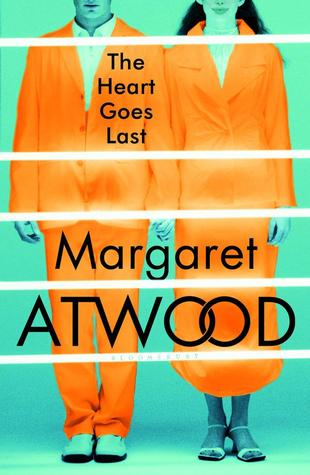
The Heart Goes Last by Margaret Atwood: Done! My review is here.
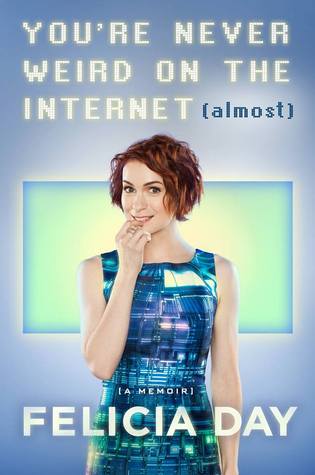
You’re Never Weird on the Internet (Almost) by Felicia Day: Such a great read! My review is here.
Elsewhere on the blog:
I wrote an update post about my Book Count adventures, looking at how many unread books are in my house and on my Kindle, how many new books I added, and how many I either read or gave away. Teensy-tiny baby steps of progress! You can read the post here.
Pop culture awesomeness:
I am so over-the-moon excited about season 3 of Black Sails! Okay, yes, we have to wait until January, but still… new trailer!
Fresh Catch:
Look what arrived this week!
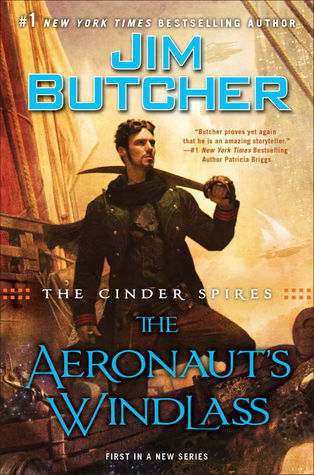
New Jim Butcher, new Buffy!
Granted, this is Buffy season 10, volume 3 — and I haven’t read any of season 9 yet. But still. New Buffy!
Also new this week:
Outlander – season 1, volume 2! I know it’s not a book, but it’s bookish… and hey, it’s OUTLANDER, and it makes me happy!
What will I be reading during the coming week?
Currently in my hands:
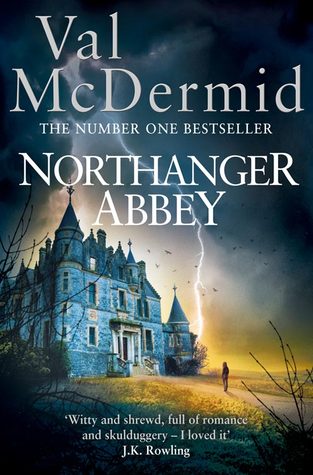
From my fall TBR list! I’m reading Northanger Abbey by Val McDermid (part of The Austen Project), and so far, I really like how the gothic flavor of the original works in a retelling about a modern-day teenager obsessed with Twilight and all things vampire.
Now playing via audiobook:
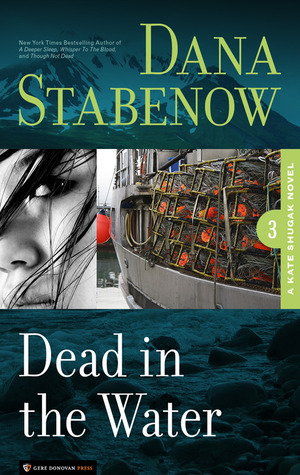
I finished Dead in the Water, the 3rd book in Dana Stabenow’s terrific Kate Shugak series. This one was great, and I guess I might as well admit that I’m officially hooked! Can’t wait to listen to book #4!
But first, I’m now listening to Maisie Dobbs by Jacqueline Winspear, and I’m really enjoying it so far. Audiobooks are turning out to be a good way for me to try genres, such as mysteries, that I don’t usually spend much time on.
Ongoing reads:
Moving right along! Two chapters per week for each book, as part of discussions with the Outlander Book Club. We’ll wrap up both in December!
Buffy fan? How about The Guild? Dr. Horrible? Eureka?
No?
Are you a fan of funny, smart writing? Women who are high-achieving but down-to-earth? Famous people who act like real people and seem to genuinely care?
Surely something above rings a bell. And in that case…
I feel perfectly confident that you’ll find something to love about Felicia Day’s memoir, You’re Never Weird on the Internet (almost).
Felicia Day doesn’t shy away from calling herself weird, and credits her weird upbringing for making her who she is today. Moving around from one southern town to another, Felicia never really had to fit in, because after a brief stint in school, she ended up being homeschooled throughout her childhood and teens — although, as she describes:
In retrospect — and not to be mean to anyone who parented me — it doesn’t seem like there was a clear plan going into the whole homeschooling thing.
But Felicia was into it anyway:
Also, homeschooling seemed like something an orphan would do, and I really wanted to be an orphan. Because let’s be real: they have it so good in kids’ literature! They’re sad but special, people love them against all odds, and they’re always guaranteed a destiny of greatness. The Secret Garden, The Wizard of Oz, Harry Potter? Orphanhood was a bucket list item for me!
In funny and honest detail, she describes her college career (double-majoring in music and math, on a violin scholarship!) and her subsequent move to LA to pursue an acting career, as well as an all-consuming obsession with World of Warcraft, generalized unhappiness and anxiety, and her creative breakthrough in writing and starring in the geek-magnet web series The Guild.
Felicia writes beautifully about the power of discovering the internet for the first time, and the awesome experience, especially for a loner, homeschooled girl, of discovering people to truly connect with in a fundamental way through the world of online gaming.
I know the story of my Dragon-hood may sound a little sad and weird and super geeky, but […] for a girl who was lonely and desperate for friends, that group of people was the most important social thing to happen to me growing up. I can’t imagine being as confident about my passion for geeky things today without that opportunity to connect with OTHER people who were saying, “Wow, I love those geeky things, too!”
She shares her self-doubts and her moments of mortification along with her successes and victories, and maintains such an appreciation for people’s investment and connection in her work that you just know she means it all. For example, explaining why she keeps all the fan art and creations that people have given her over the years:
Whether it was by someone volunteering to be an extra in our show, or part of the crew, or someone buying a DVD at a convention, or a superfan who tattooed our characters’ faces on her calf, my career has been built fan by fan. I wouldn’t trade that relationship, or collection of dolls of myself, for all the money and fame in the world.
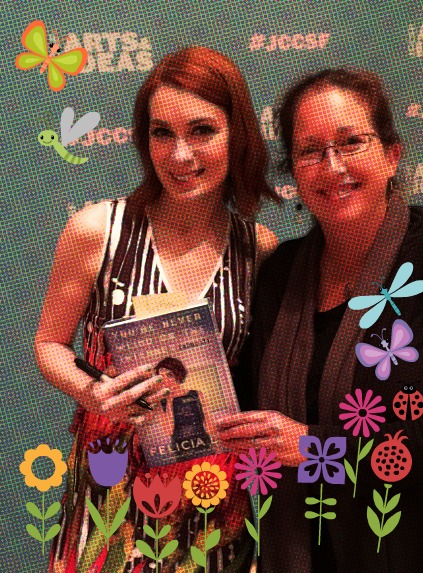
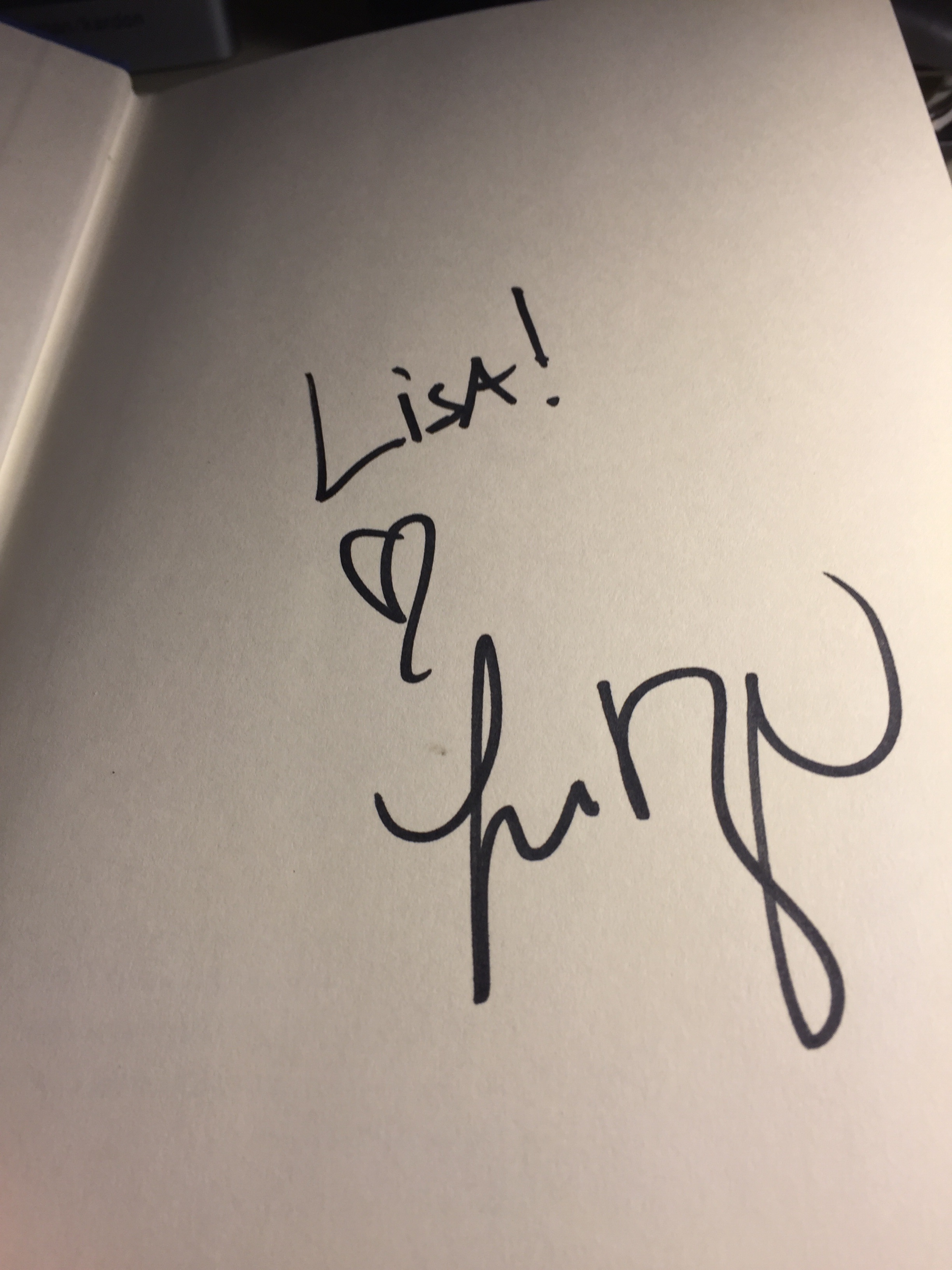
I was lucky enough to see Felicia speak back in August and got a signed book and everything!
Felicia is adorable, but I didn’t like the way I looked in this pic… so I decided to decorate.
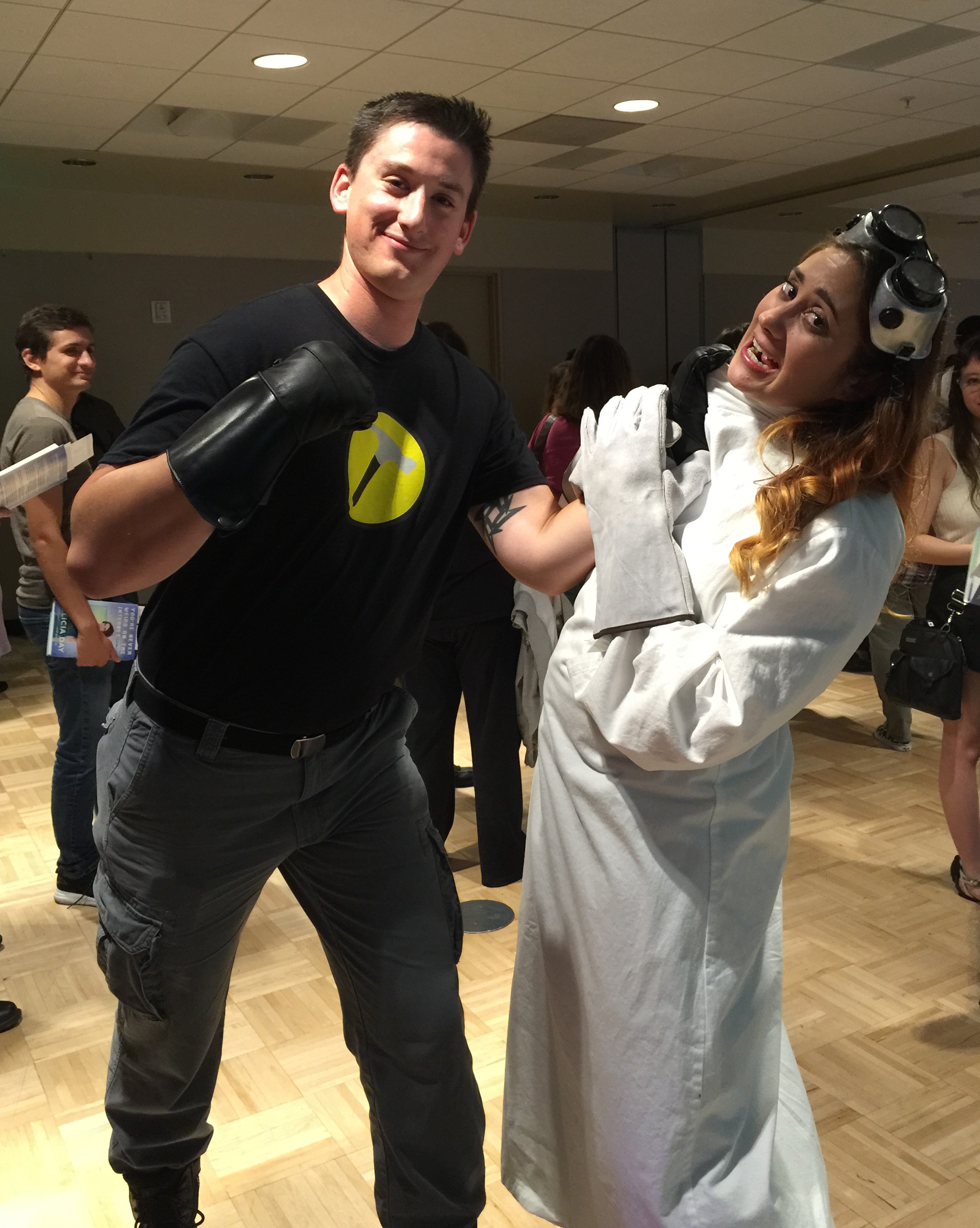
It was an amazing event, in a sold-out venue, filled with people of all sorts who all just happen to be big geeky fans. While most came in their street duds or at most, a Supernatural or Guild t-shirt, a few went all out, which was super delightful to see:
I love me some Dr. Horrible cosplay!
Felicia spent an hour on stage in front of an adoring crowd, and she was just as cute and smart and hilarious as you’d expect. (If you’re a fan, treat yourself by watching the video of her appearance!):
Getting back to the book itself, this isn’t a Hollywood tell-all. There’s no gossip here, no name-dropping, no parties/cocktails/living-the-good-life anecdotes. When Felicia does name names, it’s to thank and acknowledge the people who inspired or helped her.
Besides being a great read about an odd-ball girl making good on her own terms, You’re Never Weird is a message book. Felicia shares her own story not to say “look at me! I’m so great!”, but to share the idea that we’re all different, and we should pursue what excites us and makes us happy, no matter how odd or weird or dorky it might seem. And hey, whoever you are and whatever you’re into, there’s sure to be someone else out there who’s into it too:
It might be extremely dorky to point out, but who you are is singular. It’s science. No one else in existence has your point of view or exact genome (identical twins and clones, look for inspiration elsewhere, please). That is why we need people to share and help us understand one another better. And on a bigger level than just taking a selfie. (Not hating on selfies, but a few is enough. You look good from that angle; we get it.) We need the world to hear more opinions, give glimpses into more diverse subcultures. Are you REALLY into dressing your cat in handcrafted, historically authentic outfits? No problem, there are people out there who want to see that! Probably in excruciating details!
One of the things that makes You’re Never Weird on the Internet (Almost) so great to read is that first and foremost, you feel like you’re reading about a person. A talented, awesome person, for sure, but still, someone recognizably human. Felicia Day’s writing style is chatty and full of good-natured humor, and she succeeds, I think, by making us all feel as though she’s someone we could hang out with, maybe play some video games or watch movies together. You just know that she’d be chill and awkward and non-judgmental, in all the best ways.
She signed my book! She signed my book!
If you consider yourself a geek, if you’ve ever felt lost in a crowd, if you had weird/unique hobbies, if you’ve ever felt a passion for something completely out there… well, I’m pretty sure you’ll find something in You’re Never Weird that will inspire you, or at the very least, make you smile or even chuckle for a while.
‘Scuse me, but I gotta go binge-watch The Guild right now.
_________________________________________
The details:
Title: You’re Never Weird on the Internet (Almost)
Author: Felicia Day
Publisher: Touchstone
Publication date: August 11, 2015
Length: 262 pages
Genre: Memoir
Source: Purchased
The Heart Goes Last centers on main characters Stan and Charmaine, a married couple who are living in their car as of the beginning of the story. They’ve lost their jobs and their homes as the economy in the US Northeast has completely tanked. Charmaine works at a seedy bar to earn enough for them to buy fast food and gas, but that’s about it. Gas is essential, because even when locked into the car at night, crazy or desperate people may attack, break the windows, and try to rape or kill them, and being able to drive off in case of emergency is what keeps them alive. Life really sucks, and even though they both remember what it was like to be newlyweds in love, it’s getting harder and harder to keep any affection alive when life is just that awful.
Is it any wonder that they sign on, rather blindly, to the promise of a new and better life? Stan and Charmaine are seduced by an advertisement for an experimental town called Consilience. The Consilience project offers a house, safety, security, meaningful life, and the absence of fear and worry. After a quick visit within the gated walls of the town, they’re ready to sign up. The catch is that, once in, it’s permanent, but no worries! Charmaine is too entranced by the idea of a house, her own kitchen, and a cozy couch to even consider walking away, and to Stan, it sure sounds like a great alternative to quick, unsexy sex on the backseat of the car while watching out for attackers.
Once Stan and Charmaine have committed, we start to learn more. There’s a flip side to Consilience: Positron. Positron is a prison, and here’s the deal. For one month, Stan and Charmaine live in their cozy suburban house and go off to work at their pleasant jobs. Then comes switchover day, and the two go over to the Positron Prison, don orange prison garb, and become inmates for a month. Stan goes to the men’s ward, where he tends chickens, and Charmaine goes to the women’s ward, where she’s a medications officer. The prison is safe, filled with other happy Consilience residents, offering delicious food, meaningful work, and even a knitting circle in the evenings to pass the time. Meanwhile, Stan and Charmaine’s house is now occupied by their alternates. Half the town spends each month as residents, half as inmates, and then they switch. This way, the project provides housing and occupation for all, and everyone is happy. Be happy, damn it!
Perhaps picture-perfect suburbia isn’t all it’s cracked up to be:
The hedge trimmer emits a menacing whine, like a wasp’s nest. The sound gives him an illusion of power that dulls his sense of panic. Panic of a rat in a cage, with ample food and drink and even sex, though with no way out and the suspicion that it’s part of an experiment that is sure to be painful.
Things are as weird as they seem, and weirder. There’s sexual obsession and deception, nefarious corporate goons, weird sexual fetishes, secret medical procedures, and a recurring motif of blue knitted teddy bears. Of course this utopian refuge has a dark side, and of course Stan and Charmaine become deeply involved as puppets in the greater scheme of things. When I say things get weird, I really mean it.
By the end of the book, we’re in Vegas. There are hordes of Elvis and Marilyn impersonators, Blue Man Group rip-off artists, brain wipes, and sex/love slaves. And as word of the goings-on in Consilience/Positron is leaked to the greater public:
Instantly the social media sites are ablaze with outrage. Prison abuses! Organ-harvesting! Sex slaves created by neurosurgery! Plans to suck the blood of babies! […] Talk shows roister on into the night — they haven’t had this much fun in decades — and bloggers break out in flames.
I wish I could say that The Heart Goes Last was a great read, but unfortunately, I found it somewhat problematic. I was intrigued at the outset by the set-up, by the collapse of society, and by the way Stan and Charmaine’s marital issues tied into their dilemmas and decision-making about Consilience/Positron. Unfortunately, the book keeps veering off in new and disjointed directions, and by the time the Vegas elements come around, the storyline has passed the line from odd to ridiculous.
There are some truly eerie or disturbing sequences, but eventually, as one after another scenario unfolds, the whole thing loses its power and feels too scattered to be truly affecting. The goofiness of certain plot points (Elvis… Marilyn… the bear) makes the whole story somewhat farcical. While there are some kernels of deeper meaning in there about choice and the illusion of choice, the trade-off between security and free will, and whether unwavering love adds to or subtracts from actual happiness, the lack of overall coherence blunts the impact of all of these.
“Isn’t it better to do something because you’ve decided to? Rather than because you have to.”
“No, it isn’t,” says Charmaine. “Love isn’t like that. With love, you can’t stop yourself.” She wants the helplessness, she wants…
On top of the all-over-the-place plot, the fact is that dystopias are pretty much a dime a dozen these days, and it takes quite a lot to offer something new or startling. The idea of a perfect little town paired with a prison is interesting, especially as the town seems like something out of the movie Pleasantville (the only movies shown on Consilience TV are from the 1950s, and Doris Day is everyone’s darling) — but we’ve all read enough of these new society, perfect world set-ups to know that the people in charge have ulterior motives, there’s surveillance everywhere, and that a controlled world must be intrinsically corrupt at its core. Even though there are some clever and unexpected twists, at its most fundamental level, there isn’t anything all that fresh in the overarching concept.
Sadly, The Heart Goes Last was ultimately a let-down for me. I wouldn’t NOT recommend it, but it’s not Atwood’s best work either. I was never bored, exactly, but at some point, I just kind of rolled my eyes and decided to go with it.
_________________________________________
The details:
Title: The Heart Goes Last
Author: Margaret Atwood
Publisher: Nan A. Talese
Publication date: September 29, 2015
Length: 320 pages
Genre: Science fiction
Source: Review copy courtesy of the publisher via NetGalley
In early September, I wrote a post called Counting Up the Books, in which I combined two things I love: BOOKS and NUMBERS.
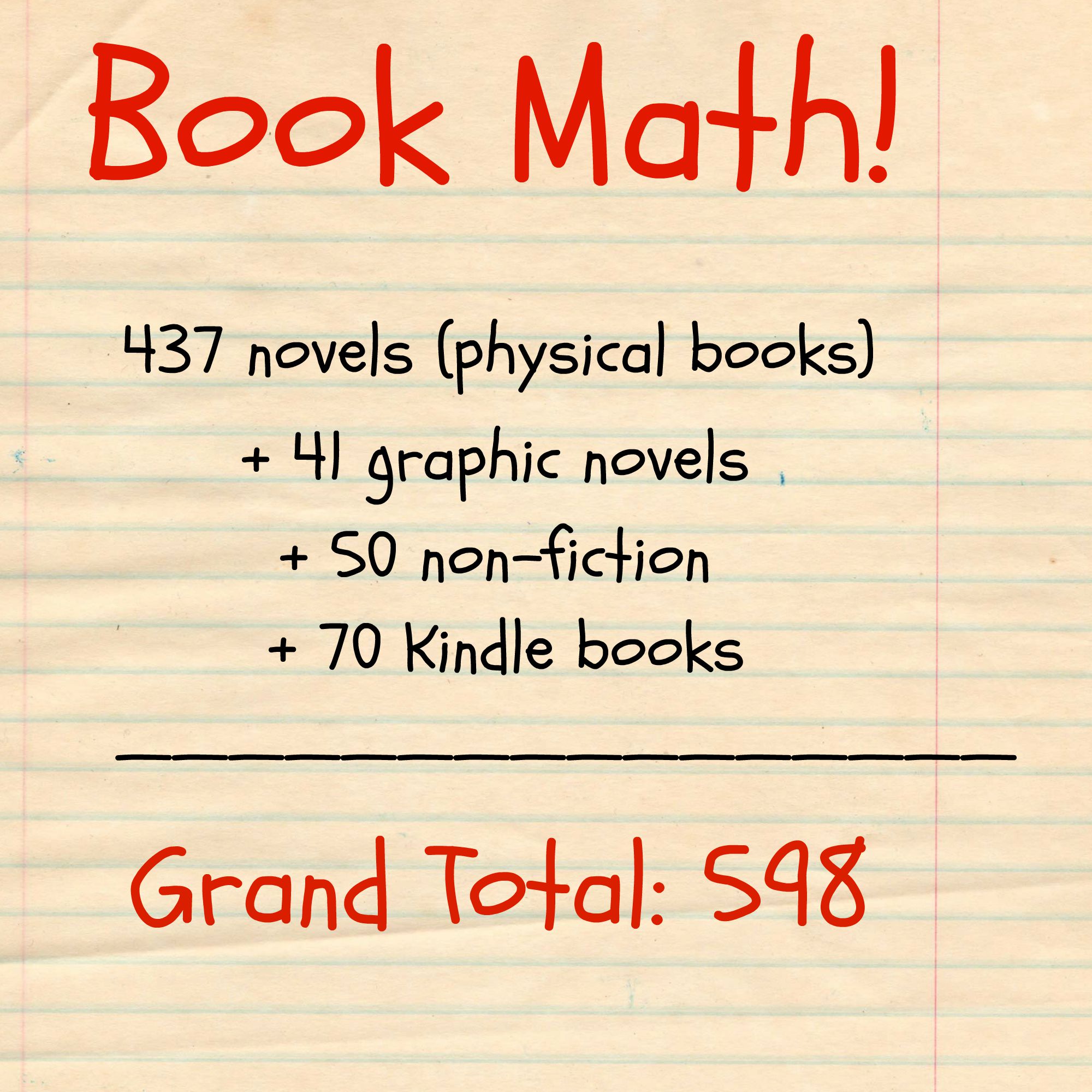
I tallied up just how many unread books there are in my house, which gave me a rather scary number. My September book count looked like this:
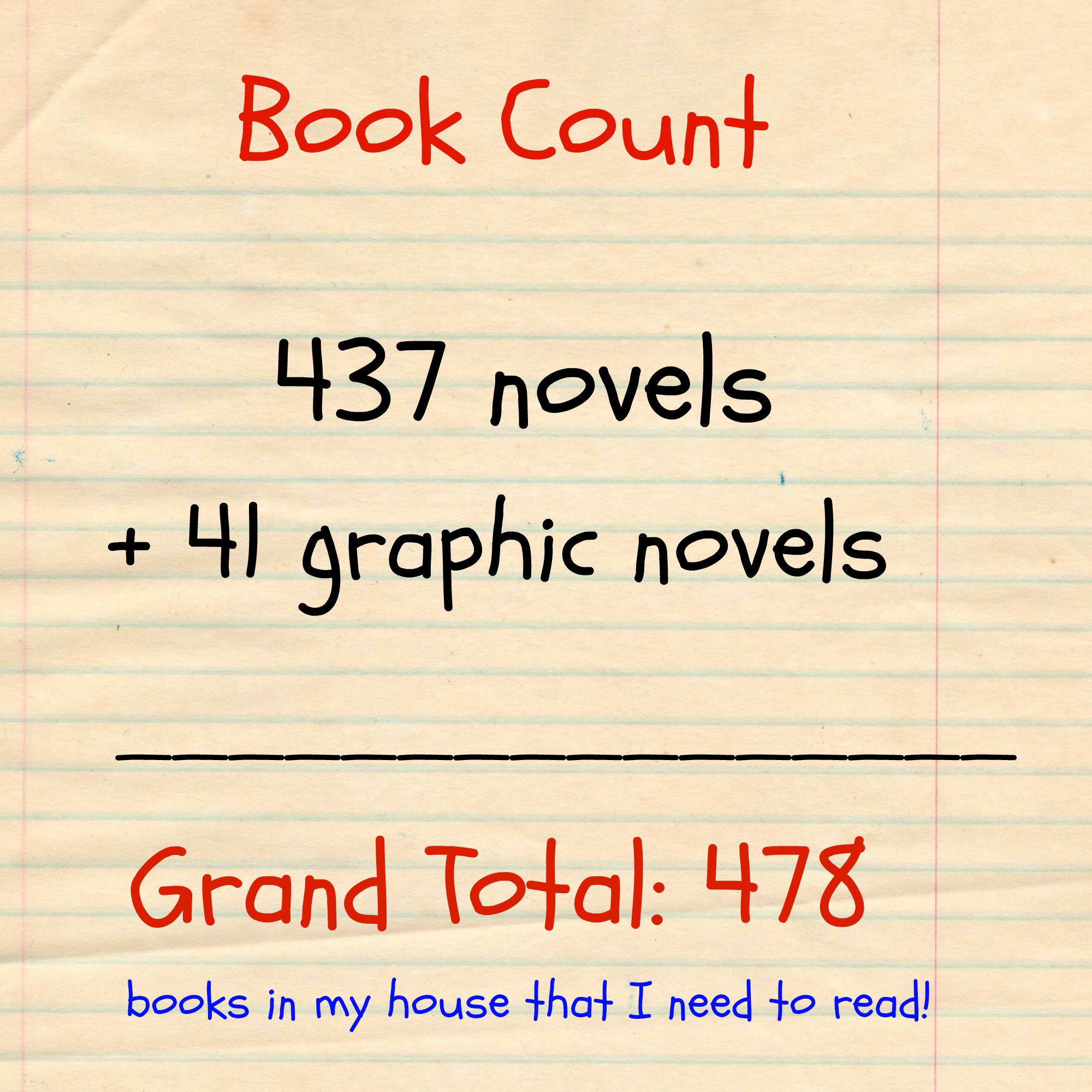
After that, I decided to do a Book Count including just the unread physical fiction books and graphic novels in my house, changing the outcome to look like this:
Now that a month has gone by, I’m realizing that I need to stick the Kindle number back into my count. The Kindle books may not take up space on my overcrowded bookshelves, but they’re still there cluttering up my virtual shelves… besides which, they’re all books that I wanted to read in the first place, so I should really get to them.
Let’s do the math for October, adding in new acquisitions (yes, dammit, I’m still buying books!) and subtracting books that I’ve donated or otherwise given away or traded in.
So there you have it! Yes, I did read some books from my shelves during the past month, but I also kept adding books to the collection, so my numbers didn’t really go down in any significant way.
But I’ll keep moving forward!
How are your shelves doing this month?
Don’t forget to join me for Shelf Control on Wednesdays, where we highlight books from our shelves that we really want to read!
I’m delighted to be participating in the blog tour celebrating the release of The Hummingbird by Stephen P. Kiernan. Thank you, TLC Book Tours, for including me!
Synopsis:
Deborah Birch is a seasoned hospice nurse who never gives up—not with her patients, not in her life. But her skills and experience are fully tested by the condition her husband, Michael, is in when he returns from his third deployment to Iraq. Tormented by nightmares, anxiety, and rage, Michael has become cold and withdrawn. Still grateful that he is home at last, Deborah is determined to heal him and restore their loving, passionate marriage.
But Michael is not her only challenge. Deborah’s primary patient is Barclay Reed, a retired history professor and fierce curmudgeon. An expert on the Pacific Theater of World War II, Barclay is suffering from terminal kidney cancer and haunted by ghosts from his past, including the academic scandal that ended his career.
Barclay’s last wish is for Deborah to read to him from his final and unfinished book—a little-known story from World War II that may hold the key to helping Michael conquer his demons. Together, nurse, patient, and soldier embark on an unforgettable emotional journey that transforms them all, offering astonishing insights into life and death, suffering and finding peace.
Told with piercing empathy and heartbreaking realism, The Hummingbird is a masterful story of marital commitment, service to country, the battles we fight for those we love, learning to let go, and finding absolution through wisdom and acceptance.
My thoughts:
The Hummingbird is a quiet yet powerful look at love, acceptance, peace, and dignity. With a hospice nurse as its central figure, The Hummingbird has a calmness to it even when dealing with sorrow and anger.
Deborah is a remarkable woman, and it’s hard not to marvel at the peaceful focus and commitment she brings to her work. Deborah doesn’t view her patients as tragedies or medical lost causes. Instead, her job is to focus on each patient as an individual. Death is already a certainty; it’s Deborah’s purpose to make sure that her patients meet death with the comfort and space they need in order to have a dignified end.
At the same time that we witness Deborah’s work with the Professor, we see her struggling to reclaim her warrior husband Michael, a damaged soul who returns from his third tour in Iraq full of violence, rage, and guilt. Through her work with Barclay Reed and her reading of his unpublished manuscript, Deborah begins to find clues that will help her reach Michael. The more she reads about the Japanese soldier who became a man of peace and forged relationships with his former enemies, the more she learns about how to take steps toward her husband and help him truly find his way home again.
I found The Hummingbird incredibly moving. While I’d had certain preconceptions about the concept of hospice, I’ve never actually encountered it in my own life or in my reading until now. Reading about Deborah, her attitude and her approach, and what hospice provides for patients and their families was eye-opening for me. I was so impressed and touched by the degree of caring, the focus, and the compassion on display. Deborah’s interactions with Barclay are beautiful — not sugar-coated or avoiding the messier elements of illness, but simply caring and placing the patient’s total self above any other concerns.
Deborah’s relationship with her husband was quite touching as well. Michael is damaged and seems almost unfixable, but Deborah doesn’t accept that he’s beyond reach. It isn’t easy and it isn’t pretty, but we see scenes that show the rawness of returning veterans, their inability to fit back into society, and how little true help is available without a fight. It’s sad to realize how real this all is, and what’s more — as illustrated by an affecting scene involving Michael and a Vietnam vet — how little has changed or improved for soldiers in terms of how they’re treated when their fighting is done.
I would be remiss not to mention how powerful the third element of this story is. In chapters interspersed with the modern-day story, we read Barclay Reed’s manuscript, titled The Sword, telling the story of a Japanese bomber pilot whose World War II mission was to firebomb Oregon and cause panic and destruction on US soil. Although his mission did not succeed, the impact of his mission was felt by him and by the Oregon community targeted by his mission for decades to come. The story of connection and reconciliation is lovely, and surprised me by not going in the direction I’d expected.
These three threads — Deborah and the Professor, Deborah and Michael, and the story of The Sword — are woven together to create a beautiful story of redemption and forgiveness. The Hummingbird makes clear that it’s human connection that matters above all else, and that it’s never too late to find peace.
I strongly recommend The Hummingbird. The writing is lovely, the subject matter is quite unusual, and the characters will touch your heart.
Stephen P. Kiernan is a graduate of Johns Hopkins University and the University of Iowa Writers’ Workshop. During his more than twenty years as a journalist, he has won numerous awards, including the Joseph L. Brechner Freedom of Information Award, the Edward Willis Scripps Award for Distinguished Service to the First Amendment, and the George Polk Award. Kiernan is the author ofThe Curiosity, his first novel, as well as two nonfiction books. He lives in Vermont with his two sons.
Find out more about Stephen at his website and connect with him on Facebook.
_________________________________________
The details:
Title: The Hummingbird
Author: Stephen P. Kiernan
Publisher: William Morrow
Publication date: September 8, 2015
Length: 320 pages
Genre: Adult fiction
Source: Review copy courtesy of TLC Book Tours
For further information, visit the author’s website or stop by TLC Book Tours to view other blog tour hosts.
Welcome back to Thursday Quotables! This weekly feature is the place to highlight a great quote, line, or passage discovered during your reading each week. Whether it’s something funny, startling, gut-wrenching, or just really beautifully written, Thursday Quotables is where my favorite lines of the week will be, and you’re invited to join in!
NEW! Thursday Quotables is now using a Linky tool! Be sure to add your link if you have a Thursday Quotables post to share.
Dead in the Water by Dana Stabenow
(published 1993)
I’m three books into the Kate Shugak series by Dana Stabenow, and I’m completely hooked! These mysteries, set in Alaska, have a terrific main character, and always manage to evoke the essence of life in the bush or wherever Kate may roam. In Dead in the Water, she’s working on a fishing boat in the Bering Sea while investigating a suspicious disappearance. The writing makes me damned sure that I never, ever, ever want to experience life on a boat like that!
The temperature had dropped as the weather worsened, and in the time it took the salt spray to fly through the air and hit the deck it had frozen into a multitude of tiny pellets that skipped and crackled across the deck, sounding like Rice Krispies after pouring the milk in. The spray froze to everything it touched, to the deck itself, to the pots stacked on that deck, to the mast and boom, to the rigging attached to the mast and boom, to the superstructure of the Avilda’s cabin. Every inch of the surface of the boat that was above water was encased in a sheet of ice. It was already inches thick on the bow and mast, and thickening rapidly everywhere else.
Brrrrrr. And to keep from freezing so much that the boat either capsizes or sinks from the weight of the accumulating ice, the crew has to get out on deck and attack it:
The bat rose and fell, rose and fell. Ice shattered and broke and as quickly froze over again. The Avilda groaned through the waves, creaking all the way down her hull under the strain. Kate groaned through the swing of the bat, her shoulders creaking beneath the weight, the strain. This wasn’t work, this wasn’t making a buck, this was survival, plain and simple.
I just finished this audiobook a couple of days ago, and I’m already dying for the next one in the series!
What lines made you laugh, cry, or gasp this week? Do tell!
If you’d like to participate in Thursday Quotables, it’s really simple:
Write a Thursday Quotables post on your blog. Try to pick something from whatever you’re reading now. And please be sure to include a link back to Bookshelf Fantasies in your post (http://www.bookshelffantasies.com), if you’d be so kind!
Click on the linky button (look for the cute froggie face) below to add your link.
After you link up, I’d love it if you’d leave a comment about my quote for this week.
Be sure to visit other linked blogs to view their Thursday Quotables, and have fun!
Welcome to the newest weekly feature here at Bookshelf Fantasies… Shelf Control!
Instead of looking ahead to upcoming new releases, Shelf Control focuses on already released books that I want to read. Consider this a variation of a Wishing & Waiting post… but looking at books already available, and in most cases, books that are either on my shelves or on my Kindle!
Want to join in? See the guidelines and linky at the bottom of the post, and jump on board!
My Shelf Control pick this week is:
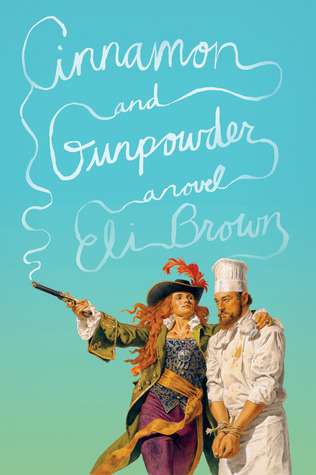
Title:Cinnamon and Gunpowder Author: Eli Brown Published: 2013 Length: 336 pages
What it’s about (synopsis via Goodreads):
A gripping adventure, a seaborne romance, and a twist on the tale of Scheherazade—with the best food ever served aboard a pirate’s ship
The year is 1819, and the renowned chef Owen Wedgwood has been kidnapped by the ruthless pirate Mad Hannah Mabbot. He will be spared, she tells him, as long as he puts exquisite food in front of her every Sunday without fail.
To appease the red-haired captain, Wedgwood gets cracking with the meager supplies on board. His first triumph at sea is actual bread, made from a sourdough starter that he leavens in a tin under his shirt throughout a roaring battle, as men are cutlassed all around him. Soon he’s making tea-smoked eel and brewing pineapple-banana cider.
But Mabbot—who exerts a curious draw on the chef—is under siege. Hunted by a deadly privateer and plagued by a saboteur hidden on her ship, she pushes her crew past exhaustion in her search for the notorious Brass Fox. As Wedgwood begins to sense a method to Mabbot’s madness, he must rely on the bizarre crewmembers he once feared: Mr. Apples, the fearsome giant who loves to knit; Feng and Bai, martial arts masters sworn to defend their captain; and Joshua, the deaf cabin boy who becomes the son Wedgwood never had.
Cinnamon and Gunpowder is a swashbuckling epicure’s adventure simmered over a surprisingly touching love story—with a dash of the strangest, most delightful cookbook never written. Eli Brown has crafted a uniquely entertaining novel full of adventure: the Scheherazade story turned on its head, at sea, with food.
How I got it:
I bought it.
When I got it:
Earlier this year.
Why I want to read it:
Our local public library system picked Cinnamon and Gunpowder as a city-wide discussion book earlier this year (part of the library’s “On the Same Page” program) — and while I didn’t jump on board in time to actually participate in the conversations and activities, I did make a note to myself that I had to track down a copy of the book! I love the sound of a Scheherazade story at sea, and even though I’m not myself much of a foodie, the idea of a master chef and a female pirate captain seems too good to pass up.
__________________________________
Want to participate in Shelf Control? Here’s how:
Write a blog post about a book that you own that you haven’t read yet.
Add your link below!
And if you’d be so kind, I’d appreciate a link back from your own post.
Check out other posts, and have fun!
For more on why I’ve started Shelf Control, check out my introductory post here, or read all about my out-of-control book inventory, here.
And if you’d like to post a Shelf Control button on your own blog, here’s an image to download (with my gratitude, of course!):
My Monday tradition, including a look back and a look ahead — what I read last week, what new books came my way, and what books are keeping me busy right now. Plus a smattering of other stuff too.
What did I read last week?
The Hummingbird by Stephen P. Kiernan: My blog tour post will be up on Thursday. Stop by and check it out!
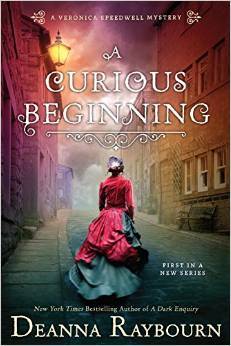
A Curious Beginning by Deanna Raybourn: Done! My review is here.
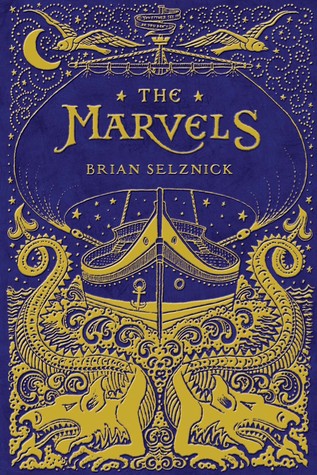
The Marvels by Brian Selznick: Simply breathtaking. My review is here.
In graphic novels:
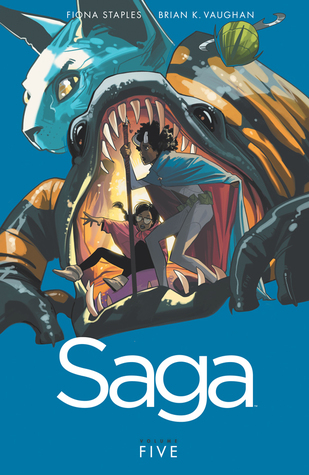
The Saga series by Brian K. Vaughan continues to be stunning! I just wish we didn’t have to wait for the next installment. Volume 5 was terrific, people. If you’re looking for a great graphic novel series to sink your teeth into, give Saga a try!
Meanwhile, in the world of audiobooks:
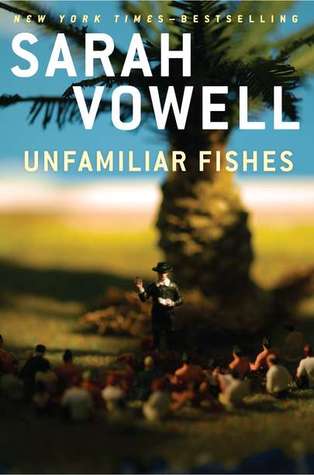
I got about 2/3 of the way through Unfamiliar Fishes by Sarah Vowell before quitting. If you want to know why I had to stop, check out my review, here.
Elsewhere on the blog:
I posted an author Q&A with Victoria Saccenti, author of the newly released Destiny’s Plan. Check it out here.
Fresh Catch:
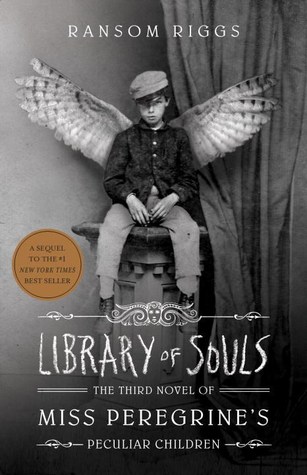
Look what arrived this week! Of course, I need a refresher on book #1, and I never did read #2, so I feel a series binge-read coming on
What will I be reading during the coming week?
Currently in my hands:
Just starting: The Heart Goes Last by Margaret Atwood
Now playing via audiobook:
Back to the Kate Shugak series! I’m on book 3 in this great Alaska-based mystery series by Dana Stabenow. As always, the audiobooks are terrific, and main character Kate is one tough cookie!
Ongoing reads:
Moving right along! Two chapters per week for each book, as part of discussions with the Outlander Book Club. We’ll wrap up both in December!
Can a book review consist of just one word? Because if the answer is yes, then my job here is simple. My one-word review of The Marvels:
Beautiful.
Want two words?
Absolutely beautiful.
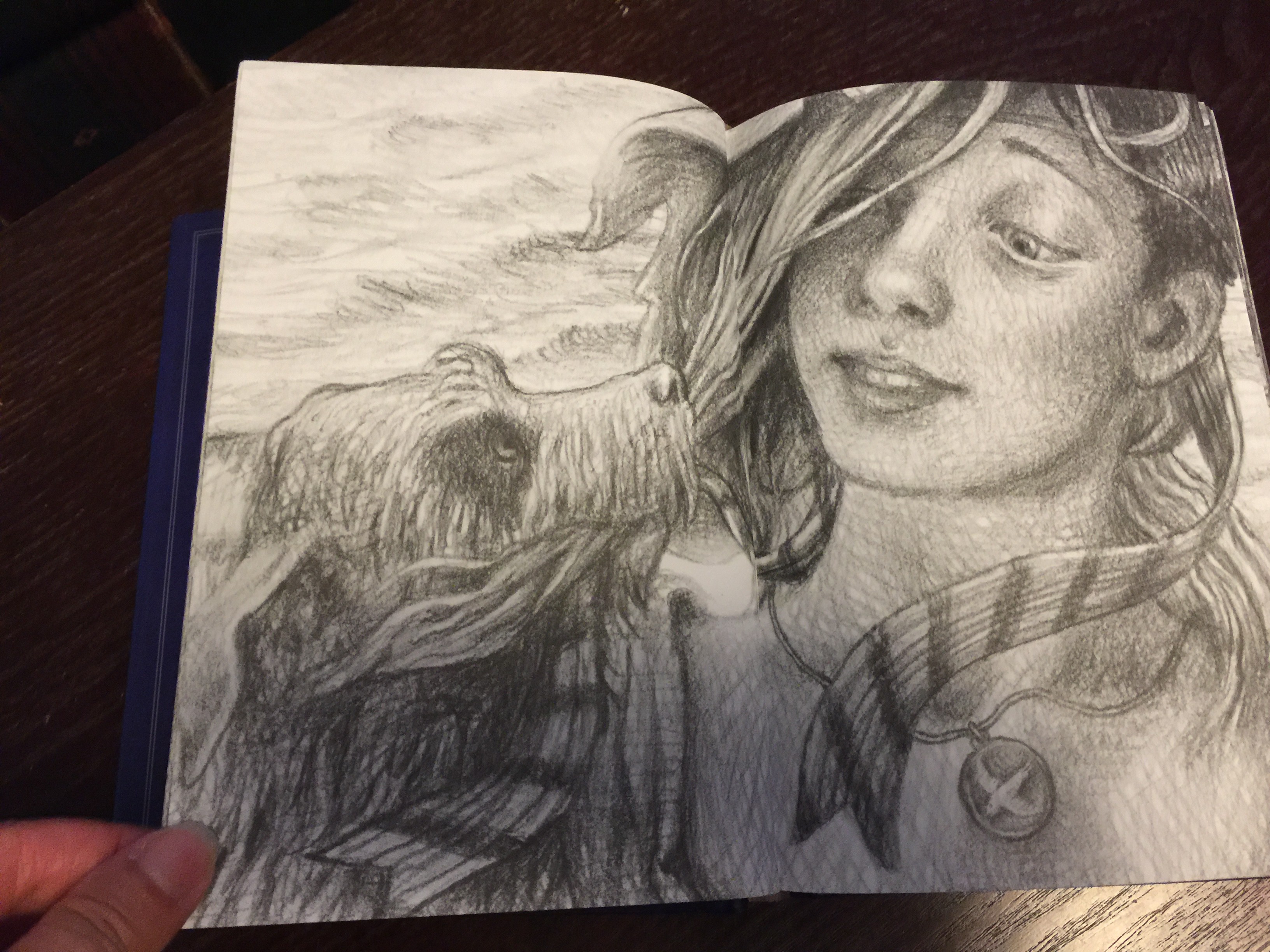
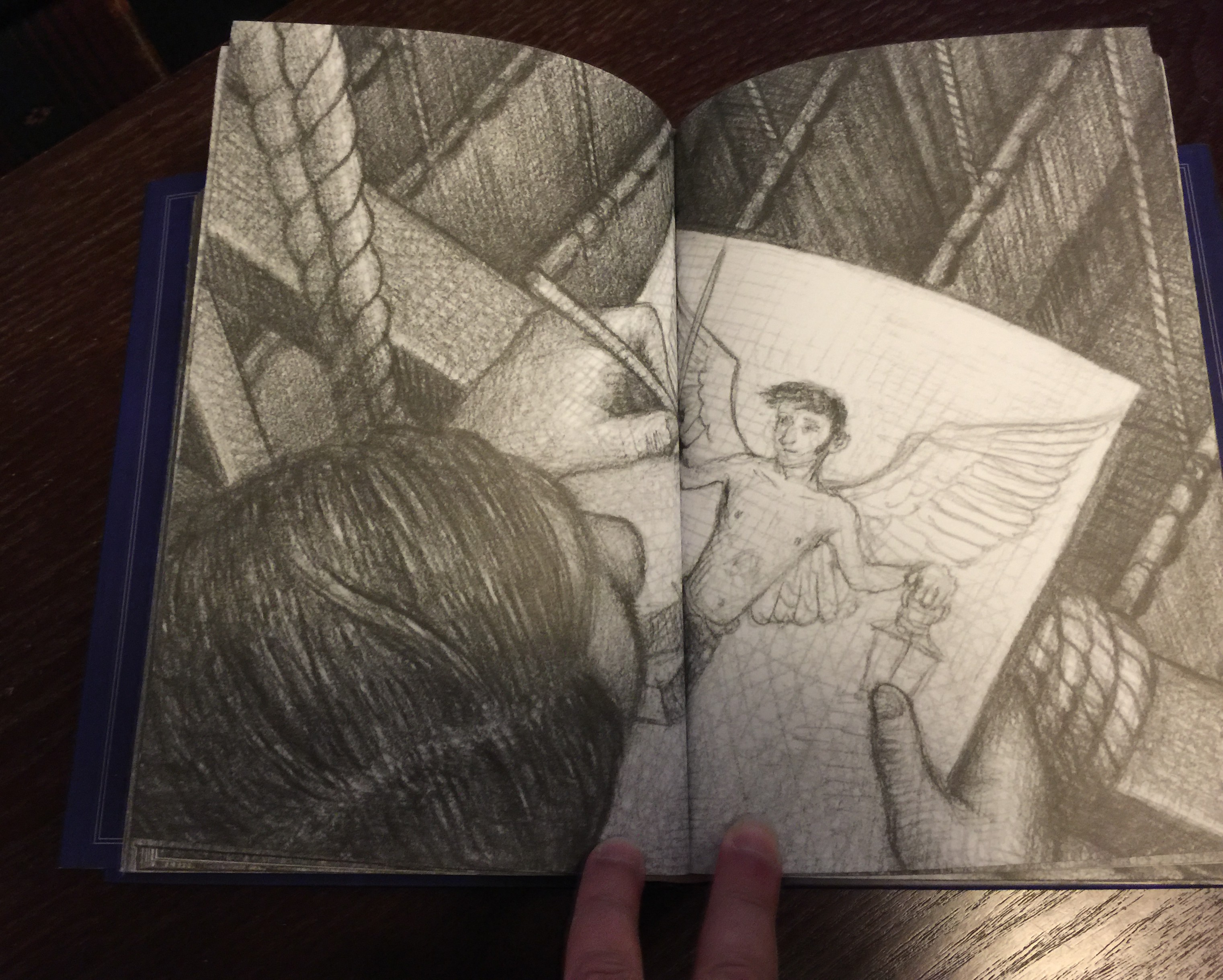
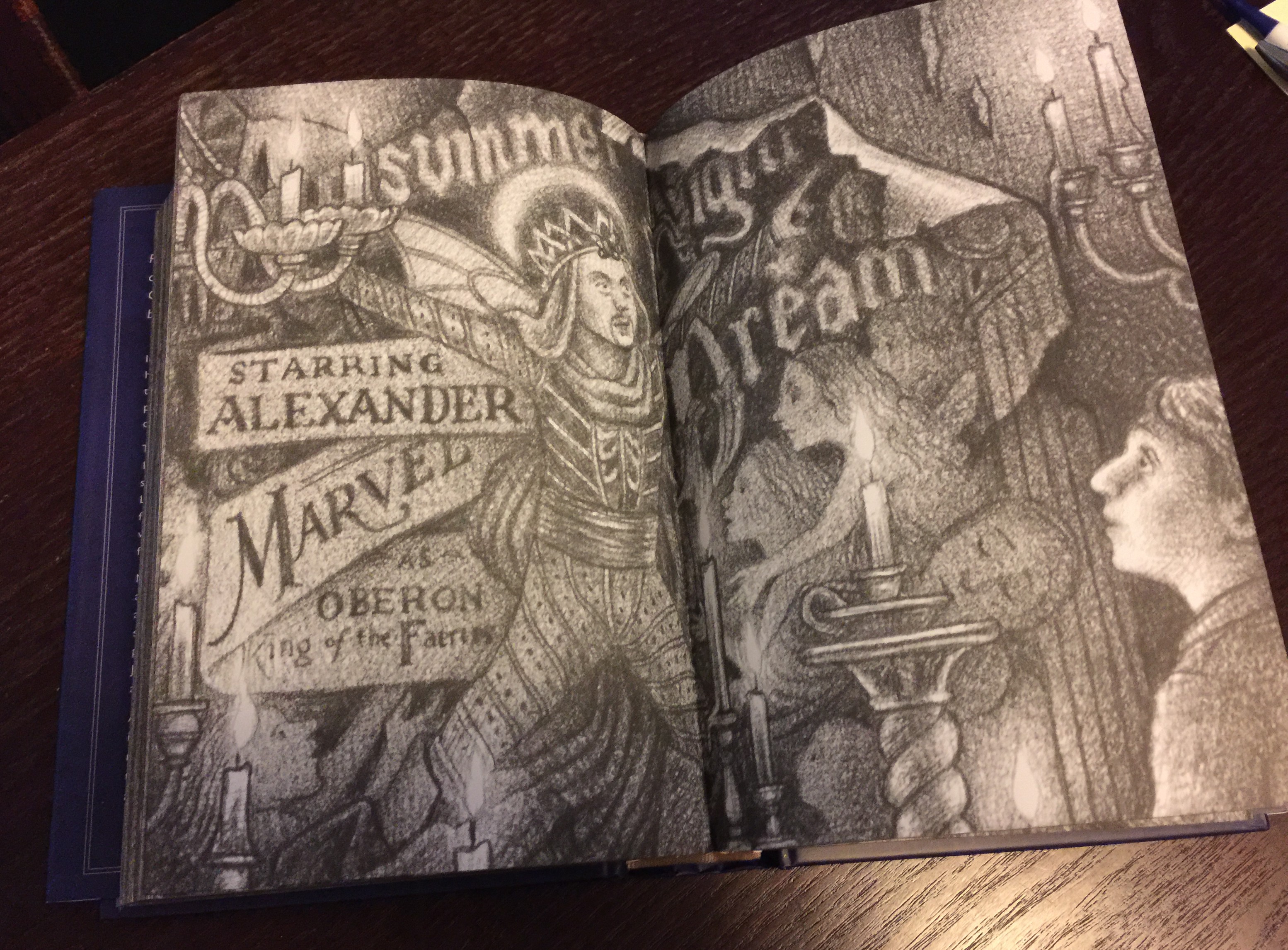
In The Marvels, author (and artist) Brian Selznick applies the technique he’s used previously (and so effectively) in The Invention of Hugo Cabret and Wonderstruck. In these books, the drawings aren’t illustrating the story — they’re telling the story.
Over 600 pages in length, The Marvels is told purely through illustration for the first 390 pages. And such gorgeous illustrations! Each set of double-facing pages contains a black and white pencil drawing, magnificently detailed, that serves to tell a piece of the story. From page to page, the tale unfolds, and the pictorial story is full of drama and emotion.
The story of The Marvels begins in 1766, with two brothers, Billy and Marcus, shipwrecked during a storm at sea. Rescued from the island where he washes up, Billy and his dog Tar find their way to London, where they’re adopted by the crew building the Royal Theater. Billy’s story of his brother’s love inspires the theater’s designers so much that Marcus is immortalized as an angel painted on the theater’s ceiling.
From there, the generations follow: Billy grows up and adopts an abandoned baby, who in turn grows up to become a star of the theater, and onward for several more generations. The Marvel family is the world’s most revered family of actors, acquiring world renown, while at the same time dealing with madness and the final disappointment of a descendant who only wants to escape from the family business. The story ends abruptly with a fire in the theater… and we turn the pages to blank whiteness, and then to the story’s continuation, in printed form, in 1990.
The next several hundred pages are told via the narrative of a 12-year-old boy named Joseph, who runs away from his repressive boarding school and seeks shelter with his eccentric uncle Albert, a man whom he’s never met before. Albert lives in a house that seems more like a museum, employing gas lights and candles to illuminate a mansion full of old-world treasures. Joseph is intrigued by the mystery of Albert’s home, and tries to get his uncle to open up about his secrets and share the truth about their family’s past.
How does this connect to the story of the Marvel family? I’m not telling. You’ll want to find out for yourselves. What I will say is that it wasn’t what I expected, but I was enthralled none the less.
At first, I felt impatient with the written part of the story. The illustrations are so beautiful (that word again!) and pulled me into their world so completely that I hated leaving it behind. But, bit by bit, the story of Joseph and Albert pulled me in as well, and teasing apart the hints to try to unravel the secrets was equally engrossing.
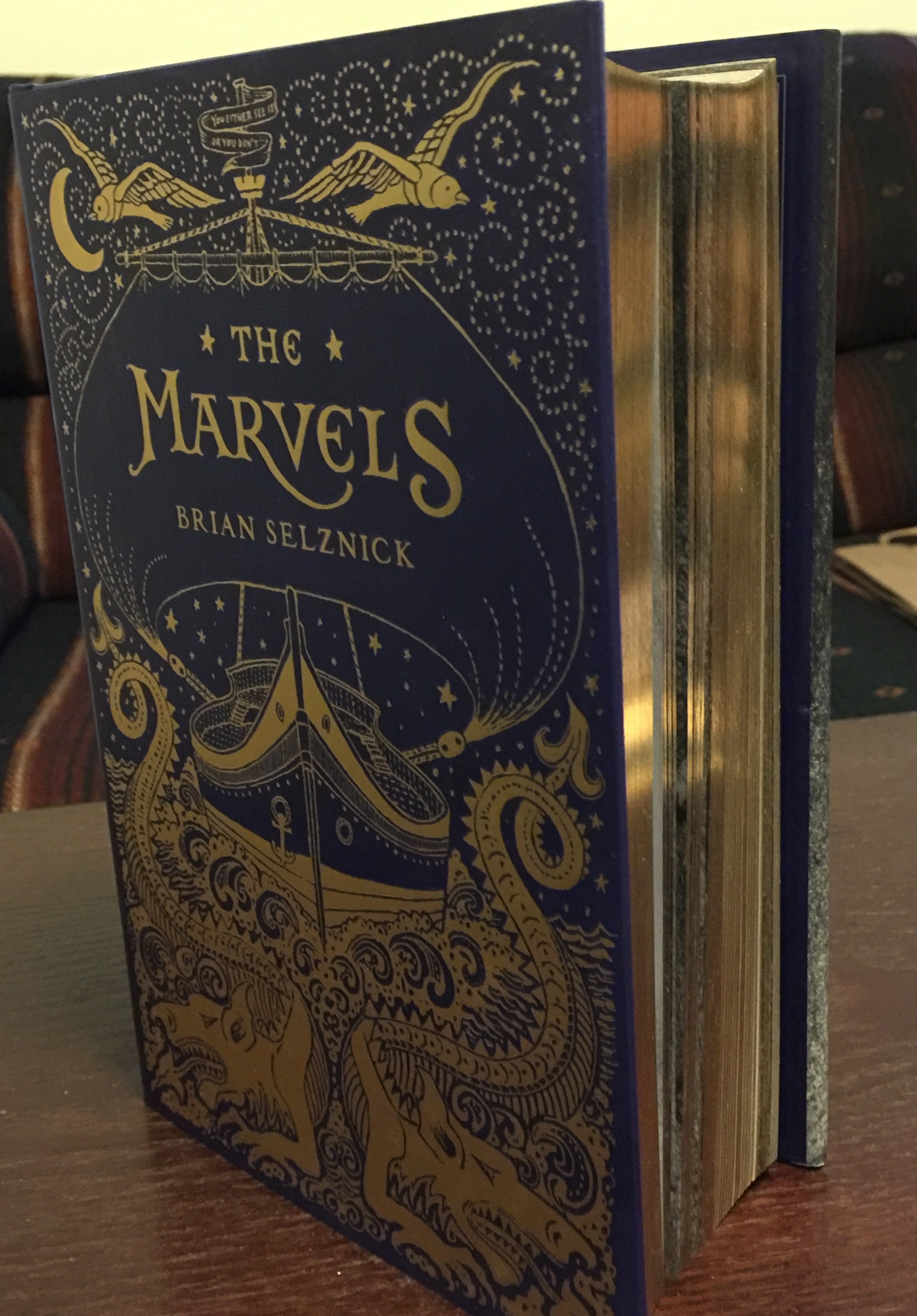
The book itself is hefty and magical to hold:
Several inches thick, with gilted edges and a gorgeous cover that feels like a throwback to an old-fashioned library edition, The Marvels is just so lovely to look at. This is one book you’ll want in a physical copy for sure — an e-book just won’t be the same.
The story is powerful in both its parts, with themes of love, devotion, and continuity, family commitment and inheritance, and a sense of wonder that is hard to describe. I found myself so absorbed in the mood created by this book that it was hard to re-enter the real world after finishing.
Wonderstruck may still be my favorite Brian Selznick book, but The Marvels is either a tremendously close second or perhaps right on par with Wonderstruck. For sure, both deserve a permanent place on my shelves, and are books that I’ll return to over the years. Reading these books is an immersive experience, and the power of the illustrations cannot be overstated.
So yes, one more time, I’ll return to my one-word review:
Beautiful.
_________________________________________
The details:
Title: The Marvels
Author: Brian Selznick
Publisher: Scholastic
Publication date: September 15, 2015
Length: 665 pages
Genre: Children’s fiction (middle grade/young adult); illustrated
Source: Purchased
A Curious Beginning is a delightful Victorian adventure romp that tells an exciting, mostly stand-alone story while setting readers up for an ongoing series. From the talented Deanna Raybourn, a pro at creating period settings that ring true, comes plucky heroine Veronica Speedwell, a no-nonsense young woman who very much knows her own mind.
Veronica is twenty-five years old, and so could be considered a spinster by the standards of that time period, but she truly doesn’t care what anyone else thinks. Veronica has been raised by two elderly aunts who adopted her as a young orphan, and ever since she’s been grown enough to exercise some independence, she has set out to see the world while on expeditions to collect the finest and rarest butterfly specimens. A talented lepidopterist, Veronica doesn’t shrink from adventure, scientific or amorous, and has left a trail of lovers behind as well… but with stipulations:
Over time, I developed a set of rules from which I never deviated. Although I permitted myself dalliances during my travels, I never engaged in flirtations in England — or with Englishmen. I never permitted any liberties to gentlemen either married or betrothed, and I never corresponded with any of them once I returned home. Foreign bachelors were my trophies, collected for their charm and good looks as well as attentive manners. They were holiday romances, light and insubstantial as thistledown, but satisfying all the same.
The action kicks off with the death of the Veronica’s remaining aunt, leaving her on her own with no ties and no obligations. Almost immediately, however, she is thrust into danger, as a strange man ransacks her aunts’ cottage and appears on the verge of kidnapping her — which she escapes thanks to the assistance of yet another stranger, Baron von Stauffenbach, who whisks her off to London for protection and promptly stashes her for safekeeping with an associate, a young, dangerous-looking man by the name of Stoker. Stoker has wild hair and tattoos, wears an eyepatch, and is busy trying to taxidermy an elephant when Veronica is deposited into his care. Neither of the two are thrilled by their enforced companionship — but when the Baron is found murdered, they realize that they’ll be spending a lot more time together as they run from both the police and whichever mysterious villains are responsible for the Baron’s death.
Along the way, of course, the tension and hostility between Stoker and Veronica morph into trust, admiration, and perhaps something deeper too, although they’re too busy trying to outwit a host of pursuers and simply stay alive to have time to explore any feelings, romantic or carnal, that might pop up.
Veronica is a super-smart, nerves-of-steel, take-no-prisoners woman. She has a hatpin and isn’t afraid to use it! In temperament and repartée, she reminded me very much of Gail Carriger’s Alexia Tarabotti — proper, demanding, capable, and unafraid, and prone to the most delicious quips and arguments. Her back and forth with Stoker is quite fun:
He shook his head as if to clear it. “I smoked opium once. It felt like listening to you, only rather more mundane.”
Another example:
“Veronica, are you weeping?” he asked suspiciously.
“Don’t be ludicrous,” I returned tartly. “I do not weep. It is a symptom of the rankest sentimentality, and I am never sentimental.”
By the end of the novel, the two have joined a circus, escaped evil henchmen by jumping into the Thames, and burned down a warehouse, among other more sedate approaches to investigation. The mystery of the Baron’s death is resolved in a way that makes clear that while this chapter is more or less complete, there are plenty of loose ends and further threats to deal with in the future.
A Curious Beginning is a thoroughly enjoyable romp, and should particularly appeal to readers who like Victorian settings with plenty of action thrown in. Veronica is a wonderful main character, and Stoker is intriguing — in that dark, broody, mysterious way that just might win him a spot on the “book boyfriends” list of quite a few readers. Together, the two bounce off one another constantly, making it clear that their surface disagreements and irritation are covers for an attraction and connection that are likely to continue deepening as this series progresses.
I, for one, can’t wait to see what sort of adventures await these two. This is a delightful start to a new series, and I look forward to reading much more.

 My Monday tradition, including a look back and a look ahead — what I read last week, what new books came my way, and what books are keeping me busy right now. Plus a smattering of other stuff too.













 Bookshelf Fantasies