Hippos Go Berserk! The weird and wonderful River of Teeth books by Sarah Gailey

FERAL. HIPPOS. IN THE MISSISSIPPI.
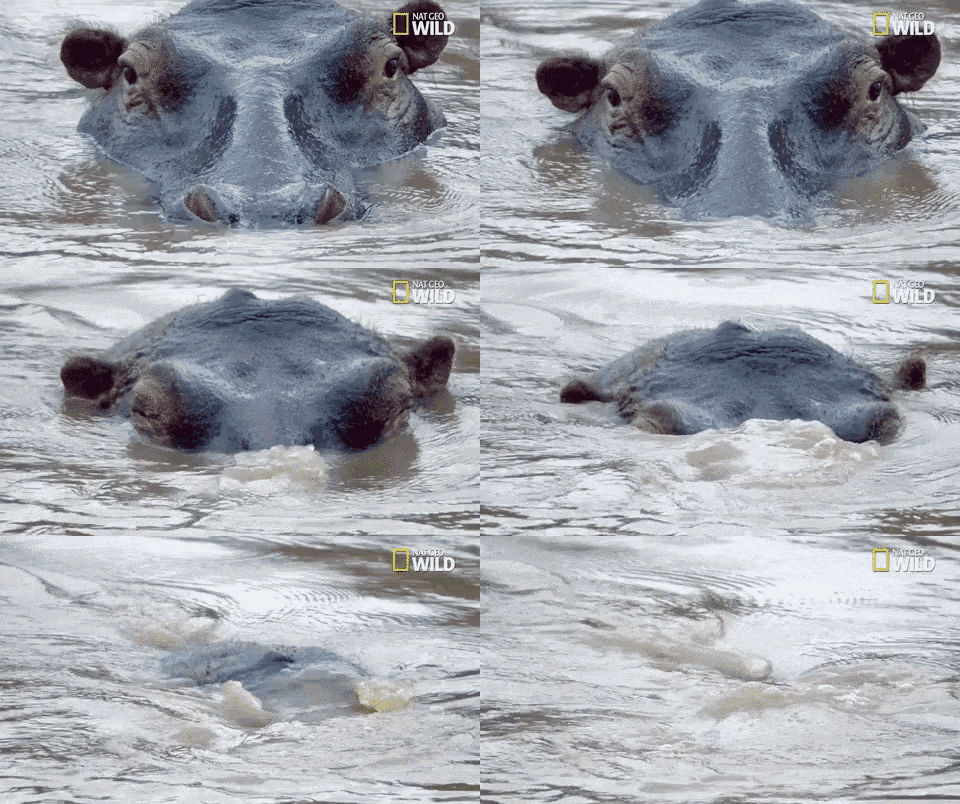
What more do you need to know?

In the two River of Teeth novellas, author Sarah Gailey takes us on a tour of the Wild South of an alternate United States, and it’s a crazy good time.
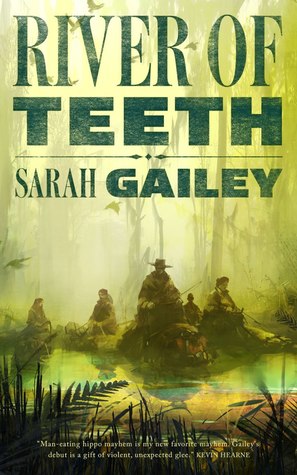
In River of Teeth, we learn that the United States Congress, in the mid-1850s, considered importing hippos as a solution to a national meat shortage. True story! In real life, the proposal never went anywhere, but in River of Teeth, the Hippo Act of 1857 is just the beginning of decades-long development of hippo ranches in the marshes and bayous of the South.

Hippo cowboys are called hoppers. Some hippos are bred for their meat, and others are bred to be fast and loyal mounts for their hoppers, who ride them on kneeling saddles, brush their teeth at night, and make sure they’re never too far from a body of water to swim in.

Meanwhile, a bunch of hippos that escaped from a ranch early on have reproduced and gotten fiercer than ever, and now form the great bunch of feral hippos who terrorize the Harriet, the dammed lake that once was a passage of the Mississippi.

Got all that? That’s really all just backstory to the main event. In River of Teeth, a hopper named Winslow Houndstooth brings together a gang of hired guns (and knives) — mostly outlaws — to carry out an operation (most definitely not a caper) aimed at restoring trade on the Mississippi. The group includes a pregnant Latina with a penchant for very sharp daggers, a large French woman who’s a skilled thief and tough in a fight, the nonbinary character Hero who’s an explosives expert, and slick/shady Cal, who just obviously shouldn’t be trusted. They go up against the riverboat gangster in chief who controls the Harriet and punishes card cheats by throwing them to the ferals, and there’s trickery and double-crossing galore.
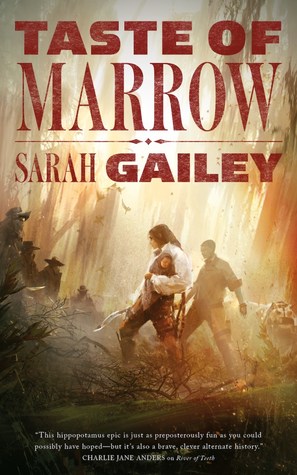
Let’s just say that there are explosions and disasters, and things are left so up in the air that by the time Taste of Marrow begins, it’s no surprise that our gang is split up into two separate groups, each believing the other likely dead but unwilling to give up the search. Much of Taste of Marrow is devoted to looking for one another, but at the same time there’s a newborn baby, marshlands and rivers being overrun by the ferals now loose of their restrictions, and riverboats being chomped to shreds by said ferals. There’s also a romantic reunion worth the way, as well as a sensibility that’s fresh and in tune with women’s bodies in a way that’s utterly new in an adventure tale.

Okay, to be more specific, while on the hunt for her kidnapped infant, the tough-as-nails former assassin has to deal not only with the stress of evading the law and plotting her revenge, but with a raging breast infection that no doubt is due to clogged milk ducts after having her nursing baby taken from her. Egads, I cringed in sympathy whenever she accidentally brushed something against her painful breasts. Been there, done that, but not while riding a hippo. (Boy, don’t I feel wimpy now.)

These books are a delight, plain and simple. I mean, the premise is just crazy, right? How can you not love a “western” that features hippos? Where a popular song played on the saloon piano is “The Wild Pottamus Rag”? And these people take their hippos very, very seriously. They raise them from hops (baby hippos), talk to them, sing to them, and seem to practically mind-meld with their chosen hippos. The hippos are fast and dangerous, but also devoted and affectionate. And with names like Rosa and Ruby and Abigail and Betsy, how can you not adore them?

“It can’t be,” Hero breathed. They scrambled up, slipping in the wet clay, and ran to the edge of the paddock. They reached right through the half-rotted wood at the edge of the water and pressed both hands to the nose of the little Standard Grey hippo that was huffing bubbles into the water there.

“It had better be,” Adelia said, “or else you just grabbed a strange hippo by the face.”

The gender fluidity and lack of barriers in relationships is quite refreshing and delightful too. Hero’s preferred pronouns are they and them, and no one ever slips up or deviates or makes an issue of it. (As a reader, I did have to re-read a couple of paragraphs when there are group scenes, as I sometimes wasn’t sure on first pass whether the “they” was referring to the group or to Hero themselves. But all good — I sorted it out).

A recurring gag throughout both stories is that various character steel themselves to ask Hero a big question, or Hero braces themselves waiting for the inevitable question that they know is coming. We readers may assume the question will have something to do with gender — and it just never is, instead focusing on mundane matters or questions about explosives or the baby or really, anything else. It a fun moment to realize that we’re being set up over and over again, and it made me giggle.

Despite the relatively short lengths of the two novellas — each under 200 pages — the characters are quite distinct and well described, and it’s really a fun batch of personalities that we get to know and follow on their crazy adventures.

If you at all have a taste for alternate history, cowboy tales, or hippos — especially hippos! — read these novellas.

Meanwhile, since starting the stories, I simply haven’t been able to get this other book out of my mind — a children’s favorite that I must have read out loud to my kiddo at least 100 times or more.
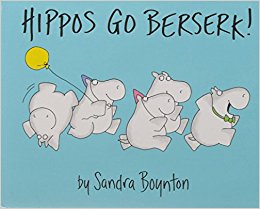
I love these western hippos, who seem to fit the River of Teeth mood:
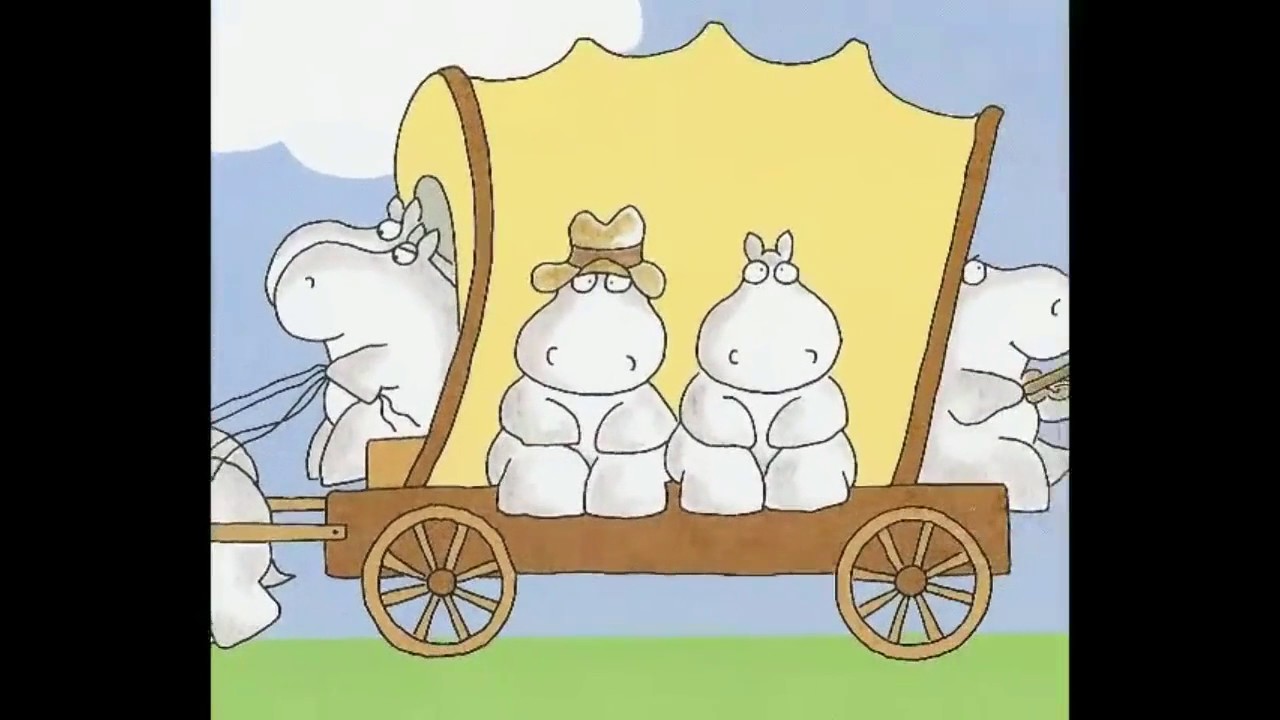
It’s a hippo party! Good times! Crazy fun!
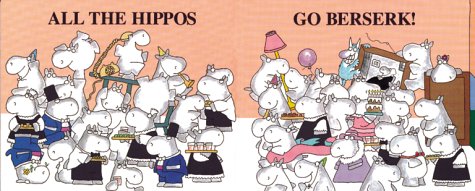
Don’t believe me yet? Check out the whole book, here:


But enough with the kids’ book — you really do need to read River of Teeth and Taste of Marrow! Or I’ll sic this guy on you…


_____________________________________

River of Teeth, 121 pages
Taste of Marrow, 192 pages
Published by Tor, 2017

Save

Save

Save

The Return of Thursday Quotables! Spotlight on Venetia by Georgette Heyer

quotation-marks4

Welcome to Thursday Quotables! This weekly feature is the place to highlight a great quote, line, or passage discovered during your reading each week.  Whether it’s something funny, startling, gut-wrenching, or just really beautifully written, Thursday Quotables is where my favorite lines of the week will be, and you’re invited to join in!

Blogger’s note: Thank you, kind readers, for putting up with my summertime slacking! Now that it’s September, there will be no further excuses — Thursday Quotables is back! After taking a summer break, I’m back on track and will be sticking with my normal weekly posting schedule. Please join me whenever you have a great quotable to share!

My Thursday Quotable for this week:

 Venetia by Georgette Heyer
(originally published 1958 )

I am on a roll this year with Georgette Heyer! Venetia is my 4th book by this wonderful author, and it’s just delightful. I’m listening to the audiobook (with excellent narration by Phyllida Nash), and loving every moment. I still have quite a ways to go, but thought I’d share this passage, which is interesting to me because it does not represent the main character’s opinion, but rather shows the viewpoint of an older woman who’s trying to explain men (and their infidelities) to the lovely (and more progressive) Venetia:

“Men, my love, are different from us,” she had said once, “even the best of them! I tell you this because I hold it to be very wrong to rear girls in the belief that the face men show to the females they respect is their only one. I daresay, if we were to see them watching some horrid vulgar prize-fight, or in company with women of a certain class, we shouldn’t recognise our own husbands and brothers. I am sure we should think them disgusting! Which, in some ways, they are, only it would be unjust to blame them for what they can’t help. One ought rather to be thankful that any affairs they may have amongst what they call the muslin company don’t change their true affection in the least. Indeed, I fancy affection plays no part in such adventures. So odd! — for we, you know, could scarcely indulge in them with no more effect on our lives than if we had been choosing a new hat. But so it is with men! Which is why it has been most truly said that while your husband continues to show you tenderness you have no cause for complaint, and would be a zany to fall into despair only because of what to him was a mere peccadillo. ‘Never seek to pry into what does not concern you, but rather look in the opposite direction!’ was what my dear mother told me, and very good advice I have found it.

Yeah, no. But thanks anyway, Lady Denny.

And I do love the use of the word “zany” as a noun — I think I need to start using it in conversation.

What lines made you laugh, cry, or gasp this week? Do tell!

If you’d like to participate in Thursday Quotables, it’s really simple:

  • Write a Thursday Quotables post on your blog. Try to pick something from whatever you’re reading now. And please be sure to include a link back to Bookshelf Fantasies in your post (http://www.bookshelffantasies.com), if you’d be so kind!
  • Add your Thursday Quotables post link in the comments section below… and I’d love it if you’d leave a comment about my quote for this week too.
  • Be sure to visit other linked blogs to view their Thursday Quotables, and have fun!

391px-quotation_marks_svg1391px-quotation_marks_svg1391px-quotation_marks_svg1391px-quotation_marks_svg1391px-quotation_marks_svg1391px-quotation_marks_svg1391px-quotation_marks_svg1391px-quotation_marks_svg1

Save

Save

Save

Save

Save

Save

Series wrap-up: The Gemma Doyle trilogy by Libba Bray

There’s something satisfying about finishing a trilogy, even if it’s not the best thing you’ve ever read.

Such is the case for me with the Gemma Doyle trilogy by Libba Bray. I read the first book in the series, A Great and Terrible Beauty, over 10 years ago, and apparently didn’t think very highly of it at the time — my original Goodreads rating was only one star!

Over the years, though, I’ve had multiple people tell me that I should give the books another try. And after finding copies of all three at library sales (all paperbacks $2 or less!), I’ve considered starting the books at several different times. Finally, this year, I decided to give it a whirl, and settled on audiobooks as the way to go.

First, let me just say that the audiobook narrator, Josephine Bailey, is very good. She has to portray a variety of girls of different social statuses, as well as servants, teachers, and various other adults, keeping them all distinct as individuals. There’s never a doubt which character is speaking at which time.

Note: I did ditch the audio format for a printed version for book #3, as I just couldn’t see devoting over 20 hours of listening time to a book I was feeling not entirely excited about.

Okay, the story, bare-bones version: Gemma Doyle is an English girl raised in India during the Victorian era. At age sixteen, she’s yearning for the London society she glamorizes in her mind, and her resentment at being denied this leads to conflict with her loving mother… and then her mother dies suddenly, a victim of a murder with supernatural overtones. Gemma is transplanted back to London, the place of her dreams, but not at all in the circumstances she’d yearned for. Instead, she’s full of pain and regret for her final arguments with her mother, feels lonely and out of place in cold, damp England, and has no one close to her other than her brother Tom and her bereaved father, so grief-stricken that he’s become addicted to laudanum as an escape from his pain.

Gemma is sent off to Spence, a finishing school for young ladies, where she’s initially mocked and scorned by the mean girls clique, but eventually she finds a way in. Soon, she’s part of a group of four, drawn to the stories of magical powers that their teacher shares with the class. They learn of the Order, an ancient league of sorceresses with powers that allow them into the realms, a magical world between worlds. Gemma finds that she has the power to enter the realms and to bring her friends Felicity, Pippa, and Ann with her. The realms are full of magical delights  — but there are also disturbances, as an old enemy wants back in and a secret society called the Rakshana try to control the Order and their use of magic.

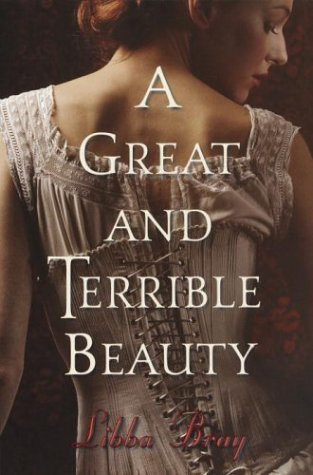
Book 1, A Great and Terrible Beauty, focuses on Gemma’s discovery of the Order and the realms, and her fight to defeat Circe, a witch gone bad who wants to gain control of the realms and its powers by using Gemma. The four girls travel together through the land of magic, and along the way, face hard truths about themselves and their pasts. Tragedy ensues, and there appear to be fractures within the group.

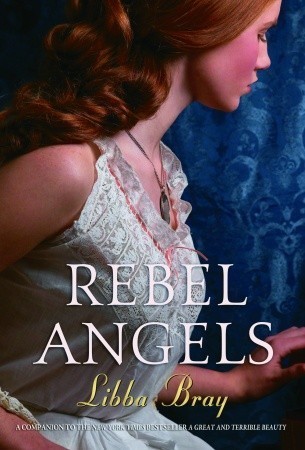
In the second book, Rebel Angels, the girls are back at school before heading to London for the Christmas holidays. Intrigue and danger escalate; Gemma has succeeded in battling evil forces previously, but now there are repercussions as the limits on magic in the realms seem to have been lifted. It’s now up to Gemma to find the source of the magic in the realms and bind it so that it can’t be used for evil purposes. Finding the source turns into a quest for the girls, as they repeatedly enter the realms and travel through parts previously unknown, encountering strange creatures and danger at every turn. Meanwhile, back in the real world, they’re also dealing with the ups and downs of London society, including balls, dinner parties, and suitors, and Gemma’s heart is torn between the handsome, respectable young man who courts her and the Indian boy from the Rakshana who seems always ready to protect her. Bonus for boy #2: He’s gorgeous and sets her heart a-flutter.

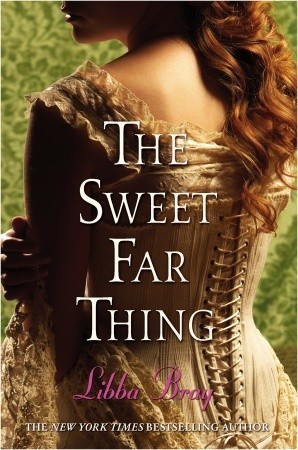
In book #3, The Sweet Far Thing, Gemma deals with a promise made to share her magic with the peoples of the realms, while also dealing with the perils of making her social debut and having a “season” in London. There’s a lot of travel in and out of the realms, as the magic seeps into the real world in dangerous and unpredictable ways. Gemma doesn’t know who to trust, and her bonds with Felicity and Ann are tested as their desires come into conflict. The book builds to a war between factions within the realms while outside forces maneuver to gain power. And somewhere amidst all the drama, Gemma still finds time to worry about not falling over while curtsying during her presentation at court. What’s a Victorian girl to do?

Now that I’ve read the entire trilogy, do I stick with my one-star rating? Clearly, no — or else I wouldn’t have bothered with books 2 and 3. I didn’t hate the books, and I even thought parts of the story were quite good. I liked many of the characters, and felt the author did a good job of differentiating between the four girls at the center of the story, giving each a clear and distinct personality and letting us understand what makes each of them tick.

But the books are flawed, and the flaws become exaggerated with each successive book.

Part of the problem I have with these books is that the friendship between the girls, so crucial to the story, feels false and even flimsy at times. They’re not particularly nice to each other, and while they claim to love one another, they seem to turn sour and accusatory at the least provocation. There’s an element of trust missing, and resentments keep popping up at regular intervals. I guess I just don’t buy that these young women are truly best friends or that they truly want what’s best for one another. Shades of Mean Girls creep in too often for me to feel happy with the portrayal of female friendship.

In book #2 especially, the plot meanders… and I mean, a lot. The quests are mostly pointless filler. The story (and the book) just doesn’t need to be as long as it is. There are water nymphs and gorgons and people of the forest, and none of them really matter. Ultimately, the story is about Gemma’s access to magic and whether she can control it, and about the struggle between the different factions that want to control the magic and keep the others out. All the travels up and down rivers and through the woods are mainly there for colorful filler.

And book #3 — well, when I tell you that it’s over 800 pages, that should tell you a lot. This book should either have been split in two or — my preference — subjected to some ruthless editing and trimming. It’s overstuffed and not nearly focused enough. My complaints about the portrayal of the girls’ friendship holds true. Even this late in the game, the girls turn on one another, questioning loyalties, making accusations, and expressing a level of mistrust that doesn’t make sense given what they’ve been through together.

Another quibble I have with these books is that — despite the huge number of pages in the entire trilogy — the world-building is weak. How exactly does a person bind or share magic? Where are all these other Order members? Why do things work the way they do in the realms? I always felt like I was missing information, like a jigsaw puzzle with key pieces missing.

Also problematic is Gemma’s habit of ignoring advice (which the other girls are at fault for as well). She’s told not to trust anything or anyone she encounters in the realms — so she immediately trusts the first being she sees because it appears to be someone she knows. She constantly puts her faith in people who turn out to be baddies, and blindly hates those she decides are bad but who may not be. She also swears to be truthful with her friends and then goes behind their backs at a moments notice because she thinks they won’t or can’t understand or they’ll try to stop her (from doing things that are often ill-advised). Not a whole lot of common sense, basically.

I do think that the portrayal of girls’ and women’s lives in Victorian society is very well done. Females are pigeon-holed into prescribed roles early on, and any deviation from the norm is a cause for mockery, disdain, or ostracization.

Felicity takes both my hands in hers. My bones ache from her grip. “Gemma, you see how it is. They’ve planned our entire lives, from what we shall wear to whom we shall marry and where we shall live. It’s one lump of sugar in your tea whether you like it or not and you’d best smile even if you’re dying deep inside. We’re like pretty horses, and just as on horses, they mean to put blinders on us so we can’t look left or right but only straight ahead where they would lead.” Felicity puts her forehead to mine, holds my hands between hers in a prayer. “Please, please, please, Gemma, let’s not die inside before we have to.”

The author repeatedly shows how the clothing of the era reinforces the restrictions society places on girls. One can’t very well run or defend oneself while wearing corsets and petticoats — walking demurely and sitting up straight and staying calm are basically enforced by the clothing required for respectability.

As we walk, the men survey us as if we’re lands that might be won, either by agreement or in battle. The room buzzes with talk of the hunt and Parliament, horses and estates, but their eyes never stray too far from us. There are bargains to be struck, seeds to be planted. And I wonder, if women were not daughters and wives, mothers and young ladies, prospects or spinsters, if we were not seen through the eyes of others, would we exist at all?

Through Gemma’s eyes, we see the damage done by the petty nastiness between the girls at the school and the emphasis on beauty and status. Gemma has (I hope) made a lasting change for the better by the end of the trilogy by pleading with the headmistress to offer her students meaningful studies rather than just posture, elocution, and deportment — and urging her to create an environment where back-biting and meanness isn’t the norm. It may be out of reach still in that era, but at least Gemma has given voice to what a more positive future might look like.

“Why should we girls not have the same privileges as men? Why do we police ourselves so stringently — whittling each other down with cutting remarks or holding ourselves back from greatness with a harness woven of fear and shame and longing? If we do not deem ourselves worthy first, how shall we ever ask for more?

“I have seen what a handful of girls can do, Mrs. Nightwing. They can hold back an army if necessary, so please don’t tell me it isn’t possible. A new century dawns. Surely we could dispense with a few samplers in favor of more books and grander ideas.”

If only the plot were tighter and better defined, I’d be able to be more enthusiastic about these books. There are clearly some important messages and themes built into the series, with powerful thoughts about girl power and friendship and independence and self-determination. Unfortunately, much of this positive is overwhelmed by the wandering and messy plotlines.

Do I recommend the Gemma Doyle trilogy. Um… I mean… yes? Maybe? There are nuggets of good, and the books are never boring. I just wish someone had taken a big paring knife to sections of the books, and then maybe infused a good helping of explanations to the fuzzier bits. As historical fiction goes, the books do a good job of invoking the societal norms, class structures, and expectations of the Victorian era. But, if you need a tightly woven plot to go with the atmospheric elements. you might be better off looking elsewhere.

_________________________________

Book details:

A Great and Terrible Beauty – 403 pages, published 2003
Rebel Angels – 548 pages, published 2005
The Sweet Far Thing – 819 pages, published 2007

Save

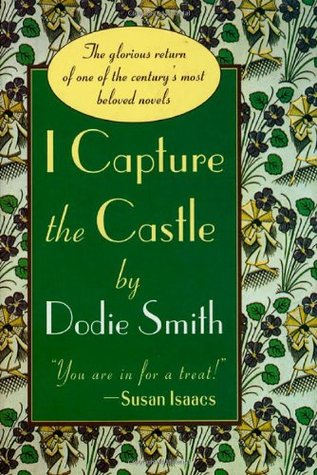
Shelf Control #88: I Capture The Castle

Shelves final

Welcome to Shelf Control — an original feature created and hosted by Bookshelf Fantasies.

Shelf Control is a weekly celebration of the unread books on our shelves. Pick a book you own but haven’t read, write a post about it (suggestions: include what it’s about, why you want to read it, and when you got it), and link up! Fore more info on what Shelf Control is all about, check out my introductory post, here.

Want to join in? Shelf Control posts go up every Wednesday. See the guidelines at the bottom of the post, and jump on board!

cropped-flourish-31609_1280-e1421474289435.png

My Shelf Control pick this week is:

Title: I Capture the Castle
Author: Dodie Smith
Published: 1948
Length: 343 pages

What it’s about (synopsis via Goodreads):

I Capture the Castle tells the story of seventeen-year-old Cassandra and her family, who live in not-so-genteel poverty in a ramshackle old English castle. Here she strives, over six turbulent months, to hone her writing skills. She fills three notebooks with sharply funny yet poignant entries. Her journals candidly chronicle the great changes that take place within the castle’s walls, and her own first descent into love. By the time she pens her final entry, she has “captured the castle”– and the heart of the reader– in one of literature’s most enchanting entertainments.

How I got it:

I don’t even remember — but I suspect I picked up a copy at one of our library’s big books sales (just like at least 50% of the books on my shelves)

When I got it:

Sometime within the last five years or so, I believe.

Why I want to read it:

This is one of those books that everyone tells you to read. It’s supposed to be funny and charming and quirky, and I’ve heard it described as a modern classic. As a bonus reason for reading it, I’m participating in an acrostic challenge with my book club and I’m missing a title that starts with the letter I — so I guess I just have to read this one before the end of the year!

__________________________________

Want to participate in Shelf Control? Here’s how:

  • Write a blog post about a book that you own that you haven’t read yet.
  • Add your link in the comments!
  • If you’d be so kind, I’d appreciate a link back from your own post.
  • Check out other posts, and…

Have fun!

Save

Save

Save

Save

Save

Save

Save

Save

Save

Save

Save

Save

Save

Top Ten Tuesday: Ten Books I Loved During My First Year of Blogging

Top Ten Tuesday is a meme hosted by The Broke and the Bookish, featuring a different top 10 theme each week. This week’s topic is a Throwback Freebie. One of the suggested ideas is Ten Books I Loved During The First Year I Started My Blog. I love it! Let’s face it — the first year of blogging is tough. We’re trying to find our footing, our voice, our community… and I know I have bunches of reviews from early on that basically were never seen because I was just starting out.

Here are 10 of the books I reviewed in my first blogging year (or thereabouts), along with a link to the review. Sweet memories!

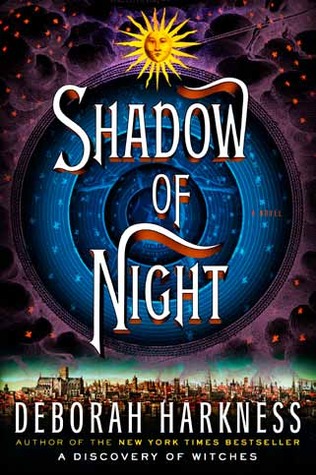
1) Shadow of Night by Deborah Harkness (review): I think this may have been the very first book review I posted!

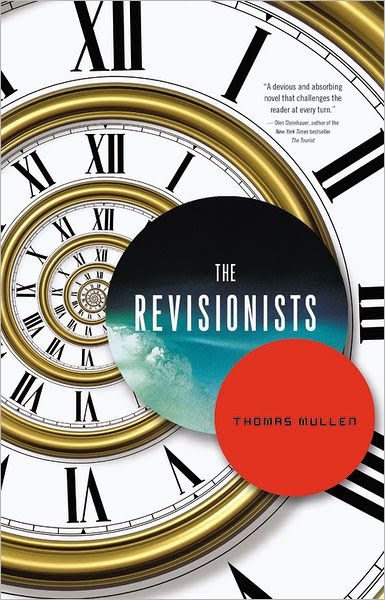
2) The Revisionists by Thomas Mullen (review): A pretty cool twist on the time travel genre.

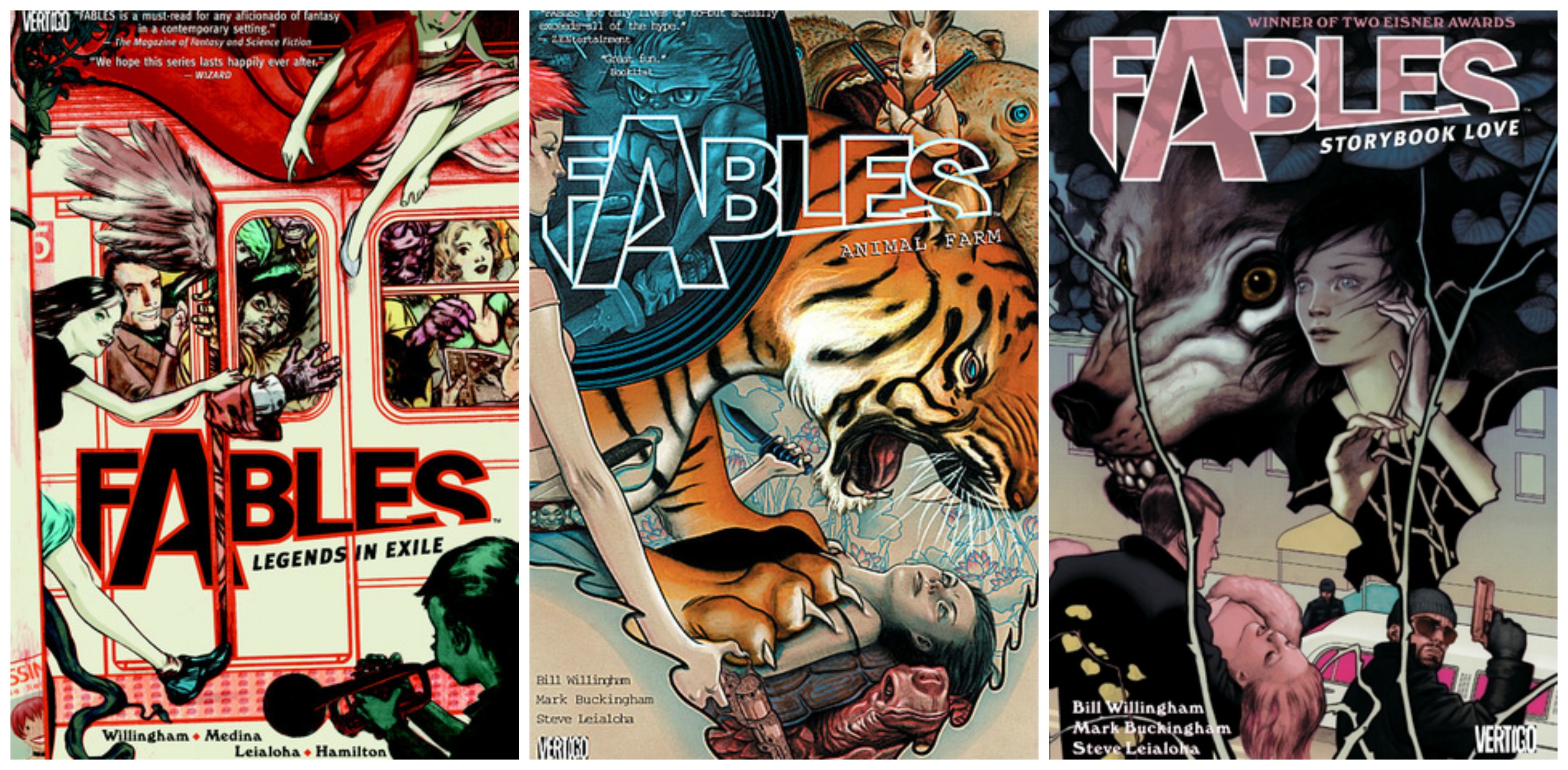
3) Fables, volumes 1 – 3 by Bill Willingham (review): The start of a meaningful relationship! I quickly became hooked on the Fables world and read every bit of it, until the very final volume. Yes, there were tears.

4) Ocean’s Surrender by Denise Townsend (review): Look, I don’t normally review erotica, but when it’s by a favorite author writing under a pen name, I’m game. All the steam you’d expect, with a strong plot underlying the sexytimes.

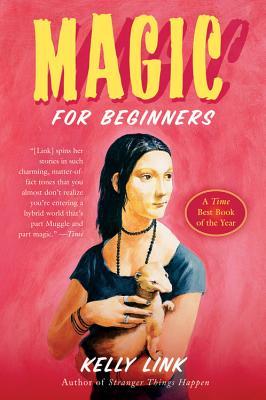
5) Magic for Beginners by Kelly Link (review): I’m really not much of a short story reader, but a few of the stories in this collection really caught my fancy.

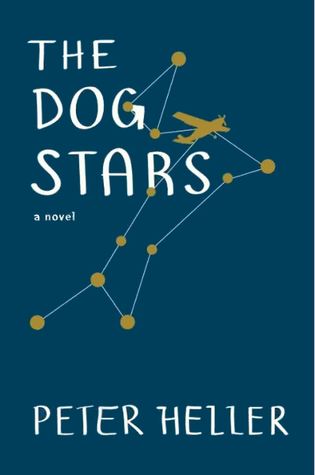
6) The Dog Stars by Peter Heller (review): Post-apocalyptic fiction with gorgeous writing.

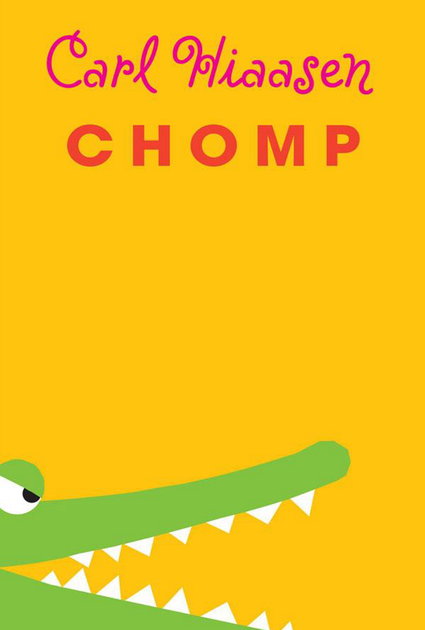
7) Chomp by Carl Hiaasen (review): I was doing more kid fiction back in my early blogging days, as my kiddo was still in the phase where I could read aloud with him. Sadly, he no longer lets me read to him. (Okay, fine, he’s in high school, so I suppose it’s understandable.)

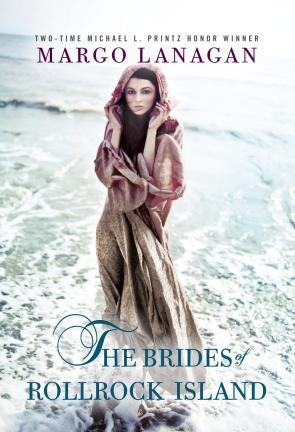
8) The Brides of Rollrock Island by Margo Lanagan (review): I can’t even begin to describe how beautiful the writing is in this book. You really just have to experience it.

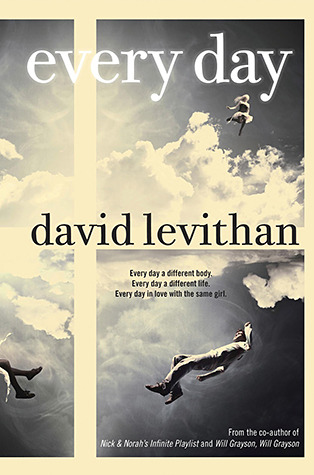
9) Every Day by David Levithan (review): I’ve read bunches of David Levithan books by now, but this one is really something special. There’s definitely nothing like it out there. (Read it before the movie comes out!)

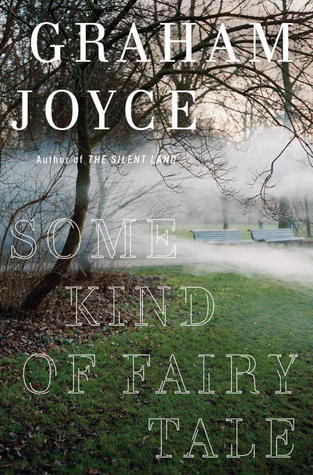
10) Some Kind of Fairy Tale by Graham Joyce (review): I was so sad when this author passed away in 2014. He’s the author of one of my very favorite books, The Silent Land (which I read in my pre-blogging days). This one is really special too.

What’s on your list this week? Please share your TTT link and I’ll drop by for a visit.

♥♥♥♥♥♥♥♥

Do you host a book blog meme? Do you participate in a meme that you really, really love? I’m building a Book Blog Meme Directory, and need your help! If you know of a great meme to include — or if you host one yourself — please drop me a note on my Contact page and I’ll be sure to add your info!

Save

Save

Save

Save

Save

Save

Save

Save

Save

Save

Save

Save

Save

Save

Save

Insta-Reaction: Outlander, Season 3, Episode 1

Season 3 has begun! My intention is to write an “Insta-Reaction” post for each episode soon after viewing, to share some initial thoughts, questions, reactions — you name it.

Warning:

Spoilers

I may be talking about events from this episode, other episodes, and/or the book series… so if you’d rather not know, now’s your chance to walk away!

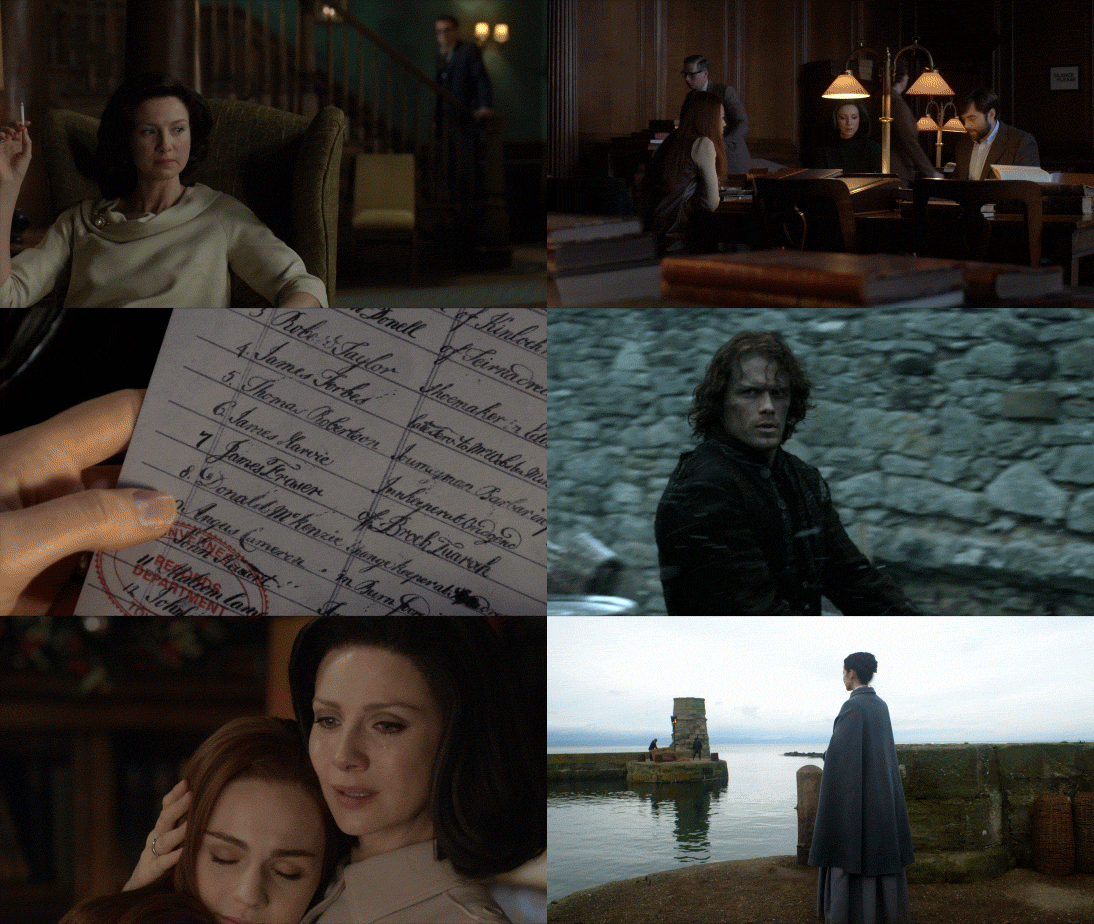
Outlander, episode 301: “The Battle Joined”

The official synopsis (via Starz):

After living through the Battle of Culloden, Jamie is at the mercy of British victors, until his past provides his only hope of survival. Meanwhile, a pregnant Claire attempts to adjust to life in 1940s Boston.

My take:

Major plot points:

We follow two separate plot threads, Jamie’s and Claire’s.

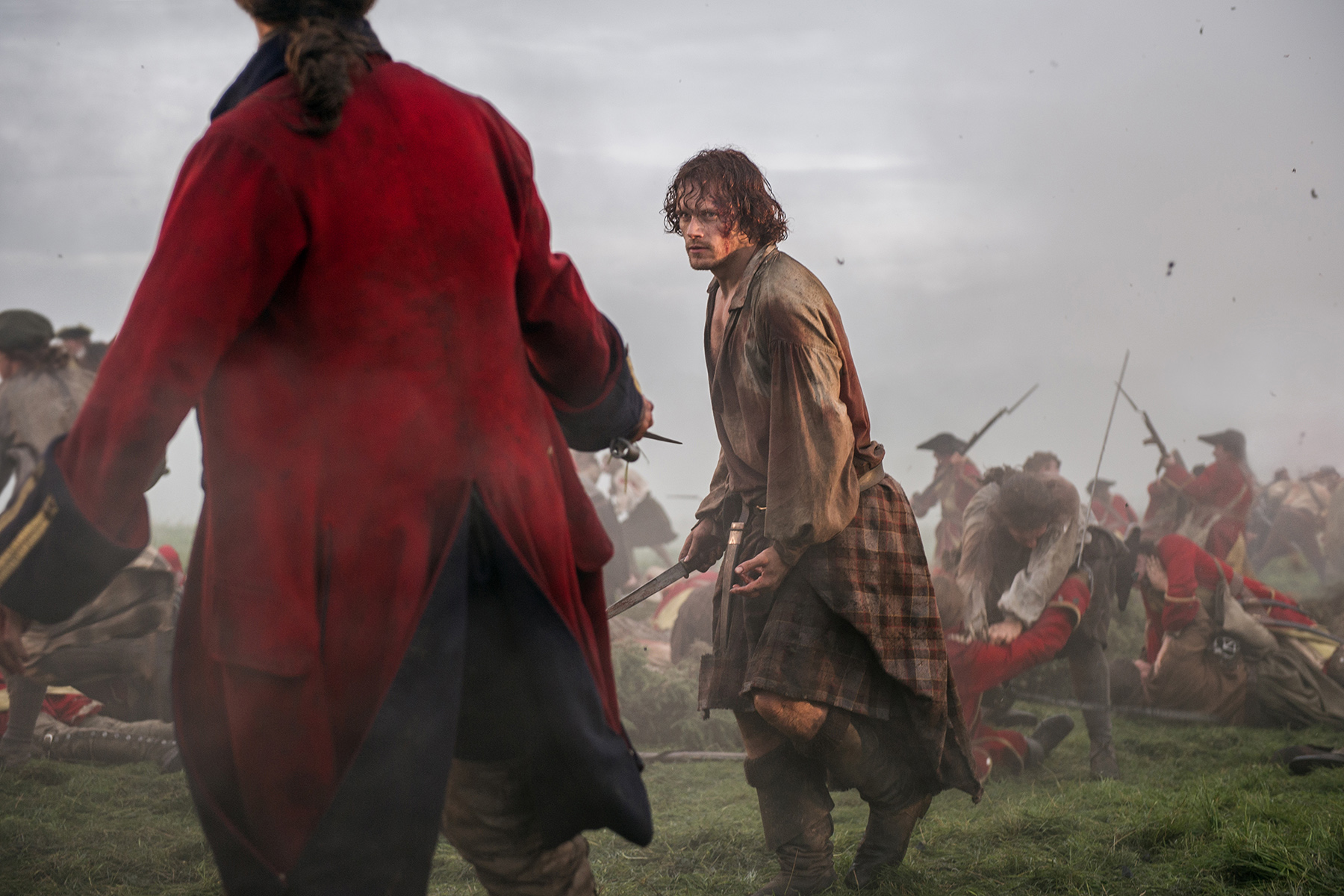
  • Jamie wakes on the battlefield in a heap of bodies, half-dead and with visions of the last day flashing before his eyes.
  • We see him at Craigh na Dun after saying good-bye to Claire, then arriving at Culloden, where Prince Charles still thinks he’s going to have a victory.
  • We see flashes of Jamie on the battlefield, carnage all around him, finally killing Black Jack Randall while receiving his own seemingly fatal wound.

  • Jamie’s life is ultimately spared by Lord Melton, older brother of John Grey, who considers there to be a debt of honor due to Jamie’s sparing of John’s life at Carryarick.
  • Meanwhile, Frank and Claire are beginning their life together in Boston.
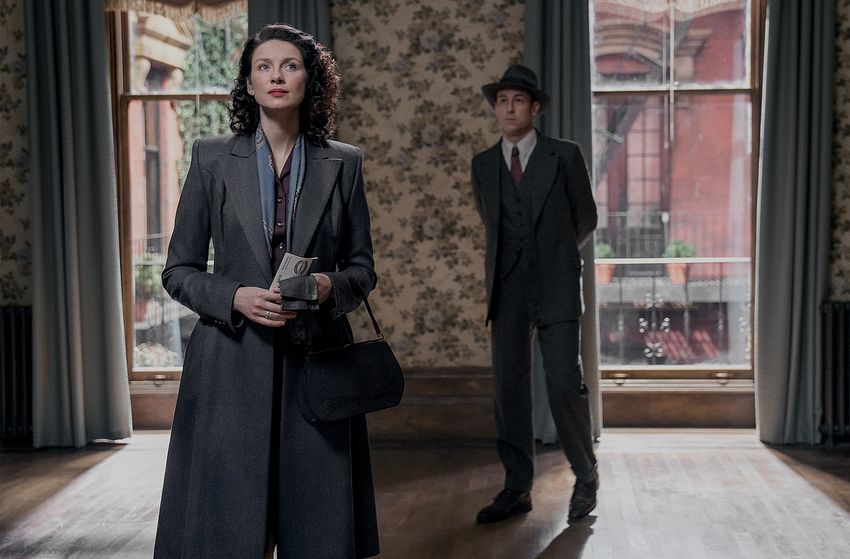
  • Claire is not well-suited to the life of a faculty housewife, expected to look pretty, stay quiet, and prepare dinner on a modern-day stove.
  • Claire can’t allow Frank to touch her. Things are tense.
  • Finally, Claire goes into labor, and delivers a healthy baby girl. Claire and Frank declare themselves ready for a new beginning, which is immediately tested by a nurse asking where the baby got her red hair. Oops. Loaded question.

Insta-reaction:

Such a beautiful episode. Really, I couldn’t have asked for better.

Book readers will know that while Voyager starts with Jamie lying wounded on the battlefield, wondering if he’s dead already, we never actually see the Battle of Culloden. It’s quite effective that it’s shown, with all its horror and carnage. The Jacobites are running with swords into the line of fire from guns and cannon, and they just don’t stand a chance.

And that blasted Prince Charles, still dreaming of victory as he shows off his pretty silver cups while the men devoted to a Stuart restoration rush to their deaths. So terribly, needlessly tragic.

Jamie’s vision of Claire on the battlefield is lovely. She’s all he can see, and he has nothing without her.

I enjoyed the brief moments of Murtagh during the battle and the quick interchange between him and Jamie. His fate, at least on this episode, is unknown, although I think it’s safe to assume that he met the same end here as in the book. Or does he? Is the show leaving open the possibility that we’ll see him again? Murtagh’s death in the books was one of the hardest to take. A fan can hope, right?

(But how could he have survived Culloden? The British killed everyone wounded on the battlefield, and if he wasn’t wounded or dead, he would have found Jamie or died trying.)

Where’s Murtagh???

I know, I know… this really is probably just wishful thinking on my part. A key piece of the coming years of Jamie’s life is how alone he is. Having Murtagh there would change the dynamic and shift the story quite a bit, so I can’t really see the showrunners going in that direction. I guess I just don’t want to say good-bye to him. I do love the character!

Rupert plays a heroic role, looking after the few survivors as they await their turn to be executed, before making his own good-bye to Jamie and facing death. I love that he stepped up and acted as a leader in these scenes, and that his parting with Jamie was full of affection, not dwelling on Jamie’s killing of Dougal. It must be nice to have the belief systems of these Highlanders — Rupert takes comfort in the idea of being with Angus once again. (Are we crying yet?)

Hal, Lord Melton, is a book favorite of mine, and while I don’t expect to see him again this season, I felt his portrayal and his handling of the moral dilemma presented by Jamie was quite good. And it was great seeing Jamie end up back in Jenny’s loving care by the end of the episode.

As for Claire — well, this housewife role is clearly not for her. It’s almost painful to see how voiceless and powerless she is as a woman in 1948. This is a woman who advised kings and chieftains, engaged in high-level political scheming, and performed amputations, battlefield medicine, and more. And yet when she offers an opinion at the Harvard faculty club, she’s treated as impertinent and out of line, with nothing of value to say because she’s a woman, and a pregnant one at that. And then later, when the doctor asks Frank about her contractions instead of Claire, and then sedates her against her will — infuriating! We assumed when Claire first arrived in the Highlands that she’d be shoved into a powerless role because of her sex, yet it’s really here in the late 1940s that Claire is more pigeon-holed than ever before.

It does seems an important point that she mentioned that Harvard Medical School began admitting women just a few years earlier, giving a hint of her own next step. Claire is a woman whose calling in life is to be a healer — sitting home making dinner, staying quiet, and not worrying her pretty head about anything absolutely isn’t her.

Likewise, if we really think about it, Claire has never been a housewife before. From the opening of episode 1, season 1, we know that Claire has never had a home of her own. She and Frank married and then were separated by war, which she spent on battlefields and hospitals. They no sooner reunite than they’re separated again by Claire’s trip into the past, where she certainly wasn’t a housewife, instead involved in non-stop action and called on time and time again to use her remarkable skills as a healer. She’s never had a home or the expectation that home was where she was meant to be. It’s so not Claire! Ugh, 1948, you’re the worst.

Poor Frank. I’ve never been all that fond of him, but he does seem to be getting a pretty raw deal here. It still doesn’t really make sense to me that he and Claire chose to remain together and stay married. How can they ever expect to get past the three years they were apart, and the fact that Claire fell passionately in love with another man? I’m not sure either of them is being realistic about the deep layers of hurt and sorrow between them.

Oh, that moment in the hospital when Claire wakes up and says “where’s my baby?”!! Stunning. Such a beautiful and powerful throwback to the tragic stillbirth of her first child. In the moment when Frank brings her newborn daughter to her, we can see hope finally beginning to shine in Claire’s eyes.

Insta-reaction wrap-up:

A stellar beginning to season 3! Kudos to the cast — their emotions are so raw and spot-on. Kudos as well to the production staff, especially in regard to the staging of the battle and its aftermath. Simply breathtaking and devastating.

And furthermore…

I’m just so damn glad that Droughtlander is over! It’s been a long time, but worth every moment of waiting if the full season promises to be as great as its first episode.

Save

Save

Save

Save

The Monday Check-In ~ 9/11/2017

cooltext1850356879 My Monday tradition, including a look back and a look ahead — what I read last week, what new books came my way, and what books are keeping me busy right now. Plus a smattering of other stuff too.

What did I read last week?

South Pole Station by Ashley Shelby: I started this one a couple of months ago as an ARC, but the formatting was so bad that I couldn’t enjoy it. I’m so glad I found it at the library and decided to give it another shot! A terrific read — my review is here.

In audiobooks, I finished listening to Rebel Angels by Libba Bray. I have very conflicted feelings about this series, but now that there’s just 1 book left, I think I need to finish.

Outlander returns!

Outlander is back! Season 3 premiered last night, and the first episode was wonderful, of course. I’ll be doing reaction posts for each episode, as I did last season. Stay turned for my episode 1 post, coming today or tomorrow.

Fresh Catch:

Two new books this week, both via Book Depository.

I’m so excited for both of these!

Elsewhere on the blog:

Make sure you check out this terrific guest post by Sarah Zama of The Old Shelter blog, all about fantasy writers and the worlds they create.

What will I be reading during the coming week?

Currently in my hands:
 

The Sweet Far Thing by Libba Bray: Book #3 of the Gemma Doyle trilogy, and it’s HUGE. I have to admit that the size (800+ pages) is a turn-off — I’m not that committed to the story to want to spend quite so much time on this book. But, I did decide to read this trilogy this year, so I might as well finish.

Now playing via audiobook:

Venetia by Georgette Heyer: Is there ever a bad time for Georgette Heyer? Her works are candy delights. I’ve just started this audiobook, and it’s already lifting my spirits.

Ongoing reads:

Ivanhoe by Sir Walter Scott: My book group’s classic read! We’re reading and discussing two chapters per week.

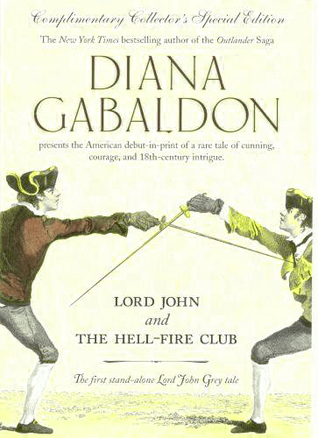
Lord John and the Hell-Fire Club by Diana Gabaldon: Outlander Book Club is doing a Lord John readalong — we’ll be reading all of the Lord John novels and stories in story chronology. Our current read is the first Lord John novella, Lord John and the Hellfire Club. Anyone who’s interested is welcome to participate, so let me know if you’d like more information on how to join in.

So many books, so little time…

boy1Save

Save

Save

Save

Save

Save

Save

Save

Save

Save

Save

Save

Save

Save

Save

Save

Save

Save

Save

Save

Save

Save

Save

Save

Save

Save

Save

Save

Save

Save

Save

Save

Save

Save

Save

Save

Save

Save

Save

Save

Save

Save

Save

Save

Save

Save

Save

Save

Save

Save

Save

Save

Save

Save

Save

Save

Save

Save

Save

Save

Save

Save

Save

Save

Save

Save

Save

Save

Save

Save

Save

Save

Save

Save

Save

Save

Save

Save

Save

Save

Save

Save

Save

Save

South Pole Station: Some thoughts on belief and science

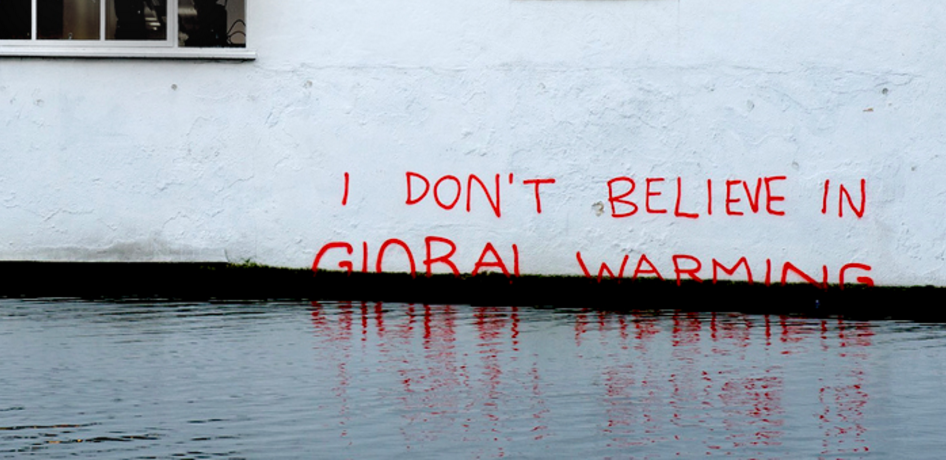
I read the wonderful South Pole Station by Ashley Shelby this past week (reviewed here), and thought I’d share a passage that seems particularly timely in light of the current weather catastrophes striking parts of the country:

From a section describing a debate between a climate change denier and the scientists who oppose him:

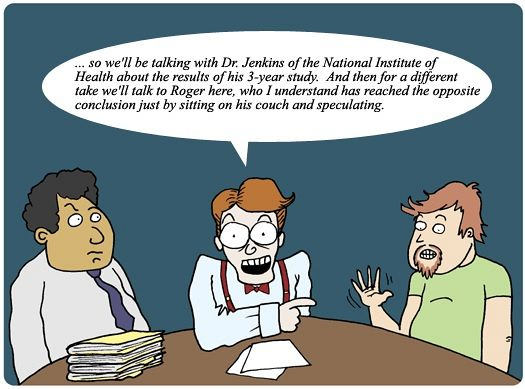
“To believe in climate change — ” Pavano tried, but Sal interrupted him.

“See, look at his language. He’s talking about Santa Claus, the Easter Bunny. Scientist don’t believe in things. They either know things or they don’t.”


Thinking of friends and family in Florida, and wishing everyone safety and shelter as the hurricane passes through.

Guest Post: Fantasy Authors – Why You’ll Believe Their Lies

I’m thrilled to welcome Sarah Zama to Bookshelf Fantasies! Thank you, Sarah, for providing this terrific guest post.

FANTASY AUTHORS: WHY YOU’LL BELIEVE THEIR LIES

by Sarah Zama, The Old Shelter (see author bio below)

Tell me. Are you a fantasy reader?

As a fantasy writer (and reader) I often hear readers say  they don’t care for fantasy and prefer to read stories that are realistic.

Let’s talk about it.

What is storytelling?

As Flannery O’Connor said, everybody knows what a story is until they try to write one. Defining storytelling is harder than one would think, but years ago I came across a fascinating definition. It answered the question, what’s the difference between chronicling a true event and telling a story? The chronicle and the story largely adopt the same elements and can even concern themselves with the same events, what then is the difference between the two forms of telling?

Let’s say there is a car accident. A journalist will try to relate events as close as possible to how they happened, trying to replicate the dynamics and the cause-effect evolution, adding all relevant info.

We already have a ‘problem’ here: how does the journalist decide what is relevant? How does she describe events that happened at the same exact time? We have two cars moving towards each another, there are people on both of them, and things are happening inside both cars. How does a journalist decide what to relate out of all this info?

The obvious answer is that she will have to make choices. Choose which event to tell first and which tell later. Choose what details she will actually mention and which she will leave out altogether.

This will colour her account of a personal flavour… and that’s where storytelling begins.

Where a chronicler will try to leave her personal judgment out as much as possible, a storyteller will push it at its utmost consequences, with the goal to give a meaning – a very specific, personal, carefully chosen meaning – to  those events. When recounting that car accident, a storyteller will put special care in choosing who are on board those cars, what they’re doing and where they’re going. She will carefully decide what events she will tell first and what later and how they will intertwine, the chain of events and their timings, she will decide whether and how to tell the impact that accident will have on those people. And her goal won’t be to just recount how the accident happened, but it will be a carefully chosen message about something she thinks it’s important for her and for her readers.

Storytellers make choices all the time and every choice intentionally lends a meaning to the story.

So we could say that while chronicles try to manipulate events as little as possible to present them ‘how they happened’, stories intentionally manipulate events with the specific goal, the specific purpose to send out a chosen ‘message’. Where the point of the chronicle is the events, the point of the story is the message, or if you prefer, the theme.


Mimic and fantasy stories

Stories are generally divided into two big categories:

  • Mimetic stories which mimic life as closely as possible. They may be based on actual facts, but even when they aren’t, they depict the world, people and the workings of life as we are accustomed to see them play out every day around us
  • Fantasy stories which adopt elements who aren’t experienced in our everyday life. These fantasy elements may range from slight deviations from what we know (magic realism) to full-fledged reimagined worlds that look like nothing we’ve ever or would ever experience (high fantasy)

Readers and writers familiar with one realm are normally very hesitant to wander over to the other realm because they think they won’t fit in. Readers of mimetic fiction, in particular, think that what a fantasy story would ask them to believe is really too weird and unrealistic and so they will be unable to immerse themselves in the story the way they like to do.


Why would I suspend my disbelief?

Now, dear reader, be honest with me. You don’t believe for a moment that the novels you read are in any way true. They may be ‘realistic’ but they aren’t true. Beside, the fact that they are realistic is the important factor, because if they are, you can happily pretend they are as good as true and you can pretend that you can be part of that story.

This is a specific phenomenon called suspension of disbelief.

The term and concept  of suspension of disbelief was coined by Samuel Taylor Coleridge in 1817, and refers to readers’ willingness to accept the story as it is, even when they recognise elements that challenge reality as they know it. Since Coleridge was a Romantic (by this I mean he was a member of the Romantic movement), he referred specifically to any fantasy elements present in the story. Since then, the concept has taken up a larger meaning encompassing the totality of storytelling.

The core concept is that authors can employ any element in their story, unlikely as it may be (being it fantastic creatures or very daring chains of coincidences) and the reader will accept it as long as the author makes it plausible.

Prof. J.R.R. Tolkien went even further. He theorized that an author needs to be able to create a fictional world that not necessarily adheres to reality (he was after all talking about true speculative/fantasy fiction), but that works in the same way reality does. This ‘secondary reality’ may be very different from reality as we know it, but the rules that governs it must be as stringent and logic as those governing our real world. It must have the ‘intimate consistency of reality’, no matter what it looks like on the outside. It must be plausible in that context. At that point, the author won’t even need to ask readers to suspend their disbelief, because given the rules that govern that secondary reality, the readers will accept this is exactly how that reality should work.

Along these lines, Prof. Rosalba Campra went as far as saying that all stories with a perfectly functioning secondary reality should be considered realistic whether they have fantasy elements (like Middle Earth) or not.

Have I messed up your ideas well enough? Good!

Now tell me, why would you suspend your disbelief in regard to any story? Well, as a reader, I have an answer: because – as it’s for storytellers – when we read fiction we are more concerned with themes then events. If events sustain the theme convincingly and plausibly, then we are willing to play along even if the element is in itself unlikely. If the story is worthwhile in terms of themes and involvement, if it enriches us as persons, then we are willing to believe the lie.

Why then, some readers think that fantasy is more a lie than any other story? Why some readers think that ‘it doesn’t exist, it’s not realistic, so it can’t give me any worthwhile experience.’

As a writer of fantasy stories, I often wonder: is the appearance of the story really so important to obscure its theme?


Commissar Montalbano: a case study

Ragusa Ibla (main setting for Il Commissario Montalbano)

Years ago I read an interview with Italian mystery novelist Andrea Camilleri about his acclaimed series Il commissario Montalbano. If you are unfamiliar with it, this is a series of mystery novels set in Sicily, Camilleri’s homeland. Salvo Montalbano is a police detective who investigates murders in his little town, Vigata, following Italian police procedures… if sometimes interpreting them in his personal way, and juggling himself between strict magistrates, shadowy mafiosi, young ambitious entrepreneurs projected in the future and old Sicilians living the traditional way and only speaking dialect. The novels themselves are written in a mix of Italian and Vigata dialect.

All perfectly mimetic, wouldn’t you say? Especially if you think that the Siclianity radiates from every little element of Camilleri’s stories and he has often been praised for how vividly his stories depict the reality of Sicilian life.

So let me tell you that Vigata doesn’t exist. Montelusa, the province to which Vigata depends, also doesn’t exist. And even the dialect the novels are partly written in doesn’t exist.

Camilleri made it all up, just like Tolkien made up the Shire, in Middle Earth, and all its languages. Vigata works perfectly well and it sounds like reality because it mimics it so well and so close that readers are deceived into believing it is reality itself, when in fact it’s a very well crafted secondary reality, just like The Shire.

But there’s more. What I find particularly interesting is why Camilleri decided for a fictional place. He initially wanted to set his stories in an actual place, Porto Empedocle (which is indeed the set of the tv series), but because he knew from the beginning that he wanted to write a series of novels all set there, he quickly realised the murder rate of this town would soon exceed the actual murder rate of Porto Empedocle by far.

He could have played along anyway, pressing on the readers’ suspension of disbelief, ignoring that if that murder rate turned up in Porto Empedocle in real life, it would cause all kinds of political and social alarm. Or he could create a completely fictional place, although recognizably Sicilian, where he would be free to create his own custom made reality where he could decide whatever was best for the stories and their themes.

So yes, Camilleri created a fantasy reality so to make his stories more realistic. Although not true, Vigata does have the intimate consistency of reality more than Porto Empedocle would have had.


So tell me. Are you a fantasy reader?

_______________________________________

About the author:

Sarah Zama was born in Isola della scala (Verona – Italy) where she still lives. She started writing at nine – blame it over her teacher’s effort to turn her students into readers – and in the 1990s she contributed steadily to magazines and independent publishers on both sides of the Atlantic.

After a pause, in early 2010s she went back to writing with a new mindset. The internet allowed her to get in touch with fellow authors around the globe, hone her writing techniques in online workshops and finally find her home in the dieselpunk community.

Since 2010 she’s been working at a trilogy set in Chicago in 1926, historically as accurate as possible but also (as all her stories are) definitely fantasy. She’s currently seeking representation for the first book in the Ghost Trilogy, Ghostly Smell Around.

Her first book, Give in to the Feeling, came out in 2016.

She’s worked for QuiEdit, publisher and bookseller in Verona, for the last ten years.
She also maintain a blog, The Old Shelter, where she regularly blogs about the Roaring Twenties and anything dieselpunk.

CONTACT INFO AND LINKS

Email: oldshelter@yahoo.com
Blog: www.theoldshelter.com
Websitehttp://sarahzama.theoldshelter.com/


Book Review: South Pole Station by Ashley Shelby

Do you have digestion problems due to stress? Do you have problems with authority? How many alcoholic drinks do you consume a week? Would you rather be a florist or a truck driver?

These are some of the questions that determine if you have what it takes to survive at South Pole Station, a place with an average temperature of -54°F and no sunlight for six months a year. Cooper Gosling has just answered five hundred of them. Her results indicate she is sufficiently resilient for Polar life.

Cooper’s not sure if this is an achievement, but she knows she has nothing to lose. Unmoored by a recent family tragedy, she’s adrift at thirty and—despite her early promise as a painter—on the verge of sinking her career. So she accepts her place in the National Science Foundation’s Artists & Writers Program and flees to Antarctica—where she encounters a group of misfits motivated by desires as ambiguous as her own. There’s Pearl, the Machiavellian cook with the Pollyanna attitude; Sal, an enigmatic astrophysicist whose experiment might change the world; and Tucker, the only uncloseted man on the continent, who, as station manager, casts a weary eye on all.

The only thing the Polies have in common is the conviction that they don’t belong anywhere else. Then a fringe scientist arrives, claiming climate change is a hoax. His presence will rattle this already imbalanced community, bringing Cooper and the Polies to the center of a global controversy and threatening the ancient ice chip they call home.

A winning comedy of errors set in the world’s harshest place, Ashley Shelby’s South Pole Station is a wry and witty debut novel about the courage it takes to band together, even as everything around you falls apart.

That synopsis needs a little tweaking, I think. For starters, I don’t think I’d describe South Pole Station as a “comedy of errors”. While there are funny moments, I don’t think of this book as a comedy at all. The characters are quirky and odd, but the setting and the stakes become increasingly serious as the plot moves forward, and the individuals portrayed here all seem to have buried hurts in their pasts that they’re trying to escape from or figure out. So no, not a comedy.

Putting that aside, let me start by saying that I truly enjoyed South Pole Station. I seem to be fascinated by people who willingly walk away from society with the intent of spending months at a time in isolation at the farthest reaches of the planet. I’ve read a few novels and one memoir related to time at the Pole, and can’t help being intrigued by the special mindset it takes to make a commitment of that sort.

In South Pole Station, Cooper is going to Pole because she can’t quite be anywhere else. Her family life is raw after a devastating loss, she has no support systems and little hope for her art career, and latches on the NSF Artists and Writers program as if it’s her only lifeline. She feels compelled to go, both to prove something to herself, to lay her ghosts to rest, and to find something meaningful to give her purpose again.

At the Pole, she meets the scientists (Beakers) and support workers (Nailheads) who call the place home, as well as the odd group of artists on the same grant — an interpretive dancer, a historical novelist, and a literary novelist, among others. They’ve all come seeking inspiration, but they’re also expected to pull their weight, going through fire training and all the other essentials for survival in such a stark and inhospitable place.

The bonds that form among the people at Pole are strong, as are the gripes and grudges that quickly emerge among a group of argumentative, strong-willed people forced to live in extremely close quarters for extended periods of time. The dynamics can be insanely fun, but veer quickly to the dark side when their group understandings are threatened — as is the case when Frank Pavano, a climate “denier” arrives to conduct research that’s antithetical to everything the Polies believe in. Pavano, as we discover, is sponsored by big oil and by Republican Congressmen on a mission, and he’s ostracized and opposed at every turn by the hardcore Beakers and even the Nailheads. When there’s a terrible accident, it becomes a national scandal as headlines scream about bullying and harassment and the exclusion of diversity of opinions.

Be warned — there are heavy doses of science talk in this book, and I’ll admit that some of the talk about cosmology and quantum physics made my head spin. At the same time, that’s one of the book’s charms — it doesn’t talk down to its readers, and assumes we’ll all manage to keep up.

The characters are well developed and full of personality, from Cooper the artist to Sal the scientist to Denise the anthropologist and Doc Carla, the station’s one and only medical staffer. It’s great fun to see these oddballs bounce off each other, entertain each other, fight with each other, and fall in love with each other.

While Cooper is our main point-of-view character, we do get sections focusing on other characters’ backstories and inner workings, and these parts add to the richness of the story and enhance our understanding of the characters’ actions and motivations.

All in all, I found South Pole Station to be a captivating look at a unique social dynamic, as well as a story of interesting characters in a highly unusual situation. Oh, and add in politics and scientific discoveries and artwork, and it’s one book that really doesn’t fit any of the usual fictional trends or tropes.

A final note on my reading experience: This just goes to show how much damage a badly formatted ARC can do! I know we shouldn’t let formatting issues influence our reviews, but I can’t help but be turned off by a book that’s impossible to read. The finished, published version of South Pole Station includes emails and letters and other documents that enhance the story, but in the ARC version, these weren’t set off from the main text in any way, making it incredibly difficult to understand what went where. I DNF’d the ARC, and basically walked away from the book at 15%. Luckily, I happened across a copy at the library a few months later and decided to give it another chance, and I’m so glad I did! It’s sad to think that based on my initial reading experience, I would never have read this terrific novel.

Summing up my rambles… I thought South Pole Station was great! I love the setting, and had a lot of fun getting to know the characters. I was drawn into the scientific competitions and the political maneuvering, and felt the ups and downs of Cooper’s emotional journey. So yes, that would be a big thumbs-up recommendation!

_________________________________________

The details:

Title: South Pole Station
Author: Ashley Shelby
Publisher: Picador
Publication date: July 4, 2017
Length: 368 pages
Genre: Contemporary fiction
Source: Library

Save

Save

Save

Save

Save