Book Review: Cold Days by Jim Butcher

Book Review: Cold Days by Jim Butcher

Harry Dresden is back! And — dare I say it? — better than ever.

(Spoilers for earlier Dresden books ahead, so proceed at your own risk.)

In this 14th novel of the Dresden Files, Harry is back from the quasi-dead, but there’s no time to rest and recuperate. As the new Winter Knight, Harry has to survive Queen Mab’s rather deadly version of physical therapy before setting out to obey Mab’s commands, reunite with his friends, avoid menacing fairies, and – oh, yeah – save Chicago and perhaps the world from a looming apocalypse.

Every time I pick up a Dresden Files book, I’m reminded all over again of how much I enjoy this series, what a way with words Jim Butcher has, and just what a bad-ass Harry Dresden really is. Some series linger on way past their expiration date (I’m looking at you, Sookie), when clearly there’s really not much else to do or say with the characters. Not so in the Dresden Files. Cold Days continues the ongoing story and enriches it, drawing on past stories and mythology, adding layer upon layer of complexity to the challenges facing Harry, and moving the story in some creative and unexpected directions.

Cold Days deals very much with Harry’s new role in the Winter Court, but to understand the action, it’s important to have read the previous books. Familiarity with book 4, Summer Knight, is especially helpful. Harry’s strongest allies, including his brother Thomas, apprentice Molly, will-they-or-won’t-they love interest Karrin Murphy, and big doggie Mouse are all back at his side, fighting against new super-scary villains and fighting in alliance with some surprising new partners.

I really won’t say too much more about the plot, a) because it goes a mile a minute and covers a tremendous amount of ground in the course of 500 pages, and b) because you’re really better off experiencing it on your own.

I wasn’t really sold on the previous volume in the series, Ghost Story, but the one before that, Changes, was blow-your-socks-off great. To a large extent, the events of Changes are much more important to the on-going narrative than those of Ghost Story, and lead nicely into the central action of Cold Days. I would rate Cold Days as among the best in the Dresden Files series. By the end of Cold Days, Jim Butcher has set some new players into action, rearranged the power structures, given new roles to familiar characters, and left Harry facing a potential threat to his own well-being, a looming menace to the world at large, and some weighty decisions to make concerning his personal life.

If you’re a fan of the series, you will absolutely want to read Cold Days. If you’ve read bits and pieces of The Dresden Files, or maybe only watched the sadly short-lived TV series, let me tell you that it’s worth continuing with the books to get to the really stellar volumes such as Changes and Cold Days.

And if you’ve never read any of the Dresden Files books? Well, what are you waiting for? Jump in, start at the beginning, and enjoy! But clear any other books off your reading calendar — once you start The Dresden Files, you won’t want to stop.

Book Review: Anna and the French Kiss by Stephanie Perkins

Book Review: Anna and the French Kiss by Stephanie Perkins

How refreshing, to read a bright, honest, engaging young adult novel that doesn’t have anything to do with the end of the world, a crazy dystopian future, supernatural powers, or creatures from another realm! Anna and the French Kiss is a thoroughly adorable story of a likeable girl trying to find her way in the world, and it’s so cute that I wanted to hug the book when I was done.

Anna is a 17-year-old high school senior from Atlanta, Georgia, whose bestselling author father has decided that what she needs is to spend senior year not with her friends at home, but at an elite boarding school for American students in Paris. Anna is furious and aghast, horrified to be leaving her best friend and her kinda, sorta boyfriend, and absolutely mortified by the thought of showing up in Paris knowing not one single word of French. Anna is so self-conscious about her American-ness that she confines herself to campus and is too afraid to even order food in the rather extravagantly lush school cafeteria.

Luckily for Anna, however, she is adopted by her dorm neighbor Meredith almost instantly, and then meets Meredith’s circle of friends, among whom is the funny, gorgeous, British-accent-sporting Etienne St. Clair. Anna and St. Clair, as he’s called, hit it off immediately and become inseparable friends… although Anna can’t ignore the fact that he makes her heart beat faster whenever he smiles at her. St. Clair brings Anna out of her shell, Anna helps St. Clair through a major family disaster, and hey — it’s Paris! Love is definitely in the air, but obstacles abound, and much of the plot’s suspense and drama come down to a will-they-or-won’t-they back and forth in which neither Anna nor St. Clair manages to communicate their feelings to one another.

There’s a lot to love about Anna and the French Kiss. For one thing, although Anna describes St. Clair as the most beautiful boy she’s ever known, it’s clear that we’re seeing through her besotted eyes. While St. Clair is so charming and charismatic that everyone wants to befriend him, he’s no Edward Cullen or Adonis. St. Clair, in turn, tells Anna that she’s beautiful, but again, the point is not that she’s a stunning model, but rather that she’s an ordinary girl who is beautiful in the eyes of the boy who has fallen for her.

Anna and the French Kiss is a light, enjoyable read, although it does convey some deeper passions and conflicts. Friendships are tested; lessons are learned. Some relationships last, some end bitterly, some simply run out of steam. Parents can be loving and supportive, but some make decisions about their children as a means of carrying out their own desires or furthering their own images. Even the most talented or together of Anna’s circle of friends have insecurities and personal foibles and weaknesses. No one is perfect, and perhaps that’s why I enjoyed this book so much. Anna and the French Kiss works because it feels so real. Sure, it’s unlikely that most American teenagers would have the opportunity to find love while running around Paris — but any reader will be able to relate to the ups and downs of friendships, the joys and sorrows of first love, and the challenges of impending adulthood which the characters experience.

I’ve been hearing about Anna and the French Kiss quite a bit from other fans of YA fiction, and I’m happy to report that this is one book that did not disappoint.

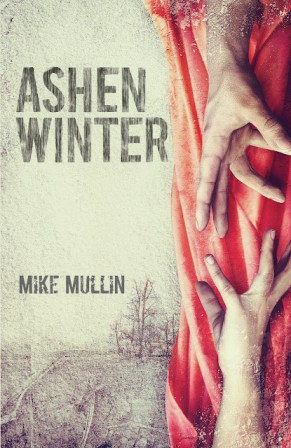
Book Review: Ashen Winter by Mike Mullin

Book Review: Ashen Winter by Mike Mullin

Ashen Winter is the second book in Mike Mullin’s natural disaster trilogy, following the author’s powerful debut novel, Ashfall. SPOILER ALERT: This review will, by necessity, contain mild spoilers for book one. Stop here if you just don’t want to know!

In Ashfall, teen protagonist Alex is forced to grow up in a hurry when life as he knows it comes to an end following a massive supervolcano eruption which causes widespread environmental catastrophe. At the beginning of Ashen Winter, ten months have passed since the eruption. Alex and girlfriend Darla are living at his uncle’s farm in Illinois, struggling to survive the freezing temperatures brought on by the ash-induced climate change. Alex is determined to find his parents, who returned to Iowa to find Alex at the same time that Alex was fleeing Iowa to reunite with his family. Alex and Darla, bound by a soul-deep love, leave on their quest early in Ashen Winter, and immediately encounter one disastrous turn of events after another. The two escape death, barely and not without injury, time and time again, as they face physical danger, loss of food and supplies, freezing conditions, corrupt government contractors, and bands of cannibals who prey upon anyone they can capture.

Alex shoulders tremendous burdens and feels a crushing sense of guilt and responsibility as each carefully laid plan turns ruinous. Alex and Darla are separated early on, and Alex faces one obstacle after another as his quest to find his parents turns into a rescue mission: Find Darla before she is killed or brutalized by the rampaging gangs of armed thugs who prey upon the weak and alone. Alex is not without resources, however. In the first book, we saw Alex repeatedly struggle to do what he could to help others, even when doing so meant his own survival might be jeopardized. In Ashen Winter, we see a kind of pay-off for Alex’s earlier choices, as the people he’s helped or rescued along the way become valuable allies.

An ongoing motif throughout both books is the meaning of adulthood. By Ashen Winter, Alex is sixteen, and the adults he meets along the way continue to try to control him and make decisions in what they think is his best interest. Repeatedly, well-meaning adults discount his absolute commitment to Darla and try to dissuade him from his rescue mission. Alex, despite his age, must prove to himself and to those around him, over and over again, that he is strong, capable, and yes, in love — not a fleeting, teen romance, but a connection and a commitment that means that he must find Darla, no matter the danger or the very real possibility that she’s already dead. Alex’s opponents are not only the gangs and corrupt officials who threaten him, but also the adults he trusts and loves. All of them stand in his way; all of them underestimate him; to all of them, he has to stand up and proclaim that he is an adult to be reckoned with.

Ashen Winter is like paper crack. Each chapter ends with a cliffhanger of sorts. Here’s a random sampling of a few last lines from various chapters:

“What really caught my attention was the machine pistol he had trained on Darla.”

“A line of men popped into view one by one, their heads and shoulders above the low log gate. Every one of them was pointing a rifle at us.”

“Then I heard an engine rumble behind us.”

“The bike fell sidways, trapping Darla’s leg and dragging her ina rush toward the deadly, roiling water at the base of the dam.”

“I slipped — and suddenly I was dangling, my feet clawing futilely at the air.”

“When the body quits shivering, it’s preparing to die.”

I could provide many more examples, but you get the idea. No wonder I’ve been bleary-eyed all week — with ending sentences like these, it was simply impossible to put this book down at the end of a chapter and call it a night.

In other reviews, I’ve referred to 2nd books in trilogies as middle children — not the first, leading the way, not the last, to be cherished and savored. The middle book has to keep the momentum going, provide a link between beginning and end, but not actually allow the story to move too close to a conclusion. When not done well, a reader is left feeling like he or she is treading water, waiting for the action to resume in the final book. I’m happy to report that Ashen Winter is a terrific example of a middle book that accomplishes its mission and then some. It not only moves the story forward and leaves the reader hungry for the final installment, but it contains a compelling plot, filled with twists and turns, memorable characters, action aplenty, and convincing character development. In other words, it’s a good book in its own right, which is really quite rare for a middle book.

Of course, it would be foolish to pick up Ashen Winter without having read the first book and expect to understand what’s going on. But if you want an action story with heart, pick up Ashfall and dive in. I dare you to stop after just one book.

Book Review: Because It Is My Blood by Gabrielle Zevin

Book Review: Because It Is My Blood by Gabrielle Zevin

Because It Is My Blood, book 2 in the Birthright series which began in All These Things I’ve Done, continues the story of Anya Balanchine, 17-year-old heiress to the Balanchine Chocolate empire. Unfortunately for Anya, in New York in the year 2083, chocolate and caffeine are illegal under the laws of the Second Prohibition. As a result, the Balanchines are a notorious organized crime family, and as the daughter of the murdered head of the family business, Anya is a prime target for both internecine bloodshed and for the law enforcement agents eager to make a big splash in the press.

On top of all this, Anya must worry about protecting both her genius younger sister and her mentally-impaired older brother — not to mention the more typical teenage worries of boyfriends, best friends, and high school graduation. The fact that Anya is a convicted criminal who has served prison time complicates matters tremendously, and when she is re-jailed on trumped-up charges, an escape seems to be the only answer.

Because It Is My Blood is a serviceable second book, moving the plot along at a mostly fast pace, although several of Anya’s sojourns along the way seem to drag a bit. The heart of the story is somewhat lacking in this installment. All These Things I’ve Done was propelled forward not only by the crime family plotline but by a compelling “star-crossed lovers” romance between Anya and the son of the New York District Attorney. This romance still features in the second book, but doesn’t carry the sense of excitement and passion present in the first. In fact, that sums up the problem that I had with Because It Is My Blood. The book often reads as a recitation of facts and events — jailbreaks, deaths real and faked, meetings with lawyers, meetings with Balanchine family members and associates — but without a sense of burning passion driving the story forward.

This is not to say that Because It Is My Blood isn’t fun to read. I got a real kick out of the familiar New York landmarks reimagined in the setting of a deteriorating city with meager resources and ample crime. The popular nightclub Little Egypt is housed in what was once a museum (i.e., The Metropolitan Museum of Art), and a vacant mess of a property with weird lion statues out front (i.e., The New York Public Library) is described as a place where they used to keep paper books in the old days. Anya is amused by the old-fashioned slang of her grandmother (OMG, for example), and there’s a film festival showing ancient movies including one where a lady crosses a river on a horse (which I can only assume is a reference to Lord of the Rings). Little details like these make the story accessible and bring to life both the setting and the era in ways both entertaining and relatable.

By the end of Because It Is My Blood, the stage has been set for what I believe will be an exciting third installment in the trilogy. Anya has made key decisions and is about to take a bold new step that will impact all the people around her and will have dramatic impact on the family business as well as on the New York political world. The developments are quite promising, and the storyline is left hanging with a tremendous amount of potential for a satisfying conclusion to the series.

As a young adult trilogy, the Birthright series has a lot going for it: a smart, strong female protagonist, an unusual premise that breaks from the ubiquitous dystopian model saturating the YA market, and a clear-eyed look at a girl who has to balance love, family, honor, and her own sense of purpose. Because It Is My Blood is not a stand-along novel, and you wouldn’t want to jump into the series with it. But if this type of story appeals to you, I’d definitely recommend giving the series a try, starting with All These Things I’ve Done. The writing is fresh, funny, and appealing, the characters are not run-of-the-mill YA teens… and who can resist a book about chocolate?

Note: I have two other book 2s in the works this week, and may actually be back with a few astute observations when I’m done. Middle children never have it easy, do they?

Book Review: Dare Me by Megan Abbott

Book Review: Dare Me by Megan Abbott

For some reason, after hearing this book compared to “Heathers” and “Mean Girls”, I was expecting dark comedy. Dark, I got. Comedy, not at all.

Dare Me is a very dark look at the hearts of high school girls — their secrets, desires, power plays, and manipulations. The story focuses on Addy, lieutenant to cheer squad captain Beth, happy and secure in her number two role, always right at the heart of the power. Beth is, beyond doubt, a mean girl. The snide comments designed to undermine others’ confidence, the hip-shaking strides down the school corridor, the ability to put anyone, boy or girl, back in their place — their place being always subservient to Beth — these are Beth’s tools of the trade, her natural forté. Addy, however, has known Beth since elementary school and Pee Wee cheer, and they’ve been best friends ever since. Only Addy has seen past Beth’s facade and knows some of the inner working of Beth’s tumultuous and devious heart.

Disrupting the power structure and rocking it to its core is the arrival of a new coach. Coach French pegs Beth for what she is right away, knocks her from the top of the pyramid, as it were, and sets in motion a chain of events that turns disastrous very quickly, with emotional and physical casualties piling up along the way. Beth is not one to take insult or injury lightly, and she goes to war in her own patented, insidious way, with Addy caught in the middle and at risk of being pulled apart.

Dare Me presents a rather appalling peek inside the world of cheerleading, as the girls indulge in extreme dieting, punishing workouts, and casual self-induced vomiting in order to be at their fighting and flying best. The author attempts to describe the high physical risks involved in this sport as well, the peril of flying, pushing, pulling, and lifting, with only the other girls’ arms and attention keeping one’s head from crashing onto the ground. The pressure is intense, and the risk is real, and yet these girls keep throwing themselves into it, with applause and adrenaline — and a sense of cheating death — the reward for success.

I particularly liked this passage, as Addy explains the intensity and interconnectedness of their stunts:

Being part of a pyramid, you never see the pyramid at all.
Later, watching ourselves, it never feels real… It’s nothing like it is on the floor. There, you have to bolt your gaze to the bodies in your care, the ones right above you.
Your only focus should be your girl, the one you’re responsible for the one whose leg, hip arm you’re bracing. the one who is counting on you.
Left spot, keep your focus on the left flank. Don’t look right.
Right spot, keep your focus on the right flank. Don’t look left.
Eyes on the Flyer’s eyes, shoulders, hips, vigilant for any sign of misalignment, instability, doubt.
This is how you stop falls.
This is how you keep everything from collapsing.
You never get to see the stunt at all.
Eyes on your girl.
And it’s only ever a partial vision, because that’s the only way to keep everyone up in the air.

This sense of not seeing the whole picture, of just focusing on the part you need to see in order to avoid collapse, applies to Addy and her slow discovery of the secrets and deceptions going on all around her. As manipulation piles up on top of manipulation, tragedy inevitably strikes, and Addy is left to piece it all together.

Dare Me was a quick but engrossing read, well written in a tone that conveys passion, devotion, fear and glory. It terms of the plotting and betrayals, as well as the dark undertone present in every passage, I was reminded most of The Basic Eight, but without the humor or levity to counteract the blackness. High school and friendships can be a true battlefield, and Dare Me portrays it in scary vividness, collateral damage and all.

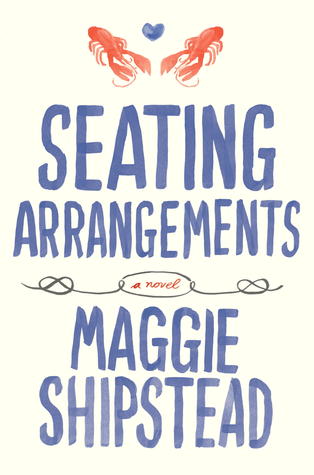
Book Review: Seating Arrangements by Maggie Shipstead

Book Review: Seating Arrangements by Maggie Shipstead

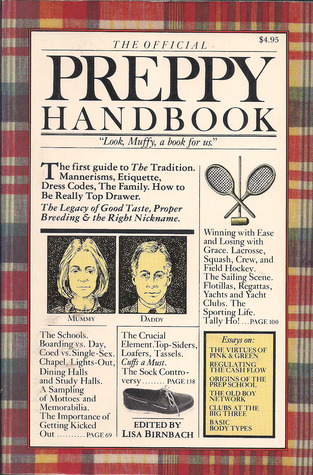
If you grew up in the 1980s, at some point you probably laughed your way through The Preppy Handbook by Lisa Birnbach:

I know my friends and I got countless hours of amusement from this tongue-in-cheek guide to living the preppy lifestyle… which also makes charming fun of those leisurely folks, hanging out at the club or by a picturesque beach, clad in pastel colors, Topsiders, and various and sundry items embroidered with whales or other sea creatures. It was a world we could envision, occasionally mimic, but never actually wanted to go to (and probably wouldn’t have been allowed in, anyway).

So when I read Seating Arrangements by Maggie Shipstead, I was immediately reminded of my youthful perusal of Fair Isle sweaters and matching headbands. While we merely observed the preppy phenomenon, the characters in this book actually live it! The clothes, the beach houses, the golf clubs, the casual approach to wealth, the unerring sense of what “our” type of people do — and what just isn’t done — it’s all here, in this amusing and occasionally touching tale of a family’s eventful wedding weekend.

The bride’s sister gives us a pretty accurate snapshot of the meaning of marriage in this slice of society:

Daphne and Greyson were perfectly suited, both for each other and for the institution of marriage. It was a match both appropriate and timely; they were two people joined by their desire to join. They were pleasant, predictable, responsible, intelligent, and practical, not full of fiery, insupportable passion or ticking time bombs of impossible expectations. What they had a was a comfortable covalence, stable and durable, their differences understood, cataloged, and compensated for. They were perpetuating their species.

And again, in describing the groom’s parents:

The Duffs went together like two shades of beige, bound by a common essence of optimism, narrow-mindedness, and self-satisfaction. Daphne and Greyson were the perfect next generation.

As father of the bride, Winn Van Meter is the family patriarch, rallying the troops at their Cape Cod island getaway for his beloved (and very pregnant) daughter’s wedding to the scion of another well-to-do family. As the various relatives and bridal party members assemble, socialize, drink heavily, eat lobsters, and generally get up to all sorts of questionable behavior, secrets are revealed, long-held beliefs are challenged, and some hard truths must be faced.

Winn himself is the central figure in the book, and is an interesting character. Grandson of a self-made man, he’s oh-so-afraid of being perceived as not fitting in. He’s got the wealth, sure, but he never quite manages to pull off the insouciant ease of the more established of his class. Consequently, Winn spends an awful lot of time worrying about appearances. He’s appalled remembering how his father sent him off to Harvard with a new gold watch, when what was really de rigeur for the boys of the ton was a shabby, “oh, this old thing?” type of timepiece. His island home is chicly disheveled, and he feels offended by a rival’s new, elaborate island home under construction, which simply shouts money and status. Winn views his rival Jack’s obvious affection for his developmentally disabled daughter as showing off, and even considers Jack’s son’s enlistment in the army to be social posturing.  He remonstrates with his daughters quite a bit about what’s done and what’s not done, to the extent that when his younger daughter has an emotional breakdown at the exclusive Ophidian Club, Winn’s first reaction is horror that the event happened at the club, not horror over his daughter’s pain and distress. Winn is desperate for membership in the private golf club on the island, and can’t quite accept that he’s just not up to snuff.

The overarching WASP-iness feels stifling at times. The stiff upper lips, the endless cocktails, the lobster dinners and tennis matches — it’s all such a regimented way of life, at least as it’s presented in Seating Arrangements. Characters fall into neat categories, for the most part: The drunken, oft-married and Botoxed aunt; the flighty blonde prep school roommate who’s all giggles and cluelessness; the older brother of the groom whose decadent ways have already started revealing themselves in a too-early paunch; the younger brother who claims to embrace Buddhism while not actually espousing any Buddhist practices. Then there’s Dominique, the Egyptian-born friend of the bride, with exotic looks and an exciting career, who ends up coming across as an all-wise outsider in a way that borders on ethnic stereotype.

It’s all rather funny, as well. Two of the groom’s brothers explain their clothing — a seersucker suit and pants with whales — as being “ironic” wardrobe choices. The family goes into a tizzy over how to handle a sick lobster. Various drunk people are constantly falling down, making a mess, and blundering through the house with abandon.

Relationships come together and unravel, and quite a lot of differing approaches to marriage and what constitutes marital bliss are contemplated in Seating Arrangements. The bride, Daphne, is probably the least fleshed out of the family members. We don’t ever get to know her, other than knowing that she’s blissfully in love and delightedly pregnant, practically buoyant with joy throughout the wedding weekend.

Seating Arrangements was an enjoyable read for me, but fits into my reading category of “I liked it, but I didn’t love it”. Perhaps it’s just that these characters’ lives are so foreign to me, or that so much of what Winn obsesses about can be described as “first-world problems”. The plot of Seating Arrangements is engaging and moves along nicely, and the writing is clever, but ultimately it didn’t feel like a very substantive read to me. I’d recommend this book as a good diversion, but don’t expect a deep exploration of the meaning of life.

Book Review: A Trail of Fire by Diana Gabaldon

Book Review: A Trail of Fire by Diana Gabaldon

If you happened to read my blog post earlier in the week, then you’ll know that I was doing imaginary cartwheels and handsprings over the arrival of A Trail of Fire. Needless to say, I read it and I loved it. Perhaps that should be the entirety of my review right there.

A Trail of Fire is essential reading for fans of Diana Gabaldon’s Outlander series and its related spin-off novels and novellas. I have a hard time imagining that someone who had never read any of Ms. Gabaldon’s works would enjoy this collection, as they’d have no familiarity with the main characters and their associated backstories. So if you’ve read this much of my review, and haven’t read Outlander — well, what are you waiting for? It’s an outstanding work of historical fiction, and your life will be better for having read it. So go! Get thee to a bookstore!

A Trail of Fire is a compilation of “four Outlander tales”, as it says on the cover. Of the four, three have been published previously as part of anthologies, and one is brand new. Here’s the catch: A Trail of Fire has not been published in the US, and my understanding is that it won’t be, at least not for some time to come. Bear with me if my understanding of copyrights leaves a bit to be desired, but the gist of the matter is that the three anthologized stories belong, in essence, to those anthologies, and therefore can’t be republished (at least not yet) in some other format. The new story will be published in the US in March 2013 as part of yet another anthology, but readers in the US who are chomping at the bit and just can’t wait another moment will have to get their fix by ordering from an overseas supplier (such as Amazon UK — which is what I did — or The Book Depository, to name but two potential resources) or from Diana Gabaldon’s hometown bookstore, The Poisoned Pen in Phoenix, Arizona, which has a supply of signed editions available for shipment.

Back to the review! The contents of A Trail of Fire are:

1) A Leaf on the Wind of All Hallows: Previously published in the Songs of Love and Death anthology, this tale tells the story of Roger McKenzie’s parents, Jerry and Dolly. From the Outlander series, we know that Roger was orphaned during WWII and then raised by his uncle, the Reverend Wakefield. Roger tells Claire that his father was a Spitfire pilot, shot down over the English Channel, and that his mother died during the London Blitz. That’s all we know, and all that Roger knows as well. This lovely story fills in the blanks, and it’s both tragic and achingly romantic. Jerry and Dolly’s love story is incredibly moving and terribly sad, and it’s a tribute to Diana Gabaldon’s mastery of her art that we come to care so deeply about these previously unknown characters in such a short tale. (Short, by the way, is relative — most Gabaldon novels tend to the 1,000 page length, so a story of under 50 pages is practically miniscule by comparison). Because “Leaf” has woven into it some plot points from the seventh book in the Outlander series, Echo in the Bone, it should only be read after that novel. Hands down, this is my favorite piece in A Trail of Fire.

2) The Custom of the Army: This story originally appeared in the Warriors anthology, and fittingly, has a very military theme. “Custom” is a Lord John story, focusing on Lord John Grey, who plays a supporting yet important role throughout the Outlander series and is the star of his own spin-off series as well. The Lord John books and novellas tend to be historical mysteries in which Lord John’s aristocracy and military position come into play, and “Custom” fits right in. Set in London and Quebec in 1959, “Custom” is an enthralling look at the inner workings of the British army and a dramatic battlefield adventure as well. Lord John himself, as always, is a charming and honorable protagonist.

3) Lord John and the Plague of Zombies: This story first appeared in the anthology Down These Strange Streets, and is another historical mystery featuring our beloved Lord John. “Plague of Zombies” is set in Jamaica in 1761, and features Lord John taking command of a battalion tasked with controlling a slave rebellion, until events take a turn toward the unexplained, creepy, and supernatural. This story in particular ties in nicely with the main Outlander series, bringing in settings and characters also encountered in the third book, Voyager.

4) The Space Between: The new one! This is the story responsible for all those overseas orders from the rabid fans who just can’t wait… and a nice addition to the canon it is indeed. The Space Between takes place after events in Echo in the Bone. The storyline follows two family members we’ve not spent much time with before, new widower Michael Murray and nun-to-be Joan McKimmie, as they return from Scotland to Paris to embark on new chapters in their lives. Familiar characters from earlier in the Outlander series pop up as well, including Mother Hildegarde, the mysterious Master Raymond, and the presumed dead Comte St. Germain. The Space Between provides more theories and new tidbits on the rituals and necessities of time travel (which is quite important in the series), and adds many new clues for fans to mull over while waiting for the next big novel — expected by the end of 2013, or so we all hope.

As I think I’ve made clear, a reader who is unfamiliar with the Outlander series will most likely be completed befuddled by A Trail of Fire. But for the Outlander devotees, it just shouldn’t be missed. I gave in to temptation and bought A Trail of Fire instead of waiting for The Space Between to become available in the new anthology, The Mad Scientist’s Guide To World Domination. Did I need to? Not really… but it is nice to have the stories collected in one volume.

Quickie Book Review: The Red House by Mark Haddon

Book Review: The Red House by Mark Haddon

Consider this half a review based on half of a book.

This is one of those books that I knew early on wasn’t going to gel for me, but still, I soldiered on. Finally, though, I reach my breaking point, and at page 141 of 264, I called it quits. No particular reason that it happened on page 141, no upsetting turn of events, nothing at all — which maybe was part of the problem. I read 141 pages of a book and walked away feeling like nothing had happened.

The Red House is the story of a family vacation at a rented country home for a week. Angela and Richard are estranged brother and sister whose mother has only recently passed away after a long descent through the ravages of Alzheimers. Richard brings his new wife and stepdaughter, Angela brings her husband and three children, and they all gather at this country estate… and do not much of anything at all.

Seriously, there is practically no plot to this book, and the writing just drove me up a wall. The point of view bounces, paragraph by paragraph, from one of the eight characters to another. The writing style is somewhat stream of consciousness, but mostly just felt like a big mess to me. The book  is simply filled with incomplete sentences, which — like everything else about this book — either bored me to tears or drove me bonkers with frustration.

Opening at random, here’s a representative sample:

Ruined arches striding away like the legs of a great stone spider. Transepts, triforium, clerestory. Eight hundred years of wind and rain and theft. Sir Richard Colt Hoare sees the great west window fall in 1803. Banks of mown green baize. Holly Hop and Brains Dark in the cool of the vaulted bar. Snickers and tubs of Ben and Jerry’s with wooden spoons under the plastic lids. Traffic making its way up the valley to Gospel Pass against the flow of the ghost ice, stopping for lorries to reverse, idling behind cyclists. Four pony trekkers. A steel, a sorrel, two chestnuts. A brief Jacob’s ladder of sunlight, as if heaven were search for raiders moving over the earth.

And that’s the style of the entire book. Good lord, is it any wonder I quit?

I really had high hopes for this one, having read the author’s first novel, The Curious Incident of the Dog in the Night-Time years ago. I enjoyed that book very much, and found the narrative voice to be quirky, charming, and original.

But The Red House? Gah. I want my two days back.

Of course, I will admit that perhaps something went over my head, and I’m sure there are readers who will like this sort of thing. But as I’ve certainly made clear by now, I’m not one of those readers.  I simply could not stand reading any more of this book, and I’m relieved to have put it aside. Onward! Here’s hoping my next reading adventure will be exponentially more satisfying.

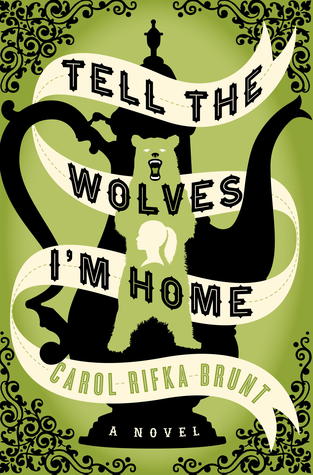
Book Review: Tell The Wolves I’m Home by Carol Rifka Brunt

Book Review: Tell The Wolves I’m Home by Carol Rifka Brunt

Tell The Wolves I’m Home, a first novel by Carol Rifka Brunt, defeated my best efforts to remain stoically dry-eyed while reading. What I expected to be a not-so-extraordinary family drama surprised me with its honest, emotional look at love and loss… and yes, there were tears.

Set in Manhattan and Westchester, New York in the mid-1980s, Tell The Wolves I’m Home is a look at one eventful spring in the life of 14-year-old June Elbus. As the book opens, June’s beloved uncle Finn has just died, an early casualty of the AIDS epidemic. Finn was not just June’s uncle, however; he was her godfather, her inspiration, and her first true love. Finn, a gifted artist, introduced June to everything she considers beautiful in her life — Mozart’s Requiem, visits to the Cloisters, an appreciation for the fine details all around her. June believes that the bonds between her and Finn are all-encompassing, but in the weeks following Finn’s death, June begins to realize that Finn had an entire life that she knew nothing about, and is forced to reexamine her relationship with Finn and its central role in her life.

As June reels through previously unimagined depths of loss, she is contacted by a stranger, Toby, who reveals himself to have had a key role in Finn’s life. Finn, before his death, left secret messages asking June to take care of Toby and Toby to take care of June, and as they try to honor Finn’s wishes, they find themselves connecting through shared bonds of loss, love and jealousy. June is shattered to realize how much she didn’t know about her uncle, as Toby struggles to let her in and to give dignity to June’s adolescent broken heart. As June mourns Finn and all she thinks she has lost, her older sister Greta acts out in her own brand of grief and loneliness in a desperate attempt to be understood and to reforge a connection before it’s too late.

The author does a wonderful job of capturing a particular time and place: New York, in the first throes of fear and ignorance about AIDS. Glancing references are made to Finn’s “special friend”, whom June’s parents consider a murderer — blaming him for Finn’s illness and death — and who is ostracized and banned from the funeral. June worries about catching AIDS from a kiss under the mistletoe; June’s sister is yelled at by their mother for using Finn’s chapstick. Other small details of life in the 80s bring the time to life: June wears her Gunne Sax dress in a desperate effort to isolate herself from the real world, as she hides out alone in the woods behind the school and pretends to live in the Middle Ages she so adores. Finn gives June cassette tapes of favorite music; June’s parents listen only to Greatest Hits albums (“it was like the thought of getting even one bum track was too much for them to handle”), and June has a fondness for “99 Luftballons” (the German version — much cooler sounding). June wears Bonne Belle lip gloss, and Greta has half of a “best friends” necklace, the other half of which some erstwhile best friend has long since discarded. It’s these small details and more which lend this book such a sense of nostalgic poignancy. At the same time, this coming-of-age story feels like it could be the story of any girl — or rather, every girl — growing up, seeing the human flaws in her parents, realizing that long-held truths may be illusions, finding and losing love, and coming to terms with a picture of one’s inner self which isn’t always so pretty.

Tell The Wolves I’m Home is a quiet, lovely book, a look backward that feels current and relevant, and a sad, sweet story of love and friendship. I’m so glad to have read it, and recommend it highly.

Book Review: Where’d You Go, Bernadette by Maria Semple

Book Review: Where’d You Go, Bernadette by Maria Semple

Huh. I just now realized that I’ve been committing hyper-punctuation in regard to this book, whose title does in fact include a comma and an apostrophe, but not a question mark — which I have egregiously added in several tweets and emails. Mea culpa.

Be that as it may, I have to say that I just adored Where’d You Go, Bernadette. (See? No question mark). Author Maria Semple has crafted a social satire that is uproariously funny, hits on a ton of memes and flashpoints of today’s hyper-plugged in society, and yet is also quite touching and surprisingly sweet in places.

Given the title, it’s not a spoiler to say that the plot revolves around events leading up to the disappearance of 50-year-old Bernadette Fox, once a brilliant rising star in the world of architecture, now an eccentric, possibly agoraphobic mother and housewife, whose life is one long string of odd behaviors. Bernadette, her 15-year-old super-talented daughter Bee, and her workaholic Microsoft exec husband Elgin, live in a run-down former reform school for girls atop a Seattle hill. The house is falling apart at the seams, literally, as blackberry vines force their way up through the foundations and the damp ceilings and walls crumble around them. (Keep an eye on those blackberry vines — they’re key to some early developments that lead to a disaster at once appalling and hilarious.)

Bee attends the Galer Street School, described in its mission statement as “a place where compassion, academics, and global connectitude join together to create civic-minded citizens of a sustainable and diverse planet.” Children are graded on a scale of “Surpasses Excellence”, “Achieves Excellence”, and “Working Toward Excellence”. Bernadette is happy that her daughter is thriving, but hates everything about Seattle, including the meddling, fussy, over-involved parents of the school, whom she refers to as gnats. Things go from bad to worse when Bernadette’s neighbor Audrey hosts a prospective parents brunch at her home in an attempt to lure “Mercedes Parents” to their Suburu-level school. To say that Bernadette and Audrey don’t quite get along would be the understatement of the year.

Further complications: Bernadette has hired a virtual assistant named Manjula to handle all of her personal business by internet — everything from travel plans to prescriptions to ordering clothing and household repairs. Before you can say “identity theft”, Bernadette has provided Manjula with her entire family’s bank account numbers, birthdates, passport numbers, and social security numbers.

When Bee comes home one day with a report card full of S grades and a brochure for a trip to Antarctica, events and disasters begin to snowball. Neither parent says no, plans for this exotic trip are set in motion, and Bernadette soon begins to fear that she’s in way over her head. By the time the date of the trip rolls around, psychiatrists, FBI agents, Microsoft admins, school chums, and gardeners have all played a role in the unfolding crisis… and Bernadette disappears without a trace.

Precocious, talented, determined Bee is left behind to put the pieces together, and what we’ve been reading all along is Bee’s compilation of documents pertaining to these events. Where’d You Go, Bernadette is told via emails, faxes, school reports, letters, magazine articles, and captain’s logs; Bee has assembled everything she can that may shed light on her mother’s disappearance, and through quick thinking and connecting of dots, believes she may have found pieces of the puzzle that will lead to answers about her mother.

Let me just say that I enjoyed this book immensely. The writing is crisp and deft, and the author does an outstanding job of capturing some of the nuttiness that is so deeply ingrained in today’s world of helicopter parenting, the cult of self-esteem, the worship of tech, and the increasing isolation experienced by individuals in a world of constant “connectitude”. One character writes impassioned screeds about her Victims Against Victimhood support group, whose members TORCH one another (Time Out! Reality Check) when they speak in victim-lingo; Bernadette’s husband Elgie is revered because he gave the 4th-most watched TEDTalk ever; the school hosts a constant series of concerts and events featuring multiculturalism so extreme that it’s practically a religious devotion. This all rings true in a way that is both slightly sad and hilariously funny.

And yet, there is an underlying sweetness in much of this story as well. As the book unfolds, some of the most self-deluded characters find ways to acknowledge hard truths. The bad guys aren’t necessarily all that bad after all. What seems charming and eccentric is revealed to be a cover for deeper problems that must be addressed. The perfect schools may not be what all children need. Little by little, the beliefs held by the characters at the start of the book fall away, until just about all find their way toward something closer to honesty and decency.

My only quibble about Where’d You Go, Bernadette has to do with the last section of the book, which is told mostly through Bee’s narration and loses some of the oddball charm built into the stream of constant emails and faxes. At times, this section reads a bit too much like a travelogue and loses a bit of the punch provided throughout so much of the book. Still, this is a minor complaint; the book wraps up in a way that’s completely satisfying yet still surprising, and I walked away a) smiling and b) resolved to read whatever Maria Semple decides to write next.

If you enjoy quirky fiction with a bite, this is a book for you.