Book Review: Mariana by Susanna Kearsley

Book Review: Mariana by Susanna Kearsley

The newest cover. My favorite.


Julia Beckett is an independent woman of 30, living in London and succeeding professionally as an illustrator of children’s books. Since childhood, Julia has felt a strange calling to a house in the rural English town of Exbury, and when she happens to pass by the house once again as an adult, fate intervenes. The house is for sale, Julia’s recent inheritance means that she has the wherewithal to make a spur-of-the-moment purchase, and voila! Julia is now the owner of the lovely but mysterious Greywethers.

Uprooting her London life, Julia settles in and is immediately welcomed by the locals, especially the friendly pub owner Vivien, the lord of the nearby manor, Geoffrey de Mornay, and Geoff’s best friend Iain. As she adjusts to her new surroundings, Julia begins to see a dark man on a gray horse at the edges of her property, and that’s just the beginning of strange occurrences.

Soon, Julia begins to have momentary lapses in which she slips through time.

It is difficult to describe the sensation of sliding backwards in time, of exchanging one reality for another that is just as real, just as tangible, just as familiar. I should not, perhaps, refer to it as “sliding,” since in actual fact I was thrust — abruptly and without warning — from one time to the next, as though I had walked through some shifting, invisible portal dividing the present from the past.

When she enters this alternate world, it is as a young woman named Mariana, and the time is the mid-17th century.  As Mariana, Julia relives key events from the other woman’s life, and during those spells knows no other reality – she is, in fact, Mariana. When she returns to herself, Julia remembers what she has experienced as Mariana, but cannot understand why she slips into the past or how these episodes are relevant to her own life.

With the help of her brother Tom, Julia comes to believe that she is Mariana reincarnated, destined for some as-yet-undiscovered purpose related to Mariana’s life. As Julia digs deeper, she comes to understand the love and sorrows that Mariana experienced, and must find a way to live in the present when the past holds so much that tempts her.

I’ll just come right out and say that I love the writing in Mariana. Lush and romantic, Susanna Kearsley’s writing captures the small moments and glances that build to deeper connections and passions. Rustic village life is conveyed in all its quaint charm, and yet the 1600s version of the same village is dark and mistrustful, full of superstition, plotting, and deception. As Julia explores the town, I could practically see the gardens and streams come to life, and would have liked nothing more than to wander the country lanes with her and explore the old manor house and its magnificent library.

As I read Mariana, I became enthralled by the mystery of Mariana’s past and how it could possibly intersect with Julia’s present. The alternating timeframes were so engaging that I never wanted either one to end. By the end of the book, I was completely hooked on the central romance and (without giving anything away here) felt keenly Mariana’s joys and sorrows.

My only quibble with the book is that Julia and Tom arrive at an explanation for Julia’s time slips almost immediately, never question their explanation, and indeed are proven correct pretty much off the bat, with no alternate theories or trial and error. I understand that investigating the cause of the timeslips isn’t really the point here, but it felt a bit too neat to me.

Other than that, there isn’t much that I would change about Mariana. The pace is lively, but with enough suspense and dramatic timing to keep me coming back for more. There’s a sense of impending tragedy – something must have happened to cause Mariana to need to come back across the centuries to find resolution and peace. I especially loved the main plot twist that occurs in Mariana – but again, not wanting to enter spoiler territory, I won’t say what the twist is or when it occurs.

Mariana was first published in 1994 and has been reissued several times since. Call me shallow, but what originally drew me to Susanna Kearsley’s books was the newest set of covers. I was hooked as soon as I saw The Winter Sea on a bookstore shelf, had to have it, and have since snapped up several others. Although Mariana has had several covers since its original publication, the current cover, with its sense of sensual, moody introspection, is the one that really captures the feel of the book for me.

Really, how could you not fall in love with these covers?

I’ve read two other Susanna Kearsley books, The Winter Sea and The Rose Garden. Each involves some sort of time displacement or time slippage, each for difference reasons or using different mechanisms. In all three books, the heroine experiences something inexplicable in which she is thrust into another life or another timeline; she must figure out why it happens and what is expected of her. And of course, in each of the three books, true love – a deep, abiding love that knows no boundaries of time – is at the center of the plot. The romances at the heart of the author’s writings are desperate, lovely, dangerous affairs, and the passion is palpable.

What I also appreciate and enjoy in these books is the historical element. Without feeling like a history lesson, these books manage to convey a time and place gone by. They present the drama of the day’s events, politics, and social structures in a way that feels current and vibrant, with special emphasis on the role of women in these times and the choices (or lack of choices) available to them.

Mariana is a fine example of this type of journey to the past, combined with a contemporary woman’s search for identity and meaning, and as such, is both engaging as fiction and emotionally compelling as well.

I highly recommend Mariana to anyone who enjoys historical fiction, love stories, strong female characters… and simply gorgeous English countryside. An appreciation for dashing men on horseback wouldn’t hurt either.

I have another Susanna Kearsley book, The Shadowy Horses, all queued up and ready to go on my e-reader. As soon as I get over the emotional ups and downs of Mariana, I’ll be ready to dive right in.


Book Review: Redshirts by John Scalzi

Book Review: Redshirts by John Scalzi

If this book doesn’t bring out your inner nerd, then you clearly lack the nerd gene, end of story. Reading Redshirts, I couldn’t help but wish that I’d watched more Star Trek episodes in my youth — despite clearly recalling that I never did enjoy the original Star Trek all that much.

Redshirts is funny and surprisingly touching, and certainly the most original writing I’ve read all year. (Yes, I know it’s only January 6th; I still mean it as a compliment).

It’s the year 2456, and being a crew member of the Universal Union’s flagship Intrepid is not a career move with a whole lot of job security. Junior crew members seem to die on a regular basis, particularly whenever they accompany senior officers on away missions. Their deaths are gruesome, horrible, bloody, and sadly unavoidable. In fact, the crew have taken to hiding whenever the senior officers are about, in order to avoid encounters that may lead to death, or they rely on unproven ideas such as that only one crew member ever dies in the company of a certain officer — so if one person has already met their death on a given mission, the rest will be safe if only they manage to stick with the officer. Life kind of sucks, and death seems to be lurking right around the corner.

When Ensign Andrew Dahl is assigned to the Intrepid, it seems like a plum assignment — until he and his friends, also new to the ship, notice just how weird thing onboard truly are. People die in ridiculous ways (Borgovian Land Worms! Ice Sharks! Killer robots with harpoons!). At key times, pieces of previously unknown information just seem to appear in their minds. Everyone freaks out about away teams. An elaborate tracking system warns certain crew members when a senior officer is en route, at which point those in the know take convenient coffee breaks. When a scientific problem seems impossible, a mysterious machine called The Box is ready to spit out a solution within the designated time frame, usually only minutes before cataclysmic disaster is sure to strike.

Dahl and his four colleagues are doing their best to avoid away missions, but it’s only a matter of time before they get caught in one of the death-inducing assignments… and really, they’d rather not get blown up or eaten. As they start putting clues together, they encounter Jenkins, a former science team member now hiding out in the ship’s cargo tunnels. Jenkins has a crazy theory — but given events on the Intrepid, his craziness might just be the only explanation that fits.

Jenkins’s theory? The reality of the Intrepid is being warped by events occurring during episodes of a sci-fi television series from the early 21st century. He gives an ominous warning: “Avoid the Narrative.” As Dahl and friends dig deeper, they come up with a desperate plan to rewrite their own reality by changing the TV series they seem to be living. Will it work? I won’t ruin the fun by revealing anything further, but suffice it to say that this wacky space odyssey takes on all the tropes of space opera TV serials and does them up to the nth degree.

John Scalzi’s writing is smart, funny, and full of insider jokes and references sure to warm the hearts of fanboys and fangirls everywhere. As the characters try to make sense of the rudimentary technology and information systems available in 2012, we’re treated to gems such as this:

Kerensky grabbed the phone and read the article sullenly. “This doesn’t prove anything,” he said. “We don’t know how accurate any of this information is. For all we know, this” — he scrolled up on the phone screen to find a label — “this Wikipedia information database here is complied by complete idiots.”

Little moments throughout the book led to irrepressible giggling on my part. The plot itself is so clever and mind-bending that I could only stop and admire how crazily convoluted it had all become, and yet with its own internal logic that literally defies the laws of physics as the heroes figure out a solution to their reality-challenged existence.

Redshirts ends with three codas, and they are a nice touch indeed, adding a human element to the story’s wrap-up that is sweet, sentimental, and completely fitting.

If you enjoy science fiction, have a basement full of Star Trek memorabilia, or ever became hooked on a TV show that features warp speed and space battles, you simply must read Redshirts. I haven’t had this much fun since finishing my Big Bang Theory viewing marathon. Geek heaven!

This book is my first encounter with John Scalzi’s writing, but I’d love to read more. Have you read other books by John Scalzi? Which book do you recommend as a starting place?

Book Review: Lola and the Boy Next Door by Stephanie Perkins

Book Review: Lola and the Boy Next Door by Stephanie Perkins

Author Stephanie Perkins has done it again! Her first novel, Anna and the French Kiss (reviewed here), is a refreshingly sunny story of contemporary teens finding their way toward first love. Nothing explodes, the world doesn’t end, there are no technological breakdowns or repressive forms of government. What a nice change for readers of YA fiction! Instead, in Stephanie Perkins’s novels, we’re treated to teens facing real-life problems, negotiating the perils of growing up and finding their way, struggling with big and little decisions, and figuring out what’s really important to them. In other words, characters who feel true and convincing, and who earn the investment a reader feels by the end of the book.

In Lola and the Boy Next Door, we meet the delightfully quirky Lola, a 17-year-old San Francisco native, growing up in the Castro district in the Victorian home she shares with her two dads. Lola believes in self-expression through costuming, and arrays herself in a never-ending rainbow of vintage dresses, multi-hued wigs, glitter and make-up, boots and raincoats, as she tries on different personae and presentations. Lola has learned to tolerate the slings and arrows of her more conformist-minded classmates, and bounces through her life with a couple of close friends and her supportive but very protective parents.

Lola is dating Max, a 22-year-old rock musician whose bad boy outside masks a more sensitive inner core. Max is surprisingly agreeable to the strictures imposed by Lola’s dads: mandatory attendance at the weekly grilling otherwise known as Sunday brunch, non-negotiable hourly phone calls during all dates and outings. This, however, does not prevent Lola from losing her virginity to Max during their supposedly “safe” sanctioned dates. After all, Lola thinks Max is “the one”. She’s in love, and all is well…

… Until the day that Lola’s former neighbors move back into the Victorian next door. The Bells moved away two years earlier in pursuit of daughter Calliope’s figure skating career, taking with them Calliope’s twin brother Cricket (the titular boy next door). Cricket and Lola had been inseparable for one wonderful summer, until a series of miscommunications and the family’s sudden move ripped the two apart and left Lola with a major hole in her heart.

Now Cricket is back, and Lola has to figure out whether she can let him back into her life. (Hint: the title pretty much lets us know that she does.) Lola and Cricket are rather adorable. Their bedroom windows face one another, and they have nightly conversations across the narrow gap between their houses. Cricket is sweet, smart, and head over heels for Lola. Lola wants to be friends… but can she really be happy with Max when Cricket is waiting in the wings?

All this sounds much shallower than it actually is. Both Lola and Cricket have inner doubts and demons to face. Lola’s birth mother Norah was a troubled teen who found herself with an unwanted pregnancy and gave the baby to her brother and his partner to raise. Norah pops back into their lives whenever she’s down and out, which is often, and is an ongoing source of embarrassment and self-questioning for Lola. Cricket has discovered some unsavory truths about his family’s past which make him doubt his own talents. On top of that, Cricket lives in his sister’s shadow, supporting her and cheering for her, but destined to have his life uprooted based on Calliope’s needs.

Lola has to make some big decisions, and I give Stephanie Perkins a lot of credit for not making these decisions easy or free of fall-out. Lola doesn’t want to hurt anyone, but it’s inevitable that she will. She doesn’t want to let down her fathers, but she ends up breaking their rules unintentionally. Even when Lola does what she needs to do, she doesn’t immediately bounce back and move on. We see a real teen dealing with real emotions, and even when it’s hard, it feels true.

As an added bonus, Anna and St. Clair from Anna and the French Kiss are supporting characters in Lola and the Boy Next Door, and it’s quite fun to see them moving forward with their life plans (although they do kind of feel like an “old married couple” in this story, despite only being a year older than they were in their own book). Additionally, I personally got a big kick out of the San Francisco setting. It’s always fun to read fiction set in my town, and I loved the descriptions of the neighborhoods and various landmarks that figured into Lola’s story.

I enjoyed Lola and the Boy Next Door very much. Even though the title pretty much tells you how Lola’s story will end up, it’s the journey that’s so much fun. Lola is a terrific main character — not flawless, but fresh, honest, and individual, with her heart in the right place even if it takes her a bit of trying to figure out her actions. Stephanie Perkins’s writing is lively and the dialogue sparkles. I’m looking forward to reading more by this talented YA author: Her next book, Isla and the Happily Ever After, is due out in May of this year.

Book Review: This One Is Mine by Maria Semple

Book Review: This One Is Mine by Maria Semple

It’s truly surprising to me how very much I disliked This One Is Mine, considering how much I loved Maria Semple’s second novel, Where’d You Go, Bernadette (reviewed here in 2012). Maria Semple, a former TV writer for shows including Arrested Development and Mad About You, has a flair for humor and quirky use of words. These elements are apparent in This One Is Mine, but the story itself is so loaded with unlikable characters making nonsensical decisions that I read the book with feelings of detachment and apathy.
This One Is Mine centers around two lead female characters. Violet, formerly a successful TV writer (hmmm… a stand-in for the author?), is now a stay-at-home mom to a mostly invisible toddler. And what a home! Violet is married to hotshot music executive David Parry, and they live their life in an architecturally significant mansion, with private in-home yoga lessons, cars to die for, and a nanny whom the couple — despite their self-image as super-PC and sensitive — refer to by the nickname of LadyGo, due to her rudimentary use of the English language in sentences such as “Somebody ask and lady go, I’m a friend of the band. Lady who plan the party? Lady go mad.”

Violet may be an at-home mother, but she’s rarely at home. She is unhappy, constantly on the verge of tears, and always flying off in pursuit of some activity that involves driving around LA and avoiding sights that might make her cry. Why no one has noticed that she needs therapy and medication, I have no idea. During a random drive through the city, Violet encounters a down-at-heels, dirty, drug-addicted bass player and launches without a second thought into what may be the world’s most unlikely and ill-advised affair. Teddy is, to put it mildly, kind of gross, not just physically, but in attitude as well. In their brief early encounters, Teddy manages to use every racial slur possible and engages in incredibly unsexy sex talk — yet Violet is smitten, to the point of obsession and at risk of throwing away everything else of value in her life.

Sally, our other point of focus, is David’s younger sister, a single woman in her thirties who desperately wants what Violet seems to have — a successful husband, a beautiful home, a life of ease and celebrity. Sally latches onto Jeremy White, a sports handicapper on the verge of stardom, seeing him as her golden ticket. As his career rises, Sally willfully (or, you might say, stupidly) overlooks his assortment of quirks and oddities in order to fulfill her dream of the good life. And we’re not just talking odd habits. The warning signs around Jeremy are pretty much there for all to see, in gigantic blinking red letters, but Sally’s relentless pursuit of her ideal life doesn’t allow her to see them.

Naturally, nothing works out for anybody. Violet’s affair implodes. Sally gets her man, but at what price? The book culminates in a few very unbelievable turn of events, as characters make one stupid decision after another. Coincidences mount, terrible outcomes ensue. The characters learn lessons and become better people for it. Um, really?

This One Is Mine is full of unhappy people, who seem to thrust happiness away with both hands as they grab at people and circumstances which can only end up as the worst possible choices. Healthy attitudes and though-processes don’t exist in this world. David is actually the only likeable character present, as we get a sense of his compassion, his devotion to both his wife and sister, and his ability to forgive. Other than David, we spend much too much of the book watching unbalanced people make terrible decisions and ruin their own and other people’s lives.

Where’d You Go, Bernadette had its share of quirky and not-so-likeable people, but they were balanced by the book’s satirical tone, as well as by having teen-aged Bee as a relatable point-of-view character. As a reader, I cared about Bee’s well-being, and saw the other character’s through that lens. Even the most selfish or clueless characters ultimately revealed a deeper core.

Not so in This One Is Mine. Neither Violet nor Sally are sympathetic characters, and I couldn’t find a point of entry for caring about either of them. The selfishness of their world views, the unending spending, the world of the ultra-rich — all served to further distance me from the drama. In the end, I found it hard to have patience with the characters or the book as a whole, as reading This One Is Mine largely consists of watching the two main characters selfishly mistreat the people in their lives. The ending was much too neat for my taste, as Violet and Sally end up chastened yet improved by their ordeals, bonding through calamity, and ultimately stronger for it all. None of it worked for me.

Book Review: Sailor Twain by Mark Siegel

Book Review: Sailor Twain by Mark Siegel

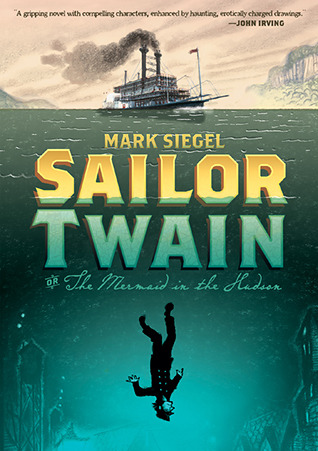
sailor twain

Graphic novel Sailor Twain is a gorgeous tale of mermaids, riverboats, secrets, and myths, set in New York in the 1880s.  The action in Sailor Twain takes place aboard the Lorelei, a stately paddle-wheeler carrying upper class passengers up and down the Hudson River.

Captain Twain is a well-respected, upright gentleman and erstwhile poet who earns a living on the river in order to save money needed for a possible cure for his disabled wife Pearl. The Lorelei is owned by the Lafayette family, who struck it rich through their paddle-wheeling empire. Older brother Jacques-Henri plays host to Astors, Vanderbilts and other mansion-dwelling New Yorkers, until his behavior turns odd and he mysteriously disappears. Younger brother Dieudonné takes over the reins of the family business, and proceeds to scandalize the crew of the Lorelei with a never-ending string of illicit romantic liaisons, largely with the bored and neglected trophy wives of the captains of industry.

Captain Twain looks on with detachment until, late one night, he finds a wounded mermaid clinging to the side of the Lorelei. He brings her aboard ship and hides her away in his cabin while he tends to her wounds, but soon becomes enamored with the mermaid to the point of obsession. A secretive writer, C. G. Beaverton, may hold the key to understanding the mysteries surrounding the Lorelei and its crew, but will the answers come in time to help the captain?

The black and white drawings of Sailor Twain, interspersed with newspaper clippings and nautical maps, create an atmosphere throughout the book that is both starkly beautiful and highly evocative. The author does a tremendous job of recreating an historical point in time through the smallest of details, and the steamship itself is a thing of beauty. Looking at the drawings of the Lorelei, you can practically hear the chiming of the champagne glasses and the laughter of the pampered guests.

The story itself is engaging and romantic. Clues build upon clues as the Captain and Lafayette venture through parallel struggles to understand the nets in which they’ve become ensnared and to find possible solutions. There’s an aching beauty throughout, and we know from the prologue that tragedy will inevitably come for these characters.

Between the artwork and the haunting storyline, there’s a lot to love about Sailor Twain. This book will please booklovers who enjoy a dash of mythology with their historical settings, and deserves to be listed as one of the year’s best graphic novels.

Book Review: Cold Days by Jim Butcher

Book Review: Cold Days by Jim Butcher

Harry Dresden is back! And — dare I say it? — better than ever.

(Spoilers for earlier Dresden books ahead, so proceed at your own risk.)

In this 14th novel of the Dresden Files, Harry is back from the quasi-dead, but there’s no time to rest and recuperate. As the new Winter Knight, Harry has to survive Queen Mab’s rather deadly version of physical therapy before setting out to obey Mab’s commands, reunite with his friends, avoid menacing fairies, and – oh, yeah – save Chicago and perhaps the world from a looming apocalypse.

Every time I pick up a Dresden Files book, I’m reminded all over again of how much I enjoy this series, what a way with words Jim Butcher has, and just what a bad-ass Harry Dresden really is. Some series linger on way past their expiration date (I’m looking at you, Sookie), when clearly there’s really not much else to do or say with the characters. Not so in the Dresden Files. Cold Days continues the ongoing story and enriches it, drawing on past stories and mythology, adding layer upon layer of complexity to the challenges facing Harry, and moving the story in some creative and unexpected directions.

Cold Days deals very much with Harry’s new role in the Winter Court, but to understand the action, it’s important to have read the previous books. Familiarity with book 4, Summer Knight, is especially helpful. Harry’s strongest allies, including his brother Thomas, apprentice Molly, will-they-or-won’t-they love interest Karrin Murphy, and big doggie Mouse are all back at his side, fighting against new super-scary villains and fighting in alliance with some surprising new partners.

I really won’t say too much more about the plot, a) because it goes a mile a minute and covers a tremendous amount of ground in the course of 500 pages, and b) because you’re really better off experiencing it on your own.

I wasn’t really sold on the previous volume in the series, Ghost Story, but the one before that, Changes, was blow-your-socks-off great. To a large extent, the events of Changes are much more important to the on-going narrative than those of Ghost Story, and lead nicely into the central action of Cold Days. I would rate Cold Days as among the best in the Dresden Files series. By the end of Cold Days, Jim Butcher has set some new players into action, rearranged the power structures, given new roles to familiar characters, and left Harry facing a potential threat to his own well-being, a looming menace to the world at large, and some weighty decisions to make concerning his personal life.

If you’re a fan of the series, you will absolutely want to read Cold Days. If you’ve read bits and pieces of The Dresden Files, or maybe only watched the sadly short-lived TV series, let me tell you that it’s worth continuing with the books to get to the really stellar volumes such as Changes and Cold Days.

And if you’ve never read any of the Dresden Files books? Well, what are you waiting for? Jump in, start at the beginning, and enjoy! But clear any other books off your reading calendar — once you start The Dresden Files, you won’t want to stop.

Book Review: Anna and the French Kiss by Stephanie Perkins

Book Review: Anna and the French Kiss by Stephanie Perkins

How refreshing, to read a bright, honest, engaging young adult novel that doesn’t have anything to do with the end of the world, a crazy dystopian future, supernatural powers, or creatures from another realm! Anna and the French Kiss is a thoroughly adorable story of a likeable girl trying to find her way in the world, and it’s so cute that I wanted to hug the book when I was done.

Anna is a 17-year-old high school senior from Atlanta, Georgia, whose bestselling author father has decided that what she needs is to spend senior year not with her friends at home, but at an elite boarding school for American students in Paris. Anna is furious and aghast, horrified to be leaving her best friend and her kinda, sorta boyfriend, and absolutely mortified by the thought of showing up in Paris knowing not one single word of French. Anna is so self-conscious about her American-ness that she confines herself to campus and is too afraid to even order food in the rather extravagantly lush school cafeteria.

Luckily for Anna, however, she is adopted by her dorm neighbor Meredith almost instantly, and then meets Meredith’s circle of friends, among whom is the funny, gorgeous, British-accent-sporting Etienne St. Clair. Anna and St. Clair, as he’s called, hit it off immediately and become inseparable friends… although Anna can’t ignore the fact that he makes her heart beat faster whenever he smiles at her. St. Clair brings Anna out of her shell, Anna helps St. Clair through a major family disaster, and hey — it’s Paris! Love is definitely in the air, but obstacles abound, and much of the plot’s suspense and drama come down to a will-they-or-won’t-they back and forth in which neither Anna nor St. Clair manages to communicate their feelings to one another.

There’s a lot to love about Anna and the French Kiss. For one thing, although Anna describes St. Clair as the most beautiful boy she’s ever known, it’s clear that we’re seeing through her besotted eyes. While St. Clair is so charming and charismatic that everyone wants to befriend him, he’s no Edward Cullen or Adonis. St. Clair, in turn, tells Anna that she’s beautiful, but again, the point is not that she’s a stunning model, but rather that she’s an ordinary girl who is beautiful in the eyes of the boy who has fallen for her.

Anna and the French Kiss is a light, enjoyable read, although it does convey some deeper passions and conflicts. Friendships are tested; lessons are learned. Some relationships last, some end bitterly, some simply run out of steam. Parents can be loving and supportive, but some make decisions about their children as a means of carrying out their own desires or furthering their own images. Even the most talented or together of Anna’s circle of friends have insecurities and personal foibles and weaknesses. No one is perfect, and perhaps that’s why I enjoyed this book so much. Anna and the French Kiss works because it feels so real. Sure, it’s unlikely that most American teenagers would have the opportunity to find love while running around Paris — but any reader will be able to relate to the ups and downs of friendships, the joys and sorrows of first love, and the challenges of impending adulthood which the characters experience.

I’ve been hearing about Anna and the French Kiss quite a bit from other fans of YA fiction, and I’m happy to report that this is one book that did not disappoint.

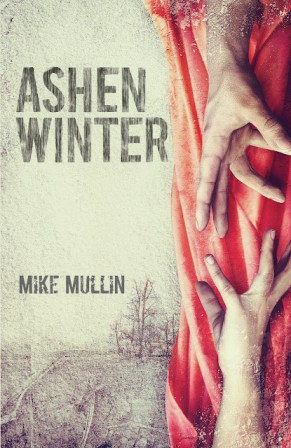
Book Review: Ashen Winter by Mike Mullin

Book Review: Ashen Winter by Mike Mullin

Ashen Winter is the second book in Mike Mullin’s natural disaster trilogy, following the author’s powerful debut novel, Ashfall. SPOILER ALERT: This review will, by necessity, contain mild spoilers for book one. Stop here if you just don’t want to know!

In Ashfall, teen protagonist Alex is forced to grow up in a hurry when life as he knows it comes to an end following a massive supervolcano eruption which causes widespread environmental catastrophe. At the beginning of Ashen Winter, ten months have passed since the eruption. Alex and girlfriend Darla are living at his uncle’s farm in Illinois, struggling to survive the freezing temperatures brought on by the ash-induced climate change. Alex is determined to find his parents, who returned to Iowa to find Alex at the same time that Alex was fleeing Iowa to reunite with his family. Alex and Darla, bound by a soul-deep love, leave on their quest early in Ashen Winter, and immediately encounter one disastrous turn of events after another. The two escape death, barely and not without injury, time and time again, as they face physical danger, loss of food and supplies, freezing conditions, corrupt government contractors, and bands of cannibals who prey upon anyone they can capture.

Alex shoulders tremendous burdens and feels a crushing sense of guilt and responsibility as each carefully laid plan turns ruinous. Alex and Darla are separated early on, and Alex faces one obstacle after another as his quest to find his parents turns into a rescue mission: Find Darla before she is killed or brutalized by the rampaging gangs of armed thugs who prey upon the weak and alone. Alex is not without resources, however. In the first book, we saw Alex repeatedly struggle to do what he could to help others, even when doing so meant his own survival might be jeopardized. In Ashen Winter, we see a kind of pay-off for Alex’s earlier choices, as the people he’s helped or rescued along the way become valuable allies.

An ongoing motif throughout both books is the meaning of adulthood. By Ashen Winter, Alex is sixteen, and the adults he meets along the way continue to try to control him and make decisions in what they think is his best interest. Repeatedly, well-meaning adults discount his absolute commitment to Darla and try to dissuade him from his rescue mission. Alex, despite his age, must prove to himself and to those around him, over and over again, that he is strong, capable, and yes, in love — not a fleeting, teen romance, but a connection and a commitment that means that he must find Darla, no matter the danger or the very real possibility that she’s already dead. Alex’s opponents are not only the gangs and corrupt officials who threaten him, but also the adults he trusts and loves. All of them stand in his way; all of them underestimate him; to all of them, he has to stand up and proclaim that he is an adult to be reckoned with.

Ashen Winter is like paper crack. Each chapter ends with a cliffhanger of sorts. Here’s a random sampling of a few last lines from various chapters:

“What really caught my attention was the machine pistol he had trained on Darla.”

“A line of men popped into view one by one, their heads and shoulders above the low log gate. Every one of them was pointing a rifle at us.”

“Then I heard an engine rumble behind us.”

“The bike fell sidways, trapping Darla’s leg and dragging her ina rush toward the deadly, roiling water at the base of the dam.”

“I slipped — and suddenly I was dangling, my feet clawing futilely at the air.”

“When the body quits shivering, it’s preparing to die.”

I could provide many more examples, but you get the idea. No wonder I’ve been bleary-eyed all week — with ending sentences like these, it was simply impossible to put this book down at the end of a chapter and call it a night.

In other reviews, I’ve referred to 2nd books in trilogies as middle children — not the first, leading the way, not the last, to be cherished and savored. The middle book has to keep the momentum going, provide a link between beginning and end, but not actually allow the story to move too close to a conclusion. When not done well, a reader is left feeling like he or she is treading water, waiting for the action to resume in the final book. I’m happy to report that Ashen Winter is a terrific example of a middle book that accomplishes its mission and then some. It not only moves the story forward and leaves the reader hungry for the final installment, but it contains a compelling plot, filled with twists and turns, memorable characters, action aplenty, and convincing character development. In other words, it’s a good book in its own right, which is really quite rare for a middle book.

Of course, it would be foolish to pick up Ashen Winter without having read the first book and expect to understand what’s going on. But if you want an action story with heart, pick up Ashfall and dive in. I dare you to stop after just one book.

Book Review: Because It Is My Blood by Gabrielle Zevin

Book Review: Because It Is My Blood by Gabrielle Zevin

Because It Is My Blood, book 2 in the Birthright series which began in All These Things I’ve Done, continues the story of Anya Balanchine, 17-year-old heiress to the Balanchine Chocolate empire. Unfortunately for Anya, in New York in the year 2083, chocolate and caffeine are illegal under the laws of the Second Prohibition. As a result, the Balanchines are a notorious organized crime family, and as the daughter of the murdered head of the family business, Anya is a prime target for both internecine bloodshed and for the law enforcement agents eager to make a big splash in the press.

On top of all this, Anya must worry about protecting both her genius younger sister and her mentally-impaired older brother — not to mention the more typical teenage worries of boyfriends, best friends, and high school graduation. The fact that Anya is a convicted criminal who has served prison time complicates matters tremendously, and when she is re-jailed on trumped-up charges, an escape seems to be the only answer.

Because It Is My Blood is a serviceable second book, moving the plot along at a mostly fast pace, although several of Anya’s sojourns along the way seem to drag a bit. The heart of the story is somewhat lacking in this installment. All These Things I’ve Done was propelled forward not only by the crime family plotline but by a compelling “star-crossed lovers” romance between Anya and the son of the New York District Attorney. This romance still features in the second book, but doesn’t carry the sense of excitement and passion present in the first. In fact, that sums up the problem that I had with Because It Is My Blood. The book often reads as a recitation of facts and events — jailbreaks, deaths real and faked, meetings with lawyers, meetings with Balanchine family members and associates — but without a sense of burning passion driving the story forward.

This is not to say that Because It Is My Blood isn’t fun to read. I got a real kick out of the familiar New York landmarks reimagined in the setting of a deteriorating city with meager resources and ample crime. The popular nightclub Little Egypt is housed in what was once a museum (i.e., The Metropolitan Museum of Art), and a vacant mess of a property with weird lion statues out front (i.e., The New York Public Library) is described as a place where they used to keep paper books in the old days. Anya is amused by the old-fashioned slang of her grandmother (OMG, for example), and there’s a film festival showing ancient movies including one where a lady crosses a river on a horse (which I can only assume is a reference to Lord of the Rings). Little details like these make the story accessible and bring to life both the setting and the era in ways both entertaining and relatable.

By the end of Because It Is My Blood, the stage has been set for what I believe will be an exciting third installment in the trilogy. Anya has made key decisions and is about to take a bold new step that will impact all the people around her and will have dramatic impact on the family business as well as on the New York political world. The developments are quite promising, and the storyline is left hanging with a tremendous amount of potential for a satisfying conclusion to the series.

As a young adult trilogy, the Birthright series has a lot going for it: a smart, strong female protagonist, an unusual premise that breaks from the ubiquitous dystopian model saturating the YA market, and a clear-eyed look at a girl who has to balance love, family, honor, and her own sense of purpose. Because It Is My Blood is not a stand-along novel, and you wouldn’t want to jump into the series with it. But if this type of story appeals to you, I’d definitely recommend giving the series a try, starting with All These Things I’ve Done. The writing is fresh, funny, and appealing, the characters are not run-of-the-mill YA teens… and who can resist a book about chocolate?

Note: I have two other book 2s in the works this week, and may actually be back with a few astute observations when I’m done. Middle children never have it easy, do they?

Book Review: Dare Me by Megan Abbott

Book Review: Dare Me by Megan Abbott

For some reason, after hearing this book compared to “Heathers” and “Mean Girls”, I was expecting dark comedy. Dark, I got. Comedy, not at all.

Dare Me is a very dark look at the hearts of high school girls — their secrets, desires, power plays, and manipulations. The story focuses on Addy, lieutenant to cheer squad captain Beth, happy and secure in her number two role, always right at the heart of the power. Beth is, beyond doubt, a mean girl. The snide comments designed to undermine others’ confidence, the hip-shaking strides down the school corridor, the ability to put anyone, boy or girl, back in their place — their place being always subservient to Beth — these are Beth’s tools of the trade, her natural forté. Addy, however, has known Beth since elementary school and Pee Wee cheer, and they’ve been best friends ever since. Only Addy has seen past Beth’s facade and knows some of the inner working of Beth’s tumultuous and devious heart.

Disrupting the power structure and rocking it to its core is the arrival of a new coach. Coach French pegs Beth for what she is right away, knocks her from the top of the pyramid, as it were, and sets in motion a chain of events that turns disastrous very quickly, with emotional and physical casualties piling up along the way. Beth is not one to take insult or injury lightly, and she goes to war in her own patented, insidious way, with Addy caught in the middle and at risk of being pulled apart.

Dare Me presents a rather appalling peek inside the world of cheerleading, as the girls indulge in extreme dieting, punishing workouts, and casual self-induced vomiting in order to be at their fighting and flying best. The author attempts to describe the high physical risks involved in this sport as well, the peril of flying, pushing, pulling, and lifting, with only the other girls’ arms and attention keeping one’s head from crashing onto the ground. The pressure is intense, and the risk is real, and yet these girls keep throwing themselves into it, with applause and adrenaline — and a sense of cheating death — the reward for success.

I particularly liked this passage, as Addy explains the intensity and interconnectedness of their stunts:

Being part of a pyramid, you never see the pyramid at all.
Later, watching ourselves, it never feels real… It’s nothing like it is on the floor. There, you have to bolt your gaze to the bodies in your care, the ones right above you.
Your only focus should be your girl, the one you’re responsible for the one whose leg, hip arm you’re bracing. the one who is counting on you.
Left spot, keep your focus on the left flank. Don’t look right.
Right spot, keep your focus on the right flank. Don’t look left.
Eyes on the Flyer’s eyes, shoulders, hips, vigilant for any sign of misalignment, instability, doubt.
This is how you stop falls.
This is how you keep everything from collapsing.
You never get to see the stunt at all.
Eyes on your girl.
And it’s only ever a partial vision, because that’s the only way to keep everyone up in the air.

This sense of not seeing the whole picture, of just focusing on the part you need to see in order to avoid collapse, applies to Addy and her slow discovery of the secrets and deceptions going on all around her. As manipulation piles up on top of manipulation, tragedy inevitably strikes, and Addy is left to piece it all together.

Dare Me was a quick but engrossing read, well written in a tone that conveys passion, devotion, fear and glory. It terms of the plotting and betrayals, as well as the dark undertone present in every passage, I was reminded most of The Basic Eight, but without the humor or levity to counteract the blackness. High school and friendships can be a true battlefield, and Dare Me portrays it in scary vividness, collateral damage and all.