
Book Review: If If Ever Get Out Of Here by Eric Gansworth

Book Review: If If Ever Get Out Of Here by Eric Gansworth

If I Ever Get Out of HereIn If I Ever Get Out Of Here, main character Lewis Blake faces yet another lonely year as the only Native American kid in the all-white smart kids’ class at the local junior high school. As a rez kid in 1975 Buffalo, New York, Lewis knows that 7th grade will probably bring more of the same for him — sitting alone, talking to no one all day until he rides the school bus back to the Tuscarora reservation with the kids he grew up with. Much to his surprise, though, one of the new kids from the town military base doesn’t seem to care that they’re from different worlds, and the two boys soon strike up a friendship over their love of the Beatles and Paul McCartney.

But friendship only extends so far. George and his family welcome Lewis into their home and their lives, but Lewis just can’t quite bring himself to return the favor. Lewis lives with his mother and uncle on the reservation in a house that’s literally falling apart around them, and he’s sure that George would drop him in an instant if he ever got a real sense of just how poverty-stricken Lewis really is.

If I Ever Get Out Of Here is both a coming-of-age story and a portrait of Native American life. In it, the author vividly describes the challenges faced by the children of the reservation, who may attend the white schools but know that they’ll never really leave the rez. In this pre-PC world, outright racism is common in the local community, and when Lewis is targeted by a much-feared bully who’s known for his hatred of “Indians”, none of the adults are willing to intervene. It’s up to Lewis to take a stand, and his bravery leads to both triumph and betrayals as the repercussions are felt throughout the school and the town.

Above everything, If I Ever Get Out Of Here celebrates two universal forces for good: Sincere, unwavering friendship, and the power of rock and roll. George and Lewis are good kids with their heads on (mostly) straight, who understand the importance of family, and who’ve grown up in one form of isolation or another. They bond and connect with a sense of trust that moves beyond the barriers of race and economic class. What truly brings them together, however, is the music, and this book is saturated with the delight of discovering something new and true through the grooves of a vinyl album.

George and his father manage to find tickets to a Paul McCartney and Wings concert in Toronto (although Lewis has to endure the comment from a friend’s dad, “Hope you didn’t get scalped,” complete with hand gestures illustrating just what a scalping would look like). Yet once the concert starts, all the stresses of being the lone Indian among a sea of white people fade away, as Lewis observes the awesome glory of being in a crowd at the perfect rock concert:

The guy next to me grabbed me by the armpit and insisted that I stand on my seat. I was short enough that doing this didn’t make me much taller than anyone else, but I still crouched a little to even the view for the guy directly behind me. A minute or so later, that guy tapped me on the shoulder and yelled that I was fine standing. He was tall enough to see… The strangers around me made me one of them. It was almost like being home on the reservation, and I let myself enjoy the surging excitement.

The Beatles, Wings, Queen, Bowie — these form the soundtrack of the boys’ lives during their junior high school years (and provide the chapter titles in If I Ever Get Out Of Here), and the author thoughtfully provides us with a detailed, lovingly compiled playlist at the back of the book.

This young adult novel strikes me as appropriate perhaps for older middle-grade readers as well, although they may be less familiar with the historical elements that come to life here. In all the different facets of life facing Lewis, the settings ring true. The casual racism and cruelty experienced by Lewis may be shocking to young readers raised in today’s more aware society, but the fear and pain caused by bullying are certainly something that kids of any era would be able to relate to.

Written as a first-person narrative using straight-forward language, If I Ever Get Out Of Here lets us inside Lewis’s head and Lewis’s world, and both are fascinating places to be. As a visit back in time and to a world that most white Americans either can’t or don’t want to see, this book engages the reader’s heart and mind. Lewis is a terrific main character — not a perfect boy by any means, but an overall really good kid who is proud of his people but doesn’t want to be confined by old rules. If I Ever Get Out Of Here vividly captures the dichotomy experienced by the Native American youth who feel a deep sense of belonging within their communities on the reservation — but whose opportunities for better lives lie elsewhere.

I recommend this book for teens and adults alike. The people feel real, the dialogue and events capture the essence of the 1970s, and the music just makes it all come to life. Most of all, it’s a tribute to true friendship — the kind that’s loyal, steadfast, and lifelong — and the difference it can make in a lonely boy’s life.

Review copy courtesy of Scholastic via NetGalley. I received a copy of this book in exchange for my honest review.

Book Review: The Book of Secrets by Elizabeth Joy Arnold

Book Review: The Book of Secrets by Elizabeth Joy Arnold

The Book of SecretsChildhood secrets, the ugliness behind a serene family facade, imagination unleashed by the beauty of good books — all are key elements of the exquisite new novel The Book of Secrets written by Elizabeth Joy Arnold.

Chloe’s life changed forever on her eighth birthday when she met the mysterious, wonderful Sinclair children. Scrubbed and wholesome in a hopelessly old-fashioned way, living in a secluded country home in California redwood territory, home-schooled by a kind and creative mother, siblings Grace, Nate, and Cecilia welcomed Chloe into their hearts, and from that moment on, they became the center of Chloe’s life.

As the book opens, Chloe is in her mid-forties, struggling with the tensions of her 25-year marriage to Nate. Chloe and Nate have loved each other since childhood, but a tragedy in their early days together has created a permanent hole that neither knows how to fill. When Chloe finds a note from Nate saying that he’s suddenly gone back to his childhood home to deal with a family matter, she is shocked and dismayed. That home was the site of their nightmare, and she can’t imagine why he’d consent to return. Unsure what to believe, Chloe searches for clues, and finally finds a secret notebook, filled with a coded sort of language written by Nate, tucked inside a hollowed-out copy of The Lion, The Witch, and The Wardrobe. Chloe struggles to decipher Nate’s writing, sure that it will help her understand his sudden departure — but unsure whether she truly wants to unearth secrets from their awful past.

As Chloe cracks the code through the use of favorite childhood books, the narrative shifts back and forth between Chloe’s present-day struggle to understand the secrets that have undermined her marriage and the past, full of hidden family drama and dysfunction, as well as the delights of first love and devoted friendship.

The Book of Secrets explores themes of family, faith, and imagination, and peers into the heart of a marriage — what holds it together, what makes it fall apart. The secrets revealed in The Book of Secrets are huge and devastating, and it amazes me that Chloe and Nate survived as a couple at all.

The writing in this book is quite lovely, full of descriptions that vividly convey the wonders of childhood, full of play (digging a hole to London to try to go visit C. S. Lewis), journeys to the fantasy worlds of books, puzzles, and hidden codes, and the pure certainty of love that flows between Chloe and the three Sinclair children. The book is also a charming tribute to the power of good books, amply illustrating how books can inspire and transform, provide escape and solutions.

Ultimately, there is a mystery at the heart of The Book of Secrets — what happened 25 years ago, and what has Nate been hiding from Chloe all these years? (I’m being deliberately vague, I know. This is yet another book that I think is best read with as little knowledge beforehand as possible.) The tension builds and builds, and as Chloe finds herself reexamining long-held beliefs based on new information that she uncovers, we as readers have to readjust our understanding of events as well.

The ending is tension-filled, dramatic, and just as it should be. I did more or less figure out the general shape that the ending would take well ahead of time, but that didn’t matter in the slightest. Even though I was right on the money about the “what”, the “how” and “why” were surprising, shocking, and yet made total sense in the context of the story.

This is a perfect book for book lovers. Not only is the story of Nate and Chloe and their family secrets compelling and well-written, but the obvious adoration that the author feels for reading and its magic shines through on every page.

Review copy courtesy of Bantam Books via NetGalley.

Book Review: Mist by Susan Krinard

Book Review: Mist by Susan Krinard

Mist (Mist, #1)

Mist is a mix of urban fantasy and Norse mythology. For me, the combination — at least as presented here — just doesn’t work.

After a promising prologue set in a snowy wasteland along a Norwegian border during World War II, the action jumps to modern day San Francisco — and the story falls apart from there.

Main character Mist is a Valkyrie, who after the final great battle of the gods is left to wander Earth protecting one of Odin’s treasures. She’s beautiful (of course!), can kick butt, and is burdened with a tremendous sense of both guilt and responsibility. After keeping a low profile for decades, Mist starts noticing odd signs and portents, as well as bizarrely cold weather, and soon discovers that Midgard (Earth) is under assault by frost giants, the Jotunar. Perhaps the old world isn’t quite as dead as Mist believed, but there’s no time to sit and ponder. Attacks on Mist and her associates begin to multiply, and before long Mist realizes that Midgard may well become little more than the next battleground for a mighty confrontation of the Aesir, the Norse pantheon of gods and goddesses.

Mist lives in San Francisco, training with swords and working on her fighting skills, until all hell breaks loose when the frost giant Hrimgrimir and an unexpected elf show up in her world. From this point forward, Mist spends most of her time racing around the city, getting into fights, assembling a team of allies, and figuring out who she can count on — and which people are not as trustworthy as they seem. There’s tons of action, confrontations, emotional scenes of betrayal and alliances… but I don’t know, it was incredibly difficult to follow.

So why didn’t I enjoy this book? Several obvious problems, for starters.

Problem 1: The first several chapters read like one gigantic info-dump. The exposition is jam-packed with names and details, and if you’re not already familiar with Odin, Freya, Valkyries, Einherjar, Aesir, Ragnarok — and on and on — you may find your eyes glazing over, as mine did. Meanwhile, I couldn’t stop my thoughts from straying to these guys:

Note: Thor does not make an appearance in Mist, although he does get name-dropped. Still, talk to me about Norse mythology and Odin, and this is where my brain goes. And Loki? Yes, he’s quite important in Mist — and despite the author’s descriptions that seem to indicate otherwise, every time I read about Loki, I picture Tom Hiddleston.

Problem 2: So what exactly are Mist’s powers? What are the rules? She can guard the Treasures, but not use them? She can be hurt, but she can heal, so is she immortal? She’s strong, but can be defeated in battle — can she be killed? She can use runes, and apparently has access to all sorts of magic, but she’s less powerful than some and more powerful than others. And what about the rest of the Norse mythological characters who show up? Same questions apply, and not all answers are clear. In order for me to get behind Mist as the hero of the story and really care about her struggles and her fate, I have to feel that I understand her… and I don’t. Magical worlds are great, but it’s important to get a sense of the rules of the magic involved if the world is to be convincing. It was practically impossible to tell what each character’s limits and powers are, so that their stories seemed a bit arbitrary to me, changing or discovering new magical talents as the need arose in the story.

Problem 3:  One thing that drove (ha! you’ll see) me batty was that the author seemed to be trying to prove that she really knows San Francisco by constantly providing a turn-by-turn set of directions every time Mist had to get from place A to place B:

Without really thinking about her destination, Mist turned north on Third Street and left on Sixteenth Street toward Golden Gate Park on the other side of the city… She parked along Lincoln Way, got out of the car, and entered the park from Nineteenth Avenue.

And a few chapters later:

She pressed the Volvo to its limits, reaching eighty as the car crossed over Highway 101. She flew along the Embarcadero Freeway and raced down the Twentieth Street exit ramp. She screeched right on Twentieth, crossed Third on a yellow light, and made a hard right on Illinois.

Thanks, but I have a GPS for that.

Mist is supposedly the first book in a series, and so it doesn’t end with a definitive conclusion. Instead, the final section of the book mostly deals with team-building, as Mist assembles allies to join her in the coming fight against Loki and whatever array of baddies will join him in the fight to take over Midgard.

Overall, the book felt like all plot with no strong underpinnings of character or context. I generally enjoy urban fantasy, but didn’t feel that I had enough to go on with Mist. The characters seemed too vaguely defined, and therefore unknowable. Interestingly, Loki was the only character I felt I could get a handle on; he’s a trickster, he’s scheming and manipulative, and that’s something that remains consistent throughout the book. Without the ability to really understand Mist herself or her allies, it was hard to invest in the story.

I’m sure that there are readers who will have a very different opinion of Mist than I did. People already conversant with the names and terminology pertaining to Norse mythology may not mind the unwieldy exposition and info-dumping — and may not need to refer back to Wikipedia and D’Aulaires’ Book of Norse Myths as often as I did. Plus, fans of urban fantasy may enjoy the many fight scenes and chase scenes that compose much of the plot.

For me, the truth is that I had to struggle to finish reading Mist, and if not for the fact that I’d received this as a review copy, I might have walked away after the first few chapters. I stuck with it to see if it would get any better — sadly, I never felt that the story really built into anything I could connect with or invest in, and by the end I was just reading it for the sake of finishing.

Disclaimer: Review copy courtesy of Macmillan-Tor/Forge via NetGalley. I received this review copy in exchange for an honest review.

Book Review: Gorgeous by Paul Rudnick

Book Review: Gorgeous by Paul Rudnick

GorgeousI’ll be honest: When I first heard about Gorgeous, I was quite skeptical about the chances that I’d actually like it. I mean — magical dresses? The fashion world? Um, no.

Fortunately, I decided to check it out anyway, and to see for myself what all the buzz was about. And I’m happy that I did. Gorgeous is definitely about inner beauty, the traps that fame can bring, and finding out who you are and what you want. It’s sweet and funny all at the same time, and never drags for a second.

So what’s it all about? In a nutshell:

Becky Randle, age 18, grew up in a trailer park in Missouri. As Gorgeous opens, Becky’s reclusive, morbidly obese mother has just died, and Becky is left on her own. Becky has never had what you’d call confidence — she’s self-conscious about her looks and her economic status, and mostly moves through life with her head down, trying not to be noticed. Becky considers herself plain and mousy, and nobody really disagrees with her on that. Her one true friend, Rocher (yes, named for the chocolates!) is her biggest supporter, but Becky is absolutely adrift after her mother’s death…

…until she finds a mysterious phone number hidden away amongst her mother’s belongings, calls it, and is invited to New York, all expenses paid, where some sort of secret — or perhaps an opportunity — will be revealed. Before her death, Becky’s mother made her make a promise:

“[S]omething is going to happen to you. And it’s going to be magical.”

She was gripping my hand very tightly and looking right into my eyes. “And it might be scary and you might not know what it means, not at first. But it’s going to change your life, forever. And Becky, I want you to swear to me, because I love you so much, and because you deserve everything, you deserve the whole world, so Becky, when the magic shows up — I want you to say yes.”

So Becky says yes, and finds herself in New York in the secret compound of mysterious superstar designer Tom Kelly, who offers Becky a deal: He’ll make her three dresses, which she’ll wear when and where he dictates, and in return, he’ll make her the most beautiful woman in the world. Becky decides to take a chance — it’s that or go back to Missouri and spend her time as a supermarket cashier — and thanks to a magnificent red dress and some killer shoes, is in fact tranformed into Rebecca Randle. Rebecca really is the most beautiful woman in the world, and becomes an instant superstar. One catch? She’s still Becky on the inside. So long as other people are with her, Becky sees Rebecca when she looks in the mirror — but alone, she sees plain old Becky, who still has lank, uncooperative hair and gains weight when Rebecca overindulges on sweets.

But wait! There’s a final condition to be met. Becky’s glamorous life as Rebecca will end after one year unless she manages to fall in love and get married before the year is up. Becky is, of course, a little angry about this requirement — really, marry at age 18? But life as Rebecca is a non-stop whirlwind full of celebrities, special treatment, and all the attention she could ever want. Everything is possible, and after a chance encounter, Becky decides to aim high: She decides that she’ll marry Prince Gregory, heir to the British throne  — and a nice, funny, adorable guy to boot.

Needless to say, complications upon complications ensue. Can Rebecca really be accepted by the royal family and the British people? Can she pull this off before the year is up? And wait — it’s not enough to just get married. Can Rebecca really have fallen in love with Prince Gregory, or is this just the next natural step on her meteoric rise to fame and fortune?

Enough with the plot details! I won’t give anything else away. Gorgeous is a delight to read, in so many ways. Author Paul Rudnick is a deft writer, putting words in Becky’s mouth that actually feel right for an 18-year-old girl. Becky has a terrific sense of humor, and even as beautiful Rebecca, it’s when she lets her inner Becky out — full of snark and wit — that she’s most likeable and captivating.

I won’t say how the royal pursuit turns out… but much of it hinges on Becky’s dilemma. If Prince Gregory does in fact fall for her, how can she ever know if it’s really the true Becky he loves? Would he love her if she didn’t look like Rebecca? And if she can get everything she dreams of, will it really make her happy if it’s all based on a false face and body?

Becky is a fabulous character. She’s a daughter who loves and cherishes her mother, and it’s her commitment to her mother’s memory  — as well as the promise of answers to the mystery of her mother’s life — that drives Becky forward and motivates her to stick with the crazy life offered by Tom Kelly. Becky is smart and wickedly funny, and sees Rebecca’s instant power and influence as a means to an end, hoping to model herself after her mother’s idol, the late Princess Alicia (this novel’s stand-in for Princess Diana) and use her worldwide celebrity to advance the causes of those who need help.

I loved Becky’s friendship with Rocher, who is crass, brash, and a constant supporter of Becky — despite her tendency to gush over celebrities and cause minor and major uproars at the nicest of events. Prince Gregory is a prince of a guy, and I could understand how Becky would fall — not just for his royalty and status but for his self-deprecating humor, compassion and caring.

Gorgeous is a lovely modern-day fairy tale. Yes, it does require quite a suspension of disbelief. (Magical dresses!!!) I’m not sure that the revelation of the hows and whys makes a whole lot of sense — but from an emotional point of view, it’s actually very sweet and moving. Ultimately, Becky has to decide for herself what kind of person she wants to be, and whether having outer beauty is worth the sacrifice of being herself. There’s a strong message in Gorgeous about the downside of celebrity and the rewards of honesty, without every being trite or hokey. And as a parent myself, I appreciated how central the role of family is in this story. Ultimately, it’s Becky’s mother’s love for her that drives the action of this story, and Becky finds her own answers and acceptance by understanding who her mother was and what she really wanted for her.

Gorgeous is aimed at the young adult market, but I’d have no hesitation in recommending this smart, funny book to teens and adults. Check it out! It’ll definitely make you laugh… and you might even find yourself a little teary-eyed along the way.

Book Review: Joyland by Stephen King

Book Review: Joyland by Stephen King

Joyland

Don’t let the pulp fiction sensationalism of the cover fool you: Joyland is, at heart, quite a lovely and nostalgic book.

Devin Jones is one heartbroken 21-year-old in the summer of 1973. No sooner does he take a job at a North Carolina beachside amusement park than his long-term girlfriend — his first love — dumps him for another guy. By letter. Left to lick his wounds, Devin immerses himself in the carny world. He learns the Talk, gets a crash-course on how to be a ride-jockey, and spends sweltering days “wearing the fur” — that is, dressed up as Howie the Happy Hound, mascot of Joyland, dancing the hokey-pokey with delighted crowds of kiddies.

Joyland is a sweet non-Disney-fied world of fun — non-corporate, old-timey, with an ancient owner who really just wants everyone to be happy. There’s a shadow beneath Joyland’s wholesome facade. Rumor has it that a ghost haunts the Horror House, ever since the murder of Linda Gray four years earlier. The crime was never solved, and so Linda waits… for justice, for vengeance, for recognition, for release. Or so the story goes.

Meanwhile, Devin finds friends and a place to forget his sorrows for a while, and come fall, when he should be returning to college, he makes the decision to join the year-round staff of Joyland and stick around for a while. Despite his deep-down loneliness, Dev finally begins to come out of his shell, thanks mostly to the unexpected connection he finds with a beautiful but isolated woman and her wheelchair-bound son. But he can’t quite shake his interest in the fate of Linda Gray, and the more he digs, the more he realizes that the murderer might still be around — perhaps even at Joyland.

So what did I think?

I guess it goes without saying that Stephen King can write. I mean, he could probably write a computer technical manual and you’d either be in tears or screaming in terror by the end. In Joyland, King’s writing is full of his trademark sense of longing for a time gone by. The story is told by Devin from the vantage point of a man in his sixties, looking back at a pivotal moment in his younger days, the summer in which he left behind his childhood innocence for good. We are immersed in the experience of a young man in love, and can feel his longing and his pain with each step, with each memory, with each sad song playing on Dev’s record player in his boarding house room. The writing is down-to-earth and yet lovely at the same time:

I’m not sure anybody ever gets completely over their first love, and that still rankles. Part of me still wants to know what was wrong with me. What I was lacking. I’m in my sixties now, my hair is gray and I’m a prostate cancer survivor, but I still want to know why I wasn’t good enough for Wendy Keegan.

The murder mystery itself is only a small part of the book. Devin’s compulsion to solve the murder is a thread that connects his experiences, but in actuality I’d say only about 25% or so of the plot really focuses on the crime and the ghost. Much more important is Dev’s involvement at Joyland, the friends he makes, and the bond he forms with Annie and Mike Ross. There’s a Summer of ’42 vibe in parts of the story (if you’ve seen the movie, you’ll know what I mean — I hope). Granted, Joyland takes place 30+ years later than the movie, but there are similar themes: innocent boy, one perfect summer, mysterious (beautiful) older woman… well, I won’t elaborate, but that’s what I kept thinking of as certain events developed in Joyland.

As for the murder, the climax is exciting — but feels a bit well-worn as well. The location, the circumstances, even the weather all feel a bit familiar, like something out of a drive-in flick from a few decades ago. Maybe that’s what Stephen King was shooting for? After all, the story is truly heavy on the nostalgia, with a wistful sensibility for the time and place it portrays. So perhaps the ending was designed to feel old-timey as well, in keeping with the overall mood and setting of the book? Something to ponder, anyway. The identity of the murderer wasn’t terribly shocking, if you go with the assumption (as I did) that he would have to be either a character we’d already met or someone closely connected to Joyland. I won’t give anything away here, but I will say that by the time the murderer is revealed, there really was only one other person it could possibly have been. Still, it unfolded in a believably scary and threatening way, and I enjoyed every bit of the big reveal and its aftermath.

Overall, Joyland is a terrific read. Devin makes a sympathetic, insightful narrator, and through his eyes, Joyland — which I suspect would appear a bit corny and shabby if we saw it on our own — appears to be a place of wonder and delight. The sensation of first love and first heartbreak are rendered with painful vividness, as is the simple pleasure to be found spending time in the company of good friends, walking on a deserted beach, or making a child smile.

My only quibble with this book is about the cover. Published by the Hard Case Crime division of Titan Books, the cover — with the tagline of “Who dares enter the FUNHOUSE OF FEAR?” — seems to promise a very different book than what Joyland actually delivers. The cover art is terrific — oh, that red-head in the little green dress! What horrors has she witnessed? Who is chasing her through the park? What did she photograph that’s so shocking? The problem is, none of these questions are relevant in the slightest, and the picture only has the vaguest of connections to the actual events in the book.

I’m no designer or artist (so be nice!), but I started playing around with old-timey amusement park photos, and I think either of these might do more justice to the actual story of Joyland:

ferris-wheel-4468_640 ferris-wheel-100234_640_2

Sure, neither screams “Stephen King” at you — which the real cover surely does, in its own way. Still, I think I’d have liked this book a smidge better if my expectations were more in line with the reality of the book from the start. Joyland is not pulp fiction, and it’s not even that much of a crime story. It’s nostalgic fiction about the end of innocence and the farewell to first love; it’s about growing up and confronting life; and it’s about people and connections.

Cover quibbles aside, Joyland is a perfect summer read. It’s quick, it’s absorbing, and really, what says summer more than a beachside amusement park?

Book Review: The Ocean At The End Of The Lane by Neil Gaiman

Book Review: The Ocean At The End Of The Lane by Neil Gaiman

The Ocean at the End of the Lane

This sad, sweet book is a reflective look back at childhood, a meditation on innocence and trust, and a sorrowful examination of what is lost in the process of growing up.

In The Ocean at the End of the Lane, the unnamed narrator, middle-aged and giving off a sad-sack vibe, returns to his childhood town for the funeral of one of his parents. Needing escape from the formalities and niceties involved in the official mourning process, he drives off toward the site of his ramshackle boyhood home, now a sparkling new housing subdivision, and then is drawn further down the lane. As he travels down the rough country road, memories start to spark — memories of a girl named Lettie, who befriended him at age seven and since moved away. To Australia, perhaps? He’s not sure, but upon arrival at Lettie’s family farm, memories of a pond (that she called an ocean) resurface, and soon, an entire hidden chapter from his childhood comes back to him.

There’s a sorrow that permeates the childhood memories, even before the main events of the story begin. The boy has a nice home and pleasant parents, but is a loner, constantly immersed in books and without any friends. The action kicks off after the boy’s lonely 7th birthday, for which his mother prepares a lovely party and invites the boys from school — but no one comes, which doesn’t surprise the boy:

They were not my friends, after all. They were just the people I went to school with.

This small, sad incident sets the tone for one of the book’s themes. Part of childhood and growing up is coming to understand that parents can’t always protect us from the bad stuff. Life is hard, and loving parents are not infallible. Much as they try, parents can’t keep out the disappointments and harshness that intrude from outside the walls of home.

Moving from the sadness of the failed birthday party, a different sort of world is quickly revealed. There’s an elemental sort of magic involved, and horrible creatures too. The boy’s life and family are threatened by what appears to be an unstoppable evil, masquerading as something lovely and lovable. The world itself seems to be at risk, and great sacrifice and bravery are required. We see it all through the eyes of a man remembering what it felt like to be a child, to be powerless and scared, and to have to carry on anyway.

Ocean is, simply put, quite beautiful. It’s also, in parts, just terrifying. I was reminded in some ways of Neil Gaiman’s Coraline. As with the Other Mother in Coraline, the boy in Ocean finds himself at the mercy of a parent who suddenly becomes “other”. Is there anything scarier than seeing one’s ultimate source of safety and love turn into a source of menace and actual danger? The writing here is magnificent, so that as a reader, I could feel the terror of facing harm at the hands of the person who should be a protector.

With his home no longer safe, the boy seeks protection from the Hempstock women, a trio who appear to be a grandmother, mother, and daughter — but who are in reality forces of nature, timeless and powerful, seemingly an eternal type of earth mothers. They have a gentleness about them that partners with their fierce protection of the boy and his world. They are fearless, facing down the “critters” that don’t belong, and carefully snipping time and events to remove the bad parts and make it all work out as it should. The Hempstock women have a purity and earthiness about them, living on their old-fashioned farm, where they drink milk fresh from the cow and eat rough, homemade bread. Even their food and clothes portray them as people out of time, embracing nature and simplicity, separate from the modern world around them.

Again, a Coraline reminder — as menacing creatures rip shreds of the world away, leaving an awful nothingness in those places, I was reminded of Coraline’s attempt to run away from the Other house and finding a world dissolving around the margins. Reality is less firm than we might think, apparently, and when the vast void shows through, it’s horrible to behold.

The narrator of Ocean contemplates sacrifice and its burden — and while it’s specific to the events of the story, it could also apply to the burden all of us might feel growing up aware of what our own parents’ sacrificed in order to give us a better life:

A flash of resentment. It’s hard enough being alive, trying to survive in the world and find your place in it, to do the things you need to do to get by, without wondering if the thing you just did, whatever it was, was worth someone having… if not died, then having given up her life. It wasn’t fair.

On the surface, the narrator is a typical middle-aged adult, beaten down by a life with mixed successes and failures, in which he’s made art, but has also had a challenging personal life and only occasional happiness. Somewhere lurking within him is a secret knowledge of a hidden reality, mostly lost to him but resurfacing on his occasional visits to the Hempstock farm. He represents, in many ways, any adult who has lost touch with childhood belief and imagination, who finds a hint of it resparked by revisiting its source — perhaps a certain place or a book or a favorite toy — and suddenly remembering the joy and pleasure of a child’s view of the world:

I do not miss childhood, but I miss the way I took pleasure in small things, even as greater things crumbled. I could not control the world I was in, could not walk away from things or people or moments that hurt, but I found joy in the things that made me happy. The custard was sweet and creamy in my mouth… [P]erhaps I was going to die that night and perhaps I would never go home again, but it was a good dinner, and I had faith in Lettie Hempstock.

At under 200 pages, Ocean is a spare, compact, poetic book, with a purity of language. The writing is elegant and simple; not a word is wasted, and there’s not a thing missing. Ocean is marketed as a book for adults, but despite the terror of certain parts, I think there’s an ageless appeal to it as well, so that it might also work for older children — although I don’t think they’d appreciate the bittersweet element of childhood remembered from a distance, which adds such beauty and sadness to the book.

This review is already longer than I’d intended, yet I don’t feel I can really do justice to this book. I wonder: Did I really understand it? Did I miss something important the author was trying to convey? Is the meaning I found here at all in line with the author’s intentions? I have no idea.

And yet…

In reading The Ocean at the End of the Lane, I found myself both shaken by the boy’s fear and moved by his innocent sense of trust and belief. Even when his parents fail him, the boy has an unshakeable belief in the power of simply holding the hand of someone he trusts, and it’s quite wonderful to behold.

There’s an aching beauty throughout, and something so incredibly sad in the figure of the man drawn back to the Hempstock pond at key moments of his life. Like all adults, he faces daunting questions: Did I measure up? Did I do with my life what I should have done? Was my life worth it? He doesn’t find easy answers, but his pilgrimages to the past seem to bring him peace at key times.

Ocean is a deep, lovely, contemplative work. I imagine that I’ll want to revisit this book repeatedly, to pull apart and tease out all its themes and all it has to offer. Neil Gaiman writes beautifully, with an enchantment to his words that’s an experience in and of itself. I leave you with a magical moment:

I have dreamed of that song, of the strange words to that simple rhyme-song, and on several occasions I have understood what she was saying, in my dreams. In those dreams I spoke that language too, the first language, and I had dominion over the nature of all that was real. In my dream, it was the tongue of what is, and anything spoken in it becomes real, because nothing said in that language can be a lie. It is the most basic building brick of everything. In my dreams I have used that language to heal the sick and to fly; once I dreamed I kept a perfect little bed-and-breakfast by the seaside, and to everyone who came to stay with me I would say, in that tongue, “Be whole,” and they would become whole, not be broken people, not any longer, because I had spoken the language of shaping.

Read The Ocean at the End of the Lane. It’s a unique experience, and one of the most beautifully crafted works I’ve read in a long time.

Book Review: A Small Death in the Great Glen by A. D. Scott

Book Review: A Small Death in the Great Glen by A. D. Scott

A Small Death in the Great GlenThe staff of the Highland Gazette produces the same little newspaper week in, week out. Classifieds on the front page, sporting and racing results on the inside, updates on farming, women’s club meetings, and the like filling up the rest of the four-page spread. Certainly no investigative reporting, nothing controversial, nothing that the “big city” papers in Edinburgh or Glasgow might cover. But when a young boy is found dead in a canal, the new editor-in-chief demands more from the small team of reporters, and they soon become enmeshed in an investigation that threatens the stability of their insular town.
Set in the the Scottish Highlands in the mid-1950s, A Small Death in the Great Glen is a murder mystery, but at the same time is a compelling portrait of a time and place. Ten years after World War II, the effects of the war are still being felt. An abused wife tries to live with her husband’s rage and frustration, recognizing that he came home from war different from the person she’d married. The Italian immigrant who runs the town’s café (with the only cappuccino machine in the Highlands!) is accepted by the community — but with limits. When a Polish sailor jumps ship in the harbor at the same time that the boy’s murder occurs, the strangers in town are immediately suspect, and the underlying mistrust of foreigners — even those who’ve lived and worked alongside the townsfolk for a decade — lead to ugliness and division.

The focal point of the story is Joanne Ross, who shocks her family by taking a part-time job at the paper as a typist — women are supposed to be at home! What next, wearing trousers? Joanne needs escape from her bitter home life, and finds it at the Gazette, where she is pushed to think for herself and actually write newsworthy content. As Joanne grows professionally, she has to face facts about her marriage and make choices that, in the mid-1950s, are not at all easy for a woman with two small children.

The mystery at the heart of A Small Death in the Great Glen is compelling and has several surprising twists. The history and mythology of the Highlands come into play, as do the various factions and prejudices beneath the surface of a seemingly harmonious town.

Apart from the investigation of the murder itself, there were really two elements in this book that gave me the greatest enjoyment. First is the setting itself: I’m a sucker for Scotland, particularly the Highlands, and this book is filled with descriptions of the glens and braes, the rocky terrain, the natural surroundings, that are so vivid that I could practically feel it.

Pleasure came from the small things; tickling for trout, watching the birds, the eagle hunting, stalking the deer. Cloudscapes of great beauty highlighted the four-seasons-in-one-day phenomenon that was called weather in Scotland, but often it was dreich for days, sometimes weeks, on end.

(My Thursday Quotables selection for this week is from A Small Death in the Great Glen. See it here for another snippet of description of the Highland landscape.)

The second element that really elevates this book above a standard mystery is the glimpse into the inner workings of a small community, at once tight-knit and full of resentments and judgments. Thanks in large part to my obsession with Diana Gabaldon’s Outlander series, I have a familiarity with the Highlands of centuries past; A Small Death in the Great Glen is a lovely insight into 20th century Scotland and what life would have been like for people in the post-war era of that time.

I don’t usually read mysteries, but I’m glad that the Highlands setting drew me to this book. I enjoyed the people, the relationships, the investigation, and the portrait of the intermingled communities that make up the society of this small Scottish town. When I first picked up A Small Death in the Great Glen, I hadn’t realized that it’s the first book in a series. Two more are currently available, with another due for publication later this year. No worries, though: A Small Death in the Great Glen stands on its own just fine. If you enjoy mysteries — or, like me, just want a little taste of the Highlands, give this one a try!

As for me, I’m looking forward to reading the next book, A Double Death on the Black Isle, next time I crave a visit to Scotland.

Book Review: The Eyre Affair by Jasper Fforde

Book Review: The Eyre Affair by Jasper Fforde

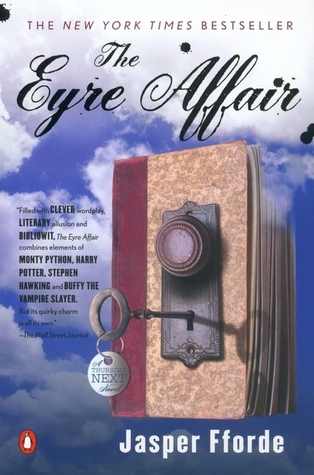
The Eyre Affair

As soon as I read the cover blurb for The Eyre Affair, I knew I was a goner. From The Wall Street Journal:

Filled with clever wordplay, literary allusion and bibliowit, The Eyre Affair combines elements of Monty Python, Harry Potter, Stephen Hawking and Buffy the Vampire Slayer. But its quirky charm is all its own.

I mean, come on! Was this book written just for me?

What’s it all about? I’ll borrow the Goodreads synopsis:

Welcome to a surreal version of Great Britain, circa 1985, where time travel is routine, cloning is a reality (dodos are the resurrected pet of choice), and literature is taken very, very seriously. England is a virtual police state where an aunt can get lost (literally) in a Wordsworth poem, militant Baconians heckle performances of Hamlet, and forging Byronic verse is a punishable offense. All this is business as usual for Thursday Next, renowned Special Operative in literary detection, until someone begins kidnapping characters from works of literature. When Jane Eyre is plucked from the pages of Brontë’s novel, Thursday must track down the villain and enter the novel herself to avert a heinous act of literary homicide.

In the world of Thursday Next, the hush-hush web of government intelligence includes SO-27, the branch of Special Operations focusing on Literary Detection. As a LiteraTec, Agent Next tracks down all sorts of nefarious literary criminals, but none so heinous as the mysterious mastermind who literally rewrites the world of fiction by altering original manuscripts. Add to the mix a Crimean War that’s raged for 150 years, Next’s ChronoGuard father who pops in and out whenever he’d like (usually with a history-changing agenda or two — like, say, the invention of the banana), a powerful corporation named Goliath that runs, well, everything, and a strange device called a Prose Portal that may be the key to finally winning the war… and you have a delightfully bizarre novel that plays with words and books in the strangest, twistiest of ways.

The glory is truly in the details. On a rare day off, Thursday attends the weekly performance of Richard III — which is this world’s stand-in for Rocky Horror. In a truly amazing sequence, we’re treated to the spectacle of full-on audience participation, including the donning of sunglasses, stamping and barking, and a wild battle scene in the aisles and entryway of the theater.

The whole audience erupted in unison:

“When is the winter of our discontent?”

“Now,” replied Richard with a cruel smile, “is the winter of our discontent…”

The Eyre Affair is filled with so many adorable details, it’s impossible to capture even a smidgen. Coin-operated mechanical devices on street corners recite verses of Shakespeare on demand. Taking an unpopular stance on the “who really wrote Shakespeare’s plays?” debate can lose you friends and has been known to start riots. Characters names include Victor Analogy, Braxton Hicks, Jack Schitt, and Acheron Hades. Guess who the bad guys are?

Possibly the only note that rang false for me in this book is the introduction of vampires and werewolves (in a chapter aptly titled “Spec-Ops 17: Suckers & Biters”. I mean, sure, in a novel in which bad performances of Shakespeare carry fines and John Milton conventions are commonplace, why not? Still, this piece of the story seems unnecessary and a bit out of place. While handled with humor, the inclusion of these over-used supernatural creatures is a clunky touch and is not in keeping with the overall off-beat originality of the storyline.

I leave you with the brief explanation provided for the department vacancy offered to Thursday:

Your post was held by Jim Crometty. He was shot dead in the old town during a bookbuy that went wrong.

How can you not love a book in which all of society is crazy about books? Where people from around the globe make pilgrimage to see the Jane Eyre manuscript? The Eyre Affair is silly, quirky, and an absolute delight.

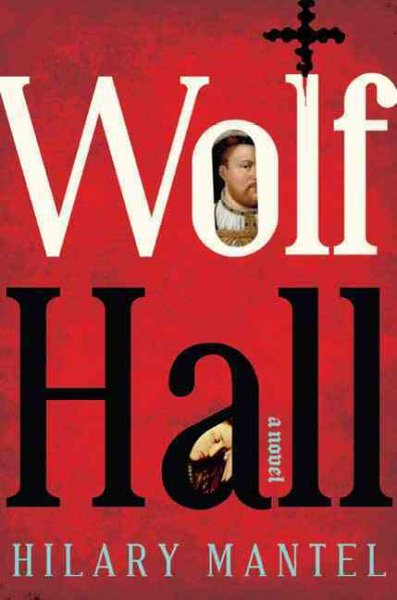
Book Review: Wolf Hall by Hilary Mantel

Winner of countless awards, among them the 2009 Man Booker Prize, Wolf Hall is well-known and highly esteemed. So why did it take me so many years to finally read it?

It’s a daunting book to begin, that’s for sure. In my paperback edition, the two pages of the Table of Contents are followed by five pages of the Cast of Characters, and then by two more pages containing family trees (the Tudors and the Yorkist Claimants, to be exact). Did I need to memorize the ancestries? Was I supposed to already know the paths of descent from Richard Duke of York and Owen Tudor? In general, when I see a book that requires that much supporting information up front, I want to run for the hills. Or pick up something simpler, at the very least.

In this case, I’d already vowed to read Wolf Hall during a vacation, and after committing to it publicly (well, okay, here on my blog), I felt a certain amount of pressure to see it through.

So — worth it? Yes, and here’s why:

Wolf Hall is the story of Thomas Cromwell, a man who rises from an obscure beginning as the son of a blacksmith to become one of the most powerful and influential advisers in the court of King Henry VIII. The entire book is told from Cromwell’s perspective; we see the people and players that he sees; we visit the inner chambers of the castle when he does. As Cromwell’s access increases, so does ours as readers. We only meet Henry when Cromwell does, and we see Anne Boleyn’s ascent at first from a distance, as bewildered by the king’s obsession with Anne as Cromwell is, then become more intimately involved as Cromwell becomes a key participant in the machinations needed to overthrow not just a marriage but an entire religious institution.

The Cromwell we come to know in Wolf Hall may or may not be entirely historically accurate. His rise to power is well-documented, but his early history and his inner life is not. Author Hilary Mantel gives Thomas Cromwell a depth and vibrancy that make him a sympathetic main character. We see him as a devoted family man, albeit as one who is often absent. Still, his devotion to his wife, his children, and his broad collection of wards and adoptees is shown to be his defining virtue. Likewise, he is committed to his patron, Cardinal Wolsey, and he forgets nothing — neither good nor bad — in his endless reckoning of favors owed and granted. Cromwell’s shrewdness and intelligence are clear. He is an intellectually gifted man who had a rough start in life, and so he is both gentleman and ruffian, a man who can out-think anyone he encounters, and at the same time a man to strike fear into the hearts of those who cross him.

Wolf Hall is a complicated book. This is not a bodice-ripper masquerading as history. The details can be overwhelming. There is an enormous number of players to keep straight, and it’s not enough to know who’s who; we readers also need to know the relations, the power dynamics, the titles, and the land holdings. This is not a love story. It’s about power, it’s about politics, it’s about playing a deadly game with the lives of the innocent and not-so-innocent at stake. Hilary Mantel piles detail upon detail, but never in a way that is incomprehensible — although, yes, it is a lot to keep track of.

Mantel’s prose is not straightforward. Sentences break off suddenly. A random example, from early on in the book:

They arrived on a Sunday, two vengeful grandees: the Duke of Norfolk a bright-eyed hawk, the Duke of Suffolk just as keen. They told the cardinal he was dismissed as Lord Chancellor, and demanded he hand over the Great Seal of England. He, Cromwell, touched the cardinal’s arm. A hurried conference. The cardinal turned back to them, gracious: it appears a written request from the king is necessary; have you one? Oh: careless of you. It requires a lot of face to keep so calm; but then the cardinal has face.

The pronouns throughout Wolf Hall are a bear to figure out. Mantel uses “he” throughout the book to refer to Cromwell, even when he is not the person most recently referenced. This drove me crazy at first. I’d have to stop and backtrack, realizing that the sentence I was reading was not about the person I thought it was about! Once I finally got that it’s all about Cromwell, all the time, the “he”s were a bit easier to decipher. But boy, did that throw me for a loop at the beginning.

Wolf Hall will not be for everyone. But I did enjoy it very much, although it was perhaps not the wisest choice for vacation reading. I typically choose books that require little commitment for my vacation reading — books I can easily swoop in and out of at a moment’s notice while doing other things. Wolf Hall is not one of these books. It requires concentration and thought, and while I definitely liked the challenge, it was a bit overwhelming at times.

The title itself is confusing, and only gains meaning toward the end of the book (unless you’re a total Tudor-era enthusiast and know the names of every estate in the realm). The challenge for an author writing about this era is in keeping a sense of suspense or surprise when the major events are so very well known. If you’ve read The Other Boleyn Girl or watched The Tudors, then you already know how the king’s efforts to divorce Katherine and marry Anne will work out. What keeps this book interesting is the writing itself, as well as the use of a lesser-known figure as its point-of-view character. Learning about Cromwell is fascinating; seeing the inner workings of the court through his eyes is enlightening, and keeps the familiar acts and players from seeming worn out or stale. Yes, I do know what happens — but it doesn’t matter. The portrayals of Cromwell, Henry, Anne, and the others are rich and nuanced, and kept me hooked.

Wolf Hall is the first book in a trilogy. Book 2, Bring Up The Bodies, is also a Man Booker Prize recipient. Book 3, The Mirror and The Light, is anticipated for publication in 2015, as far as I could tell. I plan to read Bring Up The Bodies later this summer, and as it covers the fall of Anne Boleyn, I fully expect to be engrossed.

I highly recommend Wolf Hall, although it definitely helps to have some knowledge of the Tudors ahead of time. And if you’ve watched Showtime’s version of The Tudors, I dare you to read this book and not picture Natalie Dormer every time Anne Boleyn is in a scene.

Book Review: Fathomless by Jackson Pearce — **This review contains spoilers**

Book Review: Fathomless by Jackson Pearce

Fathomless (Fairytale Retellings, #3)I can’t write about Fathomless and express what I thought and felt reading this book without including SPOILERS — so consider this fair warning! This review will include plot spoilers, including the major twist that readers discover toward the end. If you don’t want to know, stop reading now! Seriously, final notice!

Are you still here?

Sure you don’t want to look away?

Really, really sure?

Okay….

Fathomless looks like a mermaid story, right? I mean, look at the cover. That’s a mermaid. Absolutely, without doubt.

Except the girls/creatures in Fathomless aren’t actually mermaids, or at least not the fairy tale and Disney versions of mermaids. For starters — no tails. Not at all. They have legs and feet, just like when they were human. And that’s a key point as well. You know how Ariel is the daughter of King Triton? No mermaid royalty here — these girls were once human, but have somehow been transformed into creatures who live in the ocean, happily swimming with their sisters all day long and bit by bit forgetting their previous lives.

Our main mermaid girl is Lo, who lives under the sea (not in a pineapple…) off the coast of Georgia. She still yearns vaguely for the lights of the human world, but grows more and more content with her underwater life with each passing day. She knows that she was once someone else and had a different name, but can’t remember those details any longer. She and her “sisters” share the belief that they were brought to live in the ocean by an angel, and that someday, when they’ve turned into one of the beautiful but vacant old ones, they’ll leave the ocean and become angels themselves.

There’s another path that the ocean girls believe in, even thought they’ve never seen it happen: Legend says that an ocean girl (sorry, I have a hard time calling them mermaids) can regain a human soul and a human life by getting a human boy to fall in love with her — and then drowning him. At that point, she takes his soul and can go back to living on land as a regular girl again. Okay, yeah, she’ll also have murdered someone to get there, but why quibble?

Celia is our main human point of view. She’s one of triplets — her sisters Jane and Anne are identical, and Celia is the odd girl out. All three have powers of sight: Through touch, Celia can read someone’s past, Jane reads the present, and Anne sees the future. The sisters live in a small Georgia beach town in their prep school dorm, supported by a distant uncle after their mother’s death and their elderly father’s descent into the fog of Alzheimer’s.

Celia and Lo collide one night when guitar-playing cute boy Jude falls off a pier into the ocean. Lo pulls him from the sea, Celia performs CPR, and Jude comes back to life. He falls for Celia, but he remembers hearing a song while he was being rescued — and Celia doesn’t sing. Celia and Jude form a relationship, but at the same time, Celia is drawn back to the beach to seek out the mysterious girl she saw disappear back into the ocean.

Lo is able to leave the water, but each step on land is torture for her, leaving her in agony and with bleeding feet. As Celia and Lo begin to know one another, Celia touches Lo and is able to see her past as a human. As Celia uncovers Lo’s history, Lo begins to remember her life as Naida, a normal human girl with a home and a family. Lo and Naida are presented as two separate personalities struggling for dominance; sometimes we see Lo’s perspective on life in the ocean, and sometimes we get Naida, who considers herself a prisoner and yearns to be free.

So far, so good. In fact, I liked Fathomless quite a bit for about the first 2/3 of the book. And then it took a twist that more or less ruined it for me.

To backtrack a bit, according to Goodreads, Fathomless is book #3 in author Jackson Pearce’s Fairytale Retellings series. I’ve read the previous two books, Sisters Red and Sweetly, although it’s been a few years since then and I’d forgotten a lot of the details. I remembered the vague plot outlines, and remembered that I’d found the books enjoyable, but didn’t remember much more than that.

So… I picked up Fathomless while under the impression that the author had written a series of separate novels, with a common theme of being inspired by different fairy tales. And then 2/3 of the way through Fathomless, I was smacked in the head by how wrong I was. All three of these novels are connected, and let me just say: Weird.

All of a sudden, in the middle of a book about quasi-mermaid-creatures, there are werewolves. Yup. Werewolves. Apparently, werewolves steal girls away and stick them in the ocean as some sort of incubator — and when the girls are done, they come back out of the ocean and join the werewolf pack. Or something. Sisters Red was about a Buffy-ish werewolf slayer fighting hordes of evil monsters. In Sweetly, as I’d completely forgotten until reading a synopsis last night, a Hansel and Gretel retelling ends up having werewolves behind the town’s evil secret as well. And now, here they are again, finding twins, killing one outright and biting the other, then putting her into the sea to cook or stew or whatever it is they’re doing down there. Supposedly, it has to be twins – something about sharing the soul, blah blah blah. To be honest, my eyes had started to glaze over at this point in the story so the twin rationale kind of escaped me. Or was just ridiculous to begin with. One of the two.

I liked the story of Celia and Jude well enough, although the two other triplets, Anne and Jane, seemed a bit amorphous to me. We learn about some of their habits, but their inner workings are a little vague and seem altogether too inconsistent for me to ever to get a true sense of who they are, what they want, and what role Celia plays in their lives. But their story, as interwoven with the story of Lo/Naida and the ocean girls, gets lost somewhere along the way, and the entire thing just falls apart by the end.

The werewolf twist comes out of nowhere and makes no sense. I was kind of enjoying the twist on the Little Mermaid fairy tale up to that point, and found some of the descriptions of the ocean world to be quite lovely. But the entire plot just falls apart when the werewolf element is introduced — at which point, I realized that the pieces that seemed to promise an interesting take on a traditional tale, such as the mermaids being formerly human girls, were all for nothing. If the author is trying to build an entire world in this series, then the connection needs to be stronger to make it work, rather than randomly introducing werewolves into a mermaid story. Better yet, in my opinion, would have been creating these stories as stand-alone fairy tale retellings that provide unique takes on traditional tales, without trying to force a big-picture framework onto them.

I see that book #4 in the Fairytale Retellings series will be published this fall. Called Cold Spell, it’s a retelling of The Snow Queen by Hans Christian Anderson. Which would be great… except I’m guessing there will be werewolves.

No thanks. I think I’m done with this series.