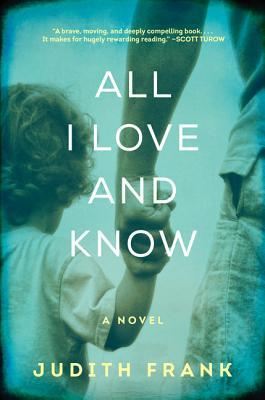
Book Review: All I Love and Know by Judith Frank

All I Love and KnowThis thought-provoking and often moving novel touches on so many of today’s hot-button issues: gay marriage, the AIDS epidemic and its aftermath, Israeli-Palestinian politics, and the complicated results of acts of terror.

For me, though, the strident political preachiness often overwhelmed the human elements of the story, which is a shame. I tried so hard to become immersed in this book, and while I truly felt for some of the characters, sticking with it became a real chore.

Backing up… in All I Love and Know, partners Matthew and Daniel have been happily involved and living together in Northampton, Massachusetts for four years. Matthew fled the New York party scene after the AIDS-related death of his best friend, and Daniel represented to him a calmer, healthier way of loving and living. All that changes when they receive an awful phone call: Daniel’s twin brother Joel and his wife Ilana are dead, victims of a suicide bomber in a Jerusalem cafe. Joel and Ilana leave behind two small children, and it was their wish that if anything were to happen to them, Daniel would have custody of the children and take them away from Israel.

Matthew and Daniel fly to Jerusalem with Daniel’s parents, to mourn and bury their dead, and to face the bureaucracy of the Israeli family courts. Ilana’s parents, Holocaust survivors, want the children also, and even though custody was stipulated in the will, it’s the courts that have the final say. Will they grant custody to a gay American couple against the grandparents’ wishes?

While dealing with the custody issues, Daniel is also deeply in shock and mourning, and he routinely pushes aside all attempts at comfort offered by Matthew. He is so torn up inside that he has no capacity for giving or receiving love or tenderness, and their relationship begins to unravel even as they start a completely new life as the parents of orphaned children.

Let me just stop here for a moment and say that Matthew is an absolute angel who gets the totally rotten end of a sad and difficult situation. He is not Jewish, has no fondness for Israel, never intended to be a parent — and yet he absolutely rises to the occasion, taking these two sad and difficult children into his life and charging full steam ahead into the role of primary caregiver. He does everything for these kids, pours his heart into creating a home for them, providing for them, and loving them. He takes it upon himself, with no encouragement from Daniel, to learn Hebrew, just to make things easier for the kids. And yet, the poor guy is constantly referred to as shallow and vain. He’s apparently incredibly good-looking, but Daniel and the other family members seem to use this against him, treating his looks as a symptom of being all surface.

Matthew is constantly the outsider — in Israel and in the family. For expediency’s sake, Daniel excludes Matthew from the legal process involving the children, and time and time again reminds him that he has no real standing whatsoever. When things blow up in the relationship, Daniel is quick to remind Matthew that his name is not on the mortgage, not on the house title, not on any document related to the children. Matthew is the one who created a home for this makeshift family — but he’s the one who’s kicked to the curb when things go wrong, with no protection or recourse.

While Daniel’s grief is palpable, it’s hard to like him as a character or to sympathize with his behavior toward Matthew. The story feels somewhat unbalanced in this regard, as I found it a real challenge to relate to Daniel’s actions or thoughts. The children, especially 6-year-old Gal, are prickly and difficult and full of pain that comes out in all sorts of hard-to-deal-with ways — but this part of the story is really so very touching. How does a small child understand loss of this magnitude? Gal’s little brother is just one year old at the time of their parents’ death — how does an infant experience bereavement and express sorrow?

While the relationships in the book are well-developed, the plot itself gets a little tangled at times. From the synopsis, you’d expect the custody battle to be the main issue at the heart of the story… but it’s not. Custody is resolved relatively easily about halfway through the book, and then the story moves on, so then what was all the custody drama even about?

Another confusing element is the timeline of the story. It was not clear at the outset, but this book is set in 2003 – 2004, in a political reality, both in the US and in the Middle East, that is somewhat different than today’s. It would have been helpful to know this from the beginning. That said, the time frame of the book absolutely informs the legal challenges faced by Matthew and Daniel, as the book takes place right as Massachusetts became the first state to legalize same-sex marriage.

If this novel had focused solely on the relationships and family dynamics, I probably would have loved it. The aftermath of grief and loss is portrayed in all its various shades and nuances, manifested differently in the bereaved twin and the devastated children. The author’s politics, however, intrude often and loudly, and this ubiquitous, one-sided, and harsh tone is — for me, at any rate — a turn-off that pulled me out of the story time and time again. There’s very little room left for differing viewpoints or shades of grey, and the result is a book that insists that there’s only one stance that’s legitimate, one way of thinking that’s correct.

As I said earlier, I see it as a real shame. I was so turned off by the insistent political statements of the characters that I was often tempted to put the book down. What kept me going was the human element. I cared about these characters, these two lovely men and the two sad children in their care. I wanted to know more, and wanted to see how they came through this terrible ordeal. Ultimately, I’m glad I continued and was pleased overall with the story of the characters and how they and their relationships evolved — but at the same time, I do have a hard time recommending the book wholeheartedly due to the issues I’ve already mentioned.

_________________________________________

The details:

Title: All I Love and Know
Author: Judith Frank
Publisher: William Morrow
Publication date: July 15, 2014
Length: 422 pages
Genre: Adult contemporary fiction
Source: Purchased
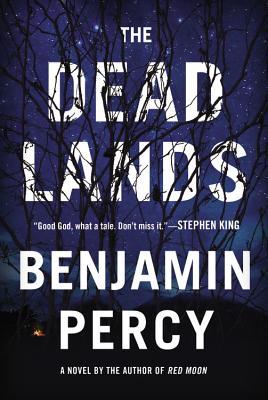
Book Review: The Dead Lands by Benjamin Percy

Dead LandsIf man-sized, blood-sucking albino bats freak you out, The Dead Lands might not be the best book for you.

If you can handle the squickiness and enjoy alternate histories and post-apocalyptic societies, read on!

In The Dead Lands, the action begins in the Sanctuary, formerly known as St. Louis, Missouri, approximately 150 years after a global flu pandemic and subsequent nuclear warhead detonations and reactor meltdowns destroy the world as we know it. The Sanctuary is a parched, cramped little insular world, surrounded by a massive wall that keeps all the bad out — and keeps its residents in. Water is scarce and growing scarcer. Residents of the Sanctuary are convinced that they’re it, all that’s left of humanity in this miserable world. It’s been at least 60 years since an outsider has shown up seeking entry. Meanwhile:

The wall is a constant in Simon’s life, everywhere he looks, impossible to miss. Yet it is as common as dust, as heat, as the sun’s blazing path across the sky, and it is easy to go days, weeks, without noticing it. It is of uneven height but at its tallest point reaches a hundred feet from the ground. In some places it is made from plaster and mortared stone, and in others, heaps of metal, the many-colored cars of another time, crushed and welded together into massive bricks that bleed rust when it rains.

The Sanctuary is ruled with an iron fist by the mayor, an autocratic dictator who suffers no dissent and who has instituted a policy of harsh punishment, including a brutally disgusting death penalty, for anyone who dares to criticize the regime, even by so much as a drunken comment in a bar among friends.

The sole spot of peace and possible civility in this harsh settlement is in the museum, run by Lewis Meriwether, a reclusive, odd, studious man who is both feared and respected by the residents of the Sanctuary. People flock to the museum to bask in the wonders of bygone worlds, despite the curator’s strangeness.

Life in the Sanctuary is disrupted when a rider appears from out of the dust — a girl on horseback, with all black eyes, bearing a message and begging to be heard. She is shot before she can deliver the message and is immediately captured and sentenced to death — but the message gets through all the same. She brings word of another civilization, on the Oregon coast, where there is rain and agriculture and a thriving community. The mayor wants nothing of this and tries to keep it secret, but Meriwether and a guard named Mina Clark agree to join the messenger, Gawea, and together with a few others, carry out a desperate escape from their walled city.

Do the names ring a bell? Lewis and Clark? Gawea… as in Sacagawea? The Dead Lands reimagines the Lewis & Clark expedition in this harsh, dead world, as our band of escapees flees through the barren, dry areas outside of the Sanctuary, following the dried-up bed of the Missouri River in search of water, shelter, and salvation. Along the way, they face untold horrors and dangers. Due to the high post-disaster radiation levels, all sorts of horrible mutations have taken place, so that the albino bats are but one nasty specimen that wants to eat, kill, or maim the travelers. Hazardous landscapes pose endless threats, as the oil fields continue to burn, creating micro nuclear winters, and the few signs of life they do see come with new and strange risks. And as the group travels onward, we see that animals and vegetation aren’t the only forms of life that have evolved in strange ways due to radiation. Lewis exhibits weird, almost magical telekinetic abilities, and Gawea has powers of her own.

The imagery throughout The Dead Lands is horror-novel worthy. (Did I mention the albino bats already?) It’s bleak, dark, and dismal. Very bad things happen. Nightmarish creatures arrive out of nowhere. As soon as one threat is dealt with, another appears to take its place. And as you might expect, people turn out to be the biggest threat of all. Because, of course, a utopian agrarian society in the Pacific Northwest is probably too good to be true, right? The other humans out there are vicious in their own way, and as happens so often in this type of book, those who can seize power do, and everyone else is forced into one form of servitude or another.

There are some very interesting concepts, including the reestablishment of city-states as small empires. The suffering of the people, in the Sanctuary as well as elsewhere, makes you marvel that anyone bothers to survive at all, given how horrible it all is. The people with power are awful and self-aggrandizing and unbelievably decadent, reminding me of the worst of the Roman emperors, perhaps, indulging in wasteful, steamy hot baths while the common folks quench their thirst via animal blood, sucking rocks, and worse.

Setting the story in the future, yet including characters from American history, makes everything feel very circular. Is slavery inevitable in human societies? Is the impulse for the strong to dehumanize the weak somehow hardwired into our DNA? In The Dead Lands, it certainly seems that way. Does a totalitarian society encourage those with sadistic tendencies to rise to power? If the Sheriff of the Sanctuary is any indication, that would be a yes. Society itself has reverted to a bygone time, thanks to the end of technology and industry:

Apothecaries, tinkers, blacksmiths, seers. Old words, old ways. So much about the world has reverted, so that it is not so much the future people once imagined, but a history that already happened, this time like a time long ago.

The descriptions of the ravaged world are horrible yet evocative:

The remains of the St. Louis Arch, collapsed in the middle, appear like a ragged set of mandibles rising out of the earth.

Even a passionate interlude between two illicit lovers is presented as disturbing… and pretty gross:

What they are doing is kissing, though it looks much like eating. Their mouths opening and closing hungrily, their teeth biting down on lips, cheeks. Then they pull apart, their faces are a splotchy red and he is bleeding from the corner of his mouth.

The writing in The Dead Lands is wildly disturbing and imaginative. While the explorers push forward, even when it seems pointless and impossible, it’s not from a true sense of hope, but rather because there simply is no alternative but to keep going.

Not so long ago Lewis believed in the end of the rainbow. A shire. An emerald city. Elysian fields. What his childhood storybooks promised. He believed, back when they first set out from the Sanctuary, that something arcadian awaited them. Not anymore. Now now. Not when he sees the bone-riddled ruins of Bozeman. It is not only the landscape that disappoints. It is humankind. Inside and outside the wall, humans remain the same, capable of wonderful things, yes, but more often excelling in ruin.

The ending felt a little abrupt and puzzling to me, and didn’t quite pull together all of the many story threads in this big, complicated book. Ultimately, I’m not sure what it all meant, and the open-ended nature of the ending makes me wonder if a sequel is in the works.

Do I recommend The Dead Lands? Yes, but only for those with a strong stomach and a willingness to read a book that is terribly unpleasant and often horrific. It’s disturbing and sometimes icky, and I’d be scared to death to read this on a camping trip with only a campfire to ward off all the nightmares waiting in the dark. The world of The Dead Lands is as awful as the title promises, so don’t expect moments of grace or redemption along the way. Most of all, don’t get too attached to any of the characters. Bad things happen. To lots of people.

Have I scared you away from this book yet? I’m glad I read it, really, I am! But it’s heavy and morbid, and you should know that before you start. As for me, I think I’ll track down a copy of the author’s previous novel, Red Moon, which also sounds quite disturbing. (I think I’d better read some books about kitties and unicorns first.)

Side note: I did find some of the similarities to Station Eleven a bit odd — flu pandemic, nuclear meltdowns, scavenging abandoned houses for supplies, even a TV set up like a diorama. I suppose it’s not too far-fetched — seen one crumbling civilization, seen ’em all — but a few of these elements really jumped out at me, having read Station Eleven fairly recently. Just saying.

_________________________________________

The details:

Title: The Dead Lands
Author: Benjamin Percy
Publisher: Grand Central Publishing
Publication date: May 14, 2015
Length: 416 pages
Genre: Adult fiction/post-apocalyptic/horror
Source: Review copy courtesy of the publisher via NetGalley

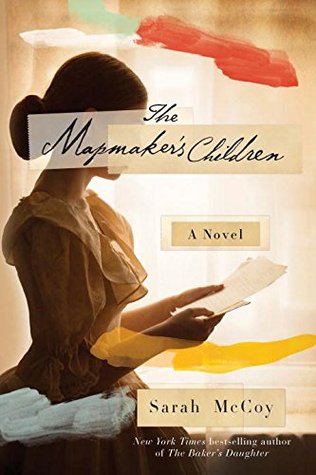
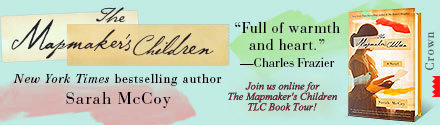
Blog Tour & Giveaway: The Mapmaker’s Children by Sarah McCoy

TMCBanner

Today, I’m celebrating the release of The Mapmaker’s Children, a new historical novel by Sarah McCoy, and I’m delighted to be participating in the blog tour sponsored by TLC!

Mapmaker's Children

Synopsis:

When Sarah Brown, daughter of abolitionist John Brown, realizes that her artistic talents may be able to help save the lives of slaves fleeing north, she becomes one of the Underground Railroad’s leading mapmakers, taking her cues from the slave code quilts and hiding her maps within her paintings. She boldly embraces this calling after being told the shocking news that she can’t bear children, but as the country steers toward bloody civil war, Sarah faces difficult sacrifices that could put all she loves in peril.

Eden, a modern woman desperate to conceive a child with her husband, moves to an old house in the suburbs and discovers a porcelain head hidden in the root cellar—the remains of an Underground Railroad doll with an extraordinary past of secret messages, danger and deliverance.

Ingeniously plotted to a riveting end, Sarah and Eden’s woven lives connect the past to the present, forcing each of them to define courage, family, love, and legacy in a new way.

Add to Goodreads badge

Purchase Links

Amazon | IndieBound | Barnes & Noble

About the Author:

Sarah McCoySARAH McCOY is the  New York TimesUSA Today, and international bestselling author of The Baker’s Daughter, a 2012 Goodreads Choice Award Best Historical Fiction nominee; the novella “The Branch of Hazel” in Grand Central; The Time It Snowed in Puerto Ricoand The Mapmaker’s Children (Crown, May 5, 2015).

Her work has been featured in Real Simple, The Millions, Your Health Monthly, Huffington Post and other publications. She has taught English writing at Old Dominion University and at the University of Texas at El Paso. She calls Virginia home but presently lives with her husband, an Army physician, and their dog, Gilly, in El Paso, Texas. Sarah enjoys connecting with her readers on Twitter at @SarahMMcCoy, on her Facebook Fan Page or via her website, www.sarahmccoy.com.

_________________________________________

The details:

Title: The Mapmaker’s Children
Author: Sarah McCoy
Publisher: Crown
Publication date: May 5, 2015
Length: 320 pages
Genre: Historical fiction
Source: Review copy courtesy of TLC Book Tours

tlc logoFor further information, stop by TLC Book Tours to view other blog tour hosts.


GIVEAWAY!

Want to win a copy of The Mapmaker’s Children? No fancy footwork required — just leave a comment below answering any one of these questions:

– What’s your favorite historical novel?
– What historical figure would you love to see featured in fiction?
– What time period do you enjoy reading about the most in historical fiction?

Extra credit: Do you follow Bookshelf Fantasies? Let me know in the comments if you follow me and how (email, Twitter, WordPress, etc), and you get an extra entry in the giveaway!

That’s it! I’ll do a random drawing on May 20th to pick a winner. Thanks for playing along!

(Sorry — US/Canada only this time around)

Blog Tour & Book Review: The Bookseller by Cynthia Swanson

The Bookseller (2)I’m delighted to be participating in the blog tour celebrating The Bookseller, a debut novel by Cynthia Swanson. Thank you, TLC Book Tours, for inviting me to participate!

The Bookseller is the touching and intriguing story of one woman living two lives.

As the book opens, we meet Kitty, a single career woman in 1962. 38 years old, she and her best friend Frieda own a small bookshop in a no-longer-thriving neighborhood of Denver. Kitty lives alone with her cat Aslan, enjoys the sister-like company of her friend, and thrives in a loving relationship with her devoted parents. She’s happy, and really doesn’t regret the life choices she made that brought her to this point in her life.

But when Kitty goes to sleep, she wakes up in a strange bedroom in a lovely home, beside a loving man names Lars who refers to her by her full name, Katharyn. It’s 1963, and she appears to be married to her soulmate, living in a comfortable house in a newer Denver neighborhood, a stay-at-home mother to triplets.

Kitty is absolutely confounded by this dream world of hers. When she wakes up again, she’s haunted by how realistic this imaginary world seems, and is struck by the thought that she’s encountered the unusual name Lars before. She remembers that in her real life, she’d almost had a first date with a man named Lars eight years earlier, but he stood her up and so they never met.

Each time Kitty goes to sleep, she crosses from one world to another. Her dream world is vivid and distinct. She discovers an enormous depth of feeling for her husband Lars, and she loves her adorable children, despite being confused and somewhat frustrated by her son Michael, who is, apparently, autistic. Sadly, in this dream world, Katharyn and Frieda have fallen out years earlier, although she has no idea why.

Gradually, the lines begin to blur. Each world feels real and seems to want to claim her. The more time Kitty spends in her dream world, the more memories come back to her… but so much still remains elusive. Finally, Kitty has to sort out which is her real world, where she truly belongs, and which life is the one she must let go.

… And let me just pause here from providing plot summary and say — wow. What a book.

With hints of Sliding Doors as well as certain points that reminded me of The Impossible Lives of Greta Wells by Andrew Sean Greer, The Bookseller asks us to pass from dream world to reality and back to dream world right along with Kitty. Both lives are rich and detailed. Both are filled with people who matter to her. Could she really have forgotten a life in which she’s a wife and mother? But how can all of her memories be about her life in the bookstore with Frieda, if her other life with Lars feels equally real?

I loved the construction of this emotion-packed novel. We flow right alongside the main character as she shifts abruptly, never entirely sure of when or where she’ll wake up in a different life, sometimes in the middle of a scene, so to speak, already under way. The writing is matter-of-fact, yet startling at times, as when Kitty gazes into the face of her dream husband for the first time or is suddenly struck by the knowledge that she has children.

The 1960s setting works magnificently here. The author weaves in all sorts of small details that make the time period seem real, from the admiration of Jackie Kennedy’s fashion sense to the fears of the Cuban Missile Crisis to the simple joys of listening to Patsy Cline and checking out the newest books by J. D. Salinger and Katherine Anne Porter.

It’s also a marvelous tribute to the choices available to a woman at that time and the courage needed to chart her own course. Staying single, owning a business — these are not easy paths, and certainly not common or expected. Likewise, the challenges facing a young mother are daunting. Despite being well-off and with a supportive husband, dealing with three children is all-consuming. The medical world was only just waking up to the meaning of autism at the time, and the only resources Kitty can find on the subject pin the “blame” squarely on the mother, with no guidance available on finding ways to connect with the child or even how to provide him with an education.

The Bookseller had me hooked from the first chapter, and I truly loved the main character. Her two lives, as Kitty and Katharyn, each offer her something special — but each is missing some key element that makes the other life hard to turn away from. Her confusion and pain feel real, as does her love for Lars and her children, her parents, and Frieda.

I highly recommend The Bookseller. Its shifting reality twists will absolutely keep you guessing! With an engaging yet mysterious plot, a well-earned resolution, and emotions that ring true, this book should appeal to anyone who enjoys stories about strong women confronting unusual and unpredictable challenges. Check it out!

Find out more:

Add to Goodreads badge

Purchase Links

Amazon | IndieBound | Barnes & Noble

About the Author:

Cynthia SwansonCynthia Swanson is a writer and a designer of the midcentury modern style. She has published short fiction in 13th MoonKalliopeSojourner, and other periodicals; her story in 13th Moon was a Pushcart Prize nominee. She lives in Denver, Colorado, with her husband and three children. The Bookseller is her first novel.

Find out more about Cynthia at her website and connect with her on Facebook.

_________________________________________

The details:

Title: The Bookseller
Author: Cynthia Swanson
Publisher: Harper
Publication date: March 3, 2015
Length: 352 pages
Genre: Adult fiction
Source: Review copy courtesy of TLC Book Tours

tlc logoFor further information, stop by TLC Book Tours to view other blog tour hosts.

Book Review: The Secrets We Keep by Trisha Leaver

Secrets We KeepMaddy and Ella, identical twin sisters in their senior year of high school, were best friends since birth… right up until the first week of freshman year, when Maddy’s pursuit of popularity led her to dump quiet, artistic Ella and become the belle of the ball. From that moment onward, the two occupied a home together, but had next to nothing in common. Maddy was always at the center of the in-demand social circle, busy with perfect boyfriend Alex, and obsessed with looks, clothes, and status. Ella found a new best friend, Josh, who shared her interests in art and anime and became her constant companion.

That’s all backstory. Early on in The Secrets We Keep, tragedy strikes. On a rainy night, on the way home from a party, Maddy’s car goes off the road and one twin is killed, the other seriously injured. But who survived? As it turns out, Ella had driven Maddy’s car to pick her sister up — and because Maddy’s clothes were soaked from waiting in the rain, Ella gave Maddy her coat and sweatshirt.

The driver is pulled alive from the wreck, while the other sister is dead at the scene. The car is Maddy’s; the driver is presumed to be Maddy — especially since the dead girl is wearing Ella’s clothes.

When Ella wakes up in the hospital, she at first has no recollection of her name or her circumstances. But there’s a boy holding her hand, dozens of flower bouquets in her room from her many friends, and the name “Maddy” written on the board in her room. She assumes she herself is Maddy, and it’s not until she insists on seeing her dead twin in the morgue that her own memories come flooding back.

And here’s where my belief in this story pretty much went out the window: Ella feels tremendously guilty for causing her sister’s death. She sees how happy her parents are when she wakes up and they greet her as “Maddy”, and she hears from Alex and the nurses how many of “her” friends are crammed into the halls and waiting rooms, cheering for her survival. Ella decides on the spot that her parents wouldn’t be happy if they knew the survivor was Ella, not Maddy. Furthermore, she decides that she owes Maddy a debt for killing her, and the way to make it up to her is to live her life. So Ella keeps her own identity a secret and vows to live Maddy’s life, which becomes a bit harder once she has to attend her own funeral and act like her best friend Josh means nothing to her.

Hoo boy. Things unravel from there. Ella uncovers a dark secret about a very not-nice plot of Maddy’s. Ella does a not-very-good job of impersonating Maddy when she goes back to school, breaking all sorts of rules about appearance, bitchiness, and maintaining mean girl status quo. Instead of going to her own honors classes and maintaining her perfect grades, Ella follows Maddy’s undemanding schedule and has to force herself to dumb down her test performance. In short, it’s a mess.

Does any of this make sense? Not really. Ella’s thinking can be chalked up to shock at first, but she’s really much too smart a girl to actually believe that her parents are happy that Maddy survived and she didn’t. And I couldn’t see any logic in the idea of living Maddy’s life as a way to repay her sister. Maddy is still dead, after all. How can pretending to be her make a difference? And then there’s Ella’s belief that Maddy being alive makes so many more people happy — why does this matter to Ella? She doesn’t even like these people.

It’s really a ridiculous situation, and I found it pretty much impossible to buy the premise. As clichéd as the old stand-by amnesia plot is, the whole set-up here would have been much more plausible if Ella hadn’t regained her memories. If she actually believed herself to be Maddy, it would be interesting to see her trying to piece her life back together, when it was never actually hers. But having Ella pretend to be Maddy for the flimsiest of reasons just defies all logic. The piece about her parents really irritated me, to be honest. So they bury Ella and try to rebuild their lives with Maddy — and then when the truth comes out, they’re forced into a brand-new mourning period for the daughter they believed to be alive, yet they’re supposed to now be overjoyed by Ella’s survival? It’s just weird and cruel, and I felt that Ella’s treatment of her parents was especially callous.

I realize this all sounds as though I didn’t like The Secrets We Keep at all, and that’s not entirely the case. On the more positive side, the writing itself is fast-paced and kept my attention, so even though I kept exclaiming over how unbelievable the plot was, I also didn’t want to put the book down. Granted, a part of me wanted to keep reading to see if there was some great twist coming or if the ending would justify it all. And, well, no, that’s not what happened… but still, I did keep reading and I did want to see how it worked out, so there’s that.

Not every book is for every reader, and despite having a premise — at least according to the synopsis — that sounded really intriguing, the final result just didn’t work for me.

_________________________________________

The details:

Title: The Secrets We Keep
Author: Trisha Leaver
Publisher: Macmillan Children’s Publishing Group
Publication date: April 28, 2015
Length: 304 pages
Genre: Young adult contemporary fiction
Source: Review copy courtesy of the publisher via NetGalley


Audiobook Review: A Cold Day for Murder by Dana Stabenow

Cold Day 2This review refers to the audiobook edition of A Cold Day for Murder by Dana Stabenow, book #1 in the Kate Shugak mystery series.

In A Cold Day for Murder, author Dana Stabenow gives us a chilly introduction to life in the Alaska Bush… and I mean that in the best way possible.

The book opens with a wonderful set piece — two men on a snowmobile crossing miles of undeveloped, snow-covered land on their way to a remote homestead, so cold that ice cracks off their faces as they talk. Their destination is the home of Kate Shugak, a former investigator for the Anchorage DA’s office, now living in self-imposed isolation way out in the middle of nowhere. The men are Kate’s former boss and lover, Jack Morgan, and an ill-prepared FBI man, dressed in a fancy suit and dress shoes under his snowsuit. Their goal? To convince Kate to resume her crazy talent for investigating and help them look into the case of a missing park ranger and the agent who went looking for him, now also missing.

Kate is 30-years-old, an Alaska native with strong family ties to the nearby Niniltna Park region and its tiny settlements. She’s also emotionally and physically damaged, having suffered a major injury on her last case in Anchorage. Kate is reluctant and hostile, but ultimately agrees to help out when she hears that the missing agent is someone she dated on and off and whom she first introduced to the park. She feels responsible, so she embarks (with her enormous dog Mutt) to visit the neighboring homesteads, the town of Niniltna, the local roadhouse — only place to get a drink in the area short of flying to Anchorage — and various relatives and townsfolk, most of whom she’s known all her life.

I sometimes struggle to keep my attention in focus when I listen to audiobooks, but in this case, no struggle was required. I quickly became fascinated by the characters, the mystery, the setting, and the amazing descriptions. Kate is a terrific heroine — talented, sharp, tough as nails, but with a vulnerability stemming from both her own wounds and from her deep connections to every single person whom she faces as she attempts to collect clues.

The townsfolk are exactly what you’d hope for: Quirky and odd, devoted to their little patch of land, fiercely proud, gruff and lovable. They’re an interesting mix of natives, immigrants from “Outside” who came and never left, government officials, and tribal elders. Beneath the frontier attitudes, there’s passion and politics, which prove to be quite a volatile mix.

The issues in the missing persons case involve more conflicts than you might think possible — the conflict between developers, miners, and “greenies”, the urge to open the Park to all versus the locals’ desire to preserve things as they are, the demands of the tribal elders trying to maintain their community versus the aimlessness of the young who desperately seek a way out. With a deft touch, the author introduces us to all of these elements through the people Kate encounters, but it’s never heavy-handed.

The mystery itself is multi-layered, and Kate’s investigation turns up all sorts of bad apples and surprise twists before it’s all sorted out.

As you can see, I enjoyed A Cold Day for Murder very much. I’m not generally much of a mystery reader, but the plot and the characters really grabbed me from the very beginning and kept me hooked.

Will I continue with the series? There are 20 Kate Shugak novels published so far, and that seems like an awful lot to bite off. I don’t feel the need to consume them all at once in a massive binge… but I do think I’ll dip back into this series in between other books and slowly work my way forward.

Teeny confession: I’m more than a little bit in love with Alaska, so reading a book series centered on Alaskan lives and highlighting the gorgeous natural terrain and animals of Alaska is a big thrill for me.

Fun fact: Dana Stabenow won the 1993 Edgar Award for best paperback original for A Cold Day for Murder. And in the Kindle version, at least, she tells a very amusing story of herself as a young author flying from Alaska to New York City for the award ceremony. Read it, if you get a chance!

And a final note on the audiobook: Two thumbs up for narrator Marguerite Gavin! She does a remarkable job of giving the various characters distinct voices that absolutely suit them. Truly a very fun and engaging listening experience — you can hear a sample here via Audible.

_________________________________________

The details:

Title: A Cold Day for Murder
Author: Dana Stabenow
Narrator: Marguerite Gavin
Publisher: Various print editions available
Publication date: 1992
Length: 212 pages (print edition); 5 hours 31 minutes (audiobook)
Genre: Mystery
Source: Download via Audible

Book Review: A Desperate Fortune by Susanna Kearsley

Desperate FortuneSusanna Kearsley is back with a new novel, doing what she does best — telling a rich historical tale framed by a parallel contemporary story. In A Desperate Fortune, we follow two compelling stories which share some common themes and complement each other quite nicely.

In the contemporary story, we meet 30-year-old Sara Thomas, a computer programmer with Asperger’s syndrome who relies on Sudoku puzzles to stay calm in challenging situations. Sara dabbles as an amateur code-breaker, and when her cousin Jacqui, a successful publisher, enlists Sara to help an author decode a centuries-old diary written in cipher, Sara is thrust into both an historical mystery and a present-day romance.

Sara’s project is deciphering the diary of Mary Dundas, a young Scottish woman living in France in the 1730s and the daughter of a Jacobite loyalist. Mary’s life is quite ordinary until her long estranged brother draws her into an entirely new life. An important Jacobite ally needs to be hidden, and as part of his false identity, Mary is sent to pose as his sister in order to maintain the subterfuge needed for his escape. Suddenly, Mary is thrust into a world of secrets and danger, as she accompanies the slippery Mr. Thomson and his silent escort, the Highlander Hugh MacPherson, as they flee Paris and try to elude pursuit.

Much of Mary’s story is one of flight, as the small group seems to always be one step ahead of danger, constantly hiding and creating new cover stories to explain who they are and where they’re going. As they travel, Mary entertains the various people met along the way with her imaginative fables and fairy tales. As the author shows us, women of that time were not taken seriously as literary contributors, and yet managed in their own subversive way to create their own form of narratives through fairy tales such as these.

Naturally, Mary and the mysterious MacPherson form a connection, and her initial fear of him grows into something much, much more.

In the present day, as Sara works her way through Mary’s secret diary, she begins to understand more of her own nature and to question the assumptions she’s always held about herself. She’s always believed herself to be incapable of sustaining a relationship, but as she begins to know a kind man named Luc and his eager and adorable son Noah, Sara realizes that more may be possible in her own life than she’d ever dared to dream.

So what did I think of A Desperate Fortune? Let’s start with the positive: Susanna Kearsley is a meticulous researcher, and it’s always startling to read the afterwords to her books and find out how much of her fictional worlds are rooted in documented historical fact. It’s fascinating to find out how the history of King James VIII’s court in exile, Jacobite sympathizers in Spain and Russia, and a major London financial scandal in the 1730s became pieces of the fabric of this fictional creation.

Mary is an interesting and sympathetic character, as is Sara, her modern-day counterpart. I enjoyed the parallels in their stories, as two talented young women claim their own lives and find their own way toward a happiness that had previously seemed unattainable. In both halves of the story, a woman who considered herself unlovable and unremarkable discovers that with the right person, love is not only possible but is life-altering in all the best ways.

Also wonderful is the concept of women using their talents in unconventional ways, with Mary’s storytelling forming a crucial element in her group’s adventures on the road and Sara’s talent for codes and ciphers taking her into new opportunities that she’d never expected.

However… and this is a big “however”: There was something just a little bit dull about large swaths of the story. Mary’s story takes an awfully long time to develop any sense of excitement, and perhaps that’s because the stakes aren’t always clear. Mr. Thomson, whose escape she’s a part of, is not a heroic or admirable character, and his backstory, once explained, is mired in a stock fraud scandal that just isn’t very interesting to read about. Why are King James’s followers so keen on protecting this man and getting him safely to Rome? His importance seems odd (although, apparently, historically accurate — Mr. Thomson is a real historical figure and his role in the scandal is every bit as confused in the historical record as it is in this story). Because Mary’s mission is all rather nebulous, it lacks a certain nobility of mission to make it seem worthwhile. There are exciting moments of risk and outright danger, but it’s not until the romantic elements come more into the foreground of the story that it really becomes compelling and emotionally rich.

Likewise, Sara’s story is interesting, but the pacing feels a bit off. Her Asperger’s seems to come and go as a plot point, and I’d have liked to know more about Sara’s earlier life and challenges up to this point in order to understand the emotional baggage she carries with her. Her love story is sweet, but rather sudden — and yet it’s also fairly predictable. Luc is the only man she interacts with, he lives next door, he’s super attractive, and is a perfect gentleman as well as a lovely father and friend. Of course they’re going to fall in love; it’s sweet, but not particularly surprising.

I feel somewhat disloyal giving A Desperate Fortune anything but an absolutely stellar review. I’m a big fan of Susanna Kearsley’s books, and I’ve read almost all of them by now. A few are among my all-time favorite books (The Winter Sea, The Firebird, Mariana), and even the ones that aren’t quite my favorites are still quite good and are books that I’d have no problem recommending.

Given all of that, I’d say that A Desperate Fortune falls among the second-best set of Susanna Kearsley books for me. It lacks the compelling, tragic, dramatic momentum that’s on display so spectacularly in the books I consider her best — and yet, it’s still a really good book that is sure to interest fans of historical fiction, particularly those with an interest in the 1700s and the Jacobites.

_________________________________________

The details:

Title: A Desperate Fortune
Author: Susanna Kearsley
Publisher: Sourcebooks Landmark
Publication date: April 7, 2015
Length: 528 pages
Genre: Conteporary/Historical fiction
Source: Purchased

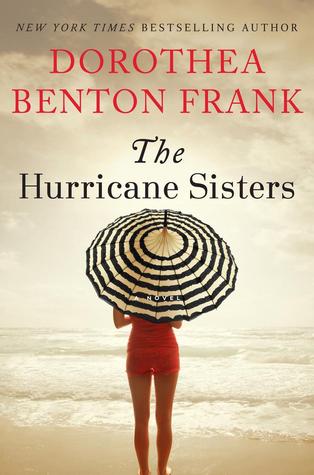
Blog Tour & Book Review: The Hurricane Sisters by Dorothea Benton Frank

I’m delighted to be participating in the blog tour celebrating the paperback release of The Hurricane Sisters by Dorothea Benton Frank.

Hurricane Sisters

Synopsis:

Hurricane season begins early and rumbles all summer long, well into September. Often people’s lives reflect the weather and The Hurricane Sisters is just such a story.

Once again Dorothea Benton Frank takes us deep into the heart of her magical South Carolina Lowcountry on a tumultuous journey filled with longings, disappointments, and, finally, a road toward happiness that is hard earned. There we meet three generations of women buried in secrets. The determined matriarch, Maisie Pringle, at eighty, is a force to be reckoned with because she will have the final word on everything, especially when she’s dead wrong. Her daughter, Liz, is caught up in the classic maelstrom of being middle-age and in an emotionally demanding career that will eventually open all their eyes to a terrible truth. And Liz’s beautiful twenty-something daughter, Ashley, whose dreamy ambitions of her unlikely future keeps them all at odds.

Luckily for Ashley, her wonderful older brother, Ivy, is her fierce champion but he can only do so much from San Francisco where he resides with his partner. And Mary Beth, her dearest friend, tries to have her back but even she can’t talk headstrong Ashley out of a relationship with an ambitious politician who seems slightly too old for her.

Actually, Ashley and Mary Beth have yet to launch themselves into solvency. Their prospects seem bleak. So while they wait for the world to discover them and deliver them from a ramen-based existence, they placate themselves with a hare-brained scheme to make money but one that threatens to land them in huge trouble with the authorities.

So where is Clayton, Liz’s husband? He seems more distracted than usual. Ashley desperately needs her father’s love and attention but what kind of a parent can he be to Ashley with one foot in Manhattan and the other one planted in indiscretion? And Liz, who’s an expert in the field of troubled domestic life, refuses to acknowledge Ashley’s precarious situation. Who’s in charge of this family? The wake-up call is about to arrive.

The Lowcountry has endured its share of war and bloodshed like the rest of the South, but this storm season we watch Maisie, Liz, Ashley, and Mary Beth deal with challenges that demand they face the truth about themselves. After a terrible confrontation they are forced to rise to forgiveness, but can they establish a new order for the future of them all?

Frank, with her hallmark scintillating wit and crisp insight, captures how a complex family of disparate characters and their close friends can overcome anything through the power of love and reconciliation. This is the often hilarious, sometimes sobering, but always entertaining story of how these unforgettable women became The Hurricane Sisters.

My Thoughts:

In The Hurricane Sisters, we meet three generations of Southern women, including dynamo matriarch Maisie, her daughter Liz, and granddaughter Ashley. All three have secrets, all three have struggles.

Maisie is the quintessential 80-year-old who’s lived long enough to tell it like it is. Her romantic relationship with (gasp!) a younger man, the 65-year-old who was originally hired to be her driver, scandalizes Liz and Clayton, but their own relationship isn’t exactly a bed of roses. Maisie is the absolute life of the party in this book — she’s feisty, opinionated, funny, and full of passion. She’s also not afraid to tell the hard truths and give out some pretty stern advice, which is exactly what some of these confused family members need.

When Ashley becomes infatuated with a rising state politican, everyone in the family warns her to watch out. In Charleston, anyone of good family knows everyone else’s business, and Porter Galloway has an unsavory reputation that’s only whispered at. Meanwhile, on the surface, he’s all Southern charm and good looks, and Ashley is too swept up in her dreams of being the next Jackie O. to take the warnings seriously.

Of course, the various threads all come together in interesting and unexpected ways… and of course, Maisie is right about everything!

The dark thread throughout this mostly upbeat novel is violence against women. Liz is a fundraiser for a women’s shelter, and through her pitches to prospective donors, we learn some of the bleak and staggering facts about the incredibly high numbers of domestic violence cases in the US, as well as the fact that South Carolina is among the worst on record in terms of domestic homicide and violence. It’s not exactly a surprise when a certain character is revealed to be abusive, but it’s still startling and harrowing to read and to see how easily this person manages to hide in plain sight and continue carrying out abusive acts in relationship after relationship.

I was annoyed initially to see Ashley’s naiveté, especially knowing her mother’s work. But I think this book makes a very good point, that it’s one thing to know academically what abuse is and what it looks like, and quite another thing to recognize it in real life without prettying it up with denial and excuses. I won’t go into too much detail here as I don’t want to give away any major plot points, but let’s just say that what I initially thought was a too-light response to terrible acts turns into major empowerment as the family comes together to make sure that abusive behavior is not swept under the rug.

I ended up loving all of the family relationships, the intricacies of their connections and interdependence, and the various ways they all misunderstand one another. By hearing the story from mulitple points of view, we’re treated to the inside scoop on why an action that one family member finds incomprehensible actually makes complete sense and has a totally different meaning when explained by someone else.

An especially delightful component of this book is the lush description of the Charleston area. The author does a splendid job of conveying the beauty of the Lowcountry, and made me absolutely mad with nostalgia (I lived in Charleston once upon a time for a couple of years) and dying for a return visit.

If you enjoy books that include family drama, quirky characters, and humorous dialogue — but aren’t afraid to tackle more serious subjects as well — definitely check out The Hurricane Sisters. Now available in paperback, it’s a slice of Southern fiction that I think would make a great beach read this summer.

About the Author:

Dorothea-Benton-FrankNew York Times bestselling author Dorothea Benton Frank was born and raised on Sullivans Island, South Carolina. She is the author of many New York Times bestselling novels, including Lowcountry Summer and Return to Sullivans Island. She resides in the New York area with her husband.

Find her on the web at www.dotfrank.com, and connect with her on Facebook and Twitter.

_________________________________________

The details:

Title: The Hurricane Sisters
Author: Dorothea Benton Frank
Publisher: William Morrow
Publication date: 2014 (paperback released April 7, 2015)
Length: 320 pages
Genre: Adult contemporary fiction
Source: Review copy courtesy of TLC Book Tours

tlc logoFor further information, stop by TLC Book Tours to view other blog tour hosts.


Take A Peek Book Review: Prudence by Gail Carriger

“Take a Peek” book reviews are short and (possibly) sweet, keeping the commentary brief and providing a little peek at what the book’s about and what I thought.


prudence

Synopsis:

(via Goodreads)

When Prudence Alessandra Maccon Akeldama (Rue to her friends) is given an unexpected dirigible, she does what any sensible female would under similar circumstances – names it the Spotted Custard and floats to India in pursuit of the perfect cup of tea. But India has more than just tea on offer. Rue stumbles upon a plot involving local dissidents, a kidnapped brigadier’s wife, and some awfully familiar Scottish werewolves. Faced with a dire crisis and an embarrassing lack of bloomers, what else is a young lady of good breeding to do but turn metanatural and find out everyone’s secrets, even thousand-year-old fuzzy ones?

My Thoughts:

First disclaimer: I absolutely adored Gail Carriger’s first series, The Parasol Protectorate, which is (so to speak) the parent of her new series, The Custard Protocol.

Second disclaimer: I felt mostly led down by the author’s YA series (The Finishing School), which was published in between these two, and in fact I did not continue reading past the first book.

So where do I stand in terms of Prudence?

One could not blame a people for disliking vampires. Vampires were like Brussels sprouts — not for everyone and impossible to improve upon with sauce. There were even those in London who disapproved of Dama, and he was very saucy indeed.

Like Brussels sprouts and vampires, I’m afraid that Prudence isn’t for everyone… and sadly, it ended up not really being for me. Even with sauce.

I had very high hopes. The character Prudence is the metanatural offspring of the unforgettable Alexia Tarabotti, heroine of the Parasol Protectorate books, and her ultra-sexy (and furry) Scottish werewolf husband, Conall Maccon. Prudence is also the adopted daughter of fan favorite Lord Akeldama, a highly fashionable vampire who has an impeccable sense of proper social behavior and expects his little ward to always be appropriately attired.

In the novel, Prudence (who prefers Rue, thank you very much) almost immediately takes to the air on board her very own dirigible (painted to resemble a giant ladybug), along with her best friend Primrose (that would be Ivy Hisselpenny’s daughter, for you PP fans), Prim’s twin brother Percy, and Quesnel, a dashing young man with the most exquisite violet eyes. Off they float to India, encountering along the way a variety of shapeshifters, troublesome (and unattractive) vampires, and all sorts of officials who keep getting in their way. Our intrepid little crew has a jolly time dodging danger, solving mysteries, and having many cups of tea. This being a steampunk world, there are also lots of gadgets and gizmos, steam-powered elephant head trams, and a challenging journey through the aetherosphere.

I could tell it wasn’t quite gelling for me by the very fact that I seemed to constantly find other things to do rather than read. There’s nothing terribly wrong with Prudence… but it really felt like just more of the same to me. It’s all very quippy and sharp:

“Virgil?”

“Yes, Lady Captain?”

“Keep an eye to the accessories, please. There may be a lioness around with a taste for parasols.”

“Is that some kind of code, Lady Captain?”

“My dear young man, I only wish it were.”

There are lots of detailed descriptions of the clothes and the machinery — but it just doesn’t feel new any more. The characters here are mildly entertaining, but there are only the briefest glimpses of Alexia and Conall, and the younger generation simply can’t hold a candle to them. It’s fun to see Lord Akeldama and some of the familiar werewolves again, but this story is really about Rue and company, and I didn’t find their characters particularly compelling or engaging.

Will I read the next book in the series (Imprudence, scheduled for release in 2016)? Let’s put it this way: If someone hands me a copy, or if I happen to see it at the library on a day when I’m in between books, then sure, I’ll give it a go. But I definitely don’t feel the need to track it down the second it’s released, and if I don’t read it, that’s okay too.

I know people have asked whether this book is for adults or young adults. My answer is — I don’t know. I believe the book is being marketed as adult fiction, but with 20-year-old main characters having very larky adventures and only a hint of romance and future lustiness, it could really go either way.

Listen, this book may absolutely delight many, many readers. For me personally, it felt like a much-anticipated visit back to a cherished vacation spot… only to find upon arrival that it’s not quite as delightful the second time around. Prudence doesn’t tread enough new ground or have characters who grab me enough to make the repeat visit to this world feel fresh.

Gail Carriger is an amazing writer with a flair for funny one-liners and a talent for inventing worlds that seem familiar but are most decidedly other. I hope that she’ll create new worlds to delight us with in the future, and I look forward to reading about them when she does.

_________________________________________

The details:

Title: Prudence
Author: Gail Carriger
Publisher: Orbit
Publication date: March 17, 2015
Length: 368 pages
Genre: Steampunk, adult/young adult fiction
Source: Purchased
Book Review: The Truth About Us by Janet Gurtler

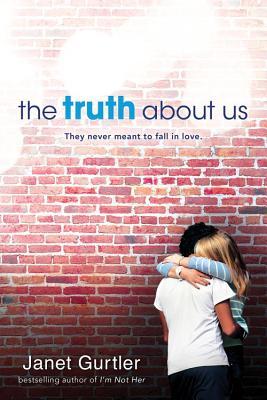
Truth About Us17-year-old Jess has what might seem to be an ideal life: She lives in a huge house in an upscale neighborhood, drives an Audi, and is sent out shopping for whatever she likes, parents’ credit card in hand. She goes to the best parties, where she and her bestie Nance get over-the-top drunk and flirt (and then some) with the best boys. Jess’s party-girl persona is a cover, though — a way for Jess to escape the worries and sorrows that have plagued her ever since a family tragedy two years earlier.

That doesn’t stop her from going too far, and when Jess is busted for daytime drinking, topless sunbathing, and a ridiculously expensive impulse buy on EBay, she’s sentenced to a horrible fate: Jess’s dad forces her to commit to daily “volunteer” work at the local soup kitchen. But Daaaaaad… you can practically hear her whining. So unfair.

Little by little, Jess comes to see the value in what she’s doing. Sure, the shelter is in a seedy part of town, serving lunch to all sorts of homeless riff-raff. And yes, the rest of the shelter volunteer crew and staff look at her as a spoiled little rich girl who’ll never fit in, unable to even walk to the corner bus stop without an escort. But when Jess meets the gorgeous Flynn and his adorable little brother, who come regularly for lunch and then stay to lend a hand, Jess’s heart begins to melt. Not only is she falling for Flynn hard, but she’s also made friends with an old man named Wilf, a widower and the shelter’s benefactor whose grumpy exterior hides the soul of a true romantic… and Wilf can’t resist imparting his own words of wisdom to Jess, including the lesson that love is worth fighting for.

There’s a lot that gets in the way of Jess and Flynn’s exploding feelings. Jess’s dad may want her to learn a lesson by working at the shelter, but he certainly doesn’t want her socializing with a poor boy from a bad neighborhood. Jess’s friends don’t understand why she doesn’t want to drink, flirt, and hook up the way she used to. Flynn’s mother isn’t a fan of Jess, either; to her, Jess is slumming and will only hurt Flynn. But as the summer progresses, Jess and Flynn grow closer, and Jess finally starts to open up about the sadness that threatens to rip her own family apart.

The Truth About Us tackles the subjects of privilege and economic challenges in a thoughtful and sensitive manner. Jess does really seem to have it all — but as the book shows us, even a perfect exterior can hide fractures and difficulty. Granted, Jess never has to worry about the roof over her head or where her next meal is coming from, so I wouldn’t say that her struggles and Flynn’s are equivalent. Still, the story forces readers to acknowledge that pain comes in many forms, and people don’t just get handed happiness alongside their gold credit cards and expensive electronics.

There are moments when the subject becomes a bit clunky:

I use the computer in Dad’s office to go online, and most of the time end up googling things like poverty. My eyes are open to a lot of things I didn’t know about being poor. I always knew my family had money, but it always seemed like everyone else did too.

Googling poverty? It’s really that foreign a concept to her? It’s hard to keep rooting for Jess in certain moments, even though ultimately we know that her heart is in the right place.

The romance in The Truth About Us is perhaps meant to be more of a “forbidden love” than it really seems. Jess’s friends are horrified that she’d get involved with a poor boy. Both Jess’s dad and Flynn’s mother are opposed to the relationship, but they come around eventually. Flynn’s own sense of responsibility toward his mother and brother keep him away from Jess for a time, but we know that these two feel instantly connected and that they’re fated to be together. The obstacles never appear to be truly insurmountable, and it’s not really a surprise when they manage to work things out.

This review perhaps sounds less positive than I actually feel about the book. The writing is witty and sensitive, and I liked the cast of characters very much. The secondary characters, especially Wilf and Jess’s former best friend Penny, are good people with a lot of heart. The story of the disintegration of Jess’s family and their slow steps toward healing is terribly sad, and it’s easy to see how Jess’s life became such a mess. She’s clearly a decent person who means well, cares for others, and wants to make a difference — and once she fights her way out from under her rich girl persona, she starts to grow into the person she wants to be.

I did feel that the realities of homelessness and poverty were a little sugar-coated, and that Jess didn’t see the truth of just how bad things could really be. However, The Truth About Us does show that it’s possible for people from such drastically different worlds to connect in a meaningful way, once they get past their preconceptions and prejudices. I haven’t seen many YA books confronting these issues, and the author should be commended for tackling the topic of economic disadvantage and differences in a way that will hopefully open readers’ eyes.

For more by this author, check out my review of her terrific previous novel, 16 Things I Thought Were True.

_________________________________________

The details:

Title: The Truth About Us
Author: Janet Gurtler
Publisher: Sourcebooks Fire
Publication date: April 7, 2015
Length: 304 pages
Genre: Young adult fiction
Source: Review copy courtesy of Sourcebooks Fire via NetGalley