Book Review: Weightless by Sarah Bannan

Weightless


Synopsis:

(via Goodreads)

When 15-year-old Carolyn moves from New Jersey to Alabama with her mother, she rattles the status quo of the junior class at Adams High School. A good student and natural athlete, she’s immediately welcomed by the school’s cliques. She’s even nominated to the homecoming court and begins dating a senior, Shane, whose on again/off again girlfriend Brooke becomes Carolyn’s bitter romantic rival. When a video of Carolyn and Shane making out is sent to everyone, Carolyn goes from golden girl to slut, as Brooke and her best friend Gemma try to restore their popularity. Gossip and bullying hound Carolyn, who becomes increasingly private and isolated. When Shane and Brooke—now back together—confront Carolyn in the student parking lot, injuring her, it’s the last attack she can take.

Sarah Bannan’s deft use of the first person plural gives Weightless an emotional intensity and remarkable power that will send you flying through the pages and leave you reeling.


My Thoughts:

Weightless is a disturbing book, all the more so because it feels so real. There’s an air of distance created by the author’s use of a first-person plural narration. “We” observe everything that happens that junior year, and narrate the excitement generated by the arrival of a new girl into a town in which everyone has known each other literally all their lives. By using the “we” voice, the reader gets no closer to Carolyn and the other main players than the trio of girls whose viewpoint we share. The three telling the story are strictly B-list, always on the outside looking in, at once attracted by the inner circle and desperate for their attention, and at the same time wary of the way getting noticed can come with nasty results.

When you’re new, and when you’re a girl, it’s not so good to be good at something. Better to be average, to be barely visible, to make yourself scarce.

We don’t get to know Carolyn, and perhaps that’s the point. No one in this homogeneous town knows more than what they can see of her. It’s apparent that she has a history. There are the mysterious marks on her arms and torso, indicating that she’s a cutter. But she’s beautiful and smart, perfectly dressed and with an outsider’s flair, and everyone wants to be her friend — until being her friend becomes a liability.

The pressures of high school life are apparent. A thin girl is described as “rexy”, and that’s supposed to be a good thing. Hearing another girl throw up in a bathroom stall is barely worth noticing, it’s so commonplace. “We” are hyper-critical, but no more so than anyone else. There’s a constant emphasis on the right make-up and clothes, the gain or loss of a few pounds:

She looked skinnier than before and maybe we were jealous that she could keep on losing weight, and we wondered what it would be like to be so sick or so sad or mad or whatever it was she was, to be sick enough not to want to eat. It would be nice to be free of that, we thought.

The group narrating the story, and by extension, the entire student population, sees Carolyn’s transformation from new girl to most popular to object of hatred, and no one does a thing about it.

If we had realized what was happening, we might have stood up, shouted or at least cleared our throats.

“Cleared our throats”? The futility, the fear of interfering, the awe and admiration for the popular crowd — all lead to an absolute inability for anyone to break from the herd.

Weightless is a hard, sad, and powerful book. It drove home for me how insanely difficult it must be to navigate the teen years in an age when every private moment is fair game for public distribution via social media. The use of the first-person plural narration is a brilliant tactic that perfectly encapsulates some of the crazier aspects of the quest to fit in and be one of the crowd. If we’re not noticed, then we won’t be targeted — and Carolyn’s sad story is emblematic of what can happen when “we” dare to go our own way.

A final passage, narrating a hot air balloon ride, captures the outsider world view of the entire book:

We were at a distance from it and could see only what we needed to see. From here, we thought, if a car crashed, you wouldn’t hear it, and even if you did, it would look like a toy.

The outsider status of the narrative trio becomes at some point an excuse. We can’t do anything, because we’re not really involved. Or we do something we consider small, like spreading something via social media, fooling ourselves into believing that what we do doesn’t really matter very much, since we’re not truly included. Most especially, we can’t help. We’re too intimidated by Carolyn to offer true friendship, and we’re too scared of becoming pariahs to dare offending the popular girls. Sadly, the distance “we” maintain keeps the group from seeing Carolyn’s struggle as something real, something within reach; her crashing life is something observed from afar, like seeing a toy person falling to pieces rather than an actual, vulnerable human being.

As a final sad note, the author’s acknowledgements include a reference to a real case that at least partially inspired Weightless. For more information, check out this story about the Phoebe Prince case from 2010. (Note: If you’re thinking of reading Weightless, I’d suggest hold off on reading the article, as the events are similar enough to give a good idea of what happens in the book).

Wrapping it all up: I highly recommend Weightless. I’ve seen Weightless described as a book about bullying, but I think it’s much more than that. It’s a very well-written, disturbing, and unusual look at the cost of needing to fit in, and how an entire community can be culpable for making an individual suffer for stepping outside the lines of what’s considered acceptable.

_________________________________________

The details:

Title: Weightless
Author: Sarah Bannan
Publisher: St. Martin’s Griffin
Publication date: June 30, 2015
Length: 336 pages
Genre: Contemporary YA fiction
Source: Review copy courtesy of the publisher via NetGalley

 

Eragon: A book with the kiddo, & a book review with a twist

EragonThis started out as a straight-forward book review, but I think it’s now turning into more of a “Choose Your Own Adventure” deal. I wrote a review. Then I thought about a completely different angle. And thought I’d include both! So, choose which version you want to read, or read both! Either way, you’ll hear my mouthy opinion, for better or for worse.

Version #1:

Eragon (book #1 of the four-part Inheritance Cycle) is a good old-fashioned epic fantasy quest, filled with dragons, monsters, good guys and bad guys, swords with names, wise old mentors, and one very special young man who spends the book discovering that he may in fact be the Chosen One.

I’ve always enjoyed reading with my son, and now that he’s 12, our reading time has changed. We still hang out and read together, but we’re often looking for books that we can read in parallel, then chat about for a while. Eragon is LONG book, well over 500 pages in our paperback copy, and I’d say it took us close to five months to get through the whole thing. Because I wanted this to be a shared experience, I did not read ahead — and when we had days or even weeks when my kiddo was distracted or just not into it, we both went without.

Consequently, I think, my enjoyment of the story was already a bit lower than it might have been if I’d just read straight through. More on this later.

In terms of plot, Eragon more or less follows along well-trodden paths. We start with 15-year-old Eragon as an ordinary boy, being raised by his uncle on a simple farm. When Eragon finds a dragon egg, it sets in motion a series of life-changing events, some tragic, some full of promise.

When the egg finally hatches, out comes a cute baby dragon with whom Eragon immediately bonds. The two share a psychic link, and Eragon discovers that her name is Saphira, and that they can have full conversations in their heads. But there are dangerous foes who want the dragon too, and when Eragon’s uncle is brutally murdered, Eragon and Saphira flee for their lives, along with the town storyteller, an old man named Brom who has plenty of secrets and wisdom to share with Eragon.

There’s a road trip of sorts, as Ergaon, Saphira and Brom chase the bad guys who killed the uncle. More than that, though, Brom starts to teach Eragon about his true heritage and calling: Eragon is a Dragon Rider, one of an ancient line with magical powers, thought to be more or less extinct. The evil king Galbatorix would surely kill him if he could, and they spend much of the book moving from place to place, pursued by nasty creatures, always in danger, and busy making sure that Eragon is transformed from simple farm boy to magic-wielding powerhouse.

So. What did I think? Well, for starters, this is a tough book to read in small chunks. Eragon is highly detailed, and the telling of the backstory and mythology is uneven and occasionally awkward. Brom tells Eragon about the Riders and how the king became so evil in a single story, about three pages long, early on in the book — and yet this informs almost everything that comes later. Should a reader really be expected to keep all the details straight hundreds of pages later? It seems a bit daunting, especially considering that this is supposedly a kids’ book.

Reading it as I did, no more than a chapter at a time, sometimes with days in between, it was hard to maintain the flow of the story. But even so, I do think I might have felt similarly if I’d read it straight through. The chapters are long, and the entire plot is one episode of danger after another, often with very little natural flow between scenes or locations.

Much has been made of the fact that the author, Christopher Paolini, was only 15 when he wrote this book, which is utterly remarkable in terms of a teen literary phenomenon. It’s pretty mind-boggling to me that someone his age could create such a large, densely packed book. But should a book be judged by the age of its author, or on the merit of its content, plot, characters, and overall effect?

If I ignore what I know about the author, I’m less impressed. Much of the story feels derivative. Young apprentice, old mentor? Check. Newly discovered magical powers? Check. Coming of age due to the death of the hero’s family/support system? Check. Et cetera, et cetera, et cetera. Brom could be any one of a dozen or more wise, old, mysterious magical gurus from fantasy — Gandalf, Dumbledore, Obi-Wan Kenobi. There’s a magical elf girl, because of course there’s a magical elf-girl. Cities full of suspicious or untrustworthy residents. Dwarves, elves, mad kings… it’s like every fantasy epic, put into a blender and poured out into a new glass.

And then there’s the writing. Remember being in high school English classes, writing essays, and trying to use as many SAT-level words as possible in the attempt to impress your teacher with the power of your vocabulary, even if you had nothing much to say? Yeah. It’s like that. I stopped noticing quite so much after a while, but particularly early on, it’s irritating and distracting to be subjected to such overblown language constantly. The author’s approach seems to be: why use a one-syllable word when there’s a longer one that will do?

So did I enjoy Eragon? Yes and no. I enjoyed the experience of sharing it with my son, being able to talk about it with him, and seeing his less-jaded response to the plot and characters. He really liked it, which made me like it too. Left to my own devices, I’d probably say that it was at least a third longer than it needed to be, in dire need of editing, and overall a not terribly original remash of standard fantasy themes and plot elements.

Version #2:

I mentioned Obi-Wan Kenobi before, right? On further thought, a cup of tea and a shower later, I’ve started to think that the entire book of Eragon (and who knows, perhaps the rest of the Inheritance series as well) can be boiled down to “Star Wars with Dragons”.

We’ve got the story of a young man raised on a farm by his uncle. Parentage unknown. He unwittingly comes into possession of something sought after by the Empire. Agents of the Empire slaughter his uncle and destroy the farm. He has to flee. He receives a vision of a beautiful young woman who desperately needs his help. He is guided by an old man with mysterious knowledge and powers, who tells him that he himself has abilities he was unaware of, and that he belongs to a group with special abilities and — can we call magic “the force”? He begins to learn to use his powers and becomes a skilled flyer and fighter. His mentor ultimately dies, after setting the hero on his path. The hero allies himself with a rogue with a heart of gold, whose skills help him avoid capture…

Okay, it gets a bit murkier after that, since there’s no Death Star. But there is an epic battle at the end, and our hero emerges triumphantly, but with the knowledge that he needs further training in order to prepare for the challenges still to come. Which nicely sets us up for the next installment in the series.

So does this mean that Eragon’s father is really the evil king Galbatorix? It would fit. After all, Galbatorix was originally a Rider, before going mad from grief and pursuing total domination and dark powers.

Wow. Mind blown.

But do me a favor! If you’ve read the rest of the Inheritance series, don’t tell me if my Galbatorix theories are correct! I need to leave some mysteries to look forward to.

Wrapping it all up:

I tried to get my kiddo to contribute to this review, but apart from saying “it was good”, he wasn’t willing to play along. He does like my Star Wars theories! The kiddo, for all his middle-school cool, was actually pretty enthusiastic about the story, except for when it bogged down in chapters full of traveling from point A to point B to point C. He enjoyed it enough that he insisted that we start the second book, Eldest, right away… and so we have.

Sigh. We’re one chapter into Eldest so far, and I can tell we’re in for a long haul. 600+ pages! I don’t love this series so far, as you can probably tell, but it also hasn’t turned me off completely, and at this point, thanks to the kiddo, I’m involved enough to keep going. I’ve just got to see how it all works out!

And hey, who knows? Maybe there’ll be some Ewoks along the way.

_________________________________________

The details:

Title: Eragon (The Inheritance Cycle, book #1)
Author: Christopher Paolini
Publisher: Knopf Books for Young Readers
Publication date: 2002
Length: 528 pages
Genre: Fantasy (kids/teens)
Source: Purchased


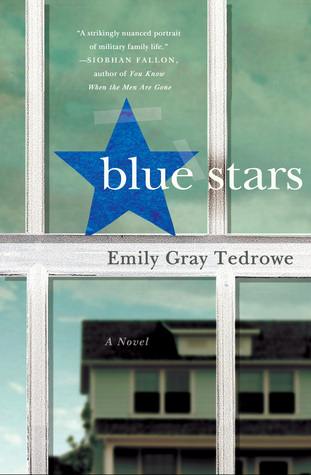
Book Review: Blue Stars by Emily Gray Tedrowe

blue starsThe Blue Star service flag: A simple flag, displayed in a window to indicate a family with a member serving in the US military during wartime. In Blue Stars, author Emily Gray Tedrowe introduces us to two women whose lives are turned upside down and inside out by their experiences dealing with their loved ones’ service and the aftermath of devastating, life-changing injuries.

The two main characters are Ellen and Lacey, and on the surface, they couldn’t be more different. Ellen is a midwestern college professor specializing in the works of Edith Wharton. Widowed many years earlier, Ellen has two children — a daughter in her late teens who is full of rebellion and sarcasm, and a son in graduate school. Ellen also has a ward, having become legal guardian to Mike, a young man befriended by Ellen’s son as a teen, whom Ellen took in, took under her wing, and made part of the family.

Lacey is a working-class mom in New York, married to army reserves officer Eddie, but not particularly happy in her marriage. Lacey married Eddie after a long string of go-nowhere relationships, needing stability and meaning in her life and a father for her son Otis. Lacey thrives in the tight-knit circle of army wives and their non-stop projects and activities, but she also drinks too much and hides her secret dissatisfaction with a husband whom she married in haste.

As the book opens, it’s 2005, and Mike and Eddie are both preparing for a 15-month deployment to Iraq. Mike has just enlisted in the Marines, much to Ellen’s dismay, and Eddie is being sent overseas as well. All too soon, though, Ellen and Lacey each receive the news they dread: Their loved ones have been injured, and will be brought to Walter Reed Medical Center in Washington DC for treatment.

Mike has lost a foot due to a grenade. Eddie has lost an eye, most of the vision in his other eye, and has suffered severe head trauma. Ellen and Lacey uproot their lives and, for months and months, become permanent fixtures at Walter Reed, overseeing their soldiers’ care, dealing with bureaucracy, substandard housing, and the patients’ distressing physical conditions. The horrors of war are driven home by seeing the extent of the damage to these formerly healthy men, as well as by seeing the other patients and their families. And to add one horror upon another, the women and families there are pretty much on their own, fighting for benefits, living on pennies, scrambling to make ends meet, and desperate for any shred of hope.

The relationship between Ellen and Lacey is at the heart of this touching novel. In a “normal” world, these two would never meet, much less become friends. Yet through their shared experiences, each finds in the other something she desperately needs. Ellen represents calm and order to Lacey, instilling the belief in Lacey that she’s worth more than she thinks. And in Lacey, Ellen finds a woman who isn’t afraid to speak out, to confront hard truths, and to bring people together.

I found both women very inspirational, in their own ways. Lacey is a mess in so many ways, and it’s hard to approve of much of her behavior early on, yet she displays a courage and loyalty that are quite remarkable. Ellen, too, has to deal with her own feelings of inadequacy, yet her devotion to Mike never wavers for a moment, despite the often brutal emotional toll taken by dealing with a man traumatized by PTSD and haunted by his war experience.

We all know that war is hell, and there are countless war novels that focus on the front lines. Here, in Blue Stars, it’s the home front that’s the focus, and the book does an outstanding job of showing that the misery and trauma don’t stop just because a soldier’s battle days are over… and that the trauma and pain are felt in myriad ways by the families back home as well. The military families described in Blue Stars aren’t idealized or seen through a rosy filter. They have faults, and we see them, but we also see the dedication, courage, and sheer determination that help them stand by their wounded soldiers.

My only frustration with Blue Stars is that I wished to know more about Mike himself and his experiences, but of course that would have been a different book. We get to know Mike through Ellen’s eyes, and it’s Ellen’s experience of Mike’s war — and by extension, Ellen and her family’s war as well — that’s the essence of this book. Blue Stars is about the ravages of war, on individuals and families, and about what it takes to rebuild a life — the life of the wounded soldier, and the life of the damaged family.

Reading about the badly wounded soldiers, so young and so full of promise, is moving and tragic. I was filled with anger over their pointless suffering, and filled with admiration for the tough parents, spouses, children, girlfriends and boyfriends, who give 110% for the sake of their loved ones’ recovery. Blue Stars is a moving and powerful novel — not always pleasant, but an important and emotionally rich look at the lives of military families, the power of friendship, and the many ways that love and commitment make a difference.

_________________________________________

The details:

Title: Blue Stars
Author: Emily Gray Tedrowe
Publisher: St. Martin’s Press
Publication date: February 17, 2015
Length: 352 pages
Genre: Contemporary fiction
Source: Review copy courtesy of the publisher via NetGalley


Take A Peek Book Review: Paper Towns by John Green

“Take a Peek” book reviews are short and (possibly) sweet, keeping the commentary brief and providing a little peek at what the book’s about and what I thought.

6442769

Synopsis:

(via Goodreads)

Who is the real Margo?

Quentin Jacobsen has spent a lifetime loving the magnificently adventurous Margo Roth Spiegelman from afar. So when she cracks open a window and climbs into his life—dressed like a ninja and summoning him for an ingenious campaign of revenge—he follows. After their all-nighter ends, and a new day breaks, Q arrives at school to discover that Margo, always an enigma, has now become a mystery. But Q soon learns that there are clues—and they’re for him. Urged down a disconnected path, the closer he gets, the less Q sees the girl he thought he knew…


My Thoughts:

Oh, where to start? This was most decidedly a middle-of-the-road, “meh” sort of read for me. On the plus side, John Green is an indisputed talent when it comes to getting inside teen brains and portraying the shifting loyalties and tensions of teen friendships. On the negative side, I have very little tolerance for this type of tale, starring an every-boy main character — decent guy, not too remarkable, not part of the in-crowd — who is drawn to the oh-so-special wild girl, the one who can’t be pinned down, who acts out in crazy ways that are supposed to be a sign of just how special her specialness is.

I enjoyed the scenes of Quentin embarking on a crazy road trip with his best friends — a wild 24-hour drive up the coast on the trail of Margo’s confusing clues, with all sorts of escapades, close calls, and silly/manic rest stop shopping sprees. But… all this is in search of the elusive Margo, who, quite frankly, doesn’t seem to want to be found. And if she did want to be found, she made it next to impossible. I found it pretty hard to believe that the gang managed to decipher the obscure patterns that form a sort of roadmap to her — and further, I had a hard time seeing her all-night adventure with Quentin as something that he’d actually enjoy or go along with.

I loved The Fault in Our Stars and Will Grayson, Will Grayson — but Paper Towns had about the same effect on me as Looking For Alaska. Clearly, books about boy-next-door types falling under the spell of the elusive, magical, tormented, magnetic (etc, etc) wonder girl just don’t work for me.

Note: I picked up the e-book of Paper Towns a couple of years ago, and finally read it this month in preparation for a book group discussion. Who knows? Perhaps the amazing folks in my group will convince me that I missed something!

_________________________________________

The details:

Title: Paper Towns
Author: John Green
Publisher: Speak
Publication date: 2009
Length: 305 pages
Genre: Young adult
Source: Purchased

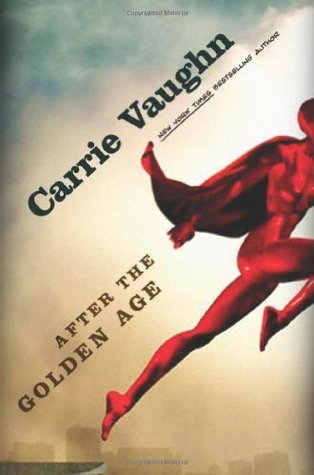
Take A Peek Book Review: After the Golden Age by Carrie Vaughn

“Take a Peek” book reviews are short and (possibly) sweet, keeping the commentary brief and providing a little peek at what the book’s about and what I thought.

After the Golden Age


Synopsis:

(via Goodreads)

Most people dream of having superheroes for parents, but not Celia West. The only daughter of Captain Olympus and Spark, the world’s greatest champions, she has no powers of her own, and the most exciting thing she’s ever done is win a silver medal in a high school swim meet. Meanwhile, she’s the favorite hostage of every crime boss and supervillain in Commerce City. She doesn’t have a code name, but if she did, it would probably be Bait Girl, the Captive Wonder.

Rejecting her famous family and its legacy, Celia has worked hard to create a life for herself beyond the shadow of their capes, becoming a skilled forensic accountant. But when her parents’ archenemy, the Destructor, faces justice in the “Trial of the Century,” Celia finds herself sucked back into the more-than-mortal world of Captain Olympus—and forced to confront a secret that she hoped would stay buried forever.

My Thoughts:

I have been meaning to read this book for over a year now, and I’m so glad that I finally did! How does an ordinary girl grow up when she has superheroes for parents? Not easily, that’s for sure. Now an adult, Celia West is finally reconciling with her parents and figuring out how she fits into their world of crime-fighting, where the city’s needs come first and Celia is always a distant second. Meanwhile, Celia’s secrets from her teen years have resurfaced in a most unpleasant way, and the consequences of this exposure are upsetting, to say the least.

After the Golden Age is much more heart-felt than I’d expected. Despite the urban fantasy setting, Celia deals with real emotions and crises, and her struggle to find her place in the world and figure out how she can possibly make peace with her parents has a universal feel to it. There’s romance, intrigue, and adventure, and despite the often desperate throes, also plenty of snarky humor. I knew I was in for a treat when, in the first chapter, Celia’s response to being kidnapped is:

Damn, not again.

I really enjoyed After the Golden Age. The fantasy elements work well as a framework, but it’s the main character and her friends and family that make the book come alive. I’m looking forward to reading the sequel!

_________________________________________

The details:

Title: After the Golden Age
Author: Carrie Vaughn
Publisher: Tor
Publication date: April 12, 2011
Length: 304 pages
Genre: Fantasy
Source: Purchased

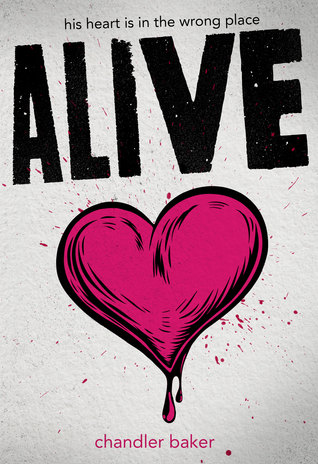
Book Review: Alive by Chandler Baker

Alive Stella Cross is a living, breathing miracle. At age 17, she was barely hanging on to life, waiting for her name to come up on the heart transplant list. Her heart began failing two years earlier, and since then she’s become the sick girl, having to give up her dreams of competitive swimming, surviving from doctor visit to doctor visit. As Alive opens, a donor heart finally becomes available, and Stella is rushed to surgery. Will she make it? Technically, she’ll be dead for a moment as her own heart is removed to make way for the healthy one that will replace it.

The surgery is a success, and Stella starts to reclaim her life, supported by her best friend Brynn and her super-best-friend-but-wants-more, the loyal (and adorable) Henry. But things are not 100% fine. Stella feels an ache in her chest that her doctors can’t explain, and every day at 5:08 exactly, she experiences an attack of blinding, debilitating agony. Is it all in her head? Psychological trauma would be normal after a heart transplant, after all. But no counseling and no medication seem to help, and to Stella, it’s very, very real.

When a new (gorgeous) boy joins the senior class at her high school, Stella is instantly drawn to him. Levi is seemingly perfect (did I mention gorgeous?), and is attracted right away to Stella as well. Weirdly, when Stella is near Levi, the constant aches seem to vanish. Life without pain is quite a temptation (and plus he’s gorgeous), and almost in the blink of an eye, Stella is glued at the hip to her new boyfriend, ditching (and being mean) to Henry and Brynn.

Is Levi really all that perfect? I think not. There’s something suspicious about the connection she feels to him, and he just keeps doing slightly odd things that set my alarm bells a-ringing. Surest sign that Levi is a creep? He pushes Stella to smoke for the first time. She’s a heart transplant patient! For god’s sake, run for the hills, Stella!

Alive is quite a tale. I don’t know why, but I expected something of a supernatural romance (perhaps à la “Return to Me” – did anyone else see that David Duchovny/Minnie Driver movie?). Instead, it quickly becomes clear that this is a horror story. And not just because Stella and Henry have a history of bonding over their shared love of Stephen King.

Stella is plagued by disturbing, bloody hallucinations – bloody handprints on her shirt, seeing a heart oozing blood in the school anatomy lab, and more disturbingly, the drowning death of her baby sister. When a classmate disappears and is later found dead, Stella’s fears grow even more intense, and she finally begins to heed her friends’ warnings about Levi.

And yet my heart still claws for him, storming the prison made from nothing but the bones of my rib cage. It beats so hard that I know it’s trying to fracture my skeleton. I wait for the first shard to puncture my skin or lung.

I really liked the development of the story. Stella just seems like a normal girl at first, a bit of an outsider thanks to her medical condition, trying to fit back into the life she thought she’d never have. And sure, it seems understandable that she basks in the glow of attention from the new boy, even if she is really cruel to cutie-pie Henry along the way. When the story veers off into gushing blood and scary fits, it’s even better. Look, it’s not just a YA love triangle! There’s something icky and scary going on, and my initial guesses about what and why were actually pretty far off.

The author makes great use of heart imagery as Stella contemplates whether she’s falling in love, thinking about what she may have in her heart and what she physically has going on inside her chest at the same time. There are some really stand-out phrases and passages that capture both essences of the heart, and the writing overall flows well and is easy to become lost in. I found myself completely absorbed, only looking up to discover that an hour had gone by!

What didn’t I love? Well, the end seemed a little muddled to me. I wasn’t entirely clear on how the various points came together and why things worked the way they did, although I was satisfied by the ultimate outcome.

Other than that, I had just a few little nitpicks about the plot itself, a major point being how Levi was able to enroll in and attend Stella’s high school without anyone blinking an eye. Without giving away spoilers, I can’t say more about why this point doesn’t really make sense… but there are a few small items like this that seem a bit too convenient or glossed over.

All in all, though, I though Alive was a good scary thrill, with an insta-love plotline that actually supports the overall story in a way that’s justifiable. Alive is tense and hard to put down, and Stella is a really interesting main character. It’s interesting to see inside the mind of a girl who’s gone through what she has, and I enjoyed seeing her growth and development over the arc of the story.

Alive is the debut novel by Chandler Baker, and I look forward to reading more by her in the future.

_________________________________________

The details:

Title: Alive
Author: Chandler Baker
Publisher: Disney-Hyperion
Publication date: June 9, 2015
Length: 368 pages
Genre: YA horror/supernatural
Source: Review copy courtesy of the publisher via NetGalley
Book Review: Eight Hundred Grapes by Laura Dave

Eight Hundred GrapesLife takes a decidedly unexpected turn for main character Georgia Ford in this novel about family, secrets, trust… and wine.

Georgia is a successful lawyer, happily living in LA, about to marry the man of her dreams and start a new life with him in London — when she sees him walking down the street with a gorgeous woman and a five-year-old girl with his eyes who calls him “Daddy”. Problem? The wedding is in one week. Another problem: Ben has never mentioned a daughter, but the woman is his ex-girlfriend — who just happens to be a world-famous movie star. Georgia flees, straight back to the comfort of family and home, but when she arrives, she doesn’t find exactly the peace and calm she’s looking for.

Instead, her family’s Sonoma vineyard is in an uproar. Her parents, who have an ultra-cute meet-cute story, have drifted apart, to the point where her mother is conducting a mostly-platonic affair with an old lover. What’s worse, her father has decided to sell his vineyard, his lifelong passion, to a huge wine company, one of the “evil” mass-market winemakers that he’s always hated. On top of that, Georgia’s twin brothers are feuding on a level that may change lives, and Georgia herself doesn’t know what she wants — for her future marriage or for her career. And then there’s Jacob,  the CEO of the huge wine company, who happens to be attractive, single, and not as evil as Georgia would like to believe him to be.

Do you smell a love triangle coming on? Because I sure did, the second Jacob appeared on the scene.

But in a sense, the love triangle is the least important love story going on here. In Eight Hundred Grapes, the most compelling love story is the story of Georgia’s family’s love for the land. In some of the most moving sections of the book, we learn about her father Dan’s devotion to his soil, his grapes, his winemaking process, his absolute belief in what he’s doing, and what it means to him, his family, and his community. Although Georgia outwardly has done everything she can to distance herself from the vineyards, her actions show how deeply rooted she is in the family acres and the business.

Author Laura Dave lovingly describes the natural beauty of Sonoma , the grace of nature, and a return to a respectful and mutually beneficial relationship to the land. Through the descriptions of Dan’s approach to viticulture, she shows that new possibilities exist, incorporating old traditions but infused with science and organic growth and cultivation.

The characters all have something at stake, and much thought is given to the concepts of what each truly values, what’s been given up in the past, and what each wants to get back or hold onto. There are plenty of missed chances and second chances, and the characters all go through various forms of eye-openings, learning to see each other not just as they always have, but taking a fresh look and understanding what each wants and needs.

It all felt like the same thing: the loss of the vineyard, the coming apart of our family. Finn and Bobby and Margaret. My parents. Ben and Maddie. Michelle. It all felt tied up, like the same thread was running through them. Where there had been trust — to keep each other safe, to make each other feel loved — there was none. Maybe it was tied up. Synchronized to come apart the moment my father turned his back on the vineyard and we were all too busy to stop him.

Back to the love triangle for a minute — at about the mid-point of the novel, I thought that I’d called it wrong and that there wouldn’t really be a love triangle. Okay, so I was right after all, but fortunately, the triangle isn’t the driving factor in this story. What’s more important is that Georgia is forced to take a good hard look at her relationship with her fiancé Ben, not just in light of the revelations about his daughter, but in terms of who she herself is and what she truly wants for her own life.

The writing is insightful, as Georgia analyzes (and perhaps overanalyzes) each family member’s every action and word.

Wasn’t the ultimate form of fidelity who you told your stories to? Ben had stopped telling me his.

Does she believe that her parents’ marriage is truly over? Does her father mean it when he says he’s done with the vineyard? She spends just as much time worrying over her own motivations: Did she choose a law career after seeing how frightening it can be to base everything on something outside of one’s own control? After growing up in a vineyard, she’s well aware of how one or two seasons of bad weather can threaten everything and take away years of hard work. So was she really just looking for a safer path for herself? And what does this say about her relationship with Ben? Does he represent the safe option as well?

Here’s where the more nitpicky part of this review comes along. I didn’t see the value of making Ben’s ex a movie star. It doesn’t add at all to the dynamics of the story, and we didn’t really need the extra element of Georgia feeling insecure or having to deal with the ex’s fame. Georgia’s relationship with Jacob is perhaps the weakest part of the story; again, it just didn’t feel terribly necessary to have a new love interest thrown into the mix of Georgia dealing with her family and her plans for her future.

These small issues aside, I really liked the storytelling in Eight Hundred Grapes, particularly seeing the world through Georgia’s eyes. Her perspective is fresh and funny, even when dealing with serious, momentous decisions. The family members are all well-developed, even those who don’t get a lot of major attention. The author does a great job of showing the family history, the years of love and tension, comfort and affection, that make up a whole. Woven into the entire story is the family’s traditions concerning the grapes — the harvest parties, the family dinners, the final harvesting of the most special grapes from the vines. Working with the vines and the soil is deeply embedded in every family moment, and we see that so clearly that it’s easy to understand why Dan’s decision to sell the vineyard is so much more than just a business decision.

I recommend this book for anyone who enjoys contemporary fiction with a lot of heart. It’s a quick read, but raises some interesting ideas about family, tradition, and the choices we all face about what to keep and what to give up.

PS – The title? Well, did you ever wonder how many grapes it takes to make a single bottle of wine? Now you know.

_________________________________________

The details:

Title: Eight Hundred Grapes
Author: Laura Dave
Publisher: Simon & Schuster
Publication date: June 2, 2015
Length: 272 pages
Genre: Contemporary fiction
Source: Review copy courtesy of the publisher via NetGalley
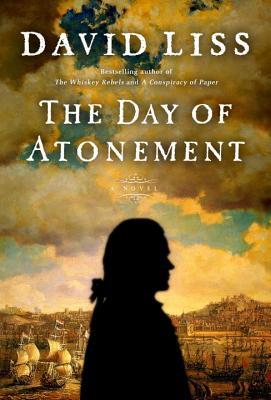
Take A Peek Book Review: The Day of Atonement by David Liss

“Take a Peek” book reviews are short and (possibly) sweet, keeping the commentary brief and providing a little peek at what the book’s about and what I thought.

Day of Atonement

Synopsis:

(via Goodreads)

Sebastião Raposa is only thirteen when his parents are unjustly imprisoned, never to be seen again, and he is forced to flee Portugal lest he too fall victim to the Inquisition. But ten years in exile only serve to whet his appetite for vengeance. Returning at last to Lisbon, in the guise of English businessman Sebastian Foxx, he is no longer a frightened boy but a dangerous man tormented by violent impulses. Haunted by the specter of all he has lost—including his exquisite first love—Foxx is determined to right old wrongs by punishing an unforgivable enemy with unrelenting fury.

Well schooled by his benefactor, the notorious bounty hunter Benjamin Weaver, in the use of wits, fists, and a variety of weapons, Foxx stalks the ruthless Inquisitor priest Pedro Azinheiro. But in a city ruled by terror and treachery, where money and information can buy power and trump any law, no enemy should be underestimated and no ally can be trusted. Having risked everything, and once again under the watchful eye of the Inquisition, Foxx finds his plans unraveling as he becomes drawn into the struggles of old friends—and new enemies—none of whom, like Lisbon itself, are what they seem.

Compelled to play a game of deception and greed, Sebastian Foxx will find himself befriended, betrayed, tempted by desire, and tormented by personal turmoil. And when a twist of fate turns his carefully laid plans to chaos, he will be forced to choose between surrendering to bloodlust or serving the cause of mercy.

My Thoughts:

What a captivating book! The narrator is a fascinating man, whose description of himself is not particularly trustworthy. Sebastian describes himself early on as a monster, someone whose sole purpose in life is vengeance. Yet as we follow his intrigues and alliances while he moves his chess pieces into place, we come to see him also as a man with a moral core. He is a ruthless fighter who does not hesitate when violence is called for, yet his time in Lisbon becomes more and more complicated due to his sense of personal obligation to those he becomes entangled with. He defends those who need it; he strives to right old wrongs; he grants forgiveness to people who cause him pain because he realizes they had only poor choices to make. Yes, he’s still violent, but his rage is directed against the true villains, and the more people he embroils in his plots, the more people he ends up trying to rescue.

I was very interested in the historical setting, having previously not read much about Portugal during this time period. The Inquisition and its cruelty and corruption is awful to read about, and the author does a masterful job of making the dread and menace feel real. I was also fascinated to read about the massive earthquake that leveled Lisbon in 1755, which is used to great effect as part of the dramatic escape efforts of the main group of characters.

I’m grateful to my online book group for selecting The Day of Atonement as a book-of-the-month discussion book. I might not have come across it otherwise, but I’m very glad that I did. This is David Liss’s 8th novel, and I look forward to reading more of his work.

PS – I discovered after the fact that supporting character Benjamin Weaver is in fact the main character in three previous novels by this author. I’ll have to check them out!

_________________________________________

The details:

Title: The Day of Atonement
Author: David Liss
Publisher: Random House
Publication date: September 23, 2014
Length: 384 pages
Genre: Historical fiction
Source: Library

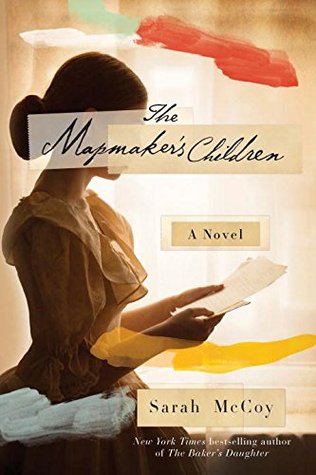
Take A Peek Book Review: The Mapmaker’s Children by Sarah McCoy

“Take a Peek” book reviews are short and (possibly) sweet, keeping the commentary brief and providing a little peek at what the book’s about and what I thought.

Mapmaker's Children

Synopsis:

(via Goodreads)

When Sarah Brown, daughter of abolitionist John Brown, realizes that her artistic talents may be able to help save the lives of slaves fleeing north, she becomes one of the Underground Railroad’s leading mapmakers, taking her cues from the slave code quilts and hiding her maps within her paintings. She boldly embraces this calling after being told the shocking news that she can’t bear children, but as the country steers toward bloody civil war, Sarah faces difficult sacrifices that could put all she loves in peril.

Eden, a modern woman desperate to conceive a child with her husband, moves to an old house in the suburbs and discovers a porcelain head hidden in the root cellar—the remains of an Underground Railroad doll with an extraordinary past of secret messages, danger and deliverance.

Ingeniously plotted to a riveting end, Sarah and Eden’s woven lives connect the past to the present, forcing each of them to define courage, family, love, and legacy in a new way.

My Thoughts:

The two timelines in this split-narrative story are united by place, centered on a single home in New Charleston, West Virginia.

In the contemporary storyline, we follow Eden, a woman whose marriage is on the rocks after years of failed fertility treatments. In a last-ditch effort to both conceive a child and repair their relationship, Eden and husband Jack have left city life behind to settle in a small town. Here, Eden gets to know the cute neighbor kid and then the other townspeople, finding in this little place a welcoming community and a home.

Meanwhile, in the historical chapters, we meet Sarah Brown, daughter of radical abolitionist John Brown. The books opens right around the time of the failed Harper’s Ferry uprising, closely followed by John Brown’s hanging. Sarah vows to carry on her father’s work with the Underground Railroad (the UGRR), using her artistic talents to create pictographs that escaping slaves can use as maps as they find their way to freedom.

Sadly, neither storyline drew me in. Sarah’s story should have been interesting, yet there were big gaps that kept me from connecting with her. Perhaps it was the choppy approach to the narrative, jumping forward months at a time and with the alternating timeline constantly breaking up any momentum in her story. In any case, Sarah’s art and her work for the UGRR are not adequately explained or developed, and I never got a strong sense of the impact of her artwork or felt that her personal story had a true dramatic arc.

Meanwhile, Eden’s part of the story is all fairly trite. A small town full of quirky townspeople, a whimsical bookstore, a cute girl and adorable puppy, a corporate career woman embracing a slower yet more meaningful way of life — none of it seems particularly new or engaging.

The connection between the two halves of the tale is a porcelain doll’s head that Eden finds in a hidden cubby in her house. The doll’s head prompts Eden to try to get the house listed as an historical site — and of course, this head can be traced back to Sarah and the UGRR.

I fully expected to love this story, based on the description. It sounds like the sort of thing I’d usually enjoy. Something about the execution, though, made the book feel really bland to me. The characters felt flat and lifeless. Sarah seemed very cookie-cutter to me, lacking true agency, and Eden could have been anyone.

I was interested to note, via the author’s note at the end, that all of the places and dates in Sarah’s story were real. Knowing nothing about John Brown’s family previously, I had no real sense in reading the story as to which bits were based on history and which were purely fictional. I wish I’d read the notes ahead of time — perhaps that might have helped me feel more engaged.

The history itself is interesting — the aftermath of Harper’s Ferry, the secret network that kept the UGRR alive in the South, and the impact of the Civil War on the townspeople, both during and after the war. The novel itself, though, lacks a sense of energy and movement. Ultimately, I had to force myself to keep reading and came close to abandoning the book several times. In fact, even close to the end, I didn’t really care very much, and had to actually remind myself that there was still more to read.

Those interested in Civil War history may find this an interesting perspective on the role of women in the abolitionist movement. However, I suspect that reading historical non-fiction about the Browns might prove more enlightening and engaging than this novel.

_________________________________________

The details:

Title: The Mapmaker’s Children
Author: Sarah McCoy
Publisher: Crown
Publication date: May 5, 2015
Length: 320 pages
Genre: Historical fiction
Source: Review copy provided by the publisher

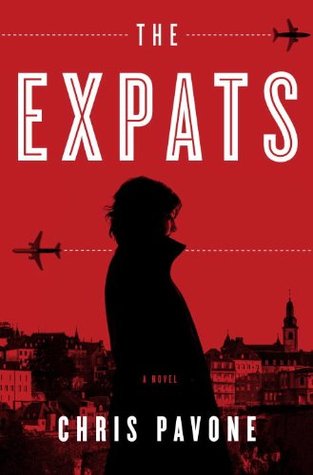
Book Review: The Expats by Chris Pavone

ExpatsLooking for a fast-paced thriller for your beach bag? You can’t go wrong with The Expats.

The Expats is a spy thriller, a cat-and-mouse espionage tale… and the story of a marriage. Mixing spycraft with ruminations on trust, love, and family, this books is quirky and dramatic all at the same time.

Kate Moore is the main character, a wife and mother of two young boys… and a former CIA field operative who resigns from the Company when her computer geek husband Dexter receives a lucrative job offer than entails moving to Luxembourg for a year.

Kate becomes one of the expat moms — the women from all corners of the world, married to wealthy but very busy men, who congregate in coffee shops and tennis clubs while their children attend preschool, then plan family outings, ski trips, and shopping adventures all over Europe. It’s a great life… except Kate can’t help being just a wee bit bored. As a working mother, she was itching for more time with the family, but now that she has it, she finds the daily routine — cooking, cleaning, shopping, chauffering, playdates, endless mommy gossip — not quite as fulfilling as she’d hoped.

Meanwhile, Dexter is suddenly the absent parent, as his new job entails high-level, hush-hush work for private banks to ensure that their online security systems are unbreachable…. or so he says. Kate begins to suspect that something is just a little bit off about Dexter’s new job… and the new American couple who have befriended them seem to have more than just a friendly interest in worming their way into the Moores’ lives.

The timeline jumps back and forth between “today”, in Paris, as Kate is confronted by someone she thought she’d never see again, to two years ago, starting with Dexter’s announcement about his new job and following the couple and the children forward into their new lives in Europe. The two timelines converge by the end, of course, as bit by bit the many threads start to form a pattern and the bigger picture emerges. Added to that, we learn about Kate’s CIA background and the event that haunts her from her time as an operative, and all sorts of shades and nuances come into play.

And then there’s the fact that Kate has never told Dexter about her real line of work. As far as he knew, Kate was a State Department employee whose works entailed writing position papers. So how can Kate be angry with Dexter for hiding secrets from her when he spent the first ten years of their relationship in complete ignorance of her profession, not knowing such an important part of what made her tick?

As the clues pile up, there’s danger and drama, a few edge-of-the seat action sequences… and also trips to Ikea, playtime with the kids, and uncomfortable cocktail parties with other American expats. Kate is a terrific main character — smart, kick-ass, but tormented by her own set of demons; wanting to be a good wife and mother, but unable to completely come clean or to trust her husband. The plot twists and turns, there are complications galore, and small revelations in both timelines pile on top of each other to create a whole that’s a real thrill ride.

The Expats is fun and compelling, mixing spy drama with domesticity in a way that highlights the deceptions in everyday life and love. The characters are well-developed, the plot is convoluted enough that we can’t see all the answers before the author wants us to, and the cosmopolitan European setting gives the book a feeling that’s both dangerous and exotic.

This book was perfect for me on a long plane ride. It’s highly entertaining and very hard to put down. So if you’re looking for a great beach read for the summer, consider picking up The Expats!

_________________________________________

The details:

Title: The Expats
Author: Chris Pavone
Publisher: Broadway Books
Publication date: March 6, 2012
Length: 352 pages (paperback edition)
Genre: Espionage/thriller
Source: Purchased