The Outlandish Companion, Volume I (revised edition): A Reading & Listening Guide

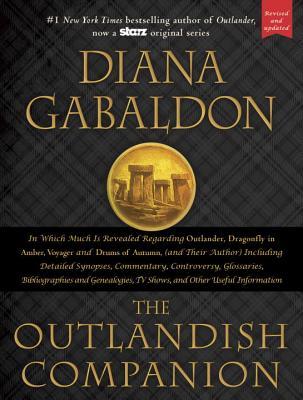
Revised edition of OCI, 2015

Revised edition of OCI, 2015

Last week, I posted a reading and listening guide for The Outlandish Companion, Volume II — and working my way backward, I’m now doing the same for Volume I of this essential reference book for Outlander fans.

First, a note on editions. The Outlandish Companion was originally published in 1999, providing all sorts of reference information on the first four books in the Outlander series (Outlander, Dragonfly in Amber, Voyager, and Drums of Autumn). This book has been a go-to resource for book fans ever since, who have (pretty much non-stop since 1999) never stopped asking for a volume two.

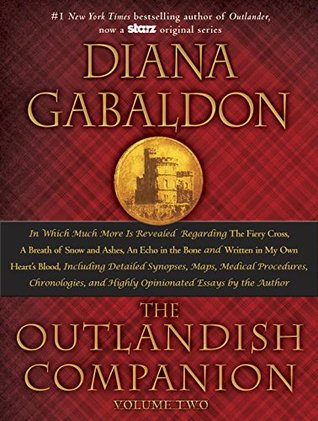
In 2015, fans finally got their wish, and more. Not only was The Outlandish Companion, Volume II published in October 2015, but earlier in the year, Diana Gabaldon also released a newly revised and updated edition of the Companion, Volume I.
OC

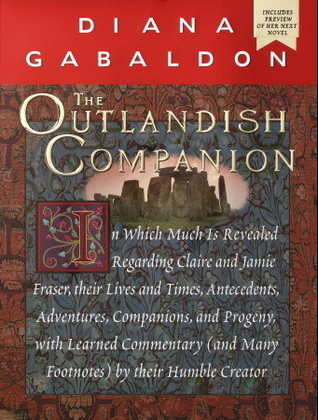
The 1999 edition

The new edition of The Outlandish Companion, Volume I includes most of the original, plus some additional essays on writing and being a writer, as well as a section on the Starz TV series. Although I already owned a copy of the original edition, I simply had to treat myself to the revised edition as well… and then immediately put it on my shelf once it arrived, figuring I’d page through it eventually.

But now, having listened to the OCII audiobook, I thought it would be only fair to give the OCI audiobook a listen as well. And, as a public service for anyone who’s interested, I’m here to share with you a guide to what’s inside the OCI revised edition, plus what’s on the audiobook and what’s not.

As I mentioned in my OCII review: What you get in the audiobook, which you don’t get in the hard copy, is the voice of Herself, our beloved author Diana Gabaldon. I actually can’t stress this enough: Most of the audiobook is narrated by Diana, and I’ll explain a bit further on why this really matters… and really, why this alone is worth the price of the audiobook, even if you already own the physical book.

[Note: Except where indicated, all sections of OCI are read by Diana Gabaldon on the audiobook.]

Without further ado, what follows is an overview of what’s in the book, what I especially enjoyed, and a few tips and comments for anyone thinking about listening to the audiobook, either instead of or in addition to getting a copy of the physical book.


What’s inside:

Prologue:

Well, it was all an accident, is what it was. I wasn’t trying to be published; I wasn’t even going to show it to anyone. I just wanted to write a book — any kind of book.

And with this opening, we’re off! Diana takes us through her background, explaining how Outlander was just supposed to be what she was writing “for practice” to learn how to write a novel, and how it grew from there. It’s funny and personal and a must-read, particularly if you haven’t yet had the pleasure of hearing Diana tell her own writing story.

Part One: Synopses:

This is a major chunk of the book, and well worth the investment for true fans. The synopses included — Outlander, Dragonfly in Amber, Voyager, and Drums of Autumn  — are lengthy and incredibly detailed. The books’ plots are thoroughly summarized, start to finish, with plenty of passages directly from the original texts.

Lengths of synopses (hardcover edition):

Outlander: 10 pages
Dragonfly in Amber: 30 pages
Voyager: 34 pages
Drums of Autumn: 42 pages

Reading tip: If you find yourself picking up the series after a break and need a refresher on what’s already happened, these synopses are detailed enough to give you everything you need to keep going, if you just can’t spare the time for a complete re-read of the books themselves.

Listening note: On the audiobook, the synopses are read by the incomparable Davina Porter, who narrates all of the Outlander series audiobooks. Just listening to her read the synopses and the quoted passages is a total treat.

Part Two: Characters

This section starts with a lengthy essay entitled “Where Characters Come From: Mushrooms, Onions, and Hard Nuts”. Diana explains her approach to creating characters, how they talk to her, and where their names come from, as well as how she incorporates historical characters, and even which characters in her books have connections to people in her life.

The second section of Part Two is a Cast of Characters, which is an alphabetical index of all characters in the first four books, with a brief explanation for each, a notation of which book they appear in, and a marker for any who are historical figures. Beyond that, there is a list of various minor characters, named or not, who in general are part of a group but don’t particularly have roles of their own, including Dougal’s men, Monks at the Abbey of Ste. Anne de Beaupré, Lallybroch tenants, and more.

Additional sections of Part Two are:

  • “I Get Letters”  – in which Diana describes some of the various and sundry gifts and items she receives from readers. This part includes a rather lengthy section on astrology, including astrological charts for Jamie and Claire, sent to Diana by a reader named Kathy Pigou. The full charts and explanations are included here, along with diagrams and a basic introduction to astrological methodology.
  • “Magic, Medicine, and White Ladies” – an overview of women’s roles as healers, the concept of white women, Claire’s medical background, and why WWII makes sense as a starting point for Claire’s medical experience.

Listening note: The essays in this part are included in full on the audiobook. The Cast of Characters is not included, being more or less a dictionary, which would make is not very useful to listen to. The astrology-related pieces are narrated by a woman whose name I didn’t catch — not Davina Porter, not Diana Gabaldon. As I have no interest in astrology, I ended up fast-forwarding this piece once I realized how long it was going to be.

Part Three: Family Trees

Includes background, family trees, and coats of arms for the Beauchamp, Randall, Fraser, and MacKenzie families.

“A Genealogical Note” is a section concerning the genealogy of Roger MacKenzie Wakefield, in which Diana breaks down the detailed explanation of just where Roger came from and addresses certain points that always seem to confuse readers. Includes Roger’s family tree.

Listening note: The section about Roger is on the audiobook. The rest of this part is not.

Part Four: Comprehensive Glossary and Pronunciation Guide

For those with an interest in linguistics, you’ll love this part. After a brief introduction in which Diana addresses the difficulty of including so many languages (especially languages she herself doesn’t speak!) in her books, she includes some very helpful reference pieces, including:

  • A Very Brief Guide To Gaelic Grammar by Iain MacKinnon Taylor — this includes the Gaidhlic alphabet, a pronunciation guide, grammar overview, and spelling notes.
  • Comprehensive Glossary of Foreign Terms (including British slang) — a mish-mosh of all sorts of phrases and words from the books, from Scots, Gaelic, English, Latin, French, Spanish, and more — even Kahnyen’kehaka (Mohawk).

Listening note: Unfortunately, not on the audiobook at all. While no one would want to hear a list of words and definitions, it might have been fun to get at least a bit of the Scottish pronunciations of some of the phrases used most frequently in the Outlander series.

Part Five: Research

This section is sure to be fascinating to readers, and I can’t help imagining that writers and aspiring writers will find it incredibly helpful and inspiring as well. Diana talks about methods of doing research for historical novels and what works for her, and then talks about resources and basic skills, such as using a library, working with a card catalog, reading for information, and locating sources.

As I mentioned for a similar section in OCII, Diana is incredibly generous with her insights and personal revelations here. She goes into quite a lot of detail on how she organizes her research, what she finds most effective and why, and offers such practical advice that if I were even thinking of writing historical fiction (I’m not), I’d both want to follow in her footsteps and to give her a hug, for making it all sound so doable.

She’s also just funny — for example, one section of this part is called “I’ve Done My Research, and Now You’re Going to Pay”, in which she cautions against falling into the trap of cramming in so much detail that the story itself gets lost.

Don’t forget that the purpose of research is to support the story; not the other way around.

A further section of Part Five is entitled “Botanical Medicine: Don’t Try This At Home” Here, Diana explains some of the plants and natural substances which are used in the Outlander books as medicines, how she researched these and some of the sources used, and the properties of certain herbs and their healing effects. She also includes a word of caution:

Well… I really hope no one would use antiquated medical treatments described in a time-travel novel (I mean, it does say FICTION on the spine, after all …. ) but what with the increasing interest in herbal therapies and alternative medicine in general, I do get frequent questions regarding my sources, or requests for recommendations. People want to know how I know all this stuff — am I an herbal practitioner myself? Am I a professional botanist?

Definitely not.

This section concludes with “Penicillin Online: A Writer’s Thread”, in which Diana shares a conversation generated by her query to one of her online communities about a passage concerning penicillin which she was writing for The Fiery Cross (book #5). It’s a lengthy conversation (20 pages), but very interesting for the back-and-forth sharing of information, insights, and ideas.

Listening note: All of Part Five is included on the audiobook with the exception of the final section (“Penicillin Online”).

Part Six: Where Titles Come From (And Other Matters of General Interest)

Lots of terrific information on the crafting and shaping of the novels, with sections including:

  • Outlander vs. Cross Stitch — Discussing the main differences between the US and UK versions of the first book in the series, and some notes on foreign editions as well.
  • The Cannibal’s Art: Writing and Real Life — Diana talks about her writing life, and how she balances family, writing, and having a life. Amazing.
  • Book Touring for Beginners — Did you ever want to know what it’s like to experience a book tour. This very funny section gives us a pretty good idea.
  • A side bar section entitled “A Brief Disquisition on the Existence of Butt Cooties” — basically, Diana’s thoughts on the state of public restrooms, based on her extensive exposure to such as part of her book touring travels.
  • The Shape of Things — Quite a lovely piece on how thoughts turn into words on a page. I’ve heard a version of this before as part of a talk by Diana that I attended, but it’s really so amazing to read. She also explains how each of her books has a “shape”, and how that affects the overall tone and structure of the book.
  • The Gabaldon Theory of Time Travel — Exactly what it sounds like, and a must-read for devoted series readers, all of whom usually have theories of their own as to just how it all works.

Listening note: All of Part Six is included on the audiobook.

Part Seven: The View From Lallybroch: Objects of Vertue, Objects of Use

This section consists of passages from the various books that describe certain things (Claire’s pearls, her wedding bands, Jamie’s sword) and places (the stone circle, Lallybroch), interspersed with drawing and photos related to the objects described. It’s lovely to read and hear the descriptive passages and to admire how Diana paints a picture of these items and locations through her use of words.

Listening note: All of the text in included in the audiobook, but without the hardcopy book on hand, I did feel that I was missing something in this section. It definitely adds a great deal to have the physical book as a reference in order to see the illustrations that accompany the various quoted sections.

Part Eight: Frequently Asked Questions

Fascinating, of course. This section includes all sorts of questions related to the books, the characters, Diana’s personal experiences, and more, as well as some more esoteric questions such as why Jamie can’t blink and what ever happened to Claire’s pearls in Dragonfly in Amber. The answers are all thoughtful, amusing, and truly informative… and often quite tongue-in-cheek.

Listening note: This entire section is included on the audiobook.

Part Nine: Controversy

Diana discusses some of the topics about which she gets the most communication from readers, and shares with us some of her answers as well. Main topics include sex scenes, language (profanity/blasphemy/vulgarity), homosexuality, abortion, wife-beating (specific to the famous/infamous “strapping” scene in book 1), and other issues. The answers are all quite thought-provoking, and often funny too. (She’s a very funny woman, that Diana Gabaldon).

Also included in this section is the essay “Jamie and the Rule of Three”, which is also available via Diana’s website (or was, anyway, last time I looked for it). It’s a marvelous piece that explains why Outlander was constructed as it was, and why the terrible things that happen to Jamie had to happen for the sake of the story.

Listening note: This entire section is included on the audiobook.

Part Ten: From Book to Screen

A very interesting section on the making on the TV show, which explains how books in general get made (or not) into movies or other types of productions, and then goes into the background of the Starz TV series, from concept to production, including notes on the cast, the filming process, and Diana’s role as a consultant. Also included here are two blog entries she’d written on “My Brief Career As a TV Actor”, very funny pieces describing her days on-set filming a cameo appearance for one of the episodes.

Listening note: This entire section is included on the audiobook — and this is where the audiobook ends.

What’s left in the book? Well, the hard copy in my hands continues for another 125+ pages beyond this point! The remainder of the book is:

Annotated Bibliography

A lengthy listing of Diana’s sources and all sorts of reading material related to everything under the sun in her books.

Appendix I: Errata

As Diana says in the introductory paragraph to this section: “Well, look — nobody’s perfect.” This section includes all of the corrections to dates, language, and other minor facts (such as whether certain fruits would really be in season at the time they’re eaten in the books).

I won’t go into the contents of all of the rest of the appendices, as there are a whole bunch more — but they are:

Appendix II: Gaelic (Gaidhlig) Resources: A Writer’s Short Guide to Scottish Speech Patterns

Appendix III: Poems and Quotations

Appendix IV: Roots: A Brief Primer on Genealogical Research

Appendix V: A Brief Discography of Celtic Music

Appendix VI: Foreign Editions, Audiotapes, and Strange, Strange Covers

Appendix VII: The Methadone List (Diana’s recommended reading list — what she likes to read for fun and feels good about recommending!)

End papers: Several pages of photos from the Starz TV series.


What else do you need to know?

My wrap-up points and overall tips regarding the Outlandish Companion, Volume I are exactly the same as for OCII, so I’ll just re-post the main bits of my conclusion from that review:

Thanks to the audiobook, I spent much more time on [this book] than I might have if I’d only stuck to the physical copy. The hardcover edition is a beautiful physical specimen, but I don’t think it would have occurred to me to treat it as something to read from start to finish. By listening to the audiobook, I had the opportunity to slow down, pay attention, and really absorb all of the wonderful information contained in the book.

Highlights: What ended up really making this an extraordinary listen for me was the the narration by Diana Gabaldon herself. And I’ll tell you, I was skeptical at the start. Diana is not a professional audiobook narrator. For one thing, she is FAST. (Big tip: Use .75 speed if you can to listen to Diana’s sections — listening at regular speed is the equivalent of listening to any other audiobook at 1.5x!). It was an adjustment to get used to her speed and speech patterns, but once I got into the groove, I loved it! She shares so much of herself here, and hearing her deliver the content makes it an especially personal experience. Plus, in case you’ve never heard Diana Gabaldon give a talk before — she’s really funny. Listening to Diana narrate her own book lets us hear her emphases and inflections, and it becomes clear just what she finds funny about her content and where she’s being ironic or tongue-in-cheek.

Key advice:

The audiobook is a brilliant way to get a rich experience from [this book] — but it’s incomplete without the physical book at hand. My strongest advice for fans: Get them both.

If you’re a true fan of the Outlander series, then both volumes of the Outlandish Companion are essential books to have on  your shelves. I know I’ll be using mine, over and over again, every time a pesky question arises — such as “where have I seen that character before” or “how the heck is that even pronounced?” These books are about the same price as a standard hardcover novel, and I consider them really valuable investments for Outlander fans.

Interested in The Outlandish Companion, Volume II? See my reading and listening guide, here.

_________________________________________

The details:

Title: The Outlandish Companion, Volume I (revised edition)
Author: Diana Gabaldon
Publisher: Delacorte Press
Publication date: March 31, 2015
Printed book length: 577 pages
Audiobook length: 13 hours, 48 minutes
Genre: Reference
Source: Purchased
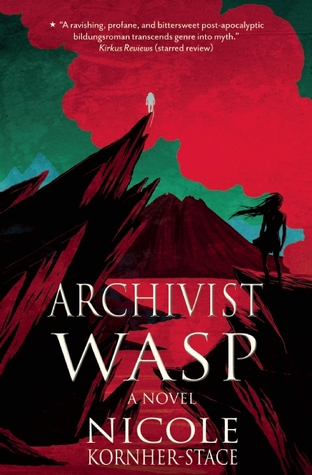
Archivist Wasp: My review… and some other opinions too.

Archivist WaspSynopsis:

(via Goodreads)

Wasp’s job is simple. Hunt ghosts. And every year she has to fight to remain Archivist. Desperate and alone, she strikes a bargain with the ghost of a supersoldier. She will go with him on his underworld hunt for the long-long ghost of his partner and in exchange she will find out more about his pre-apocalyptic world than any Archivist before her. And there is much to know. After all, Archivists are marked from birth to do the holy work of a goddess. They’re chosen. They’re special. Or so they’ve been told for four hundred years.

Archivist Wasp fears she is not the chosen one, that she won’t survive the trip to the underworld, that the brutal life she has escaped might be better than where she is going. There is only one way to find out.

My Thoughts:

I’m at a bit of a loss when it comes to summing up Archivist Wasp. My feelings are really contradictory. There’s quite a bit here that’s interesting and different, but I’m not sure that the plot as a whole holds together convincingly.

The opening chapters place the setting firmly in a primitive type of society, in a poor country village full of superstition and fear. The Archivist is the Chosen One (into every generation…), but each year, she fights upstarts (girls in training to be Archivist — for the Buffy fans out there, think “potentials”) in order to retain her position. The fight is to the death, bloody and terrible, watched and betted on by the townsfolk, all under the watchful eye of the Catchkeep-priest, who controls the upstarts and the Archivist. Catchkeep is the main god of this society, but there are others, such as Carrion Boy and Ember Girl. It’s startling, though, to see certain seemingly anachronistic elements intrude. Weaponry includes not just swords, but guns.

Guns? What’s going on here?

As becomes clear further in the story, this primitive society isn’t from an earlier era, but a later one. Reference is made to the Before, apparently before whatever cataclysmic event hundreds of years earlier erased the modern world as we know it. The world of Archivist Wasp is bleak and dismal — and plagued by a non-stop stream of ghosts. The job of the Archivist, when not fighting for her life, is to capture ghosts in jars, observe them and take field notes on their behavior, and then release them to Catchkeep, severing their links to the world of the living. The ghosts are silvery, small beings, yet some take on a more physical form and wreak havoc. How do you catch a ghost? With blood and salt. Them ghosties love salt, apparently — so much so that villagers are forbidden to keep any in their homes, for fear of attracting unwanted attention.

The action of Archivist Wasp kicks into high gear when Wasp captures a ghost that displays unusual strength, to the point that it can actually communicate with her. It’s the ghost of a soldier, and he wants Wasp’s help in finding the ghost of his former partner. To achieve this, they must travel into the underworld, through hidden portals and against great danger, with Wasp using her special harvesting knife to draw out hidden memories and find out the truth behind what happened to the soldier and his partner.

There’s a lot that’s interesting about this book, but my main stumbling blocks are these:

1 – Uneven pacing. Some chapters were impossible to look away from… but there are parts where the characters seem to just be slogging forward, one journey after another, with not much actually happening.

2 – Confusing world-building. We never do find out what happened to transform the world from what it was to what it is. We can make assumptions, but more details would have been helpful. Likewise, the underworld is a murky dreamscape with rules and properties that seem to change from moment to moment. It was unclear what to expect or why, and this left me with a sense that the stakes were artificial and potentially not really dangerous after all.

3 – Wasp’s community and her motivations. Why do Wasp and the other girls just accept their lot in life? Why does it never occur to them to challenge the system?

4 – The purpose of the Archivist. The actual goal is murky. Are they trying to learn from the ghosts? Banish the ghosts? And what does killing each other achieve? If they’re trying to learn as much as possible, why have only one?

5 – The ghosts. Where do they come from? Why are there so many? What would happen if the Archivist didn’t capture them and just left them to carry on? Why can ghosts wield swords and other weapons, carry physical objects, and inflict harm on living humans?

6 – The religion. I’d like to know more about how the local pantheon came to be and how the belief system was shaped. (I suppose this ties in with #2, the world-building.)

So many unanswered questions.

On the positive side, I liked the story of the super-soldier and his partner, and the tragedy that’s revealed as Wasp uncovers more and more of the ghost’s memories. That story alone would make a great book, and those sections of Archivist Wasp that dealt with this part of the plot are the most compelling.

I also enjoyed the parallels to the myth of Orpheus and Eurydice, although the similarities only go so far. The goal here is to free a ghost who can’t move on, not to return her to the land of the living, but still, the journey to the underworld is full of obstacles and dangers that give the quest a mythic, larger-than-life overtone.

Finally, toward the end of the book, we get more of an explanation about the origin of the Archivist system and the power of the Catchkeep-priest, and it’s a powerful origin story — but for me, it felt like it all came too late. By the time we get some answers, I felt mostly worn out by the story and the inconsistencies, and didn’t have the investment necessary to really care all that much about the outcome.

But Wait! Here are other other opinions:

Rather than just close with what I thought of Archivist Wasp, I thought I’d share some other viewpoints. I read this book because it was my book group’s pick for January, and several members of the group really loved the book. I want to share some of their comments, to give a slightly different take on the book and showcase a little more of the positive. (Comments below are in different colors to denote different commenters; quoted from our book group discussion)

I loved this book. There were some scenes which made me pause. One of my favorite scenes, and there are a number of them, is [spoiler deleted]. It’s so revealing of our own mindsets and how we need to open our minds, perhaps we need to cut the threads that bind us to old, stagnant ideas about our world.

I remember admiring Wasp for her compassion and willingness to help others despite her own awful circumstances. And, for figuring out how to help the other girls in her same situation (or I suppose the same as her past situation before she became the archivist), as well as the townspeople, all of whom were being taken advantage of by the Catchkeep Priest (who was just awful!).

The message of growing up and learning who you are and what you can achieve is important for teen girls to hear.

Wasp’s innate sensibilities and caring for her “charges” despite her own upbringing, or maybe because of it, make her a likable and sympathetic protagonist. She keeps going, trying to do the right thing despite personal consequences and little or no reward. That gives this story great heart; it’s also certainly very creative.

In the end, there did seem to be a message about challenging handed down beliefs and finding your own truth.

And a comment from the author herself:

If Wasp is remembered as a YA heroine, I’d like it to be because she’s a 16-year-old girl protagonist that managed to drive her own story without it hinging on a romance or a love triangle or a prophecy or any of these things that are perceived to be necessary to any and all YA plotlines, howsoever clumsily they have to be shoehorned in because they aren’t necessary. There are teenage girls out there who are a lot like Wasp. I was one. I was friends with others. I want her to do her small part to provide a little representation for them.

Wrapping it all up:

One thing I’ve discovered from my book group discussion (for which the author generously participated in a Q&A) is that Archivist Wasp is in fact the first in a trilogy. I think I might have felt slightly differently about some of the unanswered questions had I known that from the start, as then I might have expected some threads to be left dangling until the next books.

My own reading experience and opinion of the book hasn’t changed, but I do appreciate what I’ve gleaned from the Q&A and my book group friends’ opinions, and can see why this book might strongly appeal to teen readers and to adults who enjoy YA fiction.

_________________________________________

The details:

Title: Archivist Wasp
Author: Nicole Kornher-Stace
Publisher: Big Mouth House
Publication date: April 13, 2015
Length: 268 pages
Genre: Young adult fantasy
Source: Purchased

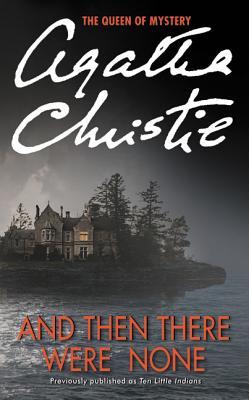
Agatha Christie, where have you been all my life?

I’ve finally read my first Agatha Christie book! What on earth was I waiting for?

and thenSynopsis:

(via Goodreads)

“Ten . . .”
Ten strangers are lured to an isolated island mansion off the Devon coast by a mysterious “U.N. Owen.”

“Nine . . .”
At dinner a recorded message accuses each of them in turn of having a guilty secret, and by the end of the night one of the guests is dead.

“Eight . . .”
Stranded by a violent storm, and haunted by a nursery rhyme counting down one by one . . . one by one they begin to die.

“Seven . . .”
Who among them is the killer and will any of them survive?

First, there were ten – a curious assortment of strangers summoned as weekend guests to a private island off the coast of Devon. Their host, an eccentric millionaire unknown to all of them, is nowhere to be found. All that the guests have in common is a wicked past they’re unwilling to reveal – and a secret that will seal their fate. For each has been marked for murder. One by one they fall prey. Before the weekend is out, there will be none. And only the dead are above suspicion.


My Thoughts:

How do I even begin to review a book like And Then There Were None? It’s a classic mystery, considered one of Christie’s best, for a reason. Having never read her books before, I was excited to see whether the build-up would pay off. Trust me, it did.

I was totally charmed by the clever plotting, the tricky twists, the seeds of doubt that accompanied every apparent clue. The drama of this book is so carefully constructed that even though I looked closely for the tip-off to the solution, I never found it.

The introduction in my edition is an excerpt from Agatha Christie’s autobiography, explaining the challenge of pulling off what she accomplishes in this book:

I wrote the book after a tremendous amount of planning, and I was pleased with what I had made of it. It was clear, straightforward, baffling, and yet had an epilogue in order to explain it. It was well received and reviewed, but the person who was really pleased with it was myself, for I knew better than any critic how difficult it had been.

I really enjoyed And Then There Were None, and I’m glad I chose it as an introduction to Agatha Christie. It’s a very quick read, almost begging to be finished in a day’s worth of binge-reading.

I’m looking forward to reading more of Christie’s books, and I’d love recommendations on any favorites!

_________________________________________

The details:

Title: And Then There Were None
Author: Agatha Christie
Publisher: HarperCollins
Publication date: 1939
Length: 300 pages
Genre: Mystery
Source: Purchased

Book Review: Lock In by John Scalzi

lock inSynopsis:

(via Goodreads)

Not too long from today, a new, highly contagious virus makes its way across the globe. Most who get sick experience nothing worse than flu, fever and headaches. But for the unlucky one percent – and nearly five million souls in the United States alone – the disease causes “Lock In”: Victims fully awake and aware, but unable to move or respond to stimulus. The disease affects young, old, rich, poor, people of every color and creed. The world changes to meet the challenge.

A quarter of a century later, in a world shaped by what’s now known as “Haden’s syndrome,” rookie FBI agent Chris Shane is paired with veteran agent Leslie Vann. The two of them are assigned what appears to be a Haden-related murder at the Watergate Hotel, with a suspect who is an “integrator” – someone who can let the locked in borrow their bodies for a time. If the Integrator was carrying a Haden client, then naming the suspect for the murder becomes that much more complicated.

But “complicated” doesn’t begin to describe it. As Shane and Vann began to unravel the threads of the murder, it becomes clear that the real mystery – and the real crime – is bigger than anyone could have imagined. The world of the locked in is changing, and with the change comes opportunities that the ambitious will seize at any cost. The investigation that began as a murder case takes Shane and Vann from the halls of corporate power to the virtual spaces of the locked in, and to the very heart of an emerging, surprising new human culture. It’s nothing you could have expected.


My Thoughts:

This book is crazy, and I mean that in the best way possible. I absolutely love the world created here, some 25 years or so into the future, where Hadens are now a part of society and the definition of being a person has changed dramatically.

Hadens are those who are in the long-term, seemingly irreversible “lock in” phase of Haden’s syndrome. Their bodies are alive and their minds are fully functional, but they have lost the ability to control or manage their voluntary systems. An entire industry has sprung up around the vast number of Hadens, resulting in the creation of neural networks and “threeps”. Hadens are implanted with a neural network in their brains, which gives them the ability to control a robotic form (known as a “threep”, named for C3PO) that moves in the “normal” world as an avatar of sorts. The body is still the actual person, but the threep is also a manifestation of the person, and conducts business and goes about life just the same as anyone else.

Battles have sprung up over Haden rights, government funding of Haden resources, and the issue of Haden separatism and culture. And what makes this book amazing and so fascinating is that this is all background to the actual plot — which revolves around a dead body, a murder investigation, and a newbie FBI agent, who just happens to be one of the most famous Hadens, thanks to a celebrity father and his early years as a Haden poster-child.

UnlockedOn top of the terrific plot and world-building, the writing is a treat. John Scalzi provides complex technical and medical details, but makes it comprehensible and accessible through the characters’ dialogue. The exposition feels natural, not like a lecture. On top of that, the characters are fully fleshed out, have distinct personalities, and some can be awfully funny, especially main character Chris Shane.

My reading tip is that before reading Lock In, it’s well worth your time to check out the novella that John Scalzi released just prior to the publication of Lock In. It’s called Unlocked: An Oral History of Haden’s Syndrome, and provides background on the onset, diagnosis, treatment, and political ramification of the disease. It’s utterly fascinating, and adds a lot to the understanding of Lock In, letting us jump right into the events of the novel without needing a whole lot of time or pages devoted to backstory.

Final word: Lock In is a bizarre and original science fiction/crime thriller mash-up, and I just loved it. My conclusion is that I haven’t read nearly enough John Scalzi yet in my life, and I need to fix that ASAP.

Oh, and a final, final world: While this book appears to be a stand-alone and I have no reason to think that it’s not, I could easily see an ongoing series revolving around Agents Shane and Vann and their crime-fighting adventures in a post-Haden world. John Scalzi, pretty please?

_________________________________________

The details:

Title: Lock In
Author: John Scalzi
Publisher: Tor Books
Publication date: August 26, 2014
Length: 336 pages
Genre: Science fiction
Source: Purchased

Twilight Reimagined: I said I wouldn’t, but then I did.

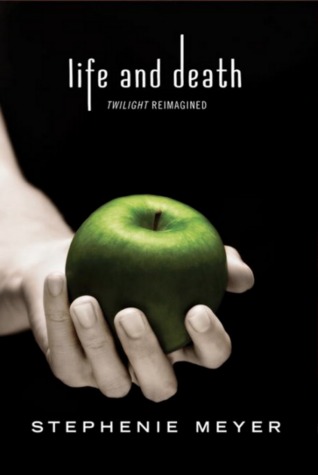
Life and DeathOkay, I’m not exactly eating my words… but I kind of am.

When the news came out last fall that Stephenie Meyer was publishing a gender-swapped version of Twilight, I scoffed. And sneered a bit. And declared that it was just a greedy money grab. And laughed at the idea of the author doing a search-and-replace in her word processor (let’s see, find “Bella”, replace with “Beau”… done!).

I swore that the evil corporate bloodsuckers (ugh, sorry) would not get my money this way!

They didn’t. No money changed hands. But I did read Life and Death after all.

Can you blame me? It was right there on the library shelf, practically daring me to take it home. And I’ll admit it — I was curious.

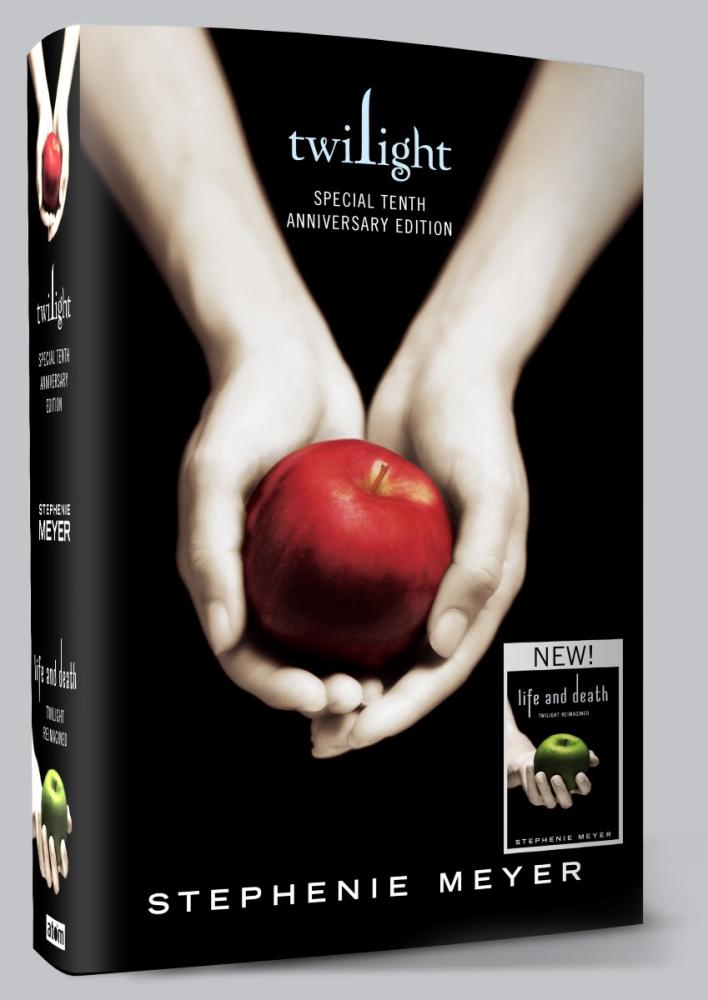
So, first things first. It’s not as evil a scheme as I expected it to be. Twilight might seem like a thing of the past by now — remember the hysteria? The crazed midnight release parties? The insatiable hunger for photos of RobPatz? But it’s actually only been ten years since the release of the first book, and what we have here is a “special tenth anniversary edition” of Twilight, packaged with the reimagined version.

This new anniversary edition is a big, hefty hardcover that’s a flip book. Read from one side, and it’s the original Twilight; read from the other end, and it’s Life and Death. This makes it convenient (-ish) when you get to an interlude that’s familiar but weirdly different, and you want to compare to the original. Insert bookmark, flip upside down, find the Twilight passage… huh. Not so different.twilight-special-tenth-anniversary-edition

Okay, so what’s the deal, and is it worth reading? Your mileage may vary. I think the thing to keep in mind is how you felt when you first read Twilight, before it became the pop culture phenomenon that swallowed up the world. I read the original book not knowing that it was a “thing”, and while I laughed at bits of it, I also couldn’t put the damned book down. It might have been candy, but it was awfully addictive candy.

In Life and Death, the genders of all characters are swapped (other than Charlie and Renee, who remain Charlie and Renee — the author explains why in her introduction, although I think it could have worked with a swap too). Bella is Beau, and Edward is Edythe; and they’re still more or less the same people. Beau is awkward and trips over his own feet a lot. Edythe is (of course) the most perfectly gorgeous person who ever existed, and still drives a shiny silver Volvo.

Little moments are changed. In Port Angeles, rather than Bella being pursued by a group of menacing men on the street, Beau stumbles across a bunch of drug dealers who assume he’s a cop and almost kill him. There’s rather a bit more bro talk among Beau and the guys at school, and we (thankfully) are spared scenes of them trying on tuxes to replace the girls’ dress shopping expedition.

Frankly, the gender swap thing is a tolerably cute gimmick, and it mostly works (although the image of Edythe running through the forest with a gangly Beau clinging to her back made me giggle). I was really only truly irritated at one point, when (in the original), Bella is impatient and needs distraction, so she heads outside to read in the yard with a stack of Jane Austen novels. In Life and Death, Beau brings his favorite Jules Verne… and I got all righteously offended for a good ten minutes. What do you mean, Jules Verne? Males can’t read Jane Austen??? I beg to differ!!!

Beyond that, it’s all mostly fine. If you like the original, you’ll probably enjoy the entertainment of reading this upside-down version of things, although to be honest, I kept forgetting who was supposed to be whom and occasionally forgot to picture Beau as a guy, or had to remind myself that Royal is Rosalie, and that the tracker vampire bad guy at the end is actually female. Whoops. Whatever.

I will say that the most fun aspect (which pretty much makes it worth your time, if you’re at all curious) is that the ending is different. I suppose I should not go into how or why… spoilers, don’t ya know? Suffice it to say that it works out differently, but still goes out with a bang. No loose threads here, so don’t expect any reimagined versions of New Moon, Eclipse, or Breaking Dawn.

And as to all the jokes about a gender swapped Renesmee (which here, I suppose would be something awful like Charnest? Earlie? …ugh…) — well, let’s just say that this ending makes the existence of a super-baby unnecessary.

Summing it all up: If you do feel the need to find out what this Twilight Reimagined business is all about — go ahead! It won’t hurt, I promise. It might even be a little bit fun. As light-weight pop entertainment goes, you could probably do worse.

_________________________________________

The details:

Title: Life and Death: Twilight Reimagined
Author: Stephenie Meyer
Publisher: Little, Brown
Publication date: October 6, 2015
Length: 389 pages
Genre: Young adult
Source: Library

Book Review: The Things We Keep by Sally Hepworth

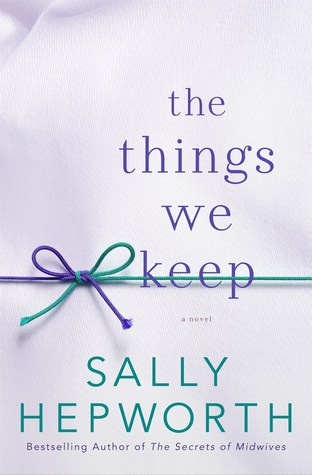
The Things We KeepLove, loss, and connection are the threads that bind together this moving story set in a residential home for seniors.

Anna Forster, age 38, knows that her early-onset Alzheimer’s can only get worse, especially after seeing her mother deteriorate rapidly with the same condition years earlier. With her own agreement, Anna’s twin Jack checks her into Rosalind House, a small private care facility that can keep her safe and provide for her needs. As an added bonus, there is one other younger resident there, so Anna won’t be alone among the elderly.

Luke (or Young Guy, as Anna thinks of him, having lost her ability to master names) is suffering from a different type of early-onset dementia that impacts his speech and language abilities — but despite their challenges, the two quickly connect and form a bond that strengthens day to day.

Meanwhile, in another plot thread, Eve Bennett is newly widowed, a young single mother struggling to provide for her daughter after the scandal of her husband’s involvement in a massive Ponzi scheme costs them everything. Eve had gone to culinary school years earlier before marrying Richard, and she falls back on her cooking skills in order to secure a job as cook and housekeeper at Rosalind House. As Eve tries to rebuild her life, she’s increasingly drawn to Anna and Luke, now forcibly kept apart by the facility’s staff. What has happened to require them to be locked into their rooms at night? And why does Anna, in a rare moment of lucidity, grab Eve’s hand and ask for help?

Told through the points of view of Anna, Eve, and Eve’s young daughter Clementine, the shifting narrative voices unite to paint a picture of this world that can only be partially seen and understood by any one of the three.

Anna’s voice is the most compelling, and by necessity, also the least reliable. Anna is relatively coherent when she first arrives at Rosalind House, but as her disease worsens, her narration develops gaps as well. She loses individual words, cannot tell which door leads to a closet and which to the hallway, and has less and less tolerance for noise or sudden, unexpected stimuli. As she narrates the story of her time at the home, the reader is drawn into the horror and terror of a young woman feeling her mind slip away, wanting desperately to hold onto what matters, but knowing that she’s in a losing war against time.

No one trusts anything I say. If I point out, for example, that the toast is burning or that it’s time for the six o’clock news, people marvel. How about that? Is is time for the six o’clock news. Well done, Anna.

At the beginning, I was reluctant to switch over to the Eve chapters, not quite seeing the point of her storyline or why we needed this plot thread, reminiscent of both the real-life Bernie Madoff scandal and the movie Blue Jasmine. Bit by bit, though, I was drawn into Eve’s story as well, coming to care about her and her daughter and their struggle to move forward and rebuild. Beyond that, it ‘s quickly apparent that Eve is a necessary key to the plot as a whole, and a very clever choice on the part of the author. Because of Anna’s condition, we can’t get a full picture of events from her alone. Eve provides another set of eyes and ears, a caring and sensitive witness to Anna and Luke’s story, and ultimately, a catalyst for helping them hold onto the shreds of happiness they’ve managed to find amidst their own personal tragedies.

The timeline of the plot weaves back and forth between past and present, with Anna’s story beginning with her arrival at Rosalind House, and Eve’s starting fifteen months later. Between the two, we start to learn what happened to Anna and Luke, with Eve’s current interactions with them finally filling in some of the blanks.

The Things We Keep is heartbreaking yet not altogether bleak. Seeing Anna’s decline is painful, and I can only imagine the horror of watching this strong, vibrant young woman slowly lose herself to a disease that can’t be stopped. At the same time, her connection with Luke is lovely and unexpected, and I couldn’t help being moved by this surprising discovery of grace in the middle of loss.

I also appreciated the wider cast of characters. The other residents of Rosalind House form a background of moments of friendship, love, beauty, and sorrow, as we learn more about their lives, their loves, and what they still cherish. As one of the elderly residents explains to Eve:

“When you get to my age [ … ] you don’t waste time with regrets. In the end, you just remember the moments of joy. When all is said and done, those are the things we keep.”

The Things We Keep is a sad story, beautifully told. While the tragedy of Anna’s decline can’t be lessened, there are rays of hope and joy, both as Anna’s story comes to an end and as Eve and her daughter finally arrive at a new beginning.  I highly recommend this book, and look forward to reading the author’s previous novel, The Secrets of Midwives.

_________________________________________

The details:

Title: The Things We Keep
Author: Sally Hepworth
Publisher: St. Martin’s Press
Publication date: January 19, 2016
Length: 352 pages
Genre: Contemporary fiction
Source: Review copy courtesy of the publisher via NetGalley

Save

The Outlandish Companion, Volume II: A Reading & Listening Guide

OCIIThe Outlandish Companion, volume II, is a reference book. Does it surprise you to hear that it was also one of the most enjoyable reading and listening experiences I’ve had in months?

First, some background: As anyone who even occasionally visits my blog surely knows by now, I’m a pretty dedicated fan of Diana Gabaldon’s Outlander series. In 1999, Diana published The Outlandish Companion, a reference guide covering the first four books in the Outlander series (Outlander, Dragonfly in Amber, Voyager, and Drums of Autumn). And pretty much ever since, fans have been clamoring for a second volume to cover the rest of the books.

In March 2015, Diana Gabaldon published a new and revised edition of The Outlandish Companion, volume I, updated to include some additional commentary, especially regarding the Starz TV series. [Blogger note: I’m working a bit backwards here, I know. I’ll post a separate piece about volume I in the next week or so.] And in October of 2015, we finally got The Outlandish Companion, Volume II, and what a treat is is!

OC

The 1999 edition

I bought myself a hardcover edition of OCII as soon as it came out, but hadn’t done much with it beyond opening it at random and flipping through. When I saw that the audiobook had been released, it seemed like the perfect way for me to enjoy the contents of OCII in a laid-back, kind of mellow sort of way.

What you get in the audiobook, which you don’t get in the hard copy, is the voice of Herself, our beloved author Diana Gabaldon. I actually can’t stress this enough: Large portions of the audiobook are narrated by Diana, and I’ll explain a bit further on why this really matters… and really, why this alone is worth the price of the audiobook, even if you already own the physical book.

Revised edition of OCI, 2015

Revised edition of OCI, 2015

An added bonus for those who’ve listened to the audiobooks of the Outlander series and the spin-off Lord John books is the participation of the books’ narrators. Davina Porter — marvelous Davina Porter — narrates all of the Outlander book synopses in OCII, and Jeff Woodman, who does such a fantastic job as the honorable and wryly funny Lord John Grey, narrates the synopses for all of the Lord John pieces.

Without further ado, what follows is an overview of what’s in the book, what I especially enjoyed, and a few tips and comments for anyone thinking about listening to the audiobook, either instead of or in addition to getting a copy of the physical book.


What’s inside:

Introduction

Yes, this matters! Diana’s introduction is as funny and smart as you’d expect, explaining how the revised OCI and the new OCII came about. It’s also a great intro to her style throughout the book, which is liberally sprinkled with footnotes, often humorous and tongue-in-cheek, and sure to include at least a few nuggets of odd but interesting little known facts.

Part One: Chronology

Identifying and explaining the chronology of all the parts in the story — so if you’re wondering what to read when, and just where all those novellas fit in, this will tell you.

Part Two: Synopses:

This is the longest part of the book — in my hardcover edition, the synopses start on page 15 and end on page 245. On the audiobook, we’re talking hours and hours. (Sorry, I can’t be more specific… but if I had to guess, at last 8 – 10 hours out of the whole.)

The synopses for the four Outlander books — The Fiery Cross, A Breath of Snow and Ashes, An Echo in the Bone, and Written in My Own Heart’s Blood  — are lengthy and incredibly detailed. The books’ plots are thoroughly summarized, start to finish, with plenty of passages directly from the original texts.

Lengths of synopses (hardcover edition):

The Fiery Cross: 30 pages
A Breath of Snow and Ashes: 66 pages
An Echo In the Bone: 30 pages
Written In My Own Heart’s Blood: 80 pages

Reading tip: If you’re midway through the series, or perhaps took a break in between volumes, these synopses are so detailed that you could easily read these as prep before moving on to the next novel. Although, in my humble opinion, it’s never a waste of time to do a re-read of the books themselves!

After the four Outlander books, we come to the synopses of the Lord John books and novellas. These are much less detailed, with simple plot overviews, not much in the way of spoilers, and no details on the mysteries or their solutions. This section is useful as a refresher, but doesn’t provide enough information if you’re looking for a full-blown recap.

Part Three: Cast of Characters

As the introductory paragraph states:

This list includes all the characters from the second four novels and from the Lord John books, with brief notes as to which book each character is introduced in, who they are, their role in the story, and whether they’re fictional or real historical persons.

This is simply invaluable. Arranged alphabetically, this 118-page section is a must-have for series readers, providing instant access to the who’s who necessary to keep straight the huge number of people who come and go in the books.

Part Four: Sex and Violence (subtitle: Spanking, Beating, Flogging, and Other Interesting Topics Involving Physical Interactions of a Non-Consensual Sort)

Now here’s where it gets truly interesting! Up to now, the OCII is largely reference material. Finally, in Part Four, we get Diana’s insight into her characters and their actions, and it is absolutely fascinating.  She spends quite a bit of time on some of the more controversial elements in the books — the spanking scene in Outlander, the occurrence of rape in the plot and whether it’s too much, the historical context of rape in the Highlands, Black Jack Randall’s sadism — and for those with an opinion on any of these, or who’ve read or participated in any of the heated debates that seem to crop up among readers, it’s enlightening to hear the author’s take on the issues and understand the thought processes behind her writing of these elements.

Part Five: History and Historical Fiction: Organizing the Past

If I had to pick one section to recommend above all others as a resource for writers, this would be it. Whether or not you read the Outlander books, I think this marvelous section would be inspiring to anyone who ever dreamed of writing their own novel.

Diana is incredibly generous with her insights and personal revelations here. She discusses the challenges and pleasures of historical research, and just what’s involved in writing historical fiction, using documentary evidence to enhance and ground her fiction. Not only that, but she also shares her own organization and tracking methods for her research — everything from how she organizes her bookshelves to her computer files’ naming systems.

If I were a writer (and I’m not), I think I’d be incredibly uplifted by Diana’s no-nonsense approach to writing. You want to write? Then write. Don’t delay because you haven’t finished your research yet, or because you need a dedicated space, or until your kids are out of the house, or any of a thousand other reasons. She repeatedly stresses that she began writing Outlander for practice, just to see if she could. I’m simplifying things quite a bit here, but the bottom line is that this is a section that should be read and shared and appreciated. (Also, see Part Seven)

Part Six: A Comprehensive Scottish Language Glossary and Pronunciation Guide – by Adhamh O Broin

Comprehensive is right! 77 pages worth of Scottish phrases, with a guide to pronunciation, origin, use in the books, and meaning, written by the esteemed Adhamh O Broin, who is the official Gaelic (Gaidhlig) consultant for the Outlander TV series.

Part Seven: Writing, and Other Games You Play By Yourself

Along with Part Five, this is simply indispensable knowledge and advice for writers. Diana talks about her own writing processes, and digs deeply into “Mind Games” — the many ways that people’s minds get in the way of their writing. If you’re even thinking about maybe someday starting to write, read this section. Not kidding.

But wait, there’s more! A fabulous part of this section of the book is “A Coda in Three-Two Time” (Annotated). “A Coda in Three-Two Time” is an amazing section of Written In My Own Heart’s Blood, showcasing the wedding night experiences of three couples. It’s intimate, sexy, personal, and even funny — and here, Diana’s annotates the scene to explain the linguistic and stylistic elements behind the writing. The thought and craft that go into the creation of “Coda” is beautiful to learn about.

Also in Part Seven is a section called “One Word Speaks Volumes”, in which Diana explains that she has one word that for her sums up the theme of each novel. From Outlander (love) to The Fiery Cross (community) to A Breath of Snow and Ashes (loyalty) and beyond, the meaning behind the theme is explained and supported. As with so much in the OCII, it’s fascinating.

Finally, Part Seven includes Recipes — I’m not sure exactly why this fits in the writing section, but here it is. Diana shares some favorites recipes, with explanations about her family’s experiences with the dishes included and detailed instructions on cooking and serving them.

Part Eight: The Invisible Talent

As Diana states in the introduction to this section:

“Talent” is what publicists, producers, and agents call the people who provide the visible face of entertainment — actors, for the most part. But anyone who is even temporarily appearing in his or own persona is “talent” — even me. But what about the people who give so much to the TV show and the world of Outlander, who normally don’t show their faces and talk about what they do?

I asked a few of the many, many talented people who create the world of the TV show (and other aspects of the ever increasing world of Outlander) to give us a brief glimpse of what they do and how they do it.

Included are essays by four behind-the-scenes, exceptionally talented individuals:

Terry Dresbach, the show’s brilliantly gifted costume designer, writes about just what it takes to design and produce costumes for a production of this magnitude, and includes several of her sketches for outfits for Claire and Jamie.

[Listening note: The narrator for this section (whose name I didn’t catch) does a fine job, except she mispronounces a couple of character names — most notably, Jamie’s last name! It’s FRASER, not FRASIER. Seems like something that should have been corrected during the production.]

Bear McCreary, the show’s composer, talks about his love of Scottish music (especially bagpipes!) and the reasons for the types of music we hear throughout the episodes. While some of his information is rather technical, it’s presented in such a way that even a non-musical person like me could understand and appreciate it.

Dr. Claire MacKay: Dr. MacKay is an herbalist with expertise in the historical use of herbal medicine. She provides a really interesting overview of the history of herbal medicine in the  Highlands, as well as explaining nine herbs from Claire’s medicine kit, their traditional and modern uses, and their use in the Outlander books.

Theresa Carle-Sanders, author of the upcoming cookbook Outlander Kitchen, writes about “The Diet and Cookery of Eighteenth-Century Highlanders”, explaining not just what types of foods were eaten, but what this diet meant in terms of health, mobility, and class distinctions.

Part Nine: Maps and Floor Plans

Oh, what a treat! If you’re like me, you’ve spent a lot of mental energy trying to figure out just what’s where, and now we know! Included are floor plans for Lallybroch and the Big House on Fraser’s Ridge, as well as maps of the Lallybroch estate and the layout of the Fraser’s Ridge houses and cabins. Also included are maps of the American Colonies circa 1775, the British Isles, the city of Philadelphia, and the battlefields of Culloden and Saratoga.

Part Ten: The Methadone List

Diana’s fans are familiar with the concept of “The Methadone List”. Outlander is, after all, an addiction for its devoted readers — yet even the most devoted sometimes need to read something else. Diana shares this list in response to the question she’s always asked about what ELSE to read. “The Methadone List” is a list of some of her favorite books and writers, with brief plot descriptions and in some cases, excerpts from the books themselves.

Part Eleven: Bibliography

No explanation needed, right?

End papers: Several pages of photos conclude the OCII, include pictures of Castle Leod (seat of Clan MacKenzie) and a few behind-the-scenes photos from the TV production. The front and back inside covers are a detailed family tree (which you can download here as a PDF).

Listening tips:

Thanks to the audiobook, I spent much more time on the OCII than I might have if I’d only stuck to the physical copy. The hardcover edition is a beautiful physical specimen, but I don’t think it would have occurred to me to treat it as something to read from start to finish. By listening to the audiobook, I had the opportunity to slow down, pay attention, and really absorb all of the wonderful information contained in the book.

Highlights: What ended up really making this an extraordinary listen for me was the the narration by Diana Gabaldon herself. And I’ll tell you, I was skeptical at the start. Diana is not a professional audiobook narrator. For one thing, she is FAST. (Big tip: Use .75 speed if you can to listen to Diana’s sections — listening at regular speed is the equivalent of listening to any other audiobook at 1.5x!). It was an adjustment to get used to her speed and speech patterns, but once I got into the groove, I loved it! She shares so much of herself here, and hearing her deliver the content makes it an especially personal experience. Plus, in case you’ve never heard Diana Gabaldon give a talk before — she’s really funny. Listening to Diana narrate her own book lets us hear her emphases and inflections, and it becomes clear just what she finds funny about her content and where she’s being ironic or tongue-in-cheek.

As I mentioned earlier, getting another opportunity to listen to Davina Porter and Jeff Woodman is delightful. I’ve listened to the audiobooks of the entire Outlander series and Lord John books, and spending time with the narrators again here is like hanging out with old friends.

What’s missing: It may go without saying, but listeners should be aware that there are some elements of a reference book that just can’t be provided via audio. The OCII audiobook does not include the character guide, Scottish language glossary, maps and floor plans, or bibliography. And obviously, no illustrations.

Further tips:

Recipes and Methadone List — you can listen to these sections with the audiobook, but if you actually want to make use of them, whether to try the recipes or to track down books to read, you’ll need to refer to the hard copy.

Key advice:

The audiobook is a brilliant way to get a rich experience from the OCII — but it’s incomplete without the physical book at hand. My strongest advice for fans: Get them both.

If you’re a true fan of the Outlander series, then this is an essential and worthwhile investment! I know I’ll be referring to this book over and over again, whether it’s to look up a random character, check out a battlefield, or get some inspiration for my non-Outlander reading.

Blogger’s note: As I mentioned, I’m going about this backwards! Having listened to the OCII audiobook, I’m now going back and listening to the OCI audiobook as well. This is the longest piece I’ve ever posted, and I’m exhausted!! — but if I have the energy, I’ll write up a reading and listening guide to OCI once I finish.

_________________________________________

The details:

Title: The Outlandish Companion, Volume II
Author: Diana Gabaldon
Publisher: Delacorte Press
Publication date: October 27, 2015
Printed book length: 656 pages
Audiobook length: 21 hours, 17 minutes
Genre: Reference
Source: Purchased

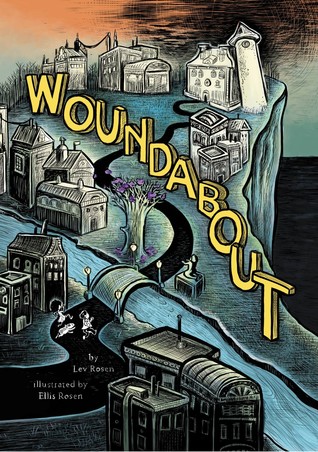
Middle Grade Fiction: Woundabout by Lev Rosen

woundabout


Synopsis:

(via Goodreads)

Welcome to Woundabout, where routine rules and change is feared. But transformation is in the wind….

In the wake of tragedy, siblings Connor and Cordelia and their pet capybara are sent to the precariously perched town of Woundabout to live with their eccentric aunt. Woundabout is a place where the mayor has declared that routine rules above all, and no one is allowed to ask questions–because they should already know the answers.

But Connor and Cordelia can’t help their curiosity when they discover a mysterious crank that fits into certain parts of the town, and by winding the crank, places are transformed into something beautiful. When the townspeople see this transformation, they don’t see beauty–they only see change. And change, the mayor says, is something to fear. With the mayor hot on their trail, can Connor and Cordelia find a way to wind Woundabout back to life?


My Thoughts:

I can’t say enough about this wonderful middle grade novel! Woundabout is the touching — yet not heavy — story of orphaned siblings Connor and Cordelia, who go to live with their aunt Marigold in the very weird town of Woundabout after the death of their parents. Woundabout is a strange, strange place, under the firm control of a dictatorial mayor who hates questions and any deviation from routine. The park is brown and dried up, the river barely flows, and wind constantly buffets the cliffs of the town. Connor and Cordelia, still reeling from their loss, have to adjust to their new lives, and decide to figure out the mysteries of Woundabout, both as diversion and to see if they can somehow find a place for themselves.

The writing is wonderful. There’s humor and a light touch, even on the darkest of subjects. I love the portrayal of Connor and Cordelia (ages 11 and 9), who are tightly bonded, yet each have their own personality and interests. There’s a recurring theme in the writing that takes shared moments and shows how each child sees it:

When the meal was finished, as she had promised, Aunt Marigold took the children into the living room, where they sat on either side of her on a big green sofa and looked at the photos in the album on her lap. It was weird seeing their dad at their age. Connor would have said it was like X-ray vision you couldn’t turn off — seeing through buildings to the beams and metal holding them up; Cordelia would have said it was like uploading your photos to your computer and finding a whole group of pictures you didn’t take. But they both knew it was the same thing.

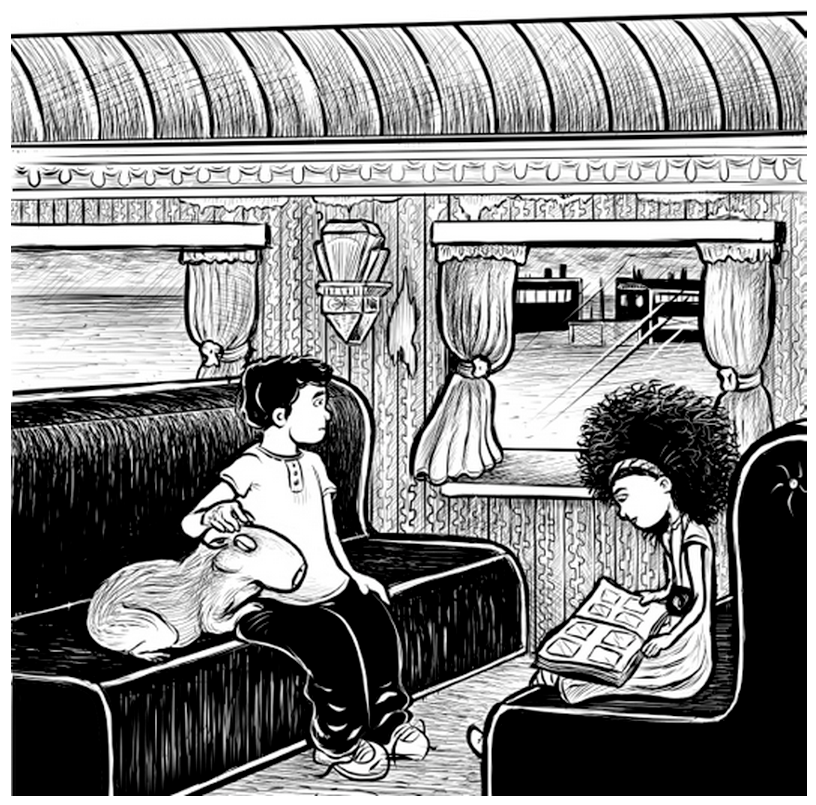
The author and illustrator, who are brothers, are clearly in sync. The marvelous black and white illustrations throughout the book are wonderfully detailed and expressive, and perfectly capture the personalities of the characters and the town.

Woundabout_Siblings_p6

Cordelia and Connor — and Kip, the capybara.

I picked up Woundabout because the author, Lev AC Rosen, has written two excellent books for adults, All Men of Genius and Depth (review), both of which I love and always end up recommending to people. How could I not read his fiction for kids as well?

Woundabout is a terrific read — whether you’re an adult who enjoys reading good children’s books for your own enjoyment, or you’re looking for a book to share with the younger folks in your life, or you want a book to give to a young reader. Woundabout strikes me as a good choice for an adult/child read-aloud, or a great book for an independent reader in the 8 – 12 age range (or so — I hate pinning a label on a book that older and younger kids would enjoy too.)

Check it out… for yourself, or for a kid you’d like to treat to a great read.

_________________________________________

The details:

Title: Woundabout
Author: Lev Rosen
Illustrator: Ellis Rosen
Publisher: Little, Brown Books for Young Readers
Publication date: June 23, 2015
Length: 288 pages
Genre: Middle grade fiction
Source: Library

Book Review: The Readers of Broken Wheel Recommend by Katarina Bivald

Readers of Broken largeI’m guessing that anyone who writes or reads book blogs has a special warm and fuzzy place in their heart for books about bookstores. If that sounds like you, then you’ll need to make room for one more! The Readers of Broken Wheel Recommend fits snugly alongside other “books about books”, and is a lovely example of a book that true booklovers will want to hug.

The town of Broken Wheel, Iowa is… well… broken. Hard times have driven out most businesses and bankrupted family farms. Main Street is full of boarded-up, empty shops, and the only school in town has long since closed. All this changes when Swedish tourist Sara Lindqvist shows up. Sara had been corresponding regularly with town elder Amy Harris for years, meeting first through their shared love of books, but developing a friendship and trust through their letters that culminates in Amy inviting Sara for a visit. Sadly, Sara arrives in Broken Wheel on the day of Amy’s funeral, but the townsfolk seem curiously insistent that she stay, as Amy would have wished.

Sara moves into Amy’s home, and is astounded to find that no one in Broken Wheel will let her pay for anything. At a loss as to how to repay their kindness, Sara realizes two important things: First, that Amy has thousands of books in her house. And second, that the people of Broken Wheel don’t seem to be readers… which shocks bookworm Sara to the core of her book-loving soul. So Sara comes up with an idea of how to repay Broken Wheel. She’ll clean up an abandoned storefront owned by Amy, set up a bookshop with Amy’s books (and using her own money to fill in the gaps), and will spread the joy of books and reading to all the lonely and disappointed souls of Broken Wheel.

Listen, if you’re a booklover, I’ve probably already convinced you that this is a book you need to read! Need more? I’ll keep going.

What did I enjoy about The Readers of Broken Wheel Recommend? Let’s see.

Characters: The town of Broken Wheel is full of odd and quirky characters, and they come splendidly to life in this book. Sara herself is a shy, lonely young woman who really has nothing to go back to Sweden for. She’s not used to being sought out or admired, and being the sudden center of attention is a dramatic eye-opener for her. There’s Grace, descended from a line of Graces, who totes a rifle and sees herself as the town outsider, without admitting to herself just how deeply invested in the town she is. There’s Andy, who runs the only bar in town with his “special friend”, the outrageously attractive Carl. There’s George, a recovering alcoholic who finally starts finding hope again through Sara, her books, and the interconnectedness of the town. Caroline, a starchy, proper churchlady, comes surprisingly alive again once exposed to Sara’s books and the interest of a younger man. There are plenty more, but I’ll let you have the pleasure of discovering them on your own.

Of course, with books, you could have greater confidence that it would all end well. You worked through the disappointments and the complications, always conscious, deep down, that Elizabeth would get her Mr. Darcy in the end. With life, you couldn’t have the same faith. But sooner or later, she reminded herself, surely someone you could imagine was your Mr. Darcy would turn up.

Though that was assuming you were one of the main characters.

Writing: Debut author Katarina Bivald has a light and humorous touch, capturing people’s inner struggles and worries yet conveying even the sadness with a sense of honesty and hope. I love the way she captures the souls of people who love books — for example, this bit from one of Amy’s letters:

I can’t for the life of me explain why I have the bad sense to prefer people [over books]. If you went purely by numbers, then books would win hands down. I’ve loved maybe a handful of people in my entire life, compared with tens or maybe even hundreds of books (and here I’m counting only those books I’ve really loved, the kind that make you happy just to look at them, that make you smile regardless of what else is happening in your life, that you always turn back to like an old friend and can remember exactly where you first “met” them — I’m sure you know just what I’m talking about). But that handful of people you love… they’re surely worth just as much as all of those books.

The bookstore: Sara decides that the standard bookstore signage — fiction, non-fiction, etc. — just won’t cut it if she really wants to reach the people of Broken Wheel. Sara ends up setting up her bookstore with sections such as “Sex, Violence, and Weapons”, “Short But Sweet”, “For Friday Nights and Lazy Sundays”, “Gay Erotica” (more or less on a dare, but with surprising results), and “Warning: Unhappy Endings”.

If more bookshop owners had taken the responsibility to hang warning signs, her life would have been easier. Cigarette packets came with warnings, so why not tragic books? There was wording on bottles of beer warning against drinking and driving, but not a single word about the consequences of reading books without tissues to hand.

Love: In a way, Readers is a love story — the story of how an entire town fell in love with a newcomer in their midst, and how she fell right back in love with all of them. Beyond that, there are romances and relationships, not candy-coated or overly sentimental, but simply people with hopes and dreams, with disappointments and heartaches in their pasts, who find one another — for friendship, companionship, love, or lust — in all sorts of unusual ways that end up feeling just so right.

“If you don’t marry her, she’ll have to leave. And she got me a book!”

Plot: The plot of Readers is fairly simple, but that doesn’t mean it’s not engaging. There are no huge surprises here — outsider arrives, changes the people around her, gives them new lease on life, etc — but it’s still charming to see it all unfold.

The author just gets readers: A major theme of Readers is how books change lives, in big and little ways. People end up with books that they might never have thought of trying, but there’s always something that rubs off, some way that a person ends up changed or enriched or bothered, that leaves a person just slightly different from how they were before reading that book. It’s such fun to see how Sara finds people just the right book to touch them, and then to realize how some of those same books have affected me in ways similar and different.

“Can you smell it? The scent of new books. Unread adventures. Friends you haven’t met yet, hours of magical escapism awaiting you.”

Plus, this priceless sentiment from Sara struck an absolute nerve with me and perfectly sums up why I don’t commit to reading challenges:

If you were someone who spent the vast majority of your time with books, then at the very least you should have read the Nobel Prize winners and the classics, as well as all those books people talked about but had never actually read, as Mark Twain might have put it. She had thrown herself into one ambitious reading project after another, but things had rarely gone according to plan. It was boring to think of books as something you should read just because others had, and besides, she was much too easily distracted. There were far too many books out there to stick to any sort of theme.

I’ve seen this book described as perfect for people who loved The Storied Life of A. J. Fikry (review) and The Guernsey Literary and Potato Peel Pie Society — and considering that I loved both of those and love Readers, I think it’s an apt description!

The Readers of Broken Wheel Recommend is a quiet, sweet, quirky, and thoughtful book about people, community, books, and the way they all come together. Absolutely recommended for anyone who is passionate about books — who enjoys reading about books almost as much as actually reading books.

_________________________________________

The details:

Title: The Readers of Broken Wheel Recommend
Author: Katarina Bivald
Publisher: Sourcebooks Landmark
Publication date: January 19, 2016
Length: 400 pages
Genre: Contemporary fiction
Source: Review copy courtesy of Sourcebooks Landmark

Take A Peek Book Review: Named of the Dragon by Susanna Kearsley

“Take a Peek” book reviews are short and (possibly) sweet, keeping the commentary brief and providing a little peek at what the book’s about and what I thought.

Named of the Dragon

Synopsis:

(via Goodreads)

Although it goes against her workaholic nature, literary agent Lyn Ravenshaw lets herself be whisked off to Wales for the Christmas holidays by her star client, flamboyant children’s author Bridget Cooper. She suspects Bridget has ulterior motives, but the lure of South Wales with its castles and myths is irresistible. Perhaps a change of scene will bring relief from the nightmares that have plagued her since the death of her child.

Lyn immerses herself in the peace and quiet of the charming Welsh village, but she soon meets an eccentric young widow who’s concerned her baby son is in danger—and inexplicably thinks Lyn is the child’s protector.

Lyn’s dreams become more and more disturbing as she forms a surprisingly warm friendship with a reclusive, brooding playwright, and is pulled into an ancient world of Arthurian legend and dangerous prophecies. Before she can escape her nightmares, she must uncover the secret of her dreams, which is somehow inextricably located in a time long ago and far away…

My Thoughts:

I’m a big fan of Susanna Kearsley’s books, but this one was only a so-so read for me. Named of the Dragon is one of the author’s earlier books (originally published 1998), reissued by Sourcebooks in 2015 with a gorgeous cover to match all the rest of her beautiful volumes. The story itself held my attention, but barely. Set in Wales, it’s the story of a literary agent who agrees to spend Christmas with her top client in order to woo another bestselling author, and ends up getting caught up in a local woman’s domestic crisis. There’s a running theme of Welsh legends and Arthurian symbolism… and no Susanna Kearsley novel would be complete without romance, especially with a brooding, seemingly unreachable and mysterious man.

The Arthurian bits and the dream symbolism struck me as overwrought in this book, and mostly unnecessary to the main focus of the plot. These elements add a hint of the gothic and supernatural, yet come across as densely written and somewhat distracting. Lyn herself did not strike me as a believable character — her professional status seemed unrealistic to me, and the whole setting of the Christmas holiday with her client and her clients’ friends felt a bit forced.

Named of the Dragon is not a bad read in the least, but it doesn’t reach the heights of some of the author’s best works, and perhaps that’s why I experienced it as a letdown.

_________________________________________

The details:

Title: Named of the Dragon
Author: Susanna Kearsley
Publisher: Sourcebooks Landmark
Publication date: Reissued October 6, 2015 (originally published 1998)
Length: 336 pages
Genre: Romance
Source: Purchased