Take A Peek Book Review: The Sleepwalker by Chris Bohjalian

“Take a Peek” book reviews are short and (possibly) sweet, keeping the commentary brief and providing a little peek at what the book’s about and what I thought.
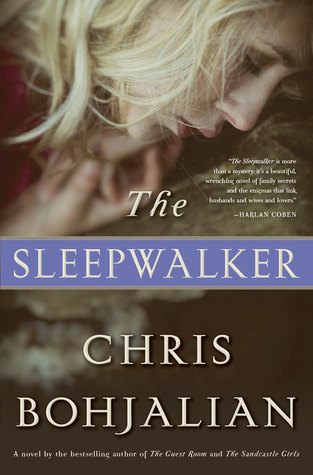
sleepwalker


Synopsis:

(via Goodreads)

When Annalee Ahlberg goes missing, her children fear the worst. Annalee is a sleepwalker whose affliction manifests in ways both bizarre and devastating. Once, she merely destroyed the hydrangeas in front of her Vermont home. More terrifying was the night her older daughter, Lianna, pulled her back from the precipice of the Gale River bridge.

The morning of Annalee’s disappearance, a search party combs the nearby woods. Annalee’s husband, Warren, flies home from a business trip. Lianna is questioned by a young, hazel-eyed detective. And her little sister, Paige, takes to swimming the Gale to look for clues. When the police discover a small swatch of fabric, a nightshirt, ripped and hanging from a tree branch, it seems certain Annalee is dead, but Gavin Rikert, the hazel-eyed detective, continues to call, continues to stop by the Ahlbergs’ Victorian home.

As Lianna peels back the layers of mystery surrounding Annalee’s disappearance, she finds herself drawn to Gavin, but she must ask herself: Why does the detective know so much about her mother? Why did Annalee leave her bed only when her father was away? And if she really died while sleepwalking, where was the body?

Conjuring the strange and mysterious world of parasomnia, a place somewhere between dreaming and wakefulness, The Sleepwalker is a masterful novel from one of our most treasured storytellers.”

My Thoughts:

Chris Bohjalian is one of my favorite authors, and The Sleepwalker doesn’t disappoint. He can always be relied upon to deliver a read that’s compelling, hard to put down, and with the most unusual of premises. Here, it’s a mystery with a little-known and extreme form of sleepwalking at its core. Told through the character Lianna, Annalee’s 21-year-old daughter, The Sleepwalker takes us inside a seemingly ordinary and happy family to reveal the pain and conflicts wrought by Annalee’s affliction.

Lianna is an interesting point-of-view character, still on the cusp of adulthood in some ways, leaving behind her stoner approach to life when her father and sister need her most. She’s both her mother’s daughter and her own person, challenging the facts and the investigation to uncover the truth behind Annalee’s disappearance, even when she realizes that the truth may be much more painful than she’s prepared to handle.

The Sleepwalker is a domestic story with a narrower focus than some of the author’s more recent books. It doesn’t have the weightiness and overwhelming horror of last year’s The Guest Room, with its focus on sex trafficking, or the historical sweep of earlier novels such as The Sandcastle Girls or The Light in the Ruins. Still, this story of a family’s suffering is absorbing and tightly constructed, and while I tried to figure out its riddles, I found myself barking up the completely wrong tree. I won’t say more, but wow — what an ending!

Bohjalian’s books always leave a mark. The emotional impact just doesn’t let up. You really can’t go wrong with any of his books (no, I haven’t read them all, but I’m working on it!), and if you enjoy contemporary mysteries and family dramas, definitely check out The Sleepwalker.

Note: A prequel story, The Premonition, is available as an e-book download. The Premotion recounts events from four years prior to The Sleepwalker. I recommend reading The Premonition first. It doesn’t spoil anything in the main novel and gives a good introduction to the characters and setting. If you prefer not to , though, you’re fine. The Sleepwalker stands perfectly well on its own.

_________________________________________

The details:

Title: The Sleepwalker
Author: Chris Bohjalian
Publisher: Doubleday Books
Publication date: January 10, 2017
Length: 304 pages
Genre: Contemporary fiction
Source: I received a review copy courtesy of the publisher via NetGalley… and then I won a hard copy of the book in a giveaway from Reading With Robin!
Save

Save

Save

Save

Save

Save

Save

Book Review: Martians Abroad by Carrie Vaughn

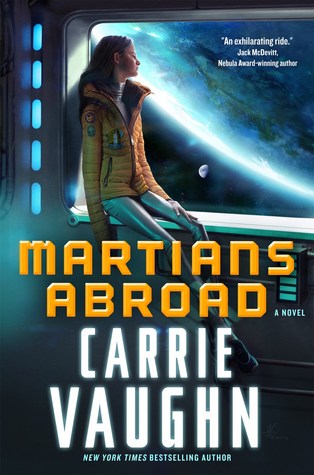
martians-abroad

Polly Newton has one single-minded dream, to be a starship pilot and travel the galaxy. Her mother, the director of the Mars Colony, derails Polly’s plans when she sends Polly and her genius twin brother, Charles, to Galileo Academy on Earth—the one planet Polly has no desire to visit. Ever.

Homesick and cut off from her desired future, Polly cannot seem to fit into the constraints of life on Earth, unlike Charles, who deftly maneuvers around people and sees through their behavior to their true motives. Strange, unexplained, dangerous coincidences centered on their high-profile classmates begin piling up. Charles may be right—there’s more going on than would appear, and the stakes are high. With the help of Charles, Polly is determined to find the truth, no matter the cost.

Martians Abroad is a fun space romp, but somehow feels a bit unfinished — as if this is the introduction to a new series, not (as it’s described on Goodreads) a stand-alone.

There’s also the issue that while this book is billed as science fiction, it reads very much young adult to me. The main characters, Polly and Charles, are 17 years old. Although we don’t learn their exact age until the end of the book, the story focuses on their assignment to a new school, and it’s clear that they’re about college age at the start of the story.

In fact, if you took out the sci-fi trappings, much of the story is straight-up coming of age stuff — being an outsider, figuring out where you belong, dealing with cliques, exploring one’s own path, standing up to authority. The fact that it’s set in a brave new world gives it an extra zing, but the ingredients feel very familiar.

That said, I enjoyed Polly as a character very much. She’s independent, focused, and strong, with a rebellious streak and a core of integrity that sees her through the challenges that spring up in her path.

The best part of Martians Abroad, for me, was getting to see Earth through the eyes of someone experiencing it all for the first time. Polly was born and raised on Mars, and to her, Mars is home. She has no desire to leave it, except to fulfill her dream of becoming a pilot. The brown-red colors and the dust are what’s normal to her. Coming to Earth, Polly has shock after shock. Her body has to adjust to Earth’s gravity, so that she feels sluggish constantly and struggles for breath. Her Earth-born classmates are bulky and strong in comparison to the off-worlders’ elongated builds and their brittle bones. Polly has bouts of agoraphobia when stepping outside for the first time and dealing with the open sky. In Polly’s home world, she’d be dead without enclosures to keep the air in and scrubbed clean. Over and over again, we see Polly confront our world, and it’s fascinating (and entertaining) to see how alien it can all look.

A few small examples: Attending a banquet with fancy decorations, including floral centerpieces and arches:

They were cut — I checked, they didn’t have roots, just stems stuck in water. They’d all be dead in a few days. This room had more flowers than entire greenhouses on Mars, and they were all dying. It seemed a little sad.

Polly’s first encounter with Earth-style breakfast:

“Good. I was going to warn you not to eat the bacon, it will probably make you sick. We don’t have the stomach enzymes to digest it.”

[…]

“What’s bacon?” I said.

“Fried pig muscle.”

And on the universality of sweets:

There was a cake — happily, I wasn’t going to have to get anyone to explain cake to me. We had round, fluffy, mooshy sweet things on Mars, because humanity couldn’t exist without dessert.

As Polly acclimates to her school and the planet, she begins to suspect that something sinister is behind a string of accidents that befall her class, and she puts herself in danger time and again to keep others safe and uncover the truth. The accidents provide the key points of excitement in the novel, and there are moments of great adventure and thrill… but unfortunately, the pacing is uneven, so we get these spots of action in between longer segments on daily life at the academy and Polly’s attempts to find a place for herself.

Heck, there’s even dress shopping in the mix. A makeover! Doesn’t that just reinforce the YA-ness of it all?

I don’t really mean to sound overly negative. This is a fun book, but it was a bit too YA and not enough sci-fi for my taste, and I had the odd experience of never quite having a real feel for what kind of book it was that I was reading.

Overall though, I enjoyed Martians Abroad. I can’t help wondering whether there’s more to come. As I mentioned earlier, although it’s billed as a stand-alone, much of this book feels like a long introduction. We’ve met Polly, her classmates, her school — the question is, now what? While the book works on its own well enough, it seems natural that there should be further adventures.

_________________________________________

The details:

Title: Martians Abroad
Author: Carrie Vaughn
Publisher: Tor Books
Publication date: January 17, 2017
Length: 288 pages
Genre: Science fiction
Source: Review copy courtesy of the publisher via NetGalley

Save

Save

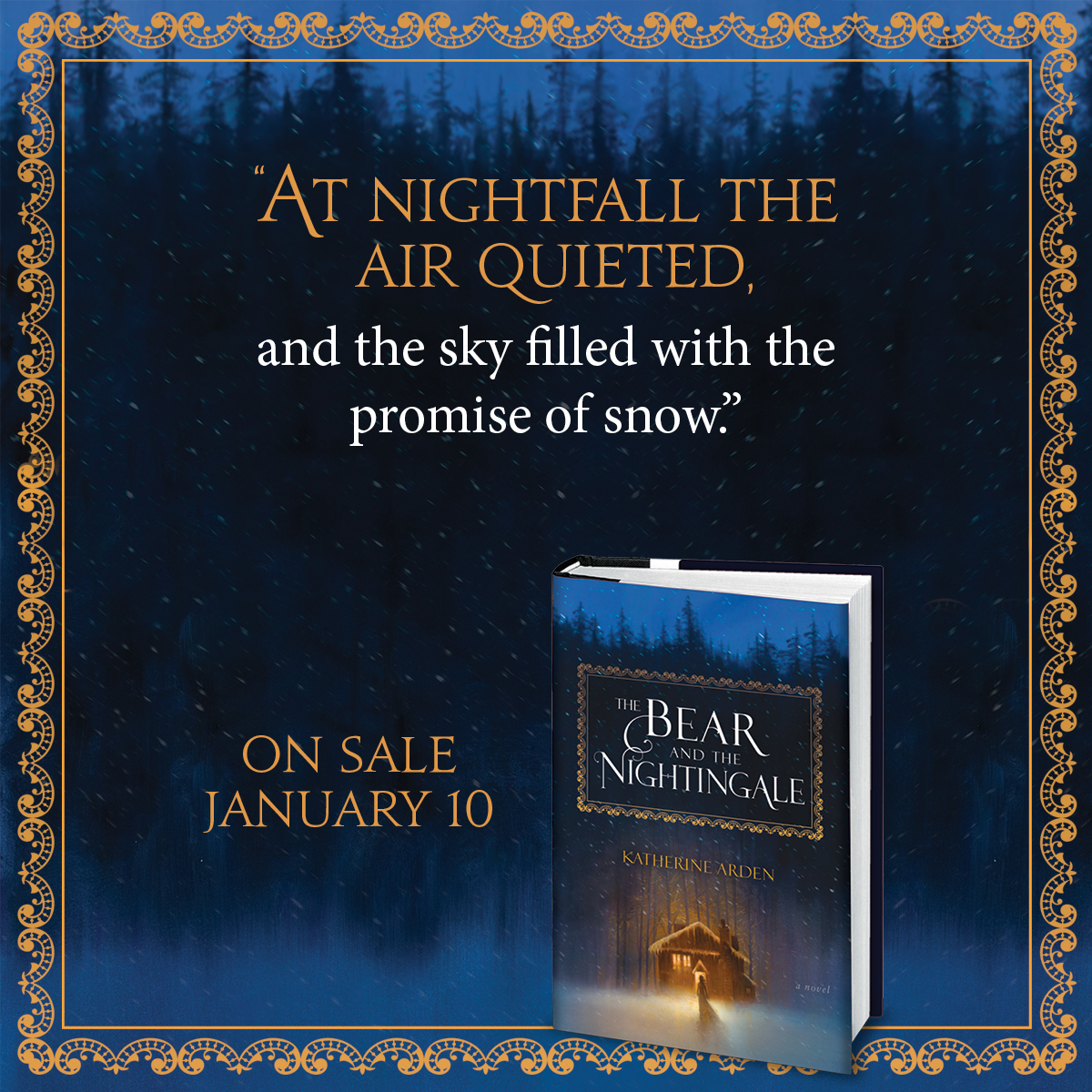
Take A Peek Book Review: The Bear and the Nightingale by Katherine Arden

“Take a Peek” book reviews are short and (possibly) sweet, keeping the commentary brief and providing a little peek at what the book’s about and what I thought.

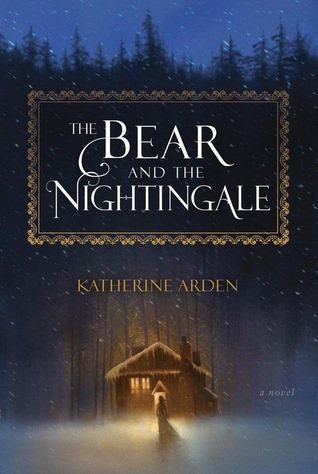
bear-the-nightingale

Synopsis:

(via Goodreads)

At the edge of the Russian wilderness, winter lasts most of the year and the snowdrifts grow taller than houses. But Vasilisa doesn’t mind—she spends the winter nights huddled around the embers of a fire with her beloved siblings, listening to her nurse’s fairy tales. Above all, she loves the chilling story of Frost, the blue-eyed winter demon, who appears in the frigid night to claim unwary souls. Wise Russians fear him, her nurse says, and honor the spirits of house and yard and forest that protect their homes from evil.

After Vasilisa’s mother dies, her father goes to Moscow and brings home a new wife. Fiercely devout, city-bred, Vasilisa’s new stepmother forbids her family from honoring the household spirits. The family acquiesces, but Vasilisa is frightened, sensing that more hinges upon their rituals than anyone knows.

And indeed, crops begin to fail, evil creatures of the forest creep nearer, and misfortune stalks the village. All the while, Vasilisa’s stepmother grows ever harsher in her determination to groom her rebellious stepdaughter for either marriage or confinement in a convent.

As danger circles, Vasilisa must defy even the people she loves and call on dangerous gifts she has long concealed—this, in order to protect her family from a threat that seems to have stepped from her nurse’s most frightening tales.

My Thoughts:

What a lovely book!

The Bear and the Nightingale reads like an extended riff on Russian fairy tales. While the main character Vasya (Vasilisa) is rooted in real life, with a family, a home, and the realities of harsh Russian winters, her life is filled with hints of magic. Set in the medieval Russian era, the book shows the harmony that exists between the people and the traditional spirits, even as their outward lives are governed by the Church. The women of the house leave offererings for the domovoi and other guardian spirits, but only Vasya is gifted with the ability to see and converse with them. When a new, ambitious priest arrives and forces the people to stop their offererings to the spirits, things go from bad to worse.

The writing in The Bear and the Nightingale is pitch-perfect, with a rhythm that evokes fairy tales and magical beings. It feels throughout that we’re listening to a folktale, and so the mood is sustained from moment to moment, even in the more mundane scenes of household chores or treks through the snow.

Vasya is a wonderful character, unwilling to accept the only two paths — marriage or convent — available to a young woman at that time. Through her independence and strong will, Vasya forges a new future for herself, even at the risk of gossip, ostracism, and physical danger.

It took me a little while to find the thread of the main plot, as the opening chapters feel a little scattered and disconnected. Once we meet Vasya, the story really comes together and develops more momentum. All in all, a very satisfying and enjoyable read.

Note: I didn’t discover until I’d finished the book that this is the first in a projected trilogy. The Bear and the Nightingale reads as a stand-alone, and felt quite complete at the end. Still, I’ll look forward to revisiting these characters and this world.

bearandthenightingale_ecards_v2-10

_________________________________________

The details:

Title: The Bear and the Nightingale
Author: Katherine Arden
Publisher: Del Rey
Publication date: January 10, 2017
Length: 336 pages
Genre: Fiction – fairy tales
Source: Review copy courtesy of the publisher via NetGalley

Save

Save

Save

Save

Save

Save

Save

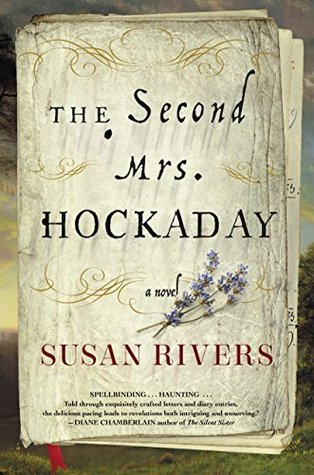
Take A Peek Book Review: The Second Mrs. Hockaday by Susan Rivers

“Take a Peek” book reviews are short and (possibly) sweet, keeping the commentary brief and providing a little peek at what the book’s about and what I thought.

second-mrs-hockaday

Synopsis:

(via Goodreads)

When Major Gryffth Hockaday is called to the front lines of the Civil War, his new bride is left to care for her husband’s three-hundred-acre farm and infant son. Placidia, a mere teenager herself living far from her family and completely unprepared to run a farm or raise a child, must endure the darkest days of the war on her own. By the time Major Hockaday returns two years later, Placidia is bound for jail, accused of having borne a child in his absence and murdering it. What really transpired in the two years he was away?

Inspired by a true incident, this saga conjures the era with uncanny immediacy. Amid the desperation of wartime, Placidia sees the social order of her Southern homeland unravel as her views on race and family are transformed. A love story, a story of racial divide, and a story of the South as it fell in the war, The Second Mrs. Hockaday reveals how that generation–and the next–began to see their world anew.


My Thoughts:

While the premise sounded intriguing to me, the execution didn’t quite work so well.

Told through letters and miscellaneous documents, The Second Mrs. Hockaday has a scattered feel to it that makes investing in the story difficult. We first meet Placidia as she’s under arrest and awaiting trial, writing a letter to a beloved cousin. Her letters take us back to the beginning of her marriage, but then jump around in time, and later, the book includes journal pages she wrote during her husband’s absence as well as correspondence between members of the next generation in the family. Because of the jumping chronology, it’s hard to get a sense of which events are linked to which — which is unfortunate, as the kernel of the story is good.

Placidia’s impetuous marriage to the recently widowed Major takes place the day after she meets him, and they only have two days together as man and wife before he leaves to rejoin his troops, leaving Placidia in charge of both his plantation and his motherless child. Her struggle to keep the farm going, to nurture the young boy, and to protect a future with the man she barely knows is moving, and I couldn’t help admiring Placidia’s bravery.

However — the big reveal toward the end of the book when we discover the truth about Placidia’s supposed crime is absolutely obvious from the very beginning. Even though some smaller details offer surprises, the fact that the big secret is so easily guessed takes away some of the punch when awful events actually transpire. A more minor complaint is the lack of any narration (via letters) of anything from later in Placidia’s life. While we learn more from other people, it feels abrupt to lose her voice in telling her own story, as if only those earlier years contained the events she felt the need to document.

The Second Mrs. Hockaday is a touching look at a young bride struggling to create a marriage during the awful war years. Unfortunately, it just lacked some of the power I’d expected.

[A reader note: While I don’t typically think it’s fair to bring up ARC formatting problems in a review, since presumably those will be corrected by the time of publication, I feel that the horrible formatting of this particular ARC absolutely impacted my reading experience for the worse. It’s not fair to criticize the book for these errors, but at the same time, the difficulty I had in sorting out section breaks and all of the missing dates in the text definitely made this a less than stellar read. If I’d read a finished copy, it’s possible that I might have felt the story had a better flow.]

_________________________________________

The details:

Title: The Second Mrs. Hockaday
Author: Susan Rivers
Publisher: Algonquin Books
Publication date: January 10, 2017
Length: 272 pages
Genre: Historical fiction
Source: Review copy courtesy of the publisher via NetGalley

Book Review: World War Z by Max Brooks

WWZ

The Zombie War came unthinkably close to eradicating humanity. Max Brooks, driven by the urgency of preserving the acid-etched first-hand experiences of the survivors from those apocalyptic years, traveled across the United States of America and throughout the world, from decimated cities that once teemed with upwards of thirty million souls to the most remote and inhospitable areas of the planet. He recorded the testimony of men, women, and sometimes children who came face-to-face with the living, or at least the undead, hell of that dreadful time. “World War Z” is the result. Never before have we had access to a document that so powerfully conveys the depth of fear and horror, and also the ineradicable spirit of resistance, that gripped human society through the plague years.

Ranging from the now infamous village of New Dachang in the United Federation of China, where the epidemiological trail began with the twelve-year-old Patient Zero, to the unnamed northern forests where untold numbers sought a terrible and temporary refuge in the cold, to the United States of Southern Africa, where the Redeker Plan provided hope for humanity at an unspeakable price, to the west-of-the-Rockies redoubt where the North American tide finally started to turn, this invaluable chronicle reflects the full scope and duration of the Zombie War.

Most of all, the book captures with haunting immediacy the human dimension of this epochal event. Facing the often raw and vivid nature of these personal accounts requires a degree of courage on the part of the reader, but the effort is invaluable because, as Mr. Brooks says in his introduction, “By excluding the human factor, aren’t we risking the kind of personal detachment from history that may, heaven forbid, lead us one day to repeat it? And in the end, isn’t the human factor the only true difference between us and the enemy we now refer to as ‘the living dead’?”

First things first:

  1. This book is brilliant; and
  2. This book has very little to do with the movie it inspired.

I was finally drawn to World War Z (the book) after watching World War Z (the movie) last week. The book version of WWZ has been on my shelf for at least 7 or 8 years. It’s not that I regretted buying it or wasn’t interested — I just never was in the right mood to actually tackle it.

Well, this week, the mood was finally right… and all I can say is holy f*cking wow.

Max Brooks has created an “oral history of the Zombie War”, a riff on the Studs Terkel masterpiece The Good War. In WWZ, Brooks creates an utterly plausible history of a world-devastating war that came close to the annilihation of the human race. The book is told through interviews, a series of conversations with people from around the globe who, in one way or another, witnessed or experienced some small piece of the global catastrophe.

From first warnings through the “Great Panic” through all-out war and finally recovery, we hear tales from those who lived through it all. We hear from medical personnel and soldiers, politicians and scientists, bystanders and those in power, and each has a unique voice and a unique perspective.

Why do I consider this a brilliant book? If you leave aside the gruesome fact that we’re talking about a zombie apocalypse, World War Z could be a chronicle of any world war. Brooks does an incredible job of building the history brick by brick through his interviews, so that we don’t need any historical notes or side narratives in order to gain a full picture of the war’s progression. The author lets us see the experience as it unfolded for people living through the nightmare days, as well as through the lens of the statescraft and diplomacy that came into play between world leaders and other power brokers.

It’s fascinating to see the effect on both common people and the greater picture of the worldwide balance of power. Nations rise and fall as a result of the steps taken or ignored, and the world that remains by the end of the war is far different than the one that came before.

Of course, on top of the amazing lesson in political science… ZOMBIES. There are some truly gross, horrifying, nightmarish scenarios that play out throughout the book. Like, who ever thought that zombies could survive indefinitely under water? There’s a reason never to go scuba diving again (not that I’ve ever gone scuba diving). Or how about the fact that in the colder regions of the planet, zombies would freeze during the winter — but that spring thaw could be a real bitch.

I love that World War Z reads like a completely immersive non-fiction record, even though it is of course fictional. The author fully commits to the premise — no wink-wink snarkiness or sarcasm to remind us that this “history” never happened. It’s really an incredible reading experience, one I’d be tempted to recommend even to those who don’t typically enjoy horror. Yes, there’s plenty of ickiness, but the reflection of heroism and sacrifice is like looking at the best of the human spirit and how it rises to the top in times of true need.

A word on the movie: I didn’t think the movie version was bad (hello? Brad Pitt!), just really different. It’s a straight-narrative story of a zombie uprising, seen through the eyes of one man who is dispatched around the globe to try to fight it. Some scenes are really nightmare-inducing (I am not going to get the image of zombies swarming over the walls of Jerusalem out of my mind any time soon), but as a whole, it doesn’t have the grand scope of the book. Also, the ending may work as a movie dramatic climax, but (being vague here) the solution that Pitt’s character finds isn’t in the book at all.

Long story short: This book was first published 10 years ago, but I don’t think it has lost any of its impact. It’s really a remarkable storytelling achievement, and I urge anyone with a taste for this sort of thing to give it a try.

_________________________________________

The details:

Title: World War Z
Author: Max Brooks
Publisher: Crown
Publication date: September 12, 2006
Length: 342 pages
Genre: Horror
Source: Purchased

Save

Save

Save

Save

Book Review: Extreme Makeover by Dan Wells

extreme-makeover

The satirical new suspense about a health and beauty company that accidentally develops a hand lotion that can overwrite your DNA.

Lyle Fontanelle is the chief scientist for NewYew, a health and beauty company experimenting with a new, anti-aging hand lotion. As more and more anomalies crop up in testing, Lyle realizes that the lotion’s formula has somehow gone horribly wrong. It is actively overwriting the DNA of anyone who uses it, turning them into physical clones of someone else. Lyle wants to destroy the formula, but NewYew thinks it might be the greatest beauty product ever designed–and the world’s governments think it’s the greatest weapon.

New York Times bestselling author Dan Wells brings us a gripping corporate satire about a health and beauty company that could destroy the world.

Presenting… the book that will make you scared of your moisturizer.

What better book for getting in the holiday spirit than a terrifying yet farcical tale of the end of the world — not an apocalypse caused by climate catastrophe or nuclear war, but rather by a beauty product run amok.

In Extreme Makeover, main character Lyle thinks he’s come up with a promising product that can prompt the body to amp up collagen to repair wrinkled skin. Cool, right? As the executives’ eyes gleam with greed, they encourage Lyle to rush to market before their competition gets wind of this amazing new product — which works because of DNA manipulation, plasmids and retroviruses, in a way that Lyle himself doesn’t fully understand. Wait, the FDA won’t approve what’s basically a gene therapy formulation? No worries, package it as an herbal treatment and move all corporate manufacturing and business headquarters offshore.

As the initial test subjects begin to show some truly horrifying results, Lyle comes to realize that what he made had implications way beyond what was expected. And while the corporate executives push it further and further to rake in huge profits, Lyle still somewhat naively believes that his new creation, ReBirth, can be used for good.

As the product is first introduced to the public, then distributed through the black market, and ultimately ends up everywhere, the terrifying, world-changing results become more and more obvious. Some of the developments are chilling, some (including the accidental creation of thousands of Lyles) are so awful that it’s actually funny.

And of course, there’s corporate corruption and world domination to consider. As ReBirth starts appearing everywhere, it quickly becomes a global catastrophe — with some considering it a religious opportunity, Homeland Security considering it a terrorist threat, and ultimately, the UN coming to realize its potential use as a weapon of mass destruction.

Reading Extreme Makeover is incredibly addictive, and weird, and utterly fun. You want to laugh at the ridiculousness of what’s going on, and yet, given the billions that people pour into buying consumer cosmetics products every year, is it really THAT far-fetched to think that people will pay thousands of dollars for the chance at a younger, healthier, more beautiful body? And hey, no need for pesky gym memberships or diets or surgery! So what if it means your own genetic code will be overwritten by someone else’s? Isn’t it worth it?

After all, WHAT COULD POSSIBLY GO WRONG??? (Cue ominous soundtrack…)

This is the most absurd apocalypse I’ve encountered yet. The end of life on earth as we know it — brought on by hand lotion? Really?

But accept that, and go along for the ride. Extreme Makeover is cleverly constructed, with a chronology that includes a countdown to the end of the world at the start of each chapter. The wide-ranging cast of characters includes Lyle, the NewYew executives plus the head honchos at their competitors’ headquarters, squads of security goons, all sorts of shady street ReBirth dealers, a religious guru, United Nations delegates, and so many more. And then, of course, as the story progresses, you have not only the characters we’ve come to know already, but various ReBirth-created versions of them as well.

It can get a bit mind-boggling to keep track of the fakes and the originals, and the collapse of civilized society happens almost too quickly to make sense, even given the scale of the unintended destruction caused by ReBirth. I had a hard time figuring out where the various evil-doers were getting their supply of original (or as it’s called in the book, “blank” — you’ll see) lotion, but after a while, I just kind of took in on faith that there were still stockpiles accessible for those who were willing to pay or to steal it.

While the outcomes are frightening, some of the scenarios still managed to make me laugh — the idea of someone spraying someone with lotion suddenly is the scariest thing you might encounter. A teen bringing ReBirth into school is practically as dangerous as one bringing a loaded gun. Celebrities are stalked not for photos, but for their DNA. It’s crazy, but it all makes sense in the claustrophobic depiction of a world gone mad.

I really enjoyed the heck out of Extreme Makeover. It’s fast-paced, cynical, funny, and terrifying; the concept has a core of ridiculousness, but like any doomsday scenario, there’s enough in there to make us all very, very afraid. After all, take out the fact that a hand lotion is responsible for the chaos, and it’s like any other apocalyptic tale, where a new technology with the power to make positive changes is ultimately transformed into a tool for unlimited power.

If you enjoy your apocalypses with a touch of humor and relatable real-world characters, check out Extreme Makeover. I promise you, you haven’t read about an end-of-the-world quite like this one before!

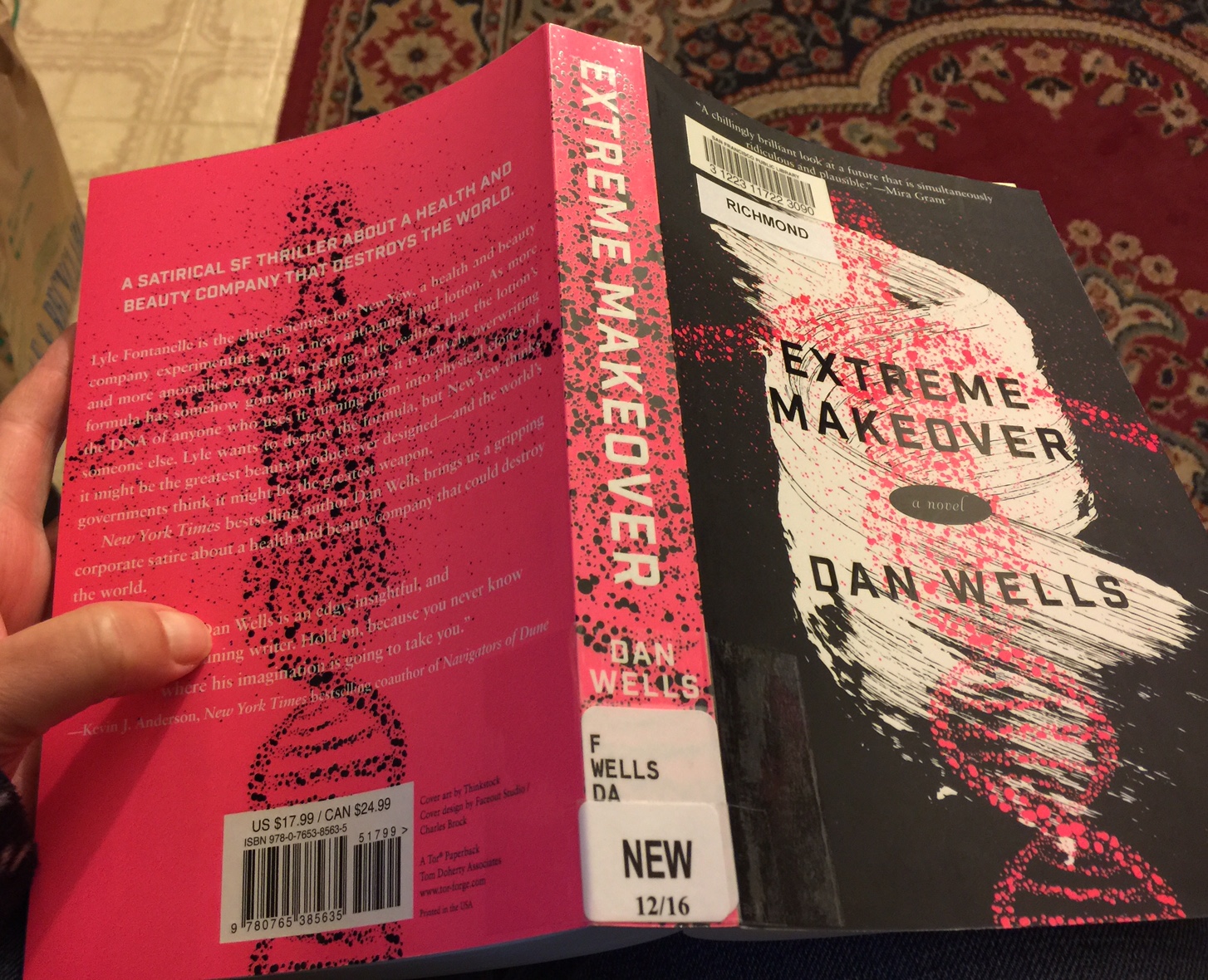
A note on the cover: The cover image available via Goodreads is kind of bland and muted. Here’s a photo of the library copy I borrowed — which is hot pink and black and totally awesome:

extreme-makoever

_________________________________________

The details:

Title: Extreme Makeover
Author: Dan Wells
Publisher: Tor Books
Publication date: November 15, 2016
Length: 416 pages
Genre: Science fiction
Source: Library

Save

Save

Book Review: A Perilous Undertaking (Veronica Speedwell, #2) by Deanna Raybourn

perilous-undertakingBook the Second in the wonderful Veronica Speedwell mystery series by Deanna Raybourn!

Veronica Speedwell returns in a brand new adventure from Deanna Raybourn, the New York Times bestselling author of the Lady Julia Grey mysteries…

London, 1887 . . Victorian adventuress and butterfly hunter Veronica Speedwell receives an invitation to visit the Curiosity Club, a ladies-only establishment for daring and intrepid women. There she meets the mysterious Lady Sundridge, who begs her to take on an impossible task saving society art patron Miles Ramsforth from execution. Accused of the brutal murder of his artist mistress Artemisia, Ramsforth will face the hangman’s noose in a week’s time if Veronica cannot find the real killer.

But Lady Sundridge is not all that she seems and unmasking her true identity is only the first of the many secrets Veronica must uncover. Together with her natural historian colleague Stoker, Veronica races against time to find the true murderer a ruthless villain who not only took Artemisia’s life in cold blood but is happy to see Ramsforth hang for the crime.

From a Bohemian artists colony to a royal palace to a subterranean grotto with a decadent history, the investigation proves to be a very perilous undertaking indeed….

Victorian era? Check.

Intelligent, non-conformist heroine? Check.

Flouting of social niceties? Check.

Sexy, mysterious partner, and oodles of sexual tension? Check, and check.

Oh, and not incidentally: A ripping good murder mystery? Yup, big check.

Prolific author Deanna Raybourn released the first Veronica mystery, A Curious Beginning, in 2015. (I reviewed it, here.) In it, we met the irrepressible Veronica Speedwell, an accomplished lepidopterist in her mid-twenties who finds herself suddenly at the center of strange plots and attempted violence. Veronica is headstrong and unabashed, and while she has the gentility and manners of a lady, she is quite proud of her scientific accomplishments — and is quite blunt about taking lovers during her overseas expeditions and her general enjoyment of the carnal arts.

I blinked again. “Is it not possible to enjoy bed sport during one’s pregnancy? You mean women have to go without for the duration? Nine months without sexual congress? That’s monstrous.”

By some odd twists and turns, she finds herself under the protection of Stoker, a (gorgeously muscled) man of good family who is haunted by clouds of scandal and mystery stemming from his own natural history expedition which ended in disaster in Brazil.

Side note — a word on Stoker’s appeal:

When a gentleman of excellent breeding and perfect vowels assumes the guise of a ruffian, women are frequently reduced to a state of helpless infatuation.

The two end up on the run together, trying to figure out who’s out to murder Veronica and why. It’s absolutely fun, full of hijinks and smart, quippy dialogue. Veronica and Stoker quickly became one of my favorite non-couple couples in fiction!

In A Perilous Undertaking, Veronica and Stoker are somewhat in the doldrums after a planned expedition is cancelled, until Veronica is summoned by a mysterious upper-class lady to take on the task of absolving a condemned man of murder. Lacking much else to do and needing a challenge, as well as fueled by a personal motivation that I’ll leave unspecified (spoilers!), Veronica accepts her assignment. With Stoker as her sidekick/co-adventurer/protector, she sets out to explore the world of a bohemian artists colony, its patrons and participants, and the secret and slightly kinky goings-on that a whole slew of people might want to kill to cover up.

She fell silent, gripped by genuine emotion, and against my will, I found myself in danger of liking her. For a potential murderess, she was rather engaging.

Once again, Deanna Raybourn creates a highly entertaining adventure that lets her characters shine. Veronica and Stoker are quite a pair, and you could cut the tension between them with a knife. They live and operate outside the bounds of proper Victorian society, yet they’re able to infiltrate into the upper reaches and still maintain their zest for scientific knowledge and experimentation.

Some rather comical incidents (including encounters with a large and inconvenient tortoise) lighten up the tension of the more dangerous escapades. There are injuries, life and death situations, narrow escapes, and acts of great daring. At the same time, we learn more about Veronica and Stoker’s inner lives and what makes them tick.

I think it’s pretty obvious that I loved the heck out of this book! The characters are just so delightful. I only hope that the author continues the series, as I want more! Veronica and Stoker clearly have plenty of adventures ahead of them and, at the risk of sounding completely voyeuristic, I want to get to see where their relationship goes, when and if they finally take the plunge and acknowledge their mutual attraction.

I suppose you could read A Perilous Undertaking on its own, as there are enough hints and reminders sprinkled throughout to cover the essential backstory — but why would you want to? Start with A Curious Beginning, then continue straight on to A Perilous Undertaking. You’re in for a treat!

_________________________________________

The details:

Title: A Perilous Undertaking
Author: Deanna Raybourn
Publisher: Berkley Books
Publication date: January 10, 2017
Length: 352 pages
Genre: Mystery/historical fiction
Source: Won in a Goodreads giveaway!


Save

Save

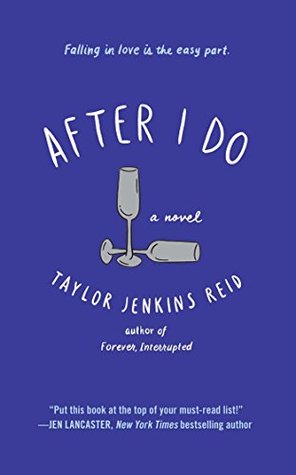
Book Review: After I Do

after-i-doWarning: This review will include some minor spoilers. Don’t worry — I’ll flag the spoilery parts!

From the author of Forever, Interrupted comes a breathtaking new novel about modern marriage, the depth of family ties, and the year that one remarkable heroine spends exploring both.

When Lauren and Ryan’s marriage reaches the breaking point, they come up with an unconventional plan. They decide to take a year off in the hopes of finding a way to fall in love again. One year apart, and only one rule: they cannot contact each other. Aside from that, anything goes.

Lauren embarks on a journey of self-discovery, quickly finding that her friends and family have their own ideas about the meaning of marriage. These influences, as well as her own healing process and the challenges of living apart from Ryan, begin to change Lauren’s ideas about monogamy and marriage. She starts to question: When you can have romance without loyalty and commitment without marriage, when love and lust are no longer tied together, what do you value? What are you willing to fight for?

This is a love story about what happens when the love fades. It’s about staying in love, seizing love, forsaking love, and committing to love with everything you’ve got. And above all, After I Do is the story of a couple caught up in an old game—and searching for a new road to happily ever after.

I definitely have mixed feelings about this book. I’ve now read all of Taylor Jenkins Reid’s books currently available, and I think she’s an amazing writer. She never fails to convincingly capture the inner lives of seemingly ordinary people What makes her books and characters so special is her knack for revealing what goes on beneath the surface. What’s really happening in the heart and mind of a young woman experiencing first love? What does it feel like to be so annoyed with one’s partner that it’s almost impossible to remember even liking the person, let alone loving them?

Lauren and Ryan have been together since age 19, when they met in college. For all intents and purposes, Ryan is Lauren’s only love and only relationship. She had a high school boyfriend, with whom she lost her virginity, but that’s it. So Lauren entered adult life partnered with Ryan, and her entire experience of being in a committed relationship is with Ryan.

And once the heady rush of lust and wonder and romance starts to wear off in the face of daily irritations like disagreeing over restaurants or calling the plumber, it’s hard for Lauren and Ryan to see a reason for their marriage any longer.

As the synopsis explains, they decide to separate for a year. Neither utters the word “divorce”. They’re going to take a year apart, with no contact whatsoever, to see if they can reset, explore their own lives on their own, and figure out how to reconnect.

SPOILERS AHOY! I can’t talk about the book any further without getting more specific, so skip this part if you’d rather not know.

As Lauren and Ryan are splitting, Lauren asks if this means that they’ll date other people, and Ryan confirms that this is part of the deal. There are no rules at all about their behavior while they’re apart. And not only do they date other people — they sleep with other people. A lot. And somehow still expect to have a marriage to come back to.

I’m sorry, but while I love the writing and zipped through this book, I just cannot buy the premise. This is so unhealthy and dysfunctional. SEPARATING FOR A YEAR, NOT COMMUNICATING FOR A YEAR, AND SLEEPING WITH OTHER PEOPLE IS NOT HOW YOU SAVE A MARRIAGE.

They go straight from admitting that they can’t stand each other and don’t think they love each other any more to deciding to separate. What about couples counseling? They never even give it a try. Granted, going to counseling would be a fairly lame plot for a romantic novel, whereas the separation thing is much more dramatic… but in real life? This is a recipe for disaster.

If the goal is to get back together after a year, you do not sleep with other people! No matter how much their separation teaches them about being supportive and respectful and communicating, how do you get past knowing that your spouse spent a year having sex, including some great sex, with other people?

In Lauren’s case, her sex life with Ryan was all she knew, and it wasn’t very satisfying. So she has a no-strings, friends-with-benefits arrangement with a recently divorced man who’s not over his ex-wife, and through their encounters, she learns more about asking for what she wants in bed. Fair enough — but again, counseling, people!

In a key plot element, neither Ryan nor Lauren bother to change their email passwords during their year apart, so they end up reading each others’ draft emails throughout the year, thereby learning about the things that made them bonkers during their marriage as well as their current sexual encounters.

So, no, I don’t believe that they could have actually picked up the pieces of their marriage after all this, or that a year apart without every working on things together would enable them to realize what they need to do to have a healthy relationship going forward.

END OF SPOILERY BITS

What I did find convincing was the fact that Lauren grew up in a household with a single mother. Lauren’s mother raised her three kids marvelously and clearly devoted herself to them. But at the same time, Lauren never saw her mother in a relationship (she kept her boyfriends hidden from her kids), and never had a healthy adult marriage to model her own after. Which is kind of a debatable point, by the way — I by no means believe that children of divorce can’t grow up to have great marriages of their own, as a general rule. But in After I Do, this does seem to be a factor in Lauren’s unhealthy marriage, especially when compounded by the fact that her relationship with Ryan is all she’s ever experienced, and it seems as though the two of them were unprepared for the realities involved when transitioning to adulthood as a couple.

This may all sound very negative, so I want to be sure to point out all the good too. I loved Lauren’s family — her super-close relaitonship with her sister, her flighty younger brother who finds his own unconventional love over the course of the book, the amazing grandmother who influences Lauren’s life, and the family’s oddball quirks and traditions that make them feel unique and special. Likewise, Lauren’s best friend Mila adds another view of adult relationships to Lauren’s perspective, and helps her come to understand that love and commitment transcend daily drama and household nonsense.

As I mentioned to start with, I really enjoy this author’s writing. She has a knack for making her characters feel real. No one is perfect, and even our point-of-view characters are quite openly flawed. She does a great job of breathing life into her characters’ emotional traumas, as well as their silly fixations and disagreements, and realistically shows how relationships either grow or fall apart under the stress of ordinary life.

Do I recommend After I Do? I do, actually! While I disagreed with many of the plot elements, I still found it highly readable and engaging. If you enjoy reading about young adults dealing with the realities of love and romance in the modern world, try After I Do and other books by this author.

Check out my reviews of other books by Taylor Jenkins Reid:
Maybe In Another Life
One True Loves
Forever, Interrupted

_________________________________________

The details:

Title: After I Do
Author: Taylor Jenkins Reid
Publisher: Washington Square Press
Publication date: July 1, 2014
Length: 352 pages
Genre: Contemporary fiction
Source: Library

Save

Save

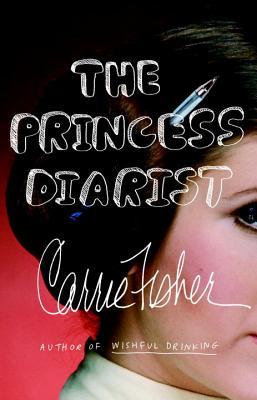
Book Review: The Princess Diarist

princess-diaristSpending time inside the mind of Carrie Fisher is never dull.

In her newly published memoir, the author takes us back to a galaxy long, long ago… to share her experiences portraying the unforgettable Princess Leia — she of the cinnamon bun hairstyle and metal bikini — in a little indie movie called Star Wars.

Prompted by her recently unearthed journals, Fisher revisits her experiences as a 19-year-old actress — one of several unknowns or relative unknowns cast in this strange movie, created by a guy from Modesto, filming on a shoestring budget in London.

As the headlines proclaimed when this book came out in October, in The Princess Diarist, Fisher confirms what many suspected for years — that she and Harrison Ford had an affair during the filming of Star Wars. At the time, she was a teen with one previous relationship in her recent past, and Ford was in his mid-30s, married, and a father. Their relationship lasted a few months only… but apparently was a huge part of Fisher’s overall experience as she entered the world of movie stardom.

The Princess Diarist has transcribed pages from her diaries at its center, and is framed by chapters before and after describing her introduction to acting, the experience of filming Star Wars, and the fan frenzy that has defined her life ever since.

Fisher’s writing is both funny and weird, as she creates the oddest descriptions and twists her sentences around in all sorts of unexpected ways that made me pause, re-read, and laugh. Here are some prime tidbits from among the many, many Post-It flags I used to mark amazing passages from the diary section of the book:

So he assumes his apathetic poker face and I sit practicing wry knowing looks somewhere in his periphery. I don’t dare pick a topic for fear that it won’t be funny enough or interesting enough for his awe-inspiring judgment. With his silence he establishes himself as a sort of trapped audience and so you break your ass to meet the enormous challenge of entertaining him, frantic with worry that his teeth might suffocate.


I’ve got to learn something from my mistakes instead of establishing a new record to break. Maybe stop fooling around with all these human beings and fall in love with a chair. It would have everything that the immediate situation has to offer, and less, which is obviously what I need. Less emotional and intellectual feedback, less warmth, less approval, less patience and less response. The less the merrier.

Chairs. They’re always there when you need them and, while their staying implies total devotion, they still manage to remain aloof, noncommittal and insensitive. Immovable and loyal. Reliable and unconsoling. Chairs it is. I must furnish my heart with feelings for furniture.


If anyone reads this when I have passed to the big bad beyond I shall be posthumorously embarrassed. I shall spend my afterlife blushing.


And a few more, from the non-diary portions:

My hope aren’t high, and neither, as it happens, am I.


I think boys may have been attracted to my accessibility. Even if I did have some princessy qualities, I wasn’t conventionally beautiful and sexy, and as such was less likely to put them down or think I was too good for them. I wouldn’t humiliate them in any way. Even if I teased them in the context of running around with laser guns dodging bullets, I wouldn’t do it in a way that would hurt them.


It was one movie. It wasn’t supposed to do what it did — nothing was supposed to do that. Nothing ever had. Movies were meant to stay on the screen, flat and large and colorful, gathering you up into their sweep of story, carrying you rollicking along to the end, then releasing you back into your unchanged life. But this movie misbehaved. It leaked out of the theater, poured off the screen, affected a lot of people so deeply that they required endless talismans and artifacts to stay connected to it.

Honestly, I wish she’d spent a little more time on behind-the-scenes, making-of type reminiscences — but I suppose there are plenty of those around for the true Star Wars fans. The beauty of The Princess Diarist is seeing an unvarnished picture of a woman who was unprepared for stardom and for the impact of her “little” film, who at the same time was trying to make sense of a bizarre, strained relationship with a taciturn man who was sexy as hell.

I can’t help but wonder how Harrison Ford feels about Fisher’s revelations (and I haven’t looked that hard, but I don’t recall seeing any reactions from him). I guess after 40 years, it’s not exactly earth-shattering, especially as Ford is no longer married to the woman he was married to at the time. I suppose too that they’ve been sharing each others’ orbits on the Star Wars circuit for so long that it all must feel like ancient history by now.

Carrie Fisher is a funny, open writer who isn’t afraid to show her true, flawed face. I had a great time reading The Princess Diarist. It’s a quick read, and maybe isn’t exactly deep, but it kept me entertained and gave me yet another way to think about the Star Wars cultural phenomenon and what it might have meant to be a part of it all from the beginning.

_________________________________________

The details:

Title: The Princess Diarist
Author: Carrie Fisher
Publisher: Blue Rider Press
Publication date: October 18, 2016
Length: 240 pages
Genre: Memoir
Source: Library

Save

Save

Save

Catching up on Gail Carriger’s short fiction

I don’t know exactly how or why, but for whatever reason, I ended up bingeing on Gail Carriger’s short fiction this week, and had a simply splendid time doing it.

I’m a big fan of the Parasol Protectorate series. (What? You haven’t read them? Stop right now and go get a copy of Soulless! Emergency reading intervention required!). I mean, steampunk plus supernatural plus Victorian society… with dirigibles, werewolves, and highly dangerous parasols… what’s not to love?

Still, I haven’t read much of Carriger’s shorter fictions — until now. This week, I started with a new novella, then went back and read some earlier short stories, and finished up with another novella.

So, here’s what I read. First, the short stories:

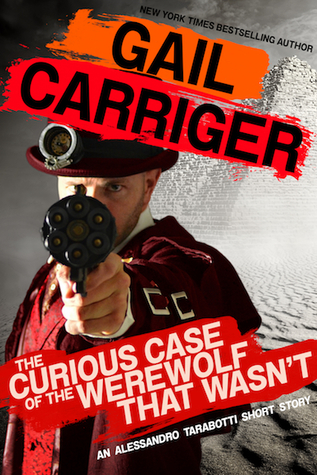
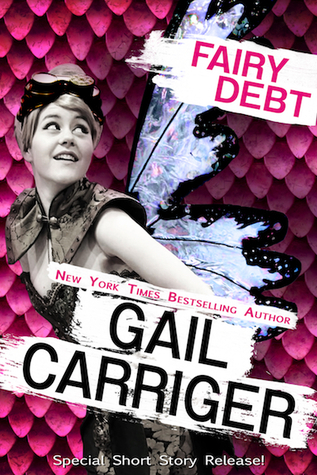
curious-case fairy-debt my-sisters-song

The Curious Case of the Werewolf That Wasn’t (32 pages, published 2014): This tale centers on Alessandro Tarabotti, father of Alexia of the Parasol Protectorate. In the series, Alessandro is a shadowy figure, already deceased, leaving all sorts of mysteries as his legacy. In The Curious Case, we see Alessandro on an adventure in Egypt. It’s classic Carriger, with spies, action, waistcoats, and proper (and improper) behavior. I enjoyed the story, but still wish we had an entire novel about Alessandro’s life and deeds. The story doesn’t really shed further light on him, but it is quite fun.

Fairy Debt (18 pages, published 2007): Light and fluffy, this is a stand-alone unrelated to Carriger’s steampunk worlds. It’s a straight-up fairy tale, but cute and with a decidedly feminist world view.

My Sister’s Song (17 pages, published 1999): A brief tale of a warrior woman who defeats a Roman squadron thanks to her sister’s skill at charming bees.

I should note here that Gail Carriger has another published short piece, Marine Biology (43 pages, published 2010). Because I read it several years ago, I wasn’t going to include it in my reading wrap-up post… but what the heck — if you’re interested in the author’s short fiction, then it’s worth mentioning! Here’s what I wrote about Marine Biology in my Goodreads review way back when:

marine-biology


“Marine Biology” was originally published in a paranormal romance collection, and has just been released as an ebook single. This is the first story of Gail Carriger’s that I’ve read that’s set in the modern world, rather than the Victorian era. It’s also – shocker! – set in the US. Not a single cup of tea throughout!

“Marine Biology” is a cute, light love story involving a reluctant werewolf hiding his sexuality and a few other key points from his he-man pack. When he and a gorgeous merman are thrown together to investigate some stolen money, sparks fly — and precipate a few important moments of truth.

The mystery is rather beside the point. The fun is in meeting and appreciating the main characters, reading about pack dynamics (and barbeque social mores), and encountering a few interesting marine animals along the way.

Gail Carriger’s humor and way with words shine through, as usual. Of course, if you really want to have fun, I’d highly recommend her Parasol Protectorate series. “Marine Biology” is a quick, diverting read, and would make a great dessert after a night of “serious” reading.

Moving on…

I also read the two newest novellas, both set in the universe of the author’s novels:

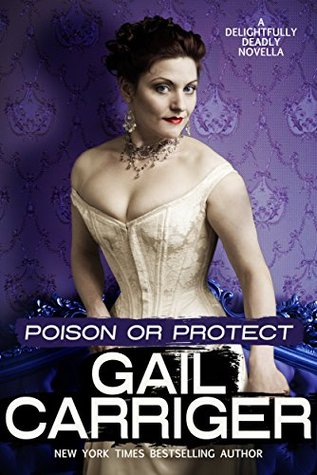
poison-or-protectPoison or Protect (143 pages, published 2016):

(Goodreads synopsis)

Can one gentle Highland soldier woo Victorian London’s most scandalous lady assassin, or will they both be destroyed in the attempt?

New York Times bestselling author Gail Carriger presents a stand-alone romance novella set in her popular steampunk universe full of manners, spies, and dainty sandwiches.

Lady Preshea Villentia, the Mourning Star, has four dead husbands and a nasty reputation. Fortunately, she looks fabulous in black. What society doesn’t know is that all her husbands were marked for death by Preshea’s employer. And Preshea has one final assignment.

It was supposed to be easy, a house party with minimal bloodshed. Preshea hadn’t anticipated Captain Gavin Ruthven – massive, Scottish, quietly irresistible, and… working for the enemy. In a battle of wits, Preshea may risk her own heart – a terrifying prospect, as she never knew she had one.

Buy Poison or Protect today to find out whether it’s heartbreak or haggis at this high tea.

Warning: Contains men pleasing women, and ladies who know what they want and ask for it, sometimes in detail. May also contain plaid, appearances from favorite characters, and the strategic application of leather gloves.

Ha. Gotta love that warning, right? Poison or Protect is fairly explicit, leading to great steaminess in the boudoir scenes. The plot itself is quite fun and engaging, so it’s not JUST about the sex (although there’s plenty of that). I loved Preshea and Gavin, and loved their dynamic together. I understand that Preshea appears as a young girl in the Finishing School series (which I haven’t finished yet — my bad), but not being familiar with her doesn’t have any impact on enjoyment of Poison or Protect. The novella can definitely be read as a stand-alone, and is loads of sexy fun.

Next:

romancing-the-inventorRomancing the Inventor (149 pages, published 2016):

(Goodreads synopsis)

Imogene Hale is a lowly parlourmaid with a soul-crushing secret. Seeking solace, she takes work at a local hive, only to fall desperately in love with the amazing lady inventor the vampires are keeping in the potting shed. Genevieve Lefoux is heartsick, lonely, and French. With culture, class, and the lady herself set against the match, can Imogene and her duster overcome all odds and win Genevieve’s heart, or will the vampires suck both of them dry?

This is a stand-alone LBGTQ sweet romance set in Gail Carriger’s Parasolverse, full of class prejudice, elusive equations, and paranormal creatures taking tea.

Delicate Sensibilities? This story contains women pleasing women and ladies who know what they want and pursue it, sometimes in exquisite detail.

Supernatural Society novellas can be read in any order.

Well, that was certainly different! Romancing the Inventor is set a few years after the events of the Parasol Protectorate books, and reading that series provides the context and backstory for this novella, although I suppose it could work as a stand-alone pretty well too.

Familiar faces from PP show up, some in lead roles (Madame Lefoux), and others in more of a support status (Alexia, Conall, Major Channing, Countess Nadasdy, etc).

Imogene’s journey and pursuit of love is sweet, romantic, and yes, sexy too. There are some steamy sexual encounters, but nothing overly graphic (in my opinion — I suppose it’s a matter of individual sensitivity, after all.) Carriger’s writing is wry and funny and spot-on, as always:

For a full two months, Imogene resumed the established daily pattern — potting shed, sums, dimples, tea, lab, dimples, luncheon, equations, more dimples, supper, and if she was luck, one last set of dimples before bed.

Wrapping it all up…

I’d say that fans of any of Gail Carriger’s novels or series really must read the novellas too. They have everything we fans love about her writing — the settings, the characters, the sense of playful fun, the Victorian manners and social expectations, the fashions — and the naughtiness too.

As for the short stories, well, I’d consider them nonessential, fluffy fun. There’s no reason not to take the short time needed to enjoy them. Of the four, I consider Marine Biology the best, and would make that one a priority over the other three.

Whew! It’s been a Carriger week for me, and I had lots of fun in my deep dive into her shorter works. And now, I’m thinking I really do need to give the Finishing School series another chance.