Book Review: How To Stop Time by Matt Haig

I am old. That is the first thing to tell you. The thing you are least likely to believe. If you saw me you would probably think I was about forty, but you would be very wrong.

Tom Hazard has a dangerous secret.

He may look like an ordinary 41-year-old, but owing to a rare condition, he’s been alive for centuries. From Elizabethan England to Jazz Age Paris, from New York to the South Seas, Tom has seen a lot, and now craves an ordinary life. Always changing his identity to stay alive, Tom has the perfect cover – working as a history teacher at a London comprehensive. Here he can teach the kids about wars and witch hunts as if he’d never witnessed them first-hand. He can try and tame the past that is fast catching up with him.

The only thing Tom mustn’t do is fall in love.

How to Stop Time is a wild and bittersweet story about losing and finding yourself, about the certainty of change and about the lifetimes it can take to really learn how to live.

This feels like another one of those books where I want the entire review to consist of the following:

Amazing book. Read it.

Really, what more is there to say?

I have been in love with Matt Haig’s writing for a while now, ever since reading The Radleys, The Dead Fathers Club, and even more so since reading the spectacular The Humans. In How To Stop Time, the author shows once again the complexity of the human experience and the universality of a search for meaning.

In How To Stop Time, we meet main character Tom, who appears to be about 40-ish but is in actuality closer to 500. He’s one of a small group of people with a rare condition that slows the aging process — dramatically. They’re not immortal; they age normally up until puberty, and they will die of old age eventually. They can also die of injury just like anyone else, but meanwhile, Tom appears to age about one year for every 15 that he lives. A secret society of similarly afflicted people refers to themselves as albas, short for albatrosses (as the bird is supposedly long-lived) — and, unflatteringly, regular humans are simply mayflies, with lives so short by comparison that they’re barely worth paying attention to.

According to Hendrich, the organizer and enforcer of the albas, eight years is about the maximum someone like Tom can remain in any given identity and location before starting fresh. Otherwise, people start to notice, and gossip and odd looks can lead to severe consequences. Or at least, that’s been the governing truth for centuries. And there’s a certain logic to it. Tom was born in the late 1500s, and saw his own mother tried as a witch when neighbors realized that her teen-aged son remained unnaturally youthful while everyone around him aged normally.

Early on, Tom has his one and only experience with love as well. After leaving his childhood home after his mother’s cruel fate, he eventually falls in love with a lovely young woman named Rose. They eventually marry and have a child — but Tom is forced to leave after some years when once again, his eternal youth raises suspicion and threatens to bring disaster down upon his family.

Since then, Tom wanders the world, assuming fresh identities and homes every 8 – 10 years, but never truly allowing himself to connect or become a part of anything permanent. And while eternal (or long-lasting) youth might sound amazing to anyone dealing with grey hair and wrinkles, the fact is that for Tom, it’s an incredibly lonely life that seems to lack any sort of meaning.

Of course, on the plus side, he’s had  lot of years to learn, grow, and try new things. From being a simple lute player way back when, Tom has become a gifted musician skilled in many instruments, and his ability to impart history as a living, breathing concept is what makes him a fantastic high school teacher. He’s also rubbed elbows with a who’s who of famous folks over the centuries, from Shakespeare to F. Scott Fitzgerald, and can pull up those memories at a moment’s notice.

When Tom begins to connect with another teacher at the school, he has to confront the lonely existence he’s had and to make some decisions. Does he let this woman into his life? Can he be honest with her? What will Hendrich do if he finds out? How far will Hendrich go to make sure that the secrets of the albas remain secret?

How To Stop Time is truly fascinating. I loved the dilemmas presented by being a man out of time, someone who has lived everywhere yet fits in nowhere. Tom is a thoughtful and sympathetic character who keeps going for only one reason, which I won’t reveal here. He suffers physically and emotionally from the constant bombardment of memories from his centuries of life. You can’t help wanting him to be happy, even while acknowledging the huge barriers to that happiness.

The premise is so interesting and absorbing, and I couldn’t put the book down. At the same time, it’s Matt Haig’s extraordinary writing and use of language that makes this book truly soar. I was so caught up in reading that I didn’t stop to mark pages and passages of interest, which makes it hard right now to highlight quotes and give examples of why I loved this book so much.

I do have just one that I managed to find after the fact, and I’ll use it to wrap up this review. From a passage showing Tom’s inner thoughts — completely applicable to regular people with regular lifespans too:

And, just as it only takes a moment to die, it only takes a moment to live. You just close your eyes and let every futile fear slip away. And then, in this new state, free from fear, you ask yourself: who am I? If I could live without doubt what would I do? If I could be kind without the fear of being fucked over? If I could love without fear of being hurt? If I could taste the sweetness of today without thinking of how I will miss that taste tomorrow? If I could not fear the passing of time and the people it will steal? Yes. What would I do? Who would I care for? What battle would I fight? Which paths would I step down? What joys would I allow myself? What internal mysteries would I solve? How, in short, would I live?

Like I said:

Amazing book. Read it.

_________________________________________

The details:

Title: How To Stop Time
Author: Matt Haig
Publisher: Canongate Books
Publication date: July 6, 2017
Length: 325 pages
Genre: Speculative fiction
Source: Purchased
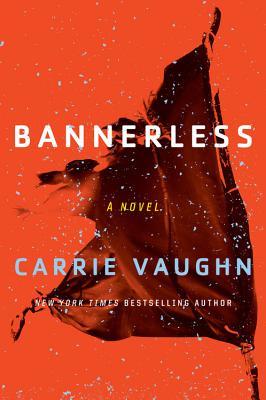
Book Review: Bannerless by Carrie Vaughn

A mysterious murder in a dystopian future leads a novice investigator to question what she’s learned about the foundation of her population-controlled society.

Decades after economic and environmental collapse destroys much of civilization in the United States, the Coast Road region isn’t just surviving but thriving by some accounts, building something new on the ruins of what came before. A culture of population control has developed in which people, organized into households, must earn the children they bear by proving they can take care of them and are awarded symbolic banners to demonstrate this privilege. In the meantime, birth control is mandatory.  Enid of Haven is an Investigator, called on to mediate disputes and examine transgressions against the community. She’s young for the job and hasn’t yet handled a serious case. Now, though, a suspicious death requires her attention. The victim was an outcast, but might someone have taken dislike a step further and murdered him?  In a world defined by the disasters that happened a century before, the past is always present. But this investigation may reveal the cracks in Enid’s world and make her question what she really stands for.

Bannerless is a unique and interesting approach to the dystopian genre. In fact, if you took away the references to “the Fall”, you might almost think you were reading a story of agrarian life in the Middle Ages. Let me explain…

In Bannerless, we follow main character Enid, a resident of the town of Haven whose occupation is investigator. Investigators are both detectives and enforcers, sent from settlement to settlement to look into complaints, solve problems, and if needed, impose sentences. Investigators tend to be feared — when these outsiders show up wearing their official brown tunics, it’s likely to end in repercussions either for individuals, households, or possibly the entire town.

Enid’s village lies among the geographic area known as the Coast Road, sets of smaller and larger settlements who interact for trading, messages, and resources. All follow the same general governing principles. The towns are primarily agrarian, and all members of a community have roles to play. Towns may only produce up to their quotas, so that resources are preserved for for the future. People form households to work together to show productivity, and if they prove that they can support more, they are awarded banners, which give them the right to have a child.

All in all, it sounds like a rather peaceful and healthy way to go about life. Community is all-important. People offer one another help when needed, and when help is provided, there’s a commitment made to repay expended resources when the recipient is able.

As I mentioned, if you didn’t know the setting, you might think this story takes place a few centuries ago. It has that old-fashioned, idyllic feel to it. But we do know that there was a Fall — and while the author doesn’t go into tremendous detail, it becomes clear that civilization fell over the course of years in which the world was devasted by epidemics, followed by substantial climate change that brought life-threatening changes in weather patterns. Enid’s adult life takes place about a century after the Fall, and she still remembers her Aunt Kath, who was the oldest member of Haven and the only one to remember the time before. From Kath, Enid learns about how life used to be, from silly details (like a yearning for plastic wrap) to issues around birth control and reproduction.

In terms of the plot of Bannerless, we follow two timelines in alternating chapters. We see Enid and her investigator partner Tomas, a member of her birth household, as they investigate a suspicious death in the nearby town of Pasadan. This in itself is shocking — while their investigations mainly focus on banner or quota violations, murder is pretty much unheard of. Meanwhile, in every other chapter, we follow the story of Enid from about 10 years earlier, when she followed her lover on his journeys from town to town, and along the way, learns much more about the communities, the ruins of cities, and her own calling.

What’s unusual about Bannerless, and what makes me hesitate to call it “dystopian”, is that the societal structure seems to work. There are no castes or debasing rules or the other types of harsh governance that seem to be the hallmark of the genre. Yes, the story takes place in a post-apocalyptic world, but the people seem to have worked out a system that makes sense for them. The rules about banners and birth control don’t strike me as autocratic or despotic; they go hand in hand with the focus on resources and quotas. The communities bear an awareness of the disasters that led to civilization’s downfall, and they’re determined to avoid the excesses that result in barren lands and starving children.

And while Enid and others occasionally yearn for the resources they’ve heard about through stories about life before the Fall (medical equipment and reliable lab tests, for example), they’ve found a way to manage and preserve what they have, to share and take communal responsibility for one another, and to sustain future generations by conserving current resources.

Yes, the breaking up of households who flout the rules may sound harsh, but there’s a lot of reasonableness too. Of all the various fictional scenarios of life post-disaster, the world of Bannerless sounds pretty okay to me.

The book itself is a quick, engaging read. Don’t expect explosions or intense battles or action scenes. The drama is all about the people, their interactions, and their motives — although this book does a great job of demonstrating how scary it can be to be caught out in the open when a storm is on the way.

According to the author’s page on Goodreads, she’s working on a sequel, and Bannerless is listed as the first in a series. I had no idea while I was reading the book that this would be an ongoing story, and Bannerless works perfectly well as a stand-alone. (I’m glad I didn’t know ahead of time; I tend to avoid starting new series, and I’d hate to think that I might have missed out on a good book because of my series-aversion!)

I’ve enjoyed other books and stories by Carrie Vaughn (although I haven’t read her Kitty Norville series, which seems to be her best-known work), and I will definitely read the 2nd book whenever it comes out.

Interested in this author? Check out my reviews of other books:
After the Golden Age
Martians Abroad
“Raisa Stepanova” (Dangerous Women anthology)

_________________________________________

The details:

Title: Bannerless
Author: Carrie Vaughn
Publisher: John Joseph Adams/Mariner
Publication date: July 11, 2017
Length: 352 pages
Genre: Science fiction
Source: Purchased
Book Review: Abaddon’s Gate (The Expanse, #3) by James S. A. Corey

For generations, the solar system — Mars, the Moon, the Asteroid Belt — was humanity’s great frontier. Until now. The alien artifact working through its program under the clouds of Venus has appeared in Uranus’s orbit, where it has built a massive gate that leads to a starless dark.

Jim Holden and the crew of the Rocinante are part of a vast flotilla of scientific and military ships going out to examine the artifact. But behind the scenes, a complex plot is unfolding, with the destruction of Holden at its core. As the emissaries of the human race try to find whether the gate is an opportunity or a threat, the greatest danger is the one they brought with them.

Holy moly, I love this series.

Abaddon’s Gate is the 3rd book in The Expanse series, which is the basis for the pretty awesome TV series on Syfy (season 3 expected in 2018). (Check out an earlier post of mine about the series, here.)

In book 3, a brand new set of circumstances has opened up for the people of our solar system — Earthers, Martians, and Belters — and what to do about these new circumstances plunges the crew of the Rocinante right back into insane levels of danger.

(I realize this review will likely be gobbledygook for anyone not familiar with the earlier books in the series. Sorry about that.)

Our fearless leader, James Holden, and his ragtag crew have been through all sorts of hell so far, and just when they’ve settled into a rather profitable business as a cargo ship, along comes trouble. The structures built by the protomolecule have opened up a portal of some sort beyond Uranus’s orbit (no jokes please — we’re all adults, right?), and the fleets of the three main powers have all assembled nearby the portal — called the Ring — to make sure no one gets an advantage over the others.

And of course, it’s Holden and the Rocinante who ends up hurtling through the Ring into what they call the Slow Zone — a space between, a still zone lined with thousands of gates to other worlds, some open, some closed. And here’s where the trouble really begins. Because none of the ships or their nations trust one another, they all end up going after Holden… and things go very, very badly.

Abaddon’s Gate is another big, huge book in a series composed of big, huge books. I’ll admit that the first third or so at times felt like a bit of a slog. Other than Holden and his crew, there are almost no familiar characters from the previous books, which means that the reader has a whole new set of complicated relationships, motivations, and power struggles to sort through. It feels overwhelming at first.

Trust me, it’s worth it. Once I got a bit further in, I was hooked. Some of the new characters blend in with others we’ve known — more soldiers, technicians, etc — but there are certainly some stellar, memorable new characters, among them the priest Anna and the heroic Belter officer Bull. The action is unrelenting, and it’s fascinating to see the unimagined dangers facing all the ships and humans as they enter a zone where the rules of physics as they know them no longer apply.

I highly recommend this series — books and TV — to anyone who loves a good space opera. It’s got outstanding characters, complex plotting, and mind-blowing world-building. What more could you want?

I can’t wait to start the 4th book, Cibola Burn.

_________________________________________

The details:

Title: Abaddon’s Gate (The Expanse, #3)
Author: James S. A. Corey
Publisher: Orbit
Publication date: June 4, 2013
Length: 539 pages
Genre: Science fiction
Source: Purchased
Take A Peek (audio) Book Review: Between You and Me: Confessions of a Comma Queen by Mary Norris

“Take a Peek” book reviews are short and (possibly) sweet, keeping the commentary brief and providing a little peek at what the book’s about and what I thought.

Synopsis:

(via Goodreads)

Mary Norris has spent more than three decades in The New Yorker‘s copy department, maintaining its celebrated high standards. Now she brings her vast experience, good cheer, and finely sharpened pencils to help the rest of us in a boisterous language book as full of life as it is of practical advice.

Between You & Me features Norris’s laugh-out-loud descriptions of some of the most common and vexing problems in spelling, punctuation, and usage—comma faults, danglers, “who” vs. “whom,” “that” vs. “which,” compound words, gender-neutral language—and her clear explanations of how to handle them. Down-to-earth and always open-minded, she draws on examples from Charles Dickens, Emily Dickinson, Henry James, and the Lord’s Prayer, as well as from The Honeymooners, The Simpsons, David Foster Wallace, and Gillian Flynn. She takes us to see a copy of Noah Webster’s groundbreaking Blue-Back Speller, on a quest to find out who put the hyphen in Moby-Dick, on a pilgrimage to the world’s only pencil-sharpener museum, and inside the hallowed halls of The New Yorker and her work with such celebrated writers as Pauline Kael, Philip Roth, and George Saunders.

Readers—and writers—will find in Norris neither a scold nor a softie but a wise and witty new friend in love with language and alive to the glories of its use in America, even in the age of autocorrect and spell-check. As Norris writes, “The dictionary is a wonderful thing, but you can’t let it push you around.”


My Thoughts:

What fun! Mary Norris’s excellent memoir/grammar book is funny, clever, informative, and endlessly entertaining. She recounts her early days at The New Yorker, learning the rules of copy editing one pencil mark at a time. She has chapters dedicated to the finer nuances of punctuation, a fascinating chapter on vulgarity and swear words in print, and an homage to her obsession with pencils.

I listened to the audiobook, which has pros and cons. On the pro side, Mary Norris herself is the narrator. She has a distinctive voice, very sharp and clear, and you can sense the humor underlying every sentence she utters. On the con side, some of the punctuation chapters were especially difficult to follow, and I think I would have enjoyed them more if I’d at least had a print copy on hand for reference.

Between You & Me is perfect for word geeks and bibliophiles everywhere. I think I need to grab a hard copy to keep on hand for the next time I need to clarify some commas or hyphens, or finally settle on whether to use “which” or “that”.

_________________________________________

The details:

Title: Between You & Me: Confessions of a Comma Queen
Author: Mary Norris
Publisher: W. W. Norton Company
Publication date: August 4, 2016
Print length: 240 pages
Audiobook length: 8 hours, 10 minutes
Genre: Non-fiction
Source: Audible

Save

Save

Save

Save

Take A Peek Book Review: A Fall of Marigolds by Susan Meissner

“Take a Peek” book reviews are short and (possibly) sweet, keeping the commentary brief and providing a little peek at what the book’s about and what I thought.

Synopsis:

(via Goodreads)

A beautiful scarf, passed down through the generations, connects two women who learn that the weight of the world is made bearable by the love we give away….

September 1911. On Ellis Island in New York Harbor, nurse Clara Wood cannot face returning to Manhattan, where the man she loved fell to his death in the Triangle Shirtwaist Fire. Then, while caring for a fevered immigrant whose own loss mirrors hers, she becomes intrigued by a name embroidered onto the scarf he carries …and finds herself caught in a dilemma that compels her to confront the truth about the assumptions she’s made. Will what she learns devastate her or free her?

September 2011. On Manhattan’s Upper West Side, widow Taryn Michaels has convinced herself that she is living fully, working in a charming specialty fabric store and raising her daughter alone. Then a long-lost photograph appears in a national magazine, and she is forced to relive the terrible day her husband died in the collapse of the World Trade Towers …the same day a stranger reached out and saved her. Will a chance reconnection and a century-old scarf open Taryn’s eyes to the larger forces at work in her life?

My Thoughts:

While A Fall of Marigolds held my attention, I couldn’t quite love this book. For one thing, I’m really getting tired of the split timeline narrative that seems to be everywhere these days, especially when the two timelines are connected by some artifact of one sort or another — a painting, a diary, a doll, etc. It’s a plot device that’s becoming all too prevalent in historical fiction when the author wants a contemporary hook. In A Fall of Marigolds, it’s a colorful scarf that features in both the 1911 and 2011 stories, but the linkage between the two feels forced at times.

It’s too bad, because I might have enjoyed the book more if it had just told one story or the other. Either is compelling, and the book does contain some very dramatic and emotional moments. 9/11 is still part of our collective psyches, and it’s impossible to read Taryn’s part of the story, which includes her eyewitness experience of watching the towers fall, and not be overwhelmed by memories and feelings.

Likewise, the story of the nurses of Ellis Island and their work with infectious immigrants, as well as the story of the Triangle Shirtwaist Fire, is powerful and moving. But the lives of the fictional characters can’t really measure up to the terror and power of the real events. Clara’s experiences, and her fixation on the man who died in the fire in particular, seem rather lightweight when looking at the broader extent of the tragedy. Her story is enlivened by her interactions with the immigrant she nurses through scarlet fever and her dilemma regarding his own losses and secrets, but I couldn’t buy the essential premise of her part of the story and Clara’s view on love and destiny.

The entire plot of A Fall of Marigolds seems to rest quite a bit on the characters coming to terms with events outside of their control. For both Taryn and Clara, they’re left to sort out whether things were meant to happen, or whether their own actions were somehow to blame for outcomes that could otherwise have been avoided. Clara’s need to figure out whether her love for the man she barely knew was real is vital to her, but her fixation on the loss of what might have been begins to feel overblown as the story progresses. On the other hand, Taryn’s guilt over surviving and the loss of her husband feel quite real, and her story gets a pay-off that is bittersweet yet satisfying.

Parts of this book are quite good, but as a whole, there’s some essential element missing. And as I said, the overall structure doesn’t work for me in general — I really would not have started this book, knowing it was a “two-women-from-two-different-eras-linked-by-one-special-thing” kind of story, were it not a book group pick. I’m glad to have read it, but knowing now that most of this author’s works have a similar two-timeline structure, I don’t think I’ll be seeking out more of her books.

_________________________________________

The details:

Title: A Fall of Marigolds
Author: Susan Meissner
Publisher: NAL
Publication date: January 1, 2014
Length: 394 pages
Genre: Contemporary/historical fiction
Source: Purchased
Save

Save

Save

Take A Peek Book Review: Waking Lions by Ayelet Gundar-Goshen

“Take a Peek” book reviews are short and (possibly) sweet, keeping the commentary brief and providing a little peek at what the book’s about and what I thought.

Synopsis:

(via Goodreads)

After one night’s deadly mistake, a man will go to any lengths to save his family and his reputation.

Neurosurgeon Eitan Green has the perfect life–married to a beautiful police officer and father of two young boys. Then, speeding along a deserted moonlit road after an exhausting hospital shift, he hits someone. Seeing that the man, an African migrant, is beyond help, he flees the scene.

When the victim’s widow knocks at Eitan’s door the next day, holding his wallet and divulging that she knows what happened, Eitan discovers that her price for silence is not money. It is something else entirely, something that will shatter Eitan’s safe existence and take him into a world of secrets and lies he could never have anticipated.

WAKING LIONS is a gripping, suspenseful, and morally devastating drama of guilt and survival, shame and desire from a remarkable young author on the rise.


My Thoughts:

Waking Lions is an Israeli novel translated into English, and having or getting a grasp of Israeli social dynamics is key to understanding the conflicts and pressures involved in this story. Eitan is a respected, talented neurosurgeon who was forced into leaving his prestigious position at a Tel Aviv hospital after threatening — unsuccessfully — to expose his mentor’s corruption. Now living in the desert town of Beersheva, he’s frustrated and out of sorts, despite having a wonderful marriage and two small boys whom he loves. When he runs down the Eritrean immigrant with his SUV in the middle of the night, Eitan makes a snap decision that will haunt him and threaten all he holds dear.

The wife of the hit-and-run victim blackmails Eitan — not for money, but for medical treatment for a seemingly endless crowd of illegal immigrants, all refugees who risked their lives to cross the border into Israel. The Eritrean refugees work menial jobs for bare subsistence, and are too scared to go to a real clinic or hospital for help, fearing deportation or detention.

Waking Lions outlines the serious problems facing refugees, the ongoing criminal activity in areas such as Beersheva, and the ethnic tensions between African migrants, Bedouins, and Israelis. Moreover, Waking Lions is the exploration of personal ethics — how does a “good” man like Eitan justify the choices he makes? On top of this, as we view events from multiple points of view, it becomes clear that the cultural divides here are so vast that it’s simply impossible for any one person to  understand the thoughts and desires of any other.

While Waking Lions was a compelling read and offered plenty of food for thought and discussion, it was at times frustrating as well. The language often feels over-written, with long passages about inner thought processes that seem to meander and engage a bit too much in navel-gazing. (I have to wonder whether some parts of this book worked better in the original Hebrew.) Eitan in particular, as well as other characters, makes choices that seem utterly senseless, and I often felt that a desire for a dramatic plot was pushing the author to have characters act in unbelievable ways or to makes decisions that defy logic.

On a reading note, I’ll add that my husband and I ended up reading this book at the same time, and had many long discussions about the characters and their actions along the way. In some ways, our discussions were the best part of reading this book, so it could make for a terrific book group choice!

I enjoyed Waking Lions, but did feel that the lengthier moments of introspection weakened the storytelling, and couldn’t help shaking my head over some of the more ridiculous developments. Still, the book provides an eye-opening view into a little-covered element of life in Israel, and posed some interesting dilemmas about right and wrong — and whether right and wrong are absolutes or subject to social interpretation.

_________________________________________

The details:

Title: Waking Lions
Author: Ayelet Gundar-Goshen
Publisher: Little Brown & Company
Publication date: February 28, 2017
Note: Original Hebrew edition published 2014
Length: 352 pages
Genre: Contemporary fiction
Source: Published

Save

Save

Save

Save

Three new stories by Diana Gabaldon

Well, June was quite a month for fans of Diana Gabaldon, who has graced us with with not one, not two, but three new stories! Actually, that should probably be 2 1/2, since the 3rd is coauthored. No matter! We fans will take what we can get.

Most excitingly, for Outlander readers, is the publication of Seven Stones to Stand or Fall, a collection of stories set in the Outlander-verse. Five stories have been published previously in anthologies and as stand-alones:

  • The Custom of the Army (a Lord John story)
  • The Space Between (about Fraser relations, Master Raymond, and the infamous Comte St. Germain)
  • A Plague of Zombies (more Lord John)
  • A Leaf on the Wind of All Hallows (about Roger’s parents during WWII)
  • Virgins (about Jamie and Ian as young, virginal mercenaries in France, prior to the events of Outlander)

Having read all of these previously*, I’ll just focus on the two new pieces from Seven Stones:

A Fugitive Green: A 100+ page novella about Hal and Minnie — that would be Lord John’s distinguished older brother Harold, Duke of Pardloe, and his beloved wife Minnie. This is their origin story, of sorts. In A Fugitive Green, we get the tale of how Minnie, the daughter of a spymaster and book dealer, met and ended up married to a young, newly widowed British officer on the verge of utter disgrace. Minnie is sent by her father from Paris to London to carry out some book deals as well as some espionage, with the ulterior motive of getting her a rich and well-placed husband along the way. Meanwhile, Hal is dealing with the aftermath of a scandalous duel and his wife’s death, and Hal’s best friend is busy trying to get Hal cleared of any guilt related to the duel. When Minnie and Hal meet, sparks fly. We’ve certainly seen both of these characters as adults and gotten a taste of their fiery marriage, and their unusual meeting and marriage has been spoken of, but here we see it first-hand (and yes, the famous hearth rug too.) It’s all quite delicious, and I enjoyed seeing Hal in his 20s, with a certain amount of romance and vulnerability that his older, more hardened self rarely (if ever) displays. Hal has become a favorite of mine over the course of the main Outlander series as well as in the assortment of Lord John novels and novellas, and I appreciated getting this new view of Hal and Minnie and the start of their relationship.


Besieged: In which Lord John, wrapping up his governorship of Jamaica, is informed last minute that not only is his mother Benedicta unexpectedly in Havana, but that the British fleet is about to invade Cuba. What’s a devoted son to do but sail off with his trusted valet Tom Byrd and rush to the rescue? I’ll be honest — despite my love for John and my joy at another adventure with Tom Byrd, this story left me cold. It was mostly people (well, John) rushing from place to place, lots of military talk, and not a whole lot of character depth. The action felt a bit mind-numbing after a while — haciendas and forts and rushing around — and I just didn’t enjoy it. Sure, it’s wonderful to spend time with John, but I would have liked to see him interact more with his mother and Tom rather than being caught up in an action story the whole time. There’s also a very sad development, if you’ve read the Lord John novels and are familiar with John’s extended family, but other than that, I actually found Besieged rather skippable.


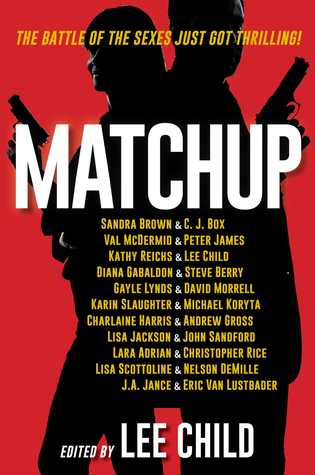
And finally, a Gabaldon story that’s only kind of a Gabaldon story. In the new anthology MatchUp, bestselling authors are paired up — one male, one female — to create stories together featuring some of their well-known characters. For those who are into these type of stories (crime thrillers), I’m sure there’s lots to enjoy from authors such as Sandra Brown, Charlaine Harris, etc etc etc. For me, I picked up MatchUp at the library strictly for the sake of Herself.

In MatchUp, Diana Gabaldon is paired up with Steve Berry, and together they’ve written a story — Past Prologue — centered around Berry’s lead character, Cotton Malone. In Past Prologue, Malone is in Scotland (to be clear, that’s modern-day, 21st century Scotland) for a private book sale. When he wanders away from Ardsmuir for a walk across the moors, he finds himself at a stone circle… and then, poof! finds himself in the year 1755. And for those who know their Outlander history, that means that Ardsmuir is a prison housing Scottish rebels, among them a tall red-haired man who stands out in a crowd. Malone ends up meeting the one and only Jamie Fraser (pausing here for hearts to melt). The plot of the story isn’t that important, but the Jamie moments are a lovely little treat, with a lot of heartbreak squeezed into one small conversation.

Past Prologue isn’t essential to the Outlander canon, but for fans, it’s a fun way to get a glimpse of familiar characters and settings. Not a bad way to pass the time!


*If you’re an Outlander reader but haven’t yet read the five already-published stories, I’ll just say that my two favorites are A Leaf on the Wind of All Hallows and Virgins.

**Further note: As always, I’ll mention that the audiobooks are a great option for enjoying the Gabaldon novellas. Jeff Woodman is particularly wonderful narrating anything related to Lord John, and I really enjoyed the Virgins audiobook as well.

***I’ve written about a few of the these stories/novellas in other posts. Check them out:
A Trail of Fire
Virgins

Save

Save

Save

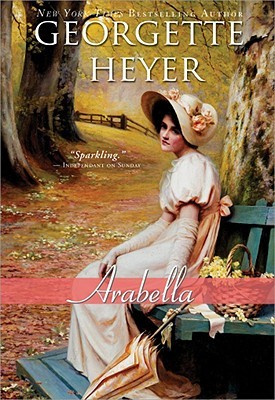
Audiobook Review: Arabella by Georgette Heyer


To Arabella Tallant, the eldest daughter of a penniless country clergyman, the invitation to stay with her London godmother was like the key to heaven, for in addition to living in the glamorous city, Arabella might even find a suitable husband there. Armed with beauty, virtue and a benevolent godmother, the impetuous but impoverished Arabella embarked on her first London season with her mother’s wish in mind: snare a rich husband.

Impetuosity is Arabella’s only fault. When fate cast her in the path of arrogant, socially prominent Robert Beaumaris, who accused her of being another petty female after his wealth, the proud, headstrong ingenue made a most startling claim — she was an heiress! Suddenly Arabella found herself the talk of the town and pursued by every amorous fortune hunter in London and some of the most eligible young men of the day.

But only one caught Arabella’s fancy: Mr Beaumaris, the handsome and dedicated bachelor. She should know better than to allow herself to be provoked by nonpareil Beau. That gentleman, however, although a most artful matrimonial dodger, badly underestimated his seemingly naive adversary… But would her deceitful charade destroy her one chance for true love…?

I think Georgette Heyer will now be my go-to author for when I need something to lighten the mood. Because Arabella is absolutely delightful, and listening to the audiobook was the perfect antidote for a major, crabby funk.

Arabella has a wonderfully rom-com feel to it. Arabella overhears Mr. Beaumaris making a snide remark about girls looking for money coming up with excuses to cross paths with him, and she is so offended that she’s being lumped in with fortune-hunters (when it was really a carriage mishap that brought her to his doorstep) that she impetuously declares herself to be “the” Miss Tallant — you know, the fabulously rich Miss Tallant. Oh my.

Before she knows it, Arabella is the center of the London season, as every son of distinguished but cash-poor family seems to suddenly be in love with the dear girl. She’s turning down marriage proposals left and right, and meanwhile feels increasingly guilty that her spur-of-the-moment lie has become the accepted truth. So how can she ever say yes to a proposal knowing she does so under false pretenses? And given the butterflies she’s feeling over Mr. Beaumaris, how can she force herself to confess the truth to him and lose his respect and affection?

What a tangled web we weave…

The story may be a trifle predictable — yes, we all know where this love story will end up — but it’s such fun to see how we get there. Mr. Beaumaris is the epitome of fashionable society. All the young men hoping for society standing copy his style, his manners, even his sardonic little tweaks to propriety (for example, after he wears a dandelion in his buttonhole, suddenly all the young men flood London florists with demands for dandelions). He’s known in town as “the nonpareil”, and his presence at any gathering automatically lends it cachet. It’s entertaining to watch people fall all over themselves to interact with Mr. Beaumaris, and the reader (listener) catches on long before Arabella does that he’s both fond of her and is onto her little secret.

There’s a dark cloud in Arabella, as Arabella’s younger brother comes to London as well and tries to live the high life. As he indulges in high fashion, parties, gambling, and gaming houses, he falls into such extreme debt that he sees either death or enlistment as his only options. This is a light-hearted novel, so obviously things work out (I won’t say how), but it’s touch and go for a while there, and I honestly worried about him.

I occasionally had a little twinge of discomfort about Arabella’s relationship with Mr. Beaumaris. She’s seventeen, and he’s a very sophisticated and polished thirty. Not an unimaginable age difference, but there are times where it seems that what he loves about her most is her innocent youth and naivete, and there were a few times where it teetered on the edge of creeper-ness for me.

Now I’m making it sound weird, and it’s really not. Overall, I found Arabella utterly charming, and loved the main character as well as the depictions of all the silly upper class foolery that makes up high society and the London season.

As for the audiobook, it’s a wonderful listen. Narrator Phyllida Nash nails Arabella’s innocence and enthusiasm, as well as Mr. Beaumaris’s haughtiness and dry humor. The only two difficulties with listening to the audiobook are 1) the author uses a lot of terminology related to society matters, fashion, types of carriages, and so on, many of which I wasn’t familiar with — but it’s hard to stop to figure out while listening to an audiobook (especially when said listening is happening while driving a car), and 2) at some point the pace got frustrating for me. Arabella isn’t exactly a suspense novel, but as Arabella gets more and more snared by her made-up story and torn between her feelings for Mr. Beaumaris, her urgent need to help her brother, and her wish for honesty, I just couldn’t wait to find out what happened next — but I had to, since my listening time was parceled out between my drives to and from work.

Arabella would be a great point of entry for anyone considering giving Georgette Heyer a try for the first time, and it’s certain to please anyone who’s already enjoyed some of her books. As for me, I will definitely seek out more Georgette Heyer novels, especially when I find myself in need of a bit of cheering up.

_________________________________________

The details:

Title: Arabella
Author: Georgette Heyer
Narrator: Phyllida Nash
Publisher: Sourcebooks Casablanca
Publication date: Originally published 1949
Length (print): 312 pages
Length (audiobook): 10 hours, 43 minutes
Genre: Regency romance
Source: Purchased

Save

Save

Save

Save

Save

Save

Save

Save

Take A Peek Book Review: Coming Up For Air by Miranda Kenneally

“Take a Peek” book reviews are short and (possibly) sweet, keeping the commentary brief and providing a little peek at what the book’s about and what I thought.


Synopsis:

(via Goodreads)

Swim. Eat. Shower. School. Snack. Swim. Swim. Swim. Dinner. Homework. Bed. Repeat.

All of Maggie’s focus and free time is spent swimming. She’s not only striving to earn scholarships—she’s training to qualify for the Olympics. It helps that her best friend, Levi, is also on the team and cheers her on. But Levi’s already earned an Olympic try out, so she feels even more pressure to succeed. And it’s not until Maggie’s away on a college visit that she realizes how much of the “typical” high school experience she’s missed by being in the pool.

Not one to shy away from a challenge, Maggie decides to squeeze the most out of her senior year. First up? Making out with a guy. And Levi could be the perfect candidate. After all, they already spend a lot of time together. But as Maggie slowly starts to uncover new feelings for Levi, how much is she willing to lose to win?


My Thoughts:

Miranda Kenneally excels at showing a straightforward view of the complicated lives of teens. Her lead characters tend to be strong, dedicated young women, almost always hard-driving athletes, who are not afraid to go for what they want, no matter the resistance they meet along the way. And while the athletic achievements of her characters might be super-special, their inner lives keep them grounded and relatable.

In Coming Up For Air, Maggie is a girl who has spent her whole life in a pool. She adores swimming, and devotes herself to it, almost to the exclusion of everything else, because she loves it so much. She pushes herself to be her best, takes her coach’s rules about training and non-swimming behavior seriously, and drives herself forward toward her dream of getting an Olympic trial.

At the same time, Maggie depends on her three best friends for their Friday burger nights to keep her grounded — but she starts to realize how much she’s missed out on by giving so much of her life over to training. She’s never hooked up, has only had one real kiss, and is starting to feel like she’s the last high schooler left who’s so inexperienced. She asks her best friend Levi to teach her how to hook up, but isn’t prepared for how intensely they connect physically, and neither knows how to deal with the fall-out when their no-strings fling starts to feel like it could be a relationship.

As in all of this author’s books, the characters deal with sex in a very down-to-earth way. It’s not needlessly graphic, but it does get into details of what they do together and how it makes them feel. It’s not prettied-up sex, and doesn’t pretend that every encounter is full of fireworks. I appreciate the healthy attitude toward sexual exploration, protecting oneself, and owning one’s own sexual desires and needs.

It’s always refreshing to read Miranda Kenneally’s stories about determined, talented young women, and I think teen readers will appreciate seeing how universal feelings of self-doubt and insecurity can be, even for people who seem to have it all. It’s also refreshing to see the portrayal of the different home lives and coping mechanisms the various main and secondary characters have, and to get pretty good solid advice about life in general by paying attention to the words of the characters’ coaches.

As with the author’s earlier books, the storyline is set in Hundred Oaks, Tennessee, and familiar characters from other books pop up in cameo roles. While all of the Hundred Oaks books work perfectly well as stand-alones, it is pretty fun to read several (or all) and see the connections and shout-outs.

I heartily recommend Miranda Kenneally’s books for teen readers and for adults who like realistic, optimistic, honest depictions of young adult life.

Interested in this author? Check out my reviews of other books by Miranda Kenneally:
Racing Savannah
Breathe, Annie, Breathe
Jesse’s Girl
Defending Taylor
Catching Jordan

_________________________________________

The details:

Title: Coming Up For Air
Author: Miranda Kenneally
Publisher: Sourcebooks Fire
Publication date: July 4, 2017
Length: 320 pages
Genre: Young adult contemporary fiction
Source: Review copy courtesy of the publisher via NetGalley

Save

Save

Travel reading wrap-up: A big batch of mini-reviews — mothers, sisters, dogs, hippos, and more!

I can’t call the last two weeks a vacation. Yes, I was away from home. No, it wasn’t relaxing. And while there were plenty of fun moments spending time with my sisters and friends, for the most part, it was stress, work, and exhaustion that ruled the day.

Side note: When we imagine our adult lives, I’m sure none of us think about caring for elderly parents and the hard decisions that involves, but sooner or later, if we’re lucky enough to have parents that live that long, it’s something that we inevitably have to deal with.

Meanwhile, I did a lot of reading while on airplanes and sitting around hospital rooms and nursing homes. Here’s a quick wrap-up of what I read while I was away… everything from feral hippos to church ladies to war stories.


The Mothers by Brit Bennett: Contemporary fiction about teen lovers and the impact on an entire congregation, as told (mostly) through the eyes of the older women who form the backbone of their close-knit church community. The story is engaging, but at times the actions of the characters made me so angry I wanted to hurl the book at the closest wall. (Since I was reading on an airplane, this would not have been a good idea.) Still, I enjoyed the character development, the look at the impact of the characters’ decisions and how these set the course of the rest of their lives, and the intricate weaving of connections, friendships, and family loyalty.


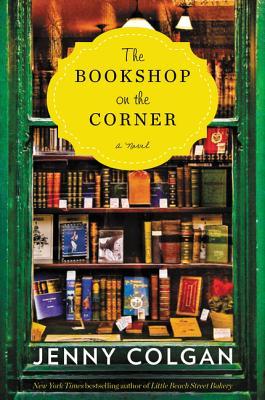
The Bookshop on the Corner by Jenny Colgan: If you’ve ever checked out the Bookshelf Porn website, you’ll know what I mean when I say that this book is booklover porn. No, there’s nothing graphic or dirty or illicit here — but it’s sure to touch the fantasies of every devoted bookworm who ever dreamed of owning her own bookstore. Here, the 29-year-old main character, a downsized librarian, buys a big van, stocks it with every book she can get her hands on, and drives around the Scottish Highlands selling books to people who clearly need them. Lives are changed. Quirky villagers abound. And there’s even a love story! This is a sweet, lovely book, perfect for vacation reading or really, for any time you want to get away from the daily grind and wallow in the fantasy of finding a perfect life that combines reading, handling books, and being madly in love.


Sisters of Shiloh by Kathy & Becky Hepinstall: A beautiful yet devastating story of sisters, love, and sacrifice set during the Civil War. When Libby’s husband Arden is killed on the battlefield, Libby vows to get revenge by joining the Rebel army herself and killing one Yankee soldier for every year that Arden lived. Libby’s older sister Josephine can’t talk her out of it and can’t stand the idea of Libby going off alone, so the two sisters disguise themselves as teen boys and enlist. Sisters of Shiloh shows the savage butchery of the Civil War battlefields and the horrible deprivations suffered by the soldiers, but above all, it’s a story about courage and sisterly devotion. While I occasionally wanted to just shake some sense into Libby, I loved Josephine and found her part of the story deeply affecting and inspiring. I’d consider this book must-read historical fiction.


Lily and the Octopus by Steven Rowley: Warning: If you can’t handle sad dog stories, walk away now. Lily and the Octopus is the story of a lonely man whose life revolves around his beloved dachshund Lily. He constructs elaborate fantasies to narrate their life together (including interactive games of Monopoly and pizza nights), and simply can’t face reality when he spots what he calls an “octopus” on her head — his make-believe image for a tumor. As the story progresses, his battle against the octopus to save Lily’s life becomes increasingly complex — but ultimately, this is the story of a man slowly losing his steadiest, truest companion, and it’s a tearjerker. The octopus and other pieces of the fantasy were a little too much for me at times, but other than that, this is a moving story of love and connection.


River of Teeth by Sarah Gailey: Oh my. Feral hippos in the Mississippi River marshlands! In this alternate version of US history, the government has solved the country’s meat shortage by importing hippos to be bred in the bayou. Hippo ranches are huge moneymakers, and cowboys ride exotic breeds of hippos known for their overland speed. Meanwhile, feral hippos haunt the criminal-run riverboats — a handy punishment for those who get caught cheating at cards. A ragtag band is assembled to stop a dastardly plot, and this gang is loads of fun, and full of people representing all the shades of the gender rainbow — all without blinking an eye. This novella is oodles of entertainment, and its underlying silliness absolutely hit the spot on a stressful day. I can’t wait for the sequel, Taste of Marrow, due out in September.


The Deep by Nick Cutter: This is a quick page-turner, but I found myself weirdly unengaged. An odd global virus starts the book on a promising note, but the virus piece is soon overshadowed by the malevolent goings-on deep in the sea at a research lab at the bottom of the Marianas Trench. There are lots of icky and creepy things in a setting that should be terrifying… but it just wasn’t scary, there’s no pay-off for the initial premise, and ultimately, the conclusion simply wasn’t satisfying. There is, however, tons of yuck and ick, so definitely not a book for the squeamish.


We Stand On Guard by Brian K. Vaughan: A graphic novel limited series (consisting of six installments) that tells the story of a US invasion of Canada and the scruffy resistance team that fights back. It’s quite fun, and a quick read. Fans of Saga and Y: The Last Man will absolutely want to check this one out.


And that’s what I read while I was away! I covered a lot of ground — horror, historical fiction, comics, and dogs, to name a few — and that’s just the way I like it. Give me a stack of books with a lot of variety, and I’m a happy camper, no matter where I may find myself.

And now that I’m home, I’m looking forward to diving back into my bookshelves and seeing what odd array of books I can come up with next!

Save

Save

Save

Save