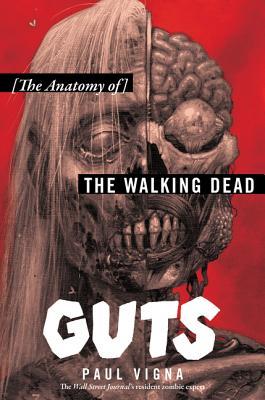
Book Review: Guts: The Anatomy of the Walking Dead by Paul Vigna

In this first and only guide to AMC’s exceptional hit series The Walking Dead, the Wall Street Journal’s Walking Dead columnist celebrates the show, its storylines, characters, and development, and examines its popularity and cultural resonance.

From its first episode, The Walking Dead took fans in the United States and across the world by storm, becoming the highest-rated series in the history of cable television. After each episode airs, Paul Vigna writes a widely read column in which he breaks down the stories and considers what works and what doesn’t, and tries to discern the small details that will become larger plot points.

So how did a basic cable television show based on Robert Kirkman’s graphic comic series, set in an apocalyptic dog-eat-dog world filled with flesh-eating zombies and even scarier human beings, become a ratings juggernaut and cultural phenomenon? Why is the show such a massive hit? In this playful yet comprehensive guide, Vigna dissect every aspect of The Walking Dead to assess its extraordinary success.

In the vein of Seinfeldia,Vigna digs into the show’s guts, exploring its roots, storyline, relevance for fans and the wider popular culture, and more. He explores how the changing nature of television and media have contributed to the show’s success, and goes deep into the zombie genre, delineating why it’s different from vampires, werewolves, and other monsters. He considers why people have found in zombies a mirror for their own fears, and explains how this connection is important to the show’s popularity. He interviews the cast and crew, who share behind-the-scenes tales, and introduces a cross-section of its diverse and rabid viewership, from fantasy nerds to NFL stars. Guts is a must have for every Walking Dead fan.


I’ve only recently become a convert to the cult of The Walking Dead. After years of turning up my nose, I finally broke down and gave it a try this past spring, and immediately became completely hooked. I binge-watched the entire series to date within about 2 months (not bad for 99 episodes!), and read all of the graphic novels as well. So naturally, when I heard about Guts, I had to read it, and the timing couldn’t be better, as season 8 of The Walking Dead starts TOMORROW. *jumping up and down and hyperventilating with anticipation*

Guts is a truly fascinating book about the show, examining it from all angles and giving thoughtful consideration to its popularity and relevance in today’s world. The author includes recaps of the major events of each season so far, and covers the show’s history, the background of Robert Kirkman, who created the comic series and is an executive producer of the TV series, some anecdotes from behind the scenes, and the ups and downs of production, including the still-ongoing lawsuit by the first showrunner, Frank Darabont, against AMC.

The book also includes interactions with fans, including some observations from a day at Walker Stalker Con, a fan event at which fans interact with cast and crew. The description of the vibe at Walker Stalker shows the deep impact of The Walking Dead on its devoted fan base.

Most interestingly, author Paul Vigna goes deeper than the pop culture tidbits (such as fan favorites, iconic weaponry, and best episodes) to show the philosophical underpinnings of The Walking Dead, connecting the show’s impact to sociopolitical and economic climate of the era. He examines the religious themes that find their way into the show, as well as the political constructs of the various societies and the ways in which both Maslow’s hierarchy and Hobbesian views on the natural state of man can be discussed in relation to themes of community and family as shown in TWD.

Some random and various pieces from the book:

Hobbes argues that the natural state of man, as in a state without the collar of a central government, is one where every man is at war with every other man. There is no industry or security, no artistic pursuits, just the “continual fear and danger of violent death, and the life of man, solitary, poor, nasty, brutish, and short,” Hobbes writes… In Hobbes’s argument, people enter a social contract and surrender some of their personal freedoms in exchange for the kind of security and permanence that will release them from the terror of that brutish life in the wild.

Like giving up their endless wandering to join the community of Alexandria, right?

On political structures in TWD:

What seems to matter most is that a leader in the post-zombie apocalypse is decisive… Negan and the Governor are homicidal and suicidal, but they are also decisive. Negan may be as liable to throw you into an oven as feed you a spaghetti dinner, but in his decisiveness, he can bring some sense of comfort — so long as you don’t cross him.

Acknowledging that “Rick has made enough mistakes to fill a book,”, the author comments:

Now, I don’t have a problem with Rick making mistakes. It wouldn’t be realistic for him to make the right choice every single time. Rick’s greatest quality, apart from an uncanny survival instinct, is the ability to simply choose. In a world where life is measured in hours and days rather than decades, that is an essential quality to have.

Further thoughts:

The biggest key to survival, really, is how quickly you can shed your old morality and discover a new one.

And finally, a quote from the season 7 finale, spoken by Maggie, that sums up the essence of TWD. This is who the main characters are and what they do — and what makes us love them:

To sacrifice for each other, to suffer, to stand, to grieve, to give, to love, to live, to fight for each other.

This is what Rick, Maggie, and all the other characters in Alexandria, the Hilltop, and the Kingdom represent, and why we keep tuning in, season after season.

If you’re a fan of The Walking Dead and happen to be inclined to dig in and go beyond the blood and gore, definitely pick up a copy of Guts. It’s a quick, interesting read, with just the right mix of plot points and food for thought.

_________________________________________

The details:

Title: Guts: The Anatomy of the Walking Dead
Author: Paul Vigna
Publisher: Dey Street Books
Publication date: October 3, 2017
Length: 336 pages
Genre: Non-fiction/entertainment/pop culture
Source: Library

Save

Save

Save

Save

Save

Save

Save

Audiobook awesomeness: His Dark Materials trilogy by Philip Pullman

Over the last two months, I’ve had one of my most delightful experiences with audiobooks. I decided to revisit the world of the His Dark Materials trilogy, since (a) it’s been many, many years since I read the books, and (b) a new book is coming out this fall. (THIS WEEK! NOW!!!)

It’s hard to believe that it’s been 17 years (!!) since the publication of The Amber Spyglass, the 3rd book in the trilogy (following The Golden Compass and The Subtle Knife). I remember being blown away by these books upon first read, but after all these years, I was fuzzy on the details.

Side note: I choose to disregard the existence of the Golden Compass movie, which utterly failed to capture the essence of the books and characters. But that’s an issue best left in the past…

So what was so special about these audiobooks?

For starters, they’re full-cast recordings. Oddly enough, full-cast audiobooks don’t usually appeal to me. When I’ve tried them before, I tend to feel removed from the story — maybe because it’s more like listening to a dramatization than like reading an actual book.

Whatever the reason, this time around, I just loved it. Philip Pullman takes the role of narrator, and he’s marvelous. His reading of his own work is nuanced and expressive, and he infuses his lines with wit, humor, and when needed, sorrow and intensity. Beyond Pullman himself, the rest of the cast is simply terrific. I don’t know who these voice actors are, but their talent is huge! The voice of Lyra was perfect — young, intense, brave, emotional — and Will was spot-on too, fierce, loving, worried, daring. Probably most magnificent was the voice of Iorek Byrnison — I don’t think I’ve ever heard such a deep, rumbly voice on an audiobook. If a polar bear could speak English and deigned to have a conversation with one of us puny humans, I bet that’s exactly what he’d sound like. Other stand-outs are the voices of Texas aeronaut Lee Scoresby and the often wicked but strangely sympathetic Mrs. Coulter.

Now, if you’ve read these books, you know that an important part of Pullman’s world building is the presence of daemons — a corporeal, animal being who represents each person’s true inner being. Every human in Lyra’s world has a daemon, and the shape they take is often quite representative of the nature of the person. Children’s daemon’s can change shape at will, until they child reaches puberty, at about which time the daemon settles into his or her final shape. Worth noting, too, is that a daemon is always the opposite gender of the person it’s attached to — so Lyra’s daemon Pantalaimon is male. On the audiobooks, the daemons who have speaking roles are voiced in ways completely appropriate to their personalities. The absolute best is Lee’s daemon Hester, a jackrabbit with a feminine Western twang.

As for the story, I’m kind of assuming that anyone bothering to read this post is already familiar with the amazing world of His Dark Materials. For those who aren’t familiar, here are the brief plot summaries from Goodreads:

Book 1 – The Golden Compass (also published under the title Northern Lights):

Here lives an orphaned ward named Lyra Belacqua, whose carefree life among the scholars at Oxford’s Jordan College is shattered by the arrival of two powerful visitors. First, her fearsome uncle, Lord Asriel, appears with evidence of mystery and danger in the far North, including photographs of a mysterious celestial phenomenon called Dust and the dim outline of a city suspended in the Aurora Borealis that he suspects is part of an alternate universe. He leaves Lyra in the care of Mrs. Coulter, an enigmatic scholar and explorer who offers to give Lyra the attention her uncle has long refused her. In this multilayered narrative, however, nothing is as it seems. Lyra sets out for the top of the world in search of her kidnapped playmate, Roger, bearing a rare truth-telling instrument, the alethiometer. All around her children are disappearing—victims of so-called “Gobblers”—and being used as subjects in terrible experiments that separate humans from their daemons, creatures that reflect each person’s inner being. And somehow, both Lord Asriel and Mrs. Coulter are involved.

Book 2 – The Subtle Knife:

Lost in a new world, Lyra finds Will—a boy on the run, a murderer—a worthy and welcome ally. For this is a world where soul-eating Specters stalk the streets and witches share the skies with troops of angels.

Each is searching—Lyra for the meaning of Dark Matter, Will for his missing father—but what they find instead is a deadly secret, a knife of untold power. And neither Lyra nor Will suspects how tightly their lives, their loves, and their destinies are bound together… until they are split apart.

Book 3 – The Amber Spyglass:

The Amber Spyglass brings the intrigue of The Golden Compass and The Subtle Knife to a heart-stopping end, marking the final volume of His Dark Materials as the most powerful of the trilogy.

Along with the return of Lyra, Will, Mrs. Coulter, Lord Asriel, Dr. Mary Malone, and Iorek Byrnison the armored bear, come a host of new characters: the Mulefa, mysterious wheeled creatures with the power to see Dust; Gallivespian Lord Roke, a hand-high spymaster to Lord Asriel; and Metatron, a fierce and mighty angel. So, too, come startling revelations: the painful price Lyra must pay to walk through the land of the dead, the haunting power of Dr. Malone’s amber spyglass, and the names of who will live–and who will die–for love. And all the while, war rages with the Kingdom of Heaven, a brutal battle that–in its shocking outcome–will uncover the secret of Dust. Philip Pullman deftly brings the cliff-hangers and mysteries of His Dark Materials to an earth-shattering conclusion–and confirms his fantasy trilogy as an undoubted and enduring classic.

It’s funny how certain things stick in your mind — or my mind, anyway. I absolutely remembered about Dust and daemons, about Lord Asriel and Mrs. Coulter, the Mulefa, Metatron, and more. What I didn’t remember was the sheer power of this story. What starts out feeling mostly like a children’s book (albeit a children’s book with gifted-level vocabulary) by the end has transformed into an epic tale that shares universal truths about love, honesty, the nature of good and evil, devotion, betrayal, friendship, and freedom.

The emotional impact by the end is enormous. I clearly remembered being devastated by the end of the trilogy, and yet I was still pretty much hit over the head with an anvil all over again while listening by the intensity of the heart-ache the characters experience. It’s simply lovely and tragic and uplifting, all at the same time.

As an added bonus, Pullman later published two shorter works set in the same world: Lyra’s Oxford, which takes place two years after the conclusion of The Amber Spyglass, and Once Upon a Time in the North, which is set about 35 years earlier, showing the first eventful meeting of Lee Scoresby and Iorek Byrnison. Both of these novellas are available as audiobooks, and like the main trilogy, are highly enriched by the full-cast recording. (It’s definitely worth getting the hard copies as well, as the physical editions include wonderful woodcut illustrations and all sorts of bits and pieces of ephemera related to His Dark Materials — writing scraps, maps, ballooning guides, postcards, and even a board game.)

Finally, there’s a short story available either as an e-book or audiobook. The Collectors is very creepy, and I’d say listen to the audio version. Bill Nighy does a fabulous job with the narration, and it only takes about a half hour, but is definitely worth it.

I realize that this is by no means a comprehensive book review of His Dark Materials and the associated works. And it’s not meant to be. Really, I’ve just gotten completely swept away by these wonderful audiobooks, and I couldn’t keep it to myself a moment longer!

Especially for anyone thinking about reading the upcoming new release, La Belle Sauvage, going back to His Dark Materials via audiobook will be a huge treat, absolutely worth the time.

Needless to say, for anyone who hasn’t read these books at all yet, please do! His Dark Materials is one of those trilogies usually shelved with children’s fiction, but which truly transcends the age or genre labels. These books are just plain good fantasy literature; they transport us to multiple alternate worlds but never lose their human heart.


____________________________________

Books in the series:
The Golden Compass (1995)
The Subtle Knife (1997)
The Amber Spyglass (2000)
Lyra’s Oxford (2003)
Once Upon a Time in the North (2008)
The Collectors (2014)
NEW: La Belle Sauvage (The Book of Dust, book 1) – to be released 10/19/2017

Save

Save

Save

Save

Save

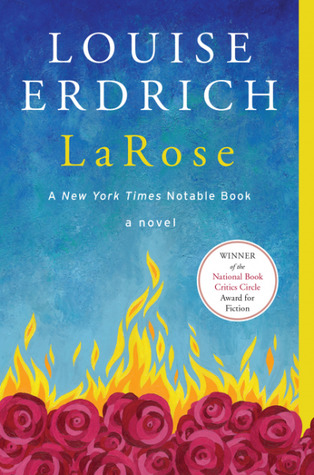
Take A Peek Book Review: LaRose by Louise Erdrich

“Take a Peek” book reviews are short and (possibly) sweet, keeping the commentary brief and providing a little peek at what the book’s about and what I thought.

Synopsis:

(via Goodreads)

In this literary masterwork, Louise Erdrich, the bestselling author of the National Book Award-winning The Round House and the Pulitzer Prize nominee The Plague of Doves wields her breathtaking narrative magic in an emotionally haunting contemporary tale of a tragic accident, a demand for justice, and a profound act of atonement with ancient roots in Native American culture.

North Dakota, late summer, 1999. Landreaux Iron stalks a deer along the edge of the property bordering his own. He shoots with easy confidence—but when the buck springs away, Landreaux realizes he’s hit something else, a blur he saw as he squeezed the trigger. When he staggers closer, he realizes he has killed his neighbor’s five-year-old son, Dusty Ravich.

The youngest child of his friend and neighbor, Peter Ravich, Dusty was best friends with Landreaux’s five-year-old son, LaRose. The two families have always been close, sharing food, clothing, and rides into town; their children played together despite going to different schools; and Landreaux’s wife, Emmaline, is half sister to Dusty’s mother, Nola. Horrified at what he’s done, the recovered alcoholic turns to an Ojibwe tribe tradition—the sweat lodge—for guidance, and finds a way forward. Following an ancient means of retribution, he and Emmaline will give LaRose to the grieving Peter and Nola. “Our son will be your son now,” they tell them.

LaRose is quickly absorbed into his new family. Plagued by thoughts of suicide, Nola dotes on him, keeping her darkness at bay. His fierce, rebellious new “sister,” Maggie, welcomes him as a co-conspirator who can ease her volatile mother’s terrifying moods. Gradually he’s allowed shared visits with his birth family, whose sorrow mirrors the Raviches’ own. As the years pass, LaRose becomes the linchpin linking the Irons and the Raviches, and eventually their mutual pain begins to heal.

But when a vengeful man with a long-standing grudge against Landreaux begins raising trouble, hurling accusations of a cover-up the day Dusty died, he threatens the tenuous peace that has kept these two fragile families whole.

Inspiring and affecting, LaRose is a powerful exploration of loss, justice, and the reparation of the human heart, and an unforgettable, dazzling tour de force from one of America’s most distinguished literary masters.

My Thoughts:

A beautiful, complicated, stunning book by the masterful Louise Erdrich! What a powerful follow-up to her award-winning The Round House (review).

LaRose is a story about family, loss, retribution, and atonement. It shows the complex connections between parents and children, and the unusual ways in which new families can be formed and held together. LaRose also demonstrates the power of old wounds, never fully healed, to affect people’s actions and emotions years after the fact.

The author weaves in the story of earlier generations in the family, each with its own LaRose, showing the challenges of growing up in the reservation and boarding school systems, and the lasting impact of tradition on people being forced to assimilate.

The characters in LaRose are well-drawn and unforgettable. There’s Landreaux’s family, with his smart, loving daughters who take in Maggie and declare her their sister too. And there’s LaRose himself, a good, loving boy who is put in an impossible situation — and, impossibly, grows, thrives, and gives his two families what they need, while also forging his own strong connection to the spirit world. Myriad other characters flesh out the community and give life to the ties that bind the various characters together.

LaRose is unusual and beautifully written. Highly recommended.

_________________________________________

The details:

Title: LaRose
Author: Louise Erdrich
Publisher: Harper Perennial
Publication date: May 10, 2016
Length: 400 pages
Genre: Contemporary fiction
Source: PurchasedSave

Save

Save

Save

Book Review: Sleeping Beauties by Stephen King and Owen King

In this spectacular father-son collaboration, Stephen King and Owen King tell the highest of high-stakes stories: what might happen if women disappeared from the world of men?

In a future so real and near it might be now, something happens when women go to sleep; they become shrouded in a cocoon-like gauze. If they are awakened, if the gauze wrapping their bodies is disturbed or violated, the women become feral and spectacularly violent; and while they sleep they go to another place. The men of our world are abandoned, left to their increasingly primal devices. One woman, however, the mysterious Evie, is immune to the blessing or curse of the sleeping disease. Is Evie a medical anomaly to be studied, or is she a demon who must be slain? Set in a small Appalachian town whose primary employer is a women’s prison, Sleeping Beauties is wildly provocative and gloriously absorbing.


Sleeping Beauties has one simple message:

Men bad. Women good.

It takes 702 pages to get there, but that does seem to be the point. Not that it’s not fun along the way, but subtle, this book ain’t.

In the town of Dooling, somewhere in the Appalachias, the women’s prison is the main local employer. Between the town and the prison, we meet a heap of characters — so many characters, in fact, that the book opens with a four-page listing of characters and their descriptions — which, believe me, is necessary if you want to make it through this massive book with any shred of sanity remaining intact. The vast cast of characters includes the sheriff and her husband (the prison psychiatrist), sheriff’s deputies, prison guards, prisoners, high school bullies, and all sorts of other townsfolk.

The onset of the Aurora plague (named for Sleeping Beauty in the fairy tales) is pretty fascinating stuff. Worldwide, women are falling asleep, and once they do, they become encased in a filmy cocoon. They sleep, seemingly permanently, in these cocoons unless someone foolish (usually a man) decides to try to get them out, in which case they awaken with homicidal intent, murder whoever disturbed them, and then fall back to sleep as the cocoon reestablishes itself around the sleepers.

Major freak-outs ensue. What’s causing this, and what can be done? While some women give in to the inevitable, others become determined not to sleep at all, turning to all sorts of legal and illegal stimulants to stay awake, from super-powered coffee to crystal meth. As the days wear on, regular life all but disappears, and the men who are left behind turn to violence and chaos.

Small town dynamics suddenly take on huge significance. Sides are drawn up, and to a certain extent, the law of the jungle takes over. Those who are strong, survive. The physically or mentally weaker of the men are pushed aside, and as power is extended to those who should never, ever have it, we can feel the threat-level creep up into the danger zone.

I can’t say I was ever bored while reading this book, but really, it’s much too big for its own good. “Overstuffed” is the word that came to mind, especially as I neared the halfway point and realized that the amount left would be equivalent to reading yet another full novel. I don’t think we need quite so many backstories for quite so many characters. Not all of it is important, and a more honed narrative might have helped the narrative feel sharper and more focused.

I’m not sure that the end makes a whole lot of sense, but I often feel that way with Stephen King books (and yes, I’m a big fan). There are many unanswered questions about the why and how of the Aurora plague. Why do we get the resolution that we get? Because we do. Why is this the answer to Aurora? Because it is.

Still, Sleeping Beauties is filled with small and big moments of adrenaline-pumping suspense, with everyday scenes carrying extraordinary hints of menace and violence. As is typical of King novels, the huge number of characters comes together to give us the flavor of the community — although I’ll be honest and admit that I stopped bothering to distinguish between handfuls of the more minor characters as the story progressed.

Overall, I enjoyed Sleeping Beauties, but don’t think it’s Stephen King’s best work by a long shot. The message, as I mentioned at the top of the review, is really pretty basic and obvious, and at times I felt like I was being beaten over the head by the senseless need for violence exhibited by men in crisis, especially as contrasted by the peace and cooperation shown on the women’s side of the equation.

For a look at how Stephen King and Owen King worked together on Sleeping Beauties, check out this piece in a recent Entertainment Weekly.

_________________________________________

The details:

Title: Sleeping Beauties
Author: Stephen King and Owen King
Publisher: Scribner
Publication date: September 26, 2017
Length: 702 pages
Genre: Horror/fantasy
Source: Purchased

Save

Save

Save

Save

Save

Save

Save

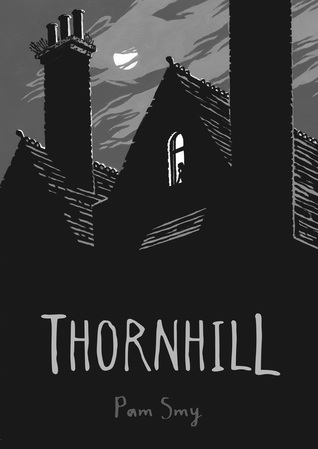
Book Review: Thornhill by Pam Smy

Parallel stories set in different times, one told in prose and one in pictures, converge as Ella unravels the mystery of the girl next door.

1982: Mary is a lonely orphan at the Thornhill Institute For Children at the very moment that it’s shutting its doors. When her few friends are all adopted or re-homed and she’s left to face a volatile bully alone, her revenge will have a lasting effect on the bully, on Mary, and on Thornhill itself.

2016: Ella has just moved to a new town where she knows no one. From her room on the top floor of her new home, she has a perfect view of the dilapidated, abandoned Thornhill Institute across the way, where she glimpses a girl in the window. Determined to befriend the girl, Ella resolves to unravel Thornhill’s shadowy past


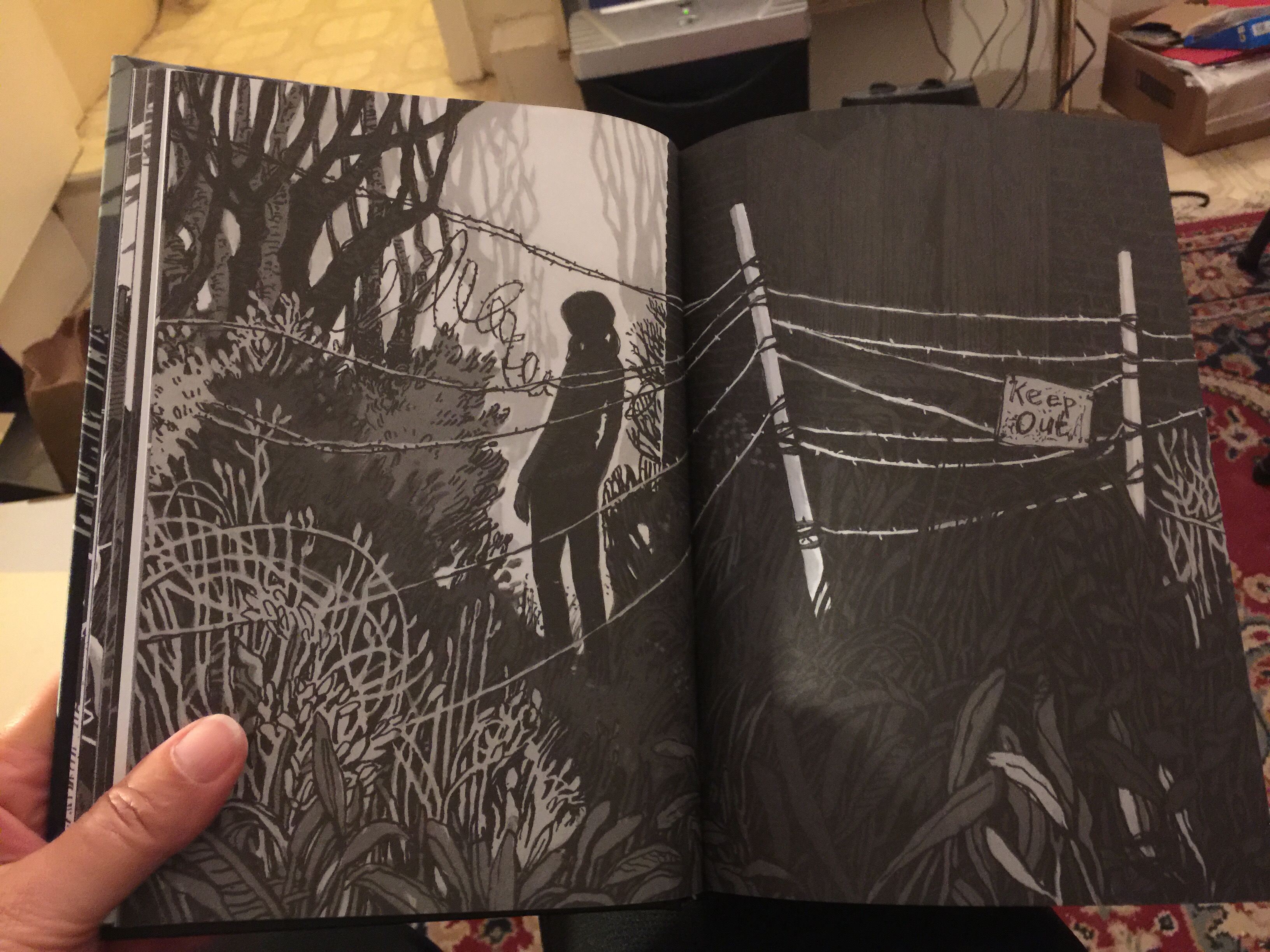
Oh my, this was a great read! Very much reminiscent of the style of Brian Selznick, Thornhill is told both in words, via Mary’s diary, and in pictures, via illustrations of Ella’s experiences. Author/illustrator Pam Smy does an incredible job of moving the story forward through the black and white illustrations from Ella’s world, which are stark and evocative and ever-so-ghostly.

The tale told through Mary’s diary is heartbreaking, and the first-person narrative is particularly effective. We see how Mary is an outcast even among outcasts, friendless in this home for unwanted girls, locking herself away in her own private sanctuary to escape the insidious, cruel attention of the house bully. Mary constructs a whole world for herself with her books and her carefully crafted puppets, but even this sanctuary ends up being violated. It’s wrenching to read of Mary’s pain, and all too easy to understand how her pain turns to anger and then to a burning need for revenge.

Meanwhile, Ella’s story is sad in its own way. Through the pictures on her walls, we come to understand that Ella’s mother has died and that she’s being raised in this new home and new town by a father who’s usually absent. No wonder Ella becomes fascinated by the spooky house she can see from her window and the mystery of the light she sees shining from the attic window.

Thornhill is a spooky, powerful, and quite definitely sad story of two girls from different times, bound together by loneliness. It’s haunting in all the right ways, and I simply loved the use of words and pictures to tell one complete story.

_________________________________________

The details:

Title: Thornhill
Author: Pam Smy
Publisher: Roaring Brook Press
Publication date: August 29, 2017
Length: 544 pages
Genre: Ghost story/illustrated/young adult
Source: Library

Save

Save

Save

Save

Save

Save

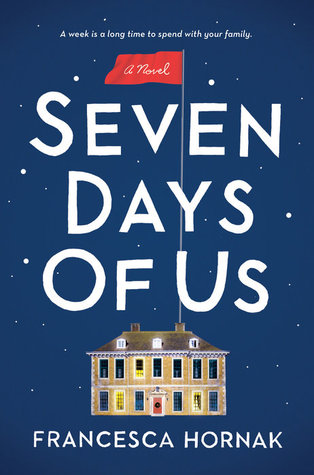
Take A Peek Book Review: Seven Days of Us by Francesca Hornak

“Take a Peek” book reviews are short and (possibly) sweet, keeping the commentary brief and providing a little peek at what the book’s about and what I thought.

Synopsis:

(via Goodreads)

A warm, wry, sharply observed debut novel about what happens when a family is forced to spend a week together in quarantine over the holidays…

It’s Christmas, and for the first time in years the entire Birch family will be under one roof. Even Emma and Andrew’s elder daughter—who is usually off saving the world—will be joining them at Weyfield Hall, their aging country estate. But Olivia, a doctor, is only coming home because she has to. Having just returned from treating an epidemic abroad, she’s been told she must stay in quarantine for a week…and so too should her family.

For the next seven days, the Birches are locked down, cut off from the rest of humanity—and even decent Wi-Fi—and forced into each other’s orbits. Younger, unabashedly frivolous daughter Phoebe is fixated on her upcoming wedding, while Olivia deals with the culture shock of being immersed in first-world problems.

As Andrew sequesters himself in his study writing scathing restaurant reviews and remembering his glory days as a war correspondent, Emma hides a secret that will turn the whole family upside down.

In close proximity, not much can stay hidden for long, and as revelations and long-held tensions come to light, nothing is more shocking than the unexpected guest who’s about to arrive…

My Thoughts:

Seven Days of Us is an entertaining, quick read about a family forced into isolation together — a perfect setting for secrets to emerge and for walls to come down. Phoebe and Olivia rediscover the sisterly affection that’s been absent since childhood; Andrew and Olivia finally come to understand one another’s obsessions and sacrifices; Emma and Andrew confront the iciness that’s taken hold in their marriage. Meanwhile, Phoebe’s fiancé crashes the quarantine, as does an American who ends up being the long-lost illegitimate son Andrew never knew he had.

The story moves along at a smart pace, with each character getting bits and pieces of the story. The main chapters focus on the seven days of quarantine, while within each day, there are sections devoted to the different characters, each section showing the time and the location within the house — which lends the narrative a claustrophobic air that’s appropriate for the involuntary intimacy and close quarters experienced by the family.

I do wish the author had included some sort of introduction explaining the quarantine rules. Why would a doctor treating epidemic patients be allowed back into England, passing through a major aiport, in order to go into quarantine with her family? Is this a normal protocol? Sure, readers could Google it, but it would have been helpful to have a bit of context, considering that this is the major plot driver of the entire book.

My interest never flagged, but certain plot developments (no spoilers here!) were completely obvious, and a tragic turn toward the end of the book seemed both jarring and unnecessary.

Overall, I recommend Seven Days of Us. It’s a pleasant, amusing story of family dynamics, and the ups and downs of the relationships between parents and children, between siblings, and between spouses definitely ring true.

_________________________________________

The details:

Title: Seven Days of Us
Author: Francesca Hornak
Publisher: Berkley
Publication date: October 17, 2017
Length: 368 pages
Genre: Contemporary fiction
Source: Review copy courtesy of the publisher via NetGalleySave

Save

Save

Save

Save

Save

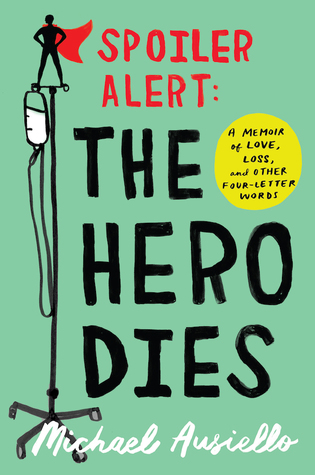
Book Review: Spoiler Alert: The Hero Dies by Michael Ausiello

In this evocative and gorgeously wrought memoir reminiscent of Rob Sheffield’s Love Is a Mixtape and George Hodgman’s Bettyville, Michael Ausiello—a respected TV columnist and co-founder of TVLine.com—remembers his late husband, and the lessons, love, and laughter that they shared throughout their fourteen years together.

For the past decade, TV fans of all stripes have counted upon Michael Ausiello’s insider knowledge to get the scoop on their favorite shows and stars. From his time at Soaps in Depth and Entertainment Tonight to his influential stints at TV Guide and Entertainment Weekly to his current role as co-founder of the wildly popular website TVLine.com, Michael has established himself as the go-to expert when it comes to our most popular form of entertainment.

What many of his fans don’t know, however, is that while his professional life was in full swing, Michael had to endure the greatest of personal tragedies: his longtime boyfriend, Kit Cowan, was diagnosed with a rare and very aggressive form of neuroendrocrine cancer. Over the course of eleven months, Kit and Michael did their best to combat the deadly disease, but Kit succumbed to his illness in February 2015.

In this heartbreaking and darkly hilarious memoir, Michael tells the story of his harrowing and challenging last year with Kit while revisiting the thirteen years that preceded it, and how the undeniably powerful bond between him and Kit carried them through all manner of difficulty—always with laughter front and center in their relationship. Instead of a tale of sadness and loss, Spoiler Alert: The Hero Dies is an unforgettable, inspiring, and beautiful testament to the resilience and strength of true love.

As an occasionally obsessed TV fan, I’ve been familiar with Michael Ausiello’s writing career for years. I avidly followed his “Ausiello Report” for scoops and spoilers on my favorite shows, enjoyed his fanboy goofiness and funny interludes, his Smurf obsessions, and his super witty writing style. When I saw that he had a book coming out this fall, I naturally assumed this might be a collection of his TV writing.

Spoiler alert: It’s not.

Spoiler Alert: The Hero Dies is a personal, painful, inspiring, heart-warming, and heart-breaking love story — Ausiello’s up-close memoir of the loss of his husband Kit after a short and intense battle with a devastating form of cancer.

Michael and Kit spent 13 years of their lives together, but this isn’t a sugar-coated fairy-tale version of perfect love and romance. Instead, it’s a warts-and-all look at a real relationship, filled with ups and downs, anger, laughter, challenges, and almost-breakups. It’s clear that Michael and Kit had an instant chemistry and loved each other deeply and passionately, but Ausiello doesn’t shy away from describing the less euphoric points of their relationship as well, such as Kit’s infidelities and Michael’s drinking.

Kit goes from strong, healthy and vital to a cancer patient in practically the blink of an eye. It’s wrenching to see Kit’s discomfort as it grows into pain, to see Michael’s helplessness at not being able to rescue the person he loves most in the world, and the growing realization that Kit is facing a death sentence, and quickly. And yet, there are moments of joy and beauty. Although they’d never considered marriage for themselves before, they practically turn the city upside down in a quest to get married before Kit starts chemo, and it’s funny and sweet and lovely.

I can’t say enough good things about this book, although I suppose I should warn readers that you’ll need heaps of Kleenex at the ready. The book has a lot of humor, for a book about cancer, and Michael and Kit themselves are funny people. I loved reading about their romance, their pet names for one another, all the silly little things that make up a life, and cried myself into a messy puddle as Kit weakened and they prepared themselves for loss.

Michael and Kit clearly had something special, and I appreciate how much of himself Michael was willing to share in putting together this lovely tribute to the man he loved. It’s practically a cliché to describe a book as a love letter to a person or place — but it’s just so apt in this case. Spoiler Alert: The Hero Dies is absolutely a love letter to Kit — funny, sweet, and utterly romantic, and so very tragic.

I so admire Michael Ausiello’s honesty and emotional openness in writing this book, and although I didn’t previously know anything about him except his professional persona, I do feel invested now in wishing him a life of happiness. Kit was clearly an incredibly special person, and I’m happy to have gotten to know him through this book.

_________________________________________

The details:

Title: Spoiler Alert: The Hero Dies
Author: Michael Ausiello
Publisher: Atria Books
Publication date: September 12, 2017
Length: 320 pages
Genre: Memoir
Source: Review copy courtesy of the publisher via NetGalley

Save

Save

Save

Save

Save

Audiobook Review: Venetia by Georgette Heyer


A young lady of beauty and intelligence facing an unbearable choice…

Venetia Lanyon is one of Georgette Heyer’s most memorable heroines. Beautiful, capable, and independent minded, her life on the family’s estate in the countryside is somewhat circumscribed. Then a chance encounter with her rakish neighbor opens up a whole new world for Venetia. Lord Damerel has built his life on his dangerous reputation, and when he meets Venetia, he has nothing to offer and everything to regret. As Venetia’s well-meaning family steps in to protect her from potential ruin, Venetia must find the wherewithal to take charge of her own destiny, or lose her one chance at happiness…

That’s it. It’s official. I’m a Georgette Heyer fangirl.

Venetia may well be my favorite Georgette Heyer book yet. It’s sweet, funny, clever, light, and adorable — in short, fluff, but super enjoyable fluff that’s perfectly entertaining without being cloying.

Venetia herself is a marvelous main character. She’s a bit unusual for a Regency romance heroine. At age 25 and unmarried, she’s perilously close to being “on the shelf”, but doesn’t seem particularly bothered by this. Venetia has lived all her life on her father’s country estate, more or less isolated from anything approaching society. Her father was a recluse, and her mother died when she was young. Ever since her father’s death some years earlier, Venetia lives at Undershaw with her younger brother Aubrey, running the estate until her other brother Conway returns from his military service and takes up the reins as heir.

Venetia and Aubrey are comfortable and happy. Aubrey is a budding scholar with his nose constantly in a book or ten, and at age 17, is soon to be off to Cambridge. While Venetia has two devoted suitors, she’s not in love with either, and is perfectly content to think of a future in which she sets up a household for herself and Aubrey and keeps things running for him while he’s busy with his studies.

This all changes, however, when the absentee lord of the neighboring estate returns home. Lord Damerel has a horrible reputation as a rake who once seduced and ran off with a married woman — and even though this happened nearly 20 years ago, he’s still not considered fit for decent society. He seems to enjoy his bad-boy status and his wild social life, though, and doesn’t exhibit any indication of wishing to reform

But then he meets Venetia! After a brief and sexually charged chance meeting, Venetia can’t shake thoughts of the devilish man next door, but doesn’t expect to see him again, as he never spends much time at his estate. Fate (or something) intervenes — Aubrey, who has a weak leg from a congenital hip problem, is thrown from his horse and injured, and is brought to Damerel’s estate, the closest shelter, for treatment. It’s clear that Aubrey needs to remain still and undisturbed in order to recuperate, and Damerel is a surprisingly generous and gracious host, insisting on caring for Aubrey for as long as needed.

Despite the disapproval of Venetia’s friends and would-be beaux, she becomes a daily visitor to Damerel’s estate, keeping company with Aubrey — but also becoming fast friends with Damerel. The friendship is a surprise and a delight for both of them. They discover that they can talk honestly and openly with one another in a way that they can’t with anyone else. They sit and talk for hours, and find themselves kindred spirits.

The complication, once they start to realize that what they feel goes beyond friendship, is that Damerel’s past has left him with a truly scandalous reputation. Venetia, on the other hand, is a virtuous girl who’s never been anywhere or done anything. Her aunt and uncle hope to arrange a suitable match for her with a respectable gentleman, but Venetia has other plans. Unfortunately for her, Damerel is so in love with her that he doesn’t want to ruin her, and decides to give her up rather than tarnish her in the eyes of society.

Oh, what fun! This business about reputations and scandal and — good gracious — what will everyone think? is just all so quaint and charming. Making a good match is really all that matters for a girl at that time, but Venetia is just rebel enough to not particularly care. She has money from her father’s bequest, enough to live comfortably without needing a wealthy husband to provide for her. She’s learned about life from books and is confident about her own abilities. She’s a devoted sister and a protector for Aubrey, has a good head for business as demonstrated by her management of Undershaw for many years, and feels that she’d be much happier living as a spinster than being trapped in a marriage that bores her to tears.

It’s refreshing to see a Regency heroine who knows her own mind so clearly. Venetia is never rude, not even when provoked, but she’s also no doormat. She’s honest with herself, understands what she truly desires, and is quite capable of scheming to get things to go her way. I was incredibly amused by her solution to her problems with Damerel, and her charming approach to manipulating those around her so that her plan is sure to be successful is just brilliant.

Once again, I simply loved the audiobook version of a Georgette Heyer novel. Phyllida Nash is a wonderful narrator, perfectly capturing the different tones and voices of the various characters. Not every female audiobook narrator can pull off a man’s voice with conviction, but Phyllida Nash is terrific, making Damerel growly and insinuating and absolutely rakish, while Venetia comes across as both innocent and clever.  Such fun!

I will say that the language in Georgette Heyer books can be a challenge at times, as she uses a lot of expressions and terms that are no longer used or not used in the same way, and it can be a bit of a puzzle trying to figure out the context. I do love how Venetia uses the term “idiotish” quite often (Damerel finds this amusing as well), and she and Aubry call each other “stoopid” with a certain degree of affection. I was thrown, though, early on in the book when Venetia is thinking about what she knows of Damerel’s reputation, and recalls how he was last in the country when he hosted an orgy at his estate a year or so prior to the current time in the book. An orgy??? I’m assuming the author is using the word in its older meaning, a drunken party with sexual excesses, rather than as what today’s pop culture would consider an orgy. Still, it’s rather startling toward the end of the book (spoiler ahead!) when Venetia tells Damerel that she doesn’t expect him to give up his orgies, and he asks her if she’d like to preside over them. Oh my.

I only “met” Georgette Heyer this year, but Venetia is now the 4th of her books that I’ve read, and it’s splendid. Like Arabella (review), Venetia would be a good starting point for anyone who hasn’t read Georgette Heyer before. It’s full of the style and wit and sheer silliness that makes her books so delightful.

_________________________________________

The details:

Title: Venetia
Author: Georgette Heyer
Narrator: Phyllida Nash
Publisher: Sourcebooks Casablanca
Publication date: Originally published 1949
Length (print): 375 pages
Length (audiobook): 12 hours, 36 minutes
Genre: Regency romance
Source: Purchased

Save

Save

Save

Save

Save

Save

Save

Save

Save

Save

Save

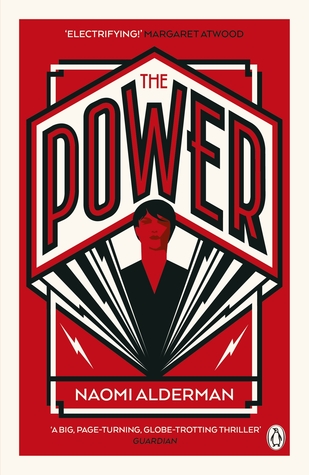
Take A Peek Book Review: The Power by Naomi Alderman

“Take a Peek” book reviews are short and (possibly) sweet, keeping the commentary brief and providing a little peek at what the book’s about and what I thought.


Synopsis:

(via Goodreads)

In The Power the world is a recognisable place: there’s a rich Nigerian kid who larks around the family pool; a foster girl whose religious parents hide their true nature; a local American politician; a tough London girl from a tricky family. But something vital has changed, causing their lives to converge with devastating effect. Teenage girls now have immense physical power – they can cause agonising pain and even death. And, with this small twist of nature, the world changes utterly.

This extraordinary novel by Naomi Alderman, a Sunday Times Young Writer of the Year and Granta Best of British writer, is not only a gripping story of how the world would change if power was in the hands of women but also exposes, with breath-taking daring, our contemporary world.

My Thoughts:

The Power won the Bailey Women’s Prize for Fiction for 2017. It’s a fascinating book. What would happen to our world if the power structure were suddenly flipped upside down? When women develop the power to inflict pain by channeling electricity from a newly developed physical anomaly, the rules and customs of society change rapidly, with men finding themselves on the receiving end of restrictive laws, sexual violence, and lack of political power.

The book is structured as a book-within-a-book, as a male writer many years in the future writes a novel imagining how this transition came about. As the letters between him and his editor make clear, his work is so far-fetched (in describing a male-dominated society) that’s it’s practically unimaginable. It’s an interesting take on a very different world order, positing a world that’s been run and controlled by females for thousands of years, so that a scenario with men in power — soldiers, police, political leaders — seems like fantasy.

Of course, it’s disturbing to think that physical power is the determining factor in how society is formed and structured. There’s no middle ground. Wouldn’t it be nice to think that a society of equals might be the result? In The Power, the world belongs to the strong — and with absolute power comes the corruption, abuses, and excesses that seem to inevitably grow out of a lopsided power relationship.

I couldn’t put this book down, and found the ending pretty shocking. I did wish to see through a wider lens at time — the focus on the main characters started to feel restrictive further into the story, and I would have liked to see how other parts of the world, especially more progressive urban or cultural centers, might have responded and developed as a result of the shift in power between genders. Still, it’s a totally absorbing book, and one that would be great food for discussion.

_________________________________________

The details:

Title: The Power
Author: Naomi Alderman
Publisher: Little, Brown and Company
Publication date: US release date: October 10, 2017 (published in UK in 2016)
Length: 400 pages
Genre: Science fiction
Source: PurchasedSave

Save

Save

Save

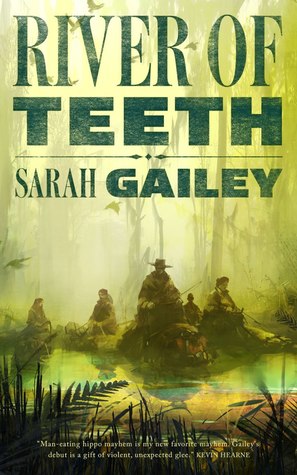
Hippos Go Berserk! The weird and wonderful River of Teeth books by Sarah Gailey

FERAL. HIPPOS. IN THE MISSISSIPPI.

What more do you need to know?

In the two River of Teeth novellas, author Sarah Gailey takes us on a tour of the Wild South of an alternate United States, and it’s a crazy good time.

In River of Teeth, we learn that the United States Congress, in the mid-1850s, considered importing hippos as a solution to a national meat shortage. True story! In real life, the proposal never went anywhere, but in River of Teeth, the Hippo Act of 1857 is just the beginning of decades-long development of hippo ranches in the marshes and bayous of the South.

Hippo cowboys are called hoppers. Some hippos are bred for their meat, and others are bred to be fast and loyal mounts for their hoppers, who ride them on kneeling saddles, brush their teeth at night, and make sure they’re never too far from a body of water to swim in.

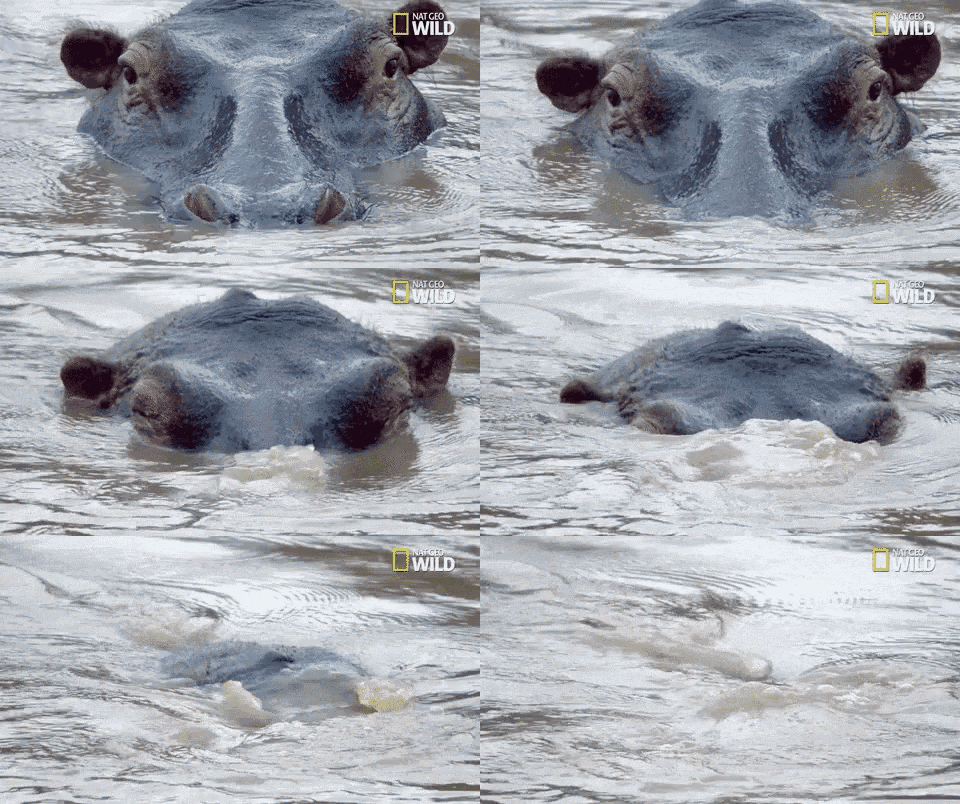
Meanwhile, a bunch of hippos that escaped from a ranch early on have reproduced and gotten fiercer than ever, and now form the great bunch of feral hippos who terrorize the Harriet, the dammed lake that once was a passage of the Mississippi.

Got all that? That’s really all just backstory to the main event. In River of Teeth, a hopper named Winslow Houndstooth brings together a gang of hired guns (and knives) — mostly outlaws — to carry out an operation (most definitely not a caper) aimed at restoring trade on the Mississippi. The group includes a pregnant Latina with a penchant for very sharp daggers, a large French woman who’s a skilled thief and tough in a fight, the nonbinary character Hero who’s an explosives expert, and slick/shady Cal, who just obviously shouldn’t be trusted. They go up against the riverboat gangster in chief who controls the Harriet and punishes card cheats by throwing them to the ferals, and there’s trickery and double-crossing galore.

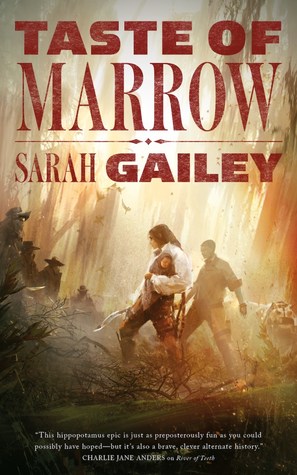
Let’s just say that there are explosions and disasters, and things are left so up in the air that by the time Taste of Marrow begins, it’s no surprise that our gang is split up into two separate groups, each believing the other likely dead but unwilling to give up the search. Much of Taste of Marrow is devoted to looking for one another, but at the same time there’s a newborn baby, marshlands and rivers being overrun by the ferals now loose of their restrictions, and riverboats being chomped to shreds by said ferals. There’s also a romantic reunion worth the way, as well as a sensibility that’s fresh and in tune with women’s bodies in a way that’s utterly new in an adventure tale.

Okay, to be more specific, while on the hunt for her kidnapped infant, the tough-as-nails former assassin has to deal not only with the stress of evading the law and plotting her revenge, but with a raging breast infection that no doubt is due to clogged milk ducts after having her nursing baby taken from her. Egads, I cringed in sympathy whenever she accidentally brushed something against her painful breasts. Been there, done that, but not while riding a hippo. (Boy, don’t I feel wimpy now.)

These books are a delight, plain and simple. I mean, the premise is just crazy, right? How can you not love a “western” that features hippos? Where a popular song played on the saloon piano is “The Wild Pottamus Rag”? And these people take their hippos very, very seriously. They raise them from hops (baby hippos), talk to them, sing to them, and seem to practically mind-meld with their chosen hippos. The hippos are fast and dangerous, but also devoted and affectionate. And with names like Rosa and Ruby and Abigail and Betsy, how can you not adore them?

“It can’t be,” Hero breathed. They scrambled up, slipping in the wet clay, and ran to the edge of the paddock. They reached right through the half-rotted wood at the edge of the water and pressed both hands to the nose of the little Standard Grey hippo that was huffing bubbles into the water there.

“It had better be,” Adelia said, “or else you just grabbed a strange hippo by the face.”

The gender fluidity and lack of barriers in relationships is quite refreshing and delightful too. Hero’s preferred pronouns are they and them, and no one ever slips up or deviates or makes an issue of it. (As a reader, I did have to re-read a couple of paragraphs when there are group scenes, as I sometimes wasn’t sure on first pass whether the “they” was referring to the group or to Hero themselves. But all good — I sorted it out).

A recurring gag throughout both stories is that various character steel themselves to ask Hero a big question, or Hero braces themselves waiting for the inevitable question that they know is coming. We readers may assume the question will have something to do with gender — and it just never is, instead focusing on mundane matters or questions about explosives or the baby or really, anything else. It a fun moment to realize that we’re being set up over and over again, and it made me giggle.

Despite the relatively short lengths of the two novellas — each under 200 pages — the characters are quite distinct and well described, and it’s really a fun batch of personalities that we get to know and follow on their crazy adventures.

If you at all have a taste for alternate history, cowboy tales, or hippos — especially hippos! — read these novellas.

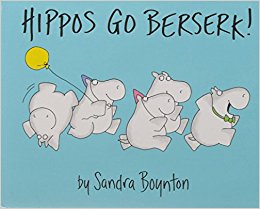
Meanwhile, since starting the stories, I simply haven’t been able to get this other book out of my mind — a children’s favorite that I must have read out loud to my kiddo at least 100 times or more.

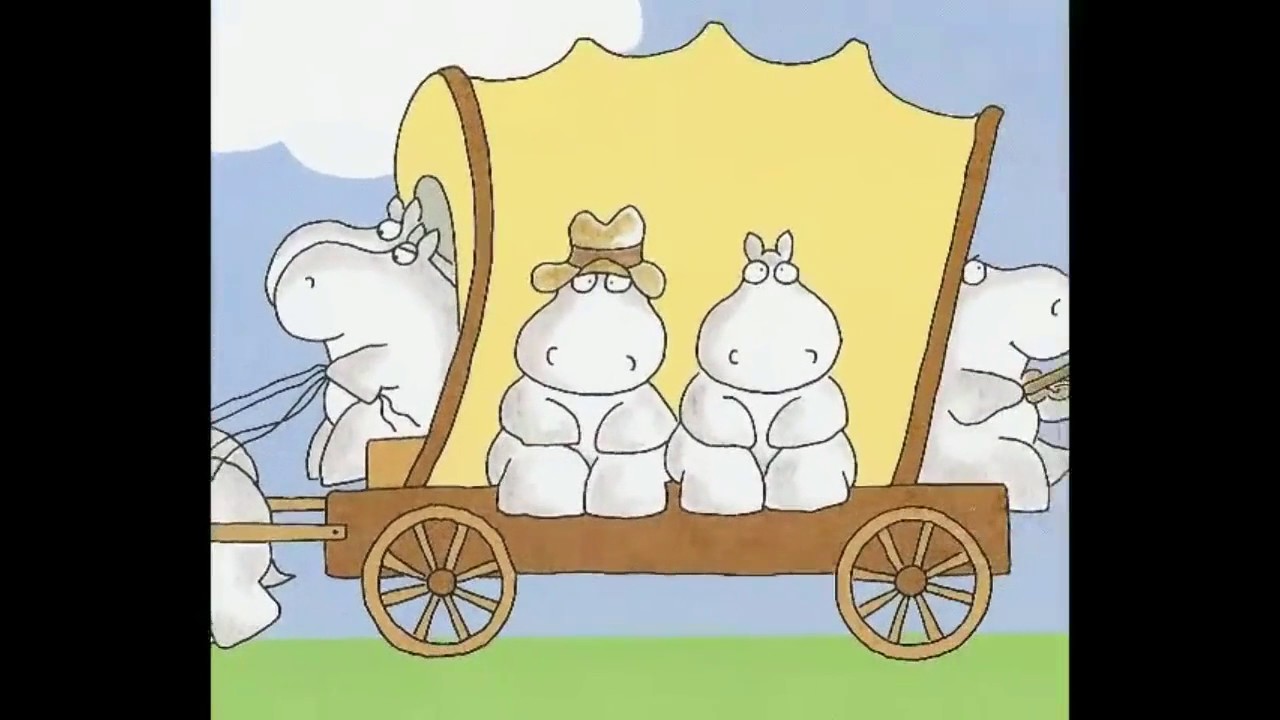
I love these western hippos, who seem to fit the River of Teeth mood:

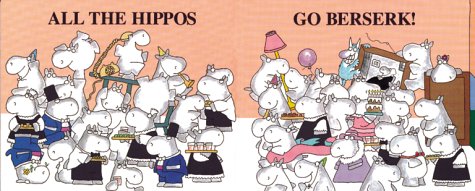
It’s a hippo party! Good times! Crazy fun!

Don’t believe me yet? Check out the whole book, here:


But enough with the kids’ book — you really do need to read River of Teeth and Taste of Marrow! Or I’ll sic this guy on you…


_____________________________________

River of Teeth, 121 pages
Taste of Marrow, 192 pages
Published by Tor, 2017

Save

Save

Save