

Title: Jamaica Inn
Author: Daphne du Maurier
Publication date: 1936
Length: 307 pages
Rating:
The coachman tried to warn her away from the ruined, forbidding place on the rainswept Cornish coast. But young Mary Yellan chose instead to honor her mother’s dying request that she join her frightened Aunt Patience and huge, hulking Uncle Joss Merlyn at Jamaica Inn.
From her first glimpse on that raw November eve, she could sense the inn’s dark power. But never did Mary dream that she would become hopelessly ensnared in the vile, villainous schemes being hatched within its crumbling walls—or that a handsome, mysterious stranger would so incite her passions… tempting her to love a man whom she dares not trust.
For the second Classics Club Spin in a row, I ended up with a Daphne du Maurier novel, and was thrilled to have the extra little push to read yet another of her books. For the previous spin, I read Frenchman’s Creek, a lush, passionate tale of romance and pirates. This spin’s book, Jamaica Inn, is something else entirely: Dark, grim, and dire… and yes, there’s a romantic element too, but for me, that was just a minor element in a tale about a strong heroine confronting irredeemably evil people.
Released in 1936, Jamaica Inn was Daphne du Maurier’s fourth published novel, and was the book that immediately preceded her most famous, iconic work, Rebecca (published 1938).
Set in the early 1800s, Jamaica Inn tells the story of 23-year-old Mary Yellan, who’d been born and raised in the bucolic town of Helford, a coastal village in Cornwall. On her deathbed, Mary’s mother makes Mary promise to go live with her aunt Patience, whom Mary remembers fondly from visits many years earlier, although she hasn’t seen her at all since. Carrying out her obligation once her mother dies, Mary travels to the lonely, desolate Jamaica Inn on Bodmin Moor, where Aunt Patience lives with her husband Joss Merlyn. But Mary finds Patience a changed woman — no longer the pretty, vivacious young aunt from ten years earlier, she’s haggard, meek, and full of nervous tics.
Uncle Joss is huge and menacing, and Jamaica Inn is just as frightening — an isolated, dark building surrounded by miles of open moors, dirty and mildewed and in terrible repair. The bar room appears to be opened to guests as Joss sees fit, but it’s clear that no one actually stays at the inn and that it’s not a place that offers hospitality. In fact, most travelers along the Bodmin road drive by as quickly as possible, sensing the danger that awaits if they stop.
Mary is dismayed. Sent by her mother to live under Patience’s care, once there, it’s obvious that Mary will have to care for Patience, and while she’s desperate to leave, she can’t abandon her fragile aunt to Joss’s cruelty.
The longer Mary stays at Jamaica Inn, the more she learns about Joss Merlyn’s nefarious schemes and the terrible crimes he’s involved with. Eventually, she must find a way to escape, rescue her aunt, and bring justice to hold Joss accountable for all the evil he’s done.
Jamaica Inn is unrelentingly grim, with Mary’s terrible experiences broken up only by her long walks across the moors and her encounters with a man she’s drawn to, yet knows she shouldn’t trust.
He lacked tenderness; he was rude; and he had more than a streak of cruelty in him; he was a thief and a liar. He stood for everything she feared and hated and despised; but she knew she could love him.
Mary’s love for this man is hard to understand, other than acknowledging it as an unexpected and unwanted passion for a classic bad boy. Mary makes assumptions about him, not all of which turn out to be true. She’d decided for herself years earlier that she would never marry, having seen over and over again how the most romantic of couples in love end up leading bitter lives after reality and hardship sets in. She’s never wanted love of her own, and is frustrated by her desire for this man, which defies her own rules of logic.
I go round and round in a trap, all because of a man I despise, who has nothing to do with my brain or my understanding. I don’t want to love like a woman or feel like a woman, […]; there’s pain that way, and suffering, and misery that can last a lifetime. I didn’t bargain for this; I don’t want it.
The driving force of the story lies in the secrets of Joss Merlyn and the evil doings centered around Jamaica Inn. As Mary remains there, she comes to understand the terrible acts he’s responsible for, and she concocts a desperate plan to bring him down.
There are some excellent twists as the climactic moments of Jamaica Inn are revealed, and I won’t give a bit of them away! (Sure, it’s an almost 100-year-old book at this point, but still — spoilers are spoilers!). I was thankful that I was able to read this book with no expectations or foreknowledge of the plot. As with other books of that era, there’s a breathlessness to the chase scenes and other dramatic moments that makes them highly evocative and edge-of-the-seat exciting. Whether it’s the fear of storm-tossed seas or the danger of fog-shrouded moors, this book is a terrific example of high-adrenaline storytelling.
I had not expected the grimness of this story, especially after the romance of Frenchman’s Creek, and found it almost too much at the start, as I wondered just what sort of book I’d stumbled into and whether the darkness would ever let up. There aren’t many (if any) lighter moments, and even brief moments of Mary relaxing or experiencing a hint of happiness are overshadowed by the overall sense of threat and disaster that looms over everything.
I’m left marveling at Daphne du Maurier’s ability to craft a story to leave her readers breathless. Reading Jamaica Inn isn’t exactly fun, but the book truly is compelling, and a fantastic example of a master writer’s work.
Now that I’ve read two du Maurier books in a relatively short span of time, I’m eager to keep going over the course of the coming year. I have copies of The House on the Strand, My Cousin Rachel, and The King’s General on my shelves — I’d welcome recommendations on which to try next!

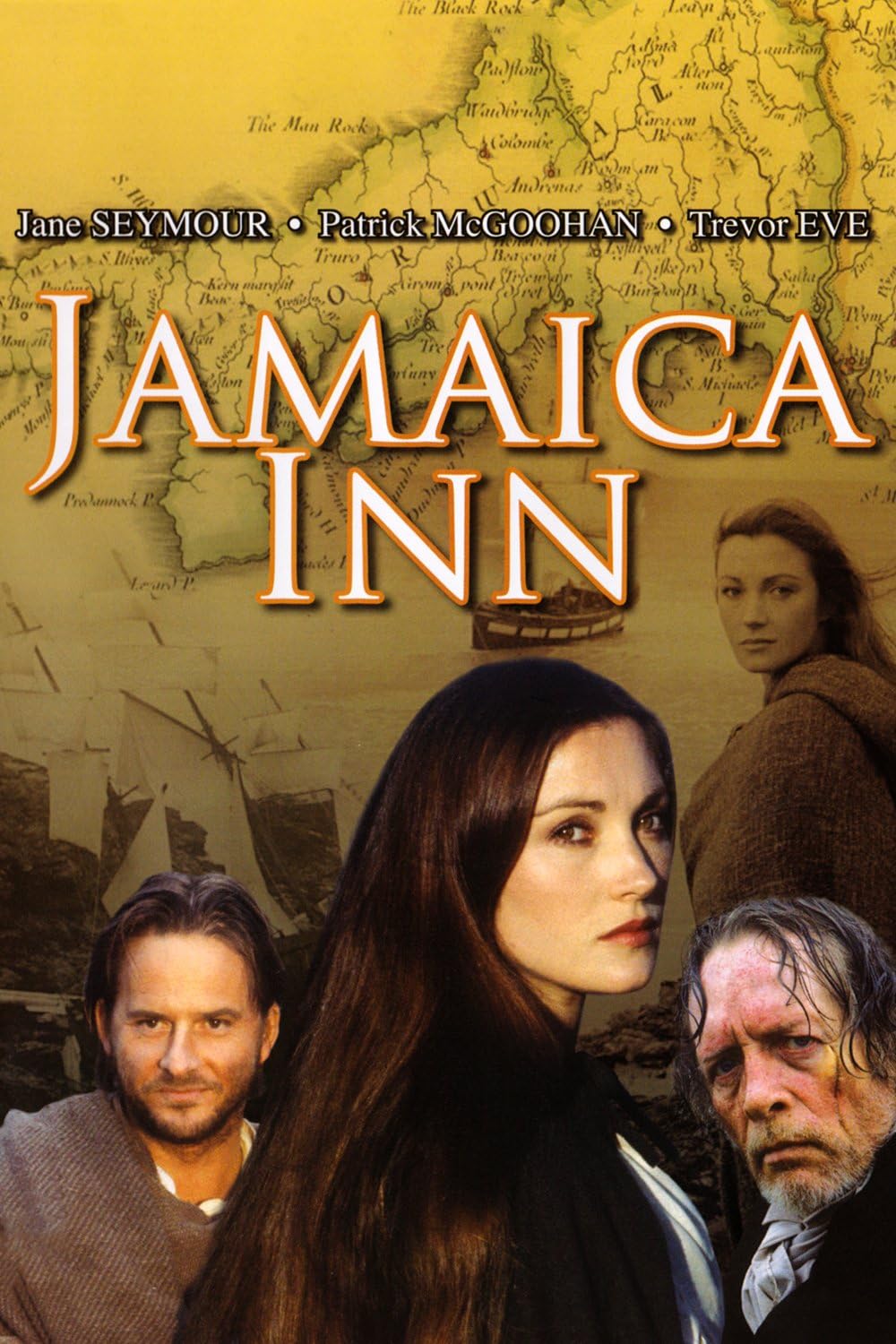
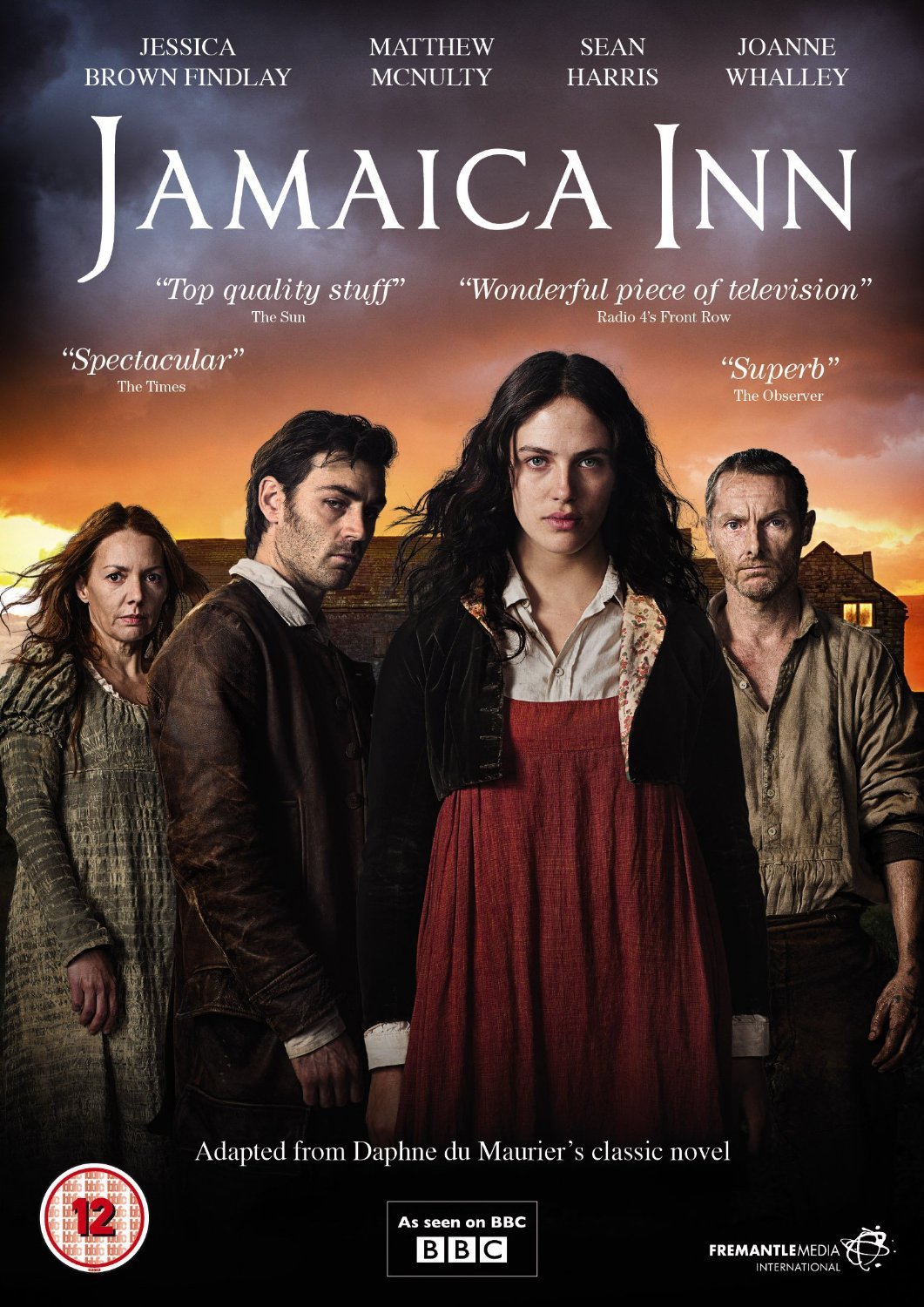
I was interested to learn that Jamaica Inn has been adapted for the screen several times, most notably:
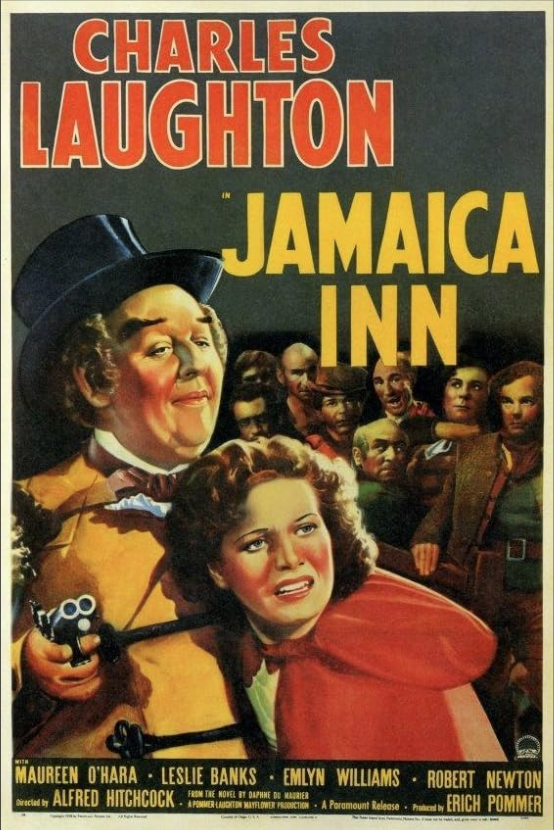
- The 1939 film by Alfred Hitchcock, starring Charles Laughton and Maureen O’Hara
- A 1983 miniseries starring Jane Seymour
- A 2014 miniseries starring Jessica Brown Findlay, Matthew McNulty, Sean Harris, Joanne Whalley and Ben Daniels.
Of these, I’d be most inclined to check out the 2014 version, although I do love a good historical romance with Jane Seymour…
About the author:

Daphne du Maurier (1907-1989) was the daughter of the legendary actor-manager Gerald du Maurier and granddaughter of George du Maurier, the author of the vastly successful late-Victorian novel Trilby and cartoonist for the magazine Punch. She grew up in London and Cornwall, where she would settle as an adult. Du Maurier published her first novel when she was twenty-three and would go on to write seventeen more, many of them best-sellers, including My Cousin Rachel, Jamaica Inn, and Rebecca, one of the most popular novels of the twentieth century. In addition to her fiction, du Maurier wrote several family biographies, a biography of Branwell Brontë, a study of Cornwall, two plays, and a good deal of journalism. She was married to Tommy “Boy” Browning and was the mother of three children.


An awesome review of an awesome book. Can youbelieve, I have seen the Jamaca Inn on Bodmin Moor the book is based on. It is a real place and very desolate looking. I think I mentioned before, but House on the Strand is my favourite Daphne du Maurier book.
Thank you! I was reading about the real Jamaica Inn — sounds like it would be an amazing place to visit. I hope to make House on the Strand my next du Maurier!
I love the sound of this, as you know I love “dark”😁 I also love that there are some adaptations. One way or another, I need to check this out!
I’m so glad I landed on this book! It’s so moody and grim, but absolutely gripping!
I’ve only read Rebecca, My Cousin Rachel and a book of her short stories. I’d like to read Frenchman’s Creek sometime because it was a favorite of my mom’s…but I’m on the fence about this one. It does seem like a grim one.
I’d go with Frenchman’s Creek! It’s so dramatic and passionate, and the main character is fascinating!
I’m so happy you liked this. It is a very dark read but so well written and, well, scary to be honest. Rebecca is my favourite by DuMaurier but I loved this one, Frenchman’s Creek and My Cousin Rachel – another really good story.
I’ve seen the middle of the adaptations, it was very dark too.
Lynn 😀
I can’t wait to read My Cousin Rachel! And I do hope to watch one of these adaptations, assuming I can find one available to stream.