
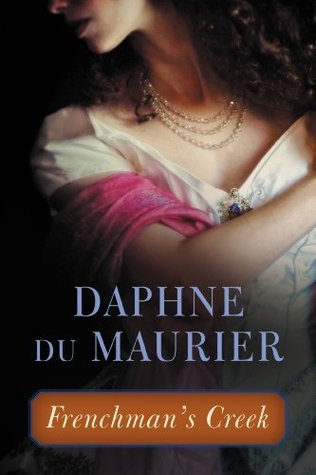
Title: Frenchman’s Creek
Author: Daphne du Maurier
Publication date: 1941
Length: 290 pages
Rating:
Bored and restless in London’s Restoration Court, Lady Dona escapes into the British countryside with her restlessness and thirst for adventure as her only guides. Eventually Dona lands in remote Navron, looking for peace of mind in its solitary woods and hidden creeks. She finds the passion her spirit craves in the love of a daring French pirate who is being hunted by all of Cornwall. Together, they embark upon a quest rife with danger and glory, one which bestows upon Dona the ultimate choice: sacrifice her lover to certain death or risk her own life to save him.
My newest Classics Club Spin landed on this Daphne du Maurier gem, and I couldn’t be happier. Without the little push of the spin, I’m not sure when I would have picked up this book — and it would be such a shame to have missed it.
In this lush, sweeping novel set during the Restoration era (late 1600s), Lady Dona St. Columb is a pampered aristocrat, a 29-year-old wife and mother of two young children who is both bored and disgusted by the excesses and meaninglessness of her life in London. After too many nights of careless pranks and drinking with her husband’s friends, she abruptly departs with her children to the family estate at Navron on the Cornwall coast. There, she finds isolation and peace, a place to explore the wild beauty of the seaside and natural landscapes, and remove herself from the life that was turning her into someone she didn’t actually like.
Once at Navron, she hears startling rumors about a French pirate terrorizing the area. The nobility of the area are on high alert and desperate to catch this fiend, but Dona herself finds the stories fascinating.
One day, Dona spies a ship approaching the coast, and soon after, follows an unseen trail down to a creek near Navron, where she discovers the secret mooring place of the pirate ship La Mouette. And there, she’s introduced to a man most frequently referred to as “the Frenchman” — handsome, refined, a skilled artist, and captain of La Mouette. He and Dona find common ground immediately, and share a thirst for adventure and danger as a way of feeling alive, breaking out of the roles society expects of them, and experiencing true freedom.
Their connection leads to lazy days of fishing and swimming on the creek, as well as riskier and riskier adventures as Dona disguises herself as a cabin boy and joins the crew for expeditions. But eventually, Dona’s secret life catches up with her, and ultimately, her worlds collide and she is forced into the greatest risk of all, as well as a life-altering decision.
She looked out over the smooth sea towards the land, the smell of it came to her with the evening breeze, warm cliff grass, and moss, and trees, hot sand where the sun had shone all day, and she knew that this was happiness, this was living as she had always wished to live. Soon there would be danger, and excitement, and the reality perhaps of fighting, and through it all and afterwards they would be together, making their own world where nothing mattered but the things they could give to one another, the loveliness, the silence, and the peace.
Frenchman’s Creek is so beautifully written that it took my breath away. The story itself is marvelous. Dona is jaded and disillusioned; she hates what she’s become and the carelessness with which she lived her life in London. Her marriage is dull, and while she has all the jewels and gowns and comforts of a spoiled life, she lacks purpose. We see her transformation even before she meets the Frenchman. In Navron, it’s as if she can breathe again. She experiences peace and natural beauty, and is able to think for herself for what seems like the first time in years.
While we don’t learn much about Dona’s past or how she ended up married to Harry, it’s clear to see that she has a creative and adventurous spirit that’s been beaten down by the stifling life she’d been leading. At first appearance, she’s a beautiful, refined, well-dressed, respectable married woman… but she’s quick to throw off the trappings of Lady St. Columb and run barefoot through the trees, swim in the creek, and lie in the grass just to feel the world around her.
The other Dona was dead too, and this woman who had taken her place was someone who lived with greater intensity, with greater depth, bringing to every thought and every action a new richness of feeling, and an appreciation, half sensuous in its quality, of all the little things that came to make her day.
The overall feel of Frenchman’s Creek is headlong passion — not just in the love story aspects, which are beautifully told and sweep us up in the emotional heights — but in the sense of Dona’s reactions to having her spirit restored and being able to embrace having agency over her own life for the first time in years. The descriptions of the natural beauty of Cornwall, Navron, and the creek are simply gorgeous, and again convey a vibrancy and passion that are remarkably vivid.
Action and emotion tie together so well throughout Frenchman’s Creek. If you pick up a pirate story expecting swashbuckling action… well, there’s plenty here to enjoy! The sense of danger is profound in certain scenes, and I had no idea whether to expect a happy or tragic ending. Meanwhile, the love story is achingly beautiful and passionate; even when complications arise and Dona faces enormous conflicts, it’s impossible not to hope for a perfect solution.
For whatever happens we have had what we have had. No one can take that from us. And I have been alive, who was never alive before.
What a wonderful reading experience! I truly loved Frenchman’s Creek. Before this book, the only Daphne du Maurier book I’d read was Rebecca. Now, I’m very motivated to read more. I have copies of The House on the Strand, My Cousin Rachel, Jamaica Inn, and The King’s General — I’d welcome recommendations on which to try next!

About the author:
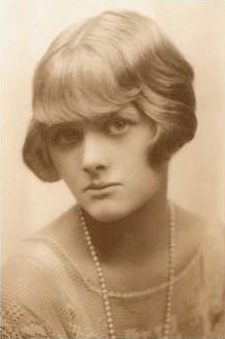
Daphne du Maurier (1907-1989) was the daughter of the legendary actor-manager Gerald du Maurier and granddaughter of George du Maurier, the author of the vastly successful late-Victorian novel Trilby and cartoonist for the magazine Punch. She grew up in London and Cornwall, where she would settle as an adult. Du Maurier published her first novel when she was twenty-three and would go on to write seventeen more, many of them best-sellers, including My Cousin Rachel, Jamaica Inn, and Rebecca, one of the most popular novels of the twentieth century. In addition to her fiction, du Maurier wrote several family biographies, a biography of Branwell Brontë, a study of Cornwall, two plays, and a good deal of journalism. She was married to Tommy “Boy” Browning and was the mother of three children.


Wow, this sounds amazing! And very different from Rebecca, at least in subject matter. I’m glad you put it on my radar!
I’m so happy I finally read this! I can’t wait to read even more of her books.
This is such a beautifully written story and totally captivating. It’s been a while since I read it but I remembers becoming very worried for Dona with the increasing risks she took.
Lynn 😀
Oh gosh, yes! And not being more contemporary, I didn’t have any preset notions about genre or whether to expect a happy ending, so I was on the edge of my seat every time she left on another mission.
I’m so glad you loved this book. I recall reading The House on the Strand and enjoying it a lot. Jamaica Inn was good too.
I love the sound of The House on the Strand! So looking forward to reading it!
I’ve yet to try any of her work, but they all sound interesting. This sounds like a good one too.
There are so many I want to try!
I had no idea that du Maurier wrote these types of historical fiction. I admit, however, I’ve only read one book by her and I loved it, so I do not know what is holding me back.
My SPIN book — Madame Bovary. https://headfullofbooks.blogspot.com/2026/06/classic-review-madame-bovary.html
I had no idea either! I’m eager to read more of her books.
I haven’t read a DmD for ages and I still have this one on my TBR – it sounds delightful. I’ve also just finished a book about pirates by George Sand.
I’ll have to check out your pirate book! I can’t wait to read more by DmD — I may load up my next spin list with even more of her books.
I read this years ago and really loved it! I do enjoy a bit of buckle and swash! I am tempted to reread it but I do have other DdM books that I have not yet read. Maybe I should read them first!Stopping by from the Classics Spin!
Thanks for stopping by! I have a few more DdM books on my to-read list too — more for the next spin, I think!