Book Review: Stand-Off by Andrew Smith

Stand-Off

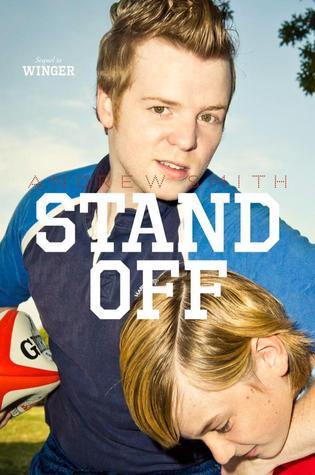
front cover

Stand-off is the name of a position in rugby. Stand-Off is also the name of the newly published sequel to Winger, Andrew Smith’s 2013 young adult novel that both made me laugh and broke my heart into little, tiny pieces.

Ryan Dean West is the main character in both books. Please note that his name is Ryan Dean, not Ryan — it irks him no end when people get it wrong. In Winger, Ryan Dean is a 14-year-old junior at Pine Mountain, a co-ed boarding school located in rural Oregon. He’s used to being different, and considers himself somewhat of a loser, and yet he’s incredibly funny, a great rugby player, a talented cartoonist, and a good friend.

Winger ends with an absolute gut-punch, and that’s all I’ll say about it here. If you haven’t read it, you really should. Check out my review for my rather emotional reaction to Winger, and then rush out to the library to pick up a copy. Seriously.

In Stand-Off, it’s the beginning of senior year, and Ryan Dean is kind of screwed. He’s stuck in a ground-floor, teeny-tiny dorm room — and what’s worse, he’s sharing it with a 12-year-old freshman named Sam Abernathy, an adorable, eager little kid who favors soccer ball pajamas, cooking shows on TV, and leaving doors and windows open to stave off his raging claustrophobia. Needless to say, this does not sit well with Ryan Dean, who just wants to get through senior year, and maybe, just maybe, finally find a private place to have sex with his amazing girlfriend Annie.
Stand-Off back

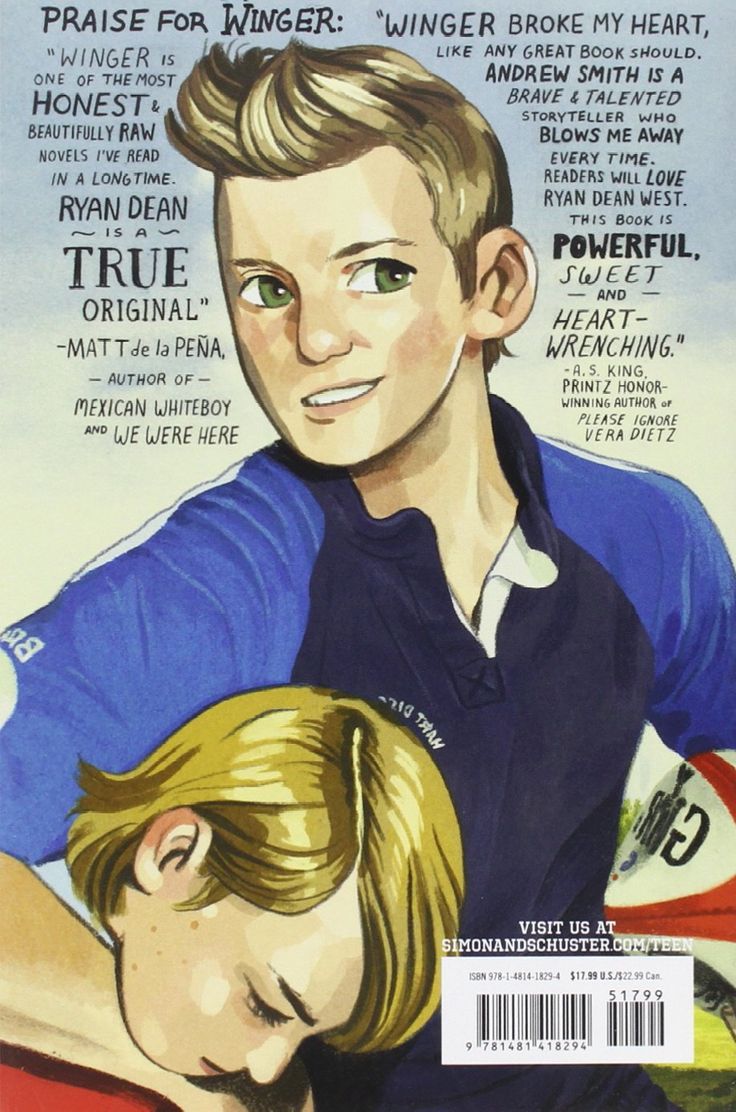
back cover

Of course, nothing goes as planned for Ryan Dean, and the real problem is not Sam or the dorm room — it’s Nate. Nate is Ryan Dean’s abbreviation for the Next Accidental Terrible Experience, and Nate seems to be waiting to pounce on Ryan Dean at every turn, behind every corner, and in every dream. Ryan Dean suffers a series of panic attacks and night terrors, and it just seems to get worse and worse. How will he make it through senior year?

That’s the general overview of the plot. Trust me, it’s great.

One of the most delightful ingredients of Andrew Smith’s books is the language, and the writing in Stand-Off is no exception. Told in the first-person, Stand-Off is pure Ryan Dean, with all the horniness of a 15-year-old boy, plenty of snark, and tons of laughs. Open to any random page, and there are priceless gems. For example — page 193 (see, I’m being random):

“Hey, Ryan Dean, do you know what these cherry tomatoes remind me of all of a sudden?”

No. Just no.

Now cherry tomatoes were officially on the Ryan Dean West Things-I-Will-Never-Ever-Eat-Again List.

Or, again randomly, page 309:

Then I saw the Abernathy — all suited up in his perfectly creased Pine Mountain size extra-small boy suit (he must have thrown all the guys’ clothes in the washers and then waited for everyone to leave the locker room before changing) — winding his way like a malnourished albino chipmunk through a redwood forest of rugby players, balancing a plate of food in his hands while everyone he passed smeared their fingers through his hair.

One of the recurring patterns in this book is Ryan Dean’s questioning paragraphs, which start with “Okay. So, you know how…” and go on from there in a glorious stream of semi-connected thoughts and non-sequiturs:

Okay, so you know how sometimes when you really want to do something and so you make a promise to someone you don’t completely trust because somehow that person has just magically evolved into, like, the greatest human being you have ever known but there’s still some deep-down warning signal saying what the fuck did you just promise to do, Ryan Dean but you don’t care because you really want to believe that whatever Spotted John wants is not going to include multiple things that will ruin your life, so you hurriedly grab the pen and sign the contract on the dotted line?

Yeah. That.

It’s hard to pinpoint any one thing that makes this book so great. The characters are terrific, the writing is just so funny and poignant and honest, the cartoons interspersed throughout are so on-point and off-beat — and really, I just care so much about Ryan Dean after reading Winger that I spent all of Stand-Off just wishing for him to be okay and to be happy.

I’ll stop gushing, and just say: Read both books. I never would have thought that I’d love books about a pubescent teen boy in boarding school… but to whichever person in whichever publication wrote the review of Winger that caught my eye when it first came out: Thank you.

If you enjoy well-written young adult fiction that can make you laugh and cry, sometimes in the same chapter, you’ve just got to read Winger and Stand-Off.

_________________________________________

The details:

Title: Stand-Off
Author: Andrew Smith
Publisher: Simon & Schuster
Publication date: September 8, 2015
Length: 418 pages
Genre: Young adult fiction
Source: Library

The best @#$%*! use of #%$&! F-bombs I’ve ever encountered

When is usage of the “f-bomb” artistry, and when is it simply crass?

For many, it comes down to an “I know it when I see it” situation. There are times when an author uses expletives to make a point, to highlight a particular character’s vernacular, to show personality or expressive style. Then again, there are those books where all the four-letter (and then some) words are used to excess, creating a distraction rather than adding flavor to the narrative.

I’m not here to debate which is which. I’m no prude, but there are times when I roll my eyes so hard they practically get stuck, because the language I’m reading is so unnecessary to the story being told.

That said, when it’s right, it’s right… and I have never come across a better use of f-bombs than in Nick and Norah’s Infinite Playlist by Rachel Cohn and David Levithan (review). The opening of chapter 11 is a masterpiece — and when I hear people complain about *salty* language in fiction and how awful it all is, I refer them to this book, this chapter, this page, because it’s left a huge impression on me. To me, this is great writing — so allow me my little indulgences as I treat you to the following excerpt:

[Chapter 11 – Told from Nick’s point of view]

Fuck her.

Fuck her for getting in that cab. Fuck her for fucking with my mind. Fuck her for not knowing what she wants. Fuck her for dragging me into it. Fuck her for being such a fantastic kisser. Fuck her for ruining my favorite band. Fuck her for barely saying a word to me before she left. Fuck her for not waving. Fuck her for getting my hopes up. Fuck her for making my hopes useless. Fuck her for taking off with my fucking jacket.

Fuck me.

Fuck me for always getting into situations like this. Fuck me for caring. Fuck me for not knowing the words that would’ve made her stay. Fuck me for not knowing what I want. Fuck me for wavering. Fuck me for not kissing her back the right way. Fuck me for getting my hopes up. Fuck me for not having more realistic hopes. Fuck me for giving her my fucking jacket.

Fuck.

Thursday Quotables: Stand-Off

quotation-marks4

Welcome back to Thursday Quotables! This weekly feature is the place to highlight a great quote, line, or passage discovered during your reading each week.  Whether it’s something funny, startling, gut-wrenching, or just really beautifully written, Thursday Quotables is where my favorite lines of the week will be, and you’re invited to join in!

NEW! Thursday Quotables is now using a Linky tool! Be sure to add your link if you have a Thursday Quotables post to share.

Stand-Off

Stand-Off by Andrew Smith
(published 2015)

My review of this terrific book will be along in the next day or so — but meanwhile, I thought I’d share a snippet for my Thursday Quotables post this week. The problem is, the lanugage in this book is so consistently sharp and funny and powerful that it’s hard to narrow it down to just one “quotable”! So, to keep it simple, I’ll just start right at the beginning, with the opening of Chapter One:

Okay, you know how when you’re a senior in high school, and you officially know absolutely everything about everything and no one can tell you different, but on the other hand, at the same time, you’re dumber than a poorly translated instruction manual for a spoon?

Yeah. That was pretty much me, all at the same time, the only fifteen-year-old boy to ever be in twelfth grade at Pine Mountain Academy.

If you read Winger, you won’t want to miss the sequel, Stand-Off! (And if you want to know more about Winger, check out my review.)

What lines made you laugh, cry, or gasp this week? Do tell!

If you’d like to participate in Thursday Quotables, it’s really simple:

  • Write a Thursday Quotables post on your blog. Try to pick something from whatever you’re reading now. And please be sure to include a link back to Bookshelf Fantasies in your post (http://www.bookshelffantasies.com), if you’d be so kind!
  • Click on the linky button (look for the cute froggie face) below to add your link.
  • After you link up, I’d love it if you’d leave a comment about my quote for this week.
  • Be sure to visit other linked blogs to view their Thursday Quotables, and have fun!

Shelf Control #10: The Buffalo Soldier

Shelves final

Welcome to the newest weekly feature here at Bookshelf Fantasies… Shelf Control!

Shelf Control is all about the books we want to read — and already own! Consider this a variation of a Wishing & Waiting post… but looking at books already available, and in most cases, sitting right there on our shelves and e-readers.

Want to join in? See the guidelines and linky at the bottom of the post, and jump on board! Let’s take control of our shelves!

cropped-flourish-31609_1280-e1421474289435.png

My Shelf Control pick this week is:

Buffalo SoldierTitle: The Buffalo Soldier
Author: Chris Bohjalian
Published: 2003
Length: 432 pages

What it’s about (synopsis via Goodreads):

With his trademark emotional heft and storytelling skill, bestselling author Chris Bohjalian presents this resonant novel about the formation of an unconventional family–the ties that bind it, and the strains that pull it apart. Two years after their twin daughters died in a flash flood, Terry and Laura Sheldon, a Vermont state trooper and his wife, take in a foster child. His name is Alfred; he is ten years old and African American. And he has passed through so many indifferent families that he can’t believe that his new one will last.

In the ensuing months Terry and Laura will struggle to emerge from their shell of grief only to face an unexpected threat to their marriage; Terry’s involvement with another woman. Meanwhile, Alfred cautiously enters the family circle, and befriends an elderly neighbor who inspires him with the story of the buffalo soldiers, the black cavalrymen of the old West. Out of the entwining and unfolding of their lives, The Buffalo Soldier creates a suspenseful, moving portrait of a family, infused by Bohjalian’s moral complexity and narrative assurance.


How I got it:

At a used book sale sponsored by the public library, after pawing through boxes and piles of paperbacks. Score!

When I got it:

Two years ago.

Why I want to read it:

So far, I’ve read four novels by Chris Bohjalian, and this is one of three more by him that I own but haven’t yet read. I haven’t been let down by a single book by this author, and I’m eager to read more!

__________________________________

Want to participate in Shelf Control? Here’s how:

  • Write a blog post about a book that you own that you haven’t read yet.
  • Add your link below!
  • And if you’d be so kind, I’d appreciate a link back from your own post.
  • Check out other posts, and have fun!


For more on why I’ve started Shelf Control, check out my introductory post here, or read all about my out-of-control book inventory, here.

And if you’d like to post a Shelf Control button on your own blog, here’s an image to download (with my gratitude, of course!):

Shelf Control

TV Time: Flesh and Bone

Every once in a while, I like to talk about TV. Because yes, I’m a TV watcher. And I enjoy it, dammit!

This week, I watched the first episode of Flesh and Bone, a new “limited series” on Starz… and proceeded to binge-watch all eight episodes over the weekend. Which is a lot of gritty ballet drama to absorb in a short time… but hey, I was hooked, and before I knew it, I was too far gone to stop.

So, Flesh and Bone. What’s it about?

Here’s the official trailer:

Soooo… not exactly a feel-good sort of series.

Flesh and Bone tells the story of Claire, a young woman who starts the series by running away from her family home in Pittsburgh, where clearly — judging by the padlock on her bedroom door — there are issues. Arriving in New York, Claire auditions for the American Ballet Company, and despite almost getting pitched out on her ear, she ultimately lands a position with the company.

The company is headed by Artistic Director Paul Grayson, a high-strung former dancer who demands absolute control over his dancers and who uses emotional manipulation and threats to get what he wants. While he’s initially ready to kick Claire out over a minor infraction, once he sees her dance, he realizes he has a star on his hands.

Claire, meanwhile, has to deal with living on her own in the big city, the pressure of being singled out, and the constant malicious gossip from the other members of the company.

The supporting characters include a prima ballerina, Kiira, who’s not willing to give up without a fight, Claire’s anorexic and hostile roommate Mia, and Romeo, the delusional homeless man who lives on the roof of Claire’s building, who seems to have appointed himself Claire’s protector.

All this, plus some glorious dancing, makes for riveting television.

If you’ve seen other ballet movies or TV shows, the standard ballet tropes will jump right out at you: An egomanaical artistic director. A statuesque former ballerina as the company manager. Rehearsals run by a Russian lady with a teeny dog. Catty comments from the other dancers about the new girl. Sexual tensions permeating the company. Sexual favors given and received for advancement. Sexual demands by a powerful donor. An aging prima ballerina feeling displaced by the fresh young talent.

Oh, and stripper poles. Yup. Stripper poles. (You’ll see.)

Despite some familiar themes and cliched moments, there’s also grace and power — although it’s mixed in with scenes of harsh ugliness. Still, check out the haunting opening sequence:

Doesn’t that just make you… feel?

Flesh and Bone is definitely more than meets the eye. For example, there’s a big, dark secret lurking in Claire’s past. There’s a shocking reveal at the end of the first episode — but even then, when we think we’re beginning to understand, it turns out that there’s so much more to it.

The same is true of so much about this series. You could look at Flesh and Bone as just another ballet show, but that description really doesn’t capture the full picture of what F&B is all about. I thoroughly enjoyed the complexity of the relationships, the unpredictability of the push and pull between artistic glory and human grittiness, and the lovely directing and artistry that keeps the beauty in balance with the blood and sweat.

Starz is defining Flesh and Bone and a limited run season, eight episodes and done. No second season is planned, which is too bad, as far as I’m concerned. The show does have a great ending, but I could definitely envision much more story left to tell. If Starz changes its mind and decides to do more, I’d gladly watch.

Oh, and a final fun fact: If you were a fan of Center Stage, the 2000 ballet movie, then you have one more reason to check out Flesh and Bone. Because Sascha Radetsky from Center Stage dances in F&B as well, and he’s just so… awesome.

Pausing for a moment of Center Stage nostalgia.

Pausing for a moment of Center Stage nostalgia.

(For more on the Center Stage/Flesh and Bone connection, check out this piece from Vulture.)

Have you watched Flesh and Bone yet? Do you intend to? Share your thoughts in the comments!

The Monday Check-In ~ 11/16/2015

cooltext1850356879 My Monday tradition, including a look back and a look ahead — what I read last week, what new books came my way, and what books are keeping me busy right now. Plus a smattering of other stuff too.

What did I read last week?

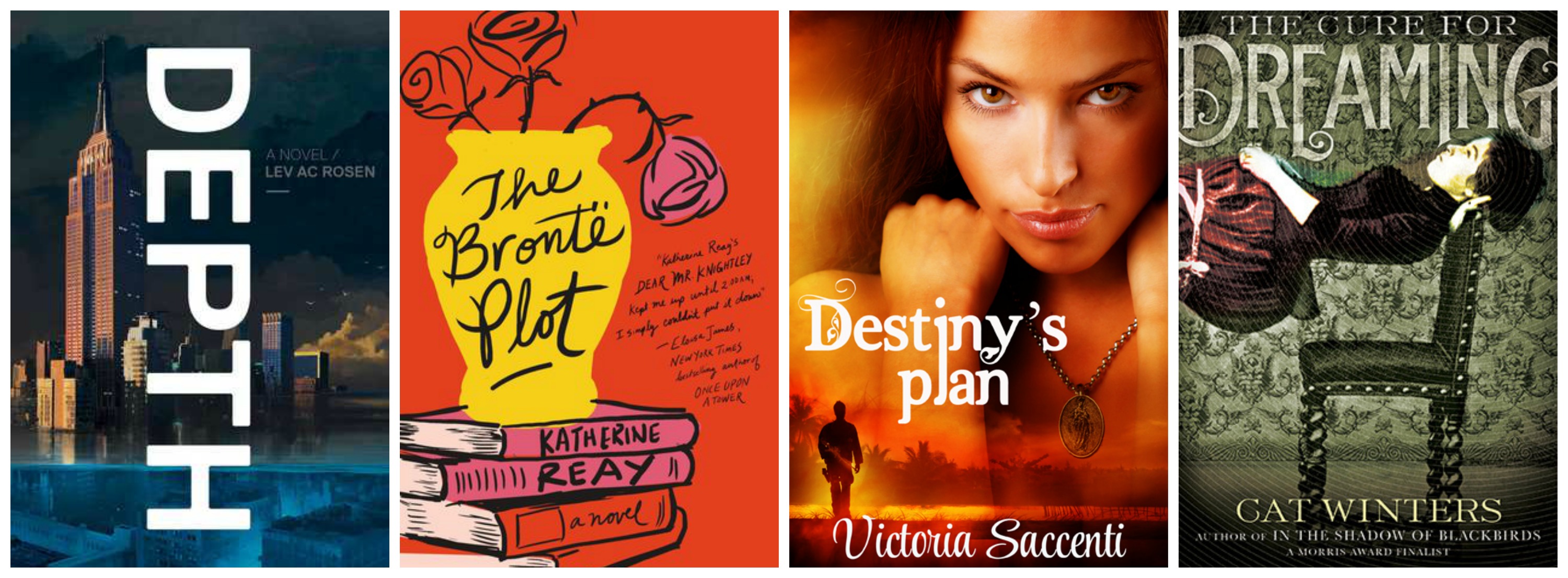
Collage 111515

Depth by Lev AC Rosen: Loved it! My review of this sci-fi/noir detective story is here.

The Bronte Plot by Katherine Reay: My review is here.

Destiny’s Plan by Victoria Saccenti: My review is here.

The Cure for Dreaming by Cat Winters: My review is here.

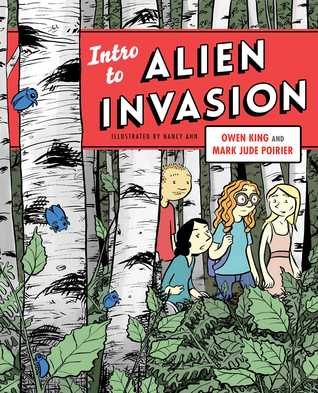
Intro to Alien Invasion

In graphic novels, I read Intro to Alien Invasion by Owen King, which is a pretty amusing story of a college campus being taken over by icky alien beings — and the students who fight to save the world from annihilation.

Elsewhere on the blog:

northandsouth1

I wrote a wrap-up post on North and South — reading the book and watching the BBC mini-series. Check it out, here.

Fresh Catch:

Two library hold requests came in this week:

Cure for DreamingStand-Off


What will I be reading during the coming week?

Currently in my hands:
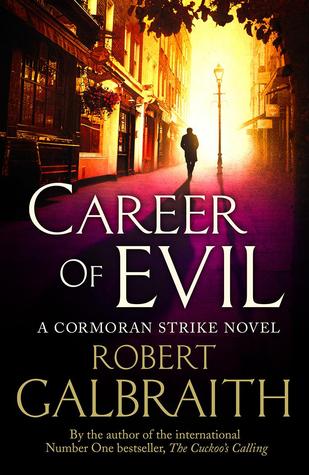
Stand-OffCareer of Evil

I’m a little torn, but I think I’ll start with:

  • Stand-Off by Andrew Smith: This is a sequel to the amazing Winger (review) — and since there’s a waiting list at the library, I really should read it first and then pass it along.
  • Career of Evil by Robert Galbraith (J. K. Rowling): I’m so excited to read the newest Cormoran Strike novel!
Now playing via audiobook:

BITB

I’m about 2/3 of the way through The Boys in the Boat by Daniel James Brown, and although I don’t usually go for non-fiction, I’m really enjoying this one.

Ongoing reads:

ABOSAA

Getting close to the end of our book group read!

So many book, so little time…

boy1


Book Review: The Cure for Dreaming by Cat Winters

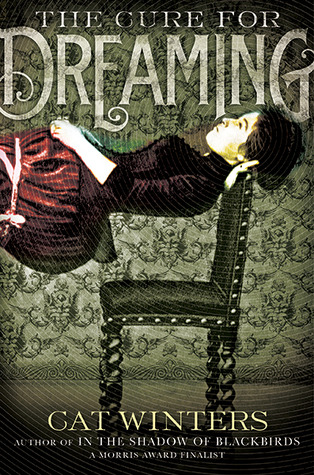
Cure for DreamingIn this YA novel, hypnotism and the suffrage movement are combined in startling ways to give us a portrait of life in 1900 for a young woman who is, pretty much literally, too independent for her own good.

On her 17th birthday, Olivia Mead attends a hypnotism show headlined by the young, talented Henri Reverie, a “mesmerist” whose talents have made him famous across the country. Egged on by her friends, Olivia volunteers to be Henri’s first subject, and astonishes the entire audience by her extreme susceptibility to his hypnotism. She’s so far under that he’s able to make her stiff as a board, suspend her between two chairs (as in the cover photo), and even stand on her torso, all without her knowledge.

Olivia is slightly embarrassed, but also enjoys the newfound attention her moment in the spotlight brings, especially from wealthy, out-of-her-reach Percy, the judge’s son. Olivia’s own father, the local dentist (with a truly horrifying collection of tools), is less than pleased. He wants nothing more than for Olivia to be good and obedient, especially after learning that she’d attended a suffragists’ rally the day before. He arranges for a private hypnotism session with Henri, during which Henri compels Olivia to see the world as it truly is, to understand the roles of men and women, and to be able to say nothing but “all is well” when she becomes angry.

This backfires, of course. Olivia is an avid fan of Bram Stoker’s Dracula, and thanks to the hypnotism, when she looks at her father, she sees him as he truly is — fanged, clawed, and monstrous. She sees the truth of many of the women of her town as well, who fade into invisibility as Olivia watches. Desperate, she tracks down Henri and begs him to fix her — but there’s a reason why he can’t just yet, and the two form a scheme to give Olivia back control of her own mind and voice and to get Henri what he desperately needs.

The Cure For Dreaming is a captivating portrait of the plight of women at the dawn of the 20th century. The author does a wonderful job of weaving together an individual’s personal struggles with the struggles of women at that time. It’s easy for us, sitting here in the comforts of 2015, to take for granted the rights we enjoy, and this book reminds us of the venom and hostility that confronted the women’s suffrage movement. The women who dared to take a public stance and speak out were demonized, ridiculed, accused of being unwomanly or even insane, and were subjected to all sorts of horrible public humiliations. In this book, looking through Olivia’s eyes, we see how far the men — and even many women — were willing to go to silence the voices of women who stood up for equality and the right to speak their minds.

As one character describes to Olivia:

“My father leaned over to me and said, “Now, that’s womanhood perfected, Percy my boy. That’s the type of girl you want. Silent. Alluring. Submissive.”

I can’t say enough about how powerful and engrossing this story is. Olivia is a marvelous lead character — smart, warm-hearted, and unwilling to keep silent when she sees something wrong. Her need to speak out is what gets her into trouble, of course, but at the same time, she makes a difference in all sorts of unexpected ways, even when forced through the power of hypnotic compulsion to be compliant and stifle her anger.

Olivia’s interactions with Henri do not take the anticipated route, and despite the growing feelings between the two, this book does not go down the dreaded path of showing a young woman throwing away her own plans in order to follow a guy. Olivia has a backbone and a commitment to staying true to herself, and that’s a lovely thing to see in a YA heroine.

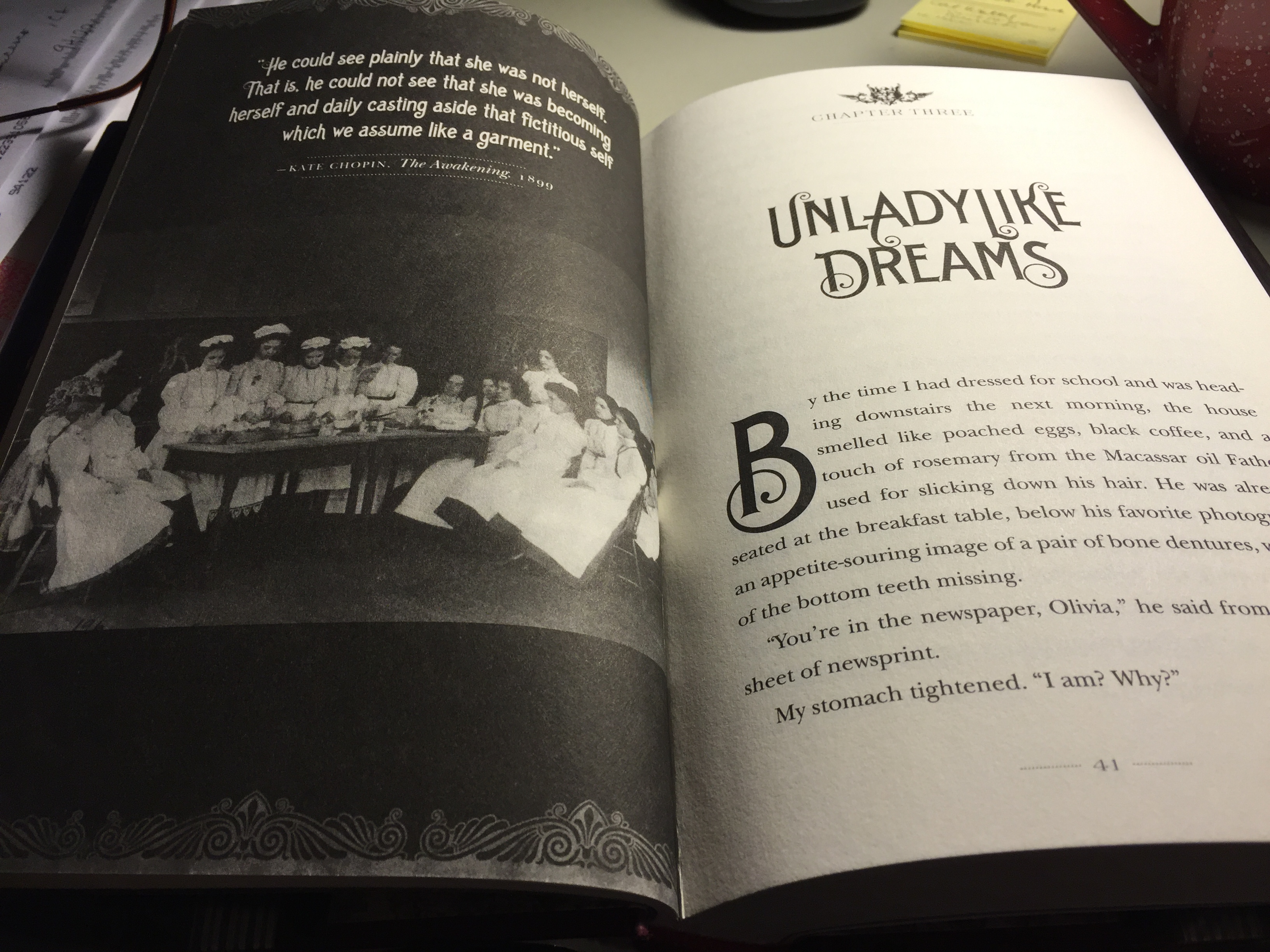
The book itself is wonderful to page through, as chapter breaks are illustrated by historical photos from the book’s era, as well as by a selection of powerful quotes by everyone from Kate Chopin to Mark Twain to Carrie Nation.

image

The Cure for Dreaming is a fast read — I gobbled it up over the course of 24 hours! I was hooked almost instantly, and just couldn’t bear to put the book down. The characters are well-drawn, the subject of hypnotism is fascinating, the relationships between the characters are pitch-perfect, and the context of the fight for women’s votes and the right to one’s own voice is powerfully presented. While written for a young adult audience, the book does not oversimplify or talk down in any way. As an adult reader, I loved the book and was never bored. This would be a great choice for teen girls, and could also provide some great discussion starting points for mothers and daughters who want a book they can share and enjoy together.

_________________________________________

The details:

Title: The Cure for Dreaming
Author: Cat Winters
Publisher: Amulet
Publication date: October 14, 2014
Length: 352 pages
Genre: Young adult fiction
Source: Library

Take a Peek Book Review: Destiny’s Plan by Victoria Saccenti

“Take a Peek” book reviews are short and (possibly) sweet, keeping the commentary brief and providing a little peek at what the book’s about and what I thought.

DestinysPlan72


Synopsis:

(via Goodreads)

When Raquelita Muro and Matthew Buchanan meet by chance on a Greyhound bus between Texas and Tallahassee, neither suspects Fate is about to take over.

Raquelita, a gentle girl under the heel of her abusive mother, finds this kind young man a miracle.  Matthew, an idealistic young soldier, discovers this sweet-natured girl is an angel in need of a guardian.  However, the next stop on Matthew’s journey is Fort Benning to report for deployment to Vietnam, while Raquelita’s destination is set at her mother’s whim.  Regardless of the forces tearing them apart, they discover a way to secretly span the distance, to end up closer than ever.  But Fate is rarely kind.  The vagaries of war—and the unstable tempers of Raquelita’s mother—intervene, leaving both ill-fated lovers feeling there is no hope for their love.

Set in the turbulent era of the Vietnam War, Raquelita’s and Matthew’s story is one of love, loss, lost faith, shattered memories, deferred dreams and broken promises.  Will Fate tear apart these two damaged souls, leaving them desperately alone forever, or will they finally overcome Fate, their bond stronger than they ever thought possible?

My Thoughts:

Debut author Victoria Saccenti has written a complex, heart-wrenching tale of a chance meeting that changes lives, and the intricate ways that bonds of family and obligation can both hurt and heal. The love story here is startlingly sudden, but also quite sweet, as Raquelita and Matthew recognize their connection within moments of meeting and somehow manage to establish a bond so strong that it can withstand physical and emotional trauma.

Destiny’s Plan has a plot that spans eras and continents, as the author weaves in not only the Vietnam War but also goes back to an important family episode during the Spanish Civil War. The author has clearly done her research, as the historical elements are well presented. Not only do we get the facts of a deployment to Vietnam and what that might look like, but we also get the sights and sounds of the late 1960s through the inclusion of the music, fashion, and political and social upheavals of the time.

Raquelita’s life is hard and complicated. One of the pieces of the story that I most enjoyed was getting to know the members of her family, from her damaged and cruel mother Isabel to her mysterious godfather Xavi, her loving father Emilio, and the aunt, uncle and cousin who give Raquelita a chance to experience a normal, loving home life. Raquelita’s younger sister Marité is adorable, and I understand she’ll be the central figure in her own book next.

Another element that really appealed to me in Destiny’s Plan was the fact that love is shown in different ages and stages in this book. Yes, Raquelita and Matthew are the main characters and love story, but we also see several more mature adult relationships as well, and it’s both unusual and refreshing to see true love, emotional and physical, shown as not only the territory of the younger generation.

A slight disclaimer: I’m not usually a romance reader, and so I don’t have much in the way of comparison. I have a feeling that the plot elements that didn’t really work for me in this book are probably things that would appeal to someone who enjoys romances — but as this is not a preferred genre for me, I had to push myself a bit to get over it. Likewise, I was a bit taken aback by the many explicitly intimate scenes, but again, I think I just generally don’t read romances and didn’t know what to expect.

Overall, I’d say the time period gives this book an interesting and unusual flavor, and the characters are well-developed and memorable. If you enjoy swooningly romantic stories with underlying drama and painful obstacles, check out Destiny’s Plan!

To learn more about the author, check out my spotlight post here.

_________________________________________

The details:

Title: Destiny’s Plan
Author: Victoria Saccenti
Publisher: Smashwords Editions
Publication date: September 15, 2015
Length: 435 pages
Genre: Historical romance
Source: Purchased

Thursday Quotables: The Graveyard Book

quotation-marks4

Welcome back to Thursday Quotables! This weekly feature is the place to highlight a great quote, line, or passage discovered during your reading each week.  Whether it’s something funny, startling, gut-wrenching, or just really beautifully written, Thursday Quotables is where my favorite lines of the week will be, and you’re invited to join in!

NEW! Thursday Quotables is now using a Linky tool! Be sure to add your link if you have a Thursday Quotables post to share.graveyard book

The Graveyard Book by Neil Gaiman
(published 2008)

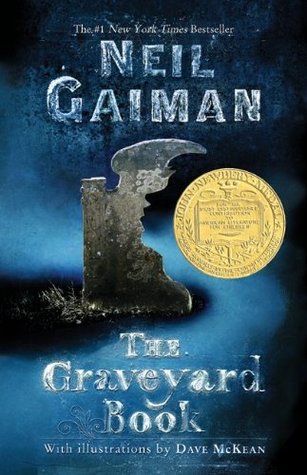
My son happens to be reading The Graveyard Book right now, and I keep peeking over his shoulder. The Graveyard Book has one of my very favorite opening lines:

There was a hand in the darkness, and it held a knife.

image
Just seeing the opening pages makes me realize I’m overdue for a re-read.

What lines made you laugh, cry, or gasp this week? Do tell!

If you’d like to participate in Thursday Quotables, it’s really simple:

  • Write a Thursday Quotables post on your blog. Try to pick something from whatever you’re reading now. And please be sure to include a link back to Bookshelf Fantasies in your post (http://www.bookshelffantasies.com), if you’d be so kind!
  • Click on the linky button (look for the cute froggie face) below to add your link.
  • After you link up, I’d love it if you’d leave a comment about my quote for this week.
  • Be sure to visit other linked blogs to view their Thursday Quotables, and have fun!

A book and a movie: North and South by Elizabeth Gaskell

Finally, finally, finally… after years of saying that (a) I want to read North and South by Elizabeth Gaskell and (b) I need to see the mini-series version (starring *swoon* Richard Armitage)…

I’ve done both!

This year, my online book club (the wonderful and amazing Outlander Book Club!) chose North and South as our group classic read. We started about six months ago, and have read and discussed two chapters per week from then until now, just finishing this past week. And then, to celebrate, we all decided to watch the BBC mini-series and discuss that as well. And both were glorious!

N&S

First, the book, starting with a quick synopsis (via Goodreads):

When her father leaves the Church in a crisis of conscience, Margaret Hale is uprooted from her comfortable home in Hampshire to move with her family to the north of England. Initially repulsed by the ugliness of her new surroundings in the industrial town of Milton, Margaret becomes aware of the poverty and suffering of the local mill workers and develops a passionate sense of social justice. This is intensified by her tempestuous relationship with the mill-owner and self-made man, John Thornton, as their fierce opposition over his treatment of his employees masks a deeper attraction. In North and South, Elizabeth Gaskell skillfully fuses individual feeling with social concern, and in Margaret Hale creates one of the most original heroines of Victorian literature.

North and South is is a combination of romance and social commentary. Through Margaret’s eyes, we come to see the struggle for workers’ rights, the plight of the poor, and the value of good people, no matter their social status. Margaret casts aside her class snobbery and learns to appreciate and respect a self-made man who pulled himself up from nothing, and at the same time comes to befriend and support the poor and downtrodden of the mill town where she ends up. Margaret and John start as stormy opposites, constantly antagonizing and misunderstanding one another, and evolve into the truest of soulmates. It’s a lovely, lovely book, and we found so much to discuss and ponder throughout.

northandsouth1

And then there’s the mini-series, a four-episode production from 2004. How can I possibly describe the loveliness? It’s got passion, drama, beautiful people, lots of smolder, amazing costumes… also grimy, poverty-stricken hovels, dangerous working conditions, and angry mobs. Not to mention parents who are either clueless (Margaret’s) or kind of scary (John’s mom), plenty of tragic deaths, secrets and misunderstandings, and oodles of train rides.

What’s not to love about a tortured, broody hero?

N&S gif1

Or a beautiful young woman with a backbone?

N&S mh

And talk about chemistry:

N&S gif2

I’m thrilled to have finally experienced both versions of North and South, and I wouldn’t give up either! If you’ve never had the pleasure, I absolutely recommend starting with the book… unless you don’t have the patience and demand instant gratification, in which case, all this gorgeousness can be yours in just four short hours!

On a final note, I just read a terrific piece written last year on the 10th anniversary of the BBC production’s release. Check out the full article (“10 Years Later, ‘North & South’ Remains the Greatest Period-Drama Miniseries of All Time”) here, and I’ll leave you with this small line from it:

It’s one of the most explosive, chemistry-rich misunderstanding-laden romances that’s ever graced the small screen.

And if you want to know more about Elizabeth Gaskell’s novels, check out this terrific post over at the always great Eclectic Tales blog.