Book Review: Mrs. Queen Takes The Train by William Kuhn

Book Review: Mrs. Queen Takes The Train by William Kuhn

In this terrific, warm-hearted novel, life at the palace just isn’t what it used to be, and The Queen seems to have come down with a case of the blahs. Relegated to a role that is mostly ornamental, and still heart-broken over the family disasters of the last decade or so, The Queen goes through her days doing as she ought. She was raised to always follow directions and live up to expectations, and that she does, day in and day out. But what about happiness? What about feeling useful? Mostly, The Queen feels like too much has passed her by, and as she struggles to keep up with her new acquaintances Mr. Google and Miss Twitter, the poor dear mostly winds up out of sorts and at loose ends. When, by chance, The Queen finds herself outside the palace walls, unaccompanied and cleverly (although accidentally) disguised in a borrowed hoodie, she gets an unexpected taste of freedom and makes a mad dash toward a day of adventure.

A cast of supporting characters, all rather isolated in varied ways and yet united in service to The Queen, round out the story nicely. There’s Shirley, long-tenured dresser to the Queen who harbors a lingering resentment toward the upper-class ladies who treat servants of her status with scorn; Lady Anne, hanging onto the title despite having lost all fortune and family, living off her meager allowance as The Queen’s chief lady-in-waiting; Luke, a young military officer who ably serves The Queen but is tormented by lingering traumas from his time in Iraq; William, senior butler, devoted to a life of service but hungry for love as well; Rebecca, the lonely, insecure, but beautiful caretaker of The Queen’s horses; and Rajiv, would-be poet and current shopboy, who just happens to sell The Queen’s very favorite cheddar.

As The Queen sets off on a jaunt toward Scotland to visit a place of happy memories, she encounters the men and women of her kingdom and, for the first time in her life, has conversations with ordinary people, unhindered by social protocol and formalities. As The Queen takes taxis, buses, and trains, she is in her element as her years of official socializing pay off. She meets people, she engages them in conversation, she draws them out, she makes them feel interesting. This is something she is good at! By the end, The Queen has regained a new spring in her step, and though she returns to her regular life without much fuss, it’s clear that she’s going to shaking things up a bit in the days to come.

I loved the writing in Mrs. Queen Takes The Train. Early on, this sentence gave me a good sense of the fun yet to come:

She stalked toward the computer on the other side of the room as if it were game and she meant to shoot it.

An ongoing theme throughout the book is The Queen’s yoga practice — which of course made me wonder, does the real Queen do yoga too? It certainly seems beneficial to the fictional Queen, and I was highly amused picturing her in plank or warrior pose.

I should make clear that this is by no means a silly book, although there’s certainly much warmth and humor here. Yes, it’s kind of funny to think about the Queen of England taking public transportation, running around in borrowed hoodies, and having to dig through her ubiquitous handbag for train fare. But within Mrs. Queen Takes The Train is a deeper thread of inner life. All of the characters, in their own ways, are lonely people, devoted in one way or another to their roles and positions, but missing out on meaningful human connection. The pains and sorrows of growing older, the isolation of never finding love, the ache that can arise from loss that’s kept hidden inside — all are dealt with sensitively and realistically. The characters in this book may live in a castle, but all — even The Queen herself — come across as real people with real crises, and you can’t help but love them all quite a bit by the time the book is through.

As an American reading Mrs. Queen Takes The Train, I was unfamiliar with many of the titles and idioms related to palace life and the monarchy in general. Thank goodness for the internet — I now know what an equerry is! (Do you?)  I know that for many in the US, the British monarchy is viewed as an amusing old token of days gone by, not good for much more than celebrity photo shoots, mildly interesting gossip and scandal, and the occasional big hoopla of a royal wedding. Mrs. Queen Takes The Train does a wonderful job of showing how the royal family influences and is influenced by English modern society, and the role they serve in maintaining tradition and a link to living history.

I enjoyed Mrs. Queen Takes The Train very much, for its gently amusing story line, its warm and lovely characters, and its peek behind the castle walls. We can only wonder whether The Queen’s inner life, as portrayed so richly and movingly here, relates in any way to the experiences of the real Queen of England. Still, I walked away from reading this book with a renewed fondness for Her Majesty — long live The Queen!

I take pictures in bookstores. Is that wrong?

I don’t think I’m doing anything wrong… and yet I find myself feeling like I need to either hide or defend my actions, which would seem to indicate a disturbance in my good-conscience field.

I guess I didn’t realize just how often I end up taking pictures of books in bookstores until I was doing some clean-up of the photos on my IPhone, and found just a staggering number of these:


paris wife invention frankenstein expeditioners dovekeepers buncle bday boys bananasscurvysylviahouse on fire

All photos taken by me, in various bookstores, over the course of a couple of weeks. Some for me, some for my grown-up daughter, some for my 10-year-old son.

So what’s the deal? Well, look, let’s accept the premise that we can’t all buy everything we want. Limited dollars, limited space, limited amounts of time in which to actually, you know, read books. So I go, I peruse, I browse, I skim. I rarely walk out of a bookstore empty-handed. But chances are, for every single book I buy, I can probably find at least ten more that I want.

In ancient days of yore (i.e., before I had a smart phone), I used to actually take notes. Like with a pen and piece of paper. Which often was a deposit slip torn out of the back of my checkbook. Which is the thing I used to carry around in my purse before electronic bill pay. Oooh, I am so going down a rabbit hole here.

Back to the here and now. Can I help it if it’s quicker and easier to take a pic instead of pawing through my bag for a real-live (well, inanimate, to be honest) writing implement?

Look, I go into a bookstore, I see stuff I want. And if I see stuff I want, I want to remember said stuff. And chances are I won’t, because there’s too much other stuff clogging up my brain’s hard-drive at the moment.

So I take pictures of the books I want to remember. Maybe I just want to look them up later on and get a better sense of whether they’re for me. Maybe I’ve never heard of the book, but hey! it’s blurbed by an author I like! Maybe it’s something that sounds like something I’ll want to read eventually… but I might not get to it this year – or next – or quite possibly the one after that.

So I take pictures. And maybe when I get home I’ll check to see if any of the books that caught my eye are available at the library. Or possibly, next time I’m in my local used bookstore, I’ll look at the pictures to see if I can find them on the shelves. Or perhaps I’ll just add the books to my Goodreads to-read shelf, and maybe not think about them again for a few months. And yes, there might be one or two that down the road, I end up ordering from Amazon.

I think the fact that I’m writing all this is a pretty strong indicator that I have mixed feelings about the matter. After all, I want brick-and-mortar bookstores to survive and thrive. I love being able to pop in, browse, see what’s out now, see what pretty or unusual covers catch my eye. But honestly, I’m just not going to spend a ton on any given bookstore visit… but I will (oh, 9 times out of 10) buy something.

I solemnly swear that I am not using the absolutely evil scan function on my Amazon app, which I believe only exists in order to tempt us to pick up a book in the bookstore, scan it, see how much cheaper it is on Amazon, and then walk out of the store and order it online. That’s just wrong.

For the record, most of the above photos were taken over the course of a single weekend spent on a little getaway with my daughter, who loves hanging out in bookstores just as much as I do. Some of the photos are for her, some for me. We visited about five bookstores during our weekend, during which I bought her one brand-new copy of The Hobbit, ten used books (everything from Isabel Allende to good old Tolstoy), and one used book for myself (Daphne du Maurier’s My Cousin Rachel). After the weekend, I sent two of the books pictured above to my daughter (via used bookstores), found used copies of a couple more for myself, and put in a request at the library for one more. As for the rest? I’d like to remember to come back to them at some point, but don’t need to read them right now.

So am I hurting bookstores by browsing a lot, buying a little, and taking lots of photos for future reference? Is this any different than my old habit of writing down zillions of book titles every time I’d enter a bookstore? I don’t think I’m causing any harm… but then why do I feel guilty?

Flashback Friday: East Wind: West Wind by Pearl S. Buck

It’s time, once again, for Flashback Friday…

Flashback Friday is a chance to dig deep in the darkest nooks of our bookshelves and pull out the good stuff from way back. As a reader, a blogger, and a consumer, I tend to focus on new, new, new… but what about the old favorites, the hidden gems? On Flashback Fridays, I want to hit the pause button for a moment and concentrate on older books that are deserving of attention.

If you’d like to join in, here are the Flashback Friday book selection guidelines:

  1. Has to be something you’ve read yourself
  2. Has to still be available, preferably still in print
  3. Must have been originally published 5 or more years ago

Other than that, the sky’s the limit! Join me, please, and let us all know: what are the books you’ve read that you always rave about? What books from your past do you wish EVERYONE would read? Pick something from five years ago, or go all the way back to the Canterbury Tales if you want. It’s Flashback Friday time!

My pick for this week’s Flashback Friday:

East Wind: West Wind by Pearl S. Buck

(published 1929)

Pearl S. Buck, winner of the Nobel Prize for Literature, is perhaps best known for her masterpiece The Good Earth. But how many people have read her first novel, East Wind: West Wind?

From Amazon:

East Wind: West Wind is told from the eyes of a traditional Chinese girl, Kwei-lan, married to a Chinese medical doctor, educated abroad. The story follows Kwei-lan as she begins to accept different points of view from the western world, and re-discovers her sense of self through this coming-of-age narrative.

In East Wind: West Wind, the main character is an obedient and devoted daughter of a traditional Chinese family, raised to be a good wife according to the dictates of her society. She is taught to obey her husband, follow his opinion in all matters, and to serve him as he sees fit. However, her husband has been influenced by his exposure to more modern ways of life and wants a wife who is a partner and who can think for herself.

It is fascinating to see the culture clash that results from this marriage of tradition and modernity. Ultimately, a woman raised to obey her husband finds herself in a position where the only way she can obey him is by disobeying, in order to meet his desire for a wife who is more than a servant to him.

My copy of East Wind: West Wind disappeared years ago, and I’ve always wanted to pick up a new copy and revisit this wonderful novel. If you’ve enjoyed other works by Pearl S. Buck or more contemporary novels set in China (such as Snow Flower and the Secret Fan by Lisa See), I highly recommend reading East Wind: West Wind.

And if you’re the person who borrowed my copy about ten years ago… I want it back!

So, what’s your favorite blast from the past? Leave a tip for your fellow booklovers, and share the wealth. It’s time to dust off our old favorites and get them back into circulation! 

Note from your friendly Bookshelf Fantasies host: To join in the Flashback Friday bloghop, post about a book you love on your blog, and share your link below. Don’t have a blog post to share? Then share your favorite oldie-but-goodie in the comments section. Jump in!

Book Review: The Cranes Dance by Meg Howrey

Book Review: The Cranes Dance by Meg Howrey

Reading a book about ballet dancers is a bit like studying anthropology or reading fiction set in an exotic land. Ballet is a world and a culture unto itself, with its own customs, morals, standards, language, costumes, and rituals. Those at the peak of the profession form an insular little society, truly an alien species in the eyes of the non-ballet world — and even more so, the “normal” world, to the ballet elite, is foreign, slightly unpleasant, and unrelentingly ordinary.

So it would seem, in any case, from reading The Cranes Dance, an excellent but disturbing peek into the world of a top New York City ballet company, as told by main character Kate Crane — whose perspective may not be all that reliable. Kate is in her late-ish 20s, and has been with the Company since she was a rising teen ballet student. Kate is a lovely and talented dancer, but her younger sister Gwen is a star. Gwen joins the Company a year after Kate, but is made a principal (a prima ballerina, if you will) at the same time that Kate, with more years of experience, is raised from the corps to soloist (a featured dancer, performing good roles, but definitely not the star of the show). But it’s all okay, because Kate is devoted to Gwen, and from day one sees her as someone to be nurtured and cherished, whose gift must be protected and encouraged above all else.

As The Cranes Dance opens, Kate is on her own in New York for the first time in a decade, after having called her parents in Michigan to report that Gwen has had a nervous breakdown. Gwen has been scooped up and taken away by the parents, and Kate is left to deal with her grief, her guilt, and deep down, her relief at being free for once in her life. Unfortunately, Kate has perfected the skill of not dealing. She’s made a career of keeping everyone at arm’s length, never admitting that she has needs or wants, and finds herself adrift.

Unceremoniously dumped by her boyfriend (she never let him be there for her, apparently), Kate moves into Gwen’s now empty apartment, and more or less into Gwen’s life. She lives amongst Gwen’s things, she wears Gwen’s clothes and uses Gwen’s hair products, and before long, she’s dancing roles meant for Gwen as well. Friends and colleagues tell Kate that she’s never danced better, and the company director comments that it’s been hard “to watch you diminish yourself” — implying, perhaps, that Kate’s devotion to Gwen has kept her from letting herself shine on her own.

But has Kate also taken over Gwen’s mental deterioration? Warning signs abound. After a neck injury, Kate turns to Vicodin to numb the pain — and soon, to numb everything else. Like Gwen, Kate is unable to sleep and loses weight due to lack of appetite. Kate narrates her life for the audience she imagines constantly watching her, as if being on stage is a shield against the dangers and disappointments of actual living. Inhabiting Gwen’s home, all alone, Kate is left to stare at the mysterious and disturbing tape marks and secret notes and symbols that Gwen used as talismans against fear, her secret obsessive-compulsive safety nets. Can Kate be strong where Gwen could not? Can Kate numb the pain indefinitely, or will her world come crashing down as well?

I enjoyed The Cranes Dance a great deal. According to her website, “Meg Howrey is a classically trained dancer who has performed with the Joffrey, Los Angeles Opera, and City Ballet of Los Angeles.” Clearly, this is a writer who knows the world she so keenly describes. The first-person narration gives us a front-row view of the workings of Kate’s mind, and she can be hilariously funny at times, despite the physical and emotional pain that accompany her throughout her days.

Crisp, delicious writing abounds, such as this passage in which Kate must suffer through drinks with a smile:

“Oh, but I love The Nutcracker,” began the [woman], and then launched into the familiar non-dancer girl talking to dancer girl conversation. “Do your toes bleed?” “I had a friend/cousin/neighbor who danced who was really serious about her dancing until she got too tall/hurt her knee/went to college.” “You must not be able to eat anything.” “It must take a lot of discipline, I can’t even imagine doing what you do.” “All the men are gay, right?”

The book opens with Kate describing the plot of Swan Lake, which is the headlining production in the company’s performance season. It’s much too much to quote in full, but this little snippet gives a good sense of the tone as well as Kate’s unique perspective on dance and life in general:

Act I opens in the village green of an unspecified, vaguely German realm. We’re a little hazy on the time period too. It’s Days of Yore, I guess, in the yore when everyone in pseudo Germany wandered around their village green in nearly identical outfits… Anyway A Village Green Scene is standard issue for classical ballet, and if you’ve seen one circlet of peasant-dancing hoo-ha, you’ve seen them all. There’s a garland dance and a Maypole and a lot of people standing around fake clapping or pointing out to each other that other people are dancing in the middle of the stage… So everyone just wanders around greeting each other with head nods if you’re a girl and shoulder thumping if you’re a guy, and then one person will indicate Center Stage like “Hey, did you see? There are people dancing! Isn’t that neat!” And the other person will make a gesture like “Yes! Dancing. It is happening there!”

And so on. It’s fun, it’s funny, it often terribly sad, and it’s frequently disturbing. At the same time, Kate’s voice is engaging — even when she’s being obnoxious — and you can’t help but want to shake her a bit and get her to just, you know, snap out of it! You’re a ballerina! Enjoy yourself!

Go ahead, hum a few bars. Pirouettes are allowed too.

The glimpse into the backstage life of a ballet company is deliciously exotic. The endless classes and rehearsals, the jockeying for positions and good partners, the little slips that can spell disaster, the triumphs of a perfect gesture — all these are brought to life so vividly that you can hear the toe shoes landing after a jump. I dare you to read this book and not spend the next few days humming Swan Lake as you  move, oh so gracefully, down the busy streets, perhaps with visions of tutus dancing in your head.

Whether you read The Cranes Dance as a story of sisters, a narrative of mental illness, a profile of a person shut off from the world, or just for the joy of the behind-the-scenes glamour and excitement, I do believe you’ll be as entranced by the book as I was. You don’t have to be a ballet fan to enjoy The Cranes Dance — but you’ll probably want to dig out those old The Turning Point or White Nights videos by the time you’re done.

Wishlist Wednesday

Welcome to Wishlist Wednesday!

The concept is to post about one book from our wish lists that we can’t wait to read. Want to play? Here’s how:

  • Follow Pen to Paper as host of the meme.
  • Please consider adding the blog hop button to your blog somewhere, so others can find it easily and join in too! Help spread the word! The code will be at the bottom of the post under the linky.
  • Pick a book from your wishlist that you are dying to get to put on your shelves.
  • Do a post telling your readers about the book and why it’s on your wishlist.
  • Add your blog to the linky at the bottom of the post at Pen to Paper.
  • Put a link back to Pen to Paper somewhere in your post.
  • Visit the other blogs and enjoy!

My Wishlist Wednesday book is:

The Chaperone by Laura Moriarty

From Amazon:

The Chaperone is a captivating novel about the woman who chaperoned an irreverent Louise Brooks to New York City in 1922 and the summer that would change them both.

Only a few years before becoming a famous silent-film star and an icon of her generation, a fifteen-year-old Louise Brooks leaves Wichita, Kansas, to study with the prestigious Denishawn School of Dancing in New York. Much to her annoyance, she is accompanied by a thirty-six-year-old chaperone, who is neither mother nor friend. Cora Carlisle, a complicated but traditional woman with her own reasons for making the trip, has no idea what she’s in for. Young Louise, already stunningly beautiful and sporting her famous black bob with blunt bangs, is known for her arrogance and her lack of respect for convention. Ultimately, the five weeks they spend together will transform their lives forever.

For Cora, the city holds the promise of discovery that might answer the question at the core of her being, and even as she does her best to watch over Louise in this strange and bustling place she embarks on a mission of her own. And while what she finds isn’t what she anticipated, she is liberated in a way she could not have imagined. Over the course of Cora’s relationship with Louise, her eyes are opened to the promise of the twentieth century and a new understanding of the possibilities for being fully alive.

Drawing on the rich history of the 1920s,’30s, and beyond—from the orphan trains to Prohibition, flappers,  and the onset of the Great Depression to the burgeoning movement for equal rights and new opportunities for women—Laura Moriarty’s The Chaperone illustrates how rapidly everything, from fashion and hemlines to values and attitudes, was changing at this time and what a vast difference it all made for Louise Brooks, Cora Carlisle, and others like them.

Why do I want to read this?

I seem to be drawn to historical fiction lately, and I do love the 1920s/New York setting. I adored The Diviners by Libba Bray, which was a supernatural-tinged YA novel set in the same era. The Chaperone, with its hint of glamour and promise of empowerment for the lead female characters, sounds like both a great story about personal change and an exciting trip back to the roaring ’20s.

Have you read The Chaperone? What did you think? And what are you wishing for this week?

Quick note to Wishlist Wednesday bloggers: Come on back to Bookshelf Fantasies for Flashback Friday! Join me in celebrating the older gems hidden away on our bookshelves. See the introductory post for more details, and come back this Friday to add your flashback favorites!

Teaser Tuesdays – 1/15/2013

Teaser Tuesdays is a weekly bookish meme, hosted by Should Be Reading. Anyone can play along! Just do the following: •Grab your current read  •Open to a random page  •Share two (2) “teaser” sentences from somewhere on that page — but watch out for spoilers!  •Share the title & author, too, so that other TT participants can add the book to their TBR lists if they like your teasers! 

My teaser for this week is from The Cranes Dance by Meg Howrey:

Page 258:

I looked at the topography of Mara’s bent-over back. Stone footpaths of vertebrae. Cresting ribs like sand dunes. Shoulder-blade cliffs. When she pulled at the tape around her big toe, the muscles of her back volcanoed new islands into the valley.

Do you have a teaser to share? Add your link or your teaser in the comments below. Happy reading!


Book Review: Mariana by Susanna Kearsley

Book Review: Mariana by Susanna Kearsley

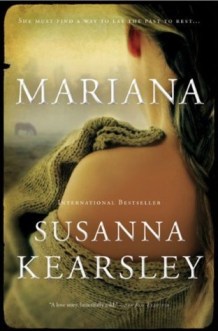
The newest cover. My favorite.

Julia Beckett is an independent woman of 30, living in London and succeeding professionally as an illustrator of children’s books. Since childhood, Julia has felt a strange calling to a house in the rural English town of Exbury, and when she happens to pass by the house once again as an adult, fate intervenes. The house is for sale, Julia’s recent inheritance means that she has the wherewithal to make a spur-of-the-moment purchase, and voila! Julia is now the owner of the lovely but mysterious Greywethers.

Uprooting her London life, Julia settles in and is immediately welcomed by the locals, especially the friendly pub owner Vivien, the lord of the nearby manor, Geoffrey de Mornay, and Geoff’s best friend Iain. As she adjusts to her new surroundings, Julia begins to see a dark man on a gray horse at the edges of her property, and that’s just the beginning of strange occurrences.

Soon, Julia begins to have momentary lapses in which she slips through time.

It is difficult to describe the sensation of sliding backwards in time, of exchanging one reality for another that is just as real, just as tangible, just as familiar. I should not, perhaps, refer to it as “sliding,” since in actual fact I was thrust — abruptly and without warning — from one time to the next, as though I had walked through some shifting, invisible portal dividing the present from the past.

When she enters this alternate world, it is as a young woman named Mariana, and the time is the mid-17th century.  As Mariana, Julia relives key events from the other woman’s life, and during those spells knows no other reality – she is, in fact, Mariana. When she returns to herself, Julia remembers what she has experienced as Mariana, but cannot understand why she slips into the past or how these episodes are relevant to her own life.

With the help of her brother Tom, Julia comes to believe that she is Mariana reincarnated, destined for some as-yet-undiscovered purpose related to Mariana’s life. As Julia digs deeper, she comes to understand the love and sorrows that Mariana experienced, and must find a way to live in the present when the past holds so much that tempts her.

I’ll just come right out and say that I love the writing in Mariana. Lush and romantic, Susanna Kearsley’s writing captures the small moments and glances that build to deeper connections and passions. Rustic village life is conveyed in all its quaint charm, and yet the 1600s version of the same village is dark and mistrustful, full of superstition, plotting, and deception. As Julia explores the town, I could practically see the gardens and streams come to life, and would have liked nothing more than to wander the country lanes with her and explore the old manor house and its magnificent library.

As I read Mariana, I became enthralled by the mystery of Mariana’s past and how it could possibly intersect with Julia’s present. The alternating timeframes were so engaging that I never wanted either one to end. By the end of the book, I was completely hooked on the central romance and (without giving anything away here) felt keenly Mariana’s joys and sorrows.

My only quibble with the book is that Julia and Tom arrive at an explanation for Julia’s time slips almost immediately, never question their explanation, and indeed are proven correct pretty much off the bat, with no alternate theories or trial and error. I understand that investigating the cause of the timeslips isn’t really the point here, but it felt a bit too neat to me.

Other than that, there isn’t much that I would change about Mariana. The pace is lively, but with enough suspense and dramatic timing to keep me coming back for more. There’s a sense of impending tragedy – something must have happened to cause Mariana to need to come back across the centuries to find resolution and peace. I especially loved the main plot twist that occurs in Mariana – but again, not wanting to enter spoiler territory, I won’t say what the twist is or when it occurs.

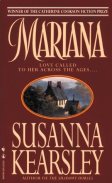
Mariana was first published in 1994 and has been reissued several times since. Call me shallow, but what originally drew me to Susanna Kearsley’s books was the newest set of covers. I was hooked as soon as I saw The Winter Sea on a bookstore shelf, had to have it, and have since snapped up several others. Although Mariana has had several covers since its original publication, the current cover, with its sense of sensual, moody introspection, is the one that really captures the feel of the book for me.

Really, how could you not fall in love with these covers?

I’ve read two other Susanna Kearsley books, The Winter Sea and The Rose Garden. Each involves some sort of time displacement or time slippage, each for difference reasons or using different mechanisms. In all three books, the heroine experiences something inexplicable in which she is thrust into another life or another timeline; she must figure out why it happens and what is expected of her. And of course, in each of the three books, true love – a deep, abiding love that knows no boundaries of time – is at the center of the plot. The romances at the heart of the author’s writings are desperate, lovely, dangerous affairs, and the passion is palpable.

What I also appreciate and enjoy in these books is the historical element. Without feeling like a history lesson, these books manage to convey a time and place gone by. They present the drama of the day’s events, politics, and social structures in a way that feels current and vibrant, with special emphasis on the role of women in these times and the choices (or lack of choices) available to them.

Mariana is a fine example of this type of journey to the past, combined with a contemporary woman’s search for identity and meaning, and as such, is both engaging as fiction and emotionally compelling as well.

I highly recommend Mariana to anyone who enjoys historical fiction, love stories, strong female characters… and simply gorgeous English countryside. An appreciation for dashing men on horseback wouldn’t hurt either.

I have another Susanna Kearsley book, The Shadowy Horses, all queued up and ready to go on my e-reader. As soon as I get over the emotional ups and downs of Mariana, I’ll be ready to dive right in.

The Monday agenda 1/14/2013

Not a lofty, ambitious to-be-read list consisting of 100+ book titles. Just a simple plan for the upcoming week — what I’m reading now, what I plan to read next, and what I’m hoping to squeeze in among the nooks and crannies.

Happy Monday! It’s time to dive right in with this week’s agenda.

From last week:

I’ve just returned from a wonderful 3-day weekend in Victoria, British Columbia, which I shared with my lovely daughter — who happens to be a book fanatic just like me. We spent a good couple of hours haunting used book stores. Oh, what fun! Between the plane rides and some scattered down time in the hotel, I did manage to get in a bit of reading, although I’m now behind on my reviews and blog posts. Totally worth it, as the weekend was fantastic. So here’s where my reading stands:

Mariana by Susanna Kearsley: Done! The review is yet to come, but for now I’ll say that I really enjoyed it — so much so that I stayed up until about 1 a.m. to finish. I can’t wait to read more by this author!

Because I didn’t want to carry too much, I opted not to bring any hardcovers on my trip, and instead started The Cranes Dance by Meg Howrey (which was one of my Wishlist Wednesday books in 2012). I’m about 1/3 of the way into the book, and I’m hooked. (Side note: Are all fictional ballet dancers crazy? Discuss.)

In terms of my online book group commitments, I’ve bowed out of the Jane Eyre read, since I read it again just last year, but I did manage to start re-reading The Fiery Cross by Diana Gabaldon so I can jump into the group discussions.

And this week’s new agenda:

It’ll probably take me a few more days to finish The Cranes Dance.

After that, I’m looking forward to my newest library book, Mrs. Queen Takes the Train by William Kuhn. And if I manage to finish that one as well, I’ll have some choices to make: I may go back to Susanna Kearsley for one of her other books already on my shelves, either Shadowy Horses or Season of Storms.  Or, I could dip back into the YA world and read Just One Day by Gayle Forman. I’ve never read anything by this author, but I keep hearing good things — and I actually won this one in a giveaway!

For The Fiery Cross, we’ll be discussing chapters 2 and 3 this week. And if you happen to be a Diana Gabaldon fan and want to jump in and participate, just let me know and I’d be happy to connect you with the group.

So many book, so little time…

That’s my agenda. What’s yours? Add your comments to share your bookish agenda for the week.

Flashback Friday: Flowers for Algernon by Daniel Keyes

It’s time, once again, for Flashback Friday…

Flashback Friday is a chance to dig deep in the darkest nooks of our bookshelves and pull out the good stuff from way back. As a reader, a blogger, and a consumer, I tend to focus on new, new, new… but what about the old favorites, the hidden gems? On Flashback Fridays, I want to hit the pause button for a moment and concentrate on older books that are deserving of attention.

If you’d like to join in, here are the Flashback Friday book selection guidelines:

  1. Has to be something you’ve read yourself
  2. Has to still be available, preferably still in print
  3. Must have been originally published 5 or more years ago

Other than that, the sky’s the limit! Join me, please, and let us all know: what are the books you’ve read that you always rave about? What books from your past do you wish EVERYONE would read? Pick something from five years ago, or go all the way back to the Canterbury Tales if you want. It’s Flashback Friday time!

My pick for this week’s Flashback Friday:

Flowers for Algernon by Daniel Keyes

(published 1966)

How crazy is it that a Google image search came up with all of these different graphics and book covers for Flowers for Algernon? That’s not even counting the various stage productions with their posters, playbills, and other paraphernalia. Clearly, this is a book that has staying power.

From Amazon:

With more than five million copies sold, Flowers for Algernon is the beloved, classic story of a mentally disabled man whose experimental quest for intelligence mirrors that of Algernon, an extraordinary lab mouse. In poignant diary entries, Charlie tells how a brain operation increases his IQ and changes his life. As the experimental procedure takes effect, Charlie’s intelligence expands until it surpasses that of the doctors who engineered his metamorphosis. The experiment seems to be a scientific breakthrough of paramount importance–until Algernon begins his sudden, unexpected deterioration. Will the same happen to Charlie?

I first read this book many moons ago when I was a senior in high school, very keen on all of my AP classes and avidly interested in intellectual pursuits. (What a geek, I know…) Written as a series of diary entries, Flowers for Algernon tracks Charlie’s progress from low IQ to the upper limits of genius. What totally gobsmacked me in reading this book was that Charlie’s new-found intelligence enabled him to predict and track his own downward trajectory. Prior to the operation, Charlie leads a fairly contented life. After the operation, Charlie is elated by his mental powers but ultimately is plunged into despair as he realizes that he is destined to lose everything he has gained. Flowers for Algernon raises an interesting question: Would you rather be blissfully ignorant, or achieve intellectual super-abilities but only for a short time? If gaining a terrifically high IQ also brought you the certain knowledge that your intelligence would soon plummet to below average levels, would you still want the high?

It’s been quite a while since I’ve read Flowers for Algernon, but I still remember the impact it had on me. I found it thought-provoking, moving, and disturbing — and I think the fact that it’s still widely read and that the stage version is still frequently produced is a testament to the power of this book.

So, what’s your favorite blast from the past? Leave a tip for your fellow booklovers, and share the wealth. It’s time to dust off our old favorites and get them back into circulation! 

Note from your friendly Bookshelf Fantasies host: To join in the Flashback Friday bloghop, post about a book you love on your blog, and share your link below. Don’t have a blog post to share? Then share your favorite oldie-but-goodie in the comments section. Jump in!

A Daily Dose of Happy

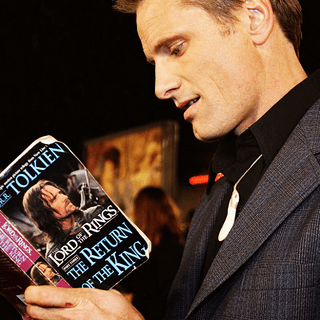
While working on something completely different, I Googled “people reading” and this is one of the images that popped up:

Credit where credit is due: Apparently, it’s one of many awesome pictures which can be found at the Awesome People Reading site. A place where I really need to spend more time.

Day? Made.

Now I can go to sleep.