Take A Peek Book Review: In the Shadow of Blackbirds by Cat Winters

“Take a Peek” book reviews are short and (possibly) sweet, keeping the commentary brief and providing a little peek at what the book’s about and what I thought.

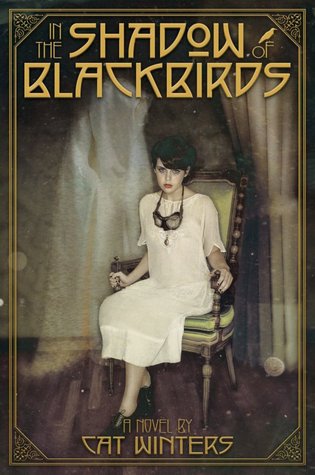
In the Shadow of Blackbirds


Synopsis:

(via Goodreads)

In 1918, the world seems on the verge of apocalypse. Americans roam the streets in gauze masks to ward off the deadly Spanish influenza, and the government ships young men to the front lines of a brutal war, creating an atmosphere of fear and confusion. Sixteen-year-old Mary Shelley Black watches as desperate mourners flock to séances and spirit photographers for comfort, but she herself has never believed in ghosts. During her bleakest moment, however, she’s forced to rethink her entire way of looking at life and death, for her first love—a boy who died in battle—returns in spirit form. But what does he want from her?

Featuring haunting archival early-twentieth-century photographs, this is a tense, romantic story set in a past that is eerily like our own time.


My Thoughts:

Bravo to Cat Winters for creating a chilling yet realistic world in her debut novel! In the Shadow of Blackbirds is set in a time of absolute horror in the United States, as the awful combination of a brutal war and a deadly flu pandemic makes death feel like a constant presence. The author does a masterful job of creating the feel of the time period, with paranoia and terror rampant in the cities and streets, and with no safe place to hide.

Surely, though, I must have stolen into the future and landed in an H. G. Wells-style world — a horrific, fantastical society in which people’s faces contained only eyes, millions of healthy young adults and children dropped dead from the flu, boys got transported out of the country to be blown to bits, and the government arrested citizens for speaking the wrong words. Such a place couldn’t be real. And it couldn’t be the United States of America, “the land of the free and the home of the brave.”

But it was.

I was on a train in my own country, in a year the devil designed.

1918.

Mary Shelley is a smart, courageous young woman who sees her whole world turned upside down as her father is imprisoned for treason after daring to speak out against war. As she flees Portland to take shelter with her aunt in San Diego, she seeks word of the boy she loves, only to be told that he’s died a hero’s death in the war. But as Stephen visits her in her dreams and then in waking moments, she realizes that her skepticism about spiritualism may be challenged by a voice trying to reach her from the other side.

This book conveys so much without ever feeling like a history lesson. Through Mary Shelley’s experiences, we see the impact of the war on the homefront, the sickeningly high death toll of the influenza epidemic and the futility of the home remedies used to ward off disease (garlic-flavored chewing gum, bathing in onion water — ugh), the horrible condition of the injured, maimed soldiers home from the battlefields, and the desperation of the bereaved that makes them easy prey for charlatans claiming to be able to channel their dead loved ones.

The plot is tautly woven and fast-paced, but never at the expense of character development. We learn so much about Mary Shelley’s character and her relationship with Stephen through their letters sprinkled throughout the book, as well as by seeing Mary Shelley’s determination to figure out the secrets surrounding Stephen’s messages and help him find peace.

I highly recommend In the Shadow of Blackbirds for anyone who enjoys historical fiction — as well as for anyone who enjoys a good, suspenseful tale, grounded in reality but with a hint of the supernatural. Cat Winters is an extremely talented author, and I can’t wait to read more of her work!

_________________________________________

The details:

Title: In the Shadow of Blackbirds
Author: Cat Winters
Publisher: Amulet Books
Publication date: April 2, 2013
Length: 387 pages
Genre: Young adult/historical fiction
Source: Library

Book Review: Stand-Off by Andrew Smith

Stand-Off

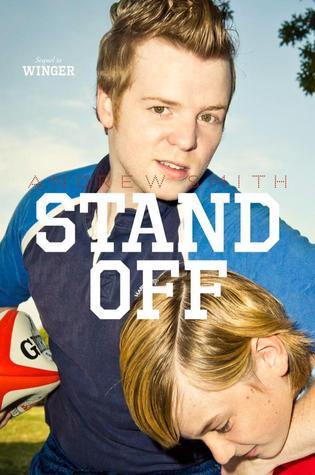
front cover

Stand-off is the name of a position in rugby. Stand-Off is also the name of the newly published sequel to Winger, Andrew Smith’s 2013 young adult novel that both made me laugh and broke my heart into little, tiny pieces.

Ryan Dean West is the main character in both books. Please note that his name is Ryan Dean, not Ryan — it irks him no end when people get it wrong. In Winger, Ryan Dean is a 14-year-old junior at Pine Mountain, a co-ed boarding school located in rural Oregon. He’s used to being different, and considers himself somewhat of a loser, and yet he’s incredibly funny, a great rugby player, a talented cartoonist, and a good friend.

Winger ends with an absolute gut-punch, and that’s all I’ll say about it here. If you haven’t read it, you really should. Check out my review for my rather emotional reaction to Winger, and then rush out to the library to pick up a copy. Seriously.

In Stand-Off, it’s the beginning of senior year, and Ryan Dean is kind of screwed. He’s stuck in a ground-floor, teeny-tiny dorm room — and what’s worse, he’s sharing it with a 12-year-old freshman named Sam Abernathy, an adorable, eager little kid who favors soccer ball pajamas, cooking shows on TV, and leaving doors and windows open to stave off his raging claustrophobia. Needless to say, this does not sit well with Ryan Dean, who just wants to get through senior year, and maybe, just maybe, finally find a private place to have sex with his amazing girlfriend Annie.

Stand-Off back

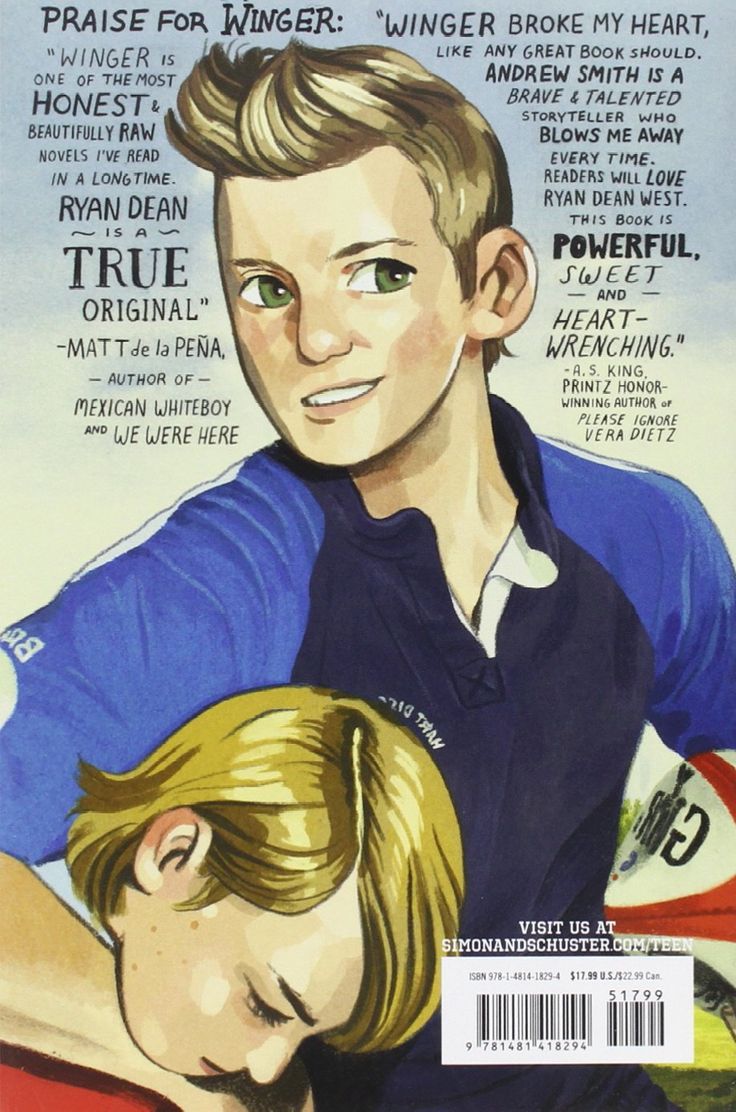
back cover

Of course, nothing goes as planned for Ryan Dean, and the real problem is not Sam or the dorm room — it’s Nate. Nate is Ryan Dean’s abbreviation for the Next Accidental Terrible Experience, and Nate seems to be waiting to pounce on Ryan Dean at every turn, behind every corner, and in every dream. Ryan Dean suffers a series of panic attacks and night terrors, and it just seems to get worse and worse. How will he make it through senior year?

That’s the general overview of the plot. Trust me, it’s great.

One of the most delightful ingredients of Andrew Smith’s books is the language, and the writing in Stand-Off is no exception. Told in the first-person, Stand-Off is pure Ryan Dean, with all the horniness of a 15-year-old boy, plenty of snark, and tons of laughs. Open to any random page, and there are priceless gems. For example — page 193 (see, I’m being random):

“Hey, Ryan Dean, do you know what these cherry tomatoes remind me of all of a sudden?”

No. Just no.

Now cherry tomatoes were officially on the Ryan Dean West Things-I-Will-Never-Ever-Eat-Again List.

Or, again randomly, page 309:

Then I saw the Abernathy — all suited up in his perfectly creased Pine Mountain size extra-small boy suit (he must have thrown all the guys’ clothes in the washers and then waited for everyone to leave the locker room before changing) — winding his way like a malnourished albino chipmunk through a redwood forest of rugby players, balancing a plate of food in his hands while everyone he passed smeared their fingers through his hair.

One of the recurring patterns in this book is Ryan Dean’s questioning paragraphs, which start with “Okay. So, you know how…” and go on from there in a glorious stream of semi-connected thoughts and non-sequiturs:

Okay, so you know how sometimes when you really want to do something and so you make a promise to someone you don’t completely trust because somehow that person has just magically evolved into, like, the greatest human being you have ever known but there’s still some deep-down warning signal saying what the fuck did you just promise to do, Ryan Dean but you don’t care because you really want to believe that whatever Spotted John wants is not going to include multiple things that will ruin your life, so you hurriedly grab the pen and sign the contract on the dotted line?

Yeah. That.

It’s hard to pinpoint any one thing that makes this book so great. The characters are terrific, the writing is just so funny and poignant and honest, the cartoons interspersed throughout are so on-point and off-beat — and really, I just care so much about Ryan Dean after reading Winger that I spent all of Stand-Off just wishing for him to be okay and to be happy.

I’ll stop gushing, and just say: Read both books. I never would have thought that I’d love books about a pubescent teen boy in boarding school… but to whichever person in whichever publication wrote the review of Winger that caught my eye when it first came out: Thank you.

If you enjoy well-written young adult fiction that can make you laugh and cry, sometimes in the same chapter, you’ve just got to read Winger and Stand-Off.

_________________________________________

The details:

Title: Stand-Off
Author: Andrew Smith
Publisher: Simon & Schuster
Publication date: September 8, 2015
Length: 418 pages
Genre: Young adult fiction
Source: Library

Book Review: The Cure for Dreaming by Cat Winters

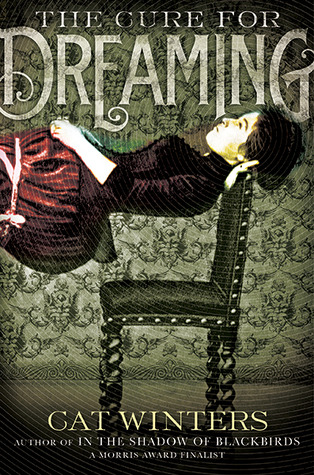
Cure for DreamingIn this YA novel, hypnotism and the suffrage movement are combined in startling ways to give us a portrait of life in 1900 for a young woman who is, pretty much literally, too independent for her own good.

On her 17th birthday, Olivia Mead attends a hypnotism show headlined by the young, talented Henri Reverie, a “mesmerist” whose talents have made him famous across the country. Egged on by her friends, Olivia volunteers to be Henri’s first subject, and astonishes the entire audience by her extreme susceptibility to his hypnotism. She’s so far under that he’s able to make her stiff as a board, suspend her between two chairs (as in the cover photo), and even stand on her torso, all without her knowledge.

Olivia is slightly embarrassed, but also enjoys the newfound attention her moment in the spotlight brings, especially from wealthy, out-of-her-reach Percy, the judge’s son. Olivia’s own father, the local dentist (with a truly horrifying collection of tools), is less than pleased. He wants nothing more than for Olivia to be good and obedient, especially after learning that she’d attended a suffragists’ rally the day before. He arranges for a private hypnotism session with Henri, during which Henri compels Olivia to see the world as it truly is, to understand the roles of men and women, and to be able to say nothing but “all is well” when she becomes angry.

This backfires, of course. Olivia is an avid fan of Bram Stoker’s Dracula, and thanks to the hypnotism, when she looks at her father, she sees him as he truly is — fanged, clawed, and monstrous. She sees the truth of many of the women of her town as well, who fade into invisibility as Olivia watches. Desperate, she tracks down Henri and begs him to fix her — but there’s a reason why he can’t just yet, and the two form a scheme to give Olivia back control of her own mind and voice and to get Henri what he desperately needs.

The Cure For Dreaming is a captivating portrait of the plight of women at the dawn of the 20th century. The author does a wonderful job of weaving together an individual’s personal struggles with the struggles of women at that time. It’s easy for us, sitting here in the comforts of 2015, to take for granted the rights we enjoy, and this book reminds us of the venom and hostility that confronted the women’s suffrage movement. The women who dared to take a public stance and speak out were demonized, ridiculed, accused of being unwomanly or even insane, and were subjected to all sorts of horrible public humiliations. In this book, looking through Olivia’s eyes, we see how far the men — and even many women — were willing to go to silence the voices of women who stood up for equality and the right to speak their minds.

As one character describes to Olivia:

“My father leaned over to me and said, “Now, that’s womanhood perfected, Percy my boy. That’s the type of girl you want. Silent. Alluring. Submissive.”

I can’t say enough about how powerful and engrossing this story is. Olivia is a marvelous lead character — smart, warm-hearted, and unwilling to keep silent when she sees something wrong. Her need to speak out is what gets her into trouble, of course, but at the same time, she makes a difference in all sorts of unexpected ways, even when forced through the power of hypnotic compulsion to be compliant and stifle her anger.

Olivia’s interactions with Henri do not take the anticipated route, and despite the growing feelings between the two, this book does not go down the dreaded path of showing a young woman throwing away her own plans in order to follow a guy. Olivia has a backbone and a commitment to staying true to herself, and that’s a lovely thing to see in a YA heroine.

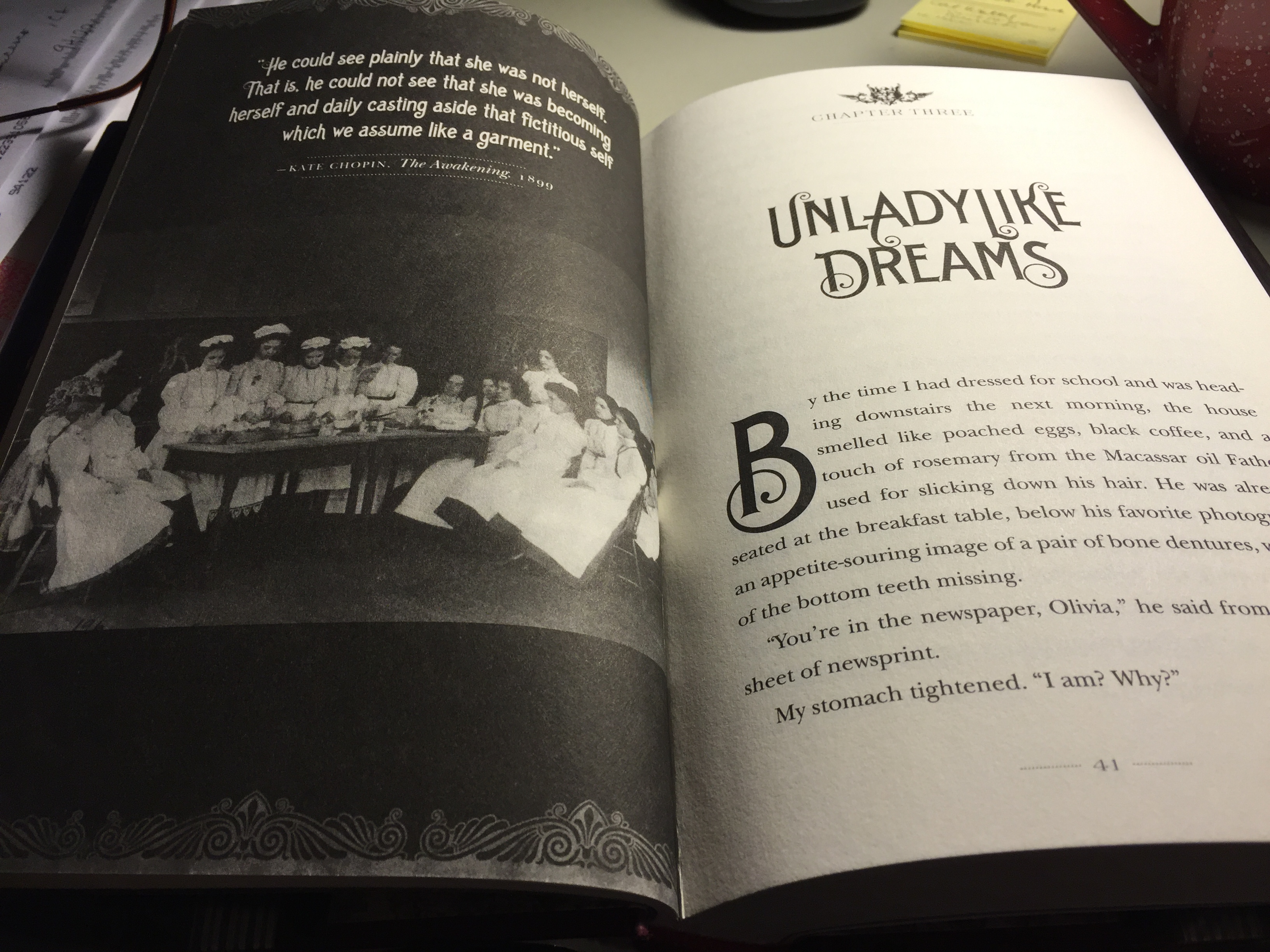
The book itself is wonderful to page through, as chapter breaks are illustrated by historical photos from the book’s era, as well as by a selection of powerful quotes by everyone from Kate Chopin to Mark Twain to Carrie Nation.

image

The Cure for Dreaming is a fast read — I gobbled it up over the course of 24 hours! I was hooked almost instantly, and just couldn’t bear to put the book down. The characters are well-drawn, the subject of hypnotism is fascinating, the relationships between the characters are pitch-perfect, and the context of the fight for women’s votes and the right to one’s own voice is powerfully presented. While written for a young adult audience, the book does not oversimplify or talk down in any way. As an adult reader, I loved the book and was never bored. This would be a great choice for teen girls, and could also provide some great discussion starting points for mothers and daughters who want a book they can share and enjoy together.

_________________________________________

The details:

Title: The Cure for Dreaming
Author: Cat Winters
Publisher: Amulet
Publication date: October 14, 2014
Length: 352 pages
Genre: Young adult fiction
Source: Library

YA new releases: A trio of mini-reviews!

I read three new young adult fiction releases this past week, and thought a three-fer review post would be fun! Here’s a quick look at what I read and what I thought.

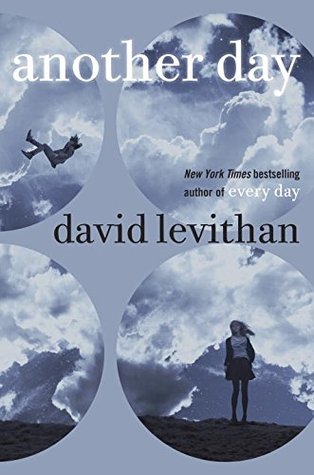
another dayTitle: Another Day
Author: David Levithan
Release date: August 25, 2015
Length: 327 pages

In 2012, David Levithan published his remarkable novel Every Day (review), about a teen named A who awakens each day in a different body. A carries A’s consciousness into each body, but experiences life as a series of “day in the life” moments belonging to whoever the body’s owner is. This is normal for A, until A meets and falls in love with Rhiannon. This seemingly impossible and complicated set-up makes for an amazing read, complete in itself.

But here we are in 2015 with Another Day, which tells the same story and presents the same set of events, but as experienced by Rhiannon. I was skeptical at first: Do we really need another version of the same tale? Short answer: Yes. Another Day is much more engrossing and moving than I would have expected. Rhiannon ponders the dynamics between body and self, questions her own motivations and feelings, her own sense of attraction and repulsion in regard to each of A’s appearances, and finds herself forced into decisions that have no right answer.

I love David Levithan’s writing, pretty much always, and Another Day is no exception. The story is wonderful, and the writing is beautiful in its rhythms and use of language, yet also feels true to teen hearts and minds. The ending seems to beg for a follow up, and I do hope that the author is planning another installment in this fascinating story.

_____________________________________________

Hello GoodbyeTitle: Hello, Goodbye, and Everything in Between
Author: Jennifer E. Smith
Release date: September 1, 2015
Length: 256 pages

If you like your YA light and airy, then Hello, Goodbye, and Everything in Between might be the book for you! This is actually a fitting choice for this time of year, a quintessential back-to-school reading selection. Hello tells the story of Clare and Aidan as a “one magical night” type of tale: We spend the night, from early evening until the next morning, watching Clare and Aidan’s final night together after a two-year high school relationship, as each prepares to leave for college in the morning. Clare and Aidan live near Chicago, but Clare will attend an East Coast college and Aidan will be at UCLA.

All summer long, they’ve been debating whether to stay together or break up before leaving for school, with Aidan wanting option 1 and Clare advocating for option 2. It’s not that they don’t love each other; they do. But neither can be sure that staying together is the right thing to do. Is it better to end things now, on their own terms, than risk a slow fizzling out as they become involved in their own, separate college lives? What if they meet other people? What if they don’t, but miss out on key college experiences because their minds are too wrapped up in their long-distance romance?

Clare and Aidan spend the night visiting old hang-outs, best friends, scenes of memorable firsts, and “everything in between”, looking to both capture memories and come to an agreement before the sun rises and they go their separate ways. Even though the couple is dealing with heart-ache and sadness, there’s still an element of excitement and looking forward — plus family drama, as each character’s relationship with parents has an impact on their choices and how they feel about their chances as a couple.

I liked Hello, but thought it was a little too simplistic in presenting the options available to Clare and Aidan. They’re fun characters with good hearts, but I’m not sure the situation warrants quite as much drama as they infuse into it. This is a nice, light read, super quick and easily digestible. It didn’t make much of a deep impression on me, but it did keep me entertained all the way through.

_____________________________________________

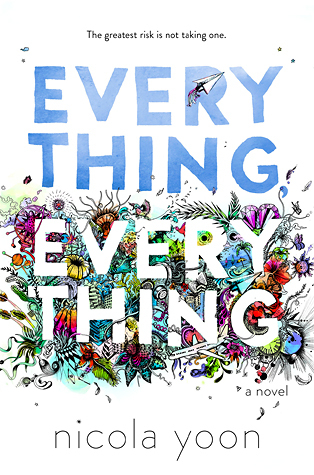
Everything EverythingTitle: Everything, Everything
Author: Nicola Yoon
Release date: September 1, 2015
Length: 320 pages

Wow. This book left me reeling, in ways I didn’t even imagine. Everything, Everything is the story of Maddy, a teen girl with the rare immune disease SCID who’s lived her entire life in the hyper-protected, safe environment of her completely sterilized and filtered home. She never goes out, never sees anyone in person except her mother and her nurse, spends her time attending school via Skype and reading tons of books. And then one day, Olly and his family move next door, and Maddy’s world is rocked. What if she could make a friend? What if she did want something besides what she has? From waving window to window to email and IM chats, Maddy and Olly become friends, and then more, until Maddy feels ready to risk everything, even her life, to really take a chance at living.

I thought I knew what to expect, more or less, when I started this book, but I was wrong. First of all, the narrative voice is completely charming. Told in the first person by Maddy, the narrative strikes the exactly right chord of cleverness, humor, and curiosity tinged with innocence. Maddy has literally done nothing and been nowhere, so everything she sees and experiences is a first for her. The author captures the wonder of all of Maddy’s firsts, as well as the suffocation of being alive without really living her own life. While the Maddy/Olly romance develops quickly, it’s not insta-love. They get to know each other as people first. Each has baggage and fears, but they find a way to connect that’s touching and feels real and deserved.

The ending (or, the last 20%, according to my Kindle) absolutely threw me for a loop and was not what I expected at all. It’s powerful and emotional (okay, yes, there were even tears), and went in unexpected directions. I’m sure readers will have some heated debates about how things turn out, and I have a feeling this will be a love it or hate it situation — but either way, there’s plenty to discuss!

Throughout the book, I thought the writing was terrific, and I loved the little drawings and diagrams that enliven Maddy’s story, as well as all the email exchanges, messages drawn on windows, and other whimsical visual touches. Maddy is a smart and funny character, and I loved seeing her think about her life, her family, and her future. This book pulls off the tricky task of piling on the emotional impact while keeping a sense of quirkiness and laughter. Everything, Everything is a book that should really appeal to teen readers, and adults will love it too!

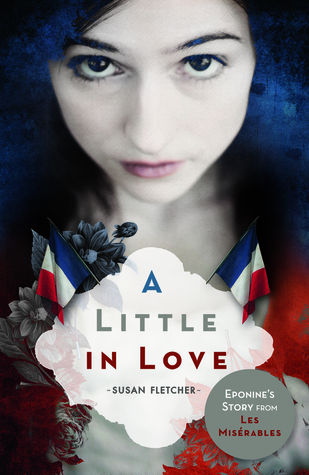
Book Review: A Little in Love by Susan Fletcher

A Little in Love

When a book starts with the main character dying slowly and painfully in the street, you know that you’re going to be in for an emotional ride.

Then again, what do you expect from a book whose essence can be boiled down to Victor Hugo’s Les Miserables as told by Eponine?

I mean, anyone who saw the musical version of Les Miz and didn’t get at least a little misty during this number has a heart of stone:


In A Little in Love, a dying Eponine recounts her sad life story, narrating all that she’s experienced in her young life that led up to this final moment. And so we go back to Eponine’s girlhood, as she lives in a small village at the inn run by her parents, the wicked, thieving Thenardiers. Eponine’s parents raise her and her younger sister to be wonderful thieves, able to pull rings off fingers, lift coins from pockets, take the buckles off a pair of shoes, without ever being seen. To steal is to earn love.

Into their lives comes a small girl named Cosette, deposited into the Thenardier’s keeping by her desperate mother, but the kindness and shelter she’d hope to secure for Cosette is never delivered. Cosette is treated like a dog and a slave, while the money left for her upkeep is spent on food and clothes for the Thenardiers. Eponine sees Cosette as a potential friend, until she is punished for showing any kindess. Eponine’s mother makes clear that only hardness is allowed. She must be cruel. She must be hard. Eponine can only keep what passes for love from her own mother by kicking Cosette and spitting at her, calling her ugly, and making her life miserable.

And so the years pass, until a kind-eyed man comes one Christmas to take little Cosette away into a better life. Eponine realizes just how trapped she is in the misery of her own family… but she herself has no way out, no kind-eyed rescuer to save her from her sad existence. After her father commits a horrible crime, they spend years on the run, eventually landing in Paris, where Eponine’s fate is sealed. She sees a young man, Marius, and falls instantly in love. Eponine is sickened by her family’s evil ways, and determines to be good, to be kind, to make her own way in the world and try to make amends. When Eponine realizes that Marius loves none other than Cosette, Eponine finds a way to unite the lovers, and ultimately… well, if you’ve watched the clip above, you know it doesn’t end well for poor Eponine.

A Little in Love is a lovely little book, not very long and with a nice, quick pace. Eponine’s world view may be limited, but it’s enough to show us the abject poverty of the lower classes in France and the depths to which people must sink in order to survive. Despite her horrible upbringing, Eponine holds onto her own humanity, and it’s through her sense of right and grace that we see that not all people are cruel, and that even poor, downtrodden people are capable of moments of kindess which can change lives.

This was a hard world, I knew that. It was dangerous; it had its knives and lies and cruelties, and Paris felt on the edge of such trouble. but there were small wonders too — everywhere.

Eponine’s voice is simple and genuine. She loves, she aches, she regrets. She despises her parents’ and sister’s actions, but not the people themselves. She would be forgiven for resenting Cosette and standing in her way, but of course she doesn’t: By helping Cosette, she’s doing what little she can to apologize for the years of cruelty, lightening her own burden of guilt even while adding to the pain she suffers knowing Marius will never love her as she loves him.

I would imagine that most readers of A Little in Love will be at least a little familiar with the story from the movie version of Les Miserables. This book is a reimagining of Victor Hugo’s story, so some plot changes may be confusing for those expecting the story they viewed on-screen. It doesn’t matter much, really: Because neither version of the story looks through Eponine’s eyes, the narration of A Little in Love covers new ground even when going over plotlines that may be familiar. It’s a hard balancing act for a retelling to stay faithful to the original while adding enough new elements to make the story fresh and surprising, and author Susan Fletcher achieves this remarkably well in A Little in Love.

Eponine is a tragic character, a small player in the grander story of Les Miserables, and it’s lovely to see her getting the center stage billing she deserves in this new novel.

Two final thoughts:

A Little in Love is being marketed as a young adult novel. I’d just add that younger teen readers (and older middle school aged readers) could easily enjoy this book, especially if they’ve seen the movie version. While the book portrays horrible living conditions, cruelty, starvation, crime, etc, it never gets graphic and there’s no sexual content.

♦ I really wish this book had a better title! It’s not bad, but it’s not memorable or particularly connected to the story itself. I found myself having to double-check the title several times in order to make sure I got it right! It just seems awfully generic, like something you’d paste on a light-hearted high school romance, and I’m afraid it doesn’t do the weightiness of the story true justice.

_________________________________________

The details:

Title: A Little in Love
Author: Susan Fletcher
Publisher: Chicken House Ltd
Publication date: August 25, 2015
Length: 288 pages
Genre: Young adult fiction
Source: Purchased

Take A Peek Book Review: I Am Princess X by Cherie Priest

“Take a Peek” book reviews are short and (possibly) sweet, keeping the commentary brief and providing a little peek at what the book’s about and what I thought.

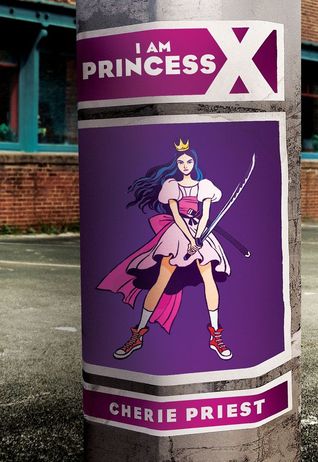
I Am Princess X

Synopsis:

(via Goodreads)

Best friends, big fans, a mysterious webcomic, and a long-lost girl collide in this riveting novel, perfect for fans of both Cory Doctorow and Sarah Dessen; illustrated throughout with comics.

Once upon a time, two best friends created a princess together. Libby drew the pictures, May wrote the tales, and their heroine, Princess X, slayed all the dragons and scaled all the mountains their imaginations could conjure.

Once upon a few years later, Libby was in the car with her mom, driving across the Ballard Bridge on a rainy night. When the car went over the side, Libby passed away, and Princess X died with her.

Once upon a now: May is sixteen and lonely, wandering the streets of Seattle, when she sees a sticker slapped in a corner window.

Princess X?

When May looks around, she sees the Princess everywhere: Stickers. Patches. Graffiti. There’s an entire underground culture, focused around a webcomic at IAmPrincessX.com. The more May explores the webcomic, the more she sees disturbing similarities between Libby’s story and Princess X online. And that means that only one person could have started this phenomenon—her best friend, Libby, who lives.


My Thoughts:

What a treat! I Am Princess X is a smart, well-written, imaginative odyssey focused on girl power and the bonds of friendship. May and Libby are deeply connected, and their true devotion to one another is what drives the search for answers forward.

Fast-paced, clever, pulse-pounding, and funny, I Am Princess X is a great story of friendship and determination, with plenty of adventure and geeky clue-chasing mixed in. The web comic that becomes a piece of the puzzle is terrific, and I really enjoyed the way the comic provides a map to the secrets of the story.

It’s nice to read a young adult novel where romance, for once, is not a factor at all. There’s lots of tech talk and references to gadgets, devices, screens, and tablets (which makes me wonder if this book will feel dated in 10 years). The plot involves hacking and spyware and questionable internet conduct — but that’s about all that could even possibly raise an eyebrow about inappropriate behavior. Otherwise, it’s practically squeaky clean, so a parent could be comfortable sharing this with mature middle school readers as well as the book’s target teen audience. (I say mature, simply because there is danger and a scary bad guy, with the main characters in serious peril. The bad guy is really creepy and threatening — deadly too.)

Overall, I found I Am Princess X to be fun, memorable and exciting. It’s got a fresh and unusual feel to it, and the narrative-plus-graphics format is very engaging. Check it out!

_________________________________________

The details:

Title: I Am Princess X
Author: Cherie Priest
Publisher: Arthur A. Levine Books
Publication date: May 26, 2015
Length: 240 pages
Genre: Young adult fiction
Source: Library

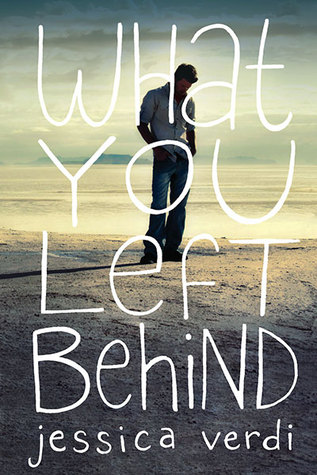
Blog Tour & Book Review: What You Left Behind by Jessica Verdi

What You Left BehindWith thanks to Sourcebooks Fire, I’m delighted to be participating in the blog tour celebrating the release of What You Left Behind, the new teen novel by Jessica Verdi.

About the Book

Jessica Verdi, the author of My Life After Now and The Summer I Wasn’t Me, returns with a heartbreaking and poignant novel of grief and guilt that reads like Nicholas Sparks for teens.

It’s all Ryden’s fault. If he hadn’t gotten Meg pregnant, she would have never stopped her chemo treatments and would still be alive. Instead he’s failing fatherhood one dirty diaper at a time. And it’s not like he’s had time to grieve while struggling to care for their infant daughter, start his senior year, and earn the soccer scholarship he needs to go to college.

The one person who makes Ryden feel like his old self is Joni. She’s fun and energetic—and doesn’t know he has a baby. But the more time they spend together, the harder it becomes to keep his two worlds separate. Finding one of Meg’s journals only stirs up old emotions. Ryden’s convinced Meg left other notebooks for him to find, some message to help his new life make sense. But how is he going to have a future if he can’t let go of the past?

My Thoughts:

I’ll keep this brief… because if that synopsis doesn’t grab you and make you want to read this book, like, yesterday, then I’m not sure what else I could possibly say to grab your attention!

What You Left Behind is unusual in the increasingly crowded field of contemporary young adult fiction: It’s a teen drama full of loss and hope, told not through the eyes of the tragically dying Meg or by new love interest Joni, but by Ryden himself. I don’t recall reading any other YA novels recently with a male narrator who’s experienced anything quite like Ryden. Age 17, high school senior, father. Bereaved as a teen without every really getting to start a life with the girl he loved. Work, school, soccer, trying to be a good dad, trying to be a good son, and still trying to understand what really happened with Meg.

You can’t help but love Ryden. He didn’t ask for any of this. Meg insisted on keeping the pregnancy, even though it meant going without chemo for all those months. All Ryden wanted was to love Meg and do anything in his power to keep her healthy… and here he is six months after her death, stressed out, feeling like a terrible father, having to face the reality that the life he thought he was meant for is now forever out of reach.

Jessica Verdi’s writing is beautiful in its heartfelt sorrow and frustration and bitterness. Ryden is a giant mess, and he screws up a lot — but I challenge any reader not to feel complete sympathy with him. He’s in a horrible situation, and even though he has an amazing mother who supports him wholeheartedly, his life really does suck at the moment when we first meet him. Watching him go through the process of grieving and figuring things out and finally starting to see a glimmer of hope is painful. Ryden’s emotions are raw and brutal, and he makes some big mistakes, and really doesn’t understand the world around him or what his new life really is a lot of the time. But it’s impossible to blame him for anything. He’s in a horrible situation, not of his making, and — he’s only 17! He’s bound to make mistakes, but I can’t help but admire the courage and grit he shows in just waking up and moving forward day after day.

The author knows how to get inside a teen’s head and explore all the contradictory wants and needs lurking there. The writing doesn’t condescend and doesn’t shy away from showing the good, the bad, and the ugly. The story didn’t necessarily go where I thought it would, but I was invested every step of the way and couldn’t look away.

My only complaint is that the author made me care so much about these characters that I wanted more at the end. I like the ending of the book very much, which makes it clear that a new chapter is just beginning and that Ryden finally has a path ahead of him that can lead to happiness. But (and maybe this is the mom in me speaking!), I wanted to know more. I really want to know what Ryden’s life is like in a year, in two years, and in five. What happens next? What does he decide to do with himself? How does he grow as a person and as a father? I think it’s a testament to the power of this novel that I feel invested enough to have so many questions.

Bottom line: If you enjoy contemporary YA fiction that deals with tough subjects with honesty and emotion, don’t miss What You Left Behind. And for more by Jessica Verdi, check out her excellent previous novel, The Summer I Wasn’t Me (reviewed here).

More Info:

Purchase Here:

What You Left Behind

Amazon | Apple | B&N | BAM | !ndigo | IndieBound | Kobo

About the Author

Jessica Verdi lives in Brooklyn, NY and received her MFA in Writing for Children from The New School. Her favorite pastimes include singing show tunes at the top of her lungs (much to her husband’s chagrin), watching cheesy TV, and scoring awesome non-leather shoes in a size 5. She’s still trying to figure out a way to put her uncanny ability to remember both song lyrics and the intricacies of vampire lore to good use. Follow Jess on Twitter @jessverdi.

Connect with Jessica Verdi

Website – http://jessicaverdi.com/

Twitter – https://twitter.com/JessVerdi

Facebook – https://www.facebook.com/authorjessicaverdi

Goodreads – https://www.goodreads.com/author/show/6442339.Jessica_Verdi

_________________________________________

The details:

Title: What You Left Behind
Author: Jessica Verdi
Publisher: Sourcebooks Fire
Publication date: August 4, 2015
Length: 320 pages
Genre: Young adult fiction
Source: Review copy courtesy of Sourcebooks Fire

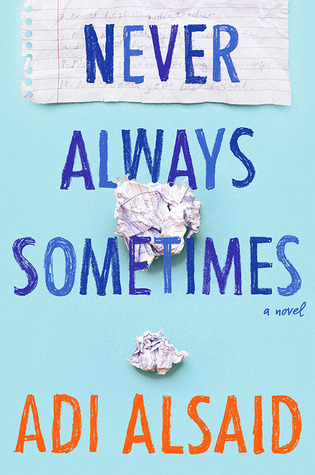
Book Review: Never Always Sometimes by Adi Alsaid

Never Always SometimesNavigating high school is never easy. In the new YA novel Never Always Sometimes, best friends Dave and Julia decide at the end of their 8th grade year that they will not turn into high school clichés. They want to be unusual, true to themselves, outside of the pack mentality that takes over otherwise normal kids’ lives. So Dave and Julia create a “Nevers” list — all of the high school clichés they vow never to do.

Never be identified by where you eat lunch.

Never host or attend a beer party.

Never hook up with a teacher.

Never date your best friend.

After the 8th grade prologue, the book jumps forward to the end of senior year. Senioritis has definitely set in. College acceptances in hand, there’s only the tedium of continuing to attend classes for the reamining months until graduation. But then Dave finds the crumpled-up old copy of the Nevers list at the back of his locker, and an idea is born: Dave and Julia have made it all the way through high school without doing any of the things on their list — so what if they start doing them now, just for fun?

And so Dave and Julia embark on a wild few months of drunken house parties, hair dying, stalking a teacher, running for prom king, and otherwise breaking out of their own happy little world by embracing the “norms” of high school life.

Of course, there are glitches. Dave and Julia have spent all of high school as a complete entity of two. Best friends, whose lives absolutely revolve around one another. They’ve never needed anyone else, and so haven’t bothered with anyone else. They’re not unpopular, exactly — but they’ve also never admitted anyone else into their sphere. When they start their “nevers” project, they’re shocked to discover friendship, fun, and acceptance, and to discover that there are other people worth hanging out with.

The biggest problem of all, though, is that Dave has spent all of high school madly in love with Julia, but never acknowledging it. He’s never had reason to think she might return his feelings, and it’s the classic “wouldn’t want to ruin our friendship” situation, from Dave’s perspective. He’s never dated anyone else, because all he can see is Julia. Julia has dated a bit, but nothing serious — most likely because, at the end of the day, neither really needs anyone else in their lives.

Where it goes from here, well… jump down to the spoilers section if you really want to know. Let’s just say, while there are crazy antics and adventures galore, Dave and Julia also discover plenty of unintended consequences.

I really liked the characters of Dave and Julia. They’re smart and funny, and their banter and easy joking manner with one another is cute and fun. It’s plain to see that they fit together perfectly in their friendship. Their isolation from everyone else might be misguided, but then again, their little universe really does seem complete at times.

The overall arc of the story is engaging and fast-paced. There are emotional issues addressed: Dave’s mother died when he was nine, and I think he gets the warmth and affection from Julia that his still-mourning father and brother don’t really provide. Julia has a happy home life with her two dads, but she’s drawn to her absent bio-mom, who’s a special, free-spirited butterfly who sends postcards from around the world describing her unique and extraordinary experiences, but who’s never actually there for Julia in any real way. The crux of the “nevers” list and Julia’s devotion to it may come down to her unresolved feelings toward her mother — is she embracing this idea of being outside the social norms as a way to prove to herself that she’s worthy of her mother?

The idea of escaping clichés is explored in many ways in this books. Julia and Dave have managed to be outsiders throughout high school, but when they set out — ironically — to join the crowd, they discover that being apart from the crowd all this time deprived them of some legitimate fun as well. Maybe everything they scorned isn’t all bad — maybe there are people who might enhance their lives, instead of just being looked down upon as sheep.

SPOILERS FROM HERE ON OUT, SO AVERT YOUR EYES IF YOU DON’T WANT TO KNOW!

When Dave finally admits to Julia that he likes a girl he met at a party, Julia is hit over the head with the realization that she’s loved Dave all along. These two. Their timing sucks. Because Dave can finally have what he’s always wanted, but he’s not sure it’s actually what he wants anymore.

Dave and Julia do finally hook up, but only after he’s gotten involved with a sweet, popular, “normal” girl. The cliché, from countless YA novels, is the idea of best friends finally realizing (usually at the end of the book) that they’re actually perfect for each other romantically as well. That’s not the case here. They should be perfect together, but once they start sleeping together, Dave realizes that a romantic relationship with Julia actually doesn’t work for their friendship.

I’ll admit that I didn’t quite buy this scenario. Is it just a matter of timing? If Dave hadn’t started dating Gretchen, would things have worked with Julia? I’d almost have preferred to see it play out without the complication of another love interest, so it would be clearer whether Dave’s love for Julia was always just an unrealistic crush on a best friend, or if their connection really could have turned into a romantic connection too.

I feel the need to add that a sex scene that marks the turning point of the story was very odd — at least, it was to me. There’s a casual air to it that seemed out of place, especially for two characters for whom it’s so momentous an occasion in their history together, as well as given the fact that they’re both virgins at the time. In addition (and this may seem kind of nitpicky), there’s no mention in the scene as to whether they’re having protected or unprotected sex. If it’s not specified, do we assume it’s unprotected? I kept waiting for the other shoe to drop (metaphorically speaking), but this part of the equation was never mentioned. It felt to me like it would have been easy to include a reference to the character reaching for a condom, because otherwise, especially given the setting, the unplanned nature of the event, and the virginity of the two characters, it really seems like they just went for it without protection. And not that I feel that YA lit needs to get preachy, but I do think a quick mention of protection wouldn’t have hurt the scene at all and would have sent a positive message about responsibility and taking care of oneself.

I also had a bit of a hard time with the subplot of Julia trying to seduce her math teacher, awkwardly and jokingly, of course, but I found it hard to find this part funny. It just felt kind of weird and awful to me, but maybe that’s my adult brain taking over and criticizing the actions rather than seeing the hilarity of it (which clearly Julia was feeling).

I do want to mention that the writing in Never Always Sometimes is really a stand-out in the crowd of YA fiction. I just loved the author’s ability to paint pictures with language and to use clever word play to evoke a feeling or sum up a situation. For example, I loved this:

How Julia had felt something so deeply for so long without knowing it herself was a mystery. As if love was a fugitive harboring in an attic, hidden even from the people residing in the house.

This too:

Before, when Dave had dreamed about love, this is what it looked like:

It was lazy. Love was lazy as hell. Love laid around in bed, warm from the sheets and the sunlight pouring into the room. Love was too lazy to get up to close the blinds. Love was too comfortable to get up and go pee. Love took too many naps, it watched TV, but not really, because it was too busy kissing and napping. Love was also funny, which somehow made the bed more comfortable, the laughter warming the sheets, softening the mattress and the lovers’ skin.

END OF SPOILERS

Wrapping it all up, I did actually enjoy Never Always Sometimes very much. The balance between serious and funny was kept up very well throughout, and the story explores some interesting ideas about best friendship and trying so hard to be different that you end up missing out on so many good experiences along the way. Julia and Dave are both great characters, although since we spend a lot more of the story viewing events through Dave’s eyes, I felt as though I was playing catch-up a bit when the narrative shifts to Julia’s perspective.

As I mentioned, beyond the plot, I really enjoyed the author’s use of language and his writing style, and I’d love to read more of his work.

This is a fun read that has some good food for thought too. Recommended for anyone who enjoys contemporary YA fiction — and if you’re a parent to a teen, I could see this book generating some really good discussion, if you’re open to it.

_________________________________________

The details:

Title: Never Always Sometimes
Author: Adi Alsaid
Publisher: Harlequin Teen
Publication date: August 4, 2015
Length: 320 pages
Genre: Young adult contemporary fiction
Source: I won an ARC in a giveaway! Thank you to Krystal at Books Are My Thing!
Book Review: The Secrets We Keep by Trisha Leaver

Secrets We KeepMaddy and Ella, identical twin sisters in their senior year of high school, were best friends since birth… right up until the first week of freshman year, when Maddy’s pursuit of popularity led her to dump quiet, artistic Ella and become the belle of the ball. From that moment onward, the two occupied a home together, but had next to nothing in common. Maddy was always at the center of the in-demand social circle, busy with perfect boyfriend Alex, and obsessed with looks, clothes, and status. Ella found a new best friend, Josh, who shared her interests in art and anime and became her constant companion.

That’s all backstory. Early on in The Secrets We Keep, tragedy strikes. On a rainy night, on the way home from a party, Maddy’s car goes off the road and one twin is killed, the other seriously injured. But who survived? As it turns out, Ella had driven Maddy’s car to pick her sister up — and because Maddy’s clothes were soaked from waiting in the rain, Ella gave Maddy her coat and sweatshirt.

The driver is pulled alive from the wreck, while the other sister is dead at the scene. The car is Maddy’s; the driver is presumed to be Maddy — especially since the dead girl is wearing Ella’s clothes.

When Ella wakes up in the hospital, she at first has no recollection of her name or her circumstances. But there’s a boy holding her hand, dozens of flower bouquets in her room from her many friends, and the name “Maddy” written on the board in her room. She assumes she herself is Maddy, and it’s not until she insists on seeing her dead twin in the morgue that her own memories come flooding back.

And here’s where my belief in this story pretty much went out the window: Ella feels tremendously guilty for causing her sister’s death. She sees how happy her parents are when she wakes up and they greet her as “Maddy”, and she hears from Alex and the nurses how many of “her” friends are crammed into the halls and waiting rooms, cheering for her survival. Ella decides on the spot that her parents wouldn’t be happy if they knew the survivor was Ella, not Maddy. Furthermore, she decides that she owes Maddy a debt for killing her, and the way to make it up to her is to live her life. So Ella keeps her own identity a secret and vows to live Maddy’s life, which becomes a bit harder once she has to attend her own funeral and act like her best friend Josh means nothing to her.

Hoo boy. Things unravel from there. Ella uncovers a dark secret about a very not-nice plot of Maddy’s. Ella does a not-very-good job of impersonating Maddy when she goes back to school, breaking all sorts of rules about appearance, bitchiness, and maintaining mean girl status quo. Instead of going to her own honors classes and maintaining her perfect grades, Ella follows Maddy’s undemanding schedule and has to force herself to dumb down her test performance. In short, it’s a mess.

Does any of this make sense? Not really. Ella’s thinking can be chalked up to shock at first, but she’s really much too smart a girl to actually believe that her parents are happy that Maddy survived and she didn’t. And I couldn’t see any logic in the idea of living Maddy’s life as a way to repay her sister. Maddy is still dead, after all. How can pretending to be her make a difference? And then there’s Ella’s belief that Maddy being alive makes so many more people happy — why does this matter to Ella? She doesn’t even like these people.

It’s really a ridiculous situation, and I found it pretty much impossible to buy the premise. As clichéd as the old stand-by amnesia plot is, the whole set-up here would have been much more plausible if Ella hadn’t regained her memories. If she actually believed herself to be Maddy, it would be interesting to see her trying to piece her life back together, when it was never actually hers. But having Ella pretend to be Maddy for the flimsiest of reasons just defies all logic. The piece about her parents really irritated me, to be honest. So they bury Ella and try to rebuild their lives with Maddy — and then when the truth comes out, they’re forced into a brand-new mourning period for the daughter they believed to be alive, yet they’re supposed to now be overjoyed by Ella’s survival? It’s just weird and cruel, and I felt that Ella’s treatment of her parents was especially callous.

I realize this all sounds as though I didn’t like The Secrets We Keep at all, and that’s not entirely the case. On the more positive side, the writing itself is fast-paced and kept my attention, so even though I kept exclaiming over how unbelievable the plot was, I also didn’t want to put the book down. Granted, a part of me wanted to keep reading to see if there was some great twist coming or if the ending would justify it all. And, well, no, that’s not what happened… but still, I did keep reading and I did want to see how it worked out, so there’s that.

Not every book is for every reader, and despite having a premise — at least according to the synopsis — that sounded really intriguing, the final result just didn’t work for me.

_________________________________________

The details:

Title: The Secrets We Keep
Author: Trisha Leaver
Publisher: Macmillan Children’s Publishing Group
Publication date: April 28, 2015
Length: 304 pages
Genre: Young adult contemporary fiction
Source: Review copy courtesy of the publisher via NetGalley


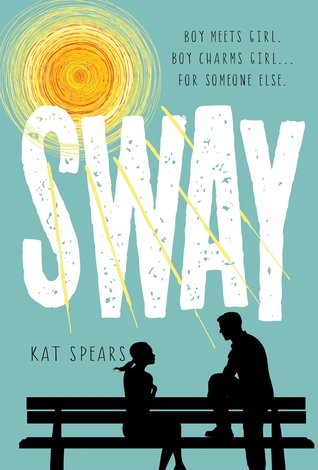
Book Review: Sway by Kat Spears

SwayThe synopsis for Sway, on Goodreads and elsewhere, describes the book as “hilarious” — and that’s not the way I’d put it.

Snarky, snide, clever, with humorous dialogue? Yes. But a laugh riot? No.

Sway is told from the point-of-view of high school senior Jesse Alderman, a kid who knows how to make things happen and get things done. He’s a fixer. People come to him for solutions, for answers, for connections. He’ll take on any job, it would seem. He arranges protection for a kid who’s being bullied. He makes sure that the bane of the principal’s existence gets expelled. He guarantees that a school fundraiser is a success — for a cut of the earnings. He also deals drugs (more on this later) and term papers, and seems to be welcomed everywhere he goes.

Jesse doesn’t really have many friends, though, having shut himself off emotionally after a family tragedy a year before. He doesn’t allow himself to feel, doesn’t even play his beloved guitar any longer. He floats through life, living by his wits, seemingly above it all. And then Ken, the star football player, hires Jesse to help him win a certain girl… and the girl is amazing. Jesse has never met anyone like Bridget before — beautiful, yet not focused on her beauty, and truly committed to doing good works. As Jesse gets to know Bridget in order to carry out his task, he can’t quite recognize what’s happening to himself at first, but slowly it becomes clear: He’s falling in love.

That doesn’t stop Jesse from completing his mission, and before you know it, Ken is dating Bridget, Jesse has earned his money, and all should be well. Except Jesse is now friends with Bridget as well as with her younger brother Pete, who’s a pissed-off kid with cerebral palsy and a chip on his shoulder, and Jesse can’t quite pull himself away. Things go south, as you’d expect, and it’s interesting to see Jesse pick up the pieces and finally start to repair the damage to his own life.

Along the way, Jesse falls more and more into good-guy mode, although he’d never admit it. As part of his ruse to get to know Bridget, he befriends an old man in an assisted living facility — but even after the ruse has been completed, Jesse continues to hang out with Mr. D., each providing the other with the sense of family both are missing. Jesse would consider himself a heartless business person, but his actions continually lead to good, even selfless results.

More troubling? Jesse’s drug dealing is just no big deal throughout most of the book. Jesse is a charmer and a welcome addition to every party — but how much of this is his personality and how much of it is the pot and X that he supplies? I found the morality of the drug aspects a bit slippery. Even when Jesse wants out of the drug business, he finds another kid from the high school to take his place with his pot connection, and it’s presented as a good thing for the kid, a way to win friends and fit in. The situation with the X dealer is a lot hairier and scarier, but even that dire situation is resolved fairly quickly.

There are a few loose plot threads that could have used more explanation, particularly in regard to Jesse’s two closest allies. I’d have liked to get to know each of them better and to find out more about how they connected with Jesse in the first place and why their bonds are so strong. I would also have liked to know more about Jesse’s family life and his childhood; we know about the tragedy from a year prior and have a sketchy understanding of what his life had been like prior to that, but I think a bit more fleshing out of that part of the story would have been helpful. Perhaps the biggest omission is an explanation of how Jesse came to be the success he is at influencing and fixing — when did he get started, and how? And how much of his business was already in place prior to a year ago?

Overall, I found Sway to be fast-moving and captivating. I read it all in one day, and had a hard time taking a break for little things like eating and talking to my family. Jesse is a wounded boy who acts out in all sorts of ways, and yet he’s clearly smart and funny… and underneath the gruff, never ruffled exterior lurks a kid who actually cares.

For what it’s worth, I’d say ignore the book blurbs that describe Sway as “a Cyrano de Bergerac story with a modern twist”. The comparison is only vaguely relevant, and doesn’t really set the right expectations for reading this young adult novel. Just go into knowing that it’s a well-written, clever story with heart, focused on unusual characters, and enjoy!

_________________________________________

The details:

Title: Sway
Author: Kat Spears
Publisher: St. Martin’s Griffin
Publication date: September 16, 2014
Length: 320 pages
Genre: Young adult contemporary fiction
Source: Review copy via NetGalley