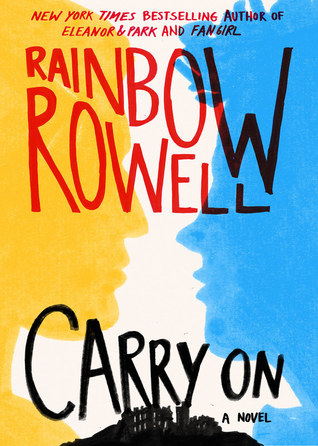
Book Review: Carry On by Rainbow Rowell

Carry OnIf you’ve read Rainbow Rowell’s absolutely adorable novel Fangirl (review), you’ll be familiar with the name Simon Snow. As in, the hero of the (fictional) bestselling series about a boy wizard who learns at age 11 that he’s the Chosen One, and embarks on a new life at a (fictional) school of magic. In Fangirl, the main character writes wildly popular Simon Snow fan fiction, entitled Carry On, Simon.

In Rainbow Rowell’s newest novel, Carry On, we have the continuation of Simon’s story — but not the canon version, from the (fictional) official series author, but the fanfic story, picking up where Cath’s tale leaves off in Fangirl.

Confused yet?

Carry On is set completely within the magical fantasy world of the Simon Snow series. Simon is the main character, and alternates narration with his best friend Penelope, girlfriend Agatha, roommate and archnemesis Baz, and a handful of others as well, including the Mage, the all-powerful but highly controversial headmaster of the Watford School of Magicks.

It’s the eighth and final year of their magical education, and Simon return to Watford determined to confront Baz and figure out how to defeat the Humdrum, the big evil who’s menacing the entire world of magic. But Baz doesn’t show up as expected, and Simon becomes consumed by the idea of tracking down Baz, searching the school and the Catacombs for him night after night.

Finally, when Baz shows up, Simon is forced to share with him a secret — that Baz’s mother’s ghost visited, and wants Baz to learn the truth about her death. Reluctantly, the two boys declare a truce, and set out to solve the mystery, along the way poking at the edges of the myths and prophecies of the magical community, defying the prejudices of the old families, and trying to figure out just why they’re so obsessed with each other.

As in the fanfic we read in Fangirl, the heart of Carry On is the relationship between Simon and Baz. Underneath the enmity that simmered between them for all the years they were forced to be roommates is a strong and steady and mutual attraction, which the boys finally acknowledge and explore in Carry On. It’s sweet and funny and tender, and well, complicated too. Baz hides the secret that he’s a vampire, which isn’t as much of a problem for Simon as he would have expected. Their differences are acknowledged, and they’re just so friggin’ cute together that we know they’ll figure it all out in the end.

The magical mysteries — where did Simon come from? what’s up with the prophecy? what or who is the Humdrum? — all get resolved by the end, although I’m not sure that every answer is 100% satisfying. I mean, the bit with the Humdrum and how he’s finally stopped didn’t totally work for me, and I wanted Simon to get more of an answer about his parents. As far as I could tell, even though we readers find out the truth, Simon doesn’t, and that doesn’t seem fair.

Overall, I loved this book. It’s just so gosh-darned cute! The spells that they cast aren’t faux-Latin as in a certain series that we all know and love — in the world of Simon Snow, words have power, and the more certain words are used, the more power they have. So, the spells are all cliches, from “up, up, and away” to “stay cool” to “suck it up”, and it never stops being funny to see how they work.

Carry On is great fun for anyone who’s read and enjoyed certain children’s fantasy series — especially Harry Potter, of course. There are all sorts of winking references to the world and lore of Harry Potter, and it’s done with such an air of excitement and amusement that it feels like an homage, not a parody. Having read Fangirl, I’m not really in a position to judge whether Carry On works as a stand-alone… although if I had to guess, I’d say it would still be enjoyable on its own. Still, if you’re going to read Carry On, I’d strongly suggest starting with Fangirl to get the background and flavor of the Simon Snow phenomenon.

__________________________________________

The details:

Title: Carry On
Author: Rainbow Rowell
Publisher: St. Martin’s Griffin
Publication date: October 6, 2015
Length: 522 pages
Genre: Young adult/fantasy
Source: Purchased

Save

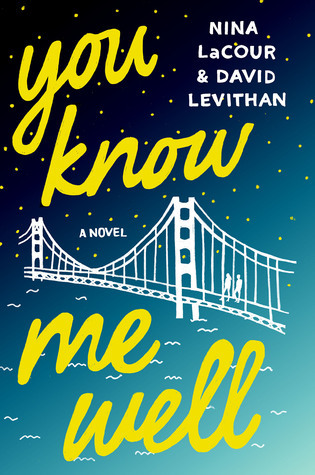
Take A Peek Book Review: You Know Me Well by Nina LaCour and David Levithan

“Take a Peek” book reviews are short and (possibly) sweet, keeping the commentary brief and providing a little peek at what the book’s about and what I thought.

You Know Me Well

Synopsis:

(via Goodreads)

Who knows you well? Your best friend? Your boyfriend or girlfriend? A stranger you meet on a crazy night? No one, really?

Mark and Kate have sat next to each other for an entire year, but have never spoken. For whatever reason, their paths outside of class have never crossed.

That is until Kate spots Mark miles away from home, out in the city for a wild, unexpected night. Kate is lost, having just run away from a chance to finally meet the girl she has been in love with from afar. Mark, meanwhile, is in love with his best friend Ryan, who may or may not feel the same way.

When Kate and Mark meet up, little do they know how important they will become to each other — and how, in a very short time, they will know each other better than any of the people who are supposed to know them more.

Told in alternating points of view by Nina LaCour, the award-winning author of Hold Still and The Disenchantments, and David Levithan, the best-selling author of Every Day and co-author of Nick and Norah’s Infinite Playlist (with Rachel Cohn) and Will Grayson, Will Grayson (with John Green), You Know Me Well is a deeply honest story about navigating the joys and heartaches of first love, one truth at a time.


My Thoughts:

This YA novel about connection and identity has a sincerity to it that is so loud and clear that it threatens to overshadow the story itself. The intentions are great, but I felt as though the plot itself was a bit flimsy.

The characters in You Know Me Well are all searching for their own truths, each on the way to becoming a more authentic version of themselves. The storyline takes place during Pride Week in San Francisco. Mark has been out for years, and is secretly in love with his best friend, while Kate finally has a chance to meet the girl she’s dreamed about from a distance. And after years of going to school together but never actually interacting, Mark and Kate connect and form an instant and deep friendship, finding in each other a kindred spirit, someone with whom they can be honest and reveal their inner worries, fears, hopes, and insecurities.

The action takes place over the course of an eventful week, in which friendships are made and broken and love is both found and lost. The condensed timeline keeps the story moving along, but I had some little doubts in my mind about the suddenness of Kate and Mark’s friendship and the complete trust that they establish in seemingly no time at all.

You Know Me Well is written in alternating chapters, as the authors take turns presenting Kate’s and Mark’s points of view. It’s an effective technique, as we get to know the two characters both as they see themselves and as they see each other. Readers of David Levithan’s earlier works will be familiar with this approach, which he’s used with other co-writers in books such as Dash and Lily’s Book of Dares and Will Grayson, Will Grayson, among others.

David Levithan is an amazing writer, and once again we see his beautiful language at play in conveying the inner landscape of young adults on the verge of becoming who they’re meant to be. There’s a nice little homage to his recent novel Two Boys Kissing (review), which is one of the loveliest young adult books I’ve ever read.

You Know Me Well has a lot going for it, and it’s a quick and touching read, but ultimately I felt as though the messaging about positive identity and acceptance was more overt and heavy-handed than it needed to be. Then again, I’m an adult reading the book, and not truly the target audience. I imagine that reading You Know Me Well could be a profoundly important experience for a teen, gay or straight or anywhere along the rainbow, who’s trying to establish a strong self and figure out their place in the world.

_________________________________________

The details:

Title: You Know Me Well
Author: Nina LaCour and David Levithan
Publisher: St Martin’s Griffin
Publication date: June 7, 2016
Length: 256 pages
Genre: Young adult
Source: Review copy courtesy of the publisher via NetGalley

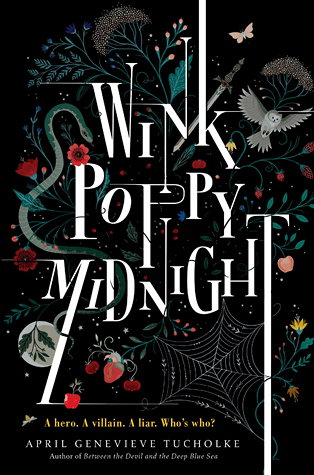
Take A Peek Book Review: Wink Poppy Midnight by April Genevieve Tucholke

“Take a Peek” book reviews are short and (possibly) sweet, keeping the commentary brief and providing a little peek at what the book’s about and what I thought.

Wink

Synopsis:

(via NetGalley)

Every story needs a hero.
Every story needs a villain.
Every story needs a secret.

Wink is the odd, mysterious neighbor girl, wild red hair and freckles. Poppy is the blond bully and the beautiful, manipulative high school queen bee. Midnight is the sweet, uncertain boy caught between them. Wink. Poppy. Midnight. Two girls. One boy. Three voices that burst onto the page in short, sharp, bewitching chapters, and spiral swiftly and inexorably toward something terrible or tricky or tremendous.

What really happened?
Someone knows.
Someone is lying.

My Thoughts:

I have no idea what to make of this dizzying book. Wink, Poppy, and Midnight take turns telling their versions of what happen in this mind-bendy tale. There are hints of fairy tales and ghost stories, as the three characters offer their views of themselves and each other, but only ever tell part of the story.

Mystical elements abound, from tarot readings and hauntings to certain evocative tastes and smells. The names in the story are odd and whimsical — not just the three main characters, but their various friends and family members, including Leaf, Buttercup, Alabama, and Peach. What seems a straightforward story of an ultra-mean mean girl, the people under her thumb, and the wild girl who offers a different path… isn’t. Wink, Poppy, and Midnight interact and become parts of each other’s stories. Midnight is our most relatable point of view in the story, the sweet and honest boy next door, but his perspective isn’t as reliable as he’d like to think, and he doesn’t really see beyond what’s in front of him.

It’s hard to describe this book without giving too much away. It’s frustrating that the book has been so built-up as a twisty, turny, surprising shocker. Even the cover blurb (“A hero. A villain. A liar. Who’s who?”) puts us on alert that we can’t believe what we’re told or take the characters at their word. I wish we didn’t have this heads-up. It would be much more powerful and shocking if we weren’t told ahead of time not to trust what we see.

I read Wink Poppy Midnight in a single day. It’s a book that just begs to be gulped up. I’m not sure that I’ve fully figured out why certain things happened as they did or what the motivation was — and I don’t know if that’s because I haven’t gotten there yet in my processing of the story, or if the resolution just wasn’t as clearly explained as it should have been. In any case, it was a fun, trippy, absorbing read that sucked me in completely and didn’t let me go until I got to the last page… even if I’m not convinced that it makes the slightest bit of sense.

But, hey, that’s one hell of a great cover!

If anyone else has read Wink Poppy Midnight, I’d love to hear what you thought.

_________________________________________

The details:

Title: Wink Poppy Midnight
Author: April Genevieve Tucholke
Publisher: Dial Books
Publication date: March 22, 2016
Length: 247 pages
Genre: Young adult fiction
Source: Library

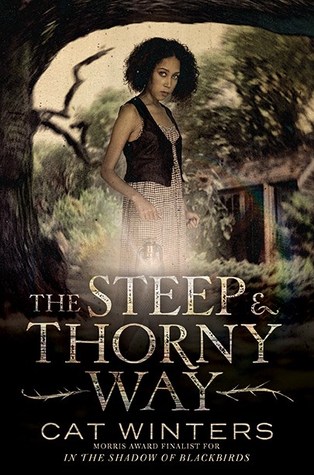
Take A Peek Book Review: The Steep & Thorny Way by Cat Winters

“Take a Peek” book reviews are short and (possibly) sweet, keeping the commentary brief and providing a little peek at what the book’s about and what I thought.

Steep & Thorny Way


Synopsis:

(via NetGalley)

A thrilling reimagining of Shakespeare’s Hamlet, The Steep and Thorny Way tells the story of a murder most foul and the mighty power of love and acceptance in a state gone terribly rotten.

1920s Oregon is not a welcoming place for Hanalee Denney, the daughter of a white woman and an African-American man. She has almost no rights by law, and the Ku Klux Klan breeds fear and hatred in even Hanalee’s oldest friendships. Plus, her father, Hank Denney, died a year ago, hit by a drunk-driving teenager. Now her father’s killer is out of jail and back in town, and he claims that Hanalee’s father wasn’t killed by the accident at all but, instead, was poisoned by the doctor who looked after him—who happens to be Hanalee’s new stepfather.

The only way for Hanalee to get the answers she needs is to ask Hank himself, a “haint” wandering the roads at night.

My Thoughts:

Does the idea of retelling the story of Hamlet, setting it in rural Oregon in 1923, sounds crazy to you? It would be understandable to assume that the plot and the setting are a total mismatch. How can a Shakespearean masterpiece possibly be squeezed into that world?

I’m happy to say that it works amazingly well. As crazy as it might sound, The Steep & Thorny Way is a total winner.

Hanalee Denney is the mixed race daughter of a white woman and a black man, at a time and in a place where mixing of the races was not only frowned upon, but actually illegal, at least as far as marriage was concerned. Hanalee, at age 18, lives with her mother and her new stepfather, the town doctor, and grieves for her beloved father, who died after being hit by a car a year and a half earlier.

When the driver of the car is released from prison and is rumored to be hiding out back in Elston, the rumor mill — and the town’s intolerance — boil to the surface. Joe, convicted of murder and subjected to a horrifying prison stint, pleads with Hanalee to hear him out. He did hit her father with his car; that much is true. But Joe saw Hank alive before the doctor entered the room to care for him… and was dead by the time the doctor came out. Meanwhile, Hank’s ghost has been seen about town, trying to get a message to Hanalee.

Can she really believe that Joe isn’t a murderer, but a fall guy? Can she honestly view her stepfather as a killer?

There’s much more to the story than meets the eye. The town is rife with KKK plotting. A racist undercurrent permeates every town gathering. Non-whites are not welcome in the town’s main restaurant. And Joe has a secret that puts his own life in great danger, with no one except Hanalee at all willing to help or save him.

Cat Winters is an amazing writer, and this era is her specialty. She fits her characters’ actions and words into the Shakespearean framework without ever letting it seem forced. The story flows from one revelation to the other, and Hanalee is anything but a stock figure.

I learned a lot about life in Oregon in the 1920s, the power of the Klan, and the shocking truth about the legal institutions that attempted to enforce racial exclusion, separatism, and even eugenics. While The Steep & Thorny Way is a work of fiction, the politics and intolerance that it portrays are, sadly, historical fact.

I have now read three YA novels and one adult novel by Cat Winters, and I look forward to reading, well, basically everything she ever writes from now on. Don’t miss out on this powerful, dramatic, face-paced book.

Interested in this author? Check out my reviews of her other works:
In The Shadow of Blackbirds
The Cure For Dreaming
The Uninvited

_________________________________________

The details:

Title: The Steep & Thorny Way
Author: Cat Winters
Publisher: Amulet Books
Publication date: March 8, 2016
Length: 335 pages
Genre: Young adult/historical fiction
Source: Purchased

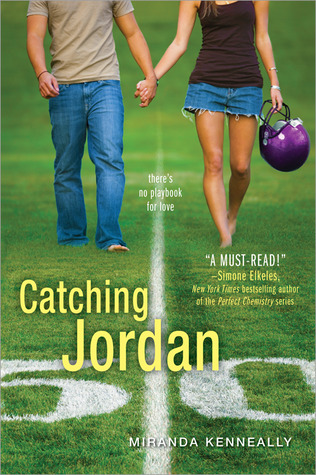
Thursday Quotables: Catching Jordan

quotation-marks4

Welcome back to Thursday Quotables! This weekly feature is the place to highlight a great quote, line, or passage discovered during your reading each week.  Whether it’s something funny, startling, gut-wrenching, or just really beautifully written, Thursday Quotables is where my favorite lines of the week will be, and you’re invited to join in!

NEW! Thursday Quotables is now using a Linky tool! Be sure to add your link if you have a Thursday Quotables post to share.

Score_CVR.indd

Catching Jordan by Miranda Kenneally
(published 2011)

I just love this series of girls-in-sports YA novels by Miranda Kenneally! The characters are so real and honest… and occasionally awkward:

“It’s a beautiful night…” Ty says.

“Yup. I love fall…”

“Me too. It’s my favorite season…”

“Mine too…” I eat another cookie.

Do we have anything to talk about?

When we’re hooking up, it seems like we have lots to talk about, but maybe that’s because we’re too busy kissing. This lack of conversation, this isn’t what love is supposed to be like, right? But what happens when you don’t find that right person? Do you just spend the rest of your life in a relationship where the conversation isn’t great, everything isn’t perfect, but it is nice and sweet?

What lines made you laugh, cry, or gasp this week? Do tell!

If you’d like to participate in Thursday Quotables, it’s really simple:

  • Write a Thursday Quotables post on your blog. Try to pick something from whatever you’re reading now. And please be sure to include a link back to Bookshelf Fantasies in your post (http://www.bookshelffantasies.com), if you’d be so kind!
  • Click on the linky button (look for the cute froggie face) below to add your link.
  • After you link up, I’d love it if you’d leave a comment about my quote for this week.
  • Be sure to visit other linked blogs to view their Thursday Quotables, and have fun!

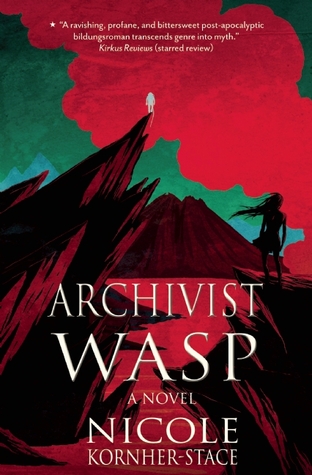
Archivist Wasp: My review… and some other opinions too.

Archivist WaspSynopsis:

(via Goodreads)

Wasp’s job is simple. Hunt ghosts. And every year she has to fight to remain Archivist. Desperate and alone, she strikes a bargain with the ghost of a supersoldier. She will go with him on his underworld hunt for the long-long ghost of his partner and in exchange she will find out more about his pre-apocalyptic world than any Archivist before her. And there is much to know. After all, Archivists are marked from birth to do the holy work of a goddess. They’re chosen. They’re special. Or so they’ve been told for four hundred years.

Archivist Wasp fears she is not the chosen one, that she won’t survive the trip to the underworld, that the brutal life she has escaped might be better than where she is going. There is only one way to find out.

My Thoughts:

I’m at a bit of a loss when it comes to summing up Archivist Wasp. My feelings are really contradictory. There’s quite a bit here that’s interesting and different, but I’m not sure that the plot as a whole holds together convincingly.

The opening chapters place the setting firmly in a primitive type of society, in a poor country village full of superstition and fear. The Archivist is the Chosen One (into every generation…), but each year, she fights upstarts (girls in training to be Archivist — for the Buffy fans out there, think “potentials”) in order to retain her position. The fight is to the death, bloody and terrible, watched and betted on by the townsfolk, all under the watchful eye of the Catchkeep-priest, who controls the upstarts and the Archivist. Catchkeep is the main god of this society, but there are others, such as Carrion Boy and Ember Girl. It’s startling, though, to see certain seemingly anachronistic elements intrude. Weaponry includes not just swords, but guns.

Guns? What’s going on here?

As becomes clear further in the story, this primitive society isn’t from an earlier era, but a later one. Reference is made to the Before, apparently before whatever cataclysmic event hundreds of years earlier erased the modern world as we know it. The world of Archivist Wasp is bleak and dismal — and plagued by a non-stop stream of ghosts. The job of the Archivist, when not fighting for her life, is to capture ghosts in jars, observe them and take field notes on their behavior, and then release them to Catchkeep, severing their links to the world of the living. The ghosts are silvery, small beings, yet some take on a more physical form and wreak havoc. How do you catch a ghost? With blood and salt. Them ghosties love salt, apparently — so much so that villagers are forbidden to keep any in their homes, for fear of attracting unwanted attention.

The action of Archivist Wasp kicks into high gear when Wasp captures a ghost that displays unusual strength, to the point that it can actually communicate with her. It’s the ghost of a soldier, and he wants Wasp’s help in finding the ghost of his former partner. To achieve this, they must travel into the underworld, through hidden portals and against great danger, with Wasp using her special harvesting knife to draw out hidden memories and find out the truth behind what happened to the soldier and his partner.

There’s a lot that’s interesting about this book, but my main stumbling blocks are these:

1 – Uneven pacing. Some chapters were impossible to look away from… but there are parts where the characters seem to just be slogging forward, one journey after another, with not much actually happening.

2 – Confusing world-building. We never do find out what happened to transform the world from what it was to what it is. We can make assumptions, but more details would have been helpful. Likewise, the underworld is a murky dreamscape with rules and properties that seem to change from moment to moment. It was unclear what to expect or why, and this left me with a sense that the stakes were artificial and potentially not really dangerous after all.

3 – Wasp’s community and her motivations. Why do Wasp and the other girls just accept their lot in life? Why does it never occur to them to challenge the system?

4 – The purpose of the Archivist. The actual goal is murky. Are they trying to learn from the ghosts? Banish the ghosts? And what does killing each other achieve? If they’re trying to learn as much as possible, why have only one?

5 – The ghosts. Where do they come from? Why are there so many? What would happen if the Archivist didn’t capture them and just left them to carry on? Why can ghosts wield swords and other weapons, carry physical objects, and inflict harm on living humans?

6 – The religion. I’d like to know more about how the local pantheon came to be and how the belief system was shaped. (I suppose this ties in with #2, the world-building.)

So many unanswered questions.

On the positive side, I liked the story of the super-soldier and his partner, and the tragedy that’s revealed as Wasp uncovers more and more of the ghost’s memories. That story alone would make a great book, and those sections of Archivist Wasp that dealt with this part of the plot are the most compelling.

I also enjoyed the parallels to the myth of Orpheus and Eurydice, although the similarities only go so far. The goal here is to free a ghost who can’t move on, not to return her to the land of the living, but still, the journey to the underworld is full of obstacles and dangers that give the quest a mythic, larger-than-life overtone.

Finally, toward the end of the book, we get more of an explanation about the origin of the Archivist system and the power of the Catchkeep-priest, and it’s a powerful origin story — but for me, it felt like it all came too late. By the time we get some answers, I felt mostly worn out by the story and the inconsistencies, and didn’t have the investment necessary to really care all that much about the outcome.

But Wait! Here are other other opinions:

Rather than just close with what I thought of Archivist Wasp, I thought I’d share some other viewpoints. I read this book because it was my book group’s pick for January, and several members of the group really loved the book. I want to share some of their comments, to give a slightly different take on the book and showcase a little more of the positive. (Comments below are in different colors to denote different commenters; quoted from our book group discussion)

I loved this book. There were some scenes which made me pause. One of my favorite scenes, and there are a number of them, is [spoiler deleted]. It’s so revealing of our own mindsets and how we need to open our minds, perhaps we need to cut the threads that bind us to old, stagnant ideas about our world.

I remember admiring Wasp for her compassion and willingness to help others despite her own awful circumstances. And, for figuring out how to help the other girls in her same situation (or I suppose the same as her past situation before she became the archivist), as well as the townspeople, all of whom were being taken advantage of by the Catchkeep Priest (who was just awful!).

The message of growing up and learning who you are and what you can achieve is important for teen girls to hear.

Wasp’s innate sensibilities and caring for her “charges” despite her own upbringing, or maybe because of it, make her a likable and sympathetic protagonist. She keeps going, trying to do the right thing despite personal consequences and little or no reward. That gives this story great heart; it’s also certainly very creative.

In the end, there did seem to be a message about challenging handed down beliefs and finding your own truth.

And a comment from the author herself:

If Wasp is remembered as a YA heroine, I’d like it to be because she’s a 16-year-old girl protagonist that managed to drive her own story without it hinging on a romance or a love triangle or a prophecy or any of these things that are perceived to be necessary to any and all YA plotlines, howsoever clumsily they have to be shoehorned in because they aren’t necessary. There are teenage girls out there who are a lot like Wasp. I was one. I was friends with others. I want her to do her small part to provide a little representation for them.

Wrapping it all up:

One thing I’ve discovered from my book group discussion (for which the author generously participated in a Q&A) is that Archivist Wasp is in fact the first in a trilogy. I think I might have felt slightly differently about some of the unanswered questions had I known that from the start, as then I might have expected some threads to be left dangling until the next books.

My own reading experience and opinion of the book hasn’t changed, but I do appreciate what I’ve gleaned from the Q&A and my book group friends’ opinions, and can see why this book might strongly appeal to teen readers and to adults who enjoy YA fiction.

_________________________________________

The details:

Title: Archivist Wasp
Author: Nicole Kornher-Stace
Publisher: Big Mouth House
Publication date: April 13, 2015
Length: 268 pages
Genre: Young adult fantasy
Source: Purchased

Agatha Christie, where have you been all my life?

I’ve finally read my first Agatha Christie book! What on earth was I waiting for?

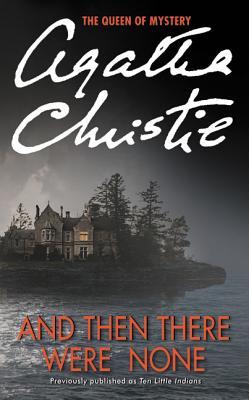
and thenSynopsis:

(via Goodreads)

“Ten . . .”
Ten strangers are lured to an isolated island mansion off the Devon coast by a mysterious “U.N. Owen.”

“Nine . . .”
At dinner a recorded message accuses each of them in turn of having a guilty secret, and by the end of the night one of the guests is dead.

“Eight . . .”
Stranded by a violent storm, and haunted by a nursery rhyme counting down one by one . . . one by one they begin to die.

“Seven . . .”
Who among them is the killer and will any of them survive?

First, there were ten – a curious assortment of strangers summoned as weekend guests to a private island off the coast of Devon. Their host, an eccentric millionaire unknown to all of them, is nowhere to be found. All that the guests have in common is a wicked past they’re unwilling to reveal – and a secret that will seal their fate. For each has been marked for murder. One by one they fall prey. Before the weekend is out, there will be none. And only the dead are above suspicion.


My Thoughts:

How do I even begin to review a book like And Then There Were None? It’s a classic mystery, considered one of Christie’s best, for a reason. Having never read her books before, I was excited to see whether the build-up would pay off. Trust me, it did.

I was totally charmed by the clever plotting, the tricky twists, the seeds of doubt that accompanied every apparent clue. The drama of this book is so carefully constructed that even though I looked closely for the tip-off to the solution, I never found it.

The introduction in my edition is an excerpt from Agatha Christie’s autobiography, explaining the challenge of pulling off what she accomplishes in this book:

I wrote the book after a tremendous amount of planning, and I was pleased with what I had made of it. It was clear, straightforward, baffling, and yet had an epilogue in order to explain it. It was well received and reviewed, but the person who was really pleased with it was myself, for I knew better than any critic how difficult it had been.

I really enjoyed And Then There Were None, and I’m glad I chose it as an introduction to Agatha Christie. It’s a very quick read, almost begging to be finished in a day’s worth of binge-reading.

I’m looking forward to reading more of Christie’s books, and I’d love recommendations on any favorites!

_________________________________________

The details:

Title: And Then There Were None
Author: Agatha Christie
Publisher: HarperCollins
Publication date: 1939
Length: 300 pages
Genre: Mystery
Source: Purchased

Take A Peek Book Review: The Rest of Us Just Live Here by Patrick Ness

“Take a Peek” book reviews are short and (possibly) sweet, keeping the commentary brief and providing a little peek at what the book’s about and what I thought.

The Rest of Us

Synopsis:

(via Goodreads)

What if you aren’t the Chosen One? The one who’s supposed to fight the zombies, or the soul-eating ghosts, or whatever the heck this new thing is, with the blue lights and the death?

What if you’re like Mikey? Who just wants to graduate and go to prom and maybe finally work up the courage to ask Henna out before someone goes and blows up the high school. Again.

Because sometimes there are problems bigger than this week’s end of the world, and sometimes you just have to find the extraordinary in your ordinary life.

Even if your best friend is worshipped by mountain lions.

Award-winning writer Patrick Ness’s bold and irreverent novel powerfully reminds us that there are many different types of remarkable.


My Thoughts:

I loved quite a bit of this book, but was left with an overall “meh” feeling by the end. I thought the set-up was pretty brilliant. Think of Buffy and her gang of Scoobies. Now think of all the other kids who weren’t running around staking vampires or chasing demons. The characters in The Rest of Us Just Live Here are the equivalent of all the Sunnydale High students who aren’t part of Buffy’s gang — the kids who just want to graduate, enjoy prom, and chill with their friends, despite all the end-of-the-world shenanigans happening in the world of the chosen, special kids.

Everyone knows the indie kids don’t use the internet — have you noticed? They never do, it’s weird, like it never occurs to them, like it’s still 1985 and there’s only card catalogs — so we can’t find them discussing anything online. The vibe seems to be that it’s totally not our business. Historically, non-indie kids were pretty much left alone by the vampires and the soul-eating ghosts, so maybe they have a point.

The main character and his friends and family are all interesting and quirky, with their own challenges and gifts, and they just kind of notice that in the background of their more immediate crises, the “indie” kids (hilariously named Satchel, Dylan, and Finn, Finn, and Finn — there are lots of Finns) are being chased through the woods by zombie deer and bizarre columns of blue light keep appearing in their town.

“Listen to me,” he says, sounding angry. “We’ve got prom, we’ve got graduation, we’ve got the summer. Then everything changes. Are you going to live all that time until we go afraid?”

“Probably.”

“Please don’t.” He’s still weirdly angry. “Not everyone has to the be Chosen One. Not everyone has to be the guy who saves the world. Most people just have to live their lives the best they can, doing the things that are great for them, having great friends, trying to make their lives better, loving people properly. All the while knowing that the world makes no sense but trying to find a way to be happy anyway.”

The Rest of Us Just Live Here shows how all kids (all people, really) are the center of their own worlds, and that even if you’re not the one who saves the world, your problems and issues matter too. There are some really nice elements about loyalty, friendship, and protecting the people you love, but somehow, the book didn’t really come together for me or deliver on its early promise. The writing is clever, funny, and touching, but the end left me feeling a bit unsatisfied.
_________________________________________

The details:

Title: The Rest of Us Just Live Here
Author: Patrick Ness
Publisher: Harper Teen
Publication date: October 6, 2015
Length: 336 pages
Genre: Young adult fiction
Source: Purchased

Book Review: Simon vs. the Homo Sapiens Agenda by Becky Albertalli

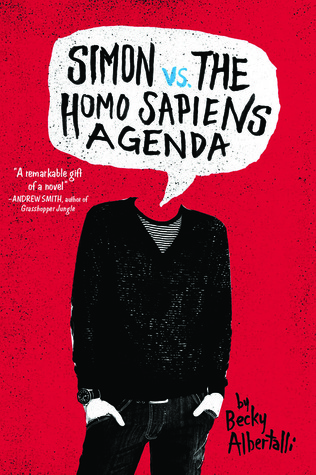
SimonI dare anyone to read this book and not fall at least a little bit in love with Simon, the main character of this sweet, funny, touching young adult novel.

Simon is a 17-year-old high school junior, a good student, in the school musical (Oliver!), and with a reliable circle of friends, among them his life-long besties Nick and Leah and his new BFF Abby. What Simon hasn’t shared with anyone is that he’s gay. It’s not that he’s unsure — he’s quite, quite certain about his identity. He’s just not quite ready to stop being private and have to deal with the reactions he’s sure to face.

But life gets complicated. On the Tumblr where students from his school share secrets, he’s found a kindred spirit — a kind, smart boy going by the name of Blue, who is also a junior at the same school. Simon and Blue start an intense email correspondence, each using his “secret” gmail account to maintain anonymity. Over the course of the weeks and then months since they began emailing, they’ve opened up to one another to  a remarkable degree. Simon wants to meet; Blue isn’t sure that it’s a good idea.

And then Simon makes the ultimate online error — he checks his email using the computers in the school library and forgets to log back out. Before long, he’s facing a geeky, awkward student named Martin who lets Simon know that he has screenshots of his emails and will let the entire school know that Simon’s gay unless Simon helps him get Abby to go out with him. It’s blackmail, but carried out with a smile. Martin refuses to see that he’s doing something evil, and apart from this unforgivable act, Martin isn’t a terrible person or a bully, which makes it all the more confusing for Simon.

Simon himself is a sweetheart. He’s funny and smart, tries to do the right thing, and has good intentions, although he still manages to hurt some of his friends along the way. Above all, he’s a boy who’s falling in love with someone from the inside out, learning everything about Blue but still not knowing which of the boys he sees at school everyday is the actual man of his dreams.

Simon’s voice in the novel is engaging and full of humor. Even in his moments of doubt or discouragement, he’s funny as hell.

I take a sip of my beer, and it’s — I mean, it’s just astonishingly disgusting. I don’t think I was expecting it to taste like ice cream, but holy fucking hell. People lie and get fake IDs and sneak into bars, and for this? […] Anyway, it really makes you worry about all the hype surrounding sex.

Simon’s email flirtation with Blue is incredibly adorable:

I’m glad I was cute and grammatical. I think you’re cute and grammatical, too.

The truth eventually comes out, and Simon comes out, and all is finally revealed. I don’t want to say more, because seeing it unfold is a big part of the fun.

Beneath all the humor and cute teen escapades are real feelings, beautifully expressed, about family, identity, safety, trust, and friendship. Simon’s journey in Simon vs. the Homo Sapiens Agenda involves sharing himself, really and truly, with the people in his life, and pursuing his truth even when it means taking risks.

It’s a lovely and engaging story, full of flirting and happy moments as well as heartache, and I loved every bit of it. Highly recommended — check it out!

_________________________________________

The details:

Title: Simon vs. the Homo Sapiens Agenda
Author: Becky Albertalli
Publisher: Balzer + Bray
Publication date: April 7, 2015
Length: 303 pages
Genre: Young adult fiction
Source: Purchased


Shelf Control #15: The Rithmatist

Shelves final

Welcome to the newest weekly feature here at Bookshelf Fantasies… Shelf Control!

Shelf Control is all about the books we want to read — and already own! Consider this a variation of a Wishing & Waiting post… but looking at books already available, and in most cases, sitting right there on our shelves and e-readers.

Want to join in? See the guidelines and linky at the bottom of the post, and jump on board! Let’s take control of our shelves!

cropped-flourish-31609_1280-e1421474289435.png

My Shelf Control pick this week is:

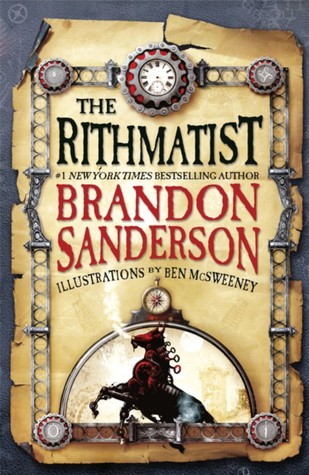
10137823Title: The Rithmatist
Author: Brandon Sanderson
Published: 2013
Length: 378 pages

What it’s about (synopsis via Goodreads):

The Rithmatist, Brandon Sanderson’s New York Times bestselling epic teen adventure is now available in paperback.

More than anything, Joel wants to be a Rithmatist. Rithmatists have the power to infuse life into two-dimensional figures known as Chalklings. Rithmatists are humanity’s only defense against the Wild Chalklings. Having nearly overrun the territory of Nebrask, the Wild Chalklings now threaten all of the American Isles.

As the son of a lowly chalkmaker at Armedius Academy, Joel can only watch as Rithmatist students learn the magical art that he would do anything to practice. Then students start disappearing—kidnapped from their rooms at night, leaving trails of blood. Assigned to help the professor who is investigating the crimes, Joel and his friend Melody find themselves on the trail of an unexpected discovery—one that will change Rithmatics—and their world—forever.

How I got it:

I bought it after reading a bunch of positive reviews, thinking it might be something that would be good to read with my son.

When I got it:

A year or two ago.

Why I want to read it:

It just sounds so clever and different! Plus, by now, I’ve seen some book friends posting enthusiastic reviews, and I feel like I’m missing out. I don’t think my son is particularly interested, but I guess that just means I should go ahead and read it on my own.

__________________________________

Want to participate in Shelf Control? Here’s how:

  • Write a blog post about a book that you own that you haven’t read yet.
  • Add your link below!
  • And if you’d be so kind, I’d appreciate a link back from your own post.
  • Check out other posts, and have fun!

For more on why I’ve started Shelf Control, check out my introductory post here, or read all about my out-of-control book inventory, here.

And if you’d like to post a Shelf Control button on your own blog, here’s an image to download (with my gratitude, of course!):

Shelf Control