Book Review: The Break-Up Artist by Philip Siegel

Book Review: The Break-Up Artist by Philip Siegel

The Break-Up Artist

Synopsis:

Some sixteen-year-olds babysit for extra cash. Some work at the Gap. Becca Williamson breaks up couples.

After watching her sister get left at the altar, Becca knows the true damage that comes when people utter the dreaded L-word. For just $100 via paypal, she can trick and manipulate any couple into smithereens. With relationship zombies overrunning her school, and treating single girls like second class citizens, business is unfortunately booming. Even her best friend Val has resorted to outright lies to snag a boyfriend.

One night, she receives a mysterious offer to break up the homecoming king and queen, the one zombie couple to rule them all: Steve and Huxley. They are a JFK and Jackie O in training, masters of sweeping faux-mantic gestures, but if Becca can split them up, then school will be safe again for singletons. To succeed, she’ll have to plan her most elaborate scheme to date and wiggle her way back into her former BFF Huxley’s life – not to mention start a few rumors, sabotage some cell phones, break into a car, and fend off the inappropriate feelings she’s having about Val’s new boyfriend. All while avoiding a past victim out to expose her true identity.

No one said being the Break-Up Artist was easy.

This YA novel is refreshingly straight-forward: Becca is a girl on a mission. In a school where (paraphrasing here) “you wouldn’t understand, you’ve never had a boyfriend” is the ultimate put-down, it’s no wonder that girls like Becca suffer mightily. Seemingly unbreakable best-friendships are tossed aside the second one friend gets a boyfriend. It doesn’t seem to matter who he is, so long as there’s someone to walk down the hallway with and make googly eyes at. Wouldn’t it absolutely drive you bonkers if every conversation you were subjected to began with “My boyfriend says…” or “Last night, my boyfriend and I…”?

Becca is especially bitter when it comes to so-called true love. Heck, she even claims that Romeo and Juliet were never truly in love — just a couple of hormonal teens who probably would have gotten tired of each other if they’d spent more than a week together. She’s seen her closest friend from middle school, Huxley, transform herself from a really great friend to the queen of the school, with no time to spare for her former (lesser) friends now that she’s dating a supremely popular boy and has reached the pinnacle of the school social heap. Becca has also seen the suffering her sister has endured ever since getting dumped on her wedding day. What’s more, she looks at her parents and sees two people who just live in the same house with not a shred of romance between them. So what’s so great about relationships?

To top it all off, her best friend Val, after years of wanting a boyfriend, finally has one… even though she had to pretend to share his love of movies in order to get him to notice her. Now they make out in hallways and only have eyes for each other, except for when they take pity on Becca, invite her to come out with them, and then get so caught up in each other that they ignore her completely. Val is ecstatic, Becca is dubious… and Becca is conflicted, because Val’s boyfriend seems to have more in common with Becca, and he has the dreamiest eyes! Ugh, Becca, run away! No boy is worth the pain that will fall down on your head if you — wait! Don’t kiss him! Argh. Bad moves galore.

Here’s the thing: Becca’s judgment is, shall we say, not so sound? She starts her business as the Break-Up Artist to  make a little money, yes, but more so out of a sense of righteous indignation over the fate of the singletons in her school. Operating via email and video chat (in disguise), Becca’s clients are her schoolmates, often the friends left behind for the sake of a relationship with a cute boy. It’s a sad state of affairs, and in Becca’s view, almost none of these relationships are real. The truth she continually discovers is that girls stick with jerky boyfriends because even a jerky boyfriend is better than no boyfriend. It’s truly a disheartening state of affairs.

So Becca meddles, not that ingeniously, in my humble opinion, and when it hits the fan — as it was bound to — Becca faces the loss of every friend at school and complete and utter humiliation. So was it worth it? Well, yes and no. Becca does suffer social disaster, but comes to realize some hard truths as well: Not every relationship, no matter how corny or over the top, is doomed to fail. Some teen couples may actually love each other. Some people really can figure things out on their own, without being pried apart by the Break-Up Artist. And maybe what looks like a lack of romance on the part of her parents is really just Becca’s introduction to what a normal, health, mature relationship might look like, once the initial thrill and hormonal rush give way to true affection and devotion.

So, my big picture thoughts about The Break-Up Artist?

On the plus side, the writing is full of quips and zingers that kept me amused and engaged. Here are a few top choices:

 I reread the email about five more times. The words don’t change, but each time they seep in more. I deal with low profile relationships, ones that don’t case major seismic shifts in the tectonic plates of gossip our school rests upon. Huxley and Steve are the San Andreas Fault of relationships. (Wow, I guess our current unit on geology is more fascinating than I thought.)

♥♥♥♥♥

Everything Ezra says needs cheesy background music and sparkles. I wonder if his mom read him greeting cards as a baby.

♥♥♥♥♥

It’s weird when you find out your suspicions are correct. I knew from a young age that the tooth fairy wasn’t real. But I still felt a pang of disappointment when my dad woke me up cramming a dollar under my pillow. It’s not always fun being right.

On the down side, there were quite a few elements that made shake my head or take a step back. Becca’s voice didn’t feel especially authentic — she seemed more to me like a writer’s idea of how a teen girl might think, as opposed to a real girl, if that makes sense. Some of the word and phrasing choices struck me as odd, like the term “singleton” or even referring to herself and friends as being “single”. Maybe they don’t have boyfriends, but I’m not convinced that they’d define themselves using those words.

The emphasis on having a boyfriend at all costs is overdone. The message here is that this is NOT a good way to live life… but it’s a pretty muddled message, based on Becca’s actions and her interactions with Huxley and Val. It’s not a bad thing to have a boyfriend, so maybe the book might have been more convincing if we saw even one couple in the high school following some sort of middle path, rather than becoming instant, extreme relationship zombies.

The author is careful to keep Becca balanced just on the right side of the line dividing a good person making unwise choices from a bad person doing bad things. Becca does act unwisely, perhaps for what she considers good reasons, but people do get hurt, and she makes foolish choices galore. Yes, her worldview has been skewed by her experiences with her former friends and by sister’s ordeal, but that’s not really a valid excuse for what she does. And, let me just add, Becca’s schemes are a bit lame. She breaks up a couple by planting a fake wedding binder in the boy’s locker so he’ll freak out over his girlfriend’s supposed wedding obsession — but who would believe this, really? All of the break-up moves Becca pulls off seem like plans that could only work in fiction or in the movies. Real people just wouldn’t be fooled.

Bottom line? The Break-Up Artist is a fun, fast read, but with some tonal flaws, a main character who can be hard to get behind, and some plot points that strain plausibility way beyond the breaking point. The quippiness is fun and I enjoyed a lot about the writing, but the plot itself could have used some big tweaks in order to resemble anything like real high school life.

_________________________________________

The details:

Title: The Break-Up Artist
Author: Philip Siegel
Publisher: Harlequin Teen
Publication date: April 29, 2014
Length: 336 pages
Genre: Young adult fiction
Source: Review copy courtesy of Harlequin Teen via NetGalley

At A Glance: She Is Not Invisible by Marcus Sedgwick

Book Review: She Is Not Invisible by Marcus Sedgwick

She Is Not Invisible

Laureth Peak’s father has taught her to look for recurring events, patterns, and numbers–a skill at which she’s remarkably talented. Her secret: She is blind. But when her father goes missing, Laureth and her 7-year-old brother Benjamin are thrust into a mystery that takes them to New York City where surviving will take all her skill at spotting the amazing, shocking, and sometimes dangerous connections in a world full of darkness. She Is Not Invisible is an intricate puzzle of a novel that sheds a light on the delicate ties that bind people to each other.

My thoughts:

This quiet book is a charmer, although it was nothing like what I’d expected. In She Is Not Invisible, Laureth searches for her missing father by taking her 7-year-old brother on a flight from London to New York — without parental permission, I might add — and based on the barest scraps of clues, spends two days scouring the city for hints that might lead to her brilliant but unpredictable father.

Their father seems to have become obsessed with the study of coincidence in the last several years, focusing especially on certain numbers that show up repeatedly in his life in significant and potentially meaningful ways. As Laureth and Benjamin follow the hints, they too begin to look for the special numbers and odd patterns, the things that seem to be inexplicable yet seem to occur often enough that they must have secret meaning. Or do they?

Meanwhile, Laureth herself is an interesting character. Blind since birth, she wears dark glasses, relies on her IPhones voice capabilities, and has worked out a hand-squeeze system with Benjamin that in essence turns him into her seeing eye dog. She’s a person who forces herself to project confidence and presence; otherwise, as she’s learned, people can’t seem to see her as a real person. So who’s really the blind one here?

She Is Not Invisible includes some interesting thoughts about family and relationships, being different, fitting in and sticking out. The ruminations on the nature of coincidences and whether such things actually even exist are interesting, but don’t really go anywhere. The action is rather muted. The children spend their time rushing from clue to clue, and I could help but cringe at the idea of these two on their own in the city with almost no ability to care for themselves, no way to communicate with their mother, and no way to find their father.

Still, the writing is snappy and keeps things interesting, even when the plot seems to stall out as Laureth contemplates her father’s secret notes and what they might mean. The book contains hints and puzzles of its own, as the author has embedded certain patterns and numbers within the writing itself that are rather fun to track down. (Note: Sadly, this was hard to do, as my ARC was badly formatted, missing the chapter breaks and hand-written asides that end up being important to the story).

Do I recommend She Is Not Invisible? Yes, but. If you’re looking for action, danger, and maybe even special powers or abilities, possibly this isn’t the book for you. But if you enjoy a thoughtful approach with some quirky treats, give it a try!

_________________________________________

The details:

Title: She Is Not Invisible
Author: Marcus Sedgwick
Publisher: Macmillan Children’s Publishing Group
Publication date: April 22, 2014
Length: 224 pages
Genre: Young adult fiction
Source: Review copy courtesy of Macmillan via NetGalley

Book Review: The Here And Now by Ann Brashares

Book Review: The Here And Now by Ann Brashares

The Here and NowAnn Brashares, author of the much-loved, bestselling Sisterhood of the Traveling Pants series, takes a leap into new territory with the publication of her science fiction novel The Here And Now.
Main character Prenna James makes a rather spectacular entrance, appearing suddenly alongside a river, naked and shivering, with a strange number written on her arm. And the sole witness, Ethan Jarves, has never forgotten what he saw that day.

Years later, Ethan and Prenna are classmates in high school, and apart from a surface friendliness, Prenna gives no sign of a previous connection to Ethan. But then again, Prenna has a lot on her mind.

Prenna is a new immigrant — from the future. Along with a community of about 1,000 people, she and her mother traveled a time path from the 2090s back to 2010. Now, four years later, the community attempts to hide in plain sight by assimilating into the world of the “time natives” — mingling, but never getting close. And there are rules that must be followed at all cost: No changing history. No trying to alter established events. No seeking medical attention outside the community. And absolutely no intimacy with the natives, emotional or physical. And if anyone steps out of line, the “counselors” will see to it that those people conveniently leave town, have an accident, or otherwise disappear.

Ethan is persistent in trying to befriend Prenna, and when Ethan pushes Prenna to talk to the local crazy homeless man, she’s startled to discover that both may know more than they should… and that perhaps there’s a mission for her here that may be worth risking her security for. Because in the future that Prenna came from, the world was reaching its end. Climate change had already destroyed much of the planet. Nothing grows. Nothing new is made. People go hungry. It’s only a matter of time before the earth itself is no longer able to sustain life — and that’s not even mentioning the worst part of all, a mosquito-born blood plague that wipes out everyone it touches and can’t be stopped or cured.

Prenna’s family came to 2010 to seek refuge from a world without hope — but what if there was hope after all? What if, by changing one event, Prenna could change the entire course of the future, saving lives and saving the planet? It’s completely against the rules, of course — but what if this just happens to be worth some broken rules?

The Here And Now mingles a time travel adventure with a love story, with mixed success. Obviously, Ethan and Prenna will fall for each other, big time. And obviously, there will be obstacles. The rules that Prenna is forced to follow caution that the time travelers will spread sickness to the time natives by getting too close. Is this just manipulation to assure compliance, or is there really something to fear? And clearly, sharing secrets is a huge no-no, but Ethan may be the only person who can help Prenna figure out what needs to be done and how. Prenna is torn — trust Ethan, or shut him out? Love Ethan, or protect him by rejecting him? Fortunately, rather than the all too common insta-love formula, the author is careful to establish their relationship as one that has built over years, so that as they move from casual acquaintance to deep friendship to romance, it feels legitimate and real — not just romance for the sake of the well-worn YA formula for such things.

More problematic is the time travel. There’s a sci-fi “lite” vibe here. The time loops of causation and change are a bit mind-boggling, but the pieces don’t altogether mesh or make sense. It’s intriguing , to be sure, to figure out the various timelines and how they’ve changed, but the reason behind all of this doesn’t hold up to much scrutiny. The climate change factor feels almost too politically correct, with good guys and bad guys lining up in a very predictable way. There’s also the issue of teens playing in an adult world: In a couple of crucial moments, Ethan and Prenna easily convince a highly skilled scientist to take certain actions that seem far-fetched. Certainly, the lack of systems security that allow them to change events, as well as the fake instructions they provide to the scientist, would never pass muster in the real world in an actual high-level research facility.

The Here And Now is fast-paced and absolutely held my attention, but the dangers never feel terribly threatening and the resolution seems a bit oversimplified. Kudos to the author, though, for not wrapping everything up in the neat HEA bow one might expect, instead throwing a last-minute curveball that makes everything much more bittersweet. I appreciated the ending very much, to tell the truth, as it would have been easy to make the endgame all about the love story. Instead, we see a future for Prenna’s community and the world at large that that has hope, but isn’t sugar-coated into perfection.

Do I recommend The Here And Now? Yes. It’s an engrossing story, with well-developed characters, believable relationships, and a plotline that hums with tension and action. If you’re a fan of time travel fiction, enjoy The Here And Now — just don’t examine it too closely or expect the pseudo-science and timelines to make 100% sense.

_________________________________________

The details:

Title: The Here And Now
Author: Ann Brashares
Publisher: Delacorte Press
Publication date: April 8, 2014
Length: 288 pages
Genre: Young adult/science fiction
Source: Review copy courtesy of Delacorte via NetGalley

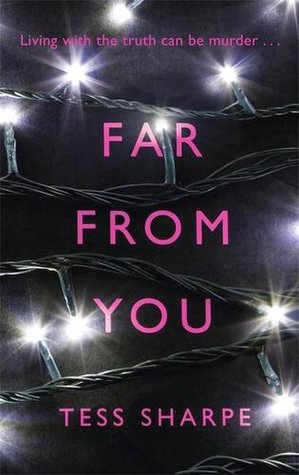
Book Review: Far From You by Tess Sharpe

Book Review: Far From You by Tess Sharpe

Far From You

Nine months. Two weeks. Six days.

That’s how long recovering addict Sophie’s been drug-free. Four months ago her best friend, Mina, died in what everyone believes was a drug deal gone wrong – a deal they think Sophie set up. Only Sophie knows the truth. She and Mina shared a secret, but there was no drug deal. Mina was deliberately murdered.

Forced into rehab for an addiction she’d already beaten, Sophie’s finally out and on the trail of the killer – but can she track them down before they come for her?

You know how you sometimes start a book thinking you know exactly what to expect based on the blurbs and synopses… and then it turns out to be something else entirely? Far From You is one of those — and that’s not a bad thing at all.

Based on the promos I’d read, I was expecting a more or less straightforward teen murder mystery. Nope.

Because, yeah, there’s a murder. And yes, it’s a mystery. But no, that’s not really the point of this book at all.

Far From You starts with a bang — or really, with two bangs. Within the first couple of pages, we learn that Sophie Winters and her best friend were confronted by a masked gunman when they were 17, and while Sophie survived, Mina died at the crime scene, bloody and suffering. We also find out that three years earlier, the two girls were in a car crash while being driven by Mina’s big brother Trevor. Mina and Trev walked away with minor injuries, but Sophie was wrecked — twisted, broken, resuscitated after her heart stopped during surgery, and left with a body full of scars and never-ending pain.

From that powerful beginning, we follow Sophie’s narration as she recounts multiple timelines: her present-day struggles, her memories of the time after the car accident, and her memories of the events surrounding Mina’s murder. At the same time, we learn Sophie’s terrible truth: After the car crash, she became crushingly dependent on pain pills, and was finally forced into rehab at her cool aunt’s house after hitting rock bottom and lying to her family and friends for years. She returned home just weeks before the murder, clean and ready to move forward. But at the crime scene where Mina had been murdered and Sophie had been knocked over the head, the police found a bottle of pills in Sophie’s jacket, and absolutely no one would believe that she hadn’t relapsed.

Instead of mourning for her friend and helping the police investigate the murder, Sophie is shipped off to a rehabilitation center for three months — and the police label the crime a drug deal gone bad, and basically shut down the investigation.

The plot of Far From You really kicks in when Sophie is released from rehab, angry and devastated. Despite being clean for nine months, she’s considered an actively using addict by her parents and friends, and is seen as being to blame for Mina’s murder. Sophie acknowledges that she’s an addict and clings fiercely to her hard-won sobriety, despite the pain that continues to wrack her body — but she’s furious that no one will listen to her, and what’s worse, nothing is being done to catch Mina’s killer.

Sophie has to take matters into her own hands, with help from a small number of trusted friends including Trev, to find out what really happened the night Mina died and find some small measure of peace. But can she do this without endangering herself and everyone left in her life? Are some stones better left unturned?

Okay, that’s the action part of the plot. But where Far From You really excels and moves into unexpected territory is in its exploration of the friendship between Sophie and Mina, what secrets were kept and which questions were never answered, and how a person can survive when the center of her universe is ripped away from her.

Sophie and Mina had been best friends since they met in grade school, and over the years they developed a trust and love that had ups and downs, but never broke or fell apart. There’s much more to their relationship than either girl ever acknowledged, and Sophie only slowly opens up enough to start sharing the true depths of her loss with the people who still matter to her.

Beyond the murder mystery, Far From You is a deeply personal character study, and we come to know Sophie’s deepest fears and most painful emotions. She’s wrecked, truly, both from everything her body has endured and even more so from the trauma of Mina’s loss. She’s hurt by the mistrust of everyone around her, and frustrated at not being heard. She’s angry — oh so angry — that Mina has been taken from her, angry that nothing has been done about it, angry that she couldn’t stop it. And she suffers greatly as she comes to terms with who she is — an addict who doesn’t quite have her life together, who is holding onto being clean with everything she has, and still worries that it won’t be enough.

I feel that it would be a disservice to potential readers to go into more detail about the complicated, intertwined relationships and friendships in Far From You, as these are best discovered through reading the book. I’ll simply say that the emotional connections, the devotion and love between unexpected characters, can be heartbreaking as well as lovely to read.

As for the murder itself, I can’t say that I was surprised when the mystery was resolved. I’d guessed the killer’s identity and a had a vague idea of the motive, but hadn’t managed to put every detail in place — and that’s fine. I was engrossed in the investigation and compiling of clues, breathless as the tension and danger mounted, and intrigued by the unraveling of the murder and the events leading up to it.

Far From You is an intense and unusual young adult novel. If you need a happily ever after and a romance tied up in a pretty ribbon, this may not be the book for you. What I appreciated about the conclusion of Far From You is its refusal to graft a happy ending onto a tragic story. Sophie can and will move forward, but the bottom line is that Mina is gone, forever. It would be fake to leave Sophie with a sunny new beginning. She’s a wonderful character, flawed but powerful, but as we leave her, she still has a long way to go. There’s hope for her future, but she’ll have to work at it every day. And that, to me, is exactly the right kind of ending for this story.

_________________________________________

The details:

Title: Far From You
Author: Tess Sharpe
Publisher: Disney-Hyperion
Publication date: April 8, 2014
Length: 352 pages
Genre: Young adult
Source: Review copy courtesy of Disney-Hyperion via NetGalley


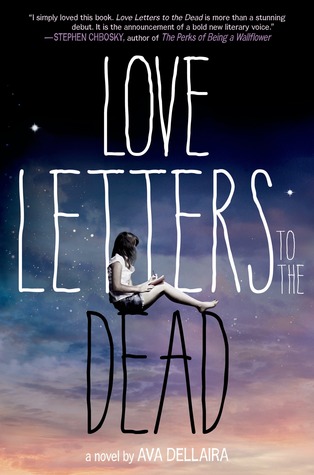
Book Review: Love Letters to the Dead by Ava Dellaira

Book Review: Love Letters to the Dead by Ava Dellaira

Love Letters to the Dead

In Love Letters to the Dead, main character Laurel starts high school six months after the death of her sister May, and is still deeply grieving her loss. Wanting a fresh start away from sympathetic comments and intrusive stares, Laurel transfers to the school on the other side of town where she knows no one and no one knows her. Friendless and alone, she tries to figure out where, if at all, she fits in, while dealing with her loss and pain as she puzzles through the events leading to May’s death.

At the start of the school year, Laurel’s English teacher gives the class a strange first assignment: Write a letter to someone who’s dead. Laurel doesn’t turn in the assignment, but she does write the letter — to Kurt Cobain — and then, finding it an outlet for her inner turmoil, she keeps writing. Letters follow letters, and Laurel fills up a notebook with letters to dead people: She writes not just to Kurt Cobain, but also to River Phoenix, Judy Garland, Janis Joplin, Amelia Earhart, and more.

Meanwhile, Laurel slowly finds her way, making two good friends, Hannah and Natalie, and attracting the eye of the cute boy she’s noticed. Sky is a junior, cool enough that everyone seems to like him, but not interested in being part of the popular crowd. Sky seems to be wounded in some way as well, and bit by bit the two are drawn together. But Laurel keeps the story of her loss to herself, and by keeping her pain separate, also keeps a big chunk of herself from the people who care about her. Meanwhile, her home life is silent and painful, as her mother has moved away, her father is withdrawn and depressed, and her aunt, with whom she lives part-time, is a lonely religious nut with a Mr. Ed obsession. Laurel blames herself for her family’s disintegration, but through the power of her new-found friendships and her self-expression via her letters to the dead, she finally starts to come to terms with what happened and to realize that in order to move forward, she has to let go of the past.

Love Letters to the Dead is almost unbearably sad. Laurel’s pain blazes off the page, and her self-loathing and blame are awful yet totally believable. As readers, we don’t know at first exactly what happened to May or how she died — but as the pieces come together, we come to realize that there are layers upon layers of contributing factors, and that while each family member blames him or herself in some way, the sad fact remains that May’s death was simply a terrible accident capping off a long period of unfortunate events.

Meanwhile, no one here gets by unscathed. The supporting characters also go through tremendous challenges and pain. Secret love, public shame, an abusive home life, mental health challenges, and simple neglect factor into the characters’ lives. They skip school, they drink, they make poor choices and take dangerous risks — so that the fact that they all emerge at the end of the year in relatively good shape, and better off than they started, is rather remarkable. Bad things happen — a lot — and while the characters are all interesting, well-drawn, and sympathetic, it does start to feel like an overdose of trauma after a while.

Laurel’s voice is interesting, as she wades through the jumbled mess of her thoughts and emotions and tries to make sense of all that has happened. It’s moving and melancholy to see her reflections on her relationship with May and how her worship of her big sister prevents her from facing the truth. Laurel adored her big sister all her life, and always thought of May as magical, with a perfect life, completely happy, enchanting everyone who came into her orbit. Over the course of the year covered in Love Letters to the Dead, Laurel confronts the truth about May’s life and challenges, how May’s actions led to tragic consequences for each of them, and comes to a place where she can remember May with love and regret, but freed from the need to idolize or over-glamorize her poor lost sister.

In many ways, this book succeeds in showing one girl’s transformative year, and the power of self-expression to free oneself from the walls created within. But at the same time, I did feel that the construct of the book is flawed, and takes away from the ring of authenticity for which the author seems to be striving.

Writing letters to famous dead people just doesn’t really work as an overarching concept. The portions of the letters addressed to the individuals don’t ring true,  and are actually a distraction from the character’s journey. Do we need to see her lecturing Kurt Cobain on what his suicide would have meant to his daughter? Or telling River Phoenix why she thinks his life turned out the way it did? For these two and several others, Laurel’s writing sounds presumptuous and like a stretch outside of what the character might do or say. Each time this happened, I felt pulled out of the narrative of Laurel’s story and reminded of the fact that I was reading about a fictional character, rather than continuing to be absorbed by the events and emotions of the book.

So my reaction to this book is truly 50/50: It’s powerful and sad, and conveys a great deal about loss and healing, friendship and honesty, pain and love. At the same time, the tone of the book is uneven, and ultimately a good and moving story is weighed down by the structure used to tell it.

_________________________________________

The details:

Title: Love Letters to the Dead
Author: Ava Dellaira
Publisher: Farrar, Straus and Giroux
Publication date: April 1, 2014
Length: 323 pages
Genre: Young adult
Source: Review copy courtesy of Farrar, Straus and Giroux via NetGalley

Wishing & Waiting on Wednesday: Conversion

There’s nothing like a Wednesday for thinking about the books we want to read! My Wishing & Waiting on Wednesday post is linking up with two fabulous book memes, Wishlist Wednesday (hosted by Pen to Paper) and Waiting on Wednesday (hosted by Breaking the Spine).

My most wished-for book this week is:

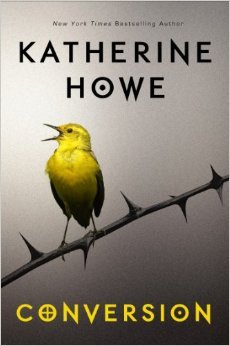
Conversion

Conversion by Katherine Howe
(Release date: July 1, 2014)

Synopsis via NetGalley:

It’s senior year at St. Joan’s Academy, and school is a pressure cooker. College applications, the battle for valedictorian, deciphering boys’ texts: Through it all, Colleen Rowley and her friends are expected to keep it together. Until they can’t.

First it’s the school’s queen bee, Clara Rutherford, who suddenly falls into uncontrollable tics in the middle of class. Her mystery illness quickly spreads to her closest clique of friends, then more students and symptoms follow: seizures, hair loss, violent coughing fits. St. Joan’s buzzes with rumor; rumor blossoms into full-blown panic.

Soon the media descends on Danvers, Massachusetts, as everyone scrambles to find something, or someone, to blame. Pollution? Stress? Or are the girls faking? Only Colleen—who’s been reading The Crucible for extra credit—comes to realize what nobody else has: Danvers was once Salem Village, where another group of girls suffered from a similarly bizarre epidemic three centuries ago . . .

Inspired by true events—from seventeenth-century colonial life to the halls of a modern-day high school—Conversion casts a spell. With her signature wit and passion, New York Times bestselling author Katherine Howe delivers an exciting and suspenseful novel, a chilling mystery that raises the question, what’s really happening to the girls at St. Joan’s?

Katherine Howe’s first novel, The Physick Book of Deliverance Dane, is one of my go-to books when it comes to both academic settings and modern-day connections to witchcraft. Conversion is this author’s first young adult novel, and I think it sounds pretty terrific. The book blurbs describe it as Prep meets The Crucible” — and that’s enough right there to make me want to read it!

What are you wishing for this Wednesday?

Looking for some bookish fun on Thursdays and Fridays? Come join me for my regular weekly features, Thursday Quotables and Flashback Friday! You can find out more here — come share the book love!

♥♥♥♥♥♥♥♥

Do you host a book blog meme? Do you participate in a meme that you really, really love? I’m building a Book Blog Meme Directory, and need your help! If you know of a great meme to include — or if you host one yourself — please drop me a note on my Contact page and I’ll be sure to add your info!

Thursday Quotables: Grasshopper Jungle

quotation-marks4

Welcome back to Thursday Quotables! This weekly feature is the place to highlight a great quote, line, or passage discovered during your reading each week.  Whether it’s something funny, startling, gut-wrenching, or just really beautifully written, Thursday Quotables is where my favorite lines of the week will be, and you’re invited to join in!

Grasshopper Jungle

Grasshopper Jungle by Andrew Smith

The National Guardsmen’s machine guns spit bursts of metal-jacketed bullets at the Unstoppable Soldiers. The sound was electric and terrifying. The bullets may just as well have been candy sprinkles on unstoppable frosted cupcakes, because they had absolutely no effect at all on the monstrous praying mantis beasts with blade-spiked arms.

Tyler Jacobson and Travis Pope walked through the spray of bullets like they were cats walking through darkness; like beauty pageant queens parading through swirling showers of glitter.

My review of this strange and wonderful book is here.

What lines made you laugh, cry, or gasp this week? Do tell!

If you’d like to participate in Thursday Quotables, it’s really simple:

  • Write a Thursday Quotables post on your blog. Try to pick something from whatever you’re reading now. And please be sure to include a link back to Bookshelf Fantasies in your post (http://www.bookshelffantasies.com), if you’d be so kind!
  • Leave your link in the comments — or, if you have a quote to share but not a blog post, you can leave your quote in the comments too!
  • Visit other linked blogs to view their Thursday Quotables, and have fun!

Book Review: Better Off Friends by Elizabeth Eulberg

Book Review: Better Off Friends by Elizabeth Eulberg

Better off Friends

A little like When Harry Met Sally for teens, Better Off Friends asks the question, “Is it really possible for a boy and a girl to be just friends?”

Macallan (yes, she’s named for the whiskey) and Levi just click from the very start, when Levi moves from California to Wisconsin right at the start of 7th grade. He’s the new kid worried about fitting in and making friends. Macallan has troubles of her own, still recovering from her mother’s shocking death in a car accident the previous year. Yet somehow, these two get each other, moving quickly from the discovery of a shared loved for a (fictitious) BBC comedy to best friend status, finishing each others’ sentences, being relatively unsufferable to those trying to get a word in edgewise, fitting into each others’ families, and really connecting in the way only true friends can.

Their friendship continues, with its share of ups and downs, into high school. They manage to survive the awful fall-out from Levi dating Macallan’s best girl friend, as well as a variety of other awkward moments that might break up a less solid friendship. But Levi and Macallan are totally strong and inseparable — until things start to fall apart. As Levi finally gets what he always thought he wanted — guy friends, success in sports, a crowd to hang out with — he has less time and attention for Macallan. Meanwhile, she’s realizing that friendship with Levi isn’t quite as easy or comfortable as it was in their younger days.

For years, people have always assumed that these two were “together” — and they really can be quite frightful when they’re on a roll with their in-jokes, ignoring everyone else around them, completely oblivious to their other friends, or even their current boyfriend or girlfriend. An attempt at a double-date is never repeated, after it ends disastrously (and also somewhat hilariously).

But when Levi finally starts to wonder what it is that he feels for Macallan, their friendship enters rocky territory, to the point where it looks doubtful that they can survive it at all. Plagued by doubts and worries and serious miscommunication, Levi and Macallan each have to decide whether it’s worth pursuing something more… or whether they really are better off friends.

How many times have you seen a character in a book or movie use the excuse “I don’t want to ruin our friendship” as a reason for not going out with someone? Totally lame, right? Well, in Better Off Friends, not ruining the friendship is the crux of the problem, and it’s not at all lame. I loved seeing how much Levi and Macallan care about each other and how vital their friendship is for both of them. Neither of them can stand the idea of ruining it… but their inability to be honest and take a risk may destroy the friendship anyway.

Told in alternating voices, we get to hear in first-person perspective from both Macallan and Levi the history of their friendship and to see how it grows and changes over the years. Each chapter ends with a bit of banter between the two. It comes across like a recounting of their history, so that after Macallan tells the story of the first time she met Levi, we hear a few choice comments from Levi –usually snarky and funny — telling what he thinks of Macallan’s version of events. It’s a nice touch, and it lets the reader know that they’re in this together and enjoying the tales from their past. It does also remove a little element of suspense: Since the story is told as the two of them looking back on their shared history, there’s really no fear that they won’t end up at least as friends, if not more.

Insta-love seems to be all too common in YA fiction these days. They meet, they exchange five words, they looks into each others’ eyes — and BAM! It’s true, deep, soul-scorching love. (It definitely helps if one is from the wrong side of the tracks, or has a troubled past, or is hiding a deep, dark secret). Better Off Friends is like the antidote to insta-love: When romance finally becomes a possibility, it’s after years of friendship and a true, deep connection. We feel like the characters have earned it; love feels organic for these two, and not something forced on a pair of characters in order to fit a formula.

In fact, Better Off Friends is so far from formulaic that reading it feels like a breath of fresh air. Other than the fact that a main character has lost a parent at a young age, nothing in this book feels like a retread of what’s trendy in teen fiction at the moment. I enjoyed the originality of the characters and the care and detail devoted to letting us get to know them. Their struggles to pursue their own interests and passions, balance these with school and home demands, and figure out how to still be a good friend felt realistic and appropriate for their ages, and it was interesting to see how the two grow over the years from nervous middle school kids to confident high school juniors.

Last year, I read Revenge of the Girl With the Great Personality by Elizabeth Eulberg, and loved the honest way in which the author approached the problems and challenges of a terrific main character. (You can check out my review here.) After reading Better Off Friends, I’m adding Elizabeth Eulberg to my list of incredibly talented YA writers whose work I’ll always want to check out.

If you enjoy contemporary young adult fiction with main characters you can care about, definitely give Better Off Friends a try!

_________________________________________

The details:

Title: Better Off Friends
Author: Elizabeth Eulberg
Publisher: Scholastic
Publication date: February 25, 2014
Length: 288 pages
Genre: Young adult contemporary
Source: Review copy courtesy of Scholastic via NetGalley

Book Review: See Jane Run by Hannah Jayne

Book Review: See Jane Run by Hannah Jayne

See Jane Run17-year-old Riley lives a comfortable life with her loving (although stiflingly overprotective) parents, until the day she accidentally discovers a birth certificate for a girl named Jane tucked away inside her own baby book — a baby book that seems to start when Riley is three years old. Riley and her best friend Shelby laugh it off at first, coming up with goofy, ridiculous explanations, but as weird coincidences and creepy occurrences start to pile up, Riley becomes more and more convinced that her parents are hiding a secret.

With the help of the school bad boy, J. D. (who is, of course, hot but misunderstood), Riley sets off to find out more about Jane O’Leary — but comes up blank. There are no records, and an Internet search comes up with no results. But someone seems to know that Riley is searching, and what started out as a puzzle takes on a much more sinister tone. Is Riley being watched? Are her parents lying? Are they even really her parents? Who can be trusted? With each clue, Riley’s seemingly safe world crumbles a bit more, until real danger intrudes and threatens not just Riley, but everyone she cares about.

See Jane Run in many ways feels like a throwback to the late 1980s/early 1990s. Adult readers who grew up in those years will instantly be reminded of Caroline B. Cooney’s A Face on the Milk Carton (which is referenced in promotional materials for See Jane Run), as well as Lois Duncan’s Don’t Look Behind You. As in both of these books, the main character in See Jane Run finds herself forced to confront questions about her own identity, where she belongs, and whether she can rely on her parents — either for safety or for the truth.

The clues in See Jane Run mount quickly, and it’s not too difficult to see where the story is going — or so we’re led to believe, until a last-minute twist changes the outcome and makes the ending both more surprising and more disturbing than we might have expected.

Riley herself is not all that inspiring a main character. She flips back and forth between taking an active approach and letting events wash over her, and she seems to be oddly inexperienced for a girl of 17. Her parents keep her isolated, but this doesn’t entirely make sense. They live in a remote new neighborhood that’s still under development, perhaps in an effort to avoid the prying eyes of neighbors — yet Riley attends public school, has a best friend, and goes about her life during the day, so she’s not exactly unknown either. Riley’s mother gives her an anti-anxiety pill each morning, but Riley isn’t allowed to see the bottle. But why? And why does she not think twice about this and all the other weirdness about her parents until the events in this book?

Then there’s the issue of J.D. He’s got a reputation as a juvenile delinquent, but Riley sees something special in him and he seems to really like Riley. Or is there something darker and creepier going on? As with many other YA novels, the Riley/J.D. plot thread feels somewhat like an obligatory attempt to squeeze a romance into a story that doesn’t really need one.

See Jane Run is a fast read, although the pacing is a bit uneven. Scenes of great excitement and danger move along well, but there are also chapters that feel like a slog through malls, diners, and endless car or train rides. Overall, the book held my interest, despite explanations that felt rushed and unsatisfying and a not-quite-convincing wrap-up.

I suppose you could write a whole essay on why teen girls are drawn to books about false identities and parents hiding the truth from their children. Is it the danger? The sense that parents can’t be trusted? Maybe it’s the need to remake oneself during the teen years that makes the idea of a secret other life so appealing. In any case, it seems that this type of story will always be intriguing to young adult readers, and See Jane Run fits nicely on the shelf with those earlier thrillers.

_________________________________________

The details:

Title: See Jane Run
Author: Hannah Jayne
Publisher: Sourcebooks Fire
Publication date: January 7, 2014
Length: 288 pages
Genre: Young adult contemporary
Source: Review copy courtesy of Sourcebooks Fire via NetGalley

Book Review: Midwinterblood by Marcus Sedgwick

Book Review: Midwinterblood by Marcus Sedgwick

Midwinterblood

Synopsis:

Seven stories of passion and love separated by centuries but mysteriously intertwined—this is a tale of horror and beauty, tenderness and sacrifice.

An archaeologist who unearths a mysterious artifact, an airman who finds himself far from home, a painter, a ghost, a vampire, and a Viking: the seven stories in this compelling novel all take place on the remote Scandinavian island of Blessed where a curiously powerful plant that resembles a dragon grows. What binds these stories together? What secrets lurk beneath the surface of this idyllic countryside? And what might be powerful enough to break the cycle of midwinterblood? From award-winning author Marcus Sedgwick comes a book about passion and preservation and ultimately an exploration of the bounds of love.

I first heard about Midwinterblood almost a year ago, when I read Eoin Colfer’s fabulous review of it in the New York Times and just knew I had to read it. I bought myself a copy immediately, and then one thing and another happened… and every time a Top 10 Tuesday topic came along focused on top TBR books, I always had Midwinterblood right at the top… and suddenly, here I am, almost a full year later, and I’ve only now read the book. And could kick myself for waiting so long.

In case you missed the news, Midwinterblood has just been named the winner of the 2014 Michael L. Printz Award for Excellence in Young Adult Literature. And all I can say is, well done, you award givers, you!

In Midwinterblood, seven connected tales moves backward chronologically from 2073 to days too long ago to have a date attached. In each story, the same characters meet — in different bodies and in different relationships — always seeking and finding, always sharing a deep bond that’s both familiar and mysterious. Always, there’s an Eric and a Merle — sometimes in love, sometimes a brother and sister, sometimes unrelated except by an unusual friendship.

The lead story, “Midsummer Sun”, sets the tone, as a reporter named Eric Seven journeys to a remote island to investigate rumors of a strange and powerful plant and its impact upon the lives of the islanders. Upon arrival at the island, Eric meets a young woman named Merle, as well as the island’s elders, and he quickly realizes that things on the island are a bit strange. But just as quickly, that becomes unimportant to Eric, as it’s his meeting with Merle that consumes all of his thoughts:

Eric Seven does not believe in love at first sight.

He corrects himself.

Even in that moment, the moment that it happens, he feels his journalist’s brain make a correction, rubbing out a long-held belief, writing a new one in its place.

He did not believe in love at first sight. He thinks he might do so now.

From the first page, it’s clear that there’s something dark and disturbing under the surface, and by the end of the first story — like a nightmare come to life — an ominous mood, full of loss and sacrifice, has been set that carries through the rest of the book.

Midwinterblood

What a beautiful cover! The paperback will be released in April 2014.

In subsequent stories, we meet an archaeologist uncovering both the remains of a Viking tomb and a remnant of a 20th century war; a painter and the small girl who befriends him; twins who hear a ghost story; a Viking king’s young children; and a king and queen from so long ago that their story feels almost mythical. Through each tale, the two lost souls find each other all over again:

One night, as they parted, Erik whispered something precious to Merle.

“Say that you will never leave me,” he said, holding her hands.

“I shall never leave you,” said Merle.

“Is it so easy to say?” Erik asked, surprised.

“It is, since it is you I speak of,” Merle answered. “I will never leave you. No matter what happens, or where you go, or what you do. I will never leave you.”

“But it might not be so easy,” Erik said. “Our love is forbidden. It might become impossible for us to be together.”

Merle shook her head.

“I will find a way,” she said. “I will always find a way.”

It’s hard to describe the mood that takes hold while reading this book. It’s beautiful and hypnotic, with writing that hints and flows, casting a spell of magic and loss and a love that lasts forever. Midwinterblood is not a long book, but every page and every line is carefully constructed to serve the whole, so that reading this book feels like living inside a dream at times.

I’m puzzled as to why this book is defined as young adult. I certainly can’t see any reason for it. Still, I suppose it’s a good thing, seeing how Midwinterblood just won the Printz Award.

I absolutely recommend Midwinterblood. It’s beautiful and sad, creepy and lovely, and altogether different from anything else I’ve read.

Midvinterblot by Carl Larsson. This painting was an inspiration for the author and figures into some of the stories.

Midvinterblot by Carl Larsson. This painting was an inspiration for the author and figures into some of the stories.

_________________________________________

The details:

Title: Midwinterblood
Author: Marcus Sedgwick
Publisher: Roaring Brook Press
Publication date: February 5, 2013
Length: 272 pages
Genre: Young adult
Source: Purchased