Book Review: The Tulip Eaters by Antoinette van Heugten

Book Review: The Tulip Eaters by Antoinette van Heugten

The Tulip Eaters

Synopsis (Goodreads):

In a riveting exploration of the power the past wields over the present, critically acclaimed author Antoinette van Heugten writes the story of a woman whose child’s life hangs in the balance, forcing her to confront the roots of her family’s troubled history in the dark days of World War II…

It’s the stuff of nightmares: Nora de Jong returns home from work one ordinary day to find her mother has been murdered. Her infant daughter is missing. And the only clue is the body of an unknown man on the living-room floor, clutching a Luger in his cold, dead hand.

Frantic to find Rose, Nora puts aside her grief and frustration to start her own search. But the contents of a locked metal box she finds in her parents’ attic leave her with as many questions as answers—and suggest the killer was not a stranger. Saving her daughter means delving deeper into her family’s darkest history, leading Nora half a world away to Amsterdam, where her own unsettled past and memories of painful heartbreak rush back to haunt her.

As Nora feverishly pieces together the truth from an old family diary, she’s drawn back to a city under Nazi occupation, where her mother’s alliances may have long ago sealed her own–and Rose’s—fate.

In this novel of family history and secrets, the past is never truly the past. Nora thinks she has finally achieved real happiness in her life, with a fulfilling career, a home shared with her beloved mother, and a perfect little daughter to love and cherish. When the brutal murder and kidnapping take everything Nora loves away from her, she refuses to sit and wait for the police investigation to play itself out, when there are no leads and no substantial clues.

As Nora begins to dig, she starts to realize that there are secrets that her mother never shared, and if she is to have any hope of finding Rose, Nora must understand who her mother’s enemies are and why.

The Tulip Eaters opens in 1980s Houston, but the action and the central drama quickly move to Amsterdam and other points in the Netherlands. It soon becomes apparent that the secrets of Nora’s mother’s identity and actions during the Nazi occupation of the Netherlands in WWII are enormously important to someone — enough to kill for, even 30 years later.

As Nora starts uncovering fragments of clues that may lead to answers, she is increasingly at risk, both physically, as the killer’s associates want to scare her off and perhaps stop her for good, and emotionally, as she is forced to confront the possibility that her mother’s secrets may be uglier than she could have imagined.

The details that emerge about the Dutch experience under Nazi occupation are startling and eye-opening. As one contact points out to Nora, most Americans’ conceptions of what happened start and end with Anne Frank. But the experience of the Dutch Jews was much worse than that might imply, as most were shipped off to concentration camps while their non-Jewish compatriots turned a blind eye, whether out of malice or simply to protect their own families.

The early chapters of The Tulip Eaters felt a bit melodramatic to me, as well as unfocused. When the police detective arrives to view the crime scene, is it necessary to describe the fact that he has “No wedding band, the but the pale ring of flesh on his left hand showed it had not been long since it had been removed”? This, plus a few other descriptions of his looks, gave me the impression (thankfully false) that he would become a love interest or at least play a significant role in the book, but he actually fades into the background after a few chapters. It almost felt as though the author was going to make him more important to the plot, and then changed her mind.

The title itself is a bit of a misnomer. During the war, starvation among the Dutch people was so extreme that they had nothing to eat except tulip bulbs pulled from the fields and boiled into a barely edible soup. Interesting, but this has practically nothing to do with the plot, other than getting a brief mention as background to everything else going on.

Still, despite these minor quibbles, overall The Tulip Eaters is quite good. It provides a window into a chapter of history that is relatively unknown, and as the novel moves farther along and we delve deeper into the clues to Nora’s mother’s past, the tension mounts and the suspense and dread become much more intense. There are elements within the novel that give it a somewhat soapy tone, but the overall mystery centered around the murder and kidnapping was intriguing enough to keep me reading until I got some answers.

As a reminder that the past is never really gone, as well as a lesson on some of the horrors of the Holocaust, The Tulip Eaters is quite effective. That, combined with a crime to be solved and clues to be unraveled, make The Tulip Eaters a fast-paced, moving, and engaging read.

_________________________________________

The details:

Title: The Tulip Eaters
Author: Antoinette van Heugten
Publisher: Harlequin MIRA
Publication date: 2013
Genre: Contemporary adult fiction
Source: Review copy courtesy of Harlequin MIRA via NetGalley


Flashback Friday: The Caine Mutiny

Flashback Friday is my own little weekly tradition, in which I pick a book from my reading past to highlight — and you’re invited to join in!

Here are the Flashback Friday book selection guidelines:

  1. Has to be something you’ve read yourself
  2. Has to still be available, preferably still in print
  3. Must have been originally published 5 or more years ago

Other than that, the sky’s the limit! Join me, please, and let us all know: what are the books you’ve read that you always rave about? What books from your past do you wish EVERYONE would read? Pick something from five years ago, or go all the way back to the Canterbury Tales if you want. It’s Flashback Friday time!

My pick for this week’s Flashback Friday:

The Caine Mutiny

The Caine Mutiny by Herman Wouk

(published 1951)

From Goodreads:

The novel that inspired the now-classic film The Caine Mutiny and the hit Broadway play The Caine Mutiny Court-Martial, Herman Wouk’s boldly dramatic, brilliantly entertaining novel of life — and mutiny — on a Navy warship in the Pacific theater was immediately embraced, upon its original publication in 1951, as one of the first serious works of American fiction to grapple with the moral complexities and the human consequences of World War II. In the intervening half century, The Caine Mutiny has become a perennial favorite of readers young and old, has sold millions of copies throughout the world, and has achieved the status of a modern classic.

The Caine Mutiny is the book that brought us the iconic character of Captain Queeg, immortalized on film by Humphrey Bogart and famous for such gems as:

Aboard my ship, excellent performance is standard, standard performance is sub-standard, and sub-standard performance is not permitted to exist.

Is Queeg incompetent? Cowardly? Or mentally unbalanced, perhaps dangerously so? That’s the moral dilemma that the junior officers on board the Caine must confront, deciding whether the safety of their ship demands overthrowing their leader — or whether the fact that Queeg is a poor captain is irrelevant to the fact that military men must obey the chain of command, period.

The Caine Mutiny is an exciting, intelligent read — at once an accurate portrayal of the alternating dangers and boredom of life at sea, an exploration of the inner workings of men under pressure, and a rollicking tale of a band of brothers that isn’t quite as noble and self-sacrificing as most war movies might have us believe. Filled with storms at sea, wartime engagements, and plenty of legal drama, The Caine Mutiny is a modern classic of wartime fiction.

♥♥♥♥♥♥♥♥

Do you host a book blog meme? Do you participate in a meme that you really, really love? I’m building a Book Blog Meme Directory, and need your help! If you know of a great meme to include — or if you host one yourself — please drop me a note on my Contact page and I’ll be sure to add your info!

Wishlist Wednesday

Welcome to Wishlist Wednesday!

The concept is to post about one book from our wish lists that we can’t wait to read. Want to play? Here’s how:

  • Follow Pen to Paper as host of the meme.
  • Do a post about one book from your wishlist and why you want to read it.
  • Add your blog to the linky at the bottom of the post at Pen to Paper.
  • Put a link back to Pen to Paper somewhere in your post.
  • Visit the other blogs and enjoy!

My wishlist book this week is:

Rose Under Fire by Elizabeth Wein

From Goodreads:

Rose Justice is a young American ATA pilot, delivering planes and taxiing pilots for the RAF in the UK during the summer of 1944. A budding poet who feels most alive while flying, she discovers that not all battles are fought in the air. An unforgettable journey from innocence to experience from the author of the best-selling, multi-award-nominated Code Name Verity. From the exhilaration of being the youngest pilot in the British air transport auxiliary, to the aftermath of surviving the notorious Ravensbruck women’s concentration camp, Rose’s story is one of courage in the face of adversity.

Why do I want to read this?

After sobbing my way through Code Name Verity, I really want to read Rose Under Fire — although I’m also a little hesitant about putting myself through an emotional wringer again. Elizabeth Wein’s writing in Code Name Verity is so beautiful and so heart-wrenching, and given the subject matter of Rose Under Fire, I have no doubt that this will be another incredible yet emotionally exhausting read.

What do you think of the three covers, above? As far as I could figure out, the cover on the left is the paperback version currently available in the UK; the middle is the US hardcover version, and the right is the Canadian hardcover edition. Both the US and Canadian editions will be released in September.

What’s on your wishlist this week?

So what are you doing on Thursdays and Fridays? Come join me for my regular weekly features, Thursday Quotables and Flashback Friday! You can find out more here — come share the book love!

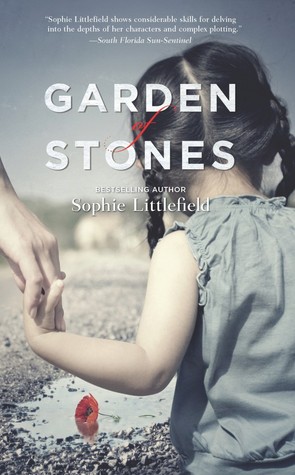
Book Review: Garden of Stones by Sophie Littlefield

Book Review: Garden of Stones by Sophie Littlefield

gardenIn December 1941, 14-year-old Lucy Takeda is the cherished daughter of a well-to-do Japanese-American couple living in Los Angeles. Lucy’s father is a successful businessman. Her mother is an enigmatic beauty who turns heads whenever she walks down the street. Lucy lives a happy life with close friends, a good school, and a bright future, until the Japanese attack on Pearl Harbor spells the end of life as she once knew it.

Before long, Lucy’s father is dead of a heart attack, and she and her mother, as well as all of their friends and neighbors, are forced from their homes as a result of President Roosevelt’s executive order of 1942, which designated the entire Pacific coast as an exclusion zone and forced thousands of Japanese-Americans into internment camps. Lucy and her mother Miyako are sent to Manzanar, the roughly built camp in the Sierra foothills of California, where they are assigned a flimsy wooden barrack in which to live and where their world becomes restricted to one square mile crammed full of their fellow internees.

Compounding the difficulty for Lucy is her mother’s instability. While in today’s world, Miyako might have been treated and medicated, at Manzanar in those times, Miyako was simply viewed as difficult or unlikeable, rather than having her bipolar disorder recognized or accommodated. Miyako’s beauty, however, does not go unnoticed, and she is soon the recipient of unwelcome but unavoidable attention from the powerful men who run the camp. Events soon spiral out of control, and despite their efforts to protect one another, Lucy and Miyako’s time at Manzanar can only end in tragedy for both.

Garden of Stones is a story within a story, framed by events in 1978 in which Lucy’s daughter Patty seeks answers when Lucy’s long-secret past resurfaces unexpectedly. As Patty starts to dig through clues and finally gets her mother to open up, we see the events from the 1940s from Lucy’s perspective, providing an interesting contrast between Lucy’s outlook as a teen and as a middle-aged adult. Lucy’s life has not been easy, and although she has raised Patty to the best of her ability, by keeping her past a secret she has kept her daughter from ever truly knowing who she is and what she’s experienced.

I found myself quite moved by the tragedy of Lucy’s story, in which we witness a life shattered by war and prejudice, a young girl who had everything she cherished ripped away from her, and yet who somehow manages to survive into adulthood and provide a safe and loving home for her child. Garden of Stones presents two very different mother-daughter relationships, and poses some interesting questions: What does it mean for a mother to protect her daughter? Are extreme measures justifiable if taken out of love? Is pain inflicted out of love preferable to pain inflicted through cruelty? How does one survive after enduring loss after loss?

Author Sophie Littlefield explores this shameful chapter from America’s past with an unflinching eye. We see the devastation from Lucy’s perspective, as a child born and raised in the United States, who speaks not a word of Japanese, is suddenly branded as “other”. We witness the terror of the Japanese-American community in the days following Pearl Harbor, as families frantically burn any Japanese goods or relics in their homes so as not to be seen as sympathizers — or worse, as spies or conspirators. We see friends and neighbors close their doors, turn their backs, and otherwise abandon the people they’d lived alongside, as the Japanese-Americans are forced to sell off their belongings for a pittance before being exiled to the internment camps.

But the larger, historical context is not the only source of sorrow and terror in Lucy’s life, and it is her more personal story that truly gives Garden of Stones its emotional richness. Despite the hardships and privations at Manzanar, Lucy seeks out happiness and friendship, but the circumstances of camp life and her mother’s role in Manzanar serve again and again to bring Lucy pain and suffering.

While some of the more dramatic events of the story are fairly well signaled ahead of time, there are several very surprising turns of events that made me go back through the book and reread certain passages with a fresh eye. I found the Manzanar timeline much more compelling than the 1970s storyline, and yet Patty’s exploration of the past served as a very effective means of slowing unearthing the secrets of Lucy’s life and understanding how these secrets continue having an impact even into the next generation.

Sophie Littlefield has crafted a well-written, emotionally intense tale, full of rich detail and with several well-placed, shocking plot twists. Garden of Stones is a moving story of love between mothers and daughters, of the search for meaning despite the cruelties inflicted during a hard life, and of the many different roads toward hope and survival.

Review copy courtesy of Harlequin via Netgalley

Flashback Friday: Farewell To Manzanar

It’s time, once again, for Flashback Friday…

Flashback Friday is a chance to dig deep in the darkest nooks of our bookshelves and pull out the good stuff from way back. As a reader, a blogger, and a consumer, I tend to focus on new, new, new… but what about the old favorites, the hidden gems? On Flashback Fridays, I want to hit the pause button for a moment and concentrate on older books that are deserving of attention.

If you’d like to join in, here are the Flashback Friday book selection guidelines:

  1. Has to be something you’ve read yourself
  2. Has to still be available, preferably still in print
  3. Must have been originally published 5 or more years ago

Other than that, the sky’s the limit! Join me, please, and let us all know: what are the books you’ve read that you always rave about? What books from your past do you wish EVERYONE would read? Pick something from five years ago, or go all the way back to the Canterbury Tales if you want. It’s Flashback Friday time!

My pick for this week’s Flashback Friday:

https://i0.wp.com/upload.wikimedia.org/wikipedia/en/2/24/FarewelltoManzanarCover.jpg

Farewell To Manzanar by Jeanne Wakatsuki Houston & James D. Houston

(published 1973)

One of my new acquisitions this week is Garden of Stones by Sophie Littlefield, a new novel set in the Manzanar internment camp in which thousands of Japanese-Americans were imprisoned during World War II. I’m very excited to be starting Garden of Stones, but in thinking about this book and this era in American history, I was reminded immediately of the classic memoir Farewell To Manzanar, which I first read in high school and remember to this day.

From Goodreads:

Jeanne Wakatsuki was seven years old in 1942 when her family was uprooted from their home and sent to live at Manzanar internment camp–with 10,000 other Japanese Americans. Along with searchlight towers and armed guards, Manzanar ludicrously featured cheerleaders, Boy Scouts, sock hops, baton twirling lessons and a dance band called the Jive Bombers who would play any popular song except the  nation’s #1 hit: “Don’t Fence Me In.”

Farewell to Manzanar is the true story of one spirited Japanese-American family’s attempt to survive the indignities of forced detention . . . and of a native-born American child who discovered what it was like to grow up behind barbed wire in the United States.

Farewell to Manzanar shocked me when I originally read it. As a young teen, it was almost impossible to believe that the events depicted actually happened in the United States. I understand that this book is now included in many schools’ required reading assignments, and I hope that continues to be the case for some time to come. As a personal glimpse into a disturbing chapter of history and as a finely-written story of one family’s struggles, Farewell to Manzanar is a modern classic that shouldn’t be forgotten.

… And I think I’ve just convinced myself to re-read this book.

So, what’s your favorite blast from the past? Leave a tip for your fellow booklovers, and share the wealth. It’s time to dust off our old favorites and get them back into circulation! 

Note from your friendly Bookshelf Fantasies host: To join in the Flashback Friday bloghop, post about a book you love on your blog, and share your link below. Don’t have a blog post to share? Then share your favorite oldie-but-goodie in the comments section. Jump in!