
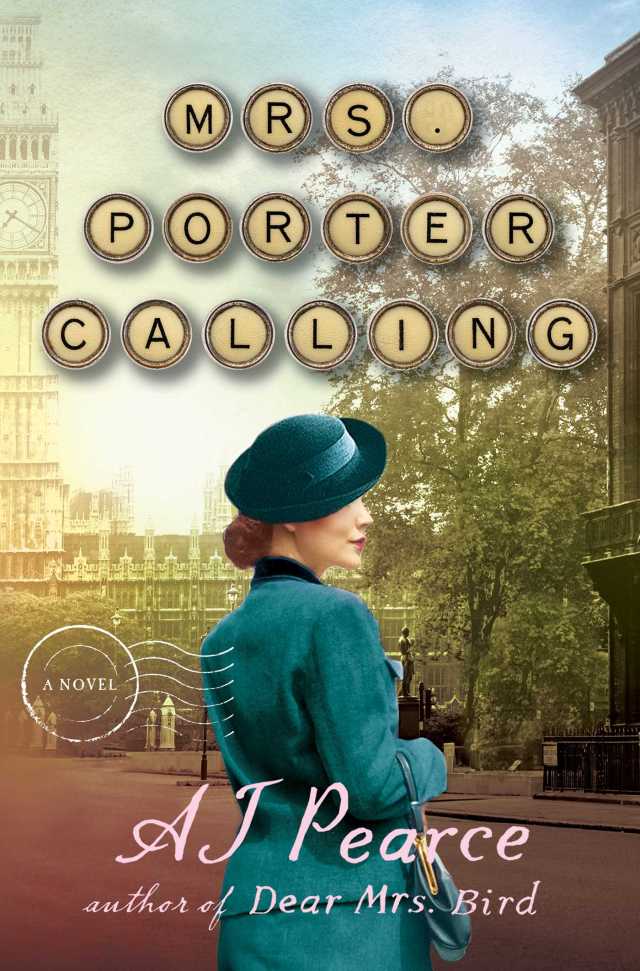
Book Review: Mrs. Porter Calling by AJ Pearce

Title: Mrs. Porter Calling
Author: AJ Pearce
Publisher: Scribner
Publication date: August 8, 2023
Length: 320 pages
Genre: Historical fiction
Source: Review copy courtesy of the publisher via NetGalley
Rating:

Rating: 4 out of 5.

London, April 1943. A little over a year since she married Captain Charles Mayhew and he went away to war, Emmy Lake is now in charge of “Yours Cheerfully,” the hugely popular advice column in Woman’s Friend magazine. Cheered on by her best friend Bunty, Emmy is dedicated to helping readers face the increasing challenges brought about by over three years of war. The postbags are full and Woman’s Friend is thriving.

But Emmy’s world is turned upside down when glamorous socialite, the Honorable Mrs. Cressida Porter, becomes the new publisher of the magazine, and wants to change everything the readers love. Aided by Mrs. Pye, a Paris-obsessed fashion editor with delusions of grandeur, and Small Winston, the grumpiest dog in London, Mrs. Porter fills the pages with expensive clothes and frivolous articles about her friends. Worst of all, she announces that she is cutting the “Yours Cheerfully” column and her vision for the publication’s future seems dire. With the stakes higher than ever, Emmy and her friends must find a way to save the magazine that they love.

Emmy Lake is back! Mrs. Porter Calling is the third in a series of books about a magazine journalist and her group of close friends and colleagues, navigating life on the homefront in WWII-era London. In the first two books, Dear Mrs. Bird and Yours Cheerfully, we see Emmy land a job at Woman’s Friend magazine, where she eventually takes over the advice column, seeing it as her mission to offer compassionate, practical advice to women in need. Over the course of these two books, she also meets and marries a lovely man, and supports her best friend through horrible loss and recovery.

As Mrs. Porter Calling opens, the year is 1943, and Emmy continues her work at Woman’s Friend as well as with the fire service, which monitors and responds to disasters caused by air raids. Emmy’s beloved husband Charles is off on the front lines, the couple having had only a few short days together following their wedding before his deployment. Emmy shares a home with her best friend Bunty, and they lead busy, productive lives — they’ve learned to adapt and carry on, despite the constant fear and rationing.

Emmy’s professional life is thrown into a tailspin when the magazine’s owner dies. He’s bequeathed ownership to his niece, who turns out to be a spoiled upper-class woman who feigns delight with the magazine, provided they implement just a few of her “tiny ideas”. She finds the current version “A Bit Mis” — miserable — and decides that what the readers really need is more stories that are pleasant. Rather than focus on food columns about how to make good meals with limited rations or knitting/sewing clothing when supplies aren’t available, she wants glamour, fashion, and a focus on the beautiful lives of her own class. The staff of the magazine is appalled — this is not what their readers rely on them for — but having no choice, the magazine is changed to Mrs. Porter’s standards, and of course, readership and then advertising drop off. Soon, the future of Woman’s Friend is in doubt, and Emmy and her colleagues become desperate to save it.

Meanwhile, at home, Emmy and Bunty welcome a woman with three young children into their home, and soon their days are filled with activity and joyful chaos — but the realities of war are always present, and soon enough Emmy’s woes at the magazine are eclipsed by a more personal tragedy.

I enjoyed Mrs. Porter Calling so much! Mrs. Porter herself is an insidiously vapid character who acts sweetly haughty, until she hits the team with her “ideas”, all with the most saccharine of smiles and eyelash batting. As Emmy reflects:

I was beginning to feel as if I was being run over by a steamroller made from petals and kittens. It was delightful, but also somewhat immobilizing.

Beyond the work crises, where we can’t help but root for the underdogs — the hardworking, dedicated team of Woman’s Friend — the book delves sensitively into the lives of the women and children struggling to make ends meet on the home front.

“Don’t worry, Em, we’ll do what all the other women in Britain are doing.”

“What’s that?” I said.

“Cope,” said Bunty.

Again and again, Emmy, Bunty, and their circle of friends show what true bravery is, as well as devotion and determination.

While there’s sorrow and conflict in Mrs. Porter Calling, there’s a chipper, upbeat air that carries the story along — the “Keep Calm and Carry On” attitude that lets the characters find happiness even in the darkest of days. I loved the found family aspect of the characters’ lives — despite fears for loved ones on the battlefield or sorrow for those lost, they bond together to get through it all, and clearly show how love and friendship can mend broken hearts.

“War’s bad enough as it is. Imagine if you’re trying to get through this on your own.”

The Emmy Lake books are emotional, entertaining, and heart-warming. I recommend starting at the beginning of the series, and continuing on from there. I understand there’s at least one more book planned, and also read a comment by the author that she hopes to continue writing books that will take Emmy and friends through to the end of the war. I hope that’s the case! I’d really love to see more of Emmy’s story (and will be waiting to see what I hope will be a happy ending for her once the war ends).
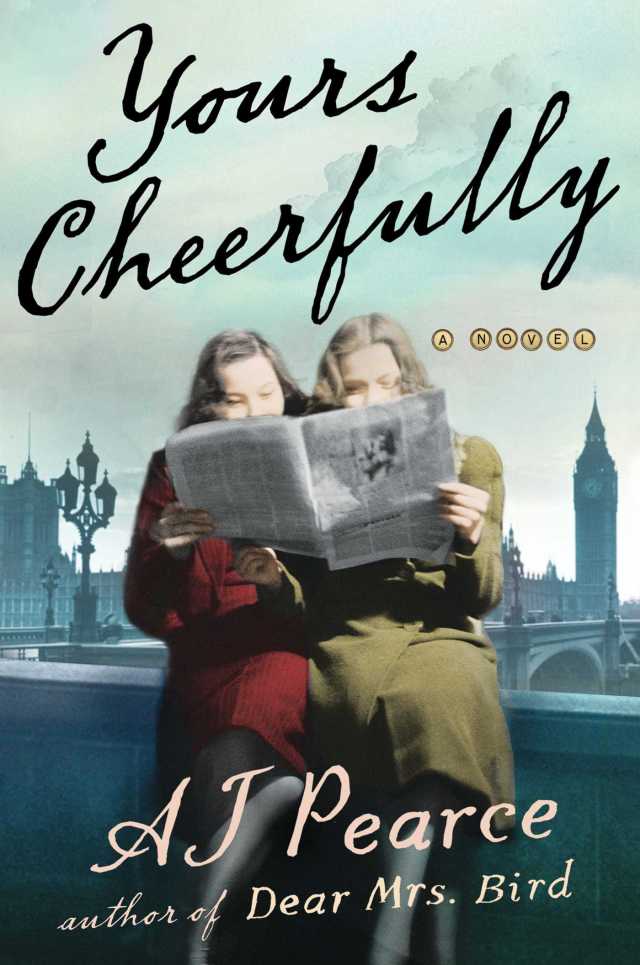
Book Review: Yours Cheerfully by AJ Pearce

Title: Yours Cheerfully
Author: AJ Pearce
Publisher: Scribner
Publication date: August 10, 2021
Length: 304 pages
Genre: Historical fiction
Source: Review copy courtesy of the publisher via NetGalley
Rating:

Rating: 3.5 out of 5.

London, November 1941. Following the departure of the formidable Henrietta Bird from Woman’s Friend magazine, things are looking up for Emmeline Lake as she takes on the challenge of becoming a young wartime advice columnist. Her relationship with boyfriend Charles (now stationed back in the UK) is blossoming, while Emmy’s best friend Bunty, still reeling from the very worst of the Blitz, is bravely looking to the future. Together, the friends are determined to Make a Go of It.

When the Ministry of Information calls on Britain’s women’s magazines to help recruit desperately needed female workers to the war effort, Emmy is thrilled to be asked to step up and help. But when she and Bunty meet a young woman who shows them the very real challenges that women war workers face, Emmy must tackle a life-changing dilemma between doing her duty and standing by her friends.

In this follow-up to Dear Mrs. Bird, the story of Emmy Lake continues — although Yours Cheerfully works perfectly well as a stand-alone. Emmy is a young woman who’s just learning the journalism ropes at Woman’s Friend magazine, while also juggling her wartime volunteer work as part of the fire watch, spending time with her best friend Bunty, and squeezing in precious visits with her boyfriend Charles whenever he can get leave. It’s 1941, and the war dominates every aspect of life in London.

As the story opens, the British Ministry of Information convenes a briefing for representatives of women’s magazines, urging them to do their patriotic duty by promoting recruitment of women workers to support the war effort. For Emmy, this represents a chance to advance in her journalism career, but as she visits a munitions factory as part of her research, she learns that there’s a darker side to women’s factory work: For those with small children, childcare can be difficult to impossible to find, and women who sneak their children into the factories so they can watch them face immediate firing.

Emmy learns as well that some of these women are war widows or have husbands missing in action, so that the factory work is not only patriotic, but is essential to their families’ financial survival.

Despite the magazine needing to keep up the positive portrayal of woman’s war work, Emmy can’t help feeling that she’s letting their readers down by not advocating for more attention to the needs of the workers — especially since there are supposed to be government-funded nurseries, but only if the factory owners make the effort to make the arrangements, and apparently, many of them don’t bother.

The story of the factory workers with whom Emmy becomes friends becomes a main thread of the plot of Yours Cheerfully. Interspersed with this is Emmy’s friendship with Bunty, recovering from injury and terrible loss after events in Dear Mrs. Bird, and the story of Emmy’s romance with Charles. There are sweet romantic moments, as well as a depiction of the challenges of everyday life during war and the fragility of every moment of happiness, knowing sorrow could be just around the corner.

I enjoyed Yours Cheerfully, although it starts very slowly. My interest was slow to engage, but eventually I was drawn in by the story of the factory workers, whom we come to know as individuals, each with their own backstory, and by the ups and downs faced by Emmy and Charles as they try to juggle courtship and engagement with the realization that Charles is likely to be sent overseas at any moment.

Yours Cheerfully is a quiet book — even the moments of greater action, such as a march to promote nurseries for the munitions workers, are fairly mild affairs. The characters are all lovely, but the book doesn’t build a great sense of drama or urgency. It’s a very nice read, but I can’t say I ever felt compelled by the plot or totally engrossed.

Overall, Yours Cheerfully provides a thoughtful look at women on the homefront during war, depicting the bravery embodied in carrying on during a time of heightened tragedy and crisis, and the power of friendship and joy to see the characters through the worst of times.

**********

Through affiliate programs, I may earn commissions from purchases made when you click through these links, at no cost to you.

Buy now at Amazon – Book Depository – Bookshop.org

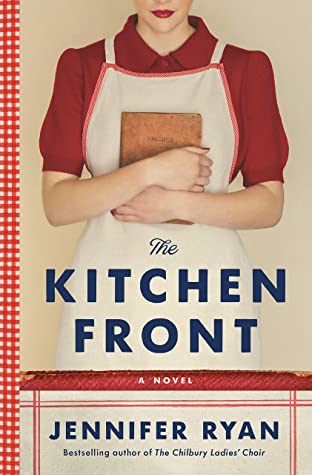
Book Review: The Kitchen Front by Jennifer Ryan

Title: The Kitchen Front
Author: Jennifer Ryan
Publisher: Ballantine Books
Publication date: February 23, 2021
Length: 416 pages
Genre: Historical fiction
Source: Review copy courtesy of the publisher via NetGalley
Rating:

Rating: 4 out of 5.

In a new World War II-set story from the bestselling author of The Chilbury Ladies’ Choir, four women compete for a spot hosting a wartime cookery program called The Kitchen Front – based on the actual BBC program of the same name – as well as a chance to better their lives.

Two years into WW2, Britain is feeling her losses; the Nazis have won battles, the Blitz has destroyed cities, and U-boats have cut off the supply of food. In an effort to help housewives with food rationing, a BBC radio program called The Kitchen Front is putting on a cooking contest–and the grand prize is a job as the program’s first-ever female co-host. For four very different women, winning the contest presents a crucial chance to change their lives.

For a young widow, it’s a chance to pay off her husband’s debts and keep a roof over her children’s heads. For a kitchen maid, it’s a chance to leave servitude and find freedom. For the lady of the manor, it’s a chance to escape her wealthy husband’s increasingly hostile behavior. And for a trained chef, it’s a chance to challenge the men at the top of her profession.

These four women are giving the competition their all–even if that sometimes means bending the rules. But with so much at stake, will the contest that aims to bring the community together serve only to break it apart?

The Kitchen Front is a fascinating look at World War II’s impact on the women and children back on the home front, who face not battlefield danger but the perils of bombing raids and food shortages.

Set in 1942, the story centers on a competition hosted by the (historically real) BBC radio program The Kitchen Front. The purpose of the program is to promote the creative use of wartime rations, aimed at British housewives struggling to feed their families when so many basics just aren’t to be had. The competition is open to professional cooks, and the prize is a co-hosting role on the radio program.

In the small town of Fenley Village, located not far from London, life is bleak for many of the town’s residents. While rare food items can still be had through the black market, most families get by on their rations and what they can grow in their own gardens. Everything can and must be repurposed, and the creativity required to actually make edible and nutritious food is remarkable.

The four main characters of the story are all very different, and each has her own reason for wanting — or needing — to win the competition. For Audrey, a grieving war widow deeply in debt trying to keep her three sons housed and fed, it’s a chance to finally get back on her feet financially. For her sister Gwendolyn, it’s a way to boost her bullying, wealthy husband’s prestige and keep his anger at bay. For Nell, a kitchen maid who’s finally learning to stand on her own two feet, it’s a dream of a life outside of service. And for Zelda, a Cordon Bleu chef facing sexism in the world of haute cuisine, it’s a means of staking a claim on the professional respect and opportunities that continually elude her.

As the four compete, they form bonds as well, and as secrets are revealed, they come together to form a new family and envision a future that benefits them all.

The book is divided into three sections, corresponding with the three rounds of the competition — starters, main courses, and desserts. In each, we learn more about the four women, and also see the different processes each uses as she invents and creates her dish for the competition. The book includes recipes for all the meals discussed, and it’s truly amazing to learn about the substitutions needed to get by on wartime rations. Who knew that the British government promoted whale meat as an alternative to beef?

I found the aspects of the book related to how the women on the home front used their wits and resources to feed their families really fascinating, and I enjoyed the picture of village life during war, the bonds of the four main characters, and the sense of sisterhood that ultimately makes all of them stronger.

Somehow, though, the overarching plotlines felt a little predictable and bland to me. I liked each of the characters well enough, but they often felt more like types than fully-fleshed out people. Maybe because the focus was split between the four, it didn’t give any one of them the opportunity to fully blossom as a main character.

Still, I enjoyed this book very much. As with her previous novels, especially the wonderful The Chilbury Ladies’ Choir, author Jennifer Ryan uses her meticulous research to bring out the feel of the era, and in this case, to bring out the flavors of family life in wartime England. The story is heartwarming, and gave me a sense of peering behind the headlines of war to see the impact on the people left behind to carry on. A recommended read!