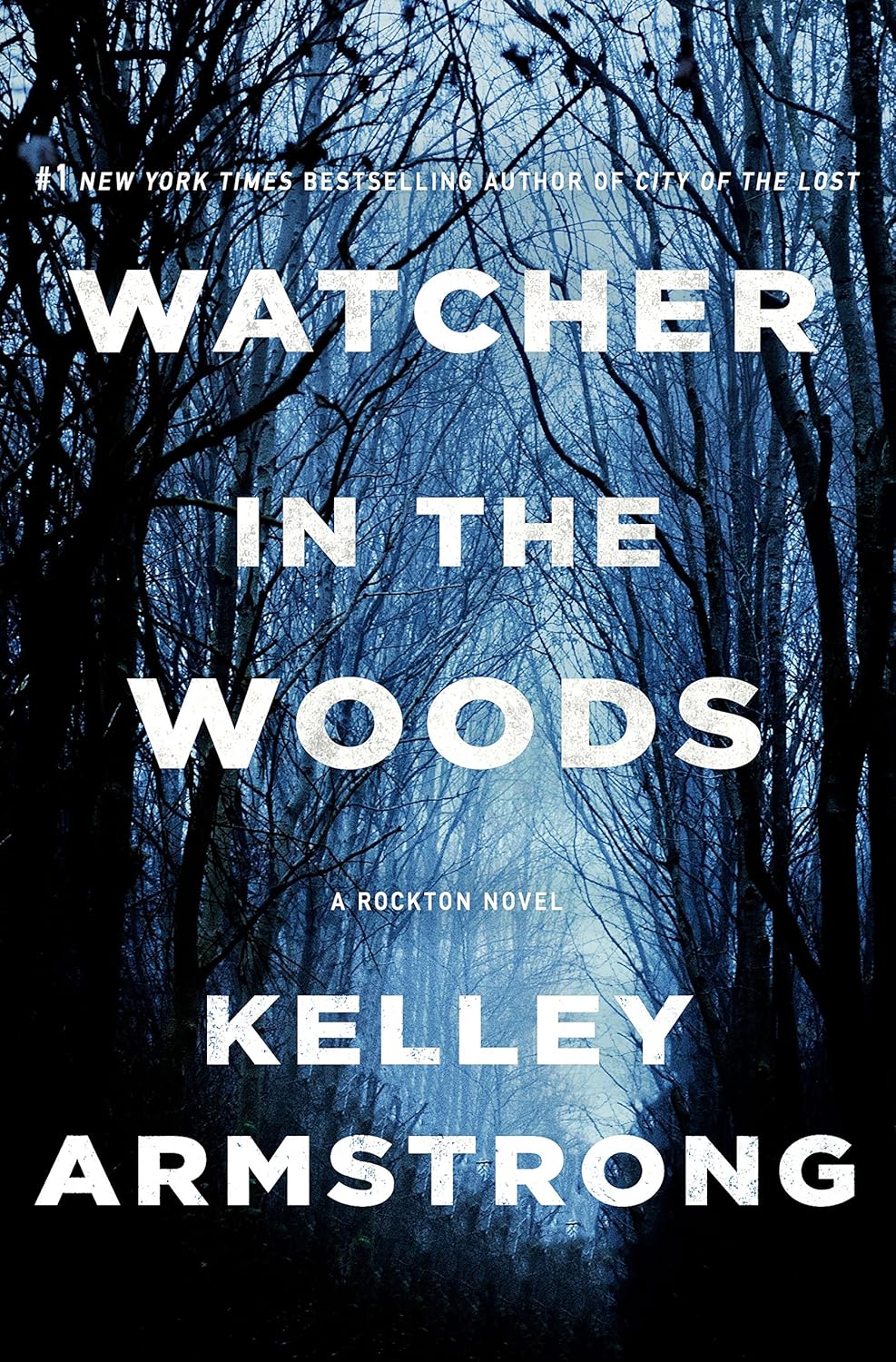
Book Review: Watcher in the Woods (Rockton, #4) by Kelley Armstrong

Title: Watcher in the Woods
Series: Rockton, #4
Author: Kelley Armstrong
Publisher: Minotaur Books
Publication date: February 5, 2019
Length: 364 pages
Genre: Thriller/mystery
Source: Library
Rating:

Rating: 4.5 out of 5.

In #1 New York Times bestselling author Kelley Armstrong’s latest thriller, the town of Rockton—and her fans—are in for another hair-raising adventure.

The secret town of Rockton has seen some rocky times lately; understandable considering its mix of criminals and victims fleeing society for refuge within its Yukon borders. Casey Duncan, the town’s only detective on a police force of three, has already faced murder, arson and falling in love in less than the year that she’s lived there. Yet even she didn’t think it would be possible for an outsider to find and cause trouble in the town she’s come to call home.

When a US Marshal shows up in town demanding the release of one of the residents, Casey and her boyfriend, Sheriff Dalton, are skeptical. And yet only hours later, the marshal is shot dead and the only visible suspects are the townspeople and her estranged sister, in town for just the weekend. It’s up to Casey to figure out who murdered the marshal, and why they would kill to keep him quiet.

In the chronology of the Rockton books, Watcher in the Woods picks up the story three days (3! Days!) after the events of This Fallen Prey. Had I realized that ahead of time, I might have just read straight through… but regardless, even after just a couple of weeks, reentering the world of Rockton is like diving straight into a roaring river — rocks and rapids ahead!

If you’ve read my reviews for any of the previous books, you’ll know (a) I’m hooked, and (b) the overall premise of the series… but just in case, here’s my standard quickie recap:

Rockton is a secret hidden town in the Yukon wilderness, a haven for those seeking extreme shelter from dangers in their real lives — or those who’ve committed some sort of wrongdoing and need a place to start over. Rockton, population 200, is filled with an uneasy mix of crime victims and white-collar criminals — although as Sheriff Eric Dalton and Detective Casey Butler come to discover, the town council is willing to defy its own rules for a price and allow more dangerous people to take advantage of Rockton’s protection.

As Watcher in the Woods opens, the town is dealing with the fallout from events in book #3, but in Rockton, there’s never a moment without some new catastrophe on the horizon. A stranger shows up, watching the town, and there’s no way that should be possible. Confronted by Eric and Casey, he states that he’s a US Marshall come to detain one of their residents, who’s actually a dangerous criminal. Eric and Casey are immediately skeptical: How do they know he’s a marshall? Why would he come alone? How can they trust anything this man says?

It becomes moot after the Marshall is shot as they bring him back to town, although now they have new problems on their hands. Is there actually a killer hiding out in Rockton? Can they trust anyone? Who is this dead man, and what fresh problems does his death present?

Meanwhile, Casey has convinced her distant, talented neurosurgeon sister to make a stealth visit to Rockton to perform surgery on one of their residents — the town’s lack of a resident physician is one of their more urgent problems — and her presence in town raises all sorts of other issues, both personal and professional for Casey.

There’s plenty of danger, and some beautifully orchestrated mind games, as Casey once again has to figure out whether people she trusts have betrayed her (and why), whether people she thought she knew are really who they say they are, and what to do to maintain peace and safety in a town that never seems to know a moment of either.

Casey and Eric’s relationship continues to be a treat, and I love how each book gives us more backstory for different Rockton residents as well. Some new characters promise to add even more depth to the community going forward, and the ongoing struggle with the anonymous council that controls the town continues to be fraught, and clearly will be something that Casey and Eric will ultimately have to confront.

There are a lot of balls in the air in the story, but the author is a master juggler. The narrative is complex and full of twists, but it all comes together and the story moves forward quite well. Can’t say more without spoilers!

Obviously, I’m loving this series, and recommend it highly! But start at the beginning, of course.

That’s four books down, three to go… and I can’t wait to dive into book #5!

Next up:
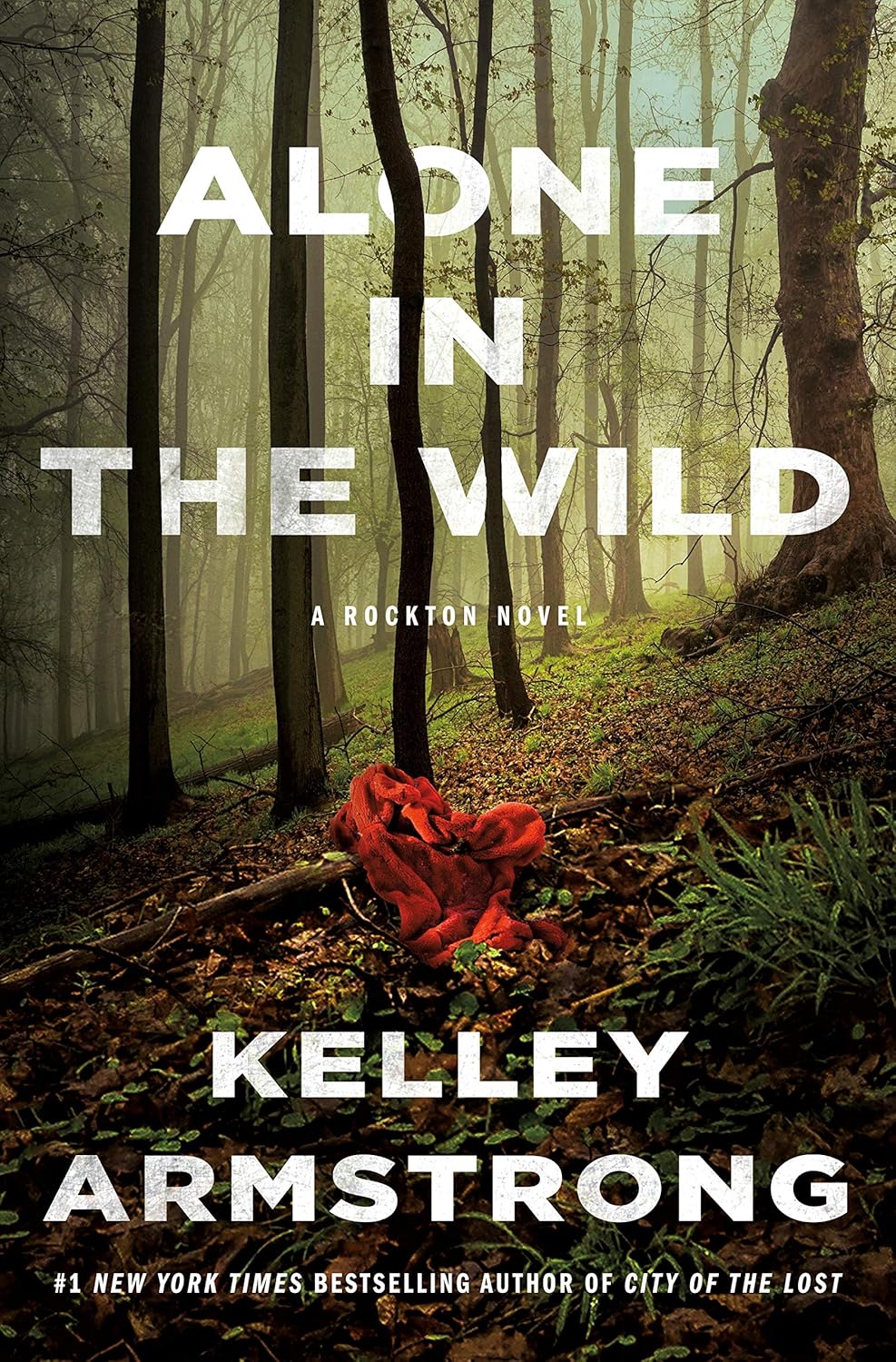
Book #5, Alone in the Wild

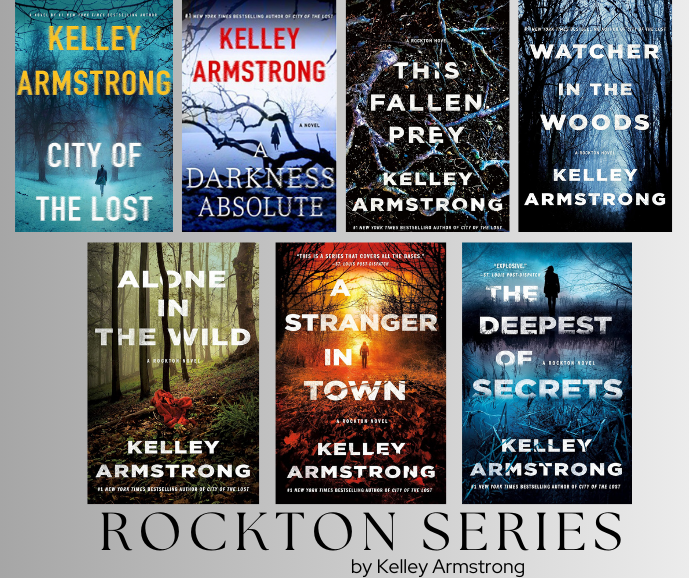
Interested in this series? Check out my reviews of the previous books:
City of the Lost (Rockton, #1)
A Darkness Absolute (Rockton, #2)

This Fallen Prey (Rockton, #3)

Purchase linksAmazon – Bookshop.org – Libro.fm
Disclaimer: When you make a purchase through one of these affiliate links, I may earn a small commission, at no additional cost to you.
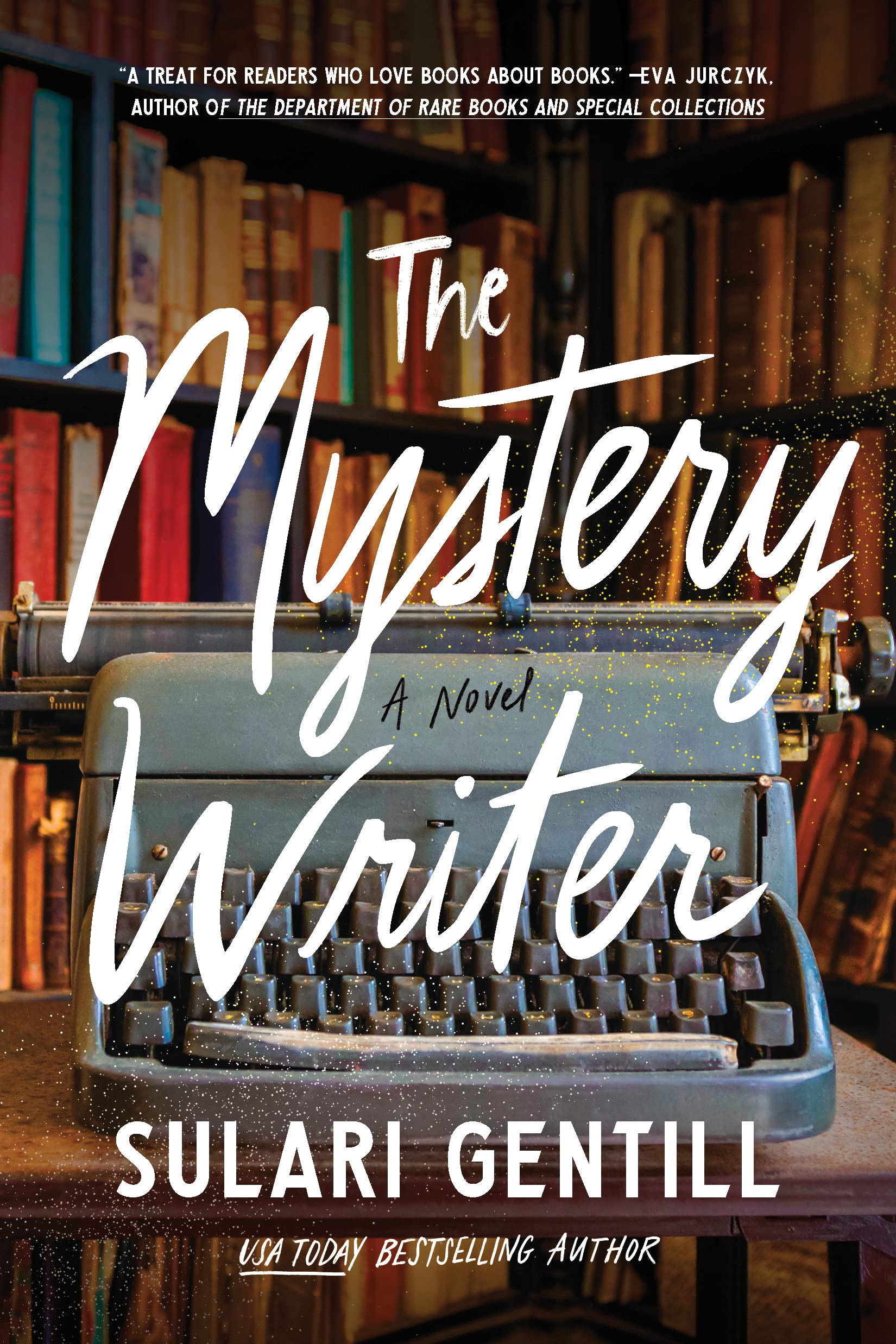
Book Review: The Mystery Writer by Sulari Gentill

Title: The Mystery Writer
Author: Sulari Gentill
Publisher: Poisoned Pen Press
Publication date: March 1, 2024
Length: 368 pages
Genre: Thriller
Source: Library
Rating:

Rating: 2.5 out of 5.

A literary thriller about an aspiring writer who meets and falls in love with her literary idol—only to find him murdered the day after she gave him her manuscript to read.

There’s nothing easier to dismiss than a conspiracy theory—until it turns out to be true

When Theodosia Benton abandons her career path as an attorney and shows up on her brother’s doorstep with two suitcases and an unfinished novel, she expects to face a few challenges. Will her brother support her ambition or send her back to finish her degree? What will her parents say when they learn of her decision? Does she even have what it takes to be a successful writer?

What Theo never expects is to be drawn into a hidden literary world in which identity is something that can be lost and remade for the sake of an audience. When her mentor, a highly successful author, is brutally murdered, Theo wants the killer to be found and justice to be served. Then the police begin looking at her brother, Gus, as their prime suspect, and Theo does the unthinkable in order to protect him. But the writer has left a trail, a thread out of the labyrinth in the form of a story. Gus finds that thread and follows it, and in his attempt to save his sister he inadvertently threatens the foundations of the labyrinth itself. To protect the carefully constructed narrative, Theo Benton, and everyone looking for her, will have to die.

The Mystery Writer was my book group’s pick for July, and as with many of our group reads, it’s unlikely that I would have picked this one up on my own. Unfortunately, while many of our book group books end up being surprise hits for me, this one just didn’t quite work, despite some clever hooks and unusual story beats.

Theo Benton, approximately 20 year old, drops out of law school in Australia to show up at her older brother Gus’s home in Kansas. Gus and Theo were both left trust funds by their American grandfather, requiring them to become lawyers in order to inherit. Gus did, and is a partner in a local practice. Theo, however, has realized that she doe not want to become a lawyer; instead, she wants to write. Gus agrees that she can stay with him while she pursues her writing goals.

As she starts writing at the cafe where she’ll soon become a regular, she encounters another writer — an older man whom Theo eventually identifies as successful author Dan Murdoch. Theo and Dan form a friendship, and he takes an interest in her writing, offering her tips and encouragement. Finally, when Theo finishes her manuscript, she gives it to Dan to read. He’s enthusiastic, but declines her request to send it to his high-powered literary agent. And the very next day, Theo discovers that Dan has been murdered.

Theo and Gus become entangled in the unfolding mystery as more murders occur — and the two of them appear to be the connection between all the dead bodies. With the police focusing on them and their lives in danger, Theo takes a drastic step to keep them safe.

That’s about enough plot summary to get the general gist without getting into spoiler territory. The plot revolves around convoluted conspiracy theories, and hinges on Theo making some truly ridiculous decisions. So many elements require a complete suspension of disbelief that it becomes harder and harder as the book progresses to take it seriously in the slightest.

Survivalists and preppers, Australian hippies (“ferals”), crazed fans, sinister secrets of the publishing world… there’s a lot going on, and yet, not much of it makes any sense. Theo’s ability to sit down and pound out a potential bestseller over the course of a few months doesn’t feel credible, and neither is her connection to the writer whom she just happened to stumble across. Her gullibility in dealing with the agency felt like a breaking point for me (as was her brainless decision to give someone the address of the secure location where she was hiding out). If not for the book group commitment, I likely would have quit somewhere in the middle.

Still, I finished the book. The story itself moves quickly and it’s a fast read, so I was able to get through it without too much effort. At some point, I felt invested enough to want to see it through and see how it all wrapped up.

I can’t say that I actually recommend The Mystery Writer. There are some interesting facets to the story, but overall, it’s simply not believable and strains much too hard to make it at all convincing. I just didn’t buy it.

PS — Why did the publisher stick this cover on the book? There are no typewriters involved in this story! Feels like a lazy way to say “hey, this book is about a writer!”

Given my lukewarm to not-so-great reaction to this book, it may seem like a contradiction to say that I’d still like to read more by this author! Having read some interviews and other materials on the writing process for this book, I get what she was trying to do, even if I didn’t especially love it. I’d be willing to try again with another of her books, possibly her upcoming new release, to see if a change of topic works better for me.

Purchase linksAmazon – Bookshop.org – Libro.fm
Disclaimer: When you make a purchase through one of these affiliate links, I may earn a small commission, at no additional cost to you.
Book Review: This Fallen Prey (Rockton, #3) by Kelley Armstrong

Title: This Fallen Prey
Series: Rockton, #3
Author: Kelley Armstrong
Publisher: Minotaur Books
Publication date: February 6, 2018
Length: 359 pages
Genre: Thriller/mystery
Source: Library
Rating:

Rating: 4.5 out of 5.

In This Fallen Prey, the next installment of New York Times bestselling author Kelley Armstrong’s thriller series, Casey Duncan is about to face her toughest job as police detective in Rockton yet. When Casey first arrived at the off-the-grid town, an isolated community built as a haven for people running from their pasts, she had no idea what to expect, with no cell phones, no internet, no mail, and no way of getting in or out without the town council’s approval. She certainly didn’t expect to be the homicide detective on two separate cases or to begin a romantic relationship with her boss. But the very last thing she expected was for the council to drop a dangerous criminal into their midst without a plan to keep him imprisoned and to keep others safe. Of course, Oliver Brady claims he’s being set up. But the longer Brady stays in town, the more things start to go wrong. When evidence comes to light that someone inside Rockton might be working as his accomplice, helping him to escape, Casey races to figure out who exactly Brady is and what crimes he’s truly responsible for committing. In the next page-turning entry in Kelley Armstrong’s gripping series, life in Rockton is about to get even more dangerous.

To say I’m hooked on Kelley Armstrong’s Rockton series might be an understatement. I’m obsessed! These stories build one upon the other, and so far, each leaves me thirsty for more immediately after turning the final page.

This Fallen Prey is the 3rd book in this 7-book series, and it’s a fast-paced, adrenaline-fueled race through danger — and yet, it also gives us time to spend with the characters and in the town that we’ve come to know.

Quick recap (or see links below for my reviews of earlier books): Rockton is a secret hidden town in the Yukon wilderness, a haven for those seeking extreme shelter from dangers in their real lives — or those who’ve committed some sort of wrongdoing and need a place to start over. Rockton, population 200, is filled with an uneasy mix of crime victims and white-collar criminals — although as Sheriff Eric Dalton and Detective Casey Butler come to discover, the town council is willing to defy its own rules for a price and allow more dangerous people to take advantage of Rockton’s protection.

As This Fallen Prey opens, a plane arrives on Rockton’s hidden airstrip, delivering a man named Oliver Brady into the town’s custody. The note accompanying his arrival explains that he’s a serial killer, being sent to Rockton for detention by his wealthy stepfather, who hopes to shield Brady’s mother from the grief of a trial and sentencing. There are all sorts of problems with this, especially (a) Rockton was given no warning of his arrival and (b) the town has no detention facilities except one jail cell, typically used for those needing to sleep off a bar fight for a night. With no preparation yet no way to refuse or send Brady back, Eric and Casey are stuck with a dangerous killer to keep under lock and key.

Complicating matters is Brady’s insistence that he’s innocent, set up by his greedy stepfather who just wants him out of the way in order to grab his share of the family fortune. A further complication is that half the town seem to believe him. Some want to free him, but many others want to lynch him. Eric and Casey need to discover the truth, but when Brady manages to escape into the wilderness surrounding Rockton, they find themselves on a hunt for a man they can’t trust but can’t quite condemn.

As with the previous Rockton books, the danger ratchet up page by page, and the chase through the woods is scary and full of new threats and enemies with each turn of the path. The plot is twisty and misleading and full of contradictions, which all come together by the end with a bang.

This Fallen Prey wraps up the core mystery surrounding Brady, but leaves many more big picture questions hanging — which is probably what makes this series so additive. The main story has a conclusion, but there are several thing that occur that seem like critical new wrinkles in our understanding of how the town works and what the roles of various characters are. I’m desperate to know more!

Meanwhile, Casey and Eric’s relationship continues to be a wonderful centerpiece, as their two wildly different backstories add complications to their already complex work and love lives. I love seeing them navigate their differences, their needs, and their respective roles in the town, while also establishing a loving, respectful, supportive commitment to their lives together.

I can’t wait to start the next book in the series — although I’m trying to force myself to take breaks in between and enjoy a bit of the suspense!

Next up:

Book #4, Watcher in the Woods

Interested in this series? Check out my reviews of the previous books:
City of the Lost (Rockton, #1)
A Darkness Absolute (Rockton, #2)

Purchase linksAmazon – Bookshop.org – Libro.fm
Disclaimer: When you make a purchase through one of these affiliate links, I may earn a small commission, at no additional cost to you.
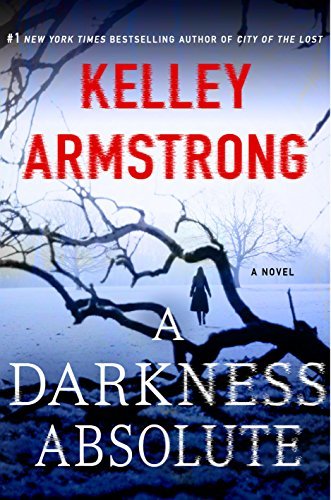
Book Review: A Darkness Absolute (Rockton, #2) by Kelley Armstrong

Title: A Darkness Absolute
Series: Rockton, #2
Author: Kelley Armstrong
Publisher: Minotaur Books
Publication date: February 7, 2017
Length: 400 pages
Genre: Thriller/mystery
Source: Library
Rating:

Rating: 4 out of 5.

When experienced homicide detective Casey Duncan first moved to the secret town of Rockton, she expected a safe haven for people like her, people running from their past misdeeds and past lives. She knew living in Rockton meant living off-the-grid completely: no cell phones, no Internet, no mail, very little electricity, and no way of getting in or out without the town council’s approval. What she didn’t expect is that Rockton comes with its own set of secrets and dangers.

Now, in A Darkness Absolute, Casey and her fellow Rockton sheriff’s deputy Will chase a cabin-fevered resident into the woods, where they are stranded in a blizzard. Taking shelter in a cave, they discover a former resident who’s been held captive for over a year. When the bodies of two other women turn up, Casey and her colleagues must find out if it’s an outsider behind the killings or if the answer is more complicated than that…before another victim goes missing.

A Darkness Absolute is the 2nd book in Kelley Armstrong’s 7-book Rockton series, and it successfully delivers on the promise of City of the Lost, the first book in the series. To catch up those unfamiliar with the series, the basic premise is as follows: There’s a remote town — Rockton, population 200 — located in the wilds of Canada’s Yukon territory. It’s home to those fleeing danger who need complete isolation from the outside world, but it also offers shelter to some with questionable pasts who need a way to hide out and start over. There are no navigable roads in or out — new residents arrive by bush plane, and can only leave the same way. Relocating to Rockton is a serious commitment, requiring the approval of the elusive and morally questionable town council.

The main character is Casey Duncan (known in Rockton as Casey Butler) — a homicide detective who survived trauma as a teen, and has been living with a dark secret every since: After surviving the assault that left her with lasting physical and psychological scars, she confronted the ex-boyfriend who abandoned her to her attackers, and unintentionally shot and killed him. Now, in Rockton, she has a fresh start, which involves working round the clock to solve the surprisingly high number of crimes that seem to crop up in this small, isolated town.

As A Darkness Absolute opens, Casey has been living in Rockton for about four months. The longer she’s there, the more secrets come to light, including the dirty details about some of Rockton’s sketchier residents. Casey reports to Sheriff Eric Dalton, with whom she also has a romantic relationship. Their dynamics are intense, but it works.

When Casey and deputy Will Anders discover a woman held hostage in a cave for a year — someone who’d been assumed to have left Rockton of her own free will — it opens up a new set of dangers and discoveries. Who took her, and why? And how does this connect to the newly discovered bodies of women who’d disappeared years earlier?

The mystery here is convoluted and tricky, with plenty of clues, misdirections, suspects, and conflicting timelines. There’s plenty of danger, too. The forest around Rockton is full of threats — human, animal, and environmental — and each time Eric, Casey, or anyone else from the town ventures past Rockton’s borders, they’re at immense risk. No one comes out of this case unscathed, and even more disturbing secrets about the town, the town council, and the various residents come to light.

The set-up for the series is terrific, and Casey and Eric have a fascinating chemistry, both on and off the job. I loved seeing their relationship progress — they even get a dog! There’s danger around every corner, and any interaction with a Rockton resident needs to be examined for hidden agendas and threats.

The tension never lets up, and while the ultimate solution definitely works, it takes a mind-boggling effort at times to keep track of the players, the timelines, and the possible motives behind each person’s actions. No one is safe — and Casey in particular ends up in grave peril over and over again. The suspense of it all makes A Darkness Absolute a compelling page-turner, while the characters and their relationships and connections add emotional heft and a sense of deep stakes as the action unfolds.

When I picked up A Darkness Absolute, I realized a refresher on book #1, City of the Lost, might be helpful, so I reread that one as well. I’m glad I did: While A Darkness Absolute would have made sense anyway, it was good to become reacquainted with some of the supporting characters and their backstories.

I can’t wait to continue with the series! With five books still to go, plus a spin-off series, there’s plenty left to read. I don’t think I’ll binge straight through, but I do want to keep going while the details are fresh in my mind. So far, the Rockton series is just as great I’d expected, and I’m eager to see what’s ahead for Casey and Eric.

Next up:

Book #3, This Fallen Prey

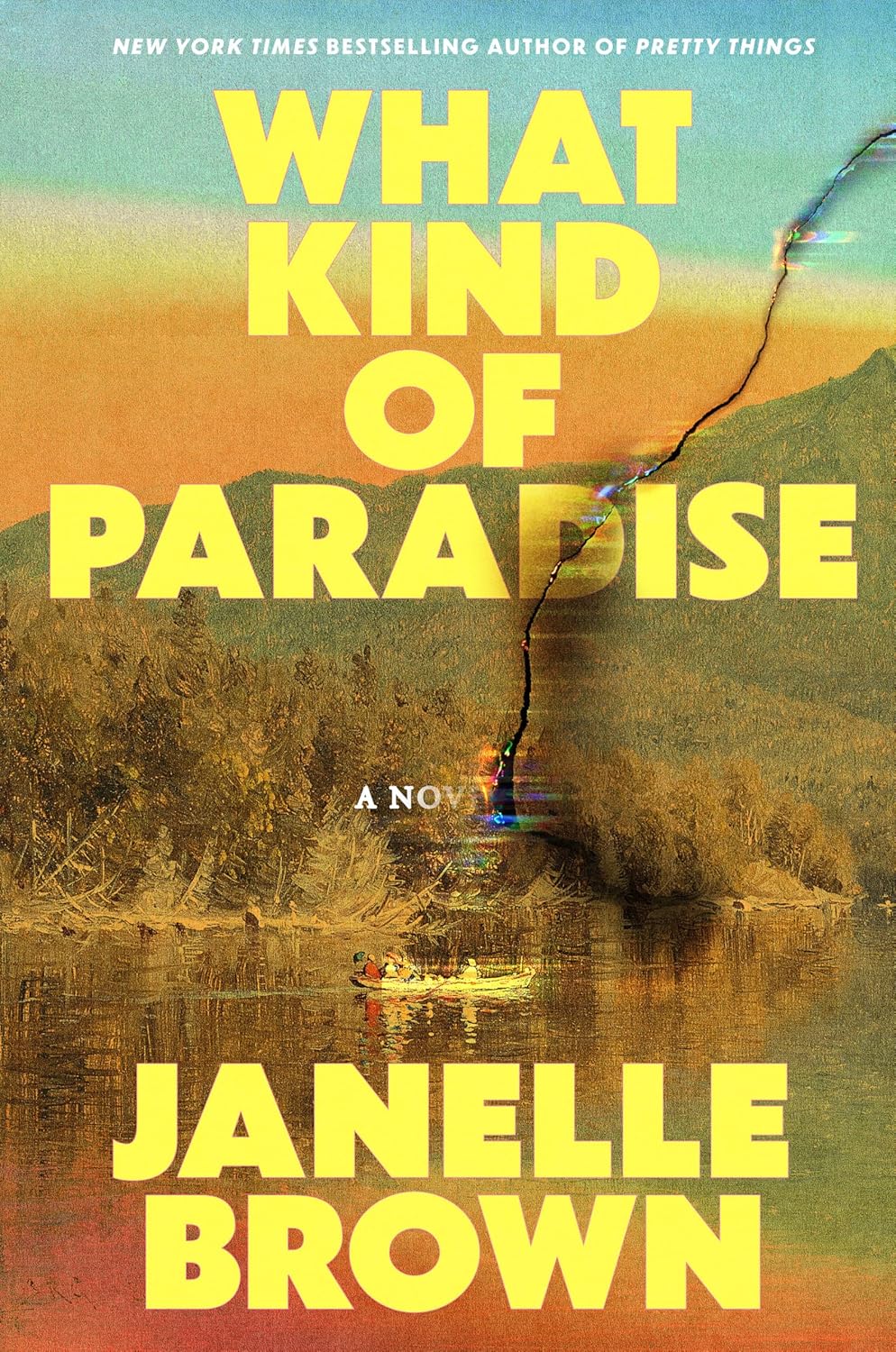
Book Review: What Kind of Paradise by Janelle Brown

Title: What Kind of Paradise
Author: Janelle Brown
Publisher: Random House
Publication date: June 3, 2025
Length: 368 pages
Genre: Thriller/historical fiction
Source: Review copy courtesy of the publisher via NetGalley
Rating:

Rating: 4.5 out of 5.

A teenage girl breaks free from her father’s world of isolation in this exhilarating novel of family, identity, and the power we have to shape our own destinies—from the New York Times bestselling author of Pretty Things and Watch Me Disappear

The first thing you have to understand is that my father was my entire world.

Growing up in an isolated cabin in Montana in the mid-1990s, Jane knows only the world that she and her father live in: the woodstove that heats their home, the vegetable garden where they try to eke out a subsistence existence, the books of nineteenth-century philosophy that her father gives her to read in lieu of going to school. Her father is elusive about their pasts, giving Jane little beyond the facts that they once lived in the Bay Area and that her mother died in a car accident, the crash propelling him to move Jane off the grid to raise her in a Thoreau-like utopia.

As Jane becomes a teenager she starts pushing against the boundaries of her restricted world. She begs to accompany her father on his occasional trips away from the cabin. But when Jane realizes that her devotion to her father has made her an accomplice to a horrific crime, she flees Montana to the only place she knows to look for answers about her mysterious past, and her mother’s death: San Francisco. It is a city in the midst of a seismic change, where her quest to understand herself will force her to reckon with both the possibilities and the perils of the fledgling Internet, and where she will come to question everything she values.

In this sweeping, suspenseful novel from bestselling author Janelle Brown, we see a young woman on a quest to understand how we come to know ourselves. It is a bold and unforgettable story about parents and children; nature and technology; innocence and knowledge; the losses of our past and our dreams for the future.

TL;DR: What if the Unabomber had a daughter?

In this thriller by Janelle Brown, set during the early days of the Silicon Valley internet boom, an increasingly unhinged father steals his young daughter away to live in an isolated cabin in Montana. There, he drills her on philosophy, teaches her to hunt and farm, and conducts evacuation practices through secret tunnels. Above all, he raises her to embrace his own world view:

“Companionship is a crutch. Learning to be alone is the most critical life skill of all — haven’t I taught you that? Because when you rely on other people, for emotional support or intellectual engagement or entertainment or just survival, you are weak. You are vulnerable. Because it means that you will suffer when it’s taken away — and it inevitably will be. You should never rely on anyone.”

From the age of four, Jane’s life is contained within the walls of the cabin and the surrounding forests, and centers on her father. He’s her teacher and protector, and as she grows, he trains her to follow in his footsteps, indoctrinating her on his anti-technology theories, and eventually, involving her in creating his manifesto and in his quest to rid the world of advanced tech, which he sees as dooming the human race.

Jane believes whole-heartedly in her father — for a while. But as she grows up, she has the opportunity to access a TV, and later, the internet (after her father brings her a how-to guide for HTML and instructs her to create a website for his manifesto). As she gains access to the outside world, she begins to wonder whether her faith in her father is flawed, whether his teachings are correct, and whether she’s actually more of a prisoner than someone being protected.

After her father involves her in an act of violence, she flees — but the world outside her cabin is dangerous and baffling, and Jane is forced into difficult situations and hard decisions. Meanwhile, through Jane’s experiences, we see the rise of tech in its glory days, filled with hope and inspiration as well as dire warnings about the destruction of humanity.

What Kind of Paradise is fascinating on both the personal and global levels. Jane herself is an immediately sympathetic character. When she parrots her father’s teachings, we know it’s because that’s all she knows and has been taught. When she takes ill-advised actions, we know that she has no idea what the consequences might be. Due to her extremely sheltered upbringing, she doesn’t see red flags where most others might, and misses essential clues and warnings that could potentially save her from disasters.

The book offers an insightful look into the competing mindsets during the early days of the internet boom. On the one hand, tech gurus speak rapturously about the upcoming changes:

An economic boom due to new technological breakthroughs will enable everyone to join the middle class, so that there are no more working poor. The proliferation of new media will allow truth to disseminate in new ways through new voices bringing an end to widespread ignorance. A rise of liberalism due to a connected global citizenry will usher in the New Enlightenment and the end of fascism and authoritarianism.

On the other hand, we have the doomsday prophecies of Jane’s father, warning that human reliance on machines and computers will spell the end of civilization as we know it:

The world today has lost its mind, and it can all be traced back to the rise of technology. The consequence of the ever-forward march of “progress” has been a society whose citizens are greatly suffering and aren’t even aware of it. The more we continue to replace a life of value with “virtual” life, the less satisfaction we derive from our existence, resulting in a world in which citizens are anesthetized by pharmaceuticals and entertainment living entirely in their heads rather in in a tangible, physical world.

Beyond the philosophical considerations, What Kind of Paradise is a tightly constructed thriller that keeps character-driven perspectives at the heart of the narrative. Yes, a crime is being unraveled, but it’s really Jane’s journey that drives the story and pulls the reader in.

Drawing from the real-life terror of the Unabomber and the ensuing manhunt, What Kind of Paradise has a ripped-from-the-headlines feel, while also expanding the actual story in a compelling direction. What if the bomber didn’t live a life of complete isolation? What if there was a child involved? How would the child of such a person develop and learn? The action and character-driven elements of this story combine to provide a compelling, thoughtful, and high-adrenaline read.

Purchase linksAmazon – Bookshop.org
Disclaimer: When you make a purchase through one of these affiliate links, I may earn a small commission, at no additional cost to you.

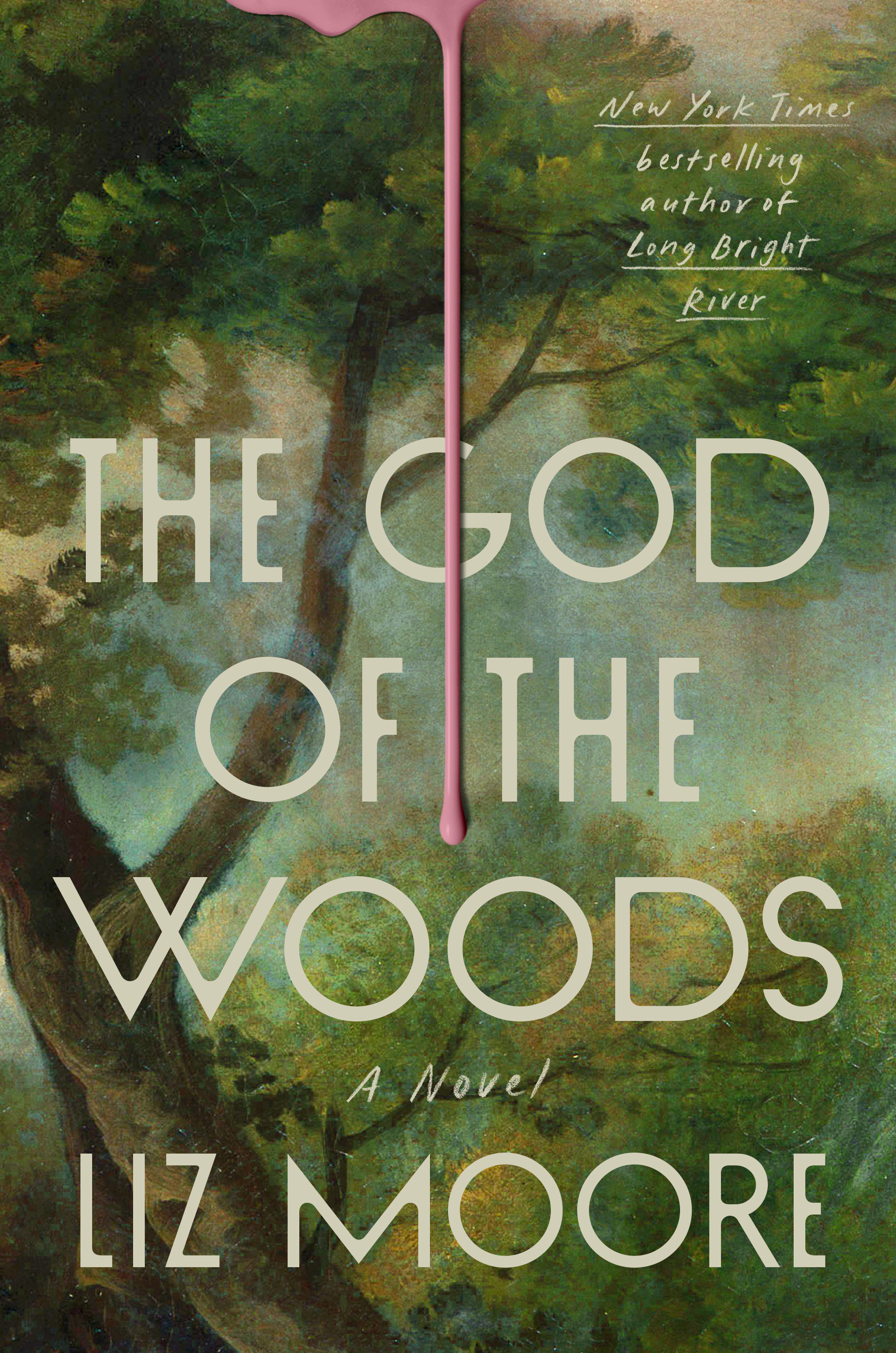
Book Review: The God of the Woods by Liz Moore

Title: The God of the Woods
Author: Liz Moore
Publisher: Riverhead Books
Publication date: July 2, 2024
Length: 490 pages
Genre: Mystery/thriller
Source: Library
Rating:

Rating: 5 out of 5.

When a teenager vanishes from her Adirondack summer camp, two worlds collide.

Early morning, August 1975: a camp counselor discovers an empty bunk. Its occupant, Barbara Van Laar, has gone missing. Barbara isn’t just any thirteen-year-old: she’s the daughter of the family that owns the summer camp and employs most of the region’s residents. And this isn’t the first time a Van Laar child has disappeared. Barbara’s older brother similarly vanished fourteen years ago, never to be found.

As a panicked search begins, a thrilling drama unfolds. Chasing down the layered secrets of the Van Laar family and the blue-collar community working in its shadow, Moore’s multi-threaded story invites readers into a rich and gripping dynasty of secrets and second chances. It is Liz Moore’s most ambitious and wide-reaching novel yet.

In The God of the Woods, an intricate timeline and multiple points of view bring to vivid life the story of missing children, a privileged family, and its influence over the working class people who depend upon them for their livelihoods.

The story opens at Camp Emerson, a summer camp located on the grounds of the Van Laar Preserve. The Van Laar family bought this vast property in the Adirondacks from loggers several generations back, and have turned it into their mountain getaway. Their huge house, named Self-Reliance, dominates the hilltop overlooking the lake; down the hill, the staff of the camp tend to the children of wealthy families each summer.

In the summer of 1975, 13-year-old Barbara Van Laar attends camp for the first time. She’s an independent-minded, punk rock-loving teen who’s happy to be out from under her parents’ control for the eight weeks of camp, and she quickly bonds with one of the other new girls in her cabin. But in August, Barbara’s counselor wakes up to discover that Barbara’s bed is empty, and fears the worst.

Fourteen years earlier, the first Van Laar child — named Peter (Peter IV, to be exact) but known as Bear, also went missing from the Van Laar Preserve and was never found, despite a huge search. Now, fears run high that the same fate has befallen Barbara, and news that a notorious serial killer has escaped prison and is on the lam in the Adirondacks only adds to the searchers’ desperation.

But there is so much more to the story than a missing person’s case. As each chapter begins, a different date is highlighted, and the narrative jumps between the 1950s, 1960s, and 1970s, as well as between different points in that fateful summer of 1975. The story is not told chronologically; confusing at first, but ultimately, adding to the depth of the character portrayals and giving readers plenty of clues and red herrings to chew over.

Beyond the dual mysteries surrounding Bear and Barbara, the book also is a portrait of the deep divide between haves and have-nots. The Van Laars are seemingly untouchable. They and their wealthy, powerful friends control the area, providing the only source of employment for the nearest small town since the paper factory shut down years earlier. No one can afford to get on the Van Laars’ bad side, even if it means looking away when bad things happen.

I was hesitant to pick up The God of the Woods, not sure that the genre and writing would appeal to me, based on comments I’d read here and there. I’m so glad I got past my concerns and gave it a try. After some initial struggles with the jumps between timelines, I became more comfortable with the book’s structure and ended up finding the chronology fascinating. As for the writing itself, it’s tense and illuminating, and doesn’t drag a bit — those 500 pages absolutely flew by.

With so many point-of-view characters, it may feel almost overwhelming at first to keep track of them all, but ultimately, having so many perspectives — some accurate, some not — on the events of 1975 as well as the earlier disappearance, only adds to the depth of the story. The depiction of the Van Laars and their guests, lounging about in satin pajamas even when a child goes missing, is a chilling portrait of cold power and indifference. And then there’s the setting itself, the beautiful, dangerous forests of the Adirondacks — where campers are taught to immediately sit down and start yelling if they realize they’re lost. The Van Laar home may seem luxurious and civilized, but it’s surrounded by wilderness, which ultimately holds more power than the people who come there.

My only quibble with this book is that the title seems like an odd choice to me. Yes, it’s somewhat clearer by the end, but generally speaking, it seems pretty disconnected from the overall story. On the other hand, the cover is brilliant. It’ll make more sense once you read the book!

I can’t say enough good things about The God of the Woods. By the time I passed the halfway mark, I couldn’t put it down and wanted nothing more than uninterrupted time to read straight through to the end. Don’t miss this well-written, thought-provoking, surprising, twisty book!

Book Review: City of the Lost (Rockton, #1) by Kelley Armstrong

Title: City of the Lost
Series: Rockton, #1
Author: Kelley Armstrong
Publisher: Minotaur Books
Publication date: May 3, 2016
Length: 412 pages
Genre: Thriller/mystery
Source: Library
Rating:

Rating: 4.5 out of 5.

Casey Duncan is a homicide detective with a secret: when she was in college, she killed a man. She was never caught, but he was the grandson of a mobster and she knows this crime will catch up to her. Casey’s best friend, Diana, is on the run from a violent, abusive ex-husband. When Diana’s husband finds her, and Casey herself is attacked shortly after, Casey knows it’s time for the two of them to disappear again.

Diana has heard of a domestic violence support town made for people like her, a town that takes in people on the run who want to shed their old lives. You must apply to live in Rockton and if you’re accepted, it means walking away entirely from your old life, living off the grid in the wilds of Canada: no cell phones, no Internet, no mail, no computers, very little electricity, and no way of getting in or out without the town council’s approval. As a murderer, Casey isn’t a good candidate, but she has something they want; she’s a homicide detective, and Rockton has just had its first real murder. She and Diana are in. However, soon after arriving, Casey realizes that the identity of a murderer isn’t the only secret Rockton is hiding – in fact, she starts to wonder if she and Diana might be in even more danger in Rockton than they were in their old lives.

An edgy, gripping crime novel from a bestselling urban fantasy writer, City of the Lost boldly announces a major new player in the crime fiction world.

Kelley Armstrong has become an auto-buy author for me, and I’ve been loving her recent series (A Rip Through Time and A Stitch in Time) and stand-alones. I hadn’t had the opportunity to explore her extensive backlist until now… and now that I’ve started, I can’t wait to keep going!

City of the Lost is the first book in the 7-book Rockton series. The premise is certainly unique: There’s a remote town — Rockton, population 200 — located in the wilds of Canada’s Yukon territory. It’s home to those fleeing danger who need complete isolation from the outside world, but it also offers shelter to some with questionable pasts who need a way to hide out and start over. There are no navigable roads in or out — new residents arrive by bush plane, and can only leave the same way. Relocating to Rockton is a serious commitment.

The books opens with a bang:

“I killed a man,” I say to my new therapist.

Detective Casey Duncan has a huge secret that’s been weighing on her for the past twelve years. After a brutally violent attack left Casey with permanent physical and psychological scars, she went to confront the ex-boyfriend whose actions brought about the attack (and who abandoned her to her attackers). During the confrontation, she shot and killed him, although that hadn’t been her intention. While she’s essentially gotten away with the killing, she’s always known that it could catch up to her at any point.

Meanwhile, her best friend Diana has been assaulted yet again by her cruel, abusive ex-husband, and she and Casey fear that they’ll never fully be rid of him. When Diana hears about a town where people can disappear, she proposed that they both go and get the protection they so desperately need. Casey is hesitant, but she realizes that this is the best possible solution for Diana. After an intense screening process, they’re in, but with a catch: The selection process easily unearthed Casey’s secret, but because they need a detective, they’ll let her in — only for a six-month stay.

Casey and Diana’s relocation to Rockton introduces them to a world that’s truly apart from everything they’ve known. And while Diana immediately immerses herself in the social life available to her as one of the small number of women in town, Casey gets right to work under the direction of Sheriff Eric Dalton. Dalton is brusque, demanding, and no-nonsense, and while he initially did not want Casey in his town, he quickly realizes how skilled and valuable she is.

Dalton and the town are in desperate need of Casey’s talents, as dead bodies begin cropping up. At first, it’s assumed that missing Rockton residents have simply wandered off into the woods and perhaps met with accidents, but as gruesome corpses are found, it becomes apparent that a killer is at work. Everyone in town is a potential suspect, and to make matters worse, Casey soon discovers that many of Rockton’s residents are actually more dangerous than she’s been led to believe.

The murder mystery and thriller elements are detailed and complex, with plenty of misleading clues and confusing trails of evidence. For a very small town, Rockton has a lot of characters to introduce, and my one complaint about City of the Lost is that it became difficult at various points to keep all the random people and their backstories straight.

That aside, the drama and tension escalate effectively throughout the story, and I loved seeing the different pieces come together. For me, when I read a mystery series, I enjoy the particular crime to be solved in each book, but what really holds my interest and attention is the character development that connects the books. City of the Lost is only the first book, but I can tell already that the characters are going to keep me coming back for more.

Casey herself is a terrific, imperfect, complex main character, and she has fabulous chemistry with Sheriff Eric Dalton. Even before personal chemistry comes into the mix, they’re amazing as partners, butting heads constantly while also building rock-solid respect for one another as professionals. Seeing them together, for me, is the high point of the story.

Beyond Casey and Eric, there are plenty of side characters who add depth to the story and help create a picture of a full society in this little town. And while the murders do get solved, there is clearly more to uncover in terms of people’s secrets and bigger picture questions about the council that runs Rockton from afar.

City of the Lost is a fantastic way to start a series! After just one book, I can say with certainty that I’m hooked and need more. Fortunately, there are six more books to explore in the main series, and I understand that a spin-off series, Haven’s Rock, includes two books so far, with a third due out in 2025. .

I’m going to try to take my time and not do a series binge… but it’s incredibly tempting to barge straight ahead! I’m looking forward to continuing the Rockton series. Next up: Darkness Absolute.

Book Review: Extinction by Douglas Preston

Title: Extinction
Author: Douglas Preston
Publisher: Forge books
Publication date: April 23, 2024
Length: 370 pages
Genre: Science fiction / thriller
Source: Library
Rating:

Rating: 4.5 out of 5.

Erebus Resort, occupying a magnificent, hundred-thousand–acre valley deep in the Colorado Rockies, offers guests the experience of viewing woolly mammoths, Irish Elk, and giant ground sloths in their native habitat, brought back from extinction through the magic of genetic manipulation. When a billionaire’s son and his new wife are kidnapped and murdered in the Erebus back country by what is assumed to be a gang of eco-terrorists, Colorado Bureau of Investigation Agent Frances Cash partners with county sheriff James Colcord to track down the perpetrators. As killings mount and the valley is evacuated, Cash and Colcord must confront an ancient, intelligent, and malevolent presence at Erebus, bent not on resurrection but on extinction.

A secret luxury resort where the ultra-rich can walk among “de-extincted” creatures from the Pleistocene era. What could possibly go wrong?

This is no Jurassic Park, as the Erebus head of security informs newly arrived visitors to the resort. But that doesn’t mean that the expected series of disasters don’t result from the ill-advised combination of advanced science and hubris.

As Extinction opens, a newlywed couple is enjoying a camping trip through the backcountry of the Erebus Resort. Their elation at seeing woolly mammoths roaming free is cut short by a brutal attack. When the couple are determined to have been either kidnapped or murdered, the Colorado Bureau of Investigation sends in Frankie Cash, newly appointed agent in charge, accompanied by local sheriff James Colcord.

As Cash and Colcord investigate the grisly crime scene, inexplicable evidence begins to pile up. Their investigation widens to include the Erebus security team, its billionaire CEO, and the high-tech labs hidden in converted mines in the mountains. The resort and labs are supposed to be impenetrable, completely safe, and completely controlled — but as more attacks follow, it’s clear that something deadly and relentless has also taken up residence at the resort, and it’s coming for them all.

Extinction is a taut, tension-filled thriller that starts off with high action and never lets up. The science is definitely something like Jurassic Park dialed up to eleven. Sure, Erebus has only “de-extincted” herbivorous creatures with genes linked to aggression carefully edited out, but something bent on bloody, vicious murder is out there. As we know from countless sci-fi movies and books, when humans figure out how to do something, they’re going to do it… even if it’s clear to most rational people that the outcome will be terrible.

Crime thrillers are not usually my jam, but I enjoyed this one a lot — I started it at the beginning of a flight, and by the time we landed, I’d read about 90%. Unputdownable, to say the least! The author’s decision to have local law enforcement investigating an unimaginable scientific disaster is a masterful choice. The main characters feel relatable — they’re ordinary people thrust into an insane situation, applying investigative techniques and approaches to a crime scene that contains layers upon layers of secrets, lies, and threats. Ultimately, Cash and Colcord find themselves fighting for their lives in a nightmarish hellscape… and the adrenaline-fueled, breathless sense of danger and terror just never lets up.

Sure, I question some of the science, and a few elements regarding timelines, how events unfolded, and motivations left me scratching my head. But I can put these small quibbles aside. Overall, Extinction is a terrific, engrossing read, and I could not look away once I started.

Be warned, though: There’s quite a bit of blood and violence throughout the book, and parts are downright terrifying. This book will leave you on edge, frightened, and possibly prone to nightmares!

Extinction is not a book I’d likely have picked up on my own. I was intrigued after reading a review by a favorite author, Dana Stabenow, and knew I needed to know more! I’m so glad I gave it a try. What a crazy ride!

Book Review: Middletide by Sarah Crouch

Title: Middletide
Author: Sarah Crouch
Publisher: Atria Books
Publication date: June 11, 2024
Length: 288 pages
Genre: Thriller/mystery
Source: Review copy courtesy of the publisher via NetGalley
Rating:

Rating: 2.5 out of 5.

In this gripping and intensely atmospheric debut, disquiet descends on a small town after the suspicious death of a beautiful young doctor, with all clues pointing to the reclusive young man who abandoned the community in chase of big city dreams but returned for the first love he left behind. Perfect for fans of All Good People Here and Where the Crawdads Sing

One peaceful morning, in the small, Puget Sound town of Point Orchards, the lifeless body of Dr. Erin Landry is found hanging from a tree on the property of prodigal son and failed writer, Elijah Leith. Sheriff Jim Godbout’s initial investigation points to an obvious suicide, but upon closer inspection, there seem to be clues of foul play when he discovers that the circumstances of the beautiful doctor’s death were ripped straight from the pages of Elijah Leith’s own novel.

Out of money and motivation, thirty-three-year-old Elijah returns to his empty childhood home to lick the wounds of his futile writing career. Hungry for purpose, he throws himself into restoring the ramshackle cabin his father left behind and rekindling his relationship with Nakita, the extraordinary girl from the nearby reservation whom he betrayed but was never able to forget.

As the town of Point Orchards turns against him, Elijah must fight for his innocence against an unexpected foe who is close and cunning enough to flawlessly frame him for murder in this scintillating literary thriller that seeks to uncover a case of love, loss, and revenge.

In this new mystery, a man returns to the small town he left behind long ago, to hide out from the world after the failure of the novel he spent ten years writing. Elijah’s family cabin in Point Orchards has been slowly deteriorating since his father’s death years earlier. Bit by bit, Elijah brings the cabin and its land back to life, eventually taking pride in managing to live off the land — raising chickens, growing and canning his own vegetables, even learning to bake bread.

But the one element of his former life that he can’t face is the girl he left behind. When he left for college, he promised to return to Nakita, but never did, lured instead by the shiny promise of a book deal. Now both in their mid-thirties, Elijah and Nakita have faced more in their lives than they’d ever imagined, and the question is, can they find a way to forgive past wrongs and reconnect, possibly even fall in love once again?

The framing of the story is a suspicious death: The town doctor, the beautiful, tragic Erin Landry, is found hanged on Elijah’s property. It looks like a suicide, but circumstances just don’t add up. As the local sheriff investigates, signs start to point to Elijah himself as the perpetrator, especially once it’s discovered that his novel lays out a very similar death, in which a murder is set up to appear to be a suicide.

Chapters in Middletide alternate between the investigation into Erin’s death and the earlier years of Elijah’s return to Point Orchards and his attempts to start fresh and rebuild his life. Eventually, the two timelines merge into one, as the book culminates in a courtroom drama.

I probably could have saved myself some earlier false theories if I’d read the synopsis above, which makes it clear that Elijah is, in fact, innocent. (There’s room to doubt that at some points in the story.) But really, the answer to the murder mystery is about as obvious as it gets — I guessed the overall solution pretty early on, and was correct in just about every way.

To put it bluntly, this is not a great story. Elijah comes off as arrogant in some key scenes, even when we’re meant to like and understand him. His shallow emotional responses undercut our investment in him and make it harder to root for him to find happiness with Nakita.

“You have no clue what it feels like to have your entire future drop out from beneath your feet without warning. You can’t possibly imagine how devastating that is.”

“Actually, I can,” Elijah shot back “I know what it’s like to have to start over from scratch after the life you thought you were meant for doesn’t pan out, remember?”

“Doesn’t pan out? Elijah, my husband was shot in the head and died at thirty-five years old. Where do you get the nerve to compare that to your failed writing career?”

The author includes a note at the beginning stating that Nakita’s tribal affiliation and reservation are fictional inventions, inspired by real indigenous nations. Which, fine, except Nakita’s heritage and the relationship between the town and the reservation don’t actually matter much in Middletide. I excepted this aspect to be more developed, but really, the impact on the plot is minimal and the characters are underdeveloped.

The courtroom scenes feel almost like an afterthought. For anyone who’s ever watched a lawyer show on TV, the trial is not structured as we’d expect. The prosecution calls a few witnesses, then the defense immediately jumps in with a witness, but the prosecution never rests, and as far as I could see, there was no discovery before the trial. Hey, I’m no lawyer… but I’ve seen enough courtroom dramas to know that this didn’t go the way it should. And don’t get me started on Elijah’s lawyer not actually being a lawyer…

Here’s a spoilery bit, so skip this next paragraph if you care about avoiding spoilers:

One key piece of evidence is the diary found at Erin’s house. The entries all start with “Dear Diary” and seriously, do you know of any adult women who actually write in their diaries that way? It’s supposed to be written by a mature professional woman, and she’s writing as if she’s in middle school? Don’t get me started on the non-existent chain of custody for evidence either. Well, okay, in one scene, the deputy hands the diary to Elijah to look at in his jail cell. Excuse me, what? That’s a key piece of evidence, and you’re just handing it to the accused to paw through?

End of spoilers…

On the positive side, Middletide is relatively short (under 300 pages) and goes by quickly, so reading this book isn’t a huge time commitment. It moves quickly, and kept me turning the pages, although by midway through, I was tearing through it mostly to prove myself right rather than out of any real engagement with the characters.

As negatives, though, in addition to the implausibility of the legal case, the convoluted timeline (those chapters set in the past and the present mush together and are annoying to track), and the predictability of the outcome, the writing can be clunky and/or not well considered. For example:

On the day his editor called and read him that horrible review he had flung open his bedroom window in a fit of rage and dropped the orange typewriter to the sidewalk three stories below.

I suppose this is meant to show us a possible violent side of Elijah, but I just had to laugh. The guy was living in San Francisco at the time — no way did he throw his typewriter out a third-floor window in the middle of the city and not end up arrested for killing or injuring a pedestrian.

Also, it’s mentioned that his publishers had high expectations for his book’s success, but apparently this one very bad review absolutely sank it, and the book only sold 48 copies. What? If the book only sold 48 copies, then it wasn’t just one bad review that was responsible. This makes no sense to me.

As I mentioned already, there are scenes where it is very hard to like Elijah. While perhaps that’s meant to create suspicion or doubt, in actuality it just leaves us with a main character whose self-centeredness makes us not particularly want the very likable love interest to subject herself to being with him.

And so on. I could give more examples, but I’ll stop here.

Middletide is a murder mystery with a hollow center. On the one hand, it did keep me interested enough to speed through to the end — but on the other hand, I didn’t buy into the characters, found the mystery utterly predicable, and felt the courtroom drama was rushed and not believable. I expected a much better reading experience.

Book Review: Good Girls Don’t Die by Christina Henry

Title: Good Girls Don’t Die
Author: Christina Henry
Publisher: Berkley
Publication date: November 14, 2023
Length: 320 pages
Genre: Thriller
Source: Review copy courtesy of the publisher via NetGalley
Rating:

Rating: 4.5 out of 5.

A sharp-edged, supremely twisty thriller about three women who find themselves trapped inside stories they know aren’t their own, from the author of Alice and Near the Bone.

Celia wakes up in a house that’s supposed to be hers. There’s a little girl who claims to be her daughter and a man who claims to be her husband, but Celia knows this family—and this life—is not hers…

Allie is supposed to be on a fun weekend trip—but then her friend’s boyfriend unexpectedly invites the group to a remote cabin in the woods. No one else believes Allie, but she is sure that something about this trip is very, very wrong…

Maggie just wants to be home with her daughter, but she’s in a dangerous situation and she doesn’t know who put her there or why. She’ll have to fight with everything she has to survive…

Three women. Three stories. Only one way out. This captivating novel will keep readers guessing until the very end.

Wow. What a wild ride. I didn’t have a very clear idea of what to expect when I picked up Good Girls Don’t Die — but having read a bunch of Christina Henry’s books already, I was pretty sure it would be dark and full of twists… and I was totally right about that.

As Good Girls Don’t Die opens, we’re thrust right into a weird and confusing situation. Celia is in the kitchen making her daughter’s lunch… but she doesn’t recognize the kitchen, the daughter, or even the fact that she has a daughter. Where is she? What’s going on? Her husband wishes her a good day, her best friend calls to see if she wants to go for a run before work… but who are these people? Since when is she a runner? And why aren’t there any books in her house?

Is this really my life? Did I sacrifice everything interesting about myself in order to get married, have a baby, drive a compact car?

Every time a hint of a memory enters her mind (like, hey, I prefer yoga, actually), it’s accompanied by a sharp headache. Still, something tells Celia not to admit that she remembers nothing, so she heads off to the restaurant she apparently owns to start her day.

Things go downhill pretty quickly. The irate old lady next door stops by to confront Celia over a non-existent problem, then the old lady’s nephew — an obnoxious, bigoted cop — comes to accuse Celia of assault. When the old lady winds up dead, guess who’s the prime suspect?

Then there’s Allie, in a situation nothing like Celia’s. Allie and her two friends were planning a girls’ weekend at the beach to celebrate Allie’s birthday, but suddenly not only are the friends’ boyfriends coming along, they’ve also changed the destination… to a cabin in the woods. That can’t be good. (It’s not.) As they stay at the remote cabin, Allie notices more and more details that just don’t add up, and before long, extreme danger comes for all of them.

And finally, there’s Maggie, who finds herself in a bizarre, danger-filled environment with no option but to fight through it, if she ever wants to see her daughter again. It may feel like something out of a novel or movie, but the life-threatening obstacles are all too real.

What do these three scenarios have in common? Well… I’m not telling, because that would ruin all the fun!

Good Girls Don’t Die presents the three main characters’ stories sequentially, in separate sections of the book, and then wraps it all up. Each section is fascinating, twisty, and mind-warping, and if you’re anything like me, you’ll be tying your brain in knots trying to understand what’s going on.

I loved how each woman deals with her unique situation, having to figure out what’s going on, who to trust, what the risks are, and — hopefully, how to survive. The characters are each quite different, but they all have the determination needed to keep fighting, even when the odds are decidedly not in their favor.

It’s only in the final, concluding section of the book that I felt just a little bit let down. Without going into detail, I’ll say that the wrap-up felt almost too easy to me, and I wasn’t entirely convinced that the book as a whole sticks the landing.

Still, Good Girls Don’t Die is a trippy, exciting, compelling thrill. I absolutely couldn’t put this book down, and finished it all in one day.

There’s plenty of violence and blood, so be aware if that doesn’t appeal to you. Otherwise, do check it out! Good Girls Don’t Die is fascinating — pick it up when you have time to keep reading. You won’t want to stop.