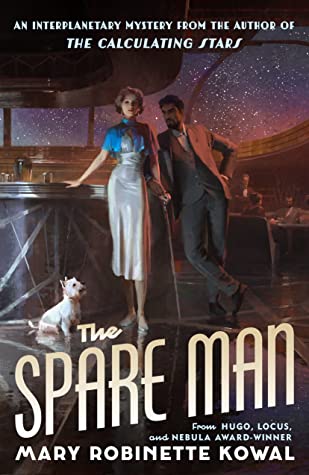
Book Review: The Spare Man by Mary Robinette Kowal

Title: The Spare Man
Author: Mary Robinette Kowal
Publisher: Tor Books
Publication date: October 11, 2022
Length: 384 pages
Genre: Science fiction
Source: Purchased
Rating:

Rating: 5 out of 5.

Tesla Crane, a brilliant inventor and an heiress, is on her honeymoon on an interplanetary space liner, cruising between the Moon and Mars. She’s traveling incognito and is reveling in her anonymity. Then someone is murdered and the festering chowderheads who run security have the audacity to arrest her spouse. Armed with banter, martinis and her small service dog, Tesla is determined to solve the crime so that the newlyweds can get back to canoodling—and keep the real killer from striking again.

It’s always a treat when a favorite author releases a new book, and even more so when it turns out to be exactly the book I needed!

While I treated myself to a signed copy of The Spare Man (and the assorted goodies that came with it) AND watched an excellent online author talk, both several months ago, it wasn’t until this quiet week between Christmas and New Year that I finally dedicated some time to cuddle up and enjoy the book.

My book and goodies!

I’m happy to say that (a) it was well worth the wait! and (b) the mix of humor, a cute dog, a tricksy murder plot, space travel, and cocktail was just what I needed.

A brief aside: The fate of fictional doggos can be really stressful for readers, so let me just start by saying that GIMLET IS THE BEST and that Gimlet is perfectly fine from start to finish. No dog trauma to worry about!!

Back to the book:

The plot centers around Tesla Crane and her new husband Shal Steward, two madly-in-love newlyweds who just want to canoodle in their luxury suite aboard the ISS Lindgren on their cruise to Mars. Tesla is a world-famous, insanely rich inventor/roboticist, and Shal is a retired detective who’s mad about his spouse.

The couple is accompanied by Gimlet, the world’s cutest Westie. Gimlet is not only supremely adorable, but also key to Tesla’s ability to cope and function: Tesla is dealing with severe pain and physical challenges stemming from a terrible accident that left her with spinal injuries and PTSD, and Gimlet is her magnificent service dog. (Yes, I’m raving a lot about Gimlet — you will too, once you meet her!)

Even on-duty, Gimlet was fully aware that she was, indeed, the most adorable and worthy creature ever assembled by nature or laboratory. Her tail was generating its own electrical current of delight.

Unfortunately, Tesla and Shal’s romantic adventure is interrupted almost immediately by a murder. Inconveniently for the continuation of their honeymoon bliss, being first on the scene at a stabbing also makes them prime subjects. Soon, the couple is caught up in nasty handling by the ship’s security team, forced isolation, ongoing suspicion, and (gasp) interference with their expensive luxury gin of choice.

When Shal is detained as a prime suspect, what’s Tesla to do but start an investigation of her own? With complications such as look-alike bartenders, high-profile magicians, competing robotics entrepreneurs, and more, the quest to uncover the truth and exonerate Shal takes nonstop twists and turns, complicated by the strange effects of space travel, centrifugal force, lagged communications, and more.

The plot is complicated, but the heavier moments focusing on Tesla’s past trauma and her ongoing pain and flashbacks are lightened by healthy doses of banter and doggo cuteness. Each chapter starts with a cocktail recipe — some classics, some invented just for this book — all of which make me want to take up mixology as a hobby.

The Spare Man handles gender, racial, and ability diversity very well, never in a preachy way, but with a matter-of-fact approach that keeps the focus on the story while also portraying a future in which inclusion is just a given.

There’s quite a bit of humor in the book, from Tesla’s long-distance, time-lagged calls with her crochet-loving, insult-spraying lawyer to her descriptions of various characters (my favorite being the huge security officer described as the “wall of Bob”).

Tesla and Shal have terrific chemistry — love and passion, intellectual sparring, deep connection, and unmatchable cleverness. I did wish we’d learned more about their background as a couple — how they met, fell in love, got married — but even without that background, it’s easy to love seeing them together and enjoy the hell out of their interactions.

The murder-mystery plot is convoluted but lots of fun, with plenty of red herrings and distractions, quirky characters and suspects, and some bonkers complications that arise from setting what is essentially a closed-circle mystery onboard an interplanetary cruise ship.

(Note: For more on some key types of mysteries, see this reference or this explanation of the difference between a locked-room mystery and a closed-circle mystery.)

I’ve heard the author (and others) refer to this book as “The Thin Man in space”. Never having read the Thin Man books or seen any of the movies, this comparison doesn’t do a whole lot for me — but after checking out a few quick video clips, I can see how people who appreciate The Thin Man might really find The Spare Man a hoot. But even without this element, the book absolutely worked for me.

All in all, I adored The Spare Man. Murder, quippy dialogue, space travel, and an amazing dog — who could ask for more?

Audiobook Review: The Long Way to a Small, Angry Planet (Wayfarers, #1) by Becky Chambers

Title: The Long Way to a Small, Angry Planet
Series: Wayfarers, #1
Author: Becky Chambers
Narrator:  Rachel Dulude
Publisher: Harper Voyager
Publication date: July 29, 2014
Print length: 432 pages
Audio length: 14 hours, 23 minutes
Genre: Science fiction
Source: Purchased
Rating:

Rating: 4.5 out of 5.

Follow a motley crew on an exciting journey through space—and one adventurous young explorer who discovers the meaning of family in the far reaches of the universe—in this light-hearted debut space opera from a rising sci-fi star.

Rosemary Harper doesn’t expect much when she joins the crew of the aging Wayfarer. While the patched-up ship has seen better days, it offers her a bed, a chance to explore the far-off corners of the galaxy, and most importantly, some distance from her past. An introspective young woman who learned early to keep to herself, she’s never met anyone remotely like the ship’s diverse crew, including Sissix, the exotic reptilian pilot, chatty engineers Kizzy and Jenks who keep the ship running, and Ashby, their noble captain.

Life aboard the Wayfarer is chaotic and crazy—exactly what Rosemary wants. It’s also about to get extremely dangerous when the crew is offered the job of a lifetime. Tunneling wormholes through space to a distant planet is definitely lucrative and will keep them comfortable for years. But risking her life wasn’t part of the plan. In the far reaches of deep space, the tiny Wayfarer crew will confront a host of unexpected mishaps and thrilling adventures that force them to depend on each other. To survive, Rosemary’s got to learn how to rely on this assortment of oddballs—an experience that teaches her about love and trust, and that having a family isn’t necessarily the worst thing in the universe.

The Wayfarers series has been on my to-read pile for far too long, so I’m thrilled that (a) I finally read book #1, The Long Way to a Small, Angry Planet, and (b) I loved it!

Rosemary Harper is our entry point to the world of this book, although once introduced, she’s just one of many characters whom we follow. The cast here is the crew of the Wayfarer, a tunneling ship that hires out its services to bore tunnels — wormholes — to link far-flung points in space. It’s dangerous, complicated work, but absolutely necessary in an expansive universe in which humans are a minority species without a planet to call home.

Centuries earlier, humans left Earth due to planetary failure — some colonizing Mars, but others, known as Exodans, setting off on generation ships to permanently wander. Eventually, humans were allowed to join the Galactic Commons, the governing body that unites in alliance (sometimes uneasily) the various species who work together to keep the peace and provide structure to the greater world of sapient beings.

The plot of The Long Way takes place on and around the Wayfarer ship, as Rosemary (and we readers) become acquainted with the crew, their personalities, roles, conflicts, and desires, and prepare for the biggest job they’ve ever had. There are romances, secrets, and dangers, but the people are all wonderful (except for one jerky algaeist, but even he gets slightly more tolerable eventually).

The storytelling is very episodic. While there’s an overarching plotline concerning the big, dangerous job the Wayfarer takes on and its aftermath, this is more of a background element for much of the book. Instead, from chapter to chapter, we spend time with the different crew members in different scenarios, learning about each of their backgrounds and what brought them to the Wayfarer, as well as placing them in settings and seeing them go through different experiences.

Because of this episodic approach, there isn’t a lot of building tension throughout the book. Somehow, though, that’s okay. From time to time, there are a few big action sequences or big emotional encounters or high-stakes threats, but the main focus of the book is on the characters themselves and their relationships. The tone overall is, believe it or not for a space adventure, rather cozy… and I liked this approach! We really get to know the characters, so when there are moments of high drama, we understand the stakes and the why and how of different people’s reactions.

I listened to the audiobook, narrated by Rachel Dulude, and thought it was wonderful. I’ve had experiences of struggling with science fiction audiobooks in the past, where I’ve found it challenging to absorb the tech and details of a complicated sci-fi setting and its world-building. Here, though — perhaps because of the focus on the characters themselves — it simply flows. The narrator gives distinct voices to the characters, even the non-human ones, so there’s never any confusion about who is speaking or what they’re feeling. The narration is crisp and dynamic, and I enjoyed it so much that I’ll probably choose audiobooks when I’m ready to continue the series.

Overall, I really and truly enjoyed The Long Way to a Small, Angry Planet. It wasn’t what I expected, but I loved what it was! I’m eager to continue with the series — just waiting for book #2 to come in at the library.

Sometimes when I read a book that I’ve been meaning to get to for a long time, the end result is a let-down. Fortunately, The Long Way surprised me in lovely ways and was worth the anticipation. Highly recommended.

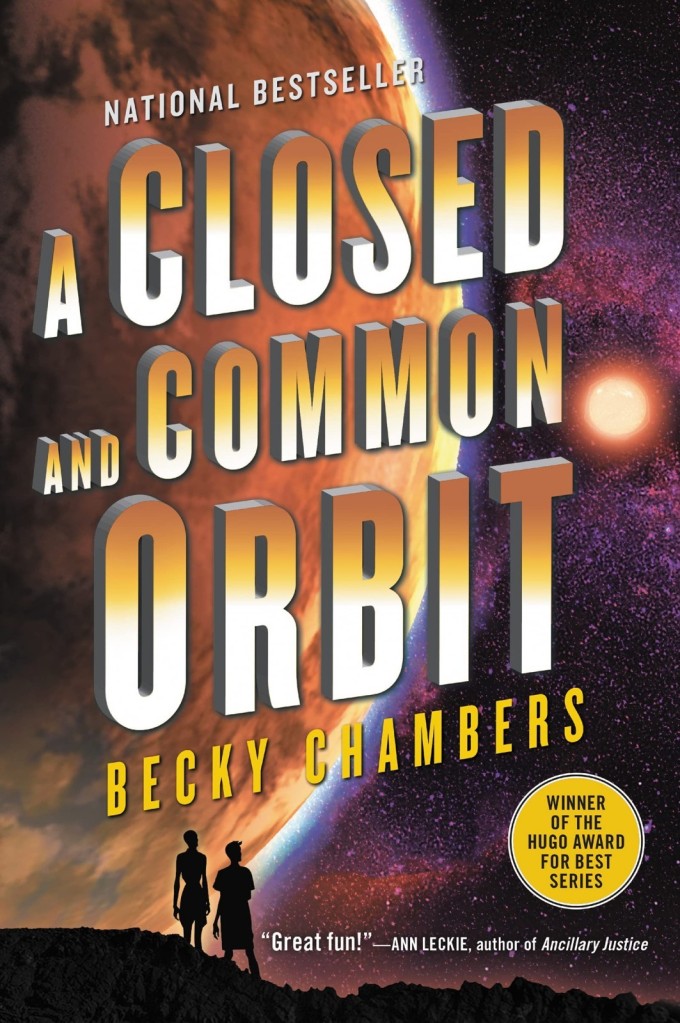
Next in the series: A Closed and Common Orbit

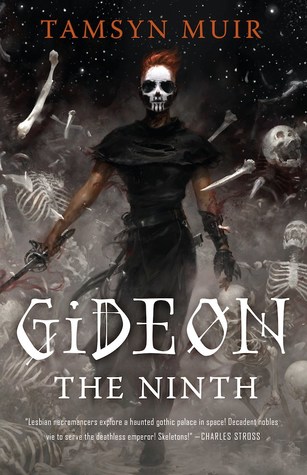
Book Review: Gideon the Ninth (The Locked Tomb, #1) by Tamsyn Muir

Title: Gideon the Ninth
Series: The Locked Tomb, #1
Author: Tamsyn Muir
Publisher: Tor
Publication date: September 10, 2019
Length: 448 pages
Genre: Science fiction
Source: Purchased
Rating:

Rating: 3.5 out of 5.

The Emperor needs necromancers.

The Ninth Necromancer needs a swordswoman.

Gideon has a sword, some dirty magazines, and no more time for undead bullshit.

Brought up by unfriendly, ossifying nuns, ancient retainers, and countless skeletons, Gideon is ready to abandon a life of servitude and an afterlife as a reanimated corpse. She packs up her sword, her shoes, and her dirty magazines, and prepares to launch her daring escape. But her childhood nemesis won’t set her free without a service.

Harrowhark Nonagesimus, Reverend Daughter of the Ninth House and bone witch extraordinaire, has been summoned into action. The Emperor has invited the heirs to each of his loyal Houses to a deadly trial of wits and skill. If Harrowhark succeeds she will become an immortal, all-powerful servant of the Resurrection, but no necromancer can ascend without their cavalier. Without Gideon’s sword, Harrow will fail, and the Ninth House will die.

Of course, some things are better left dead.

I’ve been hearing about Gideon the Ninth since its release three years ago, and I’ve owned a copy for over two years now… and I can finally say that I’ve read it!.

I have to admit that I’d been feeling rather intimidated about starting Gideon. It’s a big chunky book, and the first few pages are devoted to a guide to characters, their houses, and roles. And when books start that way, I’m immediately wary. Why do I need all this information up front? Just how complicated is this book going to be anyway?

In the case of Gideon the Ninth, the answer is — very complicated. In fact, the word that kept coming to my mind while reading was “inpenetrable” (and that’s not a word I use often in my daily life). Gideon is dense, complicated, and somewhat opaque. I’ll explain, as best I can.

The world of Gideon the Ninth appears to be a dead world, resurrected by the Emperor (also referred to as a god) some ten thousand years ago, powered by necromancy and seemingly built upon the ashes and discards of an earlier civilization that had technology and scientific exploration — perhaps a world like our own? Gideon herself is a resident of the Ninth House (the Houses are all different planets with different powers, from what I understand), and the Ninth House is grim, dark and gloomy and peopled by ancient nuns and servants made of animated bones. The Reverend Daughter of the Ninth House is Harrowhark, a powerful necromancer who can perform amazing and dangerous feats with bones, and who seems to live to torment and dominate Gideon.

When a communication is received summoning the necromancer and cavalier of each house to the First House for a chance to become immortal, Harrow forces Gideon into the role of her cavalier, even though Gideon had been plotting to escape the Ninth House for good to become a soldier. But Gideon has no choice, and soon finds herself on another world, where they and other necromancer/cavalier combos must solve unspecified riddles in order to unlock the mystery of even greater powers.

Look, this book is a lot. I have to admire the author’s creativity and skill at inventing such a complicated, strange world — but at the same time, this book was difficult to get through, and I’m not convinced it was worth the effort. Keeping the many, many necromancers, cavaliers, their powers, and their houses straight was a huge chore, and at some point I just shrugged and stopped trying. The challenges and tests didn’t make a whole lot of sense to me, and I had (and have) so many questions about this world.

That said, I liked many of the characters (or at least found them interesting), and Gideon herself is profane and disrespectful enough to make her someone to root for, even when I had no clue what was actually going on.

I’m glad I finally read Gideon the Ninth, but at some point along the way I lacked the energy and commitment to really try to make sense of it all, so I’m sure there’s a bunch that just went right over my head. Some big, complicated books are worth the painstaking attention it takes to get through them. I’m not sure I’d put Gideon in that category.

Still, there are some great sequences mixed in amongst all the more puzzling scenarios, and the ending seems to set up a fascinating next step for the series. If I didn’t already own the next two books, I’m not sure that I’d rush to seek them out — but since I do, I expect that I will continue the series… eventually. I think I need a break at this point, but before too long, I’ll likely dive back in with Harrow the Ninth.

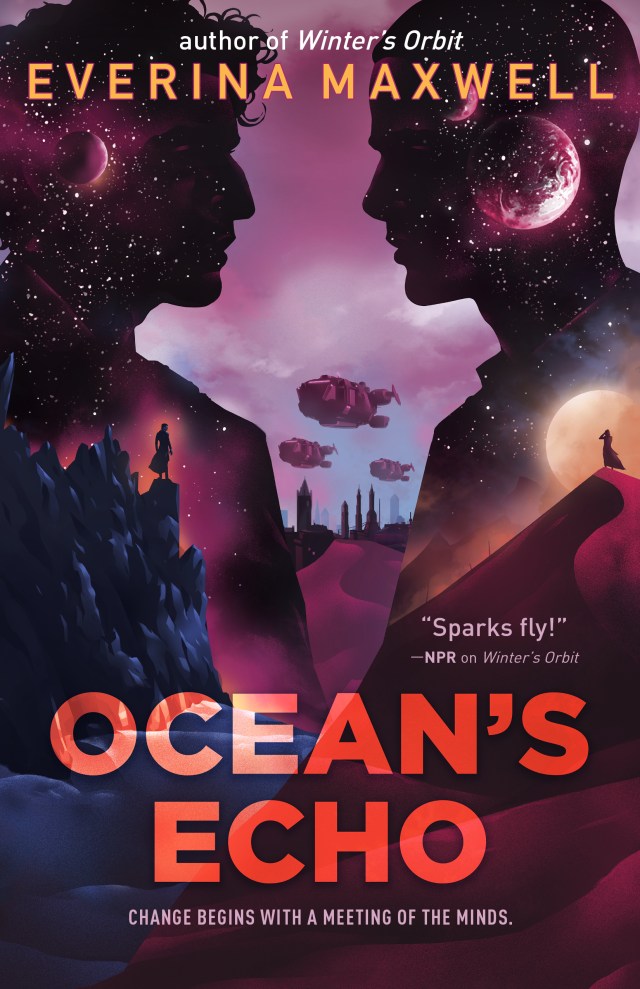
Book Review: Ocean’s Echo by Everina Maxwell

Title: Ocean’s Echo
Author: Everina Maxwell
Publisher: Tor Books
Publication date: November 1, 2022
Length: 484 pages
Genre: Science fiction
Source: Review copy courtesy of the publisher via NetGalley
Rating:

Rating: 4 out of 5.

Ocean’s Echo is a stand-alone space adventure about a bond that will change the fate of worlds, set in the same universe as Everina Maxwell’s hit debut, Winter’s Orbit.

Rich socialite, inveterate flirt, and walking disaster Tennalhin Halkana can read minds. Tennal, like all neuromodified “readers,” is a security threat on his own. But when controlled, readers are a rare asset. Not only can they read minds, but they can navigate chaotic space, the maelstroms surrounding the gateway to the wider universe.

Conscripted into the military under dubious circumstances, Tennal is placed into the care of Lieutenant Surit Yeni, a duty-bound soldier, principled leader, and the son of a notorious traitor general. Whereas Tennal can read minds, Surit can influence them. Like all other neuromodified “architects,” he can impose his will onto others, and he’s under orders to control Tennal by merging their minds.

Surit accepted a suspicious promotion-track request out of desperation, but he refuses to go through with his illegal orders to sync and control an unconsenting Tennal. So they lie: They fake a sync bond and plan Tennal’s escape.

Their best chance arrives with a salvage-retrieval mission into chaotic space—to the very neuromodiifcation lab that Surit’s traitor mother destroyed twenty years ago. And among the rubble is a treasure both terrible and unimaginably powerful, one that upends a decades-old power struggle, and begins a war.

Tennal and Surit can no longer abandon their unit or their world. The only way to avoid life under full military control is to complete the very sync they’ve been faking.

Can two unwilling weapons of war bring about peace?

Once I started reading Winter’s Orbit last year, I basically couldn’t put it down — so I was very excited to get my hands on a copy of Everina Maxwell’s follow-up novel, Ocean’s Echo. Ocean’s Echo is a stand-alone, but it is set in the same universe as Winter’s Orbit. There are no cross-over characters, but the basics of the galactic system and some key political and scientific aspects connect the two books.

In Ocean’s Echo, Tennal is about age 20, from a powerful family (his aunt is the head of government of the Orshan planets), and is incapable of (and has no interest in) staying out of trouble. After one scandal too many, his aunt orders his conscription into the army. As if that’s not bad enough, she’s also ordered him to be synced. Tennal is a talented reader — he can read other people’s thoughts — but readers are both rare and considered very dangerous if left uncontrolled. Control is exactly what his aunt wants, and so Tennal will be forced into a sync, where an architect — someone who can telepathically influence others’ minds — will force a sort of mind-meld with Tennal. From that point on, the architect will be able to control Tennal’s actions. Worst of all, the sync is permanent — a broken sync results in death for both reader and architect.

Needless to say, Tennal is not at all happy about his fate, but he truly has no choice. He’s surprised, therefore, when he meets Surit, a young lieutenant with strong architect abilities and an even stronger moral compass. Despite orders, he knows deep down that a forced sync is wrong, and he suggests that he and Tennal fake it. They’re successful in their deception at first, until they are pulled further and further into an impending civil war where their own survival and the fate of their world is at stake.

Tennal and Surit are both terrific characters, with very distinct characters and personality traits. While the chapters alternate between their perspectives, there’s never any confusion about whose point of view we’re getting. They are definitely a case of opposites attracting, and while the intricacies of the reader-architect dynamic are the main focus, there’s a romantic chemistry as well that keeps bubbling to the surface.

The world-building is very detailed, but occasionally confusing. While Ocean’s Echo is a stand-alone, I think it would be somewhat baffling for a reader who hasn’t first read Winter’s Orbit. Without a basic understanding of the books’ universe, I’m not sure that talk of the Resolution, the Link, and remnants, among other concepts, would make a whole lot of sense. As is, even having read the first book, some of the high-concept military and scientific scenarios went over my head. That’s okay, though — I didn’t have to fully grasp every single detail in order to appreciate the characters, their connection, and the big picture stakes of the storyline.

Overall, I really enjoyed Ocean’s Echo. The writing pulled me in, and even when concepts such as chaotic space started boggling my mind, some nifty turns of phrase would get me back on track and impress me with the author’s creativity and descriptive skill.

Since the moment they’d synced, the sea had come in roaring, a glorious, terrible torrent. Where there had been ordinary rooms and cabinets and stairs in Surit’s neat mental house, there was now a tumult of swirling water, deep-sea caverns instead of foundations, whirlpools instead of floors.

You need to have an appreciation for space battles and sci-fi drama and high stakes military adventures to truly love this book, I think… but if you do, then don’t miss out on this book (and check out Winter’s Orbit too!).

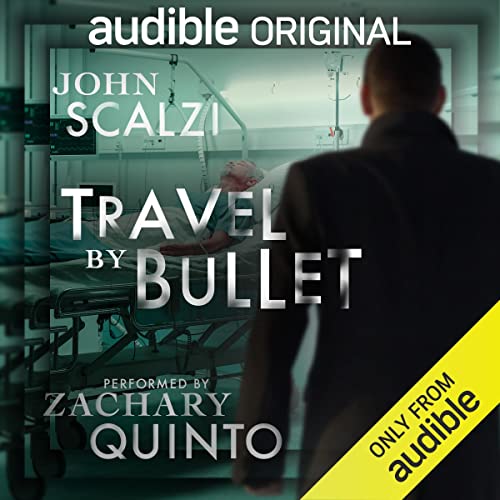
Audiobook Review: Travel by Bullet (The Dispatcher, #3) by John Scalzi

Title: Travel by Bullet
Series: The Dispatcher, #3
Author: John Scalzi
Narrator:  Zachary Quinto
Publisher: Audible Originals
Publication date: September 1, 2022
Print length: n/a
Audio length: 3 hours, 43 minutes
Genre: Science fiction
Source: Purchased
Rating:

Rating: 4.5 out of 5.

The Audible and New York Times best-selling “Dispatcher” series returns with a brand-new mystery, performed by Zachary Quinto.

The world has changed. Now, when someone is murdered, they almost always come back to life—and there are professionals, called “dispatchers,” who kill in order to save lives, to give those near the end a second chance. Tony Valdez is a dispatcher, and he has never been busier.

But for as much as the world has changed, some things have stayed the same. Greed, corruption and avarice are still in full swing. When Tony is called to a Chicago emergency room by an old friend and fellow dispatcher, he is suddenly and unwillingly thrown into a whirlpool of schemes and plots involving billions of dollars, with vast caches of wealth ranging from real estate to cryptocurrency up for grabs.

All Tony wants to do is keep his friend safe. But it’s hard to do when friends keep secrets, enemies offer seductive deals, and nothing is ever what it seems. The world has changed… but the stakes are still life and death.

I hadn’t been aware that a third Dispatcher audiobook was on the way, so I was surprised in the best way to see it available on Audible this month!

In the sci-fi/speculative world of the Dispatcher series, death has become much more optional. Death by natural causes is still death, but if someone is murdered, in 999 cases out of 1,000, the murdered person pops back into life with a “reset”, waking up someplace they feel safe — usually their own home — back in the condition they were in several hours earlier.

In this brave new world, professional Dispatchers are trained and licensed to turn natural deaths into murders, all for the sake of saving lives. A person on the verge of death from cardiac arrest, for example, gets a professionally administered bullet to their brain, and (unless they’re that 1 in 1,000 exception), they end up totally fine. I mean, they should probably go see a doctor ASAP for that heart condition, but they’re alive and have a chance to remain that way.

In Travel by Bullet, things have changed yet again in all sorts of interesting ways. The role of Dispatchers has been around for about 10 years at this point, and our main character, Tony Valdez, is tired. The world has been going through the pandemic for the past couple of years, and new laws have been instituted that give families the right to demand a dispatch for their dying relatives, meaning that Dispatchers are now employed full time in hospitals and are kept incredibly busy.

The problem is, for someone on a ventilator approaching death, a reset by dispatch isn’t really going to fix things. The patient will wake up in their own bed in a condition from a few hours earlier, but as in all dispatches, they travel without anything but their bodies — no clothes, and most importantly in these cases, no equipment. Often, desperate families who demand a dispatch are dooming their relatives to pain and confusion and inevitable death, but without the benefit of hospital staff to ease the journey. Tony spends much of his time trying to talk families out of using his services, but at the end of the day, he is required by law to perform if that’s what the family wants.

His daily grind is interrupted when a friend and fellow dispatcher is brought into the ER, on the verge of death and asking specifically for Tony. Tony knows that this person has been involved in the shadier side of dispatching, and the circumstances of the accident that brought him to the hospital are very sketchy.

Tony reluctantly gets drawn into his friend’s mess, and ends up at the center of a conspiracy that draws in the Chicago PD, the FBI, mobsters, VC billionaires, and assorted hoodlums. Tony becomes increasingly threatened as he struggles to keep his friend safe while not alienating other allies or putting his life and livelihood into grave danger.

It’s all very quick-paced and complicated, with crypto-wallets changing hands, billionaires behaving horrendously, and Dispatchers being used in some truly awful business settings (as well as providing the “travel by bullet” concept that gives this story its name).

In my review of the 2nd book, Murder by Other Means, I wrote:

At just barely 3 hours, this audiobook is perfect for a quick entertainment. The action is fast-paced, and the narration is terrific. The vibe is noir, but with enough weird elements to let you know you’re living in a Scalzi world. I had to keep reminding myself that this wasn’t a Dresden book (minus the magic) — it’s that kind of smart, quick urban storytelling.

The same is absolutely true here! (Sorry, I don’t usually quote myself…)

Travel by Bullet is slightly longer, but still under 4 hours. Actor Zachary Quinto is marvelous when it comes to voicing Tony and handling the storytelling. His narration absolutely nails the noir vibe of the entire story, and it all just works.

I would recommend starting with the first book in this series, The Dispatcher, in order to get a good feel for the world of dispatching and its rules and quirks — but since they’re all relatively short, you’ll speed through them in no time!

Note: Travel by Bullet is an Audible exclusive as of now. The first two books in the series were also originally Audible-only, but were later released in print format too, so I’d assume that eventually, this one will be as well. For now, though, if you want to experience Travel by Bullet, Audible is the only option.

Shelf Control #336: Little Brother by Cory Doctorow

Shelves final

Welcome to Shelf Control — an original feature created and hosted by Bookshelf Fantasies.

Shelf Control is a weekly celebration of the unread books on our shelves. Pick a book you own but haven’t read, write a post about it (suggestions: include what it’s about, why you want to read it, and when you got it), and link up! For more info on what Shelf Control is all about, check out my introductory post, here.

Want to join in? Shelf Control posts go up every Wednesday. See the guidelines at the bottom of the post, and jump on board!

A programming note: I’ll be taking a mini-hiatus next week while traveling, and as of now, I’m not planning to do a Shelf Control post for 9/28. I’ll be back the following week!

Title: Little Brother
Author: Cory Doctorow
Published: 2008
Length: 382 pages

What it’s about (synopsis via Goodreads):

Marcus aka “w1n5t0n,” is only seventeen years old, but he figures he already knows how the system works–and how to work the system. Smart, fast, and wise to the ways of the networked world, he has no trouble outwitting his high school’s intrusive but clumsy surveillance systems.

But his whole world changes when he and his friends find themselves caught in the aftermath of a major terrorist attack on San Francisco. In the wrong place at the wrong time, Marcus and his crew are apprehended by the Department of Homeland Security and whisked away to a secret prison where they’re mercilessly interrogated for days.

When the DHS finally releases them, his injured best friend Darryl does not come out. The city has become a police state where every citizen is treated like a potential terrorist. He knows that no one will believe his story, which leaves him only one option: “M1k3y” will take down the DHS himself.

How and when I got it:

I bought a paperback copy about 3 years ago.

Why I want to read it:

To be honest, I’m not entirely sure that I do want to read this! I’ve heard about Little Brother for years, but in general, tech-focused sci-fi isn’t usually my jam. Still, check out those blurbs by Neil Gaiman and Scott Westerfeld!

This book pops up on a lot of “best of” geeky reading lists, but I didn’t have a copy of my own until a few years ago, when I picked one up thinking it might entice my son to read a book other than those assigned for school. Nope, he didn’t show any interest, but I’ve held onto it, thinking I’d want to read it eventually.

So far, I haven’t been motivated to pick it up and give it a try, so at this point, I’m inclined to think that Little Brother will go in the donate pile next time I need to clear more room on my shelves. But… I’m open to being persuaded that I should keep it and read it!

What do you think? Would you read this book? And if you’ve read it, do you recommend it?

Please share your thoughts!


__________________________________

Want to participate in Shelf Control? Here’s how:

  • Write a blog post about a book that you own that you haven’t read yet.
  • Add your link in the comments or link back from your own post, so I can add you to the participant list.
  • Check out other posts, and…

Have fun!

Audiobook Review: The Kaiju Preservation Society by John Scalzi

Title: The Kaiju Preservation Society
Author: John Scalzi
Narrator: Wil Wheaton
Publisher: Tor
Publication date: March 15, 2022
Print length: 272 pages
Audio length: 8 hours 2 minutes
Genre: Science fiction
Source: Purchased
Rating:

Rating: 4.5 out of 5.

The Kaiju Preservation Society is John Scalzi’s first standalone adventure since the conclusion of his New York Times bestselling Interdependency trilogy.

When COVID-19 sweeps through New York City, Jamie Gray is stuck as a dead-end driver for food delivery apps. That is, until Jamie makes a delivery to an old acquaintance, Tom, who works at what he calls “an animal rights organization.” Tom’s team needs a last-minute grunt to handle things on their next field visit. Jamie, eager to do anything, immediately signs on.

What Tom doesn’t tell Jamie is that the animals his team cares for are not here on Earth. Not our Earth, at at least. In an alternate dimension, massive dinosaur-like creatures named Kaiju roam a warm and human-free world. They’re the universe’s largest and most dangerous panda and they’re in trouble.

It’s not just the Kaiju Preservation Society that’s found its way to the alternate world. Others have, too–and their carelessness could cause millions back on our Earth to die.

If you’re looking for highly dramatic science fiction with dire stakes, intricate world-building, and mind-boggling technology… this is not that book.

BUT… if you’re looking for a super fun sci-fi romp that’s funny and fast and full of f-bombs and smart-asses, well, look no further!

The Kaiju Preservation Society is a feel-good story (yes, really) about an alternate-dimension earth where gigantic creatures known as kaiju are powered by internal biological nuclear reactors, everything in the environment wants to eat people, and a team of adrenaline-junkie scientists and grunts work to keep the kaiju safe, and to keep our Earth safe from them.

It’s 2020, New York is on the verge of lockdown as COVID hits, and Jamie Gray, expecting a promotion at work, is instead laid off, joining the ranks of food-delivery drivers during the pandemic. A chance encounter with an old friend leads to a job offer with KPS, an organization devoted to the welfare of “large animals”, as they explain to Jamie during the interview.

Before he can reconsider, Jamie is whisked off to a secret location (in Greenland, of all places!), where he and a few other newbies are ushered through a dimensional portal into an alternate world, where scientists work to study and preserve kaiju life. Jamie’s job, as he reminds people repeatedly, is to “lift things” — he’s one of the few non-scientists at the base, but he’s a good guy, a hard worker, and indeed, good at lifting things, and he’s soon fully immersed in the crazy life of KPS.

The action is non-stop, and it’s a wild world into which we (and Jamie) are thrown — there are tree crabs and giant parasites and swarms of flying insects, all of which would love to eat people. Not to mention the kaiju themselves, who are scary and huge and have a tendency to explode under certain circumstances.

When bad guys show up, the action gets even heavier, but the banter and humor never flag, even when our scrappy band of heroes face death at every turn. I mean, it’s pretty clear that the good guys will win, but the fun is in seeing just how that comes about.

I always love John Scalzi’s books, and The Kaiju Preservation Society feels like a throwback to the style and attitude of some of his earlier books (which I happen to adore), such as the ridiculously entertaining The Android’s Dream.

The audiobook is narrated by Wil Wheaton, who does many of Scalzi’s books, and is amazingly talented when it comes to narrating action and multiple character voices. He projects tons of humor, even when our lead characters are confronted by gigantic creatures that may eat them — even their fear and hysteria come across as funny.

I really appreciated that the audiobook included the author’s note at the end — many don’t, which is a pet peeve of mine. Here, it was incredibly helpful and enlightening to hear about the author’s experiences in 2020 and 2021, and why and how he ended up writing this particular book during the pandemic.

All in all, I’d say that The Kaiju Preservation Society has to be one of my most fun listening experiences of the year! If you have low tolerance for salty language and progressive politics, this may not be the best choice for you — but those obstacles definitely don’t apply to me, and I loved every moment!

John Scalzi is a go-to, must-read author for me, and The Kaiju Preservation Society is a total win. Coincidentally, just this week, his publisher announced his next upcoming novel, Starter Villain, to be released in June 2023. Sign me up!!


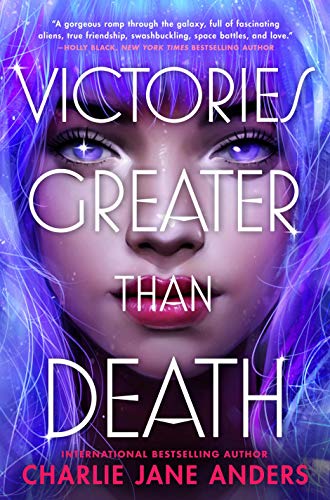
Shelf Control #334: Victories Greater Than Death by Charlie Jane Anders

Shelves final

Welcome to Shelf Control — an original feature created and hosted by Bookshelf Fantasies.

Shelf Control is a weekly celebration of the unread books on our shelves. Pick a book you own but haven’t read, write a post about it (suggestions: include what it’s about, why you want to read it, and when you got it), and link up! For more info on what Shelf Control is all about, check out my introductory post, here.

Want to join in? Shelf Control posts go up every Wednesday. See the guidelines at the bottom of the post, and jump on board!

Title: Victories Greater Than Death
Author: Charlie Jane Anders
Published: 2021
Length: 288 pages

What it’s about (synopsis via Goodreads):

Tina never worries about being ‘ordinary’—she doesn’t have to, since she’s known practically forever that she’s not just Tina Mains, average teenager and beloved daughter. She’s also the keeper of an interplanetary rescue beacon, and one day soon, it’s going to activate, and then her dreams of saving all the worlds and adventuring among the stars will finally be possible. Tina’s legacy, after all, is intergalactic—she is the hidden clone of a famed alien hero, left on Earth disguised as a human to give the universe another chance to defeat a terrible evil.

But when the beacon activates, it turns out that Tina’s destiny isn’t quite what she expected. Things are far more dangerous than she ever assumed. Luckily, Tina is surrounded by a crew she can trust, and her best friend Rachael, and she is still determined to save all the worlds. But first she’ll have to save herself.

Buckle up your seatbelt for this thrilling sci-fi adventure set against an intergalactic war from international bestselling author Charlie Jane Anders.

How and when I got it:

I bought a hardcover soon after the book’s release in 2021.

Why I want to read it:

This is a more recent book for me, in terms of Shelf Control picks, since it’s only been on my shelf for a year. Still, I’ve had it for a year and haven’t picked it up… so the question is, will I?

I do know that Charlie Jane Anders is a writer I really enjoy. I used to read her columns quite a bit when she wrote for io9, and I really enjoyed her novel All the Birds in the Sky. At the same time, I do already have two other books by her on my shelves, still unread, so why did I add a 3rd?

I’m actually not entirely sure why I bought this book, but I believe I’d seen a few very positive reviews, and there was a hardcover sale that day, so I gave in to temptation! Victories Greater Than Death is not a long book, and it seems like it would be a quick, enjoyable read. It’s YA sci-fi, and space battles and clones and aliens sound like a winning combination!

This is the first in a trilogy (book #2, Dreams Bigger Than Heartbreak, was released in April 2022, and the 3rd book, Promises Greater Than Darkness, is expected in 2023). I don’t think I realized that this wasn’t a stand-alone when I purchased it, but I suppose I’m up for giving it a try and then deciding if I want to continue.

What do you think? Would you read this book?

Please share your thoughts!


__________________________________

Want to participate in Shelf Control? Here’s how:

  • Write a blog post about a book that you own that you haven’t read yet.
  • Add your link in the comments or link back from your own post, so I can add you to the participant list.
  • Check out other posts, and…

Have fun!

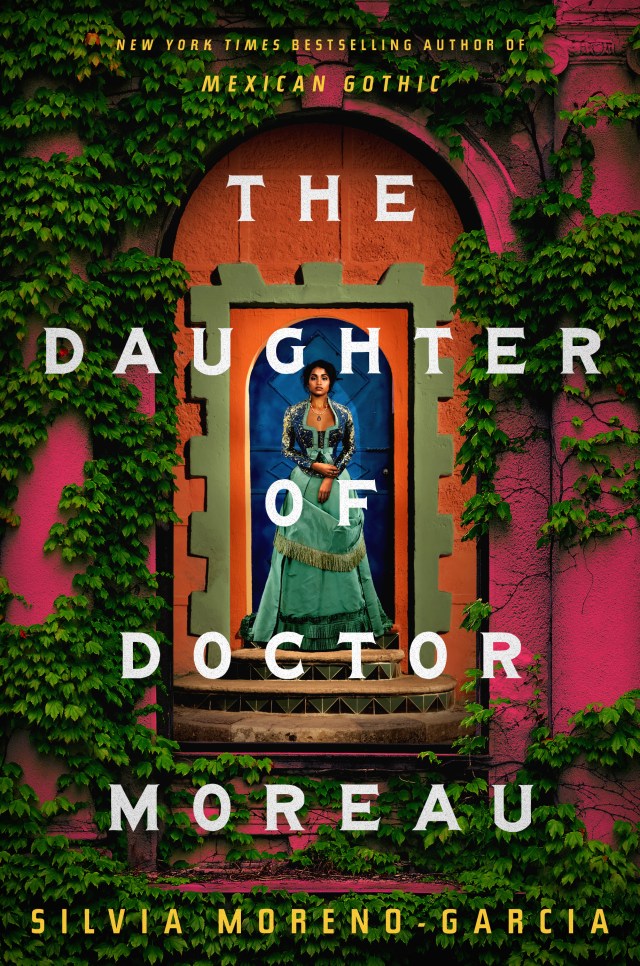
Book Review: The Daughter of Doctor Moreau by Silvia Moreno-Garcia

Title: The Daughter of Doctor Moreau
Author: Silvia Moreno-Garcia
Publisher: Del Rey
Publication date: July 19, 2022
Print length: 320 pages
Genre: Science fiction
Source: Review copy courtesy of the publisher via NetGalley
Rating:

Rating: 3.5 out of 5.

From the New York Times bestselling author of Mexican Gothic and Velvet Was the Night comes a lavish historical drama reimagining of The Island of Doctor Moreau set against the backdrop of nineteenth-century Mexico.

Carlota Moreau: a young woman, growing up in a distant and luxuriant estate, safe from the conflict and strife of the Yucatán peninsula. The only daughter of either a genius, or a madman.

Montgomery Laughton: a melancholic overseer with a tragic past and a propensity for alcohol. An outcast who assists Dr. Moreau with his scientific experiments, which are financed by the Lizaldes, owners of magnificent haciendas and plentiful coffers.

The hybrids: the fruits of the Doctor’s labor, destined to blindly obey their creator and remain in the shadows. A motley group of part human, part animal monstrosities.

All of them living in a perfectly balanced and static world, which is jolted by the abrupt arrival of Eduardo Lizalde, the charming and careless son of Doctor Moreau’s patron, who will unwittingly begin a dangerous chain reaction.

For Moreau keeps secrets, Carlota has questions, and in the sweltering heat of the jungle, passions may ignite.

THE DAUGHTER OF DOCTOR MOREAU is both a dazzling historical novel and a daring science fiction journey.

Doctor Moreau is certainly having a moment!

Originally introduced in the sci-fi classic The Island of Doctor Moreau by H. G. Wells, published in 1896, this character has remained in the public imagination ever since, as shown by movie adaptations across the years as well as more recent novels that put various spins on the original story. (See my links/notes at the end of this post for more).

In the original, Doctor Moreau works on a remote island, where he uses the practice of vivisection to surgically transform animals into humans. Here in The Daughter of Doctor Moreau, the story is set in the Yucatan, against a backdrop of a Mayan uprising against the colonial landowners.

The main characters are Carlota, the doctor’s daughter, and Montgomery, the new majordomo of the estate, a broken man who drinks to forget, but develops a strong loyalty to both Dr. Moreau and his unusual, beautiful daughter.

Through their shifting perspectives, we follow Carlota over the years as she grows from a young teen to a young woman, obedient to her father and dedicated to caring for the hybrids, whom she sees as family rather than as creations.

Despite the estate’s isolated location, the outside world intrudes, precipitating events that endanger the hybrids and Carlota herself. Secrets are revealed, and Carlota and Montgomery are forced into a battle for survival.

While there are interesting twists to this interpretation of the Doctor Moreau story, I did not find myself particularly absorbed or invested in the story. The narrative feels very episodic and exposition-heavy, and while I enjoyed the descriptions of the natural world of the Yucatan, the characters and the plot did not pull me in to any great extent.

The hybrids remain mostly in the background — unfortunately, since they’re the most interesting part of the story — and Carlota’s secrets, when finally shared, didn’t surprise me at all.

After a very slow start, the book takes a turn for the better and picks up the pace by the mid-point, but overall, for reasons I can’t quite define, I always felt at arms-length from the characters and the story. I wasn’t bored exactly, but I also felt that I could have put the book down and walked away at any point without experiencing much curiosity about the rest of the story. Despite the potential of the overarching story, this book felt a little too flat for me, which was disappointing.

As for Doctor Moreau having a moment — I’ve read two other books in the past couple of years that use The Island of Doctor Moreau as a jumping-off point:

The Strange Case of the Alchemist’s Daughter by Theodora Goss is the first book in a very creative YA trilogy, which stars the daughters of famous (fictional) scientists as the central characters — including a very different version of a daughter of Doctor Moreau.

And for something truly different, bizarre, and totally amazing, there’s The Album of Doctor Moreau by Daryl Gregory, which centers on a pop music boy band made up of animal/human hybrids. It’s so weird… and I loved it.

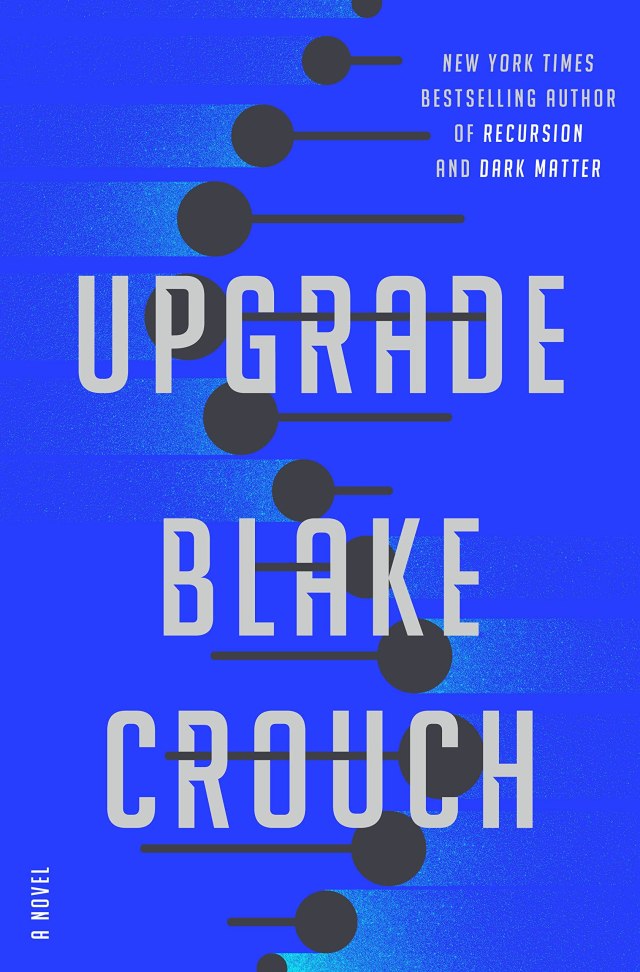
Book Review: Upgrade by Blake Crouch

Title: Upgrade
Author: Blake Crouch
Publisher: Ballantine Books
Publication date: July 12, 2022
Print length: 352 pages
Genre: Science fiction
Source: Review copy courtesy of the publisher via NetGalley
Rating:

Rating: 4 out of 5.

The mind-blowing new thriller from the New York Times bestselling author of Dark Matter and Recursion

“You are the next step in human evolution.”

At first, Logan Ramsay isn’t sure if anything’s different. He just feels a little . . . sharper. Better able to concentrate. Better at multitasking. Reading a bit faster, memorizing better, needing less sleep.

But before long, he can’t deny it: Something’s happening to his brain. To his body. He’s starting to see the world, and those around him—even those he loves most—in whole new ways.

The truth is, Logan’s genome has been hacked. And there’s a reason he’s been targeted for this upgrade. A reason that goes back decades to the darkest part of his past, and a horrific family legacy.

Worse still, what’s happening to him is just the first step in a much larger plan, one that will inflict the same changes on humanity at large—at a terrifying cost.

Because of his new abilities, Logan’s the one person in the world capable of stopping what’s been set in motion. But to have a chance at winning this war, he’ll have to become something other than himself. Maybe even something other than human.

And even as he’s fighting, he can’t help wondering: what if humanity’s only hope for a future really does lie in engineering our own evolution?

Intimate in scale yet epic in scope, Upgrade is an intricately plotted, lightning-fast tale that charts one man’s thrilling transformation, even as it asks us to ponder the limits of our humanity—and our boundless potential. 

Upgrade is a fast-paced science fiction tale set in a not-too-distant future, in which genetic engineering is tightly controlled after the global disaster known as the Great Starvation. Logan Ramsay, once an aspiring genetic engineer, is now an agent with the GPA (Gene Protection Agency), whose mission is to stop illegal gene tinkering and prevent the next genetic disaster.

Logan is also the son of the brilliant scientist whose genetic enhancements inadvertently caused the Great Starvation. His family heritage haunts him, and while the raids and arrests he participates in make him physically ill at times, he sees he work as a penance for his mother’s legacy.

But after a raid gone bad, during which Logan was injured, he begins to feel… not himself. At first, he’s not sure, but eventually, the intense body aches, combined with the undeniable increase in his mental capacity, lead him to suspect that someone or something has tinkered with his genomes.

Things only get more terrifying, as he’s whisked away to a GPA black site for study and interrogation. At first, he’s suspected of self-editing, but even once this is shown not to be the case, the questions are enormous: What exactly was done to Logan? By whom? And the biggest question of all — why?

The action becomes intensely suspenseful, as Logan must evade capture, discover the mystery of his enhanced genetic make-up, and figure out how to stay alive when someone close to him ends up on the opposite side of his mission.

Blake Crouch excels at creating terrifyingly plausible worlds and memorable characters (as in Recursion and Dark Matter), and Upgrade is yet another scarily tangible story. The world in Upgrade is within a century of complete disaster. Humanity faces extinction, not at some far off point in the future that scares those paying attention but can otherwise be ignored, but within a few generations’ lifespans. And yet, people still don’t seem to be mobilized to do anything about the looming catastrophe. As the characters note:

One child dies in a well, the world watches and weeps. But as the number of victims increases, our compassion tends to diminish. At the highest number of casualties — wars, tsunamis, acts of terror — the dead become faceless statistics.

Simply put, humankind can’t internalize and comprehend the scale of loss that looms, and therefore, can’t be made to care enough to do something about it.

While Upgrade is clearly set farther in the future than our own reality, the scenario depicted seems frighteningly possible. Climate change and out-of-control genetic manipulations are driving forces behind Upgrade‘s awful world situation, but neither are unimaginable.

I found myself on the edge of my seat while reading this book, invested in Logan as a person (and oh, how he suffers!) as well as in the action-adventure elements and the futuristic fate of the world. While the science terminology sometimes went completely over my head, I could understand it enough to be both scared and fascinated.

Upgrade is a terrific race against time as well as a cautionary tale, and an altogether exciting and unputdownable read. Don’t miss it!