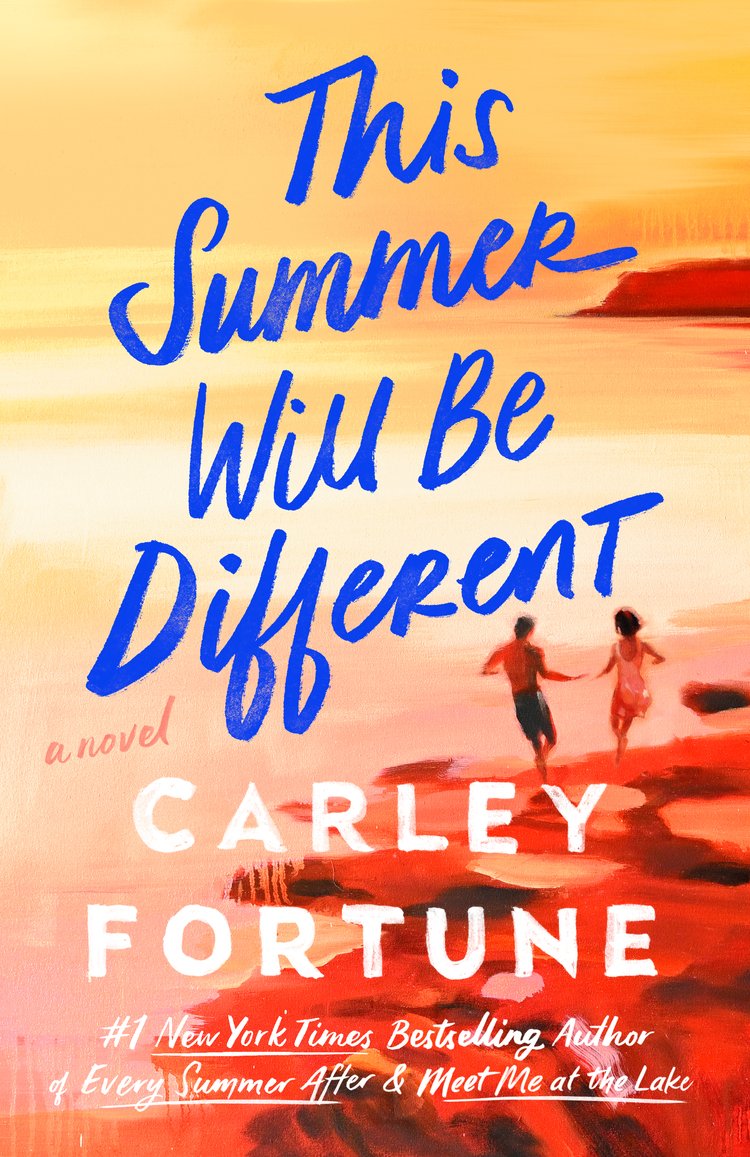
Title: This Summer Will Be Different Author: Carley Fortune Narrators: AJ Bridel Publisher: Berkley Publication date: May 7, 2024 Print length: 368 pages Audio length: 10 hours 31 minutes Genre: Contemporary romance Source: Library Rating:
⭐⭐⭐⭐
Rating: 4 out of 5.
This summer they’ll keep their promise. This summer they won’t give into temptation. This summer will be different.
Lucy is the tourist vacationing at a beach house on Prince Edward Island. Felix is the local who shows her a very good time. The only problem: Lucy doesn’t know he’s her best friend’s younger brother. Lucy and Felix’s chemistry is unreal, but the list of reasons why they need to stay away from each other is long, and they vow to never repeat that electric night again.
It’s easier said than done.
Each year, Lucy escapes to PEI for a big breath of coastal air, fresh oysters and crisp vinho verde with her best friend, Bridget. Every visit begins with a long walk on the beach, beneath soaring red cliffs and a golden sun. And every visit, Lucy promises herself she won’t wind up in Felix’s bed. Again.
If Lucy can’t help being drawn to Felix, at least she’s always kept her heart out of it.
When Bridget suddenly flees Toronto a week before her wedding, Lucy drops everything to follow her to the island. Her mission is to help Bridget through her crisis and resist the one man she’s never been able to. But Felix’s sparkling eyes and flirty quips have been replaced with something new, and Lucy’s beginning to wonder just how safe her heart truly is.
Aaahhhhh. Carley Fortune’s books are summer and fresh air and sunshine and joy. I’m hooked! And now that I’ve read This Summer Will Be Different, I’m caught up!
In this 2024 release, the setting is slightly different from her previous books, set in small lakeside towns in rural Canada. In This Summer Will Be Different, the setting is Prince Edward Island — and be still, my heart! My Anne of Green Gables inner child squealed with delight when I realized I’d be spending this reading time on PEI.
So, the story: Lucy is a city dweller, running a flower shop in Toronto that formerly belonged to her beloved late aunt. Lucy’s best friend Bridget is a PEI native, and Lucy loves nothing more than their summer trips to the island and Bridget’s family’s lovely seaside home there. But five years earlier, on Lucy’s first trip, she met a magnetic, sexy man upon arrival and spent an intense, amazing night with him… only to discover the next morning that he was Bridget’s younger brother. Oops. Especially since one of Bridget’s cardinal rules for Lucy was not to fall in love with that very same brother.
Lucy never tells Bridget about her hookup with Felix, and they stay apart for the rest of her visit — but each year, as Lucy returns to the island, she and Felix reconnect, and discover that their bond keeps getting stronger and stronger.
In the “now” portions of the book (the chapters alternate between the past and present), Bridget’s wedding is only weeks ago when she suddenly bolts, running back to PEI and summoning Lucy to her side. And although Lucy is super stressed with work, as well as with prep for Bridget’s wedding, she drops everything to be there with her. Of course, Felix is there too, and Lucy is forced to recognize that it’s becoming impossible to deny her attraction to him… and the very real feelings that neither has quite admitted yet.
I love pretty much everything about This Summer Will Be Different. The setting is amazing, the storytelling, with its two timelines, works seamlessly, and the romance is believable, sweet, and sexy. Beyond the romance, though, the friendship between Lucy and Bridget really makes this book sing. Their connection, devotion, support, and love is beautifully portrayed, and the author captures so many of the small moments and nuances that show the depth of a real friendship.
On the light side, there are plenty of fun moments touring the island, visiting amazing landmarks (including the Green Gables heritage center), and even attending an oyster-shucking contest (complete with all sorts of amazing shucking puns…). There are plenty of sadder, more serious moments too, as the characters navigate grief, disappointments, and impossible choices. But overall, despite the emotionally difficult sections, the tone is upbeat and full of summer joy.
As with Carley Fortune’s previous two novels, the audiobook narration for This Summer Will Be Different is terrific. The narrator does wonderful voices for the characters, captures the spirit of Lucy and Bridget’s banter and more heartfelt moments, and gives Felix a lovely delivery of his best romantic lines.
Carley Fortune was a new-to-me author in 2024, and will be a must-read author for me from this point onward. Her next novel will be released this spring, and I can’t wait!
Title: Kilmeny of the Orchard Author: L. M. Montgomery Narrator: Grace Conlin Publisher: n/a – many editions available Publication date: 1910 Print length: 144 pages Audio length: 4 hours, 5 minutes Genre: Classic fiction Source: Purchased Rating:
⭐⭐⭐
Rating: 3 out of 5.
A sweet and moving romance from the author of the beloved Anne of Green Gables series!
Eric Marshall, recent college graduate, has the world at his feet. He’s handsome, popular, wealthy, and surprisingly, single. Living the bachelor lifestyle with his widowed father, he’s never given much thought to romance. When an old school friend asks Eric to substitute teach for him on Prince Edward Island while he recuperates from an illness, Eric thinks, why not? He’s got some time to kill before diving into the family business with his father, and the rustic island may be a good diversion for him.
Eric falls into the easy routine of island life, and his status as eligible bachelor endears him to the locals. Eric is still not thinking of romance, but he’s about to find it in a most unexpected place…
Kilmeny Gordon is sweet and smart and beautiful, perfect in every way but one: she can’t speak. She’s been sheltered all her life due to her disability and the scandal surrounding her birth. She wiles away her hours helping her aunt and uncle on the farm and playing her violin in her favorite secluded spot. When Eric stumbles into her hidden orchard, he brings a whole new world with him, and a friendship that both frightens her and thrills her. As the summer days grow longer and their friendship blossoms, sweet, silent Kilmeny, with her sunny enthusiasm and haunting music, manages to do what neither the co-eds of Queenslea College nor the village lasses of Lindsay have been able to do—capture Eric’s heart.
But Kilmeny knows he’ll soon have to go back to his life on the mainland, a world of business meetings and parties and prejudicial people—a world in which she’ll hold him back and never fit in. None of that matters to Eric, but how can he get her to accept that she’s the only woman he’ll ever love, when she is convinced that the only way to love him is to let him go?
And a shorter synopsis from Audible:
Twenty-four-year-old Eric Marshall arrives on Prince Edward Island to become a substitute schoolmaster, even though he has a bright future in his wealthy family’s business. Eric has taken the two-month teaching post only as a favor to a friend – but fate throws in his path a beautiful, mysterious girl named Kilmeny Gordon. With jet black hair and sea blue eyes, Kilmeny immediately captures Eric’s heart. But Kilmeny cannot speak, and Eric is concerned for and bewitched by this shy, sensitive mute girl. For the first time in his life, he must work hard for something he wants badly. And there is nothing he wants more than for Kilmeny to return his love.
After coming to the Anne of Green Gables series only several years ago, I’ve been on a (somewhat haphazard) mission to read L. M. Montgomery’s novels. Looking back at my reading history, after reading the Anne series and Emily trilogy, I see that I’ve read one of her stand-alones in each of the past few years… and that brings me to Kilmeny of the Orchard.
Kilmeny of the Orchard wasn’t on my radar, but I stumbled across it thanks to a Kindle deals promo, and decided to give it a try. Kilmeny is the 3rd novel published by L. M. Montgomery, released after the first two Anne books — which would make it her first novel published about adult characters. Kilmeny has the lovely descriptions and clever character depictions so prevalent in the author’s works, but the story itself feels somewhat underbaked and clichéd, definitely not on the level of her “greatest hits”.
Kilmeny of the Orchard‘s main character is not Kilmeny herself, but rather, Eric Marshall, a recent college graduate and son of a wealthy businessman, who has the world at his feet. Before joining his father’s company and starting his career, he receives a letter from a friend who’s ill, asking Eric to take over his teaching job in the small village of Lindsay as a favor to him, just until the end of his contract. Eric has no other immediate plans, and decides to do it.
He finds Lindsay welcoming, with an assortment of oddball characters (including his talkative landlord, who seems more devoted to his cat than to his wife), and the area is beautiful, if not particularly exciting. As Eric uses his free time to wander and explore, he stumbles across a ramshackle old orchard, and within it, a beautiful young woman playing the violin. As he approaches her, she runs away. Eric is immediately intrigued and sets out to learn more about her.
The young woman is Kilmeny, the niece of the Gordons, a brother and sister who’ve raised her since her mother’s death. The Gordons keep strictly to themselves, and Kilmeny has never ventured beyond their home except for her isolated violin playing in the orchard. Kilmeny is mute, and the Gordons feel it is in her best interest to protect her and shield her from the outside world.
But Eric is irresistibly drawn to Kilmeny, and seeks her out in the orchard. She’s able to communicate by writing on a slate, and soon, they develop a friendship through which Eric introduces her to books, poetry, and ideas that are new to the sheltered young woman. Wanting to know more, he finally gets the full story from his landlords, and learns more about Kilmeny and her mother’s tragic past.
Kilmeny of the Orchard is a short book and a quick audiobook listen, and much of the language is beautiful, especially the descriptions of the landscapes and the orchard itself. Still, there are many elements that are off-putting for a modern reader/listener. Yes, reading older books requires us to keep in mind the attitudes and beliefs of the era in which they were written, but that doesn’t mean that certain concepts won’t be unpleasant to encounter.
Chief among these is the depiction of Kilmeny’s “defect”, as Eric and others refer to it. Kilmeny is described as “dumb”, which I know was an acceptable word for being mute, but still feels pretty awful to hear over and over and over again. They’re quick to assert that despite being dumb, her other faculties are fine, but there’s a base-level assumption that her muteness is something that damages her as a whole and reduces her value. In fact, her muteness is the one and only reason why Kilmeny refuses Eric’s proposal of marriage, despite being in love with him: She’s sure that her “defect” would make her a detriment to him as a wife.
The Gordons never take Kilmeny to a doctor at any point in her life, first because her mother won’t allow it, and after her death, because they firmly believe there’s nothing to be done. Why? Because… it’s clearly the sins of the mother being visited on the child, that’s why. Kilmeny’s muteness is a punishment, and so obviously, doctors can’t possibly fix it.
The Gordons have also raised a young man named Neal, whom they took in after a passing peddler’s wife gave birth on their farm. The couple abandoned the baby and the Gordons raised him, giving him their last name, but never their love. He’s Italian, you see, and no one will ever overlook his birth and consider him part of the family or the community. Despite being raised there since birth, Neal is treated as an outsider and looked upon with suspicion. His Italian heritage is pretty much always mentioned when he’s referred to, and he’s always described with negative terms, such as sullen, wild, shrill — we’re clearly meant to distrust him from the start. It’s awful stereotyping (“the untamed fury of the Italian peasant thwarted in his heart’s desire”), and plays out in completely expected ways.
Finally, the sexist slant of the story drove me batty. The fact that the title character of the book is not in fact the main character, but rather the main character’s object of desire kind of says it all. This book is certainly told through the male gaze! Kilmeny is described as exquisite, but childlike. It’s only Eric’s interest and his introducing her to concepts of love — through the stories and poems he reads her — that turn her into a woman. Perhaps intended as romantic, but certainly otherwise in the modern context, there’s a kiss described as “involuntary”… which, enough said. Kilmeny is Eric’s mission — he’s there to save her and change her. Clearly, he knows best, and he’s the driving force behind any developments in Kilmeny’s limited world. Save me from male saviors!
Kilmeny of the Orchard is a much simpler story than many of L. M. Montgomery’s later books, and it’s interesting to see this early work in contrast to the many wonderful novels that I’ve loved so much. I wouldn’t necessarily recommend it for its own sake, but for completists who want to read all of LMM’s works and track the development of her writing and storytelling style, it’s worth checking out.
Meanwhile, I have a few more books by this author yet to explore! Next up for me — probably later this year — will be two more books on my shelves, Pat of Silver Bush and Mistress Pat. These were both published in the 1930s, and I’m eager to see how they compare to the L. M. Montgomery books that I’ve loved.
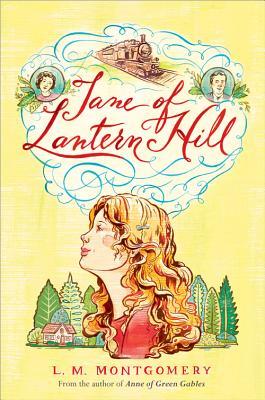
Title: Jane of Lantern Hill Author: L. M. Montgomery Narrator: Lauren Sanders Publisher: Sourcebooks (edition shown; many editions available) Publication date: 1937 Print length: 261 pages Audio length: 8 hours, 1 minutes Genre: Classic children’s fiction (YA) Source: Purchased Rating:
⭐⭐⭐⭐
Rating: 4 out of 5.
The story of a girl who must leave her home to discover who she is and reunite her family. A beloved classic from the author of Anne of Green Gables.
Jane Stuart always believed her father was dead–until she accidentally learned he was alive and well and living on Prince Edward Island. When Jane spends the summer at his cottage on Lantern Hill, doing all the wonderful things her grandmother deems completely unladylike, she dares to dream that there could be such a house back in Toronto…a house where she and her parents could live together without Grandmother directing their lives–a house that could be called home.
Jane of Lantern Hill has been on my to-read list for years, ever since I finished both the Anne of Green Gables series and the Emily Starr trilogy. Jane of Lantern Hill is a stand-alone, and the last novel written by L. M. Montgomery.
While many themes are familiar, Jane starts off quite differently from the Anne and Emily books. The story opens in Toronto, where 11-year-old Jane lives in the stifling old mansion owned by her strict, judgmental grandmother, along with her very pretty but somewhat weak-willed mother. Jane’s father died while she was very young, or so she’s always understood. She’s miserable and lonely in her gray world, with the orphan girl living at the boarding house next door as her only friend.
Life changes dramatically for Jane when a letter arrives from her very much alive father, insisting that Jane come spend the summer with him on Prince Edward Island. Jane definitely does not want to go, but has no choice once the family realizes that he could cause legal trouble for them. And so, Jane travels by train and ferry all the way from Toronto to PE Island, filled with dread — but at first glance at her father, she feels a strong connection, and her unhappiness is immediately replace by joy.
On the island, her warm-hearted father devotes himself to creating a home for Jane. They buy a charming little house at Lantern Hill, and Jane is overjoyed to be the “woman” of the house, given free rein to organize, clean, and cook to her heart’s delight. (More on this in a moment…) Lantern Hill is surrounded by a community that welcomes Jane with open arms, and she finds her days filled with friends, animals, beautiful landscapes, and the sounds of the sea.
When summer ends, she must return to the dismal house in Toronto, but now at least she has something to look forward to, and ticks of the months until she can return to her true home at Lantern Hill. Meanwhile, she starts to learn more about her parents’ marriage and separation, and begins to realize that neither may truly have the full picture of what happened and why.
I really enjoyed Jane of Lantern Hill, as I do all L. M. Montgomery books, but with a few hesitations. I understand how freeing it must be for Jane to be given the chance to create a cozy, warm home for herself and her father, after a lifetime under her grandmother’s harsh control — but I disliked how so much of the focus was on Jane cooking meals, cleaning (she loves to polish the silver), and general tasks related to keeping house. Yes, she also goes on adventures with the local children, learns to swim, and loves being outdoors, but there’s just a huge emphasis on the joys of domesticity, and after a while, it really rankled.
I also must note that an antisemitic slur is used in this book. It’s not presented as representative of the author’s point of view, and to be fair, I don’t think she means it as a slur — but it still jarred me to see this particular phrase used in a casual conversation.
Other than these two factors, I enjoyed the book as a whole. It’s always lovely to revisit PEI through the eyes of L. M. Montgomery. The emphasis is wholly on Jane’s experiences, but there’s still an element of intrigue around why her parents separated, and readers learn the truth as Jane does.
Jane is a delightful character, not quite as fanciful and imaginative as Anne Shirley, but with an enthusiasm and abundance of love that have been suppressed all her life, until finally given free expression at Lantern Hill. She’s a lot of fun to spend time with, and the portrayals of her various PEI friends and neighbors, as seen through Jane’s eyes, are funny and entertaining.
The audiobook narrator is very good at capturing Jane’s spirit, as well as the awfulness of her grandmother, her mother’s gentle love, and her father’s exuberance. The audiobook itself (as available through Audible and elsewhere) has 10 – 15 places where phrases repeat, which I believe is an editing issue rather than a narration problem.
My introduction to the world of L. M. Montgomery was much later in my life than it should have been — I read Anne of Green Gables for the first time within the last five years! I do love her writing and the sense of Prince Edward Island’s beauty and community as portrayed in her books. I have two more L. M. Montgomery novels on my shelves (Pat of Silver Bush and Mistress Pat), and I’m eager to check them out.
If you’re interested in L. M. Montgomery’s books, I’d definitely recommend checking out Jane of Lantern Hill. It’s a sweet story of a memorable girl — well worth reading!
For those who are L. M. Montgomery fans, which other books of her do you recommend?
One of my reading goals for 2021 was to read the Emily trilogy by L. M. Montgomery. Check! I just finished up the 3rd book, and I’m still under Emily’s spell. Here’s my reading wrap-up for this lovely trilogy:
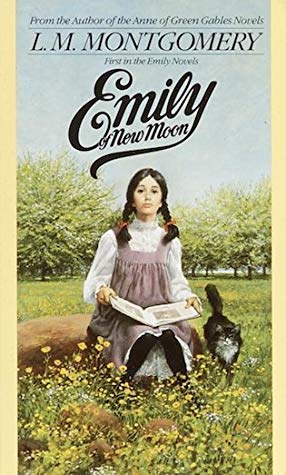
Title:Emily of New Moon Published: 1923 Length: 339 pages Rating:
⭐⭐⭐⭐⭐
Rating: 4.5 out of 5.
Emily Starr never knew what it was to be lonely–until her beloved father died. Now Emily’s an orphan, and her mother’s snobbish relatives are taking her to live with them at New Moon Farm. She’s sure she won’t be happy. Emily deals with stiff, stern Aunt Elizabeth and her malicious classmates by holding her head high and using her quick wit. Things begin to change when she makes friends, with Teddy, who does marvelous drawings; with Perry, who’s sailed all over the world with his father yet has never been to school; and above all, with Ilse, a tomboy with a blazing temper. Amazingly, Emily finds New Moon beautiful and fascinating. With new friends and adventures, Emily might someday think of herself as Emily of New Moon.
Emily of New Moon introduces us to the unforgettable Emily Byrd Starr. Orphaned at age 10, Emily is taken in by her late mother’s side of the family, who disowned her mother years earlier when she eloped with Emily’s father. Suddenly uprooted, Emily settles into life at the beautiful New Moon with her spinster aunts, Elizabeth and Laura, and her impish cousin Jimmy. Despite her heartbreak over losing her father, Emily is soon enchanted by the loveliness of the farm and its surroundings, and settles in — with challenges — to her new home.
Emily is feisty and sensitive, speaks her mind, and doesn’t back down. She’s also highly imaginative and inquisitive, and — like Anne in Anne of Green Gables — delights in imbuing the natural world around her with fanciful names and personalities. For the first time in her life, Emily also has friends and classmates, and gets into wonderful adventures with Ilse, Teddy, and Perry. Most of all, Emily lets her secret ambition to become a “poetess” flourish, and uses every scrap of paper she can find to record her poems and stories.
This is a truly lovely book, very similar to Anne of Green Gables in spirit and tone. The author once again gives us a young girl with a sharp, expressive mind and a will of her own as a main character. The book is full of sweetness and whimsy, but we also feel Emily’s sorrow and pain as she navigates a world that isn’t always kind to her. There are memorable characters and escapades, and as in the author’s other works. Prince Edward Island is brought to life through Emily’s eyes.
Emily Starr was born with the desire to write. As an orphan living on New Moon Farm, writing helped her face the difficult, lonely times. But now all her friends are going away to high school in nearby Shrewsbury, and her old-fashioned, tyrannical aunt Elizabeth will only let her go if she promises to stop writing! All the same, this is the first step in Emily’s climb to success. Once in town, Emily’s activities set the Shrewsbury gossips buzzing. But Emily and her friends are confident — Ilse’s a born actress, Teddy’s set to be a great artist, and roguish Perry has the makings of a brilliant lawyer. When Emily has her poems published and writes for the town newspaper, success seems to be on its way — and with it the first whispers of romance. Then Emily is offered a fabulous opportunity, and she must decide if she wants to change her life forever.
The second book in the Emily trilogy covers Emily’s teen years as she attends high school in the nearby town of Shrewsbury. While Emily is desperate to further her education and hone her writing craft, she dreads being forced to board with her judgmental, restrictive Aunt Ruth. Plus, as part of being allowed to attend high school, Emily has had to promise not to write fiction during the three years of her schooling, which is a really tough pill for her to swallow. Still, she has her diaries and her poetry, and starts writing newspaper articles as well.
As the years go by, Emily and her friends grow and have more adventures, and Emily has some initial success as a writer when magazines begin publishing her submissions, sometimes even for money. Meanwhile, she has her first suitors, but her heart really belongs to the boy she’s grown up with.
I really enjoyed book #2, although one of the romantic situations involves a much older cousin-by-marriage and is kind of icky (although Emily, bless her heart, doesn’t understand at all that there’s a romantic interest there.) While he is never inappropriate, his interest is obvious, and seen through today’s lens, it feels way too much like grooming. So icky. (Granted, the book was written 100 years ago, so perspectives on this sort of thing would certainly have been different).
Even as she gets older, Emily is still a dreamer, and it’s lovely to see her view of the world around her. Like Anne (of Green Gables), she sees magic and beauty in the world, and is driven by the need to describe what she experiences through her writing.
By the end of Emily Climbs, Emily has finished school and set her course for the future. It’s charming to see the choices she makes and the life she envisions for herself.
Emily Starr and Teddy Kent have been friends since childhood, and as Teddy is about to leave to further his education as an artist, Emily believes that their friendship is blossoming into something more. On his last night at home, they vow to think of each other when they see the star Vega of the Lyre.
As Emily grows as a writer and learns to deal with the loneliness of having her closest friends gone, life at New Moon changes. Mr. Carpenter, Emily’s most truthful critic and favorite teacher dies (warning Emily, even as he dies to “Beware — of — italics.”). She becomes closer to Dean Priest, even as she fears he wants love when she only has friendship to give. Worst of all, Emily and Teddy become distant as he focuses on building his career and she hides her feelings behind pride.
Oh, this book grabbed me and put my heart through the wringer! So many emotions! Emily grows into her young womanhood in Emily’s Quest, and it’s both sad and inspiring in so many ways.
Although she’s been offered an opportunity to pursue a career in New York, Emily knows in her heart that she belongs at New Moon, and that this is where her joy and creative inspiration live. She continues to live with her aunts and cousin in the family home and enjoys the natural beauty of her world. Her writing gets accepted by more and more magazines, and she actually earns enough to pay back the stuffy aunts and uncles who paid for her earlier education.
But Emily is lonely without her closest friends. She has many suitors, none of whom really stir her feelings enough to accept their proposals. Her older cousin Dean provides companionship, and it’s clear that he loves her. Emily is very fond of him and loves his friendship, but I started to hate him. He’s so disparaging of Emily’s work, to the point that he pretty much eviscerates her:
“Her pretty cobwebs—” ah, there it was. That was all Emily heard. She did not even realize that he was telling her he thought her a beautiful woman.
“Do you think what I write is nothing but cobwebs, Dean?” she asked chokingly.
Dean looked surprised, doing it very well. “Star, what else is it? What do you think it is yourself? I’m glad you can amuse yourself by writing. It’s a splendid thing to have a little hobby of the kind. And if you can pick up a few shekels by it—well, that’s all very well too in this kind of a world. But I’d hate to have you dream of being a Brontë or an Austen—and wake to find you’d wasted your youth on a dream.”
“I don’t fancy myself a Brontë or an Austen,” said Emily. “But you didn’t talk like that long ago, Dean. You used to think then I could do something some day.”
“We don’t bruise the pretty visions of a child,” said Dean. “But it’s foolish to carry childish dreams over into maturity. Better face facts. You write charming things of their kind, Emily. Be content with that and don’t waste your best years yearning for the unattainable or striving to reach some height far beyond your grasp.”
Ugh. If Dean Priest was standing in front of me, I think I’d have to punch him in the face. Because of a series of events that start with Dean telling Emily that her work is basically trash, Emily goes through one of the worst periods of her life, and eventually accepts Dean’s proposal of marriage, thinking she can have a happy life with him. Fortunately, she realizes what we readers have known all along — her heart has always belonged to Teddy Kent, the boy she’s loved since childhood.
Sadly, the course of true love never did run smooth, and there’s more heartbreak ahead. I can’t tell you how completely wrung out my feelings were, reading Emily’s ups and downs, and at times, hurting so much for her that I wanted to go hide with my head under a pillow.
But fear not, there’s a happy ending! I wish the ending had been given a little more time to breathe, but it was joyful nonetheless, and that’s really all I wanted — for Emily to find the happiness she deserves.
Wrapping it all up…
The fact that I was so caught up in Emily’s life shows what a magnificently written set of books this is! There’s something incredibly beautiful about following Emily’s story from girlhood through her teens and into womanhood, seeing all the different stages of her life, and experiencing how her childhood hopes and dreams evolve over time, making her the woman she finally becomes.
It’s a lovely journey, and Emily is a fabulous character. She has the starry-eyed joy that we see in Anne Shirley (Anne of Green Gables), but her story takes its own path. While initially feeling like a similar book about an orphaned girl finding a new family, Emily becomes someone unique and worth knowing in her own right. I love her imagination and joy as a child, and how her love of the world around her infuses her writing and her ability to love others.
The books are filled with memorable quirky characters, and the setting on Prince Edward Island is so lovingly drawn that I could visualize everything Emily sees. (PEI is going to be a travel goal for me!)
I’m so thrilled that I read the Emily trilogy, and I know in my heart that these are books I’ll come back to again and again.
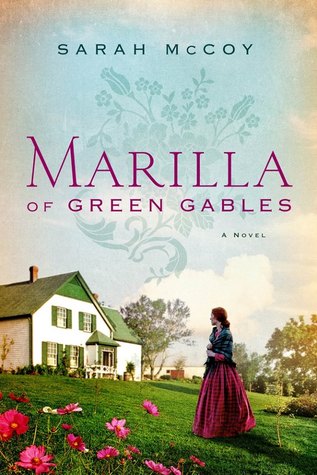
A bold, heartfelt tale of life at Green Gables . . . before Anne: A marvelously entertaining and moving historical novel, set in rural Prince Edward Island in the nineteenth century, that imagines the young life of spinster Marilla Cuthbert, and the choices that will open her life to the possibility of heartbreak—and unimaginable greatness
Plucky and ambitious, Marilla Cuthbert is thirteen years old when her world is turned upside down. Her beloved mother has dies in childbirth, and Marilla suddenly must bear the responsibilities of a farm wife: cooking, sewing, keeping house, and overseeing the day-to-day life of Green Gables with her brother, Matthew and father, Hugh.
In Avonlea—a small, tight-knit farming town on a remote island—life holds few options for farm girls. Her one connection to the wider world is Aunt Elizabeth “Izzy” Johnson, her mother’s sister, who managed to escape from Avonlea to the bustling city of St. Catharines. An opinionated spinster, Aunt Izzy’s talent as a seamstress has allowed her to build a thriving business and make her own way in the world.
Emboldened by her aunt, Marilla dares to venture beyond the safety of Green Gables and discovers new friends and new opportunities. Joining the Ladies Aid Society, she raises funds for an orphanage run by the Sisters of Charity in nearby Nova Scotia that secretly serves as a way station for runaway slaves from America. Her budding romance with John Blythe, the charming son of a neighbor, offers her a possibility of future happiness—Marilla is in no rush to trade one farm life for another. She soon finds herself caught up in the dangerous work of politics, and abolition—jeopardizing all she cherishes, including her bond with her dearest John Blythe. Now Marilla must face a reckoning between her dreams of making a difference in the wider world and the small-town reality of life at Green Gables.
After reading the entire Anne of Green Gables series this year for the very first time, I felt a need to stay immersed in Anne’s world a bit longer, and decided to read this prequel book, written by contemporary author Sarah McCoy and published in 2018. I’m often skeptical when modern authors decide to continue or riff off of a beloved older book or series (I’m thinking about the debacle that was Scarlett, the “sequel” to Gone With the Wind, among others).
Can a modern author pull off the tone and feeling of the original? Does the new story add anything in terms of character development? Does it feel true to the heart of the original story?
In the case of Marilla of Green Gables, the answer is YES to all questions. While not completely perfect, Marilla is a worthy addition to the Green Gables saga, and I enjoyed it start to finish.
As readers of Anne of Green Gables know, Marilla is the aging spinster who, along with her older brother Matthew, adopts an 11-year-old orphan girl (while actually thinking they were bringing home a boy to help with the farm), and completely up-ends their orderly life. Anne Shirley is a wonder, and her bright, inquisitive, imaginative nature brings new life to Marilla and Matthew and changes their world forever.
But what do we really know about Marilla from the Green Gables books? We only see her through Anne’s eyes –an older woman who keeps house while her brother farms, who has never left the family home and never married. She’s a pillar of the community and has many close friends… but we really don’t know much at all about her childhood or adult life prior to Anne’s arrival.
Marilla of Green Gables starts when Marilla is thirteen. Her mother Clara is pregnant, her brother Matthew works the farm with their father Hugh, and their home life is simple but happy. Marilla has a growing friendship with a classmate of Matthew’s, John Blythe, who is a few years older than Marilla. They seem to be on the verge of romance, but when Clara dies during childbirth, everything changes for Marilla.
Having promised her mother to always take care of Hugh and Matthew, Marilla knows that she will never leave Green Gables. As her relationship with John strengthens over the years, she feels torn between her feelings for him and her responsibility toward her family. On top of this, there’s growing political unrest in Canada, and the Cuthberts are on opposite sides of the issue from John. Finally, it’s the political disagreements that drive a wedge between Marilla and John, leading to an estrangement that lingers for many years.
Over the years, Marilla becomes more and more involved in the issue of runaway slaves from America, motivated initially by orphaned children she encounters who were rescued from enslavement but are still pursued by bounty hunters. While on the surface a simple farm woman with an ordinary, house-bound life, Marilla becomes involved in the abolition movement and works to arrange shelter as part of the underground railroad.
There’s something really heartbreaking about a prequel. You know where the players have to end up, having read the original story. So, seeing Marilla and John’s romance blooming over the years was incredibly bittersweet. On the one hand, they’re just so lovely together, and their affection and regard for one another is sincere and pure and heartfelt. At the same time, I know that Marilla never marries, and that John must end up married to someone else, since his son Gilbert is Anne’s love interest and eventual husband in the Anne books. It really felt terrible at times to see Marilla’s happiness with John and see her experiencing all the sweet emotions of a young first love — not knowing how it will go wrong, but knowing all along that they simply can’t end up together.
Author Sarah McCoy does a lovely job of emulating the feel and style of the Anne books, reveling in the natural world of Prince Edward Island, the simple joys of a small community in an earlier time, and the daily routines and habits that build a full life. Marilla’s voice and perspective feels clear and authentic — we’re able to see a young Marilla and see the roots of the woman she’ll become someday.
The only jarring note for me was the emphasis on politics. Politics rarely gets mentioned in the Anne series, and here, the unrest within Canada is a large focus and becomes the driving point for the breakdown of Anne and John’s relationship. It’s not that it’s uninteresting; simply that it doesn’t feel all that well aligned with the tone of the original series.
Still, I found the book as a whole delightful. It felt like a revelation to get to know a young Marilla and understand how she became the stern spinster we meet in Anne of Green Gables. I love the depiction of life in Avonlea, and was moved by Marilla’s devotion to improving the life of those less fortunate, including putting herself at risk in order to protect children fleeing enslavement.
Marilla of Green Gables is a lovely addition to the world of Anne of Green Gables. For those who haven’t read the original series, I’d say start with those books, at the least the first three or so, before reading Marilla. While Marilla of Green Gables could stand on its own, I think the heart and soul would somehow have much less impact without the greater context of the Anne series.
A note on the audiobook: Lovely! The narrator captures Marilla’s sweetness, the gossipy nature of Marilla’s friend Rachel, the compassion of John, and all the flavor of the many other characters in the story. Really a terrific listen.
I highly recommend Marilla of Green Gables for any fans of the Anne series, and really applaud author Sarah McCoy for adding a new and interesting storyline while staying true to the essence of the original books.
_________________________________________
The details:
Title: Marilla of Green Gables
Author: Sarah McCoy
Narrator: Cassandra Campbell
Publisher: William Morrow
Publication date: October 23, 2018
Length (print): 320 pages
Length (audiobook): 9 hours, 14 minutes
Genre: Historical fiction
Source: Library






 Bookshelf Fantasies