
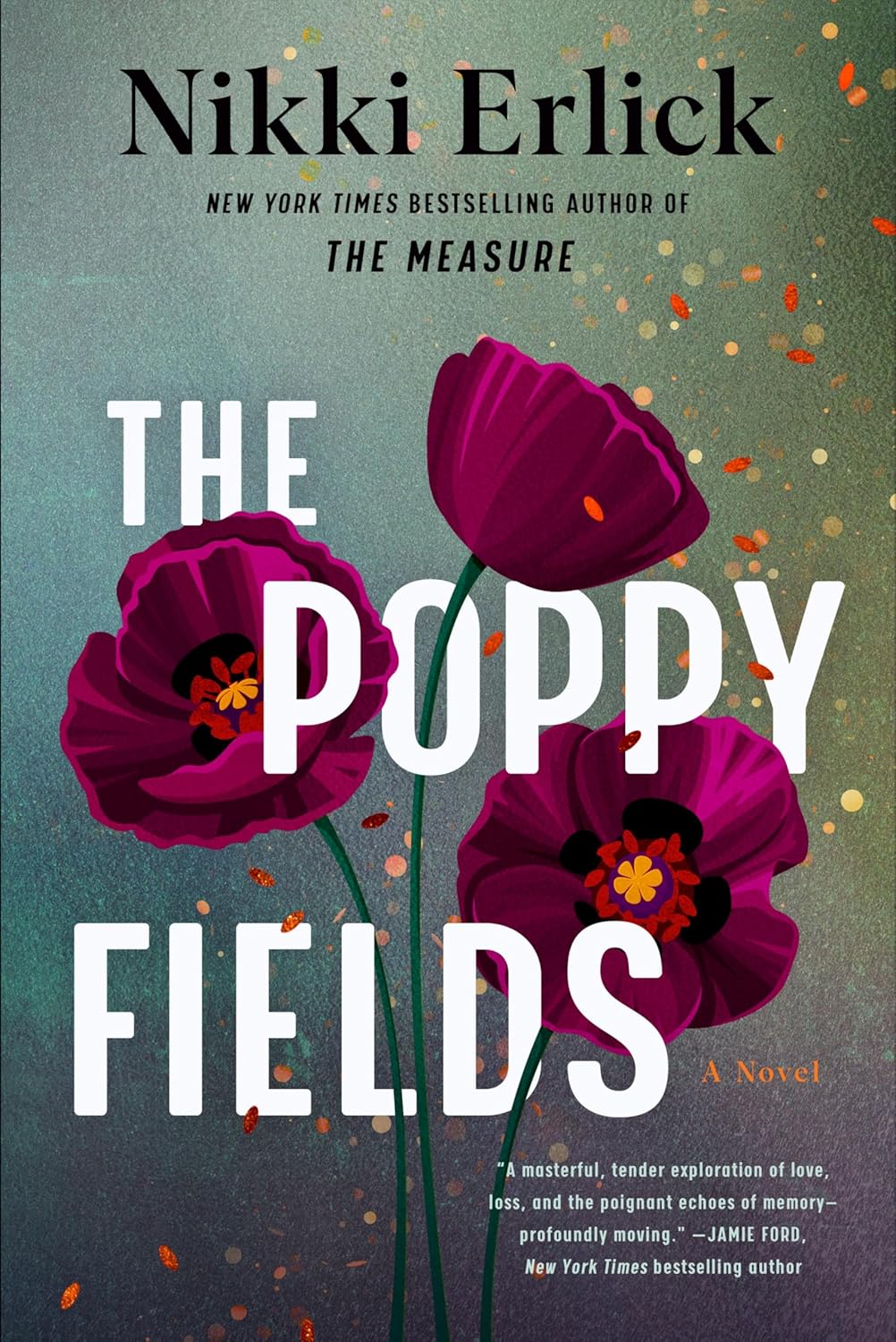
Title: The Poppy Fields
Author: Nikki Erlick
Publisher: William Morrow
Publication date: June 17, 2025
Length: 324 pages
Genre: Contemporary fiction
Source: Review copy courtesy of the publisher via NetGalley
Rating:
From the New York Times bestselling author of the smash-hit The Measure—a runaway bestseller and a Read with Jenna TODAY Show pick—comes a stunning speculative story of healing, self-discovery, forgiveness, and found friendship.
What if there were a cure for the broken-hearted?
Welcome to the Poppy Fields, where there’s hope for even the most battered hearts to heal.
Here, in a remote stretch of the California desert, lies an experimental and controversial treatment center that allows those suffering from the heartache of loss to sleep through their pain…and keep on sleeping. After patients awaken from this prolonged state of slumber, they will finally be healed. But only if they’re willing to accept the potential shadowy side effects.
On a journey to this mystical destination are four very different strangers and one little dog: Ava, a book illustrator; Ray, a fireman; Sasha, an occupational therapist; Sky, a free spirit; and a friendly pup named PJ. As they attempt to make their way from the Midwest all the way to the Poppy Fields—where they hope to find Ellis, its brilliant, enigmatic founder—each of their past secrets and mysterious motivations threaten to derail their voyage.
A high-concept speculative novel about heartache, hope, and human resilience, The Poppy Fields explores the path of grief and healing, a journey at once profoundly universal and unique to every person, posing the questions: How do we heal in the wake of great loss? And how far are we willing to go in order to be healed?
If you could sleep away your grief… would you?
In this contemplative novel by Nikki Erlick, author of The Measure (which was fascinating!), scientist Ellis Jones has developed a popular but controversial treatment for grief: After a careful screening process, patients are put into a chemically induced sleep for one to two months, during which they are closely monitored and treated with a blend of hormones and medications to aid the healing process. When they awaken, they find themselves at peace with their loss, having bypassed the agonizing early stages of grief and slept their way through to acceptance.
This sleep comes with a price for about 25% of the patients: Not only do they wake free of the sharp pain of their loss, they also experience “emotional moderation” — they no longer feel any sort of emotional attachment to the person they’ve been mourning. They retain their memories of their lost loved one, but have no feelings for them, one way or another. This may sound terrible, and the odds aren’t especially great, but for the patients who feel that they can’t take one more moment of their suffering, it’s a price they’re willing to pay.
The plot of The Poppy Fields focuses on a group of travelers to Ellis’s institution (which is named — you guessed it! — the Poppy Fields). Stranded in the midwest by flight delays, they decide to drive the remaining distance together. Over the course of their journey, they shared their stories — why they feel the need to go to the Poppy Fields, what the idea of it means to them, what losses they’ve suffered, and what they’re hoping to achieve by sleeping.
Meanwhile, there are hints of trouble: Protesters are starting to appear outside the offices of the foundation that sponsors Poppy Fields, demanding that people “Stop the Sleep”. And within Poppy Fields itself, there’s division, as key staff members push for a for-profit model and facility expansion, while Ellis is committed to keeping their services free and to understanding how to stop the sleep’s side effects.
I think I went into this book with incorrect expectations. Based on the general description, I expected a darker story, with corporate twistiness, evil scientists, and some sort of dramatic revelation about the side effect. Instead, I found a very people-centered story about love, connection, grief and mourning, and how to move on after terrible loss.
Perhaps my early assumptions have a lot to do with my reaction, but I couldn’t help but feel that The Poppy Fields is a bit inconsequential. I believe it’s trying to say something deep about our memories and how we keep pieces of those we lose — but the overall story seems to veer between a road-trip-with-buddies plotline and serious introspection, and it just doesn’t gel well.
The main characters each have interesting backstories, and I enjoyed seeing them form bonds over the course of their days together in the car, although I wasn’t entirely convinced by each of their decisions by the end of the book. A random teen who tags along for part of the journey is rather pointless, and the various stops along the way provide some diverting interludes, but also mainly seem to serve to stretch the story.
As for the science and protest and corporate maneuvering, there’s not much there there. The setup seems to suggest that something dire is afoot, but that’s not actually the case. It all just kind of wraps up without a ton of fanfare.
Overall, there are some interesting ideas in The Poppy Fields, but I found it unconvincing. I think I really would have preferred the version I expected — give me evil scientists carrying out mad experiments in an isolated desert facility any day!
I loved how much there was to think about while reading The Measure, and my sense is that the author was going for something similar in this new book. However, the concept and the controversies didn’t strike me as all that exceptional. The Poppy Fields held my attention and had some solid points and good storytelling behind it, but failed to really grab my imagination. A decent piece of summer entertainment, but not much more than that.

Purchase links: Amazon – Bookshop.org – Libro.fm
Disclaimer: When you make a purchase through one of these affiliate links, I may earn a small commission, at no additional cost to you.






 Bookshelf Fantasies