Book Review: The Ladies Rewrite the Rules by Suzanne Allain

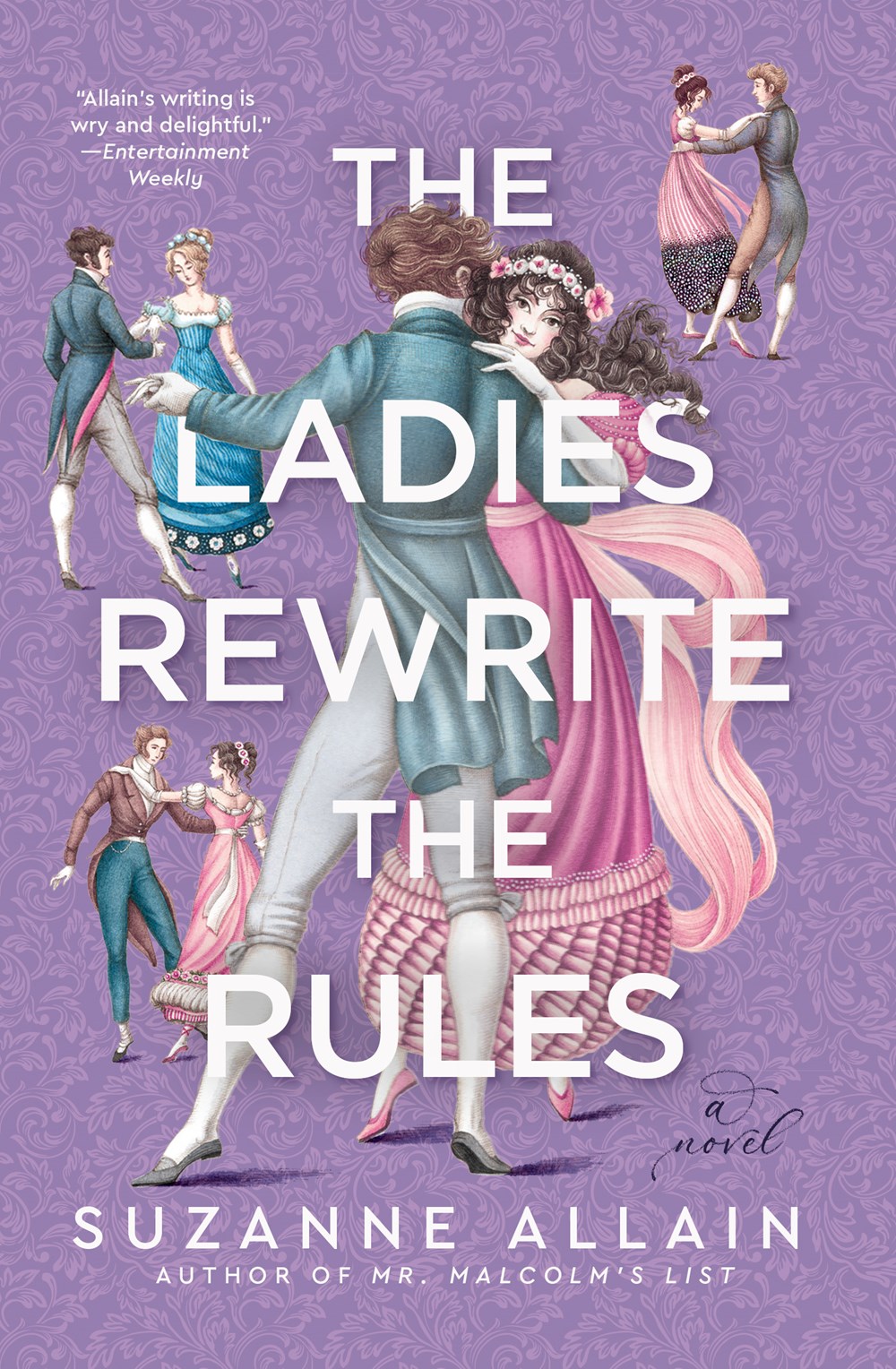
Title: The Ladies Rewrite the Rules
Author: Suzanne Allain
Publisher: Berkley
Publication date: January 9, 2024
Length: 272 pages
Genre: Historical fiction
Source: Review copy courtesy of the publisher via NetGalley
Rating:

Rating: 4.5 out of 5.

From the author of Mr. Malcolm’s List comes a delightful romantic comedy set in Regency England about a widow who takes high society by storm.

Diana Boyle, a wealthy young widow, has no desire to ever marry again. Particularly not to someone who merely wants her for her fortune. 

So when she discovers that she’s listed in a directory of rich, single women she is furious, and rightly so. She confronts Maxwell Dean, the man who published the Bachelor’s Directory , and is horrified to find he is far more attractive than his actions have led her to expect. However, Diana is unmoved by Max’s explanation that he authored the list to assist younger sons like himself who cannot afford to marry unless it’s to a woman of means. 

She gathers the ladies in the directory together to inform them of its existence, so they may circumvent fortune hunters’ efforts to trick them into marriage. Though outraged, the women decide to embrace their unique position of power and reverse the usual gender roles by making the men dance to their tune. And together… the ladies rewrite the rules.

What a delightful little gem! This comedy of manners is an utterly fun treat about women taking back control of their destinies at a time when society tells them they’re powerless.

A woman needs a dowry to attract a man, must marry “well”, must remain virtuous at all times, must avoid the thousand and one ways she can be “ruined”, must kowtow to the powerful matrons who control social standing… the restrictions on young women of the Regency era go on and on.

Diana Boyle is lucky, all things considered. She married a much older man at age eighteen to save herself and her mother from poverty. When she finds herself a widow at age twenty-five, she’s finally able to live peacefully in the grand estate left to her by her unpleasant late husband, and for once has no pressure to do what others want. And mainly, Diana just wants to be left alone. She’s not a social butterfly, has no interest in remarrying (her unhappy first marriage was plenty, thank you), and doesn’t need balls and visits and endless society obligations.

All this changes when a pair of gentlemen show up at her estate — uninvited — and proceed to attempt to ingratiate themselves with her. Her observant butler manages to discover the reason — they’re carrying a copy of a directory that lists the wealthiest widows and unmarried women of London, and Diana is listed! She’s outraged, enough so that she overcomes her normal shyness to seek out the author of the directory and give him a piece of her mind.

Maxwell Dean is not quite the villain she’d expected. Rather than a fortune hunter, he’s a man who’s seen more than one friend fall in love, only to have it come to naught when the couple realize that neither has any money whatsoever. For a younger son, the only hope is to marry a woman of means — so why not provide some guidance in advance? Maxwell doesn’t realize how mercenary his guide might set men up to be — he honestly just thinks he’s helping people find love in a more practical way. (He’s a very special — and sweet — snowflake, to be honest).

The fun takes off when Diana makes it her mission to inform other ladies of their inclusion in the directory. While initially upset and offended, the women soon discover more than one silver lining. They band together, forming strong friendships and allyships, and realize that given the situation, they’re actually the ones with the power.

Somehow the very thing that had been the symbol of their helplessness, that directory which listed them as no more than a commodity, had now become a way for them to exert their independence, to rewrite the rules in their favor.

With all these men seeking them as marriage partners, they have a freedom never before experienced — to waltz with abandon, to decline a dance if they don’t feel like dancing with the man asking (and still dance with others!), to say no if they’re so inclined in any situation. The women of the directory find a new sense of liberty and strength, and they intend to enjoy it to the hilt.

For it’s an indisputable fact that when a person no longer seeks acceptance, they immediately become irresistible.

Of course, there’s also a budding romance between Diana and Max, and it’s quite sweet to see the two of them come together, tentatively at first, as they discover friendship, trust, and attraction. As Diana’s connections to the other women grow, and her fondness for Max strengthens too, she’s able to rethink her position in life and for once, make her own decisions about who she wants to be and how she wants to live.

The writing in The Ladies Rewrite the Rules is oodles of fun. There are plenty of funny and silly moments, but the women also share stories that are more painful and illustrate how strongly the odds are stacked against them. I especially loved seeing Diana’s friendship with Lady Regina, a wealthy heiress whose reputation had been tarnished as a much younger woman. Through their new sense of confidence and empowerment, Regina is able to right some old wrongs and realize that she is in fact as entitled to happiness as anyone else.

I picked up this book with a little bit of hesitation, as I didn’t love Mr. Malcolm’s List quite as much as I’d hoped to… and so I was incredibly happy to discover how much I enjoyed spending time with Diana, Regina, and the Ladies of the Registry.

I tore through The Ladies Rewrite the Rules in a little more than a day, and found myself smiling and laughing throughout. If you enjoy a good Regency tale with a slightly unconventional twist, be sure to check this book out!

Book Review: A Grave Robbery (Veronica Speedwell, #9) by Deanna Raybourn

Title: A Grave Robbery
Series: Veronica Speedwell, #9
Author: Deanna Raybourn
Publisher: Berkley
Publication date: March 12, 2024
Length: 336 pages
Genre: Historical fiction
Source: Review copy courtesy of the publisher via NetGalley
Rating:

Rating: 4.5 out of 5.

Veronica and Stoker discover that not all fairy tales have happy endings, and some end in murder, in this latest historical mystery from New York Times bestselling and Edgar Award–nominated author Deanna Raybourn.

Lord Rosemorran has purchased a wax figure of a beautiful reclining woman and asks Stoker to incorporate a clockwork mechanism to give the Rosemorran Collection its own Sleeping Beauty in the style of Madame Tussaud’s. But when Stoker goes to cut the mannequin open to insert the mechanism, he makes a gruesome discovery: this is no wax figure. The mannequin is the beautifully preserved body of a young woman who was once very much alive. But who would do such a dreadful thing, and why?

Sleuthing out the answer to this question sets Veronica and Stoker on their wildest adventure yet. From the underground laboratories of scientists experimenting with electricity to resurrect the dead in the vein of Frankenstein to the traveling show where Stoker once toured as an attraction, the gaslit atmosphere of London in October is the perfect setting for this investigation into the unknown. Through it all, the intrepid pair is always one step behind the latest villain—a man who has killed once and will stop at nothing to recover the body of the woman he loved. Will they unmask him in time to save his next victim? Or will they become the latest figures to be immortalized in his collection of horrors?

Veronica Speedwell is back! This outing — another potentially deadly investigation with her lover and partner Stoker — provides everything fans of this series love: Dastardly deeds, scheming scientists, Victorian scandal, and lots of sexy bantering.

As she and Stoker happily work on their ongoing commission to catalog and restore their patron Lord Rosemorran’s vast collection of natural wonders, a new challenge comes their way. Lord Rosemorran has purchased a waxwork of a lovely young woman, and to entertain his rambunctious youngest daughter, wants Stoker to add a mechanical element to give the illusion of breathing, as seen in a famous attraction at Madame Tussaud’s.

The promise of a new case to investigate becomes apparent once Stoker starts his work and discovers that this is no waxwork, but the meticulously preserved body of a young woman who was once very much alive. But who was she, and how did she come to be in this condition?

The more Veronica and Stoker learn, the more questions arise. It appears that this may be the body of a young woman who was found drowned in a river some fifteen years earlier, but that fact does not provide clues to her identity or shed light on the mystery of how such an impeccable work of preservation was carried out.

The details of their investigation are as delicious as readers can rightfully expect in this series, as we descend into worlds of mortuaries, mad scientists, and questionable examples of *ahem* anatomical study aides.

Through it all, Veronica and Stoker remain as wonderfully intertwined and perfectly in tune as ever, enjoying their restorative bouts of “congress” (as Veronica calls it) while also engaging as equal partners at a time when women are expected to be submissive.

It has been my experience that the male of the species, though often thoroughly illogical, can — when encouraged to sit quietly and think hard — be guided into a position of sense.

Veronica defers to no one and never backs down. She’s a smart, confident woman of science, and demands to be treated as such at all times. She never hesitates to call Stoker out, including his tendency toward anti-social behavior:

“Thanks to you, I speak to entirely too many people, entirely too often.”

“Exactly. You were practically a hermit when I met you.

“I was not a hermit,” he said through gritted teeth. “I was a professional man with work that I was actually permitted to do rather than being dragged into murder investigations because I had not yet met a woman whose very raison d’être seems to be falling over dead bodies.”

Author Deanna Raybourn seems to be having oodles of fun with these stories and characters. Her descriptions sparkle, and the quips, insults, and banter fly with zingy style. Even little throwaway lines are pure delight:

“That is the most preposterous load of plangent poppycock I have ever heard.”

I do hope she’ll continue writing Veronica Speedwell stories for many years to come. Each year’s new installment is something to savor… but sadly, they’re such fast, absorbing reads that I come to the end almost too quickly. And now, it’s another long year of waiting for the next adventure!

I’ll wrap up with words borrowed from my reviews of earlier books in the series:

If you haven’t yet had the pleasure, start with book #1, A Curious Beginning. There’s a very good chance you’ll want to continue!

This series has become one of my favorites. Don’t miss it.

Book Review: On the Rooftop by Margaret Wilkerson Sexton

Title: On the Rooftop
Author: Margaret Wilkerson Sexton
Publisher: Ecco
Publication date: September 6, 2022
Length: 304 pages
Genre: Historical fiction
Source: Library
Rating:

Rating: 4 out of 5.

A stunning novel about a mother whose dream of musical stardom for her three daughters collides with the daughters’ ambitions for their own lives—set against the backdrop of gentrifying 1950s San Francisco

At home they are just sisters, but on stage, they are The Salvations. Ruth, Esther, and Chloe have been singing and dancing in harmony since they could speak. Thanks to the rigorous direction of their mother, Vivian, they’ve become a bona fide girl group whose shows are the talk of the Jazz-era Fillmore.

Now Vivian has scored a once-in-a-lifetime offer from a talent manager, who promises to catapult The Salvations into the national spotlight. Vivian knows this is the big break she’s been praying for. But sometime between the hours of rehearsal on their rooftop and the weekly gigs at the Champagne Supper Club, the girls have become women, women with dreams that their mother cannot imagine.

The neighborhood is changing, too: all around the Fillmore, white men in suits are approaching Black property owners with offers. One sister finds herself called to fight back, one falls into the comfort of an old relationship, another yearns to make her own voice heard. And Vivian, who has always maintained control, will have to confront the parts of her life that threaten to splinter: the community, The Salvations, and even her family.

In On the Rooftop, the world of 1950s-era San Francisco — specifically, the city’s Fillmore District — is brought to life through a family of talented women. Sisters Ruth, Esther, and Chloe range in age from 20 – 24, and they’re on the cusp of stardom. Singing in three-part harmony, moving through their perfect dance steps, they’re the main attraction at the top clubs of the Fillmore, but their mother Vivian wants more. LA, New York, everywhere — her girls are destined for greatness.

Yet as we learn through chapters told from each sister’s POV, Vivian’s dreams aren’t necessarily her daughters’ dreams.

Meanwhile, the neighborhood around them is on the verge of change as well. The Fillmore is the family’s safe haven — it’s where Vivian and her husband landed twenty years earlier after fleeing Klan violence in Louisiana. In the Fillmore, every building and block and the people who live there represent a piece of a tight-knit community. Everyone knows everyone’s business; everyone looks out for one another… or if not, is ready to carry tales when someone steps out of line.

But white businessmen having been showing up more and more frequently, and soon their goal is clear. The neighborhood has been identified as one suitable for redevelopment, and that means its current residents and businesses have to go. At first, the approach is more of a sales pitch — home and business owners offered a buyout to relocate. But persuasion turns into coercion, and evictions due to public domain eventually threaten every member of the community.

On the Rooftop is both a family story and a community story. The sisters and Vivian are well-drawn, distinct personalities, each with their own hopes, sorrows, and intentions. Through their separate POV chapters, we get multiple perspectives on the turning points in their lives, and come to understand the women’s options and limitations in that time and place.

As a portrait of a community, On the Rooftop shows the devastation of gentrification and displacement, as it illustrates the dismantling of a community who have no say or voice in the matter.

It took me until close to the end of the book to realize that the story beats were reminding me of a story that at first glance might seem like something completely unrelated — Fiddler on the Roof. But once I made the connection, I experienced a huge “aha moment” as the pieces came together. Sure enough, in the author’s notes at the end of the book, she lists Fiddler on the Roof as one of her inspirations.

Themes of (yes) tradition, children choosing paths different from their parents’ expectations, community dispersal and forced exile — all are integral to the story of the these sisters, their mother, and their neighborhood. The author beautifully incorporates these elements so that the Fiddler motifs are subtly part of the story — this isn’t a retelling, and we’re not hit over the head with obvious comparisons. The commonalities enhance the reading experience, but the story is strong enough to stand on its own even without noticing these elements.

Overall, On the Rooftop is a powerful, emotional, lovely book about family and community. This book is our library’s “On the Same Page” book for February, and it’s also the group read one of my in-person book groups has selected for Black History Month. I look forward to the various discussions and events for this book coming later in the month — and meanwhile, highly recommend this terrific book.

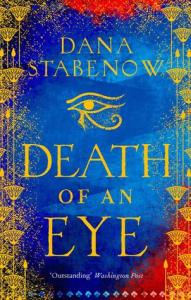
Book Review: Death of an Eye (Eye of Isis, #1) by Dana Stabenow

Title: Death of an Eye
Series: Eye of Isis, #1
Author: Dana Stabenow
Publisher: Head of Zeus
Publication date: December 6, 2018
Length: 254 pages
Genre: Historical fiction
Source: Purchased
Rating:

Rating: 4 out of 5.

ALEXANDRIA, 47 BC. For three centuries, the House of Ptolemy has governed the Kingdom of Egypt. Cleopatra – seventh of her name – rules from Alexandria, that beacon of commerce and learning that stands between the burning sands of the desert and the dark waters of the Middle Sea. But her realm is beset by ethnic rivalries, aristocratic feuds and courtly intrigues . Not only that, she must contend with the insatiable appetite of Julius Caesar who needs Egyptian grain and Egyptian gold to further his ambitions. The world is watching the young Queen, waiting for a misstep …

And now her most trusted servant – her Eye – has been murdered and a vast shipment of newly minted coin stolen. Cleopatra cannot afford for the coins to go unrecovered or the murderers unpunished, so she asks childhood friend, Tetisheri Nebenteru, to retrace the dead Eye’s footsteps. Tetisheri will find herself plunged into the shadowy heart of Alexandria . As she sifts her way through a tangle of lies and deceit, she will discover that nothing can be taken at face value, that she can’t trust anyone – not even the Queen herself .

As a devoted fan of Dana Stabenow’s Kate Shugak series, I was curious to see what her non-Kate/non-Alaska books were like. Fortunately, my book group selected Death of an Eye as our February read, which was the perfect opportunity for me to finally read a book I’ve had my eye on for quite a while.

In this historical novel, the main character is a young woman named Tetisheri, the niece and business partner of a successful merchant in Alexandria at the time of Cleopatra’s reign. Tetisheri was close to Cleopatra as a child, and when the queen finds herself in need of a trusted ally, she calls on Tetisheri.

Cleopatra’s “eye” — a person unknown to any but the queen herself, authorized by her to carry out investigations on her behalf — has been murdered while investigating a crime that could spell disaster for Cleopatra. The queen asks Tetisheri to take on the role of Eye and track down both the murderer and the solution to the earlier crime. As she does so, Tetisheri is herself subject to danger, and must also contend with the slippery politics of Alexandrian and Roman nobility.

Once I began wrapping my head around the people, places, and culture, I was quickly immersed in both the historical setting and the crime story. I really know next to nothing about this time period or the society of Alexandria, apart from film and TV depictions and classic dramas (yes, I’ve read both Caesar and Cleopatra and Antony and Cleopatra, but both were a very long time ago).

The Cleopatra we meet in Death of an Eye is not the Elizabeth Taylor version. Here, she’s a young, strong-willed, and incredibly intelligent ruler, struggling to maintain her throne despite the machinations of her co-ruler and brother Ptolemy XIV and his minions, while also pregnant with Julius Caesar’s child and making every effort to stay in his favor. Cleopatra is interested in science and logic, and cares for her people, but has very few whom she can actually trust.

Tetisheri is not a historical figure; rather, she’s a citizen of Alexandria who, as a monetarily secure merchant, has access to many levels of society, but doesn’t personally wield much power. Having survived a cruel marriage, she makes it her mission to rescue enslaved women and give them the means to start new lives. Tetisheri is smart and dedicated, and while she’s not entirely happy about her assignment from Cleopatra, she’s loyal to the queen and determined to see the investigation through.

I really enjoyed Death of an Eye. As I mentioned, it’s not a setting or period that I’m very familiar with, so there was a pretty steep learning curve at the beginning, and all the way through I found myself confusing people and place names. (Helpfully, there’s both a map and a cast of characters list at the front of the book — and I used both quite a lot). The plot is intricate but not hard to follow, and I found myself more and more interested in the mystery as the various pieces came together toward the end of the book.

While the central mystery of Death of an Eye is solved by the end, Tetisheri’s involvement with Cleopatra is by no means concluded, and her personal life — including a love interest — is left very much open-ended. Fortunately, there are two more books in the Eye of Isis series currently available, with a 4th book planned for 2025.

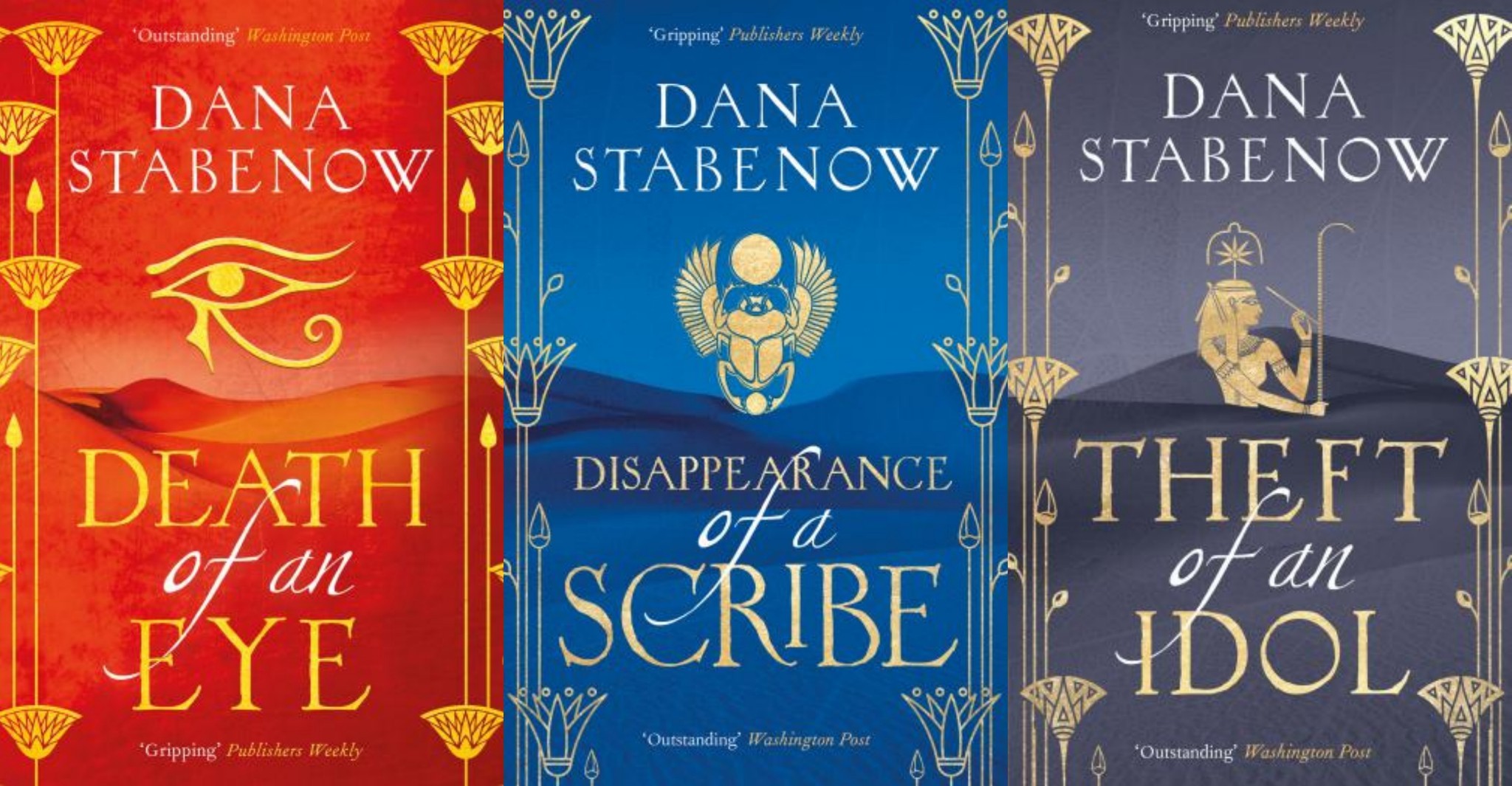
Books 1 – 3; currently available

Book Review: The Warm Hands of Ghosts by Katherine Arden

Title: The Warm Hands of Ghosts
Author: Katherine Arden
Publisher: Del Rey
Publication date: February 13, 2024
Length: 336 pages
Genre: Historical fiction
Source: Review copy courtesy of the publisher via NetGalley
Rating:

Rating: 5 out of 5.

During the Great War, a combat nurse searches for her brother, believed dead in the trenches despite eerie signs that suggest otherwise, in this hauntingly beautiful historical novel with a speculative twist from the New York Times bestselling author of The Bear and the Nightingale

January 1918. Laura Iven was a revered field nurse until she was wounded and discharged from the medical corps, leaving behind a brother still fighting in Flanders. Now home in Halifax, Canada, she receives word of Freddie’s death in combat, along with his personal effects—but something doesn’t make sense. Determined to uncover the truth, Laura returns to Belgium as a volunteer at a private hospital. Soon after arriving, she hears whispers about haunted trenches, and a strange hotelier whose wine gives soldiers the gift of oblivion. Could Freddie have escaped the battlefield, only to fall prey to something—or someone—else?

November 1917. Freddie Iven awakens after an explosion to find himself trapped in an overturned pillbox with a wounded enemy soldier, a German by the name of Hans Winter. Against all odds, the two men form an alliance and succeed in clawing their way out. Unable to bear the thought of returning to the killing fields, especially on opposite sides, they take refuge with a mysterious man who seems to have the power to make the hellscape of the trenches disappear.

As shells rain down on Flanders, and ghosts move among those yet living, Laura’s and Freddie’s deepest traumas are reawakened. Now they must decide whether their world is worth salvaging—or better left behind entirely.

After reading and loving Katherine Arden’s Winternight trilogy, I expected great things from her new novel, The Warm Hands of Ghosts. Those expectations were met, and then some.

In The Warm Hands of Ghosts, we’re plunged into the nightmare of war through the experiences of Laura Iven, a Canadian battlefield nurse, and her brother Freddie, a soldier on the frontlines in Belgium. As the novel weaves their stories together, we’re given an up-close look at the horrors of World War I.

As the book opens, Laura is back home in Halifax in early 1918, having been discharged from the army after suffering serious injury when her hospital in Belgium was bombed. But life in Halifax is not peaceful either; shortly before the book opens, the ship explosion of 1917 (a devastating historical event — read more here) kills thousands in the city, including Laura and Freddie’s parents.

When Laura receives a package containing her brother’s bloody uniform and his ID tags, she’s thrust into even more severe grief, but feels that something’s not right. No one she writes to can tell her about his final days or provide information about what might have happened to him. When she meets a woman heading back to Belgium to organize a hospital, Laura volunteers to go along, desperate to learn more about Freddie’s fate.

Meanwhile, through alternating chapters, we learn that Freddie did survive… barely. After being trapped in a collapsed pillbox on the battlefield, he and a German soldier, Hans Winter, save one another and navigate through the hellscape of the battlefield back to the relative safety of the Allied hospital. But saving Winter makes Freddie a traitor, and he finds shelter with a strange, eerie man whose violin-playing and eerie, ornate hotel promise oblivion and escape from the war.

Soldiers exchange stories of someone called “the fiddler”, whose music both captivates and repels, and who is rumored to steal men’s souls in exchange for relief from their worst nightmares. Freddie falls under the spell of the fiddler, but as he loses bits of himself, he doesn’t find the peace he seeks. Meanwhile, Laura refuses to give up on finding the truth about her lost brother, and the siblings endure greater and greater dangers in their quest to discover one anothers’ fates.

The Warm Hands of Ghosts incorporates an other-worldly element as it examines the toll of war and horror on people’s inner selves. We see wounded and shell-shocked soldiers, people maimed or whose minds have been destroyed. Is it any wonder that they embrace the idea of a supernatural presence that feeds off souls and promises ease? As Laura ponders:

Was remembered agony better than feeling nothing at all?

That’s the crux of the dilemma facing the characters who encounter the fiddler. Life amidst the hell of war promises pain and suffering, and even out of the warzone, as Laura experienced back in Halifax, there’s no escape from the torment of memories. The characters, again and again, face this impossible decision: Give in and forget, or hold on and suffer?

They all drank. The wine was glorious. Like getting hit in the face by an ocean wave; it was a shock, then a pleasure, then a numbness.

There’s so much more to the story, of course. Underneath the horror of it all, there are strong threads of love running throughout the lives of the characters we come to know. The bonds between Laura and Freddie, Freddie and Winter, and Laura and the women she befriends are all strong, forged in a shared experience that those who haven’t been to war will never be able to fully comprehend.

Laura is a marvelous characters. As a nurse, she’s extremely brave, competent, and compassionate. She’s also damaged, both physically and emotionally, and makes decisions following her heart, even when logic would dictate otherwise. Freddie is fascinating as well — wounded to his core, suffering in his psyche from the horrors he’s both seen and inflicted, and unable to envision any sort of future for himself.

The battlefield scenes are vivid and terrible and utterly visceral. The terror and butchery are shown plainly, and the psychological toll is clear and awful to read about.

Despite the disturbing nature of reading about World War I battlefield experiences, I was struck over and over again by how beautiful Katherine Arden’s writing is. Little phrases and moments would catch my attention from time to time, just because I so admired the words and sentences.

London felt like limbo to her, the glittering center of the modern world become merely the war’s antechamber.

I would imagine that the supernatural element might not work for every reader, particularly for those who pick up The Warm Hands of Ghosts looking for a more traditional historical fiction reading experience. (Then again, the title does have the word ghosts in it, so it’s not like the supernatural piece is hidden in any way.) For me, I found The Warm Hands of Ghosts a powerful, sad, evocative book, and it’s fully deserving of a 5-star rating. Highly recommended.

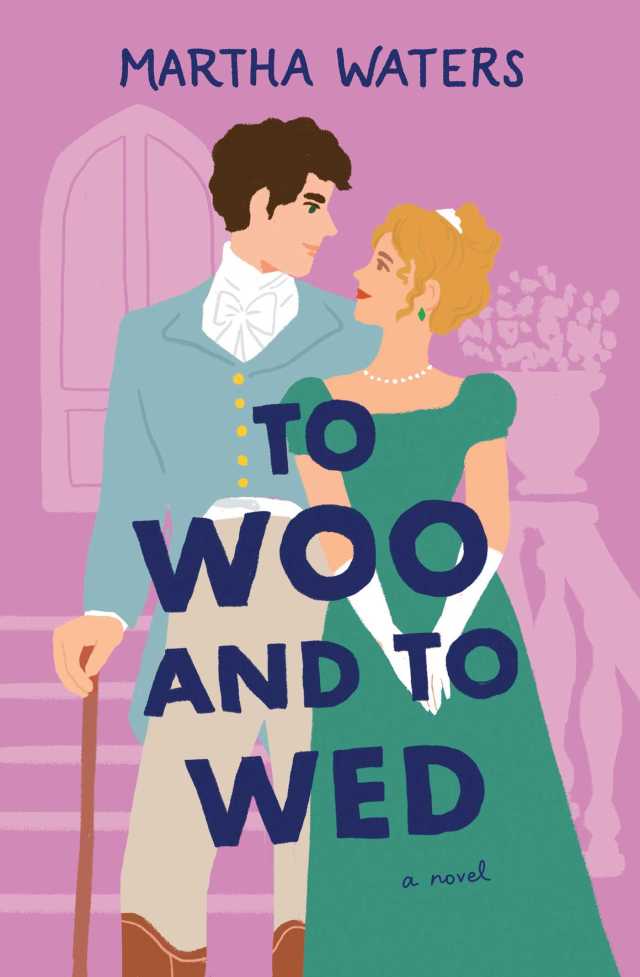
Book Review: To Woo and To Wed (The Regency Vows, #5) by Martha Waters

Title: To Swoon and To Spar
Series: The Regency Vows, #5
Author: Martha Waters
Publisher: Atria
Publication date: February 6, 2024
Length: 336 pages
Genre: Historical fiction/romance
Source: Review copy courtesy of the publisher via NetGalley
Rating:

Rating: 4 out of 5.

The final installment in the Regency Vows series follows the heir to a dukedom and a young widow, once very much in love, as they reunite years later to fake an engagement for the benefit of her sister.

West, the Marquess of Weston, and Sophie, Lady Fitzwilliam Bridewell, have lately been spending a considerable amount of time together. But West and Sophie are not new acquaintances. In fact, years ago, they had once been nearly engaged until West’s almost fatal curricle accident and his meddling father threw them off course.

Now recently widowed, Sophie has put aside all thoughts of romance. But when her widowed sister, Alexandra, mentions a fondness for an earl, Sophie realizes that she may be holding her sister back. Alexandra won’t move forward with an engagement until Sophie, too, settles down again, and so Sophie approaches West with a plan. They will announce their engagement and break things off once Alexandra is happily married. It’ll be simple. After all, it’s not like she is going to fall for West a second time, not when Sophie has sworn not to risk her heart again.

To Woo and To Wed is a fitting, satisfying wrap-up to a consistently entertaining series about love, friendship, and offbeat relationships. The series as a whole balances light-hearted romps and banter with some serious (but not too heavy) themes about family obligations and expectations. Book #5 ties the entire series together in a way that’s sure to please its faithful readers.

Throughout the series, West (Marquess of Weston, and future Duke) and Sophie (a lovely young widow) have been in the background — not driving the previous books’ plots, but factoring into the overarching storylines nonetheless. Over the course of these books, we’ve learned bits and pieces of their (mostly sad) history: At one point madly in love and on the verge of betrothal, West was in a tragic accident that killed his closest friend and left him severely injured, and upon his recovery, he discovered that Sophie had married another man. Widowed after three years of marriage, Sophie has carried an air of sadness with her, and she and West have kept their distance. More recently, however, West and Sophie have been thrown together much more frequently as their circle of friends and relatives have overlapped (in the four books of the Regency Vows series). Here in book #5, West and Sophie finally take center stage, and we learn much more about their backstory and how their lives continue to intersect.

In To Woo and To Wed, Sophie finds herself in a bind when her younger sister, also a widow, hints at being in love and ready to marry, but seems to be holding off out of concern for Sophie’s well-being. Sophie is perfectly fine on her own, yet doesn’t want to be responsible for delaying her sister’s happiness. Thrown together with West yet again due to their mutual social connections, she makes a startling proposal: She and West will announce their betrothal, ensuring her sister’s comfort in getting married. Once Alexandra is safely wed, she and West can break things off and go their separate ways.

West is amenable — he still loves Sophie, for one thing, and he’s also getting pressure from his awful, domineering father to marry and produce heirs. In fact, his father is now using outright extortion — if West doesn’t get married (and soon), his father will sell the property that once belonged to his late mother, the place that West most considers home.

Of course, a fake betrothal is bound to get complicated. First of all, their friends are rightfully skeptical, and even Alexandra seems suspicious, forcing ridiculous wedding plans (such as overly ruffled matching gowns, a double ceremony, and departure on horseback) on Sophie… in hopes of making her confess the truth?

And then there’s the undeniable fact that neither Sophie nor West has ever gotten over one another. All this forced proximity and pretend intimacy gets harder and harder to endure while denying feelings… and those feeling keep bubbling up each time they meet.

It’s quite lovely to see West and Sophie together at long last, and very satisfying to finally get their full backstory and understand just went wrong seven years earlier. They’re both great characters — smart, caring, and sensitive — and they deserve happiness. Getting there isn’t easy, but their ups and downs give us readers plenty of time to cheer them on.

All of the characters from the previous books participate in the events of To Woo and To Wed, and it’s extremely enjoyable to see them all come together, in various combinations to move the plot forward (and to meddle in Sophie and West’s romance).

The Regency Vows series is a lot of fun, and this 5th book is a terrific conclusion to the characters’ romantic adventures. Many romance series are only loosely connected, so a reader can jump in at any point. Here, there is so much involvement of other characters and winking references to past events that I can’t see the reading experience being nearly as enjoyable if someone started anywhere but with book #1, To Have and To Hoax. My recommendation? Start at the beginning, and enjoy the ride all the way through to the end!

Book Review: The Women by Kristin Hannah

Title: The Women
Author: Kristin Hannah
Publisher: St. Martin’s Press
Publication date: February 6, 2024
Length: 480 pages
Genre: Historical fiction
Source: Review copy courtesy of the publisher via NetGalley
Rating:

Rating: 5 out of 5.

From the celebrated author of The Nightingale and The Four Winds comes Kristin Hannah’s The Women—at once an intimate portrait of coming of age in a dangerous time and an epic tale of a nation divided.

Women can be heroes. When twenty-year-old nursing student Frances “Frankie” McGrath hears these words, it is a revelation. Raised in the sun-drenched, idyllic world of Southern California and sheltered by her conservative parents, she has always prided herself on doing the right thing. But in 1965, the world is changing, and she suddenly dares to imagine a different future for herself. When her brother ships out to serve in Vietnam, she joins the Army Nurse Corps and follows his path.

As green and inexperienced as the men sent to Vietnam to fight, Frankie is over- whelmed by the chaos and destruction of war. Each day is a gamble of life and death, hope and betrayal; friendships run deep and can be shattered in an instant. In war, she meets—and becomes one of—the lucky, the brave, the broken, and the lost.

But war is just the beginning for Frankie and her veteran friends. The real battle lies in coming home to a changed and divided America, to angry protesters, and to a country that wants to forget Vietnam.

The Women is the story of one woman gone to war, but it shines a light on all women who put themselves in harm’s way and whose sacrifice and commitment to their country has too often been forgotten. A novel about deep friendships and bold patriotism, The Women is a richly drawn story with a memorable heroine whose idealism and courage under fire will come to define an era.

I’ll put it simply: Kristin Hannah’s new book is a stunner. In this dramatic story of a young woman’s experiences as a nurse during the Vietnam War and the wrenchingly difficult life she comes home to, we live through hell and then some with the sympathetic, compelling main character.

Frances McGrath is a child of privilege, a lovely young woman fresh out of nursing school, the daughter of a wealth family living on San Diego’s Coronado Island. She comes from a family of military heroes — her father even has a “hero wall” in his study, with framed photos of the generations of men who served their country. That’s right — men. It’s not until her beloved only brother ships out to begin his naval tour, after a fancy family party, that Frankie realizes that women can be heroes too. Feeling a bit lost without her big brother and wanting to share some of her father’s admiration, she joins the Army Nurse Corps — the only branch that will allow a nurse with so little real-world experience to head to Vietnam.

Frankie is in for many rude awakenings, starting with her parents’ reaction. It turns out, she’s misinterpreted everything. Military service is something to be proud of only in the case of sons, not daughters. Frankie is an embarrassment, nothing more.

Still, she excels at basic training, but finds herself completely out of her depth when she arrives in Vietnam, where she quickly realizes that her quiet hospital rounds back home did nothing to prepare her for the horrors of Vietnam’s reality. Fortunately, she’s taken under the wings of her two roommates, Barb and Ethel, women whose experience and guidance help Frankie survive her first few weeks of war. Eventually, Frankie rises to the occasion, becoming a skilled, brave, and compassionate surgical nurse.

Vietnam also provides Frankie with romantic entanglements, and suffice it to say that the outcome is as tragic as you’d expect in a war zone. Frankie’s time in-country comprises the first half or so of the book. It’s harrowing, tragic, upsetting, and yet, gorgeously written. It’s so visceral that we feel we’re there with Frankie, and she herself is given space to grow, feel, and experience everything around her. Readers will walk away feeling that they truly know this person.

Frankie’s return to the States is yet another awful shock. As we know from history, returning vets were spat at, reviled, and called baby killers. Frankie is emotionally drained, distraught, and has nowhere to turn. In low moments, when she seeks help at the VA and tries to join a veterans’ “rap” group, she’s turned away by male vets who inform her that, despite what she tries to tell them, there were no woman in Vietnam.

Her downward spiral is awful, compounded by some shady people in her life, but even with the love and support of her close friends, she’s mainly alone in a very, very dark place. Frankie’s experiences are heartbreaking. Even as we see her making terrible decisions and using very bad judgment, we can sympathize and understand how hopeless and out of place she feels.

It’s probably obvious that The Women is not an easy book to read, but it’s absolutely worth the emotional investment. The writing is fantastic, descriptive and personal while also plunging us headlong into the scenes of wartime hell — but what really elevates this book is the in-depth look into the heart and soul of such a fascinating and complex woman.

The Women is also quite informative, relaying the experiences of women serving in Vietnam in a way that doesn’t often get the spotlight. The author’s notes at the end are very helpful, as are the reference books and additional sources she lists. (In fact, one of the books she recommends is A Piece of My Heart: The Stories of 26 American Women Who Served in Vietnam, which I read many years ago, but am now tempted to read again.)

The book also brought back memories of the TV series China Beach, which I loved… and which (sadly) does not appear to be available to stream anywhere. Bring back China Beach!

But back to The Women: It’s a beautiful, sad, disturbing, powerful read. After finishing the book a few days ago, I haven’t been able to stop thinking about it. Another don’t-miss book from a talented author — highly recommended.

Book Review: I Must Betray You by Ruta Sepetys

Title: I Must Betray You
Author: Ruta Sepetys
Publisher: Penguin
Publication date: February 1, 2022
Length: 321 pages
Genre: Young adult / historical fiction
Source: Library
Rating:

Rating: 4 out of 5.

Romania, 1989. Communist regimes are crumbling across Europe. Seventeen-year-old Cristian Florescu dreams of becoming a writer, but Romanians aren’t free to dream; they are bound by rules and force.

Amidst the tyrannical dictatorship of Nicolae Ceaușescu in a country governed by isolation and fear, Cristian is blackmailed by the secret police to become an informer. He’s left with only two choices: betray everyone and everything he loves—or use his position to creatively undermine the most notoriously evil dictator in Eastern Europe.

Cristian risks everything to unmask the truth behind the regime, give voice to fellow Romanians, and expose to the world what is happening in his country. He eagerly joins the revolution to fight for change when the time arrives. But what is the cost of freedom?

A gut-wrenching, startling window into communist Romania and the citizen spy network that devastated a nation, from the number one New York Times best-selling, award-winning author of Salt to the Sea and Between Shades of Gray.

I picked up I Must Betray You with some trepidation. Reading a YA historical novel set during the last days of the Ceaușescu regime would not typically have been a go-to choice for me, but because this is my book group’s pick for the month, I decided to commit and give it a try. I’m glad I did.

I Must Betray You is a stark, brutal story of repression, cruelty and suffering, as experienced by 17-year-old Cristian. Cristian is a smart, kind teen living in Bucharest, worn down by the daily suffering and deprivation of life under the Ceaușescus. There’s little food, unreliable water and electricity, and constant fear. Anyone and everyone could be an informer. There are no secrets; there is no safety.

As told through Cristian’s experiences, it’s a terrifying life, and even the small moments of friendship, family connection, and potential romance are weighted down by fear: Can he trust the person he’s speaking with? Who else is listening? Can he believe what he hears?

Cristian’s life falls apart when he’s forced into an informer role. If he complies, his ailing grandfather will be given medicine. If not? Well, as bad as things are for his family, they can get much worse.

Without giving too much away, I Must Betray You follows Cristian through the darkest of days and up through the revolution that overthrew the Ceaușescu regime in 1989. Cristian’s experiences are harsh, scary, and awful to read about, and given the ambiguousness of the book’s opening, it’s very much an open question throughout whether he’ll survive.

I appreciate the storytelling and sensitivity that the author brings to this harsh narrative. The chapters are very short and sharp, and as each ended, I wanted to know more. This is a hard book to put down once started.

For me, the collapse of communist regimes in the late 1980s is something that doesn’t feel like long-ago history, but even so, I really didn’t know much specifically about Romania and what the Romanian people suffered through on a daily basis. I Must Betray You is eye-opening. I can only wonder how this book is received by its target audience of contemporary teens — are they aware of this period of history, and do they connect with the characters and events?

I Must Betray You is powerful and clearly very well researched. Somehow, I can’t quite bring myself to give it 5-stars — possibly because it feels like there’s so much exposition throughout, occasionally at the expense of the characters’ development. Pieces of the outcome (again, trying to avoid giving away details) feel unlikely too me, perhaps a tad too optimistic about survival given the realities of what happened in Romania at the time.

Overall, I Must Betray is a compelling, intense read, and I’m glad I had the experience. I’ve only read one book by this author previously (Out of the Easy, which I didn’t completely love). I think I’d like to read more, although my impression is that her work tends to be about very dark subjects, so I’ll likely hold off for a bit.

If you have any interest in an in-depth look at this traumatic, terrible chapter of history, I recommend I Must Betray You.

If you’ve read other books by Ruta Sepetys, please let me know your recommendations!

Book Review: Ghost Talkers by Mary Robinette Kowal

Title: Ghost Talkers
Author: Mary Robinette Kowal
Publisher: Tor Books Books
Publication date: August 16, 2016
Length: 304 pages
Genre: Historical fiction / fantasy
Source: Purchased
Rating:

Rating: 3.5 out of 5.

Ginger Stuyvesant, an American heiress living in London during World War I, is engaged to Captain Benjamin Harford, an intelligence officer. Ginger is a medium for the Spirit Corps, a special Spiritualist force.

Each soldier heading for the front is conditioned to report to the mediums of the Spirit Corps when they die so the Corps can pass instant information about troop movements to military intelligence.

Ginger and her fellow mediums contribute a great deal to the war efforts, so long as they pass the information through appropriate channels. While Ben is away at the front, Ginger discovers the presence of a traitor. Without the presence of her fiance to validate her findings, the top brass thinks she’s just imagining things. Even worse, it is clear that the Spirit Corps is now being directly targeted by the German war effort. Left to her own devices, Ginger has to find out how the Germans are targeting the Spirit Corps and stop them. This is a difficult and dangerous task for a woman of that era, but this time both the spirit and the flesh are willing…

How might the Great War have been different if soldiers killed in battle could report back, in real time, on what they saw and experienced?

In Ghost Talkers, the British army employs a top-secret corps of mediums, known as the Spirit Corps, to receive the ghosts of newly dead soldiers and take their final reports. The ghosts appear to the spirit circles and can, in some cases, provide useful information — such as where the German soldiers were firing from, or what they saw immediately before dying. The information gathered is sent directly back to the front, and then the mediums take any final messages before the ghosts move on through the veil to the next plane.

Ginger is one of the lead mediums, working double shifts to take reports — an exhausting process that involves extending her soul beyond her physical body to interact with with ghosts on the spirit plane. This is dangerous for the mediums: Being on the spirit plane is freeing in many ways, and there’s a risk that the medium will lost contact with their body, perhaps never to return. The spirit circle grounds the medium to the physical realm, but the danger is constant.

These spiritual risks are amplified when evidence comes through the reports of the deceased that the Germans are aware of the Spirit Corps and have plans to sabotage them. Ginger finds herself pursuing leads that the top brass choose to ignore, and soon finds both her physical and spiritual self in grave peril.

Ghost Talkers has a fascinating premise, and I mostly enjoyed it. However a couple of small points kept me from fulling engaging. Chief among these is the lack of emotional connection. We’re thrust right into the action, and I did enjoy Ginger and Ben as characters, but because the plot is so in-the-moment, there’s no backstory. I don’t necessarily need every moment of their past to appreciate them in the present, but I would have liked to know more about how Ginger ended up in the war in the first place, what her family life back home was like, and most importantly, at least a little bit more about her romance with Ben.

My other issue is that the plot is rather convoluted, and there are so many soldiers and officers named and involved, some of whom only appear in the briefest of scenes, that it’s difficult to sort them all out. By the time the traitor is revealed, I’d lost track of some of the potential suspects, so the impact was a bit lost on me.

Ghost Talkers has been on my shelf for several years now — it was my last remaining book by Mary Robinette Kowal that I hadn’t read, and now I can say that I’ve read all of her novels! This author is one of my favorites, and I’m glad to have experienced Ghost Talkers, but in terms of total immersion and investment, it doesn’t quite reach the greatness of many of her other books.

Still, I appreciated the interesting premise and the spotlight on women’s roles during a time when their contributions were not valued. If you enjoy historical fiction with a ghostly twist, this is a good one to check out.


Washington Post review
The Guardian review

Book Review: The Heaven & Earth Grocery Store by James McBride

Title: The Heaven & Earth Grocery Store
Author: James McBride
Publisher: Riverhead Books
Publication date: August 8, 2023
Length: 385 pages
Genre: Historical fiction
Source: Purchased
Rating: n/a

The new novel from the bestselling, National Book Award-winning, Oprah Book Club-picked, Barack Obama favourite James McBride.

In 1972, when workers in Pottstown, Pennsylvania, were digging the foundations for a new development, the last thing they expected to find was a skeleton at the bottom of a well. Who the skeleton was and how it got there were two of the long-held secrets kept by the residents of Chicken Hill, the dilapidated neighbourhood where immigrant Jews and African Americans lived side by side and shared ambitions and sorrows.

As these characters’ stories overlap and deepen, it becomes clear how much the people who live on the margins struggle and what they must do to survive. When the truth is finally revealed about what happened on Chicken Hill and the part the town’s white establishment played in it, McBride shows us that even in dark times, it is love and community-heaven and earth-that sustain us.

I was tempted to skip writing a review of The Heaven & Earth Grocery Store, because I simply didn’t know quite how to summarize my reading experience.

In terms of artistry, it’s an impressive achievement. Probaby 4 – 5 stars. And yet, I didn’t actually enjoy the process of reading this book all that much… so 3 stars? Rather than attach a number, I’ll just share a few thoughts, and leave it at that.

Let me start by saying that “literary fiction” isn’t especially my jam, precisely because of the sort of dilemma I’m having here. I can appreciate beautiful use of language and original, artistic storytelling — but if the plot doesn’t pull me in and make me hate to put the book down, it’s just not going to be all that fun for me.

For The Heaven & Earth Grocery Store, I was intrigued by what I’d heard even before picking up the book. In brief, the book tells the story of the poor neighborhood of Chicken Hill in Pottstown, Pennsylvania. In the 1930s, Chicken Hill is where the Jewish and Black communities find a home, since the white, Protestant residents of Pottstown — including the town doctor, who dons a hood and marches with the KKK each year — don’t want them polluting the nicer areas of their town.

Here in Chicken Hill, there are jazz theaters and speakeasies, a synagogue and mikveh, and the Heaven & Earth Grocery Store, run by Chona, the daughter of the man who first built the store, who was also the local rabbi. Chona’s husband Moshe runs the theater and is madly in love with Chona. Chona has a beautiful heart and welcomes the entire neighborhood to her store, where she isn’t particularly picky about who can pay and who can’t — she makes sure people have enough to eat, and sends the children on their way feeling cared for and loved.

The book opens in 1972, when a body is found in a well. We then go back 50 years to the main story of the book, which is essentially a profile of the lives of Chicken Hill’s families, showing their connections, stories, conflicts, and secrets, building up by the end to the revelation of the truth about that body.

The resolution of the mystery isn’t what drives the book, though. Instead, the book weaves in and out of people’s lives, showing their relationships, their differences, and how the people of the different communities within Chicken Hill hold themselves separate yet also come together in a crisis.

The storytelling meanders quite a bit, especially for the first third or so of the book, as we get to know the essence of the neighborhood and its people. This is probably why I didn’t have a great time reading this book — I wanted a bit more forward motion, and that’s hard to come by until later in the book.

Ultimately, the intricate interconnections between the various characters, as well as their backstories and hidden motivations, make this book a literary achievement. While the style wasn’t what I typically enjoy, I still appreciated the historical elements, the sprawling cast of characters, and the depiction of a memorable time and place.

This is just one reader’s response! The Heaven & Earth Grocery Store is listed on a huge number of notable and “best of” lists for 2023, and I recommend looking into it further if you think this might be a book for you.

To read more about The Heaven & Earth Grocery Store:

New York Times review
NPR review
Washington Post review
The Guardian review