Book Review: The Firebird by Susanna Kearsley

Book Review: The Firebird by Susanna Kearsley

15942636Past and present mingle deliciously in the newest novel from Susanna Kearsley, whose “time-slip” novels such as Mariana, The Winter Sea, and The Rose Garden have amassed quite a devoted following. Her books tend to blend a modern-day storyline with a gripping historical thread, to create a whole that’s emotional, dramatic, and always steeped in meticulously researched historical detail.

In The Firebird, we open with main character Nicola Marter, a specialist in Russian art and artifacts with a very big secret: psychometry, the ability to “read” an object’s past by simply touching it. Nicola was raised from childhood to never reveal her gifts, lest she be branded a freak or subjected to abuse or discrimination. When a dying woman comes to Nicola’s office with a family heirloom, hoping it’s of enough value to enable her to enjoy what time is left to her, Nicola can tell by touching the small carved bird that it was a gift to the woman’s ancestor from Empress Catherine I of Russia — but sadly, there’s no other proof. And without proof, the object has no monetary value. Enlisting the aid of her former love interest and immensely gifted psychic Rob McMorran, Nicola is determined to help the poor woman, even if it means using her gifts to figure out the carving’s origins.

There’s much, much more to the story: As it turns out, the ancestor who received the gift from the Empress was a young woman named Anna, who was raised near Slains Castle in Scotland before ending up in St. Petersburg. Readers of The Winter Sea should now be sitting up and paying close attention: Yes, it’s that Anna! If you, like me, felt saddened and even upset by the resolution of The Winter Sea, fear not! The story isn’t over; in The Firebird, we learn much more about Anna, and it isn’t what you might have expected.

As Nicola and Rob begin to investigate, they use their gifts to sense the past wherever they travel. They start at Slains, and get an immersive view of Anna’s life in the cottage where she spends her early years before encroaching danger forces her to flee. Wherever Anna’s voyage takes her in her own time, Nicola and Rob follow in the present. The Firebird follows two storylines: The first focuses on Nicola and Rob, as they seek answers about Anna and at the same time tiptoe through the landmines of their relationship. The second is the story of Anna herself, following her from childhood through her late teens, as she grows into a young woman among the high-ranking military families of St. Petersburg.

As the narrative shifts between its two threads, it’s hard to say which storyline is the more compelling. I became caught up in Nicola and Rob’s exploration, their quest for hints of the past, and their attempts to bridge the gap in their attitudes towards their gifts. At the same time, whenever the story leaves Anna to return to the present, I kind of groaned a bit and had to grind my teeth in frustration. I didn’t want to leave her! Anna’s story is fraught with tension and danger, and so naturally the overriding drama resides in her part of the tale. Still, the two halves mesh nicely, mirroring and complementing one another very naturally and seamlessly.

Part of what makes Susanna Kearsley’s books so very good is her devotion to historical accuracy and source material. As her extensive (and fascinating) author’s notes make clear, almost all of the characters in Anna’s parts of the story were real people — which I found astounding, to be honest. I had no idea, reading The Firebird, that these people weren’t all completely fictional. It was amazing to me to discover how perfectly the author matched the historical figures’ lives with their fictional counterparts’ actions, motivations, beliefs, and family ties.

Anna’s story is set in the 1710s and 1720s, and the focus, even in St. Petersburg, is on the Jacobite supporters and their tireless work to support and restore their king. The intrigues and conspiracies are at the core of Anna’s story, and yet it’s Anna herself who is the true heart of The Firebird. From the young girl living in hiding to the young woman who yearns to belong, Anna is a character of strength, integrity, and unwavering devotion and loyalty.

Overall, I found The Firebird simply mesmerizing. I loved Anna’s story and how beautifully it ties back to the people and occurrences in The Winter Sea — and I was also completely drawn into Nicola and Rob’s quest, both for the truth about the carving and for the path back into one another’s lives and hearts.

Do you need to have read The Winter Sea in order to appreciate The Firebird? Yes and no. The Firebird is complete in and of itself, and absolutely can be read as a stand-alone novel. However, there is so much connection between the two books that I do feel that the reading experience would be greatly enriched by reading The Winter Sea prior to reading The Firebird. (In fact, I found myself wishing I’d taken the time to re-read The Winter Sea, as it had been several years since I read it and some of the details were quite fuzzy for me, to say the least.)

It should be noted as well that Rob appears as a child in an earlier novel, The Shadowy Horses (which I reviewed here). It’s worth reading The Shadowy Horses first if you want to get a picture of Rob’s early life and experiences, but unlike The Winter Sea, the plot itself does not tie in directly to the events in The Firebird.

I suppose it’s clear by now that I’m a big fan of Susanna Kearsley, and can recommend without hesitation anything that she’s written. The Firebird makes the fifth book by this author that I’ve read, and I’m very much looking forward to adding a sixth to my list when her 1995 novel The Splendour Falls is reissued in the US in January, 2014. What a great way to start the new year!

_________________________________________

The details:

Title: The Firebird
Author: Susanna Kearsley
Publisher: Sourcebooks Landmark
Publication date: 2013
Genre: Conteporary/Historical fiction
Source: Purchased

Gathering Storm: Q&A with author Maggie Craig

I’m thrilled to welcome author Maggie Craig to Bookshelf Fantasies for a Q&A about her newest novel, Gathering Storm.

What’s it all about? Read on…

Synopsis (Goodreads):

Gathering Storm

Jacobite Intrigue and Romance in 18th Century Edinburgh.

Edinburgh, Yuletide 1743, and Redcoat officer Robert Catto would rather be anywhere else on earth than Scotland. Seconded back from the wars in Europe to captain the city’s Town Guard, he fears his covert mission to assess the strength of the Jacobite threat will force him to confront the past he tries so hard to forget.

Christian Rankeillor, her surgeon-apothecary father and his apprentice Jamie Buchan of Balnamoon are committed supporters of the Stuart Cause. They’re hiding a Jacobite agent with a price on his head in Edinburgh Royal Infirmary, a hanging offence.

Meeting as enemies, Robert and Kirsty are thrown together as allies by the mysterious death of a young prostitute and their desire to help fugitive brother and sister Geordie and Alice Smart. They’re on the run from Cosmo Liddell, bored and brutal aristocrat and coal owner.

As they pick their way through a labyrinth of intrigue, Robert and Kirsty are increasingly drawn to each other. She knows their mutual attraction can go nowhere. He know his duty demands that he must betray her.

Bringing to life a time when Scotland stood at a crossroads in her history, Gathering Storm is the first in a suite of Jacobite novels by Scottish writer Maggie Craig, author of the ground-breaking and acclaimed Damn’ Rebel Bitches: The Women of the ’45.

Let’s talk to Maggie and find out more!mcbrolly1

Welcome, Maggie! I know you’ve written novels set in the 1800s and the 1900s, and now Gathering Storm, which opens in 1743. Do you have a favorite period to write about?

My heart belongs to the 18th century, the Jacobites of 1745 in particular. I find it a fascinating period of history. It was the Age of Reason and the beginning of the Enlightenment, yet men still marched out onto battlefields with swords in their hands. Gender politics were changing too. The relationship between 18th century men and women was shifting, allowing female characters more leeway in what they said and, to an extent, in how they acted.

What role does your non-fiction research and writing play in your fiction writing?

A huge one. While the main characters in my fiction are always imaginary – or so I think, I’m not always convinced they don’t tap me on the shoulder and insist I write their stories – I like to have them interact with real historical characters. Over years of research, those have become like friends to me. As anyone who reads Gathering Storm will surmise, I’m particularly fond of Duncan Forbes of Culloden, my hero’s mentor.

What inspired you to write Gathering Storm?

It started with the picture of a man’s face on the cover of a magazine. He was quietly handsome but he looked so sad. I put that picture up beside my computer and looked at it for a while, wondering what had made him unhappy. Then I sat down one day and started to free-write and before I knew where I was I was with Captain Robert Catto of the Town Guard of Edinburgh in pursuit of an illegal dissection.

I’m fascinated by some of the details of life in Edinburgh at that time. Were there really “underground” dissections and secret meetings of anatomists taking place at that time?

Absolutely. There was a strong religious objection to dissection because people believed in the resurrection of the body on the Day of Judgement, so you had to be whole for that. Anatomists were allowed to demonstrate dissection on the bodies of convicted felons who had been hanged, but only on a very limited number and only if the relatives did not claim the body. Edinburgh University was at the forefront of medical education in Europe in the 18th and 19th centuries and desperately needed more bodies for the students to learn from. That’s why Burke and Hare became active in the 1820s, robbing graves to meet the demand and then cutting out the hard work by simply murdering people. Anatomists paid good money for fresh corpses. Burke and Hare were caught when one medical student recognized the body lying on the slab as being the girl he’d been with the previous night, when she’d been fit and healthy.

You seem to have a great deal of sympathy for the terribly hard lives of the lower classes. What do you think readers would be surprised to know about women’s lives at that time?

I think working-class girls and women could be terribly vulnerable to young gentlemen who saw them as fair game. On a more positive note, readers might be surprised by how many women were active in business, running timber yards, shops and taverns. Sometimes that was because they were widows and had taken over the family business when their husbands died but many seemed to relish the opportunity.

Can you tell us a bit about your background — where you grew up, your family life, and how you became a writer?

I grew up in Glasgow, on the banks of the Clyde, the youngest of four children. My dad worked his way up through the railways to become a station master and we lived in the station house where he loved to tend his garden. He was a great story teller, as was my mother. We travelled all over Scotland on the train to visit relatives and my dad knew the history behind every stone. I learned about William Wallace, Robert the Bruce, Bonnie Prince Charlie, the Radicals of 1820 and the Red Clydesiders of the early 20th century at a very early age. One of my forebears on my father’s side was Robert Tannahill, the weaver-poet of Paisley. All my family write. We think it’s just what everybody does. I’ve been writing and publishing books for the past 15 years and now live in the north of Scotland with my Welsh husband Will and two cats. We have two lovely grown-up children and an equally lovely daughter-in-law from North Carolina who all live in Edinburgh so we spend a lot of time there.

What do you read for fun? What writers inspire you?

I love Nora Roberts. There’s nothing better in a snowy Scottish winter than reading about fabulously wealthy and beautiful people sipping cocktails in the Californian sunshine. I’ve always been inspired by Robert Louis Stevenson, Robert Burns, Daphne du Maurier and Dorothy L Sayers. I also love Diana Gabaldon, Barbara Erskine, Susanna Kearsley and Ian Rankin.

I understand that Gathering Storm is the first in a planned Jacobite suite of novels. What are you working on now, and what can we expect in this series?

My next book will be The Captain’s Lady, a time slip set between Glasgow and the West Highlands during the 1745 Jacobite Rising. Its main historical protagonist is Meg Wood, who makes a cameo appearance in Gathering Storm.  It’s a one-off story. I’m then going back to Robert and Kirsty, to continue telling their story.

Can you give us a hint about what lies in store for Robert and Christian (Kirsty)?

Trouble. Moral dilemmas. Physical danger. The entrance of a bad guy. Oh, and he is so bad. They’re going to have to wade their way through hell and high water but there will be tender moments and wee Geordie Smart will be there too.

Thank you, Maggie, for your time and terrific responses!

Other books by Maggie Craig:

Fiction:
The River Flows On
One Sweet Moment
When the Lights Come On Again
The Stationmaster’s Daughter
The Bird Flies High
A Star To Steer By
The Dancing Days

Non-Fiction:
When the Clyde Ran Red
Bare-Arsed Banditti: The Men of the ’45
Damn’ Rebel Bitches : The Women of the ’45

♦♦♦♦♦♦♦♦♦♦♦♦♦♦♦♦♦♦♦

My thoughts on Gathering Storm:

I very much enjoyed this historical novel, which focuses on the build-up  to the Jacobite rising of 1745 through the lens of a small group of people caught up in intrigue and conspiracies in Edinburgh. Taking place over the course of one very eventful week, Gathering Storm introduces us to both sides of the conflict through the individual characters who take center stage in the novel.

Captain Robert Catto is an enigmatic and conflicted main character, noble and full of purpose, yet also tormented by family secrets and a troubled past. He knows his duty and what he must do, but as he becomes more and more fascinated by Christian, it becomes harder for him to stand firm. Robert is also, it must be said, a man who does tend to give into his baser nature from time to time — so for those looking for the typical dashing, upright hero, Robert’s actions may not be at all what is expected.

Christian (Kirsty) is a strong-willed and intelligent young woman, who perhaps doesn’t realize when it might be best to not take a stand. She’s loyal to family and friends, but absolutely can think for herself and make her own decisions.

Because Gathering Storm takes place in a very compressed amount of time, it often has an intense, almost breathless feel to it, and the emotional connections happen quickly and unexpectedly. The action is quite compelling, and I liked the mix of politics, danger, and personal relationships.

Maggie Craig’s in-depth historical knowledge really shines through, giving Gathering Storm a ring of authenticity and a strong anchor in real events. For anyone interested in Scottish history, or for fans of historical fiction in general, I’d recommend giving Gathering Storm a try.

_________________________________________

The details:

Title: Gathering Storm
Author: Maggie Craig
Publisher: Alligin Books
Publication date: 2013
Genre: Historical fiction
Source: Received from the author

Flashback Friday: The Crimson Portait

Flashback Friday is my own little weekly tradition, in which I pick a book from my reading past to highlight — and you’re invited to join in!

Here are the Flashback Friday book selection guidelines:

  1. Has to be something you’ve read yourself
  2. Has to still be available, preferably still in print
  3. Must have been originally published 5 or more years ago

Other than that, the sky’s the limit! Join me, please, and let us all know: what are the books you’ve read that you always rave about? What books from your past do you wish EVERYONE would read? Pick something from five years ago, or go all the way back to the Canterbury Tales if you want. It’s Flashback Friday time!

My pick for this week’s Flashback Friday:

9102

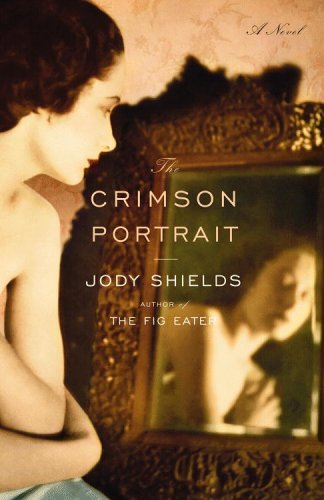
The Crimson Portrait by Jody Shields

(published 2006)

From Goodreads:

Spring 1915. On a sprawling country estate not far from London a young woman mourns her husband, fallen on the battlefields of what has been declared the first World War… But the isolated and eerie stillness in which she grieves is shattered when her home is transformed into a bustling military hospital to serve the war’s most irreparably injured. Disturbed by the intrusion of the suffering men and their caretakers, the young widow finds unexpected solace in the company of a wounded soldier whose face, concealed by bandages, she cannot see. Their affair takes an unexpected turn when fate presents her with an opportunity: to remake her lover with the unwitting help of a visionary surgeon and an American woman artist — in the image of her lost husband. Inspired by the little-known but extraordinary collaboration between artists and surgeons in the treatment of wounded men in the First World War, The Crimson Portrait peels back layers of suspense and intrigue to illuminate the abiding mysteries of identity and desire.

The Crimson Portrait is an atmospheric novel, creating the feeling of life during the Great War. I read this several years ago in the days before Downton Abbey, but now I can’t help but picture this book in a Downton-like setting, with stretchers full of hideously wounded young men filling the elegant rooms of the manor. In The Crimson Portrait, the wounded at this particular estate all suffer from facial injuries, from mild to complete disfigurement. We witness the early stages of facial reconstructive techniques, as doctors and artists work together to alleviate suffering and give these poor young soldiers a chance at something resembling a normal life. Meanwhile, the young widow of the estate sets in motion a plan to alleviate her heartbreak; it’s twisted and unhealthy, sure, but it’s also terribly sad and I couldn’t help but feel compassion for this young woman and her struggle to make sense of her loss.

I always find that WWI-era novels like this one, taking place in the most genteel of settings, pack a huge emotional punch, as they convey the utter horror of war and the mindless tragedy of the losses suffered — all in stark contrast to the lovely greenery of the English countryside. In The Crimson Portrait, we see the waste and ruin of a generation of young men, and the terrible, unending ache left to their survivors. It’s a beautifully written story, fascinating and sorrowful, and I recommend it for anyone interested in reading about that particular time in history.

♥♥♥♥♥♥♥♥

Do you host a book blog meme? Do you participate in a meme that you really, really love? I’m building a Book Blog Meme Directory, and need your help! If you know of a great meme to include — or if you host one yourself — please drop me a note on my Contact page and I’ll be sure to add your info!

Book Review: Bring Up The Bodies by Hilary Mantel

Book Review: Bring Up The Bodies by Hilary Mantel

Bring Up the Bodies (Thomas Cromwell, #2)Bring Up The Bodies is the second book in Hilary Mantel’s trilogy focusing on Thomas Cromwell, self-made man, advisor to King Henry VIII, and arguably the most powerful man in England during a brief period of the Tudor reign. The first book, Wolf Hall,  covers Cromwell’s rise to power and his role in Henry’s divorce of Katherine of Aragon and marriage to Anne Boleyn. Bring Up The Bodies traces Queen Anne’s fall from favor and her ultimate destruction, as viewed through the lens of Cromwell’s own role in the dramatic and controversial events.

This is ground well-covered through a myriad of history books, historical novels, and dramatizations, yet author Hilary Mantel finds a fresh angle. By using Thomas Cromwell as the point-of-view perspective for the story, we get a peek into the mind of one of England’s most enigmatic historical figures and at the same time see the court machinations through the eyes of someone who wields great power and yet is constantly an outsider due to low birth. As a result, we view Henry and Anne from a distance, and can only marvel at the deceit, treachery, and political maneuvers that form the daily texture of life in the Tudor palace. Bring Up The Bodies captures the events of the time and presents the ups and downs, the legal and political details, and the impact on the kingdom and its people in a way that breathes new life into the drama of these events.

Hilary Mantel’s writing is spectacular, as it was in Wolf Hall, with its own quirky rhythms and phrasings, and a use of language that is unparalleled in most modern fiction. Simple lines like:

The susurration, tapesty-muffled, of polyglot conversation.

… simply take my breath away. Quiet descriptions are powerfully conveyed in language that demands to be noticed:

And now night falls on Austin Friars. Snap of bolts, click of key in lock, rattle of strong chain across wicket, and the great bar fallen across the main gate. The boy Dick Purser lets out the watchdogs. They pounce and race, they snap at the moonlight, they flop under the fruit trees, heads on paws and ears twitching. When the house is quiet — when all his houses are quiet — then dead people walk about on the stairs.

Once again, it took me a few chapters to adapt to the author’s use of pronouns. Throughout the book, the word “he” almost always refers to Cromwell, even if the preceding reference is to someone else. Occasionally, but not always, the author will make it a bit clearer, using phrasing such as “He, Thomas Cromwell, shrugs.”

I could open to any page in this magnificent book and find an example of outstanding writing… so I’ll indulge and quote one more that captures, for me, the author’s unique style:

All summer has been like this, a riot of dismemberment, fur and feather flying; the beating off and the whipping in of hounds, the coddling of tired horses, the nursing, by the gentlemen, of contusions, sprains and blisters. And for a few days at least, the sun has shone on Henry.

I can’t say enough good things about Bring Up The Bodies — which, like its predecessor Wolf Hall, won the Man Booker Prize and many other accolades and awards. I absolutely want to read the third book in the trilogy, which I believe is expected to be published in 2015. Bring Up The Bodies is proof that even familiar subject matter can be new and exciting in the hands of a talented writer with a compelling vision.

I read Bring Up The Bodies all in one day, while enduring about 12 hours of travel time through three airports and two flights. It was an intense reading experience, but I’m glad I had the opportunity to consume this book without interruption. Whether or not you have enough hours to devote to a straight read-through or prefer to enjoy Hilary Mantel’s writing in smaller bites, if you appreciate beautiful language and a compelling plot, I think you’ll find Wolf Hall and Bring Up The Bodies well worth your time.

__________________________________________

The details:

Title: Bring Up The Bodies
Author: Hilary Mantel
Publisher: Picador
Publication date: 2012
Genre: Historical fiction
Source: Purchased

Flashback Friday: Girl in Hyacinth Blue

Flashback Friday is my own little weekly tradition, in which I pick a book from my reading past to highlight — and you’re invited to join in!

Here are the Flashback Friday book selection guidelines:

  1. Has to be something you’ve read yourself
  2. Has to still be available, preferably still in print
  3. Must have been originally published 5 or more years ago

Other than that, the sky’s the limit! Join me, please, and let us all know: what are the books you’ve read that you always rave about? What books from your past do you wish EVERYONE would read? Pick something from five years ago, or go all the way back to the Canterbury Tales if you want. It’s Flashback Friday time!

My pick for this week’s Flashback Friday:

Girl in Hyacinth Blue

Girl in Hyacinth Blue by Susan Vreeland

(published 1999)

From Goodreads:

A professor invites a colleague from the art department to his home to view a painting he has kept secret for decades in Susan Vreeland’s powerful historical novel, Girl in Hyacinth Blue. The professor swears it’s a Vermeer — but why exactly has he kept it hidden so long? The reasons unfold in a gripping sequence of stories that trace ownership of the work back to Amsterdam during World War II and still further to the moment of the painting’s inception.

Dutch artist Johannes Vermeer was all the rage in 1999, roaring back into public awareness through not one, but two works of fiction centering on his rare but highly esteemed paintings. The more well-known of the two is, of course, The Girl With The Pearl Earring by Tracy Chevalier, which went on to become a successful film (which in turn gave Scarlett Johansson one of her first leading roles). By comparison, Girl in Hyacinth Blue flew largely under the radar, which is a shame, in my opinion.

The structure of this novel is quite interesting, consisting of eight chapters that are stand-alone but connected stories. The book has a a reverse chronology that traces one Vermeer painting, from the opening chapter in the 1990s back through World War II and then still further back, finally reaching all the way to the painting’s creation in the 17th century. In each story, we see the role the painting played in the lives of the people who possessed it, and through each story, we get a snapshot of a different historical era and the flavor and essence of life at that time.

Truly a remarkable achievement, Girl in Hyacinth Blue can be enjoyed as a novel or as a series of stories which can be read individually. There’s a certain sadness to all of the stories, as well as some lovely moments of appreciating the impact of beauty on everyday lives.

Note from your friendly Bookshelf Fantasies host: To join the Flashback Friday fun, write a blog post about a book you love (please mention Bookshelf Fantasies as the Flashback Friday host!) and share your link below. Don’t have a blog post to share? Then share your favorite oldie-but-goodie in the comments section. Jump in!

♥♥♥♥♥♥♥♥

Do you host a blog hop or book blog meme? Do you participate in a meme that you really, really love? I’m building a Book Blog Meme Directory, and need your help! If you know of a great meme to include — or if you host one yourself — please drop me a note on my Contact page and I’ll be sure to add your info!

Book Review: Letters From Skye by Jessica Brockmole

Book Review: Letters From Skye by Jessica Brockmole

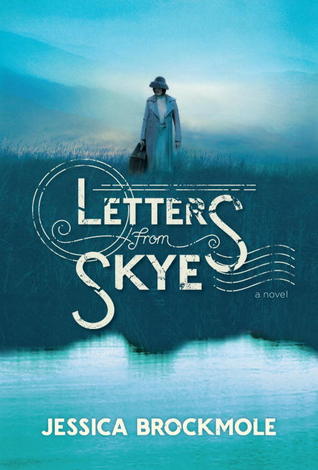
Letters from SkyeIn this romantic look at wartime love, letters hold the key. Letters From Skye is told entirely via letters written during two different but very similar time periods. The main story follows the correspondence that blossoms between poet Elspeth Dunn, on her faraway, windswept Isle of Skye off the northern coast of Scotland, and David Graham, an impetuous American college student who has mustered the courage to write a fan letter to an author he admires. Their correspondence begins in 1912 and continues through the first World War. As Elspeth and David write letters, they come to know one another deeply and intimately, until — almost inevitably — they declare their love and seek each other in real life as well as on paper.

In parallel to this piece of the story is the correspondence of Margaret, Elspeth’s 20-ish daughter, taking place in 1940 and relating to her fiance Paul the strange circumstances of her mother’s disappearance during an air raid on Edinburgh and her discovery that her mother has kept a hidden cache of mysterious letters for over twenty years.

From Margaret’s side of the story, we learn that Elspeth has raised Margaret on her own and has never shared any information with Margaret about her father — so while we’re reading the love letters of Elspeth and David and seeing how their commitment and passion for one another grows, we’re also aware that something must have happened to separate them. The suspense in Letters From Skye comes from this contrast, knowing that these two were madly in love in the 1910s, yet knowing also that in 1940, David has not been a part of Elspeth’s life for as long as Margaret can remember.

In Letters From Skye, the romance is heightened by the urgency of war, and indeed Elspeth has warned Margaret not to rush into a wartime engagement, when sentiments are heightened and no one takes the time to think things through. Clearly, she’s speaking from experience, but are her assumptions about what took place in her own past correct?

There’s much to love in Letters From Skye. Jessica Brockmole succeeds exceedingly well at painting pictures of the various times and places in the novel through the characters’ letters. We get from Elspeth a great sense of what her isolated life on Skye is like, with her views of the sea and hills, the lonely winters and hard rains, the dependence on family and the judgments of the neighboring townsfolk. From David, we get a grand view of privileged American youth in its heyday, playing pranks on campus, itching to get to the glory of the battlefield without any true conception of what horrors really await in the trenches. From Margaret, we get the feeling of incredulity as German bombs fall on the homes and streets of Edinburgh and London, as well as the privations of a country living on rations and sending their children off to the relative safety of the countryside.

While Letters From Skye is primarily a love story, it also does a very effective job of conveying the experience of life in wartime, both from the perspective of the women on the homefront and through the eyes of men on the front lines. Our culture often romanticizes these wars, but Letters From Skye makes abundantly clear that while love may flourish in the pressure-cooker of war, there’s nothing romantic about war itself.

The many threads of the storyline come together nicely by the end, and we learn that there is much more to understand about the past than any of the characters had realized. Misunderstandings and the tragedies of war conspire to separate lovers, and it takes the diligent digging of Elspeth’s daughter until all the various players understand what happened and why. While some of the answers ultimately may seem a bit familiar or predictable, it works nonetheless.

Telling the story through the medium of letters is very effective here, as we readers aren’t simply reading about two people and their growing connection — we’re a part of it. As we read their letters, it’s like a peek into David and Elspeth’s inner lives, and we are privy to their most intimate thoughts and feelings. We absolutely want them together, and it’s heartbreaking for the reader to see the obstacles that separate them, seemingly forever. I felt very invested in David and Elspeth by the end of the book, and while I’ve described the events of the ending as a bit predictable, that in no way detracts from impact that the resolution had on me. I simply couldn’t rest (it was just about midnight when I finished this book) until I found out what happened and why — and what the characters could expect next in their lives.

It was worth staying up for, believe me. I enjoyed Letters From Skye, felt a great connection to the characters, and truly cared about their fates. I’d say that qualifies as a success! Letters From Skye is author Jessica Brockmole’s first novel. I hope we’ll hear much more from her in years to come.

_________________________________________

The details:

Title: Letters from Skye
Author: Jessica Brockmole
Publisher: Ballantine Books
Publication date: 2013
Genre: Historical fiction/romance
Source: Library book


Wishlist Wednesday

Welcome to Wishlist Wednesday!

The concept is to post about one book from our wish lists that we can’t wait to read. Want to play? Here’s how:

  • Follow Pen to Paper as host of the meme.
  • Do a post about one book from your wishlist and why you want to read it.
  • Add your blog to the linky at the bottom of the post at Pen to Paper.
  • Put a link back to Pen to Paper somewhere in your post.
  • Visit the other blogs and enjoy!

My wishlist book this week is:

Rose Under Fire by Elizabeth Wein

From Goodreads:

Rose Justice is a young American ATA pilot, delivering planes and taxiing pilots for the RAF in the UK during the summer of 1944. A budding poet who feels most alive while flying, she discovers that not all battles are fought in the air. An unforgettable journey from innocence to experience from the author of the best-selling, multi-award-nominated Code Name Verity. From the exhilaration of being the youngest pilot in the British air transport auxiliary, to the aftermath of surviving the notorious Ravensbruck women’s concentration camp, Rose’s story is one of courage in the face of adversity.

Why do I want to read this?

After sobbing my way through Code Name Verity, I really want to read Rose Under Fire — although I’m also a little hesitant about putting myself through an emotional wringer again. Elizabeth Wein’s writing in Code Name Verity is so beautiful and so heart-wrenching, and given the subject matter of Rose Under Fire, I have no doubt that this will be another incredible yet emotionally exhausting read.

What do you think of the three covers, above? As far as I could figure out, the cover on the left is the paperback version currently available in the UK; the middle is the US hardcover version, and the right is the Canadian hardcover edition. Both the US and Canadian editions will be released in September.

What’s on your wishlist this week?

So what are you doing on Thursdays and Fridays? Come join me for my regular weekly features, Thursday Quotables and Flashback Friday! You can find out more here — come share the book love!

Wishlist Wednesday

Welcome to Wishlist Wednesday!

The concept is to post about one book from our wish lists that we can’t wait to read. Want to play? Here’s how:

  • Follow Pen to Paper as host of the meme.
  • Do a post about one book from your wishlist and why you want to read it.
  • Add your blog to the linky at the bottom of the post at Pen to Paper.
  • Put a link back to Pen to Paper somewhere in your post.
  • Visit the other blogs and enjoy!

My wishlist book this week is:

Letters from Skye: A Novel

Letters From Skye by Jessica Brockmole

From Goodreads:

A sweeping story told in letters, spanning two continents and two world wars, Jessica Brockmole’s atmospheric debut novel captures the indelible ways that people fall in love, and celebrates the power of the written word to stir the heart.

March 1912: Twenty-four-year-old Elspeth Dunn, a published poet, has never seen the world beyond her home on Scotland’s remote Isle of Skye. So she is astonished when her first fan letter arrives, from a college student, David Graham, in far-away America. As the two strike up a correspondence—sharing their favorite books, wildest hopes, and deepest secrets—their exchanges blossom into friendship, and eventually into love. But as World War I engulfs Europe and David volunteers as an ambulance driver on the Western front, Elspeth can only wait for him on Skye, hoping he’ll survive.

June 1940: At the start of World War II, Elspeth’s daughter, Margaret, has fallen for a pilot in the Royal Air Force. Her mother warns her against seeking love in wartime, an admonition Margaret doesn’t understand. Then, after a bomb rocks Elspeth’s house, and letters that were hidden in a wall come raining down, Elspeth disappears. Only a single letter remains as a clue to Elspeth’s whereabouts. As Margaret sets out to discover where her mother has gone, she must also face the truth of what happened to her family long ago.

Why do I want to read this?

Letters from Skye suits so many of my reading preferences: Historical setting, Scotland (!), war-time romance, multi-generational narrative. I love the idea of the contrast between the romances that happened in the lives of the mother and daughter in the different World Wars — and how one could affect and change the other. It all sounds very dramatic and dashing and so very romantic! I’m really look forward to reading this one.

What’s on your wishlist this week?

So what are you doing on Thursdays and Fridays? Come join me for my regular weekly features, Thursday Quotables and Flashback Friday! You can find out more here — come share the book love!

Flashback Friday: The Far Pavilions

Flashback Friday is my own little weekly tradition, in which I pick a book from my reading past to highlight — and you’re invited to join in!

Here are the Flashback Friday book selection guidelines:

  1. Has to be something you’ve read yourself
  2. Has to still be available, preferably still in print
  3. Must have been originally published 5 or more years ago

Other than that, the sky’s the limit! Join me, please, and let us all know: what are the books you’ve read that you always rave about? What books from your past do you wish EVERYONE would read? Pick something from five years ago, or go all the way back to the Canterbury Tales if you want. It’s Flashback Friday time!

My pick for this week’s Flashback Friday:

The Far Pavilions

The Far Pavilions by M. M. Kaye

(first published 1978)

From Goodreads:

After the death of his parents, young Ashton Pelham-Martyn is brought up as a Hindu in a remote corner of British India. As an adult soldier he returns to India, where his love for a princess and his dual heritage make for an epic story of adventure and romance.

This is a huge book, somewhere around 1,000 pages depending on which version you pick up, so in terms of bookshelf space and usefulness as a doorstop, right up there with the Game of Thrones books (yes, I know that’s not what they’re called, but it’s quicker to type) and my beloved Outlander series.

I remember absolutely loving The Far Pavilions when I read it so many years ago. It really is a perfect blend of historical fiction — depicting life and society in India under the British Empire — with a stirring, romantic tale of forbidden love. Ash is a wonderful character, a British boy raised by his Indian nurse after his own parents’ death, with conflicting loyalties and a confused identity. We see him through his youth, his return to British society, and his military service, and his reunion with a long-lost childhood love and his desperate attempt to save her from a cruel fate. The love story of Ash and Anjuli belongs among the ranks of the best tortured, tragic, against-all-odds lovers in fiction.

The Far Pavilions was published during a decade in which big, sweeping historical sagas were dominating the bestseller lists. In a time in which Shogun by James Clavell, The Thorn Birds by Colleen McCullough, and War and Remembrance by Herman Wouk were all hugely popular, it makes sense that so many were drawn to The Far Pavilions as well.

Note from your friendly Bookshelf Fantasies host: To join the Flashback Friday fun, write a blog post about a book you love (please mention Bookshelf Fantasies as the Flashback Friday host!) and share your link below. Don’t have a blog post to share? Then share your favorite oldie-but-goodie in the comments section. Jump in!

Book Review: Wolf Hall by Hilary Mantel

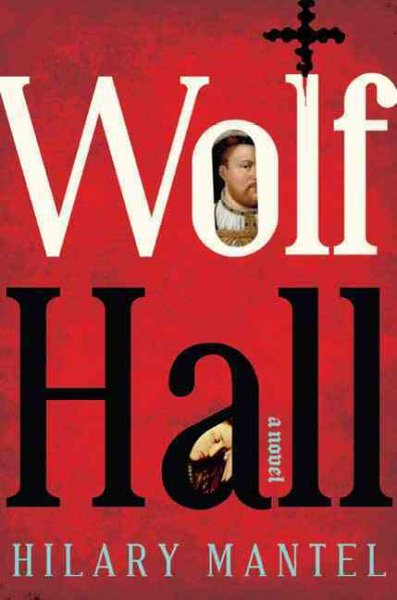
Winner of countless awards, among them the 2009 Man Booker Prize, Wolf Hall is well-known and highly esteemed. So why did it take me so many years to finally read it?

It’s a daunting book to begin, that’s for sure. In my paperback edition, the two pages of the Table of Contents are followed by five pages of the Cast of Characters, and then by two more pages containing family trees (the Tudors and the Yorkist Claimants, to be exact). Did I need to memorize the ancestries? Was I supposed to already know the paths of descent from Richard Duke of York and Owen Tudor? In general, when I see a book that requires that much supporting information up front, I want to run for the hills. Or pick up something simpler, at the very least.

In this case, I’d already vowed to read Wolf Hall during a vacation, and after committing to it publicly (well, okay, here on my blog), I felt a certain amount of pressure to see it through.

So — worth it? Yes, and here’s why:

Wolf Hall is the story of Thomas Cromwell, a man who rises from an obscure beginning as the son of a blacksmith to become one of the most powerful and influential advisers in the court of King Henry VIII. The entire book is told from Cromwell’s perspective; we see the people and players that he sees; we visit the inner chambers of the castle when he does. As Cromwell’s access increases, so does ours as readers. We only meet Henry when Cromwell does, and we see Anne Boleyn’s ascent at first from a distance, as bewildered by the king’s obsession with Anne as Cromwell is, then become more intimately involved as Cromwell becomes a key participant in the machinations needed to overthrow not just a marriage but an entire religious institution.

The Cromwell we come to know in Wolf Hall may or may not be entirely historically accurate. His rise to power is well-documented, but his early history and his inner life is not. Author Hilary Mantel gives Thomas Cromwell a depth and vibrancy that make him a sympathetic main character. We see him as a devoted family man, albeit as one who is often absent. Still, his devotion to his wife, his children, and his broad collection of wards and adoptees is shown to be his defining virtue. Likewise, he is committed to his patron, Cardinal Wolsey, and he forgets nothing — neither good nor bad — in his endless reckoning of favors owed and granted. Cromwell’s shrewdness and intelligence are clear. He is an intellectually gifted man who had a rough start in life, and so he is both gentleman and ruffian, a man who can out-think anyone he encounters, and at the same time a man to strike fear into the hearts of those who cross him.

Wolf Hall is a complicated book. This is not a bodice-ripper masquerading as history. The details can be overwhelming. There is an enormous number of players to keep straight, and it’s not enough to know who’s who; we readers also need to know the relations, the power dynamics, the titles, and the land holdings. This is not a love story. It’s about power, it’s about politics, it’s about playing a deadly game with the lives of the innocent and not-so-innocent at stake. Hilary Mantel piles detail upon detail, but never in a way that is incomprehensible — although, yes, it is a lot to keep track of.

Mantel’s prose is not straightforward. Sentences break off suddenly. A random example, from early on in the book:

They arrived on a Sunday, two vengeful grandees: the Duke of Norfolk a bright-eyed hawk, the Duke of Suffolk just as keen. They told the cardinal he was dismissed as Lord Chancellor, and demanded he hand over the Great Seal of England. He, Cromwell, touched the cardinal’s arm. A hurried conference. The cardinal turned back to them, gracious: it appears a written request from the king is necessary; have you one? Oh: careless of you. It requires a lot of face to keep so calm; but then the cardinal has face.

The pronouns throughout Wolf Hall are a bear to figure out. Mantel uses “he” throughout the book to refer to Cromwell, even when he is not the person most recently referenced. This drove me crazy at first. I’d have to stop and backtrack, realizing that the sentence I was reading was not about the person I thought it was about! Once I finally got that it’s all about Cromwell, all the time, the “he”s were a bit easier to decipher. But boy, did that throw me for a loop at the beginning.

Wolf Hall will not be for everyone. But I did enjoy it very much, although it was perhaps not the wisest choice for vacation reading. I typically choose books that require little commitment for my vacation reading — books I can easily swoop in and out of at a moment’s notice while doing other things. Wolf Hall is not one of these books. It requires concentration and thought, and while I definitely liked the challenge, it was a bit overwhelming at times.

The title itself is confusing, and only gains meaning toward the end of the book (unless you’re a total Tudor-era enthusiast and know the names of every estate in the realm). The challenge for an author writing about this era is in keeping a sense of suspense or surprise when the major events are so very well known. If you’ve read The Other Boleyn Girl or watched The Tudors, then you already know how the king’s efforts to divorce Katherine and marry Anne will work out. What keeps this book interesting is the writing itself, as well as the use of a lesser-known figure as its point-of-view character. Learning about Cromwell is fascinating; seeing the inner workings of the court through his eyes is enlightening, and keeps the familiar acts and players from seeming worn out or stale. Yes, I do know what happens — but it doesn’t matter. The portrayals of Cromwell, Henry, Anne, and the others are rich and nuanced, and kept me hooked.

Wolf Hall is the first book in a trilogy. Book 2, Bring Up The Bodies, is also a Man Booker Prize recipient. Book 3, The Mirror and The Light, is anticipated for publication in 2015, as far as I could tell. I plan to read Bring Up The Bodies later this summer, and as it covers the fall of Anne Boleyn, I fully expect to be engrossed.

I highly recommend Wolf Hall, although it definitely helps to have some knowledge of the Tudors ahead of time. And if you’ve watched Showtime’s version of The Tudors, I dare you to read this book and not picture Natalie Dormer every time Anne Boleyn is in a scene.