Book Review: Tell The Wolves I’m Home by Carol Rifka Brunt

Book Review: Tell The Wolves I’m Home by Carol Rifka Brunt
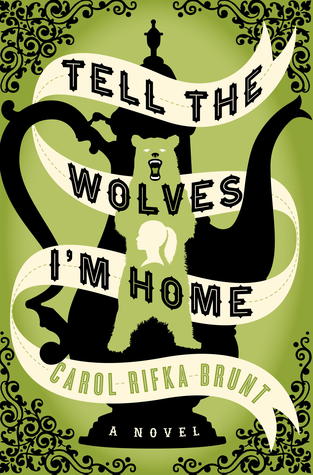
Tell The Wolves I’m Home, a first novel by Carol Rifka Brunt, defeated my best efforts to remain stoically dry-eyed while reading. What I expected to be a not-so-extraordinary family drama surprised me with its honest, emotional look at love and loss… and yes, there were tears.

Set in Manhattan and Westchester, New York in the mid-1980s, Tell The Wolves I’m Home is a look at one eventful spring in the life of 14-year-old June Elbus. As the book opens, June’s beloved uncle Finn has just died, an early casualty of the AIDS epidemic. Finn was not just June’s uncle, however; he was her godfather, her inspiration, and her first true love. Finn, a gifted artist, introduced June to everything she considers beautiful in her life — Mozart’s Requiem, visits to the Cloisters, an appreciation for the fine details all around her. June believes that the bonds between her and Finn are all-encompassing, but in the weeks following Finn’s death, June begins to realize that Finn had an entire life that she knew nothing about, and is forced to reexamine her relationship with Finn and its central role in her life.

As June reels through previously unimagined depths of loss, she is contacted by a stranger, Toby, who reveals himself to have had a key role in Finn’s life. Finn, before his death, left secret messages asking June to take care of Toby and Toby to take care of June, and as they try to honor Finn’s wishes, they find themselves connecting through shared bonds of loss, love and jealousy. June is shattered to realize how much she didn’t know about her uncle, as Toby struggles to let her in and to give dignity to June’s adolescent broken heart. As June mourns Finn and all she thinks she has lost, her older sister Greta acts out in her own brand of grief and loneliness in a desperate attempt to be understood and to reforge a connection before it’s too late.

The author does a wonderful job of capturing a particular time and place: New York, in the first throes of fear and ignorance about AIDS. Glancing references are made to Finn’s “special friend”, whom June’s parents consider a murderer — blaming him for Finn’s illness and death — and who is ostracized and banned from the funeral. June worries about catching AIDS from a kiss under the mistletoe; June’s sister is yelled at by their mother for using Finn’s chapstick. Other small details of life in the 80s bring the time to life: June wears her Gunne Sax dress in a desperate effort to isolate herself from the real world, as she hides out alone in the woods behind the school and pretends to live in the Middle Ages she so adores. Finn gives June cassette tapes of favorite music; June’s parents listen only to Greatest Hits albums (“it was like the thought of getting even one bum track was too much for them to handle”), and June has a fondness for “99 Luftballons” (the German version — much cooler sounding). June wears Bonne Belle lip gloss, and Greta has half of a “best friends” necklace, the other half of which some erstwhile best friend has long since discarded. It’s these small details and more which lend this book such a sense of nostalgic poignancy. At the same time, this coming-of-age story feels like it could be the story of any girl — or rather, every girl — growing up, seeing the human flaws in her parents, realizing that long-held truths may be illusions, finding and losing love, and coming to terms with a picture of one’s inner self which isn’t always so pretty.

Tell The Wolves I’m Home is a quiet, lovely book, a look backward that feels current and relevant, and a sad, sweet story of love and friendship. I’m so glad to have read it, and recommend it highly.

The Monday agenda

Not a lofty, ambitious to-be-read list consisting of 100+ book titles. Just a simple plan for the upcoming week — what I’m reading now, what I plan to read next, and what I’m hoping to squeeze in among the nooks and crannies.

So what’s on the agenda for this week?

From last week:

The Raven Boys by Maggie Stiefvater: I finished this one early in the week. Sadly, not all that impressed. (You can find out why here.)

Where’d You Go, Bernadette by Maria Semple: Done! Loved it. My review is here.

Drums of Autumn by Diana Gabaldon (group re-read): Two more engaging chapters. Almost done.

And this week’s new agenda:

I’m about 2/3 of the way through Tell The Wolves I’m Home by Carol Rifka Brunt. What a lovely, poignant story. I’ll finish and have a review up in the next few days.

Next, from my library pile, I plan to start either The Red House by Mark Haddon or Seating Arrangements by Maggie Shipstead.

Tiny aside: One of the benefits of having a school-aged child is learning all sorts of useful acronyms. At my son’s school (and probably lots of others), they have DEAR time — Drop Everything And Read — in which everyone stops all other work, picks a book, and reads without interruption for 15 – 20 minutes. When my older kids were that age, it was called Silent Sustained Reading (very cute to hear a 1st-grader say this, by the way).

How is this relevant to the Monday agenda? I expect to have a DEAR moment myself in the next day or two. In my case, this means that I’ll be dropping whatever else I’m reading or planning to read as soon as my copy of A Trail of Fire by Diana Gabaldon arrives. I’ll write more about this book, and why it’s a big deal, when my copy finally gets here… which should be tomorrow (fingers crossed).

My son and I are about half-way (!) through Half Magic by Edward Eager. I was pleasantly surprised when I offered him a stack of eight or nine books and he picked out this children’s classic. It’s been many years since I last read it, but it’s still thoroughly delightful.

Drums of Autumn by Diana Gabaldon: Chapters 64 and 65 this week. Emotional high points. The end is in sight.

So many book, so little time…

That’s my agenda. What’s yours? Add your comments to share your bookish agenda for the week.

Book Review: Where’d You Go, Bernadette by Maria Semple

Book Review: Where’d You Go, Bernadette by Maria Semple

Huh. I just now realized that I’ve been committing hyper-punctuation in regard to this book, whose title does in fact include a comma and an apostrophe, but not a question mark — which I have egregiously added in several tweets and emails. Mea culpa.

Be that as it may, I have to say that I just adored Where’d You Go, Bernadette. (See? No question mark). Author Maria Semple has crafted a social satire that is uproariously funny, hits on a ton of memes and flashpoints of today’s hyper-plugged in society, and yet is also quite touching and surprisingly sweet in places.

Given the title, it’s not a spoiler to say that the plot revolves around events leading up to the disappearance of 50-year-old Bernadette Fox, once a brilliant rising star in the world of architecture, now an eccentric, possibly agoraphobic mother and housewife, whose life is one long string of odd behaviors. Bernadette, her 15-year-old super-talented daughter Bee, and her workaholic Microsoft exec husband Elgin, live in a run-down former reform school for girls atop a Seattle hill. The house is falling apart at the seams, literally, as blackberry vines force their way up through the foundations and the damp ceilings and walls crumble around them. (Keep an eye on those blackberry vines — they’re key to some early developments that lead to a disaster at once appalling and hilarious.)

Bee attends the Galer Street School, described in its mission statement as “a place where compassion, academics, and global connectitude join together to create civic-minded citizens of a sustainable and diverse planet.” Children are graded on a scale of “Surpasses Excellence”, “Achieves Excellence”, and “Working Toward Excellence”. Bernadette is happy that her daughter is thriving, but hates everything about Seattle, including the meddling, fussy, over-involved parents of the school, whom she refers to as gnats. Things go from bad to worse when Bernadette’s neighbor Audrey hosts a prospective parents brunch at her home in an attempt to lure “Mercedes Parents” to their Suburu-level school. To say that Bernadette and Audrey don’t quite get along would be the understatement of the year.

Further complications: Bernadette has hired a virtual assistant named Manjula to handle all of her personal business by internet — everything from travel plans to prescriptions to ordering clothing and household repairs. Before you can say “identity theft”, Bernadette has provided Manjula with her entire family’s bank account numbers, birthdates, passport numbers, and social security numbers.

When Bee comes home one day with a report card full of S grades and a brochure for a trip to Antarctica, events and disasters begin to snowball. Neither parent says no, plans for this exotic trip are set in motion, and Bernadette soon begins to fear that she’s in way over her head. By the time the date of the trip rolls around, psychiatrists, FBI agents, Microsoft admins, school chums, and gardeners have all played a role in the unfolding crisis… and Bernadette disappears without a trace.

Precocious, talented, determined Bee is left behind to put the pieces together, and what we’ve been reading all along is Bee’s compilation of documents pertaining to these events. Where’d You Go, Bernadette is told via emails, faxes, school reports, letters, magazine articles, and captain’s logs; Bee has assembled everything she can that may shed light on her mother’s disappearance, and through quick thinking and connecting of dots, believes she may have found pieces of the puzzle that will lead to answers about her mother.

Let me just say that I enjoyed this book immensely. The writing is crisp and deft, and the author does an outstanding job of capturing some of the nuttiness that is so deeply ingrained in today’s world of helicopter parenting, the cult of self-esteem, the worship of tech, and the increasing isolation experienced by individuals in a world of constant “connectitude”. One character writes impassioned screeds about her Victims Against Victimhood support group, whose members TORCH one another (Time Out! Reality Check) when they speak in victim-lingo; Bernadette’s husband Elgie is revered because he gave the 4th-most watched TEDTalk ever; the school hosts a constant series of concerts and events featuring multiculturalism so extreme that it’s practically a religious devotion. This all rings true in a way that is both slightly sad and hilariously funny.

And yet, there is an underlying sweetness in much of this story as well. As the book unfolds, some of the most self-deluded characters find ways to acknowledge hard truths. The bad guys aren’t necessarily all that bad after all. What seems charming and eccentric is revealed to be a cover for deeper problems that must be addressed. The perfect schools may not be what all children need. Little by little, the beliefs held by the characters at the start of the book fall away, until just about all find their way toward something closer to honesty and decency.

My only quibble about Where’d You Go, Bernadette has to do with the last section of the book, which is told mostly through Bee’s narration and loses some of the oddball charm built into the stream of constant emails and faxes. At times, this section reads a bit too much like a travelogue and loses a bit of the punch provided throughout so much of the book. Still, this is a minor complaint; the book wraps up in a way that’s completely satisfying yet still surprising, and I walked away a) smiling and b) resolved to read whatever Maria Semple decides to write next.

If you enjoy quirky fiction with a bite, this is a book for you.

The Monday agenda

Not a lofty, ambitious to-be-read list consisting of 100+ book titles. Just a simple plan for the upcoming week — what I’m reading now, what I plan to read next, and what I’m hoping to squeeze in among the nooks and crannies.

Hurray for a sun-filled weekend, perfect for sitting on the back porch with a book firmly in hand. So what’s on the agenda for this week?

From last week:

Gone Girl by Gillian Flynn: Done! Wow, what a wild ride that was. My review is here.

The Raven Boys by Maggie Stiefvater: Just started this one yesterday… reserving judgement for now.

Drums of Autumn by Diana Gabaldon (group re-read): Great chapters, with summaries written by yours truly. It’s a nice bit of validation when one’s chapter summaries provoke a good discussion. Yet another reason why I love my online book group.

And this week’s new agenda:

I should be done with The Raven Boys in the next day or two.

I managed to come home with a fresh stack of library books again this weekend. Why do I always feel like I’m playing catch-up? Or maybe it’s more like Beat the Clock — can I read all of these books before time runs out?

Next up will be either Where’d You Go, Bernadette? by Maria Semple or Tell The Wolves I’m Home by Carol Rifka Brunt.

My son and I have made great progress on the book we started last week, and should be ready for something new in the next couple of days. I’m thinking Ella Enchanted or From The Mixed-Up Files of Mrs. Basil E. Frankweiler — but he may have a different opinion entirely.

Drums of Autumn by Diana Gabaldon: Chapters 62 and 63 this week. We’re within 100 pages of the end!

So many book, so little time…

That’s my agenda. What’s yours? Add your comments to share your bookish agenda for the week.

The Monday agenda

Not a lofty, ambitious to-be-read list consisting of 100+ book titles. Just a simple plan for the upcoming week — what I’m reading now, what I plan to read next, and what I’m hoping to squeeze in among the nooks and crannies.

Nothing like the home team playing in (AND SWEEPING) the World Series to seriously interfere with one’s reading agenda! (and I’m not normally a baseball fan at all… but ya gotta go with the flow). Back to the books! What’s on the agenda for this week?

From last week:

The Sparrow by Mary Doria Russell: I finished my re-read of this beautiful book. I don’t think I’ll ever get tired of it.

I finally got a chance to attack my pile of library books. First up: Breed by Chase Novak. A great choice for pre-Halloween reading — boy, is this a disturbing book!

Drums of Autumn by Diana Gabaldon (group re-read): Another couple of very good chapters.

And this week’s new agenda:

I should be done with Breed either today or tomorrow, assuming I can stomach it.

Next up: Gone Girl by Gillian Flynn. Finally! I’m hoping to get this one read before it’s due back at the library next weekend.

And after that? One of two young adult novels waiting for my attention: Either The Raven Boys by Maggie Stiefvater or Because It Is My Blood by Gabrielle Zevin.

My son and I have started a new kids’ book by Eva Ibbotson. So far, so good! He does tend to bail on books after a few chapters, so the fact that we’ve gotten about a third of the way through it already is a good sign.

Drums of Autumn by Diana Gabaldon: Chapters 60 and 61 this week, and it’s my turn to write chapter summaries for our group re-read. Must put on my thinking cap!

So many book, so little time…

That’s my agenda. What’s yours? Add your comments to share your bookish agenda for the week.

The Monday agenda

Not a lofty, ambitious to-be-read list consisting of 100+ book titles. Just a simple plan for the upcoming week — what I’m reading now, what I plan to read next, and what I’m hoping to squeeze in among the nooks and crannies.

Busy week ahead, so let’s dive right in. What’s on the agenda for this week?

From last week:

Quality over quantity, for sure! Real life (and by that, I mean the portion of my life that does not revolve around books) got in the way, big time, and it seemed that reading was relegated to the back burner — a most painful and frustrating situation for me. Here’s hoping that the coming week is a little less crazy. So, last week’s progress:

The Diviners by Libba Bray: Done! Loved it. My review is here.

And that’s really it. I caught up on a few weeks’ worth of the New York Times book review sections, but made no progress on any other books.

Drums of Autumn by Diana Gabaldon (group re-read): Moving forward, getting closer to the end.

And this week’s new agenda:

Due to a weird confluence of coincidences (did I just make that up? sounds weird), The Sparrow by Mary Doria Russell has been on my mind. My daughter just finished reading The Sparrow this past week, and was blown away. My husband, who relies on me for his book recommendations, is ready for something new, and I’m pushing The Sparrow on him. In addition, I’m going to hear Mary Doria Russell speak this week about The Sparrow! As a consequence of all this, I’ve decided to ignore my library stack and re-read The Sparrow myself. This is one of my very favorite books, which I’ve read once on my own and once as part of a book group. It’s been about five years, and I believe it’s time to treat myself to a re-read. I can’t say it enough times — if you’ve never read this book, what are you waiting for?

Assuming I finish up by mid-week, next on the agenda will be Breed by Chase Novak and then Gone Girl by Gillian Flynn. Sadly, I’ll be returning some books unread to the library this week, as there simply isn’t enough time for me to read them all before their due dates. Back on the request list they go!

My son and I finished up the book we were reading together (his review is here; my review is here) — looking forward to picking out some new bedtime reading material.

Drums of Autumn by Diana Gabaldon: Our online re-read is up to chapters 58 and 59 this week, and they’re good ones. My turn to write chapter summaries is next week. Gulp.

So many book, so little time…

That’s my agenda. What’s yours? Add your comments to share your bookish agenda for the week.

Flashback Friday: The Basic Eight by Daniel Handler

It’s time, once again, for Flashback Friday…

Flashback Friday is a chance to dig deep in the darkest nooks of our bookshelves and pull out the good stuff from way back. As a reader, a blogger, and a consumer, I tend to focus on new, new, new… but what about the old favorites, the hidden gems? On Flashback Fridays, I want to hit the pause button for a moment and concentrate on older books that are deserving of attention.

My rules — since I’m making this up:

  1. Has to be something I’ve (you’ve) read myself (yourself) — oh, you know what I mean!
  2. Has to still be available, preferably still in print
  3. Must have been originally published 5 or more years ago

Other than that, the sky’s the limit! Join me, please, and let us all know: what are the books you’ve read that you always rave about? What books from your past do you wish EVERYONE would read? Pick something from five years ago, or go all the way back to the Canterbury Tales if you want. It’s Flashback Friday time!

My pick for this week’s Flashback Friday:

The Basic Eight by Daniel Handler

(published 1998)

From Amazon:

Flannery Culp is 19, precocious, pretentious and incarcerated. Accused of Satanism and convicted of murder, she and her seven friends (the “Basic Eight”) have been reviled and misunderstood on the Winnie Moprah Show and similar tabloid venues. So Flannery has typed up and annotated the journals of her high school years in order to tell her real story: “Perhaps they’ll look at my name under the introduction with disdain, expecting apologies or pleas for pity. I have none here.” Handler’s sharply observed, mischievous first novel consists of Flannery’s diaries from the beginning of her senior year to the Halloween murder of Adam State and its aftermath. The journals detail Flan’s life in her clique of upper-middle-class San Francisco school friends, who desperately emulate adulthood by throwing dinner parties and carrying liquor flasks. Kate (“the Queen Bee”), Natasha (“less like a high school student and more like an actress playing a high school student on TV”), Gabriel (“the kindest boy in the world” and in love with Flan) and the rest begin experimenting with the hallucinogen absinthe. Squabbles once easily resolved grow deeper and darker when Natasha poisons the biology teacher who has been tormenting Flan. Should the Basic Eight turn on, and turn in, one of their own? Handler deftly keeps the mood light even as the plot careens forward, and as Flan, never a reliable narrator, becomes increasingly unhinged. The links between teen social life, tabloid culture and serious violence have been explored and exploited before, but Handler, and Flannery, know that. If they’re not the first to use such material, they may well be the coolest. Handler’s confident satire is not only cheeky but packed with downright lovable characters whose youthful misadventures keep the novel neatly balanced between absurdity and poignancy. (Publishers Weekly)

The Basic Eight, Daniel Handler’s first novel, is a wicked, funny, snarky story of high school, friendship, cliques, media, and murder. Before he became famous for his hugely successful Lemony Snicket book series, Handler wrote this novel, set in a fictional San Francisco high school not so very different from the real San Francisco high school that he attended.

To call The Basic Eight irreverent is putting it mildly. (Rumor has it that Handler was banned from the high school’s alumni wall of fame based on this book and its absolute skewering of the school’s faculty).

The plot moves in all sorts of weird and wonderful directions. Interspersed throughout are vocabulary lists and essay questions:

1. In this chapter, Flannery writes: “I lead a ridiculous life.” Do you agree with her assessment? Why or why not? Do you lead a ridiculous life? Why or why not?

I’m always surprised that more people haven’t heard of this book. The Basic Eight is dark and twisted, and at the same time, manages to be uproariously funny. Flipping back through the book as I write this and remembering how much fun I had with it, I’m quite tempted to read it all over again. Be warned: this is one of those books that springs so many surprises on you, you’ll want to go back to the beginning as soon as you’re done and see what clues you missed the first time around.

So, what’s your favorite blast from the past? Leave a tip for your fellow booklovers, and share the wealth. It’s time to dust off our old favorites and get them back into circulation! 

Note from your friendly Bookshelf Fantasies host: This is my baby-steps attempt at a blog hop! Join in, post a Friday Flashback on your blog, and share your link below. Don’t have a blog post to share? Then share your favorite oldie-but-goodie in the comments section. Let’s get this party started!


The Monday agenda

Not a lofty, ambitious to-be-read list consisting of 100+ book titles. Just a simple plan for the upcoming week — what I’m reading now, what I plan to read next, and what I’m hoping to squeeze in among the nooks and crannies.

The fog horns are blowing, the skies are grey. What more could you want on a Monday morning? Perhaps a stack of books, a hot cup of coffee, and a warm quilt?

From last week:

Well, it felt like a productive week…

The Dog Stars by Peter Heller: I really and truly loved this book. Lovely writing and a haunting story. My review is here.

The Revised Fundamentals of Caregiving by Jonathan Evison: Finished a few days ago. Enjoyable and moving, a quirky, sad novel of friendship, loss… and a road trip. My review is here.

I hit the library and picked up my various and assorted hold books, which — inconsiderately — all decided to become available in the same week. I’m going to have to set up a spreadsheet of due dates to help me strategize reading order and set a page-per-day minimum. Kidding… but it might help.

I ended up deciding that The Forgetting Tree was something I’d like to read at some point, but it didn’t need to be right now, so back to the library it went.

Finally, over the weekend, I started The Diviners by Libba Bray, which is just the bee’s knees! An occult mystery set in jazz age Manhattan… delightful!

Drums of Autumn by Diana Gabaldon (group re-read): Keeping on, keeping on.

And this week’s new agenda:

I should finish up The Diviners in the next couple of days. After that, it’ll be time to attack the library pile again.

The next three on the stack are Breed by Chase Novak (sounds like good, creepy horror), The Red House by Mark Haddon, and A Light Between Oceans by M. L. Stedman. It’ll just depend on my reading whim on the day I have to choose.

My son and I are getting closer to the end of his current read-aloud, Merits of Mischief, which he is continuing to enjoy and I am continuing to… not. I can’t wait to be done with this one.

This week’s chapters in my group re-read of  Drums of Autumn by Diana Gabaldon promise plenty of agony and action for the beloved main characters. We’re up to chapters 56 and 57.

I’m hoping to squeeze in a little time over the weekend for a re-read (or at least a skim-through) of The Sparrow by Mary Doria Russell in preparation for an upcoming book discussion. The Sparrow is one of my all-time favorites, and I’ve read it more than once, but it’s been a few years and a refresher would definitely be helpful.

So many book, so little time…

That’s my agenda. What’s yours? Add your comments to share your bookish agenda for the week.

Book Review: The Revised Fundamentals of Caregiving by Jonathan Evison

Book Review: The Revised Fundamentals of Caregiving by Jonathan Evison

Benjamin Benjamin Jr. is a certified caregiver, having completed a night-school course offered at a church and mastering essentials like setting professionals boundaries, avoiding burnout, and memorizing helpful mnemonics such as ALOHA (Ask – Listen – Observe – Help – Ask again).  How very much Ben defines himself by his ability to provide care is central to this sad yet funny book.

When we first meet Ben, he is heading out on a job interview for the first time in a very, very long time. On the brink of middle age, he is tapped out, having used up every penny of his savings and with no other option if he wants to make rent on the impersonal, grungy “compartment” in which he resides. As we soon discover, Ben’s life has not always been such a wreck. Until just a few short years earlier, he seemed to have a golden life, true happiness, and everything a man could want — until disaster ripped his life apart and left him empty and hopeless. At the end of his rope, Ben is hired to care for Trevor, a 19-year-old wheelchair-bound muscular dystrophy patient, for whom Trevor provides companionship as well as the day-to-day physical care necessitated by Trevor’s degenerating condition.

Ben is clearly a natural at caregiving. Bodily functions don’t faze him; he cleans Trevor, applies his deodorant, dresses him, and maneuvers him in and out of his chair. Despite his commitment to his so-called professional boundaries, Ben has to constantly remind himself not to push Trevor past his comfort zone, not to goad him to break out of routine and try something new. Eventually, the two head out on a somewhat ill-conceived road trip to visit Trevor’s estranged, accident-prone father in Utah. Along the road, the two are joined by a variety of waifs and strays, all lost in some way and in need of care. Ben becomes a de facto protector and shepherd for his odd assortment of travel companions, as they drive through the American West past landscapes and attractions such as the world’s largest pit and other weird roadside highlights.

As the book progresses, the details of the horrible loss in Ben’s past slowly emerge. It’s no wonder the man is a mess. His grief is unending, his self-blame immense. He believes himself responsible for the destruction that occurred, and cannot see himself as deserving of happiness. Through his caregiving role and his developing relationship with Trevor, a glimmer of light emerges. Ben will never forget the past or stop hurting over his incomprehensible losses, but he can begin to trust himself once more. By book’s end, we see that Ben is perhaps not a totally lost cause after all, and although it will be long, his road to recovery and redemption is within his view, if not yet quite within his grasp.

I hesitate to say any more about the plot, as I believe the emotional impact would be lessened by knowing too much in advance. I found The Revised Fundamentals of Caregiving an affecting story, sad yet with moments of lightness and humor. The writer’s deft skills give sharp focus to the speech, physical traits, and personality quirks of the various secondary characters whose lives intersect with Ben’s, and Ben’s cynicism and bruised soul make him an interesting lens through which we readers can peek into his world.

I did find some awkward phrasings (“And what was I thinking in that instant just before the world went icy black, as I strode toward the front door irritably beneath my mountain of groceries?”) and odd word choices (Trevor diverted — not averted — his gaze), and a weird interlude related to Facebook that just didn’t ring true to life. These are relatively minor quibbles, however. Overall, I found Ben’s voice convincing, and the plot was a touching portrayal of a man’s journey from tragedy towards the first tiny specks of the possibility of finding meaning in life again.

Book Review: The Dog Stars by Peter Heller

Book Review: The Dog Stars by Peter Heller

When is the last time you were so mesmerized by lovely writing that you had a hard time finishing the book, simply because you wanted the reading experience to last just a little longer? That’s how I felt as I neared the end of The Dog Stars. I almost wanted to put the book down for a while just to avoid having to say I was done… Of course, I didn’t do that, because I really, really wanted to see how it would all work out.

Where to begin? The Dog Stars is a vision of a post-apocalyptic world at once horrifying and beautiful. Nine years before the start of the events in the book, a virulent flu pandemic wiped out 99% of the human population of earth. Those who survived were further decimated by an HIV-like blood disease that doomed many to a slow, lingering, miserable death. And yet, the land remains, canyons, woods, creeks, and plains, mostly empty of people now, and nature is busily trying to reassert itself even in the face of climate change and species die-offs.

Hig is one who survived unscathed, at least physically, having lost his beloved wife to the flu. As the story opens, Hig lives in relative safety at an isolated airstrip in rural Colorado, with his dog Jasper and his gruff survivalist neighbor Bangley as his only companions. And Hig has the Beast — an older Cessna airplane that he lovingly maintains, and which gives Hig and Bangley the power to protect their home turf. Hig flies the perimeter, scouting for intruders and surveying the stark and empty land. Bangley is a weapons expert, ready to shoot anything that moves. Between the two of them, they protect their home from the bands of dangerous invaders who seem to find them every few months.

Hig lives, but he’s only partially alive. He experiences joy when he flies, with Jasper in his accustomed place in the copilot’s seat, or when he tends his garden and has a moment where he just is:

I could almost imagine that it was before, that Jasper and I were off somewhere on an extended sojourn and would come back one day soon, that all would come back to me, that we were not living in the wake of disaster. Had not lost everything but our lives. Same as yesterday standing in the garden. It caught me sometimes: that this was okay. Just this. That simple beauty was still bearable barely, and that if I lived moment to moment, garden to stove to the simple act of flying, I could have peace.

But Hig remembers, too, and suffers mightily over his losses: his wife, their future together, and the world that they inhabited. Although not entirely spelled out, it’s clear that some other global environmental catastrophes have crept up on the world. Early on, we hear a list of animals that no longer exist — elephants, apes, even trout. Throughout the book, we learn of changing weather patterns and shorter rainy seasons, with drought always threatening. It’s clear that global warming is upon us, and its effects are not kind. Hig is a man who loved to fish, who appreciates nature and its cycles, and the loss of the animals, trees, and rivers hit him as hard as some of his more human losses.

When Hig suffers one more devastating bereavement, it frees something in him to the point that he decides to venture out of the safe perimeter that he and Bangley have so carefully maintained and fly off in search of a phantom voice heard years earlier over his airplane radio. What happens to Hig from that point forward is better left to the reader to discover, and so I won’t go into any more detail about plot points.

The writing in The Dog Stars is spare and lovely, reminding me of the beautiful, airy language in Plainsong by Kent Haruf. In The Dog Stars, each paragraph stands alone, with gaps in between lines and phrases. There’s space there, and you can almost feel Hig thinking in between anything he decides to say. Sentences may be half-formed, phrases are uttered but not finished. It truly feels like we are living inside a man’s head, experiencing his viewpoint and his pain through his use of language.

I could pick almost any passage to illustrate the unique writing. One example that stands out:

You hear bullets make the sound they always do in Westerns and war stories and guess what? They do. They make a phhhht like someone opening a poisonous can of soda. The Soda of Death. Like a vacuum following itself at the speed of a diving duck. Followed almost simultaneously by a little hum, a musical exclamation point.

Peter Heller is a journalist and has written several non-fiction books. The Dog Stars is his first novel, and I hope there will be many more to come. You don’t often hear a post-apocalyptic book described as beautiful, but The Dog Stars truly is. I highly recommend this literary, lovely, moving book.
