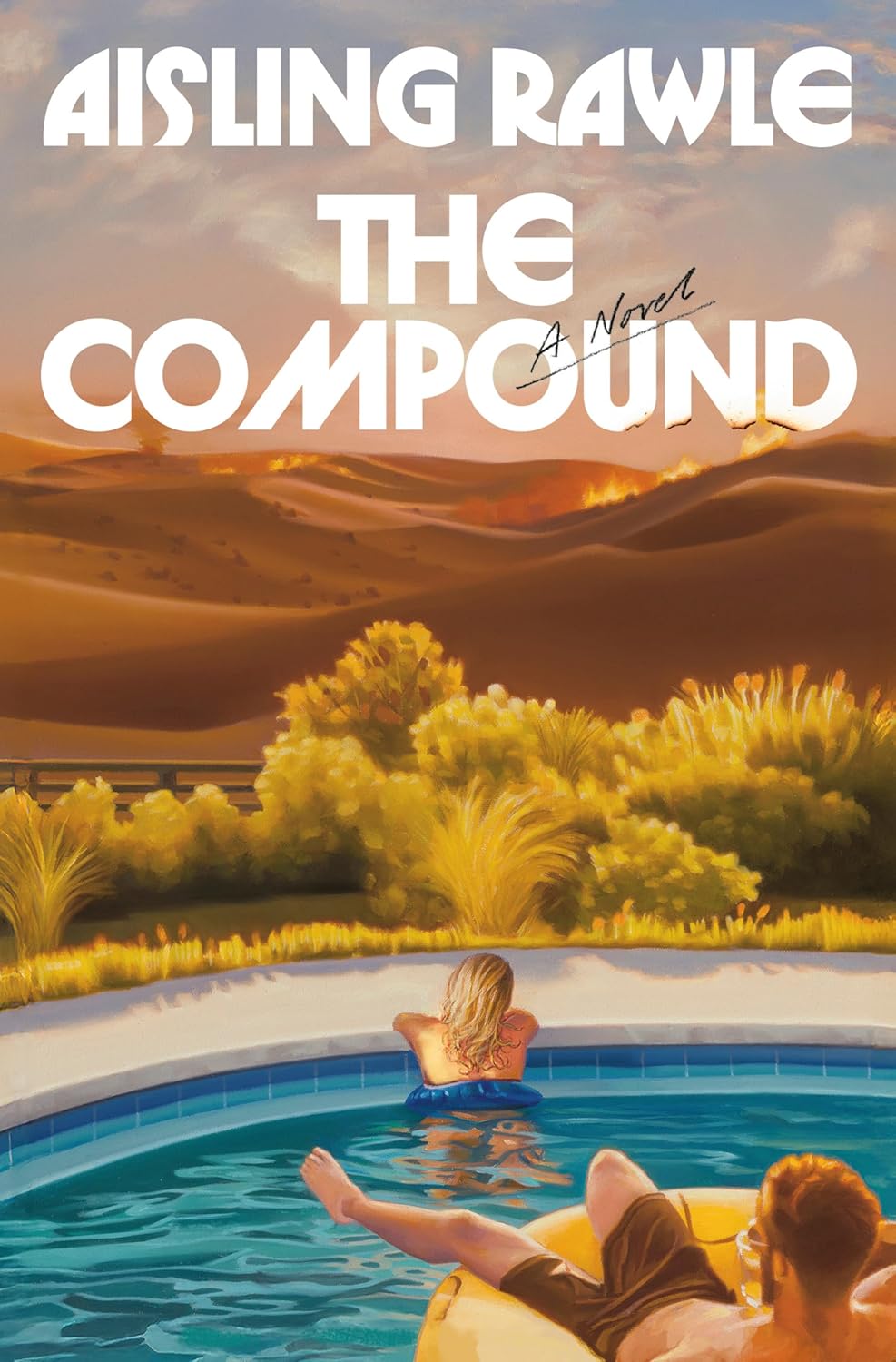
Book Review: The Compound by Aisling Rawle

Title: The Compound
Author: Aisling Rawle
Publisher: Random House
Publication date: June 24, 2025
Length: 292 pages
Genre: Contemporary/dystopian fiction
Source: Purchased
Rating:

Rating: 4 out of 5.

Nothing to lose. Everything to gain. Winner takes all.

Lily—a bored, beautiful twentysomething—wakes up on a remote desert compound alongside nineteen other contestants on a popular reality TV show. To win, she must outlast her housemates while competing in challenges for luxury rewards, such as champagne and lipstick, and communal necessities to outfit their new home, like food, appliances, and a front door.

The cameras are catching all her angles, good and bad, but Lily has no desire to leave: Why would she, when the world outside is falling apart? As the competition intensifies, intimacy between the players deepens, and it becomes increasingly difficult to distinguish between desire and desperation. When the producers raise the stakes, forcing contestants into upsetting, even dangerous situations, the line between playing the game and surviving it begins to blur. If Lily makes it to the end, she’ll receive prizes beyond her wildest dreams—but what will she have to do to win?

Addictive and prescient, The Compound is an explosive debut from a major new voice in fiction and will linger in your mind long after the game ends.

Take reality TV — Big Brother, Love Island, even Survivor — then mix in a big dose of dystopian, Hunger Games, do-what-it-takes-to-last vibes… and you might get a smidge of what reading The Compound feels like.

It’s strange right from the start. Lily — beautiful, fit, in her 20s — wakes up in a bedroom in a place known as the compound. One other bed is occupied, by another beautiful young woman. As they rise, they move through the main house, finding clothes — shabby cast-offs, mainly — and odds and ends. They’re familiar with the house’s layout, and know what to look for. The place is a mess — grimy, trash everywhere, and the bathroom and front entryway don’t even have doors.

The compound itself is surrounded by nothing but desert as far as the eye can see, and a barrier of barbed wire and some fencing, none of it seeming all that sturdy, stand between the compound and the wilderness beyond.

As they leave the house and wander the grounds — a large pool, gardens, a pond, an orchard — they find more young women in various stages of waking. Soon, there are ten of them. And then they start talking about waiting for the boys to arrive. (Yes, one of the oddly disturbing elements of this book is that they refer to themselves as “boys” and “girls”, although all are adults.)

We were assessing who was the most beautiful and who might cause trouble. At the same time, we were analyzing what our own place in the group might be. Within minutes of speaking to the girls, I knew that I was one of the most beautiful, and one of the least interesting.

After two days, the boys arrive, straggling in from across the desert. They arrive bruised, battered, and having clearly been through something — but ready to play.

Because, we quickly learn, this is reality TV, and the compound is the setting of one of the most popular competition shows. Ten boys and ten girls are dropped into the compound — the girls, apparently drugged, are left in the house to wake there and begin the game, while the boys must trek across the desert to reach the compound. Once there, they compete via communal tasks to earn basics and more for the house — everything from food items to wood to chairs (of which there are none when the group arrives). The players also have personal tasks that they can perform for more individualized rewards, from beauty basics to (later) luxury items. Personal tasks tends to be odd and embarrassing, with a rule that players can’t tell one another when they’re carrying out a personal task — so if, for example, the task is to insult someone else, they just have to do it, no explanations allowed. They can choose not to, of course, but then they forego the reward, and no one seems willing to let prizes slip by.

One simple, even fun task, and something new would appear. What tedium I would have to go through to get the same things at home: standing on my feet for hours, faking smiles, pretending to have energy and enthusiasm. When I slept, I dreamed of prizes falling from the sky, and all of us standing in the desert with our arms outstretched, waiting for them to reach us.

There are even more rules: To remain in the game, you must wake up with a player of the opposite sex in your bed. If you wake up alone, you’re immediately banished, sent off into the desert (although banished players are apparently picked up and sent back home, not left to wander) and never to be seen again.

The ultimate goal is to be the last person left at the compound. The prize? You get to stay there for as long as you’d like — theoretically forever — and get any reward you can think to ask for (so long as you thank the brand that provides it — sponsorship opportunities are everywhere!). Although, from what we learn, the winner who stayed the longest left after six weeks — so maybe it’s not all that great after all?

I don’t want to give too much away — but there are hints from the beginning that this show (and this book) is a step beyond its real-world reality TV parallels. The contestants live in a state of risk, tedium, and pleasure at first. The house is dirty when they arrive, and the lack of basics — doors and chairs! — is odd in the extreme, especially in contrast to the beautiful pool. But the rewards make clear that any improvement come from doing tasks, the more the better, and the communal tasks must be done by all.

At first, they’re mostly benign, but quickly escalate from the boys and girls having to line each other up according to who’s the best-looking to a challenge where each person has to hold their bedmate’s head under water for sixty seconds. There’s an important reward on the line — and certain contestants are willing to ignore their partners’ discomfort or fear in order to make sure they win.

The book offers lots of commentary on materialism and attractiveness, but we get hints too that something isn’t quite right in this world. Lily, our main character, wonders if any of the boys have fought in the wars already. Mentions of these undefined wars are sprinkled throughout the book — we know nothing further about the why or where of it all, but clearly, there are lives being lost at an alarming rate. The desert surrounding the compound seems beset by random brush fires. And even in their outside lives, we get the sense that getting by is a daily grind — why wouldn’t Lily perform an unpleasant task to gain a gorgeous dress, knowing just how many hours of slogging through her menial job it would take to even come close to affording it?

As the story twists its way forward, the game and the players become crueler and crueler, and yet, there are also friendships, and some bedmates even find love. But having a bedmate is critical to survival in the compound, so can these relationships actually be genuine?

The Compound is a fascinating, absorbing read that’s disturbing on so many levels, yet impossible to look away from. It magnifies all the worst aspects of real-world reality TV, placing them in a scenario in which people’s worst tendencies are not only approved but encouraged. Eventually, those who make it far in the game are allowed to resort to violence, and the game itself metes out shocking punishments for those who disobey the rules. The worst is likely what happens when the late-stage players seem to be getting too comfortable and managing to avoid blatant conflict — the following scenes are probably the most horrifying in the book, and strongly reminded me of scenes in The Hunger Games where the gamemakers lose patience with the pace and force ever greater dangers onto the tributes.

I can truly say that I’ve never read anything quite like The Compound before. It’s easy to see why GMA Book Club chose this one — this would make amazing fodder for a book group discussion.

I recommend The Compound for its twisted take on reality TV, the strangeness of the plot, and the tremendous food for thought.

Purchase linksAmazon – Bookshop.org – Libro.fm
Disclaimer: When you make a purchase through one of these affiliate links, I may earn a small commission, at no additional cost to you.

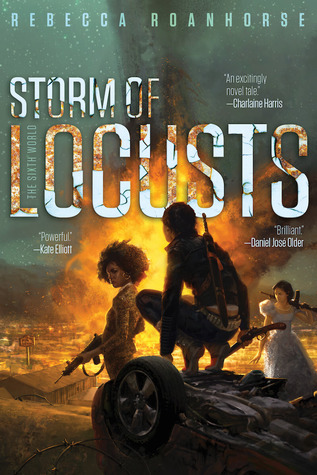
Take A Peek Book Review: Storm of Locusts (The Sixth World, #2) by Rebecca Roanhorse

“Take a Peek” book reviews are short and (possibly) sweet, keeping the commentary brief and providing a little peek at what the book’s about and what I thought.

Synopsis:

(via Goodreads)

It’s been four weeks since the bloody showdown at Black Mesa, and Maggie Hoskie, Diné monster hunter, is trying to make the best of things. Only her latest bounty hunt has gone sideways, she’s lost her only friend, Kai Arviso, and she’s somehow found herself responsible for a girl with a strange clan power.

Then the Goodacre twins show up at Maggie’s door with the news that Kai and the youngest Goodacre, Caleb, have fallen in with a mysterious cult, led by a figure out of Navajo legend called the White Locust. The Goodacres are convinced that Kai’s a true believer, but Maggie suspects there’s more to Kai’s new faith than meets the eye. She vows to track down the White Locust, then rescue Kai and make things right between them.

Her search leads her beyond the Walls of Dinétah and straight into the horrors of the Big Water world outside. With the aid of a motley collection of allies, Maggie must battle body harvesters, newborn casino gods and, ultimately, the White Locust himself. But the cult leader is nothing like she suspected, and Kai might not need rescuing after all. When the full scope of the White Locust’s plans are revealed, Maggie’s burgeoning trust in her friends, and herself, will be pushed to the breaking point, and not everyone will survive.

My Thoughts:

I loved Trail of Lightning, the first book in Rebecca Roanhorse’s The Sixth World series, and Storm of Locusts is an amazing follow-up! Picking up right from where book #1 left off, the story rejoins Maggie after the big fight at Black Mesa, where she battled a Navajo god and seemingly lost her only friend. Now, mere weeks later, she’s healing emotionally and physically, when she’s called on by a sometimes-ally to help with a bounty hunt that goes badly wrong. After the bloody incident, Maggie has a new responsibility, her ally’s niece Ben, a teen girl with clan powers of her own.

Immediately on the heels of this event comes news that Kai has been kidnapped, and Maggie is soon on the trail of a cult leader whose powers include the ability to summon and control hordes of locusts. Gross. And scary. Storm of Locusts ends up as a road trip/quest kind of book, as Maggie, Ben, and Rissa, sister of the boy kidnapped along with Kai, set out to track their missing friends and get vengeance on the White Locust. For the first time in these books, their search takes them outside the walls of Dinétah and into the greater world beyond the Navajo people’s protected lands, where corruption and extreme danger come in many forms, and where despite the strangeness of the new reality, the gods still have powers too.

I’m really adoring The Sixth World series, its characters, legends, and world-building, the mix of old traditions and a new post-apocalyptic landscape. Author Rebecca Roanhorse has a magical, masterful touch with her storytelling, creating a people and society that feel real and lived-in. Maggie is a terrific, layered, conflicted heroine, a total win as a lead character. I want much more of her story! The book ends with a final scene that makes it clear that Maggie’s troubles are far from over, which is fine with me — more trouble for Maggie means more excellent stories for us to enjoy.

Can’t wait for #3!

_________________________________________

The details:

Title: Storm of Locusts (The Sixth World, #2)
Author: Rebecca Roanhorse
Publisher: Saga Press
Publication date: April 23, 2019
Length: 230 pages
Genre: Speculative/dystopian science fiction
Source: Purchased

**Save

Save

Save

Save

Save

Save

Save

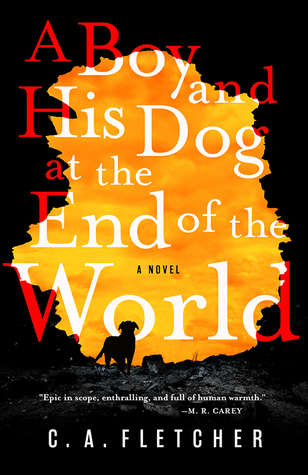
Take A Peek Book Review: A Boy and His Dog at the End of the World by C. A. Fletcher

“Take a Peek” book reviews are short and (possibly) sweet, keeping the commentary brief and providing a little peek at what the book’s about and what I thought.


Synopsis:

(via Goodreads)

When a beloved family dog is stolen, her owner sets out on a life-changing journey through the ruins of our world to bring her back in this fiercely compelling tale of survival, courage, and hope. Perfect for readers of Station Eleven and The Girl With All the Gifts.

My name’s Griz. My childhood wasn’t like yours. I’ve never had friends, and in my whole life I’ve not met enough people to play a game of football.

My parents told me how crowded the world used to be, but we were never lonely on our remote island. We had each other, and our dogs.

Then the thief came.

There may be no law left except what you make of it. But if you steal my dog, you can at least expect me to come after you.

Because if we aren’t loyal to the things we love, what’s the point?

My Thoughts:

A man stole my dog.

I went after him.

Bad things happened.

I can never go home.

I’ll keep this short and to the point, because it would be way too easy to veer into spoilery territory, and this book is best experienced fresh and free from a whole lot of expectations. It’s a wonderful story about love and loyalty, centered around a quest to retrieve a beloved dog, and filled with danger, unexpected alliances and moments of grace, bravery, and defiance. And yes, a little sadness too.

The title says a lot about the basics of the book. The key point is that this is a world of after — nothing is as we know it. And it’s not because of a world war or other doomsday scenario. Instead, the world basically went infertile, except for a very small percentage of people who didn’t. There was a last generation, and once they died out, the people who remained — about 7,000 worldwide — were left to live on in whatever fashion suited them. The world we know was essentially dead. Nothing new was made or created, and people survived through farming and scavenging (or, as Griz’s family calls it, “viking” — they’d go “a-viking” to see what they could find to reuse and repurpose on their own little isolated island).

Told through Griz’s first-person narration, the story takes us along Griz’s journey, across the sea and through an abandoned and alien mainland… because a stolen dog cannot be forgotten. I loved the writing, both plain and unembellished, yet full of fun word play and cadences:

And then the thing that happened happened and what happened was really three things and they all happened at once.

I really truly loved this book. It’s sad and frightening, but also lovely and inspiring. Griz is a terrific, memorable main character. The story wraps up well, neatly enough to leave me satisfied, but I still wish I could learn more about this world and the people left in it.

Highly recommended. What a treat!

_________________________________________

The details:

Title: A Boy and His Dog at the End of the World
Author: C. A. Fletcher
Publisher: Orbit
Publication date: April 23, 2019
Length: 384 pages
Genre: Speculative/post-apocalyptic fiction
Source: Review copy courtesy of the publisher via NetGalley

**Save

Save

Save

Save

Save

Save

Save

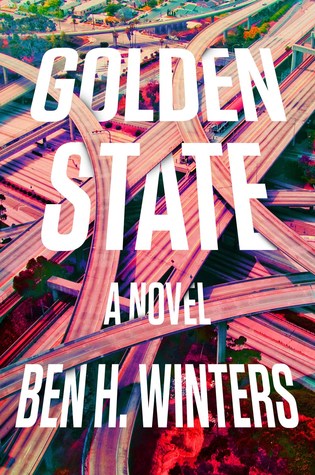
Take A Peek Book Review: Golden State by Ben H. Winters

“Take a Peek” book reviews are short and (possibly) sweet, keeping the commentary brief and providing a little peek at what the book’s about and what I thought. My newest “take a peek” book:

Synopsis:

(via Goodreads)

A shocking vision of our future that is one part Minority Report and one part Chinatown.

Lazlo Ratesic is 54, a 19-year veteran of the Speculative Service, from a family of law enforcement and in a strange alternate society that values law and truth above all else. This is how Laz must, by law, introduce himself, lest he fail to disclose his true purpose or nature, and by doing so, be guilty of a lie.

Laz is a resident of The Golden State, a nation resembling California, where like-minded Americans retreated after the erosion of truth and the spread of lies made public life, and governance, increasingly impossible. There, surrounded by the high walls of compulsory truth-telling, knowingly contradicting the truth–the Objectively So–is the greatest possible crime. Stopping those crimes, punishing them, is Laz’s job. In its service, he is one of the few individuals permitted to harbor untruths–to “speculate” on what might have happened in the commission of a crime.

But the Golden State is far less a paradise than its name might suggest. To monitor, verify, and enforce the Objectively So requires a veritable panopticon of surveillance, recording, and record-keeping. And when those in control of the truth twist it for nefarious means, the Speculators may be the only ones with the power to fight back.

My Thoughts:

Golden State is a weird mind-f*ck of a novel, and that’s what makes it so wonderful. In a society where adherence to the Objectively So is the primary goal, the crime of telling a lie can lead to lengthy imprisonment or even exile, a fate assumed to be equivalent to death. Law enforcement agents like Lazlo can feel when a lie has been told, and their ability to sense anomalies leads them in pursuit of those who attempt to subvert the State with their untruths. People greet each other on the street by stating absolute facts (“A cow has four stomachs.” “A person has one.”), and the ringing of clock bells leads to streams of statements about the time, hour after hour.

I loved the explanations for the rules and moral certainties of the Golden State, which we’re led to believe has been in existence for several generations already as of the start of this story:

You go back far enough in history, ancient history, and you find a time when people were never taught to grow out of it, when every adult lied all the time, when people lied for no reason or for the most selfish possible reasons, for political effect or personal gain. They lied and they didn’t just lie; they built around themselves whole carapaces of lies. They built realities and sheltered inside them. This is how it was, this is how it is known to have been, and all the details of that old dead world are known to us in our bones but hidden from view, true and permanent but not accessible, not part of our vernacular.

It was this world but it was another world and it’s gone. We are what’s left. The calamity of the past is not true, because it is unknown. There could only be hypotheses, and hypotheses are not the truth. So we leave it blank. Nothing happened. Something happened. It is gone.

Golden State is a book that I’ll need to revisit, probably a few times. The writing is spot-on, conveying the strange realities of its world from an insider’s perspective, immersing the reader in the weird double-speak of Speculators and Small Infelicities and Acknowledged Experts — it’s strange and alien, yet we inhabit it through the characters for whom it’s all just part of the normal lives they lead.

Reading Golden State is a treat. I wanted to stop to highlight passages practically everywhere — there’s so much clever wordplay and inversion of our understanding of what things mean. It’s a great read, highly recommended. Now I need to get back to the other books on my shelves by this author, because I’m pretty sure I’m going to love them.

_________________________________________

The details:

Title: Golden State
Author: Ben H. Winters
Publisher: Mulholland Books
Publication date: January 22, 2019
Length: 319 pages
Genre: Speculative fiction
Source: Review copy courtesy of the publisher via NetGalley

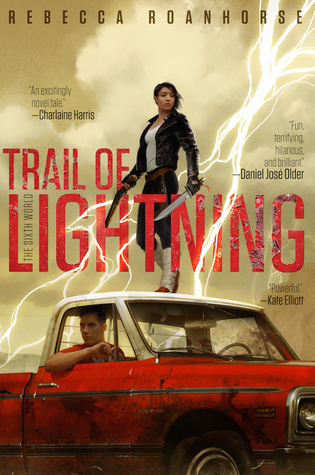
Take A Peek Book Review: Trail of Lightning (The Sixth World, #1) by Rebecca Roanhorse

“Take a Peek” book reviews are short and (possibly) sweet, keeping the commentary brief and providing a little peek at what the book’s about and what I thought.

Synopsis:

(via Goodreads)

While most of the world has drowned beneath the sudden rising waters of a climate apocalypse, Dinétah (formerly the Navajo reservation) has been reborn. The gods and heroes of legend walk the land, but so do monsters.

Maggie Hoskie is a Dinétah monster hunter, a supernaturally gifted killer. When a small town needs help finding a missing girl, Maggie is their last—and best—hope. But what Maggie uncovers about the monster is much larger and more terrifying than anything she could imagine.

Maggie reluctantly enlists the aid of Kai Arviso, an unconventional medicine man, and together they travel to the rez to unravel clues from ancient legends, trade favors with tricksters, and battle dark witchcraft in a patchwork world of deteriorating technology.

As Maggie discovers the truth behind the disappearances, she will have to confront her past—if she wants to survive.

Welcome to the Sixth World.

My Thoughts:

What a cool set-up! Sometime after the world we know is left mostly underwater and the United States is no more, survived by pockets of humanity living in rogue states, the Navajo nation is thriving within the magical walls erected before the flood by prescient elders. Within the walls, the Dinétah people live in a world where magic and gods have returned. And for some of the mortals, clan heritage has manifested with special powers and gifts — among these, Maggie Hoskie, whose speed and ability to kill have made her a powerful monster-slayer.

Maggie struggles with the emotional upheavals that have brought her to this point, and is joined by Kai, a former outsider who has secret clan powers of his own, to try to tame the evil that has brought monsters to the land. The story combines the grit and violence of urban fantasy with the natural beauty and starkness of the Dinétah land.

It’s a rich and fascinating world, although the world-building itself felt incomplete to me. While we’re introduced to Maggie and some of the elemental powers and gods, I felt that the story needed a bit more grounding and expansion. I always felt as if I was missing some tiny element that would push this book over the edge into full-on greatness for me. I would have liked to get to know Maggie more as a person, and the same is true for Kai.

Still, I loved the use of language and culture to paint a picture of the people, the land, and the magic. Trail of Lightning is the first book in a series, and I really can’t wait for more. I’m hoping the next book will give me the greater picture of this world that I’m dying for, so I can feel fully immersed.

As a side note, my city’s public libraries have chosen this book as the citywide “On the Same Page” book for January/February, which I think is all sorts of awesome. It’s really terrific to get a taste of fantasy fiction with a Native American heroine and cast of characters — really a unique set-up, and a world I want to know more about!

_________________________________________

The details:

Title: Trail of Lightning (The Sixth World, #1)
Author: Rebecca Roanhorse
Publisher: Saga Press
Publication date: June 26, 2018
Length: 287 pages
Genre: Speculative/dystopian science fiction
Source: Library

**Save

Save

Save

Save

Save

Save

Save

Take A Peek Book Review: Future Home of the Living God by Louise Erdrich

“Take a Peek” book reviews are short and (possibly) sweet, keeping the commentary brief and providing a little peek at what the book’s about and what I thought.


Synopsis:

(via Goodreads)

The world as we know it is ending. Evolution has reversed itself, affecting every living creature on earth. Science cannot stop the world from running backwards, as woman after woman gives birth to infants that appear to be primitive species of humans. Thirty-two-year-old Cedar Hawk Songmaker, adopted daughter of a pair of big-hearted, open-minded Minneapolis liberals, is as disturbed and uncertain as the rest of America around her. But for Cedar, this change is profound and deeply personal. She is four months pregnant.

Though she wants to tell the adoptive parents who raised her from infancy, Cedar first feels compelled to find her birth mother, Mary Potts, an Ojibwe living on the reservation, to understand both her and her baby’s origins. As Cedar goes back to her own biological beginnings, society around her begins to disintegrate, fueled by a swelling panic about the end of humanity.

There are rumors of martial law, of Congress confining pregnant women. Of a registry, and rewards for those who turn these wanted women in. Flickering through the chaos are signs of increasing repression: a shaken Cedar witnesses a family wrenched apart when police violently drag a mother from her husband and child in a parking lot. The streets of her neighborhood have been renamed with Bible verses. A stranger answers the phone when she calls her adoptive parents, who have vanished without a trace. It will take all Cedar has to avoid the prying eyes of potential informants and keep her baby safe.

A chilling dystopian novel both provocative and prescient, Future Home of the Living God is a startlingly original work from one of our most acclaimed writers: a moving meditation on female agency, self-determination, biology, and natural rights that speaks to the troubling changes of our time.

My Thoughts:

While often disturbing, this book doesn’t flesh out its dystopian vision well enough to make a true impact. The concept of evolution running backwards isn’t really explored or explained. True, the story is told through the eyes of its main character, Cedar, and she can only tell what she herself knows — but that narrow viewpoint limits the reader’s ability to grasp the outside events and understand how the world could change so dramatically in so short a time. Within mere months, pregnant women are hunted, tracked, and imprisoned, forced into reproductive centers with no choice but to bear and then lose children.

Meanwhile, Cedar’s exploration of family, roots, and faith meander and lack coherence. The book is at its best during its most harrowing sections, when Cedar is on the run or in the midst of an elaborate escape plot. Her inner monologues and writings on religion take away from the building tension.

It’s a shame, because the big-picture concept could be intriguing if we had more information on why it’s happening, or really, a better view of what actually is happening. Instead, it’s a little bit Handmaid’s Tale but without the urgency or connection of that classic. Overall, I walked away disappointed by a book I’d been so eager to read.

_________________________________________

The details:

Title: Future Home of the Living God
Author: Louise Erdrich
Publisher: Harper
Publication date: November 14, 2017
Length: 267 pages
Genre: Speculative/science fiction
Source: Purchased

**Save

Save

Save

Save

Save

Save

Save