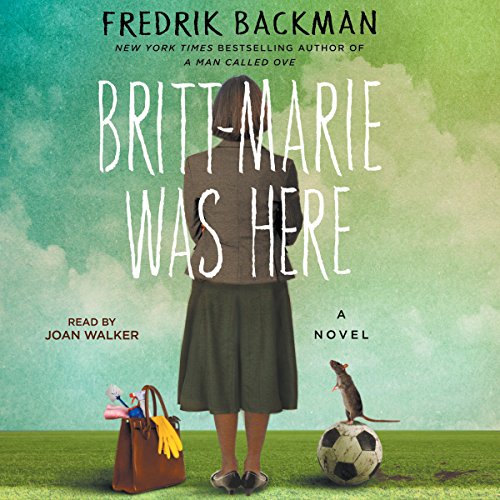
Audiobook Review: Britt-Marie Was Here by Fredrik Backman

Title: Britt-Marie Was Here
Author: Fredrik Backman
Narrator: Joan Walker
Publisher: Atria Books
Publication date: 2016
Print length: 324 pages
Audio length: 9 hours 18 minutes
Genre: Contemporary fiction
Source: Library
Rating:

Rating: 3 out of 5.

From the best-selling author of the “charming debut” (PeopleA Man Called Ove and My Grandmother Asked Me to Tell You She’s Sorry, a heartwarming and hilarious story of a reluctant outsider who transforms a tiny village and a woman who finds love and second chances in the unlikeliest of places.

Britt-Marie can’t stand mess. She eats dinner at precisely the right time and starts her day at six in the morning because only lunatics wake up later than that. And she is not passive-aggressive. Not in the least. It’s just that sometimes people interpret her helpful suggestions as criticisms, which is certainly not her intention.

But at 63, Britt-Marie has had enough. She finally walks out on her loveless 40-year marriage and finds a job in the only place she can: Borg, a small, derelict town devastated by the financial crisis. For the fastidious Britt-Marie, this new world of noisy children, muddy floors, and a roommate who is a rat (literally) is a hard adjustment.

As for the citizens of Borg, with everything that they know crumbling around them, the only thing that they have left to hold on to is something Britt-Marie absolutely loathes: their love of soccer. When the village’s youth team becomes desperate for a coach, they set their sights on her. She’s the least likely candidate, but their need is obvious, and there is no one else to do it.

Thus begins a beautiful and unlikely partnership. In her new role as reluctant mentor to these lost young boys and girls, Britt-Marie soon finds herself becoming increasingly vital to the community. And, even more surprisingly, she is the object of romantic desire for a friendly and handsome local policeman named Sven. In this world of oddballs and misfits, can Britt-Marie finally find a place where she belongs?

Zany and full of heart, Britt-Marie Was Here is a novel about love and second chances and about the unexpected friendships we make that teach us who we really are and the things we are capable of doing.

After finishing Fredrik Backman’s most recent book, My Friends — a true masterpiece — I decided to go back and read the remaining couple of his books that I’d somehow missed. But now that I’ve read Britt-Marie Was Here, I realize that his earlier books may not work for me quite as well as the more recent ones.

In Britt-Marie Was Here, we meet the prickly, socially awkward Britt-Marie who, after 40 years of marriage, leaves her husband and decides to start a life of her own. She’s spent all these year catering to her husband and keeping their home spotless, and has simply taken his word for it when he tells her that she’s not good with people. Now, she’s determined to find her own path, and starts by hounding the poor woman at the unemployment office until she’s finally offered the only available position — acting as caretaker for an abandoned community center slated for closure shortly, in the forgotten, run-down town of Borg.

Borg is miles from nowhere, and seems to mainly consist of a pizzeria that’s also the local grocery store, post office, and car repair shop. The recreation center is just next door, and in just as desperate need of cleaning as the pizzeria, so Britt-Marie gets to work. She’s incredibly awkward and rubs the locals the wrong way right from the start — and yet, she’s not fazed when the curious local kids show up to check her out. Somehow, almost against her will, she gets involved, and soon, she’s formed abrasive yet fond relationships with the adults of Borg while also getting roped into acting as the kids’ soccer coach.

If you like your stories quirky and heart-warming, then there’s a lot you’ll enjoy about Britt-Marie Was Here. Backman’s storytelling is always a delight, and his wordplay and descriptions are just as clever as we’d expect. I especially love how this author captures so much depth about life and emotions in seemingly simple sentences:

She has not run down the stairs like this since she was a teenager, when your heart reaches the front door before your feet.

However… Plotwise, Britt-Marie Was Here feels a little bland. I’ve read plenty of books already about outsiders finding connection and community in a peculiar small town, so this book didn’t especially stand out for me. What’s more, I found the timeline hard to believe: Britt-Marie spends three weeks in Borg, and somehow manages to change everyone’s lives for the better, create new hope for the children and their soccer team, and encourage the townsfolk to become their best selves. In three weeks? As I said, perhaps I’ve just read too many of these outsiders-transform-a-community stories, but I just wasn’t buying it.

On top of my issues with the story, I really struggled with the audiobook narration. The narrator’s delivery was a challenge for me, especially the rhythm and tone of her speaking voice. Something about it just didn’t click, and I often found myself puzzling over what I’d just heard or having to go back and repeat sections — or double-check them against the printed edition.

This is a cute story, and there are some moments I truly enjoyed, but between the narration and the sense of having read too many similar stories already, Britt-Marie Was Here was only a so-so audiobook experience for me.

I do think the author’s style and subject matter have developed spectacularly over the years, and his later books feel much deeper to me. I believe I have just one more of his early novels, and possibly a few shorter pieces, left to read, but after Britt-Marie, I’ll probably hold off for a while before delving further into his backlist.

Purchase linksAmazon – Audible – Bookshop.org – Libro.fm
Disclaimer: When you make a purchase through one of these affiliate links, I may earn a small commission, at no additional cost to you.
Save

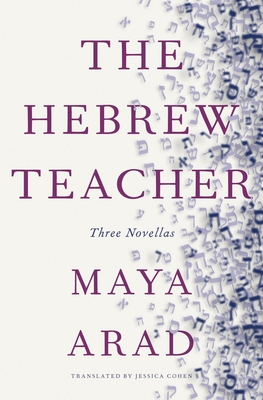
Book Review: The Hebrew Teacher by Maya Arad

Title: The Hebrew Teacher
Author: Maya Arad
Translated by: Jessica Cohen
Publisher: New Vessel Press
Publication date: March 19, 2024
Length: 320 pages
Genre: Contemporary fiction
Source: Library
Rating:

Rating: 3.5 out of 5.

Three Israeli women, their lives altered by immigration to the United States, seek to overcome crises. Ilana is a veteran Hebrew instructor at a Midwestern college who has built her life around her career. When a young Hebrew literature professor joins the faculty, she finds his post-Zionist politics pose a threat to her life’s work. Miriam, whose son left Israel to make his fortune in Silicon Valley, pays an unwanted visit to meet her new grandson and discovers cracks in the family’s perfect façade. Efrat, another Israeli in California, is determined to help her daughter navigate the challenges of middle school, and crosses forbidden lines when she follows her into the minefield of social media. In these three stirring novellas—comedies of manners with an ambitious blend of irony and sensitivity—celebrated Israeli author Maya Arad probes the demise of idealism and the generation gap that her heroines must confront.  

The Hebrew Teacher is a collection of three novellas that, taken as a whole, provide insight into experiences of alienation, assimilation, and family generational estrangement. Originally published in Hebrew, this collection’s smooth English translation provides powerful, moving stories with universal themes.

While not normally a fan of short fiction, I was immediately pulled into the characters’ lives in each of these three novellas. Their stories are so relatable that they actually disturbed me quite a bit, as they highlight the ordinary heartbreak that daily life can present.

The first story, The Hebrew Teacher, focuses on Ilana, a woman approaching retirement who has spent her entire career teaching Hebrew at a midwestern university. She reminisces on the early days:

When she’d arrived in ’71, it had been a good time for Hebrew. When she told people she was from Israel, they used to give her admiring looks. […] But now was not a good time for Hebrew.

Ilana faces an alarming drop in her enrollment rates for the new semester, while also dealing with a new professor of Hebrew and Jewish literature — someone with authority over her classes — whose political views put him and Ilana on opposite sides of an academic cold war.

The Hebrew Teacher has a sad energy; we feel for Ilana as an older woman reflecting on the days when both she and her life’s work were once appreciated, forced to realize that she’s been left behind by changing times.

The second story, A Visit (Scenes) is also achingly sad. Miriam arrives in Silicon Valley to visit her son, daughter-in-law, and their toddler. She’s never met her grandson before, and her son and his wife seem distinctly uninterested in welcoming her into their home and lives. Told through vignettes (scenes) over the course of Miriam’s three-week visit, through Miriam’s POV as well as the other two adults’, the story unfolds in short glimpses that convey the utter estrangement Miriam feels as well as the tension within the household. Miriam’s visits with another grandmother and her daughter-in-law add poignancy, as they show the happiness and closeness that have eluded Miriam. For some reason, this story just broke my heart, especially Miriam’s reflections on the closeness of parents and children during the childhood years, and how adult children exclude their parents from their lives.

Make New Friends, the third and final piece in this collection, feels rather difference in focus, but is still disturbing in tone and content. Once again featuring a family of Israeli ex-pats in Silicon Valley, Make New Friends is told through the viewpoint of Efrat, a mother who worries constantly about her 13-year-old daughter’s lack of friends. As Efrat stews over Libby’s social standing, she crosses some major lines on social media, all the while coming to terms with her own long-simmering anxieties about friendship and belonging. The story is well told, and made me very uncomfortable — and then ends pretty abruptly. I expected a more dramatic conclusion; it seems to just stop.

Overall, I enjoyed reading this book, even though I don’t do particularly well with short fiction and am always left feeling a bit unsatisfied. The stories in The Hebrew Teacher present ordinary people dealing with life’s frustrations and disappointments, with characters who feel well-defined and specific. I appreciated the depiction of the cultural struggles of characters who end up livinge far from their original homes and families, and what this means for their children as well.

The Hebrew Teacher won the 2025 National Jewish Book Award for Hebrew Fiction in Translation. Maya Arad’s newest novel, Happy New Years, was released in the US this month, and I look forward to reading it.

Purchase linksAmazon – Bookshop.orgLibro.fm
Disclaimer: When you make a purchase through one of these affiliate links, I may earn a small commission, at no additional cost to you.

Travel reading wrap-up: A batch of mini-reviews — March 2024

Laundry is done and (almost) put away, suitcases are stored, and I’m settling back into being home after a terrific week away with family.

And of course, I have book reviews to share! The idea of writing individual posts for all of these is way too daunting, so once again, here’ a wrap-up of what I read on my vacation.


The Red Notebook by Antoine Laurain: At a slim 159 pages, this was a quick but absorbing little novel that was a perfect choice for beachside reading. When a bookseller finds a discarded handbag on the streets of Paris, he feels compelled to find its owner. Her ID is missing, but the odds and ends inside provide clues that he follows, not really understanding why he feels drawn to this mystery woman or why it’s so important to him that he find her. Meanwhile, the bag’s owner has her own set of experiences, and seeing how the two inch closer to discovering once another is fascinating.

Beautiful written and thoughtful, this is a moving and lovely reading experience.

Rating:

Rating: 4.5 out of 5.

The Bookseller of Inverness by S. G. MacLean: My book group’s pick for March is this immersive historical novel, set in Inverness in the 1750s. There’s a mystery to be solved, which introduces us to the dangerous world of Jacobites and spies in post-Culloden Inverness. The central character is a bookseller, (and how could that not be awesome?), and I really enjoyed the intricate plotting, the danger and intrigue, and the cast of characters.

Rating:

Rating: 4 out of 5.


The Secret Countess by Eva Ibbotson: I adored this riches-to-rags-to-riches story of a lovely Russian Countess whose family loses everything when they flee the Russian revolution. Anna is a delightful character with a sparkling personality. Her quest to support her now impoverished family by working as a housemaid on a grand estate is the stuff of fairy tales and has a Cinderella-esque flavor, while also being uniquely its own story. The dialogue and writing simply glow. It’s sweet, funny, and utterly charming. And now, I must find more of this author’s books to read!

Rating:

Rating: 5 out of 5.

Camp by L. C. Rosen: Loved, loved, loved this adorable, funny, touching YA novel about a boy in love… who decided that this summer at Camp Outland will be the summer the boy of his dream finally falls for him — even if he has to change everything about himself to make it happen. There’s so much more to it than preaching a lesson of never change yourself to get a boyfriend or if you lie about who you are, then how he can he actually love the real you?

I’m not the least bit surprised by how much I enjoyed this book, since this author is just so consistently great. (Also, any book set at a summer camp immediately has an edge when it comes to winning my nostalgic heart.) Camp includes memorable characters embodying many different facets of a supportive and loving LGBTQIA+ community. Beyond the hijinks and central romance, the characters are given room to talk about themselves and issues of identity and belonging, and I just loved them all so much. Plus, there’s oodles of awesome musical theater… so a big win all the way around!

Rating:

Rating: 5 out of 5.

What do you know? I loved every book I read on this trip!

Save

Save

Save

Save

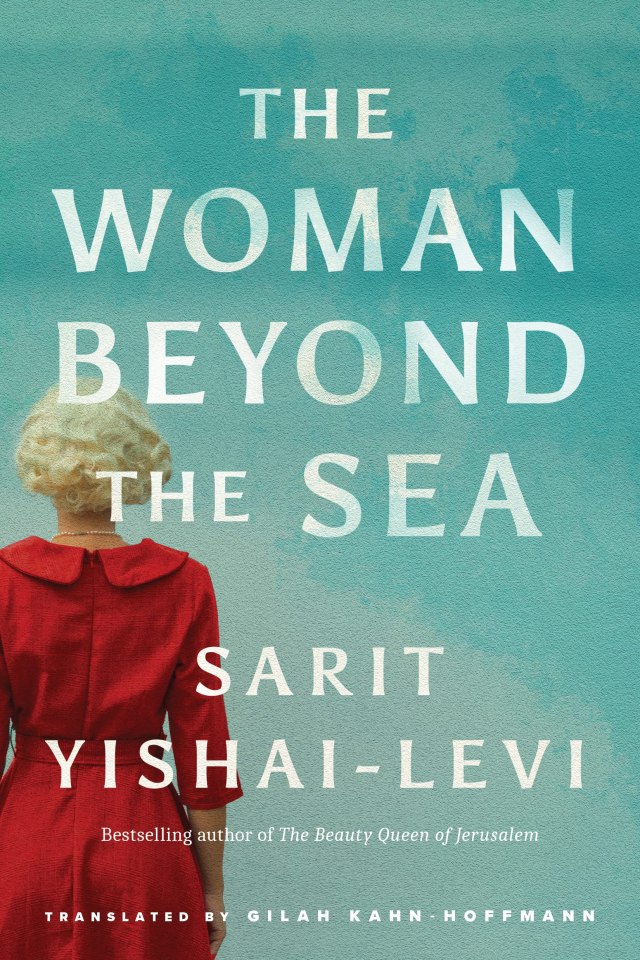
Book Review: The Woman Beyond the Sea by Sarit Yishai-Levi

Title: The Woman Beyond the Sea
Author: Sarit Yishai-Levi
Translated by: Gilah Kahn-Hoffmann
Publisher: Amazon Crossing
Publication date: March 21, 2023 (originally published in Hebrew in 2019)
Print length: 413 pages
Genre: Historical fiction
Source: Purchased

Rating: 3.5 out of 5.

A mesmerizing novel about three generations of women who have lost each other—and the quest to weave them back into a family.

An immersive historical tale spanning the life stories of three women, The Woman Beyond the Sea traces the paths of a daughter, mother, and grandmother who lead entirely separate lives, until finally their stories and their hearts are joined together.

Eliya thinks that she’s finally found true love and passion with her charismatic and demanding husband, an aspiring novelist—until he ends their relationship in a Paris café, spurring her suicide attempt. Seeking to heal herself, Eliya is compelled to piece together the jagged shards of her life and history.

Eliya’s heart-wrenching journey leads her to a profound and unexpected love, renewed family ties, and a reconciliation with her orphaned mother, Lily. Together, the two women embark on a quest to discover the truth about themselves and Lily’s own origins…and the unknown woman who set their stories in motion one Christmas Eve.

Content warning: Suicide, rape, childhood neglect and abandonment

Sarit Yishai-Levi is the author of The Beauty Queen of Jerusalem, an immersive novel about a Sephardic family in 20th century Israel, which has been adapted into an addictive Netflix series (and just when are we getting season 3???).

In her new novel, The Woman Beyond the Sea, we open in the 1970s with Eliya, a woman in her mid-20s who has been used and then dumped by her self-centered husband. Eliya completely falls apart, and her parents Shaul and Lily are at a loss about how to help her.

Lily herself is a strange and troubled woman. Abandoned at a convent as a newborn, she was raised by nuns with no knowledge of her past, no family and no connections. After running away from the convent as a teen, she bounces from one temporary living arrangement to another until she finally meets Shaul, a man who adores her and offers her a future that she never thought she’d have. But Lily, raised without love or family, doesn’t know how to trust or give love, and after experiencing a particularly harsh tragedy, is unable to raise Eliya with a mother’s love.

The cycle of strangled feelings and alienation continue until Eliya is able, after enduring her own psychological crises, to bridge the distance between herself and her mother. After great struggle, Eliya and Lily finally join together to understand Lily’s past and to search for the answers that have always been missing.

The Woman Beyond the Sea is quite intense emotionally, and the two women, Eliya and Lily, are not kind to themselves or to each other. It’s disturbing to see how much hurt they carry internally and the ways they hurt one another.

My reactions to this book are mixed. I loved the setting and the time period, loved seeing Tel Aviv through the characters’ experiences, loved the elements of culture that permeate the characters’ lives.

I didn’t love the writing style — although I wonder if some of this is a translation issue. Originally published in Hebrew, there are phrases and expressions that feel clunky or awkward here in English — but I know just enough Hebrew to pick up occasional moments where certain colloquial expressions in the original language might have felt more natural. (Sadly, I definitely do not have enough Hebrew to read an entire novel!)

Beyond the translation issues, the storytelling itself is not in a style that particularly works for me. Especially in the first half, chapters are painfully long (30 – 60 pages), and the narrative jumps chronologically within a character’s memories — so a character remembering her early married life will interrupt these thoughts to remember something from her school days, and then perhaps interrupt yet again for an earlier memory before coming back to the original set of thoughts. It’s confusing and often hard to follow, and kept me from feeling truly connected to the characters until much later in the book.

There’s a terrific twist and big reveal late in the book that really redeemed the reading experience for me and pulled me in completely. Truly fascinating, although I can’t say a single thing about it without divulging things better not known in advance.

Still, even this high point in the book is offset by some unforgivably cruel shaming and harsh judgments about actions taken to survive and situations outside of a character’s control. Again, I don’t want to reveal details, but I was really angered by the words used by certain characters and found their reactions totally unacceptable and awful.

Overall, there’s a compelling story at the heart of The Woman Beyond the Sea and I always wanted to know more. And yet, the problematic elements and weirdly structured storytelling left me frustrated too often to rate this book higher than 3.5 stars.

A note on content warnings: I don’t typically include these, but felt the topics of suicide and rape need to be called out in advance, for readers who are triggered by or prefer to avoid these topics.

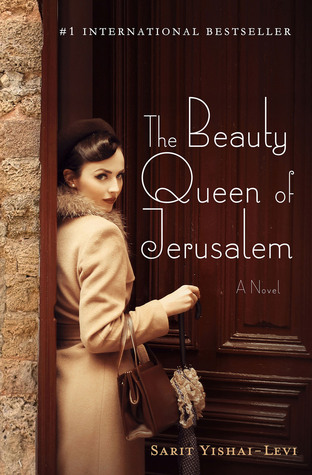
Book Review: The Beauty Queen of Jerusalem by Sarit Yishai-Levi

Beauty Queen of JerusalemFour generations of family traditions and doomed marriages form the heart of The Beauty Queen of Jerusalem, a family saga that takes place in the decades before, during, and after Israel’s war for independence.

Gabriela Siton is the youngest in a line of women belonging to the Ermosa family, a large Sephardic family — Jews of Spanish descent — living in Jerusalem, dealing with family secrets and turbulence during a time of war and upheaval in Israel itself.

The story opens with Gabriela’s mother’s death. Luna dies at a relatively young age from a deadly and fast-moving cancer, and Gabriela’s resulting grief is heavily laden with guilt. She and Luna had a fraught, difficult relationship all of Gabriela’s life, and she doesn’t quite know what to do with all of her emotions and the confusion she’s left with.

Bit by bit, over the course of the story, we hear more about the history of the Ermosa women. There’s the matriarch of the family, Mercada, who marries her beloved son off to a poverty-stricken orphan as punishment for his near-betrayal of his family. Mercada’s daughter-in-law, Rosa, faces life with a husband who doesn’t love her, a beloved brother who gets involved in the deadly underground movement leading up to independence, and three daughters — the oldest of whom is Luna. Luna is gorgeous, the most beautiful girl in Jerusalem, but with a selfish and combative personality. She’s prickly and self-centered, and she and Rosa never find a way to bond.

Later on, Gabriela is told that the curse of the Ermosa women is to marry men who don’t really love them, and that seems to be true in the three preceding generations. Each man is madly in love with a woman who isn’t appropriate or acceptable, and so marries out of obligation, leading to bitterness, lack of passion, and lack of respect.

In some ways, The Beauty Queen of Jerusalem reminded me of Isabel Allende’s masterpiece, The House of the Spirits. Like The House of the Spirits, the blessings and curses of each generation seems to be passed along to the next, as each set of relationships is influenced by, or damaged by, the ones that came before. Likewise, The Beauty Queen of Jersusalem, while telling the tale of a particular family, is set against a backdrop of a significant historical era. The history of pre-state Israel and its struggle for independence form a big piece of the picture here, as the Ermosa family is caught up in the violence and upheavals that surround them.

The title of this book is a misnomer, and a pretty unfortunate one at that. Luna is known for her remarkable beauty, and is referred to as the beauty queen of Jerusalem — although not, as you might expect, because she actually competed in pageants or won competitions or anything. She’s just a woman who was known for her beauty and style. What’s more, the book isn’t exclusively, or even mainly about Luna — it’s about all of the women of her family. In fact, Luna is a mostly unlikeable character who’s a terrible mother and is mostly portrayed as being awful to her own mother. Things happen later in the book that make her a slightly more sympathetic character, but the bottom line is that she isn’t solely what the book is about, and it took me a while to get past the preconception that I had from the title in order to see the breadth of the story.

On the plus side, there are many vignettes in this sweeping story that are completely enchanting. Rosa’s story is fabulous, and you can’t help but feel compassion for a woman who’s struggled all her life and gotten little in return. The story of Rosa’s three daughters (including Luna) and how they each met the men they’d end up marrying is varied and textured. The Sephardic heritage of the family is described through their rituals, their use of Ladino phrases, and the little details about food and customs that bring a sense of vitality to their daily lives.

The Jerusalem setting is wonderful, with the city forming a vibrant stage for the family drama. The historical elements are skillfully woven into the story, so that the loves and struggles within the family are set against their worries about English police, bombings in the streets, sieges and rationing, and men serving at the front.

While overall I enjoyed the book, I did hit a few stumbling blocks. The biggest issue for me was the language, which often felt a bit clunky. The book is an English translation from the Hebrew, and I’m afraid that something truly was lost in translation. The writing just doesn’t always flow, and the dialogue and use of Ladino and Spanish phrases seem a bit jammed in, not organic. I have a feeling this issue might not be an issue if the book were read in the original Hebrew.

The other element that might be problematic for American readers is the assumption of familiarity with details of Israeli history. The book was written and published in Israel in 2013, released in English in the United States for the first time this year. It occasionally feels a bit like “inside baseball” — the book is written for an Israeli audience, and there’s an assumption of a common culture and background. For me, having spent time there and understanding the history and culture, it wasn’t an issue, but I can imagine that some readers will have a harder time understanding the context or getting the full picture of the historical elements woven into the story, or even being able to identify some of the names, politicians, and organization that are referred to throughout the book.

The perspective and organization of the book is somewhat puzzling. We begin with Gabriela’s first-person narration, but the storytelling shifts. Sometimes, it’s another family member telling Gabriela about incidents from the past, set out as a dialogue with Gabriela, with the story appearing in quotation marks. But at other times, it’s a third-person narrative, filling in the gaps and telling other pieces of the family story. The narrative jumps from one character’s perspective to anothers, and it can be jarring to sometimes see the world according to a character who hasn’t had a POV before. Time-wise, it’s confusing as well, as we get a description from Gabriela early on about her mother’s death, but as the story jumps back and forth for most of the book, it’s jarring when the last few chapters jump back to an adult Gabriela and how she reconciles her grief and anger.

At its core, The Beauty Queen of Jerusalem is a moving story of a complicated and messed-up family. I really enjoyed parts of the story, especially those pieces that delve more deeply into the complicated emotions and wounds of the many family members. Unfortunately, the awkward writing/translation and the narrative inconsistency make this book more difficult than it needs to be, and overall I think the plot could have used a bit more focus. Still, it’s worth reading for the intergenerational conflicts and dynamics, and I enjoyed the nuggets of history that form the backbone of the story.

_________________________________________

The details:

Title: The Beauty Queen of Jerusalem
Author: Sarit Yishai-Levi
Publisher: Thomas Dunne
Publication date: April 5, 2016
Length: 384 pages
Genre: Historical fiction
Source: Review copy courtesy of the publisher via NetGalley