Book Review: The Frame-Up by Gwenda Bond

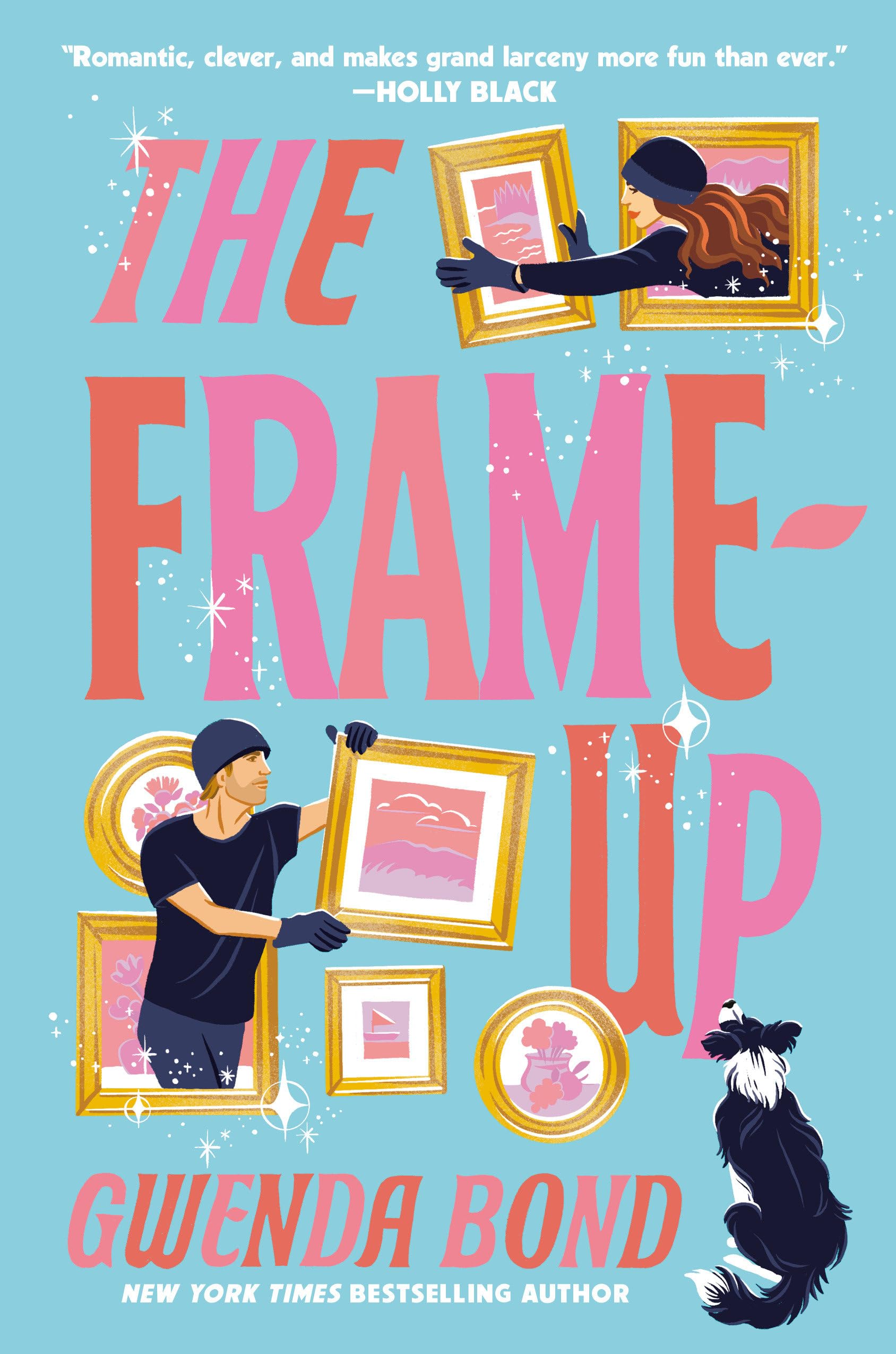
Title: The Frame-Up
Author: Gwenda Bond
Publisher: Del Rey
Publication date: February 13, 2024
Length: 352 pages
Genre: Contemporary fiction
Source: Review copy courtesy of the publisher via NetGalley
Rating:

Rating: 2 out of 5.

A magically gifted con artist must gather her estranged mother’s old crew for a once-in-a-lifetime heist, from the New York Times bestselling author of Stranger Suspicious Minds.

Dani Poissant is the daughter and former accomplice of the world’s most famous art thief, as well as being an expert forger in her own right. The secret to their success? A little thing called magic, kept rigorously secret from the non-magical world. Dani’s mother possesses the power of persuasion, able to bend people to her will, whereas Dani has the ability to make any forgery she undertakes feel like the genuine article.

At seventeen, concerned about the corrupting influence of her mother’s shadowy partner, Archer, Dani impulsively sold her mother out to the FBI—an act she has always regretted. Ten years later, Archer seeks her out, asking her to steal a particular painting for him, since her mother’s still in jail. In return, he will reconcile her with her mother and reunite her with her mother’s old gang—including her former best friend, Mia, and Elliott, the love of her life.

The problem is, it’s a nearly impossible job—even with the magical talents of the people she once considered family backing her up. The painting is in the never-before-viewed private collection of deceased billionaire William Hackworth—otherwise known as the Fortress of Art. It’s a job that needs a year to plan, and Dani has just over one week. Worse, she’s not exactly gotten a warm welcome from her former colleagues—especially not from Elliott, who has grown from a weedy teen to a smoking-hot adult. And then there is the biggest puzzle of why Archer wants her to steal a portrait of himself, which clearly dates from the 1890s, instead of the much more valuable works by Vermeer or Rothko. Who is her mother’s partner, really, and what does he want?

The more Dani learns, the more she understands she may be in way over her head—and that there is far more at stake in this job than she ever realized.

I’m not entirely sure what this book was trying to be. A heist caper? A tale of generations of women with magical powers forced to serve a supernatural being? A contemporary romance, complete with love triangle? Perhaps the problem is that The Frame-Up tries to be all of these, and doesn’t quite hit the mark with any.

Dani Poissant has been estranged from her mother and her chosen family of art thieves ever since she turned her mother in to the FBI ten years earlier. Now, she lives and works alone, using her magical gifts to scam bad guys and restore a little bit of justice to their victims (and earn a paycheck for herself).

When her mother’s former associate, a mysterious man named Archer, tracks her down, she’s forced to confront her past. A billionaire art collector, who has never let anyone inside his well-named Fortress of Art, has died, and his family plans to open the collection to the public for the first time and auction it off. There’s a painting that Archer wants, and he wants Dani to get it for him.

For… reasons, Dani accepts, and heads back to her old home base to reunite with her former circle of thieves/family and plan one final heist, hoping to repair her connection to her mother and rid themselves of Archer once and for all.

I’ll be blunt. This book is a mess. Plot lines are all over the place, as is the tone. We’re supposed to feel Dani’s deep connection to the people she goes back to — Rabbit, Mia, Elliot — but none of it is fleshed out. We’re told about Dani’s thoughts and emotions, but none of it felt substantial to me.

The magical powers that enable them to control technology or create master forgeries or find anything lost are a convenient jumble, and the heist itself is nonsensical, as are the other magical art thieves who try to get in their way.

The storyline about Archer’s past with the women of the Poissant family is a little more interesting than the rest… but it doesn’t get explained until past the midway point of the book, and even then, it feels familiar. A supernatural being haunting/controlling generations of women in the same family? I could name at least two or three other books with the same theme.

Messy, jumbled plots and characters aren’t helped by messy writing. There are sentences that I had to stop and parse — just who are we talking about here? There’s even a scene where someone using an alias gets referred to by his real name — but it’s clearly not an intentional slip or a piece of the plot, just a place where more editing was needed. I can only hope that the errors and awkwardness I noticed in the ARC are cleaned up in the final published version.

I considered DNFing repeatedly throughout this book, but wanted to see it through in case something happened in the latter half to make me feel more invested. It didn’t. By the end, I was hate-reading. I was going to finish this book, dammit!

Such a disappointment. I read the author’s three previous books, which were all cheery, silly, supernaturally-infused adventure/romances. I hoped for a similar reading experience with The Frame-Up, but sadly, that was not the case.

Book Review: The Girl You Left Behind by Jojo Moyes

Book Review: The Girl You Left Behind by Jojo Moyes

The Girl You Left BehindQuick: When you think of looted art and reparations, what do you think of? Nazi Germany? So do most of the bystanders in this novel, which mixes a modern courtroom drama and love story with a devastating glimpse back at a wartime tragedy, with a missing (perhaps stolen) painting serving as the focal point. The twist in The Girl You Left Behind is that the painting in question went missing during the German occupation of northern France during the first World War — but that doesn’t stop popular opinion from tarnishing the main character’s reputation by accusing her of exploiting Nazi theft for her own personal gain. To say it’s complicated is putting it mildly.

In The Girl You Left Behind, we follow two timelines. In 1916, we meet Sophie Lefevre, devoted wife of up-and-coming artist Edouard, who is serving on the front lines with the French forces battling the invading German army. Sophie has been left behind in her home village, helping her sister manage the family inn and struggling to survive with ever-dwindling rations and a hostile German battalion occupying the town. Beautiful young Sophie catches the eye of the German Kommandant, and he is mesmerized as well by Edouard’s portrait of Sophie, which hangs in a back hallway of the inn. Ultimately, Sophie is forced into a decision that pits her own life and honor against the survival of her family and her husband.

Meanwhile, in modern day London, young widow Liv Halston lives alone in a beautiful glass house built by her late husband David, a remarkable and renowned architect who died suddenly four years previously. On their honeymoon, David had bought a beautiful portrait of an enigmatic young woman as a gift for Liv, and this portrait is literally the only spot of color in Liv’s bleak world. Liv meets handsome, gallant Paul and finally feels a spark of life returning — but Paul is an ex-cop now specializing in tracking and returning works of art stolen during wartime. When he is hired by the Lefevre family to find their missing painting and realizes it’s in Liv’s possession, legal drama threatens their blossoming love — as well as David’s legacy and Liv’s reputation.

The Girl You Left Behind tells both parts of the story quite effectively. The first several chapters are devoted to Sophie, and it was somewhat wrenching to have to leave her once the narrative switched to the modern era. Likewise, Liv’s story is affecting and engrossing, and I soon wanted to know much more about this lonely woman and the husband she’d lost. Sophie and Liv are both strong women dealt a series of painful blows in horrible circumstances, and in both streams of the story we see how their personal strength informs their decisions and actions.

The moral dilemma posed is an interesting one. It would appear that the Lefevre descendants are seeking the painting for its monetary value alone, whereas Liv truly loves the painting and feels a connection and fondness for Sophie herself, despite knowing nothing about her story until the legal case gets underway. So who is right in this situation? Are the artist’s descendants entitled to the painting based on their assertion that it was stolen during wartime? Or, barring convincing evidence, is Liv entitled to keep this artwork that she cherishes, even knowing that it may have made its way to her through questionable circumstances?

The story is compelling and well thought-out, and the alternating timelines prolong the suspense and the mystery. We know that something terrible happened to Sophie; we know that the painting disappeared; but the how and why of these occurences is not revealed until close to the end of the book. Author Jojo Moyes gives just enough detail to keep us guessing (although I’ll admit that I’d made an assumption about a key revelation that turned out to be correct), and both pieces of the story wrap up in a way that feels both right and satisfying.

My only quibble with this book is that I wanted to know a bit more about the relatives who started the legal proceedings. They’re referred to as descendants of the Lefevre family, but the exact relationship to the artist isn’t revealed, and we never actually meet them other than seeing them on the other side of the courtroom. I would have liked to have seen their role in the story fleshed out. While it’s implied that they’re only in it for the money (and I suppose their motivation is immaterial if the painting is in fact rightfully theirs), it would have helped me view their side of the proceedings more sympathetically if I’d gotten to know them in any way.

That issue aside, I found The Girl You Left Behind to be quite moving and well thought out. It reveals a piece of history that doesn’t get much attention, while hammering home a universal truth about the horror of war and the irreparable damage done to so many lives. In the contemporary pieces of the story, The Girl You Left Behind is also emotionally involving and very interesting as well — as a legal drama, as a love story, and as a portrait of a woman who has to figure out how to live again.

I’ve been hearing a lot about Jojo Moyes this year, especially since the publication of her highly praised novel Me Before You. The Girl You Left  Behind is the first book I’ve read by this author, but it certainly won’t be the last. Jojo Moyes is a skilled storyteller with a great eye for capturing the small details that make a character feel real, and I look forward to exploring more of her work.

__________________________________________

The details:

Title: The Girl You Left Behind
Author: Jojo Moyes
Publisher: Penguin Group/Viking
Publication date: 2013
Genre: Historical/contemporary fiction
Source: Review copy courtesy of Penguin/Viking via NetGalley

Wishlist Wednesday

Welcome to Wishlist Wednesday!

The concept is to post about one book from our wish lists that we can’t wait to read. Want to play? Here’s how:

  • Follow Pen to Paper as host of the meme.
  • Do a post about one book from your wishlist and why you want to read it.
  • Add your blog to the linky at the bottom of the post at Pen to Paper.
  • Put a link back to Pen to Paper somewhere in your post.
  • Visit the other blogs and enjoy!

My Wishlist Wednesday book is:

The House Girl

The House Girl by Tara Conklin

From Amazon:

Two remarkable women, separated by more than a century, whose lives unexpectedly intertwine . . .

2004: Lina Sparrow is an ambitious young lawyer working on a historic class-action lawsuit seeking reparations for the descendants of American slaves.

1852: Josephine is a seventeen-year-old house slave who tends to the mistress of a Virginia tobacco farm—an aspiring artist named Lu Anne Bell.

It is through her father, renowned artist Oscar Sparrow, that Lina discovers a controversy rocking the art world: art historians now suspect that the revered paintings of Lu Anne Bell, an antebellum artist known for her humanizing portraits of the slaves who worked her Virginia tobacco farm, were actually the work of her house slave, Josephine.

A descendant of Josephine’s would be the perfect face for the lawsuit—if Lina can find one. But nothing is known about Josephine’s fate following Lu Anne Bell’s death in 1852. In piecing together Josephine’s story, Lina embarks on a journey that will lead her to question her own life, including the full story of her mother’s mysterious death twenty years before.

Alternating between antebellum Virginia and modern-day New York, this searing tale of art and history, love and secrets explores what it means to repair a wrong, and asks whether truth can be more important than justice.

Why do I want to read this?

I seem to be drawn to novels with historical settings lately, and I love these type of stories-within-stories, in which the past is brought to life by someone in the present. I’m really looking forward to reading this one, and hope to get my hands on a copy soon!

Quick note to Wishlist Wednesday bloggers: Come on back to Bookshelf Fantasies for Flashback Friday! Join me in celebrating the older gems hidden away on our bookshelves. See the introductory post for more details, and come back this Friday to add your flashback favorites!