The Monday agenda 2/4/2013

Not a lofty, ambitious to-be-read list consisting of 100+ book titles. Just a simple plan for the upcoming week — what I’m reading now, what I plan to read next, and what I’m hoping to squeeze in among the nooks and crannies.

Happy Monday! Looking back and looking forward…

From last week:

The Round House by Louise Erdrich: Done! A beautiful book that I can’t get out of my mind. My review is here.

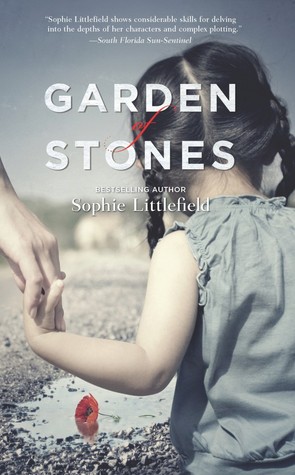
I received an ARC of Garden of Stones by Sophie Littlefield. Very moving story. My review is here.

Finally, I managed to crack open Nick and Norah’s Infinite Playlist by Rachel Cohn and David Levithan while the rest of the world was busy watching the Super Bowl.

And this week’s new agenda:

I’ve read about 50 pages of Nick and Norah, and I can’t say I’m won over yet. Perhaps it’ll just take a bit more time; I’ve read and loved these authors’ other two collaborations, so I still have high hopes for this one.

I can’t wait to get my hands on Etiquette & Espionage, the first book in Gail Carriger’s new Finishing School series. It’s due to arrive on Tuesday, and I’ll be diving in the second it arrives.

I plan to devote some time to reading the graphic novel series Y: The Last Man by Brian K. Vaughan.

If I manage to find time for anything else, I’ll most likely start Me Before You by Jojo Moyes, which has been at the top of my to-read pile for two weeks now, although I’d also like to check out more of Sophie Littlefield’s books.

So many book, so little time…

That’s my agenda. What’s yours? Add your comments to share your bookish agenda for the week.

Book Review: Garden of Stones by Sophie Littlefield

Book Review: Garden of Stones by Sophie Littlefield

gardenIn December 1941, 14-year-old Lucy Takeda is the cherished daughter of a well-to-do Japanese-American couple living in Los Angeles. Lucy’s father is a successful businessman. Her mother is an enigmatic beauty who turns heads whenever she walks down the street. Lucy lives a happy life with close friends, a good school, and a bright future, until the Japanese attack on Pearl Harbor spells the end of life as she once knew it.

Before long, Lucy’s father is dead of a heart attack, and she and her mother, as well as all of their friends and neighbors, are forced from their homes as a result of President Roosevelt’s executive order of 1942, which designated the entire Pacific coast as an exclusion zone and forced thousands of Japanese-Americans into internment camps. Lucy and her mother Miyako are sent to Manzanar, the roughly built camp in the Sierra foothills of California, where they are assigned a flimsy wooden barrack in which to live and where their world becomes restricted to one square mile crammed full of their fellow internees.

Compounding the difficulty for Lucy is her mother’s instability. While in today’s world, Miyako might have been treated and medicated, at Manzanar in those times, Miyako was simply viewed as difficult or unlikeable, rather than having her bipolar disorder recognized or accommodated. Miyako’s beauty, however, does not go unnoticed, and she is soon the recipient of unwelcome but unavoidable attention from the powerful men who run the camp. Events soon spiral out of control, and despite their efforts to protect one another, Lucy and Miyako’s time at Manzanar can only end in tragedy for both.

Garden of Stones is a story within a story, framed by events in 1978 in which Lucy’s daughter Patty seeks answers when Lucy’s long-secret past resurfaces unexpectedly. As Patty starts to dig through clues and finally gets her mother to open up, we see the events from the 1940s from Lucy’s perspective, providing an interesting contrast between Lucy’s outlook as a teen and as a middle-aged adult. Lucy’s life has not been easy, and although she has raised Patty to the best of her ability, by keeping her past a secret she has kept her daughter from ever truly knowing who she is and what she’s experienced.

I found myself quite moved by the tragedy of Lucy’s story, in which we witness a life shattered by war and prejudice, a young girl who had everything she cherished ripped away from her, and yet who somehow manages to survive into adulthood and provide a safe and loving home for her child. Garden of Stones presents two very different mother-daughter relationships, and poses some interesting questions: What does it mean for a mother to protect her daughter? Are extreme measures justifiable if taken out of love? Is pain inflicted out of love preferable to pain inflicted through cruelty? How does one survive after enduring loss after loss?

Author Sophie Littlefield explores this shameful chapter from America’s past with an unflinching eye. We see the devastation from Lucy’s perspective, as a child born and raised in the United States, who speaks not a word of Japanese, is suddenly branded as “other”. We witness the terror of the Japanese-American community in the days following Pearl Harbor, as families frantically burn any Japanese goods or relics in their homes so as not to be seen as sympathizers — or worse, as spies or conspirators. We see friends and neighbors close their doors, turn their backs, and otherwise abandon the people they’d lived alongside, as the Japanese-Americans are forced to sell off their belongings for a pittance before being exiled to the internment camps.

But the larger, historical context is not the only source of sorrow and terror in Lucy’s life, and it is her more personal story that truly gives Garden of Stones its emotional richness. Despite the hardships and privations at Manzanar, Lucy seeks out happiness and friendship, but the circumstances of camp life and her mother’s role in Manzanar serve again and again to bring Lucy pain and suffering.

While some of the more dramatic events of the story are fairly well signaled ahead of time, there are several very surprising turns of events that made me go back through the book and reread certain passages with a fresh eye. I found the Manzanar timeline much more compelling than the 1970s storyline, and yet Patty’s exploration of the past served as a very effective means of slowing unearthing the secrets of Lucy’s life and understanding how these secrets continue having an impact even into the next generation.

Sophie Littlefield has crafted a well-written, emotionally intense tale, full of rich detail and with several well-placed, shocking plot twists. Garden of Stones is a moving story of love between mothers and daughters, of the search for meaning despite the cruelties inflicted during a hard life, and of the many different roads toward hope and survival.

Review copy courtesy of Harlequin via Netgalley

Book Review: The Round House by Louise Erdrich

Book Review: The Round House by Louise Erdrich

https://i0.wp.com/d.gr-assets.com/books/1352999408l/13602426.jpg

Main character Joe is 13 years old the summer that his life changes forever. Joe is the devoted, mostly well-behaved son of two loving parents, growing up on an Ojibwe reservation in North Dakota. His father is a judge in the tribal legal system; his mother works in the all-important tribal registry office, handling the complex web of rights and obligations that are tied into a person’s genealogy and ancestry.

At the start of that fateful summer in 1988, Joe’s mother is brutally attacked and raped. Joe’s secure home and safe world is turned upside down, as the hunt for the rapist and the quest for justice consume the family. Ultimately, however, it is the tangled mess of legalities stemming from early tribal treaties and the creation of the reservations that determines the outcome of the arrest and prosecution of the perpetrator. Different laws apply to different jurisdictions, and the case ends up resting on the question of where the attack took place. Was it reservation land? State land? Federal land? Unless the jurisdiction can be determined, there can be no legal process, and so even though the identity and whereabouts of the rapist are pretty quickly determined, it is not at all clear that the man can or will be tried for the crime.

Those are the bare bones of the plot. At a deeper level, The Round House is a meditation on so much more. Some of the most compelling aspects of this book include:

– The sense of family and community present among the people living on the reservation. Joe’s immediate family is small, but his extended family is huge. Everyone is a cousin or an in-law; everyone plays a role in the lives of others. The support and connection is palpable. There is no hiding here — wherever Joe goes, he is known and welcome.

– The depth of the friendships among the boys in this story. Joe’s friends are his brothers. They have adventures, they get up to mischief together — but they have each others’ backs and their bond is one of love and dedication. The relationships among these boys are quite lovely to read about.

– The outrage over the crime that was committed. I think we are all too used to the awful stigma that still attaches itself to rape survivors in our society, but that sense of shame is completely absent here. Joe’s mother suffers deeply, but her suffering is from fear of her attacker and what he may yet do, to her and to others. What is clear here is that Geraldine was the victim of a violent crime, and she is supported by her community without question and without stinting. The house overflows with casseroles; Joe is looked after by not just his aunt and uncle but by everyone. No one hesitates to ask Joe how his mother is or to offers words of kindness. It’s a refreshing attitude that condemns the attacker without in any way blaming or belittling the woman who was attacked.

– The linking of traditional beliefs to the modern occurences. The elders in the family are respected and honored. Joe’s centenarian grandfather tells tales of buffalo women and evil spirits, but these are not just ancient myths — various facets of the stories come into play in the search for justice for Geraldine.

– The reminder that what may seem to many as an unfortunate chapter in US history is still having an impact on real people’s lives to this day. The daily frustrations of living with the outcomes of the tribal treaties is a very real part of the characters’ experiences. An incredibly powerful scene takes place about 2/3 of the way into the book, as Joe asks his father why he bothers — why does he continue trying cases in the tribal courts when nothing seems to make a difference? In response, Joe’s father pulls an old, moldy casserole from the back of the fridge where it had been forgotten, dumps it onto the table, and then begins to pile utensils and kitchen implements on top of it:

That’s it, he said.

I must have looked scared. I was scared. His behavior was that of a madman.

That’s what, Dad? I carefully said. The way you’d address a person in delirium.

He rubbed his sparse gray whiskers.

That’s Indian Law.

I nodded and looked at the edifice of knives and silverware on top of the sagging casserole.

Okay, Dad.

He pointed to the bottom of the composition and lifted his eyebrows at me.

Uh, rotten decisions?

Joe’s father goes on to explain how he and his fellow judges, in case after case, are attempting to overcome the poor foundations of their legal system by creating strong decisions on top of these, hoping to some day create a stronger framework for laws that support their people’s lives. It’s a lovely scene, showing in few words both the depths of the problems facing the tribe and the strength of the connection between Joe and his father.

The plot of The Round House swirls around the traumatic events of that particular summer, but in many ways the story is a coming-of-age tale with the universal characteristics of a boy’s emergence into manhood. Through the attack and its aftermath, Joe for the first time sees his parents as vulnerable. He starts to realize that they have inner lives, fears and hopes, apart from him, and that they can’t always protect themselves or him from the harsher realities of life. Joe and his close friends are on the cusp of their teen years, developing sexually, exploring the boundaries of freedom, reveling in their small conquests and steps toward independence. Much of the climax of the story has to do with Joe, with the assistance of his friends, taking affirmative steps on his own toward what he feels must be done. Joe has gone from the protected child of the family to a young man who wants to be the protector, and while he may stumble along the way, it is this significant summer that propels him forward into the kind of man he will grow up to be.

It’s easy to see why The Round House won the National Book Award in 2012. This beautifully written, powerful story of family and friendship, crime and justice, tradition and history is filled with memorable, well-drawn characters, dramatic plotting, and moral conundrums. There’s a lot to think over, and I’m still mulling through the events and implications of the various plot turns.

The Round House is not light reading, but it’s certainly worthwhile. I recommend it highly, and look forward to exploring more of Louise Erdrich’s work.

Flashback Friday: Farewell To Manzanar

It’s time, once again, for Flashback Friday…

Flashback Friday is a chance to dig deep in the darkest nooks of our bookshelves and pull out the good stuff from way back. As a reader, a blogger, and a consumer, I tend to focus on new, new, new… but what about the old favorites, the hidden gems? On Flashback Fridays, I want to hit the pause button for a moment and concentrate on older books that are deserving of attention.

If you’d like to join in, here are the Flashback Friday book selection guidelines:

  1. Has to be something you’ve read yourself
  2. Has to still be available, preferably still in print
  3. Must have been originally published 5 or more years ago

Other than that, the sky’s the limit! Join me, please, and let us all know: what are the books you’ve read that you always rave about? What books from your past do you wish EVERYONE would read? Pick something from five years ago, or go all the way back to the Canterbury Tales if you want. It’s Flashback Friday time!

My pick for this week’s Flashback Friday:

https://i0.wp.com/upload.wikimedia.org/wikipedia/en/2/24/FarewelltoManzanarCover.jpg

Farewell To Manzanar by Jeanne Wakatsuki Houston & James D. Houston

(published 1973)

One of my new acquisitions this week is Garden of Stones by Sophie Littlefield, a new novel set in the Manzanar internment camp in which thousands of Japanese-Americans were imprisoned during World War II. I’m very excited to be starting Garden of Stones, but in thinking about this book and this era in American history, I was reminded immediately of the classic memoir Farewell To Manzanar, which I first read in high school and remember to this day.

From Goodreads:

Jeanne Wakatsuki was seven years old in 1942 when her family was uprooted from their home and sent to live at Manzanar internment camp–with 10,000 other Japanese Americans. Along with searchlight towers and armed guards, Manzanar ludicrously featured cheerleaders, Boy Scouts, sock hops, baton twirling lessons and a dance band called the Jive Bombers who would play any popular song except the  nation’s #1 hit: “Don’t Fence Me In.”

Farewell to Manzanar is the true story of one spirited Japanese-American family’s attempt to survive the indignities of forced detention . . . and of a native-born American child who discovered what it was like to grow up behind barbed wire in the United States.

Farewell to Manzanar shocked me when I originally read it. As a young teen, it was almost impossible to believe that the events depicted actually happened in the United States. I understand that this book is now included in many schools’ required reading assignments, and I hope that continues to be the case for some time to come. As a personal glimpse into a disturbing chapter of history and as a finely-written story of one family’s struggles, Farewell to Manzanar is a modern classic that shouldn’t be forgotten.

… And I think I’ve just convinced myself to re-read this book.

So, what’s your favorite blast from the past? Leave a tip for your fellow booklovers, and share the wealth. It’s time to dust off our old favorites and get them back into circulation! 

Note from your friendly Bookshelf Fantasies host: To join in the Flashback Friday bloghop, post about a book you love on your blog, and share your link below. Don’t have a blog post to share? Then share your favorite oldie-but-goodie in the comments section. Jump in!


Wishlist Wednesday

Welcome to Wishlist Wednesday!

The concept is to post about one book from our wish lists that we can’t wait to read. Want to play? Here’s how:

  • Follow Pen to Paper as host of the meme.
  • Do a post about one book from your wishlist and why you want to read it.
  • Add your blog to the linky at the bottom of the post at Pen to Paper.
  • Put a link back to Pen to Paper somewhere in your post.
  • Visit the other blogs and enjoy!

My Wishlist Wednesday book is:

The Painted Girls by Cathy Marie Buchanan

From Amazon:

1878 Paris. Following their father’s sudden death, the van Goethem sisters find their lives upended. Without his wages, and with the small amount their laundress mother earns disappearing into the absinthe bottle, eviction from their lodgings seems imminent. With few options for work, Marie is dispatched to the Paris Opéra, where for a scant seventeen francs a week, she will be trained to enter the famous ballet. Her older sister, Antoinette, finds work as an extra in a stage adaptation of Émile Zola’s naturalist masterpiece L’Assommoir.

Marie throws herself into dance and is soon modeling in the studio of Edgar Degas, where her image will forever be immortalized as Little Dancer Aged Fourteen. There she meets a wealthy male patron of the ballet, but might the assistance he offers come with strings attached? Meanwhile Antoinette, derailed by her love for the dangerous Émile Abadie, must choose between honest labor and the more profitable avenues open to a young woman of the Parisian demimonde.

Set at a moment of profound artistic, cultural, and societal change, The Painted Girls is a tale of two remarkable sisters rendered uniquely vulnerable to the darker impulses of “civilized society.” In the end, each will come to realize that her salvation, if not survival, lies with the other.

Why do I want to read this?

Paris. Ballet. Sisters. What more do I need to convince me?

The combination of historical figures with fictional characters, the setting in 19th century Paris in the art world, and the drama of two girls struggling to survive sounds fascinating to me. This is one new novel that I’m definitely eager to read.

Quick note to Wishlist Wednesday bloggers: Come on back to Bookshelf Fantasies for Flashback Friday! Join me in celebrating the older gems hidden away on our bookshelves. See the introductory post for more details, and come back this Friday to add your flashback favorites!

Top Ten Tuesday: Top Ten Most Frustrating Characters

Top Ten Tuesday is a meme hosted by The Broke and the Bookish, featuring a different top 10 theme each week. This week’s topic is:

Top Ten Most Frustrating Characters

For me, frustrating characters tend to fall into a few broad categories. Those who make bad choices, especially when they should know better. Those who chase after things or people they can never have. Those who bring on catastrophe through a failure to communicate. Those who refuse to recognize happiness when it’s staring them right in the face.

So which fictional characters deserve a good shake? Who do I want to slap some sense into? Or at least treat to a very stern lecture?

1) Sookie Stackhouse. Sookie, have you not noticed how many times you’ve almost died? Did you ever think that maybe you’re hanging out with the wrong crowd? People — like Sookie — who consistently put themselves into dangerous situations, fully aware that they’re doing it but doing it anyway, are incredibly frustrating to read about. Plus, Sookie spends way too much time on her beauty routines, and I just don’t have time (or interest) enough to keep reading about her showers, her leg-shaving, and her hair style choices.

2) Scarlett O’Hara. Okay, how could you possibly pick boring old Ashley Wilkes over roguish Rhett Butler? It’s frustrating when a character is so completely deluded about what she really wants and needs. As Rhett tells her:

… you’re such a child, Scarlett. A child crying for the moon. What would a child do with the moon if it got it? And what would you do with Ashley? Yes, I’m sorry for you — sorry to see you throwing away happiness with both hands and reaching out for something that would never make you happy.

But no. Scarlett just will not see what’s right in front of her eyes, and must continually chase after a man so absolutely wrong for her. Wake up!

3) Marianne Dashwood. The embodiment of “sensibility” in Jane Austen’s Sense and Sensibility, Marianne is ruled by her emotions, which might not be altogether terrible if she also had a shred of judgment. Of course Willoughby turns out to be a cad! For goodness sake, pull yourself together, Marianne. No man is worth that kind of fuss… and oh, by the way, that Colonel Brandon seems like a nice fellow.

4 & 5) Roger Mackenzie and Brianna Randall. Pretty much everything that happens to these two characters in The Drums of Autumn (book #4 in Diana Gabaldon’s Outlander series) could have been avoided if they had just communicated with one another. Each one withholds key pieces of information, so that the other acts rashly and without knowledge of important facts. And each ends up in awful, devastating danger as a result. Granted, if they’d been straight with each other in the first place, we’d end up missing about half of the plot of this book — but still, talk about frustrating! Secrets and deceptions may make dramatic plot devices, but it drives me crazy when good, strong, otherwise honorable and admirable characters fail to communicate on such a basic level.

RS pic6) Robb Stark. So you wanna be a king? You could start by growing up a bit! I’m sorry if you don’t like your arranged marriage, but entire alliances rest upon the deals made in your name. Falling in love is not a good enough excuse for alienating an important ally — not in a world where several different armies want nothing more than your head on a pike. Oh, Robb.

7 & 8) Bella Swan and Anastasia Steele. Men who want to be in charge of your every move are not being romantic. They’re being controlling. Showing up in your bedroom uninvited to watch you sleep is not sweet. It’s creepy. Enough said. [Note: I am not a Twilight-hater. I enjoyed the books. I liked the Fifty Shades books too. But that doesn’t change the fact that these two characters make really poor choices.]

9) Lord Conall Maccon. I love Conall (alpha male of the Woolsey Pack in Gail Carriger’s wonderful Parasol Protectorate series). But his behavior in book 2, Changeless, is beyond frustrating. I won’t spoil what happens (go out and read the books!), but suffice it to way that when faced with a surprising development, hot-headed Conall jumps to the worst possible conclusion, with not a shred of reasonable evidence to back it up, and behaves abominably. Stupid, stupid man.

10) Working on a list of frustrating characters ended up frustrating me! I know there have been countless times when I’ve wanted to throw a book across the room due to some character’s stupid decisions or actions. But now that I have to actually come up with a list? I keep getting stuck. I polled some of my friends, added in a few more of my own, and so instead of just one #10, I’ll skip straight to:

Most Frustrating Characters: Honorable Mention

  • Romeo and Juliet: Wait a few minutes before doing anything rash, okay? Stop assuming your beloved is dead. Check for a pulse, perhaps.
  • Hamlet: Just make a decision already.
  • Ophelia: Oh honey, no man is worth it.
  • Nathan Price (The Poisonwood Bible) and Pa Ingalls (Little House books): Religious fervor and manifest destiny are no excuse for dragging your family off to dangerous places. Feeling a higher calling is no justification for poor parenting.
  • The Cat In The Hat: Talk about overstaying your welcome. And geez, would it kill you to clean up a bit?

The Monday agenda 1/28/2013

Not a lofty, ambitious to-be-read list consisting of 100+ book titles. Just a simple plan for the upcoming week — what I’m reading now, what I plan to read next, and what I’m hoping to squeeze in among the nooks and crannies.

Happy Monday! Looking back and looking forward…

From last week:

A little slower on the book front this past week:

Just One Day by Gayle Forman: Done! I liked it much more than I’d expected to. My review is here.

The Round House by Louise Erdrich: Reading now, only about 50 pages into it so far. 

I read a bunch of my son’s graphic novels and reviewed them here.

My long-awaited new Fables paperback arrived last week! I loved Fables: Cubs in Toyland (volume 18), but now have the usual complaint — I don’t want to wait months for the next one to come out!

I also read the first volume of a new (to me) graphic novel series, Y: The Last Man by Brian K. Vaughan. Very intriguing story; I think I’ll be be reading the rest as soon as I can get my hands on them.

And this week’s new agenda:

I think it’ll take me a good part of the week to read The Round House, which is quite good, but fairly heavy.

After that, I may tackle one or two books from my TBR pile, probably An Abundance of Katherines by John Green or Nick and Norah’s Infinite Playlist by David Levithan…

…although I’m also terribly tempted by my new arrivals, Me Before You by Jojo Moyes and The Child’s Child by Barbara Vine.

I believe this is what’s called an embarrassment of riches! Having too many books to choose from is definitely not a problem I mind having.

So many book, so little time…

That’s my agenda. What’s yours? Add your comments to share your bookish agenda for the week.

Book Review: Just One Day by Gayle Forman

Just One DayAnother YA novel about “insta-love”? Haven’t we read enough of these already? Those were my thoughts when I picked up a copy of Gayle Forman’s new book, Just One Day. And I’m pleased to be able to report that my expectations about this book were quite wrong.

Main character Allyson is 18, fresh out of high school, and on a whirlwind, parent-sanctioned tour of Europe (“Teen Tours! Cultural Extravaganza” is the too-exuberant-for-words name of the program), along with her bestie Melanie. It’s all a big blur, during which the teens are shuttled from one significant destination to another, chaperoned and dosed with lessons about history and culture. Melanie hits the pubs and suffers hang-overs daily, while Allyson goes along dutifully, always the good girl, doing what’s expected of her.

On the final day of the program, as the group waits for a production of Hamlet in Stratford-upon-Avon, a free-spirited group of actors (whose troupe is called Guerilla Will)  invites the gang to ditch Hamlet and come see their production of Twelfth Night instead. In a rare burst of spontaneity, no doubt helped by the fact that the lead guy is so cute, Allyson decides to take a chance, and she and Melanie head off to the canal basin to see a free-ranging, outdoor, wildly inventive and exhilarating production. A perfect end to a so-so trip, and the girls are ready to catch the train to London and fly back home to their normal lives. Except… on the train, the cute guy appears, starts chatting with good girl Allyson, and in a moment that changes everything, invites (or challenges) her to hop a train to Paris — for just one day.

Cute guy’s name is Willem (he’s Dutch and dreamy), and he christens Allyson Lulu, in honor of Louise Brooks and Allyson’s new hair style. Lulu and Willem spend one fabulous day wandering the streets and alleys of Paris, living free and large, and falling — hard — for one another. Or so Allyson thinks… until she wakes up alone the next morning. Willem has left her without a trace, and Allyson’s heart is broken. Not only that, but our young lovers never got around to exchanging email addresses, cell phone numbers, or proper names (Willem only knows our sweetie as “Lulu”), so when the guy is gone, he’s gone for good.

And here’s where things get really interesting. Up until this point, I was a bit half-hearted about yet another story of a somewhat shy girl meeting the gorgeous guy of her dreams and falling instantly and irrevocably in love. In Just One Day, it’s not so simple. Allyson does fall hard for Willem, and he does seem to fall for her too — but it’s also clear that this is a guy with a girl in every city across Europe. Dude is a player, to put it mildly. So when he abandons Allyson after their one night, is it really so surprising?

Allyson heads home full of shame and self-loathing. She knew he was a chick-magnet. She saw his little black book. What else did she expect? Unfortunately, her one day of love in Paris ruins the start of her freshman year of college, and Allyson spends months in a deep depression, barely getting by academically, distancing herself from her roommates, and realizing that her friendship with Melanie has run its course as well.

The layer of all of this that’s really finely written and well-thought out is that Allyson is an only child, daughter of two parents who have raised her to be dutiful and good and to always aim to please. Allyson’s mother in particular seems to be reliving her own missed opportunities through Allyson. She picks her daughter’s classes, down to the exact time of day, shops for her clothes, and plans every moment of her life. Allyson is pre-med because that’s what her parents have convinced her she wants. She collects antique alarm clocks (weird, right?) because her mother decided it would be fun for her to have a collection. On and on, we see Allyson’s mother controlling her every move. But after Paris, Allyson finally starts to realize that maybe what she’s been told she wants isn’t really what makes her happy.

Over the course of her freshman year, Allyson slowly starts to find her own way, and it’s eye-opening. As she breaks out of her shell, she comes to realize that what she wants for herself may not match what her parents want — and more importantly, that she has the power to make her own decisions and find her own way. What I ended up loving about this book is the gradual, painstaking development of Allyson’s independence and self-esteem. She finally begins to emerge from her mother’s shadow and the sense of what is expected into a strong young woman who is willing and eager to take chances. By doing so, she’s ultimately able to embrace the choice she made to spend “just one day” in Paris, and many months later, to begin to consider the possibility that events may not have been exactly as she’d perceived them to be.

The book asks some interesting questions: Are fate and accidents really the same thing? Is there really only one great love in a person’s life? Is being good enough? How does a person figure out how to be? Through Allyson, we see a young woman’s journey toward individual growth and empowerment, and it’s actually quite lovely to watch her finally take the reins of her own life and start setting her own course.

The writing in Just One Day is fast-paced, a nice mix of introspection and adventure, and the plot zips along from month to month in engaging snippets and snapshots.

I have only two minor quibbles with Just One Day:

First — and perhaps it’s just that I’m not the target demographic and therefore can’t appreciate the underlying urge toward free-spiritedness — I have little to no tolerance for plot points that revolve around leaving important things to the whims of chance. Remember the movie Serendipity (didn’t like it) or even Before Sunrise (loved it), where the characters fall in love at first sight, but leave it up to fate to bring them back together, rather than — oh, I don’t know — exchanging vital information? Willem and Lulu/Allyson do the same thing in Just One Day, and it strains belief. Seriously, at some point it would have made sense to at least get each others’ last names… or phone numbers… or something. It’s the information age, people! Share your information!

Second, as part of my reading resolutions for 2013, I vowed that I would not start any new series. It was not until I was already half-way through the book that I saw the little blurb on the back announcing that “Just One Day is the first in a sweepingly romantic duet of novels.” The follow up novel, Just One Year will be released in the fall of 2013. Gah. Of course, I’ll read the next book, but I’m a little miffed about it all.

That said, Just One Day would work just fine as a stand-alone novel. It does have a very open-ended conclusion, but that’s not necessarily a bad thing. The book’s end leaves a lot of questions unanswered, and it’s certainly not clear what awaits Allyson. But that’s life, isn’t it? By the end, our main character has made choices, taken risks, and gained a willingness to take a chance and see how it turns out. Anything can happen when you’re open to life, and I think that’s more or less the point.

I enjoyed Just One Day very much (had a few bleary-eyed days following a few nights of staying up past midnight because I couldn’t put the book down), and I’m looking forward to reading more by Gayle Forman. The author captures the voice of her young adult characters in a way that is convincing and true, and I found myself enchanted by Allyson’s adventures and discoveries. Also — Paris!

Flashback Friday: The Hotel New Hampshire by John Irving

It’s time, once again, for Flashback Friday…

Flashback Friday is a chance to dig deep in the darkest nooks of our bookshelves and pull out the good stuff from way back. As a reader, a blogger, and a consumer, I tend to focus on new, new, new… but what about the old favorites, the hidden gems? On Flashback Fridays, I want to hit the pause button for a moment and concentrate on older books that are deserving of attention.

If you’d like to join in, here are the Flashback Friday book selection guidelines:

  1. Has to be something you’ve read yourself
  2. Has to still be available, preferably still in print
  3. Must have been originally published 5 or more years ago

Other than that, the sky’s the limit! Join me, please, and let us all know: what are the books you’ve read that you always rave about? What books from your past do you wish EVERYONE would read? Pick something from five years ago, or go all the way back to the Canterbury Tales if you want. It’s Flashback Friday time!

My pick for this week’s Flashback Friday:

The Hotel New Hampshire by John Irving

(published 1981)

I went through a John Irving phase during my college years and immediately thereafter, during which I read, pretty much sequentially, all of the author’s early works, including the more obscure Setting Free The Bears, The Water-Method Man, and The 158-Pound Marriage, as well as the extremely popular The World According To Garp. The one that probably struck the deepest chord with me, however, was The Hotel New Hampshire. So what’s it all about?

From Goodreads:

“The first of my father’s illusions was that bears could survive the life lived by human beings, and the second was that human beings could survive a life led in hotels.” So says John Berry, son of a hapless dreamer, brother to a cadre of eccentric siblings, and chronicler of the lives lived, the loves experienced, the deaths met, and the myriad strange and wonderful times encountered by the family Berry. Hoteliers, pet-bear owners, friends of Freud (the animal trainer and vaudevillian, that is), and playthings of mad fate, they “dream on” in a funny, sad, outrageous, and moving novel by the remarkable author of A Prayer for Owen Meany and Last Night in Twisted River.

This family drama features large and small moments; quiet tragedies and devastating hurts; and above all, love, strangeness, and connection. I adore John Irving’s writing in this novel. His quirky and deceptive use of language sneaks up on you at times, so that I’d find myself doing double-takes and saying, “Wait! What just happened there?”

It’s been many years since I’ve read The Hotel New Hampshire and the other early John Irving books, but I still have my ragged copies of all of these. There are some books that you just can’t part with, after all.

PS – Yes, there is a movie version. And yes, it’s pretty awful. Skip it, and read the book instead.

So, what’s your favorite blast from the past? Leave a tip for your fellow booklovers, and share the wealth. It’s time to dust off our old favorites and get them back into circulation! 

Note from your friendly Bookshelf Fantasies host: To join in the Flashback Friday bloghop, post about a book you love on your blog, and share your link below. Don’t have a blog post to share? Then share your favorite oldie-but-goodie in the comments section. Jump in!


Wishlist Wednesday

Welcome to Wishlist Wednesday!

The concept is to post about one book from our wish lists that we can’t wait to read. Want to play? Here’s how:

  • Follow Pen to Paper as host of the meme.
  • Please consider adding the blog hop button to your blog somewhere, so others can find it easily and join in too! Help spread the word! The code will be at the bottom of the post under the linky.
  • Pick a book from your wishlist that you are dying to get to put on your shelves.
  • Do a post telling your readers about the book and why it’s on your wishlist.
  • Add your blog to the linky at the bottom of the post at Pen to Paper.
  • Put a link back to Pen to Paper somewhere in your post.
  • Visit the other blogs and enjoy!

My Wishlist Wednesday book is:

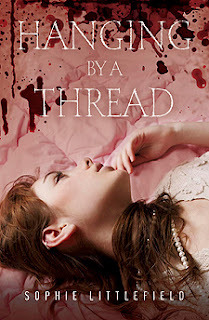
Hanging By A Thread by Sophie Littlefield

From Amazon:

In a town where appearance means everything, how deep beneath the surface will Clare dig to uncover a murderer?

Summer is the best part of the year in Winston, California, and the Fourth of July is the highlight of the season. People consider themselves lucky to live in the quaint, serene beachside town, and native Clare Knight, now a city girl, feels doubly lucky to be moving back there a week before the July festivities kick off.

But the perfect town Clare remembers has changed, and everyone is praying that this summer will be different from the last two—that this year’s Fourth of July festival won’t see one of their own vanish without a trace, leaving no leads and no suspects. The media are in a frenzy predicting a third disappearance, but the town depends on tourist dollars, so the residents of Winston are trying desperately to pretend nothing’s wrong.

And they’re not the only ones hiding something.

Clare has been blessed—or perhaps cursed—with a gift: she can see people’s pasts when she touches their clothes. And since she’s a seamstress who redesigns vintage clothing, her visions are frequent—and usually unwanted. When she stumbles across a denim jacket that once belonged to Amanda Stavros, last year’s Fourth of July victim, Clare sees her perfect town begin to come apart at the seams.

Why do I want to read this?

Sophie Littlefield is an author I keep hearing about, from other readers as well as from authors whose books I admire. Her book lists include works for adults and for teens, some in the crime/mystery genre, some with a supernatural element, and I believe some dystopian as well.

Hanging By A Thread is her most recent YA novel, and it sounds so interesting! I like the idea of a small-town setting with a twist, and I’m eager to read this one and see how it all turns out. This author has another book coming out in February that sounds completely different — Garden of Stones, a historical novel for adults focusing on the internment of Japanese-Americans during World War II.

I’ve heard so many good things about Sophie Littlefield. If I enjoy Hanging By A Thread, then I’m sure I’ll want to try one of her books from a different genre to see how it compares. I’m really looking forward to getting to know this author!

Quick note to Wishlist Wednesday bloggers: Come on back to Bookshelf Fantasies for Flashback Friday! Join me in celebrating the older gems hidden away on our bookshelves. See the introductory post for more details, and come back this Friday to add your flashback favorites!