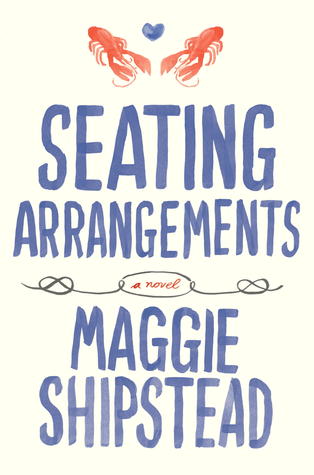
Book Review: Seating Arrangements by Maggie Shipstead

Book Review: Seating Arrangements by Maggie Shipstead
If you grew up in the 1980s, at some point you probably laughed your way through The Preppy Handbook by Lisa Birnbach:
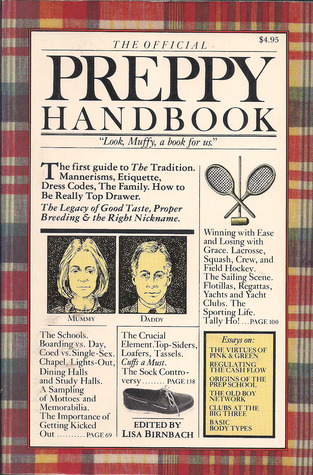
I know my friends and I got countless hours of amusement from this tongue-in-cheek guide to living the preppy lifestyle… which also makes charming fun of those leisurely folks, hanging out at the club or by a picturesque beach, clad in pastel colors, Topsiders, and various and sundry items embroidered with whales or other sea creatures. It was a world we could envision, occasionally mimic, but never actually wanted to go to (and probably wouldn’t have been allowed in, anyway).

So when I read Seating Arrangements by Maggie Shipstead, I was immediately reminded of my youthful perusal of Fair Isle sweaters and matching headbands. While we merely observed the preppy phenomenon, the characters in this book actually live it! The clothes, the beach houses, the golf clubs, the casual approach to wealth, the unerring sense of what “our” type of people do — and what just isn’t done — it’s all here, in this amusing and occasionally touching tale of a family’s eventful wedding weekend.

The bride’s sister gives us a pretty accurate snapshot of the meaning of marriage in this slice of society:

Daphne and Greyson were perfectly suited, both for each other and for the institution of marriage. It was a match both appropriate and timely; they were two people joined by their desire to join. They were pleasant, predictable, responsible, intelligent, and practical, not full of fiery, insupportable passion or ticking time bombs of impossible expectations. What they had a was a comfortable covalence, stable and durable, their differences understood, cataloged, and compensated for. They were perpetuating their species.

And again, in describing the groom’s parents:

The Duffs went together like two shades of beige, bound by a common essence of optimism, narrow-mindedness, and self-satisfaction. Daphne and Greyson were the perfect next generation.

As father of the bride, Winn Van Meter is the family patriarch, rallying the troops at their Cape Cod island getaway for his beloved (and very pregnant) daughter’s wedding to the scion of another well-to-do family. As the various relatives and bridal party members assemble, socialize, drink heavily, eat lobsters, and generally get up to all sorts of questionable behavior, secrets are revealed, long-held beliefs are challenged, and some hard truths must be faced.

Winn himself is the central figure in the book, and is an interesting character. Grandson of a self-made man, he’s oh-so-afraid of being perceived as not fitting in. He’s got the wealth, sure, but he never quite manages to pull off the insouciant ease of the more established of his class. Consequently, Winn spends an awful lot of time worrying about appearances. He’s appalled remembering how his father sent him off to Harvard with a new gold watch, when what was really de rigeur for the boys of the ton was a shabby, “oh, this old thing?” type of timepiece. His island home is chicly disheveled, and he feels offended by a rival’s new, elaborate island home under construction, which simply shouts money and status. Winn views his rival Jack’s obvious affection for his developmentally disabled daughter as showing off, and even considers Jack’s son’s enlistment in the army to be social posturing.  He remonstrates with his daughters quite a bit about what’s done and what’s not done, to the extent that when his younger daughter has an emotional breakdown at the exclusive Ophidian Club, Winn’s first reaction is horror that the event happened at the club, not horror over his daughter’s pain and distress. Winn is desperate for membership in the private golf club on the island, and can’t quite accept that he’s just not up to snuff.

The overarching WASP-iness feels stifling at times. The stiff upper lips, the endless cocktails, the lobster dinners and tennis matches — it’s all such a regimented way of life, at least as it’s presented in Seating Arrangements. Characters fall into neat categories, for the most part: The drunken, oft-married and Botoxed aunt; the flighty blonde prep school roommate who’s all giggles and cluelessness; the older brother of the groom whose decadent ways have already started revealing themselves in a too-early paunch; the younger brother who claims to embrace Buddhism while not actually espousing any Buddhist practices. Then there’s Dominique, the Egyptian-born friend of the bride, with exotic looks and an exciting career, who ends up coming across as an all-wise outsider in a way that borders on ethnic stereotype.

It’s all rather funny, as well. Two of the groom’s brothers explain their clothing — a seersucker suit and pants with whales — as being “ironic” wardrobe choices. The family goes into a tizzy over how to handle a sick lobster. Various drunk people are constantly falling down, making a mess, and blundering through the house with abandon.

Relationships come together and unravel, and quite a lot of differing approaches to marriage and what constitutes marital bliss are contemplated in Seating Arrangements. The bride, Daphne, is probably the least fleshed out of the family members. We don’t ever get to know her, other than knowing that she’s blissfully in love and delightedly pregnant, practically buoyant with joy throughout the wedding weekend.

Seating Arrangements was an enjoyable read for me, but fits into my reading category of “I liked it, but I didn’t love it”. Perhaps it’s just that these characters’ lives are so foreign to me, or that so much of what Winn obsesses about can be described as “first-world problems”. The plot of Seating Arrangements is engaging and moves along nicely, and the writing is clever, but ultimately it didn’t feel like a very substantive read to me. I’d recommend this book as a good diversion, but don’t expect a deep exploration of the meaning of life.

Book Review: A Trail of Fire by Diana Gabaldon

Book Review: A Trail of Fire by Diana Gabaldon

If you happened to read my blog post earlier in the week, then you’ll know that I was doing imaginary cartwheels and handsprings over the arrival of A Trail of Fire. Needless to say, I read it and I loved it. Perhaps that should be the entirety of my review right there.

A Trail of Fire is essential reading for fans of Diana Gabaldon’s Outlander series and its related spin-off novels and novellas. I have a hard time imagining that someone who had never read any of Ms. Gabaldon’s works would enjoy this collection, as they’d have no familiarity with the main characters and their associated backstories. So if you’ve read this much of my review, and haven’t read Outlander — well, what are you waiting for? It’s an outstanding work of historical fiction, and your life will be better for having read it. So go! Get thee to a bookstore!

A Trail of Fire is a compilation of “four Outlander tales”, as it says on the cover. Of the four, three have been published previously as part of anthologies, and one is brand new. Here’s the catch: A Trail of Fire has not been published in the US, and my understanding is that it won’t be, at least not for some time to come. Bear with me if my understanding of copyrights leaves a bit to be desired, but the gist of the matter is that the three anthologized stories belong, in essence, to those anthologies, and therefore can’t be republished (at least not yet) in some other format. The new story will be published in the US in March 2013 as part of yet another anthology, but readers in the US who are chomping at the bit and just can’t wait another moment will have to get their fix by ordering from an overseas supplier (such as Amazon UK — which is what I did — or The Book Depository, to name but two potential resources) or from Diana Gabaldon’s hometown bookstore, The Poisoned Pen in Phoenix, Arizona, which has a supply of signed editions available for shipment.

Back to the review! The contents of A Trail of Fire are:

1) A Leaf on the Wind of All Hallows: Previously published in the Songs of Love and Death anthology, this tale tells the story of Roger McKenzie’s parents, Jerry and Dolly. From the Outlander series, we know that Roger was orphaned during WWII and then raised by his uncle, the Reverend Wakefield. Roger tells Claire that his father was a Spitfire pilot, shot down over the English Channel, and that his mother died during the London Blitz. That’s all we know, and all that Roger knows as well. This lovely story fills in the blanks, and it’s both tragic and achingly romantic. Jerry and Dolly’s love story is incredibly moving and terribly sad, and it’s a tribute to Diana Gabaldon’s mastery of her art that we come to care so deeply about these previously unknown characters in such a short tale. (Short, by the way, is relative — most Gabaldon novels tend to the 1,000 page length, so a story of under 50 pages is practically miniscule by comparison). Because “Leaf” has woven into it some plot points from the seventh book in the Outlander series, Echo in the Bone, it should only be read after that novel. Hands down, this is my favorite piece in A Trail of Fire.

2) The Custom of the Army: This story originally appeared in the Warriors anthology, and fittingly, has a very military theme. “Custom” is a Lord John story, focusing on Lord John Grey, who plays a supporting yet important role throughout the Outlander series and is the star of his own spin-off series as well. The Lord John books and novellas tend to be historical mysteries in which Lord John’s aristocracy and military position come into play, and “Custom” fits right in. Set in London and Quebec in 1959, “Custom” is an enthralling look at the inner workings of the British army and a dramatic battlefield adventure as well. Lord John himself, as always, is a charming and honorable protagonist.

3) Lord John and the Plague of Zombies: This story first appeared in the anthology Down These Strange Streets, and is another historical mystery featuring our beloved Lord John. “Plague of Zombies” is set in Jamaica in 1761, and features Lord John taking command of a battalion tasked with controlling a slave rebellion, until events take a turn toward the unexplained, creepy, and supernatural. This story in particular ties in nicely with the main Outlander series, bringing in settings and characters also encountered in the third book, Voyager.

4) The Space Between: The new one! This is the story responsible for all those overseas orders from the rabid fans who just can’t wait… and a nice addition to the canon it is indeed. The Space Between takes place after events in Echo in the Bone. The storyline follows two family members we’ve not spent much time with before, new widower Michael Murray and nun-to-be Joan McKimmie, as they return from Scotland to Paris to embark on new chapters in their lives. Familiar characters from earlier in the Outlander series pop up as well, including Mother Hildegarde, the mysterious Master Raymond, and the presumed dead Comte St. Germain. The Space Between provides more theories and new tidbits on the rituals and necessities of time travel (which is quite important in the series), and adds many new clues for fans to mull over while waiting for the next big novel — expected by the end of 2013, or so we all hope.

As I think I’ve made clear, a reader who is unfamiliar with the Outlander series will most likely be completed befuddled by A Trail of Fire. But for the Outlander devotees, it just shouldn’t be missed. I gave in to temptation and bought A Trail of Fire instead of waiting for The Space Between to become available in the new anthology, The Mad Scientist’s Guide To World Domination. Did I need to? Not really… but it is nice to have the stories collected in one volume.

Quickie Book Review: The Red House by Mark Haddon

Book Review: The Red House by Mark Haddon

Consider this half a review based on half of a book.

This is one of those books that I knew early on wasn’t going to gel for me, but still, I soldiered on. Finally, though, I reach my breaking point, and at page 141 of 264, I called it quits. No particular reason that it happened on page 141, no upsetting turn of events, nothing at all — which maybe was part of the problem. I read 141 pages of a book and walked away feeling like nothing had happened.

The Red House is the story of a family vacation at a rented country home for a week. Angela and Richard are estranged brother and sister whose mother has only recently passed away after a long descent through the ravages of Alzheimers. Richard brings his new wife and stepdaughter, Angela brings her husband and three children, and they all gather at this country estate… and do not much of anything at all.

Seriously, there is practically no plot to this book, and the writing just drove me up a wall. The point of view bounces, paragraph by paragraph, from one of the eight characters to another. The writing style is somewhat stream of consciousness, but mostly just felt like a big mess to me. The book  is simply filled with incomplete sentences, which — like everything else about this book — either bored me to tears or drove me bonkers with frustration.

Opening at random, here’s a representative sample:

Ruined arches striding away like the legs of a great stone spider. Transepts, triforium, clerestory. Eight hundred years of wind and rain and theft. Sir Richard Colt Hoare sees the great west window fall in 1803. Banks of mown green baize. Holly Hop and Brains Dark in the cool of the vaulted bar. Snickers and tubs of Ben and Jerry’s with wooden spoons under the plastic lids. Traffic making its way up the valley to Gospel Pass against the flow of the ghost ice, stopping for lorries to reverse, idling behind cyclists. Four pony trekkers. A steel, a sorrel, two chestnuts. A brief Jacob’s ladder of sunlight, as if heaven were search for raiders moving over the earth.

And that’s the style of the entire book. Good lord, is it any wonder I quit?

I really had high hopes for this one, having read the author’s first novel, The Curious Incident of the Dog in the Night-Time years ago. I enjoyed that book very much, and found the narrative voice to be quirky, charming, and original.

But The Red House? Gah. I want my two days back.

Of course, I will admit that perhaps something went over my head, and I’m sure there are readers who will like this sort of thing. But as I’ve certainly made clear by now, I’m not one of those readers.  I simply could not stand reading any more of this book, and I’m relieved to have put it aside. Onward! Here’s hoping my next reading adventure will be exponentially more satisfying.

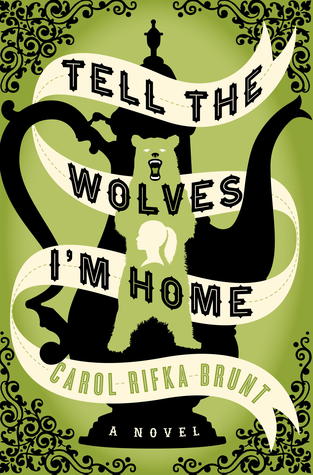
Book Review: Tell The Wolves I’m Home by Carol Rifka Brunt

Book Review: Tell The Wolves I’m Home by Carol Rifka Brunt

Tell The Wolves I’m Home, a first novel by Carol Rifka Brunt, defeated my best efforts to remain stoically dry-eyed while reading. What I expected to be a not-so-extraordinary family drama surprised me with its honest, emotional look at love and loss… and yes, there were tears.

Set in Manhattan and Westchester, New York in the mid-1980s, Tell The Wolves I’m Home is a look at one eventful spring in the life of 14-year-old June Elbus. As the book opens, June’s beloved uncle Finn has just died, an early casualty of the AIDS epidemic. Finn was not just June’s uncle, however; he was her godfather, her inspiration, and her first true love. Finn, a gifted artist, introduced June to everything she considers beautiful in her life — Mozart’s Requiem, visits to the Cloisters, an appreciation for the fine details all around her. June believes that the bonds between her and Finn are all-encompassing, but in the weeks following Finn’s death, June begins to realize that Finn had an entire life that she knew nothing about, and is forced to reexamine her relationship with Finn and its central role in her life.

As June reels through previously unimagined depths of loss, she is contacted by a stranger, Toby, who reveals himself to have had a key role in Finn’s life. Finn, before his death, left secret messages asking June to take care of Toby and Toby to take care of June, and as they try to honor Finn’s wishes, they find themselves connecting through shared bonds of loss, love and jealousy. June is shattered to realize how much she didn’t know about her uncle, as Toby struggles to let her in and to give dignity to June’s adolescent broken heart. As June mourns Finn and all she thinks she has lost, her older sister Greta acts out in her own brand of grief and loneliness in a desperate attempt to be understood and to reforge a connection before it’s too late.

The author does a wonderful job of capturing a particular time and place: New York, in the first throes of fear and ignorance about AIDS. Glancing references are made to Finn’s “special friend”, whom June’s parents consider a murderer — blaming him for Finn’s illness and death — and who is ostracized and banned from the funeral. June worries about catching AIDS from a kiss under the mistletoe; June’s sister is yelled at by their mother for using Finn’s chapstick. Other small details of life in the 80s bring the time to life: June wears her Gunne Sax dress in a desperate effort to isolate herself from the real world, as she hides out alone in the woods behind the school and pretends to live in the Middle Ages she so adores. Finn gives June cassette tapes of favorite music; June’s parents listen only to Greatest Hits albums (“it was like the thought of getting even one bum track was too much for them to handle”), and June has a fondness for “99 Luftballons” (the German version — much cooler sounding). June wears Bonne Belle lip gloss, and Greta has half of a “best friends” necklace, the other half of which some erstwhile best friend has long since discarded. It’s these small details and more which lend this book such a sense of nostalgic poignancy. At the same time, this coming-of-age story feels like it could be the story of any girl — or rather, every girl — growing up, seeing the human flaws in her parents, realizing that long-held truths may be illusions, finding and losing love, and coming to terms with a picture of one’s inner self which isn’t always so pretty.

Tell The Wolves I’m Home is a quiet, lovely book, a look backward that feels current and relevant, and a sad, sweet story of love and friendship. I’m so glad to have read it, and recommend it highly.

Book Review: Where’d You Go, Bernadette by Maria Semple

Book Review: Where’d You Go, Bernadette by Maria Semple

Huh. I just now realized that I’ve been committing hyper-punctuation in regard to this book, whose title does in fact include a comma and an apostrophe, but not a question mark — which I have egregiously added in several tweets and emails. Mea culpa.

Be that as it may, I have to say that I just adored Where’d You Go, Bernadette. (See? No question mark). Author Maria Semple has crafted a social satire that is uproariously funny, hits on a ton of memes and flashpoints of today’s hyper-plugged in society, and yet is also quite touching and surprisingly sweet in places.

Given the title, it’s not a spoiler to say that the plot revolves around events leading up to the disappearance of 50-year-old Bernadette Fox, once a brilliant rising star in the world of architecture, now an eccentric, possibly agoraphobic mother and housewife, whose life is one long string of odd behaviors. Bernadette, her 15-year-old super-talented daughter Bee, and her workaholic Microsoft exec husband Elgin, live in a run-down former reform school for girls atop a Seattle hill. The house is falling apart at the seams, literally, as blackberry vines force their way up through the foundations and the damp ceilings and walls crumble around them. (Keep an eye on those blackberry vines — they’re key to some early developments that lead to a disaster at once appalling and hilarious.)

Bee attends the Galer Street School, described in its mission statement as “a place where compassion, academics, and global connectitude join together to create civic-minded citizens of a sustainable and diverse planet.” Children are graded on a scale of “Surpasses Excellence”, “Achieves Excellence”, and “Working Toward Excellence”. Bernadette is happy that her daughter is thriving, but hates everything about Seattle, including the meddling, fussy, over-involved parents of the school, whom she refers to as gnats. Things go from bad to worse when Bernadette’s neighbor Audrey hosts a prospective parents brunch at her home in an attempt to lure “Mercedes Parents” to their Suburu-level school. To say that Bernadette and Audrey don’t quite get along would be the understatement of the year.

Further complications: Bernadette has hired a virtual assistant named Manjula to handle all of her personal business by internet — everything from travel plans to prescriptions to ordering clothing and household repairs. Before you can say “identity theft”, Bernadette has provided Manjula with her entire family’s bank account numbers, birthdates, passport numbers, and social security numbers.

When Bee comes home one day with a report card full of S grades and a brochure for a trip to Antarctica, events and disasters begin to snowball. Neither parent says no, plans for this exotic trip are set in motion, and Bernadette soon begins to fear that she’s in way over her head. By the time the date of the trip rolls around, psychiatrists, FBI agents, Microsoft admins, school chums, and gardeners have all played a role in the unfolding crisis… and Bernadette disappears without a trace.

Precocious, talented, determined Bee is left behind to put the pieces together, and what we’ve been reading all along is Bee’s compilation of documents pertaining to these events. Where’d You Go, Bernadette is told via emails, faxes, school reports, letters, magazine articles, and captain’s logs; Bee has assembled everything she can that may shed light on her mother’s disappearance, and through quick thinking and connecting of dots, believes she may have found pieces of the puzzle that will lead to answers about her mother.

Let me just say that I enjoyed this book immensely. The writing is crisp and deft, and the author does an outstanding job of capturing some of the nuttiness that is so deeply ingrained in today’s world of helicopter parenting, the cult of self-esteem, the worship of tech, and the increasing isolation experienced by individuals in a world of constant “connectitude”. One character writes impassioned screeds about her Victims Against Victimhood support group, whose members TORCH one another (Time Out! Reality Check) when they speak in victim-lingo; Bernadette’s husband Elgie is revered because he gave the 4th-most watched TEDTalk ever; the school hosts a constant series of concerts and events featuring multiculturalism so extreme that it’s practically a religious devotion. This all rings true in a way that is both slightly sad and hilariously funny.

And yet, there is an underlying sweetness in much of this story as well. As the book unfolds, some of the most self-deluded characters find ways to acknowledge hard truths. The bad guys aren’t necessarily all that bad after all. What seems charming and eccentric is revealed to be a cover for deeper problems that must be addressed. The perfect schools may not be what all children need. Little by little, the beliefs held by the characters at the start of the book fall away, until just about all find their way toward something closer to honesty and decency.

My only quibble about Where’d You Go, Bernadette has to do with the last section of the book, which is told mostly through Bee’s narration and loses some of the oddball charm built into the stream of constant emails and faxes. At times, this section reads a bit too much like a travelogue and loses a bit of the punch provided throughout so much of the book. Still, this is a minor complaint; the book wraps up in a way that’s completely satisfying yet still surprising, and I walked away a) smiling and b) resolved to read whatever Maria Semple decides to write next.

If you enjoy quirky fiction with a bite, this is a book for you.

Book Review: The Raven Boys by Maggie Stiefvater

Book Review: The Raven Boys by Maggie Stiefvater

The Raven Boys, book 1 in the new series The Raven Cycle, is the recent release by Maggie Stiefvater, highly praised author of The Scorpio Races and the best-selling series The Wolves of Mercy Falls. At least one unanswered question arises from reading this book: What exactly is a cycle? Is it different from a trilogy or a series? If there are two books in the cycle, would it be a bicycle? Inquiring minds want to know.

I’m a bit stumped by how to review this book, so I’ll just be blunt. It’s not good. I don’t even know where to begin enumerating all the many problems contained within its 408 pages.

Let’s start with the book’s focus — or lack of one. The dustjacket and promotional materials seem to cast Blue Sargent as the main character. Blue is certainly a main character, but there are a few others as well, none of whom exactly clamor for center stage. So, Blue — Blue is the 17-year-old daughter of a psychic who lives in a house full of female psychics. There’s a definite crunchy-granola-earth mother vibe going on there. Blue is not psychic herself, but she acts as a sort of amplifier — when she’s in contact with a psychic or a spirit, all powers are magnified, and the communication between mundane and spirit is clearer and louder. Blue has been told all her life that she’ll kill her true love with her first kiss (cheerful, right?), so she decided early on that there will be no kissing in her life. Easier said than done when you’re seventeen and suddenly have lots of very close, very attractive male friends.

Then there are the boys — the raven boys — who attend the ultra-exclusive Aglionby Academy, a prep school haven for the sons of the extremely, obscenely rich. As a rule, they are privileged, pampered, rude to locals, and self-absorbed. Blue crosses paths with the close-knit group formed by best friends Gansey, Adam, Ronan, and Noah when they come to her mother for a reading. The boys, we discover early on, are engaged in a quest, spear-headed by Gansey but with the involvement of all, to track the ley lines that run through their small Virginia town. Ley lines are focal lines of magical energy, and Gansey’s quest (which apparently he’s been pursuing all over the globe for the last several years, despite the fact that he’s only 17 years old) is to wake up the local ley line as a means of finding Glendower, an ancient king of Wales. Glendower’s bones were possibly transported to the New World centuries earlier and reburied somewhere mysterious… but he’s not really dead, just sleeping. Whoever wakes Glendower will be granted a favor, and each of the raven boys has his own reason for wanting – make that needing – this favor.

Does this make any sense? I read the book, and I’m still confused.

All of this business about ley lines and Glendower comes off as mystical mumbo-jumbo. Gansey is supposed to be a brilliant, manically inspired seeker dedicated to a higher cause, but his character never clicked for me. The quest itself is a muddle. Magical stuff happens, none of it very coherent. Blue gets involved, and there’s a lot of running around seeking the energy focal point, but mostly the plot just jumps from action to riddle to more action to… I don’t even know.

Stereotypes abound. Gansey is the spoiled son of a very wealthy family (he’s got a III at the end of his name, so you know he’s pure country club material). He shows his individuality by insisting upon driving a classic Camaro that’s always breaking down rather than taking one of his father’s pristine high-end vehicles. Ronan is the one with an edge, battling with his older brother, cutting classes, sporting a dangerous tattoo and shaved head — the brilliant loose cannon who must be controlled by his friends in order to avoid expulsion. Adam is the poor local kid, literally trailer park trash, who gets a scholarship to Aglionby as part of his own personal quest to escape the poverty and abuse he faces at home, but too proud to accept any help from his wealthy friends who truly love him. And then there’s Noah, whose circumstances are bizarrely told and, to me anyway, entirely unbelievable.

Blue herself is an enigma. We know that she likes to stand out as a weird girl, but we never see her go to school or talk to a single friend. Does she have any friends? Who knows?

I was at least 100 pages into the book before I could keep the boys straight. They all seemed rather indistinguishable, frankly. Blue’s connection with they boys seemed rushed — but then again, that ‘s my overall impression of the entire book. Rushed, messy, not very well thought-out, and with sentence structure issues that just cry out for a good copy editor… perhaps the goal was just to lay the foundation for the rest of the series, but even so, a first book in a series should be stellar.

I’ve actually read all of the author’s previous works, and have found them rather hit-or-miss. I didn’t care for her faerie books (Lament and Ballad), but I enjoyed the wolf books, particularly Shiver, the first in the trilogy. I also liked The Scorpio Races quite a bit, although with reservations about certain plot points. What I liked best about both Shiver and The Scorpio Races was the author’s use of language to create a mood. Shiver is simply permeated by a sense of tragic longing; you can feel the cold air, sense the loneliness of the winter months, feel the main character’s yearning for the wild unknown represented by the wolves. Likewise, in The Scorpio Races, the writing itself evokes life on a small, windswept island with few options and almost no way out; the effect is practically hypnotic, and lends the book much of its strength and grace.

Here in The Raven Boys, that powerful language conveying atmosphere and mood is missing. What’s left is a plot that’s far from compelling. Perhaps The Raven Cycle will improve and the story will start cohering in the subsequent books. I guess I’ll never know; this is one series that I don’t plan to continue reading.

Q&A with the kiddo: A kid’s-eye view of The Haunting of Granite Falls by Eva Ibbotson

Book Review: The Haunting of Granite Falls by Eva Ibbotson


From Amazon:

American millionaire Hiram C. Hopgood will stop at nothing to make his daughter, Helen, happy—even if it means buying her an ancient Scottish castle and shipping it back to Texas. Assembling the castle isn’t a problem for the oil tycoon . . . it’s the ghosts that worry him. Hopgood has made up his mind: the ghouls have got to go. But these spirits don’t spook so easily. Instead, they make their way to America, where they meet up with a magical severed hand and three fiendish, cross-dressing kidnappers for a Texas-sized adventure with a ghostly Scottish flair.

Proudly presenting Q&A with the kiddo, courtesy of my 10-year-old son, in which I ask my kiddo to describe a book he’s enjoyed recently and he gives his opinions, more or less unfiltered by mom.

Without further ado:

Q: What book do you want to talk about?

A: The Haunting of Granite Falls.

Q: What was it about?

A: [Note: The kiddo didn’t feel like giving a plot summary, so here’s the mom version: An American millionaire buys a Scottish castle for his sickly daughter, has the castle shipped to America to be rebuilt in the heart of Texas, and unintentionally gets a handful of castle ghosts to go with it. Scottish orphan Alex and the millionaire’s daughter Helen form a fast friendship, and need to call upon the ghosts for help when a dastardly kidnapping plot threatens their safety. Much mayhem ensues.]

Back to the kiddo:

Q: Who was your favorite character?

A: The Severed Hand [a ghostly disembodied hand who haunts the local cinema and the mineshafts underneath]. He’s really fun, he can cook, he’s an author, and he’s also a Hand of Glory.

Q: Who else did you like?

A: Flossie [the ghost of a 5-year-old girl, currently wreaking havoc as a poltergeist]. She’s really funny, and she messes up everything.

Q: What was your favorite part of the book?

A: When all the action was happening [towards the end] in the theater and in the mineshaft. [Note: A scary kidnapping in the mines, a daring rescue by the ghosts, much chasing about, shouting, scaring, and… heroic ghosts!]

Q: How would you describe the book overall?

A: Lots of cliffhangers. A tiny bit scary. Mostly funny, silly, weird, and mysterious.

Q: Who do you think would like the book?

A: My friends. If you have a sense of humor, you’ll like this book.

Q: Did you think this was a good reading level for you?

A: There were some words I didn’t understand [Note: that’s where moms come in handy], but otherwise it was fine. I probably could have read it on my own but it would have taken a lot longer.

Q: Would you want to read more books by this author?

A: It depends what they’re about.

Q: Would you want to read more ghost stories?

A: Maybe. It depends what kind. If they’re scary, then I wouldn’t want to read them before bed-time. That would give me nightmares.

Mom’s two cents: This was one book that we both could enjoy. It worked well as a read-aloud, but a kid who’s comfortable reading chapter books solo should be able to handle this one just fine. The kiddo and I found The Haunting of Granite Falls to have just the right combination of funny elements (a Viking ghost named Krok Fullbelly is good for all sorts of laughs) and dramatic action. 12-year-old Alex makes a fine hero as well, a nice mix of sensitivity and loyalty, with a dash of Scottish laird in him as well. I was a bit uncomfortable with the bad guys, who were more seriously threatening than I typically expect in a book aimed toward ages 8 – 12; in particular, the ringleader, a woman with many awful traits, among them a fondness for souvenirs of Hitler, was especially distasteful. Still, the book overall was a success. Author Eva Ibbotson has a delightful writing style, humorous and exciting, that really appeals to my son and keeps me entertained as well. We both give this one high marks.

So there you have it. We’ll be back with more book opinions from my kiddo, whenever I can get him to talk books again.

Book Review: Gone Girl by Gillian Flynn

Book Review: Gone Girl by Gillian Flynn

This review is going to have to be brief, because there’s almost no way to talk about Gone Girl without giving something away, and really, the less you know ahead of time, the better.

Gone Girl is a thriller, but you could also describe it as an analysis of a marriage. What makes a couple tick? How do people know if they fit? What happens to a relationship when the initial excitement and spark have faded?

Nick and Amy Dunne are a beautiful couple — truly, they are. It’s emphasized from the beginning of Gone Girl how very attractive they each are; they’re the golden boy and girl, the ones who get noticed, never ones to fade into a crowd. Nick and Amy meet at a party in New York when they are both magazine writers. They have an exciting romance and a beautiful wedding; the perfect couple — smart, attractive, fun, and completely in tune with each other. When the economy tanks and the magazine business dries up, they are both laid off, and end up moving back to Nick’s boyhood hometown of Carthage, Missouri to care for his dying mother, but really more to lick their wounds and figure out what a next chapter in their lives might look like.

Amy is the daughter of two psychologists who are famous for their bestselling Amazing Amy series of children’s books, based on Amy’s own life, which makes her both a curiosity and a celebrity. Nick is the son of a woman-hating father who left his mother when Nick was 12; Nick’s father now resides in a care facility from which he regularly escapes in an Alzheimer-fueled fog of anger.

Gone Girl opens with Nick and Amy’s 5th anniversary, as Nick contemplates just how miserable he is… and then discovers that Amy has disappeared. Day by day, evidence begins to pile up suggesting that violence, perhaps murder, has occurred, and Nick is slowly painted into a corner as the prime suspect, with only his high-profile lawyer and his twin sister Go to defend him.

What really happened to Amy? Why does Nick talk so much about the shape of Amy’s skull and have visions of harming her? Is Nick really a killer, or just a not-very-good husband who’s a convenient target for police interest and public scorn?

Told in chapters that alternate between Nick’s narration and Amy’s diary, we hear bits and pieces of the story from both Nick and Amy’s points of view. Gillian Flynn does a fantastic job of creating unique voices for each character, and the portraits we receive are detailed, rich, and chilling. Supporting characters feel well-defined and true-to-life.

The author skewers the current cult of crime TV, sensationalism masquerading as journalism, and seemingly endless parades of murder suspects dominating cable programming at all hours of the day. Nick realizes quickly that he’ll be considered the prime suspect, because everyone knows from watching TV that it’s most likely that the husband did it. He knows how police investigations work, understands that a sympathetic detective is just trying to soften him up, and knows that he’ll look guilty if he asks for a lawyer too soon — because he’s seen it all on CSI. His lawyer points out to him that by the time a case goes to trial, it’s been all but decided already on the cable legal shows and on the Internet. Control the message, control the outcome of the trial. The behind-the-scenes look at how publicity and public relations dictate the course of a crime investigation is actually quite fascinating.

Ultimately, though, it is the mystery at the heart of Gone Girl that makes it such a compelling read. Understanding Nick and Amy’s psyches and their inner workings is key to understanding what has happened and how it will all play out. I couldn’t put it down, and the twists and turns kept me guessing until the end.

I did find the ending unsatisfying, not because it left loose ends or because it didn’t fit — but because it wasn’t the outcome I wanted. Which means that I was enmeshed enough in the story and the characters’ lives to really care about what happened, which in my view makes this book a terrific success.

Read Gone Girl if you enjoy a good mystery, and most especially if you like to be surprised. Believe me, you will be.

Breed: Lingering questions (spoilers!)

Yesterday, I posted my review of Breed by Chase Novak. On Goodreads, I gave Breed 3 out of 5 stars, largely because I felt there were a lot of extraneous characters and plot points that didn’t go anywhere.

I try not to read other people’s reviews until I’ve written my own, so that I don’t (voluntarily or involuntarily) second-guess my own reactions or opinions. So last night, after finishing my review, I looked up the New York Times review of Breed, where I learned this little nugget of information: Chase Novak (aka Scott Spencer) is planning a sequel, called Brood.

I’m of two minds about this. One, there was no indication in Breed that this was the first of two (or more?) novels. Therefore, I’d expected a book that wrapped up satisfyingly and didn’t leave me hanging. Granted, in many horror books (take Rosemary’s Baby for instance), part of the horror is the fact that not everything is resolved — maybe the immediate problem has been addressed, but — my gods! — what about the future? You really should feel at least a little creeped out at the end of a good horror novel.

On the other hand, knowing that Breed will have a sequel, I feel much better about some of the implied outcomes and the various loose ends. Hurray — it’s not sloppiness or intentional vagueness! We’ll find out more!

So, what do I want to know in a sequel to Breed? (Warning: here’s where the spoilers creep in!)

  • Alice and Adam — how soon will they start to change? What exactly happens to all these kids once they hit puberty?
  • Bernard — how does he matter to the story?
  • What’s the deal with the triplets’ birthmarks on their hands?
  • Is the horror here purely genetic? What was in those injections and vials?
  • Is there a supernatural element involved? The scenes in Slovenia feature place names that included the words “castle” and “dragon” — is this a hint that there is more going on that just a medical mystery? Eastern European nation, dragon imagery, big slavering dogs, crying nuns… anyone else thinking what I’m thinking?
  • Obvious question: Is there a cure? Dr. Kis couldn’t find one, but does that mean that it doesn’t exist?

For those of you who have read Breed: What else do you want to know? What plot points do you want to see addressed in the sequel? Any predictions as to where it’s all heading? Share your thoughts, please!

Book Review: Breed by Chase Novak

Book Review: Breed by Chase Novak

Talk about having nightmarish parents.

In Breed by Chase Novak, the pursuit of fertility literally turns people into monsters. Chase Novak is the pen name of author Scott Spencer (Endless Love, A Ship Made of Paper), who here turns his talents toward a truly yucky horror tale. Alex and Leslie Twisden are young, attractive, and very well-to-do. Alex is the scion of old, old money, with a home full of priceless belongings and a beautiful, engaging younger wife. Alex and Leslie have it all, except for the one element outside of their control: They can’t seem to make a baby. After three years of progressively invasive and expensive infertility treatments, all to no avail, Alex and Leslie are just about ready to call it quits when they stumble upon a hush-hush miracle treatment offered by a doctor in Slovenia. Before you can say “uh-oh”, they’re off to Ljubljana for a scary, painful procedure from a shady doctor, who proclaims:

We are turning a quiet glade in the forest into a teeming spot in the jungle. Life, life, everywhere life, wanting, taking, growing. We are going to turn you on. Up high. Like teenager and creature of the wild. Nothing will hold you back. Life! Life!

Back at their hotel for the one night they plan to stay in Slovenia, Leslie and Alex are indeed turned on, and wake the next morning to find their hotel room completely and utterly demolished and their bodies covered in scratches and bite marks. Sure enough, the treatment has worked, and Leslie embarks upon a pregnancy that is more than she bargained for, as both she and Alex experience disturbing and drastic changes to their bodies.

All that, and it’s only the first 40 pages of the book. Before long, Leslie has delivered, and we move into part II of the book, set 10 years later, as twins Adam and Alice struggle to find safety in a world in which their home is the most dangerous place of all. Each night, Adam and Alice are locked into their own rooms and then let out again in the morning. Their parents are inconsistently protective, allowing them no playdates or afterschool activities, walking them to and from school each day more as guards than nurturing parents. We learn pretty quickly what the twins know of their world: strange, wild noises come from their parents’ bedroom at night, the cellar is always locked, and it’s best not to get too attached to the random pets that come into their lives and then quickly disappear. Alex and Leslie no longer go to work, instead selling off Alex’s inherited wealth bit by bit and allowing their house itself to crumble into garbage-strewn, corrupted ruin.

Adam and Alice’s flight toward freedom triggers a calamitous collapse of their already shaky lives, and as they innocently involve others in their plight, the potential for violence explodes all around them. The adults in their lives are either feral savages or ineffectual benign beings who can’t quite manage to save themselves or the children from the awfulness that pursues them. Numerous sequences involve chase scenes all over Manhattan, as its streets teem with life both wildly dangerous and recklessly free. The action builds to a more or less inevitable end, as horrifying events grow one upon the other.

Ultimately, my feelings on this book are mixed. I am not a horror aficionado, and therefore can’t assess whether Breed is really a top-notch entry in the genre. From a fiction reader’s point of view, however, I can say that Breed has a lot going for it, although the ending felt a bit flat and predictable to me. As the action in the middle of the book escalates, I couldn’t look away, despite the unfailingly horrific and gross (really, there’s no other word for it) nature of the scenes. By the end, though, there weren’t very many surprises left, and I didn’t walk away from the book feeling that the early promise of the story had truly paid off.

Is this a cautionary tale about the vanity that can become enmeshed in the no-holds-barred quest for reproduction? Early in Breed, Leslie tells Alex that she’s ready to quit:

Alex, I want us to adopt. I’m sick of living this way. I’m tired of doctors, and diets, and I am most of all worried… I am worried about what this is doing to us. Our marriage. Our souls.

But Alex is insistent upon one last try:

All your kindness and intelligence and beauty — it would be a waste not to pass it along, not to keep it in the world. The gene pool cries out for it!

Of course, the irony is that by pursuing that one miracle cure, the gene pool itself is compromised, so that it’s left extremely questionable what in fact has been passed along to the next generation. It’s doubtful that the inheritance will have any resemblance to kindness, intelligence, or beauty. Clearly, Leslie was right to worry.