
Book Review: The Ocean At The End Of The Lane by Neil Gaiman

Book Review: The Ocean At The End Of The Lane by Neil Gaiman

The Ocean at the End of the Lane

This sad, sweet book is a reflective look back at childhood, a meditation on innocence and trust, and a sorrowful examination of what is lost in the process of growing up.

In The Ocean at the End of the Lane, the unnamed narrator, middle-aged and giving off a sad-sack vibe, returns to his childhood town for the funeral of one of his parents. Needing escape from the formalities and niceties involved in the official mourning process, he drives off toward the site of his ramshackle boyhood home, now a sparkling new housing subdivision, and then is drawn further down the lane. As he travels down the rough country road, memories start to spark — memories of a girl named Lettie, who befriended him at age seven and since moved away. To Australia, perhaps? He’s not sure, but upon arrival at Lettie’s family farm, memories of a pond (that she called an ocean) resurface, and soon, an entire hidden chapter from his childhood comes back to him.

There’s a sorrow that permeates the childhood memories, even before the main events of the story begin. The boy has a nice home and pleasant parents, but is a loner, constantly immersed in books and without any friends. The action kicks off after the boy’s lonely 7th birthday, for which his mother prepares a lovely party and invites the boys from school — but no one comes, which doesn’t surprise the boy:

They were not my friends, after all. They were just the people I went to school with.

This small, sad incident sets the tone for one of the book’s themes. Part of childhood and growing up is coming to understand that parents can’t always protect us from the bad stuff. Life is hard, and loving parents are not infallible. Much as they try, parents can’t keep out the disappointments and harshness that intrude from outside the walls of home.

Moving from the sadness of the failed birthday party, a different sort of world is quickly revealed. There’s an elemental sort of magic involved, and horrible creatures too. The boy’s life and family are threatened by what appears to be an unstoppable evil, masquerading as something lovely and lovable. The world itself seems to be at risk, and great sacrifice and bravery are required. We see it all through the eyes of a man remembering what it felt like to be a child, to be powerless and scared, and to have to carry on anyway.

Ocean is, simply put, quite beautiful. It’s also, in parts, just terrifying. I was reminded in some ways of Neil Gaiman’s Coraline. As with the Other Mother in Coraline, the boy in Ocean finds himself at the mercy of a parent who suddenly becomes “other”. Is there anything scarier than seeing one’s ultimate source of safety and love turn into a source of menace and actual danger? The writing here is magnificent, so that as a reader, I could feel the terror of facing harm at the hands of the person who should be a protector.

With his home no longer safe, the boy seeks protection from the Hempstock women, a trio who appear to be a grandmother, mother, and daughter — but who are in reality forces of nature, timeless and powerful, seemingly an eternal type of earth mothers. They have a gentleness about them that partners with their fierce protection of the boy and his world. They are fearless, facing down the “critters” that don’t belong, and carefully snipping time and events to remove the bad parts and make it all work out as it should. The Hempstock women have a purity and earthiness about them, living on their old-fashioned farm, where they drink milk fresh from the cow and eat rough, homemade bread. Even their food and clothes portray them as people out of time, embracing nature and simplicity, separate from the modern world around them.

Again, a Coraline reminder — as menacing creatures rip shreds of the world away, leaving an awful nothingness in those places, I was reminded of Coraline’s attempt to run away from the Other house and finding a world dissolving around the margins. Reality is less firm than we might think, apparently, and when the vast void shows through, it’s horrible to behold.

The narrator of Ocean contemplates sacrifice and its burden — and while it’s specific to the events of the story, it could also apply to the burden all of us might feel growing up aware of what our own parents’ sacrificed in order to give us a better life:

A flash of resentment. It’s hard enough being alive, trying to survive in the world and find your place in it, to do the things you need to do to get by, without wondering if the thing you just did, whatever it was, was worth someone having… if not died, then having given up her life. It wasn’t fair.

On the surface, the narrator is a typical middle-aged adult, beaten down by a life with mixed successes and failures, in which he’s made art, but has also had a challenging personal life and only occasional happiness. Somewhere lurking within him is a secret knowledge of a hidden reality, mostly lost to him but resurfacing on his occasional visits to the Hempstock farm. He represents, in many ways, any adult who has lost touch with childhood belief and imagination, who finds a hint of it resparked by revisiting its source — perhaps a certain place or a book or a favorite toy — and suddenly remembering the joy and pleasure of a child’s view of the world:

I do not miss childhood, but I miss the way I took pleasure in small things, even as greater things crumbled. I could not control the world I was in, could not walk away from things or people or moments that hurt, but I found joy in the things that made me happy. The custard was sweet and creamy in my mouth… [P]erhaps I was going to die that night and perhaps I would never go home again, but it was a good dinner, and I had faith in Lettie Hempstock.

At under 200 pages, Ocean is a spare, compact, poetic book, with a purity of language. The writing is elegant and simple; not a word is wasted, and there’s not a thing missing. Ocean is marketed as a book for adults, but despite the terror of certain parts, I think there’s an ageless appeal to it as well, so that it might also work for older children — although I don’t think they’d appreciate the bittersweet element of childhood remembered from a distance, which adds such beauty and sadness to the book.

This review is already longer than I’d intended, yet I don’t feel I can really do justice to this book. I wonder: Did I really understand it? Did I miss something important the author was trying to convey? Is the meaning I found here at all in line with the author’s intentions? I have no idea.

And yet…

In reading The Ocean at the End of the Lane, I found myself both shaken by the boy’s fear and moved by his innocent sense of trust and belief. Even when his parents fail him, the boy has an unshakeable belief in the power of simply holding the hand of someone he trusts, and it’s quite wonderful to behold.

There’s an aching beauty throughout, and something so incredibly sad in the figure of the man drawn back to the Hempstock pond at key moments of his life. Like all adults, he faces daunting questions: Did I measure up? Did I do with my life what I should have done? Was my life worth it? He doesn’t find easy answers, but his pilgrimages to the past seem to bring him peace at key times.

Ocean is a deep, lovely, contemplative work. I imagine that I’ll want to revisit this book repeatedly, to pull apart and tease out all its themes and all it has to offer. Neil Gaiman writes beautifully, with an enchantment to his words that’s an experience in and of itself. I leave you with a magical moment:

I have dreamed of that song, of the strange words to that simple rhyme-song, and on several occasions I have understood what she was saying, in my dreams. In those dreams I spoke that language too, the first language, and I had dominion over the nature of all that was real. In my dream, it was the tongue of what is, and anything spoken in it becomes real, because nothing said in that language can be a lie. It is the most basic building brick of everything. In my dreams I have used that language to heal the sick and to fly; once I dreamed I kept a perfect little bed-and-breakfast by the seaside, and to everyone who came to stay with me I would say, in that tongue, “Be whole,” and they would become whole, not be broken people, not any longer, because I had spoken the language of shaping.

Read The Ocean at the End of the Lane. It’s a unique experience, and one of the most beautifully crafted works I’ve read in a long time.

Book Review: A Small Death in the Great Glen by A. D. Scott

Book Review: A Small Death in the Great Glen by A. D. Scott

A Small Death in the Great GlenThe staff of the Highland Gazette produces the same little newspaper week in, week out. Classifieds on the front page, sporting and racing results on the inside, updates on farming, women’s club meetings, and the like filling up the rest of the four-page spread. Certainly no investigative reporting, nothing controversial, nothing that the “big city” papers in Edinburgh or Glasgow might cover. But when a young boy is found dead in a canal, the new editor-in-chief demands more from the small team of reporters, and they soon become enmeshed in an investigation that threatens the stability of their insular town.
Set in the the Scottish Highlands in the mid-1950s, A Small Death in the Great Glen is a murder mystery, but at the same time is a compelling portrait of a time and place. Ten years after World War II, the effects of the war are still being felt. An abused wife tries to live with her husband’s rage and frustration, recognizing that he came home from war different from the person she’d married. The Italian immigrant who runs the town’s café (with the only cappuccino machine in the Highlands!) is accepted by the community — but with limits. When a Polish sailor jumps ship in the harbor at the same time that the boy’s murder occurs, the strangers in town are immediately suspect, and the underlying mistrust of foreigners — even those who’ve lived and worked alongside the townsfolk for a decade — lead to ugliness and division.

The focal point of the story is Joanne Ross, who shocks her family by taking a part-time job at the paper as a typist — women are supposed to be at home! What next, wearing trousers? Joanne needs escape from her bitter home life, and finds it at the Gazette, where she is pushed to think for herself and actually write newsworthy content. As Joanne grows professionally, she has to face facts about her marriage and make choices that, in the mid-1950s, are not at all easy for a woman with two small children.

The mystery at the heart of A Small Death in the Great Glen is compelling and has several surprising twists. The history and mythology of the Highlands come into play, as do the various factions and prejudices beneath the surface of a seemingly harmonious town.

Apart from the investigation of the murder itself, there were really two elements in this book that gave me the greatest enjoyment. First is the setting itself: I’m a sucker for Scotland, particularly the Highlands, and this book is filled with descriptions of the glens and braes, the rocky terrain, the natural surroundings, that are so vivid that I could practically feel it.

Pleasure came from the small things; tickling for trout, watching the birds, the eagle hunting, stalking the deer. Cloudscapes of great beauty highlighted the four-seasons-in-one-day phenomenon that was called weather in Scotland, but often it was dreich for days, sometimes weeks, on end.

(My Thursday Quotables selection for this week is from A Small Death in the Great Glen. See it here for another snippet of description of the Highland landscape.)

The second element that really elevates this book above a standard mystery is the glimpse into the inner workings of a small community, at once tight-knit and full of resentments and judgments. Thanks in large part to my obsession with Diana Gabaldon’s Outlander series, I have a familiarity with the Highlands of centuries past; A Small Death in the Great Glen is a lovely insight into 20th century Scotland and what life would have been like for people in the post-war era of that time.

I don’t usually read mysteries, but I’m glad that the Highlands setting drew me to this book. I enjoyed the people, the relationships, the investigation, and the portrait of the intermingled communities that make up the society of this small Scottish town. When I first picked up A Small Death in the Great Glen, I hadn’t realized that it’s the first book in a series. Two more are currently available, with another due for publication later this year. No worries, though: A Small Death in the Great Glen stands on its own just fine. If you enjoy mysteries — or, like me, just want a little taste of the Highlands, give this one a try!

As for me, I’m looking forward to reading the next book, A Double Death on the Black Isle, next time I crave a visit to Scotland.

Book Review: The Eyre Affair by Jasper Fforde

Book Review: The Eyre Affair by Jasper Fforde

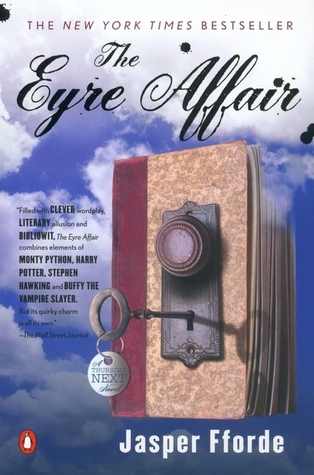
The Eyre Affair

As soon as I read the cover blurb for The Eyre Affair, I knew I was a goner. From The Wall Street Journal:

Filled with clever wordplay, literary allusion and bibliowit, The Eyre Affair combines elements of Monty Python, Harry Potter, Stephen Hawking and Buffy the Vampire Slayer. But its quirky charm is all its own.

I mean, come on! Was this book written just for me?

What’s it all about? I’ll borrow the Goodreads synopsis:

Welcome to a surreal version of Great Britain, circa 1985, where time travel is routine, cloning is a reality (dodos are the resurrected pet of choice), and literature is taken very, very seriously. England is a virtual police state where an aunt can get lost (literally) in a Wordsworth poem, militant Baconians heckle performances of Hamlet, and forging Byronic verse is a punishable offense. All this is business as usual for Thursday Next, renowned Special Operative in literary detection, until someone begins kidnapping characters from works of literature. When Jane Eyre is plucked from the pages of Brontë’s novel, Thursday must track down the villain and enter the novel herself to avert a heinous act of literary homicide.

In the world of Thursday Next, the hush-hush web of government intelligence includes SO-27, the branch of Special Operations focusing on Literary Detection. As a LiteraTec, Agent Next tracks down all sorts of nefarious literary criminals, but none so heinous as the mysterious mastermind who literally rewrites the world of fiction by altering original manuscripts. Add to the mix a Crimean War that’s raged for 150 years, Next’s ChronoGuard father who pops in and out whenever he’d like (usually with a history-changing agenda or two — like, say, the invention of the banana), a powerful corporation named Goliath that runs, well, everything, and a strange device called a Prose Portal that may be the key to finally winning the war… and you have a delightfully bizarre novel that plays with words and books in the strangest, twistiest of ways.

The glory is truly in the details. On a rare day off, Thursday attends the weekly performance of Richard III — which is this world’s stand-in for Rocky Horror. In a truly amazing sequence, we’re treated to the spectacle of full-on audience participation, including the donning of sunglasses, stamping and barking, and a wild battle scene in the aisles and entryway of the theater.

The whole audience erupted in unison:

“When is the winter of our discontent?”

“Now,” replied Richard with a cruel smile, “is the winter of our discontent…”

The Eyre Affair is filled with so many adorable details, it’s impossible to capture even a smidgen. Coin-operated mechanical devices on street corners recite verses of Shakespeare on demand. Taking an unpopular stance on the “who really wrote Shakespeare’s plays?” debate can lose you friends and has been known to start riots. Characters names include Victor Analogy, Braxton Hicks, Jack Schitt, and Acheron Hades. Guess who the bad guys are?

Possibly the only note that rang false for me in this book is the introduction of vampires and werewolves (in a chapter aptly titled “Spec-Ops 17: Suckers & Biters”. I mean, sure, in a novel in which bad performances of Shakespeare carry fines and John Milton conventions are commonplace, why not? Still, this piece of the story seems unnecessary and a bit out of place. While handled with humor, the inclusion of these over-used supernatural creatures is a clunky touch and is not in keeping with the overall off-beat originality of the storyline.

I leave you with the brief explanation provided for the department vacancy offered to Thursday:

Your post was held by Jim Crometty. He was shot dead in the old town during a bookbuy that went wrong.

How can you not love a book in which all of society is crazy about books? Where people from around the globe make pilgrimage to see the Jane Eyre manuscript? The Eyre Affair is silly, quirky, and an absolute delight.

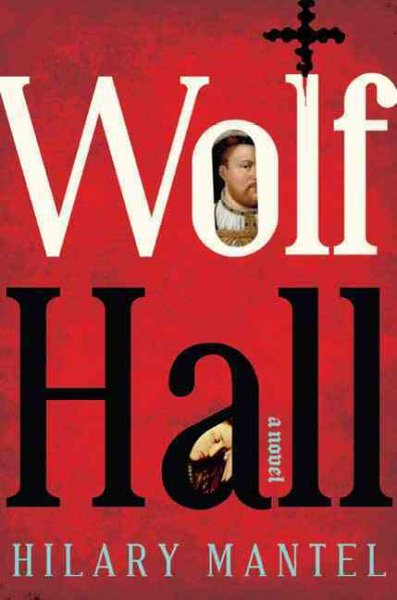
Book Review: Wolf Hall by Hilary Mantel

Winner of countless awards, among them the 2009 Man Booker Prize, Wolf Hall is well-known and highly esteemed. So why did it take me so many years to finally read it?

It’s a daunting book to begin, that’s for sure. In my paperback edition, the two pages of the Table of Contents are followed by five pages of the Cast of Characters, and then by two more pages containing family trees (the Tudors and the Yorkist Claimants, to be exact). Did I need to memorize the ancestries? Was I supposed to already know the paths of descent from Richard Duke of York and Owen Tudor? In general, when I see a book that requires that much supporting information up front, I want to run for the hills. Or pick up something simpler, at the very least.

In this case, I’d already vowed to read Wolf Hall during a vacation, and after committing to it publicly (well, okay, here on my blog), I felt a certain amount of pressure to see it through.

So — worth it? Yes, and here’s why:

Wolf Hall is the story of Thomas Cromwell, a man who rises from an obscure beginning as the son of a blacksmith to become one of the most powerful and influential advisers in the court of King Henry VIII. The entire book is told from Cromwell’s perspective; we see the people and players that he sees; we visit the inner chambers of the castle when he does. As Cromwell’s access increases, so does ours as readers. We only meet Henry when Cromwell does, and we see Anne Boleyn’s ascent at first from a distance, as bewildered by the king’s obsession with Anne as Cromwell is, then become more intimately involved as Cromwell becomes a key participant in the machinations needed to overthrow not just a marriage but an entire religious institution.

The Cromwell we come to know in Wolf Hall may or may not be entirely historically accurate. His rise to power is well-documented, but his early history and his inner life is not. Author Hilary Mantel gives Thomas Cromwell a depth and vibrancy that make him a sympathetic main character. We see him as a devoted family man, albeit as one who is often absent. Still, his devotion to his wife, his children, and his broad collection of wards and adoptees is shown to be his defining virtue. Likewise, he is committed to his patron, Cardinal Wolsey, and he forgets nothing — neither good nor bad — in his endless reckoning of favors owed and granted. Cromwell’s shrewdness and intelligence are clear. He is an intellectually gifted man who had a rough start in life, and so he is both gentleman and ruffian, a man who can out-think anyone he encounters, and at the same time a man to strike fear into the hearts of those who cross him.

Wolf Hall is a complicated book. This is not a bodice-ripper masquerading as history. The details can be overwhelming. There is an enormous number of players to keep straight, and it’s not enough to know who’s who; we readers also need to know the relations, the power dynamics, the titles, and the land holdings. This is not a love story. It’s about power, it’s about politics, it’s about playing a deadly game with the lives of the innocent and not-so-innocent at stake. Hilary Mantel piles detail upon detail, but never in a way that is incomprehensible — although, yes, it is a lot to keep track of.

Mantel’s prose is not straightforward. Sentences break off suddenly. A random example, from early on in the book:

They arrived on a Sunday, two vengeful grandees: the Duke of Norfolk a bright-eyed hawk, the Duke of Suffolk just as keen. They told the cardinal he was dismissed as Lord Chancellor, and demanded he hand over the Great Seal of England. He, Cromwell, touched the cardinal’s arm. A hurried conference. The cardinal turned back to them, gracious: it appears a written request from the king is necessary; have you one? Oh: careless of you. It requires a lot of face to keep so calm; but then the cardinal has face.

The pronouns throughout Wolf Hall are a bear to figure out. Mantel uses “he” throughout the book to refer to Cromwell, even when he is not the person most recently referenced. This drove me crazy at first. I’d have to stop and backtrack, realizing that the sentence I was reading was not about the person I thought it was about! Once I finally got that it’s all about Cromwell, all the time, the “he”s were a bit easier to decipher. But boy, did that throw me for a loop at the beginning.

Wolf Hall will not be for everyone. But I did enjoy it very much, although it was perhaps not the wisest choice for vacation reading. I typically choose books that require little commitment for my vacation reading — books I can easily swoop in and out of at a moment’s notice while doing other things. Wolf Hall is not one of these books. It requires concentration and thought, and while I definitely liked the challenge, it was a bit overwhelming at times.

The title itself is confusing, and only gains meaning toward the end of the book (unless you’re a total Tudor-era enthusiast and know the names of every estate in the realm). The challenge for an author writing about this era is in keeping a sense of suspense or surprise when the major events are so very well known. If you’ve read The Other Boleyn Girl or watched The Tudors, then you already know how the king’s efforts to divorce Katherine and marry Anne will work out. What keeps this book interesting is the writing itself, as well as the use of a lesser-known figure as its point-of-view character. Learning about Cromwell is fascinating; seeing the inner workings of the court through his eyes is enlightening, and keeps the familiar acts and players from seeming worn out or stale. Yes, I do know what happens — but it doesn’t matter. The portrayals of Cromwell, Henry, Anne, and the others are rich and nuanced, and kept me hooked.

Wolf Hall is the first book in a trilogy. Book 2, Bring Up The Bodies, is also a Man Booker Prize recipient. Book 3, The Mirror and The Light, is anticipated for publication in 2015, as far as I could tell. I plan to read Bring Up The Bodies later this summer, and as it covers the fall of Anne Boleyn, I fully expect to be engrossed.

I highly recommend Wolf Hall, although it definitely helps to have some knowledge of the Tudors ahead of time. And if you’ve watched Showtime’s version of The Tudors, I dare you to read this book and not picture Natalie Dormer every time Anne Boleyn is in a scene.

Book Review: Fathomless by Jackson Pearce — **This review contains spoilers**

Book Review: Fathomless by Jackson Pearce

Fathomless (Fairytale Retellings, #3)I can’t write about Fathomless and express what I thought and felt reading this book without including SPOILERS — so consider this fair warning! This review will include plot spoilers, including the major twist that readers discover toward the end. If you don’t want to know, stop reading now! Seriously, final notice!

Are you still here?

Sure you don’t want to look away?

Really, really sure?

Okay….

Fathomless looks like a mermaid story, right? I mean, look at the cover. That’s a mermaid. Absolutely, without doubt.

Except the girls/creatures in Fathomless aren’t actually mermaids, or at least not the fairy tale and Disney versions of mermaids. For starters — no tails. Not at all. They have legs and feet, just like when they were human. And that’s a key point as well. You know how Ariel is the daughter of King Triton? No mermaid royalty here — these girls were once human, but have somehow been transformed into creatures who live in the ocean, happily swimming with their sisters all day long and bit by bit forgetting their previous lives.

Our main mermaid girl is Lo, who lives under the sea (not in a pineapple…) off the coast of Georgia. She still yearns vaguely for the lights of the human world, but grows more and more content with her underwater life with each passing day. She knows that she was once someone else and had a different name, but can’t remember those details any longer. She and her “sisters” share the belief that they were brought to live in the ocean by an angel, and that someday, when they’ve turned into one of the beautiful but vacant old ones, they’ll leave the ocean and become angels themselves.

There’s another path that the ocean girls believe in, even thought they’ve never seen it happen: Legend says that an ocean girl (sorry, I have a hard time calling them mermaids) can regain a human soul and a human life by getting a human boy to fall in love with her — and then drowning him. At that point, she takes his soul and can go back to living on land as a regular girl again. Okay, yeah, she’ll also have murdered someone to get there, but why quibble?

Celia is our main human point of view. She’s one of triplets — her sisters Jane and Anne are identical, and Celia is the odd girl out. All three have powers of sight: Through touch, Celia can read someone’s past, Jane reads the present, and Anne sees the future. The sisters live in a small Georgia beach town in their prep school dorm, supported by a distant uncle after their mother’s death and their elderly father’s descent into the fog of Alzheimer’s.

Celia and Lo collide one night when guitar-playing cute boy Jude falls off a pier into the ocean. Lo pulls him from the sea, Celia performs CPR, and Jude comes back to life. He falls for Celia, but he remembers hearing a song while he was being rescued — and Celia doesn’t sing. Celia and Jude form a relationship, but at the same time, Celia is drawn back to the beach to seek out the mysterious girl she saw disappear back into the ocean.

Lo is able to leave the water, but each step on land is torture for her, leaving her in agony and with bleeding feet. As Celia and Lo begin to know one another, Celia touches Lo and is able to see her past as a human. As Celia uncovers Lo’s history, Lo begins to remember her life as Naida, a normal human girl with a home and a family. Lo and Naida are presented as two separate personalities struggling for dominance; sometimes we see Lo’s perspective on life in the ocean, and sometimes we get Naida, who considers herself a prisoner and yearns to be free.

So far, so good. In fact, I liked Fathomless quite a bit for about the first 2/3 of the book. And then it took a twist that more or less ruined it for me.

To backtrack a bit, according to Goodreads, Fathomless is book #3 in author Jackson Pearce’s Fairytale Retellings series. I’ve read the previous two books, Sisters Red and Sweetly, although it’s been a few years since then and I’d forgotten a lot of the details. I remembered the vague plot outlines, and remembered that I’d found the books enjoyable, but didn’t remember much more than that.

So… I picked up Fathomless while under the impression that the author had written a series of separate novels, with a common theme of being inspired by different fairy tales. And then 2/3 of the way through Fathomless, I was smacked in the head by how wrong I was. All three of these novels are connected, and let me just say: Weird.

All of a sudden, in the middle of a book about quasi-mermaid-creatures, there are werewolves. Yup. Werewolves. Apparently, werewolves steal girls away and stick them in the ocean as some sort of incubator — and when the girls are done, they come back out of the ocean and join the werewolf pack. Or something. Sisters Red was about a Buffy-ish werewolf slayer fighting hordes of evil monsters. In Sweetly, as I’d completely forgotten until reading a synopsis last night, a Hansel and Gretel retelling ends up having werewolves behind the town’s evil secret as well. And now, here they are again, finding twins, killing one outright and biting the other, then putting her into the sea to cook or stew or whatever it is they’re doing down there. Supposedly, it has to be twins – something about sharing the soul, blah blah blah. To be honest, my eyes had started to glaze over at this point in the story so the twin rationale kind of escaped me. Or was just ridiculous to begin with. One of the two.

I liked the story of Celia and Jude well enough, although the two other triplets, Anne and Jane, seemed a bit amorphous to me. We learn about some of their habits, but their inner workings are a little vague and seem altogether too inconsistent for me to ever to get a true sense of who they are, what they want, and what role Celia plays in their lives. But their story, as interwoven with the story of Lo/Naida and the ocean girls, gets lost somewhere along the way, and the entire thing just falls apart by the end.

The werewolf twist comes out of nowhere and makes no sense. I was kind of enjoying the twist on the Little Mermaid fairy tale up to that point, and found some of the descriptions of the ocean world to be quite lovely. But the entire plot just falls apart when the werewolf element is introduced — at which point, I realized that the pieces that seemed to promise an interesting take on a traditional tale, such as the mermaids being formerly human girls, were all for nothing. If the author is trying to build an entire world in this series, then the connection needs to be stronger to make it work, rather than randomly introducing werewolves into a mermaid story. Better yet, in my opinion, would have been creating these stories as stand-alone fairy tale retellings that provide unique takes on traditional tales, without trying to force a big-picture framework onto them.

I see that book #4 in the Fairytale Retellings series will be published this fall. Called Cold Spell, it’s a retelling of The Snow Queen by Hans Christian Anderson. Which would be great… except I’m guessing there will be werewolves.

No thanks. I think I’m done with this series.

Book Review: This Is What Happy Looks Like by Jennifer E. Smith

Book Review: This Is What Happy Looks Like by Jennifer E. Smith

This Is What Happy Looks LikeTalk about the perfect summer book! I dare you to read This Is What Happy Looks Like without dreaming about beaches, fireworks, ice cream cones, and a salty sea breeze or two.

In this sweet, romantic young adult novel, Ellie and Graham meet by accident (or rather, by e-accident). When Ellie gets a random email from a stranger asking her to walk Wilbur, the dog-lover in her just has to respond and let the sender know there’s been a mistake. (Otherwise, poor Wilbur!). What follows next is a charming email exchange that starts light and flirty and ends up as a soul-baring correspondence, in which these two share everything except their full identities.

Little does Ellie know that Graham is actually Graham Larkin, movie star and teen heart-throb (I picture the teen-aged Zac Efron), sighed over by millions of teen girls around the world. Graham’s a bit new to the superstar gig and is hungry for real connection, and for once, he’s found someone to talk to who isn’t wowed by the Hollywood glamor. So when Graham’s newest movie needs to find a new filming location, Graham’s quick to jump in and suggest the small coastal town of Henley, Maine… where a certain someone happens to live. Graham hasn’t told Ellie who he really is, and he’s hoping madly that their amazing virtual connection will translate into real life.

Ellie, meanwhile, lives a contented life with her mother in Henley, but dreams of going to Harvard to study poetry this summer, if only she can scrape the funds together to pay for it. She’s not particularly starstruck, and is more annoyed by the film crews taking over her hometown than eager to catch a glimpse of the stars. But when Graham finally catches up with Ellie, after a brief delay caused by a teeny case of mistaken identity, it’s clear to see that Graham and Ellie do have chemistry, and then some. The question is, can a small-town girl and a Hollywood star find romance and a relationship, despite the never-ending cameras and paparazzi just dying for some good gossip?

This Is What Happy Looks Like is light and breezy, and there isn’t much doubt that there will be some sort of happy ending. I mean, a book with the word “happy” in the title can’t exactly get too tragic, can it? Still, it’s not all fluff. Ellie and Graham both have family issues to sort out, and there’s some real heart in their thoughts about the paths their lives have taken so far, how they want to live, and what role their parents can and should play in their lives.

A plot thread concerning Ellie’s estranged father is a bit extraneous to the main storyline and seemed liked needless filler to me. While providing much of the fodder for any sort of obstacle to the romance (and every good romance needs to overcome an obstacle or two, right?), the pieces about Ellie’s father — her search for him, her assessment of his role in her life, and her mother’s backstory — didn’t feel as important to me as they’re made to be in the story. In fact, I think the story might have worked a bit better without this element entirely.

Beside that, however, I really enjoyed TIWHLL (sorry, can’t keep typing that title out any longer!) Especially coming on the heels of my previous read, which was beautiful but incredibly painful, it truly felt like a breath of fresh air to read this summery romance. Light and airy, full of characters with good hearts and good intentions, this really is a terrific summer read. I wanted only the best for Ellie and Graham — and I absolutely pined for a summer vacation on the coast of Maine, preferably with my feet in the surf and an ice cream cone in my hand. Bliss!

Book Review: The Sea of Tranquility by Katja Millay

Book Review: The Sea of Tranquility by Katja Millay

The Sea of TranquilityThe Sea of Tranquility is a searing story of two damaged souls who connect with each other when there’s no place else for them in the world.

Nastya was a 15-year-old piano prodigy, sparkling and full of hope, when she became the victim of a random, brutal attack that stole away from her everything that mattered, including her music. As the books opens, three years have gone by, and Nastya is starting a new phase of her life. Hopelessly damaged and mute by choice, she moves to a new town to escape her past, marching silently through her new school in stilletos and slutty clothes, just daring the world to try to approach. Full of rage, Nastya runs until she’s exhausted each night, bakes endlessly to keep busy, and immerses herself in thoughts of hate and revenge.

Josh is a 17-year-old boy who’s lost every member of his family over the years. Completely alone, he’s considered untouchable at school — he’s the boy who is synonymous with death. Josh is emancipated just shy of his 18th birthday, financially secure but living a haunted, lonely life in his family’s home, with no one but himself for company.

When Nastya and Josh meet, they each see in the other the possibility of companionship without demands. By finding the one person just as messed up as they consider themselves to be, they’ve found someone they can be around without having to deal with well-meaning questions, pity, or empty promises of an improved future. Josh knows he has no one and never will. Nastya knows that her life truly ended three years earlier. But together, they can find a few moments of relative normalcy as they escape from the prying, uncomfortable eyes of the rest of the world — the people who get to be happy and live without tragedy and trauma.

In The Sea of Tranquility, Katja Millay doesn’t flinch from showing us the truly ugly, horrific scars — physical and emotional — that violence leaves behind. Nothing is sugar-coated here; Nastya is a walking freak-show when we meet her, so devastated as a person that she presents herself to the world in the harshest light possible. Josh can see past her surface, but only because he also is someone who’s had to build a wall of indifference and defiance around himself in order to walk through a world full of happy, clueless people.

Josh and Nastya’s growing connection feels real and well-deserved. One thing that always bothers me in fiction — and this comes up a lot in young adult fiction especially — is when two characters find themselves in deep and instant love within moments of meeting. They may announce that they feel this way, but often it doesn’t feel true or justified. In The Sea of Tranquility, the last thing Josh and Nastya want is to be in love. Everyone Josh loves dies; he’d rather stay alone than risk losing someone again. Nastya feels that the real her died years earlier; she’s so full of hate and self-loathing that the possiblity of loving or being loved just isn’t there. As they begin to develop feelings for one another, they fight it. They value the comfort and safety they feel together, but it’s a tenuous safety, and at the first sign of seriousness or emotional risk, it may all fall apart.

Something truly lovely in this book is the cast of supporting characters. Josh’s best friend is a boy named Drew, a swaggering, attractive, blond “Ken-doll” who flirts constantly and can (and does) get any girl he wants — but as we find out, the image is mostly for show. Drew is a true and loyal friend with the heart of a romantic, who uses his reputation as a cover to hide behind while he pines for the girl he let slip away. Drew’s family is wonderful. His parents host Sunday dinner each week, with doors open wide to whichever of Drew’s stray friends happen to need a place to be, no strings attached. Both Josh and Nastya end up taken in by this warm family and find a sort of refuge there that they can find nowhere else.

Nastya allows herself to speak to Josh, but permits no questions about her past, what happened to her, and why she is the way she is. As Josh’s feelings for Nastya deepen, his frustration grows, and finally she must decide whether to walk away or let him in:

I’m not sure how long we site in Josh’s truck, holding hands, surrounded by darkness and unspoken regrets. But it’s long enough to know that there are no stories or secrets in the world worth holding onto more than his hand.

This is not an easy book. Every move and word of Nastya’s is soaked in pain, and I found myself choked up and on the verge of tears repeatedly throughout this reading experience. The author provides a harsh, sad look at the lives of broken people, and doesn’t allow for easy answers or solutions. The ending is not neat and perfect — but it feels right. Nastya will never be who she was. The attack that stole her life can never be undone. Josh will never get his family back. But for each of these characters, there’s hope, and by the end of the book, they manage to take steps toward a future that might actually include happiness and peace.

Beautifully written with memorable characters, The Sea of Tranquility is a book that’s often hard to take but is absolutely worth it.


Review copy courtesy of Atria Books via NetGalley.

Book Review: Invisibility by David Levithan & Andrea Cremer

Book Review: Invisibility by Andrea Cremer and David Levithan

InvisibilityTalk about difficult teen years. Stephen is 16 years old, lives in Manhattan… and has been invisible since birth. That’s right, NO ONE has ever seen him, and he’s never even seen himself. He has no idea what color eyes he has or what he looks like when he smiles. For most of his life, Stephen lived with his nurturing mother, but as Invisibility opens, it’s been a year since his mother’s death and Stephen is completely and utterly alone. His absent father pays the bills and is available via email, but Stephen lives solo in his apartment, observing people in parks and museums in lieu of companionship, and shopping online for all his basic needs. Stephen’s only knowledge about the cause of his condition is an overheard argument between his parents, in which his mother referred to a “curse”. Neither parent will discuss it with Stephen, and so he spends his days in solitude, with no hope of improvement and very little to live for.

All that changes when Elizabeth and her family move in down the hall. Elizabeth (who thinks she might prefer to be called Jo), her brother Laurie, and their mother have relocated to New York from Minnesota after Laurie was the victim of a traumatic hate crime. Elizabeth has had her faith in friendship and good will destroyed, and yearns for the anonymity of starting over in a big city.

Both Stephen and Elizabeth have their worlds turned upside down on the day that they meet in the hallway. For reasons that Stephen can’t understand, Elizabeth can see him. Of course, Elizabeth has no idea that there’s anything at all odd about this sweet, cute boy, until Laurie accidentally meets Stephen some weeks later and the shocking truth is revealed.

From there, Elizabeth and Stephen launch themselves into a quest to get answers and find a way to break the curse. With Laurie as a sidekick and supporter, they find Millie, a “spellseeker”, who explains why Elizabeth can see Stephen and introduces them to the world of cursecasters and spellseekers.

Did your eyes just glaze over a bit there? Because mine did at this point in the book. More on this in a moment.

The book, at this point, enters into a mad introduction to the world of spells and curses. Apparently, Elizabeth is a natural talent at seeing spells, and may even be one of the incredibly rare spellseekers who can not only see spells and curses, but can draw them off and dissipate them.

Hoo-boy.

Let’s be clear, there really is a lot to like about Invisibility. David Levithan is an incredibly gifted and talented writer, and once again he joins up with a writing partner to coauthor a young adult novel. In this case, he and Andrea Cremer write alternating chapters, he as the voice of Stephen, she as the voice of Elizabeth. David Levithan has taken this approach with great success in previous novels such as Nick & Norah’s Infinite Playlist (reviewed here) and Naomi and Ely’s No Kiss List. Here, however, the voices of the two authors don’t blend particularly well: I didn’t always feel that I was reading one coherent novel, rather than two separate narratives. Chapter segues are occasionally jarring, and the timing from one POV chapter to the next doesn’t flow as naturally as it should.

And then there’s the plot. I enjoyed the beginning very much. Stephen’s situation is fascinating. David Levithan does a lovely job of portraying his loneliness and sorrow, being the perpetual outsider stuck in a hopeless life. Where it all becomes problematic for me is when the focus shifts away from Stephen and onto Elizabeth and her new special magical talents.

My main quibbles with Invisibility are:

  • Whoa! Head over heels happens a bit too fast! Stephen and Elizabeth meet, and then, wham! They’re in love. No build up, not a whole lot of warning. It doesn’t feel earned. Frankly, from Stephen’s perspective, it’s a bit more understandable. After all, he’s never even spoken to a girl in his whole life, and here’s the first person he’s ever encountered who actually can see him! That’s got to feel pretty incredible. But for Elizabeth? I just didn’t feel it. Yes, she’s fascinated by Stephen’s unique situation, but to fall in love so suddenly? I didn’t believe it.
  • Also in terms of Elizabeth, here she is, newly arrived from Minnesota to New York — and yet she does almost nothing to meet people, explore the city, or establish herself. Conveniently, it’s summer when she moves in, so there’s no school — but this makes it feel that she and Stephen develop a relationship in a vacuum, and I had to wonder how much her own isolation factors into her readiness to be “in love”.
  • The book jacket copy stresses that Elizabeth “wishes for invisibility” and the ability to blend in — but since we never see her interact with peers other than Laurie and Stephen or even have the opportunity to blend in (or not), I didn’t feel that the story lived up to the description in this regard.
  • Once the topic of cursecasters and spellseekers is introduced, Elizabeth’s abilities become the focus of the story, and I felt that Stephen’s experiences get lost in the shuffle. To me, he is far more interesting than Elizabeth, but he becomes a passive participant in the drama as Elizabeth is the one who drives the action.
  • Okay, here’s the eyes-glazing-over part. The whole cursecaster/spellcaster business feels so… done. Once this element was introduced, my interest in the book really dropped off. Stephen’s situation is so interesting — but then to move into a story about ancient powers, a musty old collection of books, the ability to “see” curses and draw them out… maybe this is the only way to provide an explanation for Stephen, but I felt like I was reading a really different story than the one I started with. Witchy powers of one sort or another seem to pop up in every other YA novel these days; I didn’t think this was going to be another one of those.
  • Perhaps if I hadn’t read David Levithan’s Every Day so recently, this might have felt fresher. In Every Day, the main character is also an outsider due to a weird, inexplicable circumstance that forever separates the main character from the chance of a normal life — until everything changes and the character finds new purpose after falling for that one special girl who can see beyond the surface. So yes, parts of the set-up of Invisibility felt a bit too familiar. Different stories, but not such different predicaments.

I do want to praise the snappy writing, the clever dialogue, and the humorous moments that pop up from time to time to lighten the mood. I couldn’t help giggling in certain places, such as :

“News flash,” he says. “I’m gay, not a witch. Gay and witch is Dumbledore, and last time I checked, he was still just a guy in a book.”

Be still, my Harry-Potter-lovin’ heart! I also enjoyed the blink-and-you’ll-miss-it shout out to David Levithan’s excellent novel Will Grayson, Will Grayson, co-written with the amazing John Green. Little moments like this definitely added an element of fun to what is overall a pretty heavy mood throughout the book.

Invisibility has a dramatic climax, with plenty of action and some truly horrific events along the way. In particular, a nasty trail of curses inflicted on random people in Central Park is chilling in its violence and devastation. By the end, Elizabeth and Stephen reach a form of resolution, although not a solution. I do like that the ending is imperfect, rather than having our lovebirds overcome all adversity, beat the odds, have true love triumph, and all the various plot points that have become so clichéd by now. Instead, they find a way to move forward, but their problems are far from over.

I appreciate having an open-ended finale to the story, one that leaves the reader room to ponder what may happen and what the characters’ lives might be like going forward. I’m hoping, though, that this doesn’ t mean that there will be a sequel. Not everything needs to be wrapped up with a perfect happily-ever-after. There’s hope, despite the certainty of further challenges, and that feels fitting for Elizabeth and Stephen’s story.

Book Review: Doll Bones by Holly Black

Book Review: Doll Bones by Holly Black

Doll Bones

Doll Bones is a middle-grade book about friendship and growing up, about imagination and adventures — and it’s also a ghost story involving a pretty creepy doll, a mystery, and a quest.

Zach, Poppy, and Alice have been friends since they were little, but now, at age 12, they’re beginning to realize that childhood doesn’t last forever and that no matter what they want, their lives are all changing. The three friends live in the same neighborhood, go to school together, and for years now have been playing “the game” — a sweet flight of imagination involving their assorted action figures and dolls, in which they take on different characters in an ongoing story of pirates, adventures on the high seas, secret quests and a mysterious queen who rules over all.

But Zach is all too aware that his playtime isn’t so cool anymore, now that he’s in middle school and a star of the basketball team. They’re all growing up, physically and emotionally, and change is in the air. How long can they hold onto their childhood pleasures? At what point do they give into the pressure to put aside their toys and focus on sports, flirting, and other more “age-appropriate” pursuits?

Two events act as catalysts to the main action in Doll Bones: Zach’s father, newly reunited with the family after a three-year separation, grows frustrated with his son’s childish games and tries to force him into manhood by throwing away his action figures. At the same time, Poppy swears that the off-limits old doll in her mother’s china cabinet — dubbed the Great Queen by the three kids —  has come to her in a dream, demanding that the children deliver her to her proper resting place or risk being haunted forever.

All three children have doubts and fears to overcome. Zach knows that the time for such things is coming to an end. And yet, Alice and Poppy are his best friends. To keep his friends, should he indulge them one more time and agree to the crazy quest Poppy proposes? Alice, who lives with a strict and over-protective grandmother, has a lot on the line as well, but can’t quite walk away. And is Poppy telling the truth about the haunting? Or is this a last-ditch desperate attempt to keep her friends with her in their world of imagination, rather than allowing them all to move forward into their more grown-up lives as almost-teens?

At heart, Doll Bones is a sweet but sad exploration of the end of childhood. There are choices involved — whether to hang onto the fantasy worlds of their game for as long as possible, or to face the inevitable and say good-bye to make-believe. Zach is fully aware that Poppy’s quest is a defining moment for him, and ultimately, by choosing to go, he’s asserting to himself and to his friends that he wants to be someone who still believes:

But Zach wanted [ghosts] to be real, wanted that desperately.

If they were real, then maybe the world was big enough to have magic in it. And if there was magic– even bad magic, and Zach knew it was more likely that there was bad magic than any good kind — then  maybe not everyone had to have a story like his father’s , a story like the kind all the adults he knew told, one about giving up and growing bitter. He might have been embarrassed to wish for magic back home, but there in the woods, it seemed possible. He looked over at the cruel, glassy eyes of the doll, so close that she could have touched his face.

Anything was better than no magic at all.

The trio’s quest — to bring the doll to the grave of the girl she’s connected to and give her a proper burial — involves a road trip, camping, piracy, and breaking and entering. Along the way, they learn truths about themselves and each other, confront their fears, and start to figure out what they will leave behind and what they will keep as they move forward from childhood to adolescence.

Doll Bones works on multiple levels. Children may read it as a straight-forward adventure story, with secret missions, dangers and risks, and a ghostly mystery to unravel. I think adults will more likely be moved by the book’s exploration of the transition from childhood to adulthood, and the questions it poses: Does the end of childhood mean the end of dreaming and imagination? Do we have to give up magic and wonder in order to grow up?

The writing in Doll Bones is lovely and accessible. There’s just enough of eerie winds, strange sensations on the back of one’s neck, and seeing things that may not be there to give a reader a few chills and goose bumps along the way. It’s not terribly scary, but the middle grade target audience may find themselves a bit spooked by certain scenes and images. The reading level seems appropriate for middle school and above, although it might be a bit much for kids on the younger end of the middle-grade-reader spectrum. As for adults… well, I read it and thought it was wonderful. It’s a terrific book to read and and discuss with a kid, but there’s no reason not to read it for your own pleasure too. For an adult, there’s a certain sweet nostalgia for the days when one could indulge freely in imagination and make-believe, for the time before reality becomes more important than play.

In Doll Bones, Holly Black has created memorable, complex characters, a spooky ghost story, and a beautiful ode to childhood and the imagination. It’s sweet, it’s sad, and it’s delicious. Don’t miss it!

Book Review: Dead Ever After by Charlaine Harris

Book Review: Dead Ever After by Charlaine Harris

Dead Ever After (Sookie Stackhouse, #13)

What can I say about the 13th book in a series? For those who’ve spent the past several years on Mars, what you need to know is that Dead Ever After is the final book in the best-selling Sookie Stackhouse series (The Southern Vampire Mysteries) by Charlaine Harris. Set in the fictional town of Bon Temps, Louisiana, the series focuses on our heroine Sookie, a telepathic waitress whose family, friendships, and love interests form the core of these books, along with a whole host of supernatural creatures.

Over the course of 13 books, we’ve seen Sookie fall in and out of love, discover her own origins and powers, experience pain and betrayal… and act like a perfect Southern hostess while always displaying a sunny smile and a truly great tan. Sookie can “hear” other people’s thoughts with ease, and it’s enough to make a girl kind of crazy. She’s not the only oddball in town: Bon Temps and environs are also full of vampires, werewolves, shapeshifters, fairies, witches, and demons, to name but a few of the “supes” hanging around.

Are you with me so far? Let’s face it: No newbie is going to start with Dead Ever After — or if they did, they wouldn’t last more than a page or two. Dead After Ever is strictly for fans, the ones who’ve stuck by the author and her girl Sookie through all the ups and downs and just NEED to know how it all works out.

Okay, so Dead Ever After — worth reading? At the risk of offending the faithful, here’s what I think:

This 13th Sookie novel is, over all, a bland and unengaging outing — but in that sense, it’s not unlike the last several books in the series. Listen, I loved these books when I first started reading them. Some were incredible (Book 4! Hello! Shower scene? *blush*), some were dramatic and suspenseful (ooh, that 7th book!), but past 8 or 9, it’s been a steady downhill run.

In #13, Sookie is embroiled in a murder mystery (so what else is new?), but mostly she’s trying to sort out her tumultuous love life. Frankly, the murder mystery isn’t terribly interesting or compelling. Sookie is accused of a murder, but of course we know that she’s innocent. The bad guys in this book are familiar figures from earlier in the series — but to be honest, they’re from so long ago that I didn’t have much of a reaction when they showed up, and the mystery itself isn’t particularly mysterious at all. Instead, it just feels like an excuse to pad this book and give it a plot.

Without the murder mystery, what’s left? Well, all of Sookie’s past lovers show up at one point or another — it’s like a parade of ex-boyfriends. None of them contribute a whole lot to the story, other than giving Sookie an excuse to ruminate on what she doesn’t want out of life and in a relationship. The ultimate question to be resolved at the end of this series is which of the many men in her life will be “the one” for Sookie — but if you read book 12, Charlaine Harris pretty much already spelled that out.

So for me, Dead Ever After reads like one long epilogue — and really, the relationship stuff could have been a final chapter in the previous book, wrapping it all up, and we’d have ended in the same place. Sookie figures out what — and whom — she wants, parts ways with the one she doesn’t end up with, and that’s pretty much it. I’m not naming names (far be it from me to include spoilers here), but anyone who’s been paying attention throughout the series will know who I mean.

That’s the plot. Meanwhile, the writing in this book includes all the elements that drive me bat-&*^% crazy throughout this series. And it feels like it’s just gotten worse and worse with each book. Really, how much do we need to know about Sookie’s beauty regimen, her clothing choices, her kitchen habits, and where she shops? Is this a novel or her appointment book?

A few examples (and maybe you’ll want to bang your head against the nearest wall too):

Her makeup was minimal. She was lovely as always, yet I couldn’t help but notice she’d let her eyebrows stray all over. Motherhood could sure wreak havoc on a woman’s grooming.

Oh, honey. Please. Real mothers of babies don’t even brush their hair, much less worry about their eyebrows.

I heated up a DiGiorno’s that night, since no one would deliver out on Hummingbird Road… I tried to fold the cardboard disk that had been under the pizza. Those things are hell to get into kitchen garbage bags, aren’t they?

And another day:

I showered and put on my makeup and my summer work uniform — Merlotte’s T-shirt, black shorts, and New Balance walking shoes — and got in the car to drive to work. I felt much better now that I was following my normal routine.

But best of all was the single page where Sookie SHAVES HER LEGS TWICE:

Back in my own bathroom later that afternoon, I took my own sweet time soaking in a hot tub. My favorite bath oil scented the air pleasantly as I shaved my legs.

And four paragraphs later (and yes, it’s the same afternoon):

I shaved my legs and curled my hair and got my cowboy boots out of the closet.

But wait, don’t you want to know about the rest of her outfit?

I’d had them for years [the cowboy boots], and since I wasn’t an actual cowgirl, they were still in really good shape. Black and white with red roses and green vines: I was proud every time I looked at them. I could go fundamental cowgirl with tight jeans and a sleeveless shirt, or I could go flirty dance hall with a full short skirt and an off-the-shoulder blouse. Hmmm.

Sorry, I’m not going to ruin the surprise and tell you what she ended up wearing. Guess you’ll have to read the book yourself to find out.

Some book series, like some of Sookie’s houseguests, don’t know when it’s time to say good-bye. Sadly, this series has petered out over the course of thirteen books instead of ending strongly and defiantly several books ago, as it should have. The story of Sookie and her many friends, neighbors, and lovers ran out of anything new to say a few volumes ago, and it’s been mostly filler (plus makeup, hair, and shopping lists!) ever since.

So this is the way Sookie’s story ends: Not with a bang, but with a whimper. Or a shoulder shrug.

I read Dead Ever After. It was a quick read, but nothing really happened worth remembering. As I said, I think I would have preferred a solid, happily-ever-after epilogue at the end of book #12. Of course, loyal Sookie readers will want to read this one too for the sake of completion. But as a friend said to me, “I feel like I could skip it if you’d just tell me who she ends up with.” Listen, you really want to know? Let’s talk…