Book Review: Longbourn by Jo Baker

Book Review: Longbourn by Jo Baker
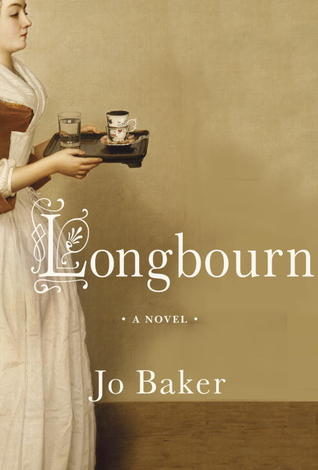
longbournThose Bennet girls! What a delight to be around them! But do you think the servants found them all quite so lovely? In Longbourn, we find out.

Longbourn is Pride and Prejudice turned upside down… or rather, as viewed from below-stairs. I think every blurb I’ve seen about Longbourn so far has described it as “Downton Abbey meets Pride and Prejudice“, and that’s a fairly good place to start.

In Longbourn, maidservant Sarah is our main point-of-view character. Sarah has been in service to the Bennet family since she was a small girl, and while we readers of P&P all probably share a rather rosy view of the Bennet’s idyllic country life, it’s not quite as pretty when presented by Sarah. Through Sarah, we see what it really takes to run a household of that nature — laundry days, incessant scrubbing, tending to the girls’ bodily needs, turning pig fat into soap. Author Jo Baker doesn’t shy away from the nastier bits, and there are plenty.

It’s all very well to admire Elizabeth Bennet for her pluck and adventurous streak, but as Sarah ruminates:

If Elizabeth had the washing of her own petticoats, Sarah often thought, she’d most likely be a sight more careful with them.

In P&P, all is managed. Dirty clothes are taken care of. We never hear about chamber pots or dirty dishes, sweaty clothing or soiled sheets. In Longbourn, these are all the stuff of daily life. Through the effluvia of the Bennet household, the serving staff get to know the family intimately, and while it’s agreed that they are a decent sort to work for, it’s still shocking as a P&P fan to realize the utter cluelessness that the girls have regarding what a servant’s life is really like.

Even wonderful Elizabeth — so beloved by all of us! — comes across as unaware at best or insensitive at worst, as her interactions with Sarah make clear that Sarah’s life is of no concern. Not that Elizabeth has harsh feelings toward Sarah — just that it doesn’t really occur to her that Sarah has feelings or issues of her own to deal with.

Besides the household muck and mire, we see the country in quite different terms than in P&P as well. Yes, the important families and estates have their dinners and balls… but in the town, there are people going hungry, young men are enlisted to fight in pointlessly brutal foreign wars, and meanwhile the local garrison of the militia strut around like heroes while conducting their dirty business elsewhere. We may think of pretty BBC productions when we think of the Regency era, but in Longbourn, that pretty illusion is shattered. Make no mistake, this was not an easy time to live in without family money and connections, and the lives of the working class are not to be envied. Even for Mr. and Mrs. Hill, long established as head of the Longbourn staff and considered to hold a very desirable place in the household, it’s clear that this is not a comfortable or secure life.

The lives of the servants are harsh and yet full of vitality. They are not shielded by manners and customs from the realities of their world. Matters such as fashion and reputation and whispers and inheritances are of small matter to people whose future security rests entirely on the whims of those they serve, who can be turned out at any moment into a world in which decent work is scarce, and whose ability to even secure a position is completely dependent on the willingness of a former employer to provide a reference. Seen through the servants’ eyes, the possible tarnishing of a young lady’s reputation is small potatoes compared to the specter of starvation and homelessness.

Interestingly, for me Longbourn is at its strongest when it goes “off-book” entirely. The third section of Longbourn goes outside of the confines of the P&P world and explores the lives, secrets, and histories of the Longbourn characters in a way that’s completely unrelated to P&P. I loved this part of the book the most. The characters really feel alive to me here, and perhaps they need this extra freedom from the original story in order to become fully formed, with purposes and hidden desires of their own.

Jo Baker clearly knows P&P inside and out, and as she explains in the author’s note: “When a meal is served in Pride and Prejudice, it has been prepared in Longbourn. When the Bennet girls enter a ball in Austen’s novel, they leave the carriage waiting in this one.” It’s fascinating to page back through P&P at random and find all of these points of intersection — the meals, the guests arriving at the door, the gowns fetched and fluffed — and seeing the work involved on the part of the Longbourn servants to make all of these things happen.

The writing in Longbourn is simply splendid, both in passages exposing the darker side of the pretty pictures we’re used to from Austen’s world and in simple sentences that convey quite a bit about the Bennets and the servants alike:

Some of my favorites:

Jane and Elizabeth confided with each other in anxious virginal huddles, whispering over letters, scandalized by the gossip that was now leaking back to them.

And another:

Life was, Mrs. Hill had come to understand, a trial by endurance, which everybody, eventually, failed.

And one more:

The house was all up and down and front and back, and nothing sideways to it at all.

Sarah is the main character, but we also read sections told from the perspectives of footman James, Mr. and Mrs. Hill, and the small serving-girl Polly. Sarah is a strong, smart, determined, and utterly wonderful main character, and James too becomes completely fascinating as we get to know him better. Early on in the book, the shifting voices are a bit jarring, but as Longbourn progresses and we get to know each one on their own, the story is enhanced by allowing readers to see  unfolding events through different eyes — especially as each character often has access to a different piece of the puzzle, and so a fuller picture emerges as we witness multiple views of the people and actions involved.

Jo Baker is very faithful to the overall characterizations of the Bennets and their associates, although Mr. Bennet comes off in a less favorable light, and surprisingly, Mrs. Bennet and Mr. Collins are both much more sympathetic. In fact, I doubt that I’ll ever allow myself to feel my usual scorn for Mrs. Bennet, now that Jo Baker has given me a quite plausible (and sad) explanation for how she ended up the way she is.

Overall, I’d say that there’s a lot to love about Longbourn. P&P afficionados will be pleased by the respect shown by the author toward Austen’s original text — and yet she also doesn’t hesitate to pull back the curtains and show us what else might be going on in this familiar world.

Longbourn certainly stands on its own outside of the shadow of Pride and Prejudice. In fact, I could see the story of Sarah and the serving class making a fine novel without needing the framework of P&P — although undoubtedly the connection to P&P will help tremendously with the marketing and publicity for Longbourn.

While I enjoyed the brief glimpses of the Bennets (and even Mr. Darcy, who makes only fleeting appearances in this book), Longbourn‘s main characters are compelling and their struggles and challenges held me captive. I didn’t need to see Elizabeth and Jane and the Bingleys — I had Sarah and James, and they’re pretty spectacular.

__________________________________________

The details:

Title: Longbourn
Author: Jo Baker
Publisher: Knopf
Publication date: 2013
Genre: Historical fiction
Source: Review copy courtesy of Knopf via Edelweiss

Coming Soon in Graphic Novels: Bad Houses by Sara Ryan and Carla Speed McNeil

Bad Houses by Sara Ryan and Carla Speed McNeil

Bad HousesSynopsis:

Lives intersect in the most unexpected ways when teenagers Anne and Lewis cross paths at an estate sale in sleepy Failin, Oregon. Failin was once a thriving logging community. Now the town’s businesses are crumbling, its citizens bitter and disaffected. Anne and Lewis refuse to succumb to the fate of the older generation as they discover – together – the secrets of their hometown and their own families. Bad Houses is a coming-of-age tale about love, trust, hoarding, and dead people’s stuff from award-winning creators Sara Ryan (Empress of the World) and Carla Speed McNeil (Finder).

Bad Houses is an interesting, unusual graphic novel about sad lives in a run-down, has-been town. Failin, Oregon is on a long, downhill slide, with shuttered stores and abandoned industries. Anne and Lewis represent the next generation, seeing the lives that have come before by means of estate sales and other people’s stuff. As they grow closer and learn more about their own families’ histories and mysteries, they try to find a way not to repeat their parents’ pasts, but to create a more hopeful future for themselves.

The story is warm and affecting, and often incredibly sad. The town itself just reeks of melancholy and failure, and it’s no wonder that the people still living there seem so downtrodden and disillusioned. Bad Houses is, among other things, a meditation on things — the objects that fill up our lives, which we imbue with meaning, yet which ultimately have little or no intrinsic value beyond the emotional attachments we form. We come to understand a character who is a serious hoarder; her attachment to physical representations of the loss in her life is the explanation for why her home is so dangerously cluttered. It’s no wonder that her daughter craves nothing more than empty spaces — an absolutely clean slate where life can be lived in the present without being under the constant threat of being buried by the past.

The black-and-white illustrations in Bad Houses are clean and sparse, with well-drawn and well-defined characters. Anne is especially cute, with funky hair and clothes, and it’s fun to see her adapt to new situations by changing her look as well.

I recommend Bad Houses for anyone who enjoys a creative approach to storytelling and a narrative that gives its characters room to breathe and grow.

__________________________________________

The details:

Title: Bad Houses
Author: Sara Ryan and Carla Speed McNeil
Publisher: Dark Horse Books
Publication date: November 12, 2013
Genre: Graphic novel
Source: Review copy courtesy of Dark Horse Books via NetGalley

Book Review: Will in Scarlet by Matthew Cody

Book Review: Will in Scarlet by Matthew Cody

Will in ScarletIn this exciting middle grade adventure story, Robin Hood takes a backseat to young Will Scarlet, born the son of a nobleman, now a refugee on the run from the evil lord who has captured his father’s castle and betrayed the king. When we first meet Will, he is the 13-year-old son of the estate, born to privilege and prone to mischief. Now on the verge of manhood, it’s time for him to grow up and start acting like a lord — but when his family is betrayed, Will escapes to Sherwood Forest, where he meets up with a band of thieves and outlaws. Will the Merry Men kill Will, ransom him, or make him one of their own? Will is forced to finally figure out who he is and what he stands for — and whether he going to allow his thirst for vengeance to take over his life.

In the forest, Will meets Much the Miller’s Son (who is really a girl in disguise), John Little, a big, strong but fair fighting man, and the drunken, smelly man whose tent Will shares — the prickly and rather repulsive Rob. But once Rob sobers up on a key mission, Will starts to realize what a natural-born leader this man is — as well as an expert hand with a longbow.

It’s terrific fun to read this version of the Robin Hood story. Will In Scarlet serves very much as an origin story. Instead of focusing on Robin Hood himself, we see the band of outlaws through Will’s eyes, and as Will comes to appreciate their bravery and honor, so do we. The story is told mostly from Will’s perspective, although Much gets her fair share of the action as well, and she’s… well… awesome, for lack of a better word! Much is clever, skilled with a knife or a lock-pick, fierce and determined — and bloody well certain that she does NOT want anyone to know she’s a girl.

As Will and Much discover each other’s secrets, they also form a strong bond based on trust, respect — and something more as well. They’re both such delightful characters, and it’s wonderful to get to know them and see how they grow and change during the course of the story.

The plot of Will in Scarlet zips along with never a dull moment. There are battles, sword fights, ambushes, trickery, and daring escapes. There are also moments of great kindness, and we see how Will changes from spoiled little rich kid to young man with a conscience. In this version of the Robin Hood legend, it’s Will who is responsible for the “rob from the rich and give to the poor” ethos of the Merry Men, and this turning point for Will and the gang is given a meaningful and powerful context within the story.

There are serious moments and moments of pain and suffering as well, but overall Will in Scarlet is an upbeat adventure story with terrific characters, some cleverly concealed and revealed secrets, and a storyline that bounces right along. With Will and Much as the two lead characters, I can see this story appealing to boys and girls alike, and highly recommend it for kids in the middle grade zone.

While I couldn’t find anything to confirm this, Will in Scarlet certainly seems like it should be the first in a series. Nothing is left hanging at the end, and the wrap-up is well-earned and satisfying — but in Will in Scarlet, we’re seeing the early days of Robin Hood as the leader of his band of Merry Men. I really and truly hope that author Matthew Cody will give us more! I’d love to see what happens next for Will, Much, Rob and the rest of the gang!


__________________________________________

The details:

Title: Will in Scarlet
Author: Matthew Cody
Publisher: Random House Children’s Books
Publication date: 2013
Genre: Middle grade fiction/adventure/historical fiction
Source: Review copy courtesy of Random House Children’s Books via NetGalley


Book Review: Before I Met You by Lisa Jewell

Book Review: Before I Met You by Lisa Jewell

Before I Met YouWhen 11-year-old Elizabeth moves to the island of Guernsey with her mother and stepfather, she has no idea that she’s about to meet a woman who will change her life. Arlette, Elizabeth’s stepfather’s mother, is the grande dame of the crumbling old mansion, always immaculately dressed, with an air of sophistication and glamour that seems out of keeping with a woman who’s spent her entire life isolated on an island. She takes an immediate shine to Elizabeth, renames her Betty (a much snazzier name, to be sure), and takes her into her heart as a full-fledged granddaughter.
Years later, Betty is a young woman who takes care of the ailing Arlette in her final days, deferring the possibility of university somewhere more glamorous in order to live with Arlette and be by her side 24/7. And when Arlette passes, she leaves a strange bequest. To be sure, Betty is mentioned favorably in Arlette’s will and receives a nice amount of money and worldly goods — but a mystery woman is also mentioned, someone that no one in the family has ever heard of. The last known address for this person is in London, and Betty sees this as an opportunity to set out on an adventure while also honoring Arlette’s wishes. Finally free and somewhat independent at age 23, Betty heads to London, sets herself up in a cramped Soho studio, and dives into life in the big city.

Before I Met You employes the device of a split narrative, so that we follow Betty in 1995 and Arlette in 1920, both young women entering London’s excitement on their own, looking for purpose, for connection, and for fun.

In Arlette’s timeline, we see the world of the jazz age, as Arlette is taken up by the fun-loving class of painters and musicians, the “Bright Young People” of the day, and is swept away on a current of passion, excitement, and danger. Betty’s story, by comparison, is somewhat tamer. She’s a fish out of water, trying to play detective to track down Arlette’s mysterious heir, but at the same time trying to support herself and feel a part of life in the big city.  In bits and pieces, we see both young women start to establish themselves and find their own way, and their stories are vaguely parallel in some ways.

Ultimately, of course, we know to expect a tragedy of some sort in Arlette’s story. Why else would she end up living her life back on Guernsey, with her entire London adventure a complete unknown to those who knew and loved her? Tragic and awful events do occur, and it’s not until the end of the book that we fully understand why Arlette’s life turned out as it did.

Meanwhile, Betty works at unpleasant jobs, meets a rock star (for real), parties quite a bit, has a creepy downstairs neighbor, and attracts the attention of a dreamy guy who sells record albums in the market outside her building. As she explores the clues to Arlette’s past, she gains confidence and starts to figure out what she really wants, and who she wants to be with.

Given the drama of Arlette’s story, it’s hard to stay interested in the Betty interludes, which take up a greater portion of the narrative. As a main character, she didn’t strike me as particularly deep, and she seems to make a string of not very well thought out decisions. The tonal shifts are a bit jarring: In Arlette’s story, we’re immersed in the glamour of the 1920s, and the narrative takes on a dramatic and somewhat elegant tone. But in the Betty sections, there are moments of absolute crassness that feel like too abrupt a shift from the style in the other timeline, so that it was often  hard to make the shift between stories and continue to feel involved in both timelines.

Overall, I enjoyed Before I Met You quite a bit. Once the London storylines get underway, it’s easy to get swept up in the swift storytelling, and I often had to force myself to put the book down rather than reading straight through. As I’ve said, I found Arlette’s story much more compelling than Betty’s, which is problematic in a split-narrative story. Ideally, both halves of the story should carry equal weight, so that the reader feels excited to pick up the threads of the plot each time the focus shifts. Instead, I found Betty’s challenges and dilemmas rather trivial when compared to Arlette’s pieces of the story, so that it was always a bit of a let-down to return to the 1990s-era sections.

That said, I was very interested in the central mystery of the book, and found a few twists in the resolution that I really hadn’t foreseen or even guessed at. Arlette is  wonderful character, both strong and tragic, and I did love seeing the tight bond between Arlette as an old woman and Betty as a displaced young girl. Their relationship and its impact on Betty is moving and lovely, and I think that even when I found myself shaking my head at Betty’s choices in London, I was able to continue feeling warmly toward her in large part due to the respect I had for her because of her dedication to Arlette.

If you enjoy dual timeline stories and reading about young women — in any era — finding their way in the world, then I’d suggest checking out Before I Met You.

__________________________________________

The details:

Title: Before I Met You
Author: Lisa Jewell
Publisher: Atria Books
Publication date: 2013
Genre: Adult Fiction (contemporary/historical)
Source: Review copy courtesy of Atria via NetGalley

Book Review: Charming by Elliott James

Book Review: Charming by Elliott James

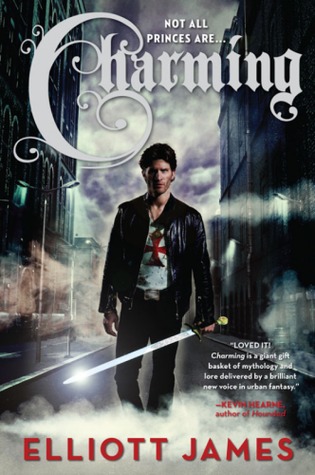
Charming (Pax Arcana, #1)Fans of urban fantasy fiction are sure to enjoy the world of Charming, book one in a projected series (Pax Arcana) by debut author Elliott James.

John Charming is a descendant of a long-line of monster-fighters, all of whom share the surname Charming and are compelled by their bloodline’s oath to preserve the ignorance of ordinary humans for as long as possible. In the world of Charming, the supernatural is all around us, but thanks to a concept called the Pax Arcana, we can’t see it. Basically, the Pax Arcana is a powerful magic that prevents mortal humans from noticing supernatural activity. You know the creepy feeling you get when  you feel like something’s sneaking up on you, but there’s really nothing there? Well, chances are, there really is something there, but thanks to the Pax Arcana, you just can’t see it.

John is one of the Knights — that would be the Knights Templar — and has trained all his life to carry out his secret oath. Unfortunately for John, he’s also at least part werewolf, and that makes him tainted and subject to elimination as far as the order of Knights is concerned. So John lives on the run, under assumed identities, and finds that anonymity is working fairly well for him… until one night a blonde and a vampire walk into his bar. (See chapter one, “A Blonde and a Vampire Walk Into a Bar”).

The plot of Charming moves quickly to establish a team of good guys — mortal and supernatural — who set out to eliminate a deadly vampire threat. The action is fast and furious, but it’s built on solid character development as well. The team members are well-defined and all have their own quirks, which makes this often-violent romp a lot of fun as well.

John himself is a dashing and likable main character, with enough tragedy in his backstory to make him sympathetic, but with the fighting skills and more-than-human sensory abilities to make him deadly dangerous as well. Lead female Sig is gorgeous (this is urban fantasy, after all) — but also a kick-ass warrior with a great mind and an unwavering dedication to doing what’s right.

The writing in Charming is snarky and humorous, with heaping doses of gore and mayhem to boot. John Charming is a Dresden-esque wise-ass, relying on quips and sarcasm as a first line of defense — and with unmatchable speed, strenth, and fighting smarts to back it all up.

I liked the author’s introduction of new-ish elements to the field of urban fantasy. Here, the vampires may look gorgeous, but as John quickly explains, it’s all a ruse. Vampires in real life are just gross, smelly, undead things — whose true talent is in projecting such a powerful glamor that humans see them the way they’d like to be seen, all Edward Cullen-ish and sexy. As John puts it, “Popular young adult novels notwithstanding, vampires only sparkle when they burn.”

On the other hand, a few minor points felt unnecessary — as if the author was trying too hard to come up with something new and different in an already crowded field. For example, in the world of Charming, vampires can only drink from humans whose blood types match the vampires’ pre-death blood types.  This may be a new twist, but it doesn’t actually add anything to the story.

Overall, I’d say that Charming is a lot of fun and a great introduction to a noirish new world of creatures, ghoulies, and magic. With a “charming” main character (sorry, it’s just begging to be said) and an interesting cast of supporting characters, Charming establishes an urban fantasy world that’s well-planned out and has room to grow. It’s clear that there are many more stories to be told and secrets to be revealed, and I’ll be interested to see if the promise of this first installment turns into something terrific in books to come.

As for me, I liked it enough to want more. If you like your magical worlds on the tough and gritty side, check out Charming.

__________________________________________

The details:

Title: Charming
Author: Elliott James
Publisher: Orbit
Publication date: 2013
Genre: Urban fantasy
Source: Review copy courtesy of Orbit via NetGalley

Book Review: Sky Jumpers by Peggy Eddleman

Book Review: Sky Jumpers by Peggy Eddleman

Sky Jumpers (Sky Jumpers, #1)If you’re looking for a middle grade novel with a strong female character and lots of action and adventure, look no further! Sky Jumpers absolutely fits the bill.

In Sky Jumpers, we meet 12-year-old Hope Toriella, a spunky, fearless girl living a surprisingly happy life in White Rock, Nebraska. Surprisingly happy — because this book is set some 40 years after World War III, during which the world was destroyed by “green bombs”, which are basically a more environmentally-friendly version of nukes. People were killed by the millions, cities were destroyed, general devastation resulted — and yet Earth itself is still inhabitable, for those lucky enough to survive the initial bombing.

White Rock is a town located in a deep valley formed by a massive bomb crater, surrounded on all sides by huge mountains. Its limited access — only one tunnel in or out of town — gives it an  ideal defensible position. And safest of all, the upper skies over White Rock, and indeed, over the entire Earth, have a layer of mutated air known as Bomb’s Breath — thicker than normal air, instantly deadly when inhaled, yet invisible to the naked eye. The Bomb’s Breath sits over White Rock like a cork along the mountain tops, ensuring that no invaders will ever attempt to invade by crossing the mountains.

But… Hope and her friends have invented a thrilling game, carefully hidden from their parents, that involves holding their breath, climbing up above the Bomb’s Breath layer, and then jumping back through it. As the dense air cushions their fall, they are able to do amazing acrobatics, and dare one another to try riskier and riskier moves. Hope is the absolute best at sky jumping, and finally manages to nail a double somersault as the book opens.

In White Rock, the most valued skill of all is the ability to invent. The green bombs changed not only the air but also the nature of certain metals, so that the survivors have to find new ways to make what they need with the materials readily available — largely wood, water, stone, and the products of their fields. Each year, the townspeople show off their new inventions during a big festival, and everyone from age four upwards is expected to participate. And Hope, to put it bluntly, sucks at inventing. Nothing she makes ever comes off the way she intends, leaving her feeling like the town laughingstock.

The action really revs up when White Rock is invaded by a group of armed bandits, intent on stealing the town’s supply of a rare and valuable antibiotic, and willing to kill in order to get it. However, if the town hands over its supply, it won’t be able to make more until the next spring, by which point a recurring disease may kill off a good portion of the town. All seems lost — but Hope is nothing if not a daredevil, and she knows a secret way out of town. Risking everything, she and her friends set off to get help — but will they get there in time? Can children really save the day?

I won’t say whether Hope’s quest is successful — it’s too much fun to find out on your own! Hope is a brave, strong girl, intensely loyal to her parents, her friends, and her community. Everyone around her can see her strength and her leadership qualities, but it takes this threat to the town for Hope to fully realize that her lack of inventing skills doesn’t mean that she has nothing to contribute.

It’s lovely to see a girl take the lead in a physically grueling plan to escape and rescue her town. Hope is a smart girl who knows the risks she’s taking, but also realizes that if she doesn’t try, the town is doomed. Between her courage and her agility, Hope has pretty much the only chance of success, and you can’t help but root for her as she faces challenge after challenge, thinking ahead, taking chances, and pushing forward even when the odds seem insurmountable.

Start to finish, Sky Jumpers is fast-paced and exciting. The world-building is quite good, portraying a post-apocalyptic Earth that’s different and startling, but not too bleak or depressing for the intended audience. This new world feels like a frontier full of challenge, and even though there are bad guys out there, life itself doesn’t seem particularly awful — just different. Characters are nicely defined — not just Hope, but her parents, teachers, and friends are all distinct personalities with talents, ideas, and inner lives that make them feel like real invidividuals and not just faces in a crowd.

Sky Jumpers is a book I’d have no qualms about handing to a boy or girl in the target age range — in fact, although I read this book both for my own enjoyment and for the purpose of reviewing it here, I’d love to have my 11-year-old son read it next. I think it would be right up his alley.

Well-written, with a dynamic story arc, lots of excitement and adventure, a high-stakes climax full of heroic daring — I’d consider Sky Jumpers a terrific choice for kids in the 8 – 13 age range. And who knows? Perhaps this one will even entice my reluctant reader to read past his bedtime.

Final note: According to the author’s website, Sky Jumpers #2 will be out in Fall 2014. But have no fear! Even though this is apparently an ongoing series, Sky Jumpers is a fully realized story, with a beginning, middle, and end, and stands on its own just fine. But I’ll happily check out book #2 — I’m sure there are great adventures ahead for Hope and for White Rock, and I’d love to see what happens next!

Okay, really the final note: I see from the author’s blog that she’s a Joss Whedon fan. And now it all makes sense. ***happily geeking out…***

__________________________________________

The details:

Title: Sky Jumpers
Author: Peggy Eddleman
Publisher: Random House Children’s Books
Publication date: 2013
Genre: Middle grade adventure
Source: Review copy courtesy of Random House via NetGalley

Book Review: Doctor Sleep by Stephen King

Book Review: Doctor Sleep by Stephen King

16130549

What ever happened to Danny Torrance?

Ever since Stephen King’s 1977 novel The Shining, people have wanted to know what became of the little boy with the special gifts and the murderous father. Stephen King himself, in the author’s note at the end of Doctor Sleep, states that he was asked this question at a book signing in 1998, and it’s been on his mind ever since.

And now, finally, 36 years after the publication of The Shining, King’s new novel Doctor Sleep is here to answer the question.

Danny Torrance, for those who need a refresher, is a very special five-year-old at the time of the events of The Shining. Son of an alcoholic father down to his very last chance at redemption, Danny has a remarkable gift — dubbed “shining” by his friend and protector — which include telepathy, precognition, and a talent for seeing the unseen. Danny and his parents head up to the Overlook Hotel high in the Colorado Rockies, where Danny’s father will serve as caretaker during the long winter months when the hotel is snowed in and cut off from the outside world. Let’s just say, it doesn’t go well.

Danny survives, but life hasn’t been easy… and he’s never managed to completely escape from the terrors of his childhood. Now grown, Dan is haunted by the same demon as his father was — alcoholism. Dan has discovered that drinking dulls the impact of the shining — especially the recurring visits from the malicious spirits of the Overlook.

In Doctor Sleep, Dan manages to eventually climb out of his alcohol-fueled darkness thanks to a couple of good men who offer him a place to work and, even more importantly, introduce him to the world of Alcoholics Anonymous. AA is presented here in a practically religious light, and while Stephen King doesn’t typically go easy on pop cultural reference points, he does not portray AA in anything but flattering terms, no sarcasm or dissing allowed.

Dan finds solace and refuge in a small New Hampshire town, where he uses his shining in the service of others. He works as an orderly in a hospice, where the residents refer to him as “Doctor Sleep” thanks to his talent for helping the dying make their final crossing into whatever lies beyond. Dan’s quiet life is rocked when he’s contacted by the precocious Abra Stone, a girl so full of the shining that it manifests itself from birth. Abra establishes a telepathic connection to Dan, but it’s not until danger looms that their lives truly collide.

So who is the Big Bad in Doctor Sleep? Two answers, really. First, there’s the True Knot, a seemingly innocuous band of RV people who travel the highways and byways looking for sustenance. The True Knot feeds off the essence of children who “shine” — the dying breaths of these children, especially when the death is prolonged and painful, produces “steam”, which enables the True Knot to live seemingly forever and maintain their youth and their health.

Stephen King’s descriptions of the True Knot are hilarious, referring to every annoying road trip you’ve ever taken where you’ve been stuck behind slow-moving campers, and the crowds of old folks and their RVs that you encounter at every rest stop across America:

How many times have you found yourself behind a lumbering RV, eating exhaust and waiting impatiently for your chance to pass? Creeping along at forty when you could be doing a perfectly legal sixty-five or even seventy? And when there’s finally a hole in the fast lane and you pull out, holy God, you see a long line of those damn things, gas hogs driven at exactly ten miles an hour below the legal speed limit by bespectacled golden oldies who hunch over their steering wheels, gripping them like they think they’re going to fly away.

Well, guess what? Behind the grandma facades are some truly ferocious — and hungry — people, and you’d better hope that you don’t attract their attention.

The second Big Bad in Doctor Sleep is, of course, the curse of alcohol addiction itself. The never-ending thirst, even for those with years of sobriety under their belts, is presented as the most damaging of evils, a nightmare without escape, a force to be combated with one’s whole being. There are many reasons why Dan ends up who and what he is, but it’s clear that the drinking — and the battle not to drink — is what truly defines him.

Doctor Sleep has some disturbing moments, powerful and frightening characters, and mind-bending action sequences, but I wouldn’t say the book itself is scary. It’s a long book (over 500 pages), and the action does seem to sag a bit from time to time. There are early stretches, covering Dan’s recovery and Abra’s early life, that are interesting from a character perspective, but don’t do much to move the story forward.

At the same time, both Dan and Abra are fascinating characters, and I think King strikes a homerun here in terms of their development as fully realized people. We absolutely get Dan’s life and what makes him tick. In Abra, we see a child full of light and power, with a loving family that is kind of freaked out by her. She’s strong and sure of herself, but that doesn’t mean that she’s not still a child to be protected and shielded. When Dan and Abra finally come together to combat the True Knot, their ingenuity and deep-seated goodness are what enable them to fight hard and fight together.

I never really felt that the outcome was in question, but how we get there is inventive, unpredictable, and full of twists and turns. As in many Stephen King books, I felt that the narrative got a little more convoluted during the climax than was strictly necessary — but as always, King is master of his domain and makes it all work out in a way that serves the overarching story as well as each character’s own development and story arc.

All in all, I’d call Doctor Sleep a no-doubt-about-it success. As a sequel, it nicely references the earlier book, stays true to what we know of the characters, and yet moves the story forward in new directions that are engaging and compulsively readable. And as a stand-alone novel, Doctor Sleep convincingly establishes teams of good guys and bad guys and builds the suspense bit by bit until we get to the dramatic showdown.

Should you read The Shining first? Well… yes! Of course you should! I suppose you could read Doctor Sleep on its own and understand enough to appreciate it – but really, why would you want to?

I first read The Shining years (decades) ago, and in the excitement leading up to the new book’s release, realized that my memories of The Shining were dim at best, overshadowed in many ways by the movie version. I re-read The Shining last month, and let me tell you – I’m so thrilled that I did. First of all, it’s an amazing (and terrifying) read. Second, moving from The Shining to Doctor Sleep with only a few weeks in between, I felt so connected to Danny and so invested in his story that it was easy to become absorbed in grown-up Dan’s challenges and struggles. Reading Doctor Sleep was almost like finding out about a little boy that I’d known long ago: I remembered little Danny Torrance fondly, wished him well, and really did want to know what ever happened to that poor little boy who lived through such a terrible experience.

And now I know.

__________________________________________

The details:

Title: Doctor Sleep
Author: Stephen King
Publisher: Scribner
Publication date: 2013
Genre: Horror
Source: Purchased

Book Review: The Girl You Left Behind by Jojo Moyes

Book Review: The Girl You Left Behind by Jojo Moyes

The Girl You Left BehindQuick: When you think of looted art and reparations, what do you think of? Nazi Germany? So do most of the bystanders in this novel, which mixes a modern courtroom drama and love story with a devastating glimpse back at a wartime tragedy, with a missing (perhaps stolen) painting serving as the focal point. The twist in The Girl You Left Behind is that the painting in question went missing during the German occupation of northern France during the first World War — but that doesn’t stop popular opinion from tarnishing the main character’s reputation by accusing her of exploiting Nazi theft for her own personal gain. To say it’s complicated is putting it mildly.

In The Girl You Left Behind, we follow two timelines. In 1916, we meet Sophie Lefevre, devoted wife of up-and-coming artist Edouard, who is serving on the front lines with the French forces battling the invading German army. Sophie has been left behind in her home village, helping her sister manage the family inn and struggling to survive with ever-dwindling rations and a hostile German battalion occupying the town. Beautiful young Sophie catches the eye of the German Kommandant, and he is mesmerized as well by Edouard’s portrait of Sophie, which hangs in a back hallway of the inn. Ultimately, Sophie is forced into a decision that pits her own life and honor against the survival of her family and her husband.

Meanwhile, in modern day London, young widow Liv Halston lives alone in a beautiful glass house built by her late husband David, a remarkable and renowned architect who died suddenly four years previously. On their honeymoon, David had bought a beautiful portrait of an enigmatic young woman as a gift for Liv, and this portrait is literally the only spot of color in Liv’s bleak world. Liv meets handsome, gallant Paul and finally feels a spark of life returning — but Paul is an ex-cop now specializing in tracking and returning works of art stolen during wartime. When he is hired by the Lefevre family to find their missing painting and realizes it’s in Liv’s possession, legal drama threatens their blossoming love — as well as David’s legacy and Liv’s reputation.

The Girl You Left Behind tells both parts of the story quite effectively. The first several chapters are devoted to Sophie, and it was somewhat wrenching to have to leave her once the narrative switched to the modern era. Likewise, Liv’s story is affecting and engrossing, and I soon wanted to know much more about this lonely woman and the husband she’d lost. Sophie and Liv are both strong women dealt a series of painful blows in horrible circumstances, and in both streams of the story we see how their personal strength informs their decisions and actions.

The moral dilemma posed is an interesting one. It would appear that the Lefevre descendants are seeking the painting for its monetary value alone, whereas Liv truly loves the painting and feels a connection and fondness for Sophie herself, despite knowing nothing about her story until the legal case gets underway. So who is right in this situation? Are the artist’s descendants entitled to the painting based on their assertion that it was stolen during wartime? Or, barring convincing evidence, is Liv entitled to keep this artwork that she cherishes, even knowing that it may have made its way to her through questionable circumstances?

The story is compelling and well thought-out, and the alternating timelines prolong the suspense and the mystery. We know that something terrible happened to Sophie; we know that the painting disappeared; but the how and why of these occurences is not revealed until close to the end of the book. Author Jojo Moyes gives just enough detail to keep us guessing (although I’ll admit that I’d made an assumption about a key revelation that turned out to be correct), and both pieces of the story wrap up in a way that feels both right and satisfying.

My only quibble with this book is that I wanted to know a bit more about the relatives who started the legal proceedings. They’re referred to as descendants of the Lefevre family, but the exact relationship to the artist isn’t revealed, and we never actually meet them other than seeing them on the other side of the courtroom. I would have liked to have seen their role in the story fleshed out. While it’s implied that they’re only in it for the money (and I suppose their motivation is immaterial if the painting is in fact rightfully theirs), it would have helped me view their side of the proceedings more sympathetically if I’d gotten to know them in any way.

That issue aside, I found The Girl You Left Behind to be quite moving and well thought out. It reveals a piece of history that doesn’t get much attention, while hammering home a universal truth about the horror of war and the irreparable damage done to so many lives. In the contemporary pieces of the story, The Girl You Left Behind is also emotionally involving and very interesting as well — as a legal drama, as a love story, and as a portrait of a woman who has to figure out how to live again.

I’ve been hearing a lot about Jojo Moyes this year, especially since the publication of her highly praised novel Me Before You. The Girl You Left  Behind is the first book I’ve read by this author, but it certainly won’t be the last. Jojo Moyes is a skilled storyteller with a great eye for capturing the small details that make a character feel real, and I look forward to exploring more of her work.

__________________________________________

The details:

Title: The Girl You Left Behind
Author: Jojo Moyes
Publisher: Penguin Group/Viking
Publication date: 2013
Genre: Historical/contemporary fiction
Source: Review copy courtesy of Penguin/Viking via NetGalley

Book Review: Two Boys Kissing by David Levithan

Book Review: Two Boys Kissing by David Levithan

Two Boys KissingTo call Two Boys Kissing a young adult novel is to set limits on a book that truly transcends categories of genre and target demographics. You may as well describe Two Boys Kissing as poetry with a plot or a love song transcribed with paper and ink.

Two Boys Kissing is an ode to today’s generation of gay youth, narrated from beyond by a “Greek chorus” (as all the blurbs put it) composed of the voices of the generation of gay men lost to the plague years of the AIDS epidemic. Written throughout in the first-person plural voice, the narrative describes the hopes and fears of the people who came before — and expresses their love and good wishes for the youth of today.

The book is loosely constructed around the events that occur over the course of a weekend, as teens Harry and Craig decide to challenge the record for the world’s longest kiss. As these two boys attempt to kiss for 32 hours straight, with no breaks, no sitting down, no “propping” by any others, their friends gather round to cheer and support them — and bit by bit, they become a world-wide media sensation. Meanwhile, we also follow the story of five other boys who explore first love, family acceptance, fitting in and giving up, speaking up and knowing when to listen.

The writing here is lyrical and absolutely beautiful. I could open to pretty much any page and find a moving moment or a passage that just begs to be read out loud.

Sample #1:

We were once like you, only our world wasn’t like yours.

You have no idea how close to death you came. A generation or two earlier, you might be here with us.

We resent you. You astonish us.

Sample #2:

Around the world, screens light up. Around the world, words are flown through wires. Around the world, images are reduced to particles and, moments later, are perfectly reassembled. Around the world, people see these two boys kissing and find something there.

Sample #3:

Maybe this is why we like watching you so much. Everything is still new to you. We are long past the experience, although we witness new things all the time. But you. New is not just a fact. New can be an emotion.

I could go on and on, because everywhere in Two Boys Kissing are moments of beauty, perfect expressions of pain and loss, hope and love. This is a slim book, less than 200 pages, but every page has meaning and depth. There are no chapter breaks — it’s one long meditation and celebration, and as surprising and unconventional as it is, it truly works.

I believe that Two Boys Kissing will quickly become a very important book for teens. It confronts today’s climate head-on, provides a context for how we got to where we are today, and conveys it all with passion, compassion, and an unwillingness to back down or look away. I can easily see another and different audience for Two Boys Kissing as well — the older generation, gay and straight, that remembers the awful, early years of the AIDS epidemic and hears the voices of friends and loved ones, lost but never forgotten, in the words of the book’s chorus.

On top of all this, Two Boys Kissing tells a sweet and lovely story about a group of individuals. The named characters are finely drawn, with personalities and backstories that make them each unique and yet easily identifiable as real people going through real challenges.

You may read it for the events, for the love stories, for the heartbreak, for the elegance of the writing, or for the memories it evokes. Just read it.

__________________________________________

The details:

Title: Two Boys Kissing
Author: David Levithan
Publisher: Alfred A. Knopf
Publication date: 2013
Genre: Young Adult
Source: Library

Book Review: Mister Max: The Book of Lost Things by Cynthia Voigt

Book Review: Mister Max: The Book of Lost Things by Cynthia Voigt

The Book of Lost Things (Mister Max #1)There’s a lot to love in this middle-grade novel about a very smart boy looking for solutions. Max, age 12, is the son of two successful, larger-than-life parents who run their own theater company and bring their characters to life day after day. Max enjoys the show but likes his place on the sidelines — until a mysterious letter arrives offering Max’s parent a too-good-to-be-true opportunity for fame and fortune, which they immediately accept. Max and his parents are due to set sail from their unnamed town on a luxurious ocean-liner headed for India, but on the day of departure, Max shows up at the docks at the appointed time only to discover that his parents have gone already — and that the ship they were meant to board does not actually exist.

Left behind, Max determines that his best course is independence, so even though his grandmother (Grammie) wants to take him in and care for him in his parents’ absence, Max decides to live under his own roof and support himself by any means possible. (His house is right next door to Grammie’s, so it’s not that dramatic a separation, after all). But how can a 12-year-old survive on his own — and what happened to his parents? Max stumbles onto a good thing, realizing that by enacting the parts he’s seen his father play so many times, he can assume any persona he needs: town official, humble laborer, stuffy bureaucrat, ardent detective. Max is a chameleon, and as he slips into his different characters, he begins to solve problems for the townspeople he encounters, earning enough along the way to retain his independence and managing to help the people he cares for in different ways as well.

Mister Max is a charming book, with a main character who is good-hearted, caring, and endlessly inventive. Max does not have magical resources or superpowers; instead, he uses his wits and logic to find solutions and set things right, figuring out not only facts but reasons and motivations, and helping others to figure out what it is that they truly want and need.

My main quibble with Mister Max is that it lacks a certain urgency. Although Max’s parents’ disappearance is the catalyst for the book’s story line, this mystery mostly sits on the back burner for much of the book. It’s a problem for Max and a worry, but he spends much more of his time solving other people’s problems and worries. True, there isn’t much he can do and there aren’t many clues — but Max seems to mostly take a shrug-your-shoulders, get-on-with-it sort of approach to his current situation. It’s all very pragmatic, but I’m afraid at times the plot concerning the mystery of Max’s parents seems to get buried in all the other busy moments of Max’s independent life.

Still, it’s an entertaining and clever read, and refreshing in an old-fashioned sort of way. The specific time and place of the book’s setting isn’t revealed, but it appears to take place sometime in the early 1900s. Travel is by steamship, communication is conducted via letters and telegrams, and Max weaves his way through the streets of Old Town and New Town on his trusty bicycle. There’s a simplicity to the problems that Max is hired to solve, and his solutions are smart and simple — perhaps needing a 12-year-old’s eyes to see the clues and patterns that closed-minded adults might miss.

I do wonder how well this book will work for the intended audience, children ages 8 – 12. At 400 pages, this is a rather hefty book, and the pace is somewhat slow, particularly for kids more used to reading books about fantasy worlds or high-speed adventures. Still, the writing is engaging and the characterizations are funny, straight-forward, and evocative, so that within a few well-written lines, we clearly see into the heart of each new character we meet and understand what makes them all tick. Author Cynthia Voigt is adept at talking to children without talking down, and it’s obvious that she credits her reading audience with a great deal of intelligence. It’s whether young readers will have the patience to commit to such a lengthy, character driven book that I’m not so sure about.

I read this book after receiving a review copy, and needless to say, I can’t help but apply an adult perspective to the action and the plot. I’d like to try this one out on my 11-year-old and see what he thinks. I have a feeling that Mister Max is a more subtle read than he’s used to, but that doesn’t mean that he won’t enjoy it, if he gives it a fair chance… and I’d imagine this may be true for other kids his age as well. Mister Max feels like the kind of story that might have been more popular a generation ago, but I do believe kids today will enjoy it, if they can just stick with it long enough to get into the flow and rhythm of a different sort of storytelling.

Mister Max: The Book of Lost Things is apparently first in a series, and ends without resolving the central question: What happened to Max’s parents? I’ll be interested in seeing where the series goes and what happens next for Max.

__________________________________________

The details:

Title: Mister Max: The Book of Lost Things
Author: Cynthia Voight
Publisher: Knopf Books for Young Readers
Publication date: 2013
Genre: Middle Grade fiction
Source: Review copy courtesy of Knopf via NetGalley