Book Review: Until We Meet Again by Renee Collins

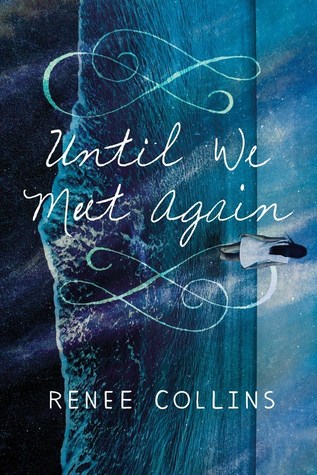
Until We Meet AgainAn upper class seaside retreat is the setting for this YA timeslip novel by Renee Collins. Main character Cassandra, age 17, is spending the summer with her mother, stepfather, and 3-year-old brother at a rented beachfront mansion, and she’s bored to tears. Until one day, she wanders down the path between the property’s bushes and ends up on the private beach, where she meets a (very attractive) young man named Lawrence.

The first meeting is full of suspicion: What are you doing on my family’s private beach? No, what are YOU doing on MY family’s private beach??!! But within the first couple of meetings, it becomes clear: The beach seems to be a place that’s shared by both Cassandra’s world in 2015 and Lawrence’s world… in 1925. Apparently, no one in either time seems to like the beach much, because while anyone can reach it, it’s mostly just Cassandra and Lawrence there, undisturbed for hours and days at a time.

The two connect, quickly, and soon come to realize their deep feelings for one another. But trouble looms: Lawrence is the summer guest of his wealthy uncle Ned, who plans for Lawrence to go to Harvard and then law school, then enter the family business. Ned also seems to be pushing a pretty flapper named Fay at Lawrence, and is quite insistent that Lawrence get involved with her. Something seems shady, all right — and when Cassandra hits the library microfiche to see what she can find out about Lawrence and his family, she stumbles upon a shocking news article, which reveals that Lawrence will be murdered on the beach in only a few weeks. Cassandra vows that she’ll find a way to stop it, and between her modern-day research and Lawrence’s snooping in his own time, the two race the clock to save his life… and hope to find a way to be together afterward.

The novel leaves the timeslip element mostly unexplained, although Cassandra agonizes over whether she can or should influence the events of 1925, for fear that the consequences will be devastating. And yet, she plunges right ahead once she realizes Lawrence’s life is on the line.

In terms of plot, there are pros and cons. Pro-wise, the concept of the beach as a portal between the times is interesting. It’s not that either Lawrence or Cassandra has a special ability, but rather, it’s the place that’s powerful. Anyone who passes through the bushes onto the beach can see whoever’s there, from either time — so the beach isn’t some sort of special protected bubble, it’s just that very few people actually go there and so no one else has discovered the odd time disconnect. Also strong is the portrayal of Cassandra as a girl ready for something to happen, throwing herself headfirst into a crazy, emotion-fueled adventure that really should be beyond her belief. I liked the sense of Cassandra’s drive and devotion, and how determined she became to do whatever she needed to do.

In the middle ground for me are the 1920s-era standards — flappers, mobsters, crooked businessmen, hints of Prohibition-defying smuggling. I suppose this may be newer in the realm of young adult fiction, but lately it seems to be done almost to death. While Lawrence’s side of the story is interesting, it’s a pretty surface-level glide through that world, and I didn’t feel that it really explored the setting in a deep enough way.

I could also go either way on the insta-love aspect of the story. Cassandra and Lawrence seem to fall head over heels in love from one moment to the next, but I know that mainly because I was told that’s how they felt, not because I saw it developing organically. Still, I do give the author some credit on this issue, because a teen romance in an exotic setting really could convincingly blossom from casual acquaintance to love-of-my-life status, given a dramatic or extreme enough set of circumstances.

Pieces that didn’t really work for me related to Cassie’s family life. I didn’t get her mother’s issues with Cassandra: She seemed to always be suspicious, very demanding of Cassandra’s time, and then, weirdly, pretty insistent on Cassandra dating some random boy. Why would she be pushing her to date this guy? It just didn’t make sense to me. Cassandra also had this habit of lying about her trips to the beach by announcing she was going running, but half the time she seemed to be in a sundress when she said this, so again, a little hard to believe.

Still, I don’t want to give the impression that I didn’t enjoy the book as a whole. Once the race-against-the-clock element merges with the intense love story, the plot begins zooming forward, and has a great sense of drama that gives a high-stakes feel to the whole thing.

In a way, this book is a metaphor for the quintessential summer romance. Two teens, dragged by their families to a summer vacation spot, meet and fall in love, but have the awful end-of-summer separation looming over them, giving the romance a super-heightened sense of intensity and passion. They’re from two different worlds, their time together is brief, and not being adults yet, they don’t have the control over their futures or lives to prolong the relationship beyond the summer. Take out the timeslip element, and that’s what we have here: Cassandra and Lawrence are flung into each other’s lives because they just happen to have been brought to the same place; they immediately fall in love, but they know they’ll be forced apart when the vacation ends. How glorious for teens in that extra-dramatic period of life, to get the star-crossed lovers experience!

Until We Meet Again combines the best elements of a summer romance with the dramatic build-up of a tragic, doomed love story. In some ways, the ending of the story reminded me of one of my very favorite Doctor Who episodes… although I won’t go into spoiler territory by saying which one. While some pieces of the plot rang a little hollow for me, overall I’d say that Until We Meet Again is an exciting, engaging, quick read that’s worth checking out. And while the timeslip plotline felt a bit thinly developed in places, I also need to recognize that I’m an adult who’s read a LOT of timey-wimey fiction over the years, and for a reader in the target young adult audience, this may be a first encounter with the concept of time travel and its consequences — which could make it a really new and exciting reading experience.

On a final note, this was a very fun read for a chilly week in November! There’s nothing like reading about sunny beach days to chase the cold away.

_________________________________________

The details:

Title: Until We Meet Again
Author: Renee Collins
Publisher: Sourcebooks Fire
Publication date: November 3, 2015
Length: 336 pages
Genre: Young adult fiction
Source: Review copy courtesy of the publisher via NetGalley

Audiobook Review: The Call of the Wild by Jack London

Call 2I’m so glad Audible featured The Call of the Wild as a daily deal recently; otherwise, I might have gone through life never having read this powerful, beautifully written book.

Shocking, I know, but I’d never read anything by Jack London, except for the short story “To Build A Fire” which I think pops up in pretty much everyone’s high school English anthology sooner or later.

The Call of the Wild is the story of Buck, a huge dog of Saint Bernard mixed descent. When we first meet Buck, he’s literally the top dog on a farm in Santa Clara, California. But a deceitful farm hand out for money steals Buck and sells him one night, and Buck ends up passed from hand to hand until he ends up in the snowy north. With his size and strength, Buck is sought after as a sled dog by the adventurous men heading off to the Yukon during the gold rush. Buck’s domesticity is left far behind, as he learns to heed his instincts and allow his inner fearless predator to take over.

The use of language in The Call of the Wild is outstanding. The descriptions of the rugged land, the struggles of men to survive without resources, and their foolhearty, often fatal journeys are intensely vivid. Best of all is Buck’s inner life. It’s not at all cutesy, and it’s not presented as though Buck himself is telling his story.

Instead, the omniscient narrator takes us through the evolving thought processes and emerging instincts that transform Buck over time from a tame farm animal into a true beast of the wild.

The narration of the audiobook is slow and steady, giving the words a stately, dignified feeling. There’s not much dialogue, and yet the narrator’s use of tone and inflection keeps the narrative from sagging or bogging down.

I found The Call of the Wild to be an engaging, enjoyable listen, and would like to either read or listen to some of London’s other adventure tales in the future.

A final word: Those who find animals-in-peril stories too painful to read should be warned that you may have a hard time with this book. Bad things do happen to Buck and many of the other dogs in the story, and it’s not pretty. I’m glad to have read it, but it won’t be for everyone.

_________________________________________

The details:

Title: The Call of the Wild
Author: Jack London
Narrator: John Lee
Publisher: Varied (many different editions in print)
Publication date: 1903
Audiobook length: 3 hours, 28 minutes
Printed book length: 208 pages
Genre: Fiction
Source: Audible

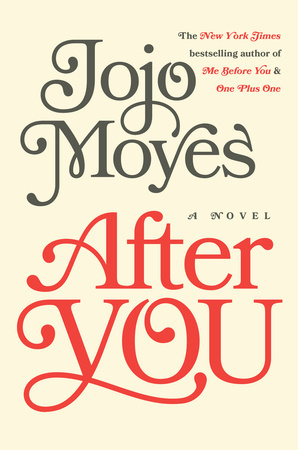
Book Review: After You by Jojo Moyes

After YouI’m normally really diligent about keeping my reviews spoiler-free, but this one will be an exception.

After You is the sequel to the author’s huge bestseller, Me Before You. I don’t think I can talk about After You without referring to the events of the first book.

So — fair warning. IF YOU DO NOT WANT TO SEE SPOILERS FOR ME BEFORE YOU, DO NOT READ THIS REVIEW!

Seriously.

Walk away now.

You’ve been warned.

… end of psychotic spoiler warnings…

Moving on –

After You picks up the story of Louisa Clark two years after the tragic events which conclude Me Before You. In Me Before You, Louisa takes a job as a caregiver/companion to a quadriplegic man named Will Traynor, basically for the sake of a steady paycheck. Will is an angry young man, stuck in a wheelchair after a devastating accident, and he initially treats Louisa abominably.

Eventually, the two crack each others’ tough shells. Will delights in teaching Louisa about life outside the confines of her small town and in showing her how smart and talented she really can be. Louisa is horrified to learn that Will intends to take his own life rather than continue to live as a quadriplegic, and makes it her mission to convince him that life can still be wonderful. The two fall in love — but sadly, it’s just not enough to keep Will from the path he’s determined to take.

(See, I said there’d be spoilers.)

Two years later, Louisa is aimless, sad, and just going through the motions. Thanks to a bequest from Will, she traveled all across Europe, but came home when she realized it all meant nothing to her. Now she lives in a flat in London (also thanks to Will’s generosity), attends a grief support group, and works in a depressingly awful Irish-themed bar (complete with a ringlet-y wig) at the airport.

Louisa’s life takes a surprising turn when one night, in a drunken funk, she slips off the roof of her building, surviving the fall with broken bones and other injuries, none permanent. Two unexpected people enter Louisa’s life due to the fall — a hunky paramedic named Sam and a difficult, prickly teen girl named Lily… who announces to Louisa that she’s Will’s daughter.

Turns out that Will’s college girlfriend never told him she was pregnant, so he never had the chance to be a part of Lily’s life. Would Will have made different decisions if he knew about Lily?

Louisa takes Lily under her wing out of love for Will, both wanting to protect her for Will’s sake and, for her own sake, to hold onto the last little bit of Will left in the world. Lily’s entry into Louisa’s tightly controlled, dull, unfulfilling life basically rocks her world, and changes begin, slowly at first, until Louisa’s outlook and future are completely transformed.

Okay, enough synopsis. That’s the gist of After You. The real question readers will want to have answered is: Does After You live up to Me Before You?

In my opinion, the answer is yes… but adjust your expectations.

After You is a much quieter book than Me Before You. Me Before You was intensely dramatic, with life and death on the line, passionate love with everything at stake, and characters in absolutely extreme circumstances. I don’t know anyone who walked away from Me Before You with dry eyes.

After You is not that book. Instead, it’s thoughtful and serious, examining the life that’s left after the drama and tragedy have already gone by. Will’s dying wish was for Louisa to go out and live life to the fullest, and she really did try. But as we see in After You, the intention isn’t enough. Louisa took off for Paris to escape her grief, but life and grieving don’t work that way. She carried the pain with her wherever she went, so eventually there was no point in continuing to run.

What we see in After You is what loneliness and sorrow look like. There’s nothing sexy or glamorous about it. Louisa is living a very sad life when we first meet her in this book, and her lack of hope and disconnect from anyone who might actually care about her is distressing to see. And yet, I felt like it was all so real. Grief takes time. There’s no magic cure. Even meeting someone new doesn’t fix everything. It was so sad to see vibrant, rambunctious Louisa dressed in dull grey clothing and going through the motions, day after day.

Just as Louisa’s life picks up when Lily and Sam make their entrances, so too the tone of the novel picks up as well. The energy of the narrative reflects the slow return to life and purpose that Louisa goes through, building up steam and gaining more ups and downs, breaking out of the sad sameness of a depressed existence.

I’ve made no secret of the fact that I’m a big fan of Jojo Moyes’s books. I’m happy to find that After You is quite as good as some of her strongest works. It won’t “wow” people the way Me Before You did, but it does carry true emotion within its pages. This is the story of picking up the pieces, and that’s never going to be as stunning as the story of how the pieces broke in the first place (if that makes any sense).

People responded very, very strongly to Me Before You, and rightly so. Many readers cherished the idea of Louisa’s life being enriched by her short time with Will and being able to imagine her going on from there to having a life full of amazing experiences. For some, the realities of Louisa’s life in After You will be a letdown, bursting the bubble of a tragically romantic illusion. Before reading After You, I probably would have had the same vision of Louisa’s life, but I’m so pleased that After You set me straight.

Grief isn’t easy. Money and adventure can’t fix it. Recovery takes time, and a lost love can never be forgotten or replaced. In After You, Louisa gets the time to grieve, to rediscover her inner self and strength, and to finally start moving forward again. I’m so glad that I read this lovely book.

After reading After You, I felt such a strong connection to Louisa and to Lily, and I walked away feeling good, knowing that they’d found not only each other, but also a path pointing the way toward future happiness and hope.

✻✻✻✻✻

Interested in this author? Check out my reviews of other books by Jojo Moyes:
The Girl You Left Behind
One Plus One
The Ship of Brides
The Last Letter From Your Lover
Me Before You
Silver Bay

_________________________________________

The details:

Title: After You
Author: Jojo Moyes
Publisher: Pamela Dorman Books
Publication date: September 29, 2015
Length: 352 pages
Genre: Adult contemporary fiction
Source: Library

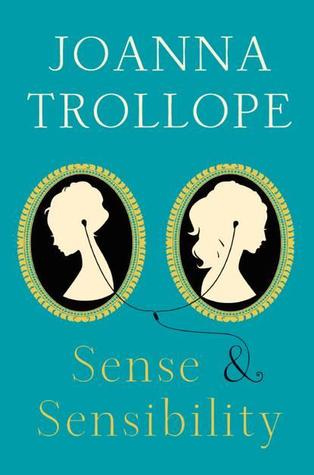
Book Review: Sense & Sensibility by Joanne Trollope

Sense & Sensibility_TAPAnother Austen Project book… read!

As I discussed in my review of Val McDermid’s Northanger Abbey, The Austen Project is a publishing concept that pairs up bestselling contemporary authors with the works of Jane Austen, with the goal of creating six reimagined versions of the classic novels. So far, three have been published, with the next projected for release in 2016.

This new version of Sense and Sensibility is written by bestselling author Joanna Trollope, who imagines the Dashwood family in almost familiar terms — finding themselves displaced from their lovely home by their half-brother and his money-hungry wife, having to rely on the kindness of distant relatives to start fresh, and figuring out the ups and downs of love, infatuation, and everything in between.

But this Sense & Sensibility is set in the 21st century, and of course, there are changes from the original. Elinor, practical as ever, is an architecture student. Marianne, frail and subject to the whims of passionate feeling, is severely asthmatic and must always be looked after. The often overlooked youngest, Margaret (or here, Mags), petulant and whiny, always plugged into her headphones, appreciates any cute boyfriend of her sisters’ —  so long as he drives an awesome car.

The cast of characters is much the same as in the Austen version, with Marianne’s love interest Willoughby portrayed here as gorgeous but shiftless Wills, all too ready to throw Marianne over for the sake of romancing a millionaire’s daughter. We also have Bill Brandon, an utterly good guy running a non-profit home for mentally challenged individuals at his Delaford estate, and hapless Edward Ferrars, whose controlling mother has bullied him into utter dependence. The awful characters — especially Fanny Dashwood and the Steele sisters — are every bit as awful here. After all, selfishness, emotional manipulation, and obsessions with money are timeless!

The essential storyline follows the familiar path, but with elements changed to make more sense in the modern setting. There are hospital visits and interior decorators, school carpools and even a job for Elinor. But the sisters’ defining characteristics are what we know from Austen: Elinor is steady and logical, steering the family through hard times through her practical management when everyone else in her family is busy feeling all the feels — and Marianne, throwing herself headlong into love with no regard for anything but listening to her heart and relying 100% on her emotions to lead the way.

Start to finish, I was pretty charmed by this version of Sense & Sensibility. It’s no replacement for the classic Austen novel, and I’m not convinced that it would  work as a stand-alone. But as a companion piece to the classic, it’s quite endearing. While the rush to marriage may feel a bit forced at times in a modern setting, as framed in the context of status-hungry social climbers and defiantly old school, old money families, it makes a sad sort of sense. Throw in social media, and you have Marianne devastated not just by a broken heart, but by public humiliation via YouTube.

The writing is light in tone, with just enough winking acknowledgement that this is a retelling:

“Hasn’t she got a boyfriend yet? She’s old enough.”

“She’s fourteen. Honestly, Abi, it’s all you ever think about. You’re like those nineteenth-century novels where marriage is the only career option for a middle class girl.”

Joanna Trollope’s Sense & Sensibility is a fun read that’s sure to amuse anyone who loves the Jane Austen classic and is open to seeing the story retold with a modernized twist. It doesn’t require a whole lot of concentration, but it should at least make you smile!

_________________________________________

The details:

Title: Sense & Sensibility
Author: Joanne Trollope
Publisher: Harper
Publication date: January 1, 2013
Length: 362 pages
Genre: Fiction
Source: Purchased

Audiobook Review: Maisie Dobbs by Jacqueline Winspear

Maisie DobbsWhen we first meet Maisie Dobbs, it is 1929, and she is opening up her London office for the very first time. Maisie, a young woman of about 30, is going into business as a private investigator, thanks to the tutelage of her mentor, Maurice Blanche, and the sponsorship of her patroness, Lady Rowan.

Maisie is an extremely intelligent woman, reserved by nature, strikingly attractive — and it’s immediately apparent that this is a person who has been hurt deeply in her lifetime. That doesn’t stop Maisie, though. She is more than ready when her first client walks through her door, hiring her to investigate his wife’s long afternoons away from home and to determine if she’s being unfaithful.

What Maisie discovers is not infidelity, but yet another lost soul still bearing the wounds of the Great War that ended ten years earlier. As Maisie pursues the trail of clues, her memories of her own wartime experiences come flooding back, demanding to be faced after all this time.

Maisie Dobbs is constructed around a mystery — who is the man whose grave the client’s wife cries over, and why does his gravestone list only his first name? The solution to this case leads Maisie back into the world of wounded soldiers and the terrible sacrifices and pain suffered by those who made it back home.

At the heart of the book lies Maisie’s own story. As her investigation begins to relate to the war, the center third of the book shifts scene and time and takes us back to Maisie’s teen years, when she works as a housemaid in Lady Rowan’s home. Maisie’s eagerness to learn leads her to an education sponsored by Lady Rowan, eventually entering college at Cambridge before the harsh reality of war causes her to change path.

Maisie abandons her college studies and enrolls in nursing school, ultimately training as a battlefield nurse and getting sent to a field hospital on the frontlines in France. I won’t go into too much detail, other than to say that Maisie’s experiences there lead to a tragic loss that has haunted her ever since. And in investigating the case of the soldier’s grave, Maisie is finally forced into confronting her sad, painful history.

I picked up this book not knowing what to expect. I had heard of the Maisie Dobbs series, and thought this first book would be a more or less straightforward detective story. What really impressed me about Maisie Dobbs is how deep and layered the story is. While Maisie is indeed an investigator, the setting and the time period are gateways into an examination of the horrors and tragedies of the terrible losses suffered during World War I — and the ongoing pain and suffering experienced by those who came home to face a lifetime of disfigurement and isolation.

Through Maisie’s thoughts, we come to feel the terrible depth of the tragedy as experienced on a very personal level, and yet there’s also hope. While Maisie carries emotional wounds that will always be with her, she’s also creating a new life in a new era, using her brains and her inner strength to face life on her own terms.

The audiobook narrator, Rita Barrington, does a lovely job of capturing Maisie’s inner dialogue, as well as voicing the people in her life. She does an excellent older, aristocratic voice for Lady Rowan, and a cheeky, working class voice for Maisie’s assistant Billy. Even while narrating conversations between multiple characters, it wasn’t hard to follow or to figure out who was talking at any given time. I liked the clarity and sweetness of Maisie’s voice, and the gentleness with which she speaks to all, especially to wounded soldiers and others in need of her care.

According to Goodreads, there are 11 Maisie Dobbs novels currently in print, with a 12th scheduled for release in 2016. I don’t really know where the series will go from here: Will it be a more traditional mystery series, with a new case forming the focal point of each book? Will Maisie’s connections to the war continue to inform the storylines? I suppose I could read the synopses of the next few books in the series, but really, I’d rather just wait and find out for myself.

I’m quite sure that I’ll continue with this series, which has such a well-written start in this first book. The emotional depths of this novel make it an affecting and throught-provoking read. There’s something about WWI fiction that is utterly compelling and tragic, and I found myself very much enthralled by the character of Maisie Dobbs and her fascinating life. Hearing the voices of Maisie and the other characters, as portrayed in the audiobook, made the experience even richer, and I look forward to listening to the 2nd book as soon as possible.

_________________________________________

The details:

Title: Maisie Dobbs
Author: Jacqueline Winspear
Narrator: Rita Barrington
Publisher: Penguin
Publication date: January 1, 2003
Audiobook length: 10 hours, 1 minute
Printed book length: 309 pages
Genre: Historical fiction; crime/mystery series
Source: Audible

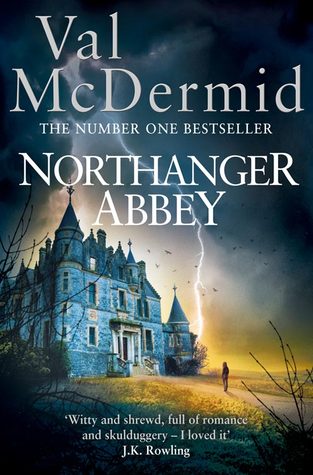
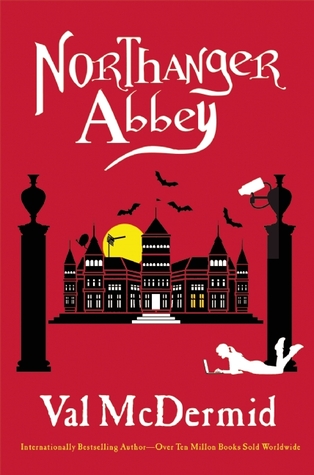
Book Review: Northanger Abbey by Val McDermid

Northanger Abbey 3This is my first Austen Project book, and I definitely want more!

For those not familiar with it, The Austen Project is a publishing concept that pairs up bestselling contemporary authors with the works of Jane Austen, with the goal of creating six reimagined versions of the classic novels.

Sense and Sensibility, written by Joanna Trollope, was published in 2013; Northanger Abbey by Val McDermid followed in 2014, and in June 2015, Emma by Alexander McCall Smith was released. Supposedly next will be a Pride and Prejudice reimagining by Curtis Sittenfeld, although it looks as though she may be departing from the formula a bit and publishing a novel with a different name (Eligible, to be released 2016).

I decided to start with Northanger Abbey because it’s fresh in my mind. I’d read the Austen version years ago, and listened to the audiobook while on vacation this summer. (As a result, I associate Northanger Abbey with a hike in the woods in the Canadian Rockies, which is really not a bad association at all!) Last week, I watched the 2007 Masterpiece version of Northanger Abbey, starring Felicity Jones (which is very good – check it out!).

Northanger Abbey is written by Val McDermid, a Scottish-born author best known for writing crime novels. I’d heard her name before, but had never read any of her works, since crime novels aren’t usually my thing. The book gets off to a promising start:

It was a source of constant disappointment to Catherine Morland that her life did not more closely resemble her books.

In this new version of NA, heroine Catherine Morland is now Cat Morland, a 17-year-old with a somewhat sheltered upbringing who’s invited to accompany the family’s wealthy friends, the Allens, not to Bath as in the original, but to the Edinburgh Fringe Festival. Cat’s a typical teen, living life out loud on Facebook and Twitter, and absolutely devoted to YA fiction, especially Twilight and anything supernatural, scary, and dramatic. Like, for instance, the (made-up) Hebridean Harpies series, which includes hot titles such as Kelpies of Kerrera, Shapeshifters of Shuna, and Banshees of Berneray.

Northanger Abbey 2In Edinburgh, Cat soon is befriended by Bella Thorpe, and develops a mad crush on Henry Tilney, her dancing partner at a Highland Ball. In the original, there’s talk of a country walk and an outing in the carriage; here, the young folks go for a hike or for a drive in John Thorpe’s convertible. Eventually, Cat is invited to spend time at the Tilney’s estate of Northanger Abbey, and Cat is completely enamored with the gothic romance of a creaky old mansion and its secrets (although she’s dismayed to discover that the family’s interior decorating mostly runs toward Swedish modernity).

As with the original, Cat’s fiction-influenced flights of fancy lead her to give free rein to her imagination. She gets shivery pleasure from her suspicions that the family is hiding deep, dark secrets… although it’s perhaps a bit surprising that here she imagines not just murder or family members being held captive in secret cells, but that there are vampires afoot!

I was surprised by just how well Northanger Abbey translates into the modern day, with this new edition reading like a particularly larky YA novel. The core elements — female friendship, people using each other for the sake of money and supposed connections, emotional manipulation, and parental interference — all work in a more modern setting. Likewise, the true friendship and romance that Cat finds with the Tilneys make sense here as well, and Val McDermid finds a way to portray the characters in a way that’s true to their origins while coming across as belonging in the contemporary setting. Even the isolation Cat feels at Northanger makes sense — there’s no wifi or cell signal! And if that’s not cause for fear and anxiety, especially for a 17-year-old girl, I don’t know what is.

Yes, Cat’s belief in vampires is quite silly, but in context, given Cat’s youth and her naivete, as well as her passion for supernatural romances, I was willing to accept it as a plot point.

I liked the writing style, although occasionally the texting and teen slang seemed a bit over the top. Then again, who am I to judge how British teens talk these days? The teen dialogue gives the book a fun, upbeat tone for the most part, although I thought I might throw something if Bella used the word “totes” one more time. (“But I bet you’re so busy having a totes lush time…”)

[Minor spoiler ahead!]

The only thing that seemed like too big a departure for me comes toward the end of the book. In the original, General Tilney abruptly kicks Catherine out of Northanger when he discovers that she’s not an heiress after all. I’d anticipated something similar here, as he constantly asks Cat about her connection to the Allens — so why wouldn’t finding out that her family isn’t wealthy and that she doesn’t have money connections have the same impact in this version? But no — what sets the General off in the new NA is gossip provided by John Thorpe, who whispers to the General that Cat is a lesbian, and rather than being a potential match for Henry, she’s actually interested in Eleanor. Okay, fine, the General is an uptight and old-fashioned dude, but throwing this into the mix seems a bit out of place/out of the blue. Given the narrative up to this point as well as the source material, having it still be all about the money would have been a better fit, in my humble opinion.

[End of spoilers]

Overall, I thought this reimagining of Northanger Abbey was quite fun. Would this work on its own for readers who haven’t read or aren’t familiar with the original? That I’m not sure of. It’s cute and quirky, but some of the plot developments might strike a reader as quite odd without knowing the framework provided by Jane Austen.

But for anyone who knows the original Northanger Abbey, this new tale is a fun, fluffy, diversion. I certainly had a good time with it, and I think it’s worth checking out!

_________________________________________

The details:

Title: Northanger Abbey
Author: Val McDermid
Publisher: HarperFiction
Publication date: March 27, 2014
Length: 358 pages
Genre: Fiction (adult/young adult)
Source: Purchased

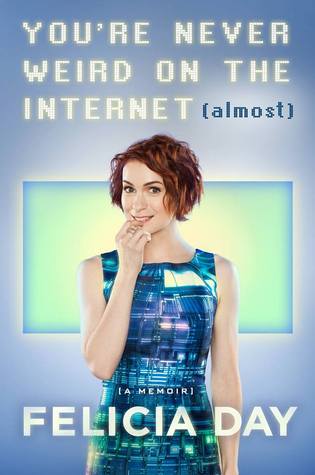
Book Review: You’re Never Weird on the Internet (Almost) by Felicia Day

You're Never WeirdBuffy fan? How about The Guild? Dr. Horrible? Eureka?

No?

Are you a fan of funny, smart writing? Women who are high-achieving but down-to-earth? Famous people who act like real people and seem to genuinely care?

Surely something above rings a bell. And in that case…

I feel perfectly confident that you’ll find something to love about Felicia Day’s memoir, You’re Never Weird on the Internet (almost).

Felicia Day doesn’t shy away from calling herself weird, and credits her weird upbringing for making her who she is today. Moving around from one southern town to another, Felicia never really had to fit in, because after a brief stint in school, she ended up being homeschooled throughout her childhood and teens — although, as she describes:

In retrospect — and not to be mean to anyone who parented me — it doesn’t seem like there was a clear plan going into the whole homeschooling thing.

But Felicia was into it anyway:

Also, homeschooling seemed like something an orphan would do, and I really wanted to be an orphan. Because let’s be real: they have it so good in kids’ literature! They’re sad but special, people love them against all odds, and they’re always guaranteed a destiny of greatness. The Secret Garden, The Wizard of Oz, Harry Potter? Orphanhood was a bucket list item for me!

In funny and honest detail, she describes her college career (double-majoring in music and math, on a violin scholarship!) and her subsequent move to LA to pursue an acting career, as well as an all-consuming obsession with World of Warcraft, generalized unhappiness and anxiety, and her creative breakthrough in writing and starring in the geek-magnet web series The Guild.

Felicia writes beautifully about the power of discovering the internet for the first time, and the awesome experience, especially for a loner, homeschooled girl, of discovering people to truly connect with in a fundamental way through the world of online gaming.

I know the story of my Dragon-hood may sound a little sad and weird and super geeky, but […] for a girl who was lonely and desperate for friends, that group of people was the most important social thing to happen to me growing up. I can’t imagine being as confident about my passion for geeky things today without that opportunity to connect with OTHER people who were saying, “Wow, I love those geeky things, too!”

She shares her self-doubts and her moments of mortification along with her successes and victories, and maintains such an appreciation for people’s investment and connection in her work that you just know she means it all. For example, explaining why she keeps all the fan art and creations that people have given her over the years:

Whether it was by someone volunteering to be an extra in our show, or part of the crew, or someone buying a DVD at a convention, or a superfan who tattooed our characters’ faces on her calf, my career has been built fan by fan. I wouldn’t trade that relationship, or collection of dolls of myself, for all the money and fame in the world.

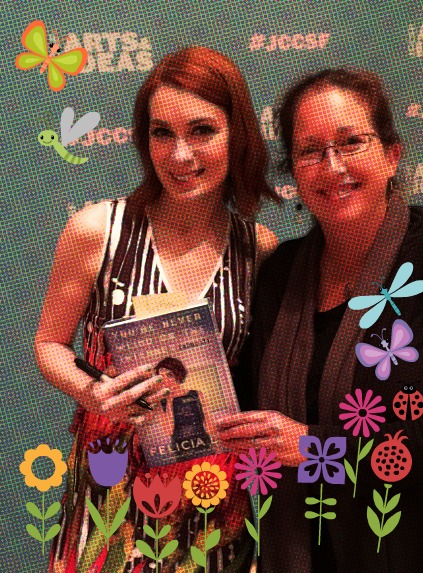
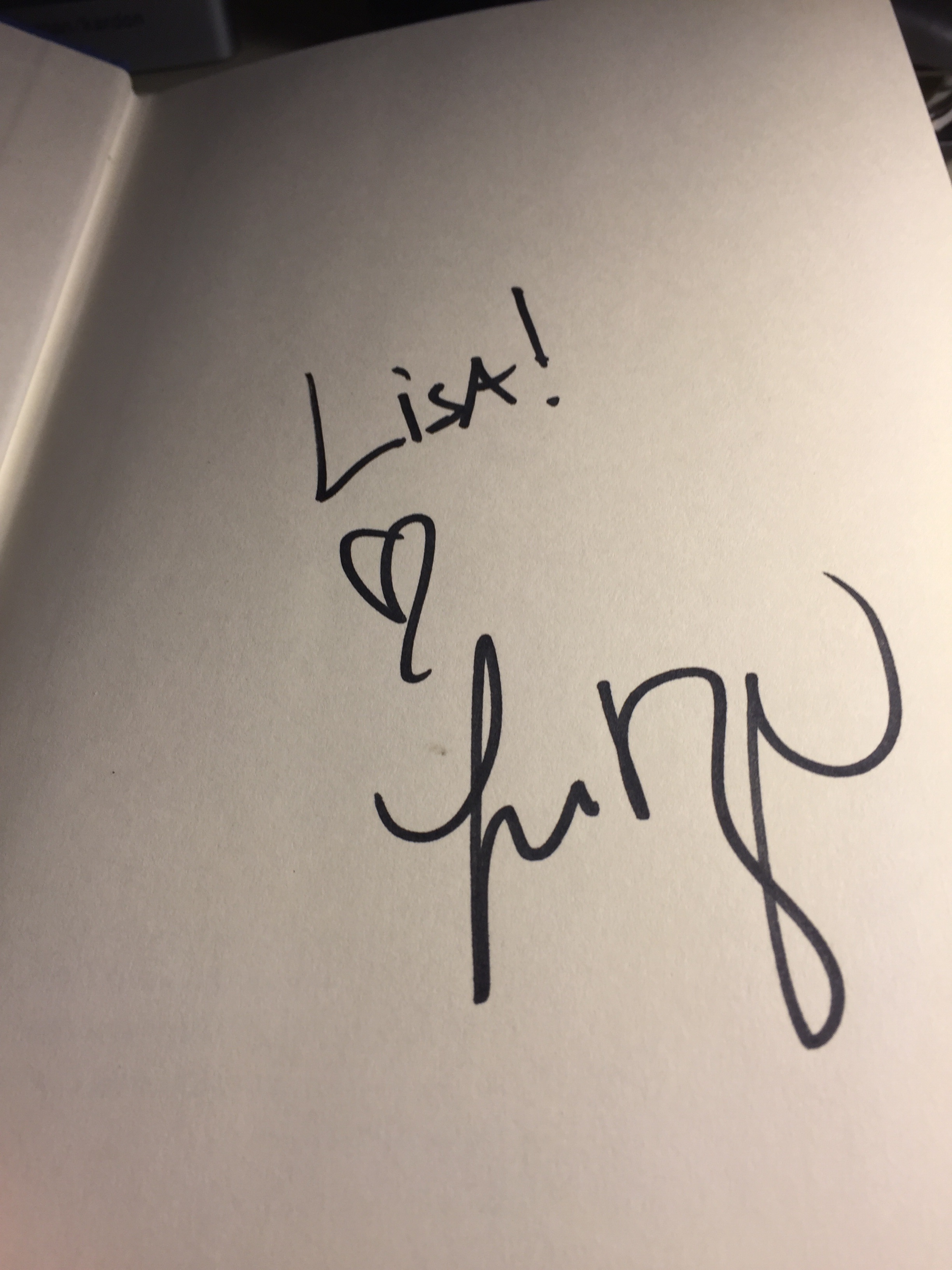
I was lucky enough to see Felicia speak back in August and got a signed book and everything!

Felicia is adorable, but I didn't like the way I looked in this pic... so I decided to decorate.

Felicia is adorable, but I didn’t like the way I looked in this pic… so I decided to decorate.

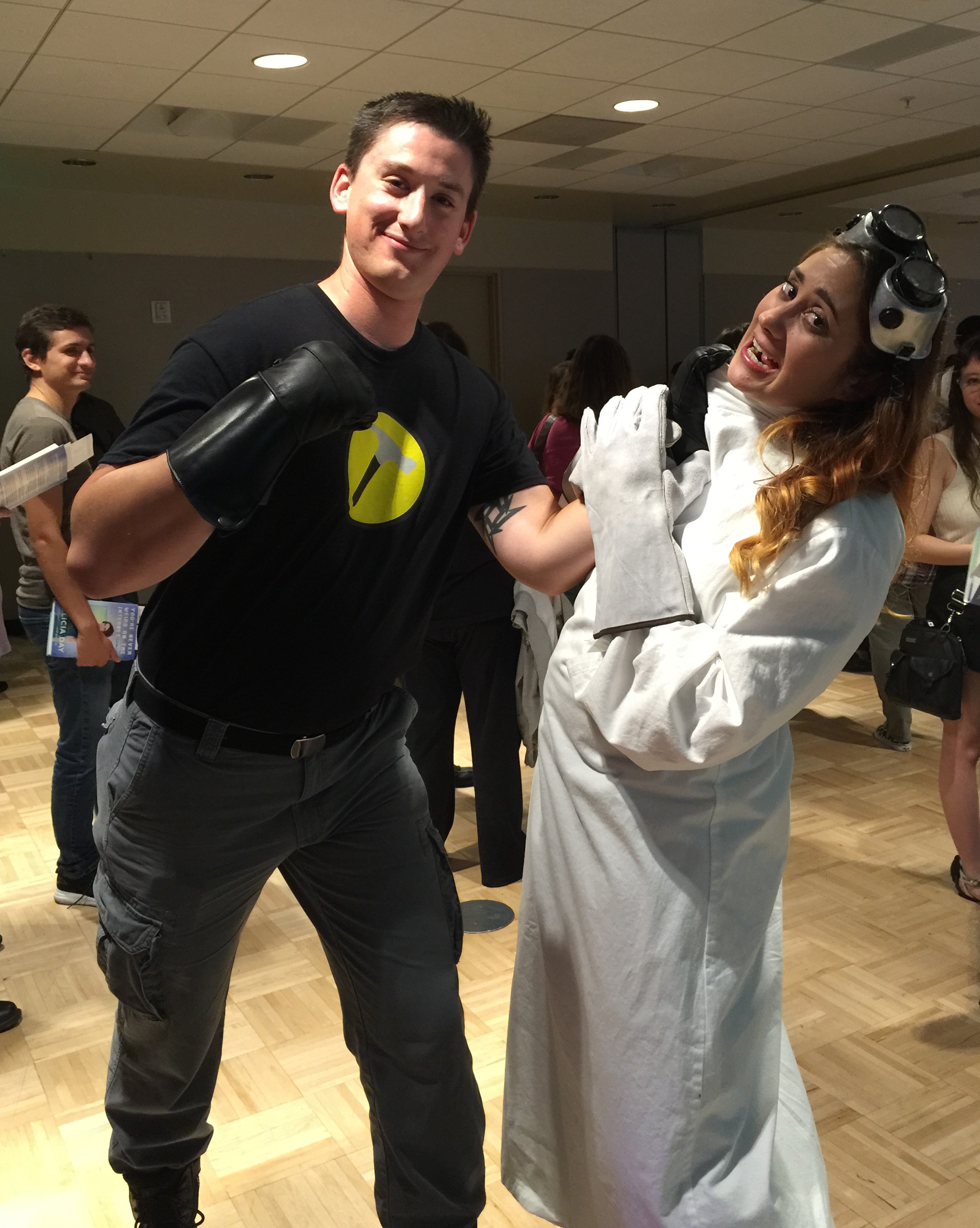
It was an amazing event, in a sold-out venue, filled with people of all sorts who all just happen to be big geeky fans. While most came in their street duds or at most, a Supernatural or Guild t-shirt, a few went all out, which was super delightful to see:

I love me some Dr. Horrible cosplay!

Felicia spent an hour on stage in front of an adoring crowd, and she was just as cute and smart and hilarious as you’d expect. (If you’re a fan, treat yourself by watching the video of her appearance!):

Getting back to the book itself, this isn’t a Hollywood tell-all. There’s no gossip here, no name-dropping, no parties/cocktails/living-the-good-life anecdotes. When Felicia does name names, it’s to thank and acknowledge the people who inspired or helped her.

Besides being a great read about an odd-ball girl making good on her own terms, You’re Never Weird is a message book. Felicia shares her own story not to say “look at me! I’m so great!”, but to share the idea that we’re all different, and we should pursue what excites us and makes us happy, no matter how odd or weird or dorky it might seem. And hey, whoever you are and whatever you’re into, there’s sure to be someone else out there who’s into it too:

It might be extremely dorky to point out, but who you are is singular. It’s science. No one else in existence has your point of view or exact genome (identical twins and clones, look for inspiration elsewhere, please). That is why we need people to share and help us understand one another better. And on a bigger level than just taking a selfie. (Not hating on selfies, but a few is enough. You look good from that angle; we get it.) We need the world to hear more opinions, give glimpses into more diverse subcultures. Are you REALLY into dressing your cat in handcrafted, historically authentic outfits? No problem, there are people out there who want to see that! Probably in excruciating details!

One of the things that makes You’re Never Weird on the Internet (Almost) so great to read is that first and foremost, you feel like you’re reading about a person.  A talented, awesome person, for sure, but still, someone recognizably human. Felicia Day’s writing style is chatty and full of good-natured humor, and she succeeds, I think, by making us all feel as though she’s someone we could hang out with, maybe play some video games or watch movies together. You just know that she’d be chill and awkward and non-judgmental, in all the best ways.

image

She signed my book! She signed my book!

If you consider yourself a geek, if you’ve ever felt lost in a crowd, if you had weird/unique hobbies, if you’ve ever felt a passion for something completely out there… well, I’m pretty sure you’ll find something in You’re Never Weird that will inspire you, or at the very least, make you smile or even chuckle for a while.

‘Scuse me, but I gotta go binge-watch The Guild right now.

_________________________________________

The details:

Title: You’re Never Weird on the Internet (Almost)
Author: Felicia Day
Publisher: Touchstone
Publication date: August 11, 2015
Length: 262 pages
Genre: Memoir
Source: Purchased

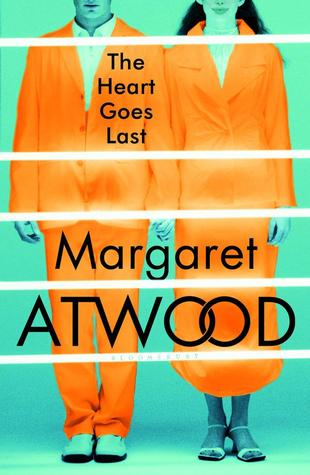
Book Review: The Heart Goes Last by Margaret Atwood

The Heart Goes LastThis is one tough book to describe.

The Heart Goes Last centers on main characters Stan and Charmaine, a married couple who are living in their car as of the beginning of the story. They’ve lost their jobs and their homes as the economy in the US Northeast has completely tanked. Charmaine works at a seedy bar to earn enough for them to buy fast food and gas, but that’s about it. Gas is essential, because even when locked into the car at night, crazy or desperate people may attack, break the windows, and try to rape or kill them, and being able to drive off in case of emergency is what keeps them alive. Life really sucks, and even though they both remember what it was like to be newlyweds in love, it’s getting harder and harder to keep any affection alive when life is just that awful.

Is it any wonder that they sign on, rather blindly, to the promise of a new and better life? Stan and Charmaine are seduced by an advertisement for an experimental town called Consilience. The Consilience project offers a house, safety, security, meaningful life, and the absence of fear and worry. After a quick visit within the gated walls of the town, they’re ready to sign up. The catch is that, once in, it’s permanent, but no worries! Charmaine is too entranced by the idea of a house, her own kitchen, and a cozy couch to even consider walking away, and to Stan, it sure sounds like a great alternative to quick, unsexy sex on the backseat of the car while watching out for attackers.

Once Stan and Charmaine have committed, we start to learn more. There’s a flip side to Consilience: Positron. Positron is a prison, and here’s the deal. For one month, Stan and Charmaine live in their cozy suburban house and go off to work at their pleasant jobs. Then comes switchover day, and the two go over to the Positron Prison, don orange prison garb, and become inmates for a month. Stan goes to the men’s ward, where he tends chickens, and Charmaine goes to the women’s ward, where she’s a medications officer. The prison is safe, filled with other happy Consilience residents, offering delicious food, meaningful work, and even a knitting circle in the evenings to pass the time. Meanwhile, Stan and Charmaine’s house is now occupied by their alternates. Half the town spends each month as residents, half as inmates, and then they switch. This way, the project provides housing and occupation for all, and everyone is happy. Be happy, damn it!

Perhaps picture-perfect suburbia isn’t all it’s cracked up to be:

The hedge trimmer emits a menacing whine, like a wasp’s nest. The sound gives him an illusion of power that dulls his sense of panic. Panic of a rat in a cage, with ample food and drink and even sex, though with no way out and the suspicion that it’s part of an experiment that is sure to be painful.

Things are as weird as they seem, and weirder. There’s sexual obsession and deception, nefarious corporate goons, weird sexual fetishes, secret medical procedures, and a recurring motif of blue knitted teddy bears. Of course this utopian refuge has a dark side, and of course Stan and Charmaine become deeply involved as puppets in the greater scheme of things. When I say things get weird, I really mean it.

By the end of the book, we’re in Vegas. There are hordes of Elvis and Marilyn impersonators, Blue Man Group rip-off artists, brain wipes, and sex/love slaves. And as word of the goings-on in Consilience/Positron is leaked to the greater public:

Instantly the social media sites are ablaze with outrage. Prison abuses! Organ-harvesting! Sex slaves created by neurosurgery! Plans to suck the blood of babies! […] Talk shows roister on into the night — they haven’t had this much fun in decades — and bloggers break out in flames.

I wish I could say that The Heart Goes Last was a great read, but unfortunately, I found it somewhat problematic. I was intrigued at the outset by the set-up, by the collapse of society, and by the way Stan and Charmaine’s marital issues tied into their dilemmas and decision-making about Consilience/Positron. Unfortunately, the book keeps veering off in new and disjointed directions, and by the time the Vegas elements come around, the storyline has passed the line from odd to ridiculous.

There are some truly eerie or disturbing sequences, but eventually, as one after another scenario unfolds, the whole thing loses its power and feels too scattered to be truly affecting. The goofiness of certain plot points (Elvis… Marilyn… the bear) makes the whole story somewhat farcical. While there are some kernels of deeper meaning in there about choice and the illusion of choice, the trade-off between security and free will, and whether unwavering love adds to or subtracts from actual happiness, the lack of overall coherence blunts the impact of all of these.

“Isn’t it better to do something because you’ve decided to? Rather than because you have to.”

“No, it isn’t,” says Charmaine. “Love isn’t like that. With love, you can’t stop yourself.” She wants the helplessness, she wants…

On top of the all-over-the-place plot, the fact is that dystopias are pretty much a dime a dozen these days, and it takes quite a lot to offer something new or startling. The idea of a perfect little town paired with a prison is interesting, especially as the town seems like something out of the movie Pleasantville (the only movies shown on Consilience TV are from the 1950s, and Doris Day is everyone’s darling) — but we’ve all read enough of these new society, perfect world set-ups to know that the people in charge have ulterior motives, there’s surveillance everywhere, and that a controlled world must be intrinsically corrupt at its core. Even though there are some clever and unexpected twists, at its most fundamental level, there isn’t anything all that fresh in the overarching concept.

Sadly, The Heart Goes Last was ultimately a let-down for me. I wouldn’t NOT recommend it, but it’s not Atwood’s best work either. I was never bored, exactly, but at some point, I just kind of rolled my eyes and decided to go with it.

_________________________________________

The details:

Title: The Heart Goes Last
Author: Margaret Atwood
Publisher: Nan A. Talese
Publication date: September 29, 2015
Length: 320 pages
Genre: Science fiction
Source: Review copy courtesy of the publisher via NetGalley
Blog Tour & Book Review: The Hummingbird by Stephen P. Kiernan

The Hummingbird

I’m delighted to be participating in the blog tour celebrating the release of The Hummingbird by Stephen P. Kiernan. Thank you, TLC Book Tours, for including me!

Synopsis:

Deborah Birch is a seasoned hospice nurse who never gives up—not with her patients, not in her life. But her skills and experience are fully tested by the condition her husband, Michael, is in when he returns from his third deployment to Iraq. Tormented by nightmares, anxiety, and rage, Michael has become cold and withdrawn. Still grateful that he is home at last, Deborah is determined to heal him and restore their loving, passionate marriage.

But Michael is not her only challenge. Deborah’s primary patient is Barclay Reed, a retired history professor and fierce curmudgeon. An expert on the Pacific Theater of World War II, Barclay is suffering from terminal kidney cancer and haunted by ghosts from his past, including the academic scandal that ended his career.

Barclay’s last wish is for Deborah to read to him from his final and unfinished book—a little-known story from World War II that may hold the key to helping Michael conquer his demons. Together, nurse, patient, and soldier embark on an unforgettable emotional journey that transforms them all, offering astonishing insights into life and death, suffering and finding peace.

Told with piercing empathy and heartbreaking realism, The Hummingbird is a masterful story of marital commitment, service to country, the battles we fight for those we love, learning to let go, and finding absolution through wisdom and acceptance.

My thoughts:

The Hummingbird is a quiet yet powerful look at love, acceptance, peace, and dignity. With a hospice nurse as its central figure, The Hummingbird has a calmness to it even when dealing with sorrow and anger.

Deborah is a remarkable woman, and it’s hard not to marvel at the peaceful focus and commitment she brings to her work. Deborah doesn’t view her patients as tragedies or medical lost causes. Instead, her job is to focus on each patient as an individual. Death is already a certainty; it’s Deborah’s purpose to make sure that her patients meet death with the comfort and space they need in order to have a dignified end.

At the same time that we witness Deborah’s work with the Professor, we see her struggling to reclaim her warrior husband Michael, a damaged soul who returns from his third tour in Iraq full of violence, rage, and guilt. Through her work with Barclay Reed and her reading of his unpublished manuscript, Deborah begins to find clues that will help her reach Michael. The more she reads about the Japanese soldier who became a man of peace and forged relationships with his former enemies, the more she learns about how to take steps toward her husband and help him truly find his way home again.

I found The Hummingbird incredibly moving. While I’d had certain preconceptions about the concept of hospice, I’ve never actually encountered it in my own life or in my reading until now. Reading about Deborah, her attitude and her approach, and what hospice provides for patients and their families was eye-opening for me. I was so impressed and touched by the degree of caring, the focus, and the compassion on display. Deborah’s interactions with Barclay are beautiful — not sugar-coated or avoiding the messier elements of illness, but simply caring and placing the patient’s total self above any other concerns.

Deborah’s relationship with her husband was quite touching as well. Michael is damaged and seems almost unfixable, but Deborah doesn’t accept that he’s beyond reach. It isn’t easy and it isn’t pretty, but we see scenes that show the rawness of returning veterans, their inability to fit back into society, and how little true help is available without a fight. It’s sad to realize how real this all is, and what’s more — as illustrated by an affecting scene involving Michael and a Vietnam vet — how little has changed or improved for soldiers in terms of how they’re treated when their fighting is done.

I would be remiss not to mention how powerful the third element of this story is. In chapters interspersed with the modern-day story, we read Barclay Reed’s manuscript, titled The Sword, telling the story of a Japanese bomber pilot whose World War II mission was to firebomb Oregon and cause panic and destruction on US soil. Although his mission did not succeed, the impact of his mission was felt by him and by the Oregon community targeted by his mission for decades to come. The story of connection and reconciliation is lovely, and surprised me by not going in the direction I’d expected.

These three threads — Deborah and the Professor, Deborah and Michael, and the story of The Sword — are woven together to create a beautiful story of redemption and forgiveness. The Hummingbird makes clear that it’s human connection that matters above all else, and that it’s never too late to find peace.

I strongly recommend The Hummingbird. The writing is lovely, the subject matter is quite unusual, and the characters will touch your heart.

Links:

Goodreads:
 
Add to Goodreads badge
 
Purchase Links: Amazon | IndieBound | Barnes & Noble


About the Author:

Stephen P. KiernanStephen P. Kiernan is a graduate of Johns Hopkins University and the University of Iowa Writers’ Workshop. During his more than twenty years as a journalist, he has won numerous awards, including the Joseph L. Brechner Freedom of Information Award, the Edward Willis Scripps Award for Distinguished Service to the First Amendment, and the George Polk Award. Kiernan is the author ofThe Curiosity, his first novel, as well as two nonfiction books. He lives in Vermont with his two sons.

Find out more about Stephen at his website and connect with him on Facebook.

_________________________________________

The details:

Title: The Hummingbird
Author: Stephen P. Kiernan
Publisher: William Morrow
Publication date: September 8, 2015
Length: 320 pages
Genre: Adult fiction
Source: Review copy courtesy of TLC Book Tours

tlc logoFor further information, visit the author’s website or stop by TLC Book Tours to view other blog tour hosts.


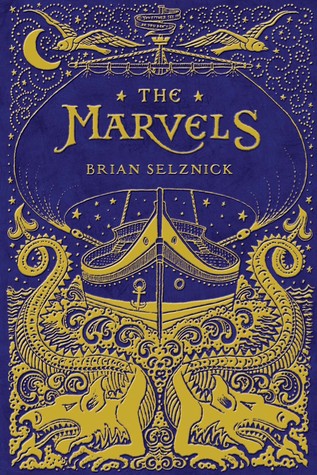
Book Review: The Marvels by Brian Selznick

The MarvelsCan a book review consist of just one word? Because if the answer is yes, then my job here is simple. My one-word review of The Marvels:

Beautiful.

Want two words?

Absolutely beautiful.

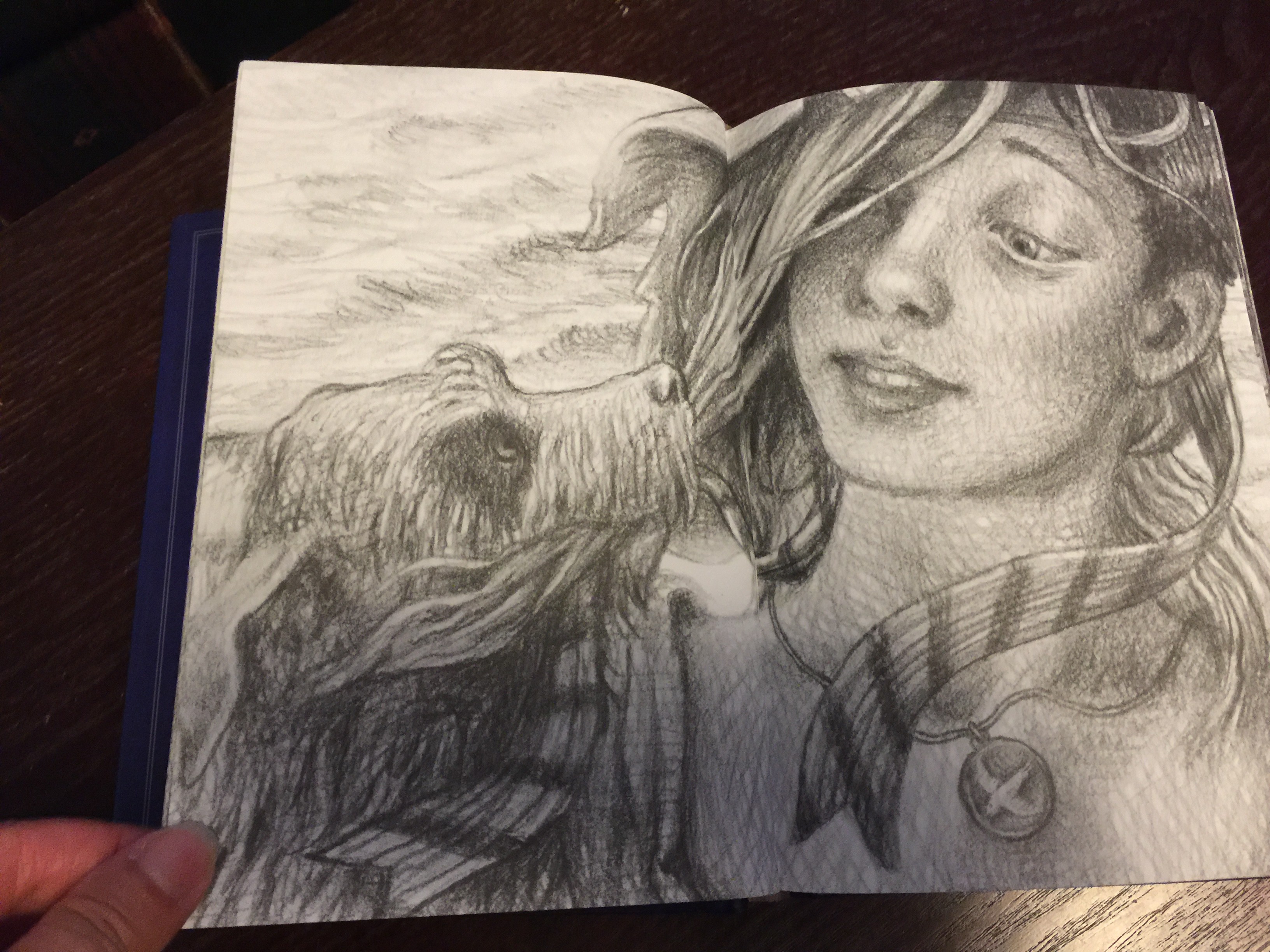
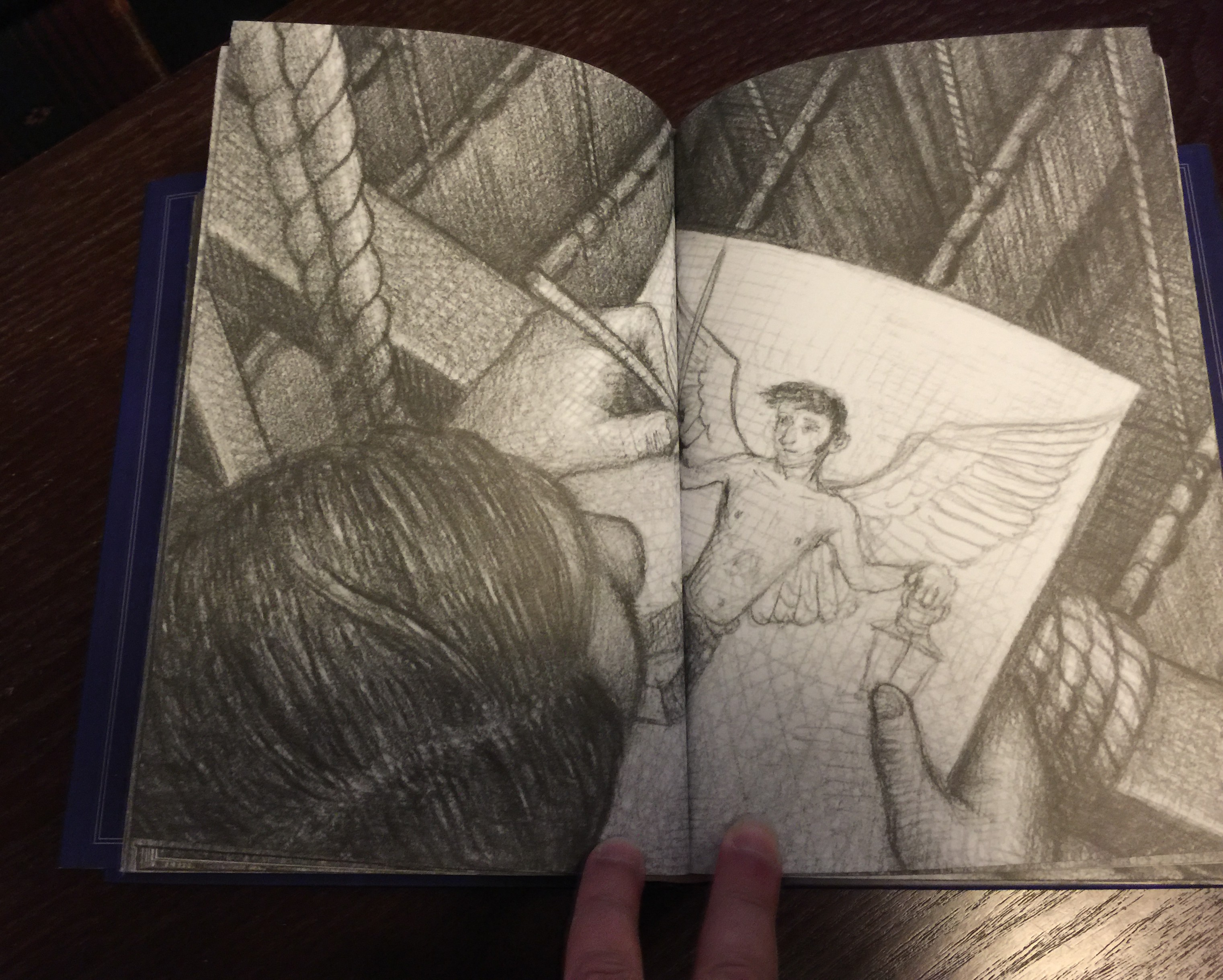
In The Marvels, author (and artist) Brian Selznick applies the technique he’s used previously (and so effectively) in The Invention of Hugo Cabret and Wonderstruck. In these books, the drawings aren’t illustrating the story — they’re telling the story.

Over 600 pages in length, The Marvels is told purely through illustration for the first 390 pages. And such gorgeous illustrations! Each set of double-facing pages contains a black and white pencil drawing, magnificently detailed, that serves to tell a piece of the story. From page to page, the tale unfolds, and the pictorial story is full of drama and emotion.

image

The story of The Marvels begins in 1766, with two brothers, Billy and Marcus, shipwrecked during a storm at sea. Rescued from the island where he washes up, Billy and his dog Tar find their way to London, where they’re adopted by the crew building the Royal Theater. Billy’s story of his brother’s love inspires the theater’s designers so much that Marcus is immortalized as an angel painted on the theater’s ceiling.

image

From there, the generations follow: Billy grows up and adopts an abandoned baby, who in turn grows up to become a star of the theater, and onward for several more generations. The Marvel family is the world’s most revered family of actors, acquiring world renown, while at the same time dealing with madness and the final disappointment of a descendant who only wants to escape from the family business. The story ends abruptly with a fire in the theater… and we turn the pages to blank whiteness, and then to the story’s continuation, in printed form, in 1990.

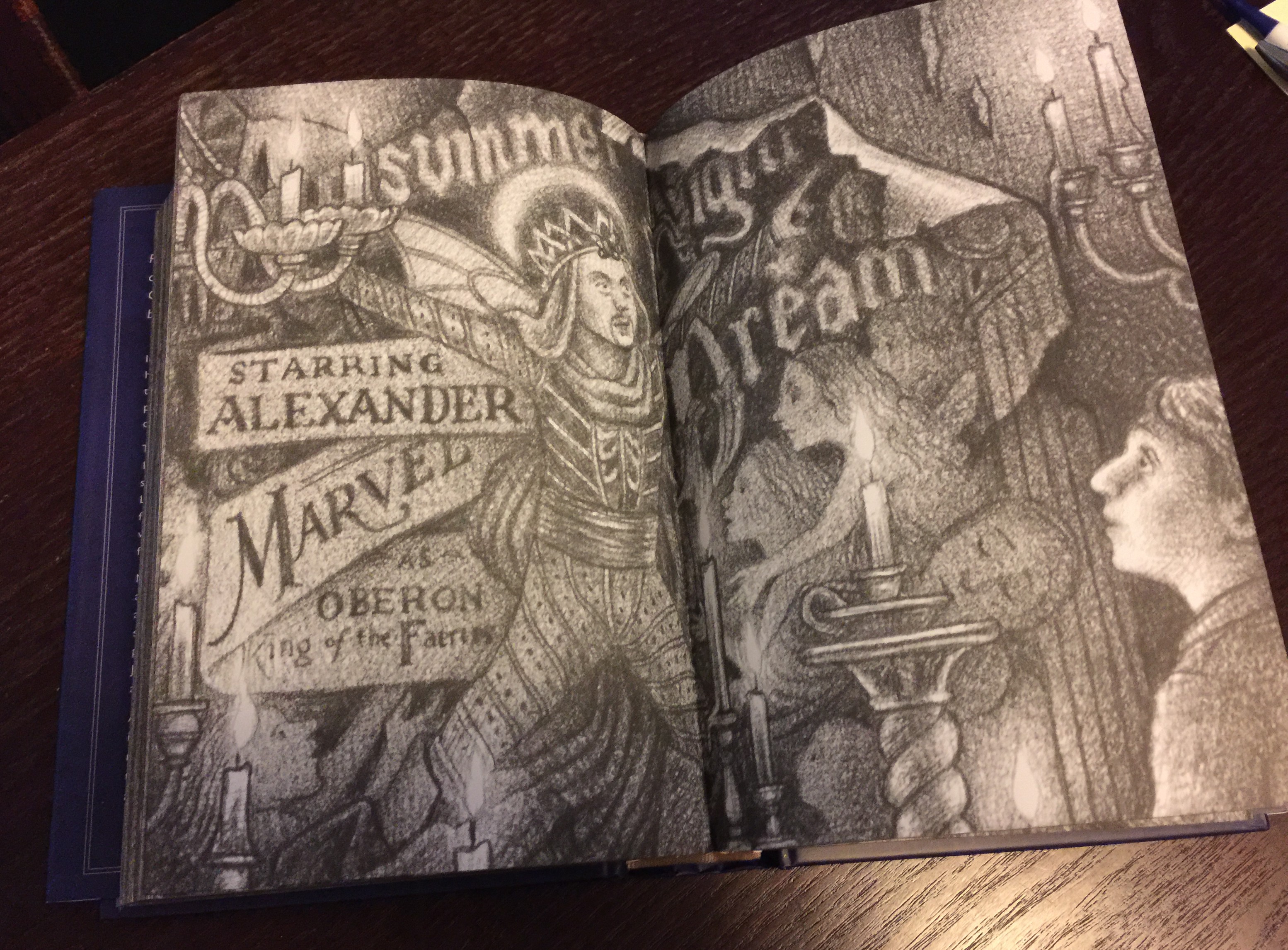
The next several hundred pages are told via the narrative of a 12-year-old boy named Joseph, who runs away from his repressive boarding school and seeks shelter with his eccentric uncle Albert, a man whom he’s never met before. Albert lives in a house that seems more like a museum, employing gas lights and candles to illuminate a mansion full of old-world treasures. Joseph is intrigued by the mystery of Albert’s home, and tries to get his uncle to open up about his secrets and share the truth about their family’s past.

How does this connect to the story of the Marvel family? I’m not telling. You’ll want to find out for yourselves. What I will say is that it wasn’t what I expected, but I was enthralled none the less.

At first, I felt impatient with the written part of the story. The illustrations are so beautiful (that word again!) and pulled me into their world so completely that I hated leaving it behind. But, bit by bit, the story of Joseph and Albert pulled me in as well, and teasing apart the hints to try to unravel the secrets was equally engrossing.

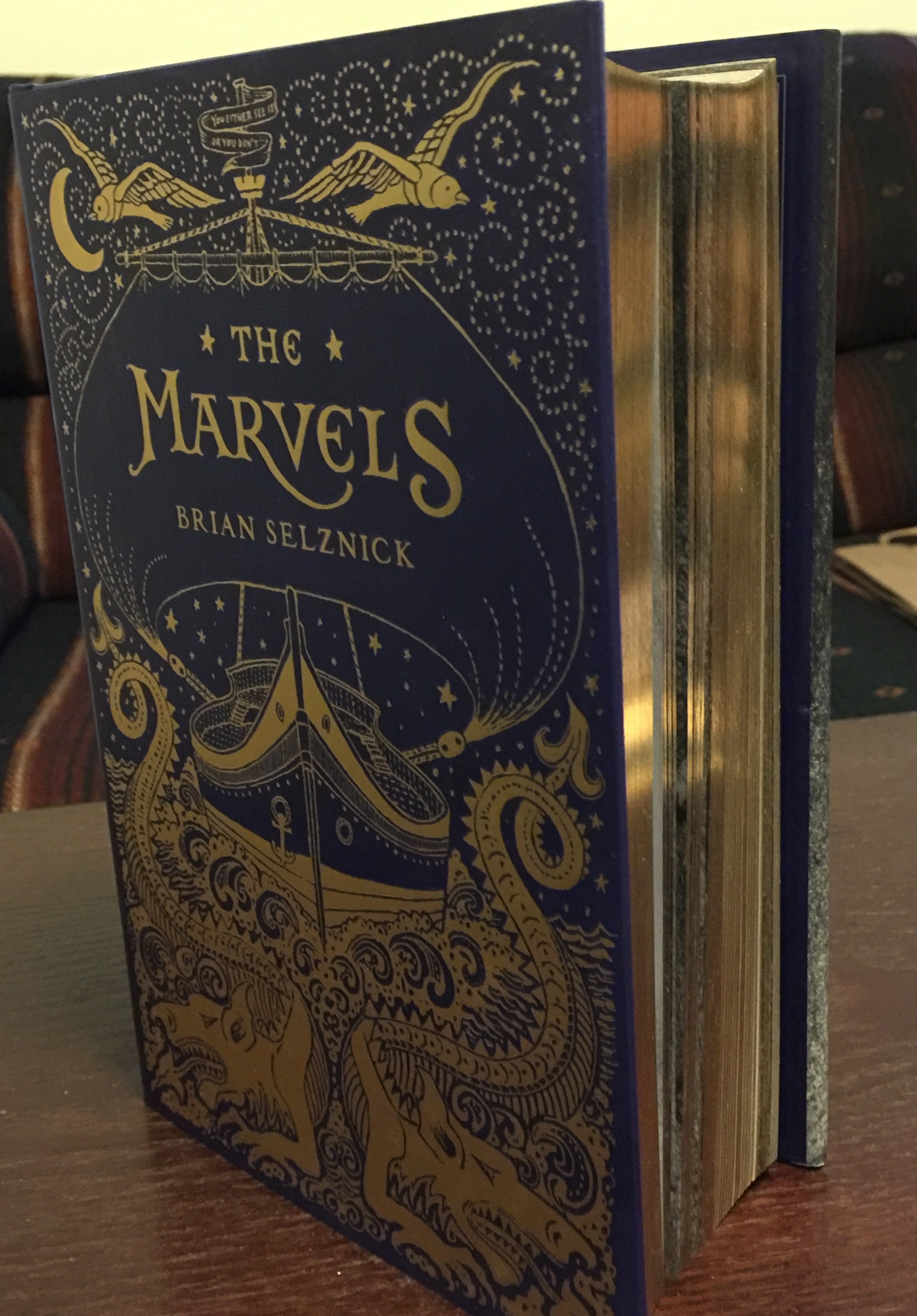
The book itself is hefty and magical to hold:

image

Several inches thick, with gilted edges and a gorgeous cover that feels like a throwback to an old-fashioned library edition, The Marvels is just so lovely to look at. This is one book you’ll want in a physical copy for sure — an e-book just won’t be the same.

The story is powerful in both its parts, with themes of love, devotion, and continuity, family commitment and inheritance, and a sense of wonder that is hard to describe. I found myself so absorbed in the mood created by this book that it was hard to re-enter the real world after finishing.

Wonderstruck may still be my favorite Brian Selznick book, but The Marvels is either a tremendously close second or perhaps right on par with Wonderstruck. For sure, both deserve a permanent place on my shelves, and are books that I’ll return to over the years. Reading these books is an immersive experience, and the power of the illustrations cannot be overstated.

image

So yes, one more time, I’ll return to my one-word review:

Beautiful.

_________________________________________

The details:

Title: The Marvels
Author: Brian Selznick
Publisher: Scholastic
Publication date: September 15, 2015
Length: 665 pages
Genre: Children’s fiction (middle grade/young adult); illustrated
Source: Purchased