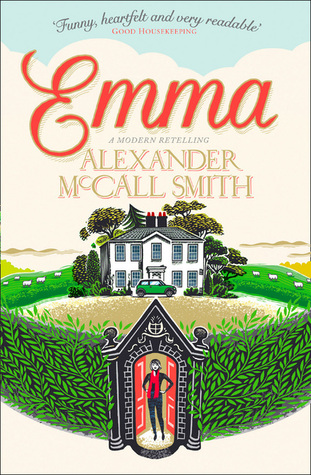
Take A Peek Book Review: Emma by Alexander McCall Smith

“Take a Peek” book reviews are short and (possibly) sweet, keeping the commentary brief and providing a little peek at what the book’s about and what I thought.
Adobe Photoshop PDF

Synopsis:

(via Goodreads)

Prepare to meet a young woman who thinks she knows everything

Fresh from university, Emma Woodhouse arrives home in Norfolk ready to embark on adult life with a splash. Not only has her sister, Isabella, been whisked away on a motorbike to London, but her astute governess, Miss Taylor is at a loose end watching as Mr. Woodhouse worries about his girls. Someone is needed to rule the roost and young Emma is more than happy to oblige.

At the helm of her own dinner parties, and often found either rearranging the furniture at the family home of Hartfield, or instructing her new protégée, Harriet Smith, Emma is in charge. You don’t have to be in London to go to parties, find amusement or make trouble.

Not if you’re Emma, the very big fish in the rather small pond.

But for someone who knows everything, Emma doesn’t know her own heart. And there is only one person who can play with Emma’s indestructible confidence, her friend and inscrutable neighbour George Knightly – this time has Emma finally met her match?

Ever alive to the social comedy of village life, beloved author Alexander McCall Smith’s Emma is the busybody we all know and love, and a true modern delight.


My Thoughts:

Alexander McCall Smith’s Emma is the latest volume related to The Austen Project, which pairs up popular contemporary authors with the classic works of Jane Austen.

Austen’s Emma is one of my favorites. I mean, I truly LOL’d over Emma as I listened to the audiobook earlier this year (which can be rather embarrassing when out in public wearing earphones.)

In this retelling, Emma is a college graduate who is thinking about starting her own interior decorating business, but in reality doesn’t have to do much, as her dear dad, Mr. Woodhouse, is more than happy to support Emma indefinitely — in between worrying about health, weather, and every possible hazard that could come their way. The various village residents are here, mostly true to the original, including the chatty Miss Bates and the snobbish but boring Mr. Elton.

Mr. Woodhouse gets many of the best lines, with his obsessive health worries:

“It will be good for them to get out of London and get some country air. All those people in London breathing the air in and out; just think of it, Emma. Just think of all that breathing going on in London — it’s a wonder there’s any air left for the rest of us.”

Emma gets many wry and silly moments too, such as:

“Look at the moon,” she said. “So bright. So lunar!” She had to say something.

And another gem:

Emma thought that this conversation would be a difficult  one to conduct with anybody other than Harriet, with anybody … less beautiful. Somehow, beauty made a difference; a trite remark uttered by a beautiful person is not quite as trite as the same thing said by one less blessed.

Overall, the book is enjoyable, although the storyline perhaps just doesn’t work all that well in a modern setting. It feels at times as though the author is bending over backwards to figure out how to incorporate the socials calls, dinner parties, and picnics that are so crucial in Jane Austen’s world. This new Emma is certainly less detailed, so I felt that I didn’t get to know the characters particularly well, and even Emma herself doesn’t really hold the center stage position she should. Mr. Knightly is more or less a background character for much of the story, and he just doesn’t seem like a viable romantic interest for Emma, except that that’s the way it has to be in order to retain Austen’s plotlines.

Austen fans will probably enjoy this new telling of Emma, but it’s certainly no replacement for reading the original! But if you’re looking for a light read that takes a familiar story and gives it a new spin, this is a fun diversion, and the language is witty enough to give you a few laughs along the way.

_________________________________________

The details:

Title: Emma
Author: Alexander McCall Smith
Publisher: Pantheon
Publication date: April 7, 2015
Length: 368 pages
Genre: Contemporary fiction/classics retelling
Source: Purchased
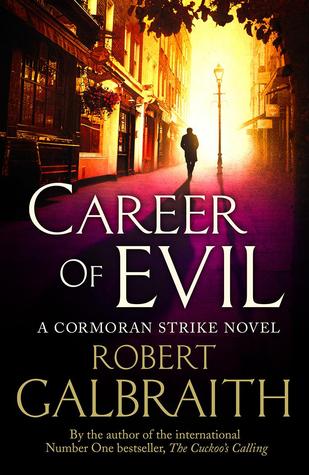
 

Take A Peek Book Review: Career of Evil by Robert Galbraith

“Take a Peek” book reviews are short and (possibly) sweet, keeping the commentary brief and providing a little peek at what the book’s about and what I thought.

Career of Evil

Synopsis:

(via Goodreads)

When a mysterious package is delivered to Robin Ellacott, she is horrified to discover that it contains a woman’s severed leg.

Her boss, private detective Cormoran Strike, is less surprised but no less alarmed. There are four people from his past who he thinks could be responsible – and Strike knows that any one of them is capable of sustained and unspeakable brutality.

With the police focusing on the one suspect Strike is increasingly sure is not the perpetrator, he and Robin take matters into their own hands, and delve into the dark and twisted worlds of the other three men. But as more horrendous acts occur, time is running out for the two of them…

Career of Evil is the third in the highly acclaimed series featuring private detective Cormoran Strike and his assistant Robin Ellacott. A fiendishly clever mystery with unexpected twists around every corner, it is also a gripping story of a man and a woman at a crossroads in their personal and professional lives.

Cormoran Strike is back, with his assistant Robin Ellacott, in a mystery based around soldiers returning from war.

My Thoughts:

Does it still need to be explained that Robert Galbraith is a pen name for J. K. Rowling? Are we all clear by now?

Good. Moving on.

The Cormoran Strike series keeps getting better and better! In this third installment, the murderer strikes particularly close to home. As Cormoran and Robin sift through the clues, they bring up a host of nightmares from each of their pasts. Meanwhile, all the attention means that their business is on the brink of failure thanks to all the negative publicity, and the threat posed by the unknown murderer is scary and unpredictable. Neither of them are safe, but neither wants to back down.

Meanwhile, we get occasional chapters told from the psycho killer’s point of view, and boy, are they disturbing! His obsession and cold-blooded determination to kill and mutilate is just horrific to read, especially as it’s all so matter of fact.

Beyond the murder mystery, which is complicated to the extreme, one of the delights of this book is seeing the relationship between Cormoran and Robin continue to unfold and deepen. Their trust in one another leads them to open up in ways that they haven’t previously, even as their unacknowledged feelings and fears lead to misunderstandings, anger, and near disaster for their partnership.

In general, I enjoyed Career of Evil very much, perhaps even more than the second book in the series, which just struck me as overdone in some ways. My one quibble is the same quibble I often have with J. K. Rowling’s writing: She seems to take inordinate amounts of pleasure in describing unsavory or sad sack characters as being just completely repulsive physically, with stringy hair or dandruff or body odor or any number of other unattractive qualities:

“The man on the door was squat and neckless… ”

“Tempest, whose black bob had certainly been dyed and who wore thick, square black-rimmed spectacles, was his physical opposite: pale, dumpy and doughy, her small, deep-set eyes like raisins in a bun.”

“He turned his head and Strike saw scalp shining through the thinning roots…”

“Eyebrows as thick and bushy as tiger moth caterpillars overhung her puffy eyes.”

It gets to be too much after a while, in my humble opinion.

Actually, I had one more quibble with Career of Evil: The tiny detail that finally enables Cormoran to have the major breakthrough and solve the mystery is… a tiny detail, so trivial that I find it close to impossible to believe that this man would have noticed and identified this teensy element and have the entire solution hinge upon that discovery. The rest of the mystery’s resolution worked for me, but that one thing — no.

Other than that, though, I’m really having a great time reading the Cormoran Strike books, and hope there are many more to come. This book’s mystery is solved by the end, but the door is still open for more adventures and complications for Cormoran and Robin and their partnership.

Added bonus: It’s so exciting to know that BBC is developing a Cormoran Strike Mysteries TV show!

Finally, a reading tip: This is a big, densely plotted book with (it feels like) a thousand characters and backstories to keep straight. The lives and details of the various suspects can easily blend together, and I found myself constantly having to flip backwards and forwards in the book to keep straight which clue went with which suspect. Keeping it all in order is part of the challenge and the fun — but I’d recommend saving this book for a time when you know you’ll have minimal distractions and plenty of concentration!

_________________________________________

The details:

Title: Career of Evil
Author: Robert Galbraith (J. K. Rowling)
Publisher: Mulholland Books
Publication date: October 20, 2015
Length: 489 pages
Genre: Mystery
Source: Purchased

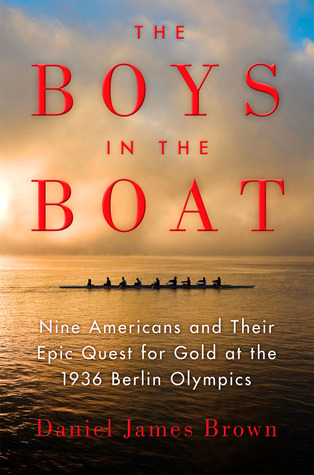
Audiobook Review: The Boys in the Boat by Daniel James Brown

The Boys in the BoatThe Boys in the Boat: Nine Americans and Their Epic Quest for Gold at the 1936 Berlin Olympics tells the inspirational true story of the US men’s rowing team who won gold, against all odds, in what was then one of the most popular sports world-wide.

The book follows one of the team members, Joe Rantz, from his childhood during the Depression through his years of college rowing, culminating in the victory in Berlin. Joe came from a poor family, with a stepmother who disliked him so intensely that he was abandoned at a young age and left to fend for himself. From an incredible inner core of strength, Joe made it to college at the University of Washington and joined the freshman crew program.

At that time, Washington was in hot competition with the Cal crew to dominate not just the West Coast, but all of the US colleges in national regattas, and from the start, Joe’s freshman boat showed remarkable promise. As they won their freshman races and then competed for the varsity seats, Joe and the boys in his boat faced ongoing struggles with financial hardships, family complications, and the sheer bodily torture that is needed to persevere and make it as a rower.

Rowing is a sport of skill and strength, and The Boys in the Boat shows us step by step what it takes to train, to master the physical requirements, and to gain the mental focus and determination to excel. By following Joe and his teammates, we see boys of a variety of backgrounds, mostly working class and struggling to get by, throw themselves into a punishing sport and come together to overcome every obstacle.

team photo

Early on, in the prologue, the author describes meeting Joe Rantz as an old man. Joe tells him of his childhood and family, and about memories of the Olympics in Berlin:

It was when he tried to talk about “the boat” that his words began to falter and tears welled up in his bright eyes.

He goes on to define what so moved Joe:

Finally, watching Joe struggle for composure over and over, I realized that “the boat” was something more than just the shell or its crew. To Joe, it encompassed but transcended both — it was something mysterious and almost beyond definition. It was a shared experience — a singular thing that had unfolded in a golden sliver of time long gone, when nine good-hearted young men strove together, pulled together as one, gave everything they had for one another, bound together forever by pride and respect and love. Joe was crying, at least in part, for the loss of that vanished moment but much more, I think, for the sheer beauty of it.

The Boys in the Boat captures beautifully the open-hearted nature of the boys, their essential earnestness and deep friendship, and their passion for the boat, their school, their coaches, and their shared goals.

Woven throughout are chilling sections describing the Nazi rise to power and the role of Nazi propaganda in the 1936 Olympics, showing how Germany used the games to present a whitewashed version of the Nazi regime to a global audience. It’s truly disturbing to hear or read the parts of the book that describe the gleaming stadiums, the omnipresent swastikas, and the fates of those driven out or disposed of in order to present a pretty picture to the world.

I should pause for a moment to note that I am not at all a sports fan, and I never would have suspected that a book about a rowing team could grab my attention the way it did. Granted, I learned a lot more about rowing that I ever thought I’d need to know, and occasionally the narrative goes so deeply into times, techniques, strokes, and boat-building methods that I got a littly antsy waiting for the action to continue. However, the author does such a terrific job of intercutting the personal stories of the boys and the happenings of the greater world into the narrative of the sport that the whole is simply fascinating.

The audiobook is narrated by Edward Herrmann, whose narration I loved when I listened to Unbroken by Laura Hillenbrand last year. (In fact, it tickled me when Louis Zamperini gets a one-sentence mention in this book.)  Edward Herrmann’s deep voice has a folksy rhythm to it as he narrates The Boys in the Boat, so that I often felt like I was sitting around listening to a good-humored old gent telling me stories. (I have no idea about the narrator’s age or personality, but listening, I couldn’t help but envision a grandfatherly type, wearing a sweater, sitting in an armchair by a fireplace. I guess I need visuals when I listen to an audiobook!)

In reading or listening to a work centered on historical events, it’s no secret what the outcome will be. Just look at the cover and you’ll know that the boys did in fact win gold. You might expect there to be a lack of drama, knowing the end result, but in The Boys in the Boat, that’s simply not the case. The writing is so well-crafted that by the time I got to the actual Olympic race toward the end of the book, I had to remind myself to keep breathing while listening to the detailed description of how the US boat made it from start to finish, detailing practically every stroke along the way.

The epilogue is quite touching as well, covering the experiences of each of the team members immediately after Berlin, their war experiences in the years that followed, and what happened to each over the course of his lifetime. Perhaps most moving is the fact that the nine teammates came together and kept their connection alive for the rest of their lives, even doing anniversary rows together every ten years until they were all in their seventies.

I can’t say enough about how wonderful this book is, whether in print or via audio. The story is truly inspirational, and I’ve found myself unable or unwilling to shake off the images of this group of strong, determined athletes and what their boat meant to them. I strongly recommend this book — and no, you do not have to be a sports fan or rowing enthusiast to enjoy it.

A quick suggestion for those who listen to the audiobook: If possible, keep a copy of the physical book or e-book on hand as well, as you won’t want to miss the photos that go with the story. For some reason, the author’s notes at the end of the book are not included in the audiobook, so be sure to read those as well.

A final note: There are quite a few different videos available about the US Olympic rowing team, including footage filmed by Nazi propagandist and filmmaker Leni Riefenstahl. Here’s a video that gives a great overview of the achievement of this remarkable nine-man crew from Washington:

_________________________________________

The details:

Title: The Boys in the Boat: Nine Americans and Their Epic Quest for Gold at the 1936 Berlin Olympics
Author: Daniel James Brown
Narrator: Edward Herrmann
Publisher: Viking
Publication date: June 4, 2013
Audiobook length: 14 hours, 25 minutes
Printed book length: 416 pages
Genre: Non-fiction/history
Source: Audible

Book Review: Stand-Off by Andrew Smith

Stand-Off

front cover

Stand-off is the name of a position in rugby. Stand-Off is also the name of the newly published sequel to Winger, Andrew Smith’s 2013 young adult novel that both made me laugh and broke my heart into little, tiny pieces.

Ryan Dean West is the main character in both books. Please note that his name is Ryan Dean, not Ryan — it irks him no end when people get it wrong. In Winger, Ryan Dean is a 14-year-old junior at Pine Mountain, a co-ed boarding school located in rural Oregon. He’s used to being different, and considers himself somewhat of a loser, and yet he’s incredibly funny, a great rugby player, a talented cartoonist, and a good friend.

Winger ends with an absolute gut-punch, and that’s all I’ll say about it here. If you haven’t read it, you really should. Check out my review for my rather emotional reaction to Winger, and then rush out to the library to pick up a copy. Seriously.

In Stand-Off, it’s the beginning of senior year, and Ryan Dean is kind of screwed. He’s stuck in a ground-floor, teeny-tiny dorm room — and what’s worse, he’s sharing it with a 12-year-old freshman named Sam Abernathy, an adorable, eager little kid who favors soccer ball pajamas, cooking shows on TV, and leaving doors and windows open to stave off his raging claustrophobia. Needless to say, this does not sit well with Ryan Dean, who just wants to get through senior year, and maybe, just maybe, finally find a private place to have sex with his amazing girlfriend Annie.

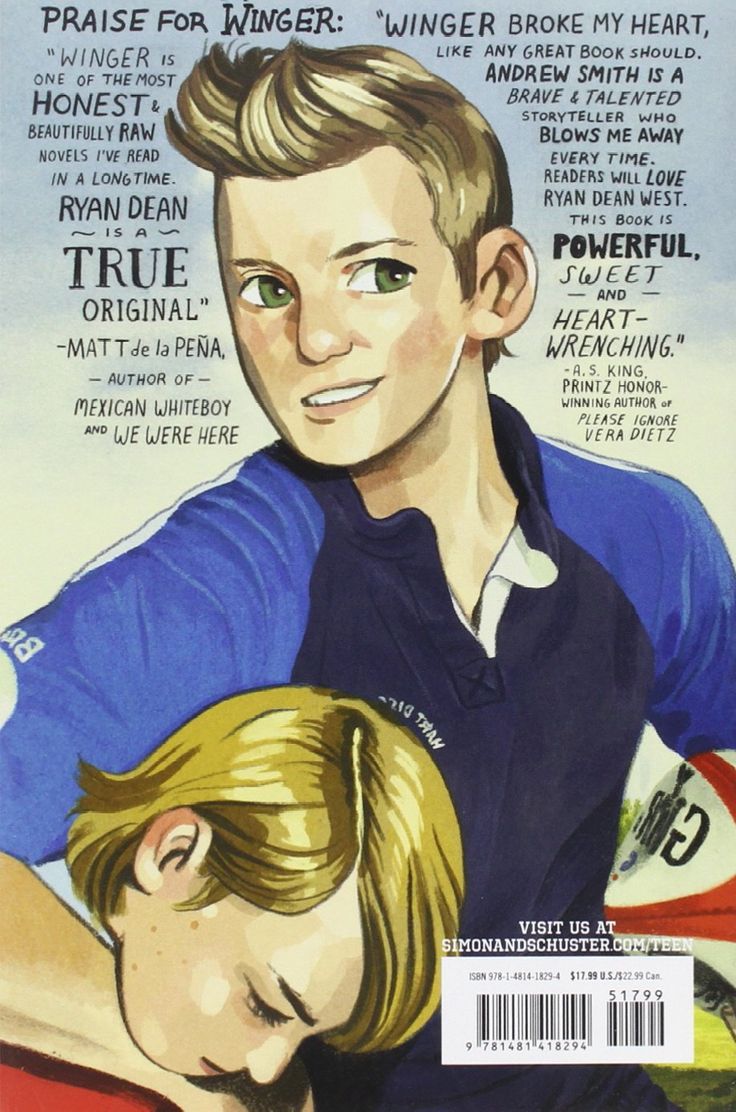
Stand-Off back

back cover

Of course, nothing goes as planned for Ryan Dean, and the real problem is not Sam or the dorm room — it’s Nate. Nate is Ryan Dean’s abbreviation for the Next Accidental Terrible Experience, and Nate seems to be waiting to pounce on Ryan Dean at every turn, behind every corner, and in every dream. Ryan Dean suffers a series of panic attacks and night terrors, and it just seems to get worse and worse. How will he make it through senior year?

That’s the general overview of the plot. Trust me, it’s great.

One of the most delightful ingredients of Andrew Smith’s books is the language, and the writing in Stand-Off is no exception. Told in the first-person, Stand-Off is pure Ryan Dean, with all the horniness of a 15-year-old boy, plenty of snark, and tons of laughs. Open to any random page, and there are priceless gems. For example — page 193 (see, I’m being random):

“Hey, Ryan Dean, do you know what these cherry tomatoes remind me of all of a sudden?”

No. Just no.

Now cherry tomatoes were officially on the Ryan Dean West Things-I-Will-Never-Ever-Eat-Again List.

Or, again randomly, page 309:

Then I saw the Abernathy — all suited up in his perfectly creased Pine Mountain size extra-small boy suit (he must have thrown all the guys’ clothes in the washers and then waited for everyone to leave the locker room before changing) — winding his way like a malnourished albino chipmunk through a redwood forest of rugby players, balancing a plate of food in his hands while everyone he passed smeared their fingers through his hair.

One of the recurring patterns in this book is Ryan Dean’s questioning paragraphs, which start with “Okay. So, you know how…” and go on from there in a glorious stream of semi-connected thoughts and non-sequiturs:

Okay, so you know how sometimes when you really want to do something and so you make a promise to someone you don’t completely trust because somehow that person has just magically evolved into, like, the greatest human being you have ever known but there’s still some deep-down warning signal saying what the fuck did you just promise to do, Ryan Dean but you don’t care because you really want to believe that whatever Spotted John wants is not going to include multiple things that will ruin your life, so you hurriedly grab the pen and sign the contract on the dotted line?

Yeah. That.

It’s hard to pinpoint any one thing that makes this book so great. The characters are terrific, the writing is just so funny and poignant and honest, the cartoons interspersed throughout are so on-point and off-beat — and really, I just care so much about Ryan Dean after reading Winger that I spent all of Stand-Off just wishing for him to be okay and to be happy.

I’ll stop gushing, and just say: Read both books. I never would have thought that I’d love books about a pubescent teen boy in boarding school… but to whichever person in whichever publication wrote the review of Winger that caught my eye when it first came out: Thank you.

If you enjoy well-written young adult fiction that can make you laugh and cry, sometimes in the same chapter, you’ve just got to read Winger and Stand-Off.

_________________________________________

The details:

Title: Stand-Off
Author: Andrew Smith
Publisher: Simon & Schuster
Publication date: September 8, 2015
Length: 418 pages
Genre: Young adult fiction
Source: Library

Book Review: The Cure for Dreaming by Cat Winters

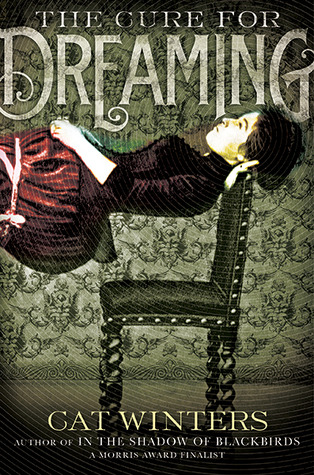
Cure for DreamingIn this YA novel, hypnotism and the suffrage movement are combined in startling ways to give us a portrait of life in 1900 for a young woman who is, pretty much literally, too independent for her own good.

On her 17th birthday, Olivia Mead attends a hypnotism show headlined by the young, talented Henri Reverie, a “mesmerist” whose talents have made him famous across the country. Egged on by her friends, Olivia volunteers to be Henri’s first subject, and astonishes the entire audience by her extreme susceptibility to his hypnotism. She’s so far under that he’s able to make her stiff as a board, suspend her between two chairs (as in the cover photo), and even stand on her torso, all without her knowledge.

Olivia is slightly embarrassed, but also enjoys the newfound attention her moment in the spotlight brings, especially from wealthy, out-of-her-reach Percy, the judge’s son. Olivia’s own father, the local dentist (with a truly horrifying collection of tools), is less than pleased. He wants nothing more than for Olivia to be good and obedient, especially after learning that she’d attended a suffragists’ rally the day before. He arranges for a private hypnotism session with Henri, during which Henri compels Olivia to see the world as it truly is, to understand the roles of men and women, and to be able to say nothing but “all is well” when she becomes angry.

This backfires, of course. Olivia is an avid fan of Bram Stoker’s Dracula, and thanks to the hypnotism, when she looks at her father, she sees him as he truly is — fanged, clawed, and monstrous. She sees the truth of many of the women of her town as well, who fade into invisibility as Olivia watches. Desperate, she tracks down Henri and begs him to fix her — but there’s a reason why he can’t just yet, and the two form a scheme to give Olivia back control of her own mind and voice and to get Henri what he desperately needs.

The Cure For Dreaming is a captivating portrait of the plight of women at the dawn of the 20th century. The author does a wonderful job of weaving together an individual’s personal struggles with the struggles of women at that time. It’s easy for us, sitting here in the comforts of 2015, to take for granted the rights we enjoy, and this book reminds us of the venom and hostility that confronted the women’s suffrage movement. The women who dared to take a public stance and speak out were demonized, ridiculed, accused of being unwomanly or even insane, and were subjected to all sorts of horrible public humiliations. In this book, looking through Olivia’s eyes, we see how far the men — and even many women — were willing to go to silence the voices of women who stood up for equality and the right to speak their minds.

As one character describes to Olivia:

“My father leaned over to me and said, “Now, that’s womanhood perfected, Percy my boy. That’s the type of girl you want. Silent. Alluring. Submissive.”

I can’t say enough about how powerful and engrossing this story is. Olivia is a marvelous lead character — smart, warm-hearted, and unwilling to keep silent when she sees something wrong. Her need to speak out is what gets her into trouble, of course, but at the same time, she makes a difference in all sorts of unexpected ways, even when forced through the power of hypnotic compulsion to be compliant and stifle her anger.

Olivia’s interactions with Henri do not take the anticipated route, and despite the growing feelings between the two, this book does not go down the dreaded path of showing a young woman throwing away her own plans in order to follow a guy. Olivia has a backbone and a commitment to staying true to herself, and that’s a lovely thing to see in a YA heroine.

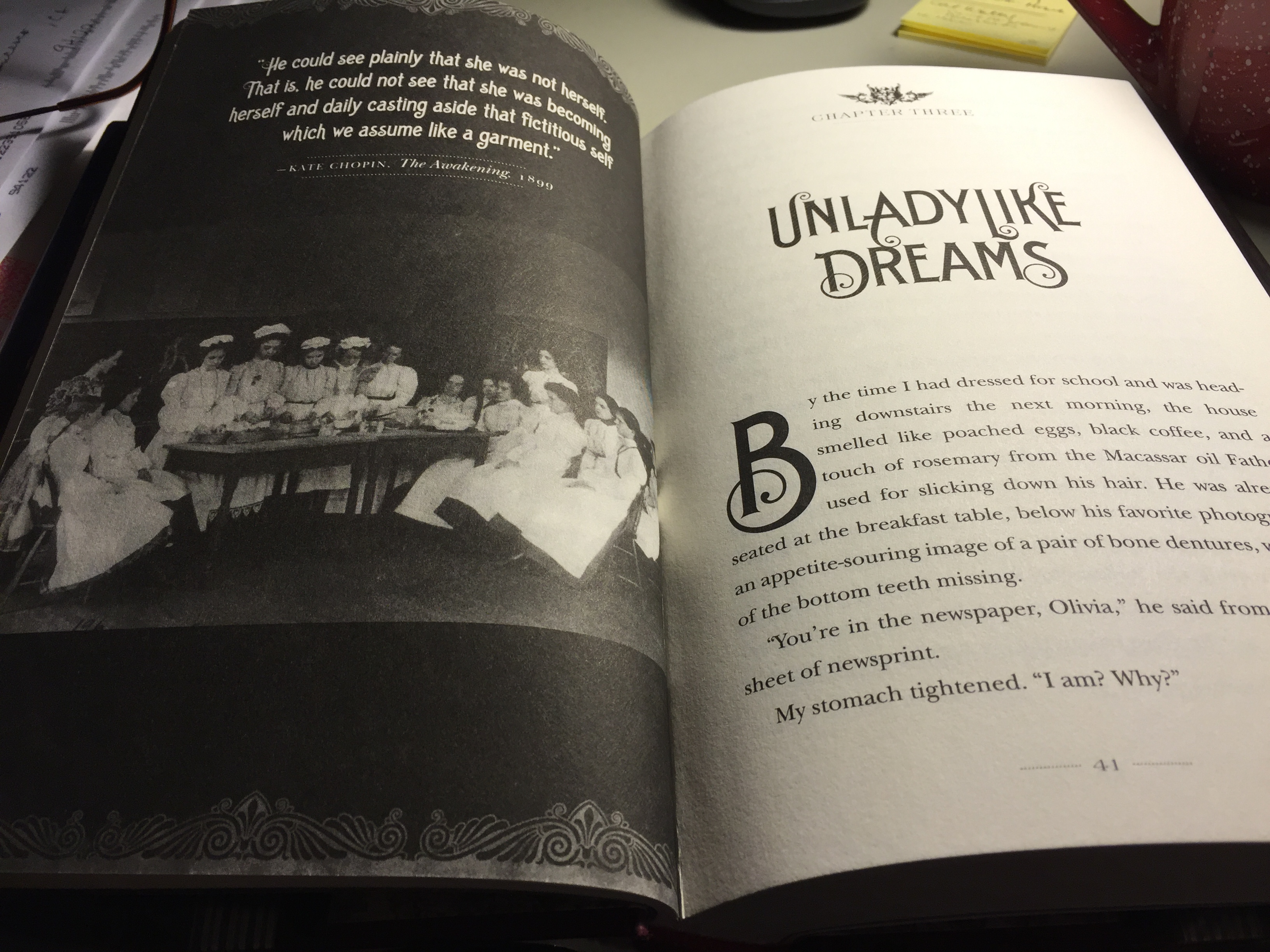
The book itself is wonderful to page through, as chapter breaks are illustrated by historical photos from the book’s era, as well as by a selection of powerful quotes by everyone from Kate Chopin to Mark Twain to Carrie Nation.

image

The Cure for Dreaming is a fast read — I gobbled it up over the course of 24 hours! I was hooked almost instantly, and just couldn’t bear to put the book down. The characters are well-drawn, the subject of hypnotism is fascinating, the relationships between the characters are pitch-perfect, and the context of the fight for women’s votes and the right to one’s own voice is powerfully presented. While written for a young adult audience, the book does not oversimplify or talk down in any way. As an adult reader, I loved the book and was never bored. This would be a great choice for teen girls, and could also provide some great discussion starting points for mothers and daughters who want a book they can share and enjoy together.

_________________________________________

The details:

Title: The Cure for Dreaming
Author: Cat Winters
Publisher: Amulet
Publication date: October 14, 2014
Length: 352 pages
Genre: Young adult fiction
Source: Library

Take a Peek Book Review: Destiny’s Plan by Victoria Saccenti

“Take a Peek” book reviews are short and (possibly) sweet, keeping the commentary brief and providing a little peek at what the book’s about and what I thought.

DestinysPlan72


Synopsis:

(via Goodreads)

When Raquelita Muro and Matthew Buchanan meet by chance on a Greyhound bus between Texas and Tallahassee, neither suspects Fate is about to take over.

Raquelita, a gentle girl under the heel of her abusive mother, finds this kind young man a miracle.  Matthew, an idealistic young soldier, discovers this sweet-natured girl is an angel in need of a guardian.  However, the next stop on Matthew’s journey is Fort Benning to report for deployment to Vietnam, while Raquelita’s destination is set at her mother’s whim.  Regardless of the forces tearing them apart, they discover a way to secretly span the distance, to end up closer than ever.  But Fate is rarely kind.  The vagaries of war—and the unstable tempers of Raquelita’s mother—intervene, leaving both ill-fated lovers feeling there is no hope for their love.

Set in the turbulent era of the Vietnam War, Raquelita’s and Matthew’s story is one of love, loss, lost faith, shattered memories, deferred dreams and broken promises.  Will Fate tear apart these two damaged souls, leaving them desperately alone forever, or will they finally overcome Fate, their bond stronger than they ever thought possible?

My Thoughts:

Debut author Victoria Saccenti has written a complex, heart-wrenching tale of a chance meeting that changes lives, and the intricate ways that bonds of family and obligation can both hurt and heal. The love story here is startlingly sudden, but also quite sweet, as Raquelita and Matthew recognize their connection within moments of meeting and somehow manage to establish a bond so strong that it can withstand physical and emotional trauma.

Destiny’s Plan has a plot that spans eras and continents, as the author weaves in not only the Vietnam War but also goes back to an important family episode during the Spanish Civil War. The author has clearly done her research, as the historical elements are well presented. Not only do we get the facts of a deployment to Vietnam and what that might look like, but we also get the sights and sounds of the late 1960s through the inclusion of the music, fashion, and political and social upheavals of the time.

Raquelita’s life is hard and complicated. One of the pieces of the story that I most enjoyed was getting to know the members of her family, from her damaged and cruel mother Isabel to her mysterious godfather Xavi, her loving father Emilio, and the aunt, uncle and cousin who give Raquelita a chance to experience a normal, loving home life. Raquelita’s younger sister Marité is adorable, and I understand she’ll be the central figure in her own book next.

Another element that really appealed to me in Destiny’s Plan was the fact that love is shown in different ages and stages in this book. Yes, Raquelita and Matthew are the main characters and love story, but we also see several more mature adult relationships as well, and it’s both unusual and refreshing to see true love, emotional and physical, shown as not only the territory of the younger generation.

A slight disclaimer: I’m not usually a romance reader, and so I don’t have much in the way of comparison. I have a feeling that the plot elements that didn’t really work for me in this book are probably things that would appeal to someone who enjoys romances — but as this is not a preferred genre for me, I had to push myself a bit to get over it. Likewise, I was a bit taken aback by the many explicitly intimate scenes, but again, I think I just generally don’t read romances and didn’t know what to expect.

Overall, I’d say the time period gives this book an interesting and unusual flavor, and the characters are well-developed and memorable. If you enjoy swooningly romantic stories with underlying drama and painful obstacles, check out Destiny’s Plan!

To learn more about the author, check out my spotlight post here.

_________________________________________

The details:

Title: Destiny’s Plan
Author: Victoria Saccenti
Publisher: Smashwords Editions
Publication date: September 15, 2015
Length: 435 pages
Genre: Historical romance
Source: Purchased

A book and a movie: North and South by Elizabeth Gaskell

Finally, finally, finally… after years of saying that (a) I want to read North and South by Elizabeth Gaskell and (b) I need to see the mini-series version (starring *swoon* Richard Armitage)…

I’ve done both!

This year, my online book club (the wonderful and amazing Outlander Book Club!) chose North and South as our group classic read. We started about six months ago, and have read and discussed two chapters per week from then until now, just finishing this past week. And then, to celebrate, we all decided to watch the BBC mini-series and discuss that as well. And both were glorious!

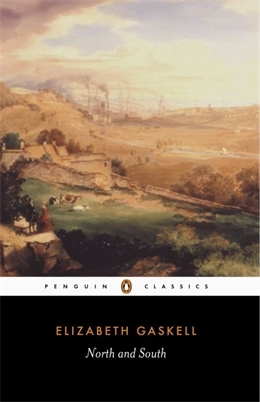
N&S

First, the book, starting with a quick synopsis (via Goodreads):

When her father leaves the Church in a crisis of conscience, Margaret Hale is uprooted from her comfortable home in Hampshire to move with her family to the north of England. Initially repulsed by the ugliness of her new surroundings in the industrial town of Milton, Margaret becomes aware of the poverty and suffering of the local mill workers and develops a passionate sense of social justice. This is intensified by her tempestuous relationship with the mill-owner and self-made man, John Thornton, as their fierce opposition over his treatment of his employees masks a deeper attraction. In North and South, Elizabeth Gaskell skillfully fuses individual feeling with social concern, and in Margaret Hale creates one of the most original heroines of Victorian literature.

North and South is is a combination of romance and social commentary. Through Margaret’s eyes, we come to see the struggle for workers’ rights, the plight of the poor, and the value of good people, no matter their social status. Margaret casts aside her class snobbery and learns to appreciate and respect a self-made man who pulled himself up from nothing, and at the same time comes to befriend and support the poor and downtrodden of the mill town where she ends up. Margaret and John start as stormy opposites, constantly antagonizing and misunderstanding one another, and evolve into the truest of soulmates. It’s a lovely, lovely book, and we found so much to discuss and ponder throughout.

northandsouth1

And then there’s the mini-series, a four-episode production from 2004. How can I possibly describe the loveliness? It’s got passion, drama, beautiful people, lots of smolder, amazing costumes… also grimy, poverty-stricken hovels, dangerous working conditions, and angry mobs. Not to mention parents who are either clueless (Margaret’s) or kind of scary (John’s mom), plenty of tragic deaths, secrets and misunderstandings, and oodles of train rides.

What’s not to love about a tortured, broody hero?

N&S gif1

Or a beautiful young woman with a backbone?

N&S mh

And talk about chemistry:

N&S gif2

I’m thrilled to have finally experienced both versions of North and South, and I wouldn’t give up either! If you’ve never had the pleasure, I absolutely recommend starting with the book… unless you don’t have the patience and demand instant gratification, in which case, all this gorgeousness can be yours in just four short hours!

On a final note, I just read a terrific piece written last year on the 10th anniversary of the BBC production’s release. Check out the full article (“10 Years Later, ‘North & South’ Remains the Greatest Period-Drama Miniseries of All Time”) here, and I’ll leave you with this small line from it:

It’s one of the most explosive, chemistry-rich misunderstanding-laden romances that’s ever graced the small screen.

And if you want to know more about Elizabeth Gaskell’s novels, check out this terrific post over at the always great Eclectic Tales blog.

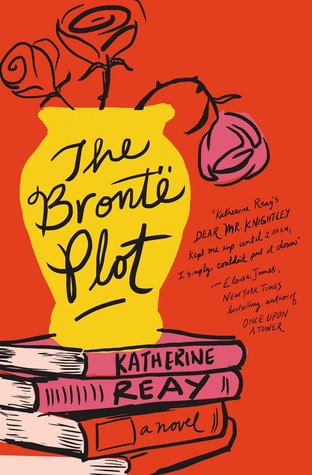
Take a Peek Book Review: The Brontë Plot by Katherine Reay

“Take a Peek” book reviews are short and (possibly) sweet, keeping the commentary brief and providing a little peek at what the book’s about and what I thought.

Bronte

Synopsis:

(via Goodreads)

Lucy Alling makes a living selling rare books, often taking suspicious measures to reach her goals. When her unorthodox methods are discovered, Lucy’s secret ruins her relationship with her boss and her boyfriend James—leaving Lucy in a heap of hurt, and trouble. Something has to change; she has to change.

In a sudden turn of events, James’s wealthy grandmother Helen hires Lucy as a consultant for a London literary and antiques excursion. Lucy reluctantly agrees and soon discovers Helen holds secrets of her own. In fact, Helen understands Lucy’s predicament better than anyone else.

As the two travel across England, Lucy benefits from Helen’s wisdom, as Helen confronts the ghosts of her own past. Everything comes to a head at Haworth, home of the Brontë sisters, where Lucy is reminded of the sisters’ beloved heroines, who, with tenacity and resolution, endured—even in the midst of change.

Now Lucy must go back into her past in order to move forward. And while it may hold mistakes and regrets, she will prevail—if only she can step into the life that’s been waiting for her all along.


My Thoughts:

I’ve enjoyed author Katherine Reay’s previous two novels, Dear Mr. Knightley and Lizzy & Jane, and I had high hopes for The Brontë Plot as well. Unfortunately, while there are some interesting elements, the overall story just doesn’t hold up.

Lucy is a flawed character, someone with obvious talent and enthusiasm, but who makes questionable choices when it comes to achieving her ends. Her actions eventually catch up to her and cause a rupture with the people she cares most about, but her trip with Helen seems to represent a second chance — even though Lucy goes right on fabricating stories to suit her needs even while trying to start fresh.

Lucy’s relationships with James and with her boss Sid are engaging, and it’s hard not to care while she deals with the fall-out once James discovers her dishonesty. Still, it’s difficult to feel a whole lot of sympathy for a main character who takes such foolish actions, and I felt that the resolution of the various conflicts and disappointments was a bit too easy.

The pacing of the book seems to sag once Lucy sets off for England with Helen, where far too much time is spent on the details of their tourism, their hotel accommodations, and their meals. I was never particularly engaged by the family secrets that Lucy and Helen seek to come to peace with, and the literary theme, walking in the footsteps of the Brontës and their contemporaries, with constant references to Jane Eyre, Heathcliff and Catherine, and more, felt forced and not an organic part of the story.

The author creates interesting, multi-faceted characters in this book, but the plot itself didn’t really go anywhere, in my opinion. While I’ll continue to follow this author and hope to read more by her in the future, I’d say The Brontë Plot is mostly skippable.

_________________________________________

The details:

Title: The Brontë Plot
Author: Katherine Reay
Publisher: Thomas Nelson
Publication date: November 3, 2015
Length: 336 pages
Genre: Contemporary fiction
Source: Review copy courtesy of Thomas Nelson via NetGalley

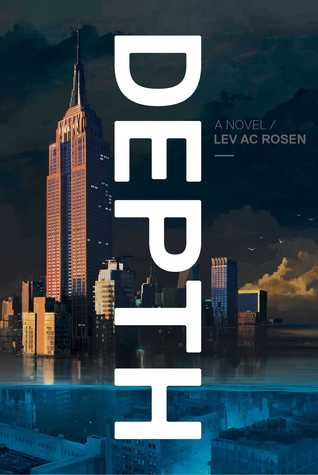
Book Review: Depth by Lev AC Rosen

DepthSome two hundred years from now, the polar ice caps have long since melted. Chicago is on the coastline of mainland United States, which is ruled by a fundamentalist Christian government. Moving east, you’ll find the Appalachian Islands, and then huge expanses of ocean covering the drowned cities, where tips of building occasionally poke up from the waves.

And then there’s New York which, Depth makes clear, can survive anything.

Water levels have risen about 20 stories — so the million or so people who still inhabit New York live on the 21st floor and above, employing newer technologies such as Glassteel to keep the above-water buildings more or less dry and waterproof. The building are connected by an intricate maze of bridges — some well-maintained, some rickety — and permanently moored boats, such as converted cruise ships and military vessels, which form everything from police stations to nursing homes to floating restaurants.

Watch your step! The waves keep churning beneath your feet, and you WILL get wet. Salt water and sea spray are everywhere, and those bridges can get pretty slippery. One big storm or moment of inattention, and you’ll end up in the water… and in general, those who go in only come out as corpses destined for the recycling plant.

Oh, it’s quite a world that author Lev AC Rosen has built here in Depth. The concept alone is worth picking up this futurist, sci-fi, noir detective story (described in the cover blurb as “Heinlein meets Hammett”) — but hey! There’s an actual plot to go with it, and it’s quite a good one.

Private investigator Simone Pierce is a tough, prickly red-head who goes her own way and sticks to her own company for the most part. Her only two trusted friends are Caroline, a highly-placed politician from a powerful family, and Danny, a young man with some unusual talents who masquerades as a psychic. Simone is out on a routine case, trying to get the goods on a client’s possibly cheating husband, when she’s pulled into something far more deadly and complicated. When the husband turns up dead, Simone finds herself embroiled in a web that includes suspicious cops, a potentially crooked pastor, an art-loving power broker, a sexy grad student, and a mysterious woman, whom Simone thinks of as The Blonde, who seems to be at the center of it all.

The author has pulled off quite a balancing act here, creating a fully fleshed-out detective story that keeps powering forward with high-level energy, and at the same time pulling us into a crazily off-balance world that delights with each water-soaked new chapter. The new environment is just fascinating, and I am full of admiration for the way the author slips in little details about the waves or the salt water or the constant dampness while there’s a chase scene underway.

The dialogue has all the wryness, and sarcasm of a traditional noir detective tale, fine-tuned for this new place and time.

“Are you asking me along to watch you interrogate someone I’m angry at in an attempt to repair our friendship?”

“That is exactly what I’m doing.”

“Will you let me hit her?”

“If the opportunity presents itself.”

Even the descriptive passages are full of some wonderful imagery:

Simone tossed what was left of her cigarette into the ocean. It cartwheeled into the water, one end leaving a trail of sparks like blood spatter.

Really, I just can’t say enough about Depth. I’ve been a fan of this talented author since his debut novel, All Men of Genius, was released in 2011. The detective part of the story is fun and engaging, but it’s this concept of New York as a drowned city that somehow has managed to survive, to thrive, and to keep its own sense of independence and defiance that’s truly a treat. I can’t get enough of the world Lev AC Rosen has created in Depth, and I just hope there will be a sequel so I can visit once again!

_________________________________________

The details:

Title: Depth
Author: Lev AC Rosen
Publisher: Regan Arts
Publication date: April 28, 2015
Length: 272 pages
Genre: Science fiction
Source: Purchased


Audiobook Review: The Witch of Blackbird Pond by Elizabeth George Speare

Witch of Blackbird Pond

The newest edition

Growing up in Connecticut, reading The Witch of Blackbird Pond was an absolute must. For years, I’ve remembered reading it back in my school days, and I know that I loved it at the time, but I couldn’t have told you much about it except for the barest of bare bones…. until now!

I was looking for a new audiobook this past week, and doing a Halloween-themed post about witches brought this children’s classic to mind. What a treat! I’m so thrilled to have revisited this terrific story.

In The Witch of Blackbird Pond, it’s 1687, and Katherine (Kit) Tyler sails into Wethersfield, Connecticut to join the household of her last remaining relatives, her Aunt Rachel and Uncle Matthew, and their two daughters, Judith and Mercy. 16-year-old Kit has lived all her life in Barbados, raised by her loving grandfather, but after his death she’s left with nothing, and leaves her beautiful island behind to start a new life among the Puritans of New England

Kit is taken in by her family, but has a hard time fitting into the rigid, restrictive life she finds in Connecticut. Her only sense of joy and freedom comes through her secret visits to the old Quaker woman, Hannah Tupper, who lives alone in a small cottage in the meadow by Blackbird Pond. Hannah is both feared and scorned by the townspeople, and despite being warned away, Kit’s visits to Hannah soon lead to danger for both of them.

I'm pretty sure this is what the book looked like when I read it eons ago!

I’m pretty sure this is what the book looked like when I read it eons ago!

I simply love this book! The language is incredibly descriptive, especially the depictions of autumn in Connecticut, and Kit’s first encounter with snow. But really, the entire thing is so well written. The words paint such a picture of Kit’s life, contrasting the Puritan bleakness with the lushness of the tropical islands.

The characters are distinct and memorable, from Kit’s kind-hearted cousin to the wealthy boy who courts Kit to the poor, hungry child who views Kit as a refuge and friend. Likewise, the plot is sharp and well-developed. The story moves along at a steady pace, but never rushes. The author manages to build drama and tension into the story, even while portraying simple moments like fixing a roof or teaching children to read their ABCs.

As for the audiobook, narrator Mary Beth Hurt does a lovely job bringing the story to life. Her voice is well suited to Kit, and yet she also pulls off the crackly old voice of Hannah and the childish voice of the young girl, Prudence. The pacing is quite good, and I felt so engaged by listening that I found myself taking the long way home just so I could listen a bit more while I drove.

Enough gushing. If you’ve never read The Witch of Blackbird Pond, you’re missing out! It’s never too late, though — the story feels fresh and exciting, even all these years after its publication. And if you’re like me, having read the book ages ago, give yourself a treat and re-read it or listen to the audiobook. I’m so happy that I did!

_________________________________________

The details:

Title: The Witch of Blackbird Pond
Author: Elizabeth George Speare
Narrator: Mary Beth Hurt
Publisher: Laurel Leaf
Publication date: 1958
Audiobook length: 6 hours, 24 minutes
Printed book length: 256 pages
Genre: Historical fiction (young adult)
Source: Library (Overdrive)