Audiobook Review: The Android’s Dream by John Scalzi

Android's Dream

A human diplomat kills his alien counterpart. Earth is on the verge of war with a vastly superior alien race. A lone man races against time and a host of enemies to find the one object that can save our planet and our people from alien enslavement…

A sheep.

That’s right, a sheep. And if you think that’s the most surprising thing about this book, wait until you read Chapter One. Welcome to The Android’s Dream.

For Harry Creek, it’s quickly becoming a nightmare. All he wants is to do his uncomplicated mid-level diplomatic job with Earth’s State Department. But his past training and skills get him tapped to save the planet–and to protect pet store owner Robin Baker, whose own past holds the key to the whereabouts of that lost sheep. Doing both will take him from lava-strewn battlefields to alien halls of power. All in a day’s work. Maybe it’s time for a raise.

Throw in two-timing freelance mercenaries, political lobbyists with megalomaniac tendencies, aliens on a religious quest, and an artificial intelligence with unusual backstory, and you’ve got more than just your usual science fiction adventure story. You’ve got The Android’s Dream.

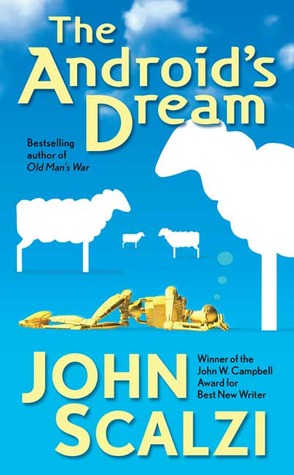
The Android’s Dream absolutely lives up to expectations… except for the teeny little fact that there’s a sleeping robot on the cover, and this is assuredly not a book about robots.

Instead, it’s about intergalactic politics and brinksmanship, artificial intelligence, governmental hijinks, a man-made religion… and yes, sheep. Look, it’s silly and doesn’t necessarily make sense 100% of the time, but it’s always entertaining, even when it makes your head hurt.

The cast of characters is large, and features diplomats, hired thugs, alien warriors, war vets, pet store owners, and an overgrown young alien on his culture’s version of an Amish Rumspringa. In terms of setting, the book takes place in the halls of power on Earth, onboard an intergalactic cruiser, on an alien planet, and in one particularly action-packed scene, at a mall.

Robin Baker and Harry Creek are awesome good guys. They’re both genuinely good people sucked into a completely f*cked up and weird situation, and maintain a surprising amount of good cheer and plain old resourcefulness when it all hits the fan. The politicos aren’t entirely corrupt, and there’s even one at the State Department who has his head on straight, outthinks everyone around him, and is hell on wheels in the courtroom.

In terms of the audiobook, there are pros and cons.

On the negative side, the twists and turns of the plot and the complicated interconnections between the rather huge number of characters make the plot a bit hard to figure out and keep straight via audio. After listening to the first 2 or 3 chapters, I had to stop by the library to get a hard copy so I could go back and make sure I understood who the various characters were and what they wanted. There’s a lot of plotting and scheming in The Android’s Dream, and keeping the players sorted is essential

That’s really the only downside of the audiobook — other than than, I’d say that audio is definitely the way to go!

Narrator Wil Wheaton is superb at bringing characters to life, from the full-of-themselves ambassadors and high muckety-mucks to the secret church officials to the clueless cruiseliner passengers. His accents and inflections are spot-on, and man, it’s just all so darn funny.

Call me immature, but I found something immensely hilarious about hearing Wheaton pronounce names like Narf-win-Getag and Hubu-auf-Getag, or describe the Nagch people’s rite of Ftruu, or even analyze the landmark legal case Agnach Agnach-u v. Ar-Thaneg. This stuff might look funny on the page, but listen to it repeated over and over again, in scenes of blustering negotiations or high-octane action, and it’s… I don’t know… just laugh out loud riotous.

Once I got past my initial confusion, I really loved The Android’s Dream, and was especially glad that I stuck it out long enough to really get into the groove of the audiobook. John Scalzi’s writing plus Wil Wheaton’s narration is a dream combination. I wish this book had a sequel (as I understand, at one point, there was maybe-sorta a plan for one, but it never happened) — but barring that, I’ll be happy to listen to more Scalzi/Wheaton audiobooks any time one lands in my hands (or in my Audible app).

_________________________________________

The details:

Title: The Android’s Dream
Author: John Scalzi
Narrator: Wil Wheaton
Publisher: Tor Books
Publication date: 2006
Audiobook length: 10 hours, 34 minutes
Printed book length: 396 pages
Genre: Science fiction
Source: Purchased

Save

The Memory Wall: New release celebration and author Q&A!

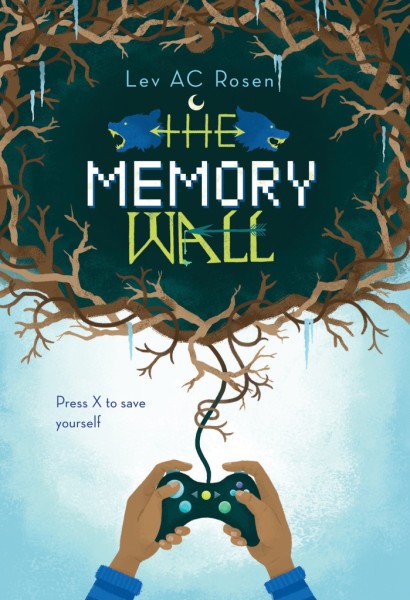
the-memory-wall-699x1024

There’s a fine line between real life and video games in this engrossing novel that’s part Kathryn Erskine’s Mockingbird, part Patrick Ness’s A Monster Calls.

Severkin is an elf who slinks through the shadows of Wellhall’s spiraling stone towers, plundering ancient ruins and slaying mystical monstrosities with ease.

He’s also a character in a video game—a character that twelve-year-old Nick Reeves plays when he needs a break from the real world. And lately, Nick has really needed a break. His mother had an “incident” at school last year, and her health has taken a turn for the worse.

Nick is convinced his mother’s illness has been misdiagnosed, but no one believes him. His only escape is the online world of Wellhall, where, as the elf character Severkin, he can face any problem. But when Nick finds himself fighting alongside another elf who reminds him of someone he knows in real life, his worlds begin to collide. . . .

I’m so excited to share this sneak peak at The Memory Wall, the upcoming new release by Lev AC Rosen! The Memory Wall will be released September 13, 2016… and I encourage you all to stop right now, open up a new tab in your browser, hit up Amazon or your favorite online bookseller, and hit the preorder button. You can thank me later. (And now come back and finish reading my post!)

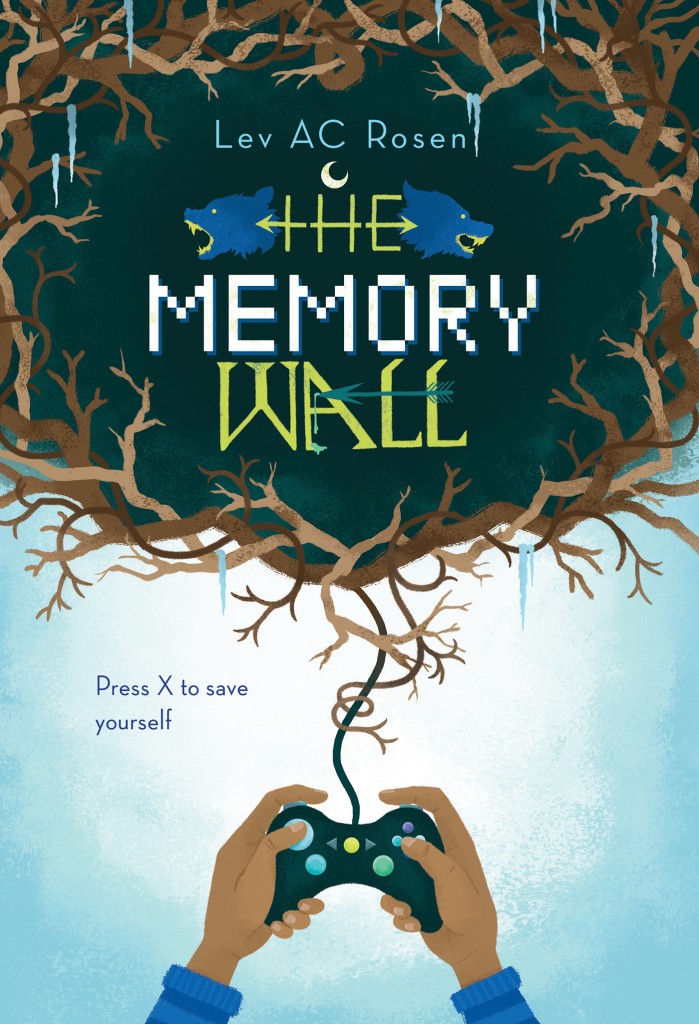
The Memory Wall is an unusual, surprising read — aimed at younger teens, but definitely appealing to grown-ups as well. Don’t be deceived by the cover. While the game and fantasy elements of this book are quite important, it’s the real-life Nick and his disintegrating family that are the heart and soul of the story.

For me personally, Nick’s family, school situation, and inner struggles are the most engrossing elements of The Memory Wall, but the in-game portions are equally well-written and have a propulsive energy all their own. As you’ll see from the Q&A below, it amazes me how well certain elements work together — elements that I never in a million years would have expected to fit into one book — but they really do come together in unexpected but really cool ways.

I’m really thrilled to be able to share this Q&A, but let me just add more note: Lev AC Rosen is an amazing writer who deserves much wider acclaim! Not only does he write great kids’ books (see my review of Woundabout here), but he’s also written two of my absolute favorite books for adults, All Men of Genius (which I read before I was a blogger, so no review… but maybe I’ll revisit in a future blog post) and Depth, which is just awesome (review here).

As a side note, I ended up asking Lev a bunch of questions that relate to the fact that I have a 14-year-old son who’s obsessed with video games. Just FYI.

Without further ado, I’m proud to present:

A Q&A with author Lev AC Rosen, author of The Memory Wall

Note: Mild (very mild) spoilers ahead…

Q:  I never would have guessed that Alzheimer’s, gaming, and the Berlin Wall could fit into a single book. Did you set out to write about all three of these elements from the start?

A: I’m a big believer in the idea that every book writes itself differently. Sometimes the whole idea comes to me fully formed, like a seed, and planting it lets that idea grow. Sometimes it’s more like assembling a puzzle from the pieces that are just floating around your mind.  For The Memory Wall, it was the latter – I knew I wanted to do a book about someone playing a video game, and use that as a story-with-a-story format, where the two stories could actually be pulled apart and still stand on their own. But the age group, the characters, the world, the Berlin Wall, Alzheimer’s – those all sort of snapped on, one by one, because they were already floating around in my head as things I wanted to write about.  Maybe puzzle pieces isn’t the right metaphor – maybe it’s more like trying on clothes. I had this body – video game, story-within-story – and I assembled an outfit on it from the clothes in the wardrobe of my brain – and that included Alzheimer’s and the Berlin Wall. The outfit just looked good. And I didn’t start writing until the outfit was assembled, because the outfit is the idea. Before that, it was just disconnected ideas. Once all the pieces were together, I had an idea, and then I started writing. So Alzheimer’s and the Berlin Wall were there from the moment I was typing. But the core was the video game, I guess.

Q: What was your inspiration for The Memory Wall?

A: Well, I just sort of answered the inspiration for the book part – I could talk more about my personal experiences with Alzheimer’s, or this great German film teacher I had in college, but I’m going to talk about those elsewhere and when I first read this question, I thought you were asking about the literal wall in the book, and I really want to answer that version of the question, because it’s not something I’ve been asked: This book is so much about history, and finding ways to preserve history – whether personal, or societal. Nick’s dad writes about Black history. His mom never talks about her own history in East Berlin. His mom is also losing her own history, and that means Nick feels he’s losing his history with her. So I was thinking about history, and the way we map it, and try to remember it – books, photos, dates, family trees. The ways we quantify history. And I wanted Nick, at some point, to (light spoilers) destroy that in some way. I wanted him to tear down the history he felt had been thrust upon him and realize that history – whether personal or societal – is something that changes all the time, depending on who you talk to, how you look at it. Sure, we can write down dates, map our great-great-grandmothers, but history lives in us. In stories, in memories. It’s not carved in stone. So the memory wall, in the book itself, is this sort of literally carved-in-stone family tree. And I’m trying to go spoiler-light here, so I’ll just say that it’s a history that is put upon Severkin, Nick’s in-game avatar. And when he realizes how his history – and everyone’s history, especially his mom’s – is more than names and dates, that it’s something more fluid than that, he gets to literally shatter the stone. That was satisfying. Plus, of course, calling it the memory wall ties into the Alzheimer’s and the Berlin Wall. But the original inspiration was that I wanted a family tree that could be destroyed in some way. Not to say that his history isn’t that, but to say it’s more than that.

Q: Race and identity are important elements for Nick and Nat, and this is also reflected in their in-game characters. What would you hope that kids reading the book would learn from this?

A: I don’t know if I’d say I want kids to learn anything, exactly. There was this article going around a while back, about a study saying that those who read fiction tend to have more empathy. Reading literally puts you in someone else’s head, so you learn how to do that with real people, too. I think of that whenever I’m writing, because that’s important. That books can change the world – and I don’t have many skills, so this is the thing I can do.  But to really expand that empathy, I need to have it, too. As an author, I can’t just write about people like me – I can’t just write about queer Jewish men from NYC. Besides being wildly limiting, it’s also boring, and isn’t what the world looks like. Authors have the responsibility to put themselves into the minds of different people from different backgrounds – and to do so respectfully. Because when we do that, our readers experience it as well. And that’s the important stuff. So, when I knew Nick had to have a background with strong historical elements, one mapped, one hidden, and I knew so much of the book was about duality – secret/exposed histories, game/real world – I decided Nick’s two sides of the family could be two races, as well. Luckily, I have multi-racial friends, and they were willing to talk to me, and give me books and essays to read so that I could explore that perspective as much as someone without it can. What I hope is that kids enjoy the book, and if they’re multi-racial, they see themselves in it, even if Nick isn’t really like them. And if they’re not multi-racial, hopefully they come out of it with a bit more understanding of the perspective of those who are. Which isn’t to say Nick represents all multi-racial people, but just that he is a fully fleshed out person who the kids can get behind.

Q: Were you at all tempted to have Nick’s mother not have Alzheimer’s, proving Nick right?

A: SPOILERS! This is a fantastic question, and yes. So much yes. I actually tried really hard to go in undecided. To be like “this could go either way.” But the more I realized how much Nick’s parents were keeping from him, the more I knew she had to have it. I did lots of research on Alzheimer’s, talked to doctors, and there are lots of things that look like Alzheimer’s – lots of things Nick could hold on to and say “it’s this, and this is so easily curable!” But the doctors can test for most of those. But I needed hope to be vibrant through the entire book. I needed to hope with Nick.

It’s interesting – people who have read it who have had personal experiences with Alzheimer’s – who have lost someone to it – never believe that Sophie has been misdiagnosed. They tell me they experienced so much of what Nick did, but as readers, they never doubt the diagnosis. Those readers who don’t have a personal experience with Alzheimer’s, though, think it’s possible Sophie has been misdiagnosed. So I feel like that’s a good balance to strike.

Q: As far as I know, most kids don’t play video games with their mothers. (Mine doesn’t!) I love this element of Nick’s relationship with his mom, and how their game connection was a part of their real-life connection. (Sorry, this isn’t really a question so far.)

A: I may be dating myself here, but my mom and I played Legend of Zelda on the original NES. I don’t know if she enjoyed it, or if she was just humoring her six year old, but I like to think she had fun. That being said, as I got older, and games got more complex, she didn’t play with me as much. But we both really liked Zelda. I think.

But Sophie, I think, besides wanting to humor her kid, took a real interest in this particular series because it’s supposed to have this background in myth and culture. And as an anthropologist, she could see those roots and point them out to her son, which I think, for her, gave the game more value. Plus, games are fun. I think she had fun, too – it’s just that her fun was colored by her academic background.

Q: I think most adults/parents these days automatically see video games as a waste of time or not healthy for their kids. The Memory Wall shows a lot of positives related to gaming. Do you think there’s a healthy balance? What are the positives you see in gaming for kids?

A: Well, everything in moderation. Sure, too much video gaming is bad. So is too much anything, really.  But do I think gaming is generally a good thing, or at least has the potential to be? Absolutely. When the printing press first made literature easily available, people freaked out about young people reading. It would make them imagine too much. They stopped doing what they were supposed to, like dueling and needlepoint and socializing, and instead had their noses in books all the time. THE  HORROR! Video games are another form of storytelling. Yes, it’s more interactive – button pressing, in game decision making, etc. Those choose your own adventure books had decisions, too, though. And, like with books, there are bad games out there. But generally speaking, games are great. There are stories told in games that can’t be told other ways, and some of those stories are truly beautiful. Can they be violent? Yes. So are movies. So are books. The thing I’d worry most about in video games is the treatment of women and sex. That can sometimes get a bit weird, I think. Women are sexualized (like in movies, TV), but when it becomes about pressing buttons to seduce a woman, that… is a little weird for me, especially if the player is a young man. Women don’t have buttons. Some games do it well. Some don’t. I think as long as you’re raising your kids to have a healthy respect for women and realize that like the violence in games, this “seduction” aspect is pure fantasy and sometimes dehumanizing, then it’s ok. And of course, watch for those game ratings.

But overall, I think games have the potential to have a really positive aspect on kids, by letting them explore worlds much larger than their own. Or just to solve puzzles or get good at button pressing – which isn’t a bad skill to have. For Nick, the game lets him essentially live out his fantasies and then deal with his reality. He gets to go on one last adventure with his mother – he gets to try to save her, and learn about her, and contextualize her in his fantasy world. And then (big spoilers), when it turns out he was living in a fantasy, he gets to punish someone for it. Because, I’d imagine Nick has a lot of anger at his mother by the end of the book. She lied to him. She kept her condition from him. She gave him hope when there wasn’t any. And Nick should feel angry about that, he should want to punish her in some way, but instead he gets to take it out on Reunne, who wasn’t trying to protect him, but was this malicious manipulator, feeding off his hope. And I think kids can do that with games. They can see symbols, see their own life, and in some way, express who they want to be. Sure, the chances of a kid today growing up to be a space marine are slim, but that kid gets to experience what that version of herself is. And hopefully, there are things she likes about that version of herself and can then work on bringing into her real self. Games can be empowering for kids in that way. And that goes for everything – space marines, or fashion designers on iPhone games.

Q: Do you feel the positives/negatives change based on the kind of game (i.e., role-playing fantasy vs first-person shooter games)?

A: It’s funny you use those two genres as examples because there’s such overlap between them now. I think genre does influence the scope of the game, and games with bigger scopes are often more interesting (though not always). Fighting games, for instance, give you one way of interacting in the world – you fight.  You push buttons, your avatar kicks, punches, etc. But the choice is always fight. A larger open world RPG, like the one Nick plays, or like Skyrim or Fallout, gives you more ways to interact – talk someone out of violence instead of fighting them, collecting items for someone so they won’t die, etc. So I think those games tend to have more positives because they offer a larger scope. Each genre has it’s own plusses and minuses, though. Japanese style RPGs, for example, which aren’t open world, and more streamlined, tend to play more like a movie with tactical fighting interludes – not many choices in those, either. And plenty of shooting games these days have massive online battle zones. That’s more like a big game of laser tag, to me. Other games are like really complex games of chess. But I do think that games with more choice and more things you can do within the world tend to have more value just because choice means more figuring out what you’d choose. And figuring out what you’d choose – being able to experiment with it and see the consequence, being able to do something really awful, just to experience it – that’s the good stuff in gaming, I think.

Q: Are you a gamer? Were you a gamer during your school years? And if so, any favorites? Anything that you particularly took from your gaming experiences as a kid?

A: Yes, and yes. When I was a kid, my favorite game was Final Fantasy 3 (6, really, but they called it 3 when they released it in the US).  I LOVED that game. It’s an amazing, epic story. My friend Liz and I wrote fan fiction about that game. Man I loved it. Still do. Great game. It was also one of my first experiences with Steampunk, so it was a big influence for All Men of Genius.

I think my modern favorite would be Bioshock, though. That is a brilliant story, too, beautifully done, so smart. It’s a shooter with RPG elements – and they’re remastering it for the PS4. Out soon, I think. If your son hasn’t played it, that would be a great one to get and be like “okay, I get to watch you play this because I hear it’s amazing.” That’s something parents are allowed to do, right? It’s just so smart, and has ties to US history and philosophy, like the game in The Memory Wall has ties to East Berlin. It was a game that really showed me how history can work in games, how games can relate to the real world and interact with them.

And Portal! While we’re on recommendations to watch your kid play, or even, in the case of Portal 2, play with them, I highly recommend Portal, which is a puzzle game that looks like a shooter. It’s really smart and funny. There are a lot of great games out these days. Lots of bad ones, too – that’s what happens when there’s more of anything, you get more bad, too, but lots of good ones. Plenty for tablets and phone, too. I loved Transistor. Beautiful piece of art. There’s so much good stuff out there. I could go on for ages.

Q: You’ve written books for adults and for kids. Do you prefer one or the other? What do you enjoy about each? Is your process different for adult vs kid books?

A: I don’t know. I don’t really think of them that way. I mean, I know the age of the kid I’m writing for, but I’m pretty much always writing for me.  Maybe 8 year old Lev, like for Woundabout, or 11 year old Lev, like Memory Wall, or 22 year old Lev, like All Men of Genius, or present-day Lev, like Depth, but I’m always writing for myself, somewhere on the spectrum. Like I said, I’m a big believer in the idea that every book writes itself differently, so it’s not so much about “writing for children” or “writing for adults” – it’s writing this book. That’s how I think about it. And the process, and what I enjoy varies depending on the sort of book it is.  For The Memory Wall I think I really enjoyed crafting the world of the game by using various influences based in East Berlin and Germanic myth. That was a fun. And I really liked being able to express Nick through Severkin. Using his avatar as a way to say things about him that maybe he couldn’t acknowledge about himself.

Q: Can you share a little about your next project or projects? Any chance we might still see a sequel to All Men of Genius or Depth? (I can’t get the images of a drowned New York out of my mind – please tell me there’s more coming set in this world!)

A: I’m a bit of a busy bee, flitting from flower to flower. I don’t stay in my lane long enough to do sequels much. All Men of Genius I had never intended one for, and then folks wanted one, and I tried my hand at it, but it didn’t feel right. Depth I’m more open to exploring sequels for because I had more of “mystery series” mindset going in. But sales aren’t really justifying it, plus my amazing editor left that imprint and I don’t know anyone else there. But I have been thinking of maybe writing a sequel and self-publishing it, just to see what that experience is like. But those are on the back burner. I have other projects right now – a too-long-to-be-a-short-story that’s sort of Greek Myth Noir. I’m trying to find a place for that, but it’s like “novelette” length, which is weird, and anything not a novel is outside my comfort zone, too. But I like it, and I need to do research on people who publish that length.  Or maybe that could be the self-publishing experiment. Then I have two finished drafts of books. Both YA. One is a fairy tale retelling, and a lot of fun, and the other is a contemporary sci-fi spy story about motherhood. We’re still putting together lists of editors to send those to. We’ll see what happens, but fingers crossed. And I’ve just started a period 1940s noir. That’s for adults. It’s… stranger than it sounds. Maybe? I’m sort of all over the place, like I said. Which I love about myself, even if it hurts my overall career. But sometimes I can get people to read something outside their usual zone, and that’s pretty awesome. That’s a good feeling.

Q: Are you sure I’m not a bad mother if I let my 14-year-old play Grand Theft Auto and Call of Duty?

A: Well, with no other evidence, it’s hard to say. But if you’re worrying about it, and talking to him about it, probably not.

But seriously, if he has a PS4, go get the Bioshock Collection remaster that’s coming out the same day as my book. Sit him down and be like “I’ve heard this is amazing, but I’m awful at video games. Want to help me experience it?” and see what happens. The first one in the collection is really fantastic. The other two are good, too, but that first one. Yeah. Play Bioshock with your kid. That’ll definitely make up for any bad parenting.  😉

I can’t thank Lev enough for taking the time to answer my loooong list of questions!! Thank you, Lev — it’s a pleasure to have you here as a guest at Bookshelf Fantasies. Wishing you the best of luck with the release of The Memory Wall.

The Memory Wall will be released September 13th. Go get yourself a copy!

Available at:

Amazon
Barnes & Noble

To learn more about author Lev AC Rosen, visit his website at www.levacrosen.com

_________________________________________

The details:

Title: The Memory Wall
Author: Lev AC Rosen
Publisher: Knopf Books for Young Readers
Publication date: September 13, 2016
Length: 368 pages
Genre: Middle grade/young adult
Source: Review copy courtesy of the author

Save
Book Review: Dark Matter by Blake Crouch

Dark MatterThis is one twisty, suspenseful, mind-f*ck of a book… and I mean that in the best way possible!

Synopsis via Goodreads:

“Are you happy with your life?” Those are the last words Jason Dessen hears before the masked abductor knocks him unconscious. Before he awakens to find himself strapped to a gurney, surrounded by strangers in hazmat suits. Before a man Jason’s never met smiles down at him and says, “Welcome back, my friend.”

In this world he’s woken up to, Jason’s life is not the one he knows. His wife is not his wife. His son was never born. And Jason is not an ordinary college physics professor but a celebrated genius who has achieved something remarkable–something impossible.

Is it this world or the other that’s the dream? And even if the home he remembers is real, how can Jason possibly make it back to the family he loves? The answers lie in a journey more wondrous and horrifying than anything he could’ve imagined—one that will force him to confront the darkest parts of himself even as he battles a terrifying, seemingly unbeatable foe.

Okay, wow. I could not put this book down. I mean, edge of seat, biting the nails, all in.

So… enough gushing. Let’s talk about why this is such a great read.

In Dark Matter, the author (a) creates a scenario that feels actually possible, even though it’s pure science fiction; (b) trusts that his readers are intelligent enough to follow the plot down the physics rabbit holes; and (c) creates characters who we can truly care about.

Poor Jason. Of all the ways a life can go wrong, I’m sure he never expected this one! One day he’s teaching college physics, married to a lovely woman, father of a pretty awesome teen boy. Next thing he knows, he’s kidnapped, drugged, and waking up in a strange lab to applause and cheers, surrounded by people who seem to be his super-impressed colleagues.

It all comes down to quantum physics. Of course. Years earlier, Jason and Daniela each compromised on their dreams — Jason to make the kind of physics breakthrough that changes the world, Daniela to achieve renown as an artist — in order to focus on family and marriage. But what if there’s a world where Jason made different choices? In the multiverse concept (as explained by me, a non-physicist, so be kind and forgive anything I get wrong), each decision a person makes spins off an entirely new universe from that decision point (okay, yeah, that’s totally simplistic, but best I can do in a quick digest)… and  Jason, being a world-class physicist, can appreciate the dilemma of worlds colliding and splitting more than most.

I really don’t want to say too much about the plot of Dark Matter. It’s complicated and fast-moving, will occasionally make your head spin, and moves along its path in all sorts of WTF-ish ways.

I loved the complexity of Jason’s situation and the seeming hopelessness of his quest. The climax of the book includes scenes that are absolutely out there, but also kind of perfect. There are shades of grey and some practically impossible decisions that must be made. And oddly, beyond being a very cool and fascinating science fiction novel, I think it’s fair to say that Dark Matter is also a love story. It’s Jason’s love for Daniela and his son Charlie that propel him through his despair and force him to keep trying when all hope seems lost.

_________________________________________

The details:

Title: Dark Matter
Author: Blake Crouch
Publisher: Crown
Publication date: July 26, 2016
Length: 342 pages
Genre: Science fiction
Source: Review copy courtesy of the publisher via NetGalley (and then bought myself a copy!)

Save

Book Review: Leave Me by Gayle Forman

Leave Me

For every woman who has ever fantasized about driving past her exit on the highway instead of going home to make dinner, for every woman who has ever dreamed of boarding a train to a place where no one needs constant attention–meet Maribeth Klein. A harried working mother who’s so busy taking care of her husband and twins, she doesn’t even realize she’s had a heart attack.

Afterward, surprised to discover that her recuperation seems to be an imposition on those who rely on her, Maribeth does the unthinkable: She packs a bag and leaves. But, as is so often the case, once we get to where we’re going, we see our lives from a different perspective. Far from the demands of family and career and with the help of liberating new friendships, Maribeth is finally able to own up to secrets she has been keeping from those she loves and from herself.

With big-hearted characters who stumble and trip, grow and forgive, Leave Me is about facing our fears. Gayle Forman, a dazzling observer of human nature, has written an irresistible novel that confronts the ambivalence of modern motherhood head-on.

This is going to be a tough one to review. On the one hand, I love Gayle Forman’s writing. You should see my Kindle — section after section of highlighting all my favorite little paragraphs and fabulous wording. On the other hand… I pretty much didn’t buy the premise for a second.

Maribeth is in her early forties, raising twins, a busy New York career woman. Her best friend Elizabeth is also her boss, and lately Maribeth feels like their friendship has been lost to their working relationship. Life is busy, busy, busy — and even as she’s in the hospital getting checked out after her initial chest pains, it’s still on Maribeth’s shoulders to plan dinner and arrange the family’s social obligations.

After emergency open-heart surgery, Maribeth is back home with her family — but it’s still all too much. She’s the planner, the organizer, the worrier, the arranger. She’s the key breadwinner. Her husband is pretty laid back, and does his work out of passion, not in pursuit of a dollar. Even in convalescence, the pressure on Maribeth never ends, and it seems like everyone is just waiting for her to snap back into her normal role.

And so, three week after surgery, Maribeth leaves a note and disappears, resurfacing in Pittsburgh one train ride later, with wads of cash in her pocket and a brand new clean slate. She rents an apartment — in cash — under an altered version of her name, finds a new cardiologist — who accepts cash — and sets about living a simple, unencumbered, no responsibilities kind of life.

There’s a darker, more secret reason for Maribeth’s flight as well. She’s adopted, but has never known anything about her birth mother. Now, as she deals with her health issues and worries about what sort of mother she is, she’s consumed by the need to find out more about her own origins. She knows that she was born in Pittsburgh, so this is where she’ll start her search.

That’s the basic idea. Along the way, Maribeth befriends the young roommates who live in her building, as well as an older women who helps people find their birth parents and even her new cardiologist, a man with his own secret and painful past. For the first time in a long time, Maribeth makes friends who have no strings attached — no PTA or twins groups or work colleagues — just people she enjoys spending time with. She relaxes. She starts to exercise and eat better. She is unplugged — just a burner cell phone, no email, no laptop, no internet. It’s great — and yet, she misses her family, and starts a collection of unsent letters to her children.

So, what did I enjoy about this book? Well, Gayle Forman can write, that’s for sure. The characters are well-defined and quirky, clearly individuals rather than standard cookie cutter types. While there’s emotion and sorrow in Leave Me, there are also plenty of light, funny moments. Maribeth’s stress and fears are instantly relateable, and it’s no surprise that her crazy, high-pressure life leaves her in such dire straits, health-wise.

I tore through Leave Me in about two days. It’s eminently readable, super fast and engaging, and held my interest even when my body was telling me to put down my Kindle and just go to sleep.

But as I said, it’s not all a positive for me. As entertained as I was by much of the story, I just couldn’t buy it. Why would Maribeth see leaving her children as her best and only option? How could she leave and never even call? And how on earth was her husband so understanding and supportive when they finally did start emailing and speaking a month later? I’m sorry, but I think 99.9% of spouses left in that kind of situation would be absolutely furious, not conciliatory and reminiscing about the early days when they fell in love.

I mean, for goddess’s sake (just kidding, I’m not religious or pagan or anything other than a geek), she completely dropped out of communication less than a month after having open-heart surgery! For all her family knew, she could be dead in a ditch somewhere.

I just kept thinking — not cool, lady. Not cool. At least let someone know you’re alive.

A smaller quibble is just how easily her life worked in Pittsburgh. She came armed with loads of cash (ah, privilege!), but basically showed up empty-handed in a strange town — and found neighbors who took to her immediately and wanted to help her, a doctor who wanted to treat her when no one else would look past her unwillingness to share any information about her identity (or even health insurance), and a new friend who’s able to unlock all of the secrets about her birth mother (and teach her to swim). She didn’t encounter hostility, or mean people, or really, even indifference. It’s a nice little fairy tale, I suppose, to think that you can show up in a new city like that and find a life, but real? No.

On top of which, by the time she goes home months later, nothing has actually changed in terms of their stressful life. I mean yes, supposedly her husband and friend/boss are ready to be more supportive and are full of warm fuzzies, but she’s still going back to a super stressful Manhattan life that they can’t really afford, where she may or may not still have a job, and where they’re constantly under pressure. So even though she’s come to some big realizations about herself, what will actually be different when she gets back?

So yeah, despite loving the writing and feeling very amused and engaged by the book, some little part of my brain was sitting to the side judging and doubting, and that kept me just distant enough to feel like the plot doesn’t really hold up to scrutiny.

Should you read the book? Well, if you enjoy contemporary adult fiction, modern urban characters, and don’t mind pieces that could (or should) never happen in real life, then yes! You won’t be bored.

Meanwhile, I’ll just add that I’ve read four young adult books by Gayle Forman, and thought they were all great. (I especially loved Just One Day and Just One Year). So I was really excited to hear that the author would be releasing her first book for adults, Leave Me. And even though I don’t consider Leave Me a complete success, I did enjoy reading it and hope that she continues writing for adults. I’d love to see what she comes up with next!

I’ll leave you with a selection of some of my favorite passages from Leave Me:

She looked at the label on her yogurt. Was it full-fat yogurt? Had she been eating full-fat yogurt all this time? She scanned the package for the words, full fat, or whole milk, some kind of ominous cigarette-label warning that the contents might cause death. But she found nothing like that. The label only said it was French.

cropped-flourish-31609_1280-e1421474289435.png

Her birth mother had always been a shadowy, abstract figure. Maybe she was out there, maybe she wasn’t, but there was no way of knowing so why bother obsessing about it. It was not unlike how Maribeth felt about God. She supposed this made her birth-mother agnostic.

cropped-flourish-31609_1280-e1421474289435.png

Sometimes she really did think her heart no longer functioned. Sure, the muscle beat fine, but the feeling part of it was completely damaged.

cropped-flourish-31609_1280-e1421474289435.png

But it was the swimming pool in the basement that called to her. She wasn’t sure why but it felt like this, more than an elliptical machine or a vinyasa class, would ease the itchiness that was growing inside of her. Swimming felt new. Or maybe it was because she was sinking and wanted to see whether, if forced to, she might swim.

_________________________________________

The details:

Title: Leave Me
Author: Gayle Forman
Publisher: Algonquin Books
Publication date: September 6, 2016
Length: 352 pages
Genre: Adult contemporary fiction
Source: Review copy courtesy of the publisher via NetGalley

Save

Save

Save

Save

Take A Peek Book Review: Etta and Otto and Russell and James by Emma Hooper

“Take a Peek” book reviews are short and (possibly) sweet, keeping the commentary brief and providing a little peek at what the book’s about and what I thought.

Etta & Otto

Synopsis:

(via Goodreads)

Eighty-three-year-old Etta has never seen the ocean. So early one morning she takes a rifle, some chocolate, and her best boots and begins walking the 3,232 kilometers from rural Saskatchewan, Canada eastward to the sea. As Etta walks further toward the crashing waves, the lines among memory, illusion, and reality blur.

Otto wakes to a note left on the kitchen table. “I will try to remember to come back,” Etta writes to her husband. Otto has seen the ocean, having crossed the Atlantic years ago to fight in a far-away war. He understands. But with Etta gone, the memories come crowding in and Otto struggles to keep them at bay. Meanwhile, their neighbor Russell has spent his whole life trying to keep up with Otto and loving Etta from afar. Russell insists on finding Etta, wherever she’s gone. Leaving his own farm will be the first act of defiance in his life.

Moving from the hot and dry present of a quiet Canadian farm to a dusty, burnt past of hunger, war, and passion, from trying to remember to trying to forget, Etta and Otto and Russell and James is an astounding literary debut “of deep longing, for reinvention and self-discovery, as well as for the past and for love and for the boundless unknown” (San Francisco Chronicle). “In this haunting debut, set in a starkly beautiful landscape, Hooper delineates the stories of Etta and the men she loved (Otto and Russell) as they intertwine through youth and wartime and into old age. It’s a lovely book you’ll want to linger over” (People).


My Thoughts:

Etta and Otto and Russell and James feels as familiar as an old shoe… and that’s both good and bad. There’s a heart-warming, comforting tone to it, and much of the story is told throughout flashbacks and interwoven memories. E&O&R&J seems to be one of several books recently about an elderly main character embarking on a sudden adventure or doing something completely out of character. I was reminded most forcefully of The Unlikely Pilgrimage of Harold Fry by Rachel Joyce, but that’s not the only example.

In this book, main character Etta wakes up one day and starts walking, setting off on an easterly course from Saskatchewan in order to see the ocean, which she’s never seen before. She walks all day long, every day, sleeping outdoors and bathing in rivers, with only a coyote for company. The coyote (James) talks, by the way — or at least, Etta believes he does. Magical elements come into play, although I suppose they could also be signs of Etta’s growing forgetfulness and dementia. She carries a fish skull, a token of her childhood, which gives her advice in French.

Meanwhile, Otto stays home waiting for Etta to return, and to stay busy, he teaches himself to bake and makes an entire papier-mâché menagerie. The third human of the title, Russell, a farmer who has spent his long life at home, sets out to find Etta and then to find himself.

Some of the most affecting portions of the story are the chapters and interludes in which we learn more about Otto’s childhood — one of fifteen children on a dusty farm, where attending school every other day in order to carry out chores at home is simply a fact of rural life — and see the complicated interconnections between Otto, Russell, and Etta. We learn, too, about Otto’s wartime experiences, which seem to have crept over into Etta’s own memories and dreams.

E&O&R&J is highly readable, and I enjoyed the light-handed touch applied by the author to even weighty scenes and subjects. However, the magical elements felt a little awkward and out of place to me, and of course Etta’s entire journey is basically impossible to believe… which I guess opens up other lines of thought, such as did her walk actually happen at all, or, like her dreams, is this a seemingly physical experience that’s actually something she’s experiencing vividly within her own head?

My favorites sections in the book are those that deal with the war, with the courtship, and with life on the family farm. The story unfolds in bits and pieces, with a fluid timeline that jumps back and forth, sometimes from page to page. Overall, it is both a sad and entertaining read, and I enjoyed this not-quite-real tale about dreams, disappointments, and the idea that it’s never too late for a life to take an unexpected turn.

_________________________________________

The details:

Title: Etta and Otto and Russell and James
Author: Emma Hooper
Publisher: Simon & Schuster
Publication date: January 1, 2014
Length: 336 pages
Genre: Adult fiction
Source: Review copy courtesy of the publisher via NetGalley (and later, a used paperback bought at a library sale!)

Save

A book and a movie: Lady Susan

I can’t say that I’m a true Janeite — but I guess you could call me an amateur Austenphile. I love Jane Austen’s novels, but not to the point of obsession. I mean, I don’t go to Jane conventions, and I tend not to be interested in the (seemingly) thousands of continuations of the stories written by contemporary authors.

I have, however, read the six novels and listened to the audiobooks. Read all of the novels more than once or twice, in fact. And love the movie adaptations, and love discovering new versions that I’ve never seen before. I recently went on an Emma-watching binge after my book group finished a group read, and even more recently, watched the Keira Knightley version of Pride and Prejudice back-to-back with Pride & Prejudice & Zombies (awesomely fun).

I had not read any of Austen’s other writings… until now!

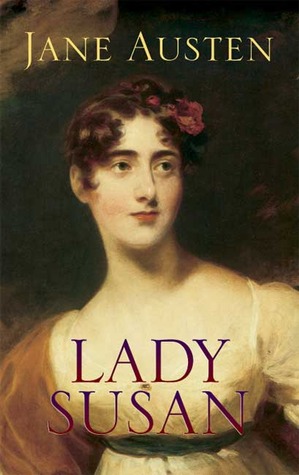
Lady SusanOver the past couple of days, I finally read Lady Susan — and loved it! For those not familiar with it, Lady Susan is a shorter work — a mere 80 pages! It’s Jane Austen’s first written work, although it was not published during her lifetime. Told in letters between the main characters, Lady Susan is quite different from Austen’s well-beloved novels.

From Goodreads:

Beautiful, flirtatious, and recently widowed, Lady Susan Vernon seeks an advantageous second marriage for herself, while attempting to push her daughter into a dismal match. A magnificently crafted novel of Regency manners and mores that will delight Austen enthusiasts with its wit and elegant expression... Lady Susan is a selfish, attractive woman, who tries to trap the best possible husband while maintaining a relationship with a married man. She subverts all the standards of the romantic novel: she has an active role, she’s not only beautiful but intelligent and witty, and her suitors are significantly younger than she is.

I’m delighted to have finally read Lady Susan. It’s so smart and funny and unexpected! Lady Susan is older and more wicked than the typical Austen heroine — conniving, manipulative, and scandalous, she looks out for herself to get what she wants. She toes the line of respectability and is a master when it comes to the cover-up, but her true nature and intentions are expressed loudly and clearly in the letters she writes to her closest friend, an accomplice in Lady Susan’s affairs and indiscretions.

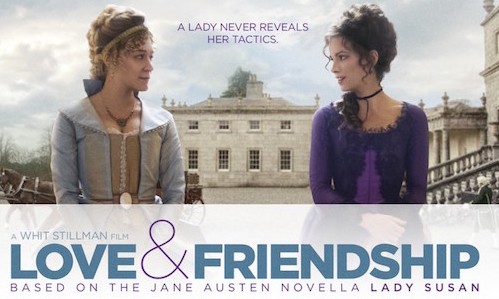
I should admit, though, that I’d never had more than a passing acquaintance with the title of this novella and knew nothing about the actual content until the movie Love & Friendship was released earlier this year.

Love-Friendship-1-e1453767274288

Love & Friendship is a glorious movie, graced with an incredibly talented cast. Kate Beckinsale absolutely sells every nuance of Lady Susan’s manners and character, and Chloe Sevigny is pitch-perfect as Mrs. Johnson, Lady Susan’s close friend. I love that the movie has Mrs Johnson as an American living in England, so that Chloe Sevigny’s own accent fits the role — which helps emphasize that her character is an outsider, not quite a part of established society, and possibly even a little uncouth, a perfect confidante for Lady Susan.

Check out the trailer… and tell me it doesn’t look amazing!

I saw the movie with a friend, thought it was hilarious, and now having read the book, can’t wait to watch the movie version again.

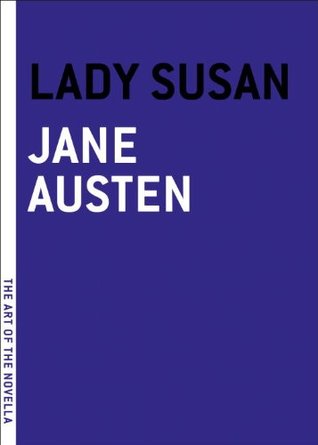
Lady Susan v2Usually I’m a stickler for reading the book first — but I have to admit that in this case, having seen the movie helped me get into the story immediately. I’d actually picked up the e-book version of Lady Susan several months ago, but found the letters hard to get into without any advance knowledge of the characters or plot. On top of which, the e-book was horribly formatted, to the point where it was basically unreadable.

BTW, the purple-covered edition is the version of Lady Susan which I’ve just finished, courtesy of my local library. It’s part of a series of novellas published by Melville House. The list of other novellas in the series appears at the back of the book, and includes some titles that I need! It’s such an adorable little edition.

Summing it all up — I really adored both reading Lady Susan and watching Love & Friendship, and highly recommend both!

Need further convincing? I leave you with a selection of quotes from the book:

My dear Sister,

I congratulate you and Mr. Vernon on being about to receive into your family the most accomplished coquette in England.

cropped-flourish-31609_1280-e1421474289435.png

What a woman she must be! I long to see her, and shall certainly accept your kind invitation, that I may form some idea of those bewitching powers which can do so much — engaging at the same time and in the same house the affections of two men who were neither of them at liberty to bestow them — and all this without the charm of youth.

cropped-flourish-31609_1280-e1421474289435.png

Some mothers would have insisted on their daughter’s accepting so great an offer on the first overture, but I could not answer it to myself to force Frederica into a marriage from which her heart revolted; and instead of adopting so harsh a measure merely propose to make it her own choice by rendering her thoroughly uncomfortable till she does accept him.

cropped-flourish-31609_1280-e1421474289435.png

I have never yet found that the advice of a sister could prevent a young man’s being in love if he chose it.

Book Review: To the Bright Edge of the World by Eowyn Ivey

Bright Edge

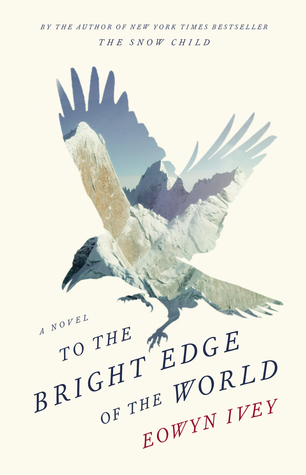
Set again in the Alaskan landscape that she bought to stunningly vivid life in THE SNOW CHILD, Eowyn Ivey’s new novel is a breathtaking story of discovery and adventure, set at the end of the nineteenth century, and of a marriage tested by a closely held secret.

Colonel Allen Forrester receives the commission of a lifetime when he is charged to navigate Alaska’s hitherto impassable Wolverine River, with only a small group of men. The Wolverine is the key to opening up Alaska and its huge reserves of gold to the outside world, but previous attempts have ended in tragedy.

For Forrester, the decision to accept this mission is even more difficult, as he is only recently married to Sophie, the wife he had perhaps never expected to find. Sophie is pregnant with their first child, and does not relish the prospect of a year in a military barracks while her husband embarks upon the journey of a lifetime. She has genuine cause to worry about her pregnancy, and it is with deep uncertainty about what their future holds that she and her husband part.

A story shot through with a darker but potent strand of the magic that illuminated THE SNOW CHILD, and with the sweep and insight that characterised Rose Tremain’s The Colour, this new novel from Pulitzer Prize finalist Eowyn Ivey singles her out as a major literary talent.

I’m a bit of an Alaska geek, and one of the ways that comes out is that I’m inordinately excited whenever great new fiction set in Alaska appears on the horizon. So you can imagine how thrilled I was to get my hands on a copy of Eowyn Ivey’s newest book — I think I snagged the very first copy that arrived at my local library!

To the Bright Edge of the World is a novel told in letters and other first-person written documents, with occasional archival pieces such as newspaper clippings, photos, and maps mixed in as well. The main writings in this novel are journal entries by Colonel Allen Forrester and Sophie Forrester.

Allen is leading a small team of men up the dangerous and uncharted Wolverine River, with the goal of finding a passage through to the Yukon River. Previous expeditions have met disaster along the way and have been forced to abandon the attempt. Sophie is dismayed at the prospect of being left behind in the army barracks — she’d originally intended to journey to the starting point of the expedition with Allen, but the unexpected news of her pregnancy forces her to abandon that plan.

Sophie is a bright, energetic young woman who has no interest in or patience for the small, suffocating social circle of officers’ wives that seems to be her expected occupation while Allen is away. Sophie is fascinated by the natural world, and almost accidentally discovers an interest in photography. After a tragedy leaves her at loose ends, she purchases a camera, converts a room in her quarters into a dark room, and sets out to capture her concept of light through the photography of the wild birds in the area, with the elusive hummingbird as her true target.

Meanwhile, Allen’s expedition is beset by challenges and hardships at every turn, from starvation to injury to the delicate task of asking the local tribes for assistance without being seen as enemies. Through it all, Allen and Sophie record their thoughts, hopes, and emotions, as well as their daily activities, in their journals. The picture that emerges is of two highly intelligent people who, despite seeming an odd match, are truly suited to each other in a way that’s rare and beautiful.

The writing in To the Bright Edge of the World is lovely. The author captures the different writing styles and voices of the different characters, giving a unique flavor to the documents each writes. The descriptions of the landscapes and natural wonders is powerful, as are the thoughts and reflections on what it means to love another person, heart and soul.

There is yet another element to the book, which is the sense of the unexplained and magical that lives in the natural world. As Allen’s small team progresses, they encounter things they cannot explain, including an Old Man who also appears to be a raven, who follows them along their path — either to hurt or to help, they can’t be quite sure. Other magical, otherworldly elements come into play, and it’s interesting to note that while Allen records them all in his journals, the official reports of the expedition most certainly do not include these stories and observations.

Meanwhile, the framing device of the novel is a series of letters between an old man, a great-nephew of Colonel Forrester, and the curator of a small Alaskan musuem, as they get to know one another and form an odd friendship as they bond over the treasure trove of documents and artifacts from the family attic — the documents that make up the bulk of the novel.

While I loved the characters, the setting, and the imagery, I do have some minor quibbles. My biggest quibble is the limiting effect of telling a story through documents rather than a direct narrative. While this gives us insight into the characters’ thoughts, it’s by necessity not the most immediate way of depicting the events. Instead of experiencing the most dramatic moments as if we were there, we’re held at arms’ length by reading about the events as the narrators remember and record them. The epistolary approach works in terms of letting us inside the characters’ heads, but it’s a distancing tool when it comes to living and breathing big adventures as they happen.

Likewise, because of the epistolary approach, the supporting characters are known only by the main characters’ observations. I would have liked to know more about what makes certain characters tick, especially the soldiers in Allen’s company and the young native woman who accompanies them, but I felt that we never truly get beyond their outward appearances. (Of course, this is actually rather true to life — how do we get to know anyone, except by what they show us? It’s only in books that we get to know another person’s innermost thoughts.)

I question too the inclusion of the scattered photos, drawings, etc that pop up throughout the book. It felt to me as if they were included rather haphazardly — if the decision was made to augment the story with these types of things, then there should have been more. I actually love seeing the old photos (as if they were truly the products of the fictional characters in the story), but I would have liked a stronger commitment to this approach. Either go for it, or leave them out!

The quibble about the writing style is what keeps this from being a five-star read for me, but overall, I do think the book is a wonderful achievement and hope that it will be widely read and appreciated. Sophie is a remarkable woman, well ahead of her time, and I admired her pioneering spirit and commitment to her dreams, and absolutely love how she and Allen support each other and refuse to be boxed in by the traditional ideas of a proper marriage at that time.

To the Bright Edge of the World is a beautifully written historical novel with well-developed characters and an  unforgettable setting. If you enjoy historical fiction or even just have a hankering for Alaska, check it out.

_________________________________________

The details:

Title: To the Bright Edge of the World
Author: Eowyn Ivey
Publisher: Little, Brown and Company
Publication date: August 2, 2016
Length: 432 pages
Genre: Historical fiction
Source: Library

Save

Save

Take A Peek Book Review: The Accident by Chris Pavone

“Take a Peek” book reviews are short and (possibly) sweet, keeping the commentary brief and providing a little peek at what the book’s about and what I thought.

The Accident2

Synopsis:

(via Goodreads)

As dawn approaches in New York, literary agent Isabel Reed is turning the final pages of a mysterious, anonymous manuscript, racing through the explosive revelations about powerful people, as well as long-hidden secrets about her own past. In Copenhagen, veteran CIA operative Hayden Gray, determined that this sweeping story be buried, is suddenly staring down the barrel of an unexpected gun. And in Zurich, the author himself is hiding in a shadowy expat life, trying to atone for a lifetime’s worth of lies and betrayals with publication of The Accident, while always looking over his shoulder.

Over the course of one long, desperate, increasingly perilous day, these lives collide as the book begins its dangerous march toward publication, toward saving or ruining careers and companies, placing everything at risk—and everyone in mortal peril.  The rich cast of characters—in publishing and film, politics and espionage—are all forced to confront the consequences of their ambitions, the schisms between their ideal selves and the people they actually became.

The action rockets around Europe and across America, with an intricate web of duplicities stretching back a quarter-century to a dark winding road in upstate New York, where the shocking truth about the accident itself is buried.

Gripping, sophisticated, layered, and impossible to put down, The Accident proves once again that Chris Pavone is a true master of suspense.


My Thoughts:

“Impossible to put down” is exactly right. This spy thriller is off-beat, unusual, and deceptively layered. I expected a certain type of story, but The Accident keeps growing and twisting and taking off in all sorts of unexpected directions.

Who would have thought that an anonymous manuscript could set off an international hunt and race against the clock? With altered identities, murder, surveillance, and high-stakes chases, the manuscript sets off ripples not just in the publishing world, but in corporate headquarters and secret intelligence organizations around the globe.

I read this book on vacation, and it was a perfect choice for lazy reading on a lounge chair with a cold drink in hand. It requires attention, but goes very quickly, and isn’t something that’s going to ruin your happy mood or keep you obsessed while you should be thinking about other things.

This is the second novel by author Chris Pavone, and there is some carry-over from his first, The Expats, as well as characters who appear in his next, The Travelers. I read this one out of order, and realized there were connections I’d missed in The Travelers because I hadn’t read The Accident first. It doesn’t matter a great deal, though. You can enjoy enjoy each novel completely on its own — but reading all three in the order of publication makes it all the more fun, seeing familiar names and places and making connections.

This is a great escapist adventure read — check it out!

Want to know more about this author’s books? Check out my reviews of his other works:
The Expats
The Travelers

_________________________________________

The details:

Title: The Accident
Author: Chris Pavone
Publisher: Crown
Publication date: March 1, 2014
Length: 381 pages
Genre: Spy thriller
Source: Purchased

Save

Take A Peek Book Review: Before the Fall by Noah Hawley

“Take a Peek” book reviews are short and (possibly) sweet, keeping the commentary brief and providing a little peek at what the book’s about and what I thought.Before the Fall

Synopsis:

(via Goodreads)

On a foggy summer night, eleven people—ten privileged, one down-on-his-luck painter—depart Martha’s Vineyard on a private jet headed for New York. Sixteen minutes later, the unthinkable happens: the plane plunges into the ocean. The only survivors are Scott Burroughs—the painter—and a four-year-old boy, who is now the last remaining member of an immensely wealthy and powerful media mogul’s family.

With chapters weaving between the aftermath of the crash and the backstories of the passengers and crew members—including a Wall Street titan and his wife, a Texan-born party boy just in from London, a young woman questioning her path in life, and a career pilot—the mystery surrounding the tragedy heightens. As the passengers’ intrigues unravel, odd coincidences point to a conspiracy. Was it merely by dumb chance that so many influential people perished? Or was something far more sinister at work? Events soon threaten to spiral out of control in an escalating storm of media outrage and accusations. And while Scott struggles to cope with fame that borders on notoriety, the authorities scramble to salvage the truth from the wreckage.

Amid pulse-quickening suspense, the fragile relationship between Scott and the young boy glows at the heart of this stunning novel, raising questions of fate, human nature, and the inextricable ties that bind us together.

My Thoughts:

Wow, what a thrill-ride! Although choosing to start this book the night before a long plane trip was maybe not the brightest idea I’ve every had.

In Before the Fall, the story starts almost immediately with the terror of the crash, and then the miracle of Scott’s long swim to safety, saving his own life as well as that of one small boy. But that’s only the beginning — from here, the author takes a post-mortem approach, giving us chapters focusing on each of the people on board the small plane, so that we see how the pieces fit together. Was it mechanical failure? Something deliberate? And if it was deliberate, who was the intended target?

The storyline shows Scott’s growing closeness to the surviving child, the intensity of the government agents investigating the crash, and the firestorm of media attention and sensationalism that soon follows. The chapters focusing on the different characters and their backstories are fascinating, always leaving me wanting more.

Overall, Before the Fall is a gripping read that builds and builds. It’s tense, well-constructed, hard to predict, and surprising in all the right ways. The characters are well-defined, so much so that it’s hard to approach the end of the story and realize that these people — good and bad, all flawed, almost none irredeemable — are doomed to the end that we knew about from the start.

It’s a pretty neat trick, telling us up front that all of these characters have died, and then taking the time to let us get to know them. Somehow, the tragedy of their senseless deaths is all the more striking with this backwards approach. Meanwhile, Scott’s story is compelling and sympathetic. It’s hard to see a decent man caught up in the tabloid frenzy that follows the crash, but how Scott manages is pretty good stuff too.

Before the Fall is a great summer read — quick, absorbing, and impossible not to care about.

_________________________________________

The details:

Title: Before the Fall
Author: Noah Hawley
Publisher: Grand Central Publishing
Publication date: May 31, 2016
Length: 391 pages
Genre: Adult fiction
Source: Purchased (e-book)

Save

Harry Potter and the Cursed Child: I loved it!

HP8 banner

Today’s the day! And what a day it’s been!

Thanks to the glory of Amazon PrimeNow, I woke up to find this on my doorstep (delivered at 1:00 a.m., according to the tracking notice):

IMG_3773

Which I ripped open as soon as I got my hands on it, and grabbed this:

IMG_3774

At which point, I sequestered myself away with my book and a big mug of coffee, and didn’t come up for air until I got to this:

IMG_3777

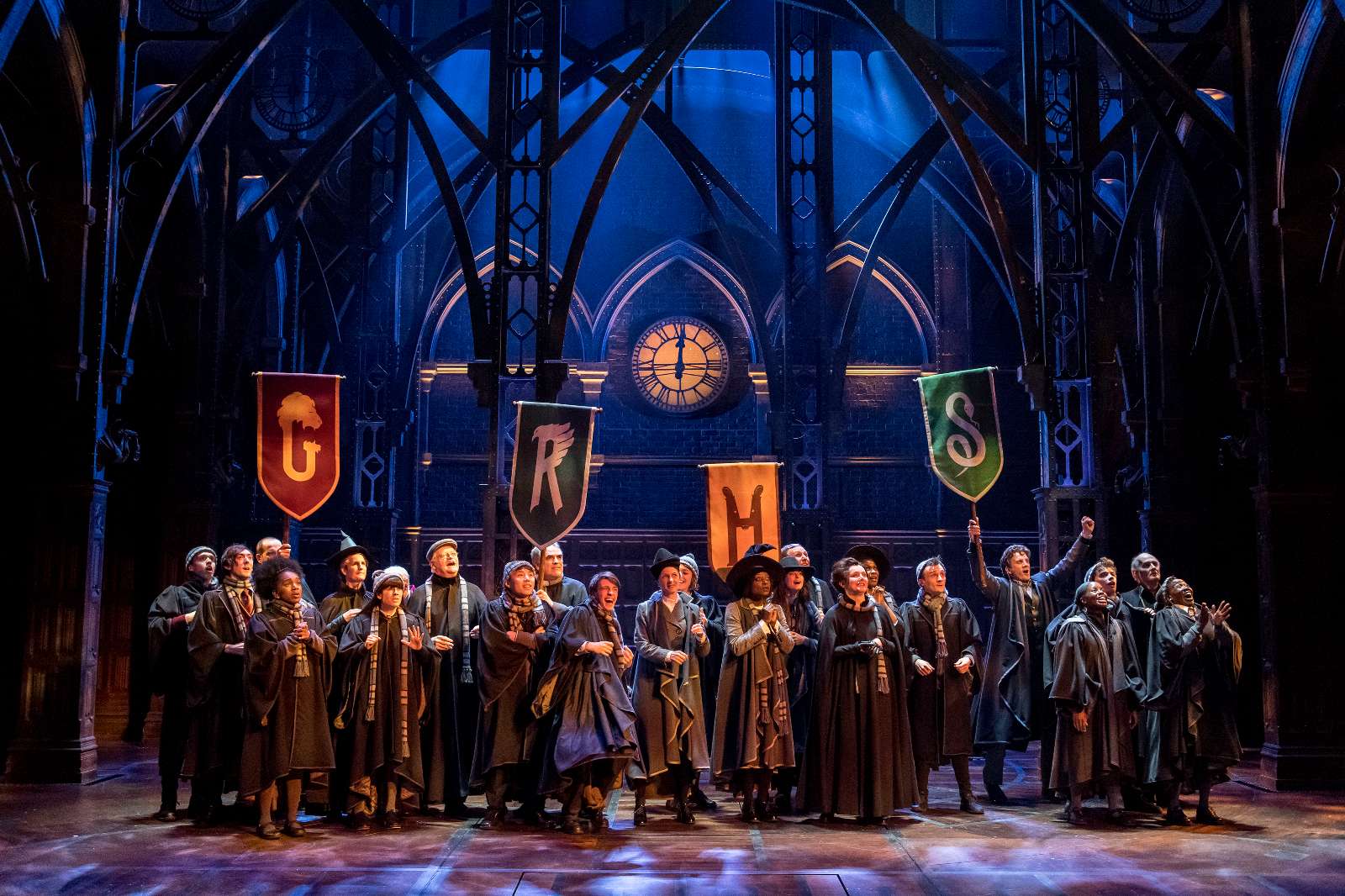
Well, you certainly won’t get any spoilers out of me about the plot, but I will say that I loved being back in the world of Harry Potter, was delighted by the familiar characters as well as the new ones, and thought it was clever, moving, and loads of fun! Yes, it’s a bit weird reading a script and not a novel, but that’s okay. One thing that absolutely came out of this reading experience for me was a burning desire to get to London and to see the play! Don’t know how, don’t know when, but I’m going to make it happen.

HP_8a

Because I loved it all, and I’d give anything to see these two — and the rest — live on stage:

HP_8b

Did you read it yet? What did you think?