The Monday Check-In ~ 1/26/2015

cooltext1850356879 My Monday tradition, including a look back and a look ahead — what I read last week, what new books came my way, and what books are keeping me busy right now. Plus a smattering of other stuff too.

What did I read last week?

Quite an interesting mix of books this past week:

infinite seaTo Kill A Mockingbirddarkest part

The Infinite Sea by Rick Yancey:  My review is here.

To Kill a Mockingbird by Harper Lee: I’ve been talking about re-reading this book for years. I read it during high school (just like everyone else, probably)… and had only the vaguest memory of what it was actually about. Two-word review: Loved it! I’m so glad I finally picked it up off my shelf and gave myself the time and space to enjoy it. Incredibly moving story, beautiful writing… To Kill a Mockingbird is a modern classic for a reason. Not only am I thrilled to have read it again finally, but I’m also now super-charged by the idea of revisiting bunches of “required reading” books. I’ll be making a list shortly, and I’m sure I’ll be sharing it here on the blog once I do.

The Darkest Part of the Forest by Holly Black: My review is here.

And in graphic novels:

War at Ellsmere

The War at Ellsmere by Faith Erin Hicks: Terrific. Faith Erin Hicks is quickly becoming one of my go-to authors. I’ve read and loved two other of her books (Friends With Boys and The Adventures of Superhero Girl)… and I’m so excited that her next project, due out later in 2015, is a collaboration with Rainbow Rowell!

Off-line:

Ouch! I did something to my back this week… which totally put me off my game in terms of reading and reviewing. My concentration was completely shot, and I ended up sitting out my book group’s discussion because I couldn’t focus enough to contribute anything beyond “good book!”. But I’m feeling better now (thanks for asking!) and should be back to my bookish routines shortly.

Fresh Catch:

Two new books arrived this week:

vicious Pioneer Girl

What will I be reading during the coming week?

Currently in my hands:
Silver Bay

After reading a ton of YA fiction so far this month, I’m switching gears a bit and hoping to catch up with a few adult contemporary novels, starting with Silver Bay by Jojo Moyes.

Now playing via audiobook:

I’m actually in between audiobooks at the moment. I listened to an Outlander-related novella earlier in the week, started To Kill a Mockingbird on audio but got impatient with the pace and had to switch to print, and right now I’m waiting for one of my hold audiobooks to come in at the library. Normally, I’d be incredibly frustrated by having nothing to listen to, but since my exercise routine was disrupted this week because of my stupid back, I haven’t missed having an audiobook quite as much.

Reading with my kiddo:

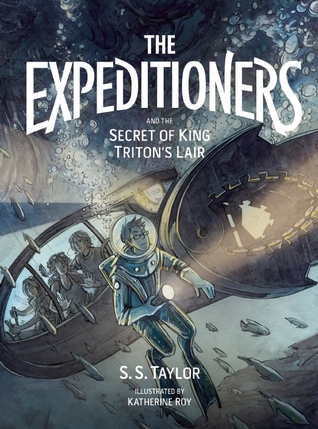
exped

The Expeditioners and the Secret of King Triton’s Lair by S. S. Taylor: Good book! We’re at about the halfway point now. I really recommend picking up the first book The Expeditioners and the Treasure of Drowned Man’s Cavern, if you think you might enjoy a great adventure story with a Jules Verne-esque feel to it.

Book club reading:

scarletABOSAAhenna house

Classic read: The Scarlet Pimpernel by Baroness Emmuska Orczy. (One chapter per week)

A Breath of Snow and Ashes by Diana Gabaldon: Reading and discussing two chapters per week, from now through the end of 2015!

OBC Book of the Month: Henna House by Nomi Eve. The discussion is up and running, and anyone can join in! Plus, author Nomi Eve will be answering questions for us this week.

Want to join any of the group reads? Let me know and I’ll provide the links!

So many book, so little time…

boy1


Take A Peek Book Review: The Darkest Part of the Forest by Holly Black

“Take a Peek” book reviews are short and (possibly) sweet, keeping the commentary brief and providing a little peek at what the book’s about and what I thought. This week’s “take a peek” book:

darkest part

Synopsis:

(via Goodreads)

Children can have a cruel, absolute sense of justice. Children can kill a monster and feel quite proud of themselves. A girl can look at her brother and believe they’re destined to be a knight and a bard who battle evil. She can believe she’s found the thing she’s been made for.

Hazel lives with her brother, Ben, in the strange town of Fairfold where humans and fae exist side by side. The faeries’ seemingly harmless magic attracts tourists, but Hazel knows how dangerous they can be, and she knows how to stop them. Or she did, once.

At the center of it all, there is a glass coffin in the woods. It rests right on the ground and in it sleeps a boy with horns on his head and ears as pointed as knives. Hazel and Ben were both in love with him as children. The boy has slept there for generations, never waking.

Until one day, he does…

As the world turns upside down, Hazel tries to remember her years pretending to be a knight. But swept up in new love, shifting loyalties, and the fresh sting of betrayal, will it be enough?

My Thoughts:

I find myself not quite knowing what to say about this unusual, lovely book. I love the juxtaposition of the modern world, with its IPods and high school parties, alongside the hidden world of the Folk who live in the deep, dark forest. In fact, the opening lines create such a magical aura that it’s a bit jarring to realize that this story is set in a 21st century real-world town with ordinary teens who drive cars, drink beer in the woods, go to football games, buy vintage clothing, and have all the usual rivalries, gossip, and tensions you’d see in any young adult novel.

And yet, in the town of Fairfold, residents know that there are other beings in the forest, and it’s best to be wary. Every child knows the rules, such as never saying “thank you” to a fairy or eating any food offered. It’s just tourists, flocking to what’s known as a kitschy destination with cutesy, magic-themed main street shops, who get into trouble, finding their money replaced by leaves or, in more recent years, being subjected not just to harmless pranks but to actual life-threatening danger.

Hazel and Ben have grown up with the stories and know the ropes. They’re also each crazily infatuated with the sleeping prince in the glass coffin in the woods, and have concocted all sorts of fantasies about him and his world. As the story progresses, we learn much more about Hazel and her secrets, and what she’s done to help her brother, despite all the warnings and scary-sounding rhymes.

While the book is a bit odd at first, introducing plot points as facts already known (so that I kept having to flip back and say, “wait, when did that happen?”), it eventually settles into a logic and rhythm that work. The everyday lives alongside the magical, and the writing too can veer from the commonplace to the enchanted in the blink of an eye.

I loved the strange interplay between waking life and dreams, and I especially loved how traditional fairy tale gender roles are turned on their heads. A girl is the wielder of a powerful sword, defending family and all those who need her strength. A boy can find true love by waking a sleeping prince.

Meanwhile, there are changelings, goblins, a terrifying Alderking, and a creature so consumed by the loss of her true love that she literally becomes a monster.

In The Darkest Part of the Forest, author Holly Black creates a spell-binding tale of sibling love, bravery and devotion, with language that weaves its own magical enchantment.

_________________________________________

The details:

Title: The Darkest Part of the Forest
Author: Holly Black
Publisher: Little, Brown Books for Young Readers
Publication date: January 13, 2015
Length: 336 pages
Genre: Young adult fantasy
Source: Purchased

Book Review: The Infinite Sea by Rick Yancey

infinite seaThis is the second book in a series, so here come the warnings:

SPOILER ALERT: This is the follow-up book to The 5th Wave. Events from The 5 Wave will be discussed! So, need I say it? If you haven’t read The 5th Wave, now would be a good time to look away. (Better yet, go get a copy of The 5th Wave! It’s good.)

KINDA SPOILER-ISH ALERT: There are some elements from The Infinite Sea that I’ll have to talk about in order to write any sort of review. I’ll try not to go into a tremendous amount of detail, but if you prefer to know nothing about what happens, well, here’s another good time to look away.

And that concludes the housekeeping portion of this post. Moving on…

In The 5th Wave, the subject matter is nothing less than the destruction of the human race at the hands of alien invaders. Over the course of an apocalyptic few months, 98% of Earth’s population has been killed in all sort of horrifying ways. The story focuses on a handful of survivors, each on their own, trying not only to stay alive themselves, but to save or sustain the people they love.

The Infinite Sea picks up pretty much right after the big, blow-out ending of The 5th Wave. Our little band of survivors is hunkered down in an old, abandoned motel, waiting for whatever comes next, listening to the rats in the walls. (The rats are important — more on this later.)

What else? Well, that’s mostly it.

In The 5th Wave, our main three point of view characters are Cassie, Ben, and Evan. Each has his or her own intense story to tell, with a unique viewpoint on the events unfolding. In The Infinite Sea, the perspective expands to include chapters narrated by several other characters. Does this help broaden the view of life after the invasion? Not really.

It’s not that I wasn’t interested in what happened in The Infinite Sea. I was. But at the same time, the story somehow feels narrow, almost claustrophobic.

Part of what really impressed me in The 5th Wave was the epic scale. As seen through the eyes of our POV characters, the destruction is devastatingly huge, yet also intimate in that the impact of the invasion is highly personal. Family members die cruel, bloody deaths. Trusted adults betray in horrible, mind-breaking, soul-damaging ways. Safe havens turn out to be hell on earth. Humans yearn for companionship, but safety lies only in isolation. The loss each character experiences, especially Cassie, is enormous not just for the character, but because of what it means for the entirety of human life.

Compared to all that, The Infinite Sea feels small. In a most literal sense, it is: Going by my physical copies of both books,  The Infinite Sea is about 150 pages shorter than The 5th Wave. The invasion is still underway, but not much has changed. We spend all of this second book holed up with our group of characters, waiting for the next awful thing to happen. The relationships barely move forward, and they have very little to do other than hide and speculate – and talk and talk and talk.

The endless talk is yet another piece that works less well for me in The Infinite Sea. In The 5th Wave, the language is often highly dramatic, much more figurative than you might expect out of the mouths of teens dealing with disaster, but somehow it matches the grand tone of the entire book. Sadly, in The Infinite Sea, the language tends toward an overuse of imagery and metaphor, and rather than feeling epic, it ends up sounding like borderline mumbo-jumbo.

I understood. In the safe room, a billion upraised faces populating the infinite, and the eyes that sough mine, and the question in those eyes too horrible to put into words, Will I live? It’s all connected. The Others understood that, understood it better than most of us. No hope without faith, no faith without hope, no love without trust, no trust, without love. Remove one and the entire human house of cards collapses.

It’s all about a search for meaning in disaster, but the discussions go in circle upon circle: There are rats in the walls. Are we the rats? Is the Earth the inhabited house the aliens want to move into? Why not kill all the rats? Why leave some rats alive? There’s the rock problem: Why not just use a big rock (i.e., a meteor) to wipe out all life? Why embed aliens inside the humans? Why play all the mind games? Why, why, why… this books amounts to a never-ending litany of characters discussing “why” — but unfortunately, we end with little more understanding than we had at the beginning of the book.

Another problem: In what felt like a baffling shift to me, the entire second half of the book is focused on Ringer, a character in a supporting role in The 5th Wave. We barely know her; we never saw her point of view in the first book. An awful lot of space is devoted to Ringer’s experience, trapped and cut off from the other characters, and it’s a weird shift in emphasis. Cassie was established in The 5th Wave as our primary character, yet she and the rest of her entourage are absent for almost half of this book. Ringer’s story adds some knowledge to the mix, but it’s kind of jarring to have the book split like this, with two stories that don’t fit together.

The Infinite Sea is clearly the bridge book in this trilogy. We need to get from the introduction of the disaster in The 5th Wave to the final resolution in the 3rd, yet-to-be-published book, but other than as a connection from point A to point B, The Infinite Sea adds very little to the world-building or the story arc of the series. By the end of this second book, I would have expected to understand much more about the reasons for the invasion and the strategies employed by the invaders. Instead, the only real progress is that the characters are beginning to understand that there’s a lot that they don’t know, that there has to be more to what to the invaders want, and that there are major pieces of the strategy that remain to be figured out.

The more I write about The Infinite Sea, the more I realize how unsatisfying I found it. With very little story progression or character growth and very little in the way of unraveling the mysteries of the alien plan, it’s very difficult to point out much that’s gained by reading The Infinite Sea, other than a reshuffling of the chessboard and a set-up for a finale. Perhaps this series should have been two power-house books instead of a trilogy with a tepid middle. I’m hoping that the final book, supposedly to be released in September, will blow the story out of the water.

The 5th Wave was amazing. I suppose if you want to find out what happens next, you have to read The Infinite Sea. But unless something is revealed early on in book #3 that demonstrates how the events of #2 matter, I’d say that The Infinite Sea is a mostly unimportant interlude that comes nowhere near to matching the power and scale of The 5th Wave. Proceed with caution — or perhaps wait until the release of the 3rd book and read it as an introduction to #3. Read on its own, as the eagerly anticipated sequel to a fantastic first book, The Infinite Sea disappoints.

_________________________________________

The details:

Title: The Infinite Sea
Author: Rick Yancey
Publisher: Putnam Juvenile
Publication date: September 14, 2014
Length: 320 pages
Genre: Young adult/science fiction
Source: Purchased

Thursday Quotables: 100 Sideways Miles

quotation-marks4

Welcome back to Thursday Quotables! This weekly feature is the place to highlight a great quote, line, or passage discovered during your reading each week.  Whether it’s something funny, startling, gut-wrenching, or just really beautifully written, Thursday Quotables is where my favorite lines of the week will be, and you’re invited to join in!

100 Sideways Miles

100 Sideways Miles by Andrew Smith
(published September 2, 2014)

Two little snippets that give a good sense of the weird, wonderful language of this hard-to-define book. First, from early on, setting the stage for the entire story:

A story involving alien visitors from outer space, an epileptic kid who doesn’t really know where he came from, knackeries and dead horses falling a hundred sideways miles, abandoned prisons, a shadow play, moons and stars, and jumping from a bridge into a flood should probably begin with a big explosion in the sky about fourteen billion years ago. After all, the whole story is rather biblical, isn’t it?

Poof!

But it doesn’t.

And another from later in the book — just a little moment in a more action-focused sequence that captures the quirkiness that I love about this author’s writing style:

There was a phone with a dial in the room. It had a cord, too. I wondered if I would actually have the nerve to call my dad with it in the morning and confess I’d “lost” my cell phone. If I didn’t check in soon, I was certain Dad would be notifying the FBI or Homeland Security, or whatever agency is actually in charge of apprehending interstate fugitive epileptic kids who probably came from some other planet.

What lines made you laugh, cry, or gasp this week? Do tell!

If you’d like to participate in Thursday Quotables, it’s really simple:

  • Write a Thursday Quotables post on your blog. Try to pick something from whatever you’re reading now. And please be sure to include a link back to Bookshelf Fantasies in your post (http://www.bookshelffantasies.com), if you’d be so kind!
  • Leave your link in the comments — or, if you have a quote to share but not a blog post, you can leave your quote in the comments too!
  • Visit other linked blogs to view their Thursday Quotables, and have fun!

Top Ten Tuesday: Top Ten Fabulous Non-Fiction Favorites

Top 10 Tuesday new

Top Ten Tuesday is a meme hosted by The Broke and the Bookish, featuring a different top 10 theme each week. This week is a Freebie — we each pick our own topic. After much debate and a few false starts, I thought I’d write about my favorite non-fiction books. I really don’t read much non-fiction, but I’ve read enough over the years to be able to choose some real stand-outs.

My top 10 non-fiction favorites are:

Ice Bound

1) Ice Bound by Dr. Jerri Nielsen: The late Dr. Nielsen writes about her winter at the South Pole, her personal journey, and her battle with breast cancer with unflinching honesty and remarkable courage.

Poisoners Handbook

2) The Poisoner’s Handbook: Murder and the Birth of Forensic Medicine in Jazz Age New York by Deborah Blum: A fascinating look at the early days of forensics during Probition.

Don't Let's Go

3) Don’t Let’s Go to the Dogs Tonight by Alexandra Fuller: A startling and disturbing memoir of a childhood in Africa.

Lende_Moose_pbk_cvr.indd

4) If You Lived Here, I’d Know Your Name by Heather Lende: I go a bit overboard for anything connected to Alaska, and I really enjoyed this slice-of-life book about a woman raising a family in an Alaskan small town.

Life

5) Life by Keith Richards: KEITH! What is there to say about this book? Amazing. My only complaint was that I’d wished it came with a soundtrack.

Packing for Mars

6) Packing for Mars: The Curious Science of Life in the Void by Mary Roach: If you like your science packed with humor, then you really can’t go wrong with any of Mary Roach’s books. This is the one I’ve read most recently, but I also loved Stiff, which taught me that it’s possible to laugh hysterically while reading about cadavers.

Fear and Loathing Campaign

7) Fear and Loathing on the Campaign Trail ’72 by Hunter S. Thompson: Everyone should read Hunter S. Thompson at some point in his/her life, and this is the one I’d choose above all others. It just has to be experienced — no point in further explanation.

Blind Side

8) The Blind Side: Evolution of a Game by Michael Lewis: This is the book that made me run around my house shouting, “Look, I’m reading a football book!” I am not a sports fan, and have never read another football book in my life… but this one was just so gripping, I couldn’t stop myself.

Devil's Teeh

9) The Devil’s Teeth by Susan Casey: A brilliant account of the Farallon Islands off the coast of San Francisco, the great white sharks that fill the waters there, and the scientists who study them.

Krakauer collage

10) It’s a toss-up between two very different books by Jon Krakauer: Into Thin Air, his classic tale of a disastrous Everest expedition, or Under the Banner of Heaven, a history of the Mormon church and exposé of Mormon Fundamentalist communities.

As I started working on this list, I kept jotting down more and more non-fiction books that I’ve read and loved. I was reminded that I went through a Vietnam War obsession phase and a weird neurology phase, and then there’s my need to read off-beat personal stories and adventures. In other words, although my reading definitely skews heavily toward all fiction, all the time, I’ve actually read more non-fiction than I’d realized.

Do you have a favorite non-fiction book that you recommend?

I’d love to know what everyone else picked for a top 10 freebie topic! Share your link, and I’ll come check out your list.

If you enjoyed this post, please consider following Bookshelf Fantasies! And don’t forget to check out my regular weekly feature, Thursday Quotables. Happy reading!

♥♥♥♥♥♥♥♥

Do you host a book blog meme? Do you participate in a meme that you really, really love? I’m building a Book Blog Meme Directory, and need your help! If you know of a great meme to include — or if you host one yourself — please drop me a note on my Contact page and I’ll be sure to add your info!

The Book Blog Meme Directory: An update

book heart3

In July 2013, I launched a new page here at Bookshelf Fantasies: the Book Blog Meme Directory. The purpose of the Directory is to collect information and links for all sorts of bookish memes, providing a resource for book bloggers looking for new and different ways to connect with other bloggers, share some bookish love, and have fun!

We’re up to almost 70 memes as of now, and the list keeps growing!

I realized this week, while adding a few new memes, that I haven’t actually written an update post since launching the Directory.

So here I am, once again asking for your help:

Do you host a meme? Do you have a favorite meme that you participate in? Do you know of a great meme I should check out? I’m always looking for new additions!

Any additions should:

So, for purposes of this Directory, let’s include any regular ongoing features that encourage bloggers to join in, participate by writing their own posts, link back from their own blogs, and visit other participants’ blogs as well.

  • Have something to do with books, book blogging, or reading.
  • Must be up and running (so please don’t ask me to add a meme that you’re planning for the future; let’s add it once it’s “live”).

Frequently asked question: Is my feature a meme? Quick test: Is this a weekly theme that you – and only you – use for your own weekly postings, specific to your own blog? Sounds like a feature. Is this something you host and invite others to participate in by posting on their own blogs and linking back to yours? Sounds like a meme.

To add a meme to the Directory, the simplest thing to do is to submit your information (whether you’re a meme host or participant) through my Contact page. I’ll confirm back to you once the Directory has been updated.

I only ask two things of folks whose memes I add:

1) Keep it up to date! If you change domains, change the details of your meme, add a new graphic, switch hosts or days of the week, etc — just let me know! I want to make sure the info in the Directory is current, and make sure that people who want to play along can find you!

2) If your meme is listed, would you be so kind as to say so on your blog? I’d really appreciate it if you’d either post my Directory button (available at the bottom of the Book Blog Meme Directory page) or post a link so your readers can find the Directory. Many thanks to you!

Final note: One area of the Directory that I haven’t fully pursued yet is a challenges section. By request, I’ve added listings for reading challenges, but haven’t gone all out to find new ones to add. If you do want me to add a reading challenge that you’re hosting, just let me know.

I hope you’ve all been finding the Book Blog Meme Directory helpful! Thank you to all who have shared information up to now. It’s great fun to hear about so many interesting, unusual, and quirky ways for book lovers to interact — let’s keep it growing!


The Monday Check-In ~ 1/19/2015

cooltext1850356879 My Monday tradition, including a look back and a look ahead — what I read last week, what new books came my way, and what books are keeping me busy right now. Plus a smattering of other stuff too.

What did I read last week?

Thanks to a bunch of my library holds coming in all at once, I was on a YA roll this past week:

Lonely Hearts ClubBreathe Annie Breathe100 Sideways Miles

The Lonely Hearts Club by Elizabeth Eulberg: My review is here.

Breathe, Annie, Breathe by Miranda Kenneally: My review is here.

100 Sideways Miles by Andrew Smith: I didn’t write a review, because I just couldn’t figure out what I could possibly say about this weird but oddly wonderful book. It’s much more Grasshopper Jungle than Winger (both of which I loved), but really defies description. I love Andrew Smith’s off-beat way of looking at the world through a teenage boy’s eyes, and the language is remarkable. I’ll be featuring this book in my upcoming Thursday Quotables post later this week!

Bloggy updates:

For those who’ve been here before, you may notice that Bookshelf Fantasies has a new look! After a year and a half with the same layout, my eyes needed something new to stare at. What do you think? I’d love to hear some feedback — and if you have any suggestions for improvements, please let me know!

Also, I wrote a post this week about being fed up with badly formatted e-ARCs, and based on the comments, it sounds like I struck a nerve! You can read about it and add your thoughts here.

Fresh Catch:

One new release arrived this week that I’m really looking forward to reading, plus I treated myself to two more of the Classic Lines versions of Jane Austen books:

darkest part Emma 2P&P


What will I be reading during the coming week?

Currently in my hands:

infinite sea

I’m so excited to finally be reading The Infinite Sea by Rick Yancey! Now that I’ve reread The 5th Wave, I’m ready to go.

bad feminist

I’m still working my way through Bad Feminist by Roxane Gay — slowly. I’m picking it up and reading just one or two essays at a time when I’m in between other books, and it seems to be working for me.

Now playing via audiobook:

verity

I finished the audiobook of Code Name Verity by Elizabeth Wein over the weekend. Even though I’d read the book a couple of years ago, I still found myself moved to tears while listening (which was a bit embarrassing, considering I was out for a walk at the time). I highly recommend the audio version as a nice complement to the printed book. The two narrators are both fantastic, capturing different personalities and the deep emotions of this story magnificently.

Reading with my kiddo:

exped

The Expeditioners and the Secret of King Triton’s Lair by S. S. Taylor: Really enjoying this steampunk adventure tale!

Book club reading:

scarletABOSAAhenna house

Classic read: The Scarlet Pimpernel by Baroness Emmuska Orczy. (One chapter per week)

A Breath of Snow and Ashes by Diana Gabaldon: Reading and discussing two chapters per week, from now through the end of 2015!

OBC Book of the Month: Henna House by Nomi Eve (discussion starts this Wednesday, January 21st).

station eleven

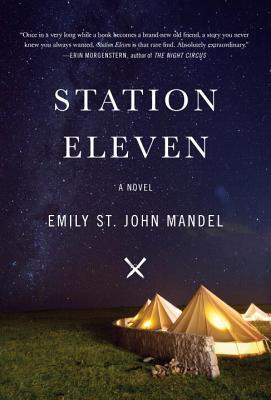
Postponed until February: The next Fields & Fantasies Book Club pick is Station Eleven by Emily St. John Mandel. If you want more information or would like to join in, just let me know!

Want to join any of the group reads? Let me know and I’ll provide the links!

So many book, so little time…

boy1

The Fault in My Stars (or, why I don’t use a ratings system)

If you’ve read any of my book reviews — well, first of all, thank you!

But as I was saying, if you’ve read my reviews, you’ll notice something missing that seems to be almost standard on book blogs — a ratings system. And that’s a deliberate choice, not just an oversight or poor planning.

I’ve debated adding in a ratings system off and on since I started blogging. And I always come back to the same conclusion — stars or their like just don’t really work for me.

Let’s look at Goodreads: The ratings system on Goodreads does actually have an official set of definitions:

1-star: Did not like it
2-stars: It was ok
3-stars: Liked it
4-stars: Really liked it
5-stars: It was amazing

That’s kind of vague, isn’t it? How do you differentiate between “it was ok” and “liked it”? If all I can say about a book is that I liked it, then that probably means that it was okay. Hmm. *scratching head in befuddlement*

So are the stars meants to be a comparison? A 5-star book should be the best ever, a 3-star book would be average among all books read, and a 1-star book would be the bottom of the barrel. But compared to what? Here’s where I get completely mixed up.

If I read a YA novel by a new writer and I think it was really good, I’ll give it four stars. Fine.

But then what does that mean in terms of well established, truly excellent writers? Is a 4-star debut YA novel equivalent in quality to, say, The Two Towers by J. R. R. Tolkien? Of course not. Yet by the Goodreads ratings scale definitions, I’d give The Two Towers four stars because, while I really liked it, I wouldn’t call it amazing.

And then I fall into the same-author-relativity trap. I love Stephen King, but I love some of his books more than others. My absolute favorites get 5 stars, without a doubt. But when I read a Stephen King book that doesn’t appeal to me as much, do I give it 3 stars because relative to other SK books, I only liked it? Or would I say that in the grand scheme of all books ever, any SK book should be at least 4 or 5 stars simply because even at his less-stellar, he outwrites a good percentage of other writers?

Argh. I’m overthinking things, I know. And on Goodreads, I play along and assign stars. I try to have some level of consistency, and reserve 5-stars only for books that stand out as the best of the best. But below that, it gets murky. I tend to give 4-stars to any book that I like a lot, but wouldn’t consider the very tip-top. Three stars tend to be my “fine” books — you know, the book was fine, but I wouldn’t write home about it or anything. Two-stars are already in the realm of not liking. My two-star books aren’t “okay” (as Goodreads would have us think) — they’re books that I didn’t care for. And one-star? Hated. That’s all, plain and simple. (For the sake of fairness, I don’t give any rating to DNF books, since I don’t have enough information to assess the overall quality — unless I quit because the writing was atrocious, in which case, 1-star!)

How does that relate to what I do here on my blog? It’s the same thing, really. When I read a book, I have so many feels. Did it make me laugh? Did I tear up just a bit? Maybe I gave an unladylike snort over a particularly snarky passage, or I shook my head in bewilderment over some bone-headed plot twist. Did I like the characters but thought their actions were silly? Did I think it was well-written, but something about it just didn’t really appeal to me? Was it a foray into a genre I don’t typically read, and therefore I don’t feel well-equipped to judge its success?

How do I boil all that down to a quantitative rating, whether it’s stars, happy faces, or dancing bears?

Generally speaking, I can’t. I can tell you if I enjoyed reading a book, and if so, what I especially liked about it. I can tell you when I have mixed feelings about a book, and what are the different factors that play into my reaction. If I think some people might enjoy a book, but not others, I’ll say so. And on and on and on. So much goes into reacting to a book, and for me, I need to write it all out.

On the flip side, I do sometimes appreciate it when I’m visiting other book blogs and see a review for a book I’m curious about. Especially if it’s one I still plan to read, I’d rather not know much about it ahead of time, but I do want to know if the blogger liked it or not. So seeing someone else giving a book 5-stars or 3-stars or 1-star is helpful in that case — a quick and easy summary of the person’s opinion that I can get at a glance without reading through the details.

If anything, I could see myself using a report card style of ratings. I think I know what an A+ means, relative to a C or a D-. If I graded the books I read, rather than tried to assign stars, I think I could achieve a greater level of consistency in terms of what the grade means.

Of course, there’s still the Stephen King problem. Is second-tier Stephen King (or Tolkien or Austen or whoever you consider top of the heap) still better than some other writer’s absolutely best work? Is it fair to grade everyone relative to the best? Are there different standards for different genres, different topics, different levels of comedy and tragedy?

I keep coming back to the same old conclusion: For me, as a reviewer, I need words to express my thoughts, not stars. (Or smiley faces. Or dancing bears.) I don’t seem to be capable of assigning a number — which I think of as objective, definite, and purely quantitative — to something that is essentially subjective, personal, and qualitative.

What do you think? As a reviewer, do you like using ratings or do you feel boxed in by them? When you read reviews, do you prefer the written word or to see a grade or star-rating?

Please share your thoughts!

Book Review: Breathe, Annie, Breathe by Miranda Kenneally

Breathe Annie BreatheIn Breathe, Annie, Breathe, the main character is a 17-year-old girl facing one of life’s cruelest moments: The boy she loved, her boyfriend of three years, died in a tragic accident. Annie’s whole life had revolved around Kyle. The two were inseparable, and so long as Annie had Kyle, she didn’t need other friends or anything else in her life.

As we meet Annie, Kyle has been dead for about six months, and Annie can barely function. Somehow she’s arrived at the idea that to honor Kyle’s memory, she’ll run the marathon he’d wanted to run but didn’t live long enough to accomplish. Annie is not a runner, however, so she joins a training program where, over the course of six months, she’ll push her body and mind into shape for the upcoming October marathon.

At first, she’s in constant pain and doesn’t believe she can do it. But her stubborn determination that she has to do this for Kyle keeps her moving forward. And then, on the trail, she encounters Jeremiah, the adrenaline-junkie brother of her running coach, and she feels something that she never thought she’d feel again. Sparks fly. It doesn’t hurt that he’s gorgeous and muscle-y, and seems instantly drawn to Annie as well.

Stop rolling your eyes! My description might make this book sound run-of-the-mill, but it’s not. True, on the surface, it’s “poor bereaved girl learns to love again”, and that’s been done before. But there are many elements that make Breathe, Annie, Breathe a cut above typical YA fare.

For starters, Annie herself is an interesting, conflicted, smart girl who doesn’t always make good choices. She’s the daughter of a single mom, Annie’s dad having walked out before she can even remember, and she, her mom, and her brother live in a trailer park. And that’s totally okay — Annie doesn’t feel shame, and the trailer park isn’t the stereotypical redneck, trashy place that you see in so many books and movies.

Because of her low economic status, Annie has to work for whatever she wants. She sees herself as weak many times, but it takes a lot of strength and commitment to do what she’s doing. The only way she can afford her running program is through hard work. Every shift at the restaurant matters; every bit of her tip money is accounted for, whether it’s her running gear, her living expenses for college the next year, or the cost of her school books. Annie doesn’t begrudge her mother anything or resent anyone — this is just her life, and she deals with it.

For another thing, Kyle is never torn down or criticized. In many books, the heroine finally moves on when she realizes that the dead boyfriend/lover/husband isn’t as perfect as she’s made him out to be. Not here. Kyle wasn’t perfect, but neither was Annie. Their relationship had flaws, but Annie does not for a moment stop wishing that they could have had the life they’d dreamed of. She moves forward by cherishing her memories of Kyle while also setting her sights on a life that no longer revolves around him.

From the early descriptions, I thought Jeremiah would be the bad-boy-saved-by-a-good-girlfriend stereotype, but that’s also not the case. Jeremiah is a great guy, a Southern gentleman, whose only flaw is his need to do extreme sports, to the extent that he’s been hurt so many times that his mother has kicked him out unless he promises to slow it down. He treats Annie with the utmost respect, and there’s never a doubt that he’ll be good to her and for her.

An added element that really makes this book a treat is the community it’s set in. Miranda Kenneally’s books take place in small-town Tennessee, with a rural setting, a close-knit community, and a Southern sensibility that involves hospitality and good manners. Characters from her previous novels show up in minor roles in Breathe, Annie, Breathe — but it doesn’t matter if you’ve read those books or not. It’s like getting a visit from old friends, which makes it fun if you recognize them, but their backstories don’t contribute to the plot of Breathe, Annie, Breathe in any way that would be confusing to someone unfamiliar with them.

I really enjoyed Breathe, Annie, Breathe. Annie’s emotional journey is portrayed with sensitivity, and her struggles and conflicts feel real. The guilt she feels over her attraction toward Jeremiah, the growing awareness that she needs to rebuild her life, reconnect with the friends she lost over the years by her own negligence, and think about what she truly wants for her future — all seem realistic and are easy to relate to. Meanwhile, Annie’s running journey is the backbone of the story, and it’s fascinating and inspiring to see how a person can transform herself if she’s willing to commit and throw herself into it.

Although categorized as young adult fiction, I’m not entirely sure that that’s the right place for this book. It skews a little older than YA, covering both the end of high school and the start of college. The sexual content is somewhat more explicit than I’ve seen in a lot of the contemporary YA that I’ve read lately, all of which seem to be more focused on flirting, popularity, and high school drama rather than on actual relationships with emotional and physical connections.

I’ve read one other book by Miranda Kenneally, Racing Savannah (reviewed here last year), and after reading Breathe, Annie, Breathe, I’d like to read more. Her books center on girls striving for success in typically male-dominated athletic pursuits, while at the same time sorting out their lives, their dreams, and their relationships.

In Breathe, Annie, Breathe, the story is quick-moving, but doesn’t skimp on emotional challenges or character development. Annie is a terrific main character, and readers will be cheering for her to succeed, in running and in rebuilding her life. The book tackles the subject of terrible loss without becoming maudlin; instead, the loss is acknowledged and honored in a way that feels appropriate and respectful. I recommend Breathe, Annie, Breathe — and Miranda Kenneally’s work in general — for readers who enjoy their YA a little on the older side.

A final, personal note: I hate to say it, but I’m mostly a couch potato at this point, with my exercise routine limited to long walks on the weekends and not much else. I loved reading about Annie’s training, though — and this book has made me start thinking that I should break out my old running shoes and give it another go!

_________________________________________

The details:

Title: Breathe, Annie, Breathe
Author: Miranda Kenneally
Publisher: Sourcebooks Fire
Publication date: July 15, 2014
Length: 306 pages
Genre: Young adult contemporary fiction
Source: Library

New! Improved???

Hey, all — check it out! I’m trying out a new theme and color scheme for Bookshelf Fantasies. After a year and half with my old layout, I was itching for something new to look at. What do you think?

I’ll still be fiddling and making adjustments for a bit… so let me know if you have any suggestions, please.

I hope you like it!