Top Ten Tuesday: Top ten extra special love stories

red-631346_1280

Top Ten Tuesday is a meme hosted by The Broke and the Bookish, featuring a different top 10 theme each week. This week’s topic is a Valentine’s Day freebie, meaning we can come up with our own take on the theme.

I’m keeping it simple, and going with a list of love stories that have really stayed with me:

hearts-37308_1280

Love Across Time

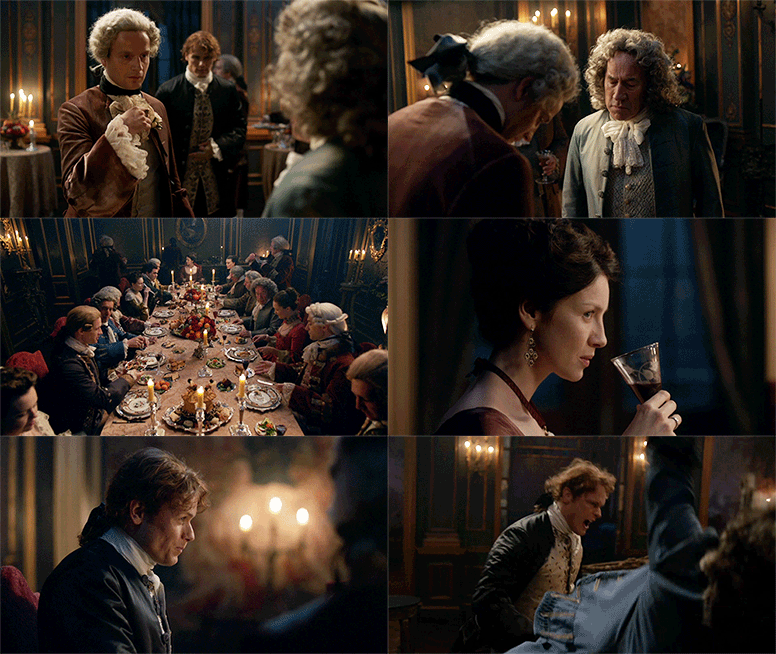
Jamie and Claire, Outlander by Diana Gabaldon

OL quote

Henry and Clare, The Time Traveler’s Wife by Audrey Niffenegger

TTW

Richard and Elise, Somewhere in Time by Richard Matheson

Somewhere

Married Love

Rosetta and Jeremiah, I Shall Be Near To You by Erin Lindsay McCabe

ISBNTY

Don and Rosie, The Rosie Project by Graeme Simsion

Rosie

Unrequited Love

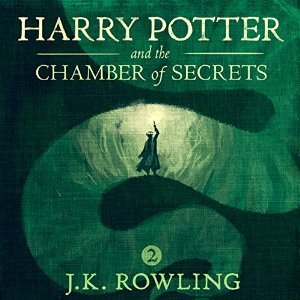
Severus Snape and Lily Evans, the Harry Potter series

Always

Sidney Carton and Lucie Manette, A Tale of Two Cities by Charles Dickens

TTC quote

Love Between Friends

Maddie and Julie, Code Name Verity by Elizabeth Wein

cnv

Supernatural Love

Matthew and Diana, All Souls Trilogy by Deborah Harkness

ADoW

Mercy and Adam, Mercy Thompson series by Patricia Briggs

mercy

Happy Valentine’s Day!

book-1169437_1920

What kind of Valentine theme did you pick this week? Please share your links so I can check out your TTT posts!

If you enjoyed this post, please consider following Bookshelf Fantasies! And don’t forget to check out my regular weekly features, Shelf Control and Thursday Quotables. Happy reading!

♥♥♥♥♥♥♥♥

Do you host a book blog meme? Do you participate in a meme that you really, really love? I’m building a Book Blog Meme Directory, and need your help! If you know of a great meme to include — or if you host one yourself — please drop me a note on my Contact page and I’ll be sure to add your info!


The Monday Check-In ~ 2/8/2016

cooltext1850356879 My Monday tradition, including a look back and a look ahead — what I read last week, what new books came my way, and what books are keeping me busy right now. Plus a smattering of other stuff too.

In real life:

heart-598048_1280

Happy Anniversary to us! 18 years ago today, my hubby and I spent the day skiing, then got married at a little wedding chapel in Reno, Nevada. Thank you to my honey for all these wonderful years!


What did I read last week?

Score_CVR.indd

Catching Jordan by Miranda Kenneally. Such fun. My review is here.

Stealing ParkerThings I Can't Forget

So then… I got on a roll with Miranda Keanneally’s books, borrowed from the library the two remaining Hundred Oaks books that I hadn’t read, and now I’ve read them all! I love this series of books. Not the usual teen fare — the characters here are strong, thoughtful, and always end up learning something about being true to themselves and supporting the people in their lives… without being dull or preachy.

Immortal Life

In audiobooks, I finished The Immortal Life of Henrietta Lacks by Rebecca Skloot. Check out my thoughts, here.

Fresh Catch:

No new books! Wow, I’ve really got this book craziness under control… for now.

What will I be reading during the coming week?

Currently in my hands:
All the Birds

All the Birds in the Sky by Charlie Jane Anders: I started this book last week, and I love what I’ve read so far. I got lured away by all those YA books, but now I’m back on track!

Now playing via audiobook:

Liar Temptress

I decided to go with another non-fiction selection for my next audiobook: Liar Temptress Soldier Spy by Karen Abbott, which profiles four women spies during the Civil War. Should be fascinating!

Ongoing reads:

MOBYemma

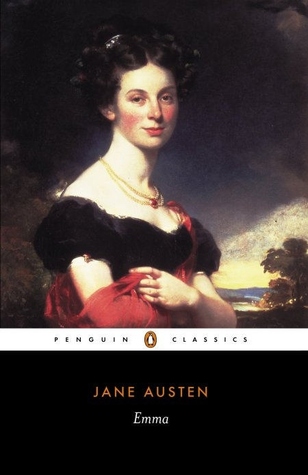
And we’re off! My book group is reading and discussing two chapter per week of both Written in My Own Heart’s Blood by Diana Gabaldon and Emma by Jane Austen. This is an online group, and anyone is welcome to join us — so if you’re interested, just ask me how!

So many books, so little time…

boy1

Audiobook Review: The Immortal Life of Henrietta Lacks by Rebecca Skloot

Immortal Life

Her name was Henrietta Lacks, but scientists know her as HeLa. She was a poor black tobacco farmer whose cells–taken without her knowledge in 1951–became one of the most important tools in medicine, vital for developing the polio vaccine, cloning, gene mapping, and more. Henrietta’s cells have been bought and sold by the billions, yet she remains virtually unknown, and her family can’t afford health insurance. This phenomenal New York Times bestseller tells a riveting story of the collision between ethics, race, and medicine; of scientific discovery and faith healing; and of a daughter consumed with questions about the mother she never knew.

The Immortal Life of Henrietta Lacks is a book I’d been hearing about for years, but as I rarely pick up non-fiction, I’d never gotten around to actually reading it. Finally, I decided to give the audiobook a try.

Henrietta Lacks was a poor African-American woman with five children who was diagnosed and treated for cervical cancer in the early 1950s, before finally dying of the disease in 1951. Doctors treating Henrietta removed samples of her tumor during her treatments, and these cells grew in culture at an unprecedented rate, becoming the first immortal cells ever created in medical history.

In the years since, HeLa cells have been used worldwide for medical research, and it is said that without the HeLa line, many of our current medical advances and treatments would not exist.

In The Immortal Life, author Rebecca Skloot explores both the scientific journey of Henrietta’s cells and their impact on modern medicine, and the lives of the family that Henrietta left behind. Amazingly, while HeLa was incredibly important and famous among the scientific community since the early 1950s, it was not until decades later that Henrietta’s family had any inkling that her cells had been preserved and were still being used for scientific advancement.

The author describes Henrietta’s early life and marriage, the birth of her children, and her suspicion around age 30 that something was wrong with her, leading to her treatment at Hopkins and ultimately, her death from a particularly virulent strain of cervical cancer. Henrietta is portrayed as an energetic, spirited woman and a devoted mother, who never fully understood her condition or her treatment.

Henrietta’s treatment at the time was probably not unusual, and there’s no indication that the medical care she received was not up to the standards of the 1950s. Henrietta was not asked for permission to take her cells for study, but again, that was not the practice at the time.

The book has many chapters describing the scientific impact of the HeLa cells, their use, their impact, and their study over the years. The book also covers topics concerning medical ethics, questions still under debate today, such as who “owns” the tissues removed from patients and who can and should profit from their commercialization. Some interesting examples are given, such as cases where millions of dollars in profit are made by the medical industry while the donor patient receives nothing.

Along those lines, we spend quite a bit of time with the Lacks family, most particularly with Henrietta’s daughter Deborah. Deborah becomes Rebecca Skloot’s companion in her quest to understand Henrietta’s life and death, and her spirit and energy infuse much of the book. The author traces their travels together to the family’s rural home and through the bits and pieces of medical records which they manage to uncover. It’s clear that the family received little information about HeLa or what the cells actually were, so that Deborah often referred to them as being parts of her mother still alive, imagining her mother being experimented upon, and becoming agitated over the types of experiments conducted — describing at various times that parts of her mother were shot into space, used to test nuclear bombs, and infected with AIDS (all actually types of scientific work done using HeLa cells).

There’s a lot of fascinating information in The Immortal Life of Henrietta Lacks, but overall, something about this book didn’t quite fit together for me. There are at least two distinct pieces here — the scientific elements related to the HeLa cell line, the use of tissue cultures, and the biomedical ethical issues; and the story of the Lacks family, their hardships, and the impact upon them of the fame of HeLa and the resultant loss of privacy for the family.

The author, in the book’s afterword, states that one of her purposes in writing this book was to bring to life the woman behind the cells, to make it clear to the world that HeLa is more than just nameless cells, but rather the living remnants that once were part of a real woman who had a name, a life and a family. I think the book absolutely succeeds in this regard.

Still, I couldn’t quite decide what the ultimate point was, or what we are to conclude about the scientific and ethical issues raised here. Was it wrong to use Henrietta’s cells for research? I really can’t believe that. Should patients have control over what happens to their tissues? Should patients have a monetary stake in research involving their tissues? What would that mean for ongoing research? These are big issues, but I felt that the nuances became a little muddy when mixed with the story of the Lacks family. It’s wonderful that Henrietta herself is finally getting recognition, but I’m not sure that this case proves anything when it comes to the confusing, often contradictory elements of the bioethical issues.

Regarding the audiobook itself, I question some of the production decisions made regarding the narration. Most of the narration is a straightforward read of the book, but quotes are read by a different narrator, with ethnic accents and dramatization. It’s not just the Lacks family that gets this treatment — a doctor of Chinese descent is read with a heavy Chinese accent, and there are a few others as well. This is a work of non-fiction, and adding this interpretive treatment of the text felt unnecessary to me, and ultimately, it was distracting.

The book itself is organized in a way that feels muddled and confusing. The chapters jump from present to past, from science to personal, and the transitions are quite abrupt. Particularly via audiobook, this jumping around makes the narrative hard to follow, and the logical sequence is occasionally lost.

I did find much of The Immortal Life of Henrietta Lacks quite interesting, and I was moved by the family’s story, particularly Deborah’s. Still, the combination of the two halves of the story didn’t quite gel for me, and the book as a whole wasn’t nearly as satisfying as I’d hoped it would be.

_________________________________________

The details:

Title: The Immortal Life of Henrietta Lacks
Author: Rebecca Skloot
Narrator: Cassandra Campbell, Bahni Turpin
Publisher: Crown Publishing Group
Publication date: February 2, 2010
Audiobook length: 12 hours, 30 minutes
Printed book length: 370 pages
Genre: Non-fiction (science/biography)
Source: Library (Overdrive)

Thursday Quotables: Catching Jordan

quotation-marks4

Welcome back to Thursday Quotables! This weekly feature is the place to highlight a great quote, line, or passage discovered during your reading each week.  Whether it’s something funny, startling, gut-wrenching, or just really beautifully written, Thursday Quotables is where my favorite lines of the week will be, and you’re invited to join in!

NEW! Thursday Quotables is now using a Linky tool! Be sure to add your link if you have a Thursday Quotables post to share.

Score_CVR.indd

Catching Jordan by Miranda Kenneally
(published 2011)

I just love this series of girls-in-sports YA novels by Miranda Kenneally! The characters are so real and honest… and occasionally awkward:

“It’s a beautiful night…” Ty says.

“Yup. I love fall…”

“Me too. It’s my favorite season…”

“Mine too…” I eat another cookie.

Do we have anything to talk about?

When we’re hooking up, it seems like we have lots to talk about, but maybe that’s because we’re too busy kissing. This lack of conversation, this isn’t what love is supposed to be like, right? But what happens when you don’t find that right person? Do you just spend the rest of your life in a relationship where the conversation isn’t great, everything isn’t perfect, but it is nice and sweet?

What lines made you laugh, cry, or gasp this week? Do tell!

If you’d like to participate in Thursday Quotables, it’s really simple:

  • Write a Thursday Quotables post on your blog. Try to pick something from whatever you’re reading now. And please be sure to include a link back to Bookshelf Fantasies in your post (http://www.bookshelffantasies.com), if you’d be so kind!
  • Click on the linky button (look for the cute froggie face) below to add your link.
  • After you link up, I’d love it if you’d leave a comment about my quote for this week.
  • Be sure to visit other linked blogs to view their Thursday Quotables, and have fun!

Shelf Control #21: Miss New India

Shelves final

Welcome to the newest weekly feature here at Bookshelf Fantasies… Shelf Control!

Shelf Control is all about the books we want to read — and already own! Consider this a variation of a Wishing & Waiting post… but looking at books already available, and in most cases, sitting right there on our shelves and e-readers.

Want to join in? See the guidelines and linky at the bottom of the post, and jump on board! Let’s take control of our shelves!

cropped-flourish-31609_1280-e1421474289435.png

My Shelf Control pick this week is:

Miss New IndiaTitle: Miss New India
Author: Bharati Mukherjee
Published: 2011
Length: 328 pages

What it’s about (synopsis via Goodreads):

Anjali Bose’s prospects don’t look great. Born into a traditional lower-middle‑class family, she lives in a backwater town with only an arranged marriage on the horizon. But her ambition, charm, and fluency in language do not go unnoticed by her charismatic and influential expat teacher Peter Champion. And champion her he does, both to powerful people who can help her along the way and to Anjali herself, stirring in her a desire to take charge of her own destiny. So she sets off to Bangalore, India’s fastest‑growing metropolis, and soon falls in with an audacious and ambitious crowd of young people, who have learned how to sound American by watching shows like Seinfeld in order to get jobs in call centers, where they quickly out‑earn their parents. And it is in this high‑tech city where Anjali — suddenly free of the confines of class, caste, and gender — is able to confront her past and reinvent herself. Of course, the seductive pull of life in the New India does not come without a dark side . . .


How I got it:

I bought it at a used book store.

When I got it:

A few years ago.

Why I want to read it:

I remember that I heard a review of this book on the radio soon after it came out, and thought it sounded fun and different — then forgot about it until I stumbled across a copy a couple of years later. I still think it sounds good! It’s been a while since I’ve read anything set in modern-day India, and I love the idea of the culture clash between the old ways and the character’s new life.

__________________________________

Want to participate in Shelf Control? Here’s how:

  • Write a blog post about a book that you own that you haven’t read yet.
  • Add your link below!
  • And if you’d be so kind, I’d appreciate a link back from your own post.
  • Check out other posts, and have fun!


For more on why I’ve started Shelf Control, check out my introductory post here, or read all about my out-of-control book inventory, here.

And if you’d like to post a Shelf Control button on your own blog, here’s an image to download (with my gratitude, of course!):

Shelf Control

Take A Peek Book Review: Catching Jordan by Miranda Kenneally

“Take a Peek” book reviews are short and (possibly) sweet, keeping the commentary brief and providing a little peek at what the book’s about and what I thought.

Score_CVR.indd

Synopsis:
(via Goodreads)

What girl doesn’t want to be surrounded by gorgeous jocks day in and day out? Jordan Woods isn’t just surrounded by hot guys, though — she leads them as the captain and quarterback of her high school football team. They all see her as one of the guys and that’s just fine. As long as she gets her athletic scholarship to a powerhouse university.

But everything she’s ever worked for is threatened when Ty Green moves to her school. Not only is he an amazing QB, but he’s also amazingly hot. And for the first time, Jordan’s feeling vulnerable. Can she keep her head in the game while her heart’s on the line?


My Thoughts:

Miranda Kenneally’s young adult novels take place in and around Hundred Oaks High School in the fictional town of Franklin, Tennessee. Each book has a teen girl at its center, and while the stories interweave a bit, with familiar faces from earlier books popping up later in supporting roles, each book stands alone nicely as well.

I stumbled across these books more or less accidentally, when I picked up an ARC of the 4th book, Racing Savannah. Since then, I’ve read two more, and now I’m finally going back and trying to read the first three Hundred Oaks books, starting with the author’s very first novel, Catching Jordan.

Jordan Woods is a high school senior, an amazing quarterback, and captain of her school football team. She’s the daughter of a world-famous NFL quarterback, and sees no reason why she shouldn’t follow in his footsteps and pursue her dreams of QBing a top-tier college team — despite her dad’s lack of support due to fear of her getting injured.

Jordan’s closest friends are the guys from the team, especially Sam Henry, the quintessential boy next door who’s been her absolute best friend since childhood. Jordan and Sam’s friendship is tested when a hot new guy moves to town — a guy who not only is competition for the QB role but also wants to date Jordan.

Jordan is a total jock, and she’s not ashamed of it. She also refuses to cede any ground in her fight to be taken seriously, and throws herself into her love of football wholeheartedly. (I’m a big fan of Jordan’s, even if I’m not at all a jock myself!)

One of the things I love about these books is the fresh take on teen friendships and social roles. Yes, there are some mean, gossipy cheerleaders — but there are also a couple of nice, positive cheerleaders who actually are supportive friends, once Jordan drops her guard and allows herself to hang out with girls. Jordan is always afraid of looking soft in front of the guys, but she eventually learns that she can wear a dress and makeup if she wants to (and she very rarely wants to) without giving up any ground as the football authority.

I also appreciate the honest look at high school relationships in Catching Jordan. These teens definitely do hook up, and sex is a pretty casual thing for most. Jordan faces her first kiss and losing her virginity within the space of a week, and it’s not because she’s taken a stand or hasn’t been interested. She’s just never before figured out how to balance having a love life with her status as captain and one of the guys.

I almost hesitated to include the book synopsis while writing this “Take a Peek” review, because frankly, the synopsis makes the book sound kind of cheesy and stereotypical, and that’s so misleading. I mean, “what girl doesn’t want to be surrounded by gorgeous jocks day in and day out?” and “amazingly hot”? Really?

Ignore all that, and just pay attention to this: Catching Jordan is a terrific young adult novel about a strong, self-sufficient young woman who values friendship and loyalty, knows what she wants out of life, but has to figure out who really matters to her and how to find the kind of love she really craves. The small-town, Southern vibe is lots of fun, and I’m eagerly looking forward to reading the two remaining Hundred Oaks books that are calling my name.

Interested in this author? Check out my reviews of other books by Miranda Kenneally:
Racing Savannah
Breathe, Annie, Breathe
Jesse’s Girl

_________________________________________

The details:

Title: Catching Jordan
Author: Miranda Kenneally
Publisher: Sourcebooks Fire
Publication date: November 11, 2011
Length: 283 pages
Genre: Young adult contemporary fiction
Source: Purchased

Top Ten Tuesday: My top 10 settings for historical fiction

Top 10 Tuesday new

Top Ten Tuesday is a meme hosted by The Broke and the Bookish, featuring a different top 10 theme each week. This week’s topic is:

Top Ten Historical Settings You Love/ Ten Historical Settings You’d Love To See or Top Futuristic Books You Love/Ten Futuristic Societies I’d Love To Read in Books — basically this week is all about the past or the future….spin it however you choose!

I do love historical fiction, but I almost decided to skip this week’s topic. Part of my problem is that I enjoy reading about lots of different times and places, but if I read too much of any one in particular, it’s like sensory overload, and I end up having to avoid it ever after. Problems, problems… what’s a reader to do?

historicalfiction(1)

Still, I have certain favorites when it comes to historical eras and faraway lands. Here are my top 10, along with a stellar example or two for each:

1) Scotland, 1700s, especially around the time of the Jacobite Rising.
Top pick: Outlander by Diana Gabaldon (obviously)

10964

2) Colonial America
Top pick: The Witch of Blackbird Pond by Elizabeth George Speare

Witch of Blackbird Pond

3) Civil War
Top pick: Gone With the Wind by Margaret Mitchell or I Shall Be Near To You by Erin Lindsay McCabe

GWTWIShallBeNear

4) Women’s suffrage movement (US) – early 1900s
Top pick: The Cure For Dreaming by Cat Winters

Cure for Dreaming

5) World War I – battlefield dramas or hospitals or post-war mysteries — all good!
Top pick: Maisie Dobbs by Jacqueline Winspear or In Falling Snow by Mary-Rose MacColl

Maisie DobbsIn Falling Snow

6) World War II
Top pick: All the Light We Cannot See by Anthony Doerr; The Storyteller by Jodi Picoult; The Ship of Brides by Jojo Moyes… (the list is endless, but these are three recent ones that I read and loved)

All the LightThe Storytellership of brides

7) Tudor England
Top pick: Wolf Hall and Bring Up the Bodies by Hilary Mantel

wolf-hallbring up the bodies

8) Australian history
Top pick: The Thorn Birds by Colleen McCullough

Thorn Birds

9) French Revolution
Top pick: A Tale of Two Cities by Charles Dickens

Tale of Two Cities

10) 1400s Spain
Top pick: People of the Book by Geraldine Brooks or Incantation by Alice Hoffman

People of the BookIncantation

Do you have any recommendations for historical novels set during my favorite eras?

Please share your links so I can check out your TTT posts!

If you enjoyed this post, please consider following Bookshelf Fantasies! And don’t forget to check out my regular weekly features, Shelf Control and Thursday Quotables. Happy reading!

♥♥♥♥♥♥♥♥

Do you host a book blog meme? Do you participate in a meme that you really, really love? I’m building a Book Blog Meme Directory, and need your help! If you know of a great meme to include — or if you host one yourself — please drop me a note on my Contact page and I’ll be sure to add your info!


Counting up the books: February update


CUTB_2

Welcome to the February edition of Counting Up the Books! In which I take stock, re-set the parameters for my book counting, and decide where I’m going with this crazy monthly counting of books…

But first — the backstory:

This past fall, I wrote a post called Counting Up the Books, talking about two things I love: BOOKS and NUMBERS. That was the beginning of a monthly feature for me, in which I tally up just how many unread books there are in my house and on my Kindle.

Here are my book totals from the past four months, adding in new books and subtracting books read or given away:

October: 539

November: 548 

December: 554

January: 548

You’ll notice that my numbers went up, not down, for a few months there, until finally in January we have tiny baby steps of progress in getting the numbers under control.

In thinking about this book count methodology of mine, I’ve started to reach the conclusion that my approach is a bit flawed. In general, when it comes to my reading habits, I try to avoid absolutes. I don’t participate in challenges. I don’t view my resolutions as rules, but rather, as aspirations.

And I would certainly never put myself on a book buying ban.

Why set myself up for failure? I know I won’t give up buying books for a year, and I won’t even pretend that that’s a realistic expectation. I am, however, making a conscious effort to request fewer ARCs and preorder fewer new releases — largely because I know that I already have a huge backlog of books to be read. Even when a brand new book arrives hot off the presses, I don’t always read it right away, so why do I need to buy it the second it comes out?

All that said, I think if I want to track my progress with reading my shelves, I need to have a fixed baseline as a reference point. And so, arbitrarily, I’m taking my January numbers as point zero. Going forward, my Counting Up the Books tallies will not include newly acquired books. Yes, I’ll keep track of my new arrivals (hurray, a good excuse for another spreadsheet!), but I’m going to use my January count as my 2016 point of departure. Of the 548 books that are on my list as of January, how many will I actually read in 2016? And how many will I give away, sell at the used bookstore, or donate to a good cause?

We’ll see. I’ll be posting a fresh book count at the beginning of each month to track how I do… and at the end of the year, I’ll do a re-count — or hey, I like the word recalibration! That’s it: At the end of December, I’ll recalibrate my book count to add in any new and still unread acquisitions from 2016, and start with a fresh baseline number in January 2017. Make sense?

Which brings us to today. Using 548 as my 2016 starting point, here’s where I stand as of the start of February:

BC 022016

So… like I said — baby steps.

How are your shelves doing this month?

Don’t forget to join me for Shelf Control on Wednesdays, where we highlight books from our shelves that we really want to read!


The Monday Check-In ~ 2/1/2016

cooltext1850356879 My Monday tradition, including a look back and a look ahead — what I read last week, what new books came my way, and what books are keeping me busy right now. Plus a smattering of other stuff too.

In real life:

Wow, where did January go? I guess I need to stop thinking of 2016 as just getting started. Now it’s really and truly underway!

What did I read last week?

The StorytellerScore_CVR.indd

The Storyteller by Jodi Picoult: I lost a lot of sleep over this moving, powerful book. See my thoughts, here.

After spending most of the week on such a heavy book, I needed something lighter and sunnier for the weekend, so I picked up Catching Jordan by Miranda Kenneally. This author’s books always make me happy. I should be done with this one in the next day or two.

Fresh Catch:

Just one new book came my way this week… and it’s right below, because that’s what I’ll be reading next!

down-47585_1280down-47585_1280down-47585_1280down-47585_1280down-47585_1280

What will I be reading during the coming week?

Currently in my hands:
All the Birds

All the Birds in the Sky by Charlie Jane Anders: I’m really excited to be starting this brand-new, just-released sci fi book!

Now playing via audiobook:

Immortal Life

I’ve listened to about 80% of The Immortal Life of Henrietta Lacks by Rebecca Skloot, and hope to finish within the next few days. I’m enjoying it, but with a few reservations.

Ongoing reads:

MOBYemma

And we’re off! My book group is reading and discussing two chapter per week of both Written in My Own Heart’s Blood by Diana Gabaldon and Emma by Jane Austen. This is an online group, and anyone is welcome to join us — so if you’re interested, just ask me how!

So many books, so little time…

boy1


Book Review: The Storyteller by Jodi Picoult

The Storyteller

(Goodreads): Sage Singer befriends an old man who’s particularly beloved in her community. Josef Weber is everyone’s favorite retired teacher and Little League coach. They strike up a friendship at the bakery where Sage works. One day he asks Sage for a favor: to kill him. Shocked, Sage refuses… and then he confesses his darkest secret—he deserves to die, because he was a Nazi SS guard. Complicating the matter? Sage’s grandmother is a Holocaust survivor.

What do you do when evil lives next door? Can someone who’s committed a truly heinous act ever atone for it with subsequent good behavior? Should you offer forgiveness to someone if you aren’t the party who was wronged? And most of all—if Sage even considers his request—is it murder, or justice?

How do I even begin to describe a book as powerful and devastating as The Storyteller? While I knew the basic premise, I had no idea what I was in for when I first started reading it.

At the outset, we meet Sage, a reclusive young woman bearing scars of a tragic accident that cost her her parents. Sage lives alone in a small town in New Hampshire, where she works nights — again, alone — baking a miraculous, marvelous assortment of breads for the small bakery that employs her. Baking is both Sage’s passion and an escape, providing her with distraction and a focus, as well as a good excuse to avoid almost everyone.

It’s silly to anthropomorphize bread, but I love the fact that it needs to sit quietly, to retreat from touch and noise and drama, in order to evolve.

I have to admit, I often feel that way myself.

Sage is forced out of her comfort zone only when she attends a grief support group, where she meets and befriends a newer member, Josef, a sweet old man in his 90s who seems to be just as lonely as Sage. Gradually, the two connect and begin to share bits and pieces of their lives, but Sage’s pleasure in the friendship grinds to a crashing halt when Josef confesses his Nazi past to Sage and asks her to help him die.

Sage is aware that her beloved grandmother Minka is a Holocaust survivor, and remembers catching a brief glimpse of the tattoo on her arm. But Minka has never said a word about her experiences and refuses to answer questions. Sage doesn’t know where to turn. Josef is a well-respected member of the community, a man known as an excellent teacher, kind to all, a man who always did his best to help the town. How can he be a Nazi? In desperation and disgust, Sage tries to connect with law enforcement, and is finally directed to the Federal agency which investigates alleged war criminals, where an agent named Leo Stein takes Sage’s call. Leo encourages Sage to get more information. It’s not enough to know that Josef has claimed to be a former SS agent. In order to take any action, they’ll need to be able to tie him to the historical records through facts, witness reports, or other details that can’t be fabricated.

Why is this book called The Storyteller? Within the novel, we get story upon story. The book opens with a scene that seems like something out of a different world — a tale with a folkloric flavor set in a small Polish village, in which the main character is the baker’s daughter, who feels a growing attraction to a strange young man who’s just arrived in the town, which is also beset by strange animal attacks. It’s not obvious, at first, how this tale, which weaves in between chapters of the contemporary story, actually fits into the main narrative, but it does, and is worth paying attention to.

After the initial section of the book sets up the story of Sage and Josef, we move into the heart of the book, which consists of two more sets of stories. First, we hear from Josef, who tells Sage that he is not Josef Weber after all, but Reiner Hartmann, an SS officer whom Leo is able to find in the historical record. Josef relates the story of his life to Sage, from his childhood in a typical German family to his growing success in Hitler Youth, to enrolling in the SS and becoming a part of the death machine that rolled through Poland. His story includes unflinching looks at the horrors in which he participated, slaughtering men, women, and children in village after village, and finally becoming a lead officer at Auschwitz, overseeing all female prisoners.

Josef’s confession to Sage isn’t enough, though. In order for Leo to take legal action and start the long process that could lead to extradition, deportation, and facing trial for his crimes, they need to be able to tie Josef’s story to something contained in the secret files on Reiner Hartmann, something that couldn’t have been gleaned from the public record. And at this point, Sage takes Leo to meet Minka — and Minka breaks her decades of silence by relating the terrible story of her girlhood, the fate of her family, and her own experiences in Auschwitz.

Minka’s story is the true center of the book, and Minka herself most aptly fits the role of the title, The Storyteller. Minka’s tale is lengthy, detailed, heartbreaking, and horrific. This is the longest section of the book, and is simply devastating to read. I won’t go into detail here; on the one hand, anyone who’s read the stories of Holocaust survivors will recognize some of the common elements here, yet on the other hand, Minka’s narrative is so personal and closely-observed that each loss and each degree of suffering feels like it happened to people we know. Within Minka’s narrative of what she lived through are more bits and pieces of the village tale that’s sprinkled throughout The Storyteller, and we finally discover the link between the book’s characters and the events of the tale.

The central question in The Storyteller is one of forgiveness and atonement. Can someone truly be forgiven for past crimes? Whose job, and whose right, is it to forgive? Can someone who’s committed evil acts ever make up for them? Do 50 years of helping others erase a heinous past? Does it make sense to prosecute a 95-year-old man for the crimes he committed almost seventy years earlier?

I don’t know what this person did you you, and I am not sure I want to. But forgiving isn’t something you do for someone else. It’s something you do for yourself. It’s saying, You’re not important enough to have a stranglehold on me. It’s saying, You don’t get to trap me in the past. I am worthy of a future.

There are no easy answers here. Sage does what she feels to be the right thing by bringing in Leo and cooperating in the investigation, yet she feels a moral obligation toward Josef too. When she looks at him, she sees the horrors he committed, but at the same time she see a lonely, frail old man who loves his dog and mourns his wife of fifty years. Can she feel sorry for him even while feeling repulsed by all she knows? And how does hearing her grandmother’s story affect her ability to listen to the request Josef continues to make of her?

While painting a vivid portrait of a period of history that must not be forgotten, the author is also making an important statement about the power of stories:

Fiction comes in all shapes and sizes. Secrets, lies, stories. We all tell them. Sometimes, because we hope to entertain. Sometimes, because we need to distract.

And sometimes, because we have to.

Jodi Picoult’s fiction tends not to come with easy answers. Of the four or five of her books which I’ve read, all include moral quandaries — people put in difficult or almost impossible positions, where the path forward is murky and ethical questions abound. The same is true of The Storyteller. There’s much food for thought here, and no matter what you think of Josef himself, his request, and Sage’s actions, you’ll definitely find yourself replaying scenes in your mind over and over. I’d imagine that the ending will be controversial for many, and there are certainly plenty of arguments to be made as to why it is or isn’t the right ending, or what the characters should or should not have done.

Ultimately, The Storyteller is a tale of pain and loss, but at the same time, it inspires hope simply by allowing the reader to bear witness to the courage and sacrifice that accompany all the horrors which Minka shares through her story. The Storyteller is not a light or easy read, but it’s an important one, and I applaud the author for creating a work of fiction that explores such a horrible piece of history with grace and honesty.

_________________________________________

The details:

Title: The Storyteller
Author: Jodi Picoult
Publisher: Atria
Publication date: February 26, 2013
Length: 460 pages
Genre: Contemporary fiction
Source: Purchased