I’m baaaaack! Plus, a Wishlist Wednesday post.

Hey, all! Thanks for keeping up with Bookshelf Fantasies while I was away this past week. I’m back, frantically trying to wade through all the emails that have piled up, whilst simultaneously doing mountains of laundry and emptying my suitcases. I had a lovely vacation in Costa Rica (thanks for asking!), and will share some photos — as well as my reviews of the wonderful books I read while away — as soon as I catch my breath a bit more.

Meanwhile, I’m diving back in with a Wishlist Wednesday post!

Wishlist Wednesday: The concept is to post about one book from our wish lists that we can’t wait to read. Want to play? Here’s how:

  • Follow Pen to Paper as host of the meme.
  • Do a post about one book from your wishlist and why you want to read it.
  • Add your blog to the linky at the bottom of the post at Pen to Paper.
  • Put a link back to Pen to Paper somewhere in your post.
  • Visit the other blogs and enjoy!

My Wishlist Wednesday pick this week is:

Openly Straight

Openly Straight by Bill Konigsberg

From Goodreads:

Rafe is a normal teenager from Boulder, Colorado. He plays soccer. He’s won skiing prizes. He likes to write.And, oh yeah, he’s gay. He’s been out since 8th grade, and he isn’t teased, and he goes to other high schools and talks about tolerance and stuff. And while that’s important, all Rafe really wants is to just be a regular guy. Not that GAY guy. To have it be a part of who he is, but not the headline, every single time.

So when he transfers to an all-boys’ boarding school in New England, he decides to keep his sexuality a secret — not so much going back in the closet as starting over with a clean slate. But then he sees a classmate breaking down. He meets a teacher who challenges him to write his story. And most of all, he falls in love with Ben . . . who doesn’t even know that love is possible.

This witty, smart, coming-out-again story will appeal to gay and straight kids alike as they watch Rafe navigate being different, fitting in, and what it means to be himself.

Why do I want to read this?

I have a bit of burn-out when it comes to YA novels of the supernatural, otherworldly, or end-of-the-world, end-of-civilized-society varieties. But… I do love finding a YA novel that deals sensitively with contemporary issues, while at the same time telling the story of memorable individuals facing real-world challenges. Openly Straight sounds like it takes the coming out experience and flips it on its head. Is it possible to be so “out” that that’s all people see? Is it realistic to want to keep such a big part of yourself hidden, not out of shame but from a desire to be known for oneself without labels?

I’m really looking forward to seeing how the author tackles this subject — and how Rafe’s struggle to define himself, for himself, works out.

So what’s on your wishlist this week?

If you enjoyed this post, please consider following Bookshelf Fantasies! And don’t forget to check out our regular weekly features, Thursday Quotables and Flashback Friday. Happy reading!

Book Review: Fathomless by Jackson Pearce — **This review contains spoilers**

Book Review: Fathomless by Jackson Pearce

Fathomless (Fairytale Retellings, #3)I can’t write about Fathomless and express what I thought and felt reading this book without including SPOILERS — so consider this fair warning! This review will include plot spoilers, including the major twist that readers discover toward the end. If you don’t want to know, stop reading now! Seriously, final notice!

Are you still here?

Sure you don’t want to look away?

Really, really sure?

Okay….

Fathomless looks like a mermaid story, right? I mean, look at the cover. That’s a mermaid. Absolutely, without doubt.

Except the girls/creatures in Fathomless aren’t actually mermaids, or at least not the fairy tale and Disney versions of mermaids. For starters — no tails. Not at all. They have legs and feet, just like when they were human. And that’s a key point as well. You know how Ariel is the daughter of King Triton? No mermaid royalty here — these girls were once human, but have somehow been transformed into creatures who live in the ocean, happily swimming with their sisters all day long and bit by bit forgetting their previous lives.

Our main mermaid girl is Lo, who lives under the sea (not in a pineapple…) off the coast of Georgia. She still yearns vaguely for the lights of the human world, but grows more and more content with her underwater life with each passing day. She knows that she was once someone else and had a different name, but can’t remember those details any longer. She and her “sisters” share the belief that they were brought to live in the ocean by an angel, and that someday, when they’ve turned into one of the beautiful but vacant old ones, they’ll leave the ocean and become angels themselves.

There’s another path that the ocean girls believe in, even thought they’ve never seen it happen: Legend says that an ocean girl (sorry, I have a hard time calling them mermaids) can regain a human soul and a human life by getting a human boy to fall in love with her — and then drowning him. At that point, she takes his soul and can go back to living on land as a regular girl again. Okay, yeah, she’ll also have murdered someone to get there, but why quibble?

Celia is our main human point of view. She’s one of triplets — her sisters Jane and Anne are identical, and Celia is the odd girl out. All three have powers of sight: Through touch, Celia can read someone’s past, Jane reads the present, and Anne sees the future. The sisters live in a small Georgia beach town in their prep school dorm, supported by a distant uncle after their mother’s death and their elderly father’s descent into the fog of Alzheimer’s.

Celia and Lo collide one night when guitar-playing cute boy Jude falls off a pier into the ocean. Lo pulls him from the sea, Celia performs CPR, and Jude comes back to life. He falls for Celia, but he remembers hearing a song while he was being rescued — and Celia doesn’t sing. Celia and Jude form a relationship, but at the same time, Celia is drawn back to the beach to seek out the mysterious girl she saw disappear back into the ocean.

Lo is able to leave the water, but each step on land is torture for her, leaving her in agony and with bleeding feet. As Celia and Lo begin to know one another, Celia touches Lo and is able to see her past as a human. As Celia uncovers Lo’s history, Lo begins to remember her life as Naida, a normal human girl with a home and a family. Lo and Naida are presented as two separate personalities struggling for dominance; sometimes we see Lo’s perspective on life in the ocean, and sometimes we get Naida, who considers herself a prisoner and yearns to be free.

So far, so good. In fact, I liked Fathomless quite a bit for about the first 2/3 of the book. And then it took a twist that more or less ruined it for me.

To backtrack a bit, according to Goodreads, Fathomless is book #3 in author Jackson Pearce’s Fairytale Retellings series. I’ve read the previous two books, Sisters Red and Sweetly, although it’s been a few years since then and I’d forgotten a lot of the details. I remembered the vague plot outlines, and remembered that I’d found the books enjoyable, but didn’t remember much more than that.

So… I picked up Fathomless while under the impression that the author had written a series of separate novels, with a common theme of being inspired by different fairy tales. And then 2/3 of the way through Fathomless, I was smacked in the head by how wrong I was. All three of these novels are connected, and let me just say: Weird.

All of a sudden, in the middle of a book about quasi-mermaid-creatures, there are werewolves. Yup. Werewolves. Apparently, werewolves steal girls away and stick them in the ocean as some sort of incubator — and when the girls are done, they come back out of the ocean and join the werewolf pack. Or something. Sisters Red was about a Buffy-ish werewolf slayer fighting hordes of evil monsters. In Sweetly, as I’d completely forgotten until reading a synopsis last night, a Hansel and Gretel retelling ends up having werewolves behind the town’s evil secret as well. And now, here they are again, finding twins, killing one outright and biting the other, then putting her into the sea to cook or stew or whatever it is they’re doing down there. Supposedly, it has to be twins – something about sharing the soul, blah blah blah. To be honest, my eyes had started to glaze over at this point in the story so the twin rationale kind of escaped me. Or was just ridiculous to begin with. One of the two.

I liked the story of Celia and Jude well enough, although the two other triplets, Anne and Jane, seemed a bit amorphous to me. We learn about some of their habits, but their inner workings are a little vague and seem altogether too inconsistent for me to ever to get a true sense of who they are, what they want, and what role Celia plays in their lives. But their story, as interwoven with the story of Lo/Naida and the ocean girls, gets lost somewhere along the way, and the entire thing just falls apart by the end.

The werewolf twist comes out of nowhere and makes no sense. I was kind of enjoying the twist on the Little Mermaid fairy tale up to that point, and found some of the descriptions of the ocean world to be quite lovely. But the entire plot just falls apart when the werewolf element is introduced — at which point, I realized that the pieces that seemed to promise an interesting take on a traditional tale, such as the mermaids being formerly human girls, were all for nothing. If the author is trying to build an entire world in this series, then the connection needs to be stronger to make it work, rather than randomly introducing werewolves into a mermaid story. Better yet, in my opinion, would have been creating these stories as stand-alone fairy tale retellings that provide unique takes on traditional tales, without trying to force a big-picture framework onto them.

I see that book #4 in the Fairytale Retellings series will be published this fall. Called Cold Spell, it’s a retelling of The Snow Queen by Hans Christian Anderson. Which would be great… except I’m guessing there will be werewolves.

No thanks. I think I’m done with this series.

Wishlist Wednesday

Welcome to Wishlist Wednesday!

The concept is to post about one book from our wish lists that we can’t wait to read. Want to play? Here’s how:

  • Follow Pen to Paper as host of the meme.
  • Do a post about one book from your wishlist and why you want to read it.
  • Add your blog to the linky at the bottom of the post at Pen to Paper.
  • Put a link back to Pen to Paper somewhere in your post.
  • Visit the other blogs and enjoy!

For Wishlist Wednesday this week, it’s a two-fer:

If I Stay and Where She Went by Gayle Forman

From Goodreads on If I Stay:

In a single moment, everything changes. Seventeen-year-old Mia has no memory of the accident; she can only recall riding along the snow-wet Oregon road with her family. Then, in a blink, she finds herself watching as her own damaged body is taken from the wreck…A sophisticated, layered, and heart-achingly beautiful story about the power of family and friends, the choices we all make, and the ultimate choice Mia commands.

Where She Went is a sequel, and I’m not providing a synopsis… because I don’t want to know! In general, I prefer to know only the bare bones of a plot before I read a book, and definitely when it comes to two related books, I don’t want to get spoilers for #1 by reading about #2.

So why do I want to read these?

I’m probably the last person on the planet (well, maybe second or third to last) who hasn’t read one or both of these books. Earlier this year, I had the pleasure of reading Just One Day by the same author, and really loved it. (You can see my review here). Her writing is terrific, and the story moved well beyond standard romantic fare to say something truer and deeper about self, identity, independence, and inner strength. I can’t wait to read the sequel, Just One Year, due out this fall — so meanwhile, I thought it would be good timing to go back and read Gayle Forman’s earlier hits!

Have you read If I Stay and Where She Went? Are they must-reads or read-if-you-get-a-chance books? Let me know your thoughts!

So what’s on your wishlist this week?

Have you voted in my vacation reading poll yet? Rather than pick my own reading material for my upcoming trip, I thought I’d let everyone else do it for me! Here’s the link to see the options and cast your vote. Choose wisely! Whichever books get the most votes by Friday are going straight into my suitcase.

Book Review: This Is What Happy Looks Like by Jennifer E. Smith

Book Review: This Is What Happy Looks Like by Jennifer E. Smith

This Is What Happy Looks LikeTalk about the perfect summer book! I dare you to read This Is What Happy Looks Like without dreaming about beaches, fireworks, ice cream cones, and a salty sea breeze or two.

In this sweet, romantic young adult novel, Ellie and Graham meet by accident (or rather, by e-accident). When Ellie gets a random email from a stranger asking her to walk Wilbur, the dog-lover in her just has to respond and let the sender know there’s been a mistake. (Otherwise, poor Wilbur!). What follows next is a charming email exchange that starts light and flirty and ends up as a soul-baring correspondence, in which these two share everything except their full identities.

Little does Ellie know that Graham is actually Graham Larkin, movie star and teen heart-throb (I picture the teen-aged Zac Efron), sighed over by millions of teen girls around the world. Graham’s a bit new to the superstar gig and is hungry for real connection, and for once, he’s found someone to talk to who isn’t wowed by the Hollywood glamor. So when Graham’s newest movie needs to find a new filming location, Graham’s quick to jump in and suggest the small coastal town of Henley, Maine… where a certain someone happens to live. Graham hasn’t told Ellie who he really is, and he’s hoping madly that their amazing virtual connection will translate into real life.

Ellie, meanwhile, lives a contented life with her mother in Henley, but dreams of going to Harvard to study poetry this summer, if only she can scrape the funds together to pay for it. She’s not particularly starstruck, and is more annoyed by the film crews taking over her hometown than eager to catch a glimpse of the stars. But when Graham finally catches up with Ellie, after a brief delay caused by a teeny case of mistaken identity, it’s clear to see that Graham and Ellie do have chemistry, and then some. The question is, can a small-town girl and a Hollywood star find romance and a relationship, despite the never-ending cameras and paparazzi just dying for some good gossip?

This Is What Happy Looks Like is light and breezy, and there isn’t much doubt that there will be some sort of happy ending. I mean, a book with the word “happy” in the title can’t exactly get too tragic, can it? Still, it’s not all fluff. Ellie and Graham both have family issues to sort out, and there’s some real heart in their thoughts about the paths their lives have taken so far, how they want to live, and what role their parents can and should play in their lives.

A plot thread concerning Ellie’s estranged father is a bit extraneous to the main storyline and seemed liked needless filler to me. While providing much of the fodder for any sort of obstacle to the romance (and every good romance needs to overcome an obstacle or two, right?), the pieces about Ellie’s father — her search for him, her assessment of his role in her life, and her mother’s backstory — didn’t feel as important to me as they’re made to be in the story. In fact, I think the story might have worked a bit better without this element entirely.

Beside that, however, I really enjoyed TIWHLL (sorry, can’t keep typing that title out any longer!) Especially coming on the heels of my previous read, which was beautiful but incredibly painful, it truly felt like a breath of fresh air to read this summery romance. Light and airy, full of characters with good hearts and good intentions, this really is a terrific summer read. I wanted only the best for Ellie and Graham — and I absolutely pined for a summer vacation on the coast of Maine, preferably with my feet in the surf and an ice cream cone in my hand. Bliss!

Book Review: The Sea of Tranquility by Katja Millay

Book Review: The Sea of Tranquility by Katja Millay

The Sea of TranquilityThe Sea of Tranquility is a searing story of two damaged souls who connect with each other when there’s no place else for them in the world.

Nastya was a 15-year-old piano prodigy, sparkling and full of hope, when she became the victim of a random, brutal attack that stole away from her everything that mattered, including her music. As the books opens, three years have gone by, and Nastya is starting a new phase of her life. Hopelessly damaged and mute by choice, she moves to a new town to escape her past, marching silently through her new school in stilletos and slutty clothes, just daring the world to try to approach. Full of rage, Nastya runs until she’s exhausted each night, bakes endlessly to keep busy, and immerses herself in thoughts of hate and revenge.

Josh is a 17-year-old boy who’s lost every member of his family over the years. Completely alone, he’s considered untouchable at school — he’s the boy who is synonymous with death. Josh is emancipated just shy of his 18th birthday, financially secure but living a haunted, lonely life in his family’s home, with no one but himself for company.

When Nastya and Josh meet, they each see in the other the possibility of companionship without demands. By finding the one person just as messed up as they consider themselves to be, they’ve found someone they can be around without having to deal with well-meaning questions, pity, or empty promises of an improved future. Josh knows he has no one and never will. Nastya knows that her life truly ended three years earlier. But together, they can find a few moments of relative normalcy as they escape from the prying, uncomfortable eyes of the rest of the world — the people who get to be happy and live without tragedy and trauma.

In The Sea of Tranquility, Katja Millay doesn’t flinch from showing us the truly ugly, horrific scars — physical and emotional — that violence leaves behind. Nothing is sugar-coated here; Nastya is a walking freak-show when we meet her, so devastated as a person that she presents herself to the world in the harshest light possible. Josh can see past her surface, but only because he also is someone who’s had to build a wall of indifference and defiance around himself in order to walk through a world full of happy, clueless people.

Josh and Nastya’s growing connection feels real and well-deserved. One thing that always bothers me in fiction — and this comes up a lot in young adult fiction especially — is when two characters find themselves in deep and instant love within moments of meeting. They may announce that they feel this way, but often it doesn’t feel true or justified. In The Sea of Tranquility, the last thing Josh and Nastya want is to be in love. Everyone Josh loves dies; he’d rather stay alone than risk losing someone again. Nastya feels that the real her died years earlier; she’s so full of hate and self-loathing that the possiblity of loving or being loved just isn’t there. As they begin to develop feelings for one another, they fight it. They value the comfort and safety they feel together, but it’s a tenuous safety, and at the first sign of seriousness or emotional risk, it may all fall apart.

Something truly lovely in this book is the cast of supporting characters. Josh’s best friend is a boy named Drew, a swaggering, attractive, blond “Ken-doll” who flirts constantly and can (and does) get any girl he wants — but as we find out, the image is mostly for show. Drew is a true and loyal friend with the heart of a romantic, who uses his reputation as a cover to hide behind while he pines for the girl he let slip away. Drew’s family is wonderful. His parents host Sunday dinner each week, with doors open wide to whichever of Drew’s stray friends happen to need a place to be, no strings attached. Both Josh and Nastya end up taken in by this warm family and find a sort of refuge there that they can find nowhere else.

Nastya allows herself to speak to Josh, but permits no questions about her past, what happened to her, and why she is the way she is. As Josh’s feelings for Nastya deepen, his frustration grows, and finally she must decide whether to walk away or let him in:

I’m not sure how long we site in Josh’s truck, holding hands, surrounded by darkness and unspoken regrets. But it’s long enough to know that there are no stories or secrets in the world worth holding onto more than his hand.

This is not an easy book. Every move and word of Nastya’s is soaked in pain, and I found myself choked up and on the verge of tears repeatedly throughout this reading experience. The author provides a harsh, sad look at the lives of broken people, and doesn’t allow for easy answers or solutions. The ending is not neat and perfect — but it feels right. Nastya will never be who she was. The attack that stole her life can never be undone. Josh will never get his family back. But for each of these characters, there’s hope, and by the end of the book, they manage to take steps toward a future that might actually include happiness and peace.

Beautifully written with memorable characters, The Sea of Tranquility is a book that’s often hard to take but is absolutely worth it.


Review copy courtesy of Atria Books via NetGalley.

Wishlist Wednesday

Welcome to Wishlist Wednesday!

The concept is to post about one book from our wish lists that we can’t wait to read. Want to play? Here’s how:

  • Follow Pen to Paper as host of the meme.
  • Do a post about one book from your wishlist and why you want to read it.
  • Add your blog to the linky at the bottom of the post at Pen to Paper.
  • Put a link back to Pen to Paper somewhere in your post.
  • Visit the other blogs and enjoy!

My Wishlist Wednesday book is:

  Gorgeous

Gorgeous by Paul Rudnick

From Goodreads:

When eighteen-year-old Becky Randle’s mother dies, she’s summoned from her Missouri trailer park to meet Tom Kelly, the world’s top designer. He makes her an impossible offer: He’ll create three dresses to transform Becky from a nothing special girl into the most beautiful woman who ever lived.

Becky thinks Tom is a lunatic, or that he’s producing a hidden camera show called World’s Most Gullible Poor People. But she accepts, and she’s remade as Rebecca. When Becky looks in the mirror, she sees herself – an awkward mess of split ends and cankles. But when anyone else looks at Becky, they see pure five-alarm hotness.

Soon Rebecca is on the cover of Vogue, the new Hollywood darling, and dating celebrities. Then Becky meets Prince Gregory, heir to the British throne, and everything starts to crumble. Because Rebecca aside, Becky loves him. But to love her back, Gregory would have to look past the blinding Rebecca to see the real girl inside. And Becky knows there’s not enough magic in the world.

A screamingly defiant, hugely naughty, and impossibly fun free fall past the cat walks, the red carpets, and even the halls of Buckingham Palace, Gorgeous does the impossible: It makes you see yourself clearly for the first time.

Why do I want to read this?

This really, really, really — on the surface of it —  does not sound like my kind of thing. And yet… I’ve read a series of great reviews about this book, including a rave review in the New York Times by the absolutely amazing Libba Bray. Good enough for me!

I’ve heard that it’s funny and moving, well-written, with a fairy-tale feel as well as a deep look at self-image and standards of beauty. I was a bit enchanted when I read this bit of an interview with the author:

There’s a lot in the book about our obsession not just with celebrities, but also with beauty. It’s fun, but are you also critiquing it?

Absolutely. Any behavior that becomes obsessive can be dangerous. One of the inspirations for this book was something my mother said: She was looking at old photos from when she was young, and she said something like, back then I thought I was so ugly, but I looked great. And then she laughed, which I’m glad about, but it made me think about the degree to which beauty rules our lives. I knew that this stuff mattered and could do terrible harm, and comic writing becomes funnier the higher the stakes are.

This YA book sounds like a lot of fun — but it also seems to have a lot to say. I’m intrigued, and just waiting for a copy to  become available at my library. Let me know if you’ve had a chance to read Gorgeous yet!

So what’s on your wishlist this week?

So what are you doing on Thursdays and Fridays? Come join me for my regular weekly features, Thursday Quotables and Flashback Friday! You can find out more here — come share the book love!

Book Review: The 5th Wave by Rick Yancey

Book Review: The 5th Wave by Rick Yancey

The 5th Wave (The Fifth Wave, #1)Quick, what’s the first thing you think of when you think of alien invasions? E.T.? Independence Day? Close Encounters of the Third Kind? 16-year-old Cassie has news for you: When the aliens do arrive, don’t expect sweet and cuddly. Don’t think that a scrappy band of humans will join together to defeat the invaders, with an inspirational soundtrack thumping in the background. As the startling new young adult novel The 5th Wave makes clear, when the aliens do get here, humans won’t stand a chance.

In The 5th Wave, the end of life as we know it is pretty much a foregone conclusion once the mothership shows up. Forget alien fighter drones swooping screaming through our skies. They don’t need all the flash and boom. This invasion is definitely managed hands-off, and it works.

In the first wave, an electro-magnetic pulse takes out all technology — lights, cars, batteries, phones — in one fell swoop. As disabled planes fall from the sky and stalled vehicles crash violently on the highways, humans start waking up to the fact that their world isn’t really theirs any more. In the second wave, strategic detonations along coastal fault lines cause global tsunamis. Goodbye, sea coasts. Goodbye, 50% of Earth’s human population. The third wave is an airborne toxic event, a deadly strain of the Ebola virus transmitted by birds, wiping out 97% of the humans who’d survived waves 1 and 2. And still, the aliens aren’t done. And still, there have been no landing parties, no Terminators, no robot invaders. The cleverness of this invasion, as envisioned by masterful storyteller Rick Yancey, is that the aliens manage to wipe us all out with what’s already here, no intergalactic technology of death needed. It’s like an alien invasion, DIY-style! Kill off the humans using their own infrastructure, natural resources, and diseases. Very efficient.

I don’t want to diminish the impact of the suspense and revelations, the intense sense of doom and dismay that build throughout this book, and so I won’t go into detail about the 4th and 5th waves, which are insidious, unimaginable, and seemingly impossible to survive. Suffice it to say that you’ll be twisting your brain around quite a bit as you figure it all out.

Meanwhile, what about the people in this book?

Main character Cassie is a typical Middle America high school girl before the invasion begins. She has friends, a loving family, and an unrequited crush on the school football star, who really does not know she exists. As her world is turned upside down and she loses everything, she makes one promise: to protect her 5-year-old brother Sammy, no matter what. But when Cassie sees even Sammy taken away from her, she has to decide whether she can keep going. In a world in which she may be the last survivor, is there really any point to continuing the fight? When it’s safer to be alone than to band together with other survivors, is it any wonder that the humans don’t stand a chance?

Much of the book is narrated by Cassie, but not all. We also get powerful sections focusing on Ben — Cassie’s crush — whose experience post-invasion takes a dramatically different turn after he’s brought into a camp of survivors and trained by the military there to become a killing machine, to fight back, to never give in. But is there something more to the command structure than meets the eye? And how can Ben be sure who the enemy is?

We also meet Evan, a farm boy with chocolate brown eyes, who rescues an injured Cassie, nurses her back to health, and seems to be perfect in every way. All he wants to do is protect and provide for Cassie… and she is just not used to trusting anyone at this point. Is Evan for real, or too good to be true? Yes, she’s lost her ability to trust since the invasion began, but is she really being unreasonable here? As Cassie puts it:

That’s my big problem. That’s it! Before the Arrival, guys like Evan Walker never looked twice at me, much less shot wild game for me and washed my hair. They never grabbed me by the back of the neck like the airbrushed model on his mother’s paperback, abs a-clenching, pecs a-popping. My eyes have never been looked deeply into, or my chin raised to bring my lips within an inch of theirs. I was the girl in the background, the just-friend, or — worse — the friend of a just-friend, the you-sit-next-to-her-in-geometry-but-can’t-remember-her-name girl.

Can Cassie believe that this seemingly-perfect boy really cares for her, or is he playing her in some way? And if he is, what’s Evan’s true agenda?

The 5th Wave strikes just the right balance between human drama and life-and-death action sequences. The tension builds, scene by scene, and the sense of inescapable doom grows and deepens as the book progresses. There are twists and turns galore. At so many points, I thought I had something figured out, only to have all my theories and guesses completely thrown out the window by whatever happened next. The characters are introduced in quick but effective strokes; we may not have known them for long, but we do feel that we know them.

While The 5th Wave feels like a pulse-pounding action ride at times, it also captures the feel of a broken world, post-invasion. Earth itself feels like an alien environment after the first three waves have wreaked their destruction:

The creepiest thing, creepier than the abandoned cars and the snarl of crumpled metal and the broken glass sparkling in the October sunlight, creepier than all the trash and discarded crap littering the median, most of it hidden by the knee-high grass so the strip of land looks lumpy, covered in boils, the creepiest thing is the silence.

The Hum is gone.

You remember the Hum.

Unless you grew up on top of a mountain or lived in a cave your whole life, the Hum was always around you. That’s what life was. It was the sea we swam in. The constant sound of all the things we built to make life easy and a little less boring. The mechanical song. The electronic symphony. The Hum of all our things and all of us. Gone.

I can’t say enough good things about The 5th Wave. I could easily seeing this series (yes, this is the first in a series) becoming as big as The Hunger Games. The 5th Wave is a young adult novel, but it doesn’t talk down or avoid the all-too-real tragedies of a world gone deadly. There’s loss, horrific destruction, death of loved ones, cruelty, and despair. But there’s also tenacity, loyalty, love, and determination. The handful of main characters are not cookie-cutter archetypes; instead, we see flawed, identifiable young people, each struggling with choices, each lacking key pieces of information, but having to do the best they can with what they know and what they can figure out. Cassie, Ben, Evan and others are dealing with life and death decisions in a vacuum, with shades of gray and no clear right or wrong. We come to care about these characters deeply, and even when we don’t quite know what’s going on or who to believe, it’s a testament to the strength of the writing in The 5th Wave that we want so badly for them all to be okay.

The 5th Wave is scary, suspenseful, and intense, impossible to put down, and — once finished — really hard to stop thinking about. I broke my “no new series” rule for this book, and I’m not sorry! I just wish we didn’t have to wait (probably until 2014) for the next book. Check this one out — but be prepared to stay up way past bedtime. Once you start, you won’t want to stop.
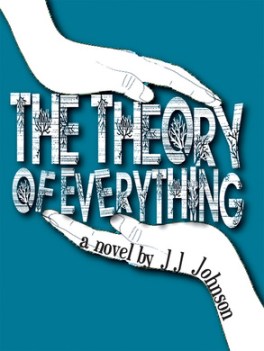
Book Review: The Theory of Everything by J. J. Johnson

Book Review: The Theory of Everything by J. J. Johnson

I stumbled across this sweet, sad young adult novel at my library, quite by chance, and just happened to take a peek inside. Once I saw the Venn diagrams, I was hooked!

The Theory of Everything is narrated by 15-year-old Sarah Jones, a typical teenager in many ways but one: Eight months earlier, her BFF Jamie was killed in a freak accident in the gym at school. Sarah, the only witness, was powerless to help or to save Jamie. Now, months later, it seems as though everyone’s patience with Sarah has worn thin. Shouldn’t she be over it by now? Sarah is lost, consumed by guilt and grief, and has been taken over, as she puts it, by the “snark box” that speaks for her, even when she knows snarkiness will only get her further into trouble.

Sarah’s parents are at wits’ end, her brother thinks she’s a freak, and her boyfriend, sweet and supportive Stenn, just wants her to open up and talk — but that’s the last thing Sarah wants to do. Instead, she skips classes, talks back, makes out with Stenn, and immerses herself in her nerdly pursuit of endless rewatchings of Star Wars and Battlestar Galactica. Sarah’s only true comfort comes from her loyal dog Ruby, but if Sarah doesn’t shape up soon, even Ruby may be taken away from her as her desperate parents search for some sort of leverage.

It may sound rather grim, but Sarah’s voice is honest and clear, and while she’s been through an awful tragedy, it’s hard not to feel a bit cheered by Sarah’s inner dialogue. Her snark box may be fully functional, but so is her wit, and Sarah’s approach to figuring out how to move forward often comes down to charts and diagrams, liberally scattered throughout the book.  We get plotted graphs of “Things Said To Parents & Likely Outcomes” (with outcomes ranging from stink-eye to counseling to jail), a pie chart on “Possibility that ghosts exist”, and a Venn diagram of “Things I Understand” (which includes chaos theory) and “Things I’ll Never Understand” (which includes “why Jamie died”).

photo a

The Theory of Everything does not offer easy solutions, and that’s only fitting. Sarah has a long journey ahead of her, and while she’s making progress, there is no magic wand that will make her all better. What we see in this book is a girl in transition, coping with one of the most awful and unfair situations imaginable, and yet having to find a way to deal, simply because not dealing is not an option.

It’s interesting to me to think about how different readers might be affected by this book in different ways. I would imagine that a teen would completely side with Sarah, and would agree with her that her parents are being pushy and unreasonable. I could sympathize with Sarah and understand why she would feel this way. At the same time, as a parent myself, I can only imagine how terribly helpless Sarah’s parents must feel, watching their daughter go through such horrible turmoil and feeling desperate to reach her at any cost. It’s a tribute to the author’s gifted storytelling that both perspectives feel realistic. A tragedy like this would of course have ripple effects that spread and continue. The Theory of Everything lets us see one girl’s struggle to understand her loss and to find a way to continue a life that’s missing its center.

Book Review: Ask the Passengers by A. S. King

Book Review: Ask the Passengers by  A. S. King

Astrid Jones is a smart, funny girl who you can easily imagine having an amazing life in New York, hanging out in the Village perhaps, exploring the city with quirky and artsy friends. Unfortunately for Astrid, she does not live in the city. Born a New Yorker, Astrid and her family moved to Unity Valley, Pennsylvania — quintessential small-town USA — when she was 10 years old, and has been stuck in a rut ever since.
In Unity Valley, and in Astrid’s own family, the only way to fit in is to fit — no rough edges, nothing to make you stand out, no unusual traits. And if you’re the member of a minority group? Well, may the gods of uniformity help you then. The small-minded gossip of the town regularly calls out the ethnic minorities, the eccentrics, and the generally suspect, and there is no mercy when it comes to the rumor mill and the shunning and humiliations that can result.

Astrid, at age 17, mostly keeps her head down and gets by. She hides a vital secret for her two best friends, Kristina and Justin, the high school’s golden couple, but Astrid has a major secret of her own. On the weekends at her part-time job, Astrid’s friendship with Dee has moved from casual comfort to hot-and-heavy make-out sessions, and Astrid likes it quite a bit. But is she gay? She’s not sure, and she’s tired of all the pressure — pressure from her parents to fit in, pressure from Dee to take a stand and come out, pressure from the high school in-crowd to just be normal, have a boyfriend, and not be so weird.

To clear her head, Astrid has the unusual habit of going out into her backyard, lying down on the picnic table, and watching the airplanes fly overhead. As each one passes, Astrid focuses on sending her love to the passengers — not just to say hi, but to send her own love away from her to a place where it might be safe. Astrid can’t share anything with her controlling parents or her too-perfect sister; she can’t open up to her best friend; and she can’t share her doubts and confusion with Dee without Dee taking it as a statement on their relationship. So Astrid sends her love to the passengers overhead, the only people she can love freely and without consequence, and for a while, it helps her.

The rest of the time, the table just sits here with nothing to do. So I lie on it and I look at the sky. I see shapes in the clouds by day and shooting stars by night. And I send love to the passengers inside the airplanes… [But] it feels good to love a thing and not expect anything back. It feels good to not get an argument or any pushiness or any rumors or any bullshit. It’s love without strings. It’s ideal.

Astrid gets by for a while, but things do reach a crisis point eventually, and finally Astrid is pushed far enough that she has to take big risks and take a stand. When she blows up, she does so rather spectacularly, and it’s particularly wonderful to see the fall-out of her explosion.

Ask the Passengers is a quick-paced story, told in the first-person from Astrid’s perspective, so that we see inside her thoughts and fears, and really get a chance to see a smart girl try to take control of her life and at the same time do the right thing. Astrid is willing to come out when it feels right — but how does she know if she’s really gay? Maybe she doesn’t like girls in general, just Dee? And if she’s not sure, is it cowardice to remain hidden, or is it bravery to be committed to speaking nothing but the truth? Is the pressure from Dee to come out any different from the pressure from Astrid’s family to be “normal”? There are some important questions asked here about tolerance and acceptance. At one point, the high school has a mandatory Tolerance Day, complete with pep rally and inspirational speakers — but the day is so clearly aimed at Astrid and her friends that it really just serves to isolate them even more.

Interspersed throughout Astrid’s tale is snippets from different airplane flights. As Astrid sends her love to the passengers overhead, we get small segments throughout the book of different passengers on different planes, who make life-changing decisions, face up to hard truths, or simply find some inner strength to face their problems. The implication is that Astrid’s love has reached them and affected them in some way. Magical thinking, perhaps, but it’s a nice idea — or perhaps it’s only coincidence, and the magic is simply in drawing lines from one person in crisis to another, so that the author is showing the reader that none of us are alone, that everyone has risks to take and decisions to make, and that owning up to our own thoughts and feelings may be the bravest step a person can take.

I had not heard of Ask the Passengers until last week, when it was announced that this book was the winner of the 2012 Los Angeles Times Book Prize for Young Adult Literature. A well-deserved piece of recognition, in my opinion. Ask the Passengers is an important book that doesn’t feel preachy, with valuable messages for teens struggling to figure out who they are and where they fit in — and an important lesson as well for the adults in teens’ lives about the incalculable value of support and love without judgement or conditions.

The Monday agenda

MondayAgenda

Not a lofty, ambitious to-be-read list consisting of 100+ book titles. Just a simple plan for the upcoming week — what I’m reading now, what I plan to read next, and what I’m hoping to squeeze in among the nooks and crannies.

Wishing good cheer, happy holidays, and delightful reading to all! What’s on the agenda this week?

From last week:

Graphic novels galore! I read all of the books I’d planned to — possible a first for me! You can find my comments on the seven graphic novels I read this past week here.

Fairy Tales from the Brothers Grimm by Philip Pullman: Didn’t end up starting this one. I want to — really, I do! — but just not right now.

My son and I still haven’t started a new read-aloud yet. He was sick for most of the week, and when he’s sick, we stick with the “comfort food” of good old Dr. Seuss. Dr. Seuss’s Sleep Book, If I Ran The Circus, Scrambled Eggs Super, The Sneetches… the reading equivalent of chicken soup.

And this week’s new agenda:

I’ve just started Cold Days by Jim Butcher, the newest release in the Dresden Files series. This is book 14, and Harry is still going strong! This should be fun.

The library stack is growing again. Waiting to be read are Sailor Twain, a graphic novel by Mark Siegel, and YA novel Lola and the Boy Next Door by Stephanie Perkins.

Also on my agenda for this week: Spend some time savoring two lovely new gift books that I treated myself to after receiving a couple of gift cards: My Ideal Bookshelf by Jane Mount and Thessaly La Force (I’m absolutely drooling over this book) and Buffy: The Making of a Slayer by Nancy Holder.

So many book, so little time…

That’s my agenda. What’s yours? Add your comments to share your bookish agenda for the week.