Take A Peek Book Review: It’s All Your Fault by Paul Rudnick

“Take a Peek” book reviews are short and (possibly) sweet, keeping the commentary brief and providing a little peek at what the book’s about and what I thought.
It's All Your Fault

Synopsis:

(via Goodreads)

My name is Caitlin and up until forty-eight hours ago I had never:

Tasted alcohol, kissed a boy, sang in public at the top of my lungs, kidnapped anyone or—WHAT? STOLEN A CONVERTIBLE?

Now I’m in jail and I have no idea what I’m going to tell:

The police, my parents, the mayor, all of those camera crews and everyone on Twitter.

I have just noticed that:

My nose is pierced and I have—WAIT? IS THAT A TATTOO?

I blame one person for this entire insane weekend:

My famous cousin.

Who is also my former best friend.

Who I have HATED for the past four years.

Who I miss like crazy. NO I DON’T!!!!

IT’S ALL YOUR FAULT, HELLER HARRIGAN!!!!


My Thoughts:

Be prepared to giggle, snort, and perhaps even LOL. It’s All Your Fault is a quirky, silly story of opposites exploding… and then giving each other exactly what they need.

Main character Caitlin is the very definition of a goody-two-shoes: homeschooled, impeccably dressed in polyester blazer and white knee socks, and part of her family’s musical act, the Singing Singleberries. Caitlin is a good Christian girl who eats wholesome food, never swears, drinks or smokes, and yet has crippling anxiety attacks that stop her in her tracks.

Caitlin has been estranged from her cousin Heller, her previous best friend, for the past four years, during which Heller has become one of the top teen stars in America. Heller starred for years in the kid TV show Anna Banana, playing a simple small town girl with a secret identity as a supermodel. (Hello, Hannah Montana!) Now Heller is about to become a major movie star, as the first movie based on the epic Angel Wars book trilogy is about to premiere… but Heller needs to stay clean, sober, and out of trouble long enough to make it through the publicity juggernaut required to launch the movie.

To say that Caitlin (who Heller sneeringly refers to as K-Bop) and Heller are like oil and water is an understatement:

“K-Bop’s parents are named Calvin and Carol and they have eight hundred children who all have names starting with C, like Cucumber and Cockatoo and Colostomy…”

“I only have eight brothers and sisters and my parents like the letter C because it stands for Caring, Cooperation and our Creator.”

But it’s Caitlin to the rescue! Caitlin is recruited to be glued to Heller’s side for the premiere weekend, to keep her in line, keep her from generating any more bad press, and to make sure the screaming Angel Wars fans have the time of their lives, putting to bed all the nasty gossip about Heller’s bad habits and making sure her movie career moves forward without a hitch. Of course, Caitlin is convinced that she’s there to save Heller’s soul, but hey, how hard could it be?

What follows is a comedy of capers and pranks, as Caitlin’s good intents collide with Heller’s need for mischief — and ultimately, both girls know that sooner or later they’ll have to face up to the events of four years earlier that drove a wedge between them and kept them separated ever since.

Along the way, there are crazy fans, daring escapes, a raid on a cupcake factory, and silly scenes galore, such as Caitlin trying to convince a table full of Hollywood teen stars to drink wholesome glasses of milk or Caitlin teaching Heller to substitute the names of New Jersey towns every time she has the urge to swear.

“You’re at one of your filthy nightclubs, or at a degenerate Hollywood party. Someone approaches you and offers you an illegal substance. What do you say?”

Heller thought about this, furrowing her brow.

“Go Teaneck yourself, you Dunellen piece of motherfucking Mount Kittatinny!”

“HELLER!”

The book pokes gentle fun at crazy, obsessive fandom, the YA trilogies that dominate books and movies today, and their almighty influence over the entire world, not just the entertainment industry. (There’s even a judge whose three daughters are named Katniss, Bella, and Hermione.)

It’s All Your Fault is a girl-power delight of wild adventure, personality clashes, and Hollywood backstage shenanigans. Heller and Caitlin are fun, well-developed characters who break out of their molds and display real humor and strength that go beyond their one-dimensional outer appearance. This is a light, silly, sometimes hilarious read, very quick and enjoyable, and is sure to make fans of teen movie and book franchises giggle in recognition.

Note: For more by this author, check out my review of Gorgeous.

_________________________________________

The details:

Title: It’s All Your Fault
Author: Paul Rudnick
Publisher: Scholastic
Publication date: January 26, 2016
Length: 294 pages
Genre: Young adult fiction
Source: Library
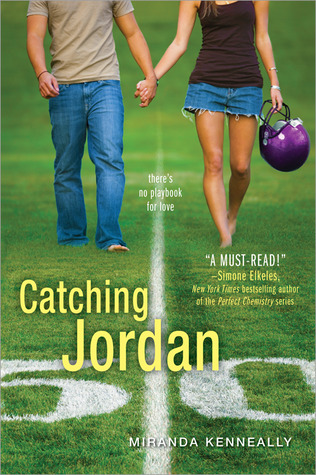
Take A Peek Book Review: Catching Jordan by Miranda Kenneally

“Take a Peek” book reviews are short and (possibly) sweet, keeping the commentary brief and providing a little peek at what the book’s about and what I thought.

Score_CVR.indd

Synopsis:

(via Goodreads)

What girl doesn’t want to be surrounded by gorgeous jocks day in and day out? Jordan Woods isn’t just surrounded by hot guys, though — she leads them as the captain and quarterback of her high school football team. They all see her as one of the guys and that’s just fine. As long as she gets her athletic scholarship to a powerhouse university.

But everything she’s ever worked for is threatened when Ty Green moves to her school. Not only is he an amazing QB, but he’s also amazingly hot. And for the first time, Jordan’s feeling vulnerable. Can she keep her head in the game while her heart’s on the line?


My Thoughts:

Miranda Kenneally’s young adult novels take place in and around Hundred Oaks High School in the fictional town of Franklin, Tennessee. Each book has a teen girl at its center, and while the stories interweave a bit, with familiar faces from earlier books popping up later in supporting roles, each book stands alone nicely as well.

I stumbled across these books more or less accidentally, when I picked up an ARC of the 4th book, Racing Savannah. Since then, I’ve read two more, and now I’m finally going back and trying to read the first three Hundred Oaks books, starting with the author’s very first novel, Catching Jordan.

Jordan Woods is a high school senior, an amazing quarterback, and captain of her school football team. She’s the daughter of a world-famous NFL quarterback, and sees no reason why she shouldn’t follow in his footsteps and pursue her dreams of QBing a top-tier college team — despite her dad’s lack of support due to fear of her getting injured.

Jordan’s closest friends are the guys from the team, especially Sam Henry, the quintessential boy next door who’s been her absolute best friend since childhood. Jordan and Sam’s friendship is tested when a hot new guy moves to town — a guy who not only is competition for the QB role but also wants to date Jordan.

Jordan is a total jock, and she’s not ashamed of it. She also refuses to cede any ground in her fight to be taken seriously, and throws herself into her love of football wholeheartedly. (I’m a big fan of Jordan’s, even if I’m not at all a jock myself!)

One of the things I love about these books is the fresh take on teen friendships and social roles. Yes, there are some mean, gossipy cheerleaders — but there are also a couple of nice, positive cheerleaders who actually are supportive friends, once Jordan drops her guard and allows herself to hang out with girls. Jordan is always afraid of looking soft in front of the guys, but she eventually learns that she can wear a dress and makeup if she wants to (and she very rarely wants to) without giving up any ground as the football authority.

I also appreciate the honest look at high school relationships in Catching Jordan. These teens definitely do hook up, and sex is a pretty casual thing for most. Jordan faces her first kiss and losing her virginity within the space of a week, and it’s not because she’s taken a stand or hasn’t been interested. She’s just never before figured out how to balance having a love life with her status as captain and one of the guys.

I almost hesitated to include the book synopsis while writing this “Take a Peek” review, because frankly, the synopsis makes the book sound kind of cheesy and stereotypical, and that’s so misleading. I mean, “what girl doesn’t want to be surrounded by gorgeous jocks day in and day out?” and “amazingly hot”? Really?

Ignore all that, and just pay attention to this: Catching Jordan is a terrific young adult novel about a strong, self-sufficient young woman who values friendship and loyalty, knows what she wants out of life, but has to figure out who really matters to her and how to find the kind of love she really craves. The small-town, Southern vibe is lots of fun, and I’m eagerly looking forward to reading the two remaining Hundred Oaks books that are calling my name.

Interested in this author? Check out my reviews of other books by Miranda Kenneally:
Racing Savannah
Breathe, Annie, Breathe
Jesse’s Girl

_________________________________________

The details:

Title: Catching Jordan
Author: Miranda Kenneally
Publisher: Sourcebooks Fire
Publication date: November 11, 2011
Length: 283 pages
Genre: Young adult contemporary fiction
Source: Purchased

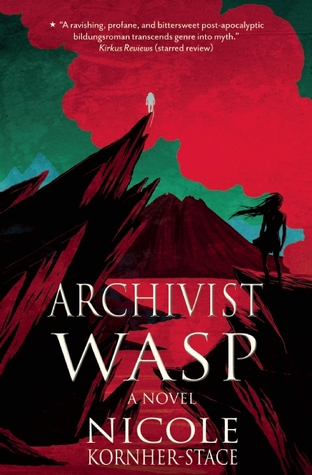
Archivist Wasp: My review… and some other opinions too.

Archivist WaspSynopsis:

(via Goodreads)

Wasp’s job is simple. Hunt ghosts. And every year she has to fight to remain Archivist. Desperate and alone, she strikes a bargain with the ghost of a supersoldier. She will go with him on his underworld hunt for the long-long ghost of his partner and in exchange she will find out more about his pre-apocalyptic world than any Archivist before her. And there is much to know. After all, Archivists are marked from birth to do the holy work of a goddess. They’re chosen. They’re special. Or so they’ve been told for four hundred years.

Archivist Wasp fears she is not the chosen one, that she won’t survive the trip to the underworld, that the brutal life she has escaped might be better than where she is going. There is only one way to find out.

My Thoughts:

I’m at a bit of a loss when it comes to summing up Archivist Wasp. My feelings are really contradictory. There’s quite a bit here that’s interesting and different, but I’m not sure that the plot as a whole holds together convincingly.

The opening chapters place the setting firmly in a primitive type of society, in a poor country village full of superstition and fear. The Archivist is the Chosen One (into every generation…), but each year, she fights upstarts (girls in training to be Archivist — for the Buffy fans out there, think “potentials”) in order to retain her position. The fight is to the death, bloody and terrible, watched and betted on by the townsfolk, all under the watchful eye of the Catchkeep-priest, who controls the upstarts and the Archivist. Catchkeep is the main god of this society, but there are others, such as Carrion Boy and Ember Girl. It’s startling, though, to see certain seemingly anachronistic elements intrude. Weaponry includes not just swords, but guns.

Guns? What’s going on here?

As becomes clear further in the story, this primitive society isn’t from an earlier era, but a later one. Reference is made to the Before, apparently before whatever cataclysmic event hundreds of years earlier erased the modern world as we know it. The world of Archivist Wasp is bleak and dismal — and plagued by a non-stop stream of ghosts. The job of the Archivist, when not fighting for her life, is to capture ghosts in jars, observe them and take field notes on their behavior, and then release them to Catchkeep, severing their links to the world of the living. The ghosts are silvery, small beings, yet some take on a more physical form and wreak havoc. How do you catch a ghost? With blood and salt. Them ghosties love salt, apparently — so much so that villagers are forbidden to keep any in their homes, for fear of attracting unwanted attention.

The action of Archivist Wasp kicks into high gear when Wasp captures a ghost that displays unusual strength, to the point that it can actually communicate with her. It’s the ghost of a soldier, and he wants Wasp’s help in finding the ghost of his former partner. To achieve this, they must travel into the underworld, through hidden portals and against great danger, with Wasp using her special harvesting knife to draw out hidden memories and find out the truth behind what happened to the soldier and his partner.

There’s a lot that’s interesting about this book, but my main stumbling blocks are these:

1 – Uneven pacing. Some chapters were impossible to look away from… but there are parts where the characters seem to just be slogging forward, one journey after another, with not much actually happening.

2 – Confusing world-building. We never do find out what happened to transform the world from what it was to what it is. We can make assumptions, but more details would have been helpful. Likewise, the underworld is a murky dreamscape with rules and properties that seem to change from moment to moment. It was unclear what to expect or why, and this left me with a sense that the stakes were artificial and potentially not really dangerous after all.

3 – Wasp’s community and her motivations. Why do Wasp and the other girls just accept their lot in life? Why does it never occur to them to challenge the system?

4 – The purpose of the Archivist. The actual goal is murky. Are they trying to learn from the ghosts? Banish the ghosts? And what does killing each other achieve? If they’re trying to learn as much as possible, why have only one?

5 – The ghosts. Where do they come from? Why are there so many? What would happen if the Archivist didn’t capture them and just left them to carry on? Why can ghosts wield swords and other weapons, carry physical objects, and inflict harm on living humans?

6 – The religion. I’d like to know more about how the local pantheon came to be and how the belief system was shaped. (I suppose this ties in with #2, the world-building.)

So many unanswered questions.

On the positive side, I liked the story of the super-soldier and his partner, and the tragedy that’s revealed as Wasp uncovers more and more of the ghost’s memories. That story alone would make a great book, and those sections of Archivist Wasp that dealt with this part of the plot are the most compelling.

I also enjoyed the parallels to the myth of Orpheus and Eurydice, although the similarities only go so far. The goal here is to free a ghost who can’t move on, not to return her to the land of the living, but still, the journey to the underworld is full of obstacles and dangers that give the quest a mythic, larger-than-life overtone.

Finally, toward the end of the book, we get more of an explanation about the origin of the Archivist system and the power of the Catchkeep-priest, and it’s a powerful origin story — but for me, it felt like it all came too late. By the time we get some answers, I felt mostly worn out by the story and the inconsistencies, and didn’t have the investment necessary to really care all that much about the outcome.

But Wait! Here are other other opinions:

Rather than just close with what I thought of Archivist Wasp, I thought I’d share some other viewpoints. I read this book because it was my book group’s pick for January, and several members of the group really loved the book. I want to share some of their comments, to give a slightly different take on the book and showcase a little more of the positive. (Comments below are in different colors to denote different commenters; quoted from our book group discussion)

I loved this book. There were some scenes which made me pause. One of my favorite scenes, and there are a number of them, is [spoiler deleted]. It’s so revealing of our own mindsets and how we need to open our minds, perhaps we need to cut the threads that bind us to old, stagnant ideas about our world.

I remember admiring Wasp for her compassion and willingness to help others despite her own awful circumstances. And, for figuring out how to help the other girls in her same situation (or I suppose the same as her past situation before she became the archivist), as well as the townspeople, all of whom were being taken advantage of by the Catchkeep Priest (who was just awful!).

The message of growing up and learning who you are and what you can achieve is important for teen girls to hear.

Wasp’s innate sensibilities and caring for her “charges” despite her own upbringing, or maybe because of it, make her a likable and sympathetic protagonist. She keeps going, trying to do the right thing despite personal consequences and little or no reward. That gives this story great heart; it’s also certainly very creative.

In the end, there did seem to be a message about challenging handed down beliefs and finding your own truth.

And a comment from the author herself:

If Wasp is remembered as a YA heroine, I’d like it to be because she’s a 16-year-old girl protagonist that managed to drive her own story without it hinging on a romance or a love triangle or a prophecy or any of these things that are perceived to be necessary to any and all YA plotlines, howsoever clumsily they have to be shoehorned in because they aren’t necessary. There are teenage girls out there who are a lot like Wasp. I was one. I was friends with others. I want her to do her small part to provide a little representation for them.

Wrapping it all up:

One thing I’ve discovered from my book group discussion (for which the author generously participated in a Q&A) is that Archivist Wasp is in fact the first in a trilogy. I think I might have felt slightly differently about some of the unanswered questions had I known that from the start, as then I might have expected some threads to be left dangling until the next books.

My own reading experience and opinion of the book hasn’t changed, but I do appreciate what I’ve gleaned from the Q&A and my book group friends’ opinions, and can see why this book might strongly appeal to teen readers and to adults who enjoy YA fiction.

_________________________________________

The details:

Title: Archivist Wasp
Author: Nicole Kornher-Stace
Publisher: Big Mouth House
Publication date: April 13, 2015
Length: 268 pages
Genre: Young adult fantasy
Source: Purchased

Book Review: The Cure for Dreaming by Cat Winters

Cure for DreamingIn this YA novel, hypnotism and the suffrage movement are combined in startling ways to give us a portrait of life in 1900 for a young woman who is, pretty much literally, too independent for her own good.

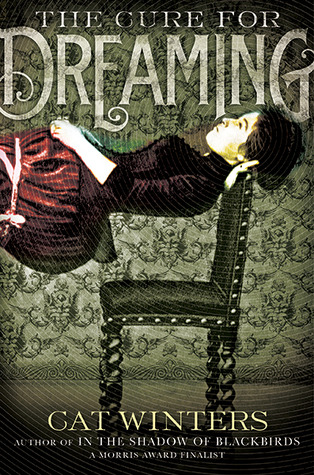
On her 17th birthday, Olivia Mead attends a hypnotism show headlined by the young, talented Henri Reverie, a “mesmerist” whose talents have made him famous across the country. Egged on by her friends, Olivia volunteers to be Henri’s first subject, and astonishes the entire audience by her extreme susceptibility to his hypnotism. She’s so far under that he’s able to make her stiff as a board, suspend her between two chairs (as in the cover photo), and even stand on her torso, all without her knowledge.

Olivia is slightly embarrassed, but also enjoys the newfound attention her moment in the spotlight brings, especially from wealthy, out-of-her-reach Percy, the judge’s son. Olivia’s own father, the local dentist (with a truly horrifying collection of tools), is less than pleased. He wants nothing more than for Olivia to be good and obedient, especially after learning that she’d attended a suffragists’ rally the day before. He arranges for a private hypnotism session with Henri, during which Henri compels Olivia to see the world as it truly is, to understand the roles of men and women, and to be able to say nothing but “all is well” when she becomes angry.

This backfires, of course. Olivia is an avid fan of Bram Stoker’s Dracula, and thanks to the hypnotism, when she looks at her father, she sees him as he truly is — fanged, clawed, and monstrous. She sees the truth of many of the women of her town as well, who fade into invisibility as Olivia watches. Desperate, she tracks down Henri and begs him to fix her — but there’s a reason why he can’t just yet, and the two form a scheme to give Olivia back control of her own mind and voice and to get Henri what he desperately needs.

The Cure For Dreaming is a captivating portrait of the plight of women at the dawn of the 20th century. The author does a wonderful job of weaving together an individual’s personal struggles with the struggles of women at that time. It’s easy for us, sitting here in the comforts of 2015, to take for granted the rights we enjoy, and this book reminds us of the venom and hostility that confronted the women’s suffrage movement. The women who dared to take a public stance and speak out were demonized, ridiculed, accused of being unwomanly or even insane, and were subjected to all sorts of horrible public humiliations. In this book, looking through Olivia’s eyes, we see how far the men — and even many women — were willing to go to silence the voices of women who stood up for equality and the right to speak their minds.

As one character describes to Olivia:

“My father leaned over to me and said, “Now, that’s womanhood perfected, Percy my boy. That’s the type of girl you want. Silent. Alluring. Submissive.”

I can’t say enough about how powerful and engrossing this story is. Olivia is a marvelous lead character — smart, warm-hearted, and unwilling to keep silent when she sees something wrong. Her need to speak out is what gets her into trouble, of course, but at the same time, she makes a difference in all sorts of unexpected ways, even when forced through the power of hypnotic compulsion to be compliant and stifle her anger.

Olivia’s interactions with Henri do not take the anticipated route, and despite the growing feelings between the two, this book does not go down the dreaded path of showing a young woman throwing away her own plans in order to follow a guy. Olivia has a backbone and a commitment to staying true to herself, and that’s a lovely thing to see in a YA heroine.

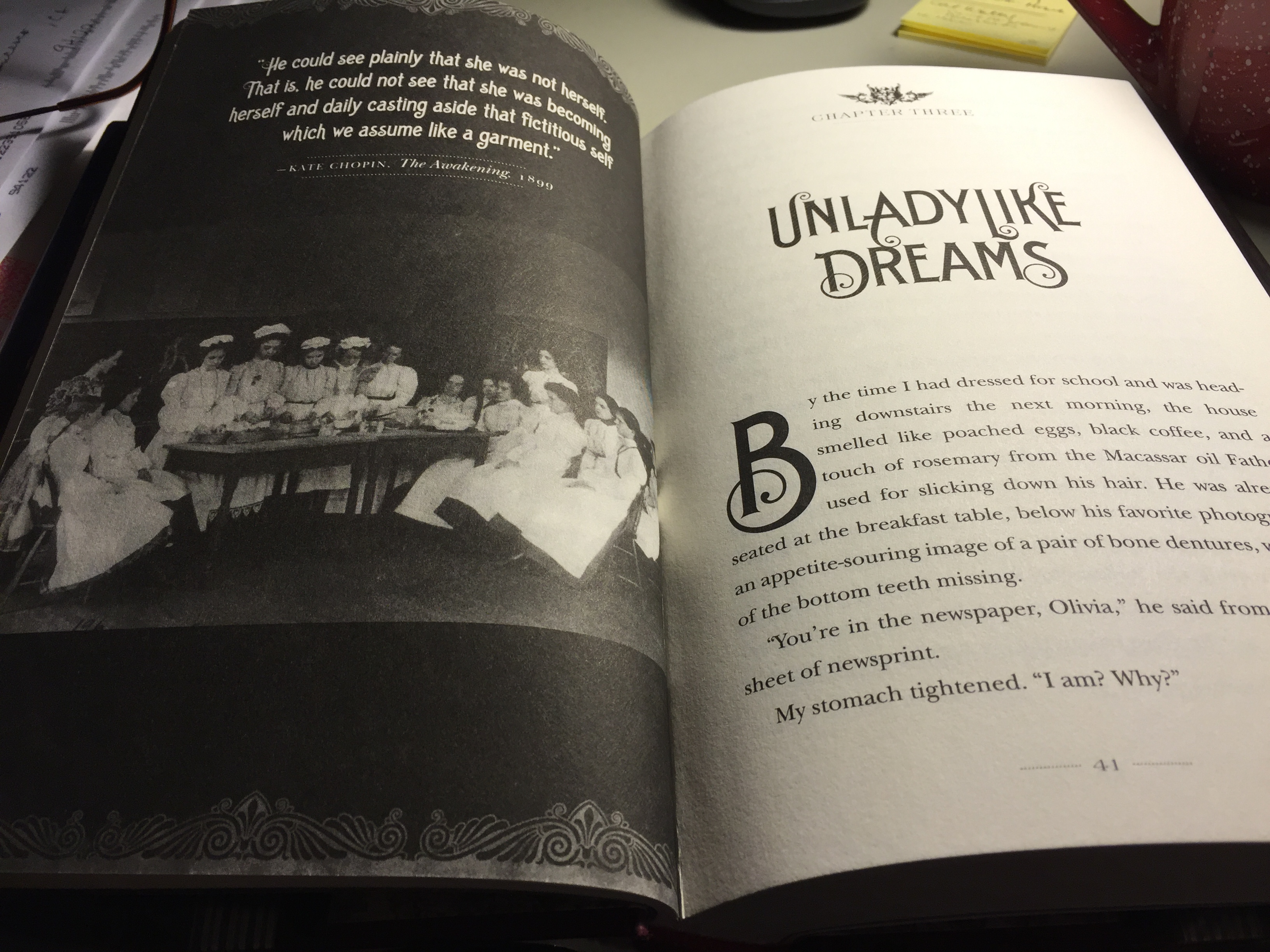
The book itself is wonderful to page through, as chapter breaks are illustrated by historical photos from the book’s era, as well as by a selection of powerful quotes by everyone from Kate Chopin to Mark Twain to Carrie Nation.

image

The Cure for Dreaming is a fast read — I gobbled it up over the course of 24 hours! I was hooked almost instantly, and just couldn’t bear to put the book down. The characters are well-drawn, the subject of hypnotism is fascinating, the relationships between the characters are pitch-perfect, and the context of the fight for women’s votes and the right to one’s own voice is powerfully presented. While written for a young adult audience, the book does not oversimplify or talk down in any way. As an adult reader, I loved the book and was never bored. This would be a great choice for teen girls, and could also provide some great discussion starting points for mothers and daughters who want a book they can share and enjoy together.

_________________________________________

The details:

Title: The Cure for Dreaming
Author: Cat Winters
Publisher: Amulet
Publication date: October 14, 2014
Length: 352 pages
Genre: Young adult fiction
Source: Library
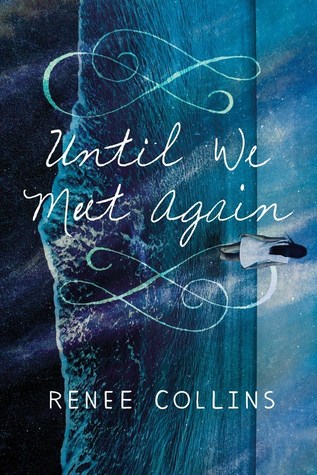
Book Review: Until We Meet Again by Renee Collins

Until We Meet AgainAn upper class seaside retreat is the setting for this YA timeslip novel by Renee Collins. Main character Cassandra, age 17, is spending the summer with her mother, stepfather, and 3-year-old brother at a rented beachfront mansion, and she’s bored to tears. Until one day, she wanders down the path between the property’s bushes and ends up on the private beach, where she meets a (very attractive) young man named Lawrence.

The first meeting is full of suspicion: What are you doing on my family’s private beach? No, what are YOU doing on MY family’s private beach??!! But within the first couple of meetings, it becomes clear: The beach seems to be a place that’s shared by both Cassandra’s world in 2015 and Lawrence’s world… in 1925. Apparently, no one in either time seems to like the beach much, because while anyone can reach it, it’s mostly just Cassandra and Lawrence there, undisturbed for hours and days at a time.

The two connect, quickly, and soon come to realize their deep feelings for one another. But trouble looms: Lawrence is the summer guest of his wealthy uncle Ned, who plans for Lawrence to go to Harvard and then law school, then enter the family business. Ned also seems to be pushing a pretty flapper named Fay at Lawrence, and is quite insistent that Lawrence get involved with her. Something seems shady, all right — and when Cassandra hits the library microfiche to see what she can find out about Lawrence and his family, she stumbles upon a shocking news article, which reveals that Lawrence will be murdered on the beach in only a few weeks. Cassandra vows that she’ll find a way to stop it, and between her modern-day research and Lawrence’s snooping in his own time, the two race the clock to save his life… and hope to find a way to be together afterward.

The novel leaves the timeslip element mostly unexplained, although Cassandra agonizes over whether she can or should influence the events of 1925, for fear that the consequences will be devastating. And yet, she plunges right ahead once she realizes Lawrence’s life is on the line.

In terms of plot, there are pros and cons. Pro-wise, the concept of the beach as a portal between the times is interesting. It’s not that either Lawrence or Cassandra has a special ability, but rather, it’s the place that’s powerful. Anyone who passes through the bushes onto the beach can see whoever’s there, from either time — so the beach isn’t some sort of special protected bubble, it’s just that very few people actually go there and so no one else has discovered the odd time disconnect. Also strong is the portrayal of Cassandra as a girl ready for something to happen, throwing herself headfirst into a crazy, emotion-fueled adventure that really should be beyond her belief. I liked the sense of Cassandra’s drive and devotion, and how determined she became to do whatever she needed to do.

In the middle ground for me are the 1920s-era standards — flappers, mobsters, crooked businessmen, hints of Prohibition-defying smuggling. I suppose this may be newer in the realm of young adult fiction, but lately it seems to be done almost to death. While Lawrence’s side of the story is interesting, it’s a pretty surface-level glide through that world, and I didn’t feel that it really explored the setting in a deep enough way.

I could also go either way on the insta-love aspect of the story. Cassandra and Lawrence seem to fall head over heels in love from one moment to the next, but I know that mainly because I was told that’s how they felt, not because I saw it developing organically. Still, I do give the author some credit on this issue, because a teen romance in an exotic setting really could convincingly blossom from casual acquaintance to love-of-my-life status, given a dramatic or extreme enough set of circumstances.

Pieces that didn’t really work for me related to Cassie’s family life. I didn’t get her mother’s issues with Cassandra: She seemed to always be suspicious, very demanding of Cassandra’s time, and then, weirdly, pretty insistent on Cassandra dating some random boy. Why would she be pushing her to date this guy? It just didn’t make sense to me. Cassandra also had this habit of lying about her trips to the beach by announcing she was going running, but half the time she seemed to be in a sundress when she said this, so again, a little hard to believe.

Still, I don’t want to give the impression that I didn’t enjoy the book as a whole. Once the race-against-the-clock element merges with the intense love story, the plot begins zooming forward, and has a great sense of drama that gives a high-stakes feel to the whole thing.

In a way, this book is a metaphor for the quintessential summer romance. Two teens, dragged by their families to a summer vacation spot, meet and fall in love, but have the awful end-of-summer separation looming over them, giving the romance a super-heightened sense of intensity and passion. They’re from two different worlds, their time together is brief, and not being adults yet, they don’t have the control over their futures or lives to prolong the relationship beyond the summer. Take out the timeslip element, and that’s what we have here: Cassandra and Lawrence are flung into each other’s lives because they just happen to have been brought to the same place; they immediately fall in love, but they know they’ll be forced apart when the vacation ends. How glorious for teens in that extra-dramatic period of life, to get the star-crossed lovers experience!

Until We Meet Again combines the best elements of a summer romance with the dramatic build-up of a tragic, doomed love story. In some ways, the ending of the story reminded me of one of my very favorite Doctor Who episodes… although I won’t go into spoiler territory by saying which one. While some pieces of the plot rang a little hollow for me, overall I’d say that Until We Meet Again is an exciting, engaging, quick read that’s worth checking out. And while the timeslip plotline felt a bit thinly developed in places, I also need to recognize that I’m an adult who’s read a LOT of timey-wimey fiction over the years, and for a reader in the target young adult audience, this may be a first encounter with the concept of time travel and its consequences — which could make it a really new and exciting reading experience.

On a final note, this was a very fun read for a chilly week in November! There’s nothing like reading about sunny beach days to chase the cold away.

_________________________________________

The details:

Title: Until We Meet Again
Author: Renee Collins
Publisher: Sourcebooks Fire
Publication date: November 3, 2015
Length: 336 pages
Genre: Young adult fiction
Source: Review copy courtesy of the publisher via NetGalley

YA new releases: A trio of mini-reviews!

I read three new young adult fiction releases this past week, and thought a three-fer review post would be fun! Here’s a quick look at what I read and what I thought.

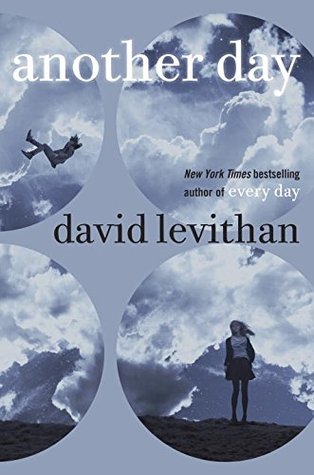
another dayTitle: Another Day
Author: David Levithan
Release date: August 25, 2015
Length: 327 pages

In 2012, David Levithan published his remarkable novel Every Day (review), about a teen named A who awakens each day in a different body. A carries A’s consciousness into each body, but experiences life as a series of “day in the life” moments belonging to whoever the body’s owner is. This is normal for A, until A meets and falls in love with Rhiannon. This seemingly impossible and complicated set-up makes for an amazing read, complete in itself.

But here we are in 2015 with Another Day, which tells the same story and presents the same set of events, but as experienced by Rhiannon. I was skeptical at first: Do we really need another version of the same tale? Short answer: Yes. Another Day is much more engrossing and moving than I would have expected. Rhiannon ponders the dynamics between body and self, questions her own motivations and feelings, her own sense of attraction and repulsion in regard to each of A’s appearances, and finds herself forced into decisions that have no right answer.

I love David Levithan’s writing, pretty much always, and Another Day is no exception. The story is wonderful, and the writing is beautiful in its rhythms and use of language, yet also feels true to teen hearts and minds. The ending seems to beg for a follow up, and I do hope that the author is planning another installment in this fascinating story.

_____________________________________________

Hello GoodbyeTitle: Hello, Goodbye, and Everything in Between
Author: Jennifer E. Smith
Release date: September 1, 2015
Length: 256 pages

If you like your YA light and airy, then Hello, Goodbye, and Everything in Between might be the book for you! This is actually a fitting choice for this time of year, a quintessential back-to-school reading selection. Hello tells the story of Clare and Aidan as a “one magical night” type of tale: We spend the night, from early evening until the next morning, watching Clare and Aidan’s final night together after a two-year high school relationship, as each prepares to leave for college in the morning. Clare and Aidan live near Chicago, but Clare will attend an East Coast college and Aidan will be at UCLA.

All summer long, they’ve been debating whether to stay together or break up before leaving for school, with Aidan wanting option 1 and Clare advocating for option 2. It’s not that they don’t love each other; they do. But neither can be sure that staying together is the right thing to do. Is it better to end things now, on their own terms, than risk a slow fizzling out as they become involved in their own, separate college lives? What if they meet other people? What if they don’t, but miss out on key college experiences because their minds are too wrapped up in their long-distance romance?

Clare and Aidan spend the night visiting old hang-outs, best friends, scenes of memorable firsts, and “everything in between”, looking to both capture memories and come to an agreement before the sun rises and they go their separate ways. Even though the couple is dealing with heart-ache and sadness, there’s still an element of excitement and looking forward — plus family drama, as each character’s relationship with parents has an impact on their choices and how they feel about their chances as a couple.

I liked Hello, but thought it was a little too simplistic in presenting the options available to Clare and Aidan. They’re fun characters with good hearts, but I’m not sure the situation warrants quite as much drama as they infuse into it. This is a nice, light read, super quick and easily digestible. It didn’t make much of a deep impression on me, but it did keep me entertained all the way through.

_____________________________________________

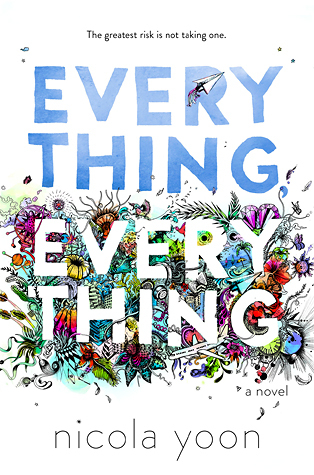
Everything EverythingTitle: Everything, Everything
Author: Nicola Yoon
Release date: September 1, 2015
Length: 320 pages

Wow. This book left me reeling, in ways I didn’t even imagine. Everything, Everything is the story of Maddy, a teen girl with the rare immune disease SCID who’s lived her entire life in the hyper-protected, safe environment of her completely sterilized and filtered home. She never goes out, never sees anyone in person except her mother and her nurse, spends her time attending school via Skype and reading tons of books. And then one day, Olly and his family move next door, and Maddy’s world is rocked. What if she could make a friend? What if she did want something besides what she has? From waving window to window to email and IM chats, Maddy and Olly become friends, and then more, until Maddy feels ready to risk everything, even her life, to really take a chance at living.

I thought I knew what to expect, more or less, when I started this book, but I was wrong. First of all, the narrative voice is completely charming. Told in the first person by Maddy, the narrative strikes the exactly right chord of cleverness, humor, and curiosity tinged with innocence. Maddy has literally done nothing and been nowhere, so everything she sees and experiences is a first for her. The author captures the wonder of all of Maddy’s firsts, as well as the suffocation of being alive without really living her own life. While the Maddy/Olly romance develops quickly, it’s not insta-love. They get to know each other as people first. Each has baggage and fears, but they find a way to connect that’s touching and feels real and deserved.

The ending (or, the last 20%, according to my Kindle) absolutely threw me for a loop and was not what I expected at all. It’s powerful and emotional (okay, yes, there were even tears), and went in unexpected directions. I’m sure readers will have some heated debates about how things turn out, and I have a feeling this will be a love it or hate it situation — but either way, there’s plenty to discuss!

Throughout the book, I thought the writing was terrific, and I loved the little drawings and diagrams that enliven Maddy’s story, as well as all the email exchanges, messages drawn on windows, and other whimsical visual touches. Maddy is a smart and funny character, and I loved seeing her think about her life, her family, and her future. This book pulls off the tricky task of piling on the emotional impact while keeping a sense of quirkiness and laughter. Everything, Everything is a book that should really appeal to teen readers, and adults will love it too!

Thursday Quotables: Another Day

quotation-marks4

Welcome back to Thursday Quotables! This weekly feature is the place to highlight a great quote, line, or passage discovered during your reading each week.  Whether it’s something funny, startling, gut-wrenching, or just really beautifully written, Thursday Quotables is where my favorite lines of the week will be, and you’re invited to join in!

NEW! Thursday Quotables is now using a Linky tool! Be sure to add your link if you have a Thursday Quotables post to share.

another day

Another Day by David Levithan
(released August 25, 2015)

This lovely book is a companion to Every Day, and offers a peek inside the head of a thoughtful teen girl who finds herself in a unique situation.

Contemplating how much of self is defined by the body:

If I were a stranger in my body, what would I think of it? I open my eyes and I’m not sure. A stranger wouldn’t know any of the stories behind any of the small scars — the tricycle fall, the lightbulb smash. A stranger might not care if my boobs aren’t identical, or if the mole on my arm has more hair than the rest of my arm. Why bother judging if you’re a stranger in a body? It’s almost like driving a car. Yes, you don’t want the car to be a shitheap, but pretty much a car is a car. It doesn’t matter what it looks like as long as it gets you where you need to go.

I know I am not a car. But as I walk through school, I imagine this smaller Rhiannon driving my body. She is my real self. The body is just a car. And I wonder. When Preston talks to me, it feel like he’s talking to the driver. But when a guy I don’t know looks at me in the hall, he’s staring at the car. When my teacher looks out at the class as he’s droning on about history, he’s not seeing the drivers, he’s seeing the parked cars. And when Justin kisses me — I don’t know. Sometimes it feels like he’s trying to kiss the driver. Other times, he’s just kissing the car.

I love David Levithan’s writing and how he captures the meaning in small moments:

There are still people looking at us. Imagining we’re having a fight. Or imagining we’re a couple. Or imagining this is a first date that’s been a total bust.

Fact: It is none of these things.

Feeling: It is all of these things.

I really enjoyed this book… and plan to write up a review as soon as I have time to sit down for more than 10 minutes at a time.

What lines made you laugh, cry, or gasp this week? Do tell!

If you’d like to participate in Thursday Quotables, it’s really simple:

  • Write a Thursday Quotables post on your blog. Try to pick something from whatever you’re reading now. And please be sure to include a link back to Bookshelf Fantasies in your post (http://www.bookshelffantasies.com), if you’d be so kind!
  • Click on the linky button (look for the cute froggie face) below to add your link.
  • After you link up, I’d love it if you’d leave a comment about my quote for this week.
  • Be sure to visit other linked blogs to view their Thursday Quotables, and have fun!

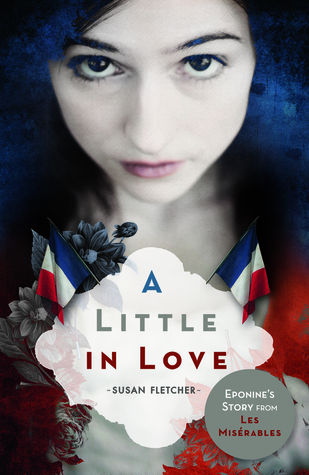
Book Review: A Little in Love by Susan Fletcher

A Little in Love

When a book starts with the main character dying slowly and painfully in the street, you know that you’re going to be in for an emotional ride.

Then again, what do you expect from a book whose essence can be boiled down to Victor Hugo’s Les Miserables as told by Eponine?

I mean, anyone who saw the musical version of Les Miz and didn’t get at least a little misty during this number has a heart of stone:


In A Little in Love, a dying Eponine recounts her sad life story, narrating all that she’s experienced in her young life that led up to this final moment. And so we go back to Eponine’s girlhood, as she lives in a small village at the inn run by her parents, the wicked, thieving Thenardiers. Eponine’s parents raise her and her younger sister to be wonderful thieves, able to pull rings off fingers, lift coins from pockets, take the buckles off a pair of shoes, without ever being seen. To steal is to earn love.

Into their lives comes a small girl named Cosette, deposited into the Thenardier’s keeping by her desperate mother, but the kindness and shelter she’d hope to secure for Cosette is never delivered. Cosette is treated like a dog and a slave, while the money left for her upkeep is spent on food and clothes for the Thenardiers. Eponine sees Cosette as a potential friend, until she is punished for showing any kindess. Eponine’s mother makes clear that only hardness is allowed. She must be cruel. She must be hard. Eponine can only keep what passes for love from her own mother by kicking Cosette and spitting at her, calling her ugly, and making her life miserable.

And so the years pass, until a kind-eyed man comes one Christmas to take little Cosette away into a better life. Eponine realizes just how trapped she is in the misery of her own family… but she herself has no way out, no kind-eyed rescuer to save her from her sad existence. After her father commits a horrible crime, they spend years on the run, eventually landing in Paris, where Eponine’s fate is sealed. She sees a young man, Marius, and falls instantly in love. Eponine is sickened by her family’s evil ways, and determines to be good, to be kind, to make her own way in the world and try to make amends. When Eponine realizes that Marius loves none other than Cosette, Eponine finds a way to unite the lovers, and ultimately… well, if you’ve watched the clip above, you know it doesn’t end well for poor Eponine.

A Little in Love is a lovely little book, not very long and with a nice, quick pace. Eponine’s world view may be limited, but it’s enough to show us the abject poverty of the lower classes in France and the depths to which people must sink in order to survive. Despite her horrible upbringing, Eponine holds onto her own humanity, and it’s through her sense of right and grace that we see that not all people are cruel, and that even poor, downtrodden people are capable of moments of kindess which can change lives.

This was a hard world, I knew that. It was dangerous; it had its knives and lies and cruelties, and Paris felt on the edge of such trouble. but there were small wonders too — everywhere.

Eponine’s voice is simple and genuine. She loves, she aches, she regrets. She despises her parents’ and sister’s actions, but not the people themselves. She would be forgiven for resenting Cosette and standing in her way, but of course she doesn’t: By helping Cosette, she’s doing what little she can to apologize for the years of cruelty, lightening her own burden of guilt even while adding to the pain she suffers knowing Marius will never love her as she loves him.

I would imagine that most readers of A Little in Love will be at least a little familiar with the story from the movie version of Les Miserables. This book is a reimagining of Victor Hugo’s story, so some plot changes may be confusing for those expecting the story they viewed on-screen. It doesn’t matter much, really: Because neither version of the story looks through Eponine’s eyes, the narration of A Little in Love covers new ground even when going over plotlines that may be familiar. It’s a hard balancing act for a retelling to stay faithful to the original while adding enough new elements to make the story fresh and surprising, and author Susan Fletcher achieves this remarkably well in A Little in Love.

Eponine is a tragic character, a small player in the grander story of Les Miserables, and it’s lovely to see her getting the center stage billing she deserves in this new novel.

Two final thoughts:

♦ A Little in Love is being marketed as a young adult novel. I’d just add that younger teen readers (and older middle school aged readers) could easily enjoy this book, especially if they’ve seen the movie version. While the book portrays horrible living conditions, cruelty, starvation, crime, etc, it never gets graphic and there’s no sexual content.

♦ I really wish this book had a better title! It’s not bad, but it’s not memorable or particularly connected to the story itself. I found myself having to double-check the title several times in order to make sure I got it right! It just seems awfully generic, like something you’d paste on a light-hearted high school romance, and I’m afraid it doesn’t do the weightiness of the story true justice.

_________________________________________

The details:

Title: A Little in Love
Author: Susan Fletcher
Publisher: Chicken House Ltd
Publication date: August 25, 2015
Length: 288 pages
Genre: Young adult fiction
Source: Purchased

Take A Peek Book Review: I Am Princess X by Cherie Priest

“Take a Peek” book reviews are short and (possibly) sweet, keeping the commentary brief and providing a little peek at what the book’s about and what I thought.

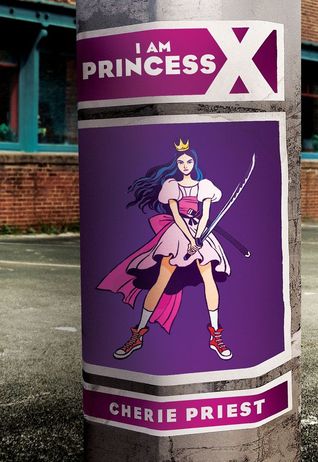
I Am Princess X

Synopsis:

(via Goodreads)

Best friends, big fans, a mysterious webcomic, and a long-lost girl collide in this riveting novel, perfect for fans of both Cory Doctorow and Sarah Dessen; illustrated throughout with comics.

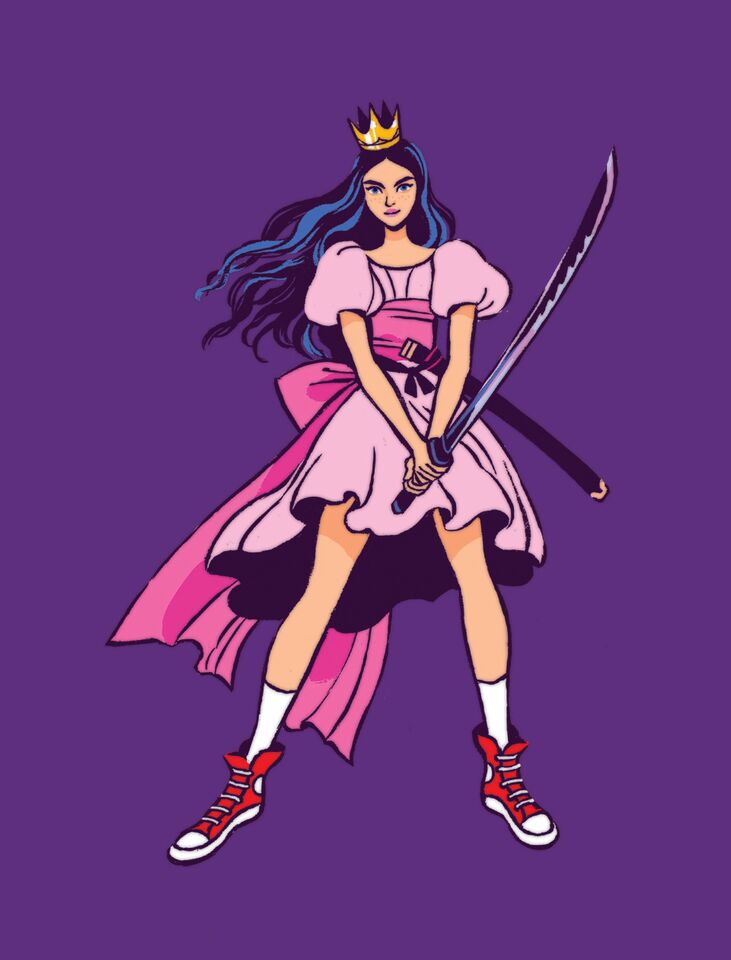
Once upon a time, two best friends created a princess together. Libby drew the pictures, May wrote the tales, and their heroine, Princess X, slayed all the dragons and scaled all the mountains their imaginations could conjure.

Once upon a few years later, Libby was in the car with her mom, driving across the Ballard Bridge on a rainy night. When the car went over the side, Libby passed away, and Princess X died with her.

Once upon a now: May is sixteen and lonely, wandering the streets of Seattle, when she sees a sticker slapped in a corner window.

Princess X?

When May looks around, she sees the Princess everywhere: Stickers. Patches. Graffiti. There’s an entire underground culture, focused around a webcomic at IAmPrincessX.com. The more May explores the webcomic, the more she sees disturbing similarities between Libby’s story and Princess X online. And that means that only one person could have started this phenomenon—her best friend, Libby, who lives.


My Thoughts:

What a treat! I Am Princess X is a smart, well-written, imaginative odyssey focused on girl power and the bonds of friendship. May and Libby are deeply connected, and their true devotion to one another is what drives the search for answers forward.

Fast-paced, clever, pulse-pounding, and funny, I Am Princess X is a great story of friendship and determination, with plenty of adventure and geeky clue-chasing mixed in. The web comic that becomes a piece of the puzzle is terrific, and I really enjoyed the way the comic provides a map to the secrets of the story.

It’s nice to read a young adult novel where romance, for once, is not a factor at all. There’s lots of tech talk and references to gadgets, devices, screens, and tablets (which makes me wonder if this book will feel dated in 10 years). The plot involves hacking and spyware and questionable internet conduct — but that’s about all that could even possibly raise an eyebrow about inappropriate behavior. Otherwise, it’s practically squeaky clean, so a parent could be comfortable sharing this with mature middle school readers as well as the book’s target teen audience. (I say mature, simply because there is danger and a scary bad guy, with the main characters in serious peril. The bad guy is really creepy and threatening — deadly too.)

Overall, I found I Am Princess X to be fun, memorable and exciting. It’s got a fresh and unusual feel to it, and the narrative-plus-graphics format is very engaging. Check it out!

_________________________________________

The details:

Title: I Am Princess X
Author: Cherie Priest
Publisher: Arthur A. Levine Books
Publication date: May 26, 2015
Length: 240 pages
Genre: Young adult fiction
Source: Library
Blog Tour & Book Review: What You Left Behind by Jessica Verdi

What You Left BehindWith thanks to Sourcebooks Fire, I’m delighted to be participating in the blog tour celebrating the release of What You Left Behind, the new teen novel by Jessica Verdi.

About the Book

Jessica Verdi, the author of My Life After Now and The Summer I Wasn’t Me, returns with a heartbreaking and poignant novel of grief and guilt that reads like Nicholas Sparks for teens.

It’s all Ryden’s fault. If he hadn’t gotten Meg pregnant, she would have never stopped her chemo treatments and would still be alive. Instead he’s failing fatherhood one dirty diaper at a time. And it’s not like he’s had time to grieve while struggling to care for their infant daughter, start his senior year, and earn the soccer scholarship he needs to go to college.

The one person who makes Ryden feel like his old self is Joni. She’s fun and energetic—and doesn’t know he has a baby. But the more time they spend together, the harder it becomes to keep his two worlds separate. Finding one of Meg’s journals only stirs up old emotions. Ryden’s convinced Meg left other notebooks for him to find, some message to help his new life make sense. But how is he going to have a future if he can’t let go of the past?

My Thoughts:

I’ll keep this brief… because if that synopsis doesn’t grab you and make you want to read this book, like, yesterday, then I’m not sure what else I could possibly say to grab your attention!

What You Left Behind is unusual in the increasingly crowded field of contemporary young adult fiction: It’s a teen drama full of loss and hope, told not through the eyes of the tragically dying Meg or by new love interest Joni, but by Ryden himself. I don’t recall reading any other YA novels recently with a male narrator who’s experienced anything quite like Ryden. Age 17, high school senior, father. Bereaved as a teen without every really getting to start a life with the girl he loved. Work, school, soccer, trying to be a good dad, trying to be a good son, and still trying to understand what really happened with Meg.

You can’t help but love Ryden. He didn’t ask for any of this. Meg insisted on keeping the pregnancy, even though it meant going without chemo for all those months. All Ryden wanted was to love Meg and do anything in his power to keep her healthy… and here he is six months after her death, stressed out, feeling like a terrible father, having to face the reality that the life he thought he was meant for is now forever out of reach.

Jessica Verdi’s writing is beautiful in its heartfelt sorrow and frustration and bitterness. Ryden is a giant mess, and he screws up a lot — but I challenge any reader not to feel complete sympathy with him. He’s in a horrible situation, and even though he has an amazing mother who supports him wholeheartedly, his life really does suck at the moment when we first meet him. Watching him go through the process of grieving and figuring things out and finally starting to see a glimmer of hope is painful. Ryden’s emotions are raw and brutal, and he makes some big mistakes, and really doesn’t understand the world around him or what his new life really is a lot of the time. But it’s impossible to blame him for anything. He’s in a horrible situation, not of his making, and — he’s only 17! He’s bound to make mistakes, but I can’t help but admire the courage and grit he shows in just waking up and moving forward day after day.

The author knows how to get inside a teen’s head and explore all the contradictory wants and needs lurking there. The writing doesn’t condescend and doesn’t shy away from showing the good, the bad, and the ugly. The story didn’t necessarily go where I thought it would, but I was invested every step of the way and couldn’t look away.

My only complaint is that the author made me care so much about these characters that I wanted more at the end. I like the ending of the book very much, which makes it clear that a new chapter is just beginning and that Ryden finally has a path ahead of him that can lead to happiness. But (and maybe this is the mom in me speaking!), I wanted to know more. I really want to know what Ryden’s life is like in a year, in two years, and in five. What happens next? What does he decide to do with himself? How does he grow as a person and as a father? I think it’s a testament to the power of this novel that I feel invested enough to have so many questions.

Bottom line: If you enjoy contemporary YA fiction that deals with tough subjects with honesty and emotion, don’t miss What You Left Behind. And for more by Jessica Verdi, check out her excellent previous novel, The Summer I Wasn’t Me (reviewed here).

More Info:

Purchase Here:

What You Left Behind–

Amazon | Apple | B&N | BAM | !ndigo | IndieBound | Kobo

About the Author

Jessica Verdi lives in Brooklyn, NY and received her MFA in Writing for Children from The New School. Her favorite pastimes include singing show tunes at the top of her lungs (much to her husband’s chagrin), watching cheesy TV, and scoring awesome non-leather shoes in a size 5. She’s still trying to figure out a way to put her uncanny ability to remember both song lyrics and the intricacies of vampire lore to good use. Follow Jess on Twitter @jessverdi.

Connect with Jessica Verdi

Website – http://jessicaverdi.com/

Twitter – https://twitter.com/JessVerdi

Facebook – https://www.facebook.com/authorjessicaverdi

Goodreads – https://www.goodreads.com/author/show/6442339.Jessica_Verdi

_________________________________________

The details:

Title: What You Left Behind
Author: Jessica Verdi
Publisher: Sourcebooks Fire
Publication date: August 4, 2015
Length: 320 pages
Genre: Young adult fiction
Source: Review copy courtesy of Sourcebooks Fire