
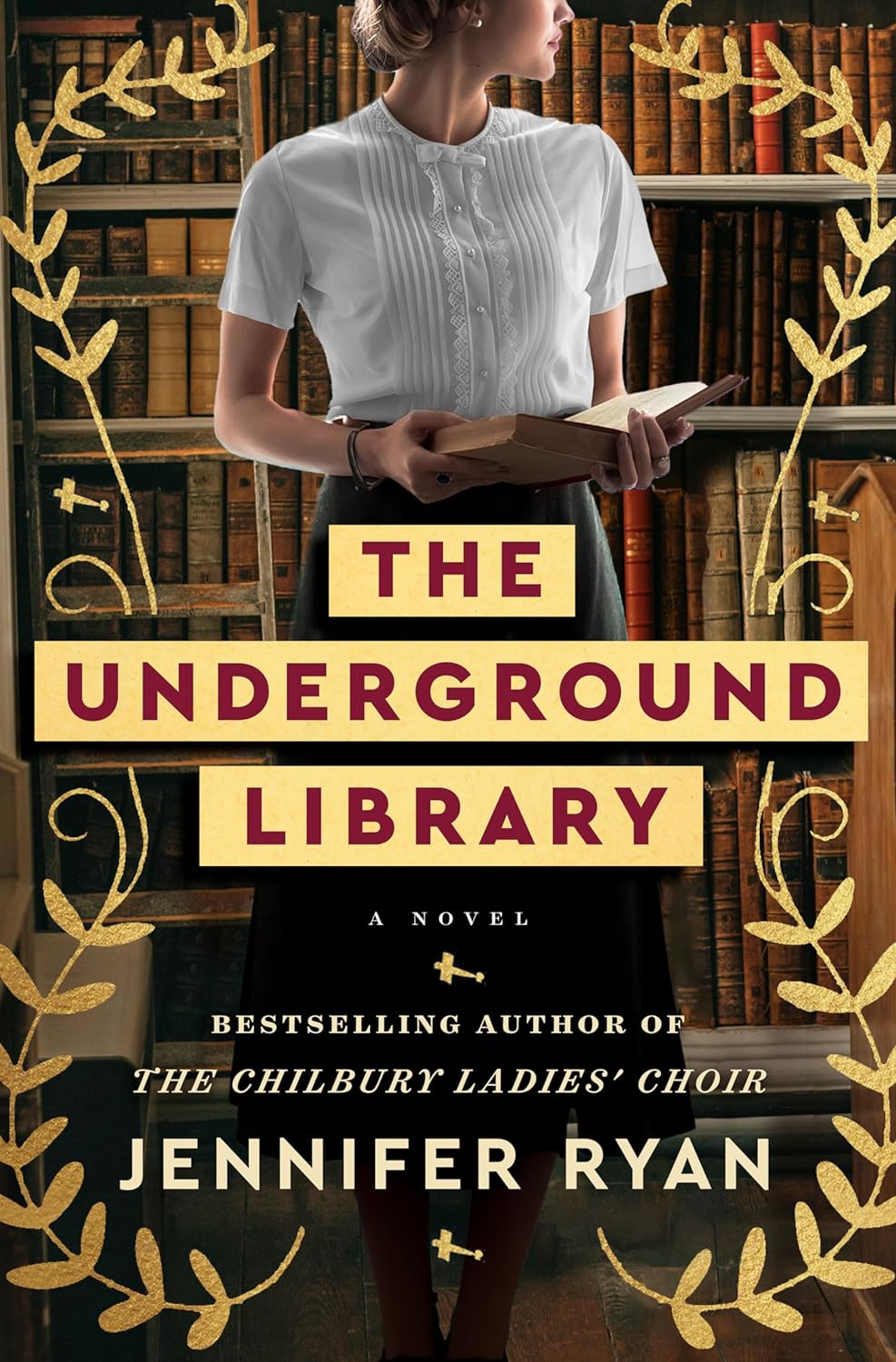
Book Review: The Underground Library by Jennifer Ryan

Title: The Underground Library
Author: Jennifer Ryan
Publisher: Ballantine Books
Publication date: March 12, 2024
Print length: 368 pages
Genre: Historical fiction
Source: Review copy courtesy of the publisher via NetGalley
Rating:

Rating: 4 out of 5.

When the Blitz imperils the heart of a London neighborhood, three young women must use their fighting spirit to save the community’s beloved library in this heartwarming novel from the author of The Chilbury Ladies’ Choir

When new deputy librarian, Juliet Lansdown, finds that Bethnal Green Library isn’t the bustling hub she’s expecting, she becomes determined to breathe life back into it. But can she show the men in charge that a woman is up to the task of running it, especially when a confrontation with her past threatens to derail her?

Katie Upwood is thrilled to be working at the library, although she’s only there until she heads off to university in the fall. But after the death of her beau on the front line and amid tumultuous family strife, she finds herself harboring a life-changing secret with no one to turn to for help.

Sofie Baumann, a young Jewish refugee, came to London on a domestic service visa only to find herself working as a maid for a man who treats her abominably. She escapes to the library every chance she can, finding friendship in the literary community and aid in finding her sister, who is still trying to flee occupied Europe.

When a slew of bombs destroy the library, Juliet relocates the stacks to the local Underground station where the city’s residents shelter nightly, determined to lend out stories that will keep spirits up. But tragedy after tragedy threatens to unmoor the women and sever the ties of their community. Will Juliet, Kate, and Sofie be able to overcome their own troubles to save the library? Or will the beating heart of their neighborhood be lost forever?

The Underground Library is the newest book by talented historical fiction author Jennifer Ryan, showing the strengths and struggles of women on the homefront during World War II.

Three main characters are our points of focus, each with a memorable story of her own. Through these characters and their friends and connections, a sense of a strong, resilient community is beautifully presented.

The lead characters, Juliet, Katie, and Sofie, each end up at the Bethnal Green library in London by different paths. Juliet leaves her small town, where she lives with uncaring parents, after her fiancé disappears during battle and is believed to be a deserter. Juliet needs both a fresh start and a chance to make something of herself, and is delighted to land a role as deputy librarian — a role available to a woman only because qualified men are scarce during wartime.

Katie, a Bethnal Green local, works at the library temporarily as she prepares to leave for university, eager to pursue her education and escape the pressures of her social-climbing father and a mother who only cares about reputation and what the neighbors think. When Katie receives word that her boyfriend is missing and presume dead, her world falls apart in more ways than one.

Sofie is a Jewish resident of Berlin whose family urges her to leave while she still can, and secures her a British visa conditional on domestic employment — something Sofie has never done before, having been raised in a well-off family with domestic help of their own. She’s reluctant to leave her family, but is finally convinced of the necessity of doing so. After a hair-raising and dangerous trip, she arrives in London. There, she finds safety from the Nazi terrors of Germany, but at a price: Her employer is cruel, demanding, and abusive, and she lives in constant fear for the family she left behind. When she happens to stop by the library while on an errand for her employer, a new world opens to her, as she’s welcomed and encouraged to keep coming back.

As the women meet and come together, new opportunities for community emerge. The head librarian is stuffy and bound by tradition, wanting to keep the library a quiet, dignified space for the privileged, but Juliet is determined to infuse new life into it, planning book discussions and activities during the hours when her boss is away.

When air raids begin, the people of Bethnal Green eventually begin using the underground station as a shelter, and it becomes a place of refuge, where night after night, people sleep, share stories, seek medical care, and find a place of relative safety while bombs are dropped overhead. When the library itself is hit in an air raid, the head librarian wants to shut it down, but Juliet has another idea: With the help of her trusted group of friends and the women who form the inner circle of her reading groups, she relocates as many books and resources as possible down into the shelter, and the underground library is born.

The Underground Library is a wonderful portrayal of women’s strength and the glory of friendship, as well as the absolutely awesome power of books to bring people together, provide an escape from the harsh realities of daily life, and offer inspiration and hope. It’s also a realistic depiction of life during wartime, showing the struggles of people on the homefront to feed and clothe their families, find medical care, and find safety from nightly dangers — all while worrying about loved ones serving on the front and mourning terrible losses.

Juliet, Katie, and Sofie each have their own struggles and heartbreaks, and each is given ample space to grow as characters and face their challenges. Each of their storylines is well developed and affecting. In some books with multiple main characters, there’s often one who outshines the others, but here, all three are interesting and provoke sympathy and emotional connection.

In addition to the main characters, it’s fascinating to see how their friends and associates find their own paths forward and take on new and different roles through their involvement with the Underground Library. By the end of the book — which includes plenty of tears but is ultimately uplifting — we see how friends can become family, how families can rebuild, and how people who’ve suffered loss can find reasons to keep going.

The Underground Library has a gentle tone, even when frightening events are happening around the characters. The focus is on the people — this is less a story about war and more a story about how people impacted by war find hope and strength in unexpected ways. I came to care deeply about the characters and their lives, and felt thoroughly immersed in the book as a whole. In fact, my only complaint is that there are some secondary characters I wish we’d gotten to see more of — I felt like there were even more stories to be told about the people who made up the Bethnal Green community.

The Underground Library is Jennifer Ryan’s 5th novel, and I’ve enjoyed each and every one. She has a talent for showing the ordinary people affected by historical events, and especially, the importance of community during times of great struggles.
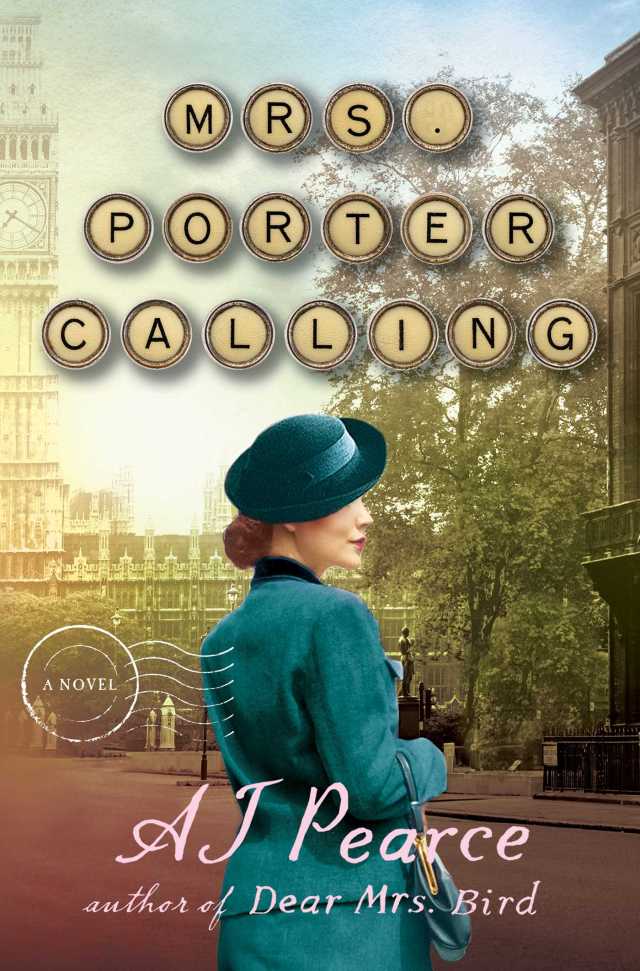
Book Review: Mrs. Porter Calling by AJ Pearce

Title: Mrs. Porter Calling
Author: AJ Pearce
Publisher: Scribner
Publication date: August 8, 2023
Length: 320 pages
Genre: Historical fiction
Source: Review copy courtesy of the publisher via NetGalley
Rating:

Rating: 4 out of 5.

London, April 1943. A little over a year since she married Captain Charles Mayhew and he went away to war, Emmy Lake is now in charge of “Yours Cheerfully,” the hugely popular advice column in Woman’s Friend magazine. Cheered on by her best friend Bunty, Emmy is dedicated to helping readers face the increasing challenges brought about by over three years of war. The postbags are full and Woman’s Friend is thriving.

But Emmy’s world is turned upside down when glamorous socialite, the Honorable Mrs. Cressida Porter, becomes the new publisher of the magazine, and wants to change everything the readers love. Aided by Mrs. Pye, a Paris-obsessed fashion editor with delusions of grandeur, and Small Winston, the grumpiest dog in London, Mrs. Porter fills the pages with expensive clothes and frivolous articles about her friends. Worst of all, she announces that she is cutting the “Yours Cheerfully” column and her vision for the publication’s future seems dire. With the stakes higher than ever, Emmy and her friends must find a way to save the magazine that they love.

Emmy Lake is back! Mrs. Porter Calling is the third in a series of books about a magazine journalist and her group of close friends and colleagues, navigating life on the homefront in WWII-era London. In the first two books, Dear Mrs. Bird and Yours Cheerfully, we see Emmy land a job at Woman’s Friend magazine, where she eventually takes over the advice column, seeing it as her mission to offer compassionate, practical advice to women in need. Over the course of these two books, she also meets and marries a lovely man, and supports her best friend through horrible loss and recovery.

As Mrs. Porter Calling opens, the year is 1943, and Emmy continues her work at Woman’s Friend as well as with the fire service, which monitors and responds to disasters caused by air raids. Emmy’s beloved husband Charles is off on the front lines, the couple having had only a few short days together following their wedding before his deployment. Emmy shares a home with her best friend Bunty, and they lead busy, productive lives — they’ve learned to adapt and carry on, despite the constant fear and rationing.

Emmy’s professional life is thrown into a tailspin when the magazine’s owner dies. He’s bequeathed ownership to his niece, who turns out to be a spoiled upper-class woman who feigns delight with the magazine, provided they implement just a few of her “tiny ideas”. She finds the current version “A Bit Mis” — miserable — and decides that what the readers really need is more stories that are pleasant. Rather than focus on food columns about how to make good meals with limited rations or knitting/sewing clothing when supplies aren’t available, she wants glamour, fashion, and a focus on the beautiful lives of her own class. The staff of the magazine is appalled — this is not what their readers rely on them for — but having no choice, the magazine is changed to Mrs. Porter’s standards, and of course, readership and then advertising drop off. Soon, the future of Woman’s Friend is in doubt, and Emmy and her colleagues become desperate to save it.

Meanwhile, at home, Emmy and Bunty welcome a woman with three young children into their home, and soon their days are filled with activity and joyful chaos — but the realities of war are always present, and soon enough Emmy’s woes at the magazine are eclipsed by a more personal tragedy.

I enjoyed Mrs. Porter Calling so much! Mrs. Porter herself is an insidiously vapid character who acts sweetly haughty, until she hits the team with her “ideas”, all with the most saccharine of smiles and eyelash batting. As Emmy reflects:

I was beginning to feel as if I was being run over by a steamroller made from petals and kittens. It was delightful, but also somewhat immobilizing.

Beyond the work crises, where we can’t help but root for the underdogs — the hardworking, dedicated team of Woman’s Friend — the book delves sensitively into the lives of the women and children struggling to make ends meet on the home front.

“Don’t worry, Em, we’ll do what all the other women in Britain are doing.”

“What’s that?” I said.

“Cope,” said Bunty.

Again and again, Emmy, Bunty, and their circle of friends show what true bravery is, as well as devotion and determination.

While there’s sorrow and conflict in Mrs. Porter Calling, there’s a chipper, upbeat air that carries the story along — the “Keep Calm and Carry On” attitude that lets the characters find happiness even in the darkest of days. I loved the found family aspect of the characters’ lives — despite fears for loved ones on the battlefield or sorrow for those lost, they bond together to get through it all, and clearly show how love and friendship can mend broken hearts.

“War’s bad enough as it is. Imagine if you’re trying to get through this on your own.”

The Emmy Lake books are emotional, entertaining, and heart-warming. I recommend starting at the beginning of the series, and continuing on from there. I understand there’s at least one more book planned, and also read a comment by the author that she hopes to continue writing books that will take Emmy and friends through to the end of the war. I hope that’s the case! I’d really love to see more of Emmy’s story (and will be waiting to see what I hope will be a happy ending for her once the war ends).

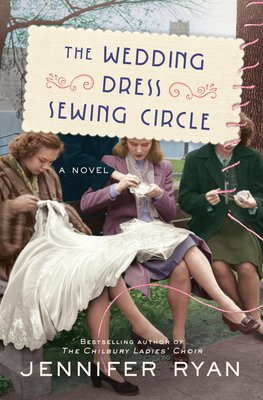
Book Review: The Wedding Dress Sewing Circle by Jennifer Ryan

Title: The Wedding Dress Sewing Circle
Author: Jennifer Ryan
Publisher: Ballantine Books
Publication date: May 31, 2022
Print length: 432 pages
Genre: Historical fiction
Source: Review copy courtesy of the publisher via NetGalley
Rating:

Rating: 4 out of 5.

Three plucky women lift the spirits of home-front brides in wartime Britain, where clothes rationing leaves little opportunity for pomp or celebration–even at weddings–in this heartwarming novel based on true events, from the bestselling author of The Chilbury Ladies’ Choir.

After renowned fashion designer Cressida Westcott loses both her home and her design house in the London Blitz, she has nowhere to go but the family manor house she fled decades ago. Praying that her niece and nephew will be more hospitable than her brother had been, she arrives with nothing but the clothes she stands in, at a loss as to how to rebuild her business while staying in a quaint country village.

Her niece, Violet Westcott, is thrilled that her famous aunt is coming to stay–the village has been interminably dull with all the men off fighting. But just as Cressida arrives, so does Violet’s conscription letter. It couldn’t have come at a worse time; how will she ever find a suitably aristocratic husband if she has to spend her days wearing a frumpy uniform and doing war work?

Meanwhile, the local vicar’s daughter, Grace Carlisle, is trying in vain to repair her mother’s gown, her only chance of a white wedding. When Cressida Westcott appears at the local Sewing Circle meeting, Grace asks for her help–but Cressida has much more to teach the ladies than just simple sewing skills.

Before long, Cressida’s spirit and ambition galvanizes the village group into action, and they find themselves mending wedding dresses not only for local brides, but for brides across the country. And as the women dedicate themselves to helping others celebrate love, they might even manage to find it for themselves.

The Wedding Dress Sewing Circle is now the 4th book I’ve read by Jennifer Ryan, and like her earlier books, it presents a warm-hearted look at the homefront challenges and triumphs of women during wartime.

The year is 1942, London is being terrorized by air raids, and in the countryside, families are making do with less and less. Even clothing is rationed — materials are prioritized for the benefit of the war effort, so the local sewing circles are forced to become skilled at repairing and reworking the clothing that they do have.

In the village of Aldhurst, the vicar’s 24-year-old daughter is soon to be married. Grace and her widowed father find her mother’s wedding dress stored away, but the years have not been kind to the once-beautiful gown. Grace is looking forward to her marriage to a young curate, although she’s mostly motivated by duty and a need to be useful to the parish rather than by sentiments of true love.

But when Cressida, a famous designer whose home and business are both destroyed in a night-time bombing raid, returns to her family’s manor in Aldhurst, life in the village starts to change. Cressida lends her skills to the local sewing circle, encourages Grace to think bigger and explore her own talents, and even manages to get her niece Violet to see that there’s more to life than being the pretty little wife of an aristocrat.

As the women spend time together, they become tightly bonded, and manage to find creative inspiration in their sewing projects, eventually coming up with the idea of organizing what’s essentially a wedding dress lending library. Soon, women from all across Britain are donating their wedding dresses, and eager brides are now able to have the beautiful weddings they’ve dreamed of, rather than getting married in uniforms or practical clothing.

The Wedding Dress Sewing Circle focuses on friendship and finding purpose. The women at the heart of the book all, in their own ways, reevaluate the assumptions they’ve made about their lives and find different, more meaningful paths for themselves. Through Cressida’s example, they learn to think differently, challenge expectations, and pursue careers and lives that are more fulfilling than what they’d thought they should want or expect.

I enjoyed getting to know the main characters and seeing each of them blossom in different ways. Each has a love story as well, none of which run particularly smoothly — but never fear, there are plenty of happy endings to go around.

As in her other books, Jennifer Ryan uses village life and characters to portray the effects of war on ordinary people. Her characters aren’t out risking their lives on battlefields or engaging in high-stakes espionage; these are the everyday women and men who must do the best they can in the face of shortages and hardships, holding on to their homes, their friends, and their communities the best they can. The Wedding Dress Sewing Circle is a portrait of a generous community, whose individuals come together to not just make do, but make better.

This is a gentle read, with drama on the more intimate and personal side. While the opening scenes of Cressida’s experiences in the air raid are very frightening and dramatic, and while there’s another incident later on of an air raid on a neighboring village that’s also quite scary and intense, the rest of the book is quieter and more restrained. The focus is on day to day life and the people of the village — the war is the constant backdrop, but it’s filtered through the experiences of the women and families on the homefront.

I enjoyed The Wedding Dress Sewing Circle very much. In fact, my only slight complaint is that it seems to echo the author’s other books in certain ways, so that the overall story feels less fresh this time around. In three of the four books of hers that I’ve now read, the main story is about plucky women in a small town who come together to make it through the war years — in one book, it’s about a choir, in another, a cooking competition, and here, a sewing group. The plots arcs and characters here feel familiar, not because we’ve seen them before, but because the overall tone is so similar to those of her previous novels.

That said, I did think it was an engaging, often moving read, and I enjoyed seeing the characters grow and change over the course of the story. Jennifer Ryan has a gift for bringing out the beauty in simple lives, and I always enjoy her light touch when it comes to dialogue and banter.

If you enjoy historical fiction, especially historical fiction focused on women’s lives, don’t miss The Wedding Dress Sewing Circle!