
Take a Peek Book Review: Lizzy & Jane by Katherine Reay

A quick note: I thought I’d try out a new book review format! My “Take a Peek” reviews will be short and (I hope) sweet, keeping the commentary brief and providing a little “peek” at what the book’s about and what I thought. Tell me if you like!
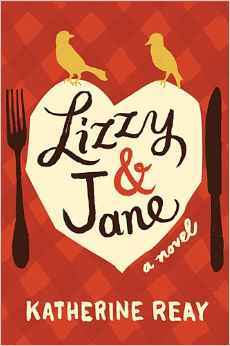
Lizzy and Jane

Synopsis:

(via Goodreads)

Lizzy and Jane never saw eye to eye. But when illness brings them together, they discover they may be more like Austen’s famous sisters after all.

Lizzy was only a teenager when her mother died of cancer. Shortly after, Lizzy fled from her home, her family, and her cherished nickname. After working tirelessly to hone her gift of creating magic in the kitchen, Elizabeth has climbed the culinary ladder to become the head chef of her own New York restaurant, Feast. But as her magic begins to elude her, Paul, Feast’s financial backer, brings in someone to share her responsibilities and her kitchen. So Elizabeth flees again.

In a desperate attempt to reconnect with her gift, Elizabeth returns home. But her plans are derailed when she learns that her estranged sister, Jane, is battling cancer. Elizabeth surprises everyone—including herself—when she decides to stay in Seattle and work to prepare healthy, sustaining meals for Jane as she undergoes chemotherapy. She also meets Nick and his winsome son, Matt, who, like Elizabeth, are trying to heal from the wounds of the past.

As she tends to Jane’s needs, Elizabeth’s powers begin to return to her, along with the family she left behind so long ago. Then Paul tries to entice her back to New York, and she is faced with a hard decision: stay and become Lizzy to her sister’s Jane, or return to New York and the life she worked so hard to create?

My Thoughts:

Lizzy & Jane is both sad and hopeful, a look at two sisters who have a seemingly impassable chasm between them after years of resentment, estrangement, and loneliness. Elizabeth is adrift in the world; she thinks that she’s put her painful family history behind her and that she’s found success as a top New York chef, but as the story opens, she’s forced to admit that her life just isn’t working any more.

Reunited with her sister and her father, Elizabeth slowly starts to find joy in her cooking again, as she cares for her sister, her sister’s kids, and even the other chemo patients she meets while keeping Jane company. As Elizabeth begins to open herself up to forgiveness and reconciliation, she finds her life taking on new meaning and finds a passion and purpose that she didn’t even know she needed.

I loved how neatly the author ties together literature and cooking in this lovely (and delicious) novel. I’m not a foodie, but even I appreciated Lizzy’s knack for understanding a person’s food tastes based on what they love to read. I don’t know if I’m quite convinced that it would work in real life, but in the context of fiction, it’s simply inspired!

Overall, I really enjoyed Lizzy & Jane. The main character is flawed and wounded, and it’s lovely to see her reconnect with her sister and rediscover herself in the process. The love story is a tad predictable, but still delicious in its own way. The portrayal of the fraught relationship between the sisters feels realistic and sensitive, and I couldn’t help cheering for the characters (and occasionally wanting to give them a little kick to get them talking again!). Filled with real emotion, satisfying personal growth, and a group of supporting characters who each add a little spice to the story, Lizzy & Jane is a great choice for anyone looking for a book to make you feel.

_________________________________________

The details:

Title: Lizzy & Jane
Author: Katherine Reay
Publisher: Thomas Nelson
Publication date: October 28, 2014
Length: 339 pages
Genre: Contemporary fiction
Source: Review copy courtesy of Thomas Nelson via NetGalley


Book Review: The Cranes Dance by Meg Howrey

Book Review: The Cranes Dance by Meg Howrey

Reading a book about ballet dancers is a bit like studying anthropology or reading fiction set in an exotic land. Ballet is a world and a culture unto itself, with its own customs, morals, standards, language, costumes, and rituals. Those at the peak of the profession form an insular little society, truly an alien species in the eyes of the non-ballet world — and even more so, the “normal” world, to the ballet elite, is foreign, slightly unpleasant, and unrelentingly ordinary.

So it would seem, in any case, from reading The Cranes Dance, an excellent but disturbing peek into the world of a top New York City ballet company, as told by main character Kate Crane — whose perspective may not be all that reliable. Kate is in her late-ish 20s, and has been with the Company since she was a rising teen ballet student. Kate is a lovely and talented dancer, but her younger sister Gwen is a star. Gwen joins the Company a year after Kate, but is made a principal (a prima ballerina, if you will) at the same time that Kate, with more years of experience, is raised from the corps to soloist (a featured dancer, performing good roles, but definitely not the star of the show). But it’s all okay, because Kate is devoted to Gwen, and from day one sees her as someone to be nurtured and cherished, whose gift must be protected and encouraged above all else.

As The Cranes Dance opens, Kate is on her own in New York for the first time in a decade, after having called her parents in Michigan to report that Gwen has had a nervous breakdown. Gwen has been scooped up and taken away by the parents, and Kate is left to deal with her grief, her guilt, and deep down, her relief at being free for once in her life. Unfortunately, Kate has perfected the skill of not dealing. She’s made a career of keeping everyone at arm’s length, never admitting that she has needs or wants, and finds herself adrift.

Unceremoniously dumped by her boyfriend (she never let him be there for her, apparently), Kate moves into Gwen’s now empty apartment, and more or less into Gwen’s life. She lives amongst Gwen’s things, she wears Gwen’s clothes and uses Gwen’s hair products, and before long, she’s dancing roles meant for Gwen as well. Friends and colleagues tell Kate that she’s never danced better, and the company director comments that it’s been hard “to watch you diminish yourself” — implying, perhaps, that Kate’s devotion to Gwen has kept her from letting herself shine on her own.

But has Kate also taken over Gwen’s mental deterioration? Warning signs abound. After a neck injury, Kate turns to Vicodin to numb the pain — and soon, to numb everything else. Like Gwen, Kate is unable to sleep and loses weight due to lack of appetite. Kate narrates her life for the audience she imagines constantly watching her, as if being on stage is a shield against the dangers and disappointments of actual living. Inhabiting Gwen’s home, all alone, Kate is left to stare at the mysterious and disturbing tape marks and secret notes and symbols that Gwen used as talismans against fear, her secret obsessive-compulsive safety nets. Can Kate be strong where Gwen could not? Can Kate numb the pain indefinitely, or will her world come crashing down as well?

I enjoyed The Cranes Dance a great deal. According to her website, “Meg Howrey is a classically trained dancer who has performed with the Joffrey, Los Angeles Opera, and City Ballet of Los Angeles.” Clearly, this is a writer who knows the world she so keenly describes. The first-person narration gives us a front-row view of the workings of Kate’s mind, and she can be hilariously funny at times, despite the physical and emotional pain that accompany her throughout her days.

Crisp, delicious writing abounds, such as this passage in which Kate must suffer through drinks with a smile:

“Oh, but I love The Nutcracker,” began the [woman], and then launched into the familiar non-dancer girl talking to dancer girl conversation. “Do your toes bleed?” “I had a friend/cousin/neighbor who danced who was really serious about her dancing until she got too tall/hurt her knee/went to college.” “You must not be able to eat anything.” “It must take a lot of discipline, I can’t even imagine doing what you do.” “All the men are gay, right?”

The book opens with Kate describing the plot of Swan Lake, which is the headlining production in the company’s performance season. It’s much too much to quote in full, but this little snippet gives a good sense of the tone as well as Kate’s unique perspective on dance and life in general:

Act I opens in the village green of an unspecified, vaguely German realm. We’re a little hazy on the time period too. It’s Days of Yore, I guess, in the yore when everyone in pseudo Germany wandered around their village green in nearly identical outfits… Anyway A Village Green Scene is standard issue for classical ballet, and if you’ve seen one circlet of peasant-dancing hoo-ha, you’ve seen them all. There’s a garland dance and a Maypole and a lot of people standing around fake clapping or pointing out to each other that other people are dancing in the middle of the stage… So everyone just wanders around greeting each other with head nods if you’re a girl and shoulder thumping if you’re a guy, and then one person will indicate Center Stage like “Hey, did you see? There are people dancing! Isn’t that neat!” And the other person will make a gesture like “Yes! Dancing. It is happening there!”

And so on. It’s fun, it’s funny, it often terribly sad, and it’s frequently disturbing. At the same time, Kate’s voice is engaging — even when she’s being obnoxious — and you can’t help but want to shake her a bit and get her to just, you know, snap out of it! You’re a ballerina! Enjoy yourself!

Go ahead, hum a few bars. Pirouettes are allowed too.

The glimpse into the backstage life of a ballet company is deliciously exotic. The endless classes and rehearsals, the jockeying for positions and good partners, the little slips that can spell disaster, the triumphs of a perfect gesture — all these are brought to life so vividly that you can hear the toe shoes landing after a jump. I dare you to read this book and not spend the next few days humming Swan Lake as you  move, oh so gracefully, down the busy streets, perhaps with visions of tutus dancing in your head.

Whether you read The Cranes Dance as a story of sisters, a narrative of mental illness, a profile of a person shut off from the world, or just for the joy of the behind-the-scenes glamour and excitement, I do believe you’ll be as entranced by the book as I was. You don’t have to be a ballet fan to enjoy The Cranes Dance — but you’ll probably want to dig out those old The Turning Point or White Nights videos by the time you’re done.