Book Review: Mania by Lionel Shriver

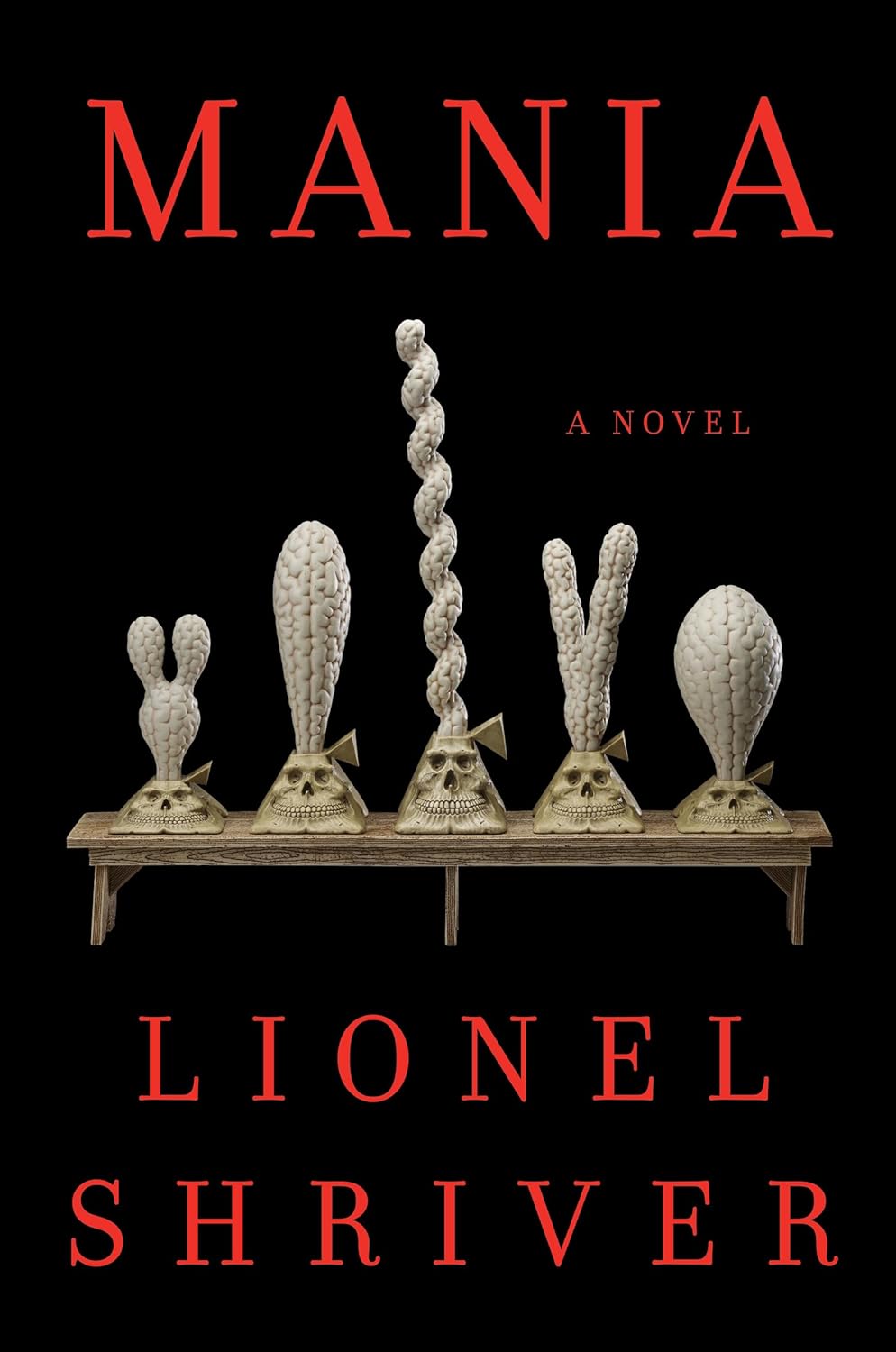
Title: Mania
Author: Lionel Shriver
Publisher: Harper Collins
Publication date: April 9, 2024
Length: 388 pages
Genre: Dystopian / alternative reality
Source: Library
Rating:

Rating: 3 out of 5.

What if calling someone stupid was illegal? In a reality not too distant from our own, where the so-called Mental Parity Movement has taken hold, the worst thing you can call someone is ‘stupid’.

Everyone is equally clever, and discrimination based on intelligence is ‘the last great civil rights fight’.

Exams and grades are all discarded, and smart phones are rebranded. Children are expelled for saying the S-word and encouraged to report parents for using it. You don’t need a qualification to be a doctor.

Best friends since adolescence, Pearson and Emory find themselves on opposing sides of this new culture war. Radio personality Emory – who has built her career riding the tide of popular thought – makes increasingly hard-line statements while, for her part, Pearson believes the whole thing is ludicrous.

As their friendship fractures, Pearson’s determination to cling onto the ‘old, bigoted way of thinking’ begins to endanger her job, her safety and even her family.

Lionel Shriver turns her piercing gaze on the policing of opinion and intellect, and imagines a world in which intellectual meritocracy is heresy. Hilarious, deadpan, scathing and at times frighteningly plausible, MANIA will delight the many fans of her fiction and journalism alike.

Mania has got to be one of the strangest books I’ve ever read. This depiction of an alternate reality where Mental Parity is the new normal imagines a society where variation in intelligence is considered a myth. All are equally capable. All are equally intelligent. Some people may just process differently.

As narrated by main character Pearson Converse, what starts as a ridiculous idea — the idea that mental parity is the “last great civil rights fight” — takes over the country and much of the world. From a fringe cultural phenomenon, mental parity (MP) becomes a strident, powerful force for overturning everything from school (grades are eliminated, because all children are equally intelligent) to university admissions (strictly lottery based, because all are equally qualified) to employment opportunities, parenting, and all manner of social discourse.

Pearson, an English instructor at what was once considered a high-prestige liberal arts college, finds her hands increasingly tied as her surly students practically dare her to step out of line so they can report her to an MPC (Mental Parity Champion).

Even language becomes strictly policed. Words used to denote levels of intelligence are grossly offensive — stupid and dumb being prime examples — but over time, even words used in other contexts are stricken because they could possibly denote judgment that defies the concepts of mental parity. Can’t talk about the deep end of a swimming pool, because “deep” has a nasty association with the myth that some people are “deeper” than others — so let’s just refer to the end of the pool with more water. Also ruled out are words like dull or sharp, even in the context of kitchen knives, or brilliant as in the stars in the sky, or profound… as in deep… as in… oops, never mind.

As time passes and adherence to MP becomes absolute, Pearson finds herself increasingly on the outs with her former best friend Emory, someone with whom she was once aligned on just about everything. Now, Emory seems to have traded in her personal belief system in order to bolster her broadcast career, becoming a star commentator on CNN by offering high profile opinion pieces on the evils of those who oppose MP. Meanwhile, Pearson’s family life is increasingly at risk, as stepping a toe out of line brings down the wrath of Child Protective Services and puts her job (and financial survival) in danger.

Mania is clearly satirical, but what exactly is the author satirizing? At times, the MP world seems to be aligned with MAGA viewpoints denigrating academics and intellectuals as out-of-touch elitists, and the total undermining of scientific rigor mirrors some views of the MAHA movement. And yet, the hyperfocus on policing word choice and sanding away the edges of anything that ever might possibly offend anyone can also speak to what some see as the excesses of “wokeness”. The point, I think, is to show the damage of any sort of extremism taking over rational society — and as we see in Mania, bouncing from one extreme to another as the pendulum of societal norms swings to correct itself poses fresh set of dangers too.

I puzzled over the language in Mania. Pearson’s narration of her life is full of overstuffed sentences and pretentious, convoluted wording. I often had to stop to parse out what a particular sentence might mean. Not having read anything by this author previously, I was left to wonder: Is this delivery typical of this author, or is this meant to show how Pearson holds herself apart and embraces her intellectual superiority even while trying to survive in a world where the use of big words is derided as “brain-vain” or “smartist”? Yet Pearson repeats throughout the book that even while she’s adamantly opposed to MP and its concepts, she herself isn’t all that smart. And so, I remain a bit baffled by the character’s delivery of her life story.

A few examples:

To my embarrassment, here I am relating picayune points of philological fascism—the death of the “dumbbell”—while, out in the rest of the world, events of more considerable moment were afoot.

Emory’s ducking-below-the-parapet strategy had much to recommend it. We could keep our heads down, shuffling the world in camouflage like soldiers wearing dun in the desert, duly observing every new linguistic prohibition and suppressing perceptions of our species once prevailing, now retrograde, the better not to stand out.

Needless to say, heroin users were no longer “dope fiends,” although if you were an opioid addict, surely having your perspicacity traduced was the least of your problems.

The author weaves our own world into the story, warping people and events to suit this strange alternate reality. Obama is president… but only for one term. His brand of intellectualism is a huge turn-off — prime example of being brain-vain! — but his VP, Biden — with his lost trains of thought and awkward public speeches — is a perfect MP president. He’s just as intelligent as everyone else! Because everyone is just as intelligent as everyone else!

Even later, political standards become yet more entrenched in MP:

It’s now taken as a given that for any candidate to be seriously considered for either major party’s presidential nomination next year, he or she will necessarily be badly educated, uninformed, poorly spoken, crass, oblivious to the rest of the world, unattractive and preferably fat, unsolicitous of advice from the more experienced, suspicious of expertise, inclined to violate constitutional due process if only from perfect ignorance of the Constitution, self-regarding without justification, and boastful about what once would have been perceived as his or her shortcomings. We blithely assume that whoever is elected president will surround him- or herself with mediocrities or worse and purposefully appoint a cabinet whose leading credentials are having no credentials.

Hmm. Does that ring any bells?

My ratings graphic only allows full and half stars; otherwise, I would have rated Mania at 3.25. It’s better than a 3-star read, which to me is a “meh”, but I can’t bring myself to go all the way to 3.5, which would imply that it succeeds much more than I feel is accurate. Despite the weirdness of so much of the story, Mania still pulled me in. Once I started, I didn’t want to put it down. I just can’t say that I loved it.

I recommend Mania as a thought experiment and as a very different sort of reading experience. There’s a lot to chew on, despite being so totally outside the scope of believability. Mania is commentary on all sorts of societal woes, dressed up as the story of a woman’s struggle to hold onto the truth even if it costs her everything.

Mania was my book group’s pick for March, and I’m looking forward to hearing what everyone else thought of it. Despite its strangeness, this book is probably a great one for kicking off a lively discussion!

Interested in learning more? Here’s a round-up of reviews:
New York Times
The Guardian
NPR
Kirkus
The Times (UK)

Purchase linksAmazon – Audible audiobook – Bookshop.orgLibro.fm
Disclaimer: When you make a purchase through one of these affiliate links, I may earn a small commission, at no additional cost to you.

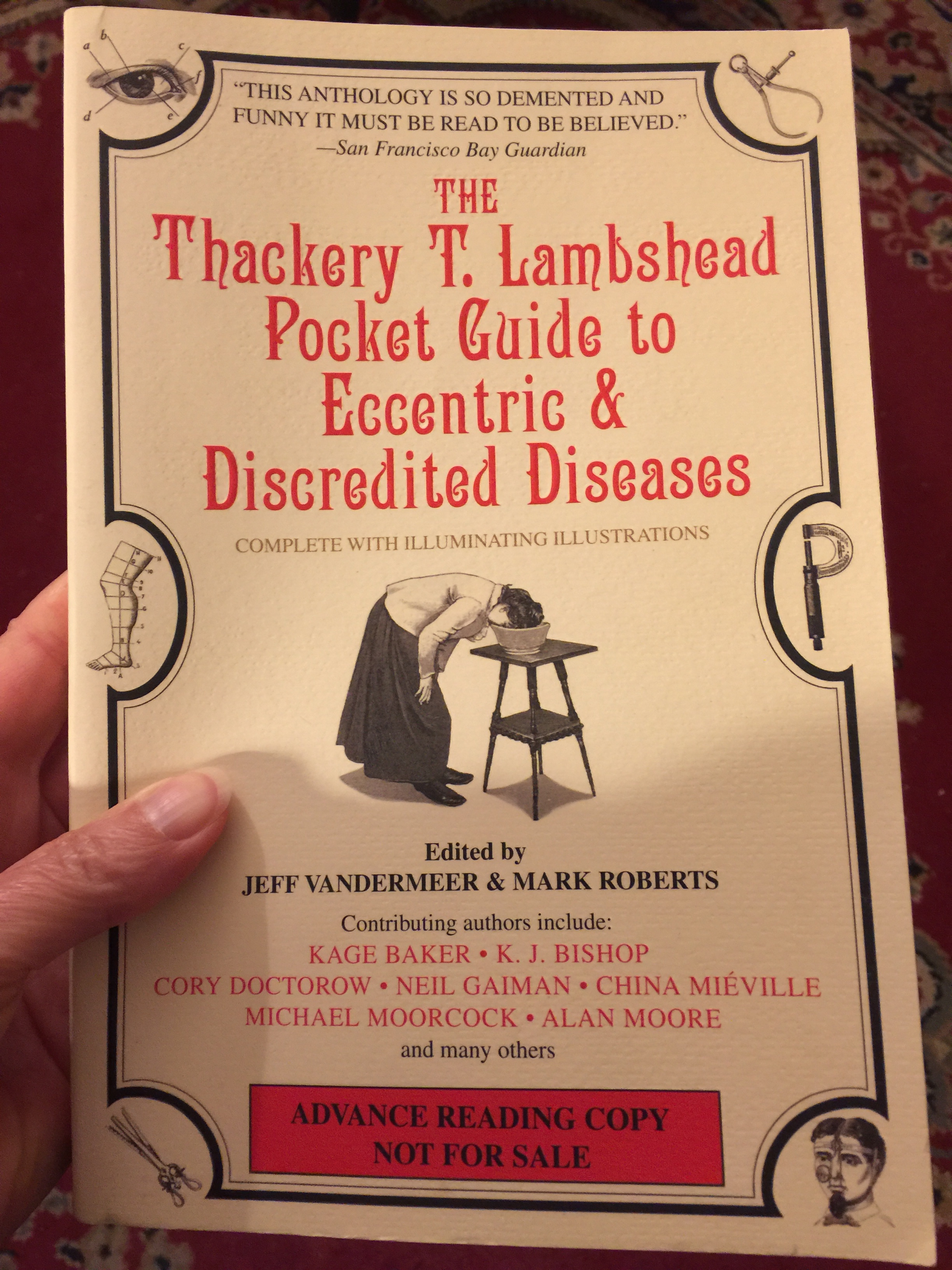
Shelf Control #155: The Thackery T. Lambshead Pocket Guide to Eccentric & Discredited Diseases (edited by Jeff Vandermeer & Mark Roberts)

Shelves final

Welcome to Shelf Control — an original feature created and hosted by Bookshelf Fantasies.

Shelf Control is a weekly celebration of the unread books on our shelves. Pick a book you own but haven’t read, write a post about it (suggestions: include what it’s about, why you want to read it, and when you got it), and link up! For more info on what Shelf Control is all about, check out my introductory post, here.

Want to join in? Shelf Control posts go up every Wednesday. See the guidelines at the bottom of the post, and jump on board!

cropped-flourish-31609_1280-e1421474289435.png

A little note for 2019: For the next short while, I think I’ll focus specifically on books I’ve picked up at our library’s fabulous annual sales. With all books $3 or less, it’s so hard to resist! And yet, they pile up, year after year, so it’s a good idea to remind myself that these books are living on my shelves.

cropped-flourish-31609_1280-e1421474289435.png

Title: The Thackery T. Lambshead Pocket Guide to Eccentric & Discredited Diseases
Author: Jeff Vandermeer & Mark Roberts
Published: 2003
Length: 298 pages

What it’s about (synopsis via Goodreads):

“Imagine if Monty Python wrote the Mayo Clinic Family Health Book, and you sort of get the idea. Afraid you’re afflicted with an unknown malady? Finally you have a place to turn!” —Book Sense

You hold in your hands the most complete and official guide to imaginary ailments ever assembled—each disease carefully documented by the most stellar collection of speculative fiction writers ever to play doctor. Detailed within for your reading and diagnostic pleasure are the frightening, ridiculous, and downright absurdly hilarious symptoms, histories, and possible cures to all the ills human flesh isn’t heir to, including Ballistic Organ Disease, Delusions of Universal Grandeur, and Reverse Pinocchio Syndrome.

Lavishly illustrated with cunning examples of everything that can’t go wrong with you, the Lambshead Guide provides a healthy dose of good humor and relief for hypochondriacs, pessimists, and lovers of imaginative fiction everywhere. Even if you don’t have Pentzler’s Lubriciousness or Tian Shan-Gobi Assimilation, the cure for whatever seriousness may ail you is in this remarkable collection.

How and when I got it:

LIBRARY SALE!

Why I want to read it:

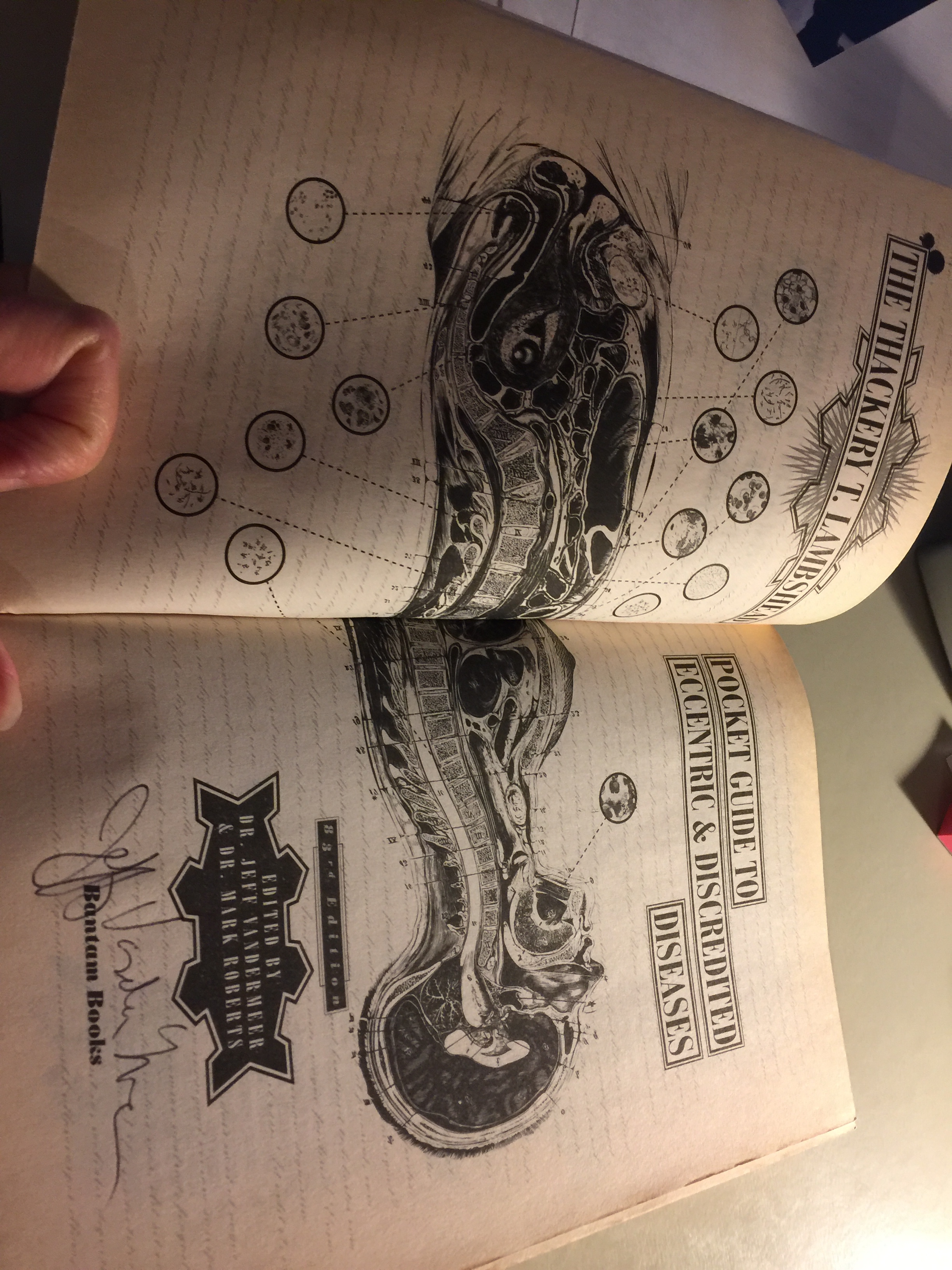
This looks so incredibly silly and inspired. And look, somehow or another I ended up with a signed copy! Thank you, public library sale’s $1 table!

This guide to diseases includes such little known conditions as Flora Metamorphosis Syndrome, Pathological Instrumentation Disorder, The Wuhan Flu, and Internalized Tattooing Disease. Fascinating stuff! Here’s a little peek at the table of contents:

What do you think? Would you read this book?

__________________________________

Want to participate in Shelf Control? Here’s how:

  • Write a blog post about a book that you own that you haven’t read yet.
  • Add your link in the comments!
  • If you’d be so kind, I’d appreciate a link back from your own post.
  • Check out other posts, and…

Have fun!

Save

Save

Save

Save

Save

Save

Save

Save

Save

Save

Save

Save

Save

Book Review: Where’d You Go, Bernadette by Maria Semple

Book Review: Where’d You Go, Bernadette by Maria Semple

Huh. I just now realized that I’ve been committing hyper-punctuation in regard to this book, whose title does in fact include a comma and an apostrophe, but not a question mark — which I have egregiously added in several tweets and emails. Mea culpa.

Be that as it may, I have to say that I just adored Where’d You Go, Bernadette. (See? No question mark). Author Maria Semple has crafted a social satire that is uproariously funny, hits on a ton of memes and flashpoints of today’s hyper-plugged in society, and yet is also quite touching and surprisingly sweet in places.

Given the title, it’s not a spoiler to say that the plot revolves around events leading up to the disappearance of 50-year-old Bernadette Fox, once a brilliant rising star in the world of architecture, now an eccentric, possibly agoraphobic mother and housewife, whose life is one long string of odd behaviors. Bernadette, her 15-year-old super-talented daughter Bee, and her workaholic Microsoft exec husband Elgin, live in a run-down former reform school for girls atop a Seattle hill. The house is falling apart at the seams, literally, as blackberry vines force their way up through the foundations and the damp ceilings and walls crumble around them. (Keep an eye on those blackberry vines — they’re key to some early developments that lead to a disaster at once appalling and hilarious.)

Bee attends the Galer Street School, described in its mission statement as “a place where compassion, academics, and global connectitude join together to create civic-minded citizens of a sustainable and diverse planet.” Children are graded on a scale of “Surpasses Excellence”, “Achieves Excellence”, and “Working Toward Excellence”. Bernadette is happy that her daughter is thriving, but hates everything about Seattle, including the meddling, fussy, over-involved parents of the school, whom she refers to as gnats. Things go from bad to worse when Bernadette’s neighbor Audrey hosts a prospective parents brunch at her home in an attempt to lure “Mercedes Parents” to their Suburu-level school. To say that Bernadette and Audrey don’t quite get along would be the understatement of the year.

Further complications: Bernadette has hired a virtual assistant named Manjula to handle all of her personal business by internet — everything from travel plans to prescriptions to ordering clothing and household repairs. Before you can say “identity theft”, Bernadette has provided Manjula with her entire family’s bank account numbers, birthdates, passport numbers, and social security numbers.

When Bee comes home one day with a report card full of S grades and a brochure for a trip to Antarctica, events and disasters begin to snowball. Neither parent says no, plans for this exotic trip are set in motion, and Bernadette soon begins to fear that she’s in way over her head. By the time the date of the trip rolls around, psychiatrists, FBI agents, Microsoft admins, school chums, and gardeners have all played a role in the unfolding crisis… and Bernadette disappears without a trace.

Precocious, talented, determined Bee is left behind to put the pieces together, and what we’ve been reading all along is Bee’s compilation of documents pertaining to these events. Where’d You Go, Bernadette is told via emails, faxes, school reports, letters, magazine articles, and captain’s logs; Bee has assembled everything she can that may shed light on her mother’s disappearance, and through quick thinking and connecting of dots, believes she may have found pieces of the puzzle that will lead to answers about her mother.

Let me just say that I enjoyed this book immensely. The writing is crisp and deft, and the author does an outstanding job of capturing some of the nuttiness that is so deeply ingrained in today’s world of helicopter parenting, the cult of self-esteem, the worship of tech, and the increasing isolation experienced by individuals in a world of constant “connectitude”. One character writes impassioned screeds about her Victims Against Victimhood support group, whose members TORCH one another (Time Out! Reality Check) when they speak in victim-lingo; Bernadette’s husband Elgie is revered because he gave the 4th-most watched TEDTalk ever; the school hosts a constant series of concerts and events featuring multiculturalism so extreme that it’s practically a religious devotion. This all rings true in a way that is both slightly sad and hilariously funny.

And yet, there is an underlying sweetness in much of this story as well. As the book unfolds, some of the most self-deluded characters find ways to acknowledge hard truths. The bad guys aren’t necessarily all that bad after all. What seems charming and eccentric is revealed to be a cover for deeper problems that must be addressed. The perfect schools may not be what all children need. Little by little, the beliefs held by the characters at the start of the book fall away, until just about all find their way toward something closer to honesty and decency.

My only quibble about Where’d You Go, Bernadette has to do with the last section of the book, which is told mostly through Bee’s narration and loses some of the oddball charm built into the stream of constant emails and faxes. At times, this section reads a bit too much like a travelogue and loses a bit of the punch provided throughout so much of the book. Still, this is a minor complaint; the book wraps up in a way that’s completely satisfying yet still surprising, and I walked away a) smiling and b) resolved to read whatever Maria Semple decides to write next.

If you enjoy quirky fiction with a bite, this is a book for you.