Book Review: The Compound by Aisling Rawle

Title: The Compound
Author: Aisling Rawle
Publisher: Random House
Publication date: June 24, 2025
Length: 292 pages
Genre: Contemporary/dystopian fiction
Source: Purchased
Rating:

Rating: 4 out of 5.

Nothing to lose. Everything to gain. Winner takes all.

Lily—a bored, beautiful twentysomething—wakes up on a remote desert compound alongside nineteen other contestants on a popular reality TV show. To win, she must outlast her housemates while competing in challenges for luxury rewards, such as champagne and lipstick, and communal necessities to outfit their new home, like food, appliances, and a front door.

The cameras are catching all her angles, good and bad, but Lily has no desire to leave: Why would she, when the world outside is falling apart? As the competition intensifies, intimacy between the players deepens, and it becomes increasingly difficult to distinguish between desire and desperation. When the producers raise the stakes, forcing contestants into upsetting, even dangerous situations, the line between playing the game and surviving it begins to blur. If Lily makes it to the end, she’ll receive prizes beyond her wildest dreams—but what will she have to do to win?

Addictive and prescient, The Compound is an explosive debut from a major new voice in fiction and will linger in your mind long after the game ends.

Take reality TV — Big Brother, Love Island, even Survivor — then mix in a big dose of dystopian, Hunger Games, do-what-it-takes-to-last vibes… and you might get a smidge of what reading The Compound feels like.

It’s strange right from the start. Lily — beautiful, fit, in her 20s — wakes up in a bedroom in a place known as the compound. One other bed is occupied, by another beautiful young woman. As they rise, they move through the main house, finding clothes — shabby cast-offs, mainly — and odds and ends. They’re familiar with the house’s layout, and know what to look for. The place is a mess — grimy, trash everywhere, and the bathroom and front entryway don’t even have doors.

The compound itself is surrounded by nothing but desert as far as the eye can see, and a barrier of barbed wire and some fencing, none of it seeming all that sturdy, stand between the compound and the wilderness beyond.

As they leave the house and wander the grounds — a large pool, gardens, a pond, an orchard — they find more young women in various stages of waking. Soon, there are ten of them. And then they start talking about waiting for the boys to arrive. (Yes, one of the oddly disturbing elements of this book is that they refer to themselves as “boys” and “girls”, although all are adults.)

We were assessing who was the most beautiful and who might cause trouble. At the same time, we were analyzing what our own place in the group might be. Within minutes of speaking to the girls, I knew that I was one of the most beautiful, and one of the least interesting.

After two days, the boys arrive, straggling in from across the desert. They arrive bruised, battered, and having clearly been through something — but ready to play.

Because, we quickly learn, this is reality TV, and the compound is the setting of one of the most popular competition shows. Ten boys and ten girls are dropped into the compound — the girls, apparently drugged, are left in the house to wake there and begin the game, while the boys must trek across the desert to reach the compound. Once there, they compete via communal tasks to earn basics and more for the house — everything from food items to wood to chairs (of which there are none when the group arrives). The players also have personal tasks that they can perform for more individualized rewards, from beauty basics to (later) luxury items. Personal tasks tends to be odd and embarrassing, with a rule that players can’t tell one another when they’re carrying out a personal task — so if, for example, the task is to insult someone else, they just have to do it, no explanations allowed. They can choose not to, of course, but then they forego the reward, and no one seems willing to let prizes slip by.

One simple, even fun task, and something new would appear. What tedium I would have to go through to get the same things at home: standing on my feet for hours, faking smiles, pretending to have energy and enthusiasm. When I slept, I dreamed of prizes falling from the sky, and all of us standing in the desert with our arms outstretched, waiting for them to reach us.

There are even more rules: To remain in the game, you must wake up with a player of the opposite sex in your bed. If you wake up alone, you’re immediately banished, sent off into the desert (although banished players are apparently picked up and sent back home, not left to wander) and never to be seen again.

The ultimate goal is to be the last person left at the compound. The prize? You get to stay there for as long as you’d like — theoretically forever — and get any reward you can think to ask for (so long as you thank the brand that provides it — sponsorship opportunities are everywhere!). Although, from what we learn, the winner who stayed the longest left after six weeks — so maybe it’s not all that great after all?

I don’t want to give too much away — but there are hints from the beginning that this show (and this book) is a step beyond its real-world reality TV parallels. The contestants live in a state of risk, tedium, and pleasure at first. The house is dirty when they arrive, and the lack of basics — doors and chairs! — is odd in the extreme, especially in contrast to the beautiful pool. But the rewards make clear that any improvement come from doing tasks, the more the better, and the communal tasks must be done by all.

At first, they’re mostly benign, but quickly escalate from the boys and girls having to line each other up according to who’s the best-looking to a challenge where each person has to hold their bedmate’s head under water for sixty seconds. There’s an important reward on the line — and certain contestants are willing to ignore their partners’ discomfort or fear in order to make sure they win.

The book offers lots of commentary on materialism and attractiveness, but we get hints too that something isn’t quite right in this world. Lily, our main character, wonders if any of the boys have fought in the wars already. Mentions of these undefined wars are sprinkled throughout the book — we know nothing further about the why or where of it all, but clearly, there are lives being lost at an alarming rate. The desert surrounding the compound seems beset by random brush fires. And even in their outside lives, we get the sense that getting by is a daily grind — why wouldn’t Lily perform an unpleasant task to gain a gorgeous dress, knowing just how many hours of slogging through her menial job it would take to even come close to affording it?

As the story twists its way forward, the game and the players become crueler and crueler, and yet, there are also friendships, and some bedmates even find love. But having a bedmate is critical to survival in the compound, so can these relationships actually be genuine?

The Compound is a fascinating, absorbing read that’s disturbing on so many levels, yet impossible to look away from. It magnifies all the worst aspects of real-world reality TV, placing them in a scenario in which people’s worst tendencies are not only approved but encouraged. Eventually, those who make it far in the game are allowed to resort to violence, and the game itself metes out shocking punishments for those who disobey the rules. The worst is likely what happens when the late-stage players seem to be getting too comfortable and managing to avoid blatant conflict — the following scenes are probably the most horrifying in the book, and strongly reminded me of scenes in The Hunger Games where the gamemakers lose patience with the pace and force ever greater dangers onto the tributes.

I can truly say that I’ve never read anything quite like The Compound before. It’s easy to see why GMA Book Club chose this one — this would make amazing fodder for a book group discussion.

I recommend The Compound for its twisted take on reality TV, the strangeness of the plot, and the tremendous food for thought.

Purchase linksAmazon – Bookshop.org – Libro.fm
Disclaimer: When you make a purchase through one of these affiliate links, I may earn a small commission, at no additional cost to you.

TV Time: The Summit makes no sense.

The Summit – Season 1 Key Art ©2024 CBS Broadcasting, Inc. All Rights Reserved.

CBS’s newest reality competition show The Summit has now aired three episodes. I’ve watched them all… and I’m firmly convinced that this show makes no sense.

The premise? A group of 16 Americans is transported to New Zealand and told that they have 14 days to reach the summit of that big mountain over yonder. The contestants all look shocked and awed.

Big question right off the bat: What did they think they’d be doing? Seriously, I want to know — they all auditioned for a show… knowing what? I think the fact that they’re expected to climb a mountain is pretty crucial.

The rules of the show are explained in small bits and pieces, but what we (and presumably, the contestants) know at the start is as follows: They’ll be ascending the mountain as a group. They’re each carrying 1/16th of one million dollars — in cash — in their backpacks. If they reach the summit by the 14th day, they keep the money. If they don’t reach it, or if they arrive late, they get nothing. And if someone quits (which, as we learn in the first episode, includes medical evacuation), their share of the money goes with them.

It therefore seems in everyone’s best interest to make sure everyone succeeds, right?

Clearly, not everyone is prepared for this adventure. There are a few strong, outdoorsy, athletic types, but also some less fit folks who’ve never hiked or had an outdoor adventure before. A group of moms bond quickly, a few bros seem to break out early, and some out-of-shape people struggle from the beginning.

The group is also warned before they start their trek that the “mountain’s keeper” will be watching. It’s made to sound vaguely mumbo-jumbo-ish — no one has any idea what this means.

Pretty much from the first step, certain players are already scheming, and it’s not clear why. Why are some players looking for divisions and trying to create alliances? Nothing we’ve heard so far indicates that that’s necessary. Aren’t they all just trying to reach the top? Doesn’t it make sense to support one another and root for the entire team to succeed?

Almost immediately, there’s trouble. The initial walk, even without an ascent, is harder than it looks, and there are slower people at the back of the pack who are chatting and acting like they’re out for a stroll. As soon as they start the first ascent, it’s clear that many of these people aren’t really up for this. It’s a struggle, and certain players need a lot of help, with one even giving their backpack to a stronger climber just to make it up the hill.

A major obstacle lies in wait — a difficult rope bridge that must be crossed in pairs. As the duos go across, the Mountain’s Keeper* shows up. This turns out to be a black helicopter with tinted windows, so it appears to be otherworldly in some way — we never catch a glimpse of people flying the thing. It hovers over the landing spot on the far side of the bridge and drops a bag with instructions: The group is behind where they need to be to make it to their first checkpoint before nightfall, and they have a choice. They can help the last player across (who happens the be the oldest and least fit player, and is also solo because one person has already been medivac’d out), or they can choose to leave him, save the time it would take to bring him across, and hopefully pick up the pace.

The group votes to bring the player across, in a show of empathy that may come back to bite them, and they don’t make the checkpoint. The show’s host meets them on the mountain to inform them — in a scolding/disappointed tone — that they’re out of time for the day and must make a “bivvy camp” — sleeping outdoors, no tents, and with just the dried food in their packs. What’s more, he reminds them, it’s only day one, and they’re already behind. At this rate, they won’t reach the summit in 14 days.

*The Mountain’s Keeper is a weird and creepy concept. Sometimes, it shows up to drop a bag with instructions and tools to carry out a task, but sometimes is just comes to hover menacingly. When someone with a fear of heights is struggling up a flimsy rope hanging from a cliff, the Mountain’s Keeper flies up near him and is just there, until that person gets moving again.

The group struggles on the next day, eventually reaching their first checkpoint — a much nicer camp, with pre-built all-weather tents, a fire, and plenty of delicious food and drinks. They’re all excited, but the host — continuing his role as party-pooper-deluxe — arrives to explain that everything has a cost, including the checkpoints. At each checkpoint along the climb, the group must decide to send one person off the mountain (i.e., vote them out) and “steal” their money. The person who gets voted out must cede the money from their backpack, which then gets divided up amongst the remaining players and added to the stash they’re carrying.

Okay… so keeping in mind that the goal is to reach the summit within 14 days or they all get nothing, as well as the endless reminders that they’re already behind where they should be, wouldn’t it make sense to start cutting the slowest players? The group has to stay together — it would make no difference if the most fit people forged on ahead and reached the summit early. They either make it as a group, or they all fail.

But no, apparently my logic isn’t the group’s logic. Instead, this becomes a game of alliances, just like every other reality competition on TV. Let’s break up the people who are loyal to each other! Let’s cut someone whose negativity is annoying! And in a later episode, let’s cut one of the strongest people because… reasons?

By the 3rd checkpoint and vote-out, the group has clearly split into factions, and there’s a lot of talk about getting out the big dogs, the ones who are strongest and tend to take the lead. But why? The 3rd person voted out had just done an excellent job of reading the map (different people take the leader role each day, with varying levels of success and/or getting the group lost) — but apparently doing a good job as leader made him a target. Again, why? Isn’t it in the group’s best interest to keep the capable people, who help the entire group succeed?

Apparently the logic in taking out the stronger people is that the weaker folks want to target the strong folks first, to keep the strong folks from picking off the weaker folks one by one. Okay… but if you’re left with the people who are struggling to keep up and who hold the pace back, how will they ever reach the summit?

There’s also the awkwardness of the voting process itself. No secret ballots on The Summit — the host shows up, sits with everyone around the campfire, and asks what names have been coming up. Once a couple of names have been mentioned, he asks people to raise their hands if they want person A voted out, then raise your hands if you want person B to be gone. That’s it. It’s public, and the only people up for votes are those whose names get mentioned in that moment. There isn’t an option for a quiet sub-group to sneak in another candidate, and with the voting done by show of hands, it makes it unlikely that people would be willing to stick their necks out or not go along once they see which way the majority is trending.

Beyond the craziness of the alliance/vote-out system, there’s the overall sense that this show has a very questionable approach to safety. First of all, I don’t think people who are not prepared, trained, or in condition for a climb should be climbing. I can only imagine real-life mountaineers tearing out their hair while watching this show.

Second, a decision-point came up that I found shocking, and I’m guessing this type of scenario will continue to pop up in one form or another. At one point, the Mountain’s Keeper dropped another bag, this time with an offer (as well as a scolding). The group is behind yet again. They can choose to send two people (presumably, the slowest) by helicopter to the next camping point, while the rest continue to hike and hopefully make up a bit of time. There’s a price, of course: If they choose this option, the group will have no food that night. Two people (the rational ones, in my opinion) vote against this option: They’ve burning through calories like crazy, and they can’t risk giving up food. But everyone else votes to send the two slowest by helicopter, and seem to feel the others lack empathy, which will definitely be held against them.

So why am I shocked? Because this isn’t safe! You have a group of 12 people (? maybe ? — I’ve lost count by this point) who need to get up the next day and hike another 5 – 10 miles over harsh, steep terrain before getting any more food. How are they supposed to have the strength to do that? The climb is dangerous enough as is, and now they’re supposed to do it in a weakened state? Who approved this nonsense? This isn’t Survivor, where players (a) know in advance that starving is part of the game, (b) are in a relatively safe setting and (c) have instant medical care available. Sure, The Summit has cameras and crew alongside the players, so we can assume medical staff as well — but how does that help if a hungry player gets dizzy, keels over, and tumbles down the mountain?

Ugh. I’m annoyed now that I’ve watching three 90-minute episodes of this nonsense. Sure, a part of me is curious to see what happens next… but it’s also so ridiculous a premise that I don’t think I can actually stand to watch a moment more.

I started watching The Summit with no prior knowledge, simply based on having seen the promos and the fact that it airs right after Survivor. After watching these three episodes, I was curious to see if there were any reviews out there, and in Googling the show, discovered that this was originally an Australian TV show that’s aired two seasons so far. There’s also a British version in development, and apparently a Norwegian version was shut down mid-production after one contestant suffered cardiac arrest and died during the filming.

Reading more about the Australian seasons gives me a pretty good idea of how the rest of this American season will go, and reinforces my inclination to just give it up. The scheming and manipulation don’t sit well with me. Before I started the show, I was drawn to the idea of seeing people rise to meet the physical and emotional challenges of the climb — but as it’s playing out, it’s just one more reality competition show about alliances and blindsides. Even with an awesome mountain as the goal, too much of this feels like a “been there, done that” setup. I don’t think I’ll give it any more of my time.

Want to know more? I couldn’t find a ton of reviews from newspapers or entertainment outlets, which leads me to guess that most just didn’t think it was worth bothering with. Here’s the review from USA Today — which I read after writing this post, but we happen to be very much aligned!

Tell me — is anyone else watching The Summit? Does anyone have another perspective to share?

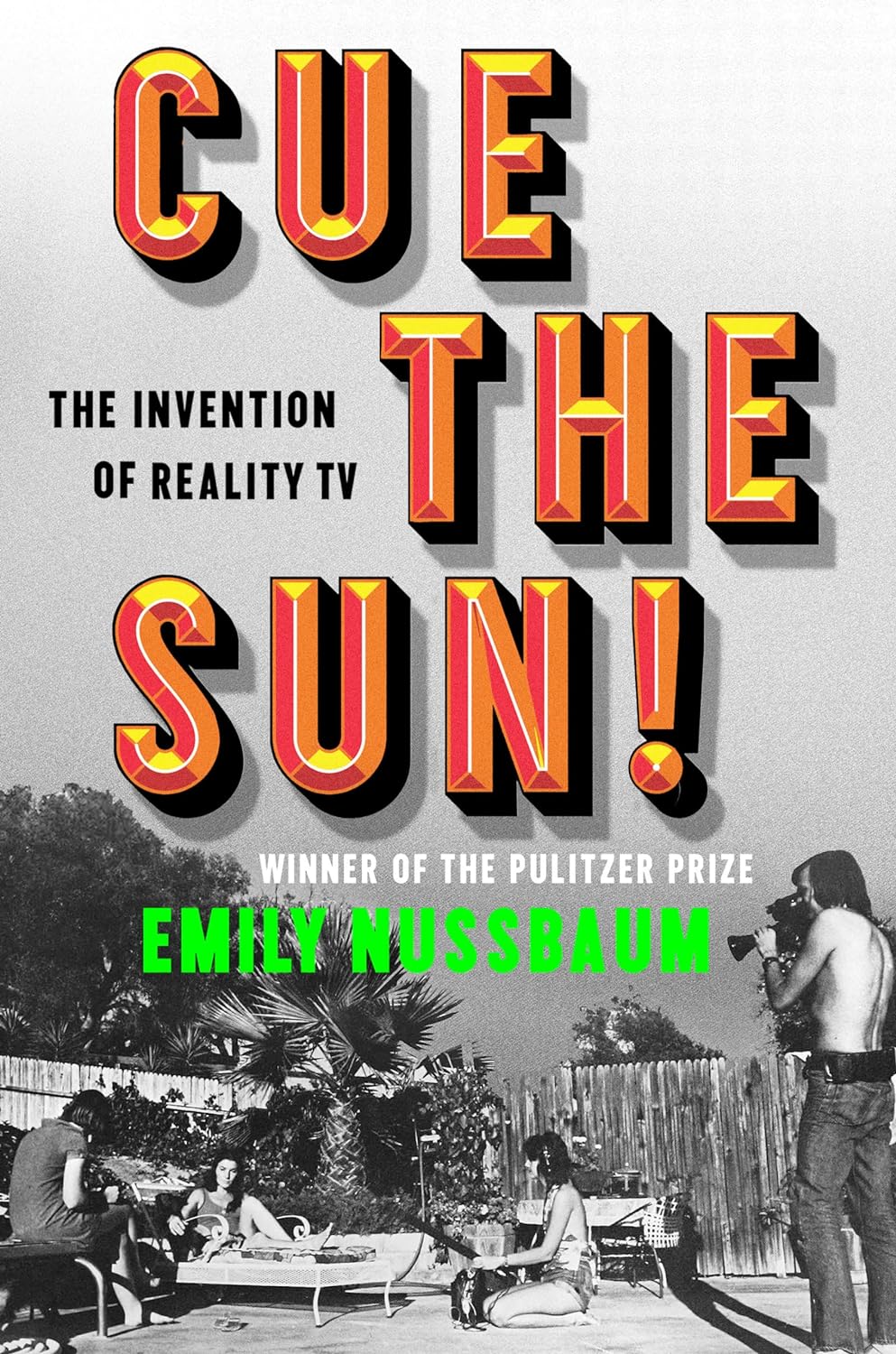
Book Review: Cue the Sun! The Invention of Reality TV by Emily Nussbaum

Title: Cue the Sun! The Invention of Reality TV
Author: Emily Nussbaum
Publisher: Random House
Publication date: June 25, 2024
Length: 464 pages
Genre: Non-fiction – pop culture/entertainment
Source: Library
Rating:

Rating: 4 out of 5.

Who invented reality TV, the world’s most dangerous pop-culture genre, and why can’t we look away from it? In this revelatory, deeply reported account of the rise of “dirty documentary,” Emily Nussbaum unearths the surprising origin story of the genre that ate the world, as told through the lively voices of the people who created it. At once gimlet-eyed and empathetic, Cue The Sun! explores the morally charged, funny, and sometimes tragic consequences of the hunt for something real inside something fake.

Nussbaum traces four paths of reality innovation—game shows, prank shows, soap operas, and clip shows—that united in the Survivor format, sparking a tumultuous Hollywood gold-rush. Along the way, we meet tricksters and innovators—from the icy Allen Funt to the shambolic Chuck Barris; Cops auteur John Langley; Bachelor mastermind Mike Fleiss; and Jon Murray, the visionary behind The Real World—along with dozens of crew members and ordinary people whose lives became fodder for the reality revolution. We learn about the tools of the trade—like Candid Camera’s brilliant “reveal” and the notorious Frankenbite, a deceptive editor’s best friend—and the moral outrage that reality shows provoked. But Cue The Sun! also celebrates what made the genre so powerful: a jolt of authentic emotion.

Through broad-ranging reporting, Nussbaum examines seven tumultuous decades, exploring the celebreality boom, reality TV as a strike-breaker, the queer roots of Bravo, and the dark truth behind The Apprentice. A shrewd observer who cares about television, she is the ideal voice for the first substantive cultural history of the genre that has, for better or worse, made America what it is today.

When I first heard about Cue the Sun! (which references a line from The Truman Show, in case you’re wondering), I figured I’d pick it up and just read the chapter about Survivor. But lo and behold, once I had this book in my hands, I couldn’t resist starting at the beginning and reading straight through to the end.

Author Emily Nussbaum masterfully traces the history of reality TV, from its early days catching ordinary people on camera — making real people points of fascination, but also, often mockery or scorn. We may think of shows like Candid Camera as some sweet piece of nostalgic fluff, but what I learned from this book is how subversive — and frequently nasty — these hidden camera pranks could be. Today, we accept that cameras are everywhere, but just imagine how shocking the idea was at the time!

Cue the Sun! covers reality TV history through all its various permutations, from clips shows (like America’s Funniest Home Videos) to game shows (The Newlywed Game), real-life crime (Cops), and talent competitions (The Gong Show).

Survivor was the true game-changer, when reality competitions blew up seemingly overnight. It’s fascinating to read about the creation of Survivor and the evolution of the first season. Now, everyone who plays Survivor knows how to play Survivor… but then, the contestants were largely making it up as they went along.

After Survivor, reality was huger than ever, with mega-hits such as the Bachelor franchise, Real Housewives and Kardashians, American Idol and countless other competitions dominating the airwaves. Cue the Sun! lays out how one phase led to another, and shows the wheeling and dealing, the seediness and invasiveness, as well as the creativity and innovation behind the scenes of it all.

The book also makes plain what anyone who watches reality TV knows — the cameras may catch people in the moment, but the producers manipulate what viewers see, both via editing after the fact and through questions, prompts, coaching and instruction as the action unfolds during filming. Even though it’s obvious that this is how these shows get made, the intensity and pervasiveness of the manipulation, as shown in Cue the Sun!, can feel very unsettling to read about. As the book points out, over and over again, we’re not watching actual reality — what we see is a curated, filtered, carefully assembled product that mimics some form of reality.

The final chapter of Cue the Sun! gets pretty dark, as it focuses on The Apprentice. It’s fascinating and disturbing to read about the creation and development of the show, and how the show is largely responsible for the public platform that led all the way to the Presidential race of 2016 and beyond.

That was the taboo truth about The Apprentice, in the end—the quality that made it more impressive, not less. Anyone could rebrand a mediocre businessman, some small-timer in need of a glow-up. But taking a failed tycoon who was a heavily in hock and too risky for almost any bank to lend to, a crude, impulsive, bigoted, multiply-bankrupt ignoramus, a sexual predator so reckless he openly harassed women on his show, then finding a way to make him look attractive enough to elect as the president of the United States? That was a coup, even if no one could brag about it.

Throughout the book, it’s interesting to see how the participants and players on reality shows have changed. At the genre’s beginning, it spotlighted real people’s lives as captured on camera. As the genre evolved into game play, constant surveillance, confessionals, and more, real people eagerly auditioned for reality TV, knowing that reality TV celebrity is now a career path. The author includes interviews from many reality contestants — some went back to “real” (ordinary, non-Hollywood lives) after their moments in the spotlight, but many pursued either further on-camera reality options, worked behind the scenes on other shows, or spent time on the fan circuit.

Cue the Sun! is a fascinating read. I don’t watch an enormous amount of reality TV (I’ve never watched The Bachelor or any of the “celebreality” shows currently on the air), but as a fan of Survivor and The Amazing Race, I found it so eye-opening to see where this TV trend began and how it’s developed over time.

Reading note: Don’t be put off by the page count! There’s about 50 pages or so of notes, bibliography, and an index at the end. I found Cue the Sun! a fast, absorbing read.

Want to know more? Check out these reviews:

Book Review: The True Love Experiment by Christina Lauren

Title: The True Love Experiment
Author: Christina Lauren
Publisher: Gallery Books
Publication date: May 16. 2023
Length: 416 pages
Genre: Contemporary fiction/romance
Source: Library
Rating:

Rating: 4.5 out of 5.

Sparks fly when a romance novelist and a documentary filmmaker join forces to craft the perfect Hollywood love story and take both of their careers to the next level—but only if they can keep the chemistry between them from taking the whole thing off script.

Felicity “Fizzy” Chen is lost. Sure, she’s got an incredible career as a beloved romance novelist with a slew of bestsellers under her belt, but when she’s asked to give a commencement address, it hits her: she hasn’t been practicing what she’s preached.

Fizzy hasn’t ever really been in love. Lust? Definitely. But that swoon-worthy, can’t-stop-thinking-about-him, all-encompassing feeling? Nope. Nothing. What happens when the optimism she’s spent her career encouraging in readers starts to feel like a lie?

Connor Prince, documentary filmmaker and single father, loves his work in large part because it allows him to live near his daughter. But when his profit-minded boss orders him to create a reality TV show, putting his job on the line, Connor is out of his element. Desperate to find his romantic lead, a chance run-in with an exasperated Fizzy offers Connor the perfect solution. What if he could show the queen of romance herself falling head-over-heels for all the world to see? Fizzy gives him a hard pass—unless he agrees to her list of demands. When he says yes, and production on The True Love Experiment begins, Connor wonders if that perfect match will ever be in the cue cards for him, too.

The True Love Experiment is the book fans have been waiting for ever since Fizzy’s debut in The Soulmate Equation. But when the lights come on and all eyes are on her, it turns out the happily ever after Fizzy had all but given up on might lie just behind the camera.

Christina Lauren books can be counted on to deliver zippy dialogue, great chemistry, entertaining characters, and unexpected plot points… and The True Love Experiment exceeds expectations with all of these! In fact, The True Love Experiment might just be my favorite Christina Lauren book yet.

Fizzy Chen is a character we’ve met before — she’s the main character’s zany best friend in The Soulmate Equation. Apparently, fans have been clamoring for more Fizzy ever since the earlier book, and now she gets her own chance to shine!

Fizzy is a very successful romance author in her late 30s, who’s reveled throughout her adulthood in her casual, open-to-anything approach to sex and dating. But as The True Love Experiment opens, she’s realizing that she may finally have just plain run out. She’s never been in love, and (in a very funny scene) she explains to best friend Jess that she may in fact have now dated every single man in San Diego. With these eye-opening revelations, Fizzy hits a major writer’s block — how can she write compelling romance when she’s not sure she actually believes in it anymore?

We also meet Connor, a gorgeous guy (whom Fizzy initially categorizes as romance tropes Hot Millionaire Executive, Hot Brit, and DILF) who’s a completely devoted divorced dad and the producer of environmentally-conscious documentaries. When his boss gives him an ultimatum — produce a money-making new dating show to save the production company, or be out of a job — Connor has to weigh his professional integrity against the reality that if he loses this job, he’ll have to move to LA to find work, which means giving up his role in his daughter’s daily life. Reluctantly, he commits to the dating show concept.

When Fizzy and Connor meet, they initially rub each other the wrong way… but we know that won’t last, because there are instant sparks amidst the bickering and button-pushing. Between them, almost as a dare to see who can come up with the craziest concept, they develop a framework for the new show: Fizzy will be the star, and the show will cast “heroes” who fit into defined romance archtypes — the bad boy, the hot nerd, the cinnamon roll, the one who got away. Fizzy will date each of them, the audience will vote on her true soulmate each week and determine who gets eliminated, and in the end, the audience will select a winner who’ll receive a cash prize. But there’s another twist: Fizzy and all contestants will also take the DNADuo test (see The Soulmate Equation for more info), a genetic screening test that identifies relationship compatability and defines matches on a scale (Base, Silver, Gold, Diamond, etc). At the show’s finale, the DNADuo match results between Fizzy and the finalists will be revealed, and then Fizzy will get to decide who she truly wants to be with.

As you might expect, all does not go according to plan. How is Fizzy supposed to fall in love with one of the show’s heroes when she’s distractingly attracted to Connor? The more time they spend together, the clearer it becomes that this isn’t just a matter of physical connection — but falling in love isn’t an option when (among other reasons) it would breach her contract with the show.

Okay, that’s the basic plot outline. What that doesn’t tell you is the insanely great connection between Fizzy and Connor, the absolutely hilarious dialogues that occur throughout the book, Fizzy’s amazingness as a person, and how utterly loving Connor is, as a dad, a friend, and a person who’s mad for Fizzy.

The book is told through both Fizzy and Connor’s POVs, so we know what’s going on inside and out. There’s the obligatory big obstacle that seems to tear the two apart late in the book, and I was very frustrated at first — but getting to hear from both characters why the incident blew up the way it did, how it triggered them and what past issues it brought up, and how internally conflicted they were in the aftermath helped me accept what had happened, even if I disagreed with how both of them behaved in the moment.

The show itself is lots of fun, although I question whether a show like this would be as successful in real life as it is in the story. The show starts with eight heroes and unfolds over just six episodes — is that really enough time to find true love? (OK, I need to admit here that I have never watched a single episode of The Bachelor or other dating shows, so I take anything of this sort with heaps of grains of salt).

I listened the audiobook, which has different narrators for Fizzy and Connor, and they were both wonderful! The downside of listening to the audiobook is not being able to highlight the parts that made me laugh out loud (there were plenty!) and share them here.

The True Love Experiment is so engaging, charming, and funny. I love that the characters are clearly amazing people, and that we get to see them in other roles (parent, aunt, best friend, daughter) to get a view of their lives outside the relationship as well. Fizzy and Connor are each fantastic on their own, and their connection together is not only full of physical chemistry but also based on emotional honesty and empathy.

Overall, The True Love Experiment is a joyful, entertaining read, with plenty of humor but also sincerity and intelligence. Highly recommended!

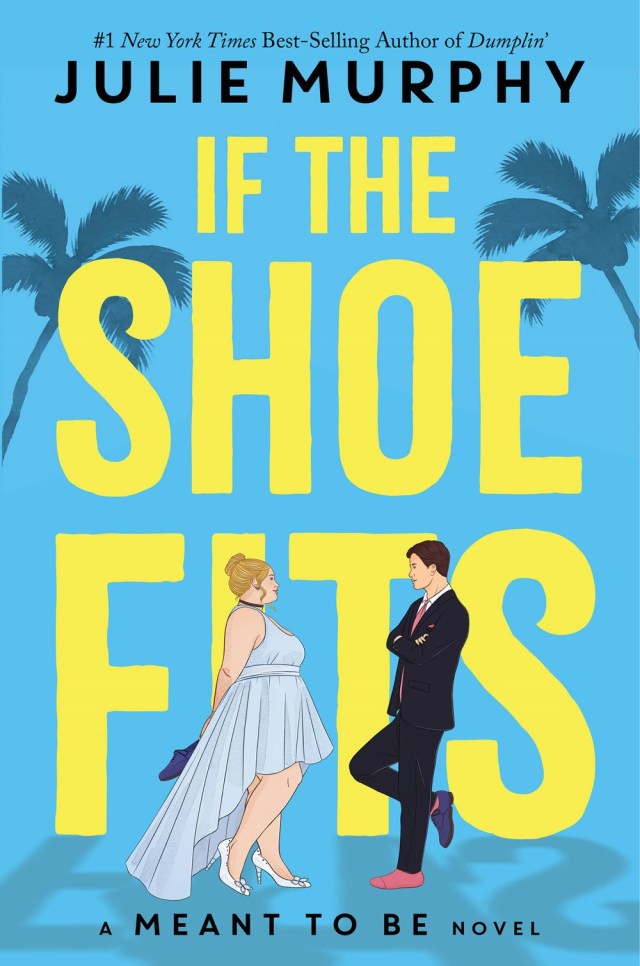
Audiobook Review: If The Shoe Fits by Julie Murphy

Title: If the Shoe Fits
Series: Meant to Be
Author: Julie Murphy
Narrator: Jen Ponton
Publisher: Hyperion Avenue (Disney)
Publication date: August 3, 2021
Print length: 304 pages
Audio length: 9 hours, 51 minute
Genre: Contemporary romance
Source: Library
Rating:

Rating: 4 out of 5.

If the shoe doesn’t fit, maybe it’s time to design your own.

Cindy loves shoes. A well-placed bow or a chic stacked heel is her form of self-expression. As a fashion-obsessed plus-size woman, she can never find designer clothes that work on her body, but a special pair of shoes always fits just right.

With a shiny new design degree but no job in sight, Cindy moves back in with her stepmother, Erica Tremaine, the executive producer of the world’s biggest dating reality show. When a contestant on Before Midnight bows out at the last minute, Cindy is thrust into the spotlight. Showcasing her killer shoe collection on network TV seems like a great way to jump-start her career. And, while she’s at it, why not go on a few lavish dates with an eligible suitor?

But being the first and only fat contestant on Before Midnight turns her into a viral sensation—and a body-positivity icon—overnight. Even harder to believe? She can actually see herself falling for this Prince Charming. To make it to the end, despite the fans, the haters, and a house full of fellow contestants she’s not sure she can trust, Cindy will have to take a leap of faith and hope her heels— and her heart—don’t break in the process.

Best-selling author Julie Murphy’s reimagining of a beloved fairy tale is an enchanting story of self-love and believing in the happy ending each and every one of us deserves. 

If you’re looking for a feel-good modern-day fairy tale, If the Shoe Fits might be a perfect… fit. (Sorry.)

In 2020, Disney’s publishing arm announced its new series of fairy tale retellings, aimed at adult readers. With different authors writing the different installments, each book will retell a classic fairy tale as a contemporary romance. If the Shoe Fits is the first in the Meant To Be series… and I have to say, after reading this one, I’m definitely on board for more!

If the Shoe Fits is very funny, but also surprisingly emotional in key ways. Cindy is a recent graduate of the Parsons School of Design in New York, but after barely squeaking by on her final project, she has no immediate job or career prospects. She returns to LA to live with her stepmother and extended family, planning to nanny for the summer and hit pause for a bit… but then reality TV upends her plans.

[Side note: Why are there so many romance novels framed around TV dating shows these days? I swear this is at least the 4th I’ve read… and I’ve never watched a single episode of The Bachelor!]

In one of the lovely twists on the classic Cinderella story, Cindy’s stepmother and stepsisters are not evil! In fact, her stepmother Erica is loving and supportive, and her stepsisters Anna and Drew are sweet and love Cindy unstintingly. After Cindy’s father’s sudden death (while Cindy was in high school), Erica moved forward with the surrogacy they’d been planning, so there are also three-year-old triplets for Cindy to adore.

Erica is the creator and producer of the biggest reality TV dating show, Before Midnight. Cindy’s always loved the glamor and romance of the show, but she never could have conceived of being on it herself. When the new season loses contestants right before filming, Anna and Drew are called in as subs, and Cindy decides to take a chance and ask to be included as well. As an aspiring designer with a killer shoe collection, what better way to get her name and her designs out into the world, even if this is way outside her comfort zone? The $100,000 prize doesn’t hurt either — if she can’t find a job, maybe she’ll launch her own brand!

Cindy doesn’t hesitate to describe herself as fat, although it makes her non-fat family and friends cringe. She’s plus-size, and she knows it. She’s tired of going shopping with her sisters and never having options in her size. She’s tired of being told she’s “brave” for wearing stylish or sexy clothes. She’s tired of being viewed as less because of the shape of her body, and she’s tired of being invisible. Go, Cindy!

The actual reality TV experience is just as silly as you’d expect, with 20 women competing for love, although most have reasons for being on the show that have nothing to do with true romance. Everyone wants their moment in the spotlight, and between the influencers and walking memes and mean girls, it’s hard to imagine that love has anything to do with it.

The twist is that this season’s suitor is someone Cindy had met randomly weeks earlier, when the two seemed to share an instant connection. Suddenly, the fake reality dating show becomes a lot more real for Cindy… could he possibly feel what she’s feeling? And what if he doesn’t actually choose her in the end?

I mentioned the emotional aspects of the story. Cindy is still deeply grieving her father’s loss. Her memories of her father and all the ways in which her grief has affected her life are truly touching. The weight of the loss hit her fresh her senior year, which is why she struggled to graduate and felt that she’d lost her creative spark. As she competes on Before Midnight, she also starts to deal more directly with what she’s experienced, how her grief has shaped her last few years, and what reconnecting with her creativity might possibly look like.

I really appreciated the sensitivity with which all this is portrayed, as well as the depiction of Cindy herself as a funny, attractive, determined woman who refuses to feel shame or let others hold her back because of her body size.

I don’t mean to make this sound like serious literature — overall, the tone is funny and sweeet, and there are plenty of silly escapades to laugh over. Surprisingly, Cindy even manages to find true friends among the other contestants, even as the competition heats up, and I loved the idea that women can connect and be kind and supportive to one another even in the weirdest pressure-cooker situations.

The audiobook is a delight. The narrator does a great job with Cindy, as well as making the other Before Midnight contestants and producers come alive as individuals with distinct voices. Also, the dialogue can be very funny, making the audiobook super entertaining.

The next book in the series will be released in May — a Beauty and the Beast retelling (!!) written by Jasmine Guillory (!!), set in the world of publishing and authors (!!). I am so there for it.

Meanwhile, check out If the Shoe Fits! Just a really fun reading/listening experience.

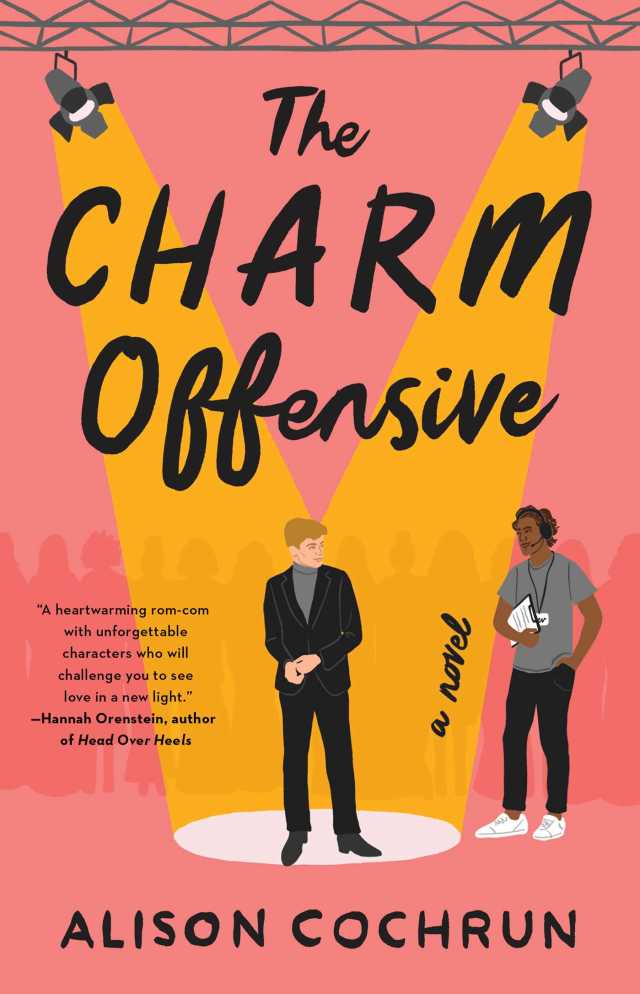
Book Review: The Charm Offensive by Alison Cochrun

Title: The Charm Offensive
Author: Alison Cochrun
Publisher: Atria Books
Publication date: September 7, 2021
Length: 358 pages
Genre: Contemporary romance
Source: Library
Rating:

Rating: 4 out of 5.

Dev Deshpande has always believed in fairy tales. So it’s no wonder then that he’s spent his career crafting them on the long-running reality dating show Ever After. As the most successful producer in the franchise’s history, Dev always scripts the perfect love story for his contestants, even as his own love life crashes and burns. But then the show casts disgraced tech wunderkind Charlie Winshaw as its star.

Charlie is far from the romantic Prince Charming Ever After expects. He doesn’t believe in true love, and only agreed to the show as a last-ditch effort to rehabilitate his image. In front of the cameras, he’s a stiff, anxious mess with no idea how to date twenty women on national television. Behind the scenes, he’s cold, awkward, and emotionally closed-off.

As Dev fights to get Charlie to connect with the contestants on a whirlwind, worldwide tour, they begin to open up to each other, and Charlie realizes he has better chemistry with Dev than with any of his female co-stars. But even reality TV has a script, and in order to find to happily ever after, they’ll have to reconsider whose love story gets told.

In this witty and heartwarming romantic comedy—reminiscent of Red, White & Royal Blue and One to Watch—an awkward tech wunderkind on a reality dating show goes off-script when sparks fly with his producer.

Full disclosure: I have never, ever watched an episode of The Bachelor. I don’t believe people can find true love via a TV reality dating show. But, grudgingly, I suspended my disbelief in order to read The Charm Offensive, and ended up enjoying it quite a bit.

In The Charm Offensive, Charlie makes for an unpredictable and unconventional “prince” for the fairy-tale based dating show Ever After, supposedly the most successful and popular dating show on TV. Charlie is a former tech genius who was fired from his own company. His publicist thinks putting him out there as a romantic lead on a hugely-watched show will rehabilitate his image… and hopefully, make him seem employable again when it’s all over. Are you feeling skeptical about this plan? Yeah, me too.

Meanwhile, Dev is a production team member of Ever After, tasked with “handling” the twenty women cast as potential love interests for Charlie. But after the initial filming attempt goes horribly, with Charlie barely able to talk on camera, Dev is reassigned to be Charlie’s handler. It’s Dev’s job to prep Charlie for the grueling weeks ahead, getting him into prince mode and making sure he’s ready to be on camera and at the center of attention.

The more time Dev and Charlie spend together, the more their chemistry and connection grow… but not without challenges. Charlie, it becomes clear early on, suffers from debilitating panic attacks and OCD, and he can barely keep things together when he’s under stress, which is pretty much constant on the set of Ever After. Dev deals with recurring depression himself, but his preferred persona is “Fun Dev” — he’s always, always upbeat and on when he’s around his coworkers and the cast, not wanting anyone to see beyond the surface.

Dev is out and proud, but he’s concerned about his growing attraction to the gorgeous Charlie. Charlie is… enigmatic. Because of his differences, Charlie has never seen himself as worthy of love, and he’s never explored romance or sexuality. As he spends time with the women competing for his heart, as well as spending almost 24/7 with Dev, he starts to acknowledge the attraction and the feelings he has — all for Dev. Yet his contract with the show requires him to continue playing out the romantic fantasy with the women competing to be his princess, and as for Dev, his career is on the line if he allows himself to act on his feelings for Charlie.

Charlie and Dev are very sweet together, and they share moments of vulnerability and honesty, as well as some absolutely swoon-worthy kisses. At first glance, the premise of The Charm Offensive makes this book seem like it’ll be mostly airy and light, but there’s actual depth here. Both Charlie and Dev have mental health issues to address, and Charlie is someone who’s neuro-atypical in a world that doesn’t quite know what to make of him or how to make room for him.

Additionally, Charlie hasn’t had an opportunity in his life to ever really consider love or orientation, and it’s refreshing to see the characters in this book talk about the spectrum of ways a person can be, discussing not just straight vs gay, but also delving into demisexuality, being aro/ace, graysexual, and more. There are some deeper moments of soul-searching that enable the characters to move beyond easy definitions and labels and make them feel like well-rounded, well-developed individuals.

The concept of Ever After is so ridiculous that it’s actually really funny, with the contestants competing in quests like rescuing Charlie from a tower and kissing frogs, the prince handing out tiaras at the weekly crowning ceremonies, and even the absolutely vital moment of riding up on a white horse. Still, the nagging little logical part of my brain couldn’t help thinking that there is actually no way that a show like this would cast someone like Charlie, who’s never been on camera, can’t speak publicly, is unbelievably awkward, and has just no game when it comes to the women. I couldn’t buy the idea that the show would gamble on him as its lead — it makes no sense, and it also makes no sense that this is the best idea Charlie’s publicist has for rehabbing his image and getting him another job in tech.

Putting that aside, there is a lot to appreciate and enjoy about The Charm Offensive. The writing is often very funny:

These are not appropriate morning-yoga thoughts. He tries to focus on things that calm him: Excel spreadsheets, quiet libraries, one-thousand-piece jigsaw puzzles, 90-degree angles.

Dude, except for the 90-degree angles, I so relate.

Also puzzle-themed, I actually think Charlie could be my soulmate in another universe:

“This is your idea of a romantic time?”

… Dev asked Charlie what he would do with his ideal afternoon. So now they’re working on a jigsaw puzzle while watching the first season of The Expanse…

Most of all, Dev and Charlie are both great characters, and I loved seeing their connection grow. This is a sweet, funny, and thoughtful look at love and communication and choosing happiness. The geeky sci-fi and puzzle bits are just icing on the cake!

TV Time: What’s Lisa watching? Thoughts on a disappointing season of Survivor.

Oh, Survivor. What did you do to my show this season?

I can’t call myself a superfan. There were bunches of seasons that I just didn’t watch. But I’ve been back in for the last 8 – 10 seasons, and it’s been a blast. There’s just something about Survivor. The personalities, the scheming, the strategizing, the challenges — it’s a suprisingly entertaining little social experiment, with stakes of $1 million dollars each time a batch of new players hits the beach.

The 38th season of Survivor wrapped up this past week, and geez — what a letdown. In some ways, the season was doomed from the start due to a weird and dull-but-infuriating theme. Here are some thoughts on the highs and lows, and where I think the season really went wrong.

The full cast competes on SURVIVOR: Edge of Extinction when the Emmy Award-winning series returns for its 38th season, Wednesday, Feb. 20 (8:00-9:00PM, ET/PT) on the CBS Television Network. Photo: Robert Voets/CBS Entertainment ©2018 CBS Broadcasting, Inc. All Rights Reserved.

New and returning players. This season, we had 14 new players and 4 returning players. Why, Survivor, why? The four returnees are all relatively recent players, all very popular with fans despite never winning the game. And I mean, it’s nice to see them again — but who decided it would be a good idea to mix new and returning this way? The new players, while some quite starstruck, nevertheless pretty immediately banded together to decide to get rid of the returnees. They were seen as big threats, and the general feeling seemed to be, “they had their shot already — this is OUR time.” Two returnees were placed on each of the two tribes, making them outnumbered from the start, and despite some good alliance-building, they never really seemed to have a shot at making it to the end.

I like seeing returning players (well, some of them, at any rate), but not in such a weird ratio to new. I’d much rather watch an all-returnees season, or a fans vs favorite set-up, where at the least the numbers are even going into the game. I couldn’t really figure out the rationale here, and it ended up seeming like a waste of good, exciting players to put them in this no-win situation.

The returning players

Edge of Extinction was a disaster. The concept here is a new one for Survivor. Instead of being out of the game once voted out, as expected, each player who’s voted out has a choice: Go home (to Ponderosa) and kick back until the game is over, or grab a torch and get in the boat to the Edge of Extinction. All of the players voted out chose the torch, naturally, and then they just sat around on a bare island, waiting… and waiting… and waiting. The voted-out players had a chance to compete to get back in the game mid-way through, and then again toward the end, when only a handful of players remain. And lo and behold, the guy who ended up winning the game spent 28 out of 39 days on the Edge of Extinction. So how did he win the game, and was it fair?

In my view, no, it wasn’t fair. Chris, the winner, was the 3rd person voted out of the game. He then had all those weeks to hang out with all of the other voted-out players, all of whom ended up being the Survivor jury. So he had a chance to make friends, resolve any hurt feelings, not compete, and basically just lay low, meanwhile scooping up all sorts of intel that ended up giving him an edge when he did win his way back in.

No disrespect to Chris — he’s not the one who created the concept. But it does seem like a bizarre twist, and one that gives an edge to someone who actually played much less than the other remaining contestants. And by playing less, he didn’t piss people off, have to compete, deal with alliances or betrayals, or any of the other key elements of game play. It just doesn’t make sense to me.

The final three

On top of the fairness question, Edge of Extinction had a strangely diluting impact on the TV show itself. Most episodes featured some amount of check-in time with the voted-off players, who really weren’t doing anything of note, which ended up taking time away from the action amongst the players who were actually still in the game. At first, the twist seemed kind of cool… but once it became clear that there was nothing actually happening at Edge of Extinction, it became more and more clear that something was off about the entire concept.

They need to fix the final four elimination. A couple of seasons ago, the Survivor powers-that-be added a fire-making competition to determine the final three. At the very last immunity challenge, when there are four players left, the winner automatically goes to final three. He/she then gets to pick who also goes to final three, and the remaining two have to compete to make fire, with the winner getting the 3rd spot in the finals.

The problem is, it’s a dumb way to figure out the finalists. In seasons where there’s someone who’s a clear favorite to win, unless that person wins that last immunity challenge, there’s no way anyone (with an eye on winning a million dollars) will bring that person to the end. And fire-making is a crapshoot. Someone could be a great fire maker, but just have an off day or maybe the wind is blowing wrong. It’s just so disappointing to see someone play a truly great game and get knocked out right before the end.

That’s what happened here. Chris, returned from Edge of Extinction, won the final immunity. The other three contestants included Rick Devens, the clear favorite to win, and two others, Gavin and Julie, who made almost no impression on me with their gameplay. Chris made the risky decision to give his immunity to Gavin and go up against Rick in the fire-making, knowing that (a) if he won, it would be a big move for his Survivor resume and increase his odds of winning the ultimate prize, and (b) if he lost, well, he would have lost to Rick in the final anyway, so why not chance it?

The player most likely to win… until he got knocked out in the fire-making competition.

Chris made a smart move — but I still hate it. At four, it feels like too much power in the hands of the person who won the last immunity challenge. And if that particular challenge happens to be one that the best overall player isn’t suited to, they’re pretty much guaranteed to be eliminated. Look what happened to Malcolm the first time he played — if he’d made it past that last challenge, he’d have won the game.

My suggestions? Try a different approach. Maybe make the remaining three battle it out three ways, with the top two finishers moving to the finals. Or maybe allow hidden immunity idols to still be played at final four, offering one more reward to a person who hustled to find it. I just can’t stand seeing finals where the strongest player has been pushed out, so we end up with lackluster players who made it to the end because no one saw them as dangerous enough to vote out.

♦♦♦♦♦♦

Will I keep watching Survivor? You betcha. But I hope the show runners take steps to fix some of the problems from this season.

For anyone who watched, what did you think of this season? Did you think the right person won? Hit me up in the comments!