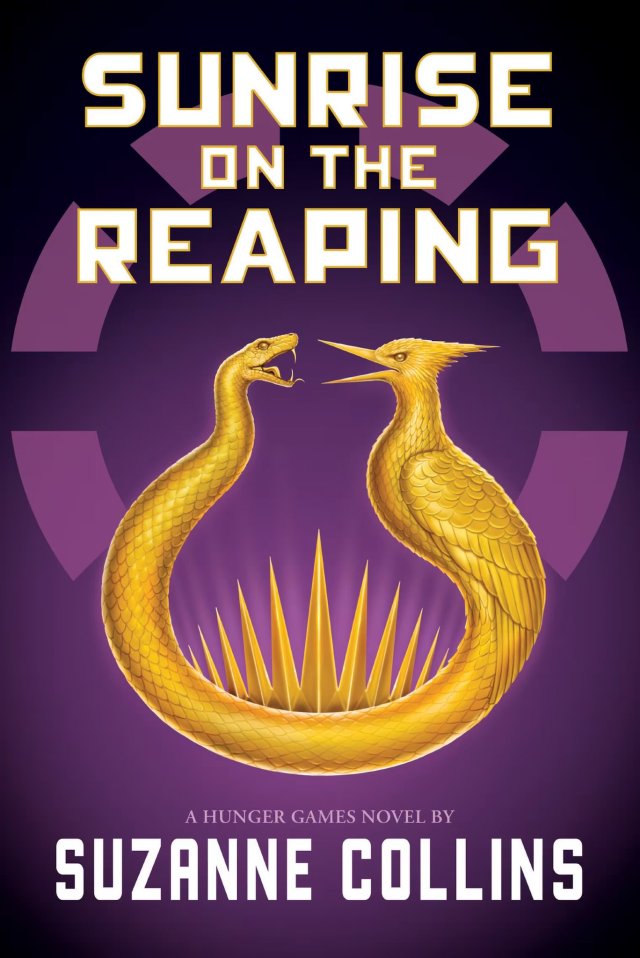
Book Review: Sunrise on the Reaping by Suzanne Collins

Title: Sunrise on the Reaping
Author: Suzanne Collins
Publisher: Scholastic
Publication date: May 18, 2025
Length: 382 pages
Genre: Young adult
Source: Purchased
Rating:

Rating: 4.5 out of 5.

When you’ve been set up to lose everything you love, what is there left to fight for?

As the day dawns on the fiftieth annual Hunger Games, fear grips the districts of Panem. This year, in honor of the Quarter Quell, twice as many tributes will be taken from their homes.

Back in District 12, Haymitch Abernathy is trying not to think too hard about his chances. All he cares about is making it through the day and being with the girl he loves.

When Haymitch’s name is called, he can feel all his dreams break. He’s torn from his family and his love, shuttled to the Capitol with the three other District 12 tributes: a young friend who’s nearly a sister to him, a compulsive oddsmaker, and the most stuck-up girl in town. As the Games begin, Haymitch understands he’s been set up to fail. But there’s something in him that wants to fight . . . and have that fight reverberate far beyond the deadly arena.

We all know about the District uprisings that finally overthrew the Capital and freed Panem of the horrors of the Hunger Games… but 25 years earlier, a tribute named Haymitch Abernathy did his best to break the Games. He failed… but as author Suzanne Collins shows us in Sunrise on the Reaping, his story is worth telling.

I was skeptical, to be honest. Do we need another Hunger Games book? About Haymitch, of all people? When we meet Haymitch in the very first book in the series, he’s the District 12 drunkard, a pathetic former victor of the Hunger Games who’s lived alone in his Victor’s Village house all these years, failing each year to keep to keep any of the tributes he mentors alive, and doing his best to drink himself to death.

Eventually, he gets his act together enough to actually be of use to Katniss and Peeta, and later plays a role in the rebellion… but that’s all later. How did Haymitch, seemingly so pathetic when we meet him, manage to win his Hunger Games in the first place?

We never, none of us, had any choices.

In Sunrise on the Reaping, we find out. At age 16, Haymitch works hard to support his widowed mother and younger brother by doing odd jobs for the local bootlegger. He’s strong, devoted to his family, and madly in love with his Covey girlfriend, Lenore Dove. His birthday is never a happy one, as it coincides with the day of the reaping, and this year’s reaping promises to be especially bad: It’s the 50th Hunger Games, the Quarter Quell, and to mark the significant anniversary, the reaping will select not two tributes per District, but four. Haymitch knows he has a high chance of being selected, but initially he appears to have been spared — until an unpredictable event at the reaping forces him into the games anyway.

Haymitch knows he’s doomed. Only one person from District 12 has ever won the Hunger Games, although no one actually knows who this was — all records have disappeared. (We know, of course, that this was Lucy Gray Baird, victor of the 10th Hunger Games, as depicted in The Ballad of Songbirds and Snakes). As Haymitch leaves his family, friends, and District, Lenore Dove asks him to do whatever he can to put an end to the Games, once and for all.

“And that’s part of our trouble. Thinking things are inevitable. Not believing change is possible.”

“I guess. But I can’t really imagine the sun not rising tomorrow.”

A crease forms between her eyebrows as she puzzles out a response. “Can you imagine it rising on a world without a reaping?”

The best outcome Haymitch had envisioned was a quick death, to spare his family the agony of watching him die in some prolonged, awful way, and then a reunion with Lenore Dove in the afterlife — but now, he’s determined to fulfill the mission she’s set for him. If he can’t survive, at least he can try his best to break everything before his death. Maybe, just maybe, he can find a way to be disruptive enough to end the Hunger Games for good.

(We know he can’t, since we know the Games continue for another 25 years… )

As we follow Haymitch from District 12 to the Capital and then into the arena, we see a young man who’s very different than the bitter, ruined adult we know from the earlier books. Haymitch is determined but realistic. He knows he has no chance against the Careers, the tributes from the wealthier districts who train all their lives for a shot at Hunger Games glory. But Haymitch is not without skills of his own, and he’s caring to a fault: As he meets the weaker, more vulnerable tributes, he takes on the role of protector, and becomes desperate to find a way to shield his band of allies for as long as possible.

Alas, as we all know, the Hunger Games only ends with death for all but one of the tributes. As the Games in Sunrise on the Reaping get underway, the violence and death toll mount at a speed that’s inevitable. Here’s where the book feels a bit weak: Sure, it’s compelling and there are bursts of intensity and action — but, while the window dressing is different from the version of the Games we saw in The Hunger Games and Catching Fire, it’s still ultimately an arena full of traps, an environment designed to kill in horrific ways, and teens who can only survive by murdering one another. It’s certainly not boring… but it’s also not new.

Sunrise on the Reaping does fill in some blanks for devoted Hunger Games fans. It finally allows us to connect the dots and understand who Haymitch was before the main trilogy of books, because that’s always been a bit hard to fathom — we know he’s the only identified victor from District 12, but it’s impossible to picture him as anything but the wreck he is when we meet him. How could he possibly have won?

The Haymitch we meet here is someone to be admired and pitied. We see the cruelty to which he’s subjected as everything and everyone he loves is taken from him — but also the mission which Lenore Dove assigns to him, which he can’t fully abandon even after everything is lost.

With that, she condemns me to life.

It is fascinating to see the origins of certain elements of the later versions of the Games, as well as earlier generations of main characters’ families. On the other hand, seeing what’s become of Coriolanus Snow, now fully embodying the cruel, murderous persona of the Panem President as we first met him in the original trilogy, has its own impact. We knew, of course, how Snow would end up — but for brief glimmers in Ballad, we also got to see a hint of what else he might have been, had the world been just a bit different.

Adding to the depth of Sunrise on the Reaping is its exploration of propaganda and how authoritarianism thrives in the absence of a free press. Haymitch has several big moments of defiance that he expects to be captured for the rest of Panem to see, but of course, President Snow’s approved versions show nothing of the sort. Adding to the horror of all of Haymitch’s tragic losses is the way the televised record twists his actions and shreds his dignity and honor. When the media is under the tight control of the rulers, rebellion can be squashed simply by not showing it.

Lastly, I’ll mention the bonds among the tributes. When the weaker, non-Career districts recognize that individually, they don’t stand a chance, they form an alliance based on strength in numbers. Tactically, this is smart — and it also gives readers the opportunity to see a different way of surviving in the Games, not by murdering every single person you meet, but by protecting the people you care about and forming genuine connections. Sure, they’re still all doomed, knowing the Gamemakers will only let one person out alive, but meanwhile, they’re able to compete with some sense of purpose and dignity.

Ultimately, I’m glad to have read Sunrise on the Reaping, but I still question how effective a prequel can ever really be. The book gives us insight into a chapter of Panem’s history that we hadn’t seen before, and lets us see a character’s tragic backstory, which helps make sense of his later trajectory. Still, the problem with prequels remains that the outcome is predetermined: We know Haymitch will be the victor, so any dangers are easy to discount. Others may die (and do) — but he won’t, and we know it.

I wonder whether this is it for the world of The Hunger Games, or if the author will continue to add prequels to fill in the blanks. The original trilogy’s ending wraps up the characters’ stories neatly, so I can’t see there being sequels taking place later in their lives… but who knows? I feel like the stories of Panem have been told, and told well, and don’t feel a need for more. Then again, that’s what I said prior to reading both Ballad and Sunrise, and ended up enjoying both quite a lot.

All in all, I’d say that if you’re a fan of The Hunger Games, it’s worth reading Sunrise on the Reaping. Despite my hesitation (and the problem of knowing the big-picture ending all along), it’s well worth the time to dive in and explore Haymitch’s story. And having read Sunrise, I’m tempted to go back and do a full re-read of the original books too.

The snow may fall, but the sun also rises.

Purchase links: AmazonBookshop.org
Disclaimer: When you make a purchase through one of these affiliate links, I may earn a small commission, at no additional cost to you.

Book Review: The Ballad of Songbirds and Snakes by Suzanne Collins

Title: The Ballad of Songbirds and Snakes
Author: Suzanne Collins
Publisher: Scholastic
Publication date: May 19, 2020
Length: 540 pages
Genre: Young adult
Source: Purchased
Rating:

Rating: 4.5 out of 5.

AMBITION WILL FUEL HIM.

COMPETITION WILL DRIVE HIM.

BUT POWER HAS ITS PRICE.

It is the morning of the reaping that will kick off the tenth annual Hunger Games. In the Capital, eighteen-year-old Coriolanus Snow is preparing for his one shot at glory as a mentor in the Games. The once-mighty house of Snow has fallen on hard times, its fate hanging on the slender chance that Coriolanus will be able to outcharm, outwit, and outmaneuver his fellow students to mentor the winning tribute.

The odds are against him. He’s been given the humiliating assignment of mentoring the female tribute from District 12, the lowest of the low. Their fates are now completely intertwined — every choice Coriolanus makes could lead to favor or failure, triumph or ruin. Inside the arena, it will be a fight to the death. Outside the arena, Coriolanus starts to feel for his doomed tribute… and must weigh his need to follow the rules against his desire to survive no matter what it takes. 

When the news first came out that a new Hunger Games book was on the way, 10 years after the release of Mockingjay, I knew I’d have to read it. And then, as the first synopses and excerpts starting coming out, I was probably as confused and nervous as all the other Hunger Games fans.

A book about President Snow? Really?

Did we really need this particular character’s backstory? And given what a horrible person he is, would a novel about his early years manage to satisfy readers or make us care?

Fortunately, Ballad (sorry, I’m just not going to keep typing out the full LONG title) exceeds expectations and shows that the talent of Suzanne Collins can make a man we all despise into a compelling lead character.

Coriolanus Snow is 18 years old when we meet him at the start of Ballad. It’s been ten years since the war ended, and he lives in his family’s luxurious home in the Capital. Or at least, it was luxurious once upon a time, when the Snow fortune was thriving and Coriolanus’s parents were still alive.

The war was brutal and cruel, and the streets of the Capital are still filled with the rubble left behind. The Snow family’s home is falling apart at the seams, and when District 13 was bombed into oblivion, ending the war, the Snow industries located there were also obliterated, leaving the once wealthy family destitute. Now, years later, Coriolanus lives in the shabby home with his elderly grandmother (referred to as the Grandma’am) and his cousin Tigris, where they subsist most days on cabbage soup.

Fortunately for Coriolanus, he’s a stellar student at the Academy, where his uniforms are provided and he’s guaranteed hot meals during the school day. He hides his poverty and hunger from everyone around him, determined to continue to portray himself and his family as upper crust, top tier, best of the bunch. After all, as he and Tigris reassure one another:

Snow lands on top.

This year, for the first time, Academy students are going to be given an exciting new assignment: Each of the top year students will be assigned as a mentor to a tribute in the Hunger Games. This is a chance for Coriolanus to shine. If he’s successful, if his tribute does well, he’s more likely to get the prizes and recognition that will get him a University scholarship. And his dreams definitely include University — the education and access will be necessary for his goal of restoring the Snow family to power, maybe all the way to the Presidency someday.

But first, he has to make sure his tribute does well. And it’s not looking so good. He’s assigned the girl tribute from District 12, the least prestigious assignment possible. And she’s an odd one — a girl dressed in poofy rainbow skirts with a beautiful voice and a magnetic presence, but clearly not a threat in any sort of way. Still, Coriolanus will have to work with what he’s given, and he begins to scheme and plan for how to push Lucy Gray Baird into the spotlight and into the public’s affection.

That’s a lot of synopsis, and there’s so much more to say, but I’ll stop here and talk about the pieces that really stood out for me in this book.

First, it’s truly fascinating to see life in the Capitol in the post-war years. In The Hunger Games trilogy, we only see the Capitol through Katniss’s eyes. It’s a cruel, spoiled place, full of pampered, shallow people, a place where other people’s suffering is entertainment for the masses.

Here in Ballad, the Capitol is a shelled, damaged city trying to rebuild and reestablish its absolute control. The black market is thriving, old families are starving and fading away, and social standing is the only possible avenue to regain what was lost.

The Hunger Games, ten years after their creation, are just one facet of the Capitol’s attempt to dominate the districts, and they’re pretty meager at that. The Games are held in a bombed-out sports arena, where the tributes are basically just dumped with a pile of weapons and left to kill one another. No high-tech tricks or elaborate sets, no cannons or anthems, not even any removal of bodies. The dead lie there until it’s all over, and it never does take very long.

What’s more, the tributes of these early Hunger Games don’t get any of the special preparation or luxury guest accommodations that Katniss experiences all those years later. They’re transported to the Capitol in cattle cars and housed at a cage at the zoo, given neither food nor water. It’s Coriolanus who draws attention to them, realizing that his tribute will benefit from having the public love her, finding ways to create interest and encouraging people to bring food to the caged tributes, who might otherwise starve to death before they ever enter the arena.

One of the truly fascinating aspects of this book is seeing the hated President Snow as a vulnerable teen. He’s not hateful when we meet him. He’s a young man who has to put on a good show while his private world falls apart, every single day. He’s driven and determined, but loves his family, and isn’t terrible at his core.

It’s his ambition that drives him forward, and he does have people he cares about. He also struggles with the morality of the Hunger Games, although as he views Panem’s actions from the perspective of a Capitol family, he has no sympathy for the rebels who caused such devastation in his home. Under the tutelage of the Academy professors, he hones his thinking on control and the social structure of Panem, and finds ways to push aside any personal disgust or moral ambivalence when it gets in the way of his goal to ensure the survival and triumph of the Snow family legacy.

Lucy Gray is a wonderful character, as is Sejanus, Coriolanus’s school friend who is decent to the core. Sejanus’s family is from District 2, but moved to the Capitol thanks to their enormous wealth — but no one lets Sejanus forget that he’s District, and he himself can’t seem to fully accept the Capitol’s approach to ruling the Districts. Sejanus’s morality is both a guidepost and an irritant to Coriolanus, and their contrasting journeys over the course of Ballad is a key part of what makes this novel so compelling.

(If I had more of an education in the classics, here’s where I’d go into the symbolism of the characters’ names… but alas, all I can do is say that looking up Coriolanus and Sejanus on Wikipedia was very interesting!)

As a side note, I know people were commenting/complaining about the lengthy title of this book. And yes, I’ve opted to just call it Ballad instead of typing it out over and over again. That said, ballads and snakes and songbirds are all significant within the book and factor strongly into certain plot points, so it’s definitely not an arbitrary title!

There’s so much more to say about Ballad, so much food for discussion, but I’ll stop going into details and just encourage you to discover it for yourself! I could not put this book down. The author does an amazing job of taking an established villain and showing us the nuances and all the shades of gray in his development. Coriolanus wasn’t always the man we know in the Hunger Games trilogy; Ballad illustrates who he once was and how he became the person he ended up.

A terrific read. Don’t miss it!

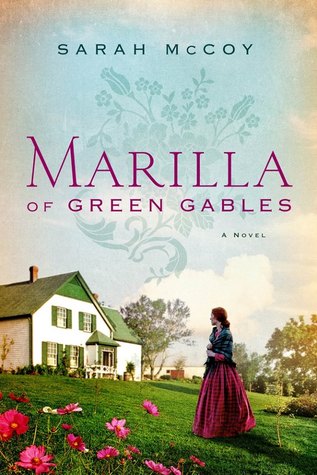
Audiobook Review: Marilla of Green Gables by Sarah McCoy


A bold, heartfelt tale of life at Green Gables . . . before Anne: A marvelously entertaining and moving historical novel, set in rural Prince Edward Island in the nineteenth century, that imagines the young life of spinster Marilla Cuthbert, and the choices that will open her life to the possibility of heartbreak—and unimaginable greatness

Plucky and ambitious, Marilla Cuthbert is thirteen years old when her world is turned upside down. Her beloved mother has dies in childbirth, and Marilla suddenly must bear the responsibilities of a farm wife: cooking, sewing, keeping house, and overseeing the day-to-day life of Green Gables with her brother, Matthew and father, Hugh.

In Avonlea—a small, tight-knit farming town on a remote island—life holds few options for farm girls. Her one connection to the wider world is Aunt Elizabeth “Izzy” Johnson, her mother’s sister, who managed to escape from Avonlea to the bustling city of St. Catharines. An opinionated spinster, Aunt Izzy’s talent as a seamstress has allowed her to build a thriving business and make her own way in the world.

Emboldened by her aunt, Marilla dares to venture beyond the safety of Green Gables and discovers new friends and new opportunities. Joining the Ladies Aid Society, she raises funds for an orphanage run by the Sisters of Charity in nearby Nova Scotia that secretly serves as a way station for runaway slaves from America. Her budding romance with John Blythe, the charming son of a neighbor, offers her a possibility of future happiness—Marilla is in no rush to trade one farm life for another. She soon finds herself caught up in the dangerous work of politics, and abolition—jeopardizing all she cherishes, including her bond with her dearest John Blythe. Now Marilla must face a reckoning between her dreams of making a difference in the wider world and the small-town reality of life at Green Gables.

After reading the entire Anne of Green Gables series this year for the very first time, I felt a need to stay immersed in Anne’s world a bit longer, and decided to read this prequel book, written by contemporary author Sarah McCoy and published in 2018. I’m often skeptical when modern authors decide to continue or riff off of a beloved older book or series (I’m thinking about the debacle that was Scarlett, the “sequel” to Gone With the Wind, among others).

Can a modern author pull off the tone and feeling of the original? Does the new story add anything in terms of character development? Does it feel true to the heart of the original story?

In the case of Marilla of Green Gables, the answer is YES to all questions. While not completely perfect, Marilla is a worthy addition to the Green Gables saga, and I enjoyed it start to finish.

As readers of Anne of Green Gables know, Marilla is the aging spinster who, along with her older brother Matthew, adopts an 11-year-old orphan girl (while actually thinking they were bringing home a boy to help with the farm), and completely up-ends their orderly life. Anne Shirley is a wonder, and her bright, inquisitive, imaginative nature brings new life to Marilla and Matthew and changes their world forever.

But what do we really know about Marilla from the Green Gables books? We only see her through Anne’s eyes –an older woman who keeps house while her brother farms, who has never left the family home and never married. She’s a pillar of the community and has many close friends… but we really don’t know much at all about her childhood or adult life prior to Anne’s arrival.

Marilla of Green Gables starts when Marilla is thirteen. Her mother Clara is pregnant, her brother Matthew works the farm with their father Hugh, and their home life is simple but happy. Marilla has a growing friendship with a classmate of Matthew’s, John Blythe, who is a few years older than Marilla. They seem to be on the verge of romance, but when Clara dies during childbirth, everything changes for Marilla.

Having promised her mother to always take care of Hugh and Matthew, Marilla knows that she will never leave Green Gables. As her relationship with John strengthens over the years, she feels torn between her feelings for him and her responsibility toward her family. On top of this, there’s growing political unrest in Canada, and the Cuthberts are on opposite sides of the issue from John. Finally, it’s the political disagreements that drive a wedge between Marilla and John, leading to an estrangement that lingers for many years.

Over the years, Marilla becomes more and more involved in the issue of runaway slaves from America, motivated initially by orphaned children she encounters who were rescued from enslavement but are still pursued by bounty hunters. While on the surface a simple farm woman with an ordinary, house-bound life, Marilla becomes involved in the abolition movement and works to arrange shelter as part of the underground railroad.

There’s something really heartbreaking about a prequel. You know where the players have to end up, having read the original story. So, seeing Marilla and John’s romance blooming over the years was incredibly bittersweet. On the one hand, they’re just so lovely together, and their affection and regard for one another is sincere and pure and heartfelt. At the same time, I know that Marilla never marries, and that John must end up married to someone else, since his son Gilbert is Anne’s love interest and eventual husband in the Anne books. It really felt terrible at times to see Marilla’s happiness with John and see her experiencing all the sweet emotions of a young first love — not knowing how it will go wrong, but knowing all along that they simply can’t end up together.

Author Sarah McCoy does a lovely job of emulating the feel and style of the Anne books, reveling in the natural world of Prince Edward Island, the simple joys of a small community in an earlier time, and the daily routines and habits that build a full life. Marilla’s voice and perspective feels clear and authentic — we’re able to see a young Marilla and see the roots of the woman she’ll become someday.

The only jarring note for me was the emphasis on politics. Politics rarely gets mentioned in the Anne series, and here, the unrest within Canada is a large focus and becomes the driving point for the breakdown of Anne and John’s relationship. It’s not that it’s uninteresting; simply that it doesn’t feel all that well aligned with the tone of the original series.

Still, I found the book as a whole delightful. It felt like a revelation to get to know a young Marilla and understand how she became the stern spinster we meet in Anne of Green Gables. I love the depiction of life in Avonlea, and was moved by Marilla’s devotion to improving the life of those less fortunate, including putting herself at risk in order to protect children fleeing enslavement.

Marilla of Green Gables is a lovely addition to the world of Anne of Green Gables. For those who haven’t read the original series, I’d say start with those books, at the least the first three or so, before reading Marilla. While Marilla of Green Gables could stand on its own, I think the heart and soul would somehow have much less impact without the greater context of the Anne series.

A note on the audiobook: Lovely! The narrator captures Marilla’s sweetness, the gossipy nature of Marilla’s friend Rachel, the compassion of John, and all the flavor of the many other characters in the story. Really a terrific listen.

I highly recommend Marilla of Green Gables for any fans of the Anne series, and really applaud author Sarah McCoy for adding a new and interesting storyline while staying true to the essence of the original books.

_________________________________________

The details:

Title: Marilla of Green Gables
Author: Sarah McCoy
Narrator: Cassandra Campbell
Publisher: William Morrow
Publication date: October 23, 2018
Length (print): 320 pages
Length (audiobook): 9 hours, 14 minutes
Genre: Historical fiction
Source: Library

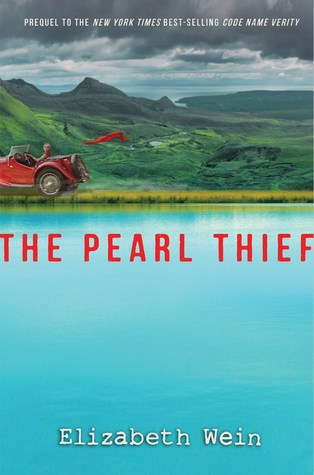
Book Review: The Pearl Thief by Elizabeth Wein

Before Verity…there was Julie.

When fifteen-year-old Julia Beaufort-Stuart wakes up in the hospital, she knows the lazy summer break she’d imagined won’t be exactly like she anticipated. And once she returns to her grandfather’s estate, a bit banged up but alive, she begins to realize that her injury might not have been an accident. One of her family’s employees is missing, and he disappeared on the very same day she landed in the hospital.

Desperate to figure out what happened, she befriends Euan McEwen, the Scottish Traveller boy who found her when she was injured, and his standoffish sister, Ellen. As Julie grows closer to this family, she experiences some of the prejudices they’ve grown used to firsthand, a stark contrast to her own upbringing, and finds herself exploring thrilling new experiences that have nothing to do with a missing-person investigation.

Her memory of that day returns to her in pieces, and when a body is discovered, her new friends are caught in the crosshairs of long-held biases about Travellers. Julie must get to the bottom of the mystery in order to keep them from being framed for the crime.

In this coming-of-age prequel to Code Name Verity, we meet a much younger Julie — a privileged daughter of an aristocratic Scottish family, home for the summer from her Swiss boarding school. Julie and her siblings are converging on their late grandfather’s estate one last time as the grounds, manor house, and belongings are being either sorted for auction or repurposed into a boys’ school.

At the beginning of the summer, Julie is free-spirited and ready for fun. When Julie arrives earlier than expected (and ahead of her luggage), she grabs an old kilt that belonged to her brother and sets off to explore along the river that runs through their property — where she’s konked on the head and knocked unconcious.

As Julie recovers, she develops a connection with the Traveller family who rescued her, and begins to dig through her foggy memories to figure out who knocked her out, and what’s going on with the ancient and priceless Scottish river pearls that were a beloved part of her grandfather’s treasure trove.

Through Julie’s eyes, we get to know the family of Scottish Travellers and see the prejudice and cruelty they’re so casually subjected to, even by people Julie otherwise had respected. Likewise, through Julie, we meet a reclusive, disfigured librarian and gain an understanding of what it truly means to look beyond the surface.

The adventure and mystery of the story are quite entertaining, and there’s nothing here that would earn anything more scandalous than a PG rating. That said, Julie does explore her sexuality through a series of important kisses, and discovers that her orientation may be more complicated than she’d been prepared for. At the same time, we see the great love and loyalty that Julie is capable of, whether directed toward her immediate family, long-time acquaintances, or fast friends.

This is important to note, because of course this is Julie from Code Name Verity, and while The Pearl Thief is set earlier than that stellar book, it’s an interesting look at the young woman Julie was before her life was changed forever by World War II. In The Pearl Thief, Julie is still a half-formed woman, but she’s already well on her way toward establishing her outsized bravery, talent for mimicry and pretending to be someone else, keen mind that zooms in on details, and of course, the absolute devotion to her friends.

It’s not essential to have read Code Name Verity before reading The Pearl Thief, but I think it does add a great deal of meaning. Without the context of CNV, The Pearl  Thief is an interesting and entertaining adventure story, with a beautiful setting and a very neat interweaving of Scottish history and folklore within the more contemporary mystery plot. But having read CNV, The Pearl Thief is all above the above, plus.

It’s a beautiful look into the life of a young woman who we know will go on to be remarkable. For that reason, while The Pearl Thief itself isn’t a highly emotional story, reading it manages to be a moving experience. Here is Julie —  Queenie — in her early days, and it’s easy to see the roots of who she will one day be.

_________________________________________

The details:

Title: The Pearl Thief
Author: Elizabeth Wein
Publisher: Disney-Hyperion
Publication date: May 2, 2017
Length: 326 pages
Genre: Young adult
Source: Purchased

Save

Save

Save

Save

Save

Save

Save

Save