Flashback Friday: The All-of-a-Kind Family series

Flashback Friday is my own little weekly tradition, in which I pick a book from my reading past to highlight — and you’re invited to join in!

Here are the Flashback Friday book selection guidelines:

  1. Has to be something you’ve read yourself
  2. Has to still be available, preferably still in print
  3. Must have been originally published 5 or more years ago

Other than that, the sky’s the limit! Join me, please, and let us all know: what are the books you’ve read that you always rave about? What books from your past do you wish EVERYONE would read? Pick something from five years ago, or go all the way back to the Canterbury Tales if you want. It’s Flashback Friday time!

My pick for this week’s Flashback Friday:

All-of-a-Kind Family (All-of-a-Kind Family, #1)

All-of-A-Kind Family by Sydney Taylor

(published 1951)

Synopsis:

There’s something to be said for a book that makes you wish you’d been part of a poor immigrant family living in New York’s lower east side on the eve of World War I. Sydney Taylor’s time-honored classic does just that. Life is rich for the five mischievous girls in the family. They find adventure in visiting the library, going to market with Mama, even dusting the front room. Young readers who have never shared a bedroom with four siblings, with no television in sight, will vicariously experience the simple, old-fashioned pleasures of talk, make-believe, and pilfered penny candy. The family’s Jewish faith strengthens their ties to each other, while providing still more excitement and opportunity for mischief. Readers unfamiliar with Judaism will learn with the girls during each beautifully depicted holiday. This lively family, subject of four more “all-of-a- kind” books, is full of unique characters, all deftly illustrated by Helen John. Taylor based the stories on her own childhood family, and the true-life quality of her writing gives this classic its page-turning appeal.

There are five books in Sydney Taylor’s lovely, heart-warming, classic series:

  • All-of-a-Kind Family (1951)
  • More All-of-a-Kind Family (1954)
  • All-of-a-Kind Family Uptown (1958)
  • All-of-a-Kind Family Downtown (1972)
  • Ella of All-of-a-Kind Family (1978)

Through these books, we meet the five sisters and their parents, and get a sweet and savory view of life on the Lower East Side of New York in the early 1900s. The girls live in close quarters, bicker and play, make up stories and get into trouble, and learn important (but not overly preachy) lessons along the way.  The very first chapter in the first book is about the hugely important weekly trip to the library — and between the lovely library lady and the emphasis on having great books to read, it’s a great way to start! Another chapter is about dusting (!!) — and it really is the stuff of legends, for kids who grew up with these books. In order keep dusting fun (I can’t believe I’m writing this…), the girls’ mother hides buttons that they can only find by cleaning super-carefully.

And now I’m praising a book that has us thinking housework is delightful. So not me. But I digress.

library aoakf

The library scene from All-of-a-Kind Family, illustrated by Helen John

The All-of-a-Kind Family books are memorable for the wonderful and distinctive characters, the upbeat look at life in a relatively poor immigrant neighborhood, the non-sentimental view of some of the era’s hardships, and the positive portrayal of life in an American Jewish family. With penny candy stores, Coney Island, pickles, Fourth of July celebrations, and later, very circumspect parties and dating rituals, the books are at once of historical interest and human interest. I think, as a kid reading these books, I didn’t think about the history too much — I was too busy siding with the different girls in their squabbles and plans, worrying about them getting caught when they got into mischief, and wishing I lived in a house full of girls.

So talk about a flashback! The All-of-a-Kind Family series was a huge part of my childhood. My sister and I pored over these books as kids, reenacting key scenes (the button search was a special favorite!) and in general maintaining a fascination with the five sisters. (Ella, we agreed, was glamorous; Henny, on the other hand, was a big trouble-maker — although looking back from the adult perspective, she also probably had the most gumption of the lot!)

Later on, I found myself returning to these books. As a summer camp counselor, I would read a chapter a night to my girls, who despite being almost too cool during the day, really craved the connection these stories offered at bedtime. And still later, the All-of-a-Kind Family books were read-aloud favorites for my daughter and me.

In a way, these books are like a Jewish parallel to the Little House books by Laura Ingalls Wilder. In each, we see a family’s challenges over the course of many years and many books, set in a particular point in America’s history — but written in such a way that kids today won’t feel like they’re being taught, as they’ll be too busy being entertained by the characters’ antics and adventures. In both series as well, the fictional characters are directly based on the authors’ own lives, and perhaps that ring of authenticity is what helps bring these books, with their detailed descriptions of daily life and routines, into such rich and resounding life.

Did you read the All-of-a-Kind Family books as a kid?

And have you ever, for even a second, believed that dusting is fun?

Happy Friday, and enjoy your flashbacks!

♥♥♥♥♥♥♥♥

Do you host a book blog meme? Do you participate in a meme that you really, really love? I’m building a Book Blog Meme Directory, and need your help! If you know of a great meme to include — or if you host one yourself — please drop me a note on my Contact page and I’ll be sure to add your info!

Flashback Friday: Brave New World

Flashback Friday is my own little weekly tradition, in which I pick a book from my reading past to highlight — and you’re invited to join in!

Here are the Flashback Friday book selection guidelines:

  1. Has to be something you’ve read yourself
  2. Has to still be available, preferably still in print
  3. Must have been originally published 5 or more years ago

Other than that, the sky’s the limit! Join me, please, and let us all know: what are the books you’ve read that you always rave about? What books from your past do you wish EVERYONE would read? Pick something from five years ago, or go all the way back to the Canterbury Tales if you want. It’s Flashback Friday time!

My pick for this week’s Flashback Friday:

Brave New World by Aldous Huxley

(published 1932)

Synopsis:

Far in the future, the World Controllers have finally created the ideal society. In laboratories worldwide, genetic science has brought the human race to perfection. From the Alpha-Plus mandarin class to the Epsilon-Minus Semi-Morons, designed to perform menial tasks, man is bred and educated to be blissfully content with his pre-destined role.

But, in the Central London Hatchery and Conditioning Centre, Bernard Marx is unhappy. Harbouring an unnatural desire for solitude, feeling only distaste for the endless pleasures of compulsory promiscuity, Bernard has an ill-defined longing to break free. A visit to one of the few remaining Savage Reservations where the old, imperfect life still continues, may be the cure for his distress…

A fantasy of the future that sheds a blazing critical light on the present–considered to be Aldous Huxley’ s most enduring masterpiece.

Brave New World has been a fixture on high school reading lists for decades now, alongside 1984, Animal Farm, and Lord of the Flies. Does it stand the test of time? I certainly think so. I reread Brave New World about five years ago, and was startled to see how prescient Aldous Huxley was about everything from assisted reproductive technologies to the rampant consumerism prominent in leisure and entertainment activities today. Brave New World is about a dystopian society — but written at a time when the concept was new and shocking, a true cautionary tale.

The class structure and predefined roles, the learning systems and government control, the Savage Reservations and birth control mandates, all are futuristic and yet scarily recognizable. As with so many “required reading” standards, I don’t think I fully appreciated Brave New World when I read it for school. Reading it again as an adult, I was struck by the tight narrative flow, elegant descriptions of a fully-formed social structure, and plot turns that manage to surprise even though dystopian settings are everywhere these days.

Did you read Brave New World in school? How do you think it holds up after all these years?

PS – I amused myself by looking for different versions of the Brave New World cover. The nine above are just a small portion of what I found!


♥♥♥♥♥♥♥♥

Do you host a book blog meme? Do you participate in a meme that you really, really love? I’m building a Book Blog Meme Directory, and need your help! If you know of a great meme to include — or if you host one yourself — please drop me a note on my Contact page and I’ll be sure to add your info!

Flashback Friday: The Hanging Tree

Flashback Friday is my own little weekly tradition, in which I pick a book from my reading past to highlight — and you’re invited to join in!

Here are the Flashback Friday book selection guidelines:

  1. Has to be something you’ve read yourself
  2. Has to still be available, preferably still in print
  3. Must have been originally published 5 or more years ago

Other than that, the sky’s the limit! Join me, please, and let us all know: what are the books you’ve read that you always rave about? What books from your past do you wish EVERYONE would read? Pick something from five years ago, or go all the way back to the Canterbury Tales if you want. It’s Flashback Friday time!

My pick for this week’s Flashback Friday:

The Hanging Tree by David Lambkin

(published 1995)

From Publishers Weekly:

Magic and science, past and present, collide in Lambkin’s fast-paced thriller, which was a bestseller in South Africa. Kathryn Widd, a paleontologist specializing in violence, goes to Kenya to examine an ancient skull and gets involved in a mystery surrounding a death that occurred on a 1908 expedition, led by John Henry Patterson, to the same locale. From her office in present-day Johannesburg, she recounts the tale of her expedition in a foreboding tone. Accompanied by researcher Ray Chinta, museum administrator Victor Macmillan and his beautiful and enigmatic wife, Marion, Widd makes historic discoveries among the fossils that lend disturbing insight into the origins of human violence. But as the expedition continues, the party begins to relive events that occurred during the ill-fated Patterson expedition. Soon, they find their research straying from the exactitude of science into the realm of magic and mysticism. Looking for metaphysical heft, Lambkin juxtaposes scientific theory with black magic, quantum physics and Bach and uses the metaphor of a fugue to add layers of depth. He falls short of illuminating the implied connections among his many competing themes, and his characterizations rarely rise above stereotype. He does, however, deliver a page-turning puzzler filled with suspense and a richly evoked sense of the African landscape.

I first heard of The Hanging Tree one day while driving home from work listening to NPR. The brief review made this book sound like one not to be missed — but going the way things often do, it was several years before I finally came across a copy and remembered hearing about it.

The Hanging Tree is a fascinating but not always smooth read. The writing style took some getting used to, and the storyline was not really what I’d expected. That said, I couldn’t pull myself away. As the book progresses, we follow the story of a modern-day archaeological dig as well as an earlier expedition — but ultimately the story encompasses new discoveries going back to the earliest humans and what this knowledge proves or disproves about us as a species.

Overall, I’d say that The Hanging Tree is an unusual but engrossing reading experience, and while I didn’t always love the narrative voice, by the end I was completely caught up in the story and its shocking developments and outcomes.

♥♥♥♥♥♥♥♥

Do you host a book blog meme? Do you participate in a meme that you really, really love? I’m building a Book Blog Meme Directory, and need your help! If you know of a great meme to include — or if you host one yourself — please drop me a note on my Contact page and I’ll be sure to add your info!

Flashback Friday: The Hunt For Red October

Flashback Friday is my own little weekly tradition, in which I pick a book from my reading past to highlight — and you’re invited to join in!

Here are the Flashback Friday book selection guidelines:

  1. Has to be something you’ve read yourself
  2. Has to still be available, preferably still in print
  3. Must have been originally published 5 or more years ago

Other than that, the sky’s the limit! Join me, please, and let us all know: what are the books you’ve read that you always rave about? What books from your past do you wish EVERYONE would read? Pick something from five years ago, or go all the way back to the Canterbury Tales if you want. It’s Flashback Friday time!

My pick for this week’s Flashback Friday:

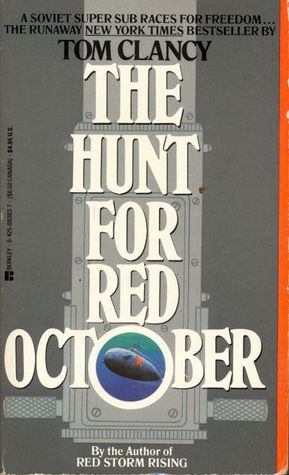
The Hunt for Red October (Jack Ryan, #3)

The Hunt for Red October by Tom Clancy

(published 1984)

Please don’t think I’m a military fanatic! I realize that this is my second week in a row picking a Flashback Friday book with a naval/military setting. I was originally going to go in a completely different direction this week, but in light of the sad news about Tom Clancy’s passing, I thought I’d highlight his very first book, The Hunt for Red October:

From Goodreads:

Somewhere under the Atlantic, a Soviet sub commander has just made a fateful decision. The Red October is heading west.

The Americans want her. The Russians want her back. And the most incredible chase in history is on …

Here is the runaway bestseller that launched Tom Clancy’s phenomenal career. A military thriller so accurate and so convincing in its accuracy that the author was rumored to have been debriefed by the White House. Its theme: The greatest espionage coup in history. Its story: The chase for a top secret Russian missile sub. Its title: THE HUNT FOR RED OCTOBER

According to the Wikipedia page, Tom Clancy originally sold The Hunt for Red October to the Naval Institute Press for $5,000.  The Naval Institute Press’s first published original fiction work, The Hunt for Red October leaped onto the bestseller lists when President Reagan mentioned it during a press conference and said that he couldn’t put it down.

The Hunt for Red October was hugely popular, fitting right in with the Cold War era and the mood of distrust between the US and USSR. Red October was perhaps the first (and certainly most prominent) book of the time to focus not just on plot but on military hardware — to such an extent that it supposedly had the military intelligence community in quite a tizzy over the amount of sensitive information contained within the book.

Admittedly, this is a somewhat strange selection for me, as I don’t typically read thrillers, much less military thrillers with lots of technical jargon and big things going boom. But at the time, I found it fascinating, and learned a huge amount about life on board submarines, what a sonar array is, and how all that underwater listening actually works. Plus, it’s a tense, compelling story — so yes, I’d have to agree with President Reagan on this one: Hard to put down!

I promise to move on to more “literary” selections next week for Flashback Friday. But consider this one a tribute to a man who was a huge influence in the world of popular fiction. Even though it’s been years since I’ve had the slightest interest in reading a Tom Clancy book, I’m still happy to acknowledge that this was an author who knew his audience and knew how to tell a story. RIP, Tom Clancy.

♥♥♥♥♥♥♥♥

Do you host a book blog meme? Do you participate in a meme that you really, really love? I’m building a Book Blog Meme Directory, and need your help! If you know of a great meme to include — or if you host one yourself — please drop me a note on my Contact page and I’ll be sure to add your info!

Flashback Friday: The Caine Mutiny

Flashback Friday is my own little weekly tradition, in which I pick a book from my reading past to highlight — and you’re invited to join in!

Here are the Flashback Friday book selection guidelines:

  1. Has to be something you’ve read yourself
  2. Has to still be available, preferably still in print
  3. Must have been originally published 5 or more years ago

Other than that, the sky’s the limit! Join me, please, and let us all know: what are the books you’ve read that you always rave about? What books from your past do you wish EVERYONE would read? Pick something from five years ago, or go all the way back to the Canterbury Tales if you want. It’s Flashback Friday time!

My pick for this week’s Flashback Friday:

The Caine Mutiny

The Caine Mutiny by Herman Wouk

(published 1951)

From Goodreads:

The novel that inspired the now-classic film The Caine Mutiny and the hit Broadway play The Caine Mutiny Court-Martial, Herman Wouk’s boldly dramatic, brilliantly entertaining novel of life — and mutiny — on a Navy warship in the Pacific theater was immediately embraced, upon its original publication in 1951, as one of the first serious works of American fiction to grapple with the moral complexities and the human consequences of World War II. In the intervening half century, The Caine Mutiny has become a perennial favorite of readers young and old, has sold millions of copies throughout the world, and has achieved the status of a modern classic.

The Caine Mutiny is the book that brought us the iconic character of Captain Queeg, immortalized on film by Humphrey Bogart and famous for such gems as:

Aboard my ship, excellent performance is standard, standard performance is sub-standard, and sub-standard performance is not permitted to exist.

Is Queeg incompetent? Cowardly? Or mentally unbalanced, perhaps dangerously so? That’s the moral dilemma that the junior officers on board the Caine must confront, deciding whether the safety of their ship demands overthrowing their leader — or whether the fact that Queeg is a poor captain is irrelevant to the fact that military men must obey the chain of command, period.

The Caine Mutiny is an exciting, intelligent read — at once an accurate portrayal of the alternating dangers and boredom of life at sea, an exploration of the inner workings of men under pressure, and a rollicking tale of a band of brothers that isn’t quite as noble and self-sacrificing as most war movies might have us believe. Filled with storms at sea, wartime engagements, and plenty of legal drama, The Caine Mutiny is a modern classic of wartime fiction.

♥♥♥♥♥♥♥♥

Do you host a book blog meme? Do you participate in a meme that you really, really love? I’m building a Book Blog Meme Directory, and need your help! If you know of a great meme to include — or if you host one yourself — please drop me a note on my Contact page and I’ll be sure to add your info!

Flashback Friday: The Crimson Portait

Flashback Friday is my own little weekly tradition, in which I pick a book from my reading past to highlight — and you’re invited to join in!

Here are the Flashback Friday book selection guidelines:

  1. Has to be something you’ve read yourself
  2. Has to still be available, preferably still in print
  3. Must have been originally published 5 or more years ago

Other than that, the sky’s the limit! Join me, please, and let us all know: what are the books you’ve read that you always rave about? What books from your past do you wish EVERYONE would read? Pick something from five years ago, or go all the way back to the Canterbury Tales if you want. It’s Flashback Friday time!

My pick for this week’s Flashback Friday:

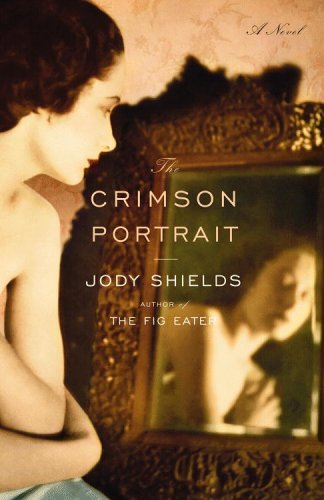
9102

The Crimson Portrait by Jody Shields

(published 2006)

From Goodreads:

Spring 1915. On a sprawling country estate not far from London a young woman mourns her husband, fallen on the battlefields of what has been declared the first World War… But the isolated and eerie stillness in which she grieves is shattered when her home is transformed into a bustling military hospital to serve the war’s most irreparably injured. Disturbed by the intrusion of the suffering men and their caretakers, the young widow finds unexpected solace in the company of a wounded soldier whose face, concealed by bandages, she cannot see. Their affair takes an unexpected turn when fate presents her with an opportunity: to remake her lover with the unwitting help of a visionary surgeon and an American woman artist — in the image of her lost husband. Inspired by the little-known but extraordinary collaboration between artists and surgeons in the treatment of wounded men in the First World War, The Crimson Portrait peels back layers of suspense and intrigue to illuminate the abiding mysteries of identity and desire.

The Crimson Portrait is an atmospheric novel, creating the feeling of life during the Great War. I read this several years ago in the days before Downton Abbey, but now I can’t help but picture this book in a Downton-like setting, with stretchers full of hideously wounded young men filling the elegant rooms of the manor. In The Crimson Portrait, the wounded at this particular estate all suffer from facial injuries, from mild to complete disfigurement. We witness the early stages of facial reconstructive techniques, as doctors and artists work together to alleviate suffering and give these poor young soldiers a chance at something resembling a normal life. Meanwhile, the young widow of the estate sets in motion a plan to alleviate her heartbreak; it’s twisted and unhealthy, sure, but it’s also terribly sad and I couldn’t help but feel compassion for this young woman and her struggle to make sense of her loss.

I always find that WWI-era novels like this one, taking place in the most genteel of settings, pack a huge emotional punch, as they convey the utter horror of war and the mindless tragedy of the losses suffered — all in stark contrast to the lovely greenery of the English countryside. In The Crimson Portrait, we see the waste and ruin of a generation of young men, and the terrible, unending ache left to their survivors. It’s a beautifully written story, fascinating and sorrowful, and I recommend it for anyone interested in reading about that particular time in history.

♥♥♥♥♥♥♥♥

Do you host a book blog meme? Do you participate in a meme that you really, really love? I’m building a Book Blog Meme Directory, and need your help! If you know of a great meme to include — or if you host one yourself — please drop me a note on my Contact page and I’ll be sure to add your info!

Flashback Friday: Vamped

Flashback Friday is my own little weekly tradition, in which I pick a book from my reading past to highlight — and you’re invited to join in!

Here are the Flashback Friday book selection guidelines:

  1. Has to be something you’ve read yourself
  2. Has to still be available, preferably still in print
  3. Must have been originally published 5 or more years ago

Other than that, the sky’s the limit! Join me, please, and let us all know: what are the books you’ve read that you always rave about? What books from your past do you wish EVERYONE would read? Pick something from five years ago, or go all the way back to the Canterbury Tales if you want. It’s Flashback Friday time!

My pick for this week’s Flashback Friday:

Vamped

Vamped by David Sosnowski

(published 2004)

From Goodreads:

Martin Kowalski is an eighty-year-old man stuck in a twenty-year-old body. He works the graveyard shift. He has a poster of Bela Lugosi on his wall and a box of uneaten Count Chocula in his pantry. He drinks stem-cell-derived blood from cleverly packaged and marketed juice boxes. He is, in short, a vampire. But since his wildly successful scheme to turn as many mortals as possible into vampires — “vamp” them rather than kill them — resulted in a new immortal majority, Marty finds little of interest to fill his countless days.

From the deeply imaginative mind of David Sosnowski — who gave us the critically acclaimed junkie-angel classic Rapture — bursts this neo-vampire novel studded with pint-size vampires known as “screamers” (children who were vamped and are none too happy about it); priest vampires who helped convert their flock into lifetime members of the Church; stripper vampires who lap-danced their way into customers’ veins; and one very small, very outspoken human girl.

When Marty decides to end his endless life of soul-crushing ennui — call it vampire affluenza — a three-foot blond obstacle is thrown in his path: Isuzu Trooper Cassidy, a refugee from a human hunting preserve. At first he thinks “midnight snack,” but before the sun comes up, Isuzu is the one snacking on his prized cereal collection as she charms him into staying undead long enough to raise her in a world rife with danger and almost entirely populated by vampires yearning for the taste of real human blood.

Most of my Flashback Friday books have been rather serious ones, all in all. Vamped is decidedly not.

Sorry, humans, but in the world of Vamped, the vampires have won. Pretty much no humans live “in the wild” in this world, although a few tasty specimens are kept for hunting and sporting purposes. Instead, vamps live off of synthesized blood in a world they control… and for Marty, at least, it’s all rather boring. Life eternal equals life of no change, and it’s hard to find a reason to keep going. But when Marty finds a tiny human creature on the loose, his world is turned upside-down. Although it may sound like Vamped verges on becoming a sweet, gooey, sentimental, little-girl-saves-grumpy-guy kind of story, it’s actually a whole lot darker and funnier than that. There’s danger lurking around every corner, and Marty has to be both brave and inventive if he has any chance whatsoever of keeping Isuzu alive.

While the vampire genre is so overdone these days, Vamped has some fresh elements that make it a very fun read and a real stand-out among the crowded vampire bookshelves. (I myself was particularly tickled by the concept of Alaska becoming a vampire vacation fantasyland — what could be better than a place where the sun disappears for months at a time?) I’m surprised that more people haven’t heard of this book. I’d place it in my vampire book collection right alongside Christopher Moore’s outrageously awesome Bloodsucking Fiends, You Suck, and Bite Me. I’ve mostly run out of patience with the topic of vampires in general — but I’ll always make an exception for a vampire book that can make me laugh.

♥♥♥♥♥♥♥♥

Do you host a blog hop or book blog meme? Do you participate in a meme that you really, really love? I’m building a Book Blog Meme Directory, and need your help! If you know of a great meme to include — or if you host one yourself — please drop me a note on my Contact page and I’ll be sure to add your info!

Flashback Friday: Girl in Hyacinth Blue

Flashback Friday is my own little weekly tradition, in which I pick a book from my reading past to highlight — and you’re invited to join in!

Here are the Flashback Friday book selection guidelines:

  1. Has to be something you’ve read yourself
  2. Has to still be available, preferably still in print
  3. Must have been originally published 5 or more years ago

Other than that, the sky’s the limit! Join me, please, and let us all know: what are the books you’ve read that you always rave about? What books from your past do you wish EVERYONE would read? Pick something from five years ago, or go all the way back to the Canterbury Tales if you want. It’s Flashback Friday time!

My pick for this week’s Flashback Friday:

Girl in Hyacinth Blue

Girl in Hyacinth Blue by Susan Vreeland

(published 1999)

From Goodreads:

A professor invites a colleague from the art department to his home to view a painting he has kept secret for decades in Susan Vreeland’s powerful historical novel, Girl in Hyacinth Blue. The professor swears it’s a Vermeer — but why exactly has he kept it hidden so long? The reasons unfold in a gripping sequence of stories that trace ownership of the work back to Amsterdam during World War II and still further to the moment of the painting’s inception.

Dutch artist Johannes Vermeer was all the rage in 1999, roaring back into public awareness through not one, but two works of fiction centering on his rare but highly esteemed paintings. The more well-known of the two is, of course, The Girl With The Pearl Earring by Tracy Chevalier, which went on to become a successful film (which in turn gave Scarlett Johansson one of her first leading roles). By comparison, Girl in Hyacinth Blue flew largely under the radar, which is a shame, in my opinion.

The structure of this novel is quite interesting, consisting of eight chapters that are stand-alone but connected stories. The book has a a reverse chronology that traces one Vermeer painting, from the opening chapter in the 1990s back through World War II and then still further back, finally reaching all the way to the painting’s creation in the 17th century. In each story, we see the role the painting played in the lives of the people who possessed it, and through each story, we get a snapshot of a different historical era and the flavor and essence of life at that time.

Truly a remarkable achievement, Girl in Hyacinth Blue can be enjoyed as a novel or as a series of stories which can be read individually. There’s a certain sadness to all of the stories, as well as some lovely moments of appreciating the impact of beauty on everyday lives.

Note from your friendly Bookshelf Fantasies host: To join the Flashback Friday fun, write a blog post about a book you love (please mention Bookshelf Fantasies as the Flashback Friday host!) and share your link below. Don’t have a blog post to share? Then share your favorite oldie-but-goodie in the comments section. Jump in!

♥♥♥♥♥♥♥♥

Do you host a blog hop or book blog meme? Do you participate in a meme that you really, really love? I’m building a Book Blog Meme Directory, and need your help! If you know of a great meme to include — or if you host one yourself — please drop me a note on my Contact page and I’ll be sure to add your info!

Flashback Friday: Alaska by James Michener

Flashback Friday is my own little weekly tradition, in which I pick a book from my reading past to highlight — and you’re invited to join in!

Here are the Flashback Friday book selection guidelines:

  1. Has to be something you’ve read yourself
  2. Has to still be available, preferably still in print
  3. Must have been originally published 5 or more years ago

Other than that, the sky’s the limit! Join me, please, and let us all know: what are the books you’ve read that you always rave about? What books from your past do you wish EVERYONE would read? Pick something from five years ago, or go all the way back to the Canterbury Tales if you want. It’s Flashback Friday time!

My pick for this week’s Flashback Friday:

Alaska by James Michener

(published 1988)

From Goodreads:

Master storyteller James Michener reveals Alaska in all its awesome, sweeping majesty. From the near-forgotten past, to the highly technological present, from self-defense to self-determination, here are the men and women who tried to tame the land, seize its bounty, and lay claim to the elusive spirit that holds native and visitor spellbound. A stirring portrait of a human community living on the edge of the world, ALASKA claims a bold heritage of survival against all odds.

I’ve come to really appreciate preparing for travel by reading fiction about my destination — and reading James Michener may just be the pinnacle of travel/historical fiction. In books such as Alaska, Michener goes back — way, way back — to the geological events that led to the land mass formations that became known as Alaska, and traces every major event since, including mastadons, migration of native peoples, invaders of all stripes, and the US purchase and eventual statehood. Not many authors can pull off a novel that covers literally millions of years of history and at the same time makes the reader care deeply about the diverse cast of characters met along the way, but Michener is a pro.

I first read Michener’s Alaska almost ten years ago while eagerly anticipating an Alaskan cruise, and I’ll tell you — it was perfect. I went on my trip feeling like I was visiting familiar territory, and got such a thrill from visits to the Yukon pass where gold seekers climbed and a stop in Sitka, site of early Russian colonization.

Way back when, this is what I wrote about Alaska on Goodreads:

James Michener’s Alaska is an exhaustive — and exhausting — primer on Alaskan history, filtered through the lens of fiction. As an alternative to reading a stuffy old history book, this Alaska has a lot to offer: colorful characters (some historical, some fictional), dramatic landscapes, momentous occasions, and far-reaching human drama. On the down side, if you’re looking for actual historical facts, they’re here — but you have to go looking for them. While Michener does provide notes detailing fictional vs non-fictional elements, it leaves the reader guessing from time to time whether he’s presenting an example of what might have happened, or something that actually occurred. In true Michener fashion, the books starts with the geological underpinnings of the area, billions of years ago, and moves forward in time to include mastadons and woolly mammoths before finally reaching the first human settlers. The book is entertaining, jam-packed with facts and figures, and illustrates historic times by focusing on the individuals who lived through them. I would recommend Alaska to anyone interested in gaining an overview of the state’s history… although I must be honest and state that the first word that occurred to me when I reached the last page (page 1073!) was “finally!”

Overall — and despite the fact that the book does include a chapter told from the point of view of a salmon (really!) — I remember enjoying Alaska quite a bit, despite the length. It felt like a task to read, but in the end I took away so much from it. Incidentally, I used this approach several years earlier and read Michener’s Hawaii before my first visit to the islands, and thought it was phenomenal.

Final bit of disclosure: Why am I highlighting Alaska today? Because that’s where I’m headed! I’m off for a week’s adventure with my lovely and wonderful daughter, heading off for a road trip from Fairbanks to Denali to Seward and assorted points in between. I’m so excited for our trip, and even more excited to spend a whole week on vacation with my daughter!

Happy Flashback Friday!

Note from your friendly Bookshelf Fantasies host: To join the Flashback Friday fun, write a blog post about a book you love (please mention Bookshelf Fantasies as the Flashback Friday host!) and share your link below. Don’t have a blog post to share? Then share your favorite oldie-but-goodie in the comments section. Jump in!

♥♥♥♥♥♥♥♥

Do you host a blog hop or book blog meme? Do you participate in a meme that you really, really love? I’m building a Book Blog Meme Directory, and need your help! If you know of a great meme to include — or if you host one yourself — please drop me a note on my Contact page and I’ll be sure to add your info!

Flashback Friday: What Was She Thinking? Notes On A Scandal

Flashback Friday is my own little weekly tradition, in which I pick a book from my reading past to highlight — and you’re invited to join in!

Here are the Flashback Friday book selection guidelines:

  1. Has to be something you’ve read yourself
  2. Has to still be available, preferably still in print
  3. Must have been originally published 5 or more years ago

Other than that, the sky’s the limit! Join me, please, and let us all know: what are the books you’ve read that you always rave about? What books from your past do you wish EVERYONE would read? Pick something from five years ago, or go all the way back to the Canterbury Tales if you want. It’s Flashback Friday time!

My pick for this week’s Flashback Friday:

What Was She Thinking? [Notes on a Scandal]

What Was She Thinking? Notes on a Scandal by Zoë Heller

(published 2003)

From Goodreads:

Schoolteacher Barbara Covett has led a solitary life until Sheba Hart, the new art teacher at St. George’s, befriends her. But even as their relationship develops, so too does another: Sheba has begun an illicit affair with an underage male student. When the scandal turns into a media circus, Barbara decides to write an account in her friend’s defense—and ends up revealing not only Sheba’s secrets, but also her own.

If there’s a more perfect example of an unreliable narrator in fiction, I don’t know what it is! What Was She Thinking is a first-person account, narrated by Barbara, which chronicles her friendship with the young and exciting Sheba Hart. But Barbara’s viewpoint can’t necessarily be trusted. Is she telling us what truly happened, or is she relating the story as a means of justifying her own very questionable actions? The further we read, the more we realize that Barbara has an agenda, and is not just a witness but a catalyst for some of the catastrophic events in the novel.

Barbara’s mind is a dark and twisted place, and What Was She Thinking delves deeply into the scandals and betrayals in which Barbara and Sheba become embroiled. The book is compact and a fast read, with a sharpness and deviousness that are a delight to experience.

This book was made into a movie, 2006’s Notes On A Scandal, starring Judi Dench and Cate Blanchett. In my opinion, while the movie was quite good, it lacked the insidiousness of the book. In the book, we believe Barbara to be decent and trustworthy at the start, and it’s only as we move forward that we realize that she’s anything but. In the movie, because we see the characters in action rather than just getting Barbara’s viewpoint of events, it much plainer from the beginning that Barbara has a screw (or two) loose and is not best friend material.

If you’ve seen the movie, give the book a try and see how they compare! Or if you’re unfamiliar with both, start with the book, then see what you think of the movie adaptation. Either way, the book is twisted fun and the movie is marvelous too.

Note from your friendly Bookshelf Fantasies host: To join the Flashback Friday fun, write a blog post about a book you love (please mention Bookshelf Fantasies as the Flashback Friday host!) and share your link below. Don’t have a blog post to share? Then share your favorite oldie-but-goodie in the comments section. Jump in!

♥♥♥♥♥♥♥♥

Do you host a blog hop or book blog meme? Do you participate in a meme that you really, really love? I’m building a Book Blog Meme Directory, and need your help! If you know of a great meme to include — or if you host one yourself — please drop me a note on my Contact page and I’ll be sure to add your info!