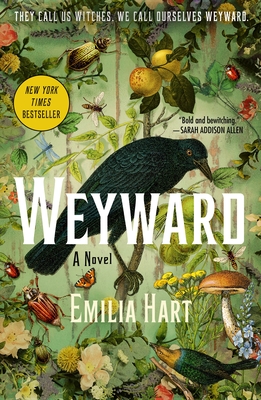
Book Review: Weyward by Emilia Hart

Title: Weyward
Author: Emilia Hart
Publisher: St. Martin’s Press
Publication date: February 2, 2023
Length: 392 pages
Genre: Fantasy
Source: Purchased
Rating:

Rating: 5 out of 5.

I am a Weyward, and wild inside.

2019: Under cover of darkness, Kate flees London for ramshackle Weyward Cottage, inherited from a great aunt she barely remembers. With its tumbling ivy and overgrown garden, the cottage is worlds away from the abusive partner who tormented Kate. But she begins to suspect that her great aunt had a secret. One that lurks in the bones of the cottage, hidden ever since the witch-hunts of the 17th century.

1619: Altha is awaiting trial for the murder of a local farmer who was stampeded to death by his herd. As a girl, Altha’s mother taught her their magic, a kind not rooted in spell casting but in a deep knowledge of the natural world. But unusual women have always been deemed dangerous, and as the evidence for witchcraft is set out against Altha, she knows it will take all of her powers to maintain her freedom.

1942: As World War II rages, Violet is trapped in her family’s grand, crumbling estate. Straitjacketed by societal convention, she longs for the robust education her brother receives––and for her mother, long deceased, who was rumored to have gone mad before her death. The only traces Violet has of her are a locket bearing the initial W and the word weyward scratched into the baseboard of her bedroom.

Weaving together the stories of three extraordinary women across five centuries, Emilia Hart’s Weyward is an enthralling novel of female resilience and the transformative power of the natural world.

Weyward has been on my radar since its release in 2023 — and while I’m mad at myself for not getting to it sooner, I’m thrilled to have finally read this excellent novel.

Weyward follows three women across three timelines to tell the story of a family whose women have special gifts — all of whom must break free from the rules and control of men to fully embrace who they are and what they’re capable of.

In 1619, Altha is a healer relied upon by her community, yet also viewed with suspicion. After a gruesome death, she stands trial for witchcraft.

In 1942, Violet is a teen whose cold, cruel father dictates every aspect of her life, while also denying her a life outside the walls of their estate and a chance to pursue the scientific education she yearns for.

In 2019, Kate flees her abusive boyfriend and takes shelter in the cottage she’s inherited from her great-aunt Violet. At first, she just wants a place to hide, but eventually, she learns more about her family’s heritage and what being a Weyward descendent truly means.

This wildness inside gives us our name. It was men who marked us so, in the time when language was but a shoot curling from the earth. Weyward, they called us, when we would not submit, would not bend to their will. But we learned to wear the name with pride.

The three stories swirl around each other through cycles of chapters. Each woman’s story is, in itself, compelling and utterly fascinating. Each character is wonderfully developed, with rich emotions and complicated circumstances. As a whole, the three stories paint a portrait of a family of powerful women, connected by their abilities, their knowledge, their affinity for the natural world, and their need to protect themselves from those who would do them harm.

By the final third of the book, I hated to leave each woman’s story to move onto a chapter about the next, only to find myself completely absorbed in that chapter and character as well. The interconnectedness of the three women’s lives is lovely to see unfold, and I found myself breathlessly tearing through the final chapters to see how it all came together.

I realize I’m not saying much about plot specifics, but that’s intentional. Weyward is a beautifully crafted, evocative story, and I think it’s best to read it without preconceptions or advance knowledge of details. I recommend enjoying it — slowly, if you can (I couldn’t!) — and savoring the texture and depth of the story as it develops.

I loved reading Weyward, and loved Altha, Violet, and Kate as characters. Highly recommended.
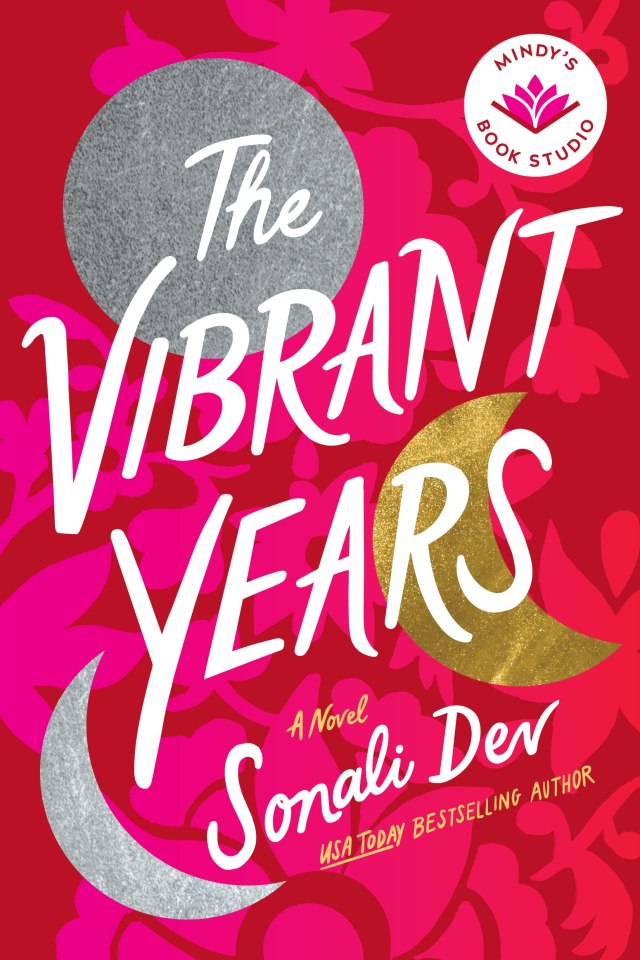
Book Review: The Vibrant Years by Sonali Dev

Title: The Vibrant Years
Author: Sonali Dev
Publisher: Mindy’s Book Studio
Publication date: December 1, 2022
Length: 272 pages
Genre: Contemporary fiction
Source: Kindle freebie
Rating:

Rating: 4 out of 5.

When sixty-five-year-old Bindu Desai inherits a million dollars, she’s astounded―and horrified. The windfall threatens to expose a shameful mistake from her youth. On an impulse, Bindu quickly spends it on something unexpected: a condo in a posh retirement community in Florida.

The impulsive decision blindsides Bindu’s daughter-in-law, Aly. At forty-seven, Aly still shares a home with Bindu even after her divorce from Bindu’s son. But maybe this change is just the push Aly needs to fight for her own dreams.

As Bindu and Aly navigate their new dynamic, Aly’s daughter, Cullie, is faced with losing the business that made her a tech-world star. The only way to save it is to deliver a new idea to her investors―and they want the dating app she pitched them in a panic. Problem is, Cullie has never been on a real date. Naturally, enlisting her single mother and grandmother to help her with the research is the answer.

From USA Today bestselling author Sonali Dev comes a heartfelt novel about three generations of hilarious, unconventional, ambitious women who embark on a shared journey of self-discovery. Join the Desai women as they come together to embrace the hijinks and heartbreak of facing their greatest fears to finally live their most vibrant lives.

Having read and enjoyed Sonali Dev’s Rajes series, which riffs on Jane Austen’s novels while also introduces a large, dynamic Indian American family, I was eager to grab The Vibrant Years when Amazon offered it as a free First Reads book in November. Seeing that this is Mindy Kaling’s first book club selection (Mindy’s Book Studio) made me even more keen to read it.

In The Vibrant Years, we follow three generations of interesting women as they navigate work, love, and family. Bindu inherits money (although she hides the true source from her family) and decides to break out of her steady, modest life as a widow and grandmother and become “vibrant”. She moves into a fancy senior community and becomes the belle of the ball, attracting both eager suitors and the envy and cattiness of what she refers to as “the coven” — the women of the HOA who watch and criticize her every move.

Bindu’s daughter-in-law Aly is a journalist with a local TV station who just can’t seem to get her big break. Despite landing the biggest interview imaginable for the station, her boss wants the more relatable (i.e., whiter) reporter to actually carry out the interview. Aly fights for herself and her career, while also worrying about her daughter and resenting her ex-husband, who never truly supported her professional goals and dreams.

Aly’s daughter Cullie is a tech whiz who, at 25, is the creator of the world’s most successful mental health app, but is now at risk of having her vision compromised by the funder’s pursuit of even more money. Her only hope of saving the app she believes in so strongly is to give the funder something new to profit off of, but her attempt to make a better dating app seems to be headed for failure.

As the story progresses, we get tantalizing hints of Bindu’s hidden past. Something significant happened when she was seventeen — but her enraged parents forced her into a very different life of domesticity and devotion to being a wife and mother rather than risk any hint of shame or scandal. Bindu has never talked about her past, but certain reminders continue to pop up, and it seems like the past won’t remain forgotten for much longer.

The Vibrant Years is perhaps more heartfelt and serious than the synopsis implies, but the promised “hijinks” definitely play a part too. The book neatly balances some truly awful (and hilarious) dating situations with the inner lives of the three main characters, adding humor to heartbreak and loss and self-doubt. (I’m not sure I’ve ever read about dates quite as bad as these… )

Bindu is really the star of the book, a truly “vibrant” woman who gives herself freedom to finally live her own life at age 65. She refuses to be the meek grandmother she seemed destined to remain, but instead puts herself out into the world with bold colors, independent choices, and a fiery defiance that is awesome to behold. There were times in the story when I wished the story of her teen years was told more sequentially, to give us time to really invest in it and see it unfold, but by the end of the book, it’s clear what happened. The revelations are powerful and emotional.

I felt less invested in Aly and Cullie, but still enjoyed their character development, their struggles, and their determination to achieve their goals and also fight for their chances at personal happiness. The dynamics between the three women are not always smooth and peaceful, but their love is unconditional. When’s the last time you read a book about such a loving bond between a mother-in-law and daughter-in-law? I really liked the strong and unconditional connection between all three characters. No matter the challenges, their love and support gets each of them through the worst days and helps them find hope.

Overall, I really enjoyed this family story. Each character is memorable in her own right, and the love between the three is what really makes The Vibrant Years shine.

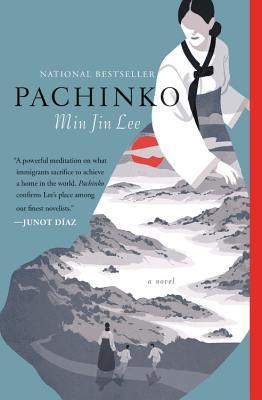
Book Review: Pachinko by Min Jin Lee

In the early 1900s, teenaged Sunja, the adored daughter of a crippled fisherman, falls for a wealthy stranger at the seashore near her home in Korea. He promises her the world, but when she discovers she is pregnant–and that her lover is married–she refuses to be bought. Instead, she accepts an offer of marriage from a gentle, sickly minister passing through on his way to Japan. But her decision to abandon her home, and to reject her son’s powerful father, sets off a dramatic saga that will echo down through the generations.

Richly told and profoundly moving, Pachinko is a story of love, sacrifice, ambition, and loyalty. From bustling street markets to the halls of Japan’s finest universities to the pachinko parlors of the criminal underworld, Lee’s complex and passionate characters–strong, stubborn women, devoted sisters and sons, fathers shaken by moral crisis–survive and thrive against the indifferent arc of history.

Pachinko is a multi-generational family saga which starts with Sunja, the teen-aged daughter of two poor but loving parents who instill in Sunja a love of family and the value of hard work and sacrifice for the sake of those you love. Over the course of this 500-page novel, we follow Sunja from Korea to Japan, and then follow her descendants through two more generations, as her children and her grandchildren struggle to find their place living in Japan but never able to shed their otherness as Koreans.

The early sections of the book focus on Sunja herself, as she finds herself pregnant by an older man who offers to set her up with a comfortable life as his Korean wife, despite never being able to marry her since he’s already married in Japan. When Sunja rejects his offer, she faces a life of shame until a kind but ill minister decides to devote himself to her and provide a life for Sunja and the baby in Osaka.

Life in Japan is hard, as the Koreans live in a squalid ghetto-like neighborhood and struggle to survive. As the second World War progresses, the family faces greater and greater dangers, and yet Sunja’s family grows through her two sons as well as the extended family she finds in her brother- and sister-in-law.

Over the years, Sunja’s children grow into young men, and each faces his own set of obstacles and challenges. While post-war Japan offers greater opportunities in some ways, the Korean immigrants and their Japanese-born children are continually treated as inferior, looked upon as dirty and undesirable and criminal. The discrimination, portrayed in this book through the 1980s, is unrelenting and very disturbing.

The plot covers about 50 years, and during these decades the focus shifts away from Sunja and toward the younger generation and their friends, relationships, and their own struggles. While my attention was mostly held throughout, by the last third of the book I started to feel that the story was becoming a little too dispersed. Not only were there chapters about Sunja’s children and grandchildren, but there was also a chapter focused on the wife of Sunja’s son’s best friend and other on the girlfriend of one of her sons. As more and more characters are introduced and given backstories, the main characters tend to slip into the background. Why should Sunja’s story become less interesting as she ages? She’s little more than a supporting character by the final sections of the book, although the final chapters wrap up her story very well and bring the various plot points back together.

Still, there’s plenty to enjoy and discuss in Pachinko. I knew little about Korean history or the status of Koreans living in Japan prior to reading this book, so it was quite eye-opening for me. The intricate relationships and tensions between the characters are informed by the social status of the Koreans and how they view themselves and their roles in Japan, sometimes in really destructive ways.

Pachinko is an ambitious novel that covers a woman’s life from girlhood to old age, showing her loves and commitments and determination, as well as the legacy she leaves for her children. With memorable characters and heart-breaking events, Pachinko would make a great book group choice, as there’s plenty of food for thought and discussion.

_________________________________________

The details:

Title: Pachinko
Author: Min Jin Lee
Publisher: Grand Central Publishing
Publication date: February 7, 2017
Length: 502 pages
Genre: Historical fiction
Source: Purchased