
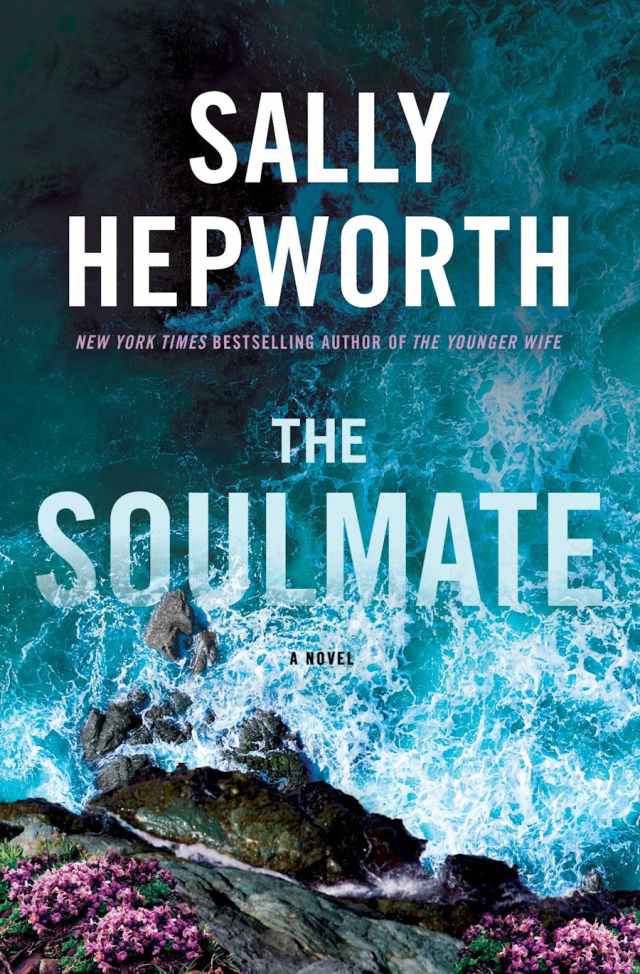
Book Review: The Soulmate by Sally Hepworth

Title: The Soulmate
Author: Sally Hepworth
Publisher: St. Martin’s Press
Publication date: April 4, 2023
Length: 336 pages
Genre: Thriller
Source: Review copy courtesy of the publisher via NetGalley
Rating:

Rating: 3 out of 5.

Get ready for a thrilling, addictive novel about marriage, betrayal, and the secrets that push us to the edge in Sally Hepworth’s The Soulmate.

There’s a cottage on a cliff. Gabe and Pippa’s dream home in a sleepy coastal town. But their perfect house hides something sinister. The tall cliffs have become a popular spot for people to end their lives. Night after night Gabe comes to their rescue, literally talking them off the ledge. Until he doesn’t.

When Pippa discovers Gabe knew the victim, the questions spiral…Did the victim jump? Was she pushed?

And would Gabe, the love of Pippa’s life, her soulmate…lie? As the perfect facade of their marriage begins to crack, the deepest and darkest secrets begin to unravel.

I’ve read all but one of Sally Hepworth’s novels by now, and when I look back at my ratings and reviews, I can see that her books are either big hits for me (especially The Good Sister and The Things We Keep) or so-so reads that I could have done without. Sadly, The Soulmate falls into the latter category.

Content warning: Suicide is a recurring topic in this book, as are mental health concerns, diagnoses, and treatments. I would not recommend this book for readers for whom these topics might be triggering.

In The Soulmate, two different women narrate a dramatic occurrence, what happened before, and what happens next. Oddly, one of these two women is already dead when we meet her as a narrator, and she tells her side of the story from her afterlife.

Pippa lives with her gorgeous, wonderful husband Gabe in a cottage by a cliff’s edge. It’s a beautiful location, but with a downside — the cliff facing their home is known locally as The Drop, and it’s a spot that’s known for its number of suicides. Once they move in, Gabe keeps an eye on the cliff, and in the year they’ve been there, has managed to talk seven different people away from the edge with his calm, caring approach. He’s a local hero.

But everything changes when a woman on the cliff doesn’t step away. Pippa comforts Gabe, assuring him that he did all he could. But something nags at Pippa — what she saw and the way Gabe described it to police don’t quite match up.

The woman who died is Amanda, and she shares her story as well, going back to the early days of her own marriage. As the story progresses, we see how Amanda and her husband Max are connected to Pippa and Gabe. There are dark secrets, and clearly there’s more to Amanda’s death than meets the eye.

I found the characters very hard to relate to or even care about. Pippa is the only decent one in the mix, although Amanda isn’t a bad person necessarily — but she does allow herself to turn a blind eye to all sorts of shady and criminal business dealings and enjoy the lifestyle funded by Max’s success.

The more we learn, the harder it is to fathom why Pippa would remain in her marriage, and it’s frustrating to see how her protective parents and sister wait until much too late to actually share with her what they observe.

The twists and turns in the plot felt like cheap shock devices to me, and the big reveal at the end did not satisfy me. Being vague here, but a fact that should have been redemptive doesn’t override the fact that some of these people did or were responsible for awful things.

I’m not typically a reader of thrillers, but once in a while, if the plot twists are new and surprising, the writing is great, and the characters can make me care, I’ll find myself enjoying them. Sadly, that isn’t the case here. Even the writing has some strange, jagged edges. For example, when Pippa is asked whether her two little girls are twins, she replies that they’re “Irish twins […] born less than a year apart”. Maybe it’s me, but I’ve never heard that phrase before, and there’s no reason for it — it feels derogatory, and a weird way to describe one’s own children.

Pippa is a lawyer, clearly very intelligent, yet she acts as if she has no clue about many things, including Gabe’s business dealings:

I never asked too many questions about his work. The truth was, I had only the most rudimentary understanding of what Gabe did, and when he talked about it I understood less rather than more.

Then there’s the whole issue of Amanda’s narration from the great beyond. It’s weird and off-putting; at the end she states that after death, she could now see “the whole scene unfurl” regarding events she hadn’t known prior to death — so death makes someone omniscient? Such a strange way to reveal backstory and secrets.

The Soulmate tries, I think, to illustrate deep truths about marriage, trust, and fidelity, but on the whole, it misses the mark. Yes, the book held my attention, but I felt that there were too many false notes and much too much obliviousness to make any of it believable.

I’ve given The Soulmate 3-stars, but that may be overly generous. It’s a quick, compelling read, but at the end of the day, I found it unsatisfying.

Save

Save

Save

Save

Save

Save

Book Review: The Silent Patient by Alex Michaelides

Title: The Silent Patient
Author: Alex Michaelides
Publisher: Celadon Books
Publication date: August 18, 2020
Print length: 325 pages
Genre: Thriller
Source: Purchased
Rating:

Rating: 3 out of 5.

Alicia Berenson’s life is seemingly perfect. A famous painter married to an in-demand fashion photographer, she lives in a grand house with big windows overlooking a park in one of London’s most desirable areas. One evening her husband Gabriel returns home late from a fashion shoot, and Alicia shoots him five times in the face, and then never speaks another word.

Alicia’s refusal to talk, or give any kind of explanation, turns a domestic tragedy into something far grander, a mystery that captures the public imagination and casts Alicia into notoriety. The price of her art skyrockets, and she, the silent patient, is hidden away from the tabloids and spotlight at the Grove, a secure forensic unit in North London.

Theo Faber is a criminal psychotherapist who has waited a long time for the opportunity to work with Alicia. His determination to get her to talk and unravel the mystery of why she shot her husband takes him down a twisting path into his own motivations—a search for the truth that threatens to consume him… 

I’ll be blunt — this book annoyed the hell out of me. It’s super hyped, has tons of buzz, and I have friends who’ve insisted that I just had to read it. When my book club picked it as our August book, I knew my time had come.

In brief, this is a psychological thriller about Alicia, a woman who was convicted of murdering her husband and has been confined to a mental institution ever since. From the time she was discovered near her husband’s bloody body, she hasn’t spoken a word. Alicia, a talented artist, made only one communication since Gabriel’s death — a self-portrait, with the mysterious word “Alcestis” written at the bottom.

Theo Faber is a psychotherapist who became fascinated by Alicia’s story and the ensuing notoriety. Years later, he has the opportunity to work at the hospital where she’s a patient, and there he dives into her case, determined to understand why she hasn’t spoken in six years.

From the start, I was annoyed by Theo, and because he’s our point of view character, I felt impatient with the book as a whole. Theo overcame a horrible childhood to achieve professional success, and yet from the moment he transfers to the Grove, he seems to be flouting every rule of professionalism in his obsession with uncovering Alicia’s secrets.

It’s clear that there’s more to the story of the murder than what people accept as the truth. As Theo digs, several potentially shady people emerge as either witnesses or possibly perpetrators of some terrible acts. Aaaaaand… I won’t say too much more about the plot.

The resolution to the mystery took me by surprise, but I felt that the author only managed to achieve this through some sleight-of-hand involving the plot timelines that left me feeling manipulated, rather than pleasantly shocked by the cleverness of it all.

Theo’s actions often make no sense in the big picture, and I’m not sure that I buy the crime scene set-up and explanation as presented either. Yes, it’s twisty and full of unexpected revelations, but I felt too often that I was being “handled”.

I know I’m in the minority on this one. My book group seems to have loved The Silent Patient, and so did my husband and a few other friends. It’s a very quick read, and I was never bored — I think I tore through this book in about a day and a half, and reached a point where I couldn’t put it down.

So yes, it’s an absorbing read and I needed to keep going once I started. But something about it doesn’t sit well with me, and that’s why I gave it three stars.

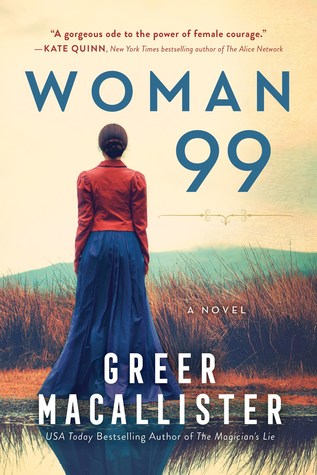
Book Review: Woman 99 by Greer Macallister

She’s only a number now.

When Charlotte Smith’s wealthy parents commit her beloved sister Phoebe to the infamous Goldengrove Asylum, Charlotte knows there’s more to the story than madness. She risks everything and follows her sister inside, surrendering her real identity as a privileged young lady of San Francisco society to become a nameless inmate, Woman 99.

The longer she stays, the more she realizes that many of the women of Goldengrove aren’t insane, merely inconvenient — and that her search for the truth threatens to dig up secrets that some very powerful people would do anything to kep.

A historical thriller rich in detail, deception, and revelation, Woman 99 honors the fierce women of the past, born into a world that denied them power but underestimated their strength.

What a read! In Woman 99, we first meet Charlotte Smith as the pampered daughter of a social-climbing family living in 1880s San Francisco. Daughters are trained from childhood in etiquette and comportment so they can eventually serve their purpose — helping their families climb higher through an advantageous marriage. Charlotte is proper and well-behaved and subservient to her mother’s wishes…

That was what all my education had been leading to. All the lessons and lectures. We were trained into ideal wives. Daughters were assets to be traded, like indigo, like hemp.

… but Charlotte’s sister Phoebe, according to their mother, is “unmarriageable”, the family disgrace.

While the term may not have been in use at the time, from the descriptions of Phoebe, she’s clearly bipolar. She has manic episodes, full of outrageous social behavior and flights of artistic fancy, then periods of dark depression during which she’s barely functional. In between the extremes, she has periods of near “normalcy”, and no matter what, Charlotte is devoted to her older sister, whom she loves with all her heart.

When Phoebe finally goes too far (and it’s not until later that we learn what this episode was about), she’s committed to Goldengrove, the Napa Valley asylum owned by the wealthy neighbors of the Smith family. Known as a “Progressive Home for the Curable Insane”, Goldengrove is promoted through glossy brochures and the social cachet of the Sidwell family. Still, Charlotte is terrified for Phoebe and her loss of freedom, and is determined to find a way to rescue her.

Charlotte concocts a scheme to get admitted to Goldengrove under an assumed identity, anticipating that she’ll quickly find Phoebe, announce who she is and that they’re going home, and that will be that. Needless to say, things don’t go as planned. Charlotte is unprepared for the emotional and physical trials of being institutionalized, and is horrified to discover that finding Phoebe and getting back out again will not be as simple as she planned. Meanwhile, as Charlotte spends weeks in the asylum, she gets to know the other women of her ward, and learns some shocking truths — the advanced treatment methods that Goldengrove is so well known for have been replaced by cruelty and starvation, and many of the women there are perfectly sane… just problematic for their families or husbands or society in general.

It had claimed to be a place of healing, but instead, it had been a convenient holding place for inconvenient women, serving only the people outside it, never the ones within.

Woman 99 is powerful, upsetting, and incredibly descriptive, showing us through Charlotte’s struggles the restricted roles available to women, the way certain women could be so easily discarded by society, and the shocking lack of value a woman was deemed to have if she dared step outside society’s norms. It’s not at all surprising to see how terrible the conditions inside Goldengrove are. Treatment of mental health at the time varied widely from physician to physician and asylum to asylum, and while some of the treatment concepts may seem worthwhile, such as outdoor hikes or music, there are also terrible methods such as a “water cure” and restraints and isolation, not to mention rumors of women having their teeth removed because poor dental health was considered linked to madness.

Over the course of the book, I really came to care about Charlotte, and appreciated how much she risks for her sister and the other women she meets inside Goldengrove. Charlotte’s initial act of rebellion is spurred on by her love for her sister, but she really has no idea what she’s getting herself into or how much danger she’ll be in. She gains strength and determination through her ideal, and emerges as a woman who’s no longer willing to meekly accept her mother’s plans for her future.

I highly recommend Woman 99. It’s a terrific, inspiring, moving read. And hey, bonus points for the San Francisco setting!

_________________________________________

The details:

Title: Woman 99
Author: Greer Macallister
Publisher: Sourcebooks Landmark
Publication date: March 5, 2019
Length: 368 pages
Genre: Historical fiction
Source: Review copy courtesy of the publisher via NetGalley