
Book Review: Shelterwood by Lisa Wingate

Title: Shelterwood
Author: Lisa Wingate
Publisher: Ballantine Books
Publication date: June 4, 2024
Length: 368 pages
Genre: Historical fiction
Source: Review copy courtesy of the publisher via NetGalley
Rating:

Rating: 3 out of 5.

From the #1 New York Times bestselling author of Before We Were Yours comes a sweeping novel inspired by the untold history of women pioneers who fought to protect children caught in the storm of land barons hungry for power and oil wealth.

Oklahoma, 1909
. Eleven-year-old Olive Augusta Radley knows that her stepfather doesn’t have good intentions toward the two Choctaw girls boarded in their home as wards. When the older girl disappears, Ollie flees to the woods, taking six-year-old Nessa with her. Together they begin a perilous journey to the rugged Winding Stair Mountains, the notorious territory of outlaws, treasure hunters, and desperate men. Along the way, Ollie and Nessa form an unlikely band with others like themselves, struggling to stay one step ahead of those who seek to exploit them . . . or worse.

Oklahoma, 1990. Law Enforcement Ranger Valerie Boren O’dell arrives at Horsethief Trail National Park seeking a quiet place to balance a career and single parenthood. But no sooner has Valerie reported for duty than she’s faced with local controversy over the park’s opening, a teenage hiker gone missing from one of the trails, and the long-hidden burial site of three children deep in a cave. Val’s quest to uncover the truth wins an ally among the neighboring Choctaw Tribal Police but soon collides with old secrets and the tragic and deadly history of the land itself.

In this emotional and enveloping novel, Lisa Wingate traces the story of children abandoned by the law and the battle to see justice done. Amid times of deep conflict over who owns the land and its riches, Ollie and Val traverse the wild and beautiful terrain, each leaving behind one life in search of another.

In Shelterwood, the newest novel by the bestselling author of Before We Were Yours, a dual timeline narrative traces events in Oklahoma in 1909 and 1990, eventually revealing threads that bind the two story arcs together.

In 1909, the story focuses on 11-year-old Olive (Ollie), whose stepfather terrorizes her and the two young orphaned Choctaw girls that live with her family, while her mother is lost to the fog of opium addiction. When the stepfather’s sexual abuse of the older girl, Hazel, leads to her disappearance, and he turns his attention to young Nessa, Ollie orchestrates their escape.

In 1990, Valerie is a park ranger who has relocated with her young son Charlie to Oklahoma for the opening of the new Horsethief Trail National Park. She’s looking for a fresh start for the two of them after her husband’s death, but almost immediately she becomes embroiled in local controversies, as bodies are found in the park and a local girl comes to Val for help.

What connects the two stories is the subject of land rights and manipulation. In 1909, robber barons and other powerful men force adoptions, marriages, or guardianships on native orphans in order to claim their land rights. In 1990, corrupt businesses encroach on both park land and ancestral native land for illegal profits. In both timelines, those without power find themselves fighting for survival as well as to maintain their independence and heritage.

The 1909 story follows Ollie and Nessa as they desperately struggle to avoid detection, hiding out in the wild in a place they call Shelterwood and creating a small community with other cast-off, runaway, or abandoned children. And in 1990, as Val digs into a potential missing persons case, she uncovers patterns of abuse and theft that go back decades.

Each storyline has interesting elements, but I found the 1909 chapters more compelling, as they paint a picture of the societal fractures and political pressures of the era. It was interesting to see real historical figures, such as politician and activist Kate Barnard, interacting with the local community, and to see how the hotly debated topics of child labor laws and land rights so directly impact Ollie, Nessa, and the other children.

Val’s story takes a while to find its footing, but ultimately there’s a good payoff in terms of resolving the missing person case and making the connection back to the 1909 plot.

Somehow, though, I found myself mostly disengaged from the characters. On the surface, their situations are interesting and challenging — and yet, I never felt emotionally invested or that I got to know them on a deeper level.

Part of the problem for me was a lack of information. In both timelines, we’re dropped straight into the action, and have to piece together what the historical context means for the characters. Starting the book without much familiarity with that particular time and place, it was often confusing to sort out the reasons for the various conditions and the political forces at play. I don’t always love flat-out exposition in novels, but this book could have used some more establishment of context in order to more firmly ground the story.

I was interested enough to stick with the book all the way to the end, but found myself a bit checked out for chunks of the story. I’m glad I saw it through, but was left feeling a bit flat about the overall experience.

Still, it was eye-opening to learn more about life in both 1909 and 1990 Oklahoma, and I appreciated how the two timelines fit together in the end. I could see this being a good book group pick for people who enjoy historical fiction set in the 20th century.

Book Review: The Book of Lost Friends by Lisa Wingate

Title: The Book of Lost Friends
Author: Lisa Wingate
Publisher: Ballantine
Publication date: April 7, 2020
Print length: 388 pages
Genre: Historical fiction
Source: Review copy courtesy of the publisher via NetGalley
Rating:

Rating: 3 out of 5.

A new novel inspired by historical events: a story of three young women on a journey in search of family amidst the destruction of the post-Civil War South, and of a modern-day teacher who rediscovers their story and its connection to her own students’ lives.

Lisa Wingate brings to life stories from actual “Lost Friends” advertisements that appeared in Southern newspapers after the Civil War, as freed slaves desperately searched for loved ones who had been sold off.

Louisiana, 1875 In the tumultuous aftermath of Reconstruction, three young women set off as unwilling companions on a perilous quest: Lavinia, the pampered heir to a now-destitute plantation; Juneau Jane, her illegitimate free-born Creole half-sister; and Hannie, Lavinia’s former slave. Each carries private wounds and powerful secrets as they head for Texas, following dangerous roads rife with ruthless vigilantes and soldiers still fighting a war lost a decade before. For Lavinia and Juneau Jane, the journey is one of inheritance and financial desperation, but for Hannie, torn from her mother and eight siblings before slavery’s end, the pilgrimage westward reignites an agonizing question: Could her long-lost family still be out there? Beyond the swamps lie the seemingly limitless frontiers of Texas and, improbably, hope.

Louisiana, 1987 For first-year teacher Benedetta Silva, a subsidized job at a poor rural school seems like the ticket to canceling her hefty student debt–until she lands in a tiny, out-of-step Mississippi River town. Augustine, Louisiana, seems suspicious of new ideas and new people, and Benny can scarcely comprehend the lives of her poverty-stricken students. But amid the gnarled oaks and run-down plantation homes lies the century-old history of three young women, a long-ago journey, and a hidden book that could change everything.

After reading and enjoying this author’s previous novel (Before We Were Yours), I was excited to get an ARC of The Book of Lost Friends… and yet I left it unread until now, somehow never quite feeling in the mood to get started. So, I was glad when my book group chose The Book of Lost Friends as our July 2022 Book of the Month — finally, a commitment to get me motivated!

Unfortunately, while I finished the book, I can’t say that I loved it. In fact, I’ve been wavering between rating this one 2.5 or 3 stars.

The narrative alternates between a historical timeline set in 1875 and a more modern timeline set in 1987. Both stories are situated in Augustine, Louisiana, and in both timelines, the Gossett family is at the center of the community.

In 1875, the Gossett plantation has been transformed post-war into sharecropper properties, still dominated by the plantation’s former mistress, who seems determined to undermine and cheat the formerly enslaved people now working to secure their own land. Her husband has disappeared to Texas in search of his wayward son, and the future of the land and its people is very much up in the air. The main character, Hannie, ends up accompanying the former master’s two daughters (one white and legitimate, the other biracial and illegitimate) on a dangerous journey to find their father and find the missing documents needed to secure their inheritance. Hannie’s own goal is more personal: To find the missing members of her family, all of whom were sold off while enslaved and stolen by an unscrupulous relative of the plantation owners.

In 1987, the main character is Benny (Benedetta) Silva, a young teacher who accepts a rural posting in exchange for student loan forgiveness. Benny is ill-prepared to teach in a school where there are inadequate resources, apathetic staff, and students who lack the most rudimentary skills or interest needed to pursue an education. Benny is determined to find a way to connect with her students, and begins a research project that puts her at odds with powerful town leaders.

I don’t want to go too far down the road of discussing the dual plots, so I’ll stick to some key concerns and takeaways.

In both timelines, the plot is often confusing and muddled. We alternate chapters between the two timelines, and yet as we pick up a storyline after a chapter away from it, there’s often a gap in the action from where we left off. Intervening events do get explained, but the initial impression is always that something has been missed or that the pieces don’t quite connect.

The family chronologies and connections are not well explained, and neither is the make-up of the town itself or its history. There’s a lot of detail thrown around in the book, but often through exposition rather than incorporation into the plot. The details often felt muddy to me, leading to my feelings of disengagement.

Benny’s role, in my opinion, is problematic. Her character really smacks of white saviorism. She arrives in town as an outsider, and immediate becomes the catalyst for changing the lives of the poor children and disempowered community members of Augustine. Why did it take Benny’s arrival to make this happen? Why was it Benny and the (white) descendants of the Gossett slaveowners who enable the discovery of the town’s history and the revelations that ensue?

I did appreciate learning about the Lost Friends advertisements, which were a real historical phenomenon used by formerly enslaved people to try to track down and reunite with family members. The inclusion of real Lost Friends ads is touching and powerful.

However, overall, the plot didn’t build in a way that connected the dots, and the action sequences and outcomes felt disjointed. I did not feel emotionally involved with the characters, and while certain moments elicit sympathy or sorrow or horror, these responses related more to the general circumstances described rather than being connected to actual care or concern for the specific characters.

I was also turned off by a weirdness to the ending, in which a big revelation about a character’s backstory is shared literally on the last two pages of the book. Why?? It felt awkward and unnecessary — perhaps it was intended to provide an “aha!” moment about the character, but really, it just felt tacked-on and beside the point.

Overall, this was not a great reading experience, and if not for my book group commitment, I probably would not have finished. The “Lost Friends” element is interesting from a historical perspective, but the fictional storylines built up around this element just never made me feel connected or invested.

Final note: I will add that many of my book group friends enjoyed this book more than I did, and one person who is herself an educator commented that she found Benny’s work with the students and the challenges she faced very relatable and well done. In other words… while I didn’t particularly enjoy this book, your mileage may vary!

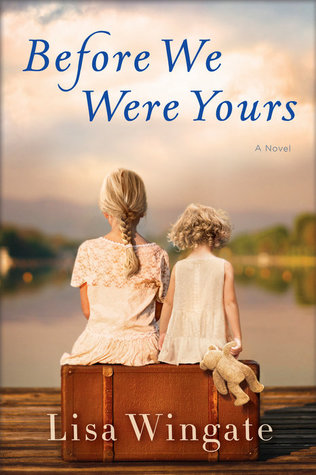
Book Review: Before We Were Yours by Lisa Wingate


Two families, generations apart, are forever changed by a heartbreaking injustice in this poignant novel, inspired by a true story, for readers of Orphan Train and The Nightingale.

Memphis, 1939. Twelve-year-old Rill Foss and her four younger siblings live a magical life aboard their family’s Mississippi River shantyboat. But when their father must rush their mother to the hospital one stormy night, Rill is left in charge—until strangers arrive in force. Wrenched from all that is familiar and thrown into a Tennessee Children’s Home Society orphanage, the Foss children are assured that they will soon be returned to their parents—but they quickly realize that the truth is much darker. At the mercy of the facility’s cruel director, Rill fights to keep her sisters and brother together—in a world of danger and uncertainty.

Aiken, South Carolina, present day. Born into wealth and privilege, Avery Stafford seems to have it all: a successful career as a federal prosecutor, a handsome fiancé, and a lavish wedding on the horizon. But when Avery returns home to help her father weather a health crisis, a chance encounter leaves her with uncomfortable questions—and compels her to take a journey through her family’s long-hidden history, on a path that will ultimately lead either to devastation or redemption.

Based on one of America’s most notorious real-life scandals—in which Georgia Tann, director of a Memphis-based adoption organization, kidnapped and sold poor children to wealthy families all over the country—Wingate’s riveting, wrenching, and ultimately uplifting tale reminds us how, even though the paths we take can lead to many places, the heart never forgets where we belong.

The story of Before We Were Yours is all the more shocking and heart-breaking when you realize that while the main characters are fictional, the tragedy depicted is all too real.

In this powerful work of historical fiction, we follow the story of 12-year-old Rill, a girl growing up poor but happy on a riverboat with her parents and four younger siblings. But when the children become separated from their parents due to complications of labor and an emergency trip to the hospital, their lives become dark and dangerous. Stolen away by the notorious Georgia Tann, the children are taken to a children’s home, where they’re starved, neglected, and abused before ultimately being adopted out, one by one, to wealthy families who are willing to pay.

In alternating chapters, we follow a modern-day story, as Avery Stafford comes home to South Carolina to support her ill father, a politician from a powerful family. Avery stumbles upon a woman in a nursing home, May Crandall, who seems to have some sort of connection to Avery’s family. What starts as a curiosity for Avery turns into a quest to unravel the mystery of May’s strange tie to Avery’s grandmother, now suffering early stages of dementia. As Avery digs deeper, she begins to see that her family’s hidden past may have intersected with the schemes of Georgia Tann, and Avery must decide if it’s wiser to uncover the truth or let the past stay in the past.

While Avery’s search for answers is interesting, it’s the story of Rill and her sisters and brother that’s truly stunning. The children grow up free and open to adventure, never minding that they’re looked down upon as “river rats”. On board their boat and with their parents, they live in a kingdom of their own. Reading about how this family is torn apart is shocking — it’s amazing how much cruelty was inflicted upon these young children, especially as the story drives home the fact that this happened to thousands of chlidren over a period of more than 20 years.

The mystery of how Avery’s grandmother is connect to May is not revealed until close to the end of the book, and while there are hints along the way, the answer isn’t entirely obvious. Meanwhile, while we see how Rill grew up and changed from the river girl to a woman with a family of her own and a new life, the journey she makes isn’t easy and is no fairy tale. Not all the loose ends are tied up, which is fitting, given that in the historical records of the Georgia Tann scandal, many families never did find their missing children, and many hundreds are believed to have died under the “care” of this awful, twisted adoption industry.

Before We Were Yours is a compelling read, although I was less engaged during the contemporary chapters, particularly when the focus shifted from Avery’s search into family history to dwell more upon Avery’s romantic life and her career choices. Other than that, I found it a quick, fascinating, and terribly sad read.

This was a book group pick, and I’m so glad it was! As with all of my book group’s books, I can’t wait to hear from my bookish friends and to exchange reactions, ideas, and questions.

If you’ve read Before We Were Yours, I’d love to hear your thoughts too!

_________________________________________

The details:

Title: Before We Were Yours
Author: Lisa Wingate
Publisher: Ballantine
Publication date: June 6, 2017
Length: 342 pages
Genre: Historical fiction
Source: Library

**Save

Save

Save

Save

Save

Save

Save